A small bedroom can feel like a puzzle you can’t quite solve. There’s never enough storage, the furniture seems too big, and somehow the room still looks cluttered no matter how hard you try. If that sounds familiar, you’re not alone.
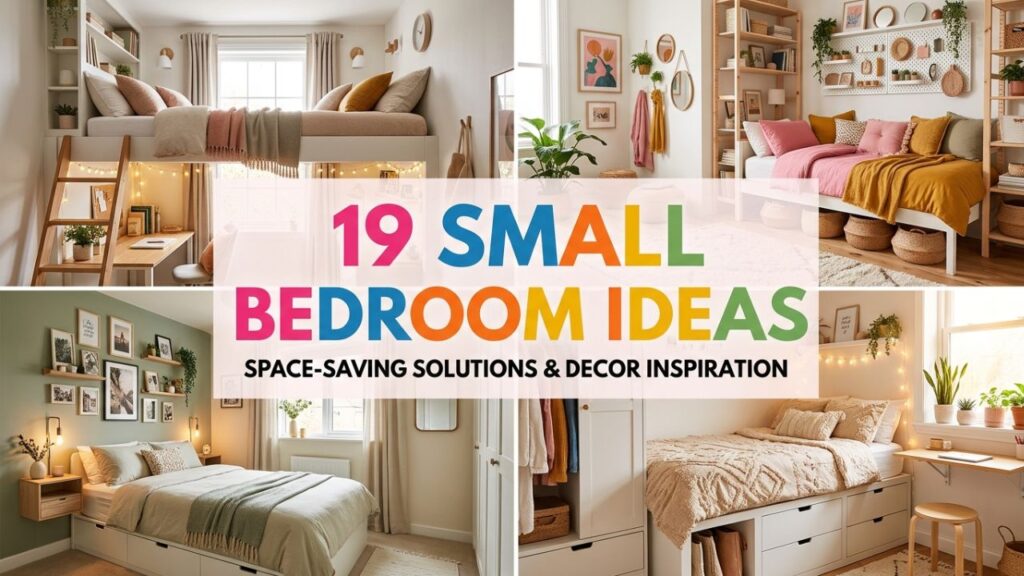
The good news is that small rooms have a lot of hidden potential. Over the years, I’ve helped style plenty of tight, awkward bedrooms, and the same lesson keeps proving true: smart design beats square footage every time. With the right choices, a tiny room can feel calm, open, and surprisingly spacious.
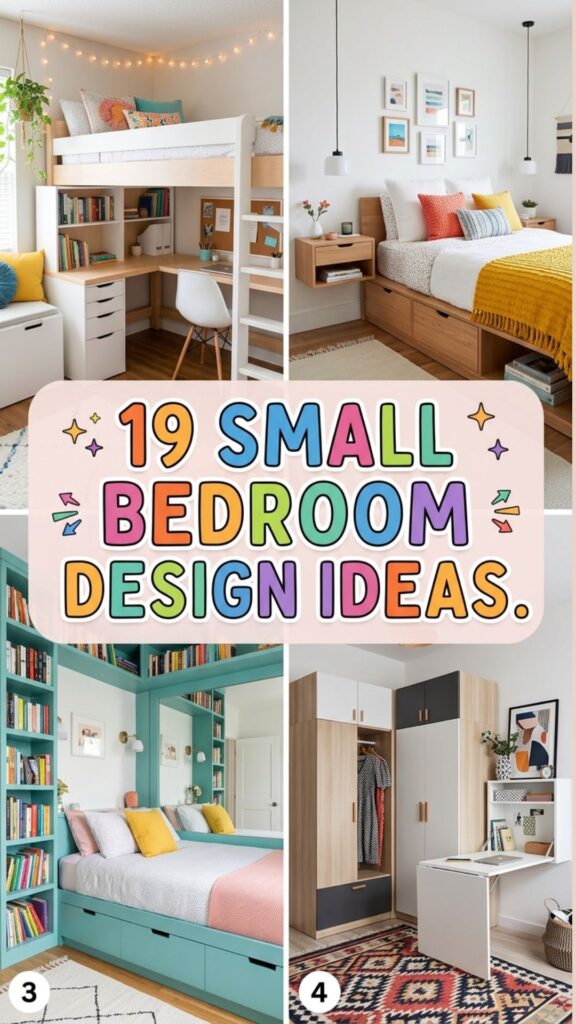
In this guide, you’ll get 19 small bedroom design ideas that save space without sacrificing style. You’ll learn how to fix cramped layouts, add storage you didn’t know you had, brighten dark corners, and cut visual clutter. Let’s make your small bedroom work harder and look better.
1. Choose a Bed With Built-In Storage
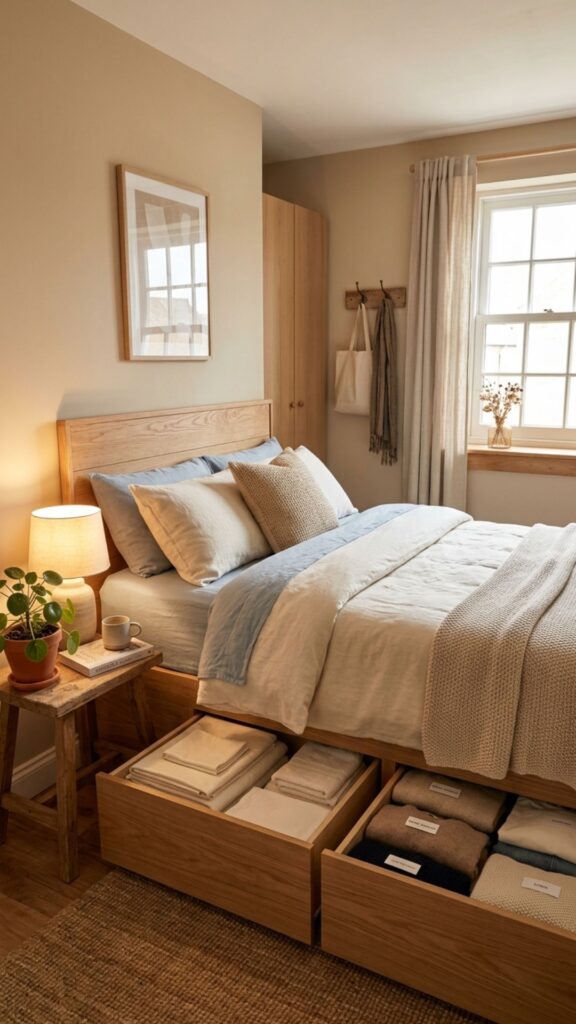
Your bed takes up the most floor space, so make it earn its keep. A storage bed with drawers underneath gives you a hidden home for sheets, off-season clothes, and bulky extras.
If a full storage bed isn’t in the budget, slide flat bins under your existing frame instead. Add a bed riser kit to gain a few extra inches of clearance. This single move clears closets and frees up the rest of the room.
2. Float Your Nightstands
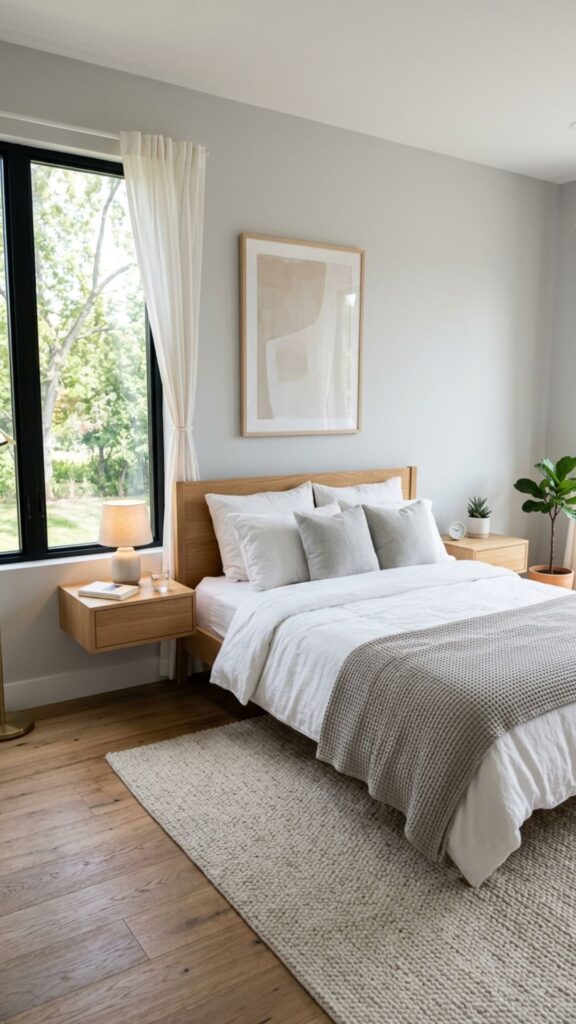
Bulky nightstands eat up precious floor space and make a room feel tight. Wall-mounted floating nightstands solve that by keeping the floor open and the room feeling airy.
Mount them at mattress height and add a small lamp or tray on top. The exposed floor underneath tricks the eye into seeing more space. It’s a simple swap with a big visual payoff.
3. Use Vertical Space for Storage
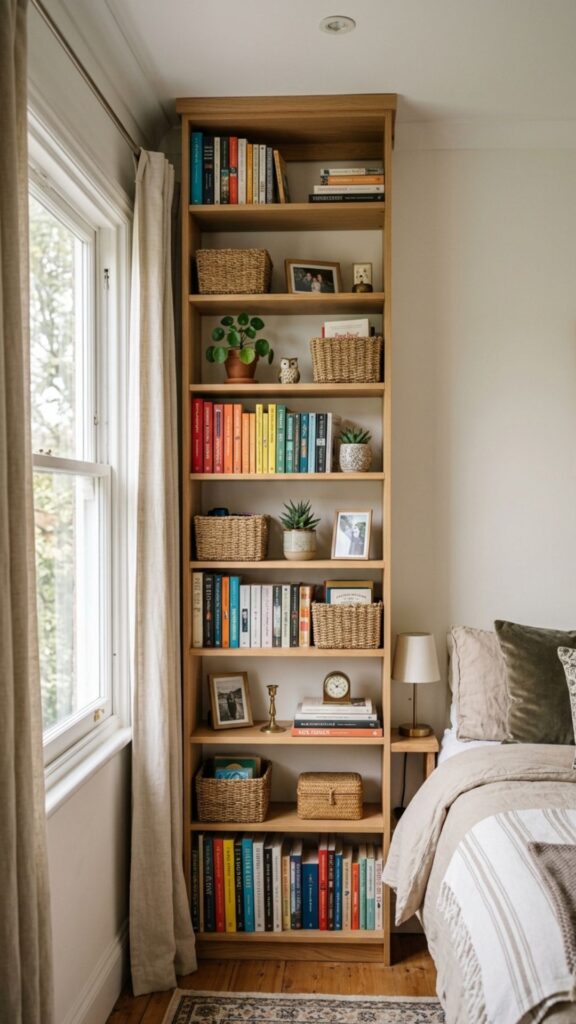
When you can’t build out, build up. Tall, narrow shelving and wall cabinets take advantage of empty vertical space that most people ignore.
Run shelves close to the ceiling for items you rarely reach for, like books or seasonal bins. Keep daily items lower and within reach. Drawing the eye upward also makes ceilings feel higher and rooms feel larger.
4. Pick a Light, Cohesive Color Palette
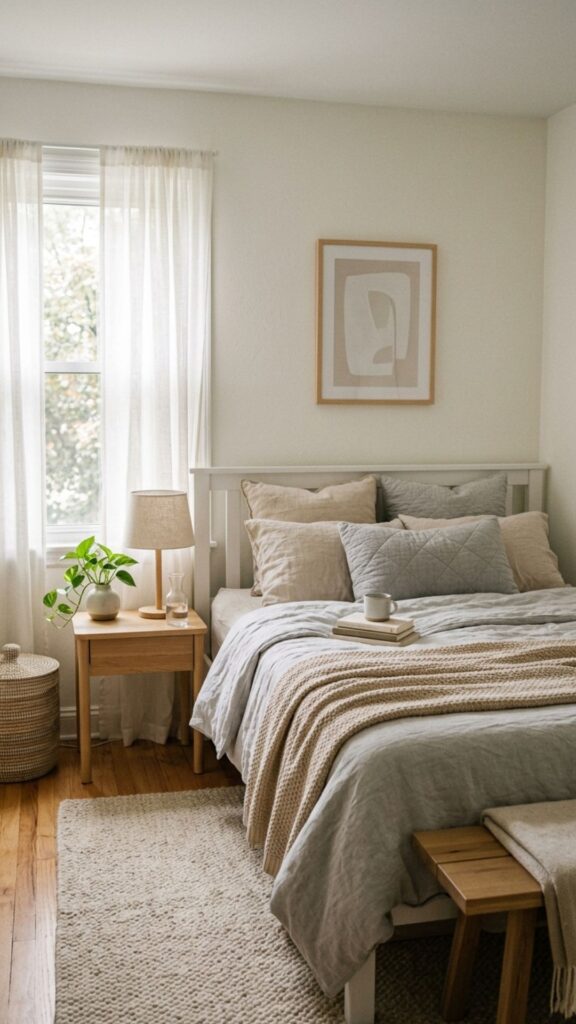
Dark, busy colors can shrink a small room fast. Soft, light shades like warm white, pale gray, and gentle beige reflect light and open the space up.
Keep your palette to two or three tones for a calm, pulled-together look. Add depth through texture rather than bold color. These are some of the easiest bedroom design ideas for making a tight room feel bigger instantly.
5. Hang Curtains High and Wide
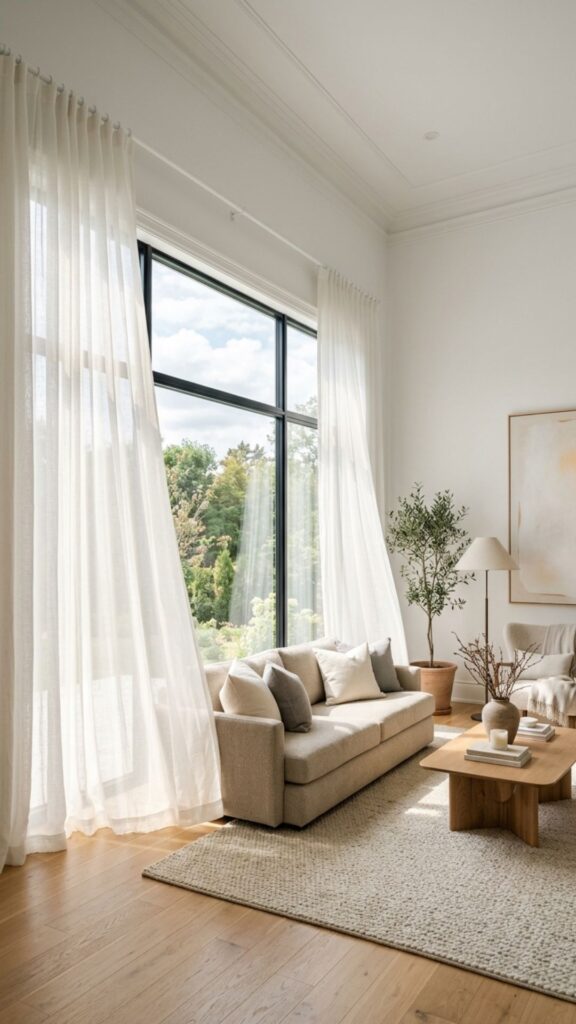
Where you hang your curtains matters more than the curtains themselves. Mounting the rod close to the ceiling and extending it past the window frame makes both the window and the wall look larger.
Choose light, airy fabrics that let sunlight through during the day. This trick adds height and grandeur without taking up any extra floor space. It’s one of the cheapest ways to fake a bigger room.
6. Add a Large Mirror to Bounce Light
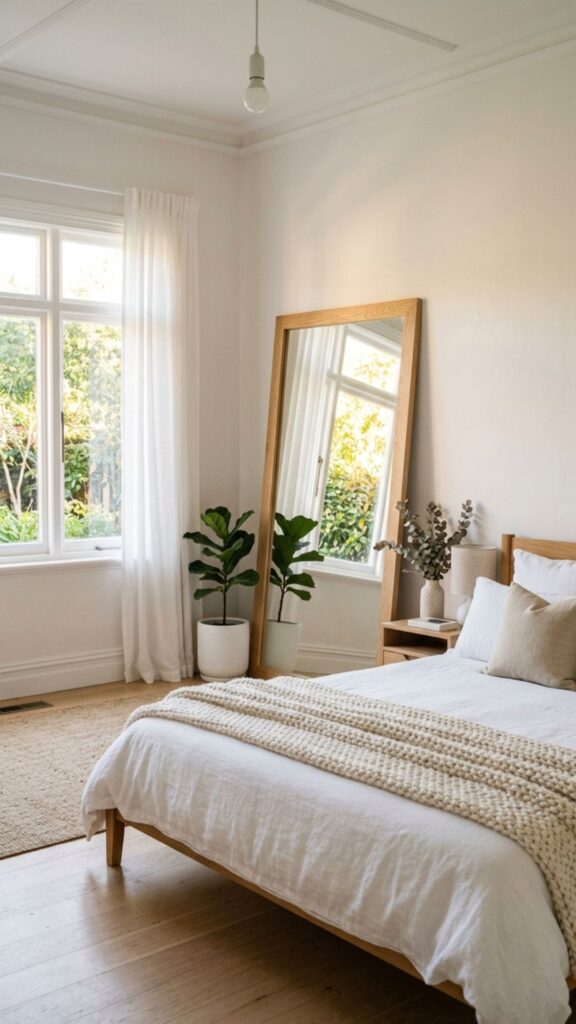
A big mirror is a small room’s best friend. It reflects natural and artificial light, doubling brightness and making the space feel open.
Lean an oversized mirror against the wall or hang one across from a window. The reflection adds depth, almost like a second window. Suddenly that cramped corner feels twice as roomy.
7. Choose Furniture That Fits the Scale
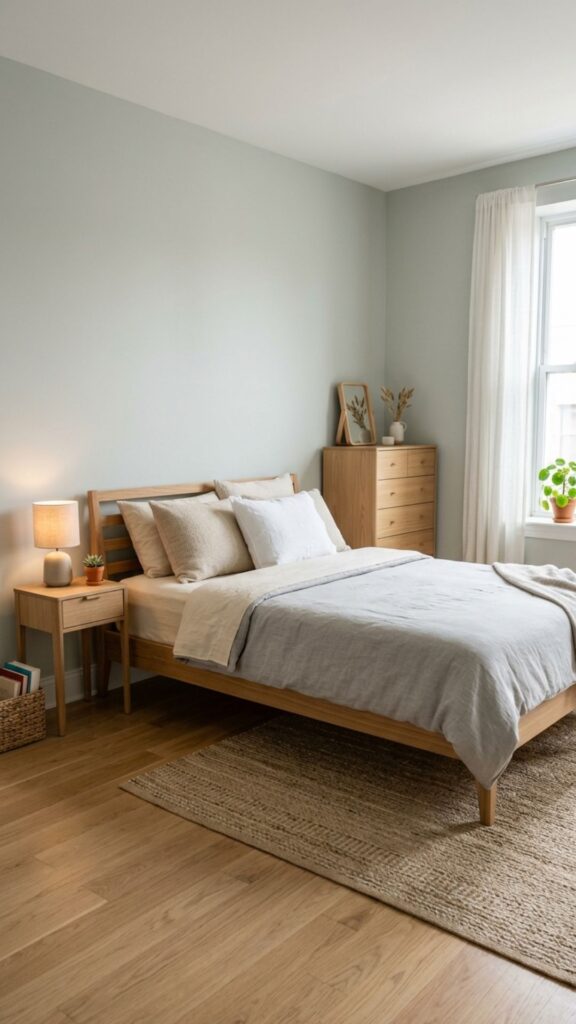
Oversized furniture is one of the biggest mistakes in small bedrooms. Pieces that are too large crowd the floor and make everything feel squeezed.
Measure your room before you buy, and pick slim, low-profile furniture that fits the scale. A smaller dresser or a slim bed frame leaves breathing room. Right-sized pieces make the whole space feel intentional, not packed.
8. Use Multi-Functional Furniture
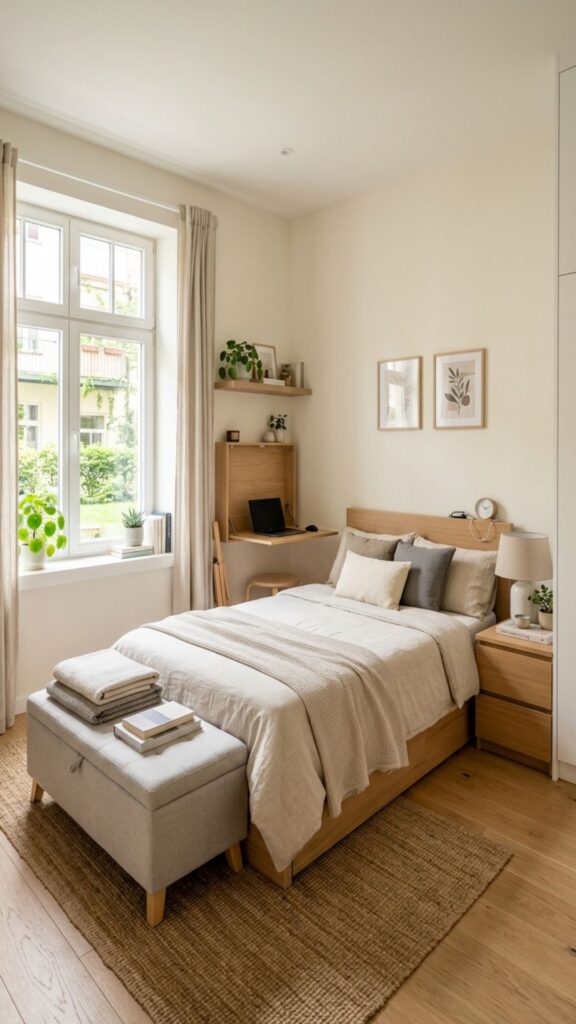
In a small room, every piece should pull double duty. A storage ottoman, a desk that folds away, or a bench with hidden compartments saves space and reduces clutter.
Look for items that combine two needs into one footprint. A nightstand with drawers replaces a separate dresser, for example. These clever combinations are smart bedroom design ideas for tight quarters.
9. Keep the Floor as Clear as Possible
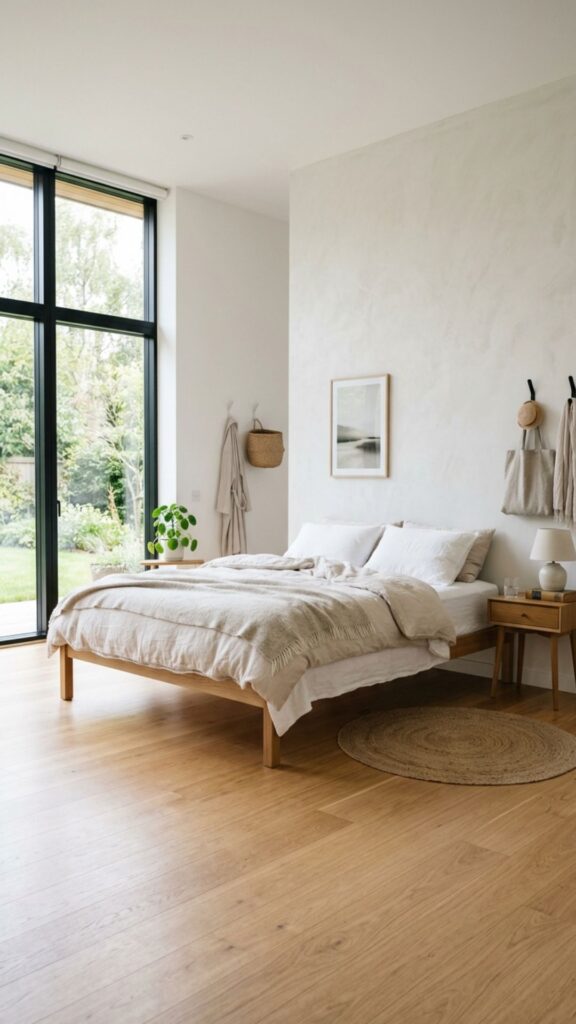
Visible floor space equals perceived room size. The more bare floor you can see, the bigger and calmer your bedroom feels.
Lift items off the ground using wall hooks, floating shelves, and raised furniture. Avoid letting clothes, bags, or boxes pile up underfoot. A clear floor is the fastest path to a serene, spacious look.
10. Layer Your Lighting
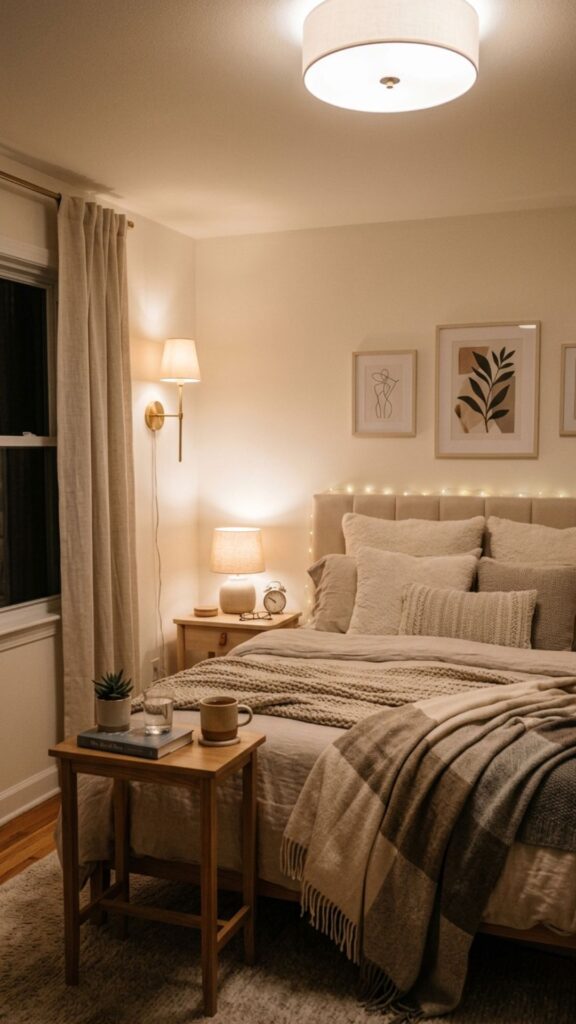
A single ceiling light leaves harsh shadows and makes a small room feel flat. Layered lighting adds warmth and dimension that one bulb can’t.
Combine a soft overhead fixture with a wall sconce and a small lamp. Wall-mounted lights are great because they save table space. Warm bulbs around 2700K keep the mood cozy and inviting.
11. Try Wall-Mounted or Folding Desks
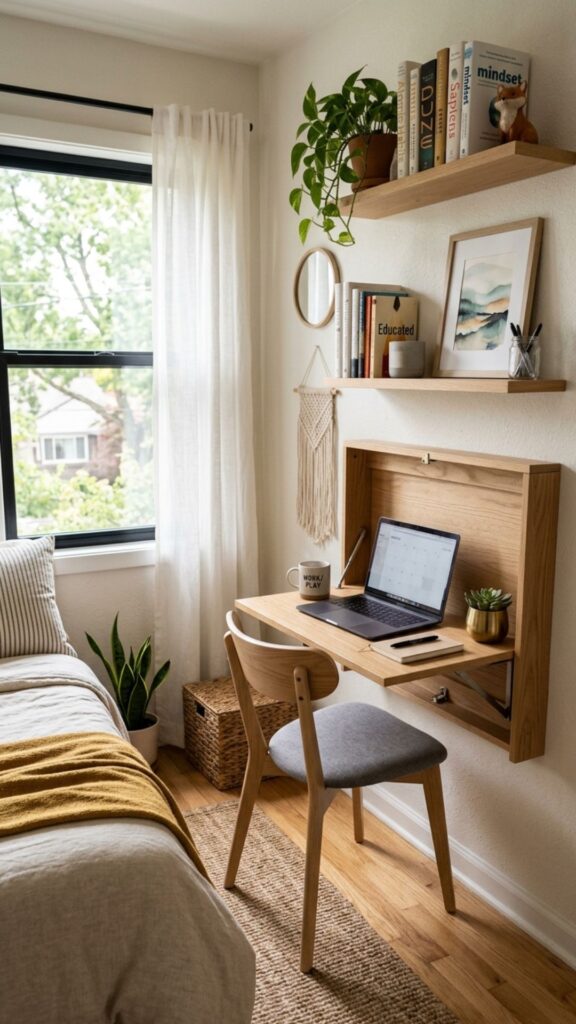
If you need a workspace but lack room, skip the bulky desk. A wall-mounted fold-down desk gives you a surface when you need it and disappears when you don’t.
Pair it with a slim chair you can tuck away. Some floating shelves nearby handle supplies without crowding the floor. This setup keeps a small bedroom flexible and uncluttered.
12. Use Built-In or Custom Storage
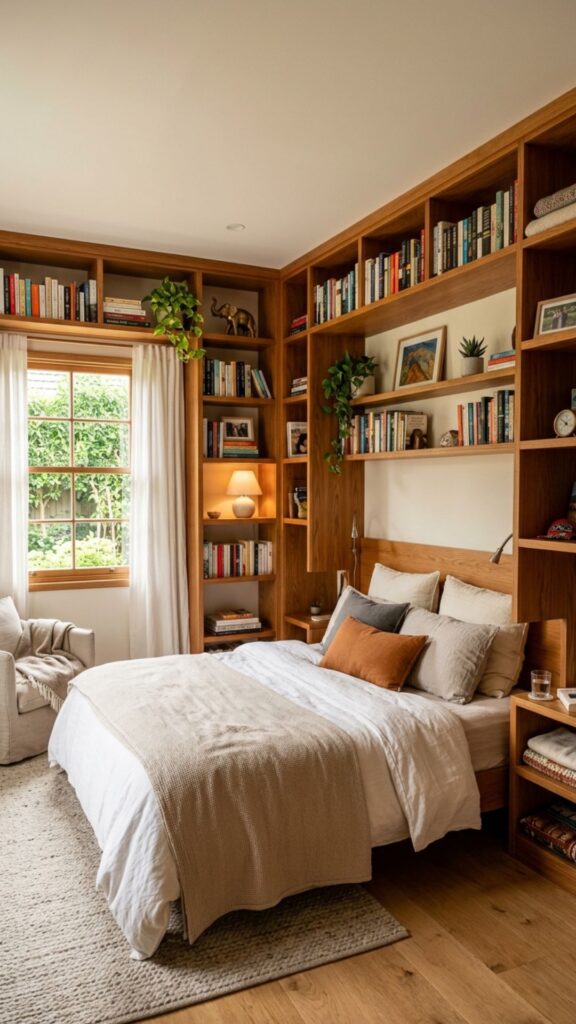
When space is tight, built-ins make every inch count. Custom shelving around the bed or inside an alcove turns dead space into useful storage.
A headboard with hidden compartments or shelves built into the wall keeps clutter contained. If custom feels pricey, modular units offer a similar look for less. Built-ins always feel polished and purposeful.
13. Pick a Headboard With Storage
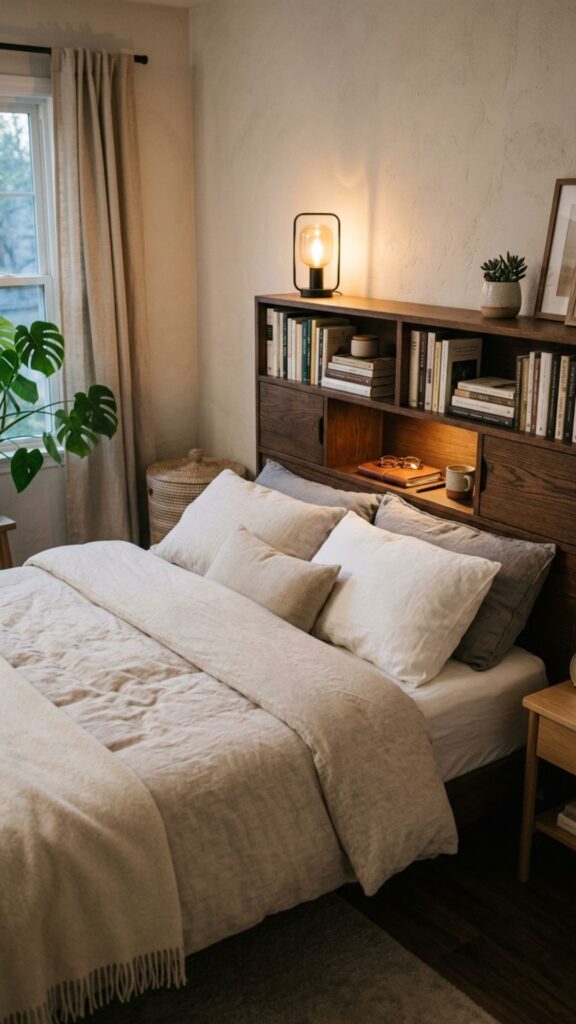
The wall behind your bed is prime real estate. A headboard with built-in shelves or cubbies adds storage exactly where you need it most.
Use it for books, a phone, or a small lamp instead of crowding a nightstand. Some designs even include sliding panels for hidden items. It’s a tidy way to make your bed do more.
14. Declutter and Edit Ruthlessly
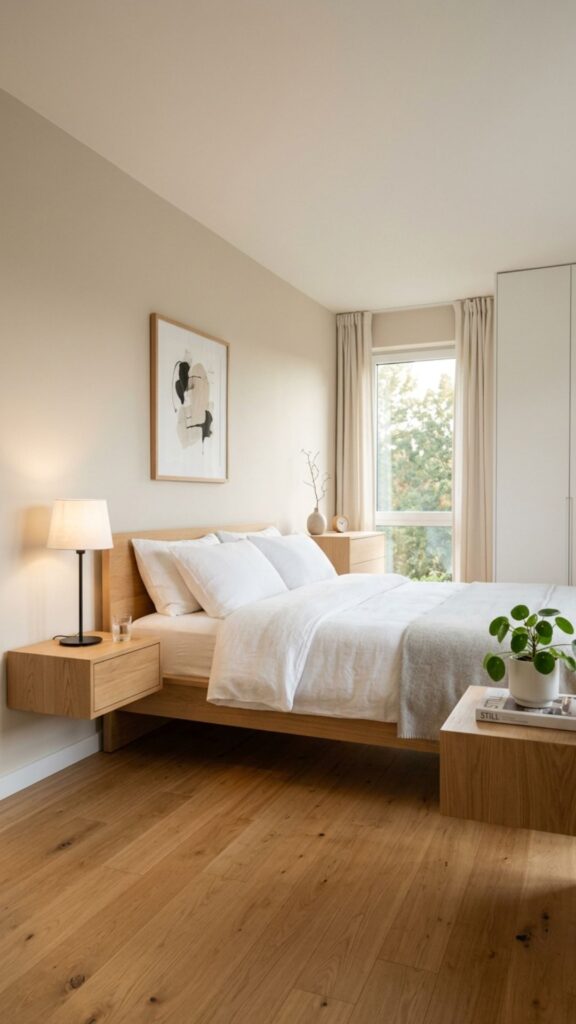
No design trick beats simply owning less. Clutter is the number one reason small bedrooms feel cramped and chaotic.
Go through your belongings and keep only what you use or love. Give every item a dedicated home so surfaces stay clear. A streamlined room instantly feels larger, calmer, and more stylish.
15. Add a Slim Bench or Seating
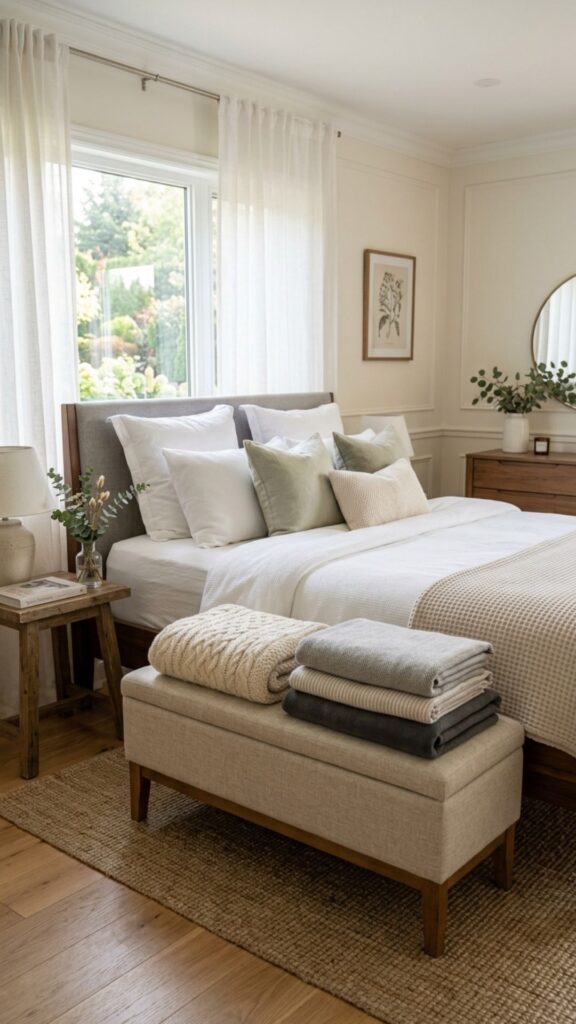
A small bench at the foot of the bed adds function without bulk. It gives you a spot to sit and a surface for laying out clothes.
Choose one with hidden storage to tuck away blankets or shoes. Keep it low and narrow so it doesn’t crowd the walkway. This little addition feels both practical and finished.
16. Use Glass and Reflective Surfaces
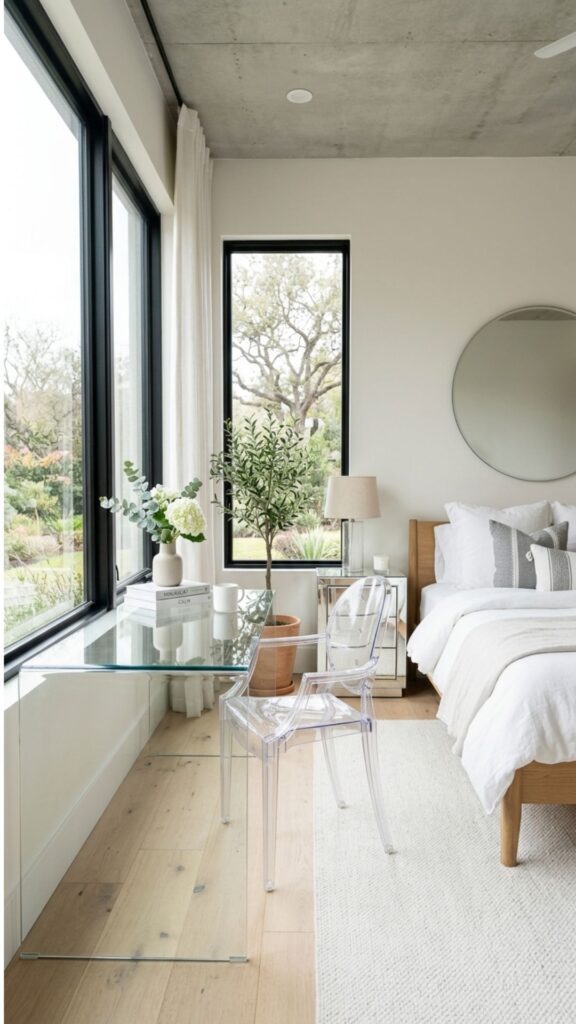
Solid, heavy pieces can make a room feel closed in. Glass tabletops, acrylic chairs, and mirrored accents keep things visually light.
Because you can see through or past them, these surfaces don’t block sightlines. The room stays open and airy as a result. It’s a subtle way to add function without adding visual weight.
17. Create Symmetry for a Calm Look
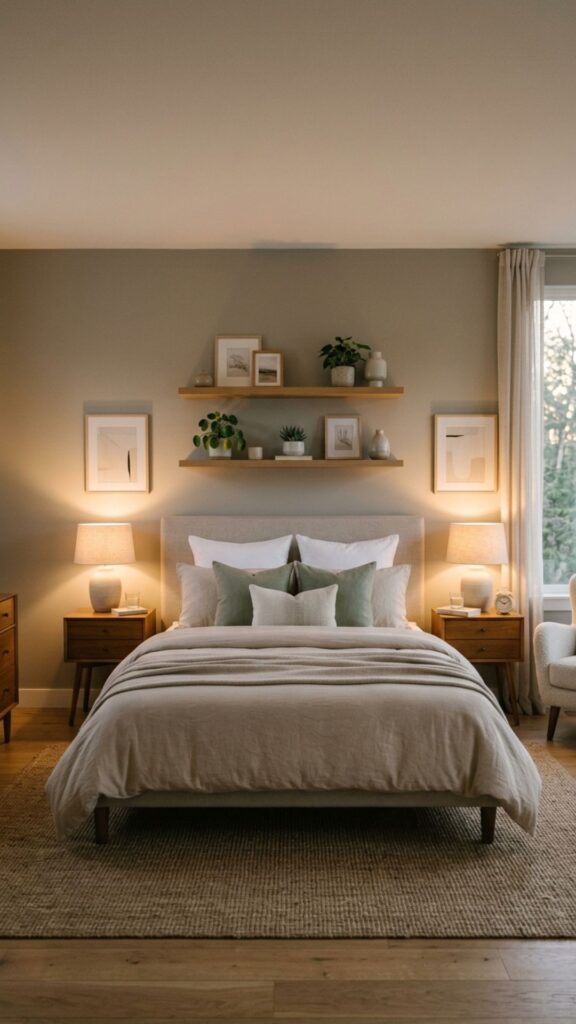
A cluttered, lopsided layout makes a small room feel chaotic. Symmetry brings instant order and a restful, balanced feel.
Place matching lamps or shelves on either side of the bed. If a perfect pair isn’t possible, aim for visual balance with similar shapes and heights. Order is one of the most underrated bedroom design ideas for tiny spaces.
18. Hang Art Thoughtfully
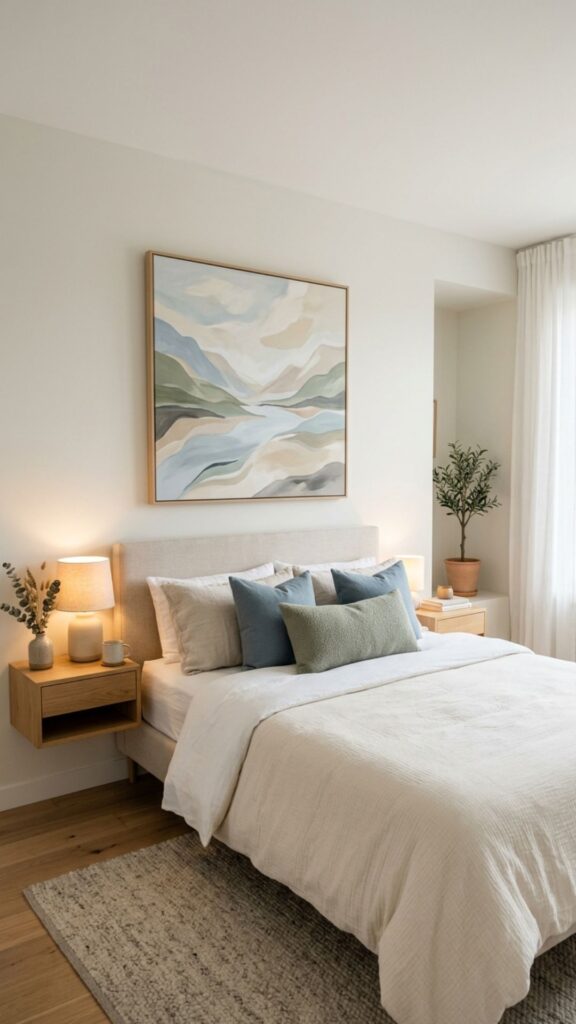
Bare walls can make a small room feel unfinished, but too many pieces add clutter. One well-placed piece of art does more than a dozen scattered frames.
Choose a single larger piece or a tidy, simple arrangement. Hang it so the center sits around eye level for balance. Calm, cohesive art adds personality without overwhelming the space.
19. Add Greenery for Freshness
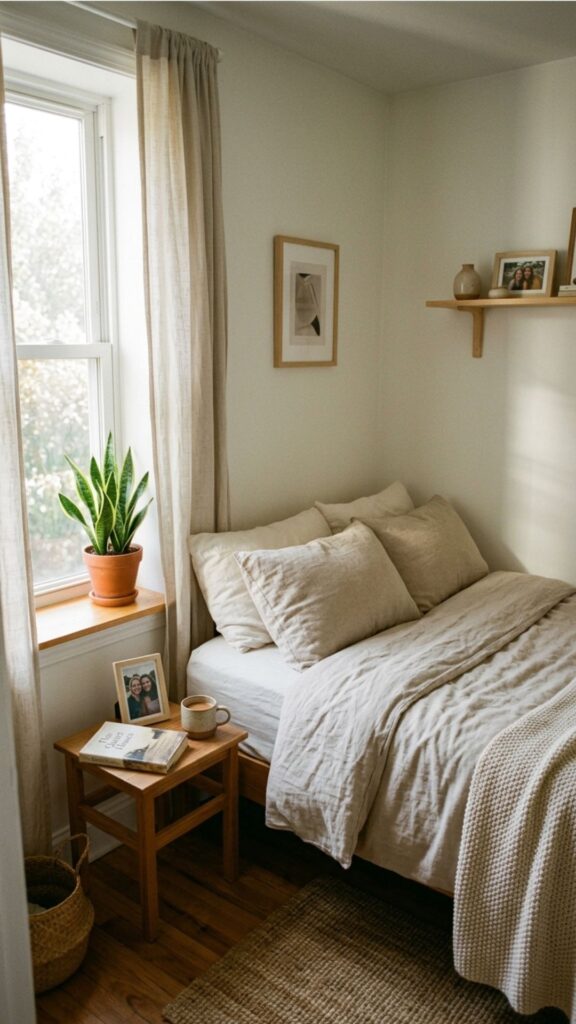
A touch of green softens hard edges and makes a small room feel alive. Plants bring color, freshness, and a spa-like calm.
Pick a compact, low-maintenance plant like a pothos or a snake plant. Set it on a shelf or windowsill so it doesn’t take up floor space. One small plant is enough to lift the entire room.
How to Bring It All Together
Designing a small bedroom is all about working smarter, not harder. Start by decluttering, then add storage that uses vertical and hidden space. Keep your palette light, your furniture scaled right, and your floor as clear as possible.
You don’t need to tackle everything at once. Pick two or three of these ideas, start this weekend, and watch your small room feel bigger and more beautiful. Your dream space is closer than you think.
How do I make a small bedroom look bigger?
Use light, cohesive colors, a large mirror to reflect light, and curtains hung high and wide. Keep the floor clear and choose slim, scaled furniture. These changes make the room feel open and spacious.
What is the best storage for a small bedroom?
Storage that uses hidden or vertical space works best. Try under-bed bins, floating shelves, wall-mounted cabinets, and beds or headboards with built-in compartments. They add storage without crowding the floor.
What colors make a small bedroom feel larger?
Soft, light shades like warm white, pale gray, and gentle beige reflect the most light and open up a room. Stick to two or three tones and add interest through texture instead of bold color.
How should I arrange furniture in a small bedroom?
Place the bed against the longest wall, keep walkways clear, and use slim, multi-functional pieces. Aim for symmetry and leave as much visible floor space as possible to keep the room feeling open.
How can I add storage without making the room feel crowded?
Choose multi-functional furniture, build up with vertical shelving, and use hidden storage like under-bed bins and storage benches. Keeping items off the floor and out of sight prevents visual clutter.