A coastal space should feel light, relaxed, and easy to live in. But many people miss the mark. Their room ends up looking too themed, too plain, or not functional enough for real life. The good news is that great coastal living room interior design is less about filling a room with seashells and more about making smart choices with color, texture, layout, and light.

In this guide, you’ll learn how to create a beach-inspired living room that feels fresh, warm, and timeless. We’ll cover practical living room interior design ideas, simple styling moves, and ways to balance comfort with style. You’ll also see how to make the look work whether your home leans classic, modern, cozy, or luxury.

What Defines Coastal Living Room Interior Design?
Coastal living room interior design is a style that brings in the calm, airy feeling of the seaside through soft colors, natural materials, open layouts, and light-filled spaces. It does not need to be literal or overly decorative. The best coastal rooms feel effortless, not staged.
At its core, this style uses a few key elements:
- A light, layered color palette
- Natural textures like linen, jute, wood, and rattan
- Comfortable seating and an easy flow
- Decor that hints at the coast without overdoing it
- Plenty of natural or soft ambient light
So what does that mean for your room? It means every choice should support a relaxed mood. If an item feels heavy, dark, or too formal, it may fight the look.
1. Start With a Soft, Sea-Inspired Color Palette
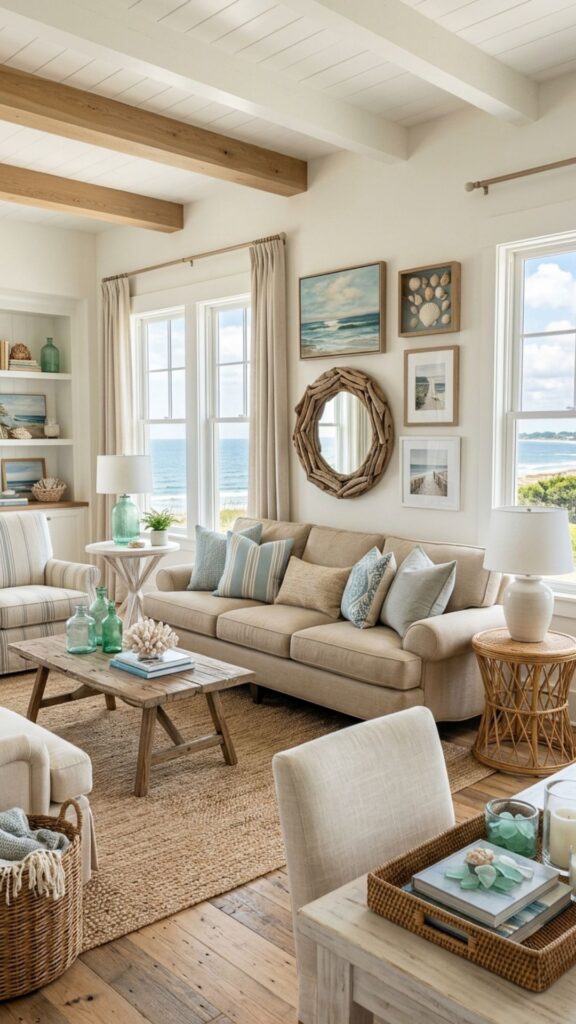
Color sets the tone faster than anything else. If you want a breezy room, begin with shades that reflect the coast.
Use calm neutrals as your base
Think warm white, sand, soft beige, pale gray, and driftwood tones. These shades make a room feel open and clean. They also give you more freedom to layer in accents later.
Add blue and green in small, thoughtful ways
Sea glass green, dusty blue, and muted aqua work well in pillows, throws, art, or accent chairs. You do not need to paint every wall blue to make the space feel coastal.
A smart rule: use 70% neutral tones, 20% natural wood and texture, and 10% coastal color.
2. Choose Natural Materials That Add Warmth
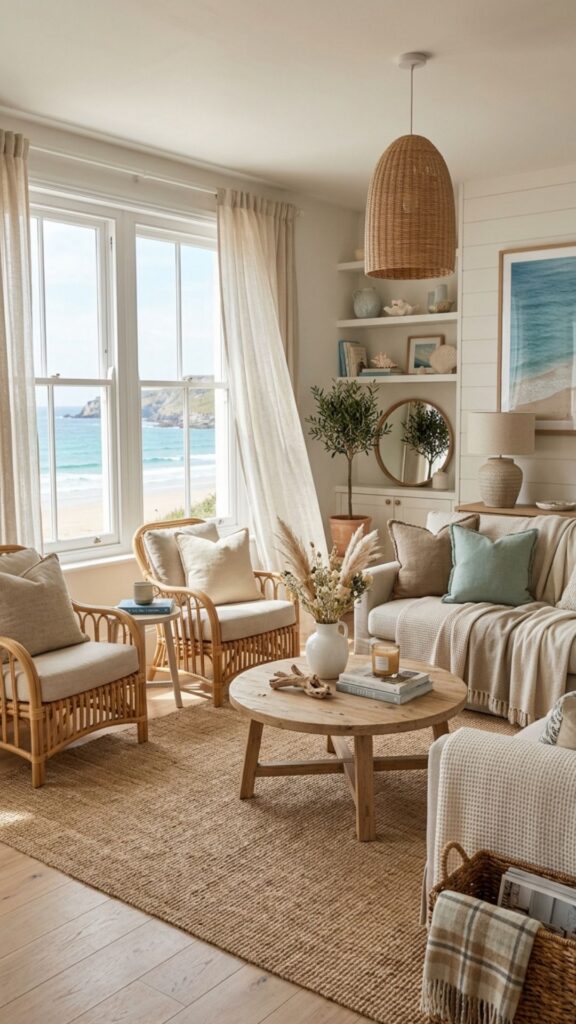
One common pain point with coastal style is that it can feel cold or flat. The fix is texture.
Layer textures that feel relaxed and real
Bring in materials such as:
- Linen curtains
- Cotton slipcovers
- Jute or sisal rugs
- Woven baskets
- Rattan chairs or lighting
- Light oak or whitewashed wood tables
These finishes add depth without clutter. They also make living room interior design cozy, which matters if you want your space to feel lived in rather than just styled.
Mix polished and imperfect finishes
A smooth glass lamp looks even better next to a rough woven tray. A clean sofa feels warmer with a nubby throw. That contrast keeps the room interesting.
3. Create a Breezy Living Room Interior Design Layout
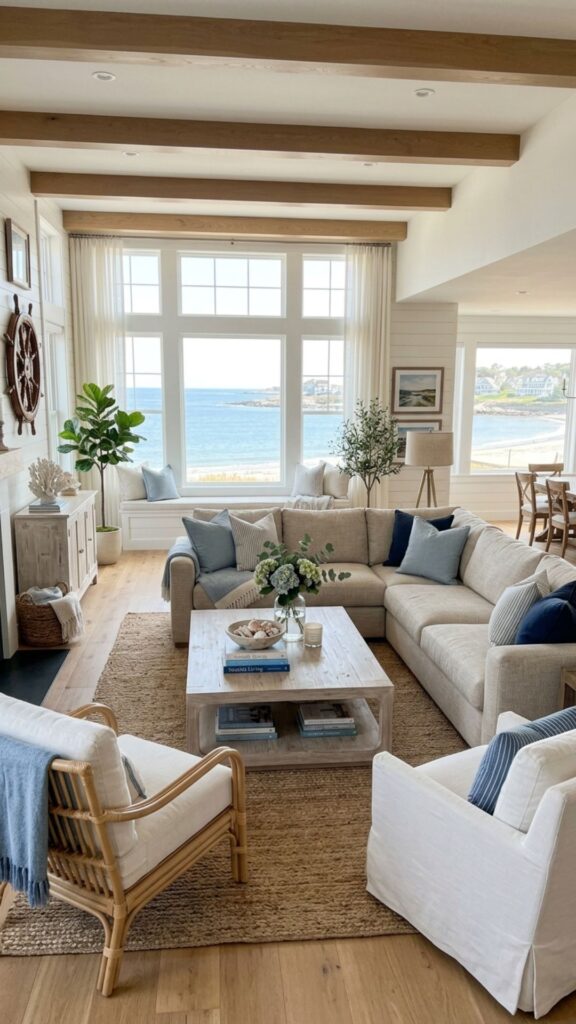
A coastal room should feel easy to move through. If the layout is tight or awkward, the room loses its calm effect.
Keep traffic flow open
Your living room interior design layout should allow people to walk around furniture without squeezing through gaps. In most rooms, aim for at least 30 to 36 inches of clear walking space.
Anchor the seating area
Use a rug to define the conversation zone. Then place the sofa and chairs so they face each other or share a common focal point, such as a fireplace, view, or coffee table.
A practical setup might include:
- One sofa
- Two accent chairs
- One coffee table
- One side table per seating side
- A large rug that fits under at least the front legs of all major pieces
This setup feels balanced and works well in both small and medium-sized rooms.
4. Let Natural Light Lead the Design
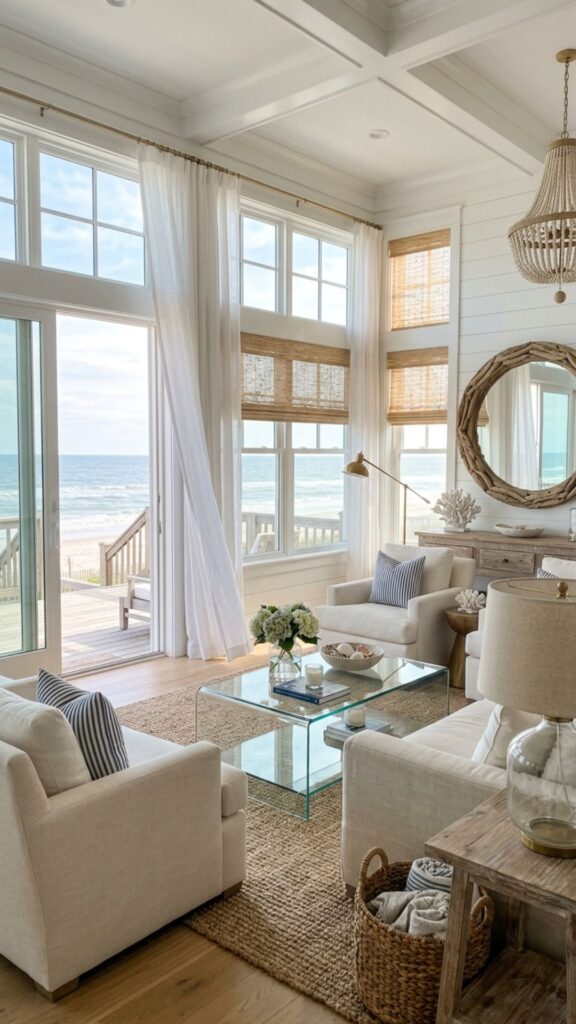
Light is a major part of the coastal look. A dark room can still feel beachy, but it needs help from the right materials and lighting choices.
Keep window treatments light and simple
Skip heavy drapes if possible. Choose airy linen panels, woven shades, or soft white curtains that filter light without blocking it.
Reflect light around the room
Use mirrors, glass accents, pale paint, and lighter upholstery to bounce daylight across the space. If your room does not get much sun, add layered lighting with table lamps, floor lamps, and warm bulbs.
This is especially important in living room interior design modern spaces, where clean lines can sometimes feel stark without enough softness.
5. Use Coastal Decor With Restraint
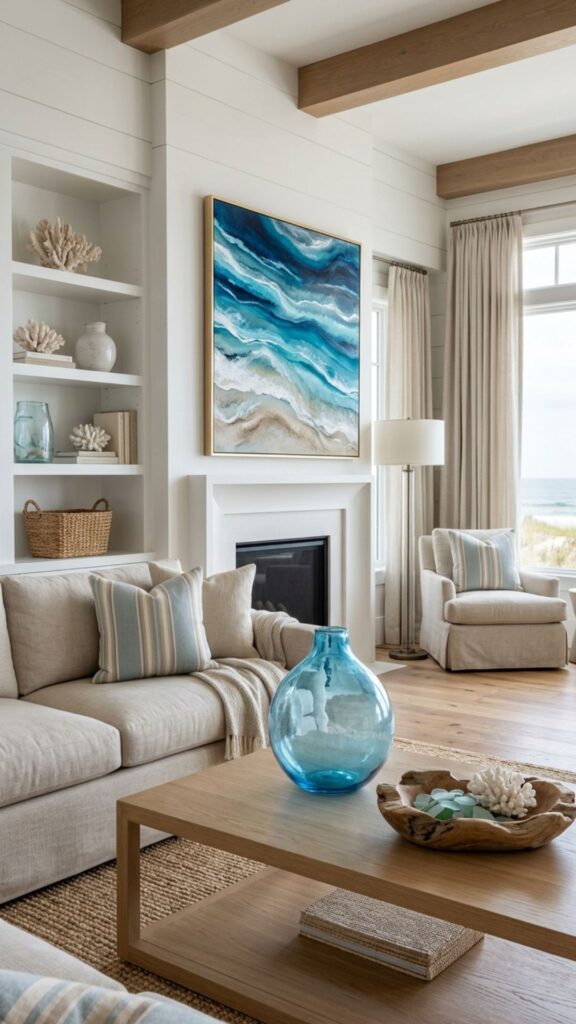
A beachy room does not need starfish on every shelf. In fact, too many themed accessories can make the space feel dated.
Focus on suggestion, not imitation
Choose decor that nods to the coast in a subtle way:
- Abstract ocean-inspired artwork
- Coral-shaped objects in neutral colors
- Driftwood bowls
- Blue glass vases
- Textiles with soft stripe patterns
Edit your accessories
Leave breathing room on shelves and tables. One large piece often works better than a cluster of small items. Coastal rooms feel better when they are styled lightly.
If you remember one thing, let it be this: coastal design is about mood first, decor second.
6. Make It Comfortable With Slipcovered and Relaxed Seating
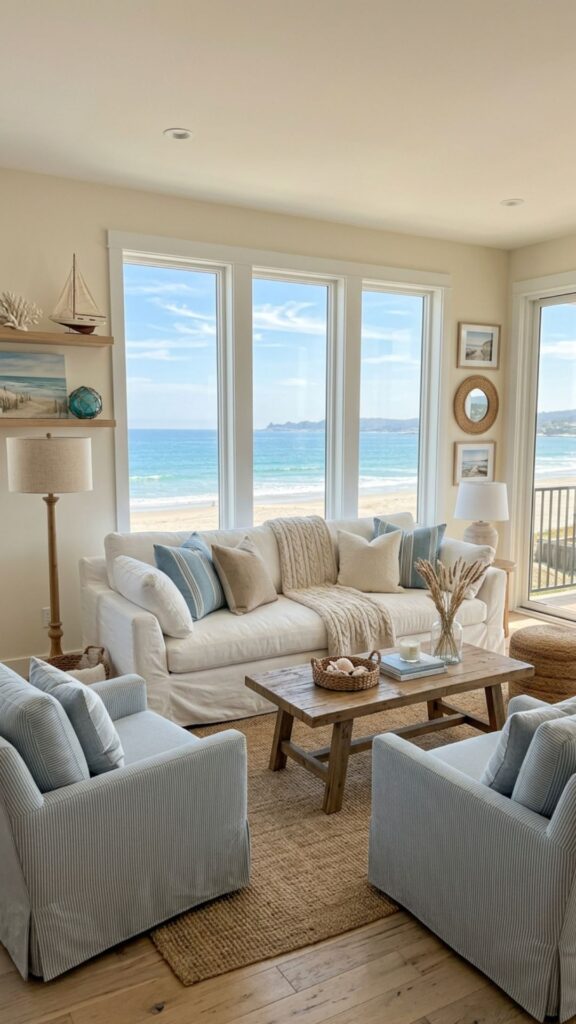
Comfort is not optional in a successful coastal room. The seating should invite people to sit down, stretch out, and stay a while.
Pick sofas and chairs with soft lines
Look for pieces with deep seats, plush cushions, and easy-care fabrics. Slipcovered sofas are a strong choice because they feel casual and timeless.
Choose practical upholstery
Performance fabric is helpful if you have kids, pets, or high traffic. It lets you keep that light coastal look without constant worry.
This is where living room interior design cozy really comes to life. A coastal room should feel fresh, but never stiff.
7. Blend Coastal Style With Modern Simplicity
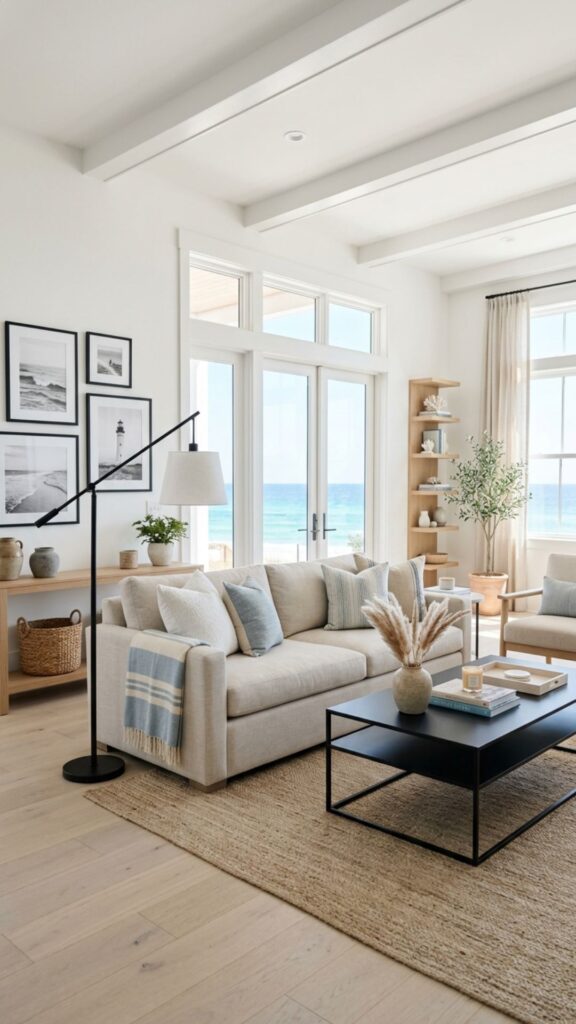
Many homeowners want a beach-inspired room that still feels current. That is where living room interior design modern ideas can help.
Keep the lines clean
Pair relaxed materials with simple furniture shapes. For example, a low-profile linen sofa can work beautifully with a sleek wood coffee table and a sculptural lamp.
Limit the color palette
Modern coastal rooms usually look best with fewer colors and stronger contrast. White walls, pale oak, black accents, and touches of blue can create a crisp, updated feel.
The result is coastal without looking overly rustic or traditional.
8. Add Depth With a Touch of Luxury
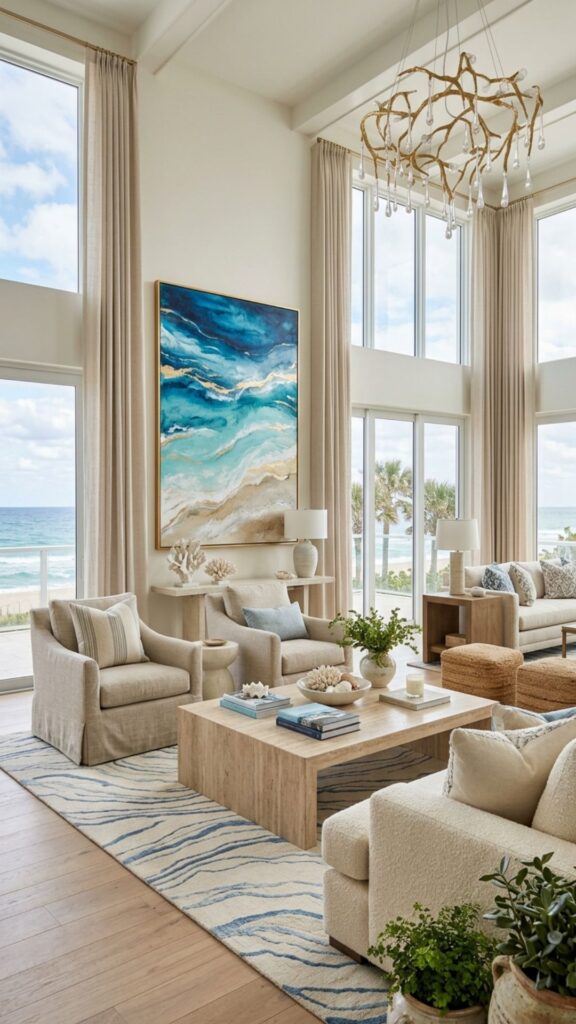
Coastal style can also feel refined. If you want living room interior design luxury, focus on quality, scale, and finish.
Invest in a few standout pieces
You do not need a fully high-end room. One or two elevated choices can shift the entire look, such as:
- A large statement chandelier
- Custom drapery
- Oversized art
- A marble or travertine coffee table
- Tailored armchairs in textured fabric
Keep luxury relaxed
Avoid anything too shiny or formal. Coastal luxury is softer than glam. It feels curated, quiet, and comfortable.
A good test: if the room looks beautiful but still welcomes bare feet and afternoon naps, you got it right.
9. Ground the Room With the Right Rug
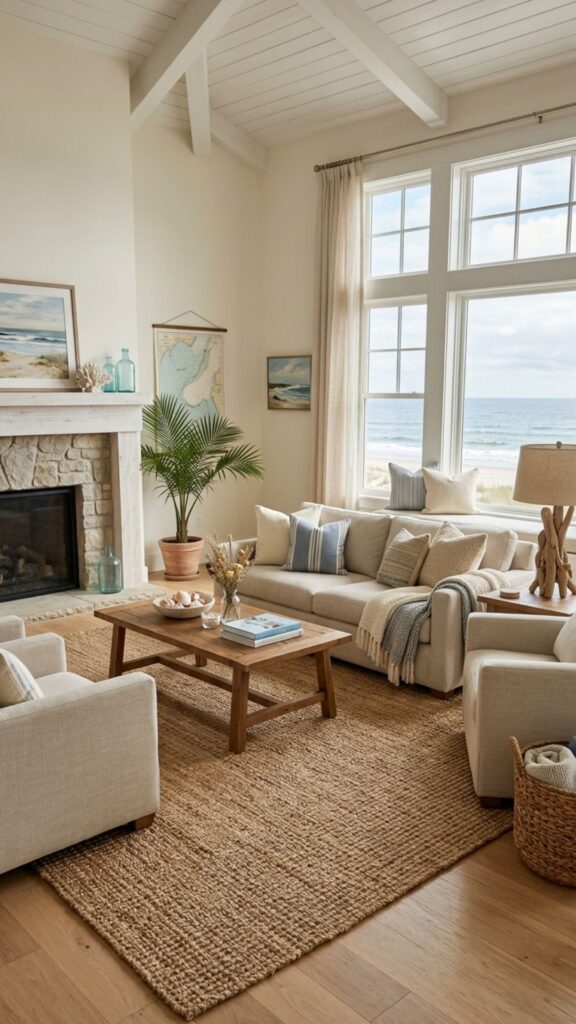
The rug does more than cover the floor. It connects the room.
Choose size before style
A rug that is too small can break up the space. In most cases, bigger is better. At minimum, the front legs of the sofa and chairs should sit on the rug.
Pick materials that suit the look
Jute, wool, cotton flatweave, and low-pile blends all work well. If you want a softer step, layer a plush rug over natural fiber.
This simple move improves both comfort and visual warmth, which is often missing in basic living room interior design ideas.
10. Finish With Personal, Lived-In Touches
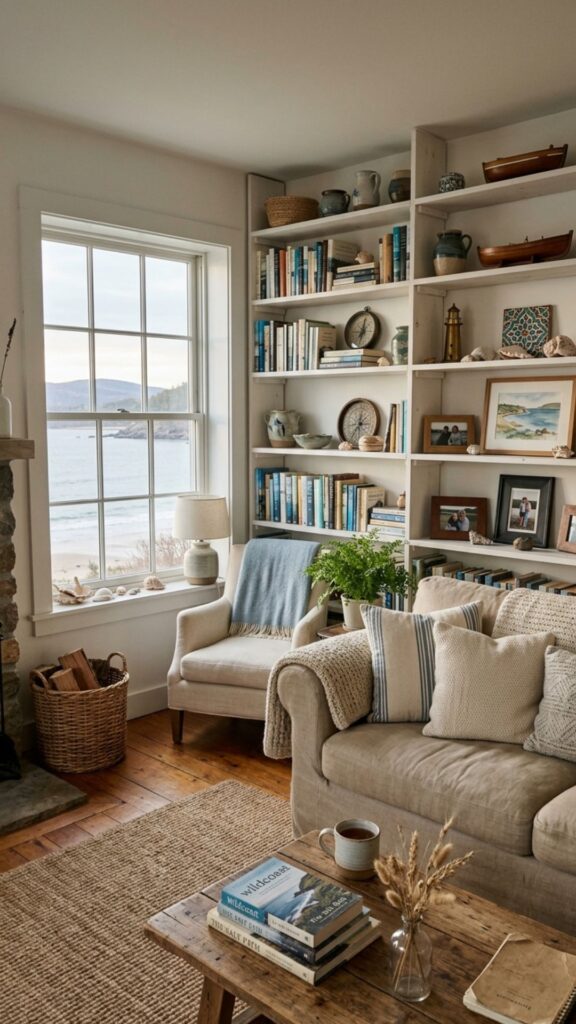
The best coastal rooms do not feel copied from a catalog. They reflect the people who live there.
Add meaningful details
Style your room with books, collected ceramics, family photos in simple frames, or objects from your travels. These touches give the space depth and authenticity.
Keep it balanced
Not every surface needs decor. Leave enough open space so the room still feels calm. Coastal style works best when it has room to breathe.
Common Coastal Design Mistakes to Avoid
Even well-planned rooms can go off track. Here are a few common issues to watch for:
Going too theme-heavy
Too many anchors, shells, or beach signs can make the room feel more like a rental property than a home.
Ignoring comfort
A beautiful room that lacks soft seating, layered lighting, or useful surfaces will not serve you well day to day.
Using only pale colors
Light shades are important, but a room still needs contrast. Add warmth with wood, woven textures, and a few darker accents.
Final Thoughts
A great coastal living room interior design plan is not about following strict rules. It is about creating a room that feels light, welcoming, and easy to live in. Start with soft color, bring in natural texture, improve your layout, and choose decor with a light hand. From there, you can shape the style to feel modern, cozy, or even quietly luxurious.
If you are updating your space, begin with one change that will have the biggest impact, such as a new rug, lighter curtains, or a better furniture arrangement. Small shifts can completely change how your room feels. Use these ideas as your guide, and build a space that brings the calm of the coast home every day.
What colors work best in coastal living room interior design?
The best colors are warm white, sand, beige, soft gray, muted blue, and sea glass green. These shades create a calm, open feel without making the room look overly themed.
How do I make my living room feel coastal without looking cheesy?
Use subtle coastal references, natural textures, and a light palette. Focus on mood and materials instead of obvious beach decor.
Can coastal style work in a small living room?
Yes. In small spaces, keep the palette light, use fewer but larger furniture pieces, and maintain an open living room interior design layout to avoid visual clutter.
What is the difference between modern coastal and traditional coastal design?
Modern coastal design uses cleaner lines, fewer accessories, and a tighter palette. Traditional coastal design often includes more classic furniture details and softer decorative layering.
Is coastal living room interior design still in style?
Yes. Coastal design remains popular because it feels calm, livable, and timeless. The updated version leans more natural, minimal, and refined than the theme-heavy styles of the past.