A small bedroom comes with one big headache: where to put everything. Clothes pile up, shoes sprawl across the floor, and the room starts to feel half its size. The truth is, the problem usually isn’t a lack of space, it’s how that space is used. With the right approach, even a tiny closet can hold far more than you’d expect.
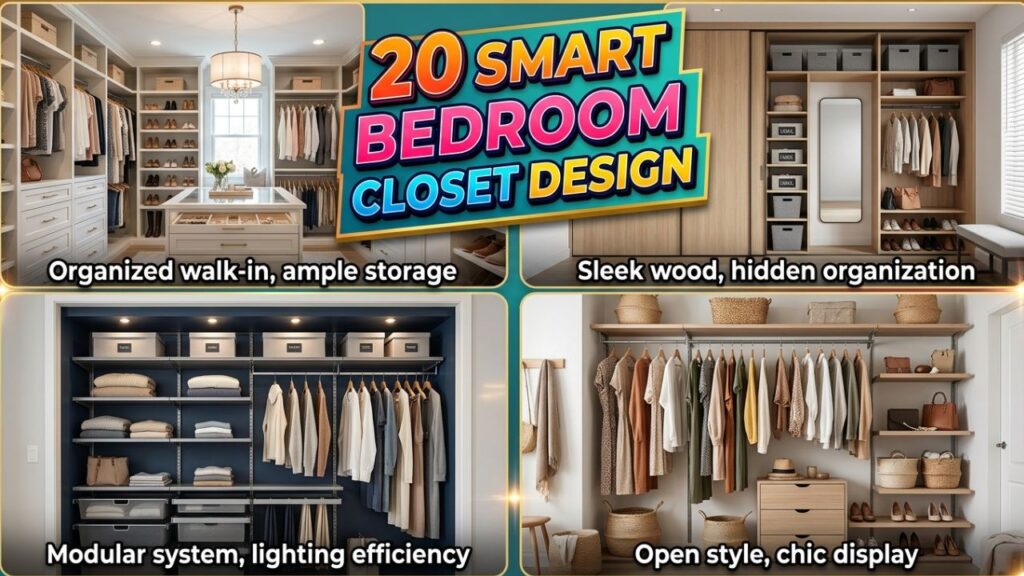
I’ve worked with plenty of cramped rooms over the years, and the same clever tricks keep paying off. In this guide, you’ll find 20 smart bedroom closet design ideas built specifically for small rooms.
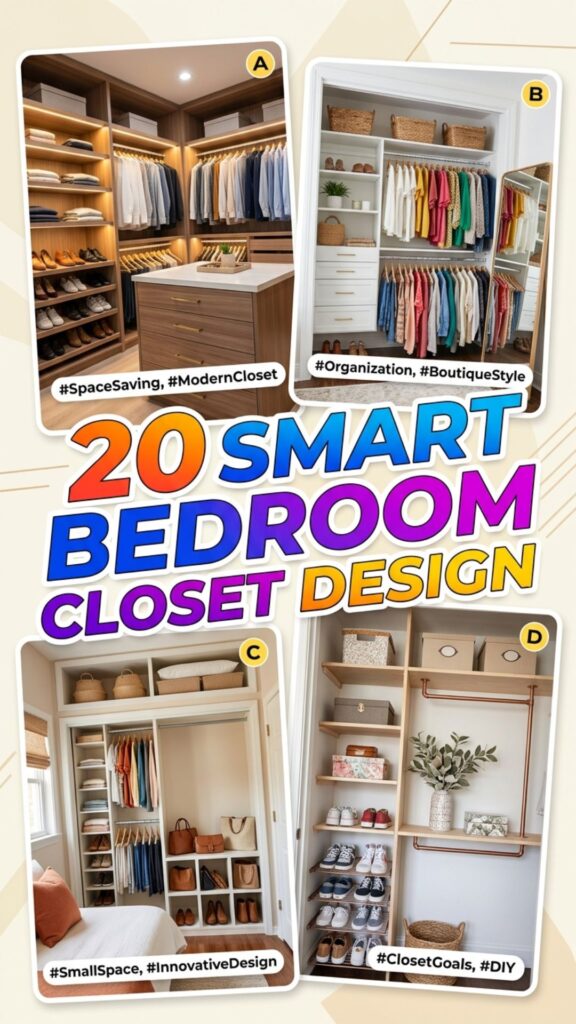
Each one comes with practical steps, real examples, and the pain points to avoid. By the end, you’ll know how to boost storage, improve function, and keep your space looking sharp.
1. Use Vertical Space All the Way Up
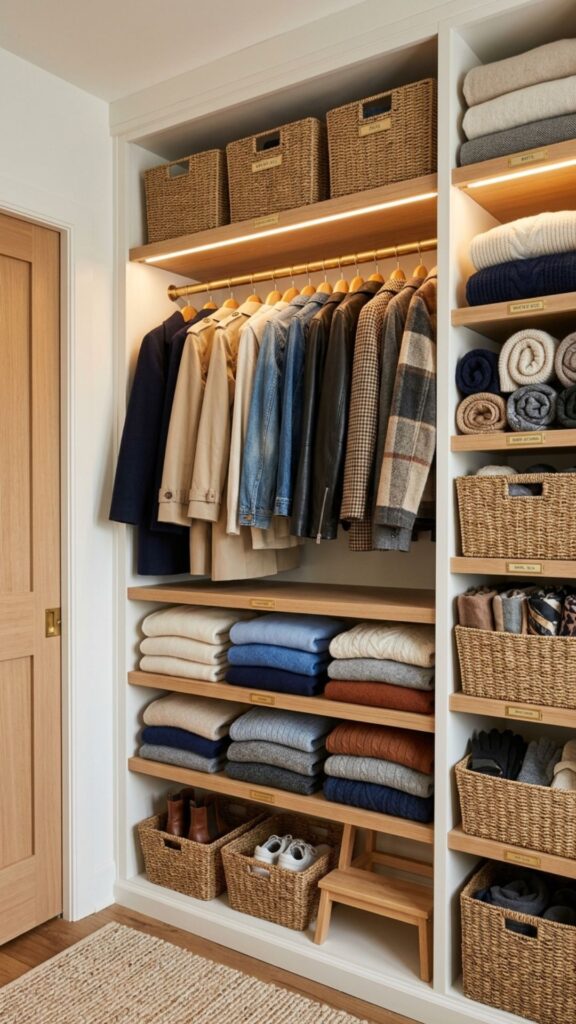
Most small closets waste the area above the top shelf. That empty stretch of wall between the shelf and the ceiling can easily hold a second rod or extra storage. Going vertical is the single fastest way to double your usable space without expanding the footprint.
Add a high shelf for seasonal items or bulky bedding you rarely touch. A small step stool keeps those upper zones reachable when you need them. For a quick answer: the best small bedroom closet design uses every inch from floor to ceiling.
2. Install a Double-Hang Rod System
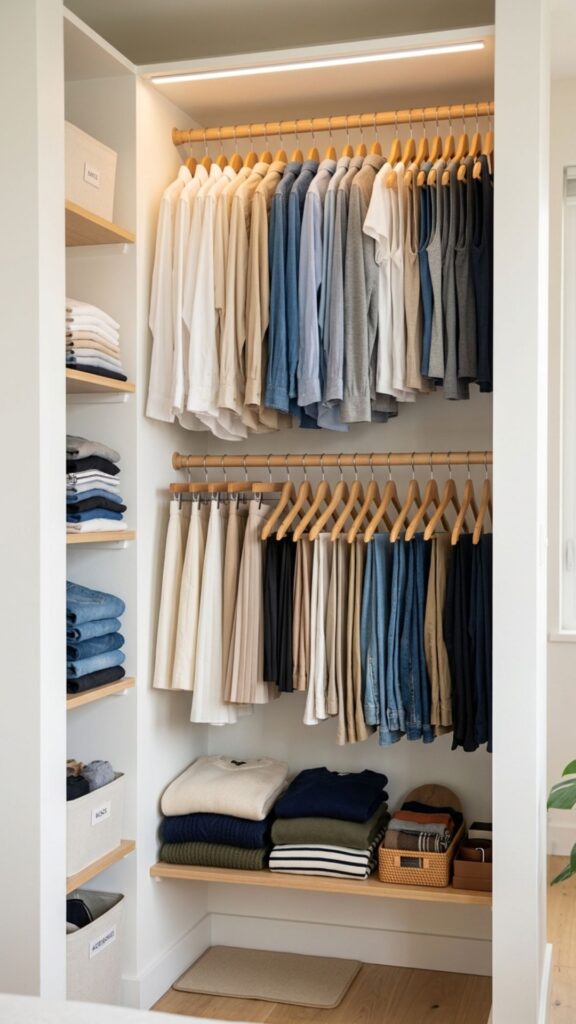
A single rod leaves a huge gap of unused space below your shirts. Splitting that vertical zone into two rods instantly doubles your hanging capacity. This works perfectly for shorter items like tops, skirts, and folded trousers.
Mount one rod at standard height and a second about 40 inches below it. Reserve one section for long items like dresses or coats so nothing drags. This simple swap is one of the cheapest, highest-impact changes you can make.
3. Add Slim Pull-Out Drawers
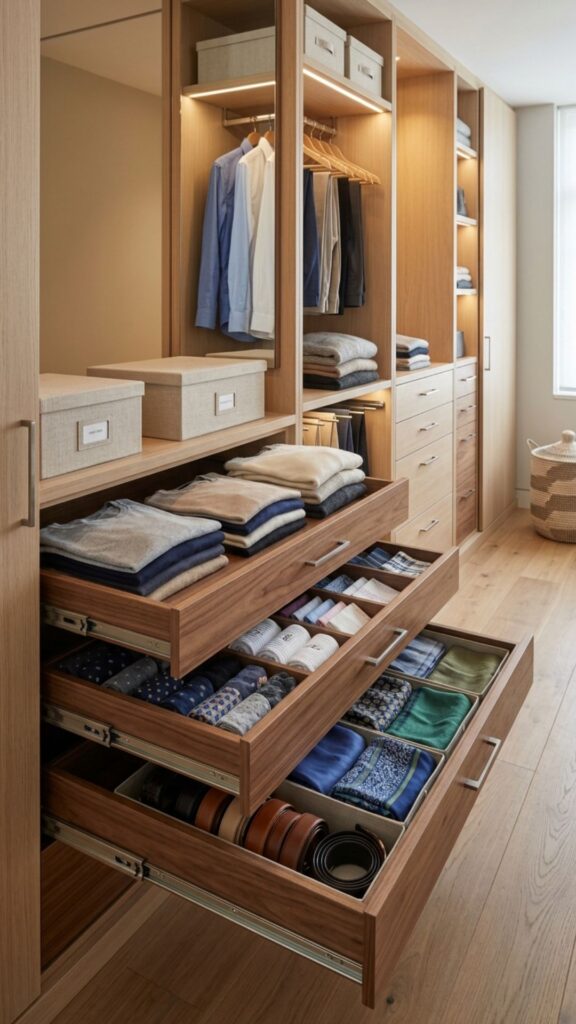
Drawers keep small items tidy and out of sight, which makes a small room feel calmer. Slim, shallow pull-outs work better than deep bins where things get lost. They’re perfect for socks, underwear, and accessories that otherwise create clutter.
Choose drawers with soft-close runners so they glide smoothly in tight spaces. Label them or use dividers if you share the closet with someone else. The goal is to find anything in seconds without digging through a pile.
4. Try a Sliding Door to Save Floor Space
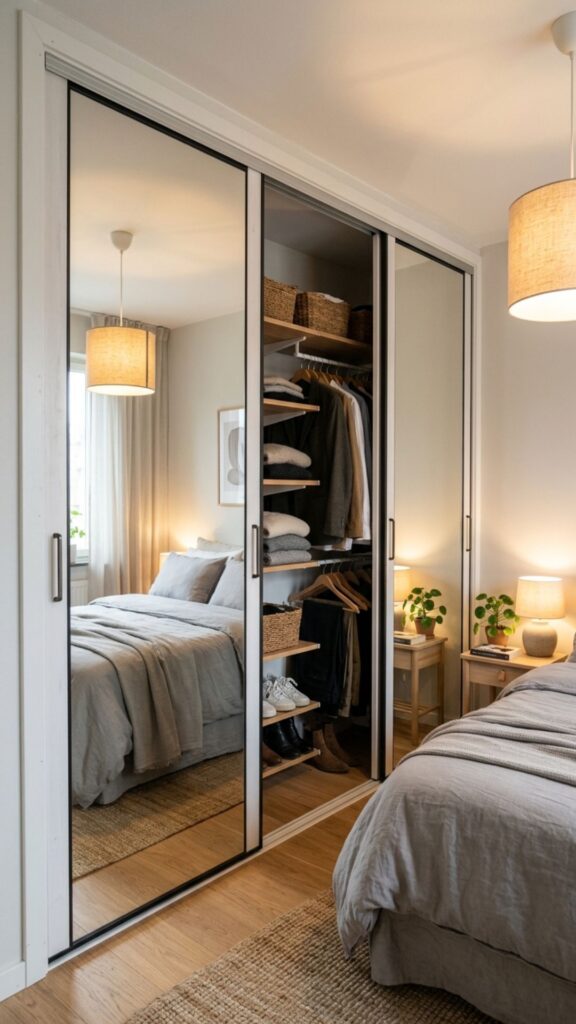
Swinging closet doors eat up valuable floor space in a small room. Sliding or pocket doors solve this by moving sideways instead of out. That freed-up space can hold a chair, a hamper, or simply room to breathe.
Mirrored sliding doors offer a bonus: they bounce light around and make the room feel bigger. Keep the track clean so the doors glide without sticking. For very tight rooms, this single change can transform how the space feels.
5. Use the Back of the Door
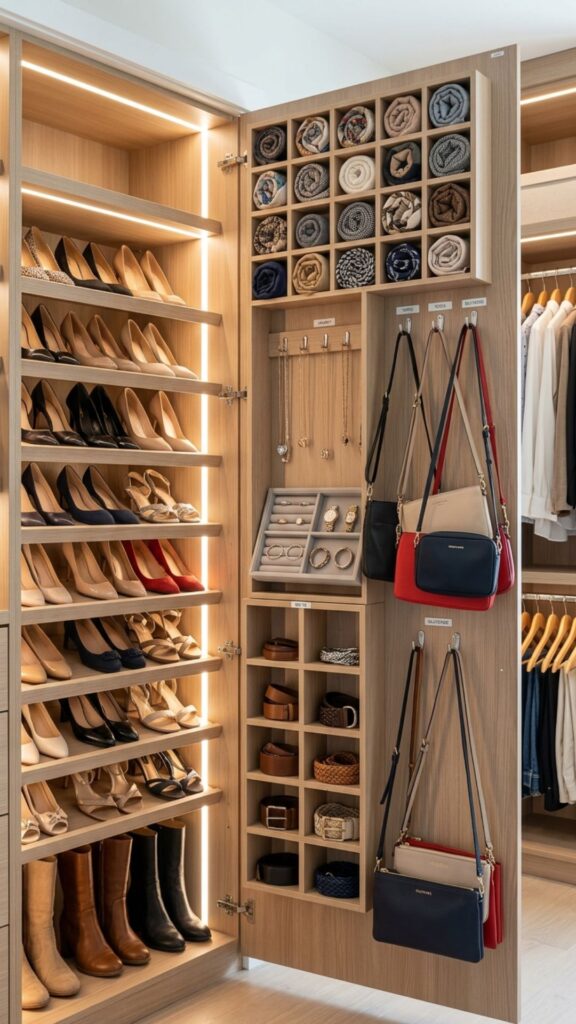
The inside of your closet door is prime real estate that often sits empty. An over-the-door organizer adds instant storage for shoes, scarves, or small bags. It keeps these items visible and easy to grab on your way out.
Hooks and slim racks also work well here for belts, hats, or jewelry. Just avoid overloading the door so it still closes smoothly. This is one of the easiest wins for any small bedroom closet design.
6. Add Built-In Shelving Around the Bed
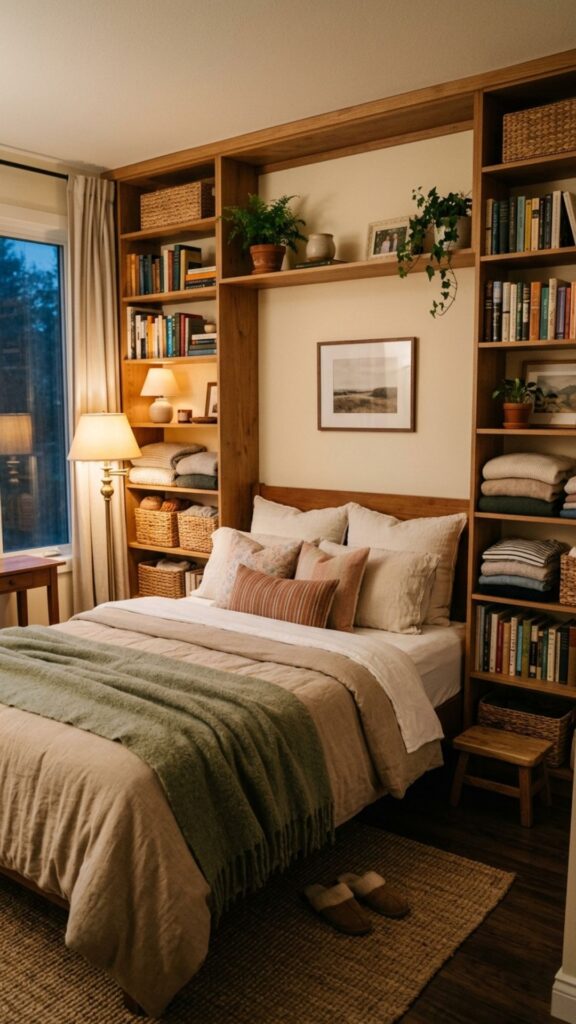
When closet space runs out, the walls around your bed can pick up the slack. Built-in shelves above and beside the headboard create storage without taking floor space. They hold books, baskets, and folded clothes within easy reach.
Keep the shelving shallow so it doesn’t crowd the sleeping area. Paint it the same colour as the walls so it blends in and feels calm. This approach turns awkward wall space into smart, stylish storage.
7. Choose Floor-to-Ceiling Wardrobes
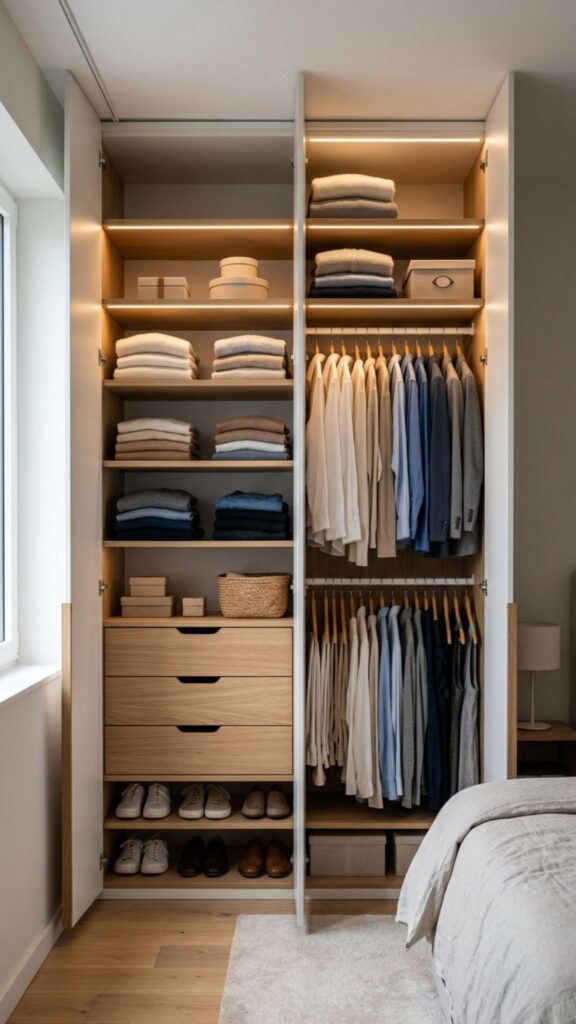
A tall wardrobe makes far better use of a small footprint than a short one. Floor-to-ceiling units capture all that wasted height most furniture ignores. They store everything from hanging clothes to shoes and folded items in one tidy place.
Pick a wardrobe with a mix of hanging space, shelves, and drawers inside. Sliding doors keep it from intruding on the room. The taller and slimmer the unit, the more it earns its keep in a tight space.
8. Add Pull-Out Baskets for Folded Clothes
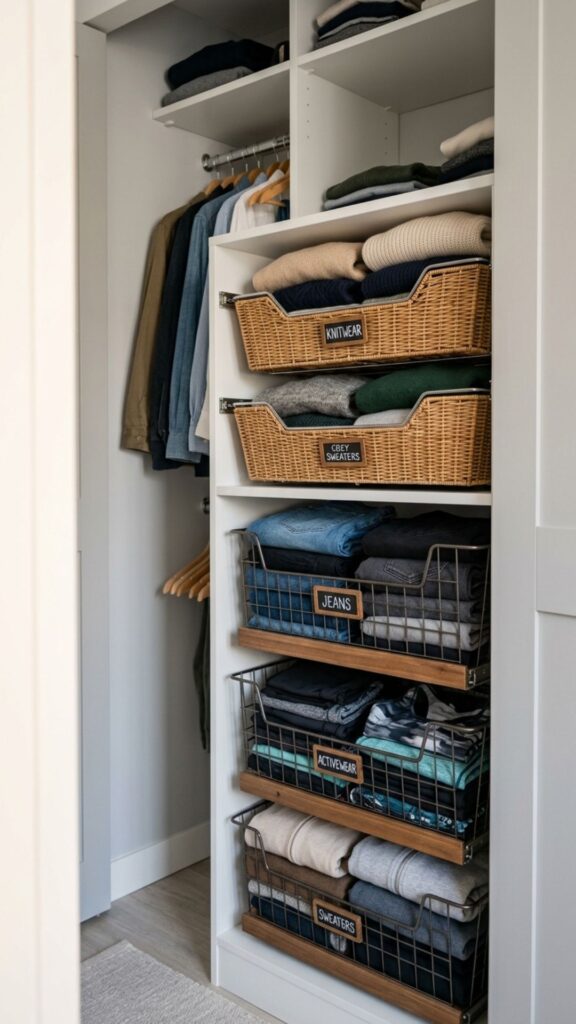
Folded clothes stacked on a shelf often topple the moment you grab one. Pull-out wire or fabric baskets keep stacks contained and easy to access. They slide out fully so you can see everything without disturbing the pile.
Use them for jeans, jumpers, and gym clothes that don’t need hanging. Breathable mesh baskets help air circulate and keep fabrics fresh. They bring drawer-style order to a simple shelf setup.
9. Light the Closet with LED Strips
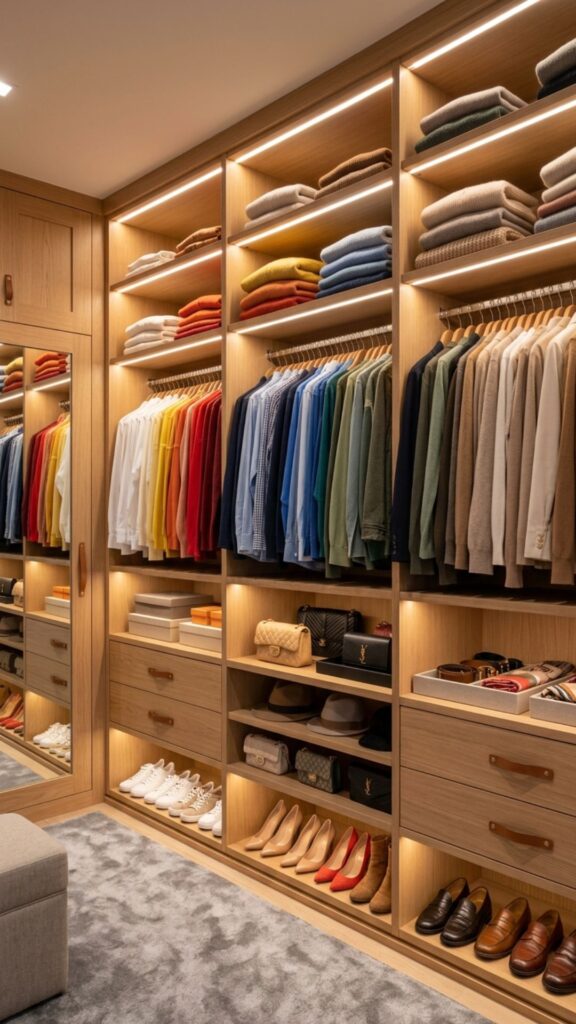
A dark closet hides half of what you own, which leads to forgotten clothes. Adding LED strip lighting makes everything visible at a glance. Good light helps you find items fast and makes a small closet feel bigger.
Stick-on, battery-powered strips work without any wiring. Motion-activated lights turn on the moment you open the door. This small upgrade makes a surprisingly big difference in daily use.
10. Use Corner Space Smartly
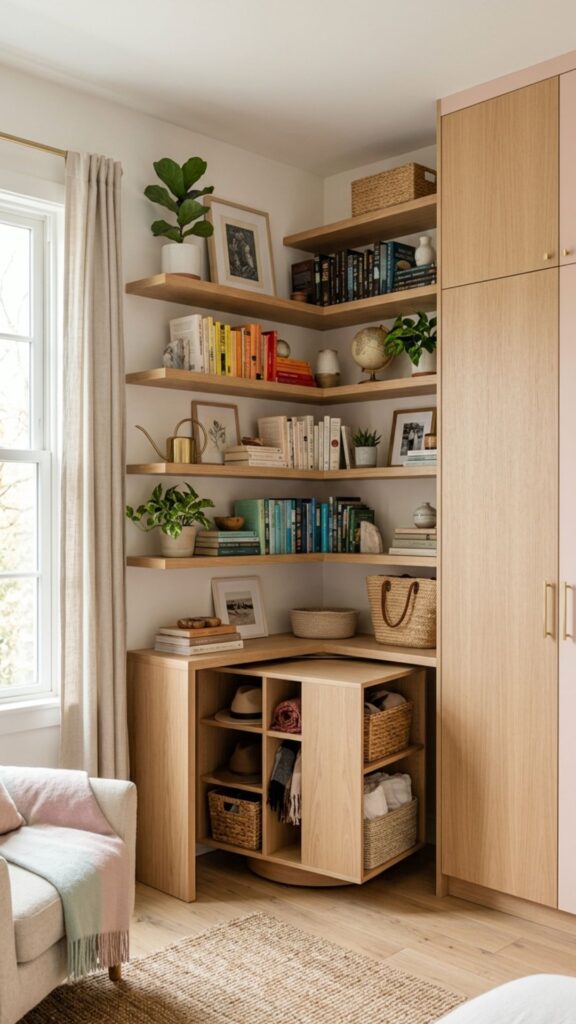
Corners are the most overlooked spot in small bedrooms. A corner wardrobe or angled shelving unit fills space that would otherwise sit empty. This keeps the main walls free for other furniture.
Carousel rods or rotating shelves help you reach deep corners with ease. Measure carefully so doors and drawers can open fully. A smart corner setup squeezes real storage out of dead space.
11. Hang Hooks for Everyday Items
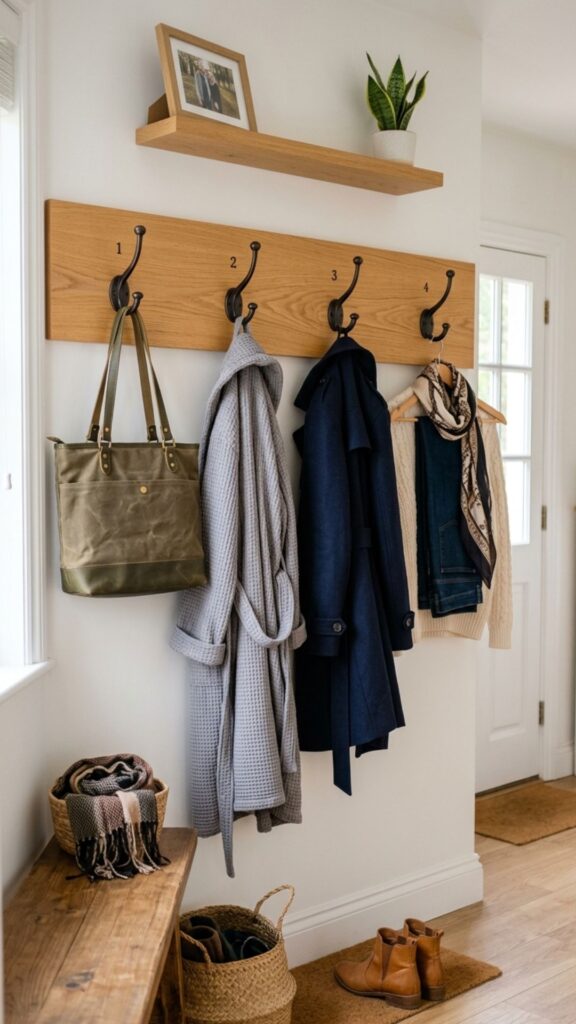
Not everything needs to be folded or hung on a rod. A row of hooks handles bags, robes, and tomorrow’s outfit without any fuss. Hooks keep frequently used items off the floor and within reach.
Mount them inside the closet or on a free strip of wall nearby. Choose sturdy hooks that can hold heavier coats and bags. This quick fix cuts down on the clutter that piles up on chairs and floors.
12. Add a Mirror to Open Up the Space
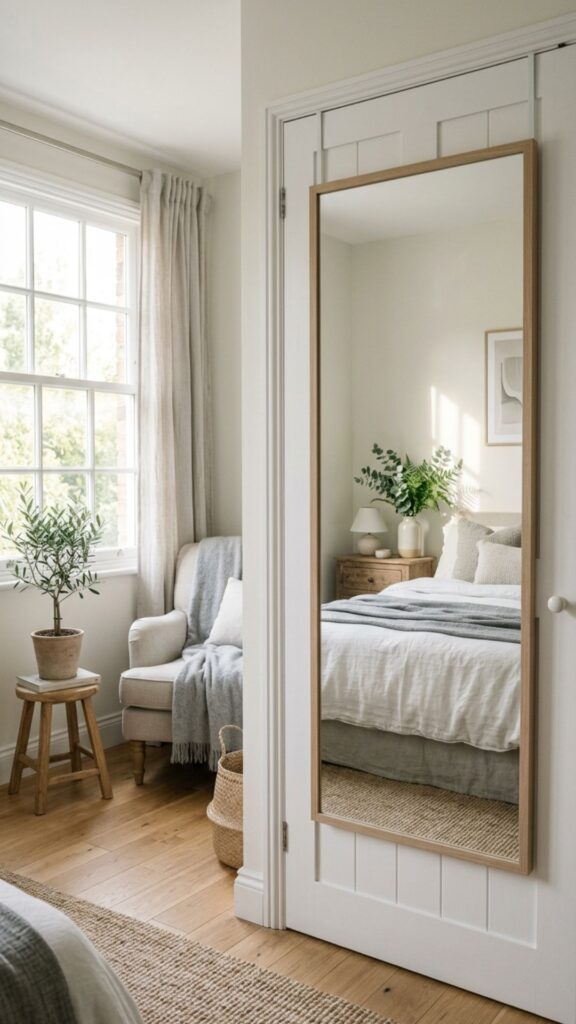
A full-length mirror does double duty in a small bedroom. It lets you check outfits and makes the room feel larger by reflecting light. Placing one on a closet door saves wall space entirely.
For a quick answer: mirrors are one of the easiest ways to make a small room feel bigger. Angle it to catch natural light from a window if you can. The brighter and more open the room feels, the less cramped your closet seems.
13. Use Clear or Labeled Storage Boxes
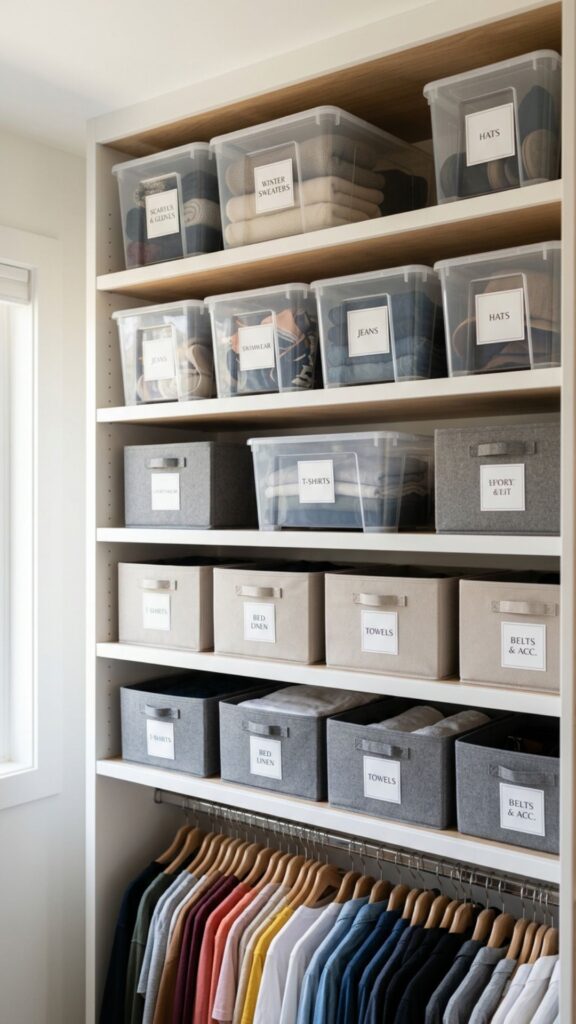
Stackable boxes turn a messy shelf into an organized system. Clear boxes let you see contents instantly, while labels keep solid boxes easy to identify. Both options stop you from rummaging through everything to find one thing.
Use them for shoes, accessories, or off-season clothing on high shelves. Stick to a uniform box size for a clean, cohesive look. Consistent storage makes even a packed closet feel calm and controlled.
14. Build a Small Walk-In with a Curtain
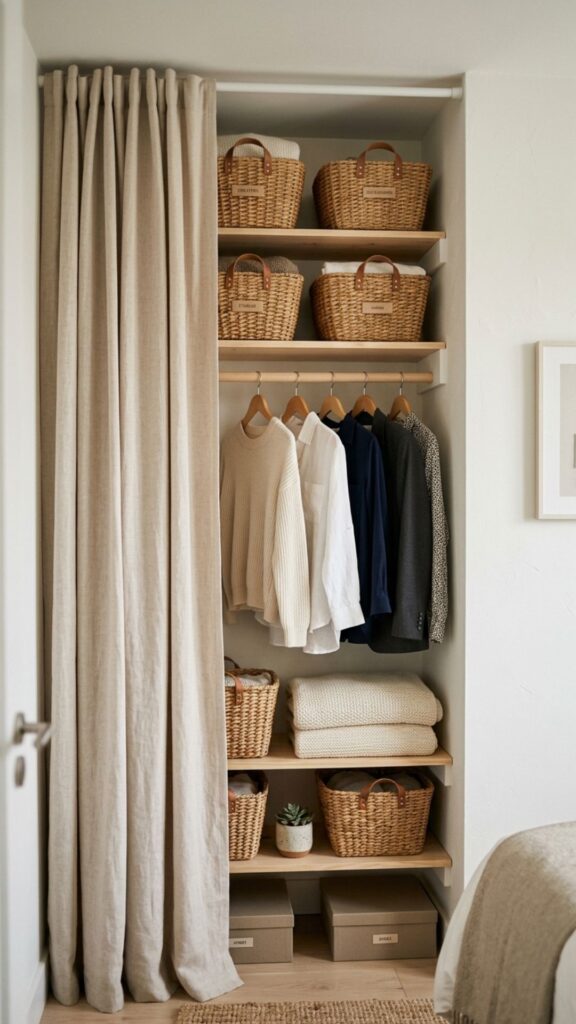
If you can carve out a shallow nook, a curtained closet feels open and airy. A simple rod and curtain replace bulky doors and cost very little. This works well in rooms where every inch counts.
Choose a light, neutral curtain so the space feels soft rather than heavy. Add a rod, a shelf, and a few baskets behind it for a complete setup. It’s a budget-friendly way to create a tidy, dedicated storage zone.
15. Add Drawer Dividers and Organizers
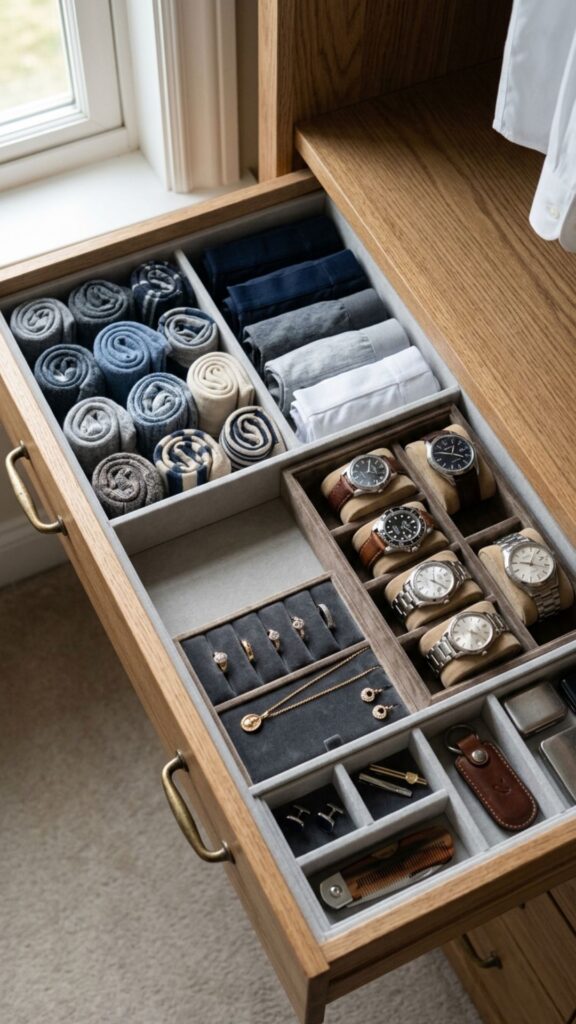
A deep drawer quickly becomes a jumbled mess without structure. Dividers split the space into clear sections for socks, underwear, and accessories. Everything gets a home, so you waste no time searching each morning.
Adjustable dividers let you resize sections as your needs change. Small trays work well for jewelry and watches. These low-cost tools make a big difference in keeping a small closet functional.
16. Store Shoes on a Slim Vertical Rack
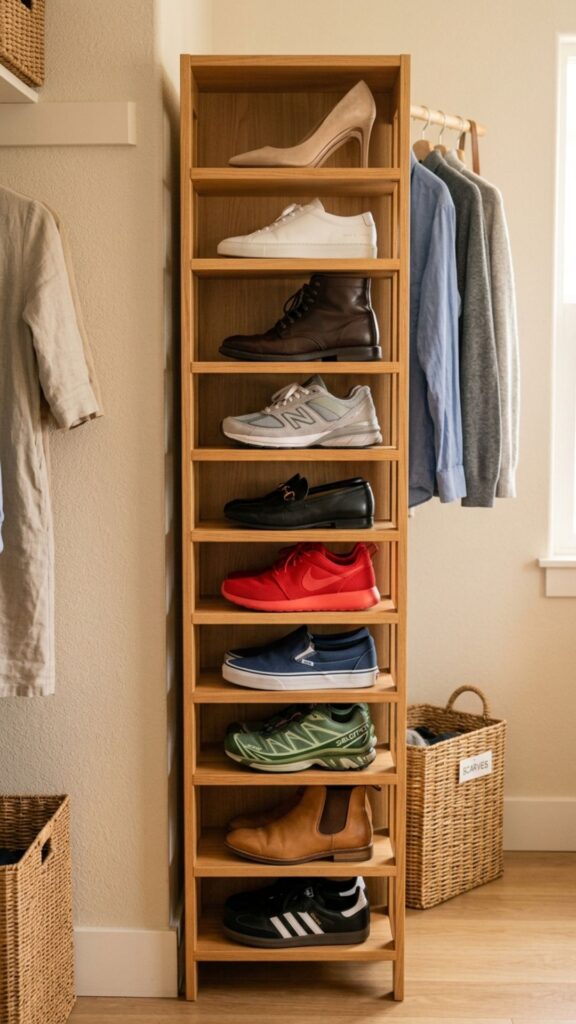
Shoes scattered on the floor make a small closet feel chaotic fast. A slim vertical rack stacks them neatly and frees up valuable floor space. Look for one that fits the narrow gap beside hanging clothes.
Over-the-door shoe pockets work well for sneakers and flats too. Keep your most-worn pairs at eye level for easy access. Tidy shoe storage instantly makes the whole closet look more put together.
17. Use a Multi-Functional Bed with Storage
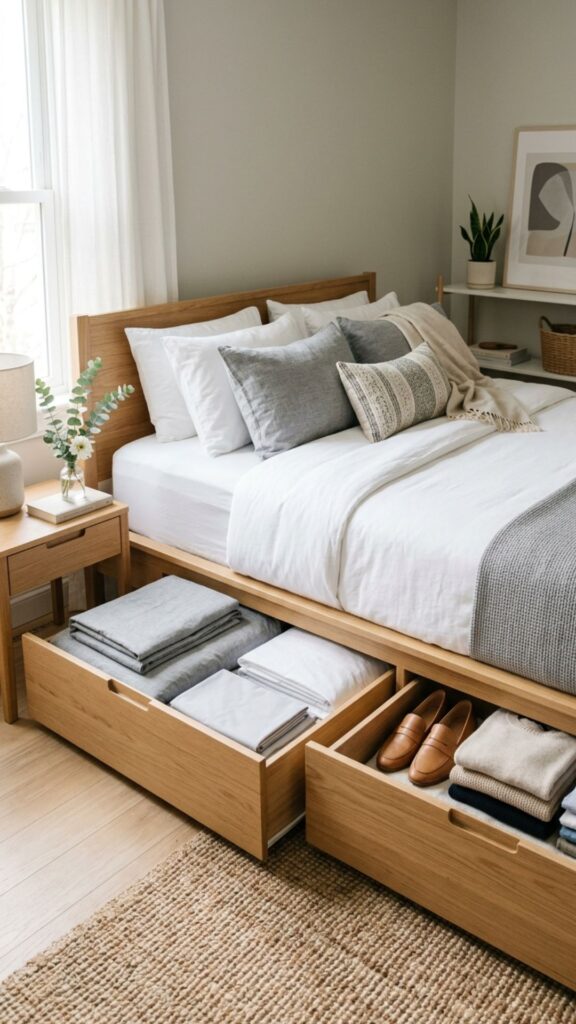
When closet space is truly maxed out, look to your bed. Storage beds with built-in drawers or a lift-up base hold bulky items easily. This frees your closet for everyday clothes you reach for often.
Use under-bed storage for bedding, off-season clothes, or shoes. Choose a frame with smooth-gliding drawers so access stays easy. This trick adds serious storage without changing the room’s footprint.
18. Keep a Tidy Colour and Texture Scheme
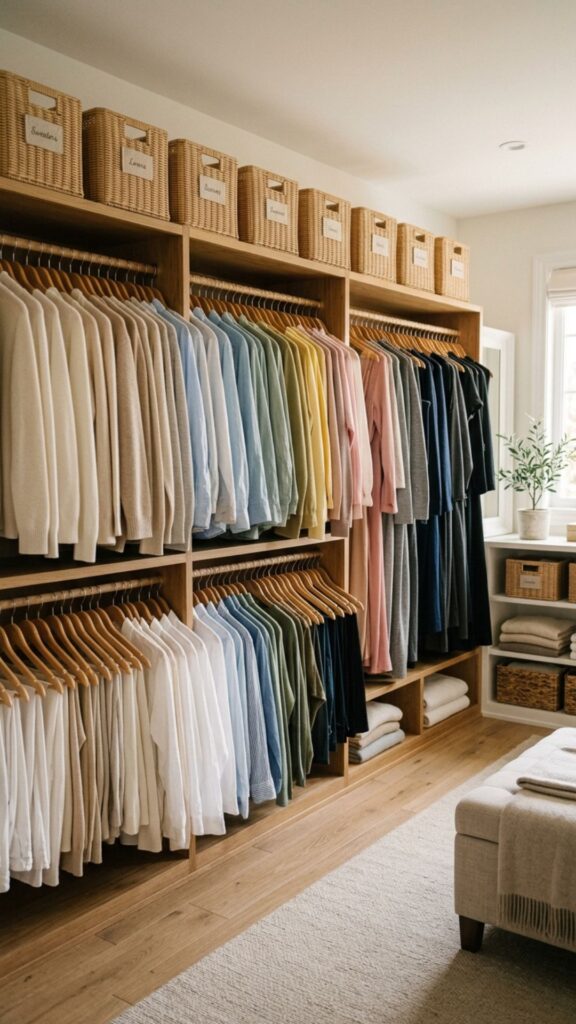
A small closet looks bigger when everything feels visually calm. Sticking to a consistent colour palette for boxes, hangers, and baskets reduces visual noise. The space reads as organized even when it’s full.
Matching slim velvet hangers also save space and keep clothes from slipping. Group clothes by colour for a tidy, easy-to-scan look. Small visual choices like these make daily use feel effortless.
19. Add a Fold-Down or Slim Bench
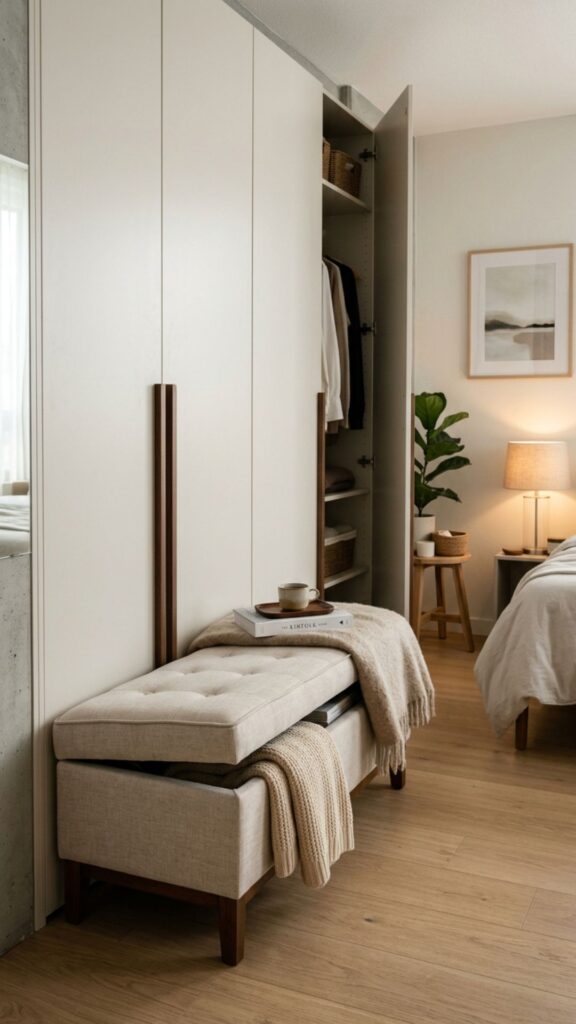
A little seating helps when getting dressed, but bulky furniture won’t fit. A fold-down bench or slim storage stool offers a spot to sit without crowding the room. Many include hidden storage inside for extra value.
Tuck the bench against the closet or under a window when not in use. Choose one with a soft top that ties into your room’s colours. It adds comfort and storage while keeping the floor clear.
20. Declutter Before You Design
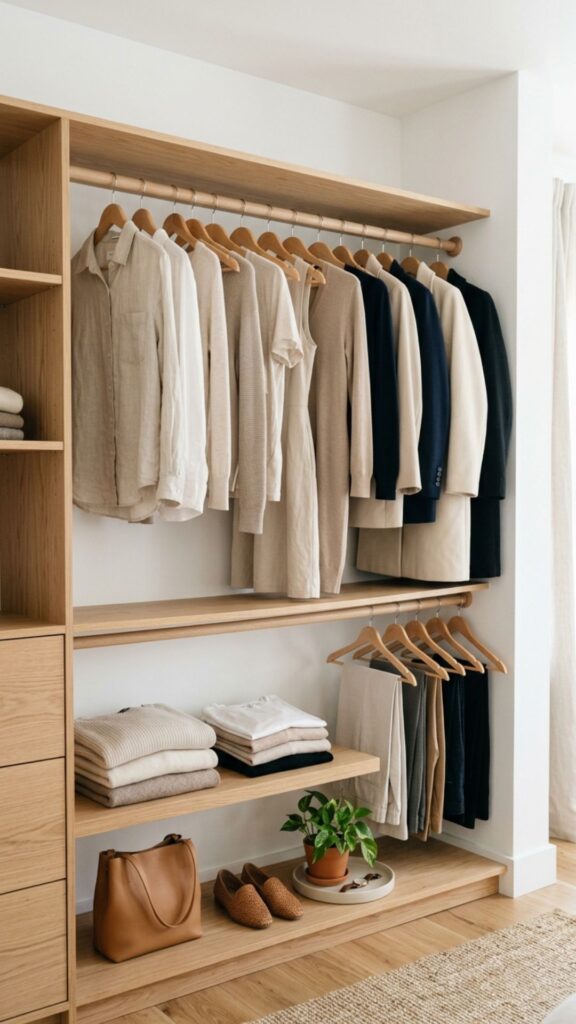
The smartest bedroom closet design starts with owning less. Clearing out clothes you never wear frees up space you didn’t know you had. A good declutter often solves storage problems on its own.
Sort items into keep, donate, and toss piles before adding new storage. Tackle one section at a time so the job feels manageable. A lean wardrobe makes every other idea on this list work even better.
Conclusion
A smart bedroom closet design isn’t about having more room, it’s about using what you have wisely. The biggest wins come from going vertical, choosing space-saving doors, adding the right organizers, and decluttering regularly. You don’t need to do all 20 ideas at once to see a difference.
Here’s your next step: pick two or three ideas that fit your room and start this weekend. Try a double-hang rod and a quick declutter first, then build from there. Small changes add up fast, and soon your tight closet will feel calm, tidy, and surprisingly spacious.
How can I add more storage to a small bedroom closet?
Start by going vertical with a double-hang rod and a high shelf. Add slim drawers, pull-out baskets, and over-the-door organizers to use every inch. Decluttering first often reveals far more space than you expected.
What is the best closet door for a small bedroom?
Sliding or pocket doors work best because they don’t swing out into the room. Mirrored sliding doors are a bonus, since they reflect light and make the space feel larger. They free up floor space you can use for other furniture.
How do I make a small closet look bigger?
Add lighting, use a consistent colour scheme, and keep surfaces tidy. LED strips brighten dark corners, while matching hangers and boxes reduce visual clutter. A mirror nearby reflects light and opens up the whole space.
Are walk-in closets possible in small bedrooms?
Yes, in a small way. A shallow nook with a rod, a few shelves, and a simple curtain can act like a mini walk-in. It costs little and keeps storage tidy without bulky doors taking up room.
How often should I declutter my closet?
A good rule is twice a year, ideally when the seasons change. Removing clothes you no longer wear keeps the space functional and easy to manage. Regular decluttering stops a small closet from overflowing.