Most bedroom makeovers don’t require a full renovation. More often than not, the right accessories are all it takes to turn a room that feels uninspired into one that actually reflects your personality and meets your needs. A new lamp, a well-chosen rug, or the right set of cushions can shift the entire atmosphere of a space without touching a single wall.
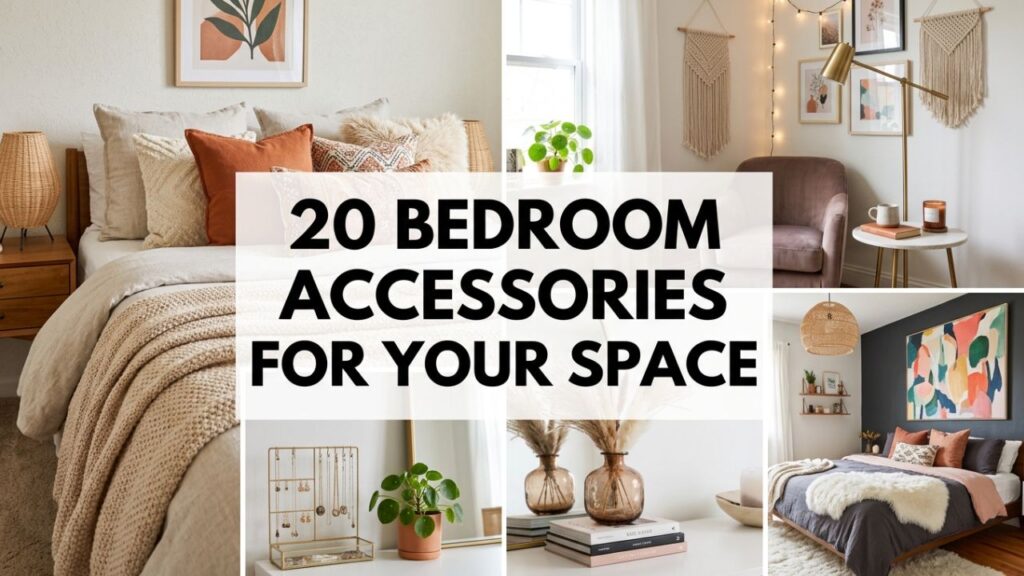
This guide covers 20 bedroom accessories that genuinely make a difference — not just decorative pieces that look good in photos, but items that solve real problems, add warmth, and make your room more comfortable to live in.
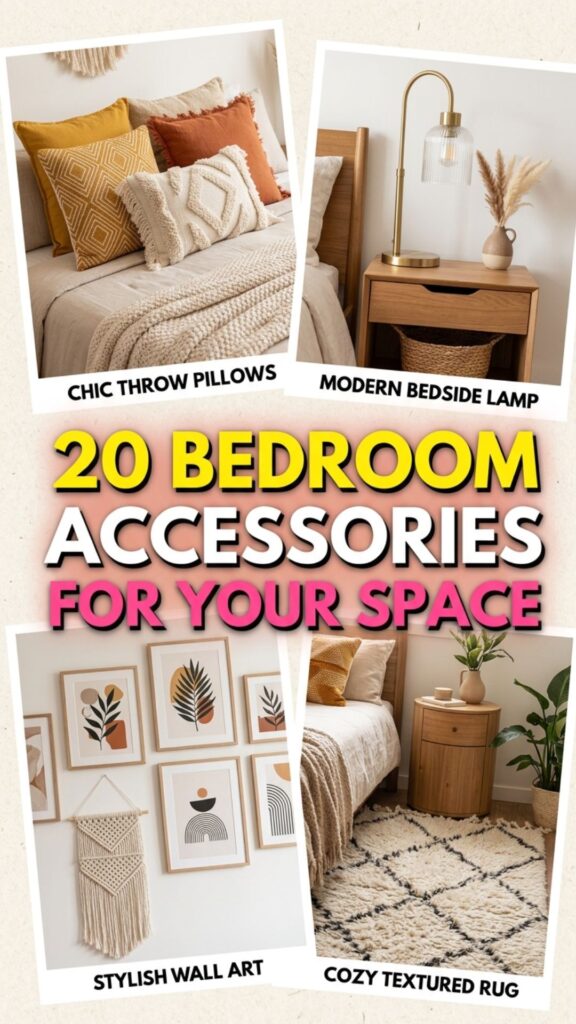
Whether you’re working with a small apartment or a spacious master bedroom, you’ll find practical ideas here that are easy to act on.
1. Layered Throw Pillows
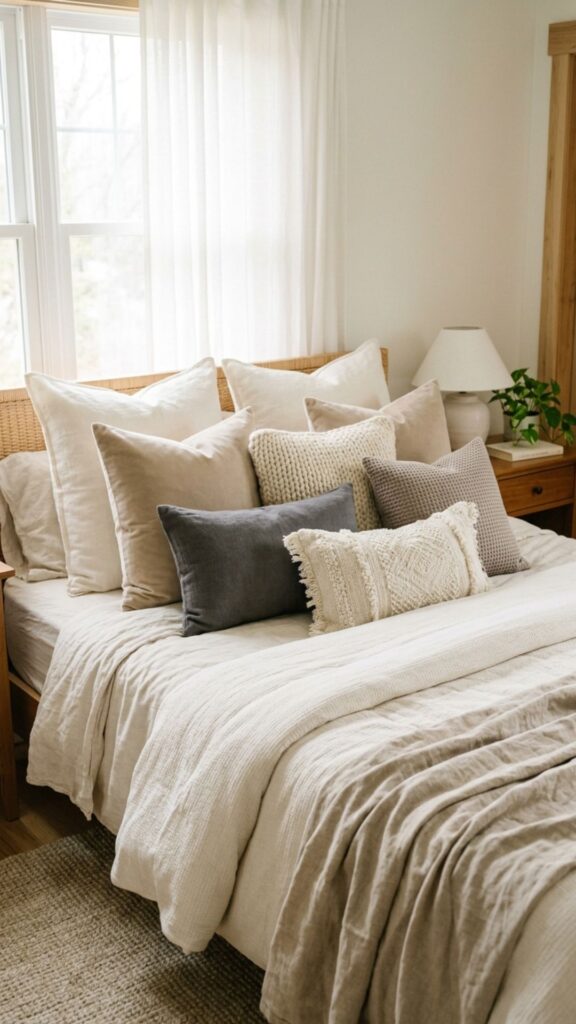
Throw pillows are one of the most accessible bedroom accessories for adding color, texture, and personality to a bed. The key is layering — starting with two large Euro shams at the back, then standard sleeping pillows, then one or two smaller accent pillows in front. This creates depth without looking overdone.
Stick to a palette of two or three tones that tie into the rest of the room. Mixing textures — velvet with linen, or a knit with cotton — adds visual interest even when the colors are similar. Resist the urge to pile on too many; five to seven pillows on a queen bed tends to be the sweet spot.
2. A Chunky Knit Throw Blanket
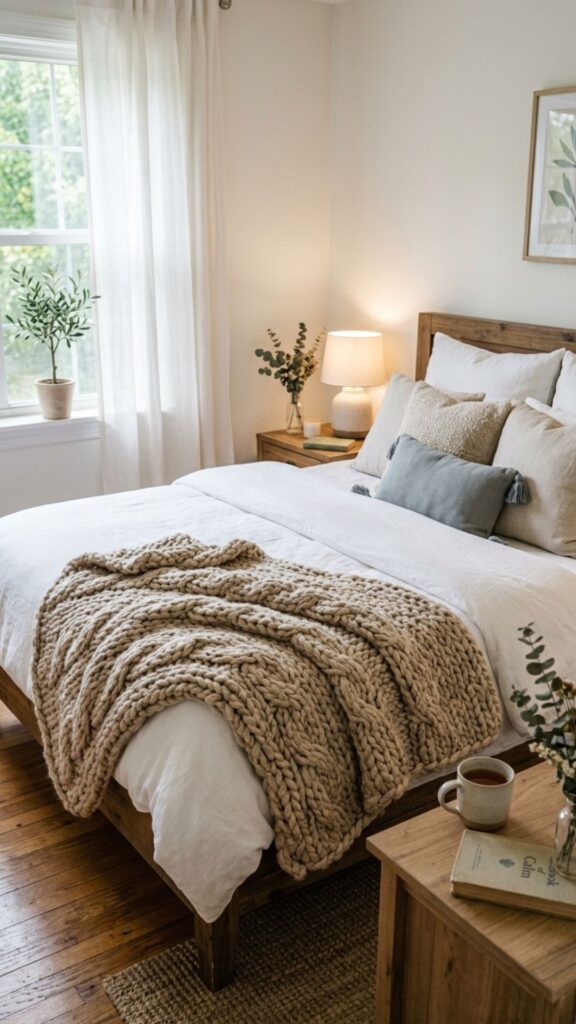
A throw blanket draped at the foot of the bed or over a reading chair instantly makes a bedroom feel cozier. Chunky knit versions in natural fibers like merino wool or cotton are particularly effective — they add noticeable texture and look inviting whether the bed is perfectly made or not.
Beyond aesthetics, a throw is genuinely useful. It’s there when you want an extra layer without switching out your duvet, and it works just as well on the sofa or in a reading nook. Choose a neutral tone that works across seasons so you don’t feel like you need to swap it out every few months.
3. Bedside Table Lamps
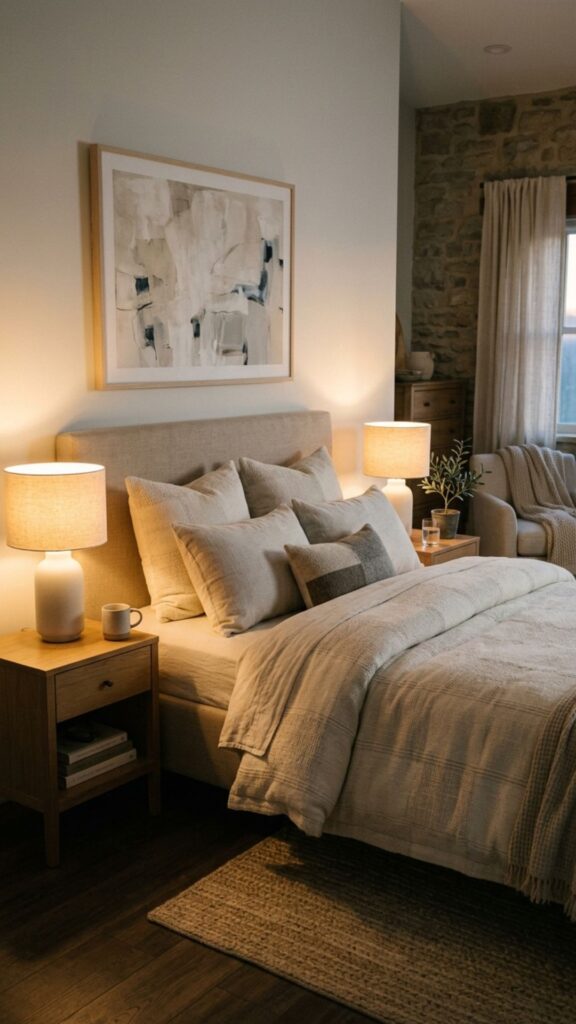
Overhead lighting in a bedroom is rarely flattering or practical on its own. Bedside lamps solve two problems at once — they provide task lighting for reading and create a warm, ambient glow that makes winding down easier. Choosing lamps with warm-toned bulbs around 2700K makes a significant difference in how relaxing the room feels in the evening.
Matching lamps on both sides of the bed create symmetry, but mismatched lamps in the same general style can work well too, especially in a room with an eclectic feel. Make sure the lampshade sits at a height that puts the light where it’s useful rather than shining directly into your eyes.
4. A Decorative Wall Mirror
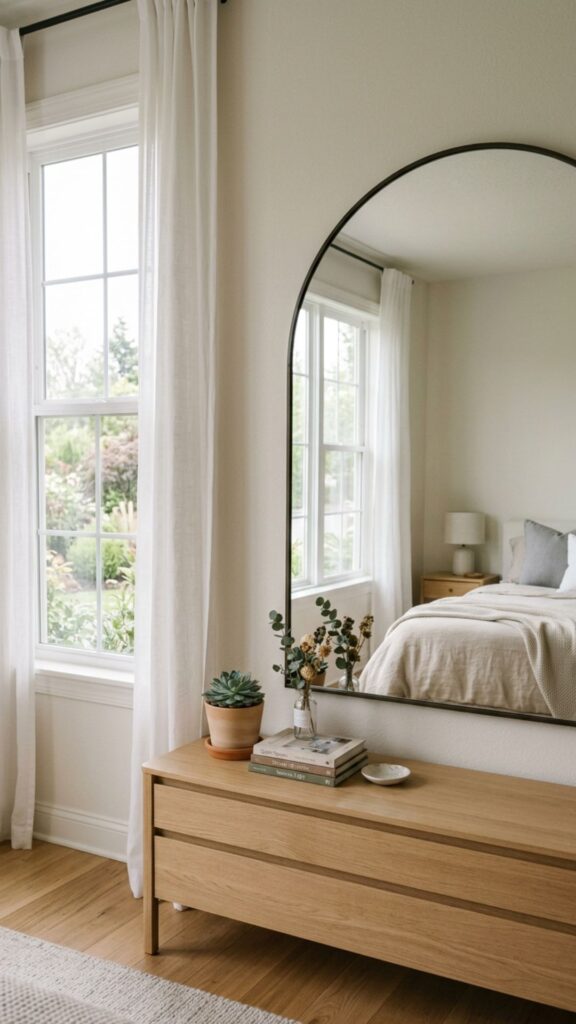
A well-placed mirror does more than serve a functional purpose — it reflects light, creates depth, and makes a room feel larger. A large round or arch-shaped mirror leaned against the wall or mounted above a dresser adds a design element that also happens to be practical.
The size of the mirror matters. Going larger than feels comfortable is usually the right call — oversized mirrors make more visual impact and are harder to get wrong than a collection of smaller ones that can easily feel cluttered. Choose a frame finish that complements your existing hardware for a cohesive look.
5. Linen Duvet Cover
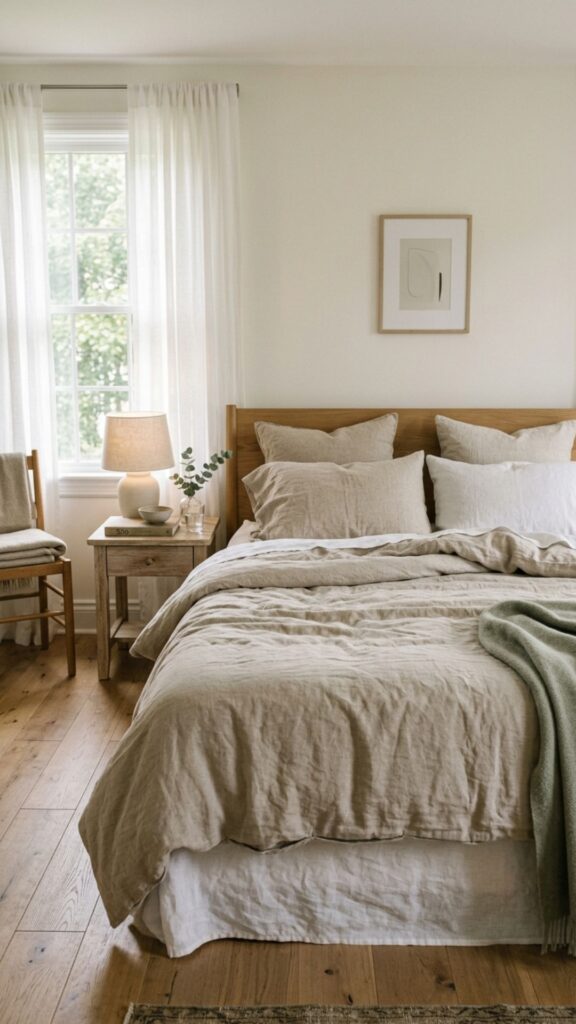
The duvet cover is the most visible piece of bedding in a room, which makes it one of the highest-impact bedroom accessories you can invest in. Linen is a particularly strong choice — it looks good whether perfectly pressed or slightly rumpled, which suits the way most people actually make their beds.
Linen also regulates temperature better than synthetic materials, keeping you cool in summer and warm in winter. Choose a natural, undyed linen for a relaxed, lived-in aesthetic, or a washed linen in a muted tone like dusty blue, sage, or warm oatmeal for a more considered look.
6. An Area Rug
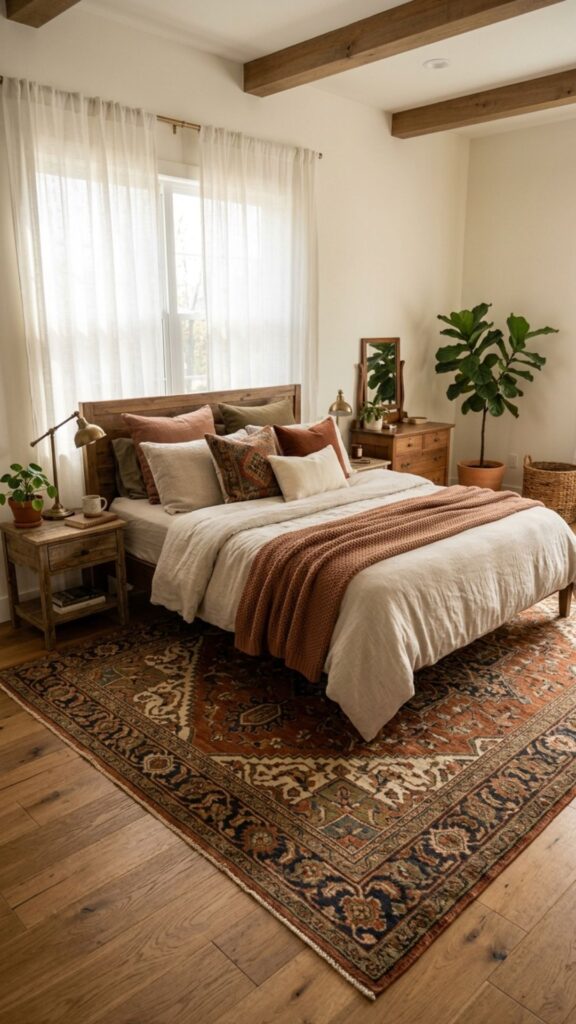
A rug grounds the room and defines the sleeping area, especially in open-plan spaces or studio apartments. The most common mistake is going too small — a rug that only sits under the nightstands rather than extending well beyond the sides of the bed makes the room feel disconnected rather than pulled together.
For a queen or king bed, aim for at least an 8×10 foot rug so there’s several inches of coverage on all three exposed sides of the bed. Natural fiber rugs in jute or wool add warmth and texture, while a low-pile patterned rug in a neutral palette keeps the room feeling light and easy to maintain.
7. Blackout Curtains
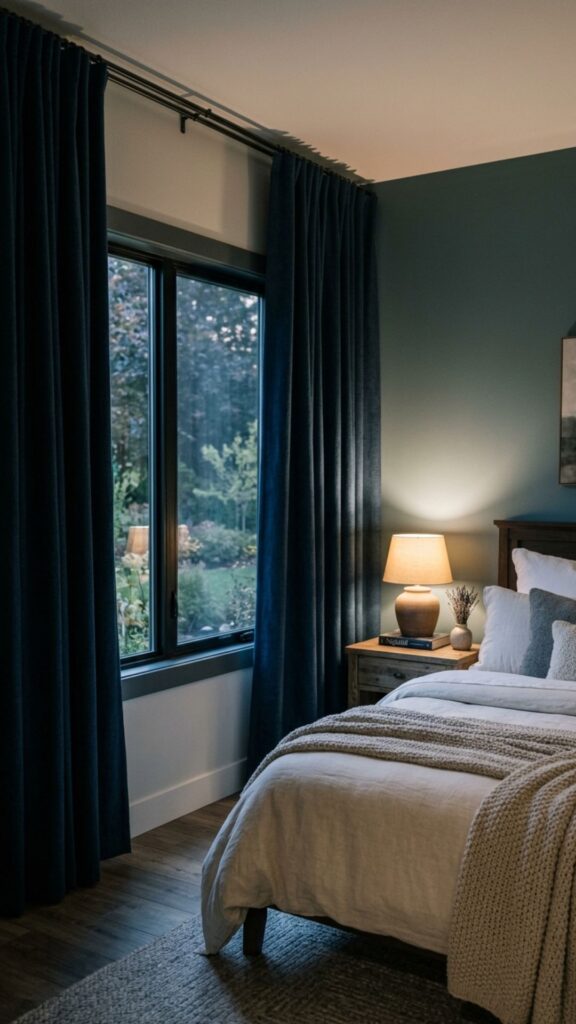
Sleep quality is one of the most overlooked reasons to invest in good window treatments. Blackout curtains block outside light completely — useful if you live near streetlights, work night shifts, or simply want to sleep in on weekends. They also provide a degree of sound dampening and insulation that standard curtains don’t.
Hang them close to the ceiling and extend the rod well beyond the window frame on both sides to maximize coverage and make the window appear larger. Many blackout curtains now come in linen-look fabrics that are aesthetically appealing as well as functional, so you don’t have to sacrifice style for practicality.
8. A Full-Length Mirror
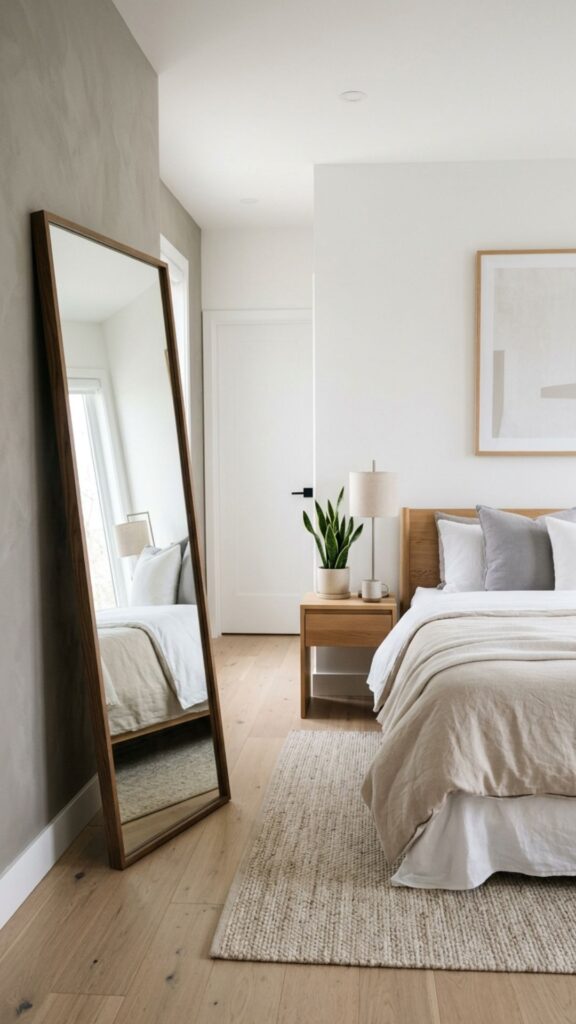
Every bedroom benefits from a full-length mirror. It’s a practical necessity for getting dressed, but it also reflects light into darker corners of the room and creates the illusion of additional space. Leaning a large full-length mirror against the wall has a more relaxed, contemporary feel than mounting it.
If floor space is limited, a full-length mirror mounted on the back of a door is an efficient alternative. Look for a frame that adds to the room’s aesthetic — a slim black metal frame suits a more modern space, while a natural wood or ornate frame works well in warmer, more traditional interiors.
9. Scented Candles or a Diffuser
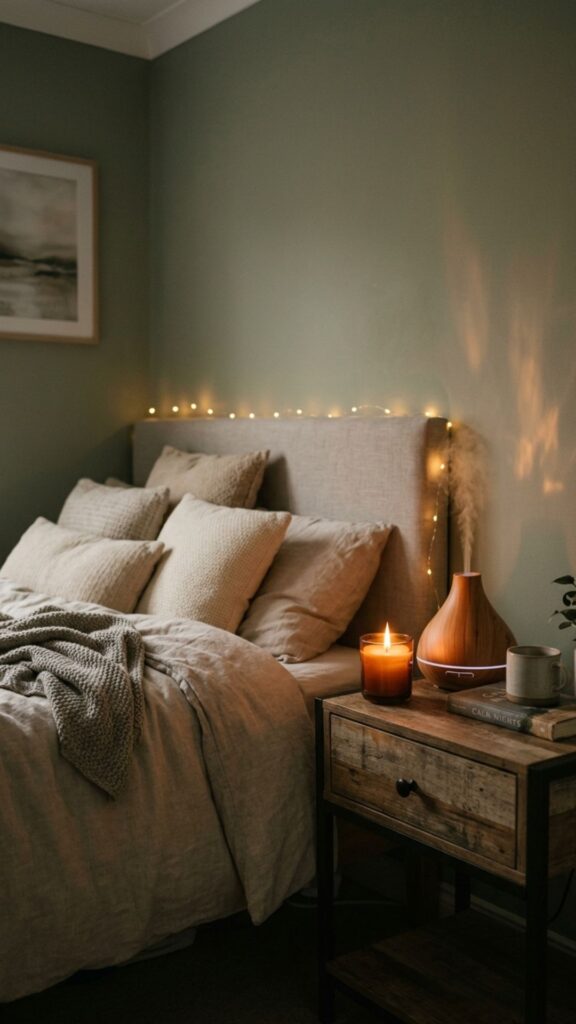
Scent is a powerful and often underestimated component of how a room feels. A scented candle or essential oil diffuser adds an olfactory layer to the bedroom environment that contributes to relaxation and a sense of comfort. Lavender, sandalwood, and cedarwood are popular choices for bedrooms because they’re calming without being overpowering.
Keep the scent subtle — the goal is a background note rather than something immediately noticeable from across the room. A diffuser is more practical for regular use since it doesn’t require monitoring an open flame. Candles, however, are hard to beat for the combination of scent and soft, flickering light they provide.
10. Nightstand Organizer or Tray
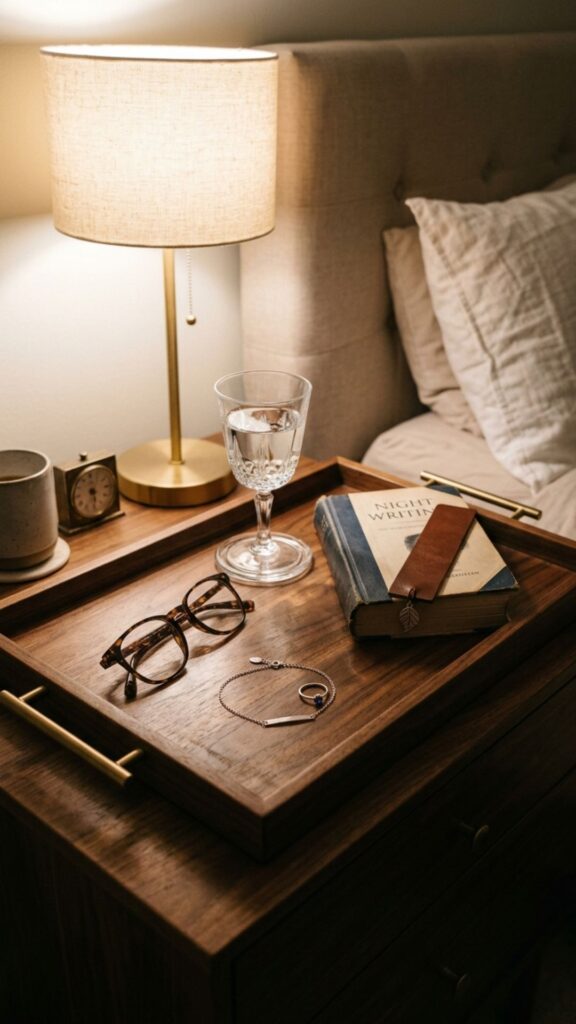
The nightstand is one of the most heavily used surfaces in the bedroom, and it tends to collect clutter fast. A simple tray or small organizer keeps the essentials — phone, glasses, water glass, a book — in one designated area so the surface looks intentional rather than chaotic.
A tray with a low lip is easy to work with and can be moved when you need to dust. Stack items vertically where possible: a small dish for jewelry or earbuds, a compact lamp, and one or two items that are specific to your nightly routine. Editing the nightstand regularly takes less than two minutes and makes a noticeable difference to how calm the room feels.
11. String Lights or LED Strips
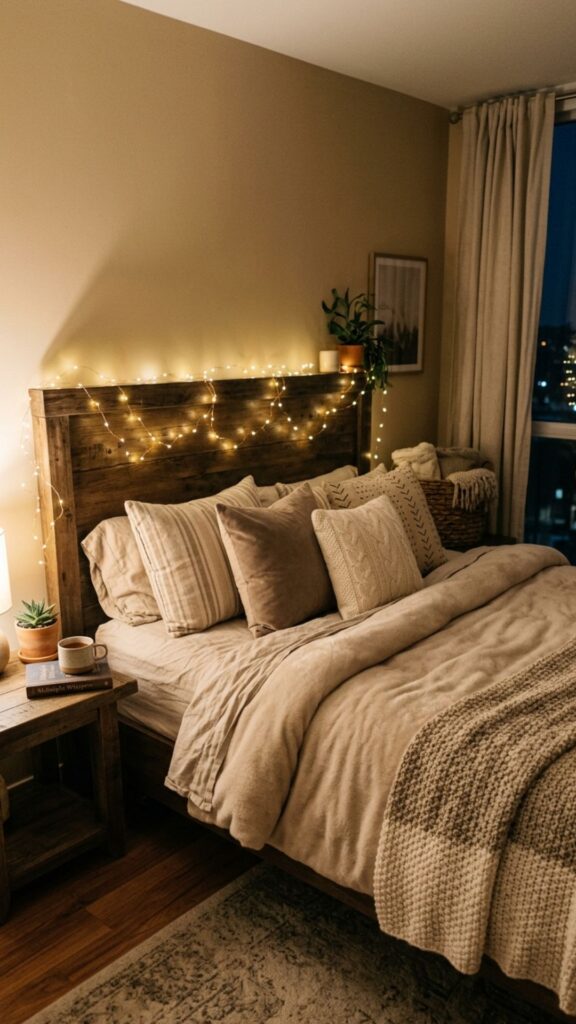
String lights aren’t just for seasonal decorating. Warm white fairy lights draped over a headboard, along a shelf, or behind sheer curtains add soft, ambient light that creates a relaxed mood without any complex wiring. They work particularly well in bedrooms where the overall vibe is cozy and personal rather than sleek and minimal.
LED strip lights installed behind a floating shelf or along the underside of a bed frame are a more architectural option. They provide a gentle glow that lights the room from an unexpected angle, adding depth and making the space feel designed rather than accidental. Both options are inexpensive and easy to install.
12. Bedside Caddy or Wall Organizer
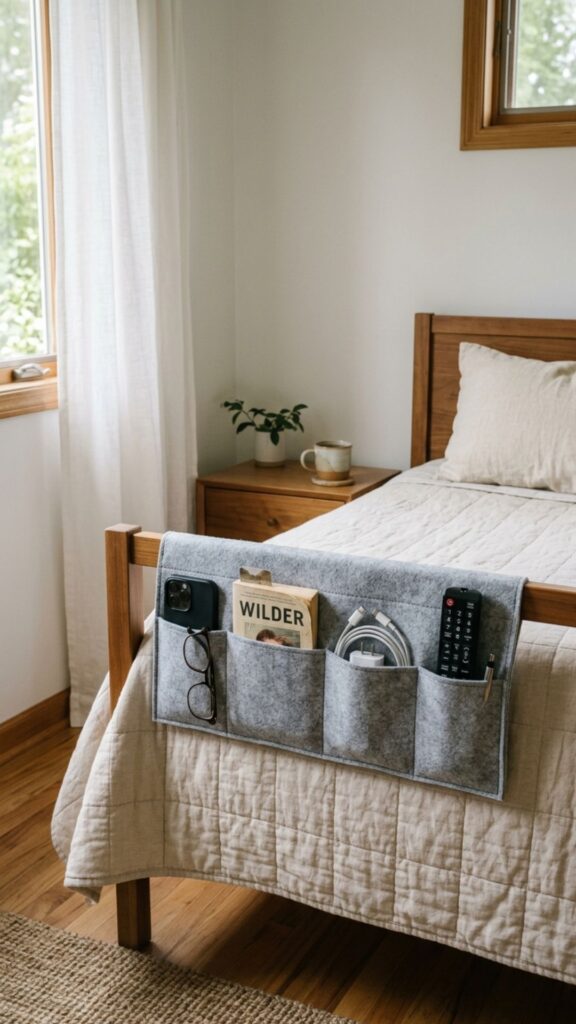
If you don’t have a proper nightstand — or if yours doesn’t have enough surface area — a bedside caddy that hangs over the side of the mattress or mounts to the wall fills the gap. It keeps your phone, charger, remote, and book within reach without taking up any floor space.
This is a particularly practical bedroom accessory for small spaces, bunk beds, or guest rooms where a full nightstand doesn’t fit. Choose one in leather or canvas rather than plastic for a look that blends more naturally with the room’s aesthetic.
13. Artwork or a Gallery Wall
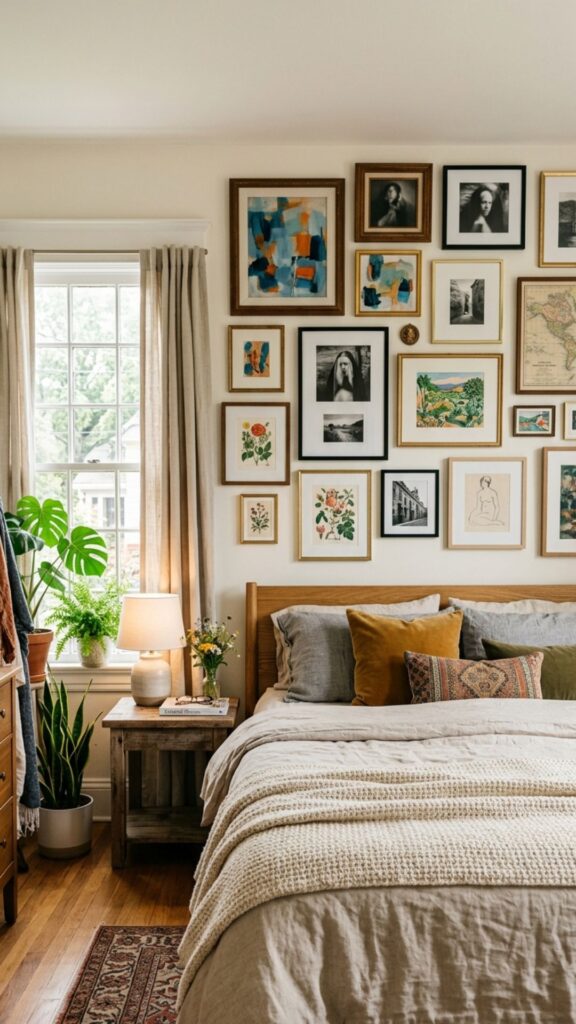
Bare walls make a bedroom feel unfinished, no matter how good the furniture is. A single large print or canvas above the bed makes an immediate visual impact and anchors the headboard wall. The center of the piece should sit at roughly eye level — around 57 to 60 inches from the floor — rather than floating high above the headboard.
A gallery wall of smaller prints, photos, or mixed-media pieces is a more personal alternative. Plan the arrangement on the floor before committing anything to the wall, and use a mix of frame finishes in the same metal or wood family to keep it from looking random. Art is one of the bedroom accessories that most directly communicates who lives in a space.
14. A Upholstered Headboard
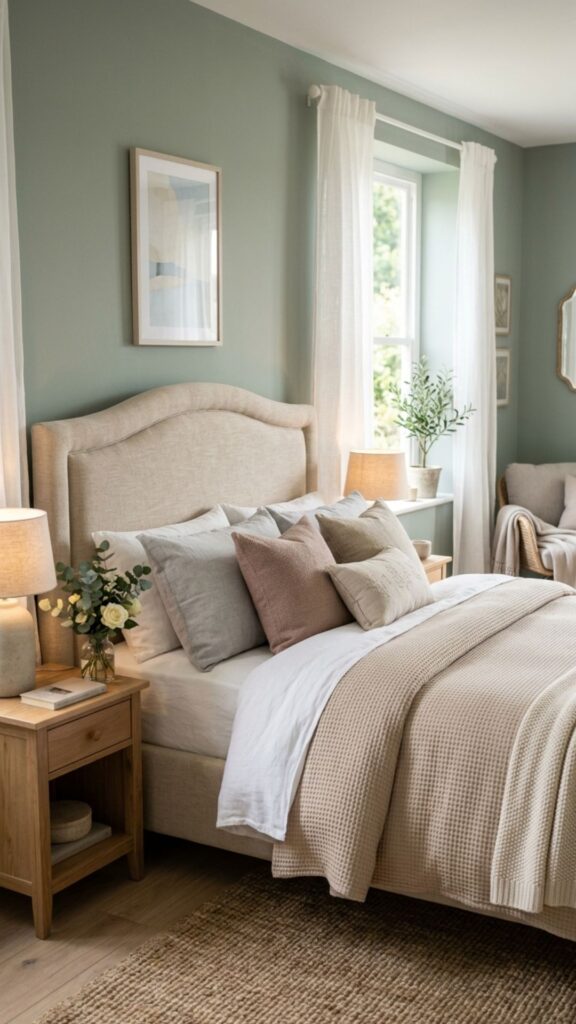
If your bed currently has a bare metal frame or no headboard at all, adding an upholstered one changes the entire look and feel of the room. A padded headboard in linen, boucle, or velvet adds softness and warmth — it also makes sitting up in bed noticeably more comfortable.
Headboards don’t have to be attached to the bed frame. A freestanding or wall-mounted headboard gives you more flexibility and is easier to swap out when your taste changes. Choose a height that’s proportional to the room — taller headboards work well in rooms with higher ceilings, while a low, wide headboard suits more compact spaces.
15. Bedside Plant
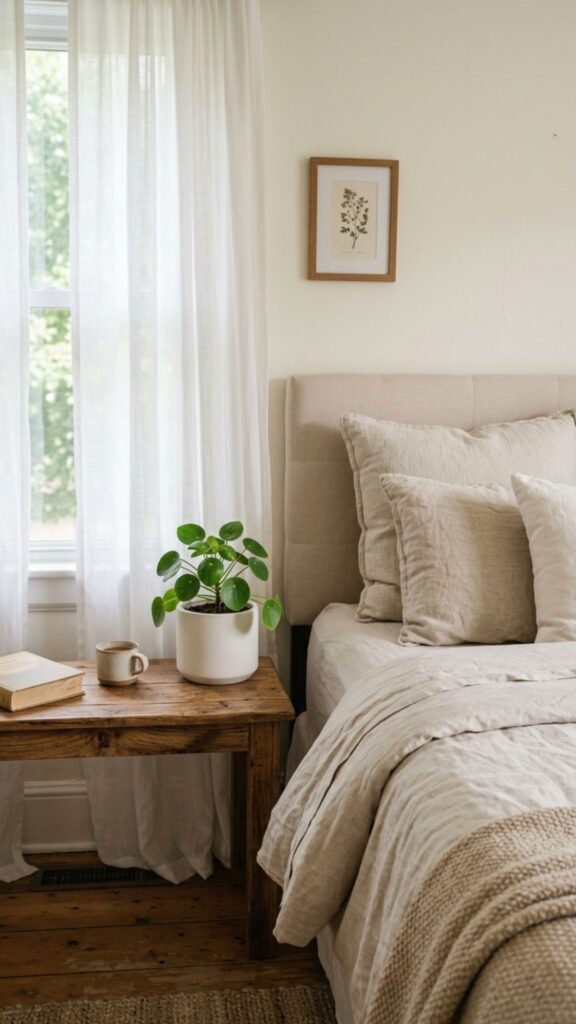
A plant on the nightstand or nearby shelf brings life and texture into the bedroom in a way that decorative objects alone can’t replicate. Snake plants and pothos are consistently recommended for bedrooms because they tolerate low light and don’t need frequent watering — two qualities that suit most people’s actual plant-care habits.
Choose a pot that complements the room’s color palette — terracotta for warm, earthy interiors, matte white or sage green for softer, neutral spaces. Even a small, single plant has a measurable effect on how fresh and lived-in a bedroom feels. If you’re new to plant care, starting with one low-maintenance variety is easier than managing several.
16. An Upholstered Storage Ottoman
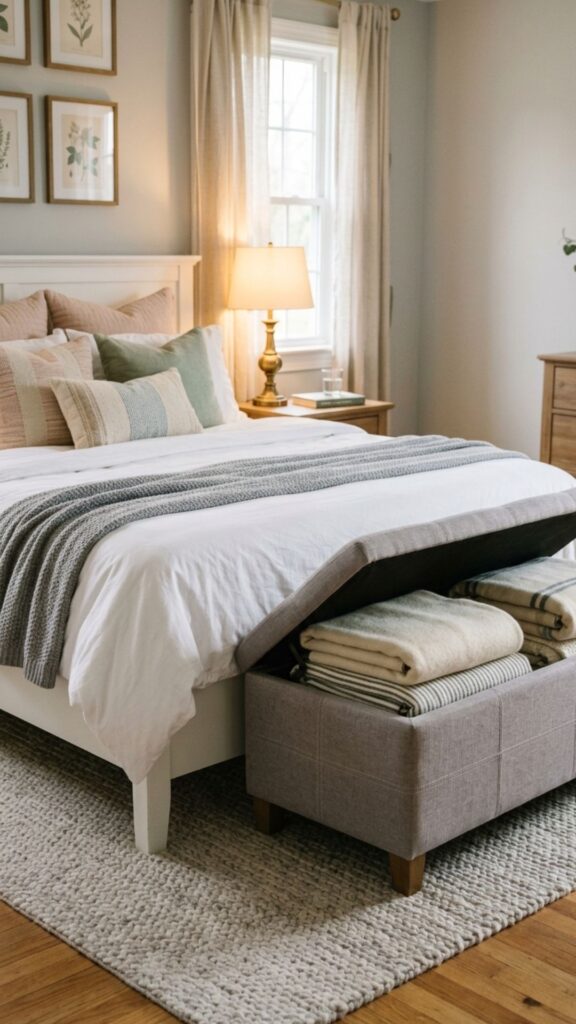
An ottoman at the foot of the bed serves as seating, a surface for laying out clothes, and hidden storage — all in one piece. It replaces the awkward emptiness that often exists at the foot of a bed without adding something that looks overly formal or takes up too much space.
Choose a fabric that coordinates with the bedding or rug — it doesn’t need to match exactly, but it should feel like it belongs in the same room. A hinged lid with a fabric-lined interior keeps extra blankets, off-season clothing, or anything else you want hidden but accessible.
17. Window Seat Cushion or Reading Nook Pad
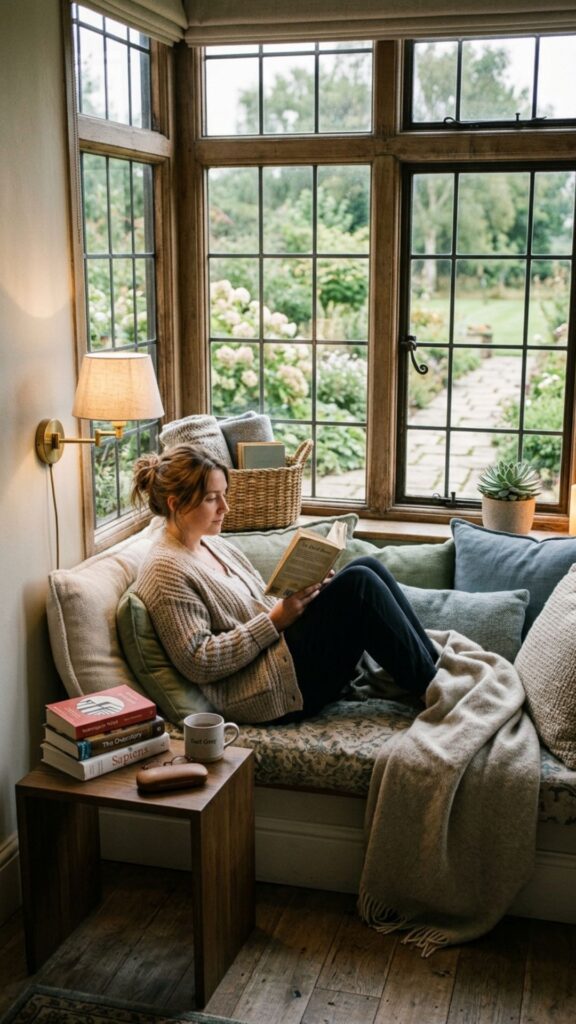
If your bedroom has a window seat or a small alcove, a custom or fitted cushion turns that underused space into one of the most appealing spots in the room. It creates a designated place to sit, read, or simply look outside — something that makes the bedroom feel more like a retreat than just a place to sleep.
Even without a built-in window seat, a firm floor cushion placed near a window achieves a similar effect at a fraction of the cost. Add a small side table and a lamp to complete the reading nook feel. Bedroom accessories like these work best when they create a specific purpose for a corner that would otherwise go unused.
18. Decorative Storage Baskets
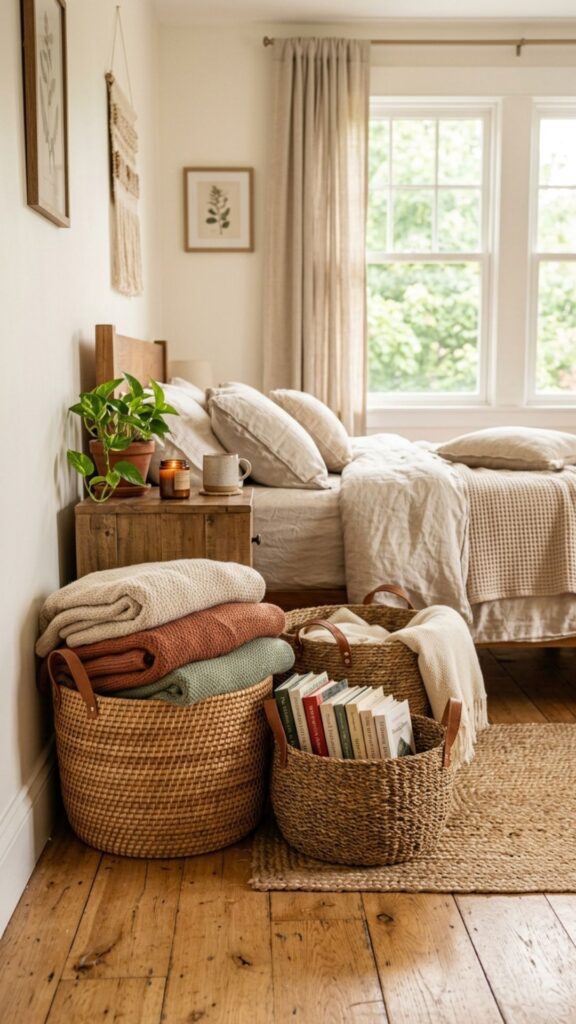
Baskets are one of the most versatile bedroom accessories available. They hold blankets, laundry, books, or accessories, and they do it in a way that looks deliberately chosen rather than makeshift. A lidded basket beside the bed works as a side table; an open basket near the wardrobe catches items that need to be put away later.
Natural materials like seagrass, rattan, and woven cotton work in most bedroom styles — they’re warm enough for traditional or bohemian rooms and simple enough for minimalist or Scandinavian-inspired spaces. Use consistent basket shapes within the same area of the room for a more cohesive look.
19. A Quality Alarm Clock
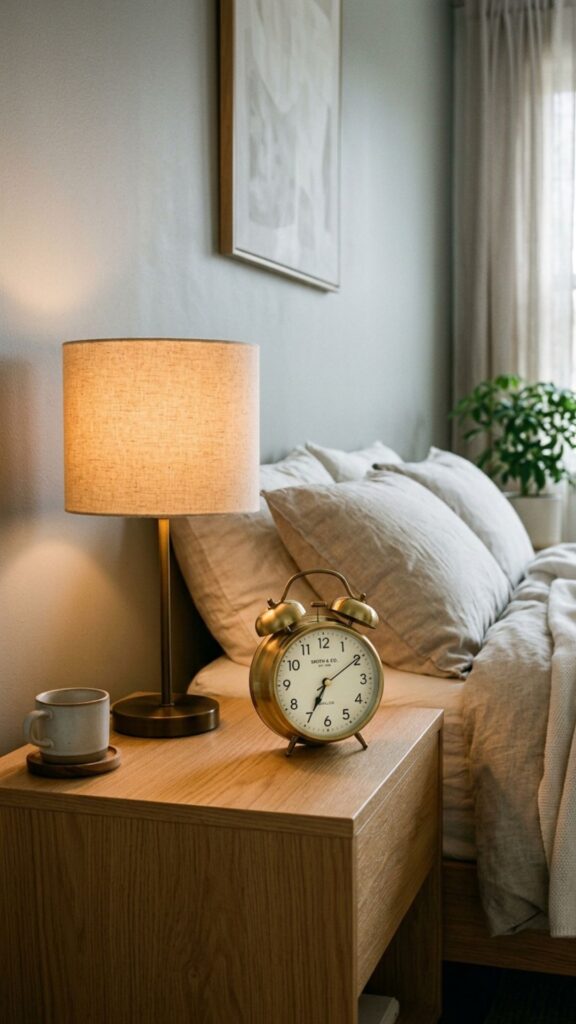
Using your phone as an alarm clock brings your entire digital life into the bedroom — notifications, social media, and the temptation to scroll before you sleep. A dedicated alarm clock removes that distraction while adding a small, purposeful object to the nightstand. Analog clocks with a quiet mechanism are ideal if you’re a light sleeper.
There’s also the design element to consider. A well-made clock in brass, ceramic, or brushed steel adds a finishing touch to a nightstand that a phone propped against a water glass simply doesn’t. It signals that the bedroom is a space for rest rather than productivity, which is a mindset shift worth making.
20. Personalized Scent or Linen Spray
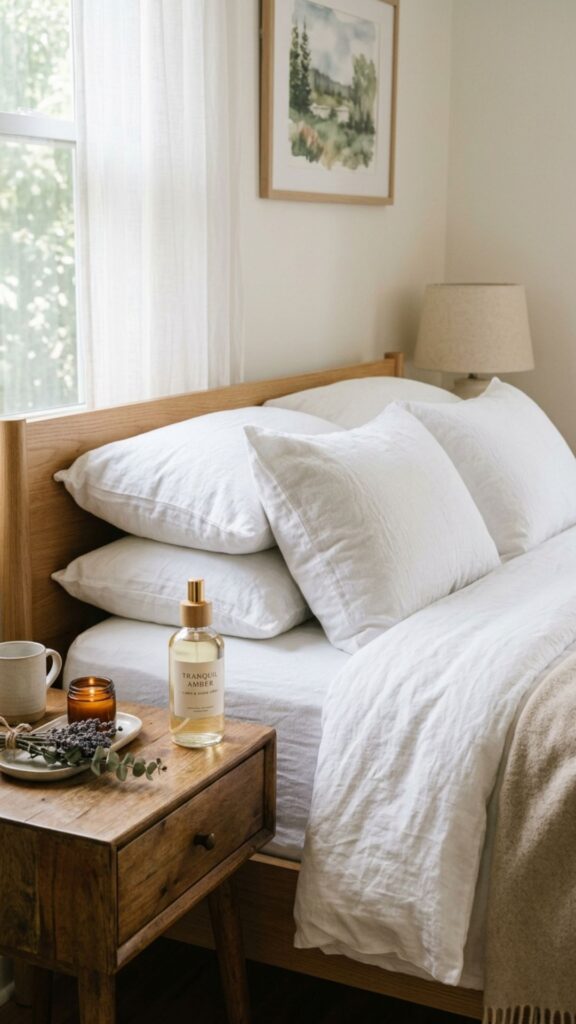
A linen spray — spritzed lightly on pillowcases and the duvet — is one of the smallest bedroom accessories with a surprisingly large impact. It turns the simple act of getting into bed into something more sensory and intentional. Lavender and eucalyptus are the most popular options, but floral, woody, or citrus-based scents work just as well depending on your preferences.
For a more lasting version, a linen spray with a fixative ingredient will hold the scent through the night. Some people find that a consistent scent before sleep becomes part of their wind-down routine over time, which can make falling asleep easier. It’s a low-cost, high-effect addition that requires almost no effort to maintain.
Conclusion
Transforming your bedroom doesn’t have to mean starting from scratch. The right bedroom accessories — chosen thoughtfully and placed with intention — can change how the room looks, how it functions, and how it makes you feel. Start with the areas that bother you most, whether that’s the lack of storage, dim lighting, or a bed that never quite looks put-together.
Pick two or three ideas from this list and put them into action this week. Small, deliberate upgrades consistently outperform total overhauls, and you’ll often find that one change leads naturally to the next. Your bedroom should be the most comfortable room in your home — and it can be, without a major budget or a complete redesign.
What are the most important bedroom accessories to buy first?
Start with lighting and bedding — these two elements have the biggest impact on how a bedroom looks and feels. A pair of warm bedside lamps and a quality duvet cover in a neutral linen transform the room immediately. Once those are in place, add a rug to ground the space, then layer in accessories like throws, pillows, and artwork.
How do I choose bedroom accessories that match my style?
Pick one or two reference images of rooms you genuinely like and identify what they have in common — the color palette, the materials, the level of clutter. Use that as your guide when shopping. Staying consistent with two or three tones and repeating similar textures throughout the room ties everything together without requiring a strict matching approach.
Can bedroom accessories improve sleep quality?
Yes, several bedroom accessories directly affect sleep. Blackout curtains reduce light disruption, warm-toned lamps support melatonin production, scented candles or diffusers with lavender create a calming pre-sleep atmosphere, and replacing your phone with a dedicated alarm clock removes digital distractions. These changes are small individually but meaningful when combined.
What bedroom accessories work best in a small space?
In a small bedroom, prioritize accessories that serve more than one purpose — storage ottomans, bedside caddies, baskets that organize and decorate simultaneously. Mirrors create the illusion of more space, and warm lighting makes a compact room feel cozy rather than cramped. Avoid overcrowding surfaces; in a small room, editing what you display matters as much as what you choose.
How much should I spend on bedroom accessories?
There’s no fixed answer, but the highest-impact items — a rug, quality bedding, and good lighting — are worth spending more on because they’re used daily and last for years. Decorative pieces like throw pillows, plants, baskets, and artwork can be sourced affordably without compromising the overall look. Spend on what you touch and see constantly; save on what’s purely visual.