There’s a version of your bedroom that only exists after dark—quieter, softer, and completely your own. But for a lot of people, the bedroom at night feels more like an afterthought than a sanctuary. The same space that looked fine in daylight can feel harsh, flat, or restless once the sun goes down.

The difference between a room that helps you unwind and one that doesn’t usually comes down to a handful of deliberate choices: lighting, texture, color, and atmosphere. None of it requires a big budget or a full redesign. Small, targeted changes make a surprising impact on how a room feels after dark.

This guide covers 20 practical, beautiful ways to transform your bedroom at night into the calm retreat you actually want to come home to. Here’s what you’ll find:
- 20 decor ideas specifically designed for nighttime ambiance
- Practical tips for implementing each one without a major overhaul
- Guidance on layering light, texture, and color for maximum effect
- Answers to the most common questions about nighttime bedroom decor
1. Switch to Warm-Toned Bulbs Throughout the Room
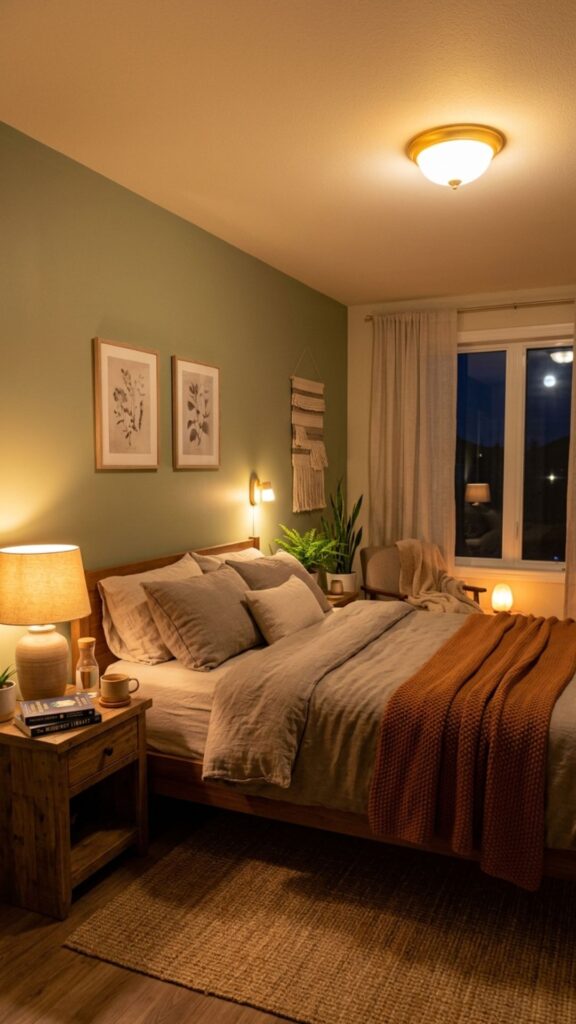
Cool white light is one of the most common reasons bedrooms feel clinical or restless at night. Swapping your existing bulbs for warm white LEDs (2700K–3000K) immediately shifts the room’s mood toward something softer and more relaxing.
This is one of the cheapest, highest-impact changes you can make. A single warm bulb in a bedside lamp changes the entire feel of your nighttime routine. If you want flexibility, a color-tunable smart bulb lets you shift from bright white during the day to warm amber in the evening without replacing anything again.
2. Add a Dimmer Switch to Your Main Light
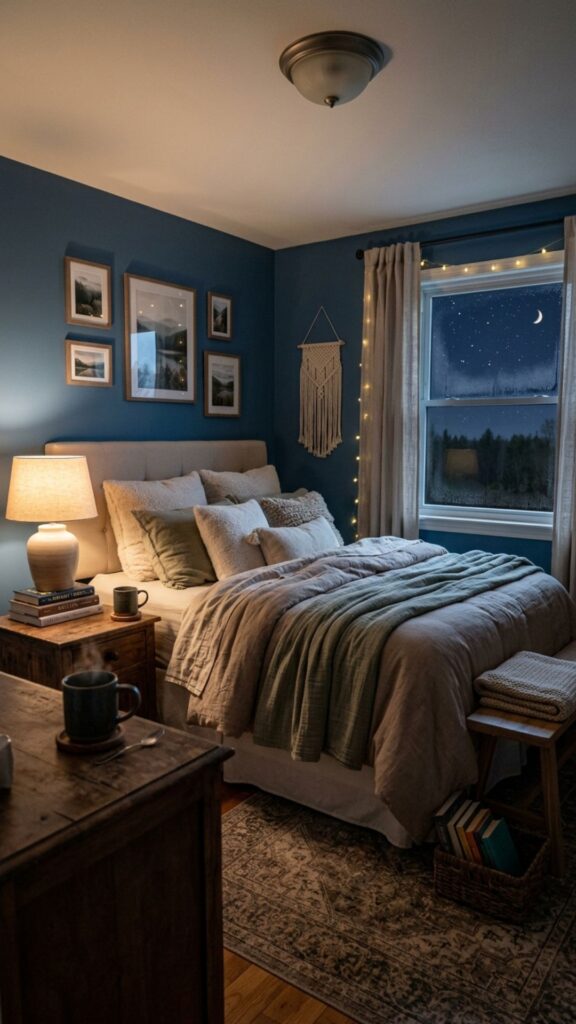
A standard overhead light at full brightness is rarely what you want when winding down. Installing a dimmer switch gives you full control over the room’s intensity—bright enough for reading, soft enough for relaxing, and everything in between.
Most dimmer switches are straightforward DIY installs and cost under $20. Pair one with a warm LED bulb and your main ceiling light becomes a genuinely useful mood tool rather than a binary on/off fixture. The ability to lower light levels signals your brain that it’s time to slow down.
3. Use Bedside Lamps Instead of Overhead Lighting

One of the simplest shifts you can make for your bedroom at night is stopping the use of overhead lighting entirely after a certain hour. Bedside lamps cast light downward and sideways rather than flooding the whole room, which creates a much more intimate, contained atmosphere.
Choose lamps with fabric or paper shades rather than bare bulbs—diffused light is always gentler. A matching pair on either side of the bed creates visual balance. Mismatched lamps with the same bulb tone also work well if you prefer a more collected, layered look.
4. Hang Blackout Curtains for True Darkness
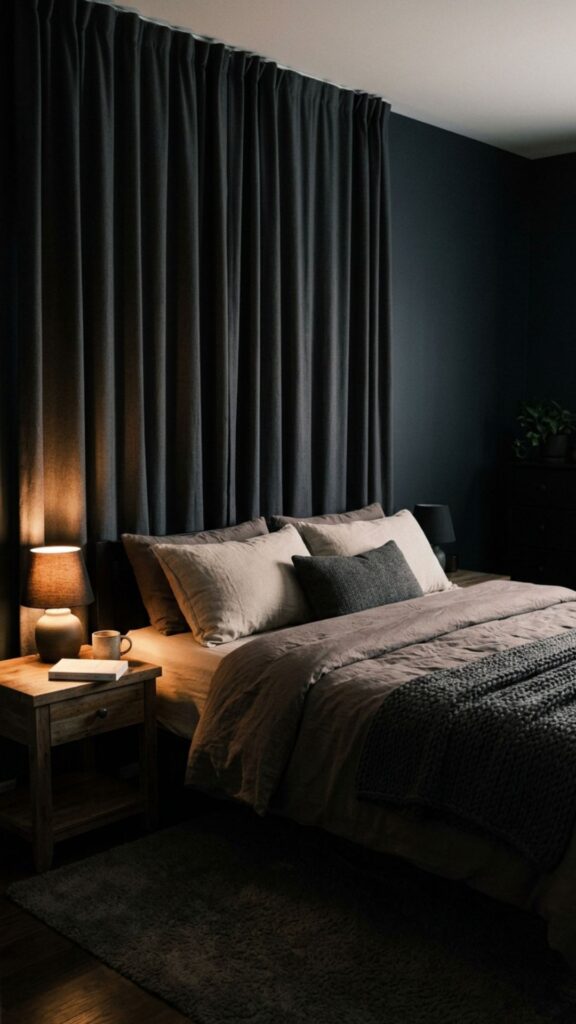
Streetlights, car headlights, and ambient urban glow can quietly disrupt how restful your bedroom feels at night. Blackout curtains solve this immediately and completely. They block outside light, reduce noise, and give the room a sealed, cocooned quality that genuinely supports better sleep.
Look for curtains in a neutral tone that works with your existing palette—deep navy, charcoal, forest green, or soft white all work well. Floor-length panels make a room feel taller. Mount the rod a few inches above the window frame and wider than the window itself so the curtains frame the wall rather than just the glass.
5. Layer a Weighted Blanket Over Your Bedding
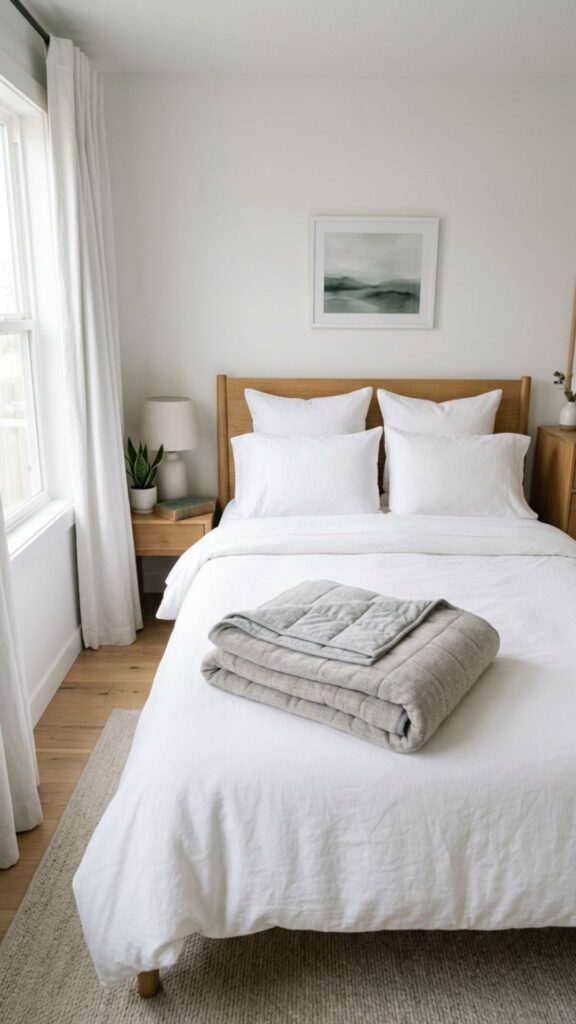
The physical feel of a bedroom matters as much as its appearance. A weighted blanket layered over your regular comforter adds both visual texture and a tactile quality that most people find deeply calming—the gentle pressure mimics the feeling of being held.
Choose a weight that’s roughly 10% of your body weight for the best effect. Cotton covers in muted tones like oatmeal, sage, or dusty rose look soft and intentional rather than clinical. Fold it across the foot of the bed during the day for a styled, hotel-quality look.
6. Place a Salt Lamp on Your Nightstand
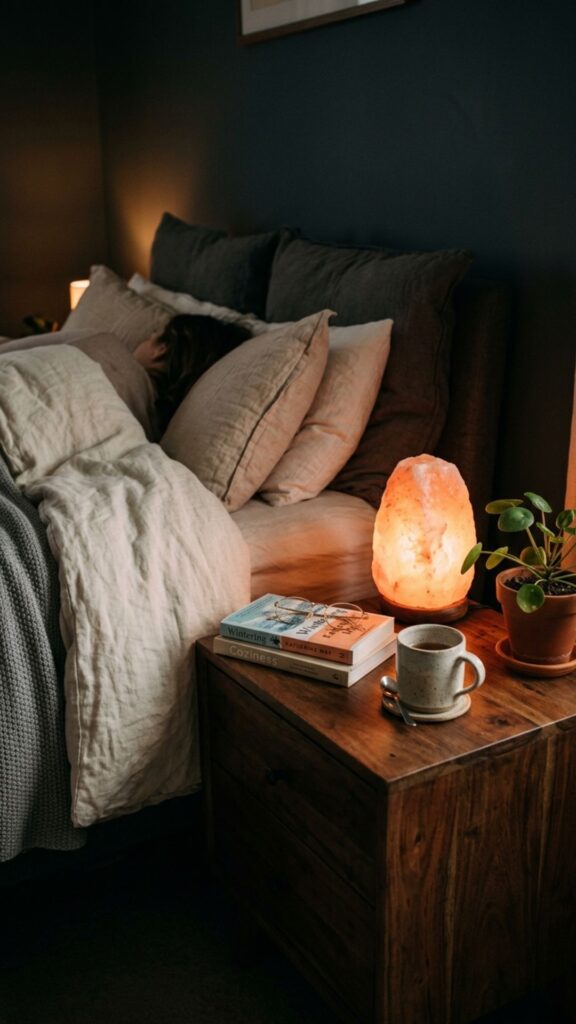
Himalayan salt lamps produce an orange-pink glow that’s among the warmest, most organic light sources you can put in a bedroom. They’re low-intensity, don’t emit blue light, and have a sculptural quality that reads as decor even when switched off.
Use one as your primary bedside light during the last hour before sleep. The low lumen output is intentional—it’s dim enough to let melatonin production begin naturally while still providing enough light to read comfortably or navigate the room. A 6–8 inch lamp is ideal for a standard nightstand.
7. String Fairy Lights Along a Headboard or Canopy
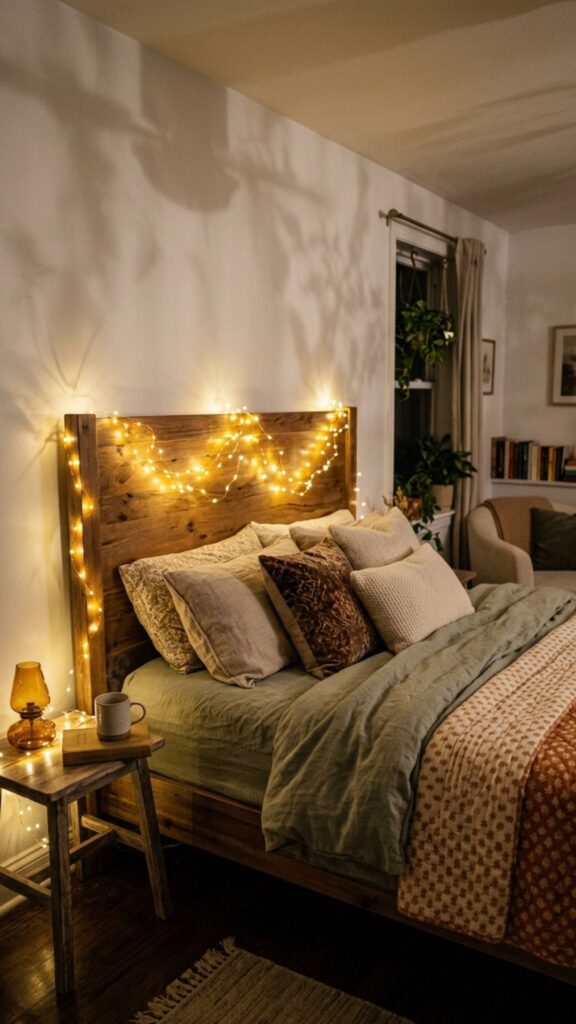
Fairy lights are endlessly versatile and reliably beautiful in a bedroom at night. Draped along a wooden headboard, woven through a canopy frame, or pinned in loose loops above the bed, they produce a warm, scattered glow that feels both festive and deeply calming.
Warm white bulbs on a copper wire look more refined than multicolor plastic-coated strings. Use them on a timer so they switch off automatically—this way you never have to get up to turn them off, which helps protect the wind-down routine you’re trying to build.
8. Try a Moon Lamp as a Nighttime Accent
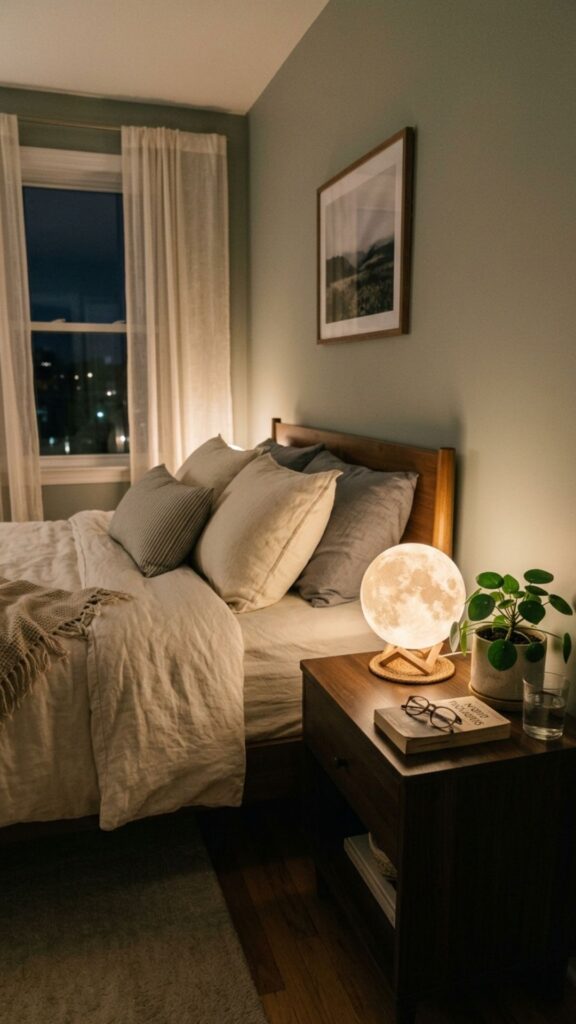
Moon lamps—rounded lights that mimic the texture and luminosity of the lunar surface—are a genuinely beautiful addition to a nighttime bedroom. Placed on a nightstand, dresser, or shelf, they cast soft, even light that feels quiet and contemplative.
Most moon lamps offer two or three color modes: warm yellow, cool white, and occasionally a color-shifting option. Use the warm yellow setting in the evenings. Some models are rechargeable and cordless, which keeps your nightstand uncluttered. A 6-inch version provides enough glow without overwhelming a small space.
9. Incorporate Dark, Moody Wall Colors
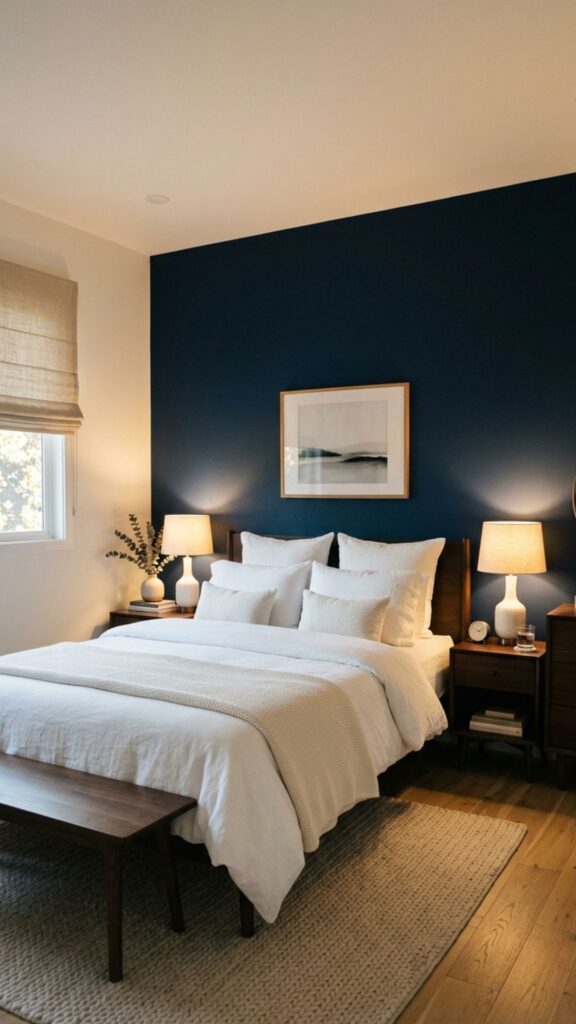
Light walls can feel washed out in a bedroom at night, especially when the only illumination is soft and low. Deep wall colors—charcoal, navy, forest green, dusty plum—absorb overhead light and reflect warmer lamp light beautifully, making a room feel intentionally nighttime-ready.
You don’t need to paint all four walls. A single dark accent wall behind the bed creates depth and anchors the room without making the space feel smaller. Pair with lighter bedding and warm lamp tones to balance the contrast.
10. Add a Plush Area Rug for Warmth and Texture
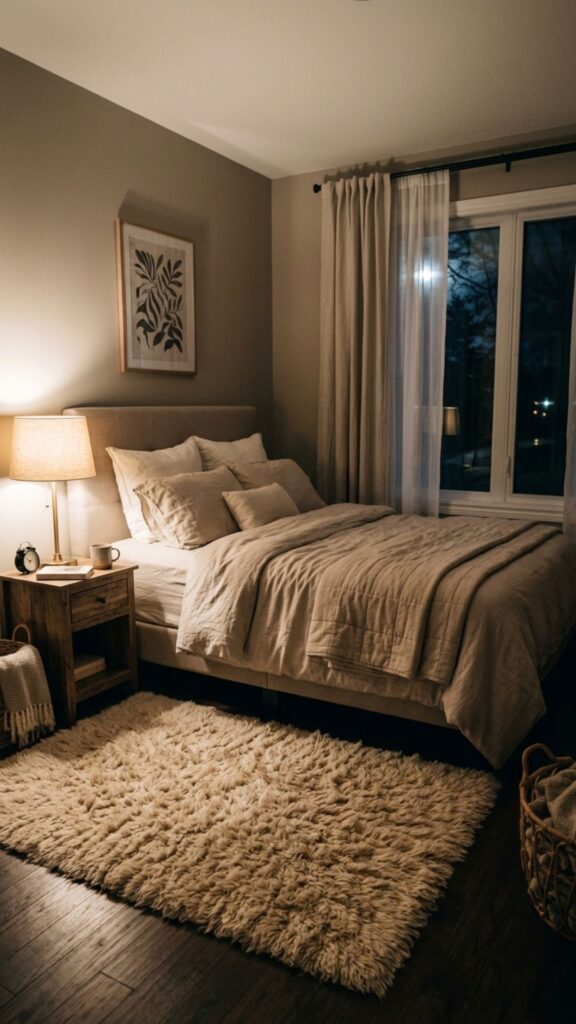
Hard floors at night can feel cold and uninviting. A plush area rug placed beside or under the bed immediately adds softness underfoot and warmth to the overall look. It also absorbs sound, which contributes to how quiet and contained the room feels after dark.
Choose a rug in a muted, low-contrast tone that complements rather than competes with your bedding. Sherpa, high-pile wool, or thick cotton weaves all feel luxurious underfoot. If your bedroom is small, a runner alongside the bed achieves the same effect in a narrower footprint.
11. Install LED Strip Lights Behind the Bed Frame
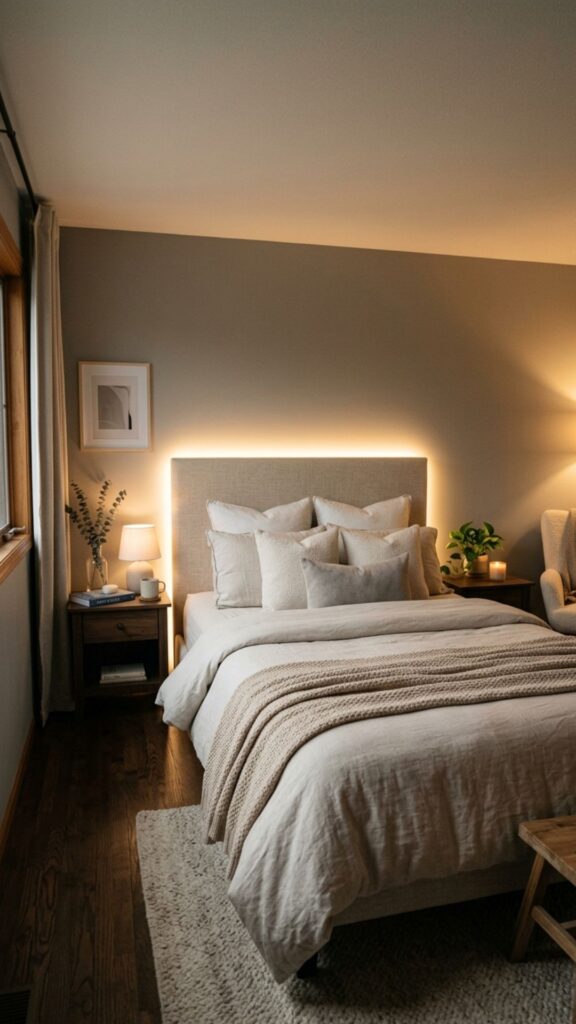
Backlighting the bed frame with a warm LED strip is one of the most effective ways to add ambiance to a bedroom at night without a complicated installation. The light glows from behind the headboard, framing the bed in a soft halo that looks polished and intentional.
Set the strip to a warm amber or soft blush rather than a bright white. Most LED strips come with adhesive backing and can be trimmed to size. Add a dimmer or use an app-controlled strip so you can reduce brightness as you get closer to sleep.
12. Use Candles or Flameless Alternatives on a Dresser
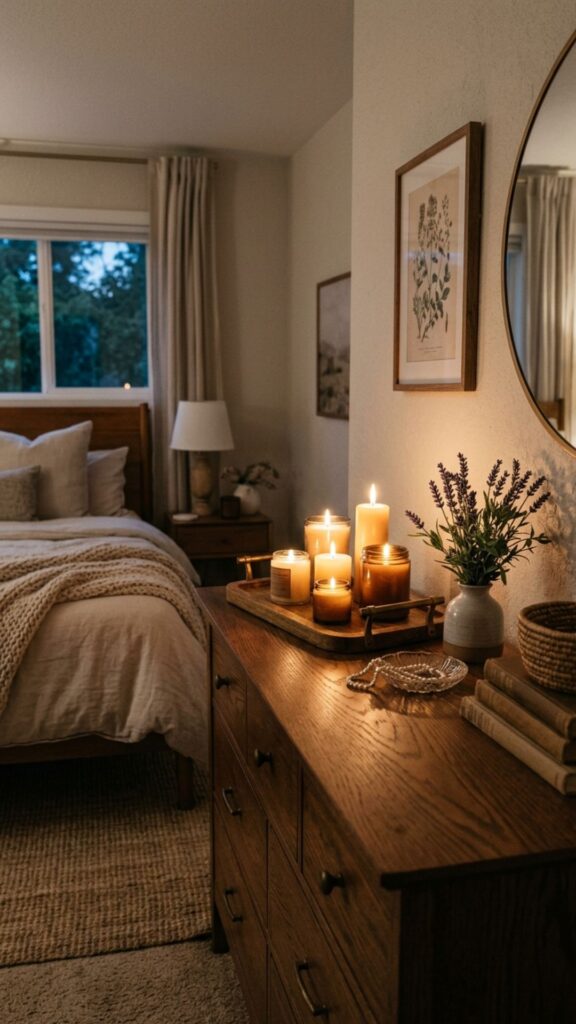
Real candles bring warmth, flicker, and scent into a bedroom at night—a combination that’s hard to replicate with any other decor element. A small cluster of pillar candles or votives on a dresser or tray creates a soft, living light source that immediately makes a room feel slower and more intentional.
If open flames feel like too much responsibility, flameless LED candles have come a long way. Many flicker realistically and can be set on timers. Pair either option with a scent you associate with relaxation—cedarwood, lavender, or sandalwood work well—and the effect extends beyond visual decor into the full sensory environment.
13. Hang Sheer Curtains Layered With Heavier Drapes
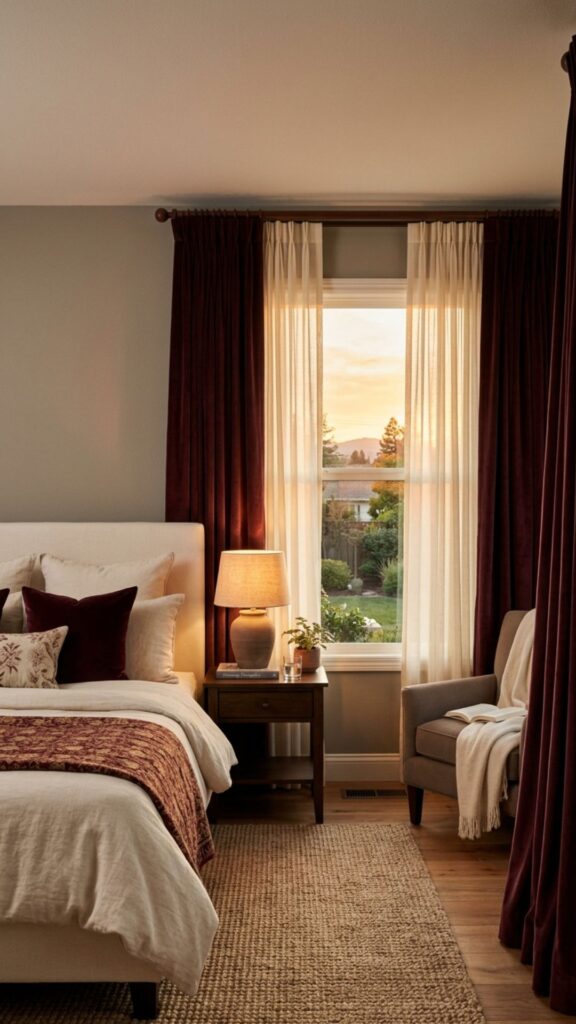
Layering curtains—a sheer inner panel with a heavier outer drape—gives you flexibility and a visually rich window treatment that looks especially beautiful in a bedroom at night. During evening hours, closing the outer drape while leaving the sheer open creates a soft, filtered view of the window that doesn’t let in harsh light.
Choose sheer panels in cream, white, or pale blush. Pair them with heavier linen or velvet drapes in a deeper tone. When both panels are closed, the room takes on a soft, layered quality that feels far more luxurious than a single curtain ever could.
14. Create a Cozy Reading Nook With a Floor Lamp
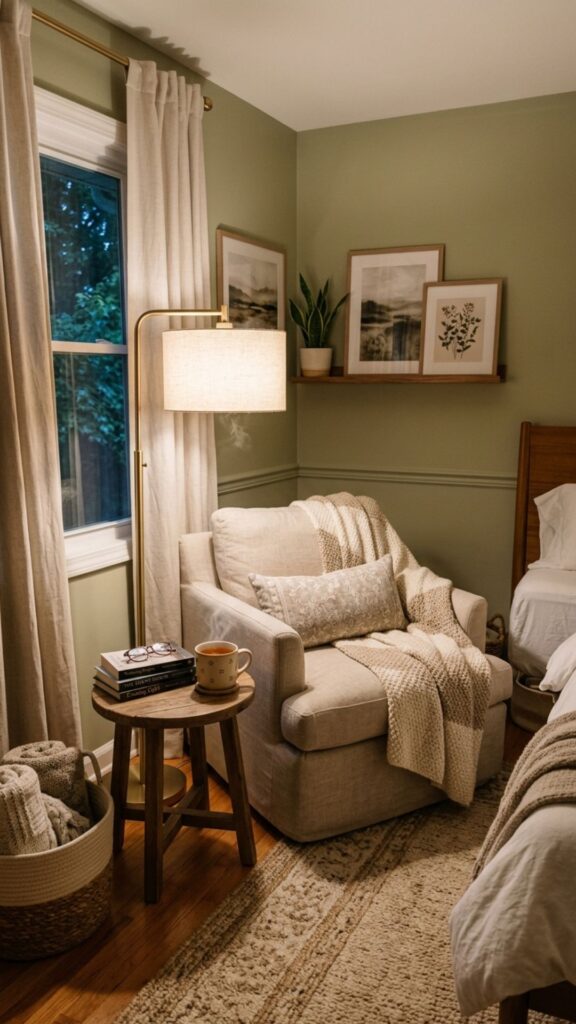
A dedicated reading nook transforms part of your bedroom into a separate zone for quieter evening activities. All it takes is an armchair or floor cushion, a side table, and a well-positioned floor lamp with a warm bulb and a directional shade.
The focused light of a reading lamp lets you keep the rest of the bedroom dark and calm while still having enough illumination for a book or journal. This separation of zones—one for sleeping, one for quiet activity—helps the bed feel more strongly associated with rest, which can improve how easily you fall asleep.
15. Decorate With Plants That Thrive in Low Light
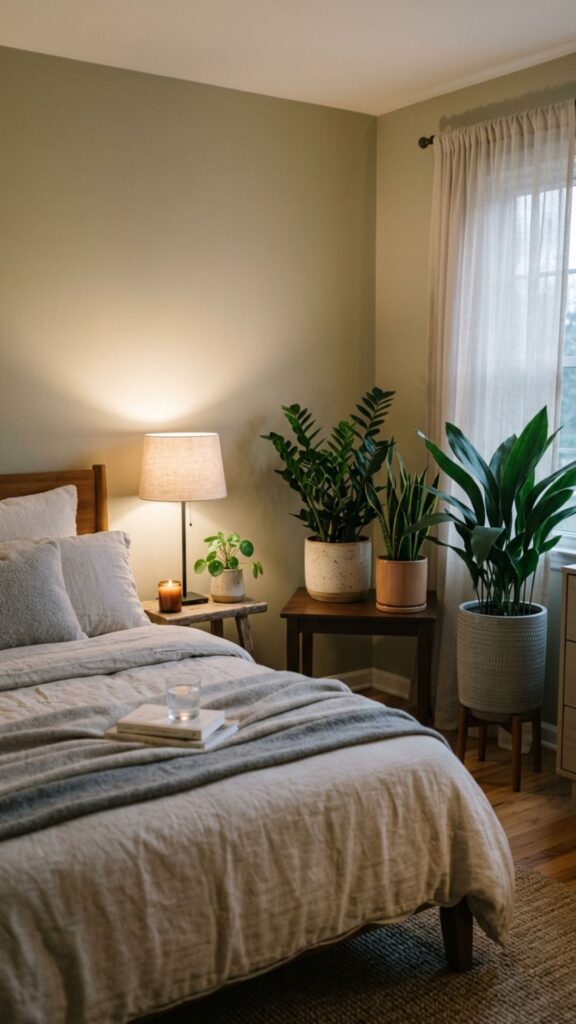
Greenery brings a quiet, organic quality to a bedroom at night that few other decor elements can match. Plants in soft-lit corners or on windowsills add depth, texture, and a sense of life without introducing any visual noise.
Choose varieties that thrive in indirect or low light: pothos, snake plants, peace lilies, or ZZ plants all do well in bedrooms. Place them in simple terracotta or ceramic pots that complement your color palette. In the evening, a small spotlight or warm lamp aimed at a corner plant creates beautiful shadow play on the wall behind it.
16. Use Mirrors Strategically to Amplify Soft Light
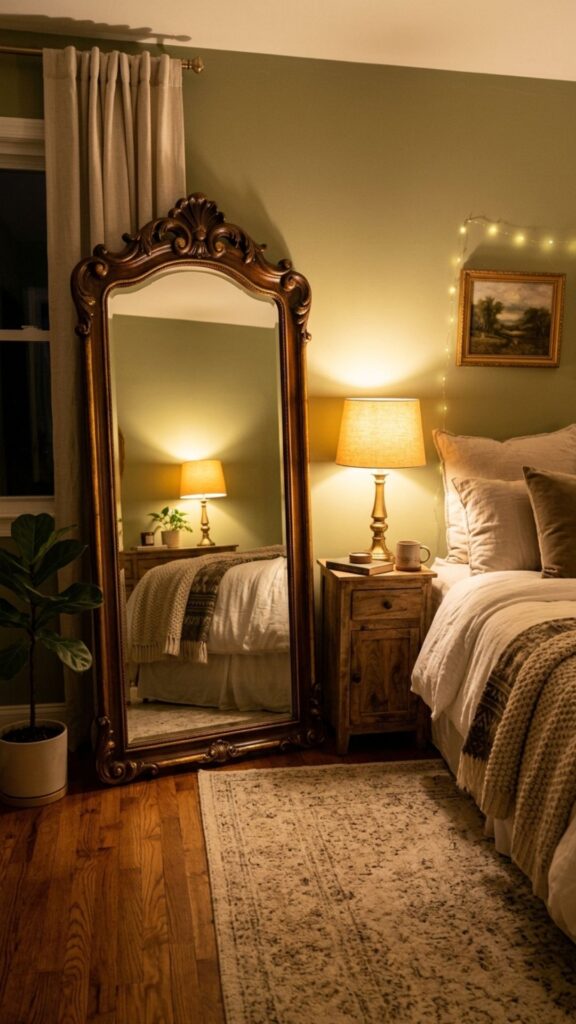
A well-placed mirror doubles the effect of your ambient lighting by reflecting it back into the room. In a bedroom at night, this means a single warm lamp can fill the space with far more gentle, diffused light than it would produce on its own.
Lean a large floor mirror against the wall opposite a lamp for maximum effect. Smaller mirrors grouped on a wall behind a light source also work well. Avoid placing mirrors directly opposite windows if streetlights are a concern—they’ll reflect outdoor light back in rather than your carefully chosen indoor glow.
17. Introduce Soft Textiles in Deep, Muted Tones
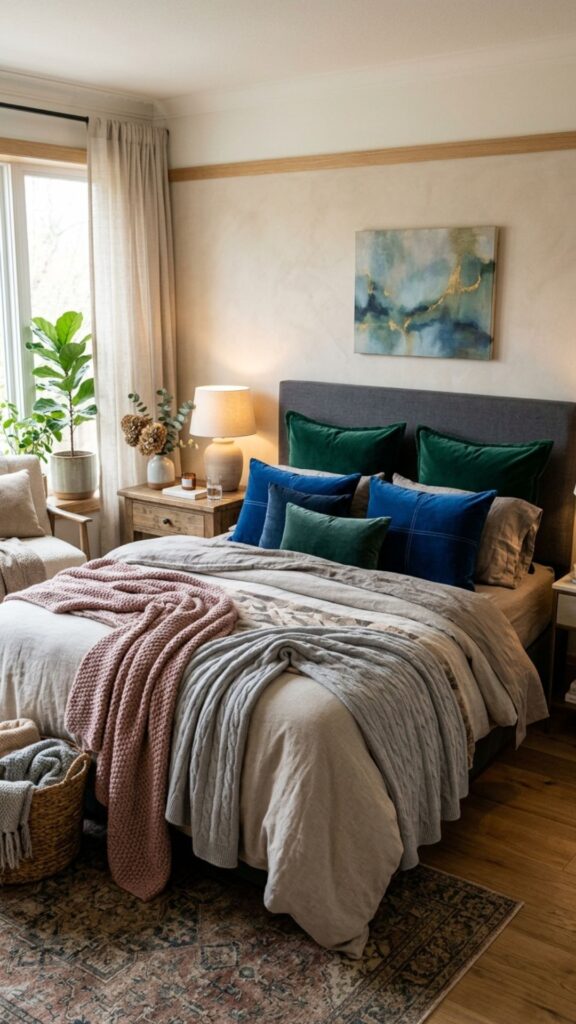
Bedding, throw pillows, and blankets in deep, muted colors—dusty rose, slate blue, warm terracotta, sage green—look richer and more intentional in a bedroom at night than bright or stark whites. They absorb low light warmly and give the bed a layered, inviting quality.
Don’t overthink the combination. Choose two or three tones that sit close together on the color wheel and mix textures rather than colors: velvet cushions against cotton pillowcases, a linen duvet beneath a chunky knit throw. The variation in texture reads as warmth even when the tones are similar.
18. Add a Scent Diffuser to Set the Atmosphere
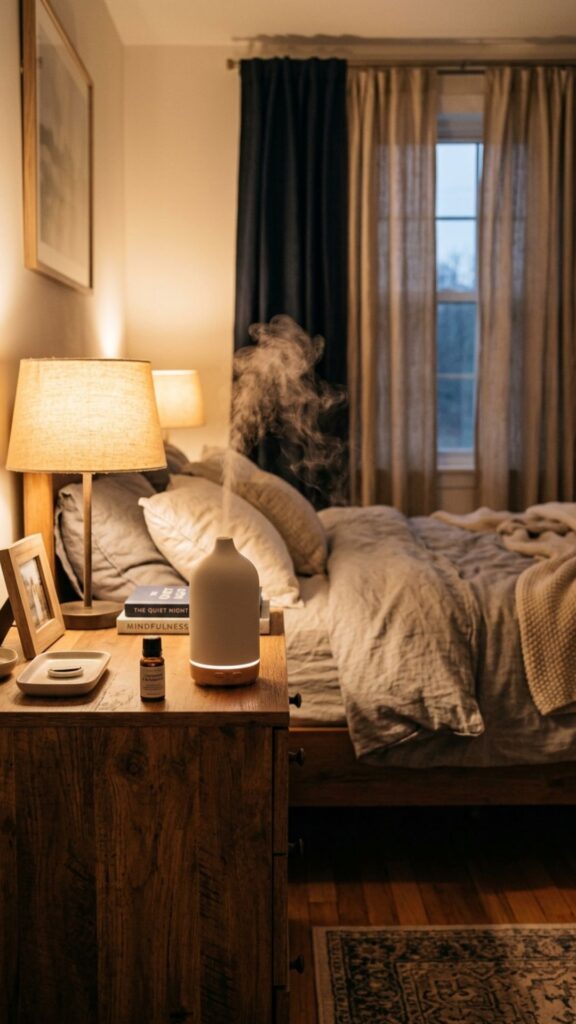
Scent is one of the most underused tools in bedroom decor, and it’s especially powerful at night. A reed diffuser or ultrasonic essential oil diffuser running in the background adds an invisible but deeply felt layer to the room’s atmosphere.
Lavender, chamomile, vetiver, and sandalwood are all associated with relaxation and sleep. Start with a low intensity—scent should be present but not overpowering. Position the diffuser on a dresser or shelf away from where you sleep so the fragrance disperses gradually across the room.
19. Display Soft Art or Photography With Calming Subjects

The artwork you look at before sleeping has more influence than most people realize. Large prints or framed photographs featuring calm, quiet subjects—misty forests, still water, abstract washes of color, moonlit landscapes—add visual depth to a bedroom at night while keeping the emotional tone peaceful.
Go for muted, low-contrast images rather than bold, graphic art for bedroom walls. A single large print above the bed makes a stronger statement than several small ones. Use simple frames in natural wood or matte black so the image itself does the work.
20. Install a Smart Lighting Routine for Evening Wind-Down
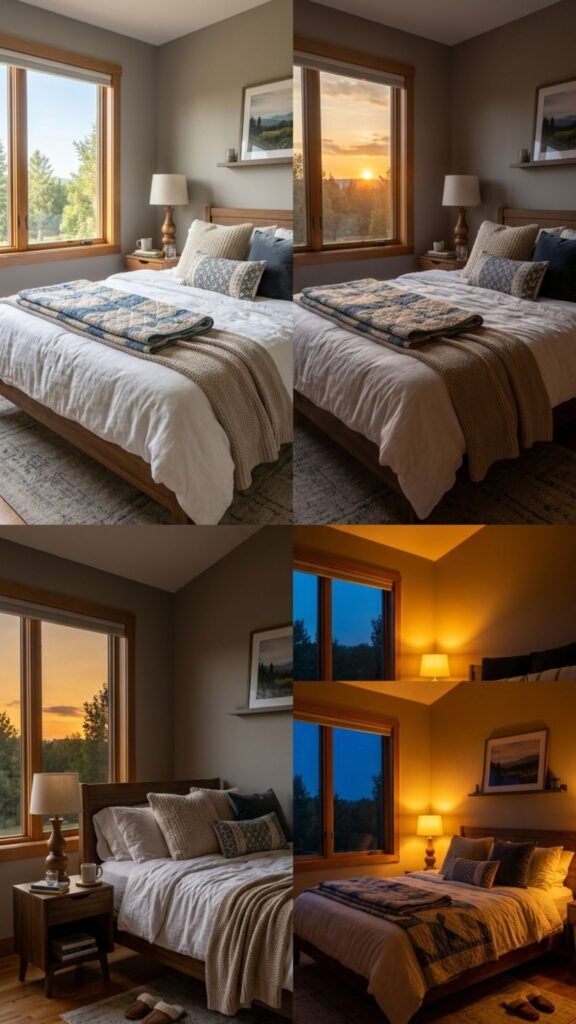
The most effective bedroom-at-night setup isn’t one you have to manage manually—it’s one that adjusts automatically as the evening progresses. Smart bulbs and LED systems can be programmed to shift gradually from bright white in the afternoon to warm amber by evening to near-off by bedtime.
Set a routine using an app like Google Home, Alexa, or a dedicated lighting app. Even a simple two-step routine—one brightness level at 8pm and a lower one at 10pm—makes a meaningful difference in how naturally you transition toward sleep. Automate it once and let your room do the rest.
How to Bring It All Together
You don’t need to implement all 20 ideas at once. The most effective approach is to pick one area—usually lighting—and get that right before moving to the next. Start with warm bulbs and a dimmer, add a bedside lamp, then layer in textiles and accent pieces over time.
The goal is a bedroom that transitions with you through the evening: bright and functional earlier, progressively softer and calmer as bedtime approaches. Every element you add should serve that progression rather than work against it.
Conclusion
Your bedroom at night has the potential to be the most restorative space in your home. It doesn’t take a complete renovation—just a handful of intentional choices that work together to shift the atmosphere from ordinary to genuinely calming.
Start with two or three ideas from this list that fit your current setup and budget. Warm lighting and soft textiles are the easiest starting points with the biggest payoff. Build from there at your own pace, and you’ll notice the difference in how you feel each morning.
Take a look at your bedroom tonight with fresh eyes. One small change is all it takes to begin.
What’s the best lighting for a bedroom at night?
Warm white light at low intensity is the most effective choice for a bedroom at night. Look for bulbs in the 2700K–3000K range, used in bedside lamps or dimmed overhead fixtures rather than bright ceiling lights. Salt lamps, fairy lights, and warm LED strips are all excellent supplementary options that add ambiance without harsh brightness.
How do I make my bedroom feel calmer at night without redecorating?
The three highest-impact changes you can make without redecorating are: switching to warm-toned bulbs, adding a diffuser with a calming scent, and replacing any bright overhead lighting with bedside lamps after 8pm. These three shifts alone can significantly change how your bedroom feels during evening hours.
What colors work best for a bedroom at night atmosphere?
Deep, muted tones work best: navy, charcoal, forest green, dusty rose, and warm terracotta all absorb low light well and create a cocooned, intimate feel. If you don’t want to repaint, introduce these colors through bedding, cushions, and curtains—the effect is similar and far easier to change.
Do blackout curtains really make a difference in a bedroom at night?
Yes—blackout curtains make a significant difference, especially in urban or suburban environments with ambient streetlight. They eliminate external light sources that can disrupt sleep, reduce outside noise, and give the room a more enclosed, private quality that supports relaxation. They’re one of the most practical investments for nighttime bedroom comfort.
How do I layer lighting in a bedroom for a calm nighttime vibe?
Use three levels: ambient light for overall room glow (a dimmed ceiling fixture or LED strips), accent lighting for atmosphere (fairy lights, a moon lamp, or a salt lamp), and task lighting for specific activities (a bedside or reading lamp). Keep all sources in the warm white range and reduce brightness progressively as bedtime approaches. The layering creates depth and lets you adjust the room’s mood without relying on a single light source.