Getting your dining room layout right makes every meal better. A well-planned floorplan determines how easily people move around the table, whether conversations flow naturally, and how comfortable the space actually feels day to day. Yet most people spend hours choosing furniture and almost no time thinking about where it goes — and that’s usually where things go wrong.
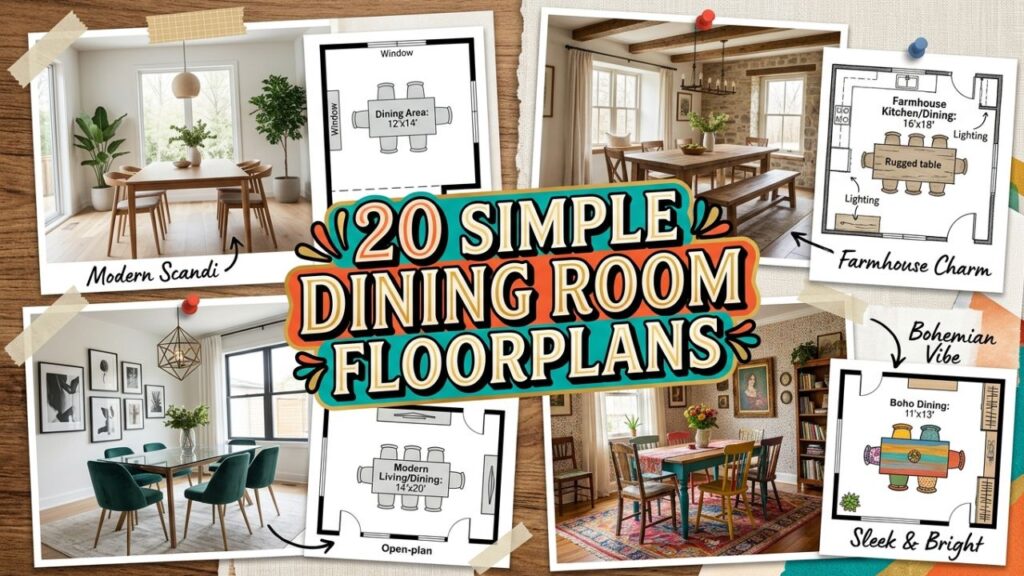
This guide covers 20 practical dining room floorplan ideas suited to all kinds of spaces: small apartments, open-plan homes, formal dining rooms, and everything in between.
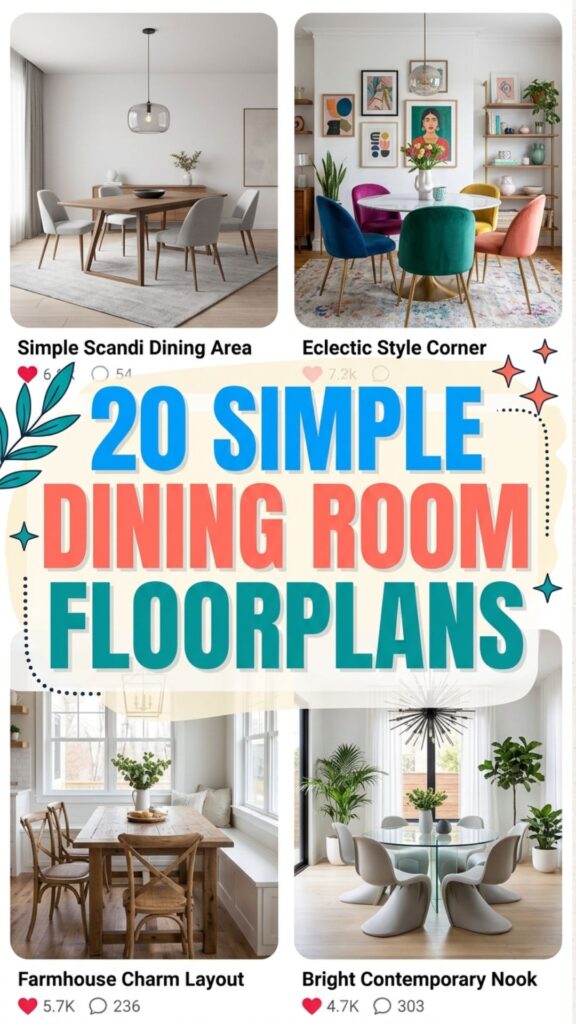
You’ll learn how to arrange furniture for better traffic flow, how to use layout tricks to make a tight room feel larger, and which configurations work best depending on your room’s shape and size. Whether you’re starting fresh or rearranging what you already have, you’ll walk away with a clear direction.
1. Center the Table Under the Light Fixture
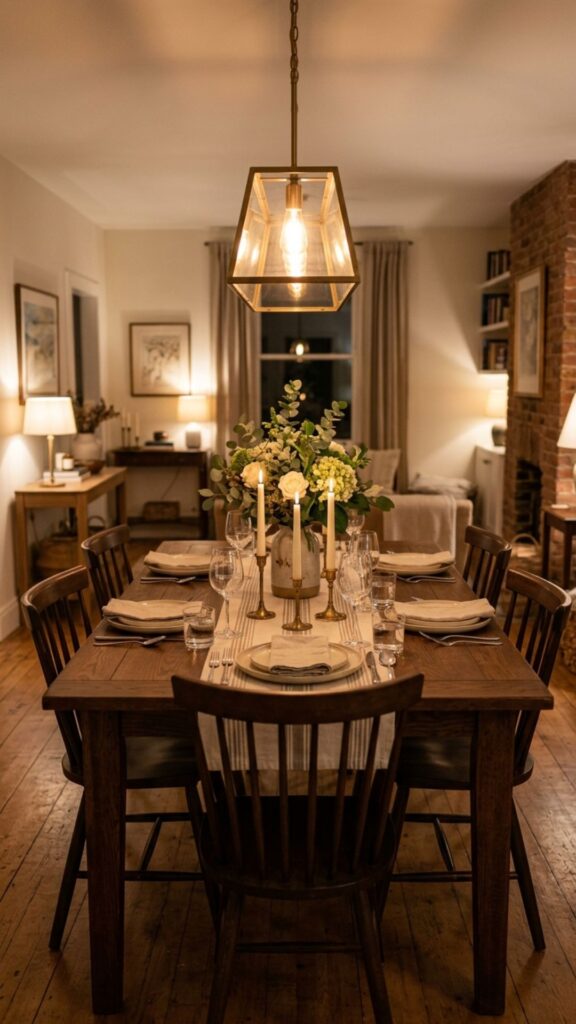
The simplest and most foundational dining room floorplan rule: your dining table should sit directly under your main overhead light. This anchors the table visually, creates balanced ambient lighting across the eating surface, and prevents the awkward situation where diners on one side are in shadow.
Before moving furniture, identify where your ceiling light or chandelier hangs. That point becomes the center of your layout. Measure outward from there to determine how large a table your room can accommodate while leaving at least 36 inches of clearance on all sides for comfortable chair movement.
2. The Classic Rectangular Layout for Longer Rooms
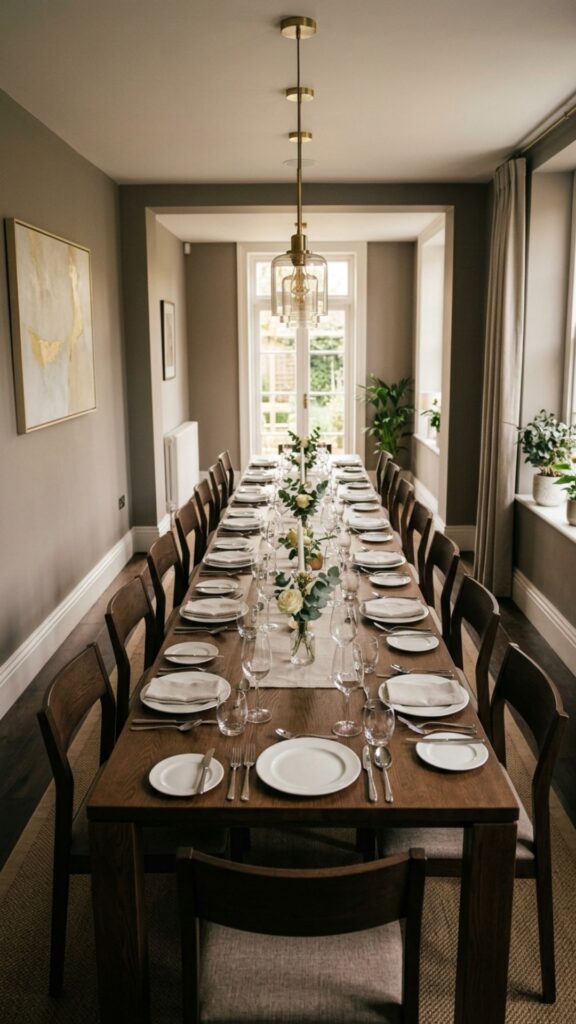
In a room that’s noticeably longer than it is wide, a rectangular dining table running along the room’s long axis is almost always the right call. It follows the natural proportions of the space, leaves clear walkways along the short sides, and maximizes seating without crowding any wall.
Aim to center the table both lengthwise and widthwise in the room. If your room is 12 by 16 feet, a 36-by-72-inch table gives you comfortable clearance on all sides. Add chairs at the heads of the table to increase capacity without extending the table’s footprint.
3. Square Room, Round Table
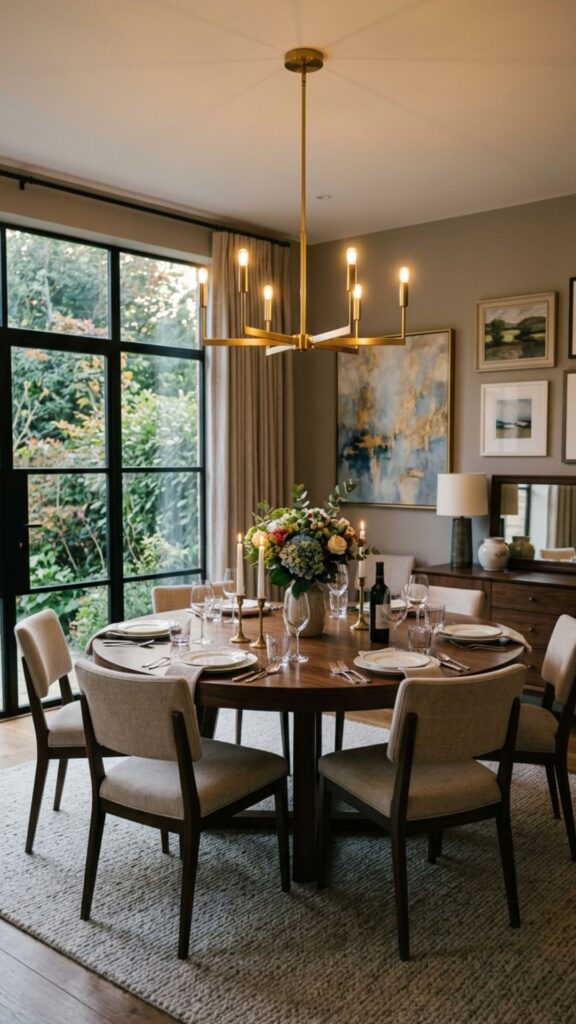
A square dining room and a round table are a natural pairing. Round tables soften the angularity of a square room and eliminate dead corner space that rectangular tables tend to create. They also encourage conversation because everyone can see everyone else equally well.
In a 12-by-12-foot square room, a 48-inch round table comfortably seats four and leaves adequate clearance on all sides. A 54-inch round table seats six and works in rooms that are slightly larger. Avoid pushing a round table against a wall — it defeats the purpose of the shape.
4. Open-Plan Dining With a Defined Zone
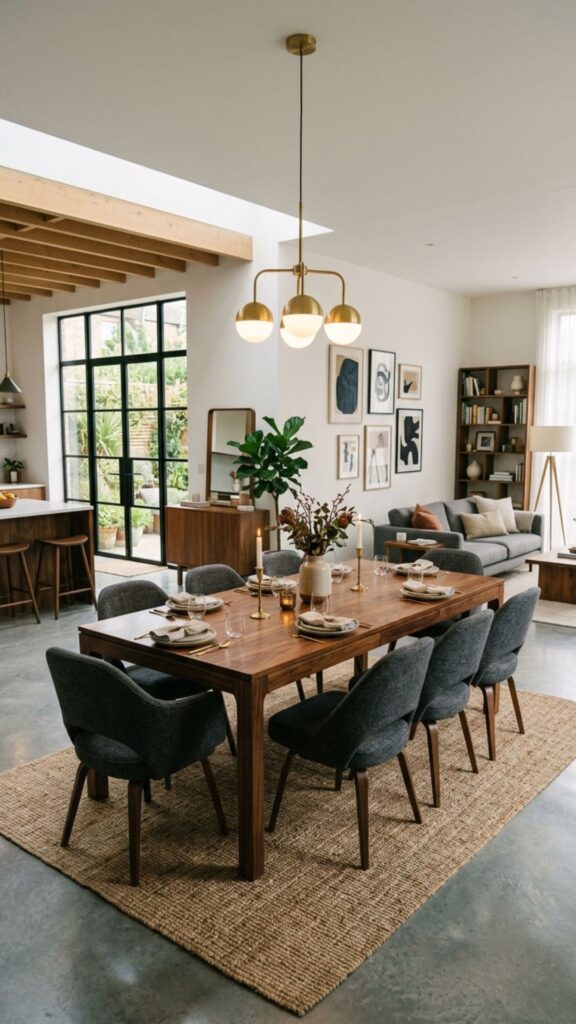
If your dining area shares space with a living room or kitchen, you need a way to define the dining zone without walls. A well-placed area rug under the dining table does this effectively — it signals where the dining space begins and ends without blocking sightlines or light.
Choose a rug large enough that all four chair legs remain on it even when chairs are pulled out. For a standard rectangular table seating six, that typically means a rug of at least 8 by 10 feet. Pair the rug with a pendant light overhead to double down on the zone-defining effect.
5. Galley-Style Dining for Narrow Rooms
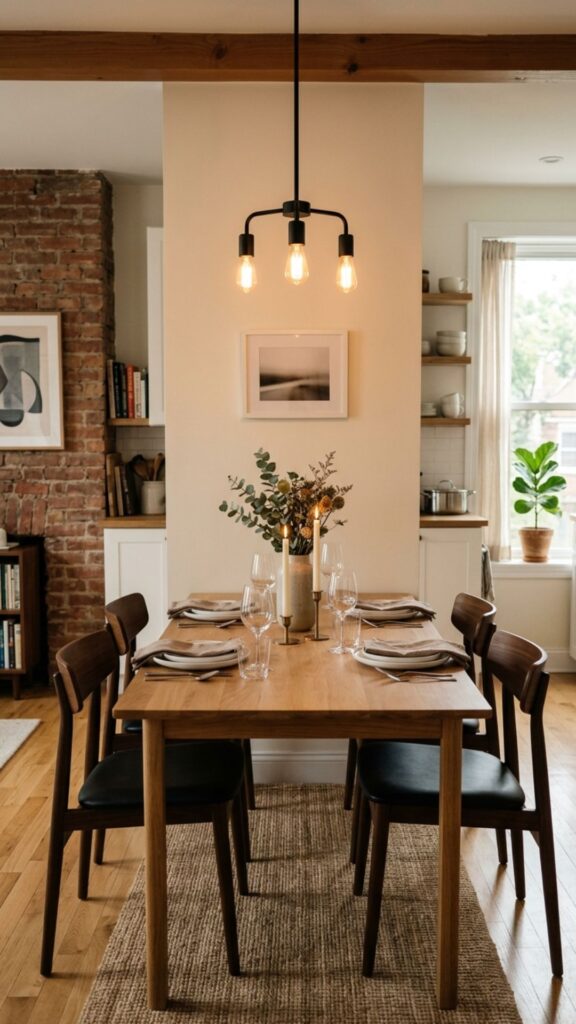
A narrow room doesn’t have to feel cramped. A galley-style dining layout — where a narrow rectangular table runs down the center of the room with chairs on both long sides — actually works well in tight spaces and creates a convivial, family-style atmosphere.
Keep the table no wider than 36 inches in a narrow room so chairs on both sides can push back comfortably without hitting the walls. Bench seating on one or both sides reduces the visual bulk of individual chairs and makes the layout feel less crowded overall.
6. Corner Banquette for a Relaxed, Cozy Vibe
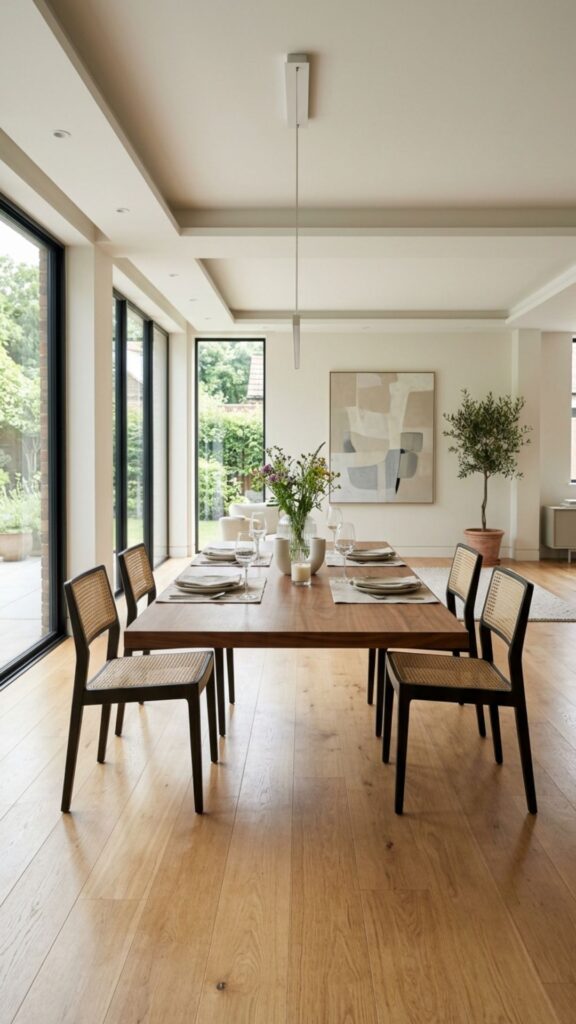
A built-in or freestanding corner banquette uses two walls to anchor a dining nook. It’s one of the most space-efficient dining room floorplan ideas available because the bench itself takes up far less floor space than individual chairs, and it maximizes seating in corners that are otherwise unused.
Position the banquette in a corner and pair it with a small rectangular or square table. Add two or three chairs on the open sides. The result feels intentional, warm, and slightly cafe-like — which tends to make everyday dining feel more enjoyable.
7. The Open-End Rectangle for Flexible Seating
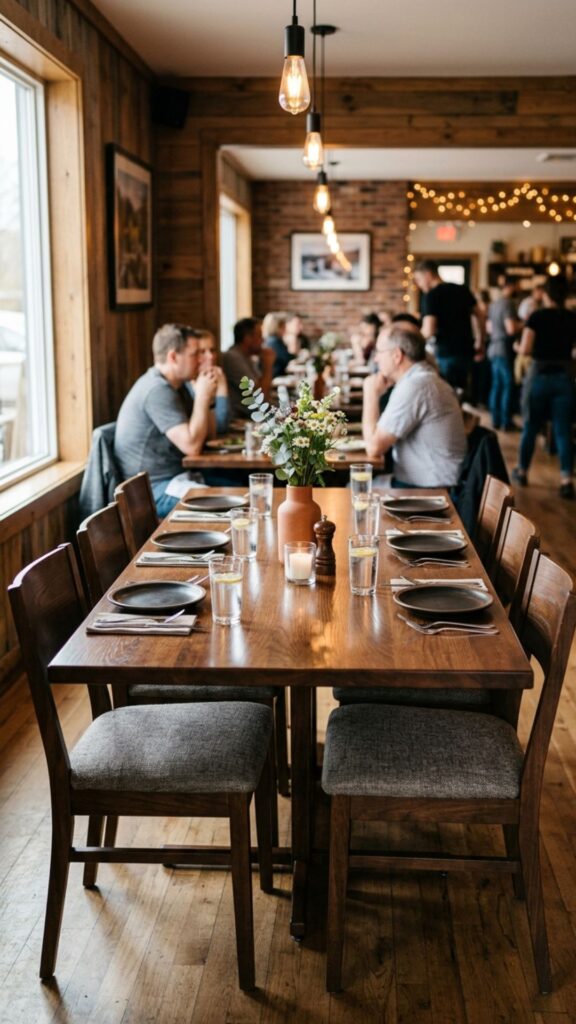
This layout uses a rectangular table with chairs along both long sides and leaves the short ends open — no chairs at the heads. It creates a more casual, democratic feel than a traditional rectangular setup and makes it easier for people to slide in and out without disrupting the whole table.
This works especially well for families with young children who need to get up frequently, or for households that use the dining table for non-meal activities like homework or crafts. Leaving the ends open also makes the table feel less formal and more approachable.
8. Dining Table Against One Wall for Small Spaces
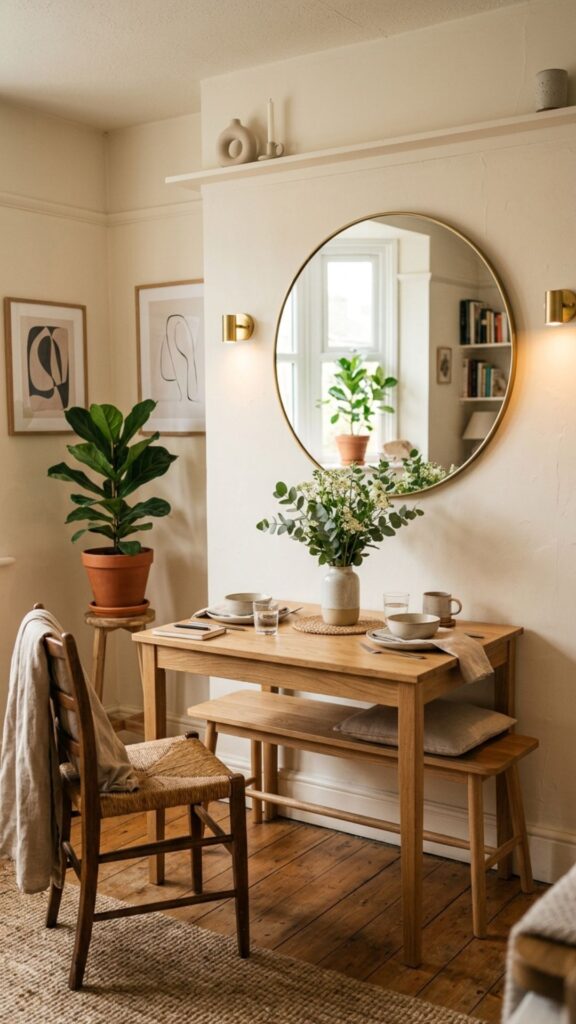
In a very small dining room or a studio apartment, pushing the table against a wall frees up walking space and makes the room feel less crowded. Use chairs only on the three open sides, or use a bench against the wall that slides out of sight when not in use.
The trade-off is that the wall-side seats aren’t as comfortable or accessible, so this layout works best for one or two people who use the space for casual daily meals rather than for hosting larger groups. Add a mirror above the table to visually expand the space.
9. Extendable Table in the Center for Versatility
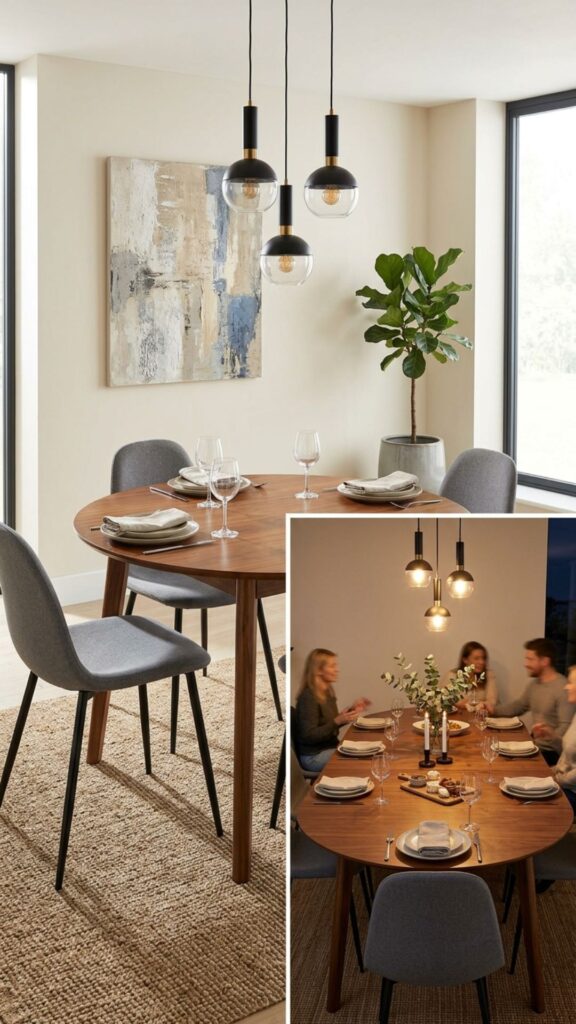
If you entertain occasionally but live day-to-day with fewer people, an extendable table positioned in the center of the room gives you the flexibility to shrink or grow your layout as needed. Keep the table at its smallest everyday size and only open the leaf for gatherings.
Plan your floor clearances around the table’s fully extended size, not its compact size. This ensures that even when fully extended, there’s still enough space for people to move around without squeezing between chairs and walls.
10. Side Buffet or Credenza Along One Wall
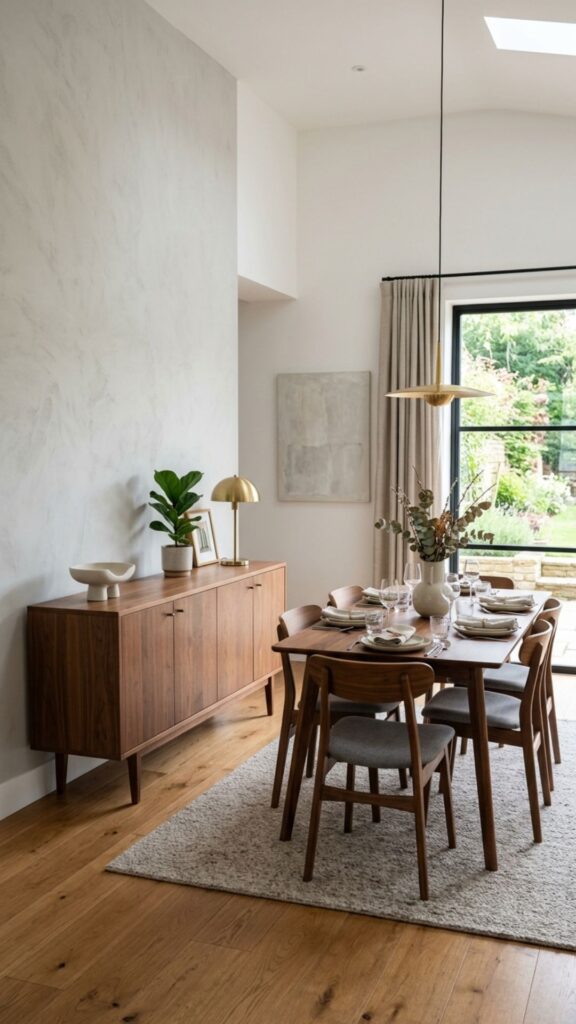
A dining room floorplan that includes a buffet or credenza along one wall solves two problems at once: it provides storage and serving surface, and it helps balance the visual weight of the room so the table doesn’t float awkwardly in an otherwise empty space.
Position the buffet on the wall opposite or perpendicular to your main window. This keeps the serving surface accessible without blocking natural light. Leave at least 36 inches between the buffet and the nearest dining chair for comfortable movement when the table is occupied.
11. Floating the Table Away From All Walls
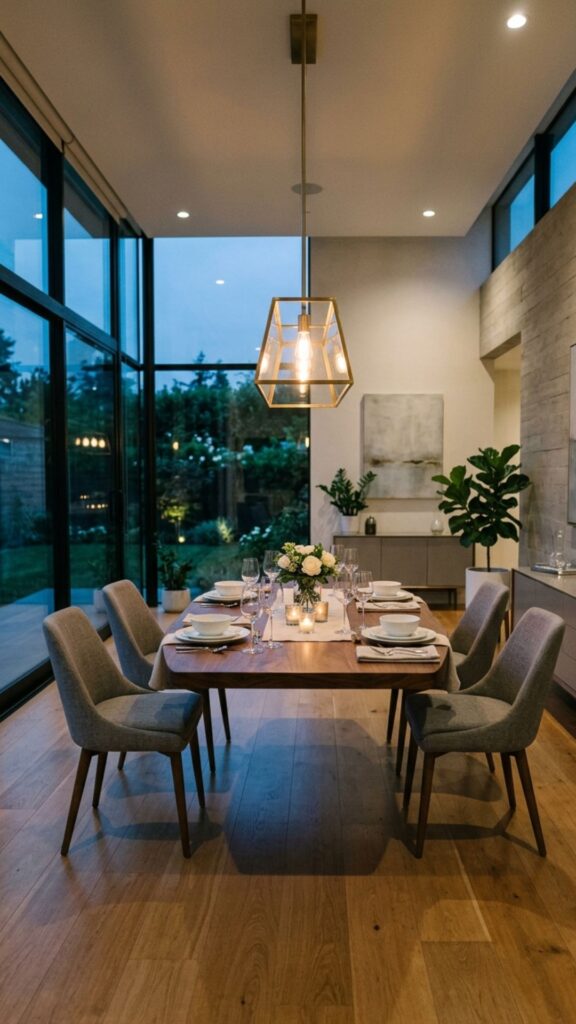
One of the most common dining room layout mistakes is pushing the table too close to a wall to save space. When a table is too close to a wall, the chairs on that side can’t pull back comfortably, which makes sitting and standing awkward for everyone.
Float the table in the center of the room with equal clearance on all sides — ideally 36 inches minimum, or 42 to 48 inches on sides where people will be walking through frequently. The room may feel like it has less open floor space, but it will function far better.
12. L-Shaped Layout for Corner Dining Rooms
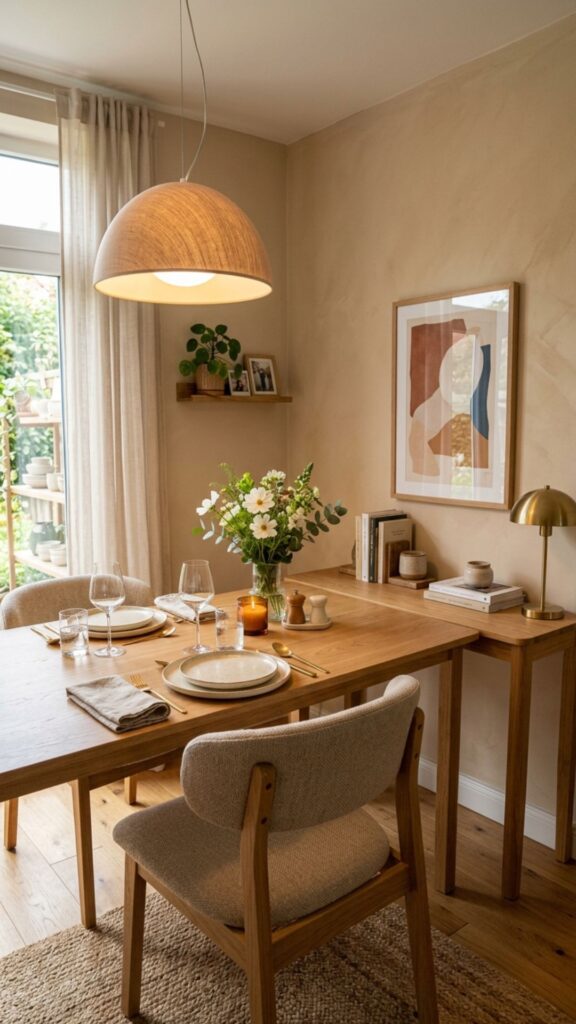
If your dining space occupies a corner of a larger room rather than a dedicated room, an L-shaped arrangement works well. Place a rectangular table along one wall and use a low console or sideboard along the adjacent wall to complete the L shape and define the space.
This layout directs traffic naturally around the perimeter of the dining zone without forcing people to walk through it. It also creates a visual boundary that helps the dining area feel like its own space rather than an afterthought within a larger room.
13. Oval Table for Tight Rectangular Rooms
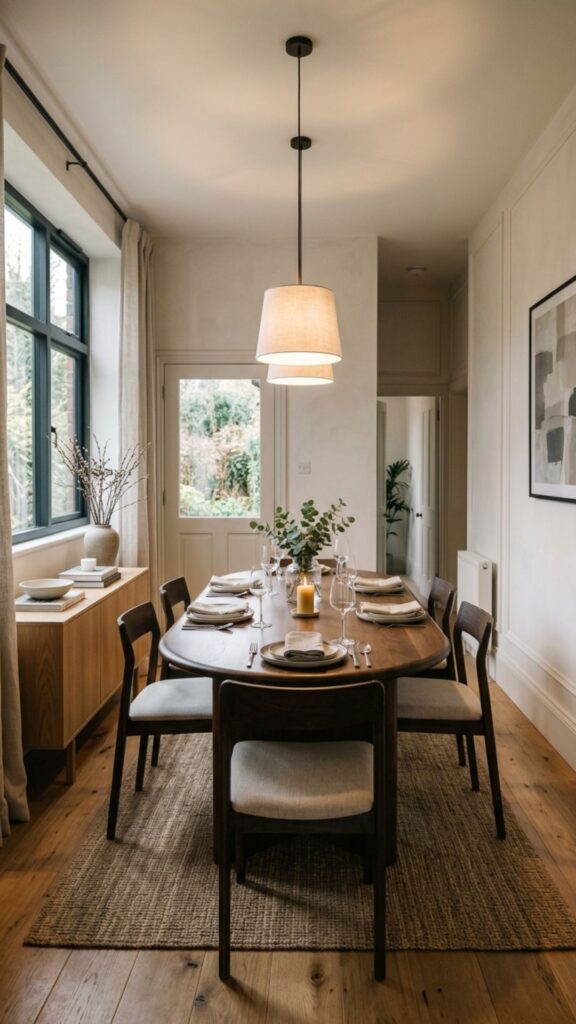
An oval table is an underused solution for rooms that aren’t quite wide enough for a full rectangular table. The curved ends allow chairs at the heads to sit closer without feeling pinched, and the rounded shape is easier to navigate around than sharp rectangular corners.
Choose an oval table that’s slightly shorter in length than a comparable rectangular option — this reclaims a few inches of clearance on each end. Oval tables also tend to make rooms feel more intimate without sacrificing much in the way of seating capacity.
14. Pedestal Table Base for Better Legroom
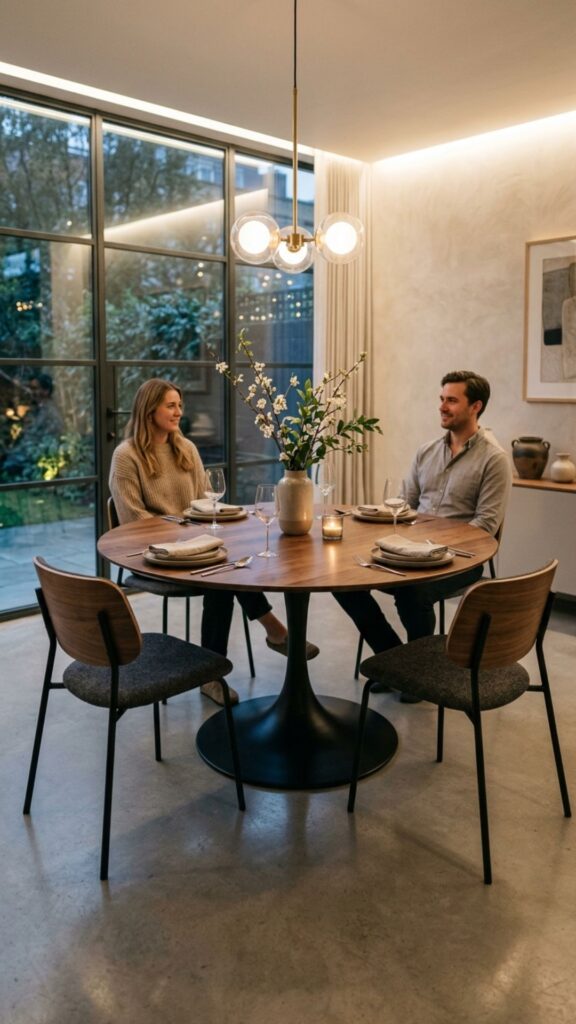
A table with a central pedestal base rather than four corner legs makes a significant difference in how comfortable seating feels — especially at the ends. With corner legs, end chairs are often forced to straddle a leg, which is awkward. A pedestal eliminates that problem entirely.
This is a particularly valuable consideration in small dining room floorplans where every inch matters. A 48-inch round pedestal table, for instance, seats four comfortably with full legroom for everyone — something a four-legged table of the same diameter can’t always deliver.
15. Traffic Flow Priority: The Three-Foot Rule
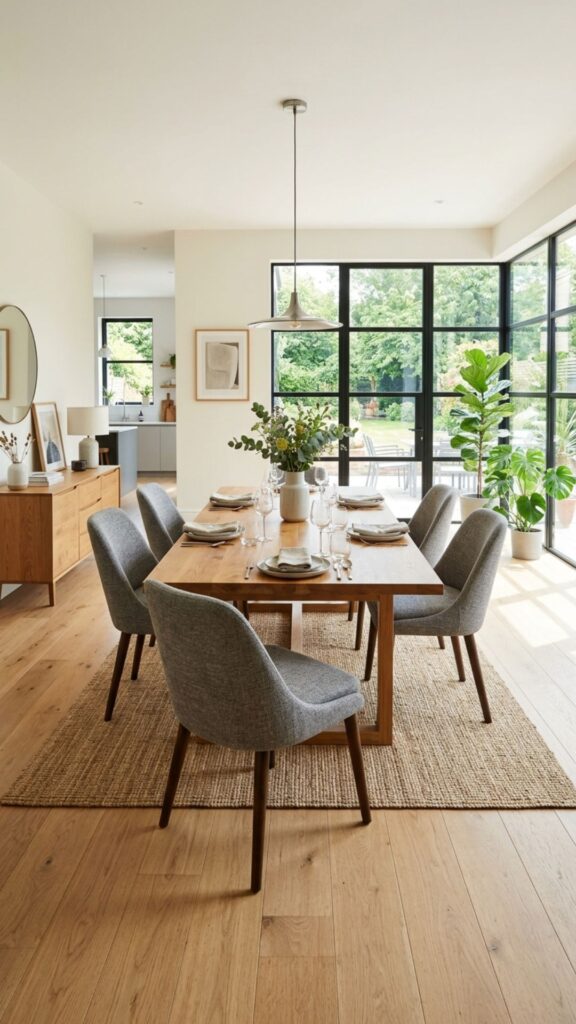
Regardless of your specific layout, the three-foot rule is the most important floorplan principle to follow: maintain at least 36 inches of clearance between any piece of furniture and the nearest wall or other furniture piece. This is the minimum width for comfortable single-file movement.
Walk through your planned layout — literally map it out with tape on the floor before buying furniture — and trace the paths you’d take from the kitchen to the table, from the table to a sideboard, and from the entry to a seat. Every one of those paths should have 36 inches of unobstructed clearance.
16. Symmetrical Layout for a Formal Dining Room
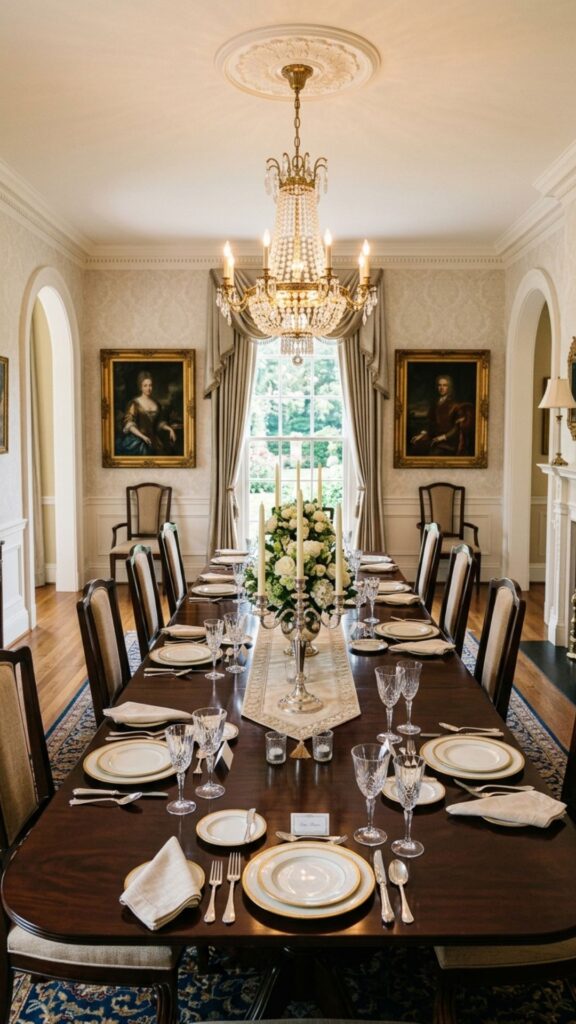
Formal dining rooms benefit from strict symmetry: matching chairs on each side, equal spacing between each seat, and centered placement of the table relative to every wall. Symmetry creates a sense of order and elegance that’s hard to achieve through other means.
Use a measuring tape to space chairs evenly — typically 24 to 28 inches from the center of one chair to the center of the next. Consistent spacing makes the table look intentional and well-designed rather than randomly arranged.
17. Built-In Storage Around the Perimeter
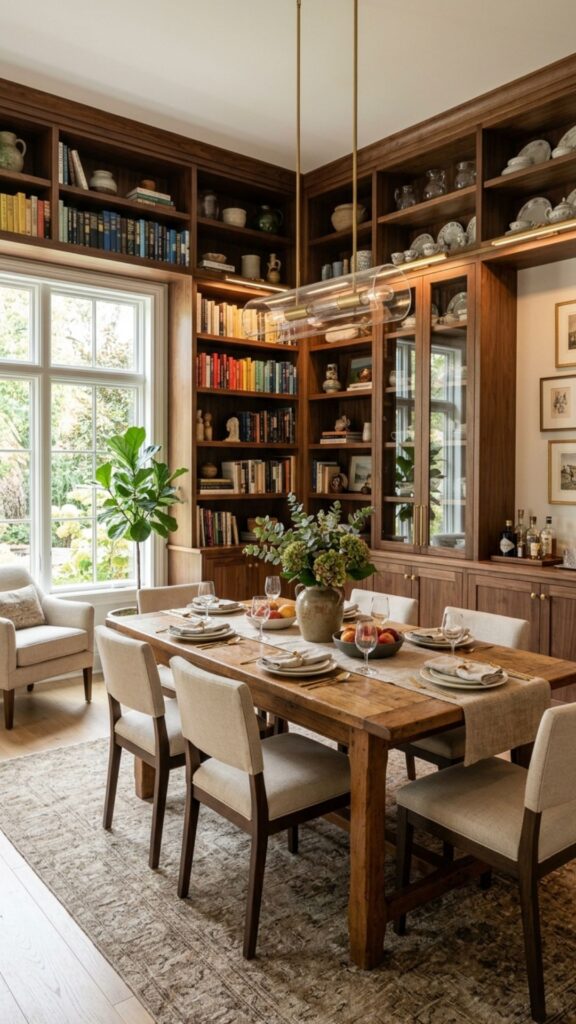
A dining room floorplan that incorporates built-in cabinetry, shelving, or a window seat with storage around the room’s perimeter keeps the center of the room clear for the table while dramatically increasing the room’s storage capacity and visual interest.
If full built-ins aren’t in the budget, freestanding bookshelves or sideboards placed symmetrically on opposite walls achieve a similar effect. The key is keeping the perimeter organized and intentional so the room feels spacious rather than cluttered.
18. Double-Duty Dining Room Layout
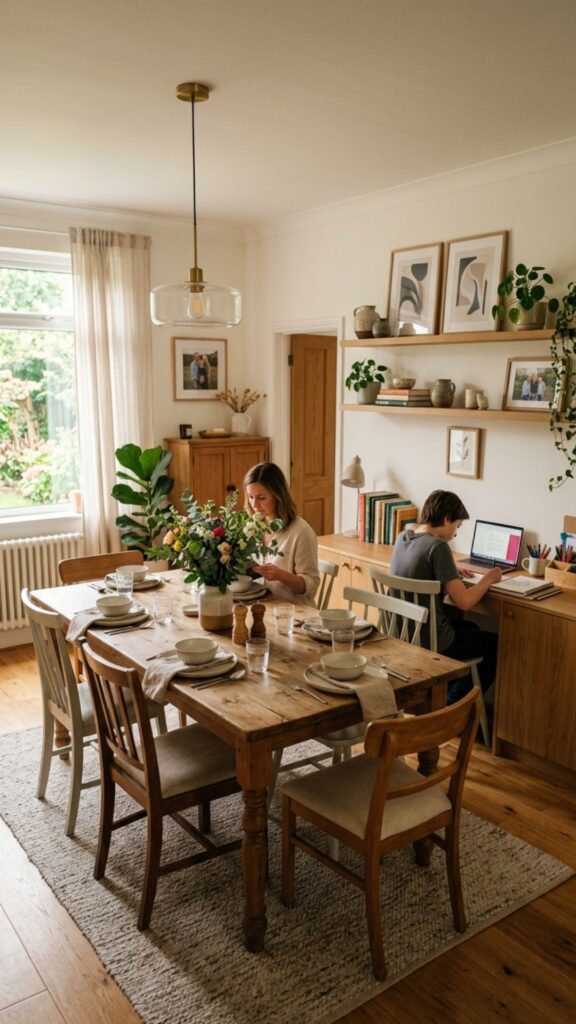
Many homes today use the dining room for more than eating — homework, remote work, crafts, and family games all happen at the dining table. A double-duty dining room floorplan keeps the table centered but adds a secondary surface — a desk, console, or credenza — along one wall for non-dining activities.
This approach works best when the secondary surface is clearly differentiated from the dining table in height or style. It signals that there are two distinct activity zones rather than one room with a cluttered table trying to do too many things at once.
19. Narrow Side Tables as Space Extenders
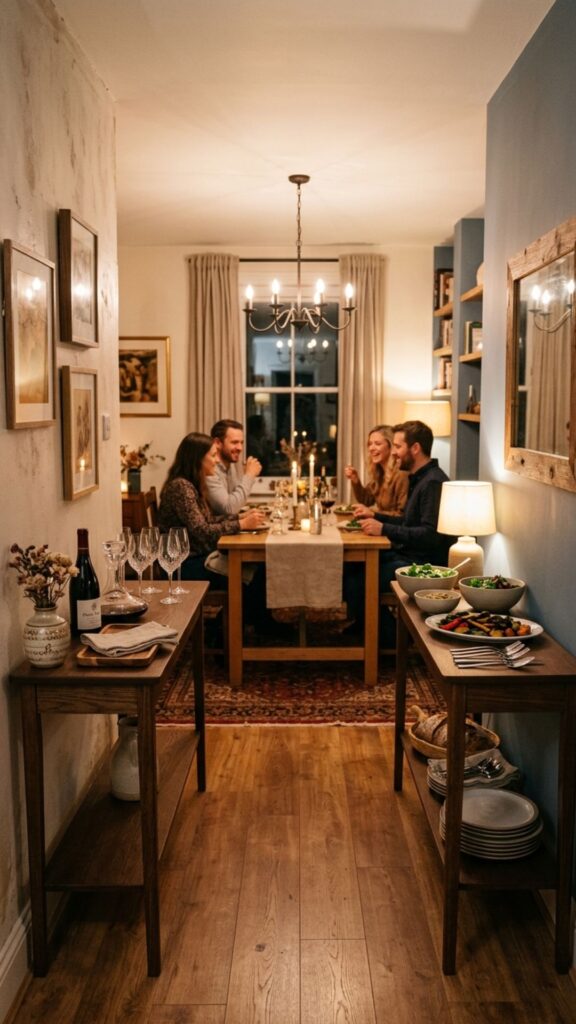
In a room too small for a sideboard, a pair of narrow side tables or sofa tables placed against the walls act as serving stations during meals and virtually disappear into the background the rest of the time. They add surface area without eating into the floor clearance around the dining table.
Position one on each side wall, leaving a clear path in front of each one. Keep them at or near dining table height — around 30 inches — so that serving dishes can be transferred easily without stooping or lifting awkwardly.
20. Use Vertical Space to Free Up Floor Area
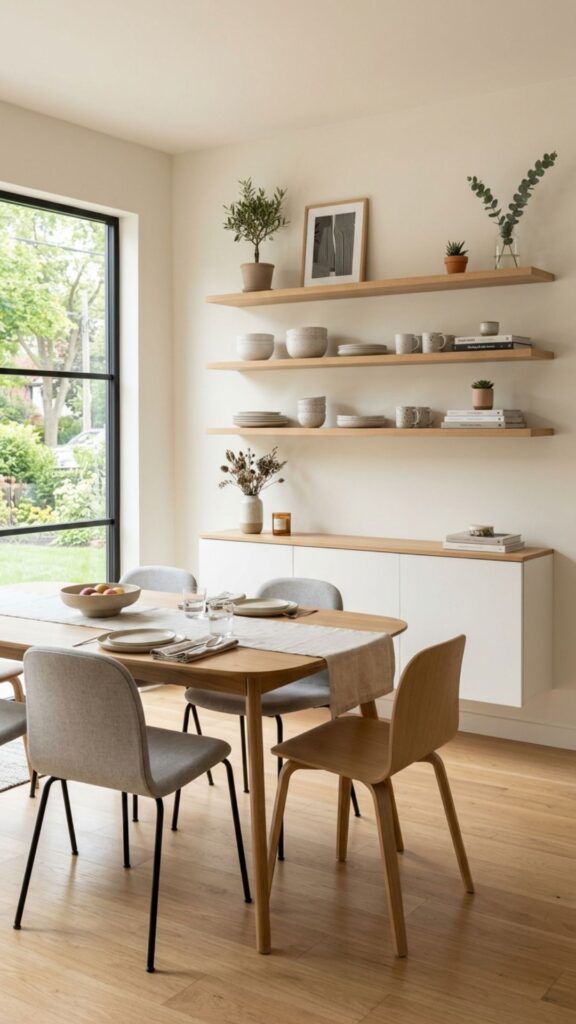
If your dining room floorplan is constrained by square footage, look up. Wall-mounted shelves, a floating sideboard, or a wall-hung wine rack adds storage and functionality without using any floor space at all. This keeps the floor plan open and the room feeling larger than it technically is.
Install shelves at a height that doesn’t interfere with seated diners — typically above 60 inches from the floor. Use them for dishes, glassware, candles, or decorative objects that would otherwise sit on a sideboard and take up valuable floor area.
Design Your Dining Room Layout With Confidence
A good dining room floorplan doesn’t require a professional designer or expensive furniture. It requires knowing a few core principles — adequate clearance, centered placement, traffic flow, and proportional furniture choices — and applying them consistently. The 20 ideas in this guide give you a practical starting point for almost any room shape or size.
Start with tape on the floor. Measure your room, sketch out the dimensions, and mark where your table will sit and where the chairs will pull out. Try two or three of these layouts before settling on one. The best dining room setups are the ones that work for how you actually live — not just how you want the room to look. Take one of these ideas and put it into practice this week.
What is a dining room floorplan?
A dining room floorplan is the arrangement of furniture — primarily the dining table, chairs, and storage pieces — within a defined space. It determines traffic flow, seating capacity, and how comfortable and functional the room feels during daily use.
How much space do you need around a dining table?
You need at least 36 inches of clearance between the edge of the dining table and any wall or furniture piece. This minimum allows chairs to pull back fully and people to walk behind seated diners without squeezing. For high-traffic paths, 42 to 48 inches is more comfortable.
What shape dining table works best in a small room?
Round and oval tables generally work best in small dining rooms. They have no sharp corners to navigate around, they tend to feel less imposing visually, and a round pedestal-base table in particular maximizes seating without creating legroom problems at the ends.
How do I define a dining area in an open-plan space?
Use an area rug sized to fit under the dining table and all chair legs (even when pulled out), combined with a pendant light directly overhead. These two elements together visually define the dining zone without needing walls or dividers.
Can a dining table be placed against a wall?
Yes, especially in very small rooms where floor space is limited. Position chairs on the three open sides and use the wall side for a bench that slides under the table when not in use. Just be aware that wall-side seating is less accessible, so this layout works best for everyday casual dining rather than entertaining larger groups.