Most dining rooms have at least one underused wall — a blank stretch above a sideboard, a narrow gap beside a window, or an empty corner that never quite gets addressed. Floating shelves are one of the best solutions for those spaces. They add storage, personality, and visual interest without eating into floor space or requiring a full renovation.
But styling them well is where most people get stuck. Too much stuff and they look cluttered. Too little and they feel forgotten. Get the material or placement wrong and the whole look falls flat.
That’s exactly what this guide tackles. You’ll find 20 practical dining room floating shelf ideas that are modern, realistic, and easy to pull off — whether you’re working with a large open-plan space or a compact dining room that needs every inch to count.
1. Go Minimal with a Single Long Shelf
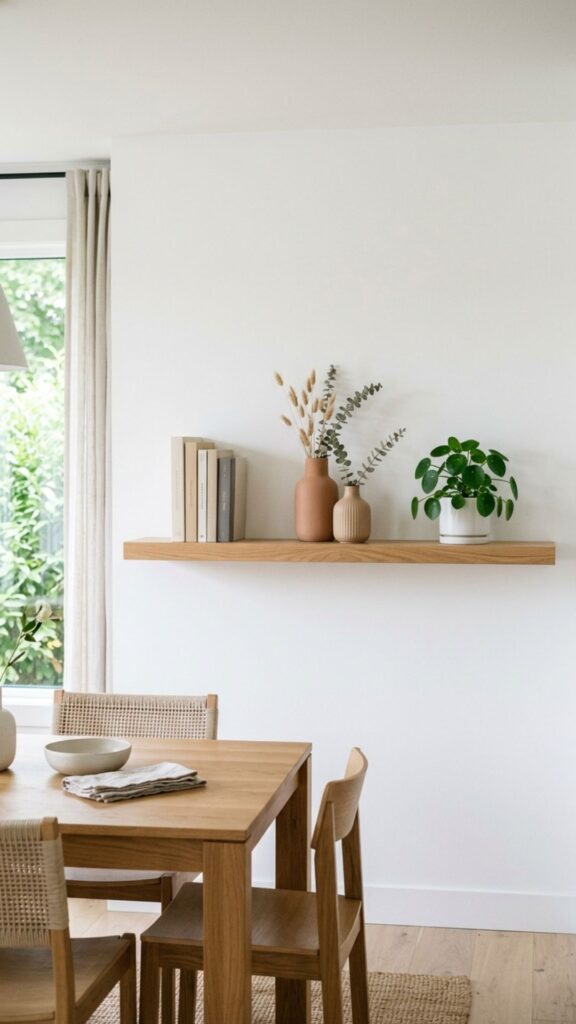
A single floating shelf running most of the length of one wall makes a strong architectural statement. Keep the display sparse — a few books stacked horizontally, a small plant, one or two ceramic pieces — and let the shelf itself be the feature.
This is one of the best dining room floating shelf ideas for spaces that already have a lot going on visually. One clean horizontal line brings order without adding noise. Choose a shelf in natural oak or walnut with simple bracket-free hardware for a truly modern result.
2. Stack Two Shelves for Layered Display
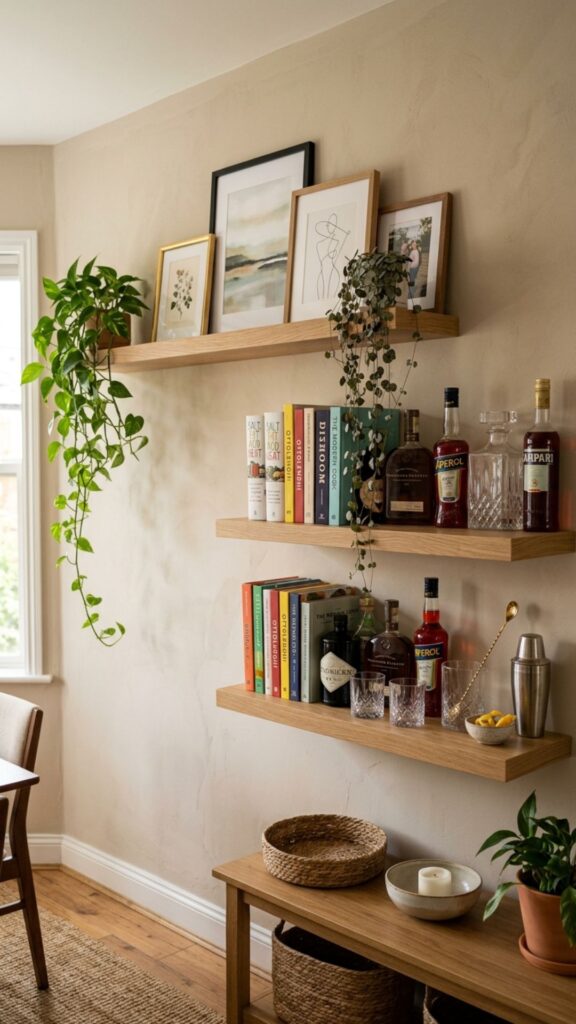
Two shelves mounted at different heights on the same wall give you flexibility without overwhelming the room. Use the top shelf for decorative items you rarely touch — sculptural objects, trailing plants, framed art leaning against the wall — and the lower shelf for more functional pieces like a small bar setup or cookbooks.
The height difference between the shelves matters. A gap of around 12 to 16 inches between them creates enough visual breathing room to keep the display feeling open. Closer than that and it starts to look like built-in shelving, which changes the aesthetic entirely.
3. Build a Bar Shelf for Wine and Glassware
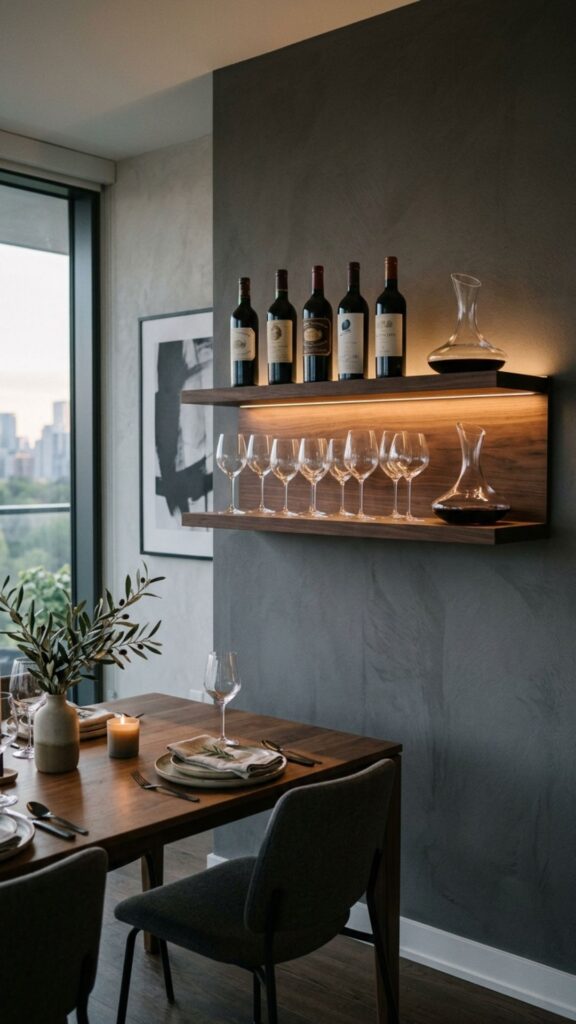
A floating shelf positioned near the dining table makes a natural home for wine bottles, stemware, and a small decanter. It keeps everything you need for dinner service within reach without requiring a full bar cart or sideboard.
Mount the shelf at a height that’s easy to reach from a standing position — typically around 55 to 60 inches from the floor. A shelf in matte black steel or dark-stained wood gives this setup a refined, modern feel that looks intentional rather than improvised.
4. Use Floating Shelves to Frame a Piece of Art
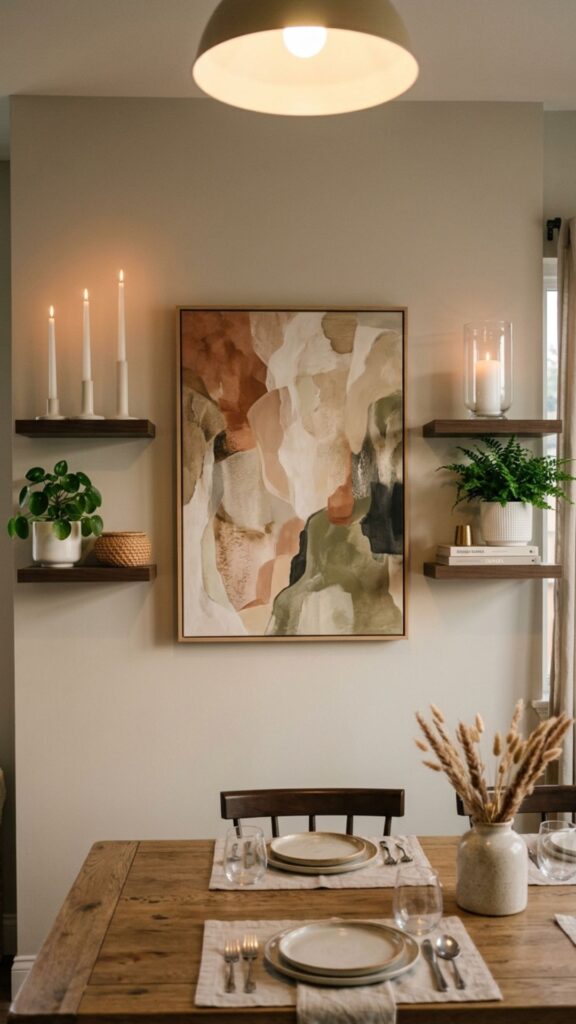
Instead of hanging art alone on a wall, flank it with two floating shelves — one on either side at the same height as the artwork’s midpoint. Fill the shelves lightly with a plant and a candle on each side, and the art becomes part of a considered composition.
This approach works especially well for dining rooms where you want to create a focal point without installing a large piece of furniture. The shelves add depth and dimension to the wall without competing with the artwork itself.
5. Try a Corner Shelf for Awkward Spaces
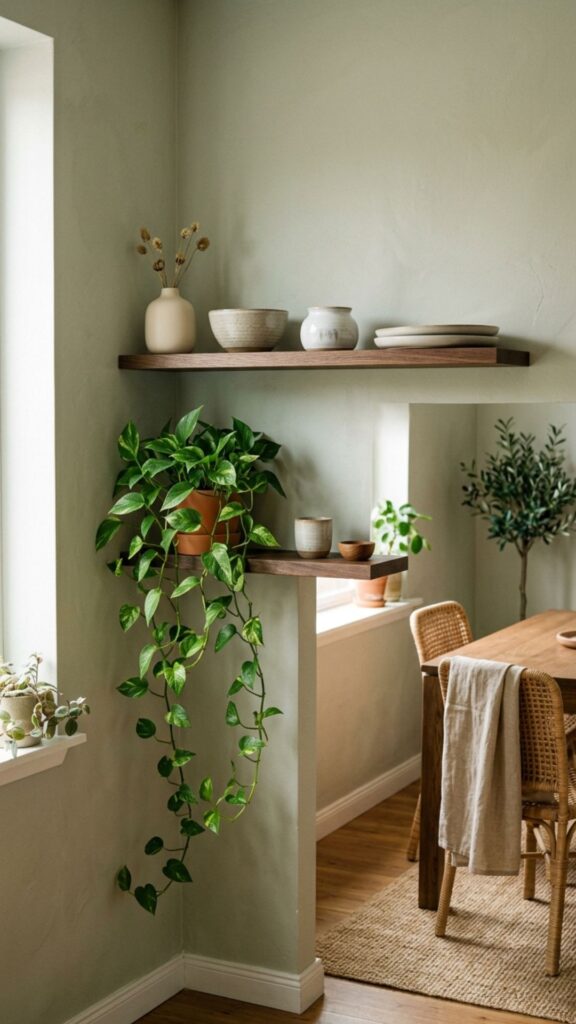
Corner shelves are one of the most underused dining room floating shelf ideas for smaller homes. A simple L-shaped or triangular corner shelf turns a dead zone into a useful display area, adding storage without projecting far into the room.
Style a corner shelf with a trailing plant on the top tier and a few small ceramic pieces below. The organic shape of a hanging plant softens the geometric precision of the shelf and makes the corner feel intentional rather than an afterthought.
6. Create a Gallery Wall With Shelves Included
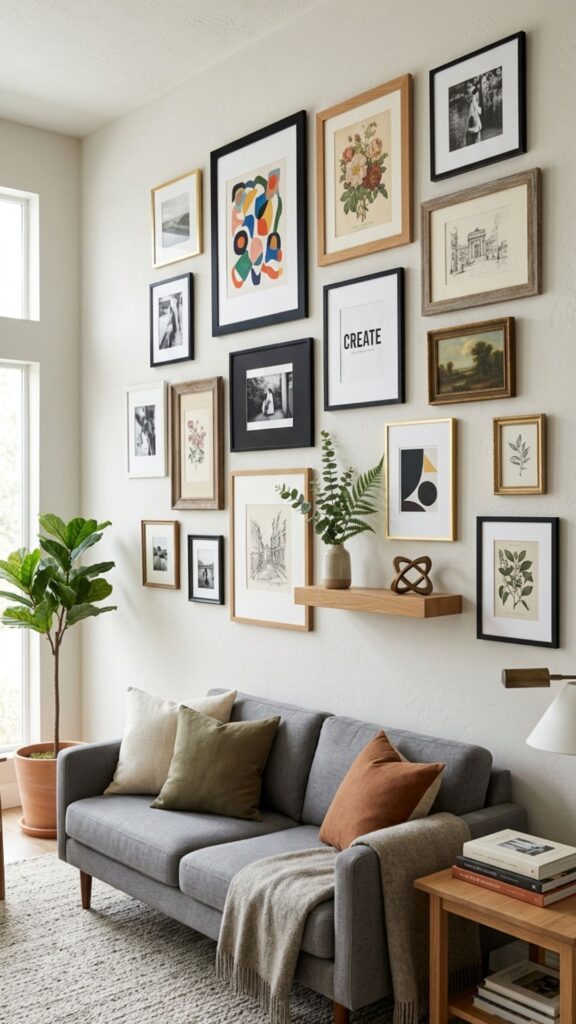
Gallery walls don’t have to be all frames. Mixing one or two floating shelves into a gallery wall arrangement adds three-dimensional texture that makes the whole display feel more dynamic and lived-in.
Position a short shelf among a cluster of framed prints at a height where it can hold a small vase or figurine. The shelf breaks up the flat plane of the wall and creates a moment of relief within the arrangement — something professional stylists do intentionally.
7. Choose Black Shelves for a Modern Contrast
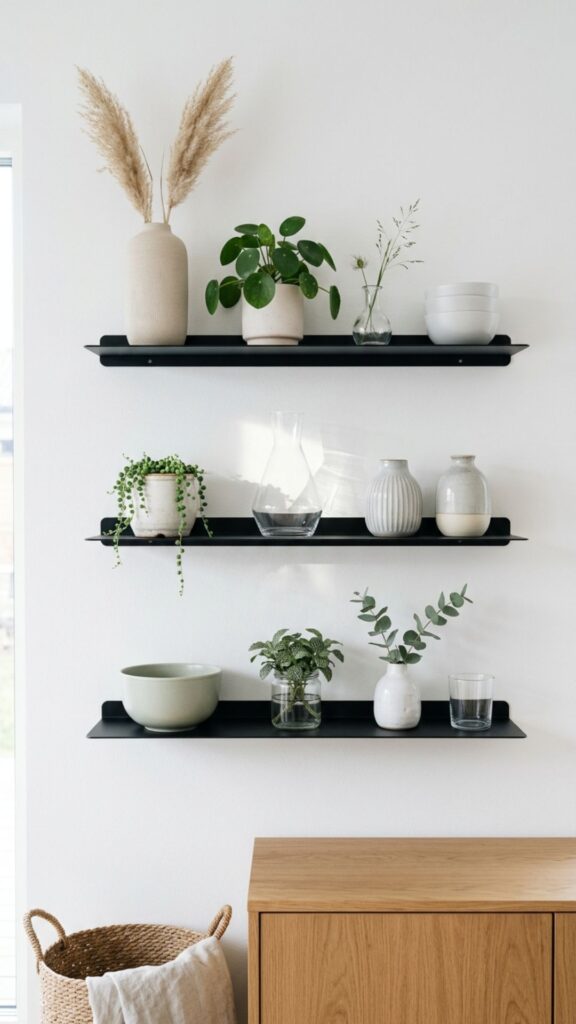
Black floating shelves against a white or light-toned wall create a crisp, graphic contrast that reads as modern and confident. This is a particularly effective approach in dining rooms with white walls, pale furniture, or natural wood tones where you want visual definition.
Black steel shelves with a thin profile look especially sharp. Keep the display items light in color — white ceramics, clear glass, pale plants — so they pop against the dark surface. The contrast does more work than any amount of accessories.
8. Mount Shelves Above a Sideboard for Extra Display Space
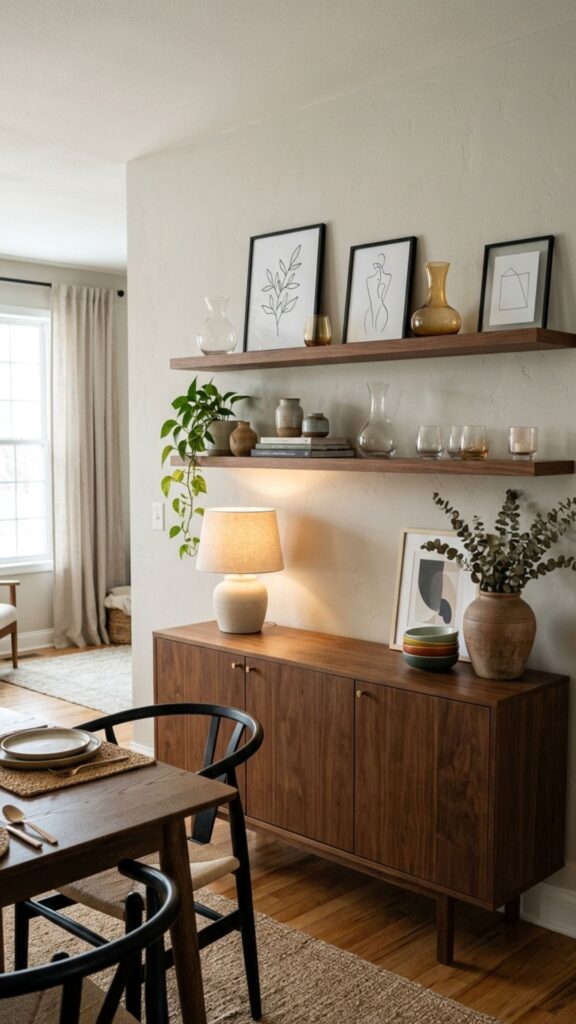
Floating shelves mounted on the wall above a sideboard or buffet table effectively extend the sideboard’s usable surface upward. This is one of the most practical dining room floating shelf ideas because it doubles the display area in a zone that’s already styled for it.
Keep the shelves proportional to the sideboard below. A shelf that’s slightly narrower than the sideboard width tends to look most balanced. Use the sideboard for larger items and the shelves for smaller, lighter pieces that benefit from being at eye level.
9. Use Open Shelves for Everyday Dishware
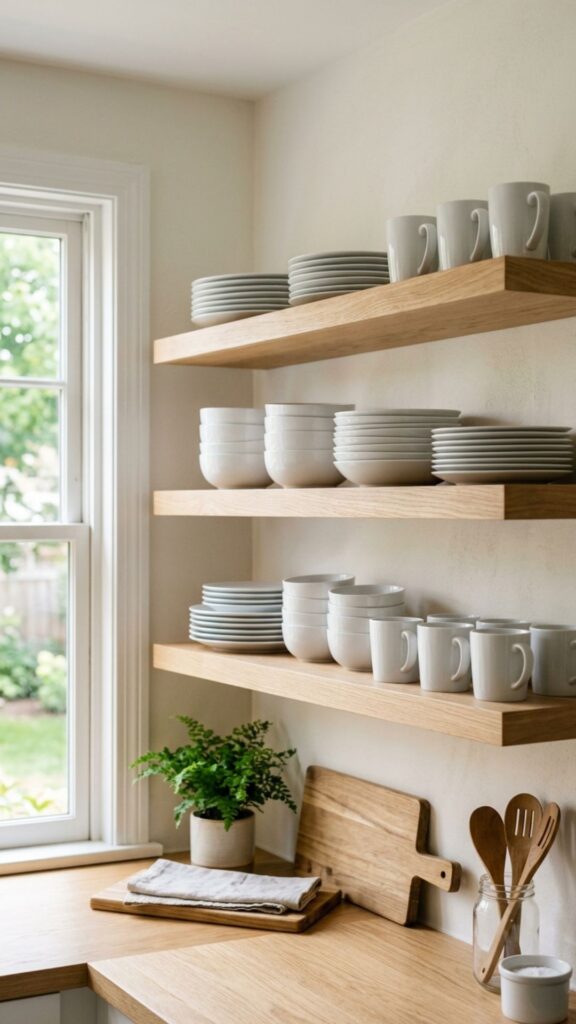
Floating shelves work beautifully in dining rooms that open into a kitchen, where displaying everyday dishware makes practical sense. Stack white plates, a few bowls, and a row of mugs on a wide, sturdy shelf and the display becomes both functional and decorative.
This works best when your dishware is cohesive in color or material. A mix of matching white ceramics or one consistent color family looks curated. A random assortment of mismatched pieces can make even well-placed shelves look chaotic.
10. Go Long and Low for a Scandinavian Feel
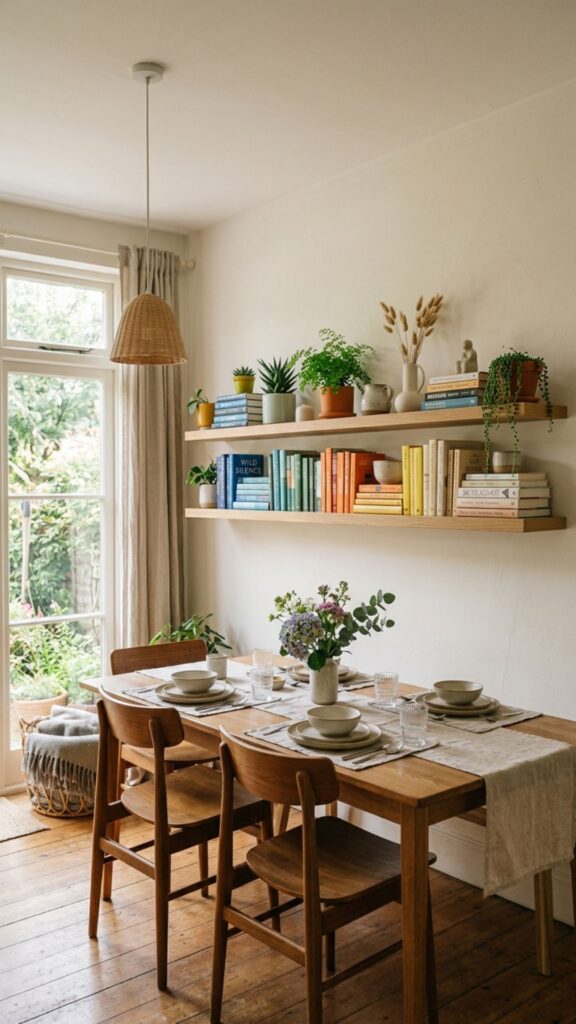
A long, low floating shelf positioned about 18 to 24 inches above the floor along one wall creates a distinctly Scandinavian aesthetic — clean, horizontal, and unhurried. Style it with a few low plants, stacked books, and simple ceramics for a look that feels calm and modern.
Low shelves are also a smart dining room floating shelf idea for rooms with high ceilings, where they help bring visual weight down and make the space feel more intimate. In rooms with standard ceiling heights, keep the styling minimal so the shelf doesn’t interrupt the sightline across the room.
11. Install Floating Shelves in an Alcove
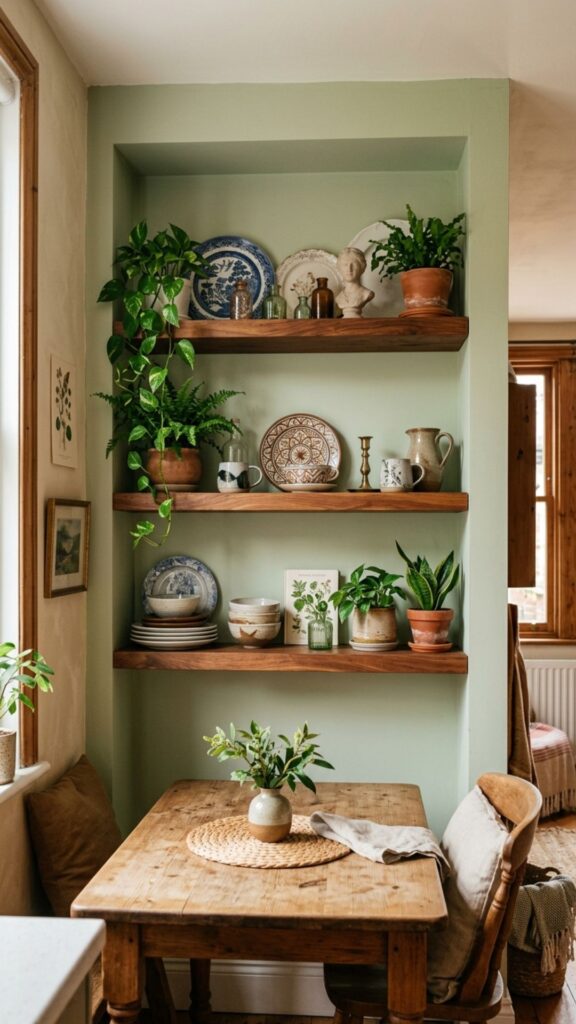
If your dining room has a built-in alcove or recess, floating shelves are the natural solution for filling it. Fitted across the width of the alcove at regular intervals, they create a clean, built-in look without the cost of actual cabinetry.
Paint the inside of the alcove a contrasting color — a deep navy, forest green, or warm terracotta — before mounting the shelves. The painted backdrop makes everything displayed on the shelves stand out clearly and gives the alcove a sense of depth and intention.
12. Mix Materials for Visual Interest
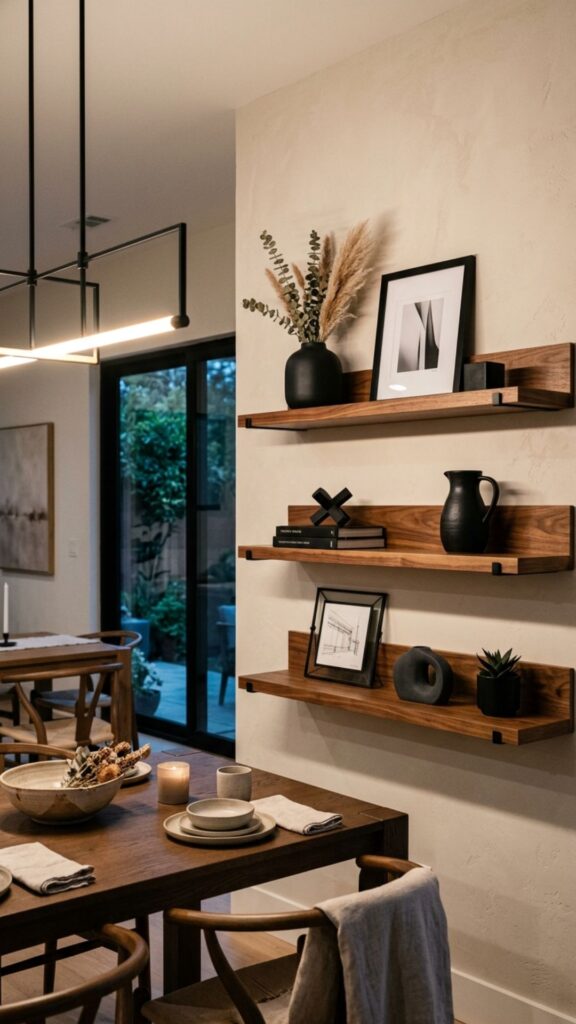
Pairing shelves in different materials — say, a natural wood shelf alongside a thin metal one — adds a layer of visual texture that makes a display feel more thoughtfully designed. You don’t need to match everything perfectly for the room to feel cohesive.
What keeps mixed materials from looking haphazard is repetition elsewhere in the room. If your shelf bracket is matte black, echo that tone in a candle holder or a picture frame on the same wall. Small repeating details tie disparate elements together convincingly.
13. Add Lighting Under the Shelves
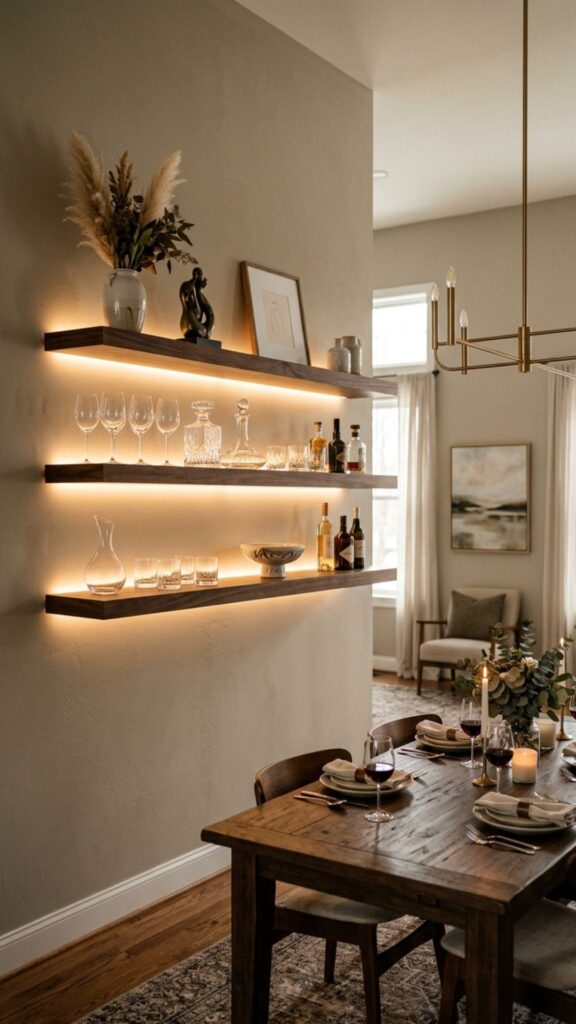
LED strip lighting mounted underneath floating shelves adds a subtle glow that makes both the shelf and whatever’s on it look intentional and elevated. In a dining room, this kind of ambient accent light is especially effective in the evening.
Warm white LEDs work best here — they complement food tones and create a relaxed atmosphere that cooler lights can’t match. Keep the lighting consistent across all shelves on the same wall so the effect reads as deliberate rather than piecemeal.
14. Use Floating Shelves as a Room Divider
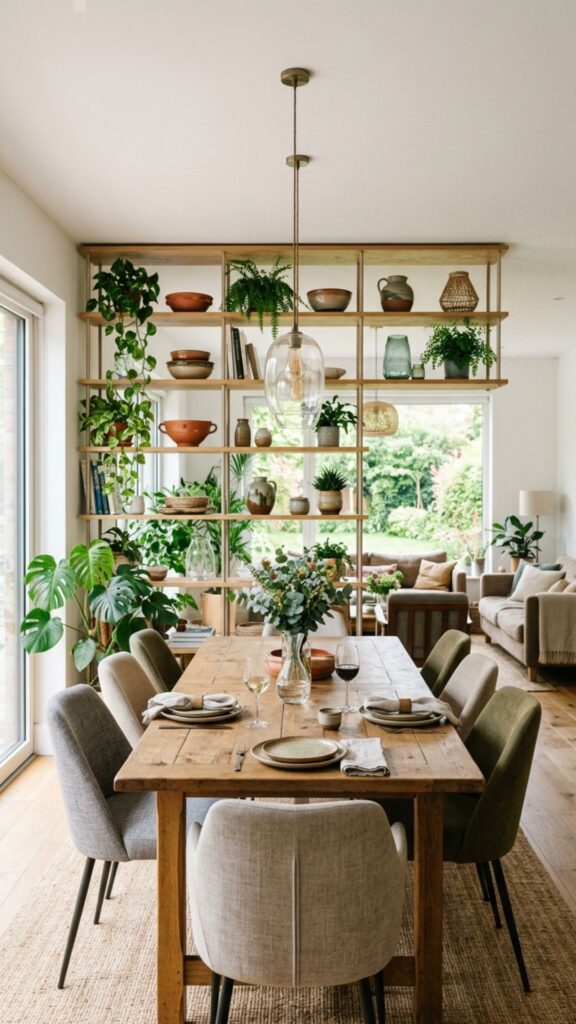
In open-plan spaces where the dining area flows into a living room or kitchen, a perpendicular floating shelf arrangement can subtly define the boundary between zones. A shelf bracket system mounted to a half-wall or island creates visual separation without blocking light or sightlines.
This is one of the more architectural dining room floating shelf ideas, and it works best in spaces where a physical barrier would feel too heavy. The shelf separates the zones gently while adding display space that serves both sides of the room.
15. Style Shelves With Plants as the Primary Feature
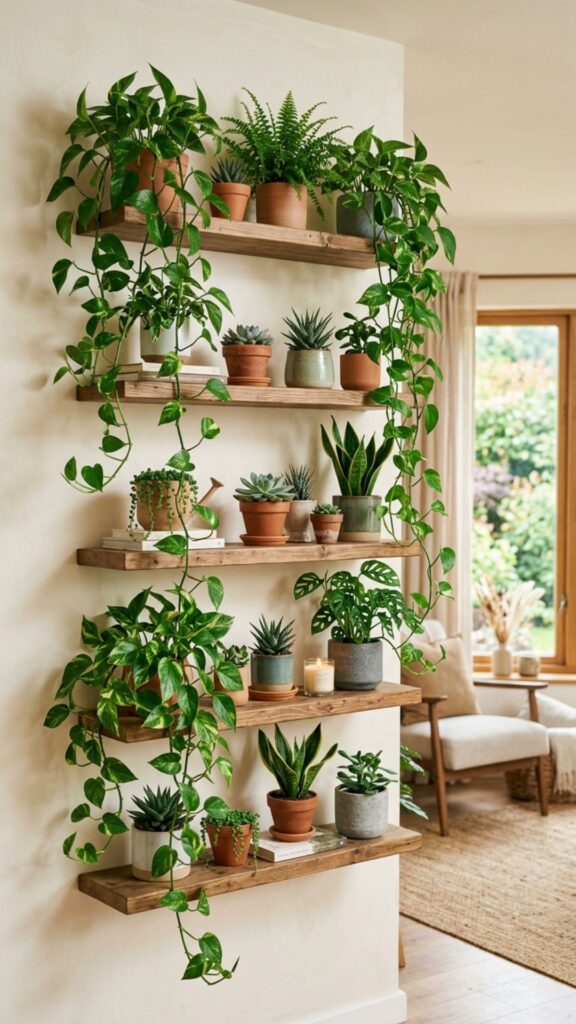
Rather than treating plants as filler, make them the central element of your shelf display. A row of small potted plants — trailing pothos, succulents, air plants in wall-mounted holders — creates a living display that changes subtly over time and brings warmth to any dining room wall.
Choose plants based on your room’s light conditions honestly. Low-light options like pothos, snake plants, and ZZ plants survive well in dining rooms without large windows. Over-committing to plants that need direct sun and then watching them decline defeats the purpose entirely.
16. Keep One Shelf Entirely Functional
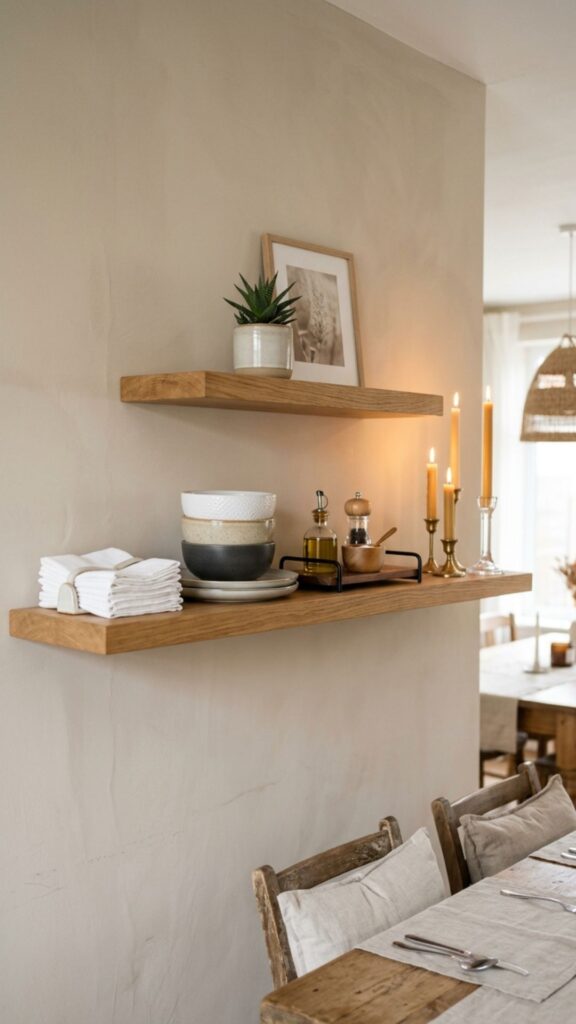
Not every shelf needs to be a styled display. A floating shelf dedicated entirely to function — holding a stack of napkins, a small candle collection, a couple of serving dishes — is an honest, practical addition that makes a dining room genuinely easier to use.
Functional shelves look best when the items on them are contained or grouped. A small basket holding napkins, a wooden tray organizing candles, or a row of matching bottles keeps a practical shelf looking tidy rather than cluttered. Function and style don’t have to be separate concerns.
17. Choose White Shelves for a Clean, Airy Look
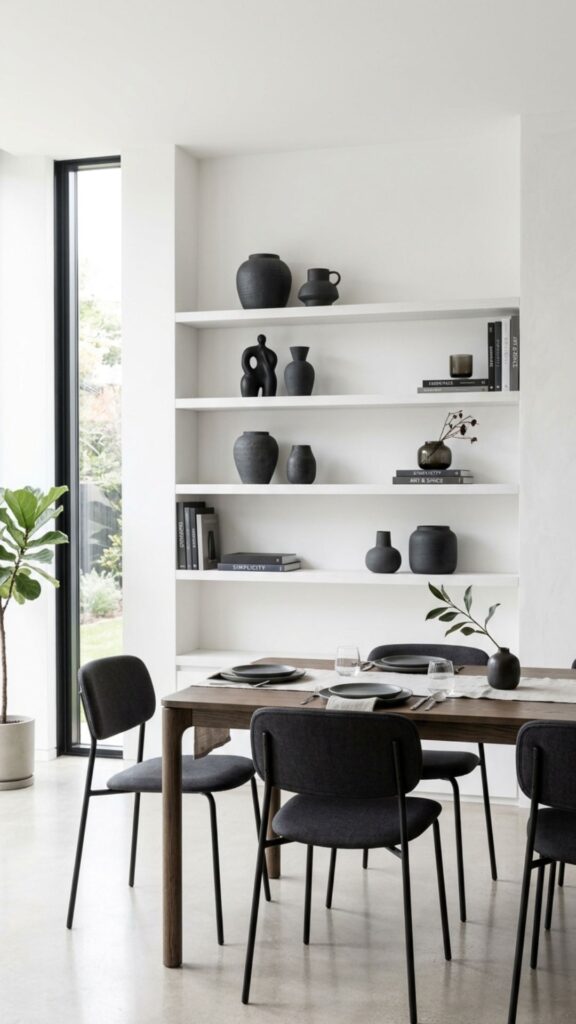
White floating shelves against a white wall create a seamless, airy effect where the shelf appears to float without visually adding weight to the room. This is ideal for small dining rooms where every visual trick that makes the space feel larger is worth considering.
Display items on white shelves in a range of tones — some dark, some light — to create definition against the pale background. If everything is white, the display disappears. A few darker objects anchor the shelf and give the eye somewhere to land.
18. Use Thick, Chunky Shelves for a Rustic-Modern Mix
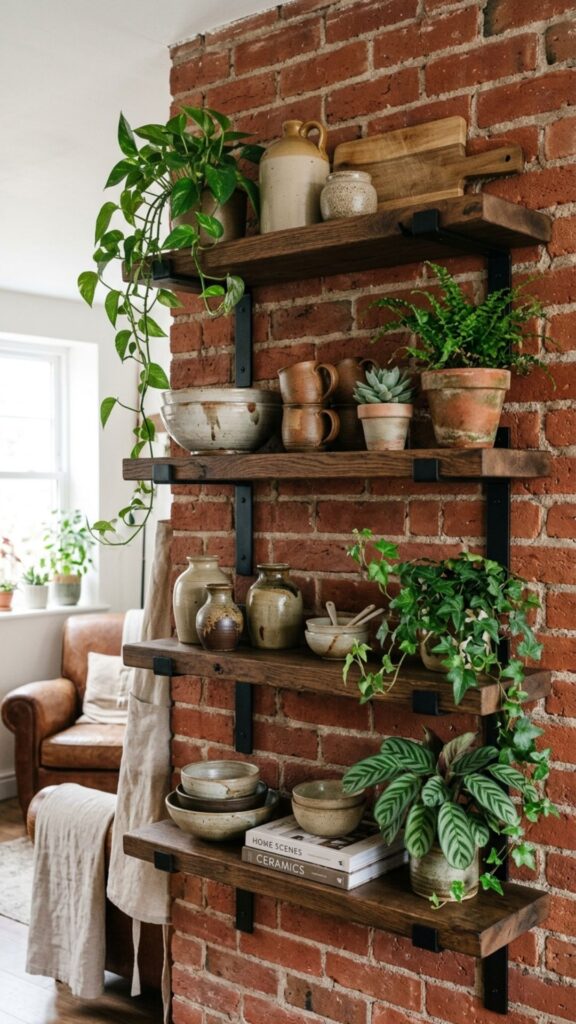
A shelf with a thick profile — four inches deep or more — carries more visual weight and pairs naturally with rustic or industrial elements. Dark-stained thick wood shelves on black iron brackets are a classic combination that looks modern without being cold.
This style works particularly well in dining rooms with exposed brick, concrete floors, or dark furniture. The visual weight of the thick shelf feels proportional to heavier room elements, whereas a thin shelf in the same context can look insubstantial.
19. Create Symmetry With Matching Shelves on Either Side of a Window
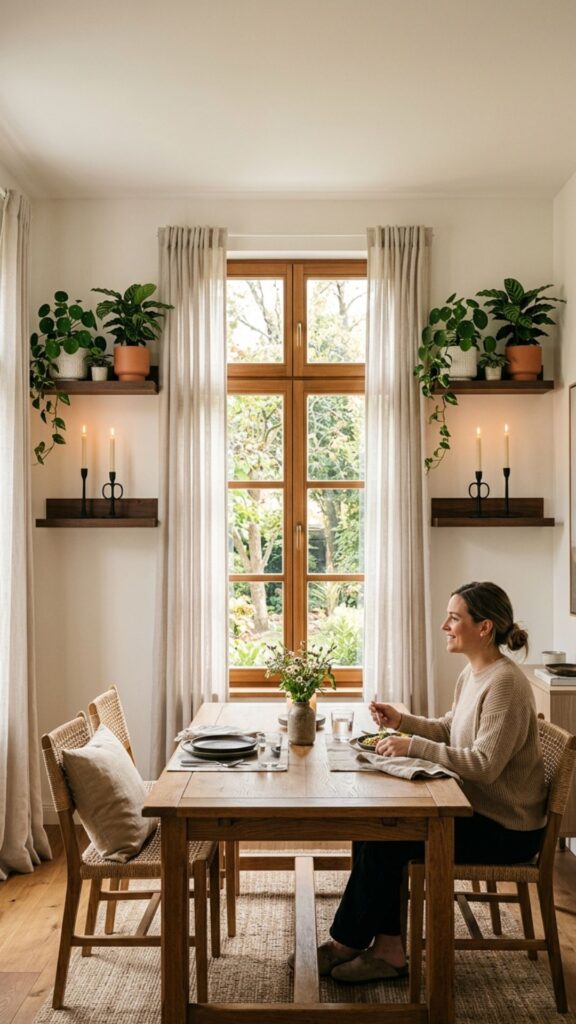
Two identical floating shelves mounted at the same height on either side of a dining room window create a symmetrical framing effect that makes the window feel more architectural. Style both shelves with matching or mirrored objects — twin plants, paired candlesticks — to reinforce the balance.
Symmetry is one of the most effective tools in interior styling because it reads as calm and resolved. This is a particularly useful dining room floating shelf idea if your room currently feels unbalanced or you’re working with an oddly placed window that disrupts the wall layout.
20. Edit Ruthlessly and Leave Space to Breathe
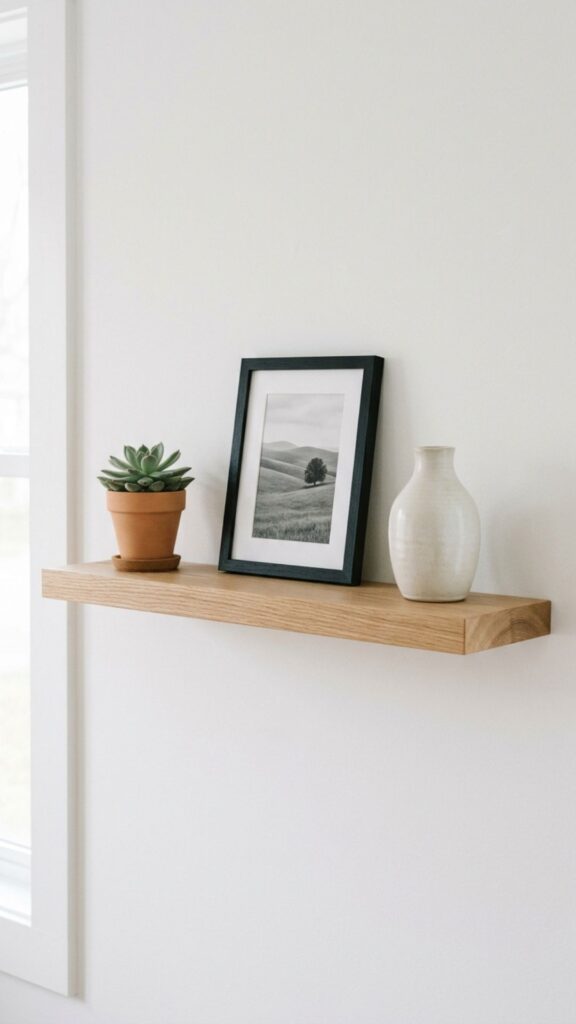
The most modern thing you can do with floating shelves is display less than you think you should. Every styling guide will tell you to group in odd numbers, vary heights, and mix textures — and that’s all true — but the more important principle is restraint.
Leave gaps between objects. Let the shelf surface show. Remove anything that doesn’t earn its place. A shelf with five items displayed well looks far more intentional than one with fifteen items crowded together. Edit to the point of discomfort, then add one thing back. That’s usually the right number.
Conclusion
Floating shelves are one of the most versatile upgrades you can make to a dining room — but how you use them matters as much as whether you install them. The best dining room floating shelf ideas aren’t just about filling wall space. They’re about creating moments that feel considered, personal, and genuinely useful.
Start with one wall and one idea. Mount a single long shelf, style it simply, and live with it for a week before adding more. You’ll quickly develop a sense for what the space needs and what it doesn’t. The right shelves, placed well and styled with restraint, change the whole feel of a room.
Pick one idea from this list, order the shelf, and start — the wall you’ve been ignoring might just become your dining room’s best feature.
What is the best material for dining room floating shelves?
Natural wood — particularly oak, walnut, or pine — is the most versatile choice for dining rooms because it complements most furniture styles and color palettes. For a more modern or industrial look, steel or powder-coated metal shelves work well. The key is choosing a material that coordinates with at least one other element already in the room, such as furniture legs, light fixtures, or flooring.
How do I style floating shelves without making them look cluttered?
Start with fewer items than you think you need. Group objects in odd numbers — typically three or five per shelf — and vary their heights slightly. Leave visible space between groupings so each item has room to read clearly. Remove anything decorative that doesn’t contribute to the overall look. Restraint is the single biggest factor that separates a styled shelf from a cluttered one.
How high should dining room floating shelves be mounted?
For shelves used primarily for display, mounting at eye level — roughly 57 to 65 inches from the floor — puts objects in the most visible and accessible position. Shelves above a sideboard should sit 12 to 18 inches above the surface below. For a bar-style shelf used for glassware or bottles, 55 to 60 inches from the floor makes them easy to reach from a standing position.
Can floating shelves work in a small dining room?
Absolutely. In small dining rooms, floating shelves are often a better choice than freestanding furniture because they use vertical wall space without taking up floor area. Stick to one or two shelves rather than covering every wall, choose a lighter material or color to keep the space feeling open, and keep styling minimal. A single long shelf with a few well-chosen objects adds character without making the room feel smaller.