Easter has a way of making you want to freshen up your home — and the dining room is the perfect place to start. It’s where family gathers, brunch gets served, and the holiday actually comes to life.
But if you’ve ever stood in a seasonal aisle feeling unsure what to buy, or ended up with decor that looked more “kids’ classroom” than “elegant spring table,” you’re not alone.
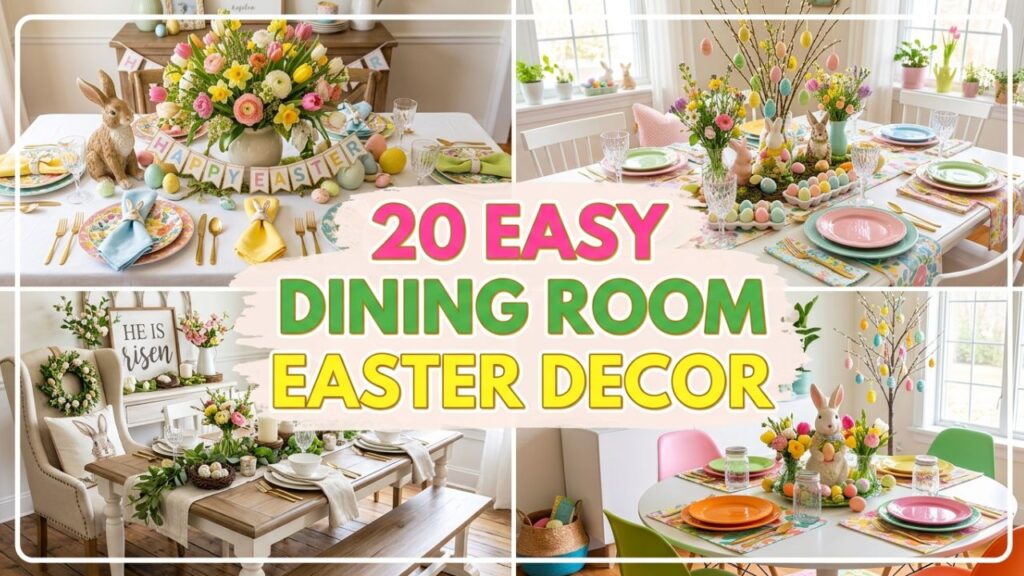
This guide covers 20 simple, practical dining room Easter decor ideas that work across budgets, room sizes, and styles.
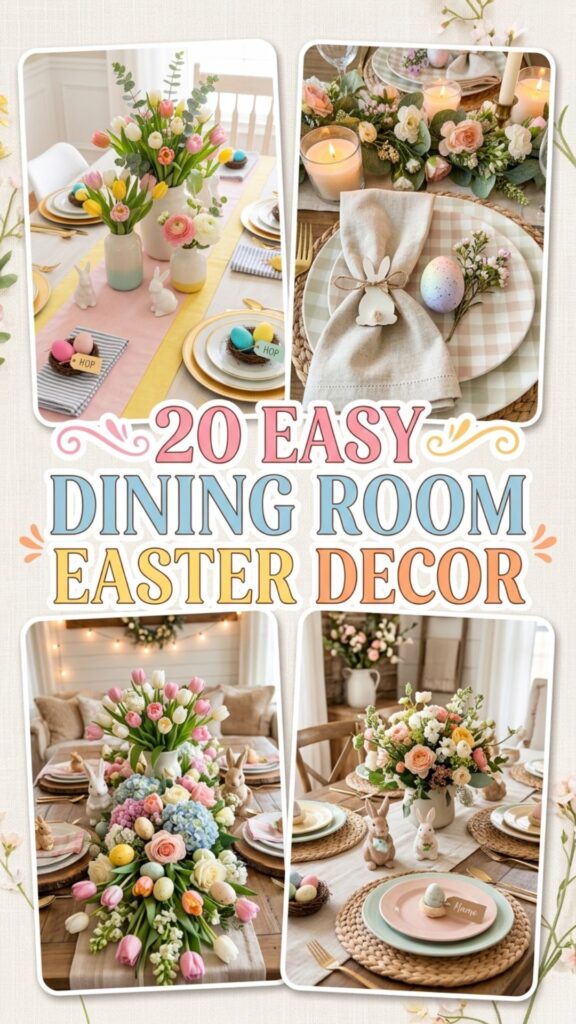
Whether you’re hosting a big Easter brunch or just want your table to feel seasonal, you’ll find ideas here that are easy to execute and genuinely worth the effort. No craft-store overwhelm. No plastic eggs everywhere. Just fresh, thoughtful ideas you can actually use.
1. Build a Pastel Centerpiece Around What You Already Own
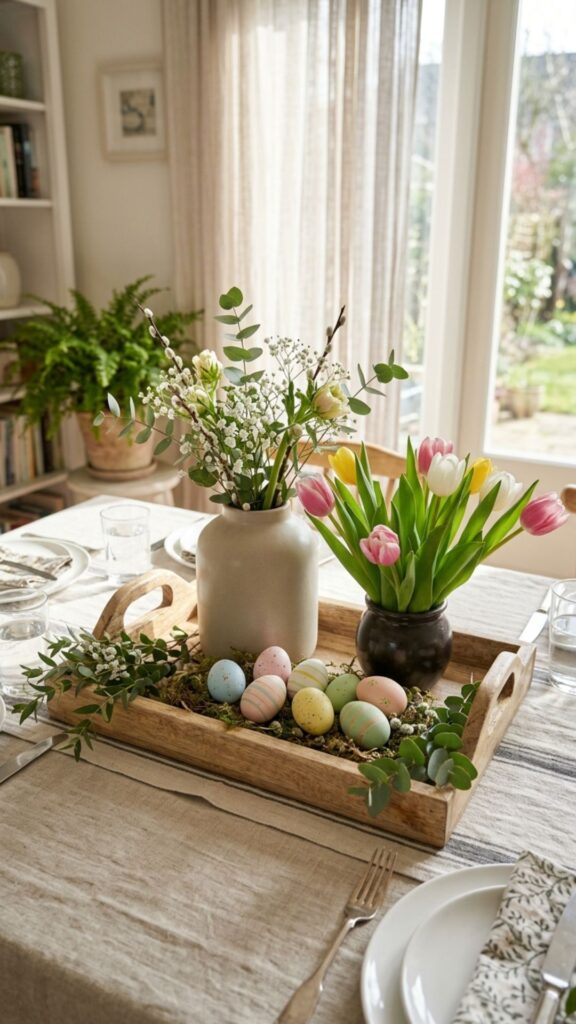
You don’t need to buy a centerpiece — you need to style one. Gather a few items from around your home: a neutral vase, a wooden tray, a ceramic bowl. Fill them with pastel-colored Easter eggs, a few sprigs of greenery, or a small potted tulip. The soft tones do the heavy lifting.
Pastels — blush, sage, lavender, soft yellow — read as “spring” immediately without screaming “holiday.” They also coordinate naturally with most neutral dining room furniture, so the decor feels like an extension of your space rather than a seasonal add-on.
2. Swap Your Table Runner for a Floral or Linen Option
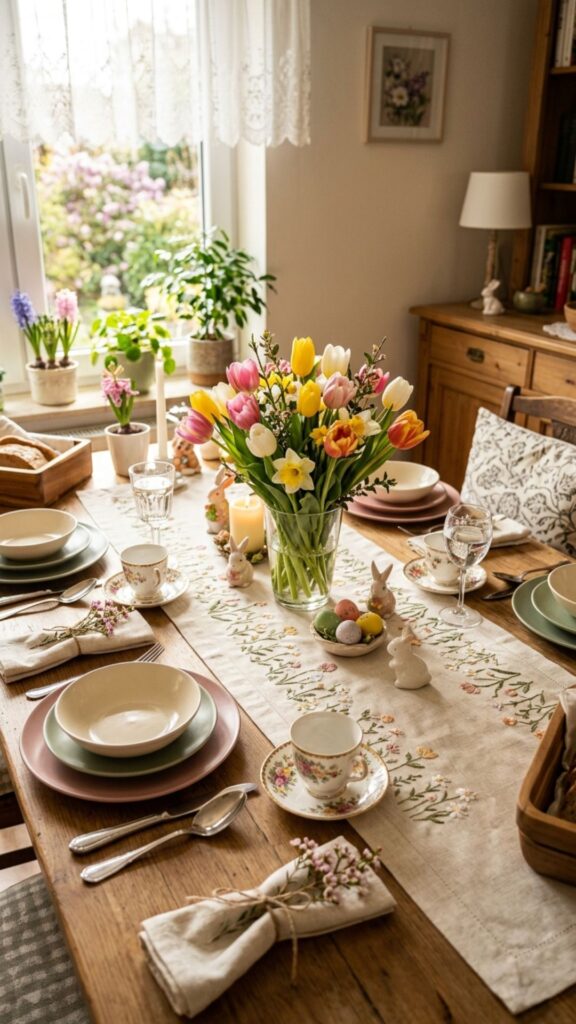
A table runner is one of the fastest ways to change a room’s mood. For Easter, look for runners with a subtle floral print, soft stripes in spring tones, or natural linen in a warm cream or dusty green. It costs very little and takes two minutes to swap out.
Keep your everyday runner stored somewhere accessible so the seasonal swap is genuinely easy. A patterned runner also hides minor spills between washes, which matters when Easter brunch gets busy.
3. Use Real or Faux Flowers as a Table Anchor
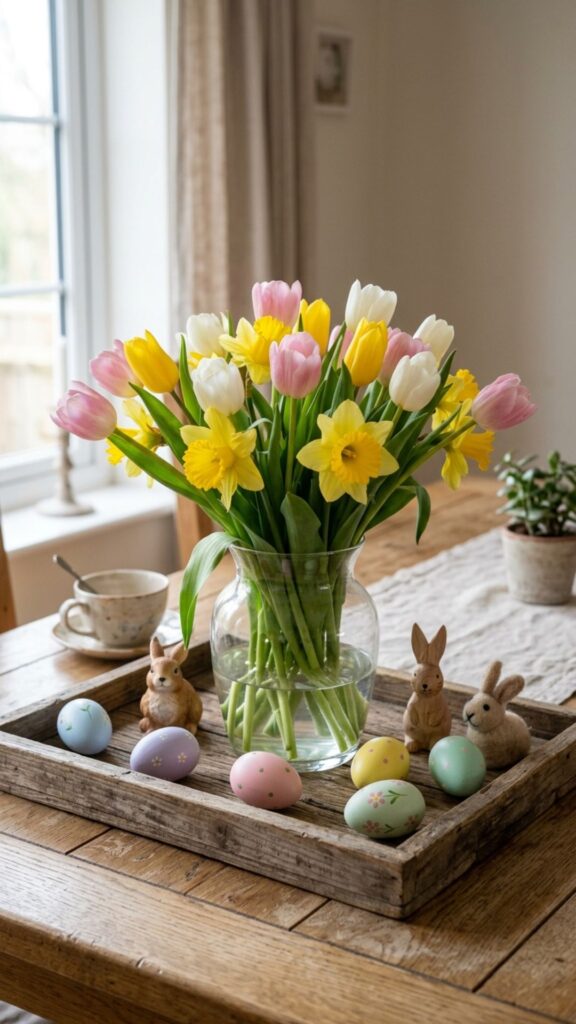
Fresh flowers are the easiest form of dining room Easter decor that still feels elevated. Tulips, ranunculus, daffodils, and hyacinths all peak around Easter and cost very little at grocery stores. A single bunch in a clear vase on a wooden tray looks deliberately styled.
If fresh flowers aren’t practical, high-quality faux stems have improved dramatically. A small cluster of realistic faux tulips in a ceramic vase stays fresh-looking for years and requires zero maintenance — a good investment for seasonal decorating.
4. Set Out a Nest-Style Bowl as a Centerpiece
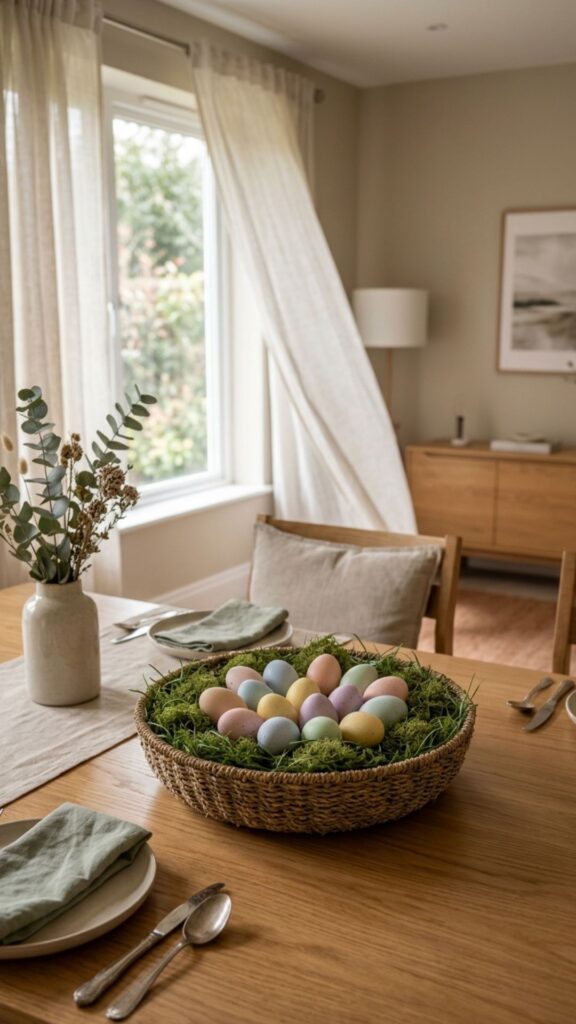
A wide, low bowl or basket lined with faux grass and filled with decorative eggs creates an instant Easter centerpiece with minimal effort. Keep the egg colors tight — two or three complementary tones look intentional; a rainbow mix can feel chaotic.
Low centerpieces are always the right call for dining tables because they don’t block conversation. A nest-style bowl sits naturally on the table, takes up little space, and can be assembled in under five minutes from items you likely already have.
5. Add Cloth Napkins in a Spring Color
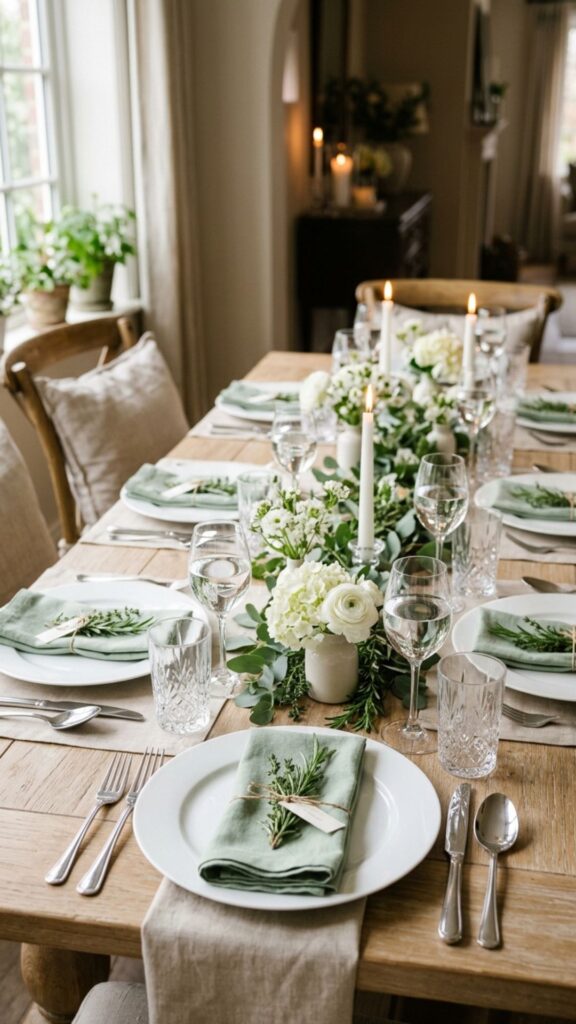
Switching to cloth napkins in a soft spring tone — blush, pale yellow, mint, or sage — immediately upgrades a table setting. Fold them simply and tuck a small sprig of greenery or a single stem into the fold for a touch of elegance.
This is one of the most budget-conscious ways to refresh your dining room Easter decor. A set of cloth napkins costs less than most centerpieces and works for multiple holidays with slight variation in the accent color.
6. Incorporate Candles and Candleholders
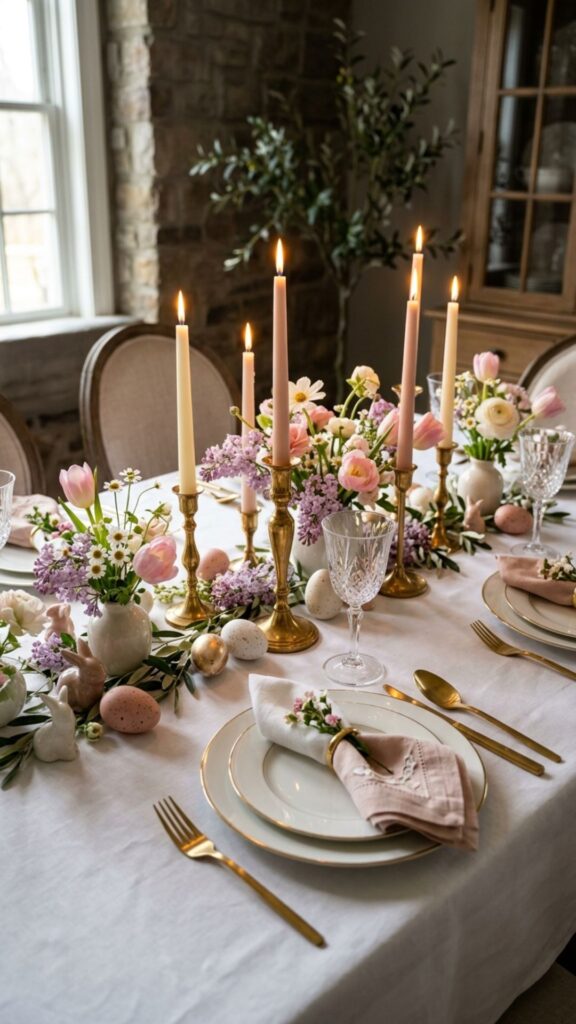
Candles add warmth and depth to an Easter table without competing with the seasonal theme. Taper candles in ivory, blush, or sage green pair beautifully with spring florals and give evening Easter dinners a genuinely lovely atmosphere.
Use simple candleholders in brass, ceramic, or natural wood to keep the look grounded. Always choose unscented candles for the dining table so the food — not the wax — is what fills the room.
7. Place Small Bud Vases Down the Center of the Table
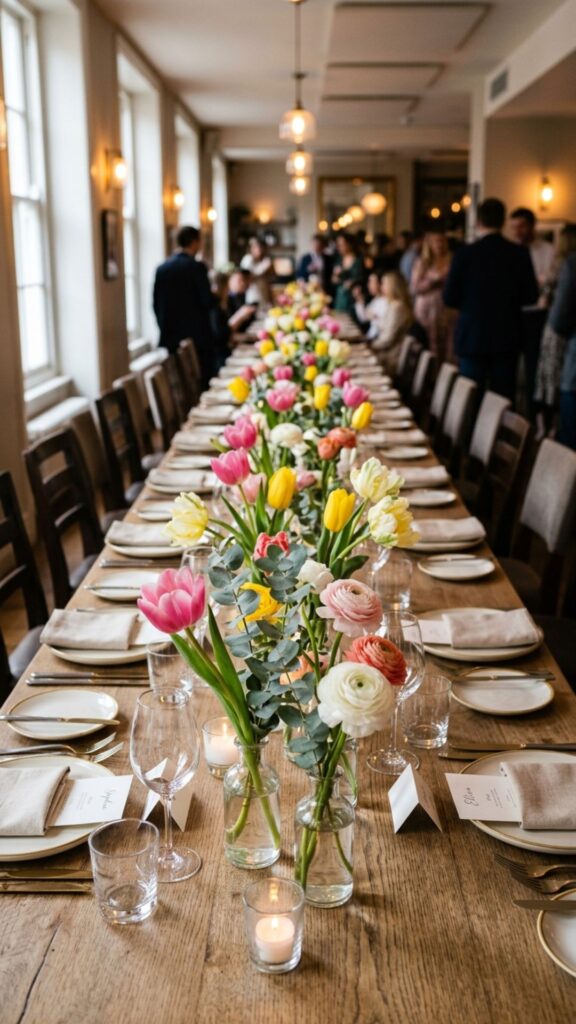
A row of three to five small bud vases creates a “tablescape” effect that looks considered without much effort. Mix heights slightly and vary the stems — one with a single tulip, one with a sprig of eucalyptus, one with a ranunculus. The variation makes it feel styled rather than uniform.
This approach works especially well for long dining tables and handles narrow spaces gracefully. The vases can sit close together as a cluster or spread along the length depending on your table size.
8. Use a Wooden or Rattan Tray to Organize Decor
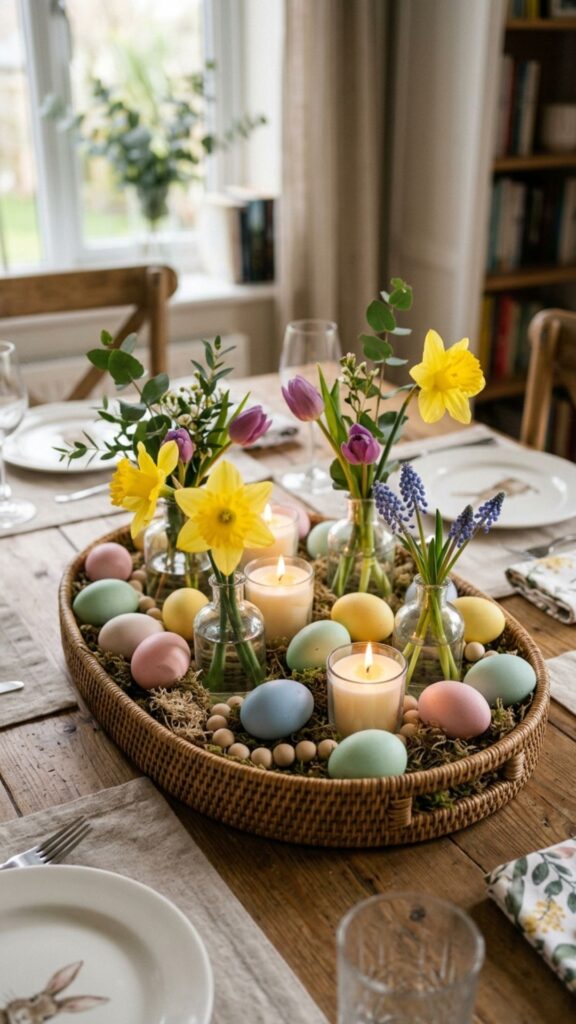
One of the easiest ways to make tabletop decor look intentional is to contain it. A wooden or rattan tray corrals your centerpiece items — eggs, candles, small vases — and turns a collection of objects into a cohesive display.
Trays also make it easy to move decor off the table entirely when meals are being served and set back in place when the table is clear. That practical detail makes decorating feel less precious and more livable.
9. Hang a Simple Spring Wreath in the Dining Room
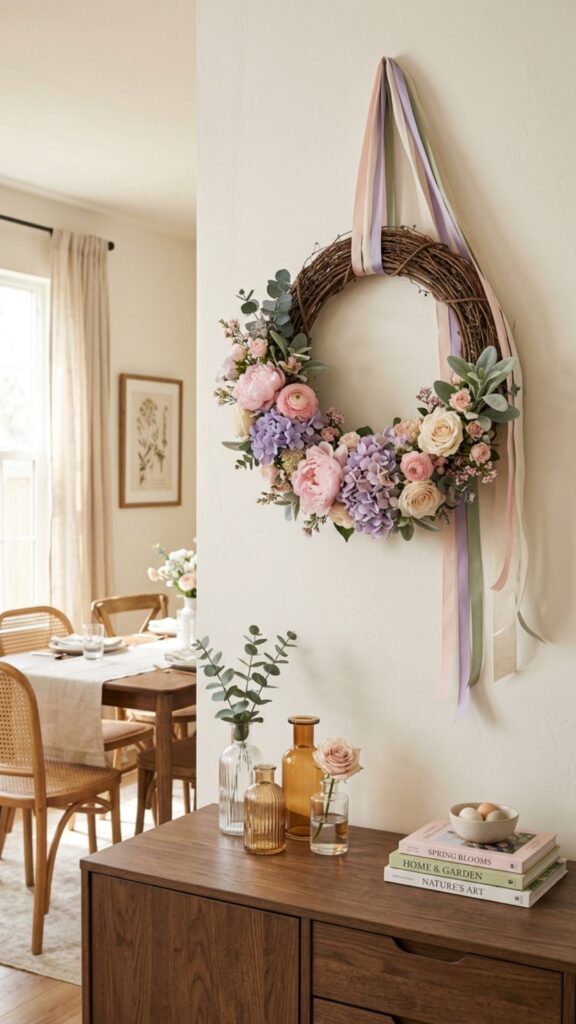
Most people hang wreaths on front doors. But a spring wreath with soft florals or pastel ribbon looks wonderful on a dining room wall or above a sideboard. It carries the seasonal mood through the room without cluttering the table.
Look for wreaths with a neutral base — dried grasses, eucalyptus, or a simple grapevine — accented with faux spring blooms. Neutral-based wreaths feel elegant and can stay up from early spring through late April without looking out of place.
10. Set the Table with Charger Plates in a Spring Tone
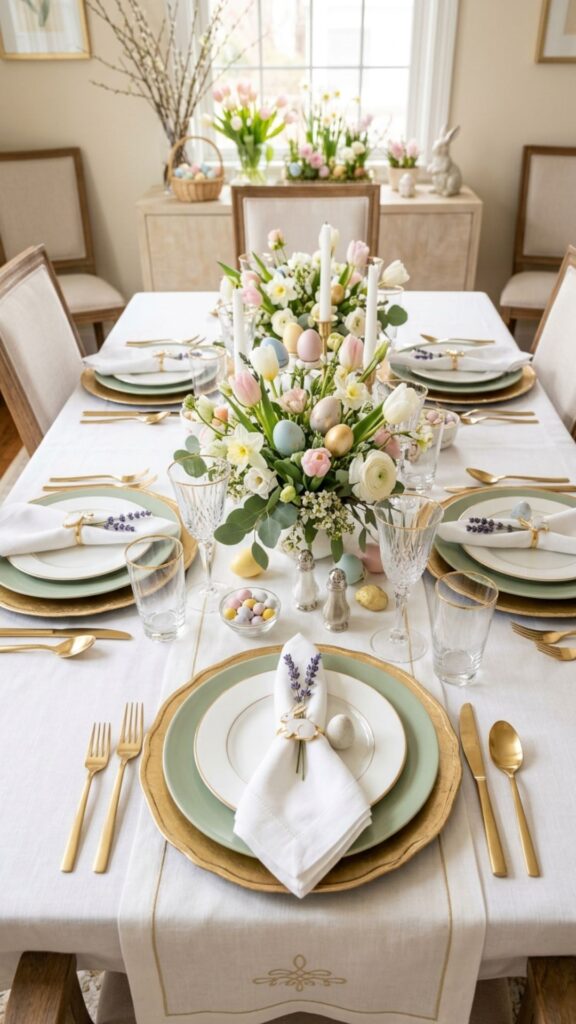
Charger plates are an underused tool in everyday dining room decor. For Easter, swap in chargers in a soft gold, blush, or sage green to layer color under your regular dinnerware. They add formality and dimension without requiring new plates.
This is a particularly useful trick if your main dinnerware is white or cream — the charger adds color while your dishes remain neutral and versatile.
11. Bring in a Potted Plant or Herb as Decor
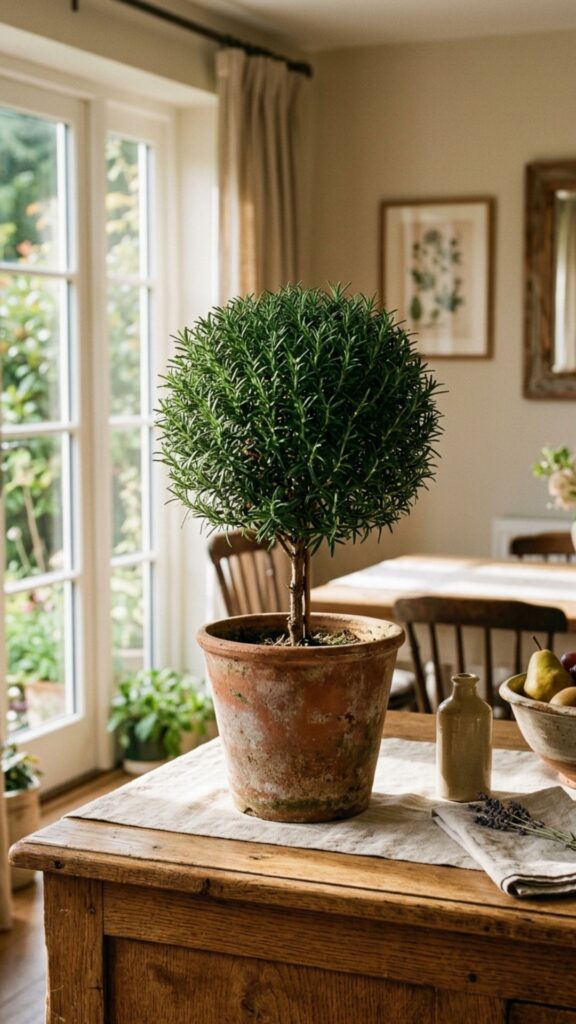
A small potted plant — a tulip bulb, a rosemary topiary trimmed into a round shape, a pot of fresh herbs — brings life to a dining room sideboard or table corner. Plants read as both seasonal and timeless, which keeps dining room Easter decor from feeling dated.
Herbs like thyme, mint, or rosemary double as both decor and a functional addition to your cooking during the holiday. Set them in a simple terracotta pot or a ceramic planter that matches your room’s palette.
12. Style Your Sideboard with Seasonal Vignettes
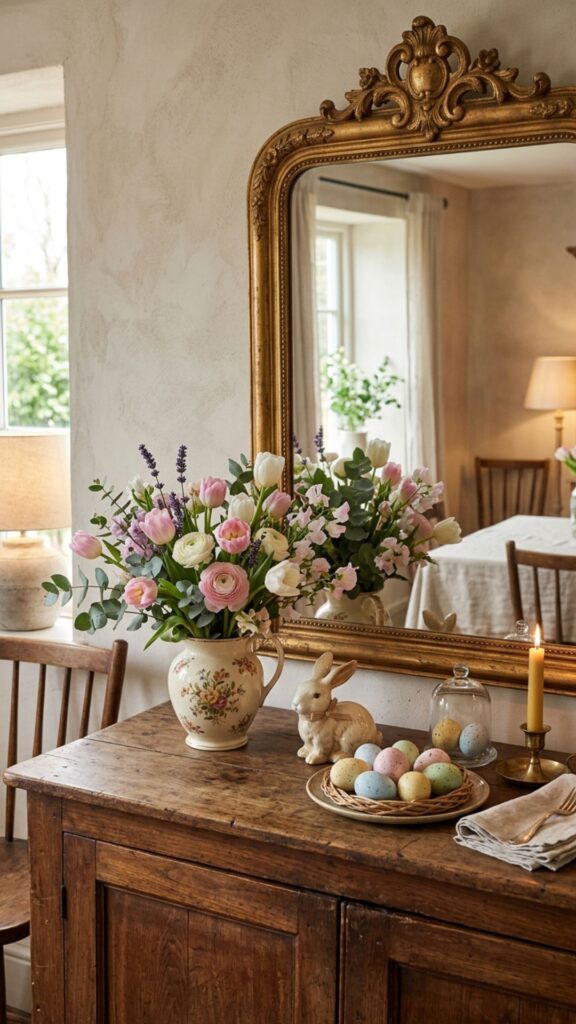
If you have a sideboard or buffet table, give it an Easter-themed moment. A few layered items — a mirror or artwork as a backdrop, a tray with spring florals, a ceramic rabbit or Easter egg — create a vignette that sets the seasonal tone for the whole room.
Keep the sideboard styling proportional. Two or three meaningful objects styled intentionally look far better than a crowded surface. Odd numbers tend to group better, so aim for three items of varying heights.
13. Add Easter-Themed Place Cards for a Personal Touch
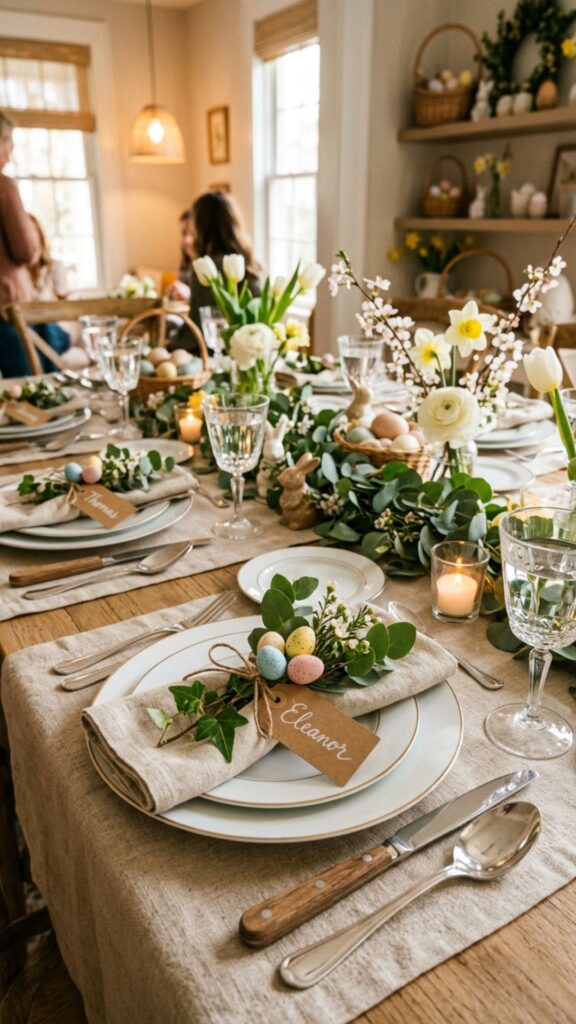
Place cards make guests feel welcome and add a polished touch to an Easter table. Write names on small kraft tags tied to a folded napkin, tucked into a mini egg, or leaning against a small sprig of greenery on each plate.
This detail costs almost nothing and works beautifully for Easter brunch. Children especially love seeing their names on the table — it makes the meal feel like an event worth showing up for.
14. Use a Natural Egg Display for Understated Elegance
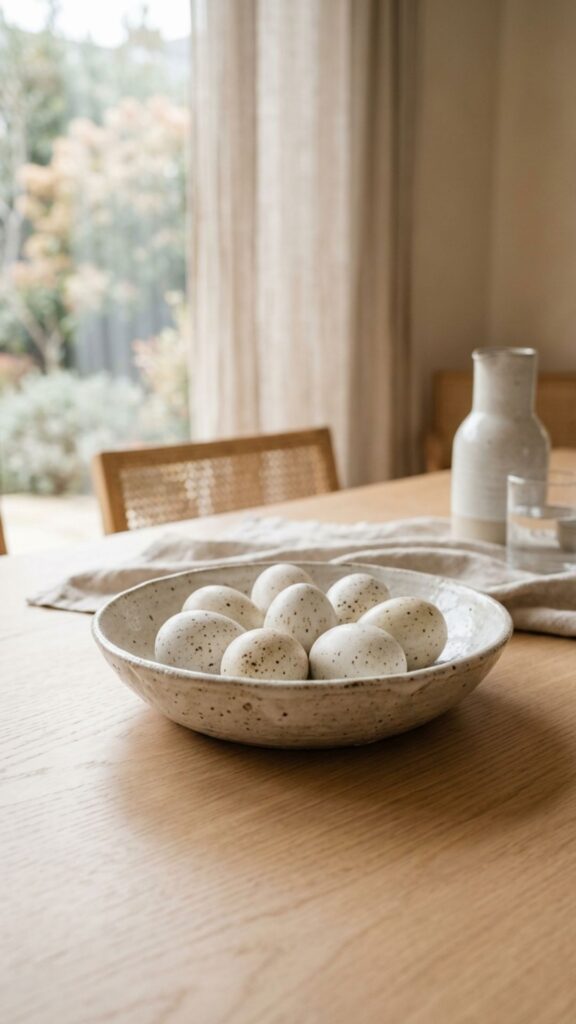
Real blown eggs or high-quality ceramic eggs in neutral tones — white, cream, speckled grey — read as sophisticated rather than cartoonish. Arrange them in a shallow bowl or on a small cake stand for a centerpiece that feels organic and refined.
This approach works well if your dining room has a more minimal or neutral aesthetic and you want dining room Easter decor that feels grown-up. Speckled or matte-finish eggs in earthy tones carry the Easter reference without being loud about it.
15. Layer Texture with a Spring-Toned Table Cloth
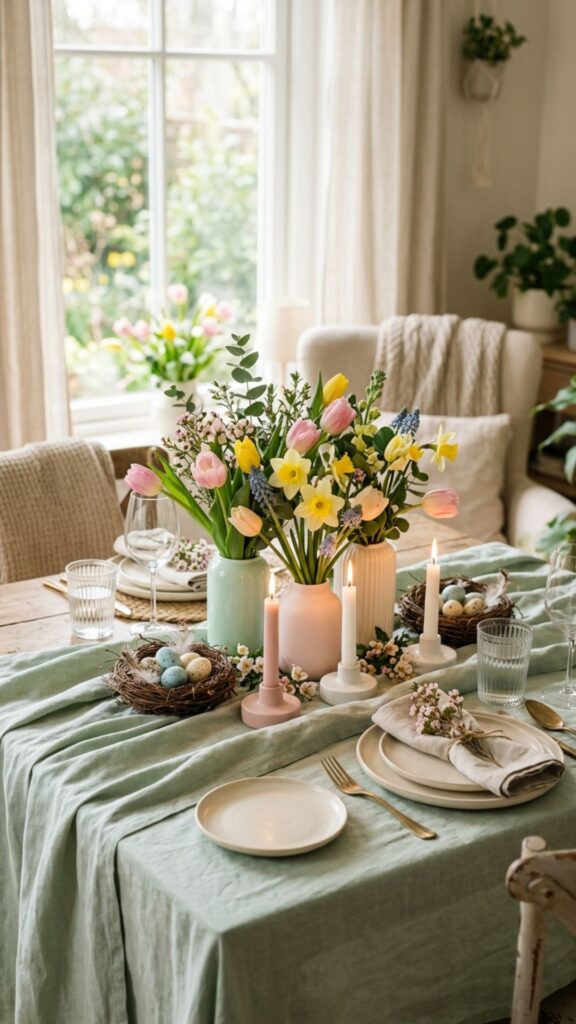
A tablecloth in a soft spring tone — dusty blue, pale green, warm white with a subtle texture — sets the entire table’s mood before a single piece of decor goes down. Linen is particularly effective because it looks relaxed and layered without much effort.
For families with young children, choose a darker spring tone or a subtle pattern that’s forgiving of spills. Patterned tablecloths can hide a lot between washings, which makes hosting easier and your table look consistently good.
16. Create a Small Dessert or Display Station
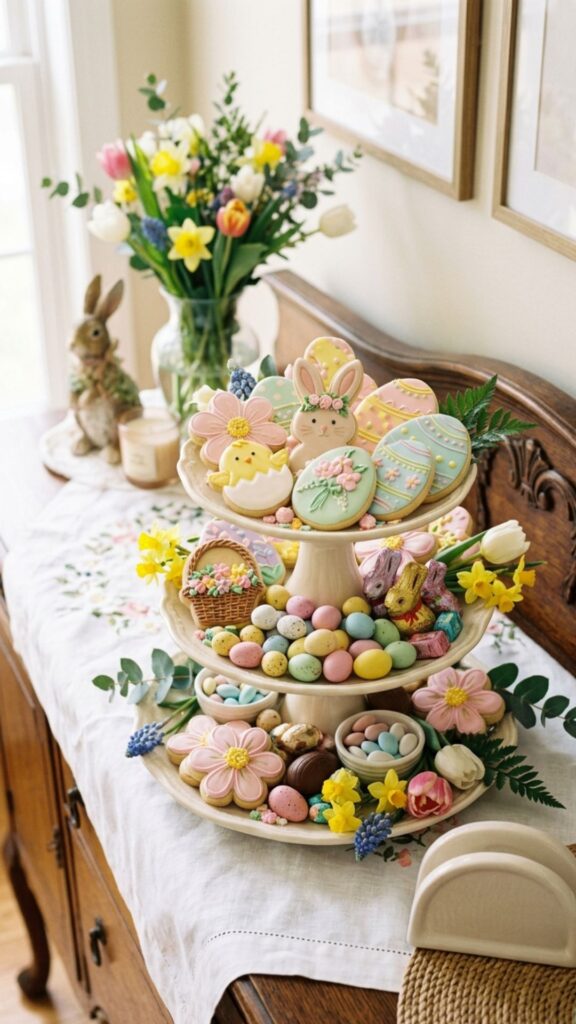
If your dining room has a sideboard or console, set up a small Easter dessert display for the holiday. A tiered stand with decorated cookies, a cake topped with spring flowers, or a bowl of pastel chocolates doubles as decor and part of the celebration.
Styled dessert stations have a big visual impact for relatively little effort. A tiered tray, a few spring-colored treats, and a single flower stem beside it photograph beautifully and give the room a festive, welcoming energy.
17. Hang Sheer or Light Curtains to Brighten the Space
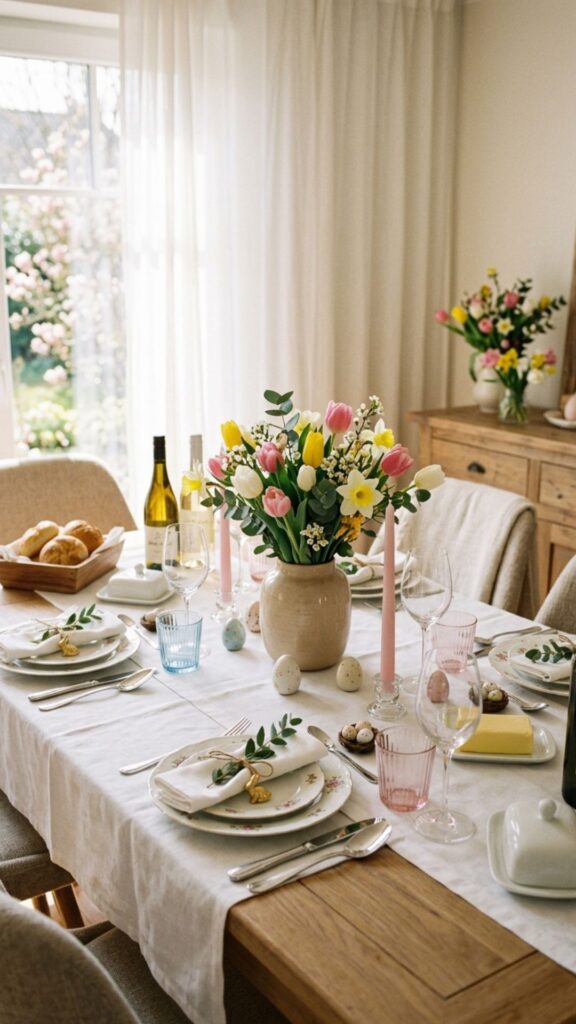
Easter and natural light go hand in hand. If your dining room currently has heavy or dark window treatments, consider swapping them temporarily for sheer white or linen curtains that let spring light flood in. The difference in how the whole room feels is immediate.
More light also makes every piece of decor look better. Pastels and florals glow in natural light in a way they simply don’t under artificial lighting — so maximizing the room’s brightness is one of the most effective and free upgrades you can make.
18. Add a Seasonal Scent Without Overpowering the Room
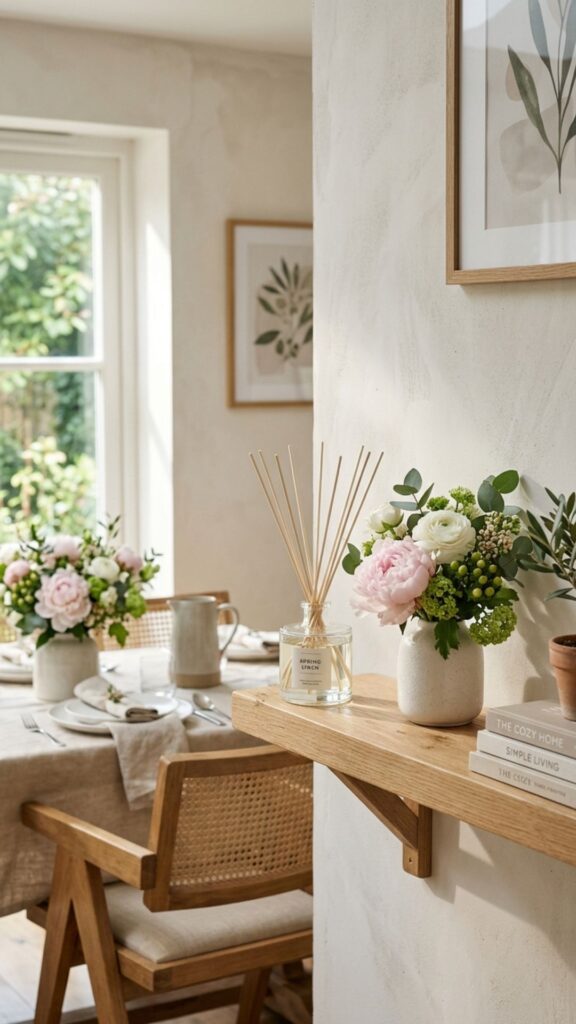
Scent is part of atmosphere, and spring has a distinct one. A reed diffuser in a light floral or clean linen scent placed on the sideboard or a nearby shelf adds dimension to the room without burning a candle at the table.
Keep the scent light. Fresh citrus, white tea, or soft florals work well for spring. Avoid heavy or sweet scents near the dining table — they compete with food and can quickly become overwhelming during a long meal.
19. Use Egg Hunt Baskets as Decorative Accents
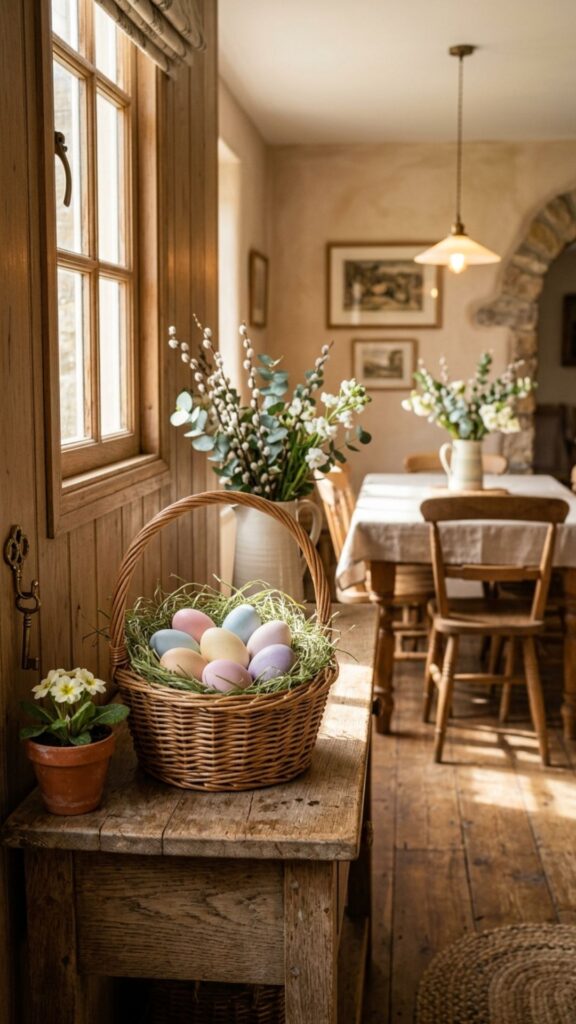
Woven baskets used for Easter egg hunts don’t have to disappear the rest of the holiday. A small basket lined with faux grass and positioned near the dining room entrance or on the sideboard feels playful and seasonal without looking juvenile.
Choose baskets in natural materials — seagrass, rattan, or woven paper — rather than plastic ones. Natural textures blend easily with most decor styles and look purposeful rather than leftover from a children’s activity.
20. Keep One Spot Clear for Function
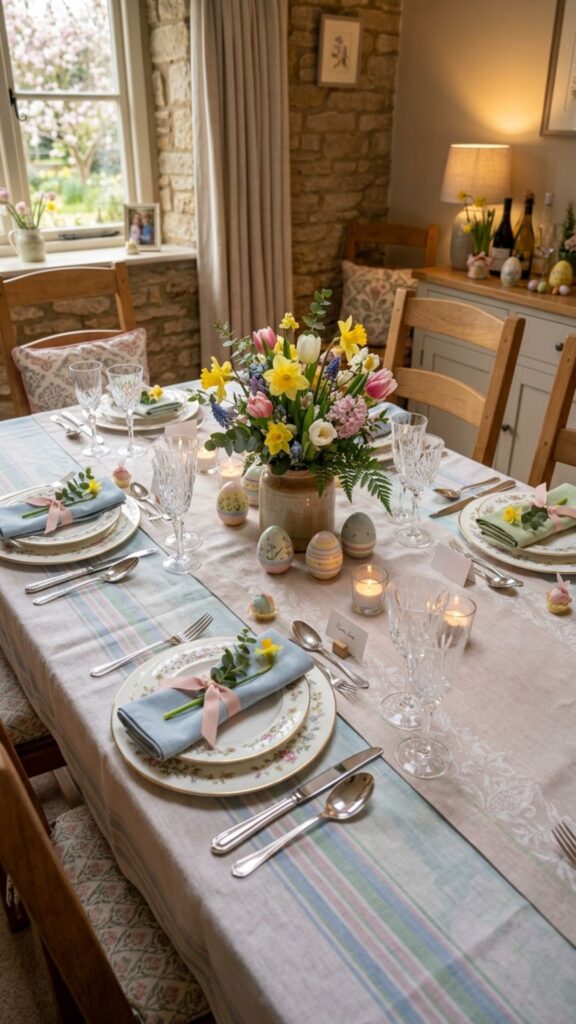
This one sounds counterintuitive, but leaving one part of your dining table completely clear — especially if you’re hosting — is part of good decor. A beautifully set table that still has room for people, dishes, and conversation functions better and photographs more naturally than an overly staged one.
The best dining room Easter decor strikes a balance between styled and livable. Let the table breathe, and the pieces you’ve chosen will have more impact because they’re not competing for attention.
Conclusion
Refreshing your dining room for Easter doesn’t require a complete seasonal overhaul or a hefty budget. Start with one or two of these ideas — a new runner, fresh tulips, a simple nest-style centerpiece — and build from there. The smallest changes often have the biggest visual effect.
The goal is a dining room that feels like spring: light, welcoming, and personal. Pick the ideas that fit your space and your style, and let the rest go. A table your family and guests love sitting at is always the real win.
Start with one idea from this list today — even a single vase of tulips changes the room more than you’d expect.
What is the easiest dining room Easter decor idea for beginners?
A simple centerpiece is the easiest starting point. Place a low bowl or wooden tray on the table and fill it with a handful of pastel eggs and a small bunch of fresh tulips or greenery. It takes under five minutes, costs very little, and immediately gives the room a spring feel.
How do I make Easter dining room decor look elegant instead of childish?
Stick to a limited color palette of two or three soft, coordinated tones rather than bright primaries. Choose natural materials like linen, rattan, ceramic, and fresh flowers over plastic items. Keep the decor low and uncluttered, and the result will feel refined and intentional.
Can I decorate a small dining room for Easter without it feeling cluttered?
Absolutely. For small spaces, focus on one strong centerpiece rather than spreading decor across the whole table. A single bud vase grouping, a low nest bowl, or a styled sideboard vignette creates visual interest without overcrowding. Less is genuinely more in a compact room.
What colors work best for dining room Easter decor?
Soft pastels — blush pink, sage green, dusty lavender, pale yellow, and warm cream — are the most versatile choices. They read as spring without being overly theme-heavy, and they coordinate naturally with most neutral or wood-toned dining room furniture. Add white or natural linen as a base to tie the palette together.