Most dining rooms play it safe. Matching furniture sets, neutral walls, and predictable lighting — it all looks fine, but it rarely feels like you. An eclectic dining room is different. It breaks the rules intentionally, layering styles, eras, and materials in a way that feels collected rather than chaotic.
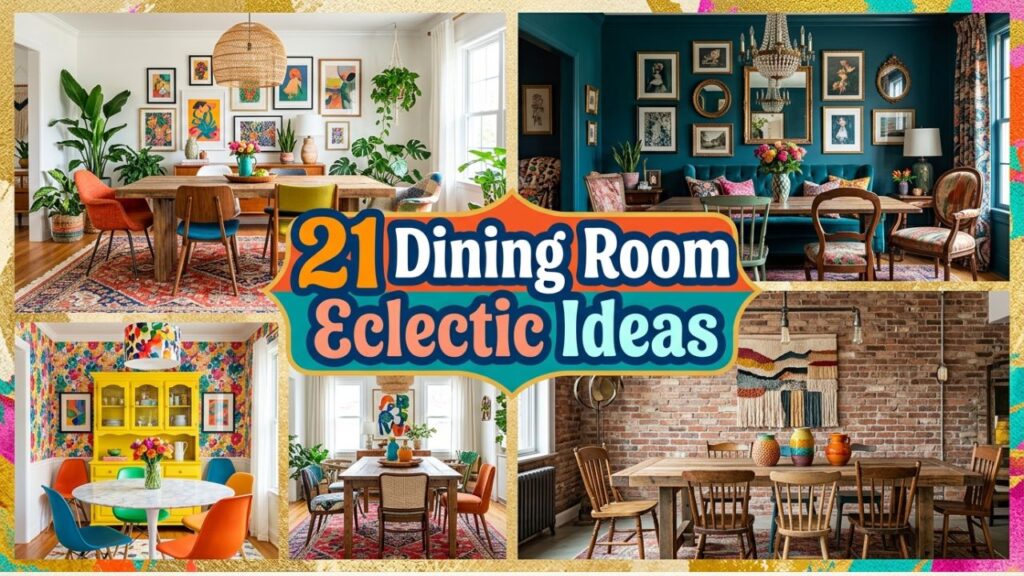
If you’ve been drawn to the eclectic look but worried it will come across as messy, this guide is for you.
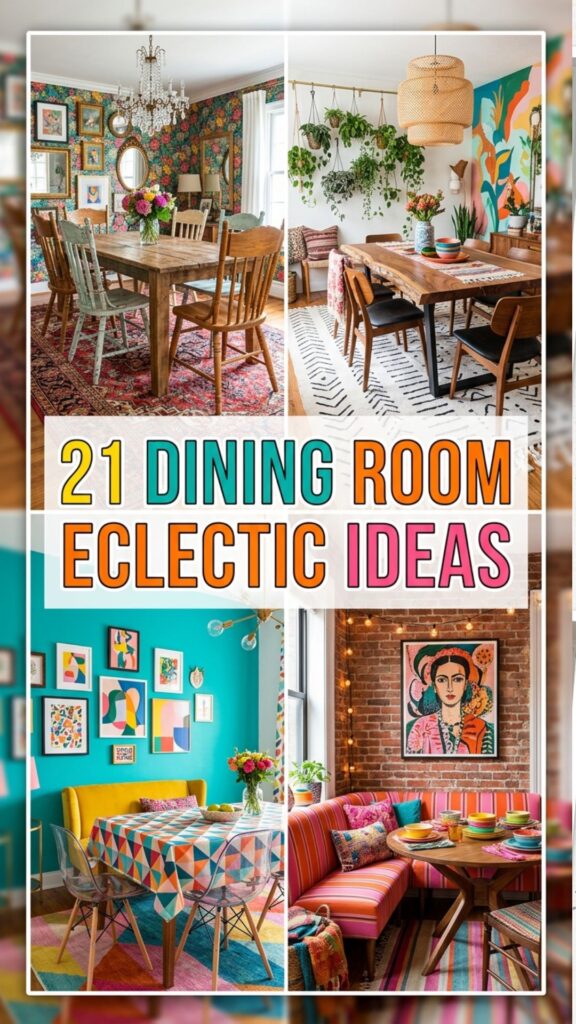
You’ll find 21 practical, specific ideas for creating a dining room eclectic style that feels bold, stylish, and completely intentional. From mixing chair styles to combining old and new artwork, each idea comes with real advice you can act on — no design degree required.
1. Mix Dining Chair Styles Around a Single Table
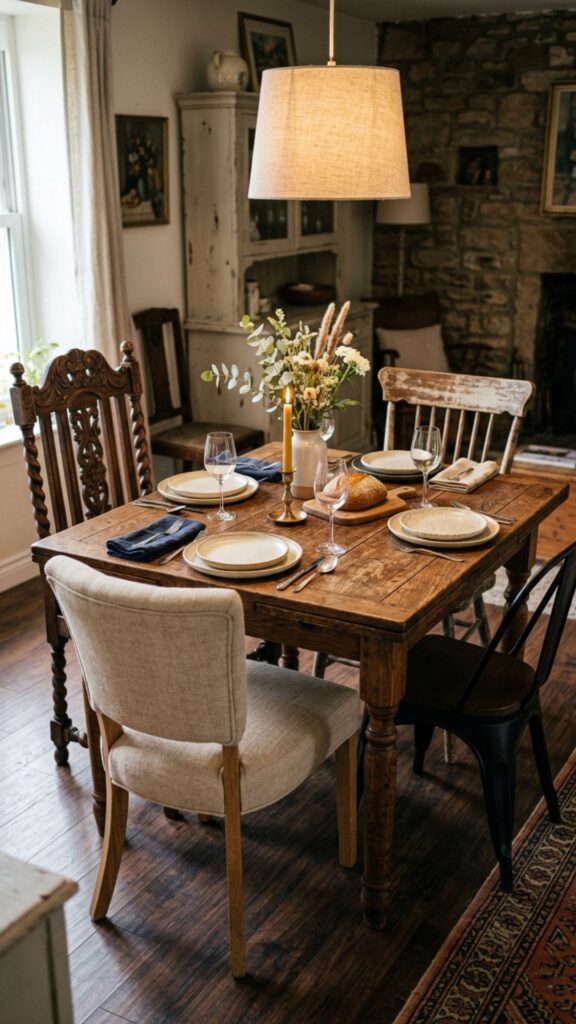
One of the most effective moves in any eclectic dining room is abandoning the matched chair set. Pair wooden spindle-back chairs with upholstered velvet seats, or combine metal industrial stools with carved timber carvers at each end. The key is keeping one element consistent — seat height, color family, or scale — so the mix reads as curated rather than chaotic.
Start with two chair styles rather than four or five. A dining room eclectic approach works best when there’s an underlying logic to the choices. Try two chairs at each end in one style and a bench on one side with individual chairs on the other for a relaxed, layered result.
2. Combine Vintage and Contemporary Furniture
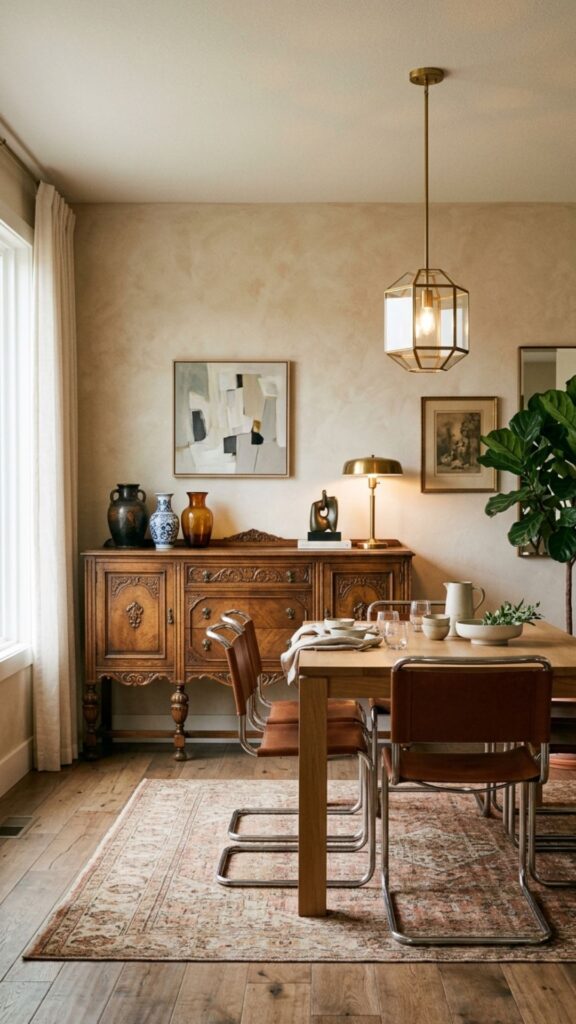
Placing an old piece next to a new one creates visual tension in the best possible way. A mid-century teak sideboard against a crisp white wall, or an antique farm table paired with sleek modern chairs — these combinations have a depth that fully contemporary rooms often lack.
Don’t overthink it. Visit a local vintage market or antique dealer and find one statement piece you love, then build around it. A single vintage item can anchor an entire eclectic dining room without requiring you to hunt down a full matched set.
3. Layer Several Rugs or Use a Bold Patterned Rug
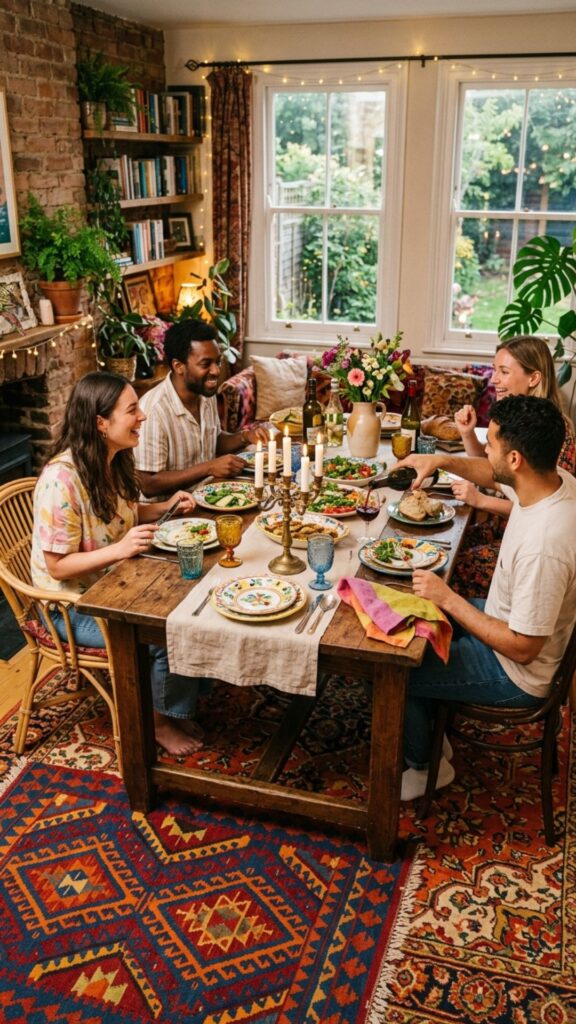
Rugs do a lot of heavy lifting in an eclectic space. A large, patterned area rug — think Moroccan-style geometric weaves, Persian floral designs, or a distressed kilim — adds color, warmth, and personality underfoot. It also defines the dining zone within an open-plan space.
If one rug feels too subtle, try layering a smaller natural-fiber rug on top of a larger plain base rug. This technique is common in bohemian and globally inspired eclectic interiors and works particularly well in dining rooms with high ceilings and wood floors.
4. Paint One Wall in a Surprising, Saturated Color
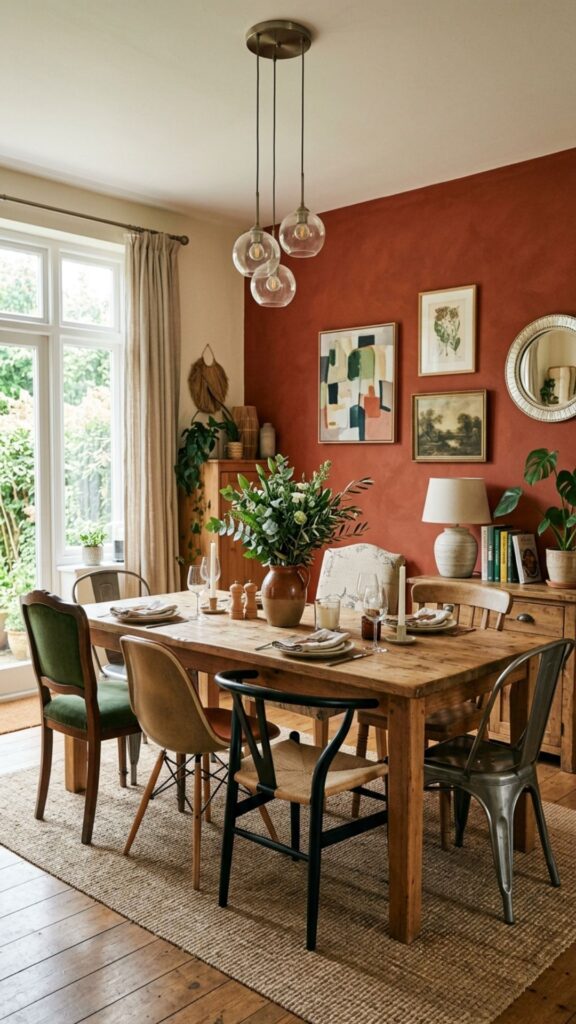
In a dining room eclectic design, color is one of your most powerful tools. One wall painted in a deep mustard yellow, terracotta, or cobalt blue instantly shifts the energy of the space and gives every other element something to react against.
You don’t need to commit to all four walls. A single accent wall behind the main seating area or behind a sideboard is enough to anchor the room and give it a bold focal point. Choose a color that connects to at least one other element in the room — a chair cushion, a piece of artwork, or a rug pattern.
5. Hang an Eclectic Gallery Wall with Mixed Frame Styles
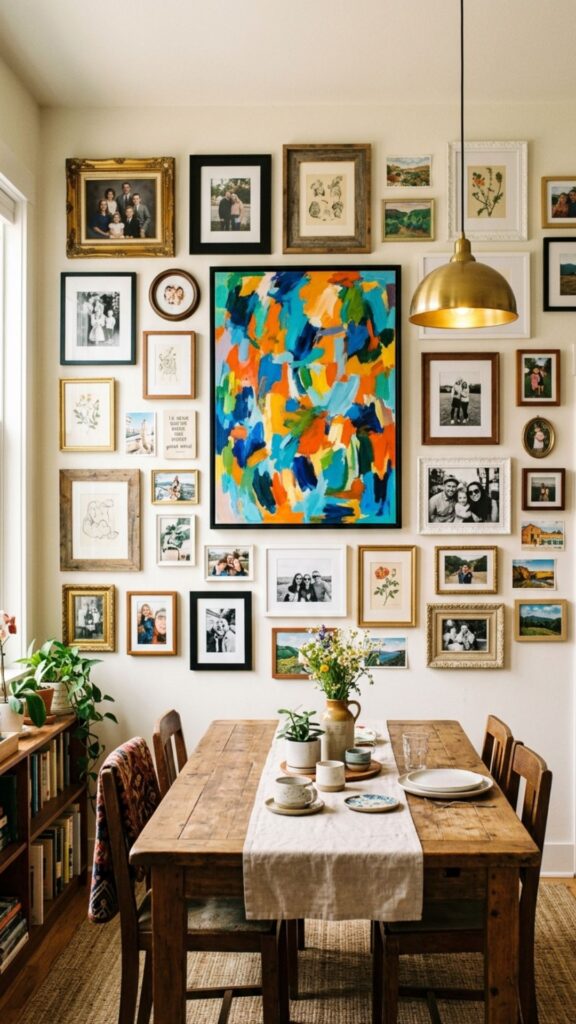
A gallery wall in an eclectic dining room doesn’t require matching frames or a single theme. Mix ornate gilded frames with simple black ones, combine photography with illustration, and pair different sizes in an arrangement that fills the wall with energy and story.
Lay the arrangement out on the floor before you start hammering. Aim for a rough balance of visual weight across the display rather than perfect symmetry. Include at least one oversized piece to act as an anchor and build outward from there.
6. Introduce Global Textiles Through Cushions and Runners
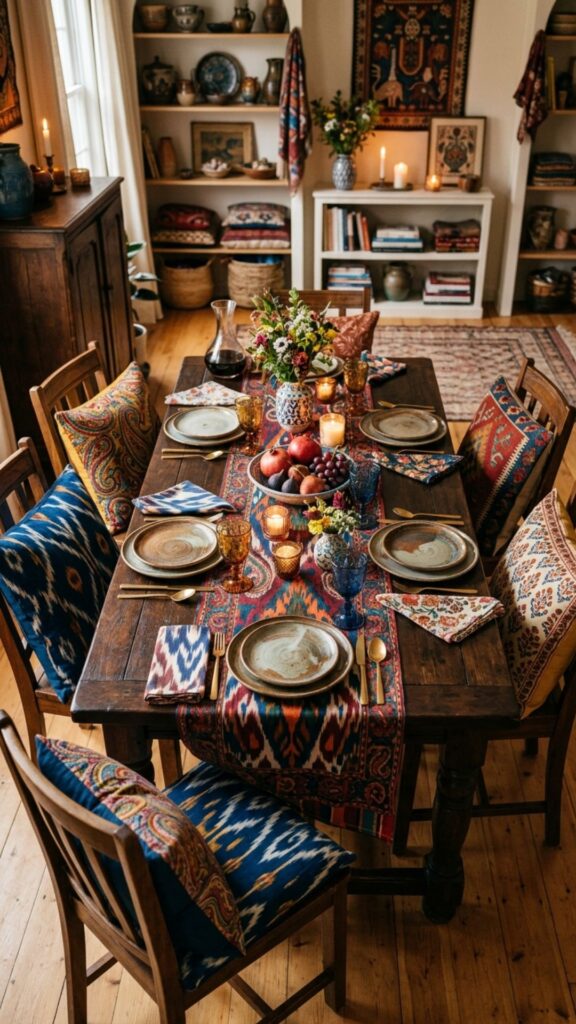
Table runners in printed block fabrics, seat cushions in ikat or suzani patterns, or hanging textile art on a wall — globally inspired textiles bring warmth and story to a dining room without requiring major renovation. They’re also one of the most affordable ways to layer an eclectic look.
Rotate them seasonally to keep the room feeling fresh. A linen runner in spring, a richly patterned wool blend in winter — this kind of layering is exactly what gives eclectic dining rooms their lived-in, collected quality over time.
7. Use Mismatched Pendant Lights Over the Dining Table
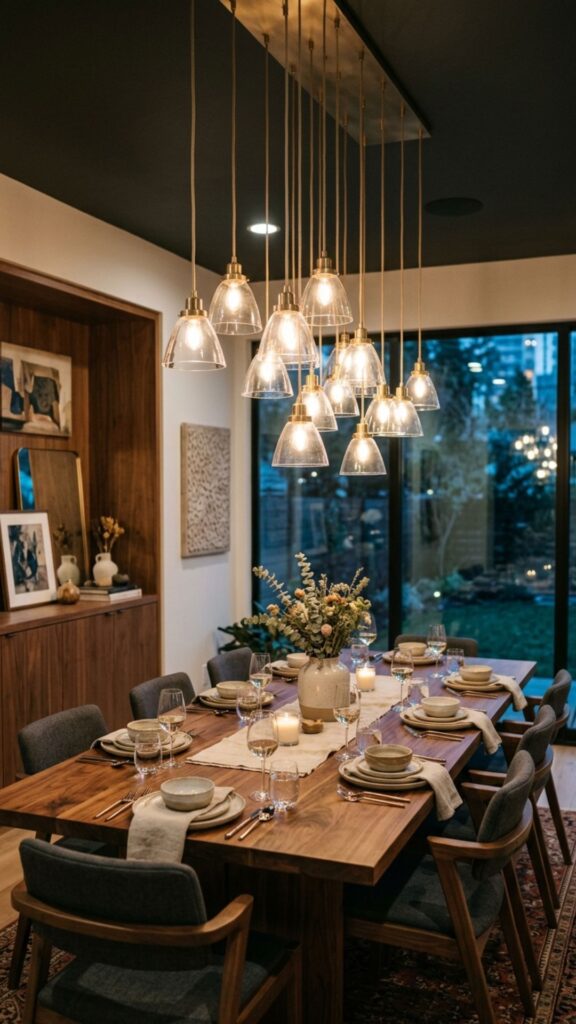
Instead of a single chandelier, consider hanging two or three different pendant lights at varying heights over the dining table. This works particularly well in rooms with high or vaulted ceilings, and it’s a detail that reads as deliberately designed rather than accidental.
Choose pendants that share one element — a warm metal finish, a similar color, or a consistent vintage aesthetic — while differing in shape or size. This kind of intentional contrast is central to the dining room eclectic approach and immediately sets the room apart from more conventional spaces.
8. Bring in Plants and Natural Elements at Different Scales
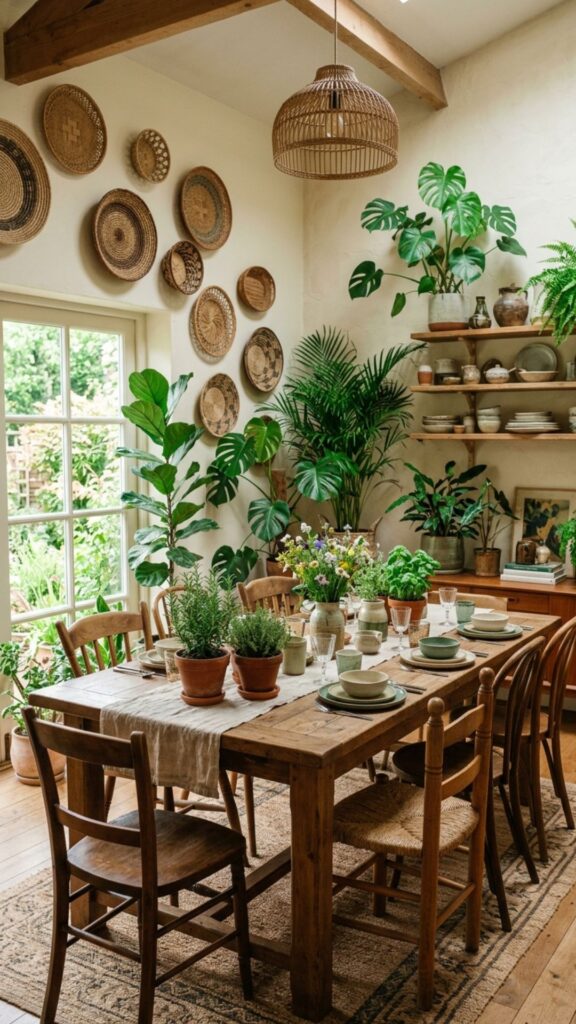
Greenery adds life to any dining room, and in an eclectic space it reinforces the layered, organic quality that makes the style work. Use a tall floor plant like a fiddle-leaf fig in one corner, small potted herbs on the sideboard, and a low succulent arrangement as a table centerpiece.
Natural elements beyond plants also work well — driftwood, woven baskets, ceramic vessels, and raw stone accessories all add texture and ground the room without making it feel overly designed. The goal is a space that looks like it’s evolved naturally rather than been assembled all at once.
9. Mix Metal Finishes Intentionally
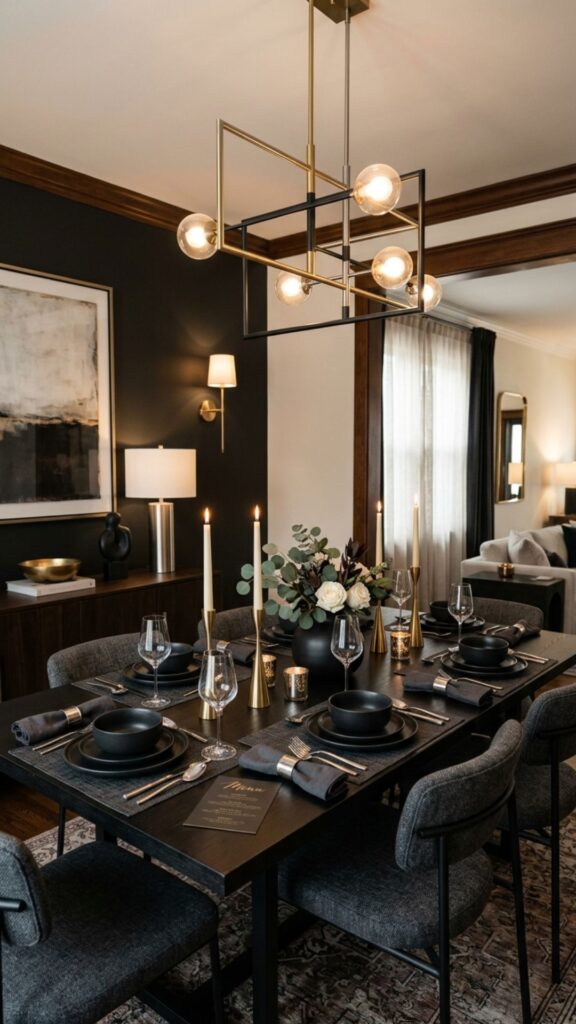
In traditional interior design, mixing metals is considered a mistake. In an eclectic dining room, it’s a feature. Brass cabinet handles, a matte black pendant light, and a brushed nickel mirror frame can all coexist when they’re distributed evenly throughout the room.
The rule of thumb is to repeat each metal finish at least twice so it feels deliberate. If you have one brass element and nothing else in brass, it will look like an oversight. Two or three brass touchpoints distributed across the room, however, create a thread that ties the space together.
10. Use Wallpaper on One or More Walls for Maximum Impact
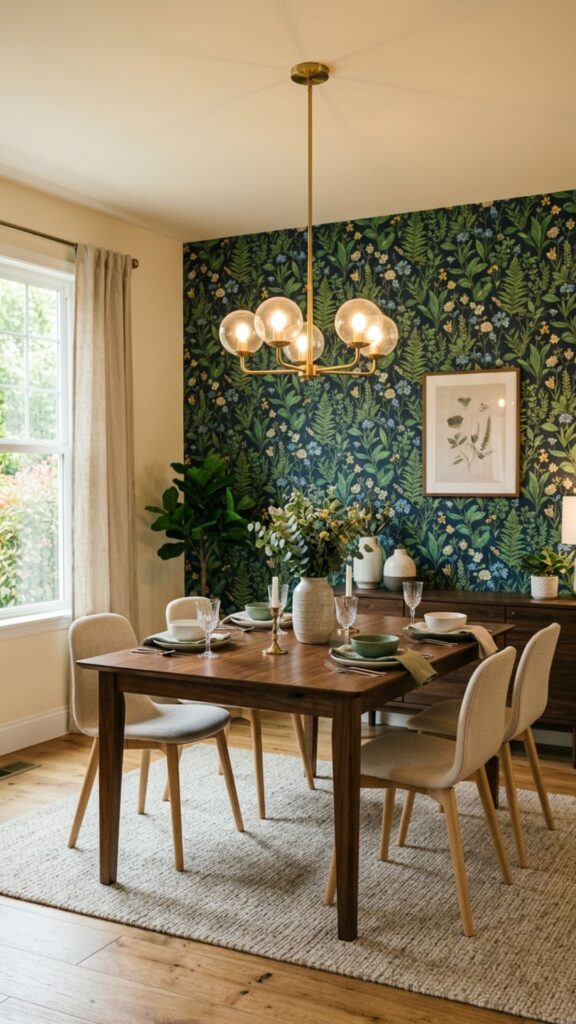
Bold wallpaper is one of the fastest ways to establish an eclectic dining room identity. Botanical prints, abstract geometrics, vintage toile, or maximalist floral patterns all work — the key is choosing something that feels personal rather than safe.
If covering the whole room feels overwhelming, paper just one wall or even just the chimney breast. A single wallpapered wall can transform the mood of the entire space and give every other element something bold to respond to. Pair it with relatively restrained furniture to let the pattern breathe.
11. Stack and Layer Artwork at Different Heights
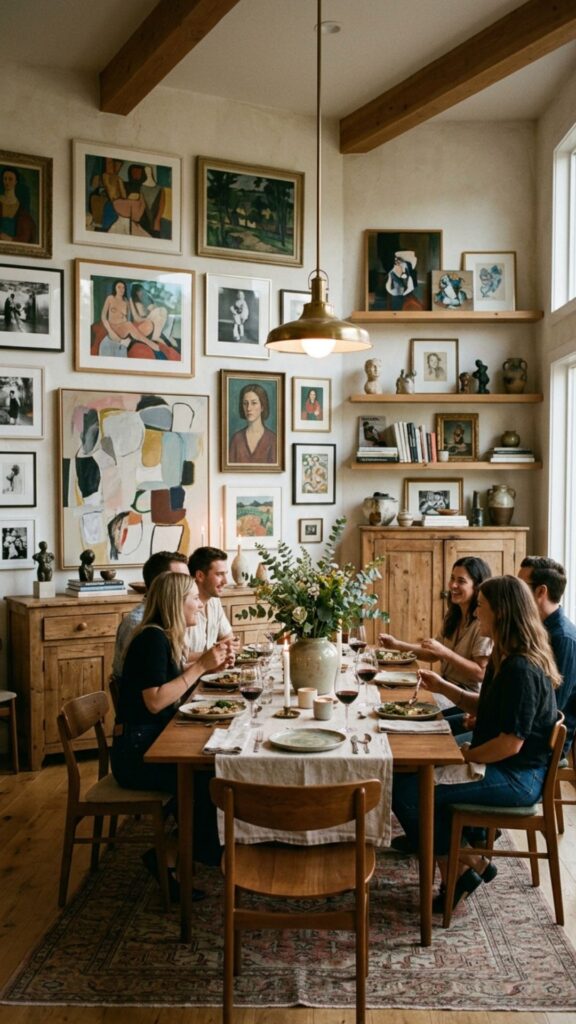
Rather than hanging artwork at the same standard height on every wall, try stacking pieces — a large canvas on the wall with a smaller framed print leaning against it on a shelf or sideboard below. This gallery-at-home approach is a signature detail in eclectic interiors.
Include art from different genres and periods. A bold abstract print next to a vintage botanical illustration next to a black-and-white photograph creates a collection that feels personally curated rather than bought as a set. That sense of personal history is exactly what eclectic dining rooms are built on.
12. Use Open Shelving to Display a Curated Collection
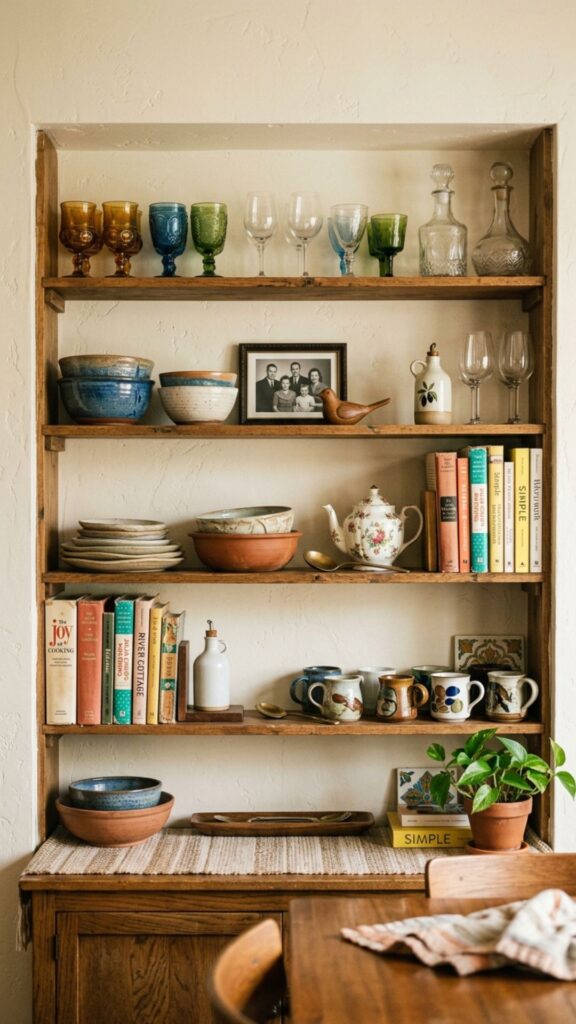
Open shelves along one wall of the dining room give you a platform to display the items that tell your story — mismatched vintage glassware, ceramic vessels from travels, inherited serving dishes, or a collection of colorful cookbooks.
The display will only look good if it’s edited. Group items in odd numbers, vary heights within each grouping, and leave some breathing room between clusters. Overcrowded shelves lose the eclectic appeal and start to look like clutter rather than curation.
13. Pair Dark Furniture with Light Walls — or Flip It
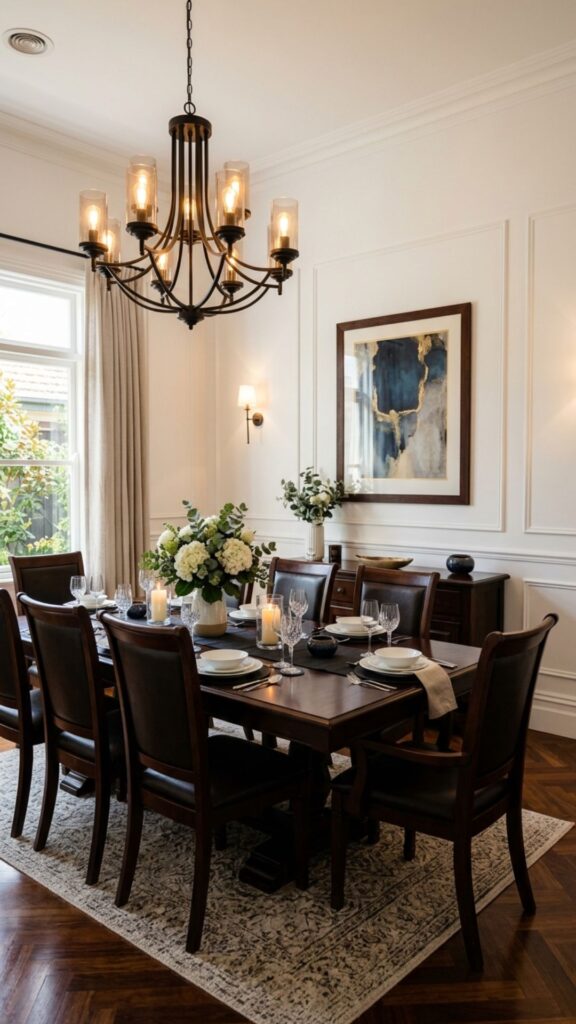
High contrast is a reliable tool in a dining room eclectic scheme. A dark walnut table and ebony-stained chairs against bright white walls creates a drama that feels bold and deliberate. Alternatively, pale natural wood furniture against a deep painted or wallpapered wall achieves the same effect in reverse.
Avoid mid-tone everything — rooms where the walls, floor, furniture, and textiles are all at a similar mid-range value tend to look flat and indecisive. Eclectic interiors thrive on contrast, so lean into it rather than playing it safe.
14. Include a Statement Piece That Breaks the Rules
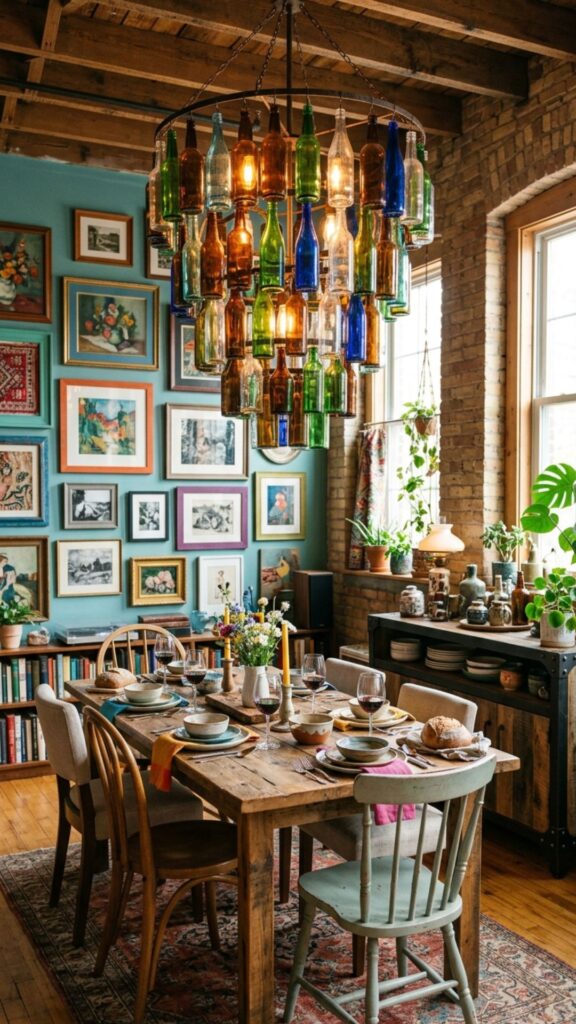
Every eclectic dining room benefits from at least one object that raises eyebrows — a chandelier made from recycled glass bottles, a repurposed industrial cart as a sideboard, a dining table built from reclaimed railway sleepers, or a vintage school map used as wall art.
This is the piece guests will ask about. It gives the room a narrative and signals that the choices in the space were made by someone with a genuine point of view. Don’t overthink it — the best statement pieces are ones that you’re drawn to intuitively rather than ones you’ve selected because they’re “supposed to” work.
15. Use Color Blocking in Soft Furnishings
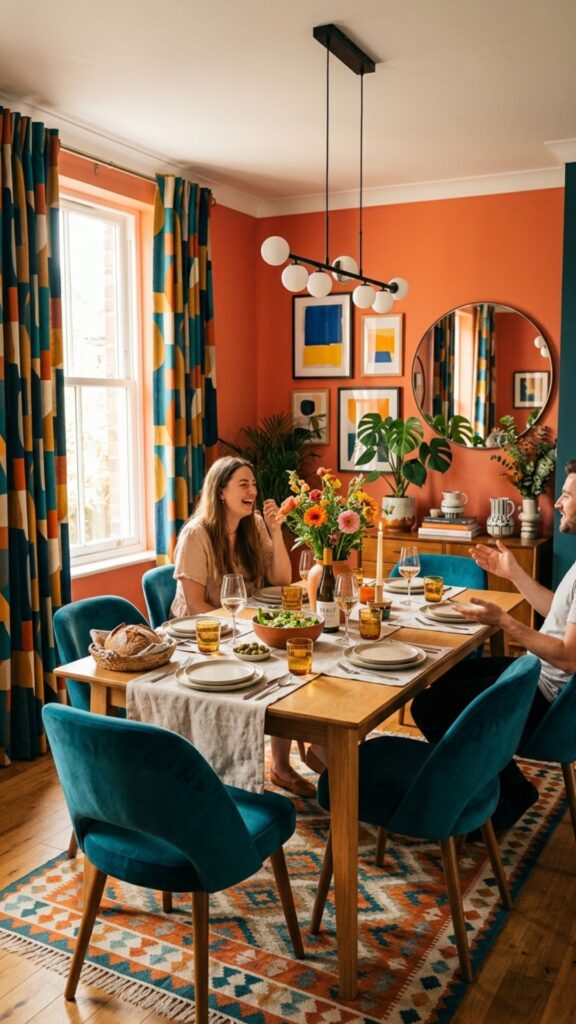
Color blocking — using two or three bold, contrasting colors in solid blocks rather than patterns — is a graphic way to bring eclectic energy to dining chair cushions, curtains, and table linen. Think deep teal cushions on one set of chairs, burnt orange on another, against a white or neutral table.
This technique works particularly well in dining rooms that are otherwise quite neutral in structure. The furniture and walls provide the calm backdrop, and the soft furnishings deliver the personality. It’s also easy and affordable to update as your tastes evolve.
16. Hang a Sculptural or Oversized Light Fixture
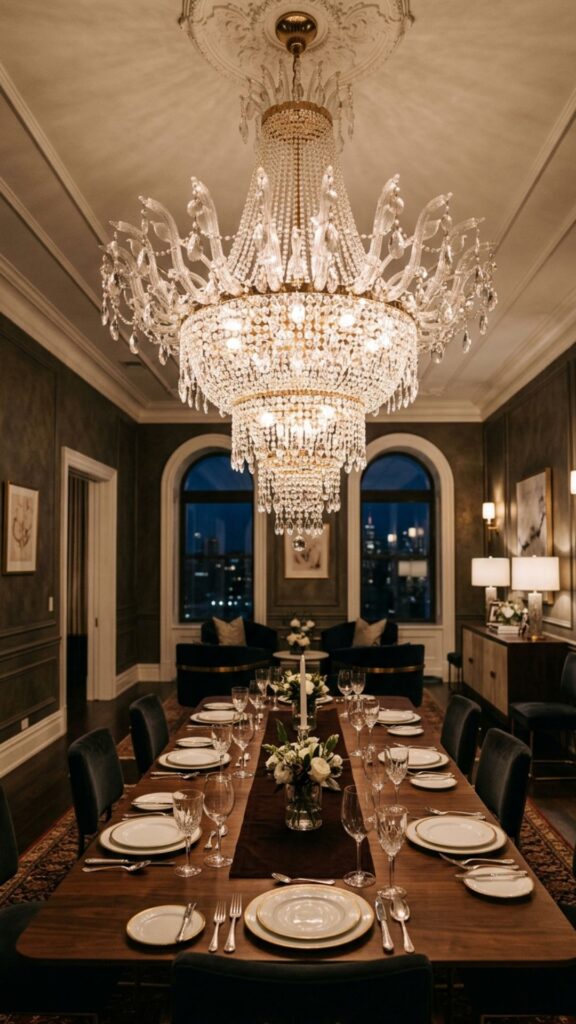
Beyond the pendant or chandelier, consider a sculptural light fixture that functions as art as much as illumination. Rattan basket pendants, driftwood installations, hand-blown glass orbs, or an oversized sputnik chandelier all become focal points that anchor the eclectic look from above.
Scale up rather than down. A fixture that feels slightly too large for the space tends to look more intentional than one that gets lost in the ceiling. Measure carefully, but err on the generous side — light fixtures almost always benefit from being bigger than expected.
17. Introduce Unexpected Materials Like Rattan, Concrete, or Leather
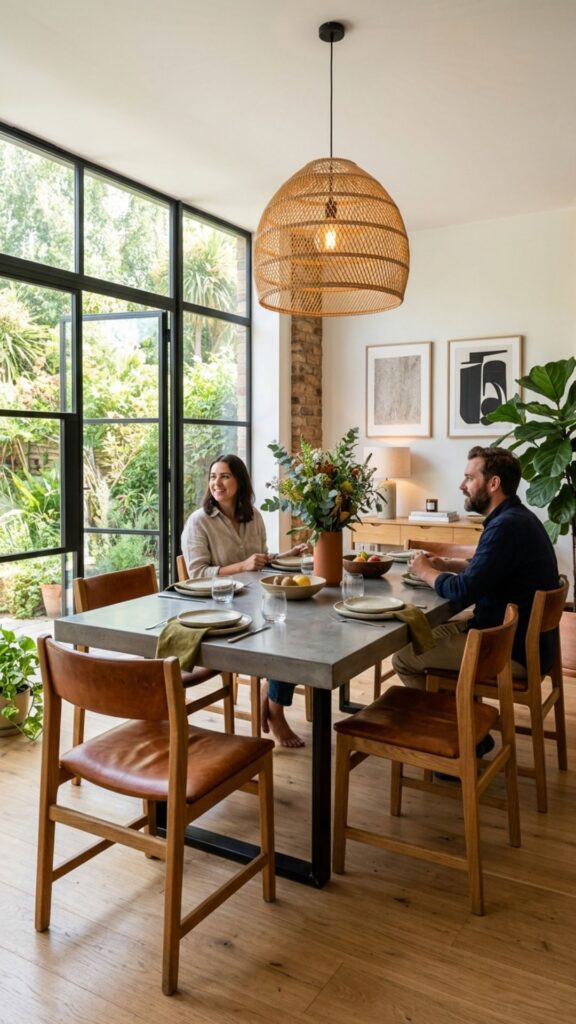
An eclectic dining room draws on materials from across the design spectrum. A concrete table base paired with timber, leather chair backs next to linen upholstery, or a rattan light fixture above a polished glass table — these combinations signal a deliberate layering of influences rather than a single design brief.
Choose materials with different tactile qualities so the room engages the senses on multiple levels. Rough next to smooth, matte next to reflective, natural next to industrial — these contrasts are what give eclectic interiors their energy and make them feel genuinely unique.
18. Add Personality with Unusual Tableware and Centerpieces
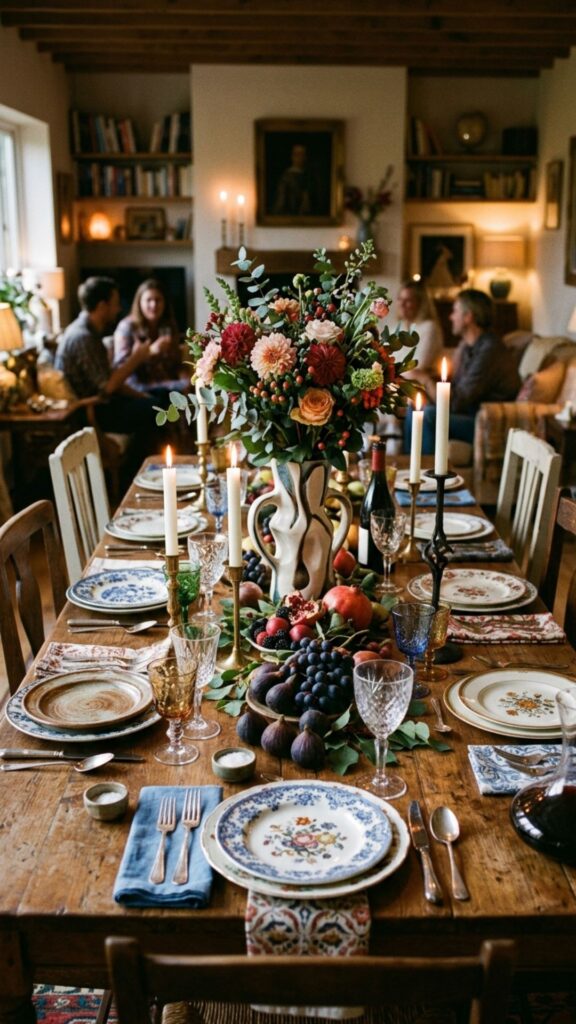
Tableware and centerpieces are the styling elements of the dining room, and in an eclectic scheme they’re an opportunity to add real personality. Mix and match plates in complementary patterns, use vintage glassware alongside modern tumblers, and build centerpieces from objects you’ve collected — pottery, candles, botanical cuttings, or travel souvenirs.
Even when the table isn’t fully set, a styled centerpiece signals that the room is thoughtfully considered. A cluster of mismatched candlesticks, a low vintage bowl filled with seasonal fruit, or a single sculptural vase can do the work without requiring a full table dressing.
19. Bring in a Bench for Casual, Layered Seating
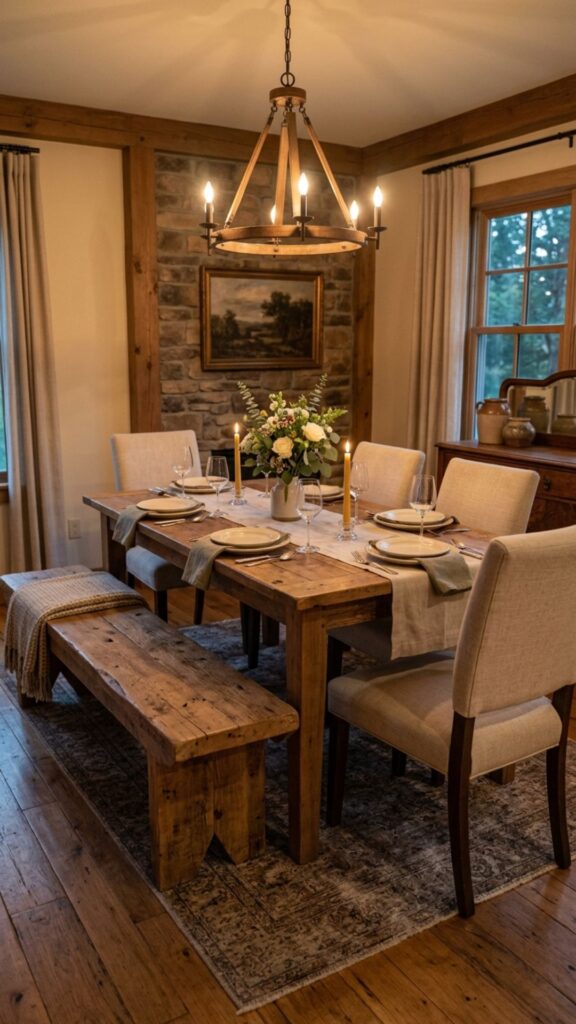
Replacing one or both sides of dining chairs with a long bench instantly shifts the energy of a dining room. Benches feel more relaxed, more flexible for seating numbers, and more interesting visually — especially when upholstered in a fabric that contrasts with the chairs at each end of the table.
In a dining room eclectic setup, a raw wooden bench on one side paired with individual upholstered chairs on the other is a particularly effective combination. It plays with formality and informality in the same space, which is exactly what eclectic design does best.
20. Use Mirrors in Unexpected Shapes and Positions
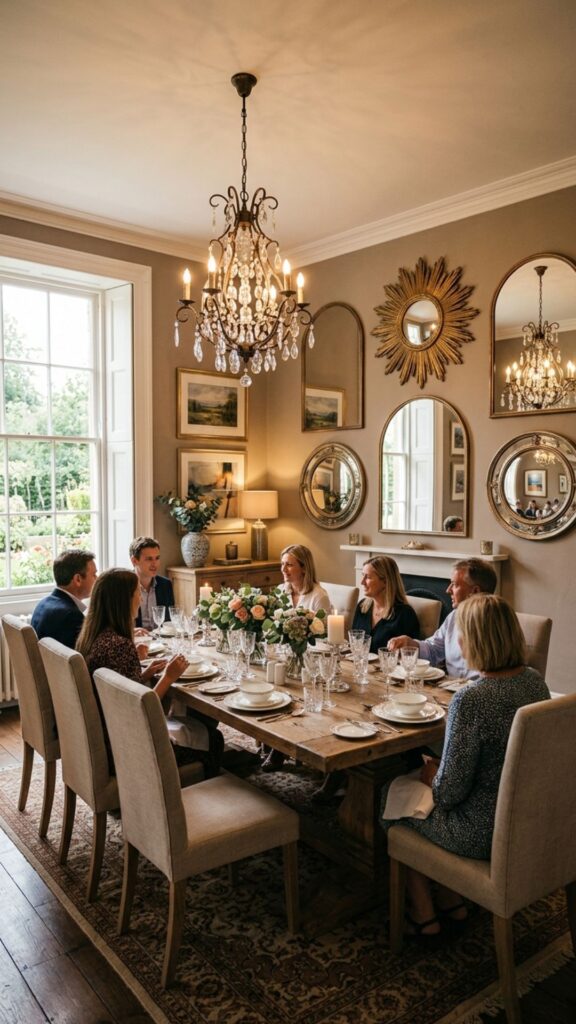
Round mirrors, arched mirrors, sunburst mirrors, and vintage beveled mirrors all add something different to an eclectic dining room. Rather than defaulting to a single large rectangular mirror above a sideboard, try leaning an oversized round mirror against the wall or clustering several smaller mirrors in a loose arrangement.
Mirrors also amplify light and create depth, which is especially useful in dining rooms that don’t get much natural light. Position them to reflect a statement light fixture, a gallery wall, or an interesting view — the reflection becomes another layer of the room’s visual story.
21. Let the Room Evolve Rather Than Finishing It All at Once
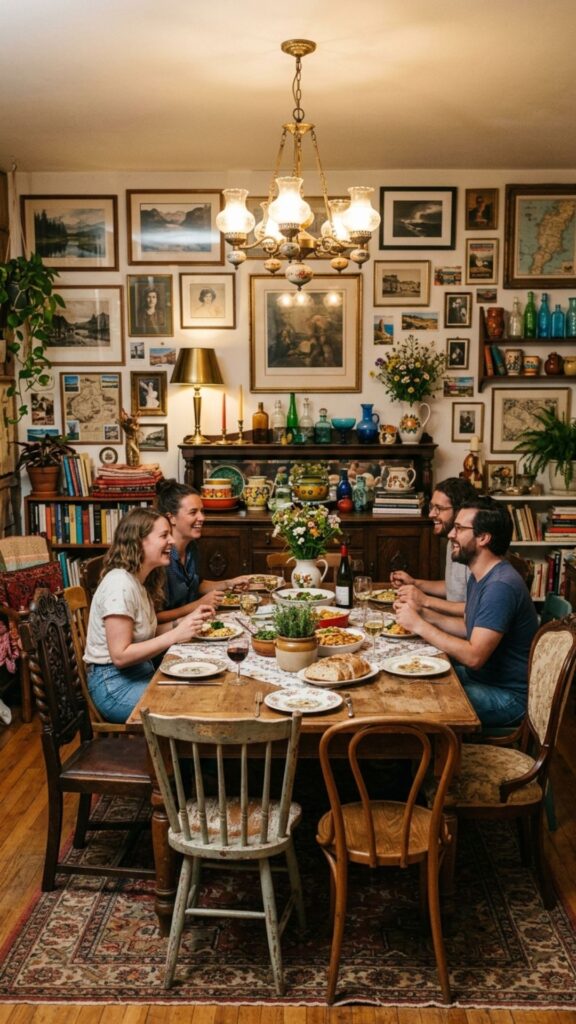
One of the most common mistakes people make when trying to create an eclectic dining room is attempting to source and style it all in one go. Eclectic interiors look best when they’ve genuinely accumulated over time — each piece added because it was loved, not because it completed a set.
Give yourself permission to leave gaps and add pieces gradually. Live with the room before you decide what’s missing. The most characterful eclectic dining rooms tend to be the ones where the owner added something new every year, letting the space tell the story of a life actually lived rather than a single shopping trip.
Conclusion
An eclectic dining room isn’t built on rules — it’s built on personality. Whether you start with a gallery wall, a set of mismatched chairs, or one bold piece of vintage furniture, the approach is the same: make deliberate choices, layer with intention, and trust what draws you.
Pick three ideas from this list that feel most aligned with your space and your taste. Try them, live with them, and let the room develop from there. When you’re ready to take things further, bring in an interior stylist for a single session — sometimes one outside perspective is all it takes to unlock the full potential of what you already have.
What is an eclectic dining room style?
An eclectic dining room combines elements from different design styles, periods, and cultures into a single cohesive space. It mixes furniture, textiles, art, and materials that don’t traditionally belong together, unified by a consistent color palette, scale, or visual thread. The result feels personal, layered, and deliberately bold rather than matchy or predictable.
How do I make an eclectic dining room look intentional rather than messy?
The key is finding a unifying element — a consistent color family, a repeated material, or a shared scale across furniture pieces. Mix freely within that framework and edit ruthlessly. An eclectic space should include only things you genuinely love, not things added just to fill space. Visual breathing room between objects also helps the individual pieces read clearly.
What colors work best in an eclectic dining room?
Eclectic dining rooms work with almost any color combination, but the most successful tend to use a dominant neutral or saturated background color paired with two or three accent tones pulled from textiles, artwork, or accessories. Warm earth tones, jewel shades, and contrasting darks and lights all perform well. The goal is contrast and richness rather than a flat, coordinated palette.
Can a small dining room work as an eclectic space?
Absolutely. In fact, small dining rooms often benefit from the eclectic approach because the limited square footage forces you to be selective. Choose one bold statement element — a graphic wallpaper, an oversized mirror, or a standout light fixture — and keep the other pieces relatively restrained. Scale is the main challenge; avoid overcrowding a small room with too many competing focal points.
How do I start decorating an eclectic dining room from scratch?
Begin with one piece you love — a vintage table, a bold rug, or a painting — and let it guide the other choices. Identify two or three colors within that piece and use them to inform your upholstery, wall color, and accessories. Add layers gradually rather than buying everything at once, and prioritize quality over matching. The room will develop its own identity over time if you stay consistent with what genuinely appeals to you.