A dining room should do more than hold a table and chairs. At its best, it sets a mood, signals your taste, and makes every meal feel like an occasion.

But achieving that level of refinement isn’t just about spending more — it’s about making deliberate choices that layer quality, proportion, and atmosphere together.
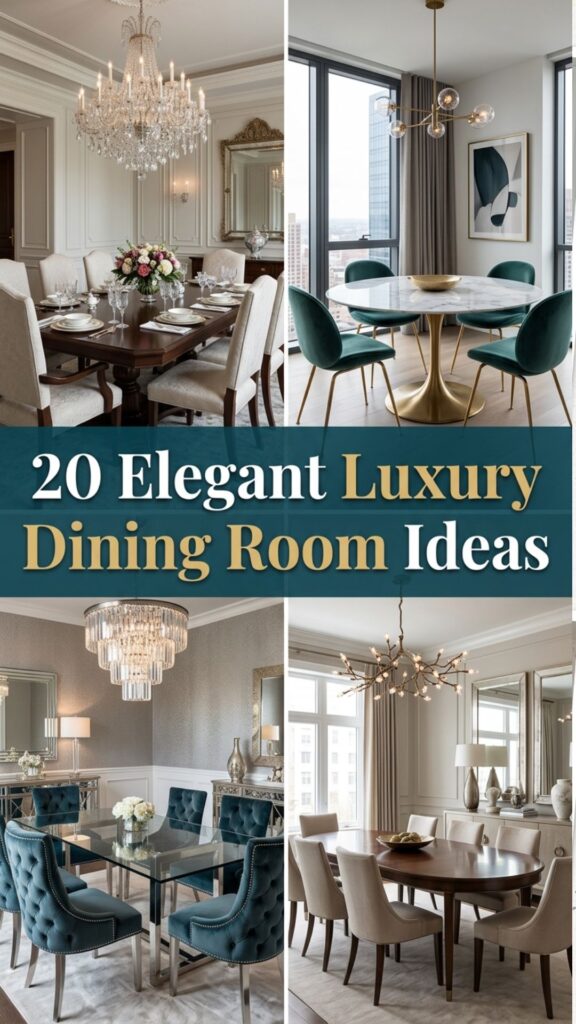
If you’re planning a dining room that feels genuinely luxurious, this guide is for you. You’ll find 20 elegant luxury dining room ideas covering everything from statement lighting and wall treatments to furniture choices, materials, and finishing details. Each one is practical, specific, and designed to help you build a space that feels elevated — not just expensive.
1. Anchor the Room with a Dramatic Chandelier
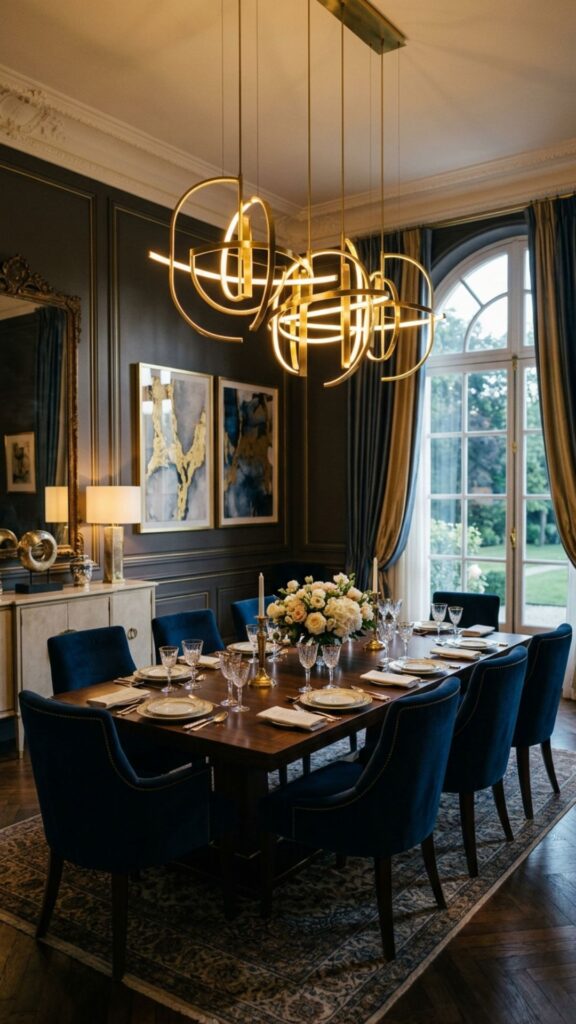
Lighting is the single most powerful tool in a luxury dining room, and a statement chandelier sets the tone for everything else. Choose a fixture that’s proportional to your table — a chandelier should typically span roughly half to two-thirds the width of the dining table and hang 30 to 36 inches above the tabletop.
For an elegant, high-end look, consider sculptural designs in brass, aged bronze, or hand-blown glass. Avoid trendy fixtures that date quickly. A well-chosen chandelier can carry the entire room and is worth investing in above almost any other single element.
2. Use a Dark, Moody Wall Color for Instant Sophistication
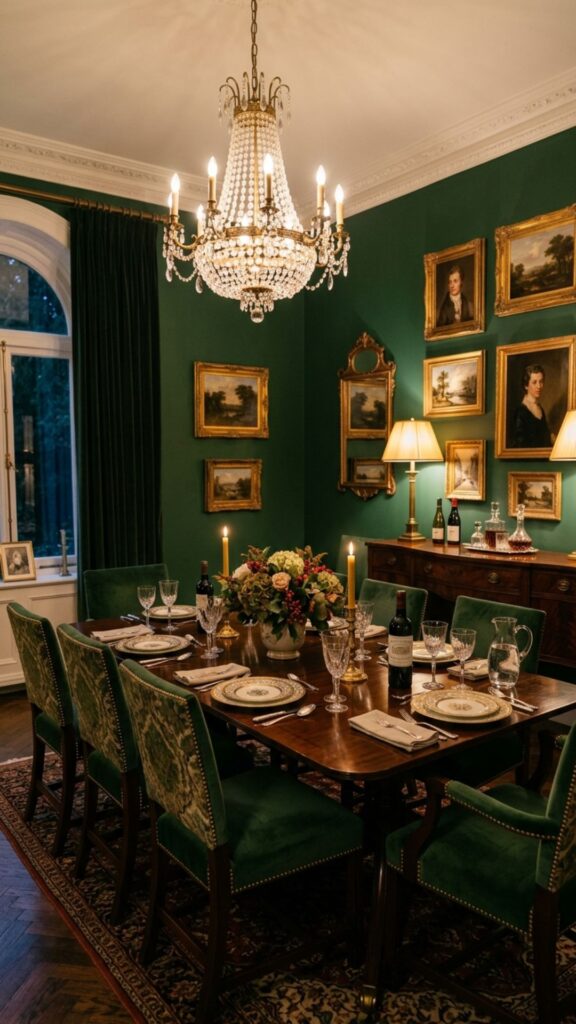
Deep wall colors — forest green, charcoal, navy, or rich burgundy — create an intimate atmosphere that lighter rooms simply can’t replicate. They also make artwork, furniture, and lighting pop with far more visual impact than neutral backgrounds allow.
If painting all four walls feels too bold, start with a single feature wall behind the main seating area. Use a flat or eggshell finish to avoid light bounce, which can make dark rooms feel harsh rather than warm and refined.
3. Invest in a Solid Wood Dining Table with Character
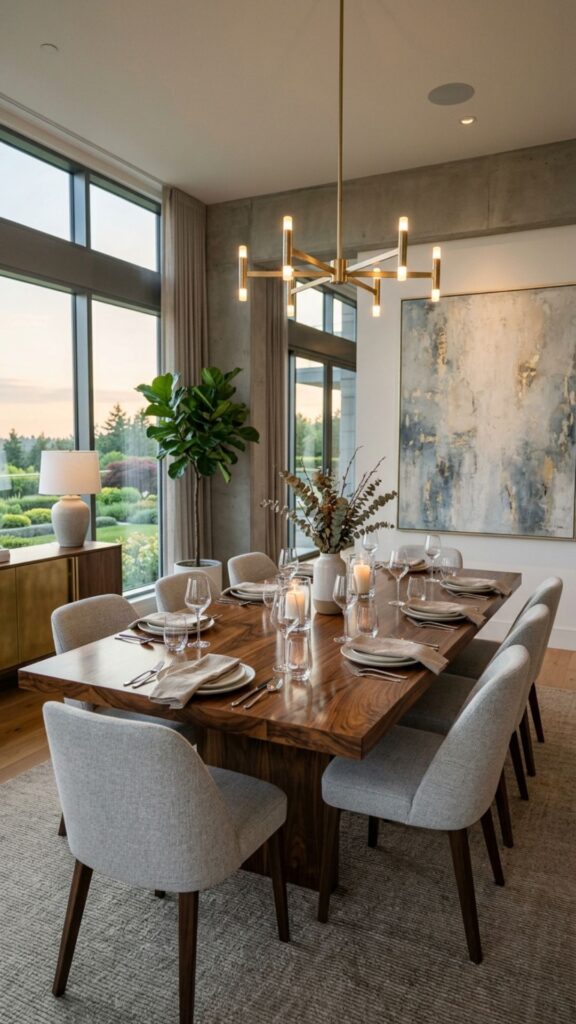
A dining table made from solid walnut, oak, or marble-topped hardwood is one of the most recognizable markers of a luxury dining room. The grain, weight, and patina of real wood communicates quality in a way that veneer or composite surfaces never fully match.
Look for tables with considered joinery details, tapered legs, or a live-edge slab if you prefer something more organic. Avoid overly distressed or rustic finishes in a formal dining room — instead, aim for smooth, well-oiled surfaces that feel refined and intentional.
4. Layer Multiple Light Sources for a Polished Atmosphere
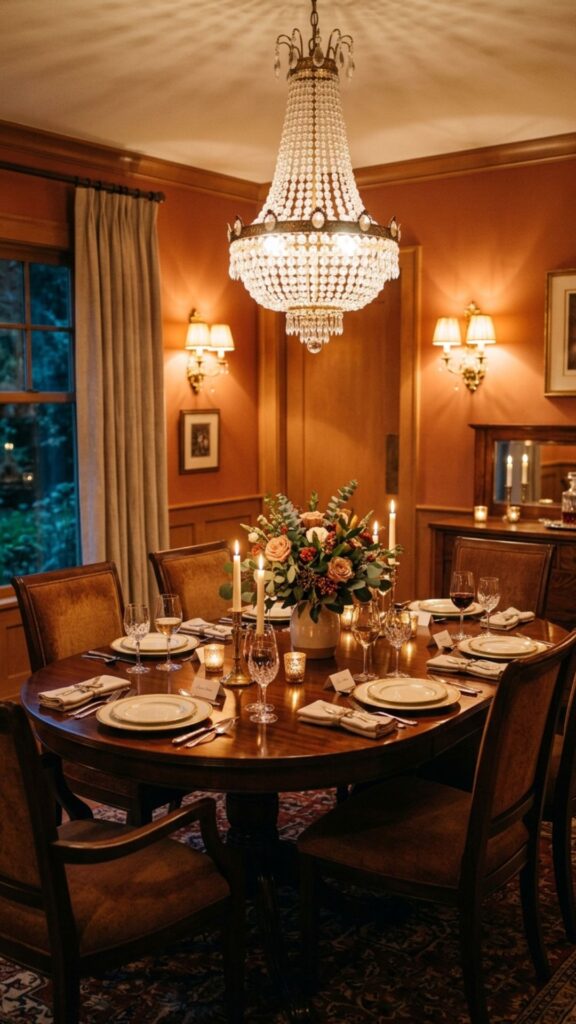
Relying on a single overhead fixture flattens the room and removes any sense of warmth. Elegant luxury dining rooms use layered lighting — a chandelier for ambient light, wall sconces for softness on the walls, and candles or tabletop lighting for intimate warmth at eye level.
Install all overhead lighting on dimmers so you can shift the mood from a bright family lunch to a candlelit dinner without changing the room. Wall sconces flanking a mirror or artwork add a particularly refined finishing touch.
5. Choose Upholstered Dining Chairs in a Rich Fabric
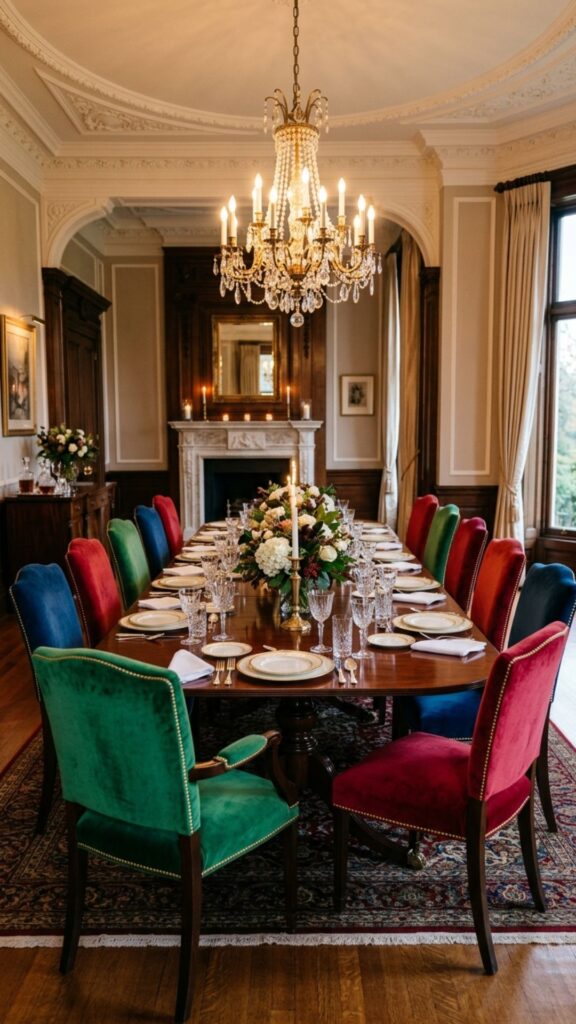
Upholstered dining chairs immediately raise the comfort level and perceived quality of a dining room. Velvet, bouclé, leather, and high-performance woven fabrics all work well — the key is choosing a material that feels substantial and holds its shape over time.
For a truly elegant look, mix chair styles thoughtfully. A set of fully upholstered side chairs paired with taller, more structured carver chairs at each head of the table creates visual rhythm without feeling mismatched. Stick to two complementary colors or textures rather than a full mix.
6. Add Wainscoting or Wall Paneling for Architectural Depth
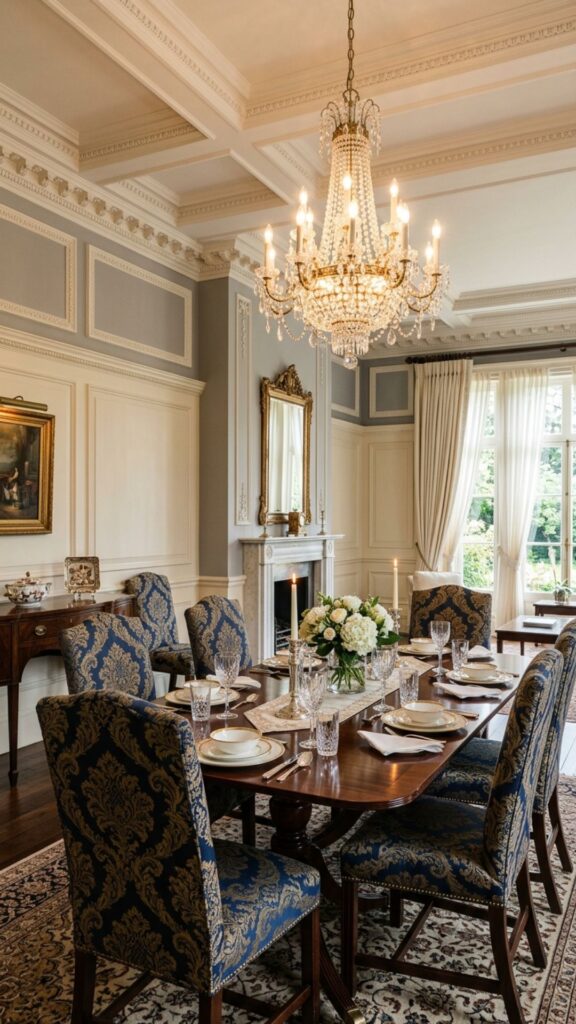
Bare flat walls are the fastest way to make a dining room feel unfinished, regardless of how expensive the furniture is. Wainscoting, board-and-batten paneling, or full-height wood paneling adds the kind of architectural depth you typically find in high-end homes and traditional manor houses.
Paint paneling in a tone that complements — rather than matches — the wall color above. For a truly elegant result, use a semi-gloss or satin finish on the paneling and a flat finish above the rail to create a subtle tonal contrast that catches the light beautifully.
7. Install a Statement Mirror to Expand the Space
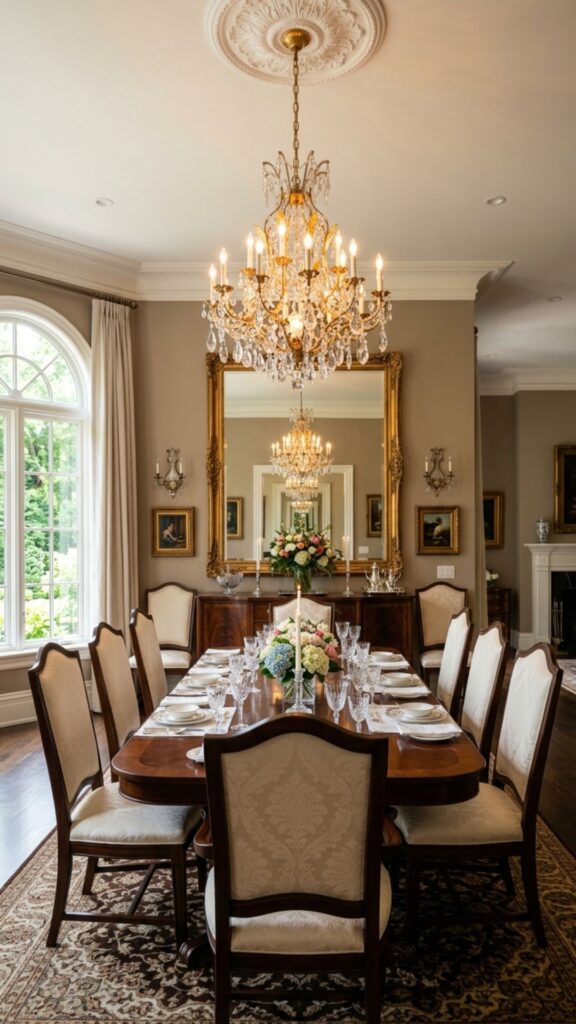
A large, well-framed mirror on one wall of the dining room achieves two things at once: it reflects light to make the room feel brighter and more spacious, and it adds a high-end decorative focal point. Opt for ornate gilt frames for a traditional feel or slim, sculptural frames for a contemporary approach.
Position the mirror so it reflects something worth seeing — a beautiful chandelier, a view of the garden, or a striking piece of artwork. A mirror reflecting a blank wall or a window with an uninspiring outlook loses most of its decorative value.
8. Use a Patterned Area Rug to Define the Dining Zone
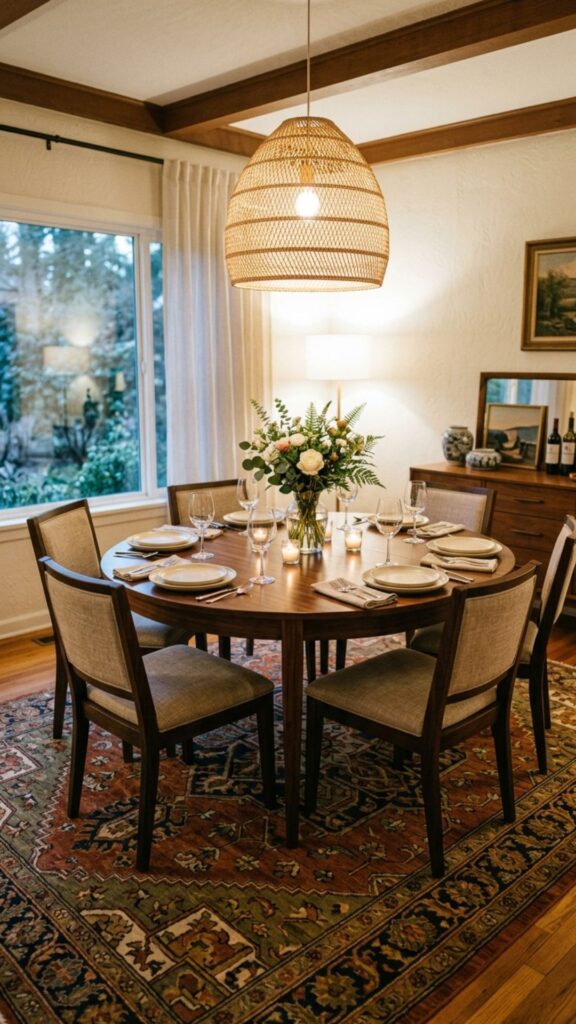
An area rug anchors the dining table and chairs within the broader room, creating a defined zone that feels intentional and layered. In an elegant dining room, opt for traditional Persian or Oriental patterns, geometric designs, or subtle tone-on-tone textures rather than bold graphic prints.
Make sure the rug is large enough — all chair legs should remain on the rug even when pulled out from the table. A rug that’s too small makes the furniture look disconnected and reduces rather than adds to the sense of luxury.
9. Display Art at Eye Level on at Least One Wall
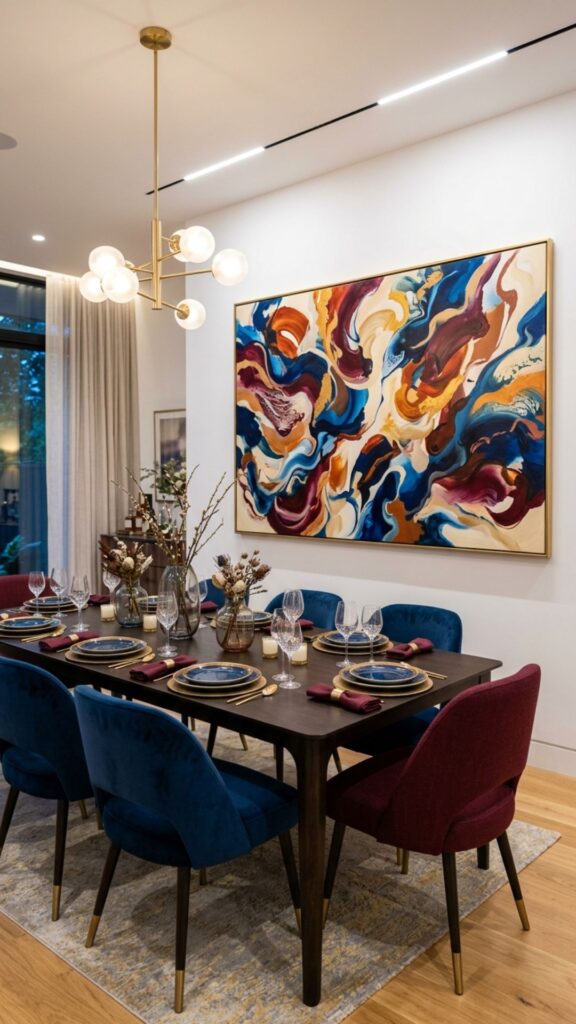
Original artwork or high-quality prints are a consistent feature of genuinely elegant dining rooms. A single large piece hung at eye level on the wall opposite the main seating position creates a focal point that gives the room a finished, gallery-like quality.
Choose artwork that resonates with the color palette of the room rather than clashing with it. Oversized botanical prints, abstract canvases with earthy tones, or monochrome photography all work exceptionally well in a high-end dining setting.
10. Build In a Drinks Cabinet or Sideboard for Function and Style
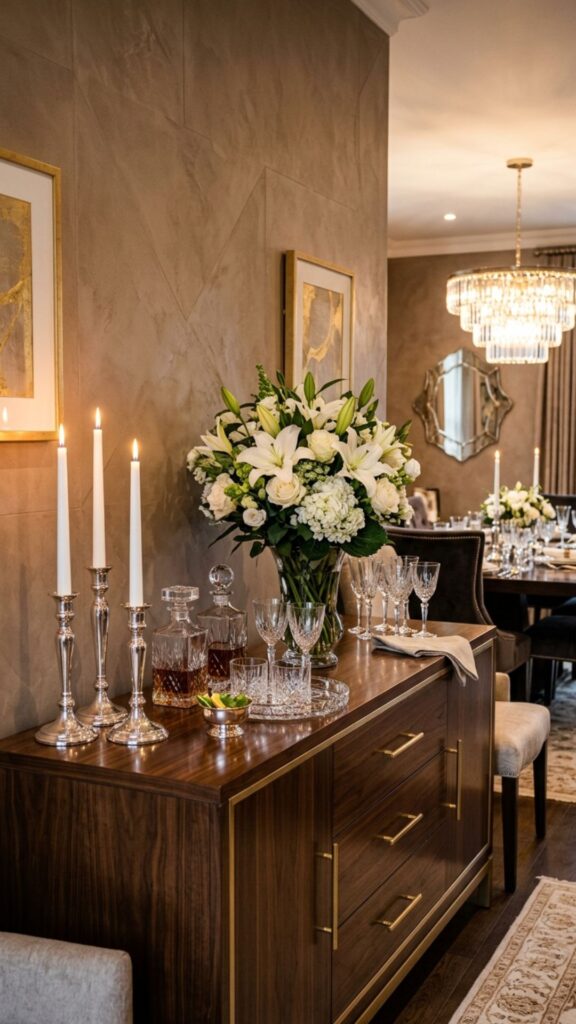
A well-appointed sideboard or built-in drinks cabinet brings both practical storage and visual weight to a dining room. In luxury dining rooms, this piece often acts as a secondary focal point — topped with candles, decanters, fresh flowers, or a curated display of tableware.
Choose a sideboard in a complementary wood tone or lacquered finish. Built-in cabinetry with glazed upper sections and solid lower cupboards creates a sense of permanence that freestanding furniture alone can’t deliver.
11. Use Linen or Silk Curtains for Soft, Luxurious Window Treatments
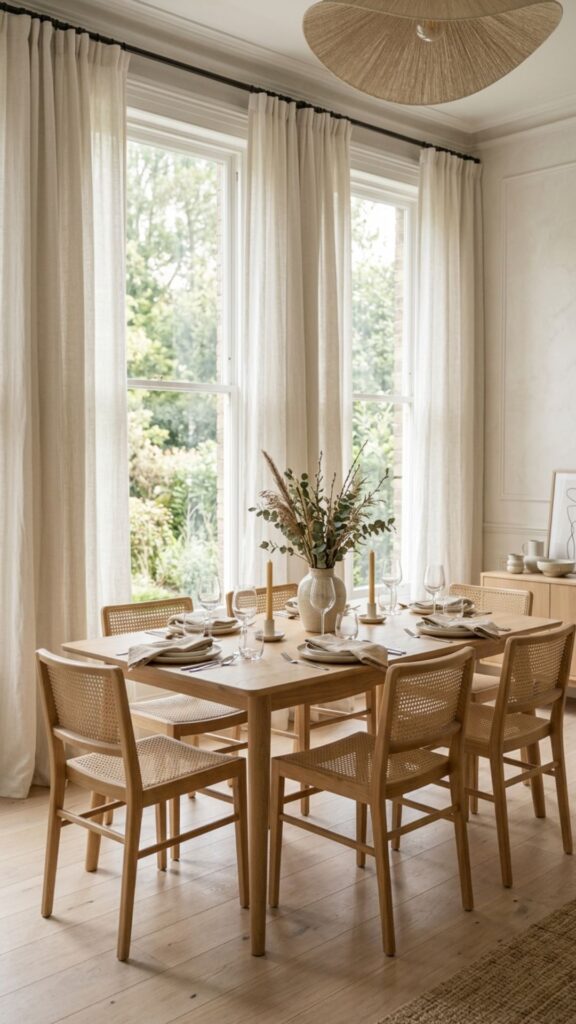
Heavy, well-made curtains change the entire feel of a dining room. Floor-to-ceiling panels in natural linen, silk, or velvet add softness, warmth, and a sense of generous scale that blinds or shutters typically lack.
Always hang curtain rods close to the ceiling, not directly above the window frame. This elongates the wall and makes the room feel taller — a consistent trick in high-end interior design that costs almost nothing to apply.
12. Add Metallic Accents in Brass, Gold, or Brushed Nickel
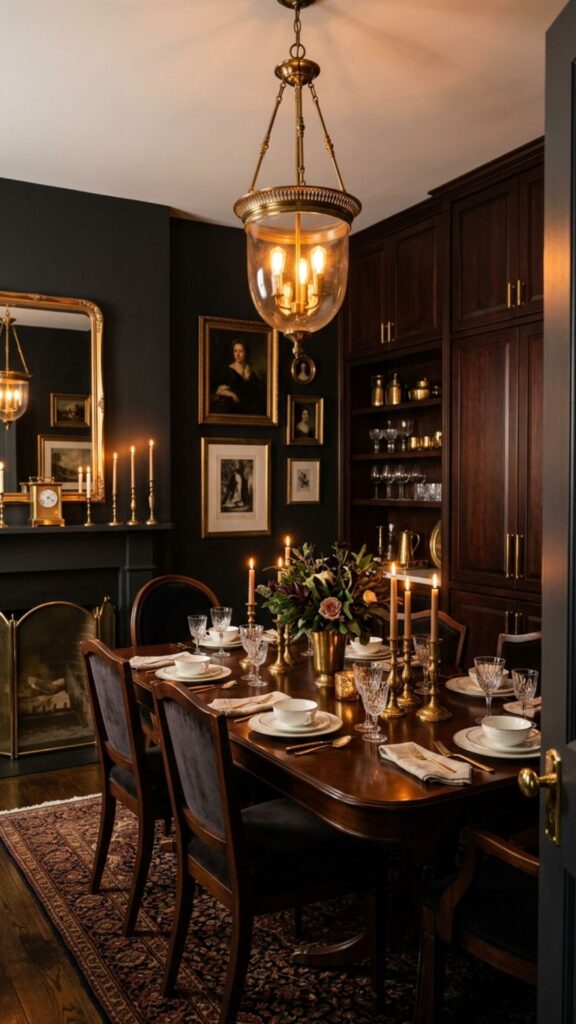
Metallic finishes add warmth and visual richness without overwhelming the room. In an elegant dining room, brass or gold tones work particularly well against dark walls, deep woods, and jewel-toned upholstery.
Introduce metallics through consistent, restrained touchpoints: cabinet hardware, light switch covers, curtain rod finials, picture frames, and candle holders. Keeping the metal finish consistent across these elements creates cohesion without requiring you to start from scratch.
13. Choose a Round Table for Intimate, Conversation-Friendly Dining
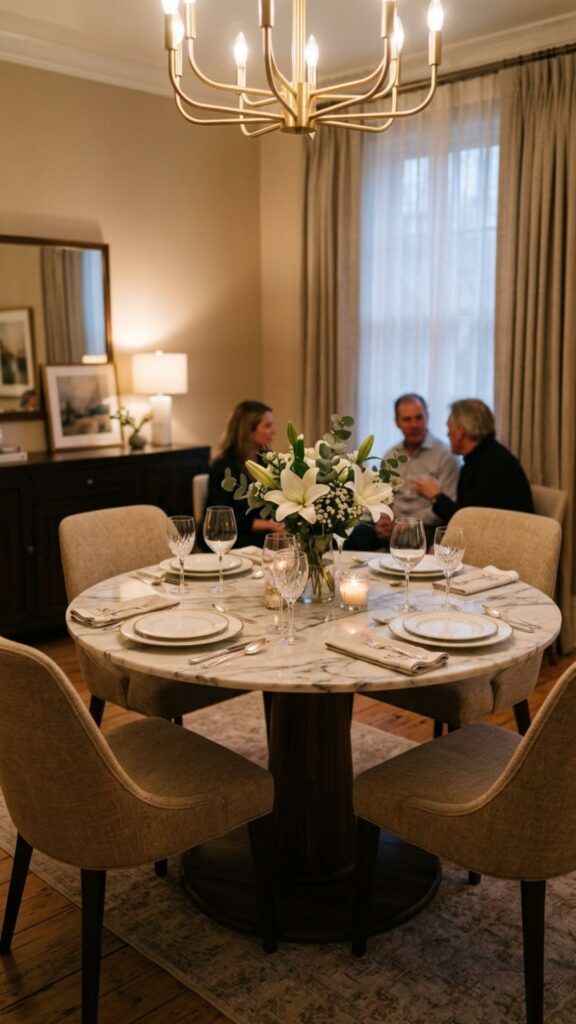
Round tables are a classic choice for elegant dining rooms because they encourage conversation, eliminate the hierarchy of the head of the table, and tend to feel more formal and considered than rectangular alternatives.
A round pedestal table with a marble, stone, or polished hardwood top is one of the most timeless luxury dining room choices available. For larger gatherings, look for extendable round tables with hidden leaf inserts so the elegance of the circle is preserved even when the table is expanded.
14. Use High-Quality Tableware as Part of the Room’s Visual Design
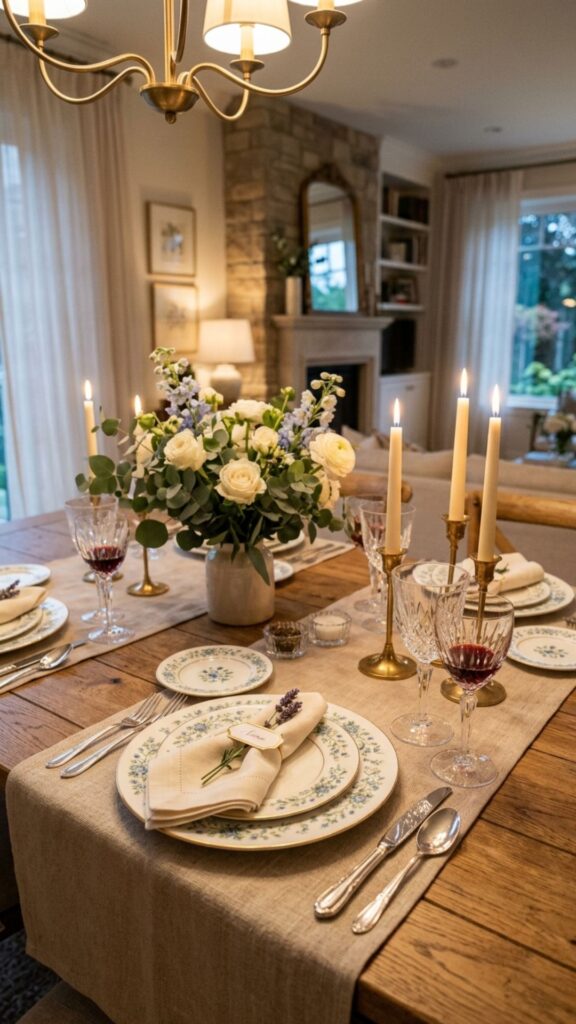
Tableware isn’t just functional — in an elegant dining room, it’s part of the overall aesthetic. Displaying fine china, crystal glassware, or linen napkins in a glass-fronted cabinet makes the room feel curated and intentional.
Even when the table isn’t set, a partial table setting with a table runner, a central candelabra, and well-placed placemats signals that the room is cared for and considered. This level of detail separates a genuinely high-end dining room from one that simply has expensive furniture.
15. Add Coffered or Tray Ceiling Details for Architectural Elegance
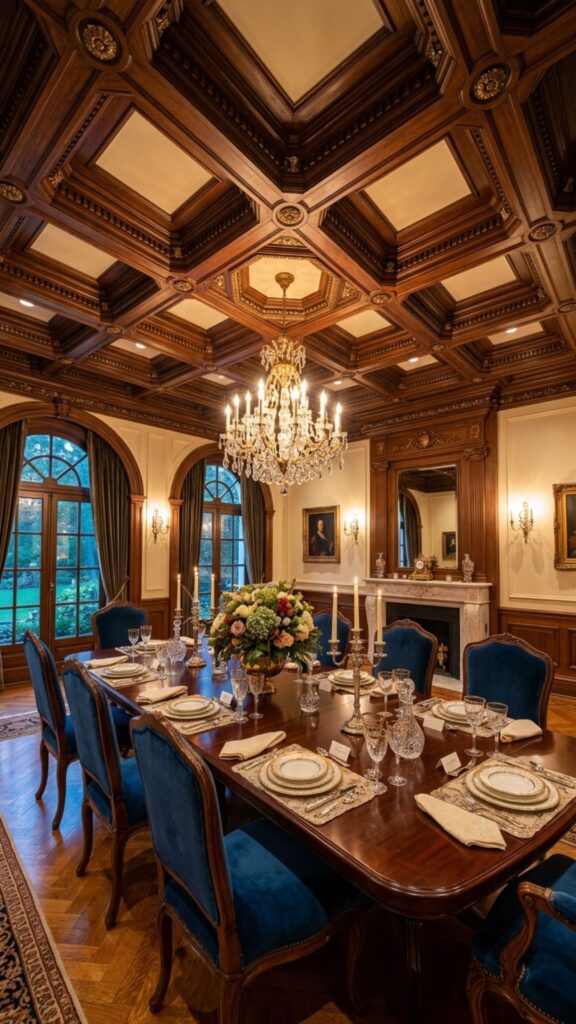
The ceiling is the most overlooked surface in most dining rooms, but in luxury interiors it’s treated as a fifth wall. A coffered ceiling — with its grid of recessed panels — or a tray ceiling that steps up toward the center both add architectural drama that elevates the entire space.
If a full structural ceiling treatment is outside your budget, even applied ceiling moldings in a geometric pattern can achieve a similar effect. Paint the interior of the coffers in a slightly deeper tone than the ceiling field for added depth and definition.
16. Incorporate Fresh Flowers or a Statement Table Centerpiece
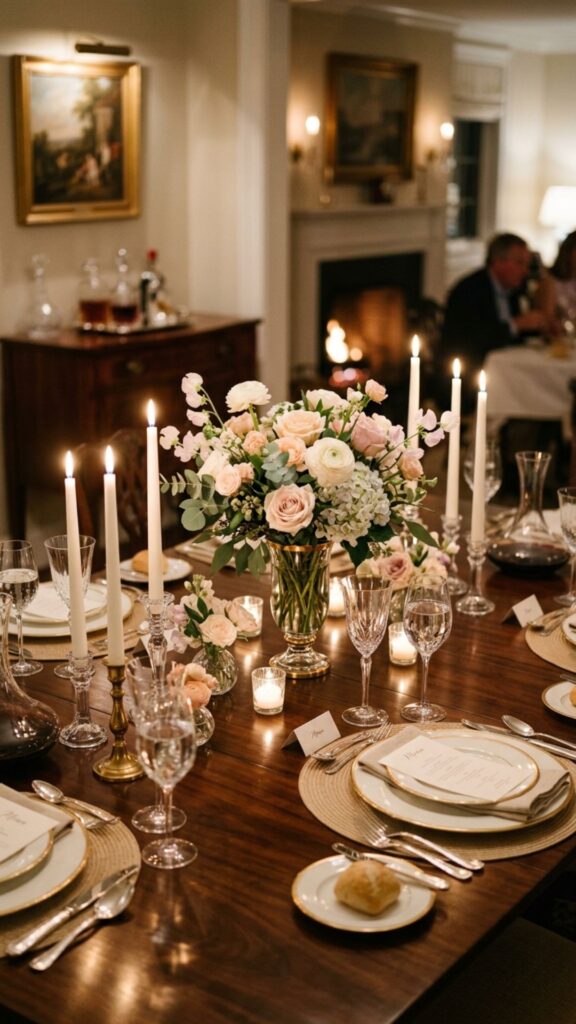
A thoughtfully chosen centerpiece transforms a dining table from a surface to a stage. Fresh flowers in a tall glass vase, a cluster of pillar candles at varying heights, or a low sculptural arrangement of seasonal greenery all signal care and attention to detail.
Avoid centerpieces that are so tall they block sightlines across the table. The most elegant approach is either very tall and slender, or low and generous — nothing at the midpoint where guests end up talking around the arrangement rather than across it.
17. Use Stone or Marble for Floors, Surfaces, or Accents
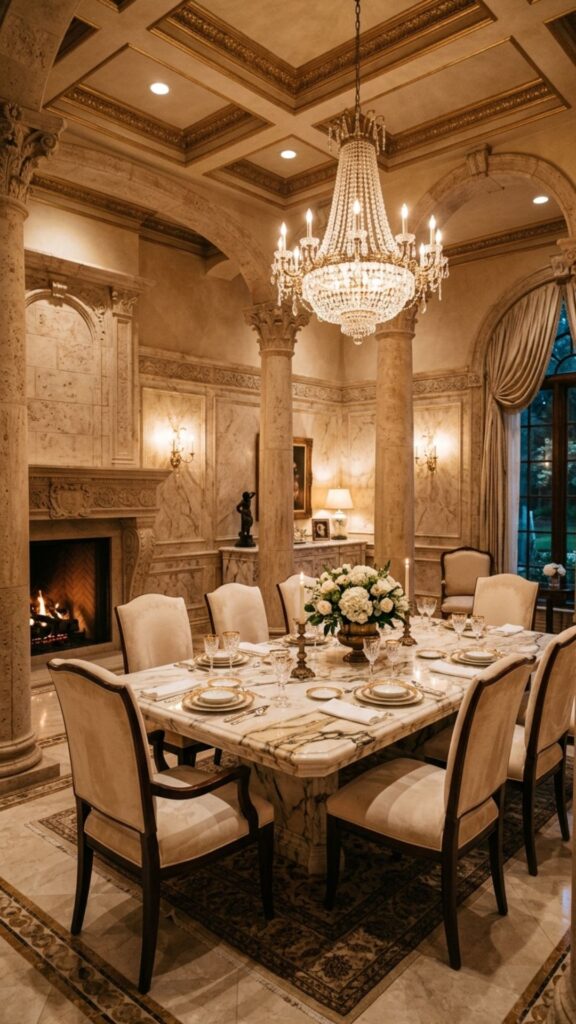
Natural stone — marble, travertine, slate, or honed limestone — adds a quality and permanence to a dining room that no engineered substitute matches. It can be used on the floor, as a tabletop material, or as a fireplace surround if the room includes one.
If full stone flooring is outside budget, even a marble-topped sideboard or a stone feature wall behind a bar area introduces the material in a scaled way. Stone’s natural variation means every surface is unique, which is intrinsically appealing in a high-end interior.
18. Keep Color Palettes Restrained for a Timeless Look
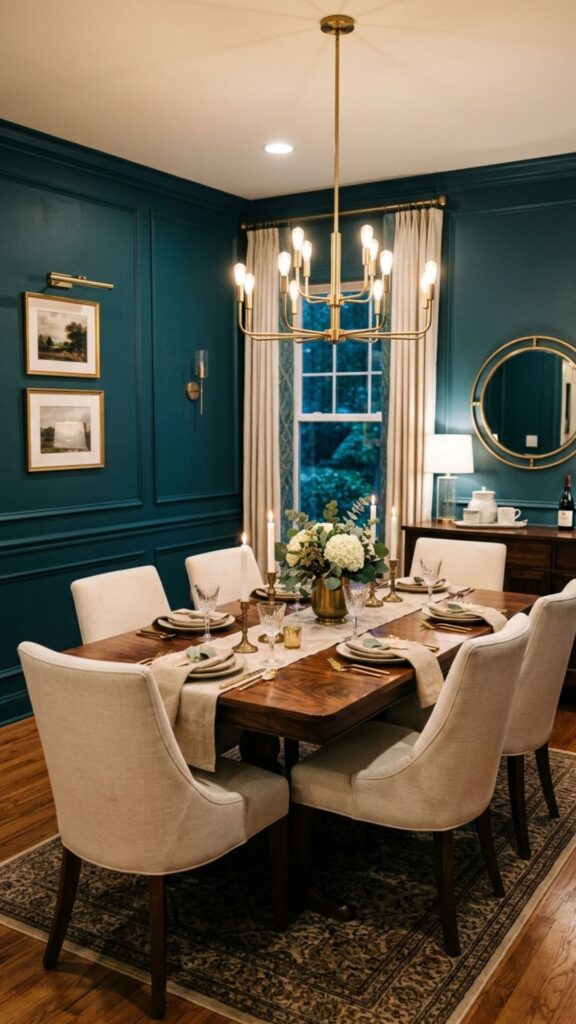
Overly busy color palettes are one of the most common mistakes in dining rooms that try to look luxurious. Elegant spaces typically work within a palette of three or four tones — a dominant wall color, a complementary upholstery tone, a neutral for the ceiling and trim, and a metallic accent.
Restraint signals confidence. A dining room that looks expensive almost always uses fewer colors, not more. If you’re unsure where to start, deep teal walls with warm wood tones, cream upholstery, and brass accents is a combination that rarely fails.
19. Create Symmetry in the Layout for a Formal, Polished Feel
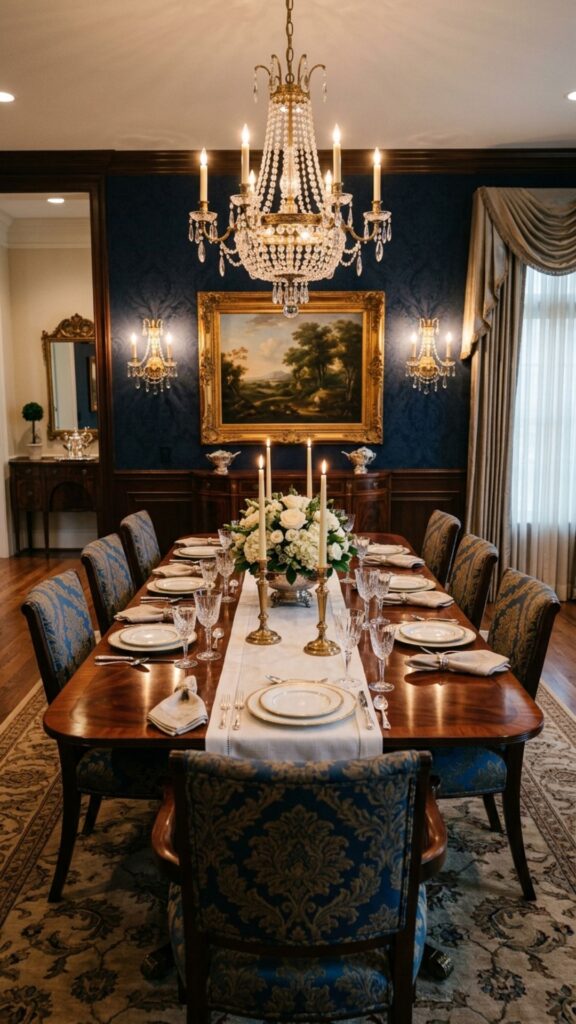
Symmetry is the visual language of formal luxury. Matching sconces on either side of a mirror, identical chairs at each end of the table, and a centered chandelier above the table all reinforce a sense of deliberate, curated order that feels inherently high-end.
Apply symmetry to your art arrangement too. A pair of matching prints flanking a central piece creates a triptych effect that feels much more intentional than a single picture hung alone on a large wall. Even small symmetrical pairings — like matching candlesticks — add to the overall effect.
20. Incorporate a Fireplace for Warmth, Drama, and Focus
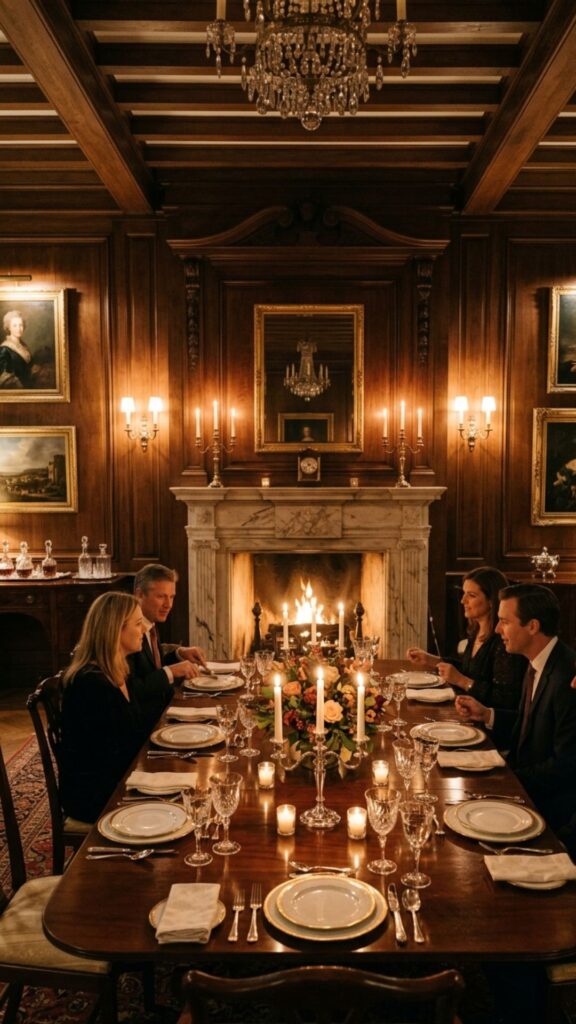
A fireplace — whether wood-burning, gas, or an elegantly designed electric alternative — gives the dining room a natural focal point that no other element quite replicates. It makes gatherings feel genuinely special, adds warmth in winter months, and provides a framing backdrop for the room’s most important wall.
If your dining room doesn’t have a structural fireplace, a well-designed electric fireplace inset into a painted or paneled chimney breast achieves a remarkably similar effect. Finish the surround with marble, stone, or painted timber detailing to match the wider design language of the room.
Conclusion
Building an elegant, luxury dining room isn’t about choosing the most expensive items in a showroom — it’s about making thoughtful decisions that work together to create atmosphere, comfort, and visual harmony. Whether you start with a dramatic chandelier, a rich wall color, or a marble-topped table, each choice you make sets the stage for the next.
Pick two or three ideas from this list that align with your existing space and budget, then treat them as your starting point rather than your entire plan. A dining room evolves — and the best ones are built layer by layer, with care and intention. When you’re ready to take the next step, bring your shortlist to an interior designer for a one-hour consultation. That single conversation can save you months of second-guessing and thousands spent on the wrong things.
What makes a dining room look luxurious?
A luxury dining room combines high-quality materials, layered lighting, and deliberate proportions. Key markers include a statement chandelier, upholstered chairs in rich fabrics, natural stone or solid wood surfaces, wall paneling or architectural ceiling details, and a restrained color palette that feels cohesive rather than busy.
How do I make my dining room look more elegant on a budget?
The highest-impact, lower-cost changes include painting walls a deep, saturated color, hanging curtains close to the ceiling, adding wall paneling or wainscoting using affordable MDF, swapping light fittings for a more dramatic fixture, and replacing basic chair cushions with upholstered slip covers in a quality fabric.
What is the best color for an elegant dining room?
Deep, saturated tones consistently perform best in elegant dining rooms. Forest green, navy blue, charcoal, and rich burgundy all create the intimate atmosphere that luxury dining spaces require. Pair any of these with warm metallic accents and natural wood tones for a balanced, high-end result.
What size chandelier do I need for a dining room?
A common guideline is to add the room’s length and width in feet — the total gives you the approximate chandelier diameter in inches. For example, a 12×14-foot room suits a chandelier roughly 26 inches in diameter. The fixture should hang 30 to 36 inches above the tabletop for both visual balance and practical clearance.
Should dining room chairs match the table?
They don’t need to be a matching set, but they should be complementary. In luxury dining rooms, mixing materials — such as a walnut table with upholstered fabric chairs — often looks more considered and intentional than a full matched suite. The key is keeping proportions consistent and ensuring the chair height works comfortably with the table.