The first impression your dining room makes happens before anyone sits down. It happens at the entrance — the moment your guests cross the threshold and take in the space for the first time. That split second shapes how the entire meal feels, and yet most homeowners spend very little time thinking about it.
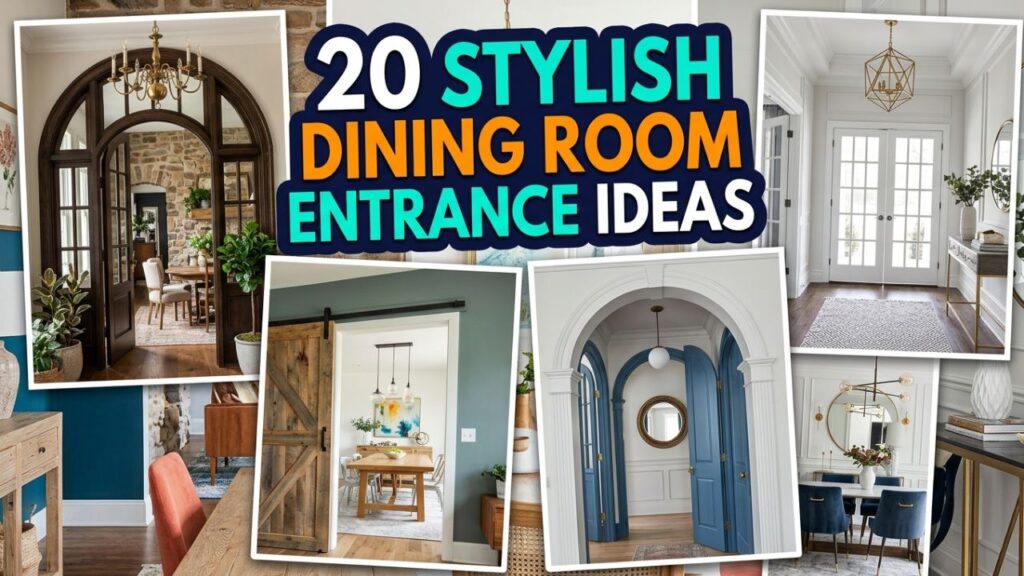
A well-designed dining room entrance does more than look pretty. It sets the mood, signals what kind of experience is ahead, and makes the transition from one room to the next feel intentional rather than accidental. Whether you’re working with a formal doorway, an open-plan layout, or a narrow hallway that leads into the dining area, there are real, practical ways to make that entrance more beautiful and more welcoming.
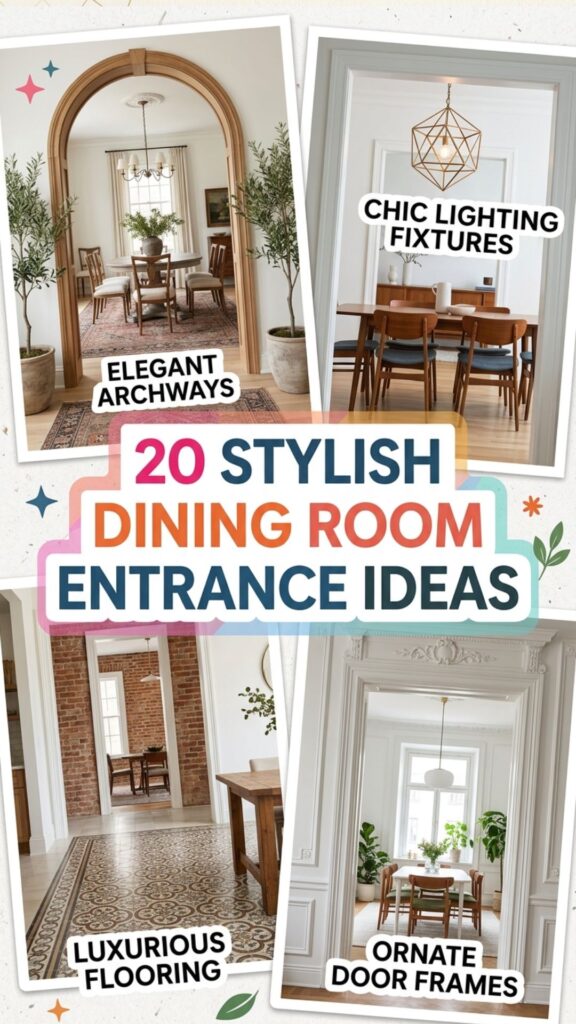
In this guide, you’ll find 20 stylish dining room entrance ideas that work across a range of home styles and budgets. Each one is specific, actionable, and designed to help you create a space your guests will notice — and remember.
1. Frame the Doorway With a Bold Paint Color
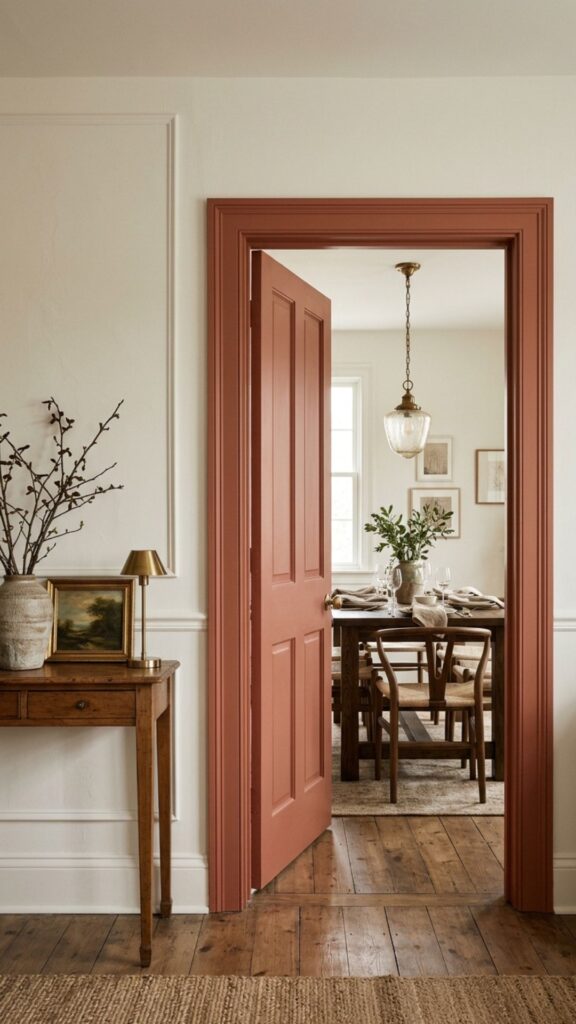
Painting the interior of a doorframe in a contrasting color is one of the fastest ways to make a dining room entrance feel designed. Choose a shade that’s two to three tones deeper than your dining room walls — a dusty terracotta frame against warm white walls, for example, creates instant visual drama without any structural changes.
Apply the color to the full depth of the door jamb, not just the face. This wraps the entrance in color and makes it feel intentional when you walk through. It’s a small detail that signals a big level of care.
2. Install a Statement Door
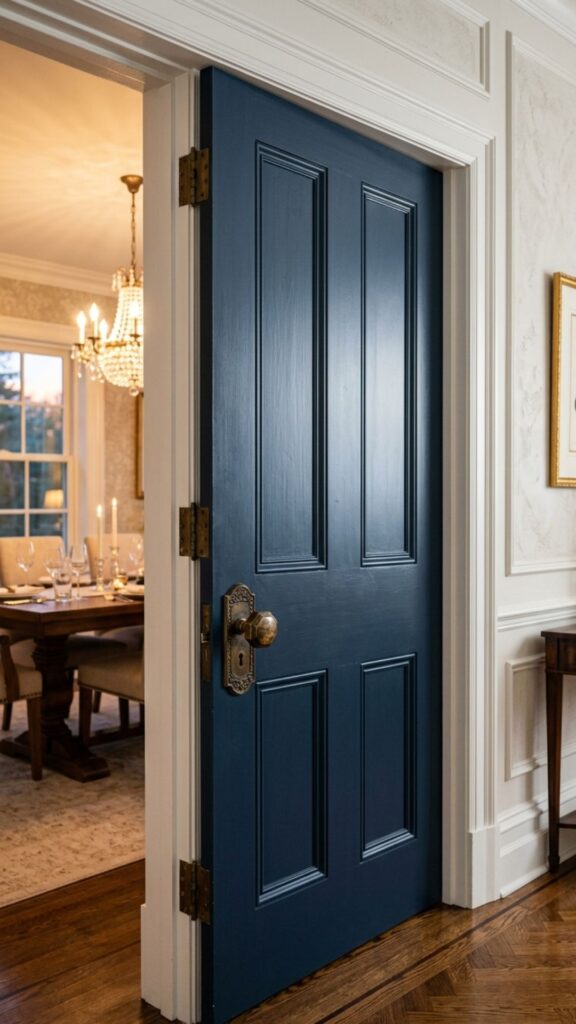
If your dining room has a dedicated door, treat it as a design feature rather than a functional afterthought. A paneled door painted in deep navy, forest green, or matte black immediately elevates the dining room entrance and gives it a sense of arrival.
Add quality hardware — a solid lever handle in aged brass or matte black makes the door feel substantial. The combination of strong color and well-chosen hardware transforms what most people treat as invisible into one of the most memorable elements of the room.
3. Use a Pendant Light Just Inside the Entry Point
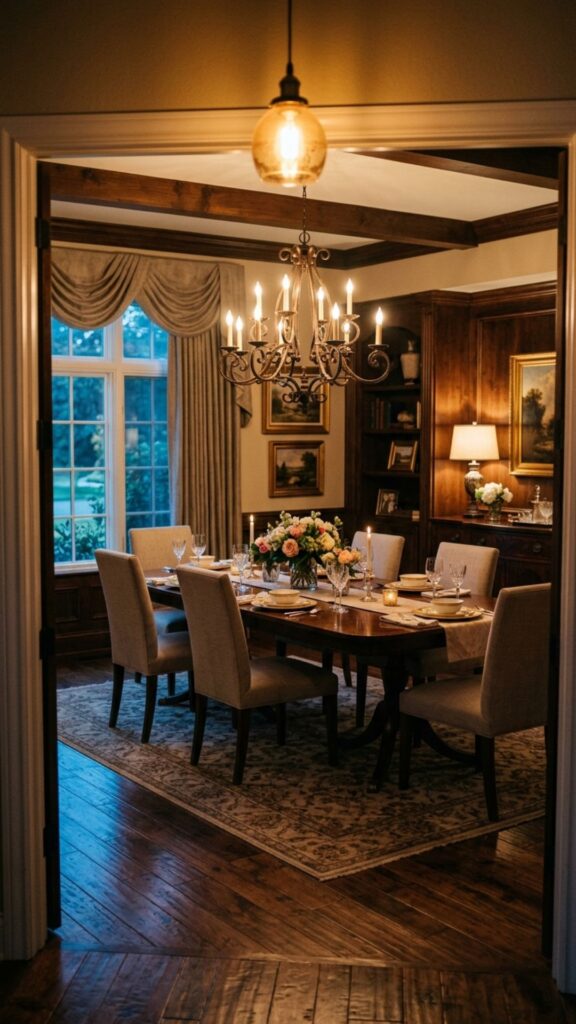
Placing a pendant light just inside the dining room entrance — slightly before the main chandelier — creates a sense of visual progression. As guests step in, one light welcomes them, then the next draws them further into the space. It’s a layering technique commonly used in restaurant design, and it works just as well at home.
Choose a pendant that complements but doesn’t compete with your main dining room light. A smaller version of the same fixture family, or something in a similar material, keeps the transition cohesive while adding warmth right at the entry point.
4. Add an Entry Console Table
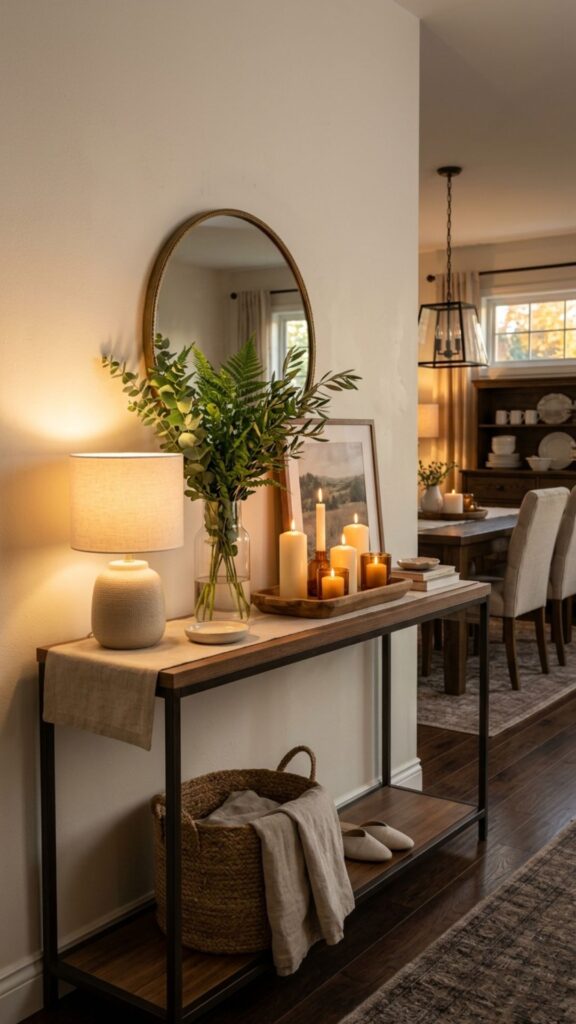
A narrow console table placed against the wall just inside the dining room entrance creates a natural staging area and gives the space a more furnished, intentional feel. It also serves a practical purpose — a place to set down serving platters or wine bottles before dinner begins.
Style the top simply: a small lamp for ambient light, a vase with fresh or dried stems, and perhaps a tray with a candle or two. Avoid overcrowding it. The goal is a curated, welcoming vignette rather than a storage drop zone.
5. Lay a Defined Area Rug at the Threshold
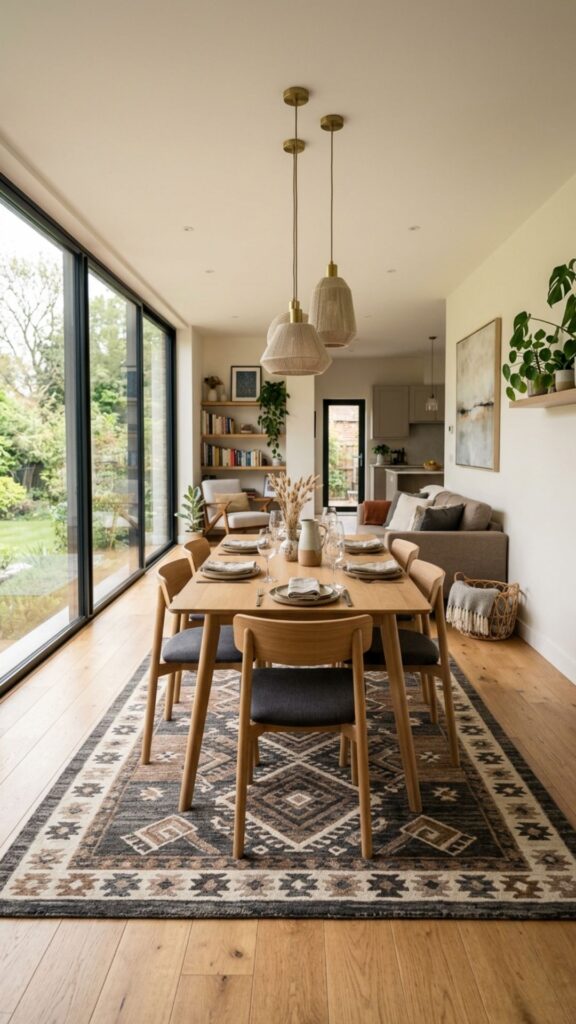
In open-plan homes, a rug at the dining room entrance creates a visual boundary that announces the space without a physical wall or door. Choose a rug that’s generous in size — at least large enough to cover the dining area fully, with all four chair legs on the rug when pulled out.
A patterned rug in the entryway zone works particularly well because it draws the eye downward and inward simultaneously. Geometric patterns, subtle botanical prints, or classic stripes all create that sense of arrival while grounding the furniture around them.
6. Use Molding or an Archway to Define the Entrance
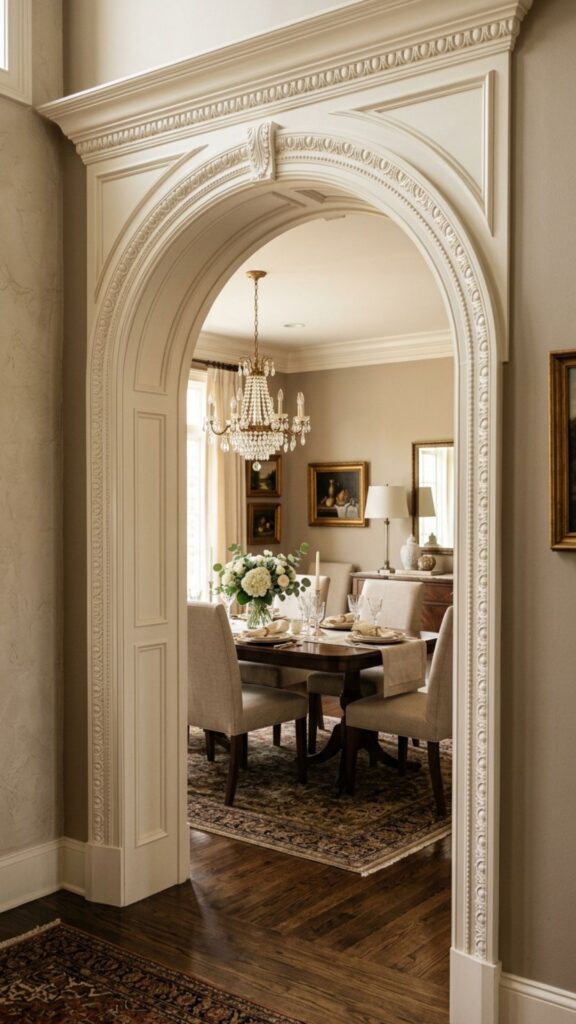
Architectural details like decorative molding around a doorframe or a simple arched opening transform a functional passageway into a genuine dining room entrance. An arch, in particular, has a timeless quality that works across design styles — from Mediterranean to modern farmhouse to transitional.
If a full arch isn’t feasible, adding casing molding around a standard rectangular doorway achieves a similar effect at a fraction of the cost. Paint it the same color as the wall for a tone-on-tone effect, or use a crisp white against a colored wall for more definition.
7. Hang Artwork on the Wall Opposite the Entrance
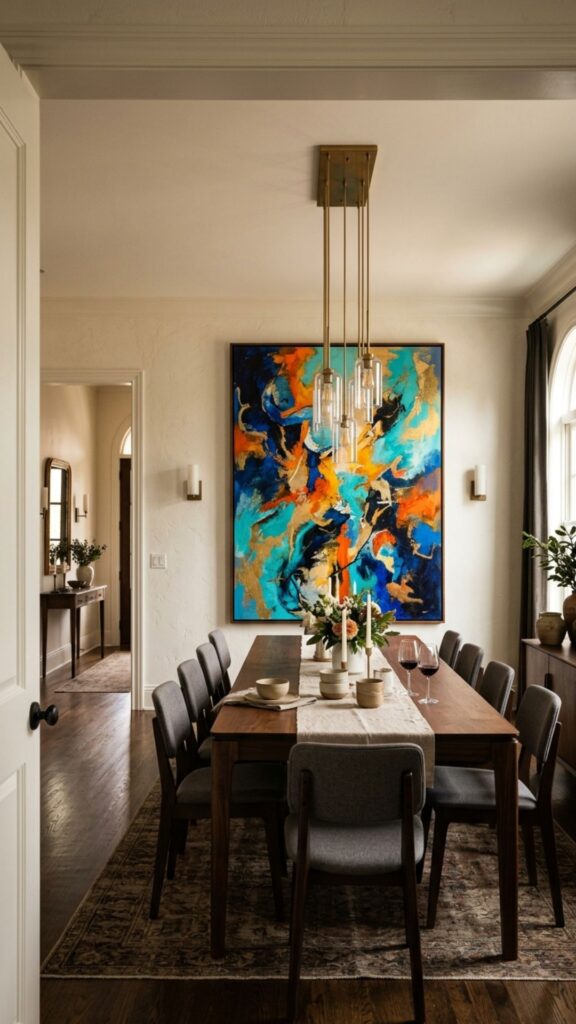
When someone walks into a dining room, their eyes immediately move to the wall directly ahead. Placing a piece of artwork there — or a mirror, a large clock, or a decorative panel — gives them something beautiful to land on and makes the room feel like it was composed with intention.
Choose something with scale. A single oversized piece reads far more confidently than a cluster of small frames. Make sure it’s hung at seated eye level, roughly 56–60 inches from the floor to the center, so it connects with the people in the room rather than hovering above them.
8. Create a Lighting Transition Between Spaces
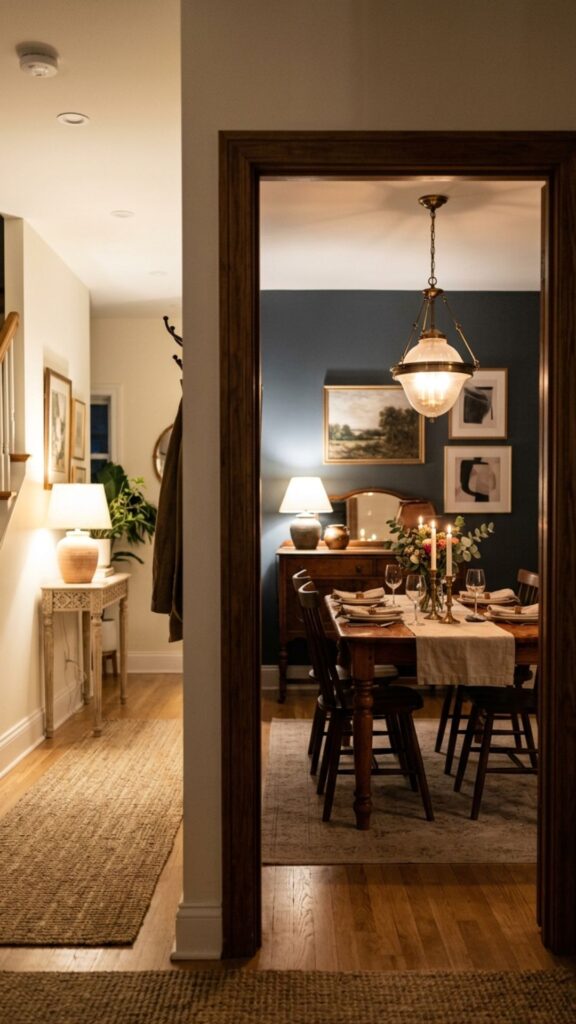
If your dining room connects to a hallway or living area, the shift in lighting between spaces is one of the most powerful ways to signal a new environment. A dimmer-controlled overhead light in the dining room entrance area lets you set a mood that’s clearly distinct from the brighter, more functional lighting in adjacent rooms.
Warm bulbs in the 2700–3000K range create that golden, inviting glow that makes a dining room feel special. Install dimmers on every light source in or near the dining room entrance, including sconces, pendants, and overhead fixtures, so you have full control over the atmosphere.
9. Style a Gallery Wall Leading Into the Dining Room
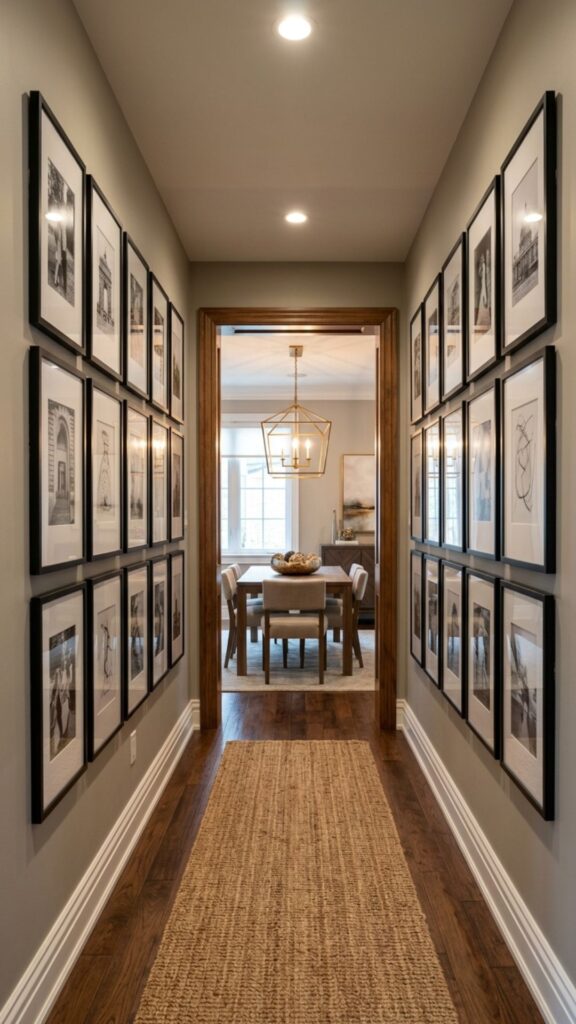
A gallery wall along the hallway or short passage leading to the dining room entrance builds anticipation as guests approach. It gives them something to look at during the walk in and establishes the aesthetic personality of the home before they reach the main space.
Keep the frames consistent — same finish, same mat color — even if the artwork varies in size and subject. This creates cohesion without rigidity. Black frames on a white wall, or natural wood frames on a warm greige wall, both work well and travel easily into a range of dining room styles.
10. Use a Curtain or Fabric Panel as a Soft Divider
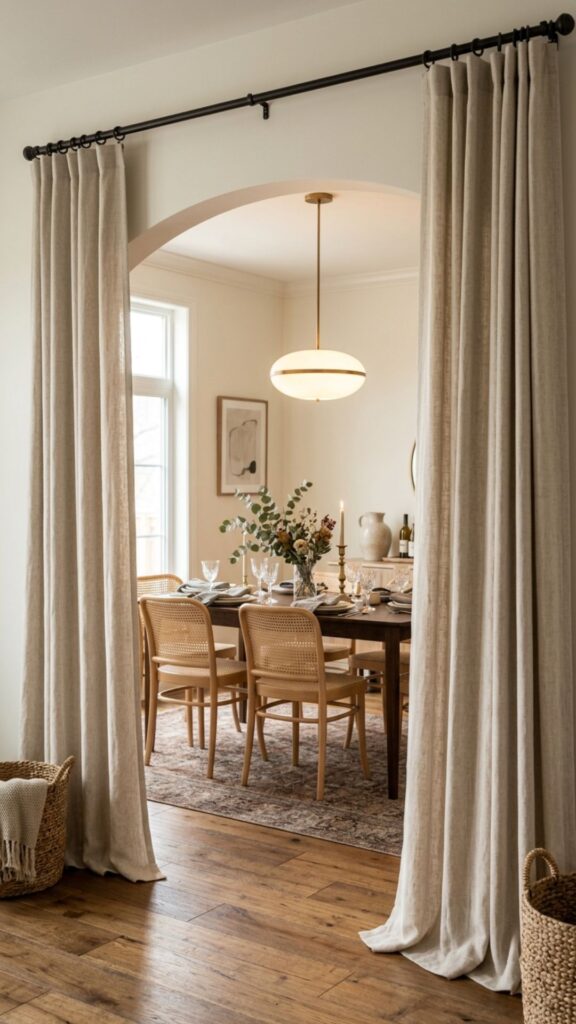
In open layouts where the dining area flows directly from a living room or kitchen, a fabric panel or curtain rod between the two spaces creates a soft, flexible dining room entrance that can be opened or closed depending on the occasion.
Choose a heavy linen or velvet in a neutral tone — oatmeal, sage, or warm charcoal all work well. Mount the rod at ceiling height and use full-length panels that touch or slightly pool on the floor. When closed, the curtain frames the dining room entrance beautifully; when open, it adds texture to the overall space without dividing it.
11. Plant a Statement Indoor Tree or Large Plant
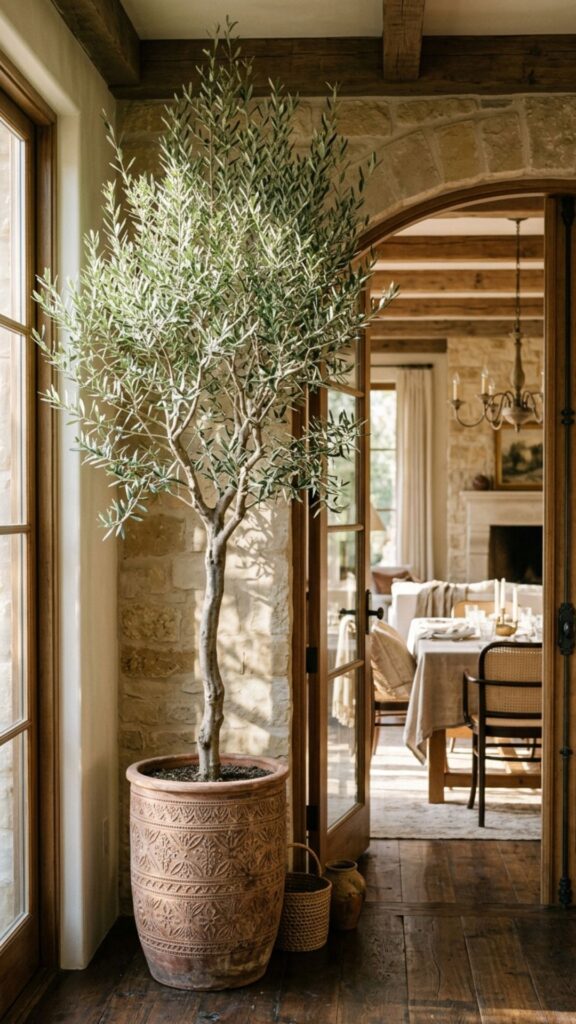
A tall indoor plant — a fiddle leaf fig, olive tree, or large palm — placed just inside or beside the dining room entrance adds organic warmth and a sense of arrival that few other decor elements can replicate. Plants signal life, care, and a certain relaxed confidence.
Use a sculptural planter in ceramic, terracotta, or woven rattan rather than a standard plastic pot. The planter is as much part of the design as the plant itself. Position the tree where it gets adequate light and doesn’t obstruct foot traffic, typically to one side of the entrance rather than directly in the middle.
12. Install Wall Sconces on Either Side of the Doorway
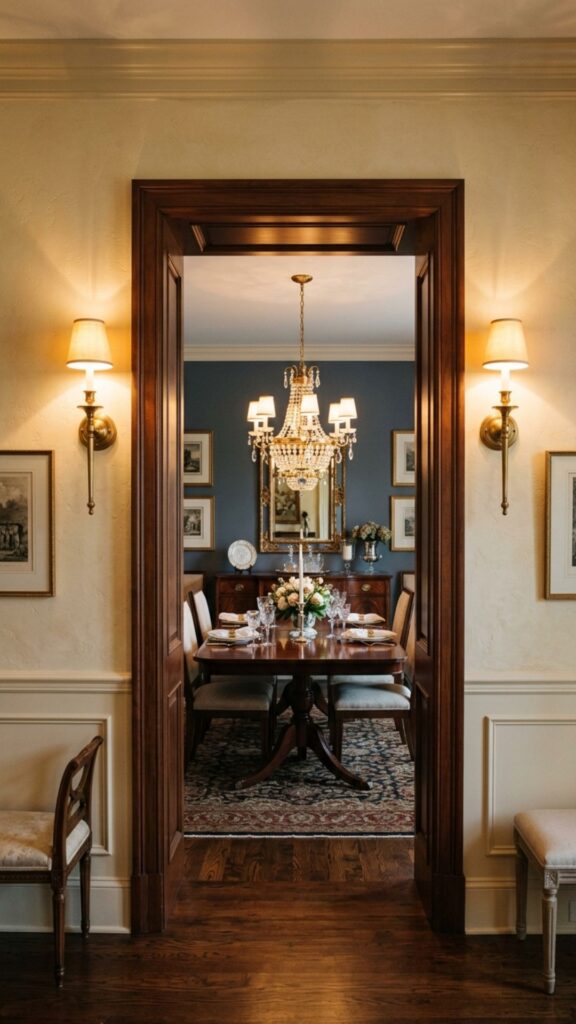
Flanking a doorway with a pair of matching wall sconces creates symmetry and frames the dining room entrance with warm, directed light. It’s an architectural move borrowed from formal dining design, and it works equally well in more casual or contemporary spaces depending on the fixture you choose.
For a classic look, use candle-style sconces in brushed brass. For something more modern, try a simple swing-arm sconce in matte black. Either way, connect them to a dimmer and position them at roughly 60–66 inches from the floor for the most flattering, ambient light.
13. Add a Small Bench or Upholstered Stool
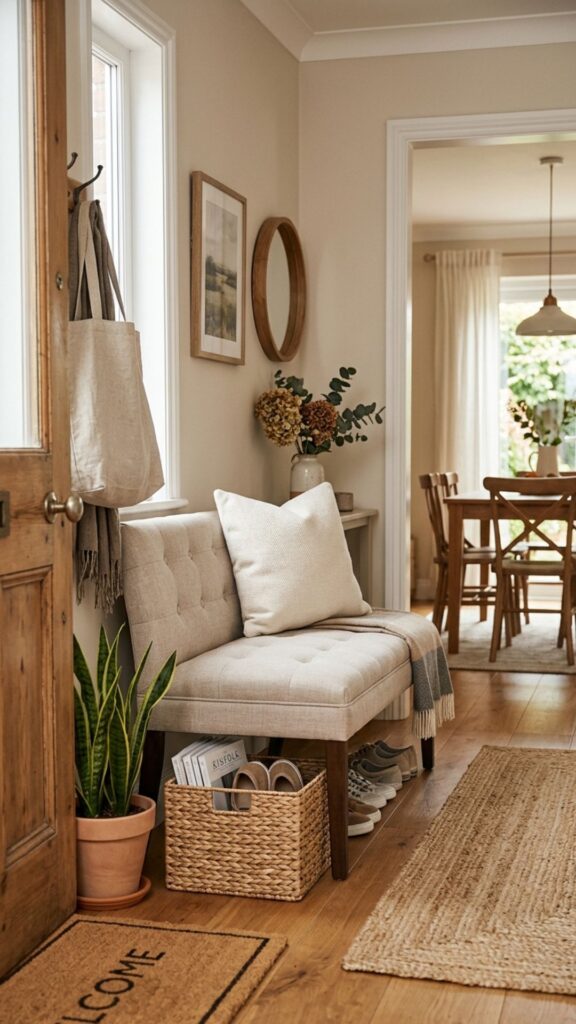
Placing a small bench or upholstered stool near the dining room entrance gives the space a furnished, residential quality that bare walls and open floor space can’t achieve on their own. It also provides a practical perch for someone removing shoes, setting down a bag, or waiting while the table is being set.
Choose an upholstered bench in a fabric that coordinates with your dining room chairs — a similar color, texture, or pattern makes the entrance feel connected to the larger space rather than tacked on. Keep the styling clean: one cushion on the seat, perhaps a small basket underneath.
14. Use Contrasting Floor Material to Define the Space
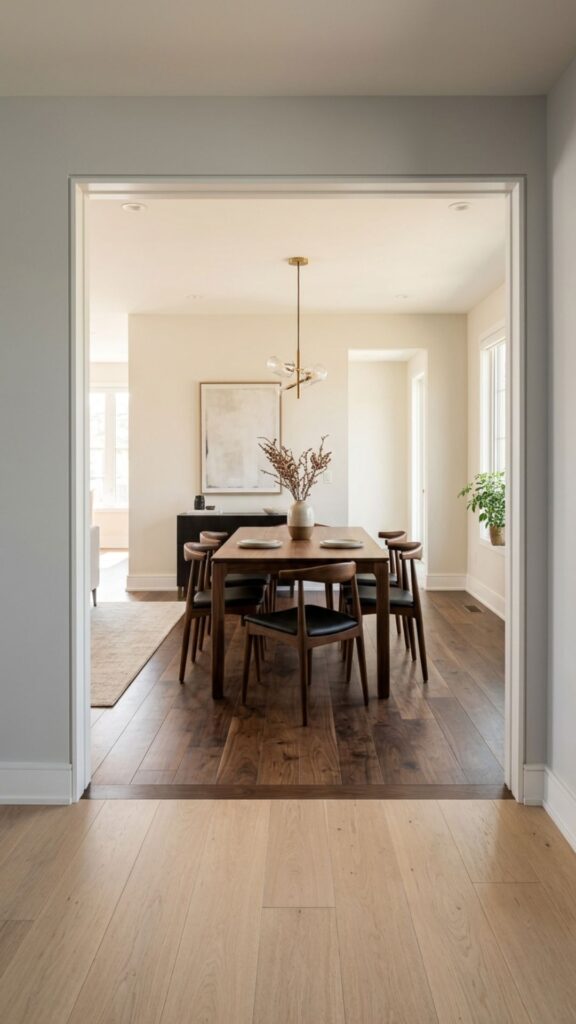
In open-plan homes, transitioning from one floor material to another — hardwood to stone tile, or light oak to darker walnut — is a clean, architectural way to define the dining room entrance without any walls or partitions. The change underfoot signals a shift in space.
If you’re not replacing flooring, a large area rug at the dining room entrance achieves a similar effect. A rug with a distinct border or pattern creates a visible threshold that separates the dining zone from adjacent areas and gives the room a more defined, intentional feel.
15. Incorporate a Mirror for Light and Depth
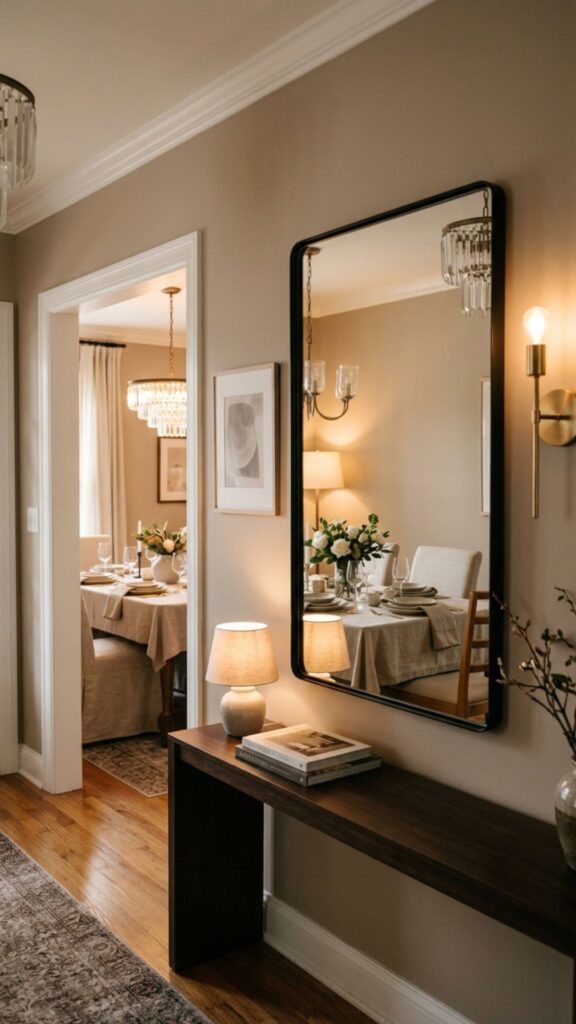
A mirror placed near the dining room entrance does two things at once: it bounces light deeper into the room and makes the space feel larger than it actually is. In a narrow hallway leading to the dining room, this effect is especially valuable.
Choose a mirror with a frame that fits your aesthetic — ornate gilt for a traditional look, simple black metal for something more contemporary, or natural rattan for a relaxed, organic feel. Position it so it reflects either a light source or something beautiful in the room, rather than a blank wall or cluttered corner.
16. Paint the Ceiling of the Entrance a Deeper Tone
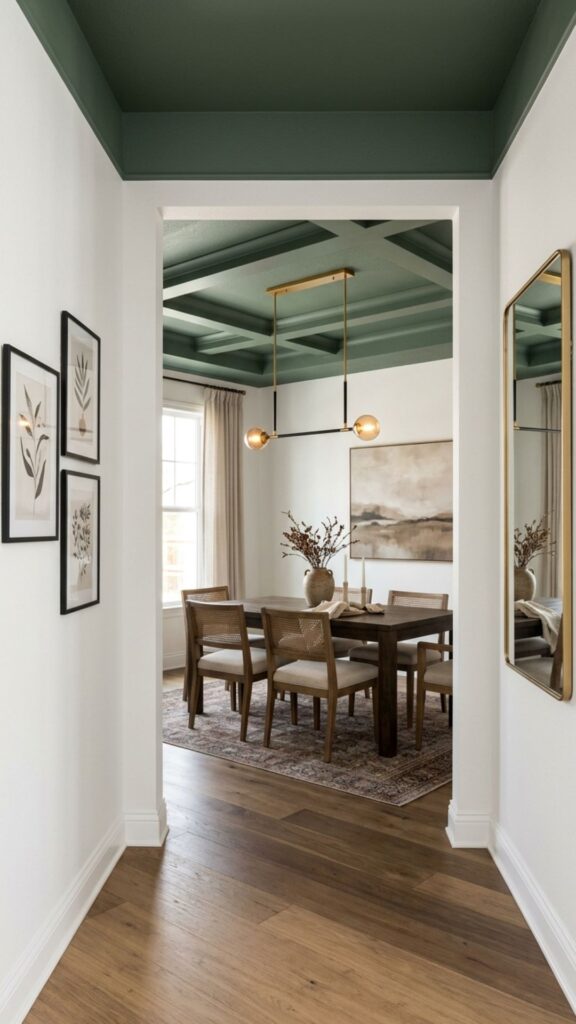
Painting the ceiling just inside the dining room entrance in a shade slightly deeper than the walls — or in a contrasting accent color — draws the eye upward and creates an immediate sense of drama as you cross the threshold. It’s an unexpected detail that feels purposeful and considered.
This technique works especially well in rooms with generous ceiling height. A ceiling in dusty rose, warm terracotta, or deep sage against white walls creates a canopy effect that makes the room feel like it wraps around you. It’s a low-cost, high-impact change that most guests won’t be able to identify but will absolutely feel.
17. Use Bookshelves to Flank the Entrance
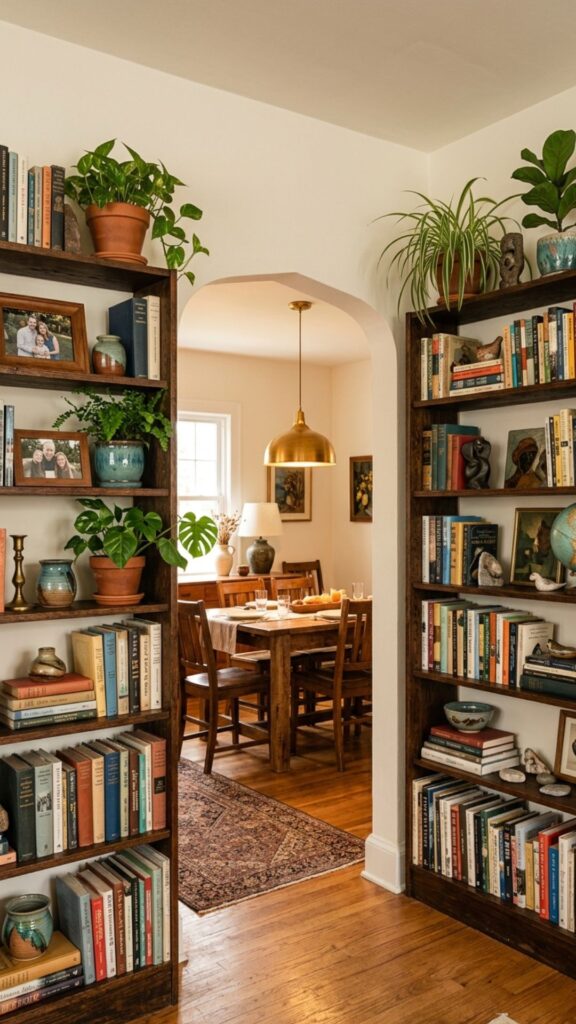
Built-in or freestanding bookshelves placed on either side of the dining room entrance create a library-like threshold that feels both grand and intimate. Filled with books, ceramics, plants, and personal objects, the shelves tell a story before anyone sits down to eat.
Style the shelves in the same palette as the dining room — repeat the accent colors in vase choices, book covers, and decorative objects. This creates visual continuity between the entrance and the room beyond. If you use freestanding shelves, anchor them properly to the wall for safety and stability.
18. Incorporate a Transom Window Above the Door
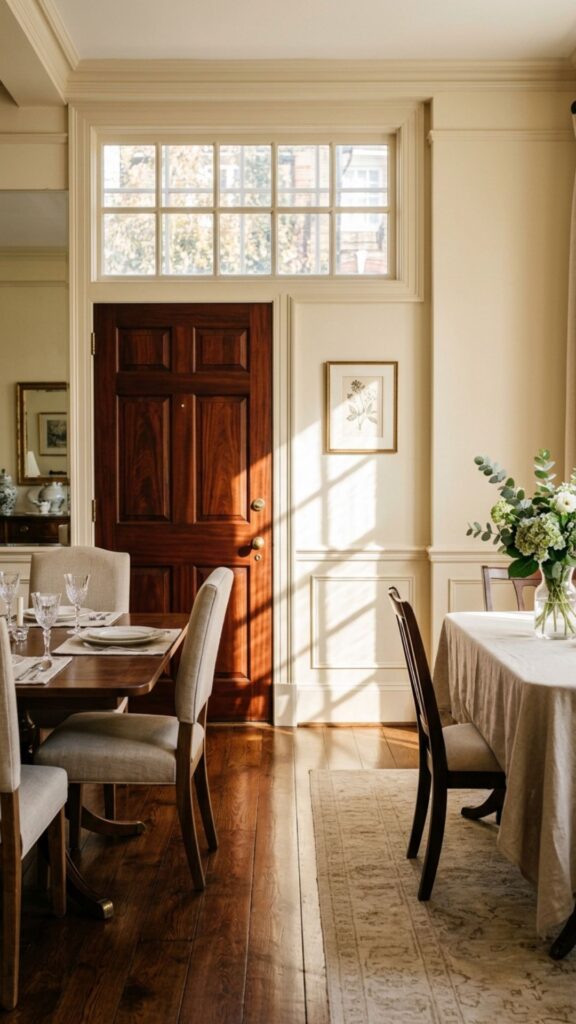
If your dining room has a solid door, adding a transom window above it brings in borrowed light from adjacent spaces and creates architectural interest at the top of the dining room entrance. Transom windows are a hallmark of traditional home design, but they translate well into contemporary interiors when kept simple.
Clear glass transoms bring in maximum light; frosted or reeded glass options add privacy while still diffusing brightness. Even a fixed transom — one that doesn’t open — dramatically changes the way the doorway reads and makes it feel more like a formal, designed feature.
19. Designate an Arrival Moment With Fragrance
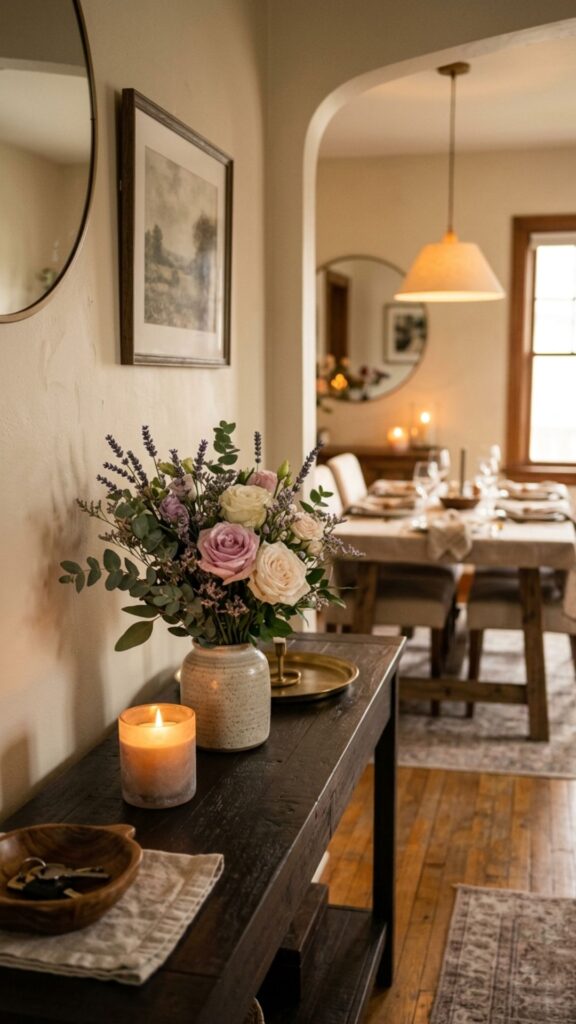
Scent is one of the most underused tools in home design. Placing a candle, reed diffuser, or small bouquet of fragrant flowers near the dining room entrance creates an arrival experience that guests notice even before they process what they’re seeing. It sets an immediate emotional tone.
Choose a fragrance that complements the mood you’re creating: warm vanilla and sandalwood for something cozy and intimate, fresh eucalyptus or citrus for something bright and energizing, or soft floral for a romantic, dressed-up occasion. Keep the fragrance subtle — the goal is an impression, not an overpowering presence.
20. Let the Dining Room Entrance Reflect the Room’s Full Story
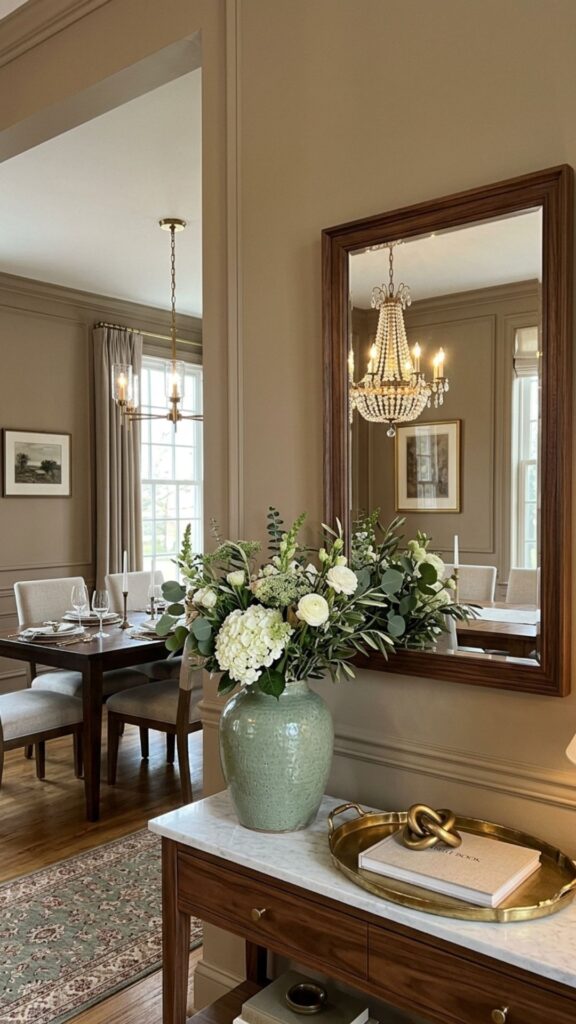
The most effective dining room entrances don’t try to do everything — they offer a hint of what’s inside and let the room itself deliver the full experience. That means pulling at least one design element from the dining room into the entrance zone: a paint color, a material, a repeated accessory.
If your dining room features warm walnut wood and sage green upholstery, bring a walnut-framed mirror and a sage-toned ceramic vase into the entrance. If you have a brass chandelier inside, use brass hardware on the door. These echoes create coherence and make the whole home feel like it was thought through — because it was.
Conclusion
A beautiful dining room entrance doesn’t require a renovation or a large budget. It requires intention. Choosing even two or three of these ideas and applying them with care will change the way your dining room feels — to you, and to everyone who walks into it.
Start with the element that addresses your biggest current gap: if lighting is flat, add a sconce or a pendant. If the doorway feels bare, add molding or a bold paint color. If the space feels disconnected from the dining room beyond, bring in a repeated material or color. Small, deliberate moves create lasting impressions.
Pick one idea from this list today and make it happen this week. Your dining room — and your next dinner party — will be better for it.
What makes a dining room entrance feel welcoming?
A welcoming dining room entrance combines warm lighting, a defined threshold, and at least one personal or decorative detail that signals care — a plant, a piece of art, or a fragrant candle. The goal is to make guests feel like crossing into the space is an event, not just a passage.
How do I define a dining room entrance in an open-plan home?
Use visual cues rather than physical barriers. A large area rug, a change in ceiling color, a pendant light positioned at the entry point, or a fabric panel divider all create a clear sense of arrival without closing off the space.
What’s the easiest way to upgrade a dining room entrance on a budget?
Paint is the highest-impact, lowest-cost upgrade available. Painting the doorframe, the ceiling just inside the entrance, or the door itself in a bold or contrasting color immediately changes how the space reads. Add a simple console table and a candle, and the transformation is significant for very little investment.
How wide should a dining room entrance be?
Standard doorways are 32–36 inches wide, which is functional but not especially generous. If you’re remodeling, widening a dining room entrance to 42–48 inches creates a more open, inviting feel. In existing spaces, removing a door entirely and using curtains or an arch instead can make a narrow entry feel considerably wider.
Should the dining room entrance match the dining room decor?
It doesn’t need to match exactly, but it should feel connected. Repeating one or two materials, colors, or finishes between the entrance and the dining room creates cohesion. Think of the entrance as a preview — it should hint at what’s inside without giving everything away.