You don’t need a bottomless budget to create a dining room that feels truly luxurious. What you do need is the right combination of materials, lighting, proportion, and intention. A space that feels expensive is almost always the result of thoughtful choices — not just costly ones.
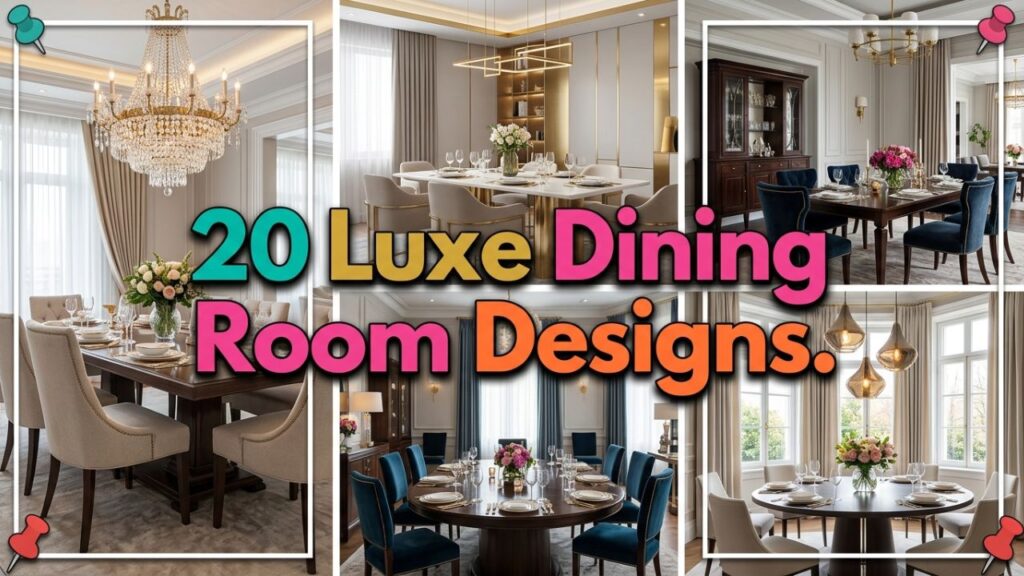
This guide walks you through 20 dining room designs luxe in every sense of the word. Whether you’re starting from scratch or refreshing what you already have, each concept here offers specific, actionable ideas to help you elevate your space.
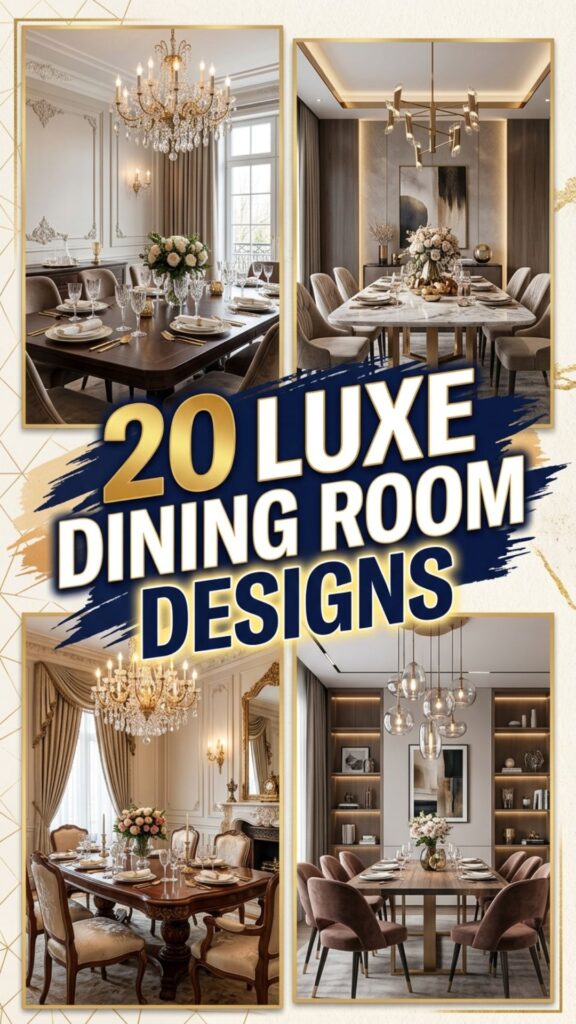
From moody, candlelit interiors to gallery-worthy tablescapes, these designs will show you exactly what separates a beautiful dining room from an unforgettable one.
1. Marble Dining Table With Gold-Tone Hardware
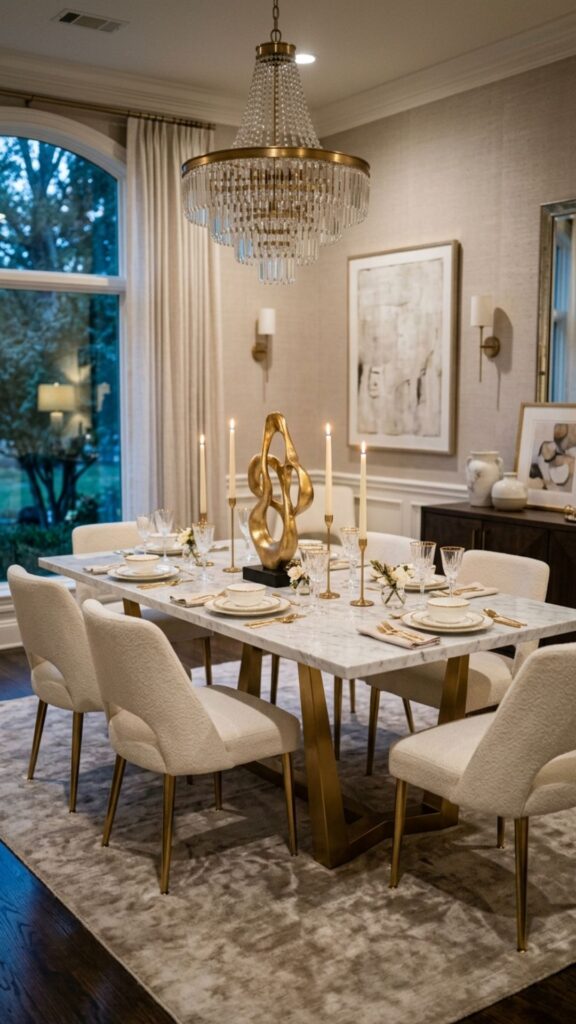
A marble dining table is one of the clearest signals of luxury in any home. The natural veining in white Carrara, deep Nero Marquina, or warm Calacatta marble gives every table a one-of-a-kind quality that no manufactured surface can replicate. Pair it with a pedestal base in brushed gold or aged brass for a finish that feels rich without being overdone.
Surround the table with fully upholstered dining chairs in a tone-on-tone palette — soft ivory, warm taupe, or dusty sage all work beautifully against marble. Keep the rest of the room relatively restrained so the table remains the clear focal point. One sculptural centerpiece and a pair of taper candles are all you need to complete the look.
2. Statement Chandelier as the Design Anchor
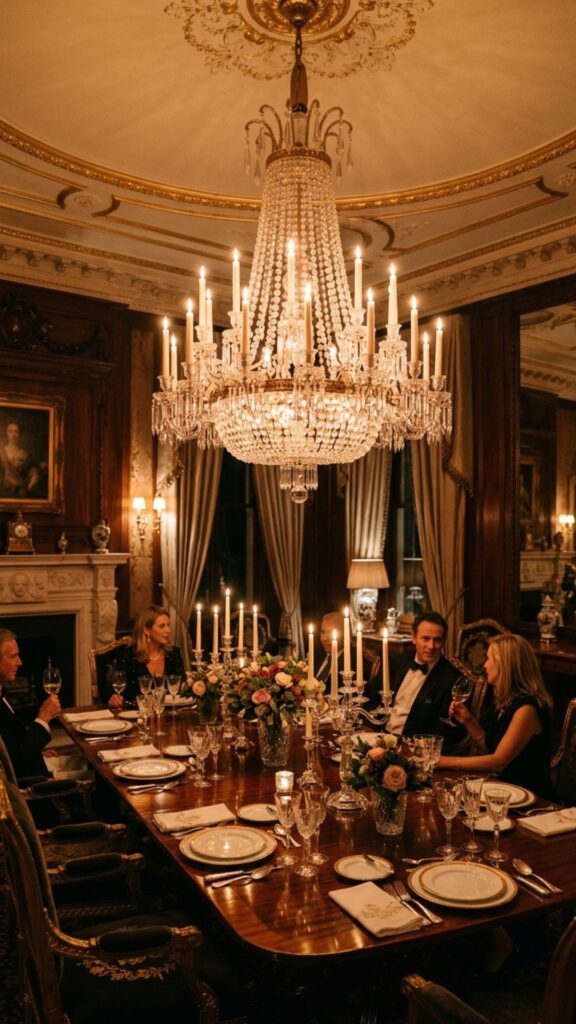
In a luxe dining room, the chandelier is rarely just a light fixture. It’s a piece of art. A large-scale chandelier — whether a cascading crystal drop, a sculptural matte black cluster, or an organic rattan sphere — sets the tone for the entire space before anyone even sits down.
Choose a fixture that’s slightly larger than you think you need. A common mistake is undersizing overhead lighting, which makes even a beautiful room feel underwhelming. Hang it low enough over the table (around 30–36 inches above the tabletop) to create intimacy, and always connect it to a dimmer switch so you control the mood completely.
3. Dark, Dramatic Wall Color With Warm Undertones
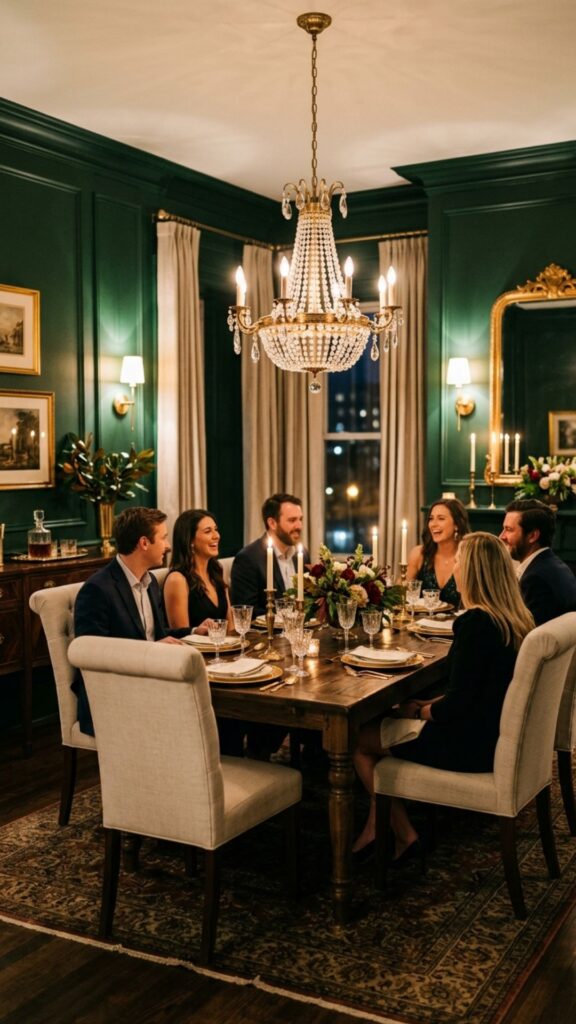
Deep wall colors have a transformative effect in dining rooms. A rich shade of hunter green, midnight navy, or charcoal with warm undertones instantly makes a space feel more intimate, deliberate, and visually sophisticated.
The key is pairing the dark walls with warm, layered lighting so the room glows rather than feels heavy. White trim and ceiling, metallic accents, and pale upholstery create beautiful contrast. This combination — dark walls, warm light, light-colored furniture — is one of the most reliable formulas in high-end interior design.
4. Upholstered Dining Chairs in a Jewel Tone
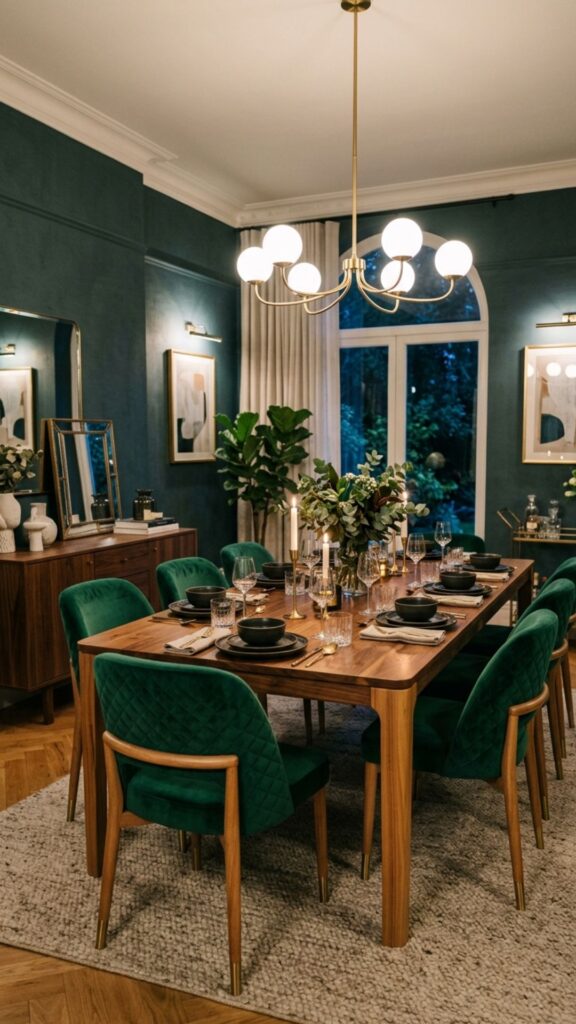
Switching out basic dining chairs for fully upholstered versions in a jewel tone is one of the most impactful upgrades you can make. Deep emerald, sapphire blue, and burgundy all bring richness and depth to a dining room without requiring any structural changes.
Look for chairs with a tight back, solid legs in a contrasting finish, and fabric that can handle real-life use — performance velvet, for example, gives you that lush look with considerably more durability. Mixing two upholstery tones — say, solid velvet seats with a patterned back panel — adds a tailored, designer quality to the space.
5. Layered Lighting for Depth and Atmosphere
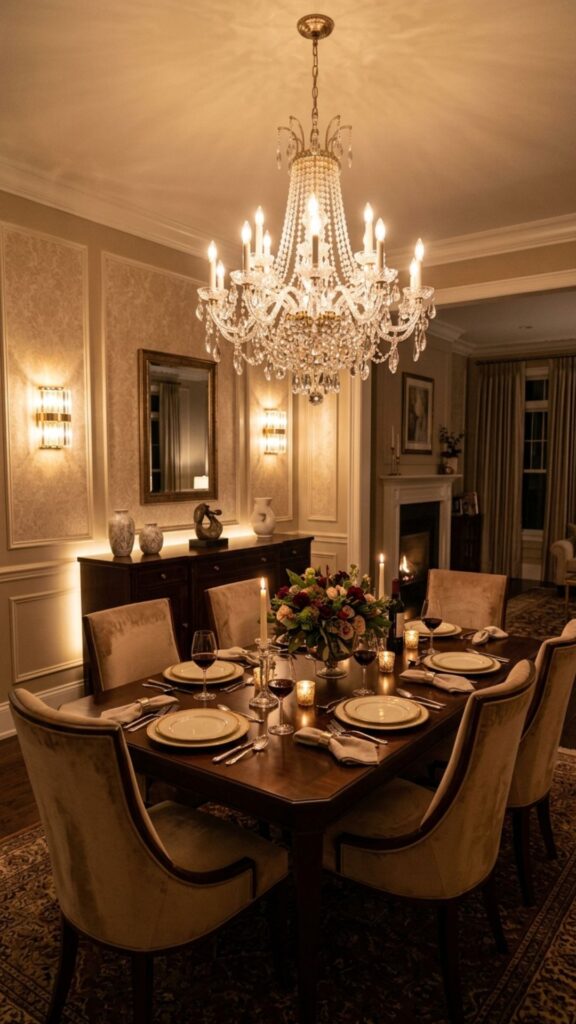
Truly luxurious dining rooms never rely on a single light source. Layering overhead lighting with wall sconces, candles, and even LED strip lighting under a buffet or console creates dimension that flat, top-down lighting simply can’t achieve.
Install wall sconces at eye level on either side of a mirror or artwork to flank the room with warm, ambient light. Use candles during dinner — even a few tea lights add a softness that no electric bulb fully replicates. When all your layers work together, the room shifts from functional to genuinely atmospheric.
6. Floor-to-Ceiling Drapery in a Luxe Fabric
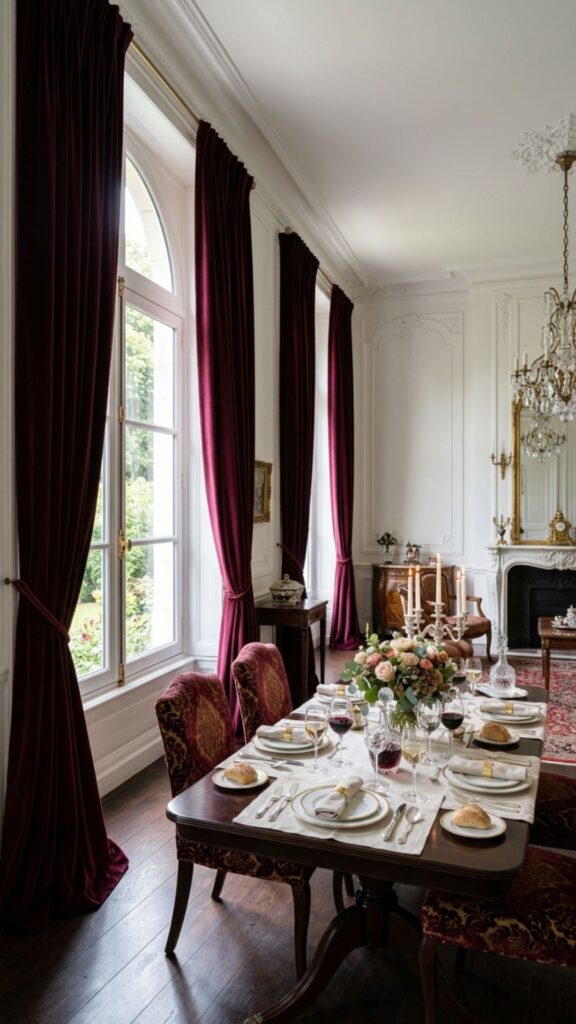
Long, full curtains that pool slightly on the floor signal refinement in a way that shorter window treatments never quite manage. Choose fabrics with natural weight and drape — linen, silk, velvet, or heavy cotton all hang beautifully and look intentional rather than decorative.
Mount the curtain rod as close to the ceiling as possible, even if your windows don’t reach that height. This elongates the walls visually and gives the room a more elevated, gallery-like quality. Neutral tones — cream, ivory, soft gray — work well in most dining rooms, but a rich jewel-toned curtain can be equally stunning against pale walls.
7. A Sculptural Sideboard or Credenza
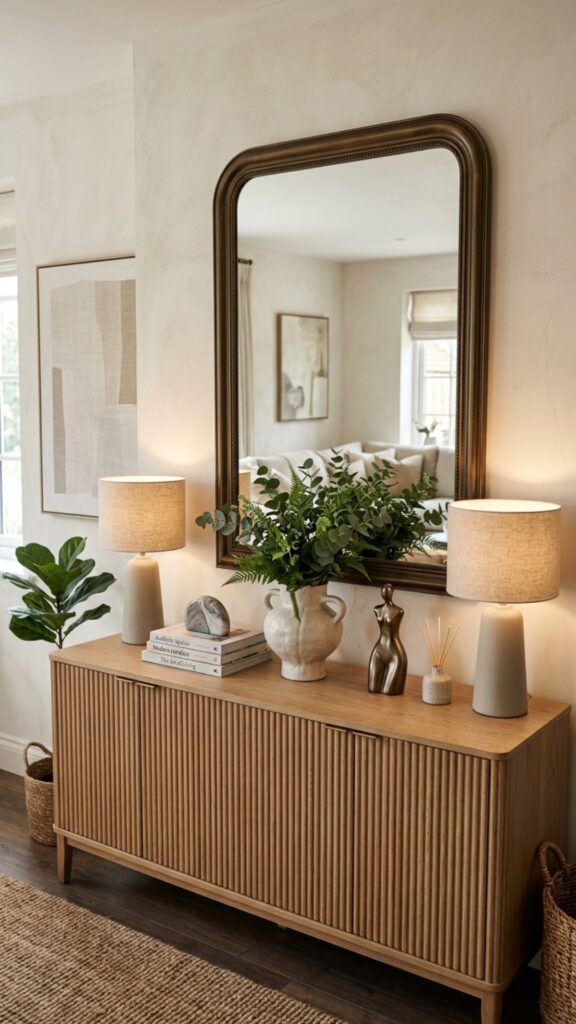
A well-chosen sideboard does double duty in a luxe dining room. It provides practical storage for linens, serving pieces, and dinnerware while also serving as a strong horizontal anchor on the longest wall. Look for pieces with interesting details — fluted fronts, cane insets, curved legs, or lacquered finishes.
Style the top of the sideboard thoughtfully: a large framed mirror or artwork above, a pair of table lamps for that warm layered lighting, and a tray with curated objects — a sculptural vase, a few books, a small plant. The goal is considered, not cluttered. Every item should feel chosen.
8. Large-Format Art as a Focal Wall
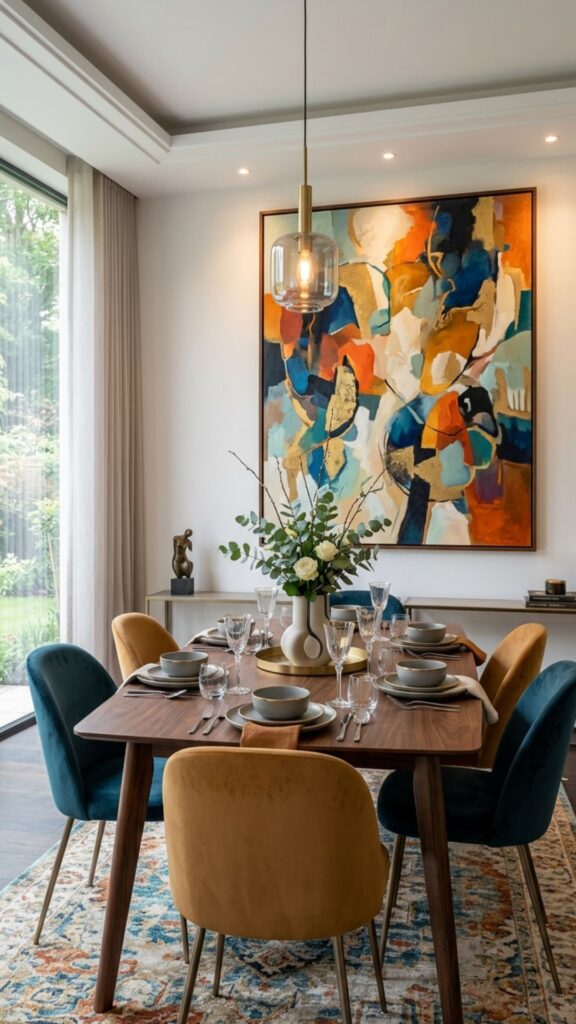
A single oversized piece of artwork on the wall behind the dining table creates a gallery-quality backdrop that elevates the entire room. You don’t need to spend a fortune — large-format prints, framed fabric panels, or even a tapestry can achieve the same dramatic effect as an original painting.
Choose art that has a strong composition and at least one color that pulls from elsewhere in the room to create visual cohesion. Hang it lower than you might expect — the center of the piece should sit roughly at seated eye level so it connects with the people in the room rather than floating above them.
9. Herringbone or Parquet Wood Flooring
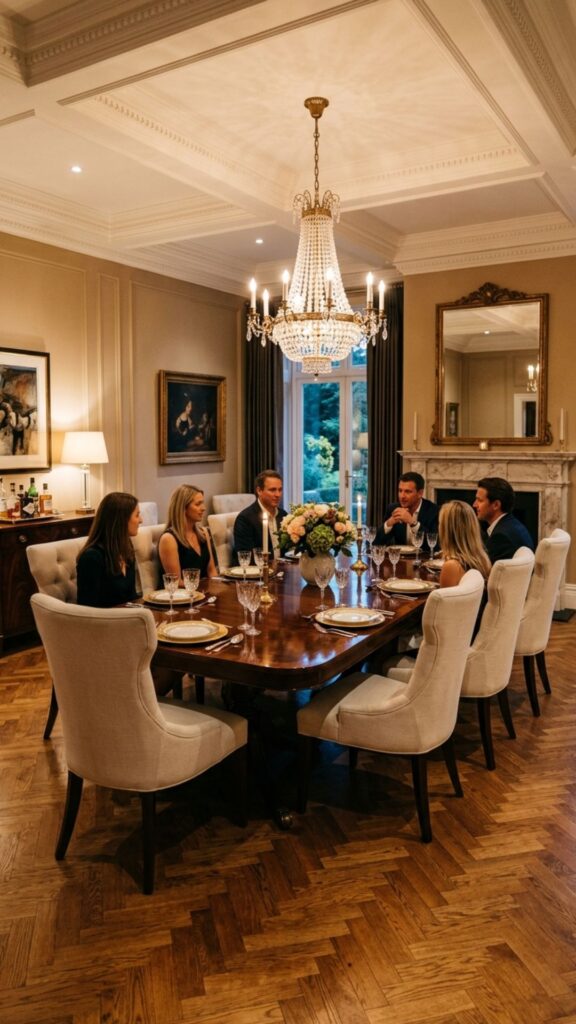
The floor is one of the most overlooked elements in dining room design, yet it has an enormous impact on the overall feel of the space. A herringbone or parquet wood floor instantly elevates a dining room, adding pattern and visual richness underfoot without requiring any additional decor.
Wide-plank herringbone in a warm medium oak or a deep walnut stain is a particularly effective choice. If you already have existing flooring, an oversized area rug in a subtle geometric or abstract pattern can achieve a similar sense of considered luxury. Just make sure the rug is large enough — all four chair legs should sit comfortably on it when pulled out from the table.
10. Built-In Shelving With Integrated Display Lighting
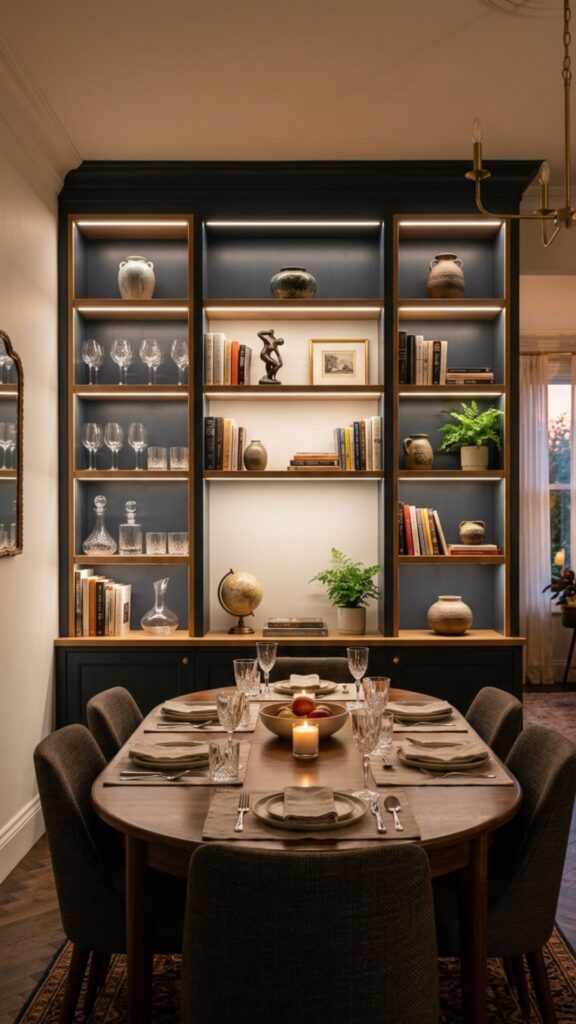
Built-in shelving flanking a fireplace or sideboard brings architectural permanence to a dining room. Painted in the same color as the walls for a seamless look, or in a contrasting shade for visual impact, built-ins signal that the room was genuinely designed — not just furnished.
Add integrated LED strip lighting inside the shelves to illuminate curated objects, glassware, and books. The soft internal glow adds another layer of warmth to the room and makes the shelves feel like a feature rather than just storage. Keep the styling deliberate — leave some negative space so the eye has room to rest.
11. A Round Dining Table for an Intimate Feel
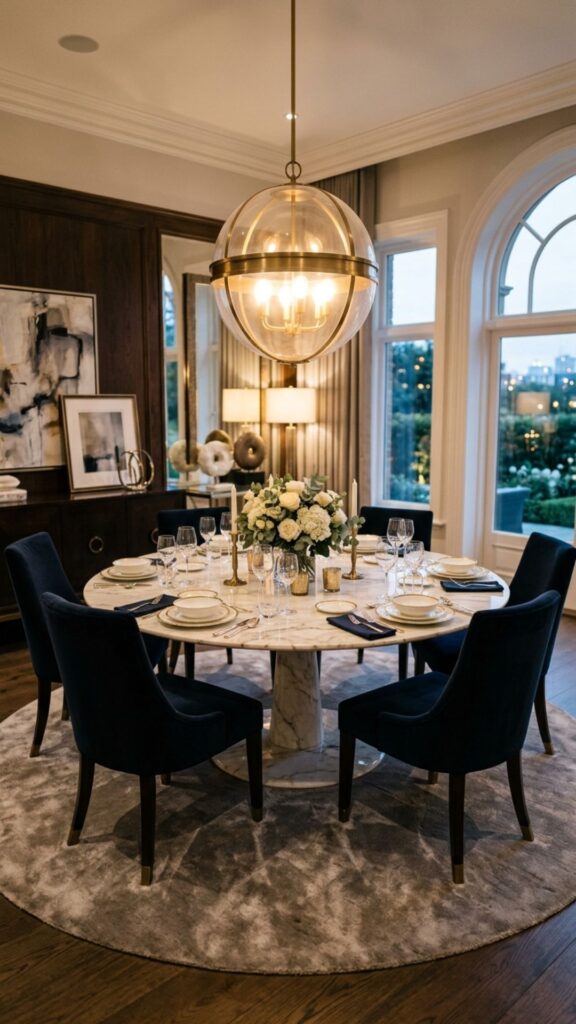
Round tables have a naturally democratic quality — everyone faces everyone else, which makes conversation flow more easily. In a luxe dining room context, a large round table in marble, lacquered wood, or smoked glass reads as both elegant and inviting.
Pair a round table with a circular or oval-shaped rug to reinforce the geometry and soften the floor space. An oversized pendant light or chandelier centered directly above amplifies the intentional symmetry. For seating, a mix of armchairs and armless chairs adds visual variety without disrupting the overall harmony.
12. Mirrored or Metallic Accent Wall
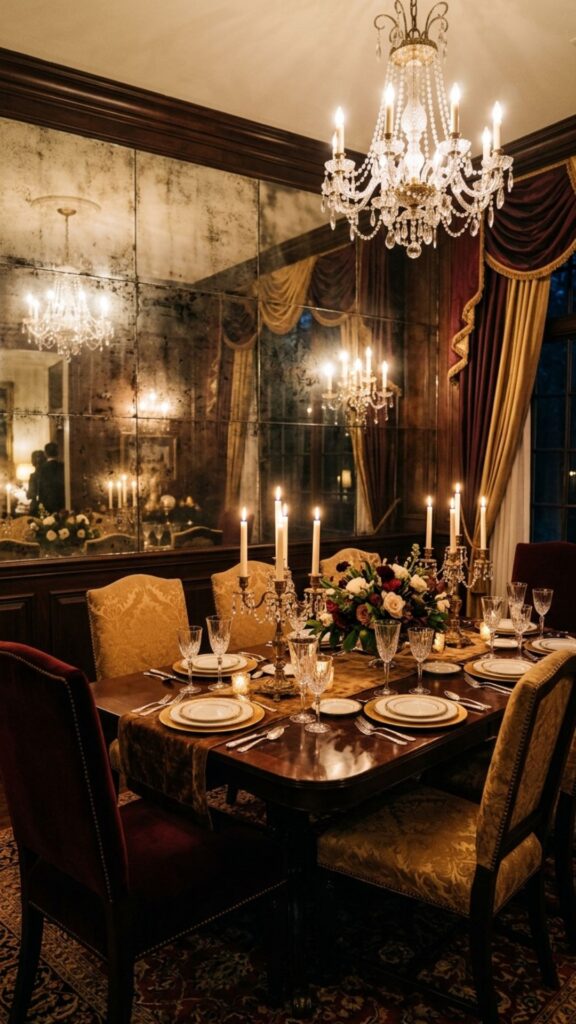
A mirrored accent wall or a wall clad in metallic wallpaper adds depth, light, and glamour to a dining room with minimal structural effort. Antique-style mirror panels — with slightly aged, non-perfect reflections — are especially effective because they add warmth rather than the clinical brightness of modern mirrors.
Metallic grasscloth or embossed wallpaper in gold, bronze, or pewter tones achieves a similar effect with more texture and subtlety. Either option amplifies candlelight and lamp glow beautifully, making the room feel larger and more layered. Keep surrounding finishes matte so the metallic element takes center stage.
13. Monochromatic Dining Room in Warm Neutral Tones
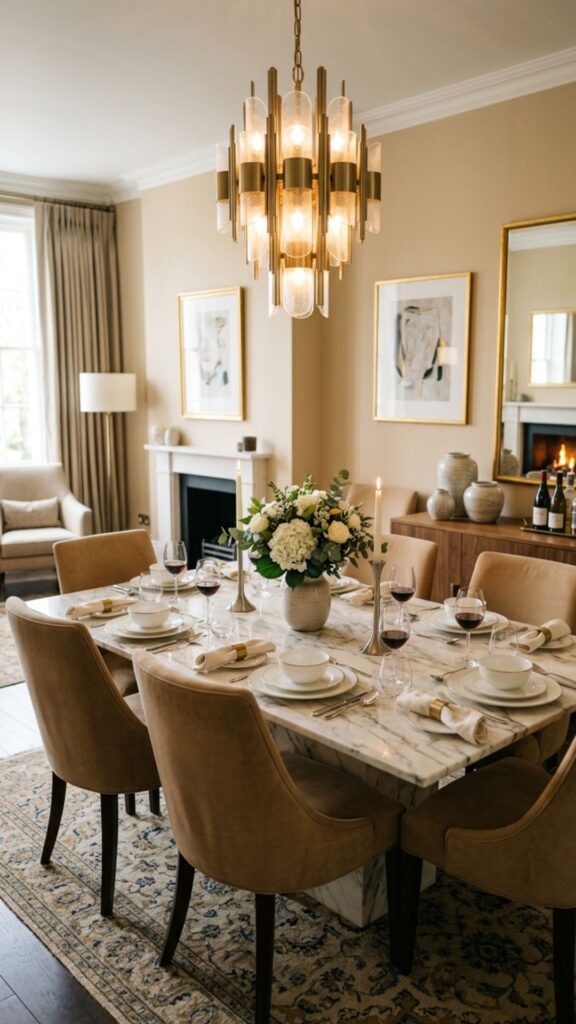
A fully monochromatic room done in warm neutrals — champagne, sand, warm white, soft camel — is quietly one of the most luxurious approaches to dining room design. The key is variation in texture: matte plaster walls, polished marble, brushed metal, woven linen, and glossy lacquer all in tones that are close but not identical.
This approach works because it removes visual competition. There’s nothing jarring to look at, so the quality of each individual element becomes the focus. Spend more on the pieces in this kind of room — the simplicity will showcase them beautifully.
14. Banquette Seating With Bespoke Upholstery
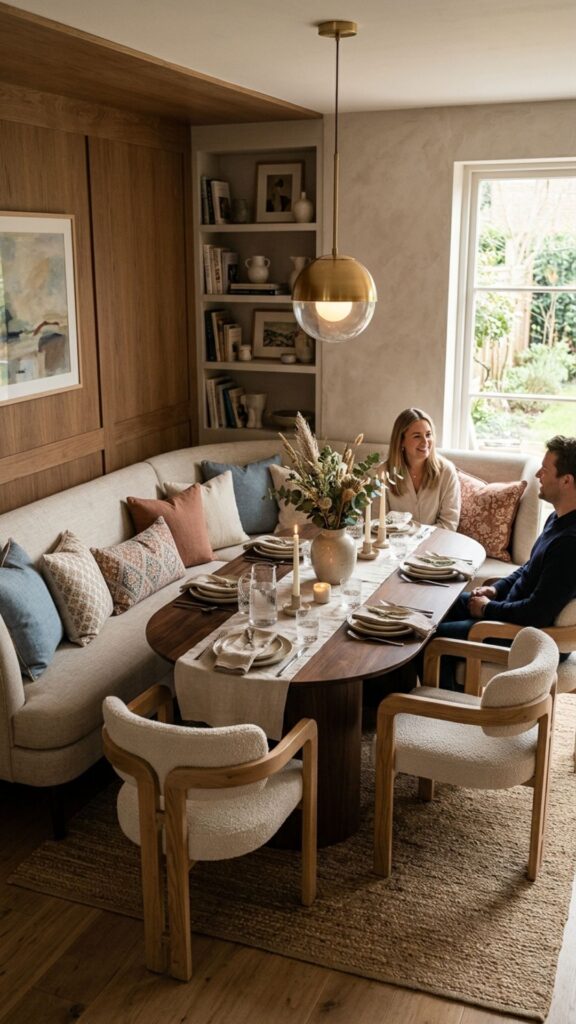
A built-in banquette transforms a corner or entire wall of a dining room into something that feels custom-designed and thoughtfully considered. Upholstered in a high-quality fabric — striped silk, bouclé, or a geometric jacquard — a banquette brings both comfort and visual softness to the space.
Add button-tufting or knife-edge cushions for a more tailored look. A curved banquette is particularly luxurious, hugging the table in a way that feels intimate and a little theatrical. Pair it with loose armchairs on the opposite side for a mix of seating styles that looks effortlessly layered.
15. Open Wine Display or Integrated Bar Cabinet
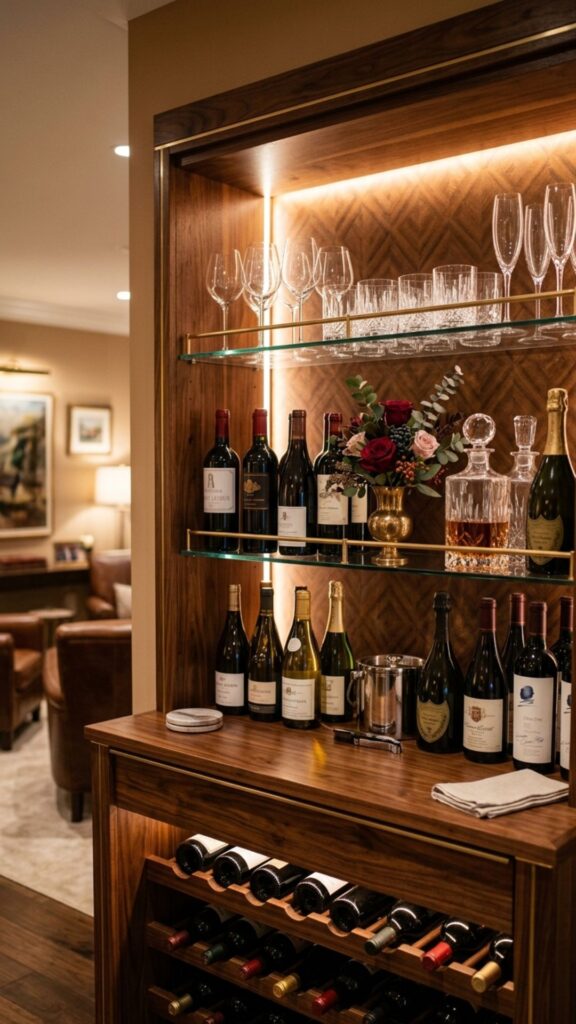
Nothing says effortless entertaining quite like an integrated bar area or a beautiful open wine display in the dining room. A dedicated section of shelving for wine bottles, a built-in wine fridge with a wood-paneled front, or a freestanding bar cabinet with mirrored interior adds function and a certain confident hospitality to the space.
Choose a bar cabinet with interior lighting that glows when the doors are open, showing off your glassware and bottles. Keep the styling minimal — a few crystal decanters, well-organized glassware, and a small vase of flowers or greenery. The effect is sophisticated and genuinely useful.
16. Textured Plaster or Limewash Walls
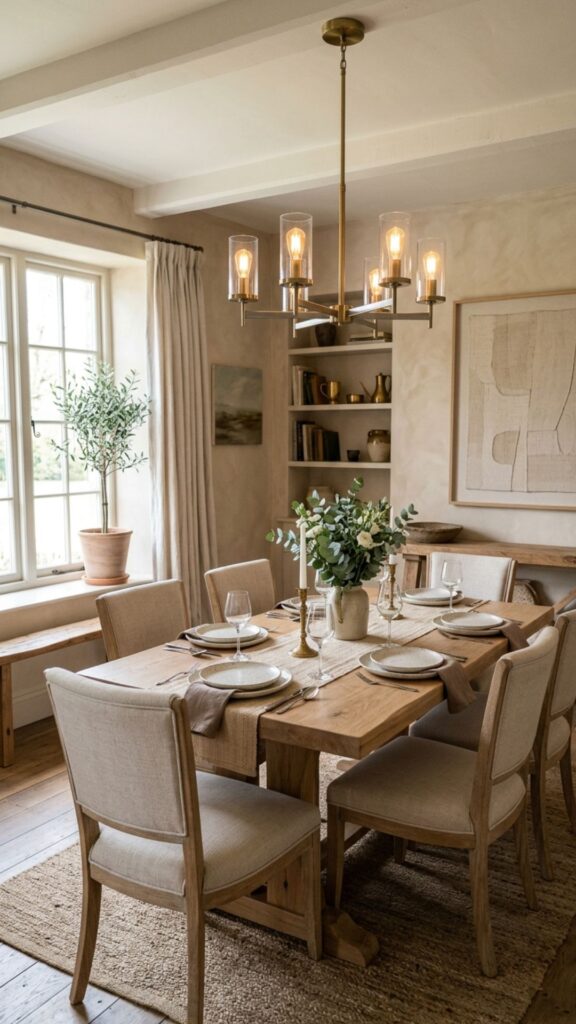
Smooth, painted drywall is the baseline. Textured plaster or limewash paint is the upgrade that changes a room’s entire character. These wall treatments have natural depth and irregularity that catch light differently throughout the day, making the room feel alive and carefully crafted.
Limewash in warm white, taupe, or dusty terracotta is particularly beautiful in dining rooms with natural light. The chalky, aged quality pairs well with natural wood, linen, and brass. It’s a finish that looks expensive because it genuinely requires skill to apply — and that effort shows.
17. Statement Table Styling and Formal Table Setting
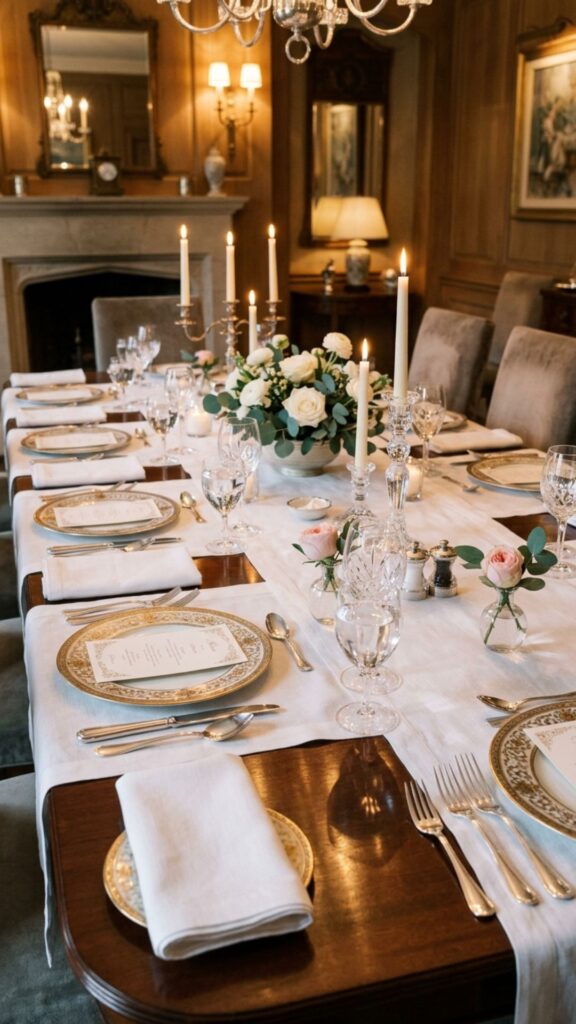
A luxe dining room earns its reputation partly through the way the table is dressed. Invest in quality linens — a linen or cotton tablecloth in a subtle texture, cloth napkins folded simply, and placemats in a natural material like leather or woven rattan.
Layer the place setting with intention: a charger plate, dinner plate, and salad plate stacked cleanly; polished flatware laid precisely; and a simple stem or bud vase at each setting. You don’t need to do this every day, but having the pieces to create this look when it matters is part of what makes a dining room genuinely luxurious.
18. Coffered or Tray Ceiling Detail
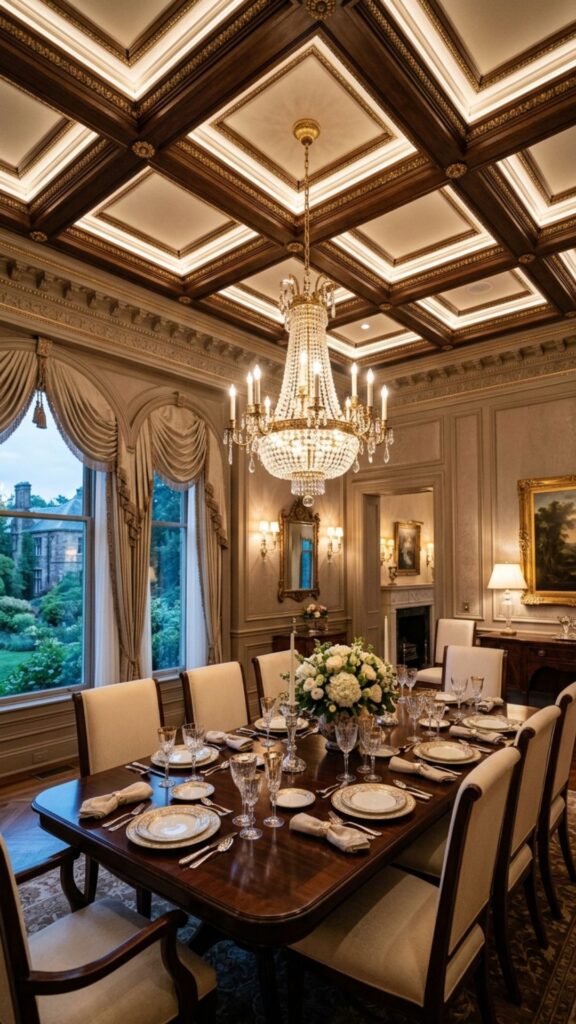
Ceiling detail is one of the most underused tools in residential dining room design. A coffered ceiling — with a grid of recessed panels — or a tray ceiling with a painted or metallic inset adds architectural gravitas that makes even an ordinary room feel like it was designed by a professional.
If a full coffered ceiling isn’t feasible, add a simple tray ceiling with a contrasting paint color or wallpaper inset, and run crown molding around the perimeter. Recess lighting into the tray for a clean, layered effect. The ceiling becomes a fifth wall, and in a luxe dining room, every surface counts.
19. Sculptural Dining Chairs as Art Objects
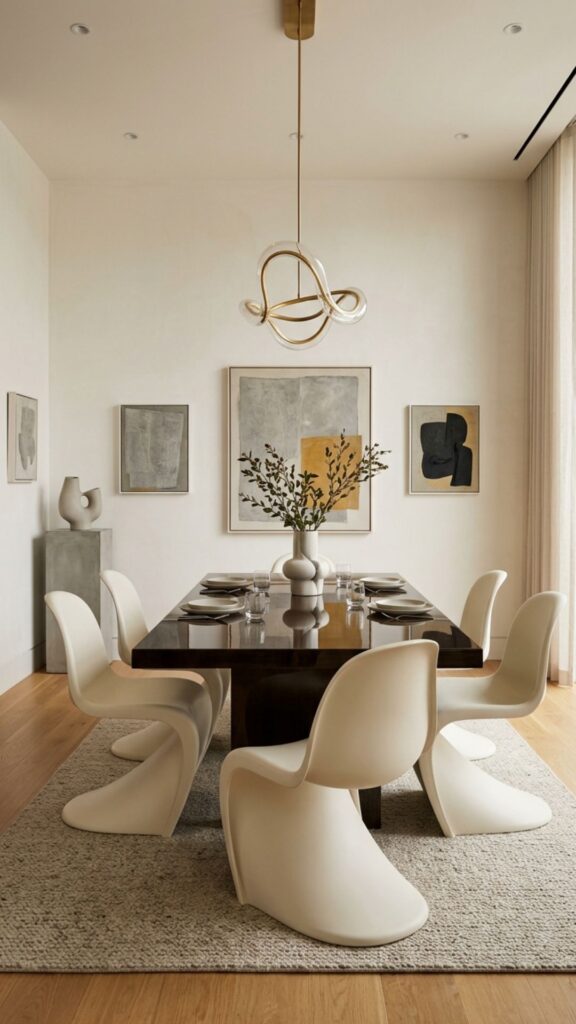
Sometimes the chairs themselves are the statement. Sculptural dining chairs — think curved Tulip-style silhouettes, wishbone forms in bent wood, or bold geometric shapes in molded plastic or resin — bring a gallery quality to the dining room that more traditional seating simply doesn’t offer.
Mix a sculptural chair at the head of the table with simpler upholstered chairs along the sides to create visual interest without overwhelming the space. The sculptural piece becomes a conversation starter and signals that the room was designed with real intention. Look for pieces by well-regarded designers — even a single iconic chair can anchor an entire room.
20. Cohesive Dining Room With a Curated Color Story
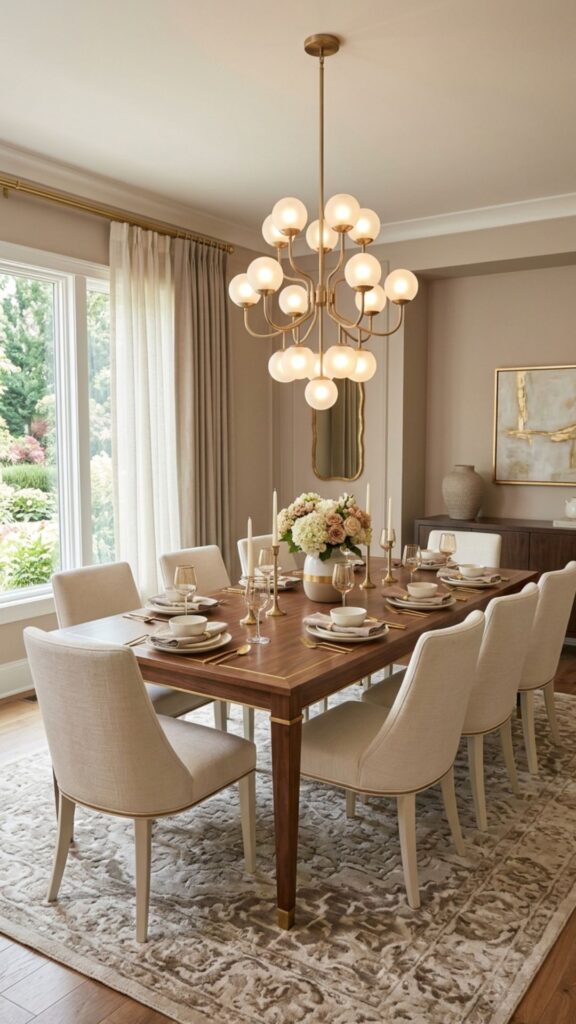
The most enduring luxe dining rooms all share one quality: cohesion. Every element — wall color, flooring, furniture, lighting, textiles, and accessories — feels like it belongs together. Not because everything matches, but because someone chose each piece with the overall picture in mind.
Build your room around a defined color story: three to four tones that feel connected, across a range of tones from light to dark. Layer textures within that palette to create depth. Step back regularly as you design and ask whether each piece adds to the story or distracts from it. That kind of editing is, ultimately, what makes a dining room feel truly luxurious.
Conclusion
A dining room that feels elegant and expensive isn’t built in a single shopping trip. It’s assembled thoughtfully — one well-chosen piece at a time. These 20 dining room designs luxe in feel and execution show that luxury is less about price tags and more about intention, proportion, and care.
Pick the concept that speaks to your personal style and the space you have. Start with the element that will make the biggest visual impact — often the lighting, the wall color, or the table — and build outward from there. Small changes, made with confidence and consistency, are what transform a dining room from ordinary to genuinely memorable.
Choose one idea from this list today, gather your inspiration, and take the first step toward a dining room that truly reflects your taste.
What makes a dining room look luxurious without spending a lot of money?
Focus on the details that have the highest visual impact for the lowest cost: paint color, lighting, and table styling. A deep wall color, a dimmer-controlled chandelier, and a properly set table with quality linens will make almost any dining room feel significantly more elevated.
What is the best dining table material for a luxe look?
Marble, solid wood, and smoked glass are the top choices for a high-end feel. Marble has the most visual drama, solid wood brings warmth and permanence, and smoked glass creates a modern, sophisticated effect. All three look expensive and hold up well with proper care.
How do I choose the right size chandelier for my dining room?
Add the room’s length and width in feet, then convert that number to inches — that’s roughly the right diameter for your chandelier. For example, a 12 x 14-foot room suits a chandelier around 26 inches wide. When in doubt, go slightly larger rather than smaller.
Can a small dining room still feel luxurious?
Absolutely. In fact, a small room can feel more intimate and intentional than a large one. Prioritize one strong focal point, keep the furniture scaled appropriately, use mirrors to expand the space visually, and layer your lighting carefully. Restraint and quality trump size every time.
What flooring works best in a luxe dining room?
Hardwood in herringbone or wide-plank formats is the gold standard for luxury dining rooms. Polished stone tile and large-format porcelain are also excellent choices, particularly in warmer climates. Avoid carpet, which absorbs spills and ages quickly in high-use dining spaces.