Dark floors have a way of making a dining room feel instantly elevated. There’s something about a rich, deep-toned floor that pulls a room together — grounding the furniture, sharpening the contrast, and adding a layer of drama that lighter floors simply can’t match.

If you’ve been staring at your dated light laminate wondering why your dining space feels flat, the answer might be hiding beneath your feet.

In this guide, you’ll find 20 of the best dining room dark floor ideas to help you create a space that looks luxurious, feels intentional, and works beautifully with the rest of your home. Whether you’re planning a full renovation or just want inspiration before choosing your next flooring material, these ideas cover everything from classic hardwood to bold concrete finishes.
1. Ebony Hardwood for Timeless Elegance
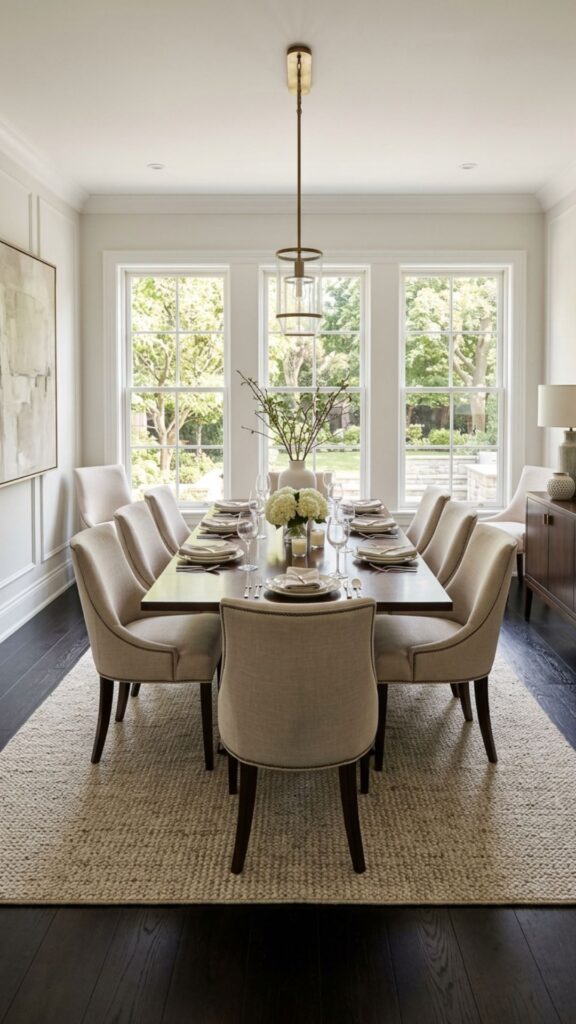
Ebony-stained hardwood is the gold standard for a dinning room dark floor. The deep, near-black tone creates an immediate sense of refinement that pairs perfectly with statement dining tables and upholstered chairs. It photographs beautifully and holds its appeal across multiple design trends.
To keep the look balanced, pair ebony floors with lighter wall tones — soft whites, warm creams, or pale grays work especially well. Add a large area rug in a neutral pattern to define the dining zone and prevent the space from feeling too heavy.
2. Walnut Wood Tones for Warm Luxury
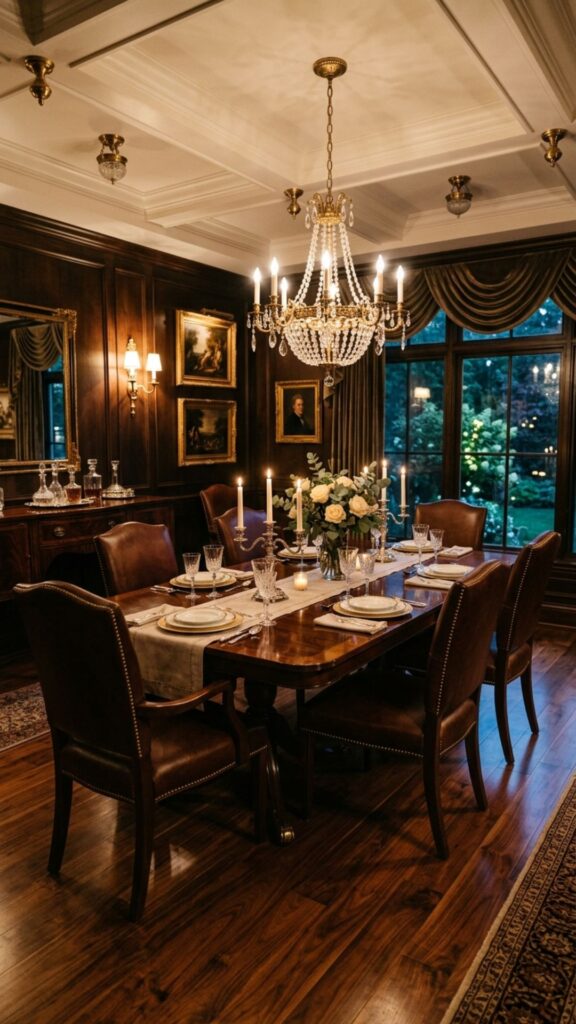
Walnut flooring strikes the sweet spot between dark and warm. Its natural reddish-brown undertones add depth without the starkness of a jet-black finish, making it a favorite for homeowners who want luxury without severity.
This tone pairs naturally with brass or gold light fixtures and leather seating, creating a warm, layered dining room that feels both sophisticated and inviting. Walnut is also incredibly durable, so it holds up well in a high-traffic dining area.
3. Dark Slate Tile for Industrial Chic
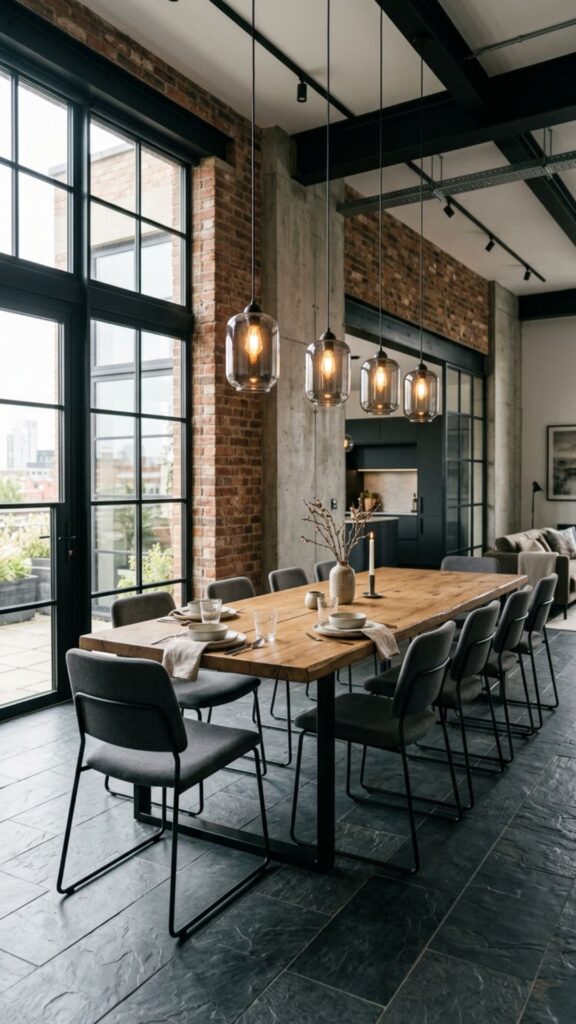
Slate tile brings an organic texture to the dinning room dark floor that wood simply can’t replicate. Its natural variation in color — ranging from charcoal to deep gray-green — makes each floor unique and visually interesting underfoot.
Slate works especially well in open-plan spaces where the dining area flows into a kitchen. It’s easy to clean, handles spills without complaint, and gives the room an upscale, almost boutique-hotel quality when paired with pendant lighting and minimalist furniture.
4. Charcoal Concrete Floors for Modern Drama
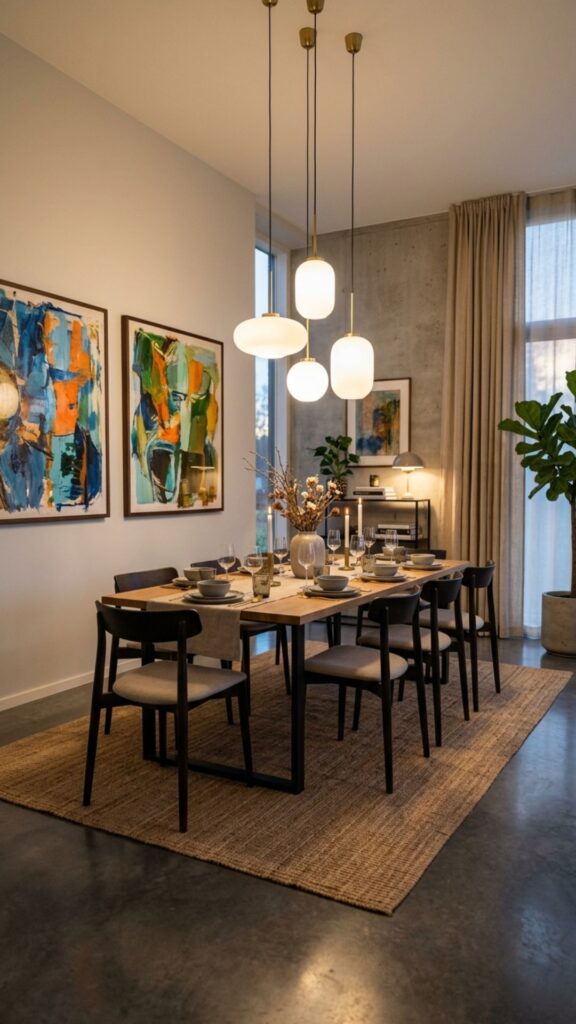
Polished or microcement concrete in charcoal tones has become a top choice in contemporary dining room design. The seamless, matte finish creates a sleek backdrop that lets bold furniture pieces and colorful art take center stage.
One common concern with concrete is that it can feel cold — both literally and visually. Counter this by layering in natural textiles like a jute rug, linen curtains, and plenty of warm lighting to keep the atmosphere comfortable and inviting.
5. Dark Oak Engineered Flooring for Practicality
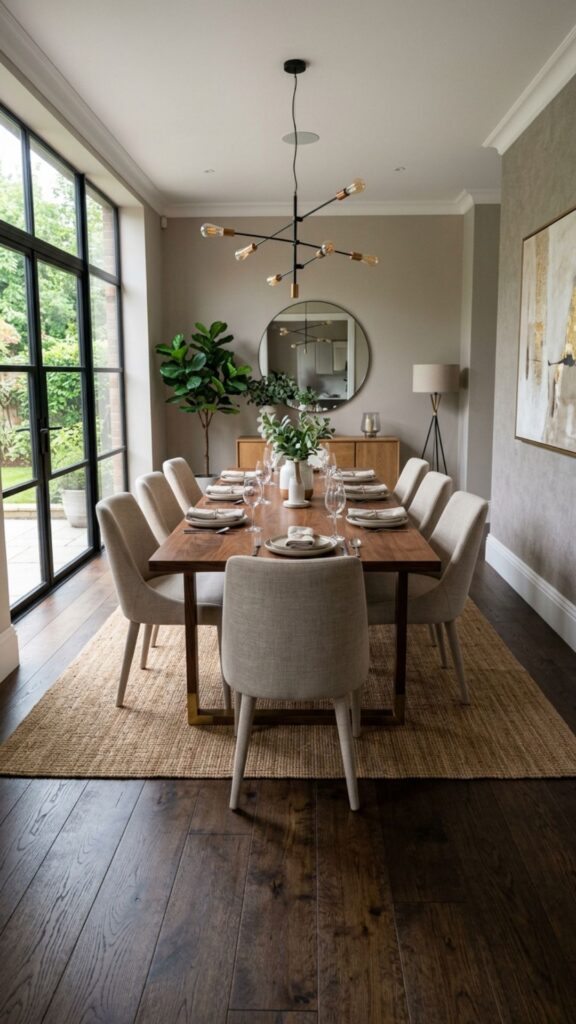
If solid hardwood is outside your budget, dark oak engineered flooring is a smart and durable alternative. It delivers the same rich appearance as solid wood but with better resistance to humidity — important in a dining room where temperature changes and moisture are common.
Choose a wide-plank format to make the floor feel more substantial and premium. The broader boards showcase the grain more dramatically and give the room a grander sense of scale.
6. Herringbone Pattern in Dark Stain for Visual Interest
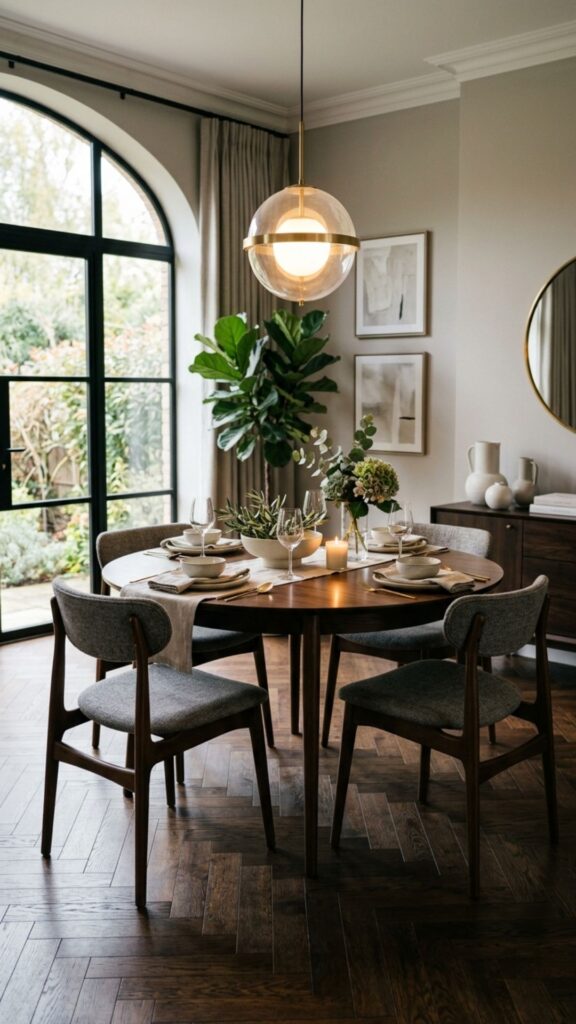
A herringbone lay pattern transforms a standard dark floor into a true design feature. The zigzag arrangement adds movement and depth, making the floor itself a conversation starter even before guests notice the rest of your décor.
This pattern works particularly well with mid-century or transitional dining room styles. Pair it with a round dining table to soften the geometry, and use simple, streamlined furniture that doesn’t compete with the floor’s strong visual energy.
7. Deep Espresso Floors with White Walls
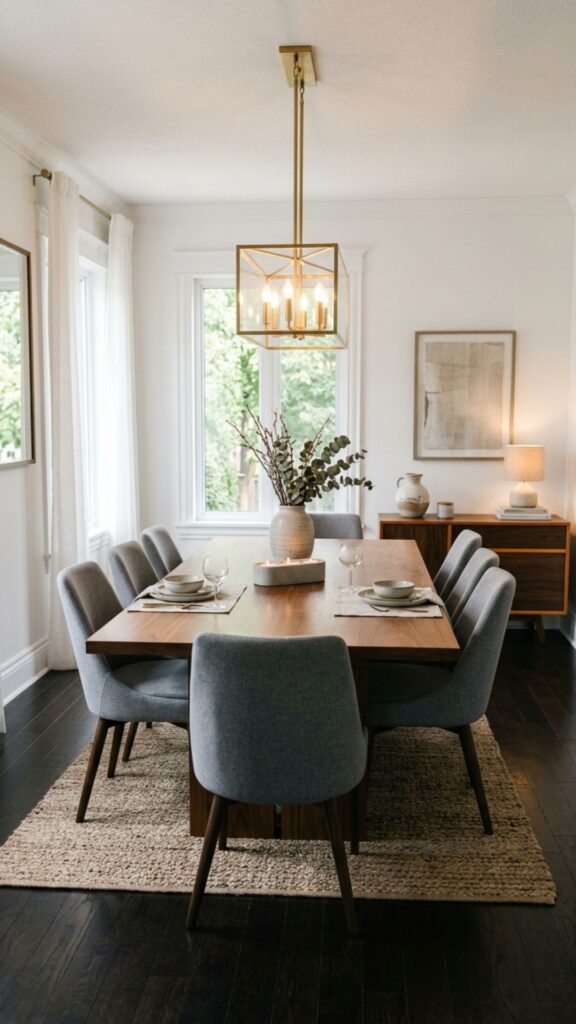
The contrast between espresso-dark floors and crisp white walls is one of the most reliable combinations in interior design. It’s clean, bold, and undeniably chic — a look that shows up in luxury showrooms and high-end homes alike.
Keep the dining room furniture in the mid-tones — think warm wood chairs or gray upholstered seating — to bridge the gap between floor and wall. Avoid going too dark everywhere, as you want the contrast to remain the focal point.
8. Black Marble Tile for Opulent Grandeur
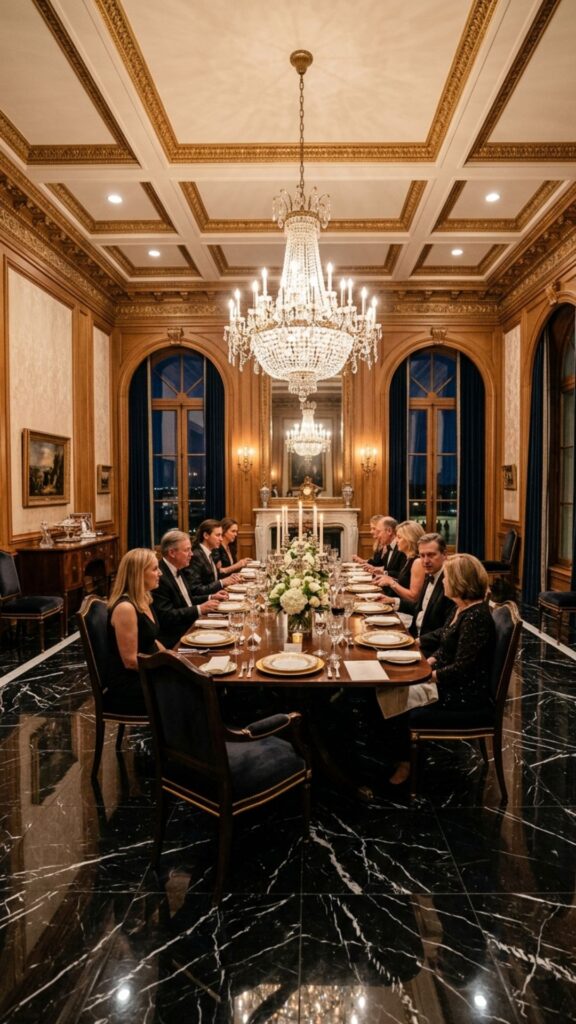
Few materials say “luxury” as loudly as black marble. The natural veining in white or gold runs through the dark base like brushstrokes on a canvas, making each tile completely one of a kind.
Black marble works best in formal dining rooms with high ceilings and elegant fixtures. Keep grout lines tight and the surface well-sealed to maintain that polished, high-end look over time. A chandelier overhead will make the floor shimmer beautifully during dinner.
9. Smoke-Gray Luxury Vinyl Plank for Budget Luxury
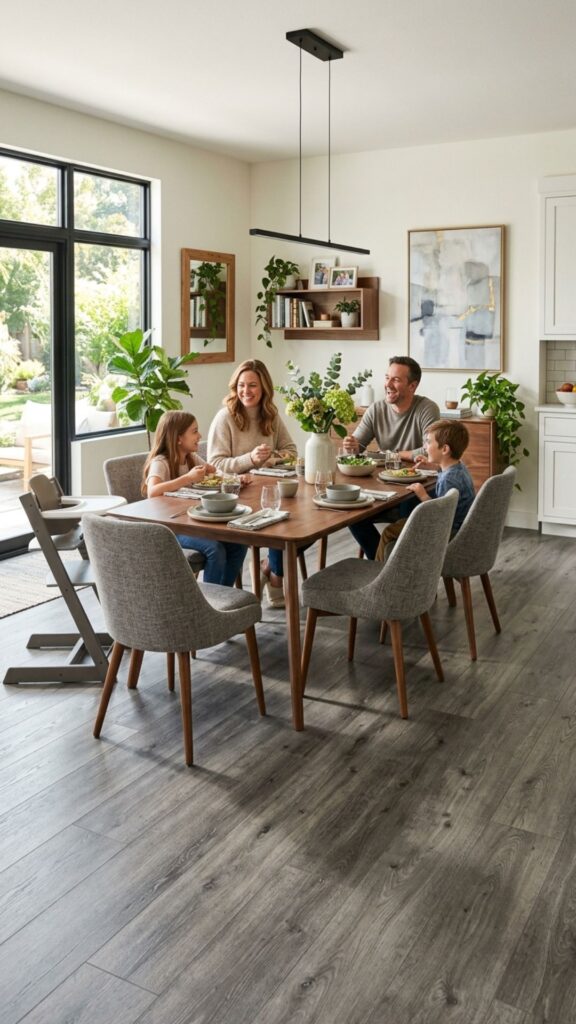
Luxury vinyl plank (LVP) in smoke-gray or dark ash tones has made significant strides in realism and quality. Today’s premium LVP can be nearly indistinguishable from real hardwood — especially once it’s installed and your furniture is in place.
It’s also scratch-resistant and 100% waterproof, which makes it a practical choice for households with kids or pets. You get the dinning room dark floor aesthetic without the anxiety of protecting delicate real wood.
10. Chevron Pattern for Artisanal Flair
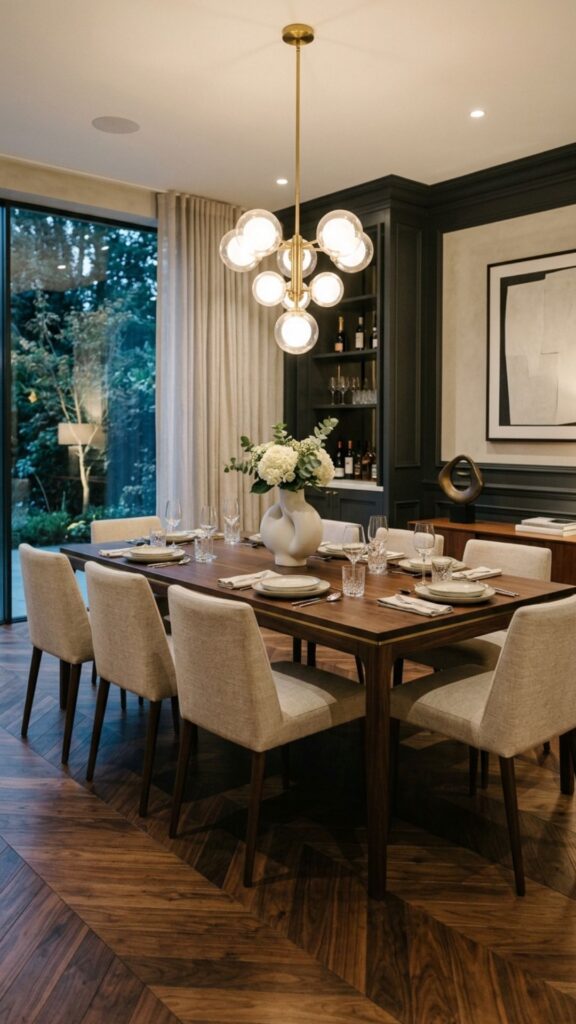
Similar to herringbone but with a more directional flow, the chevron pattern creates a bold V-shape that draws the eye forward and gives the floor a sense of motion. It’s a great choice if you want a floor that feels handcrafted and high-end.
Use it in darker walnut or ebony stains to amplify the luxury effect. The pattern does a lot of the design work for you, so keep surrounding elements relatively restrained — simple dining chairs, minimal wall décor, and clean-lined cabinetry if your dining room adjoins a kitchen.
11. Dark Bamboo Flooring for Eco-Conscious Luxury
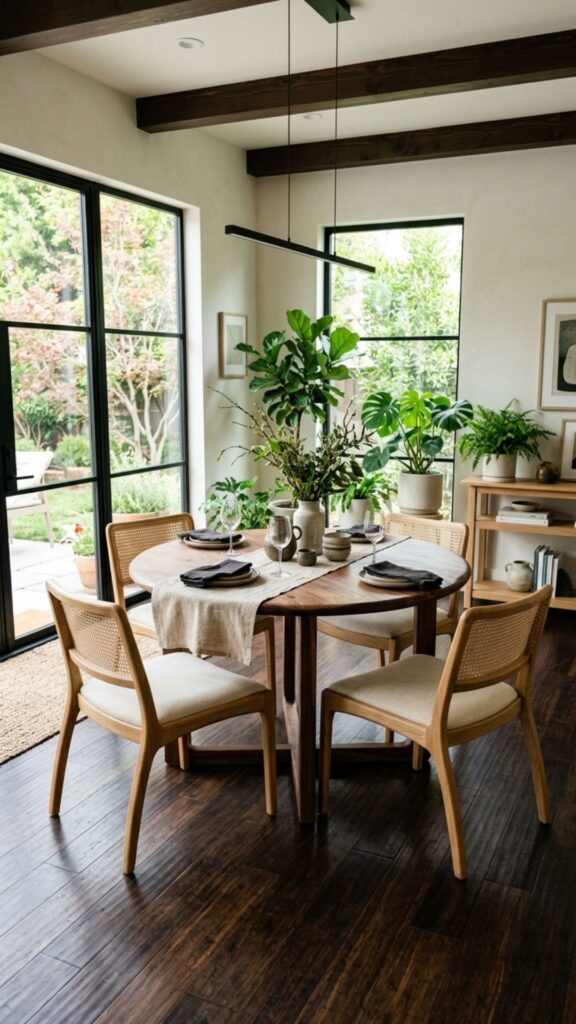
Bamboo flooring in a carbonized or strand-woven dark finish offers a sustainable alternative to traditional hardwood without sacrificing style. The compressed strand format is actually harder than most hardwoods, making it highly resistant to dents and scratches.
This option appeals to homeowners who care about sustainability without wanting their dining room to feel like it belongs in a cabin. Pair it with natural linen textiles, potted greenery, and organic-shaped furniture for a grounded, contemporary look.
12. Dark Porcelain Tile with Wood-Look Finish
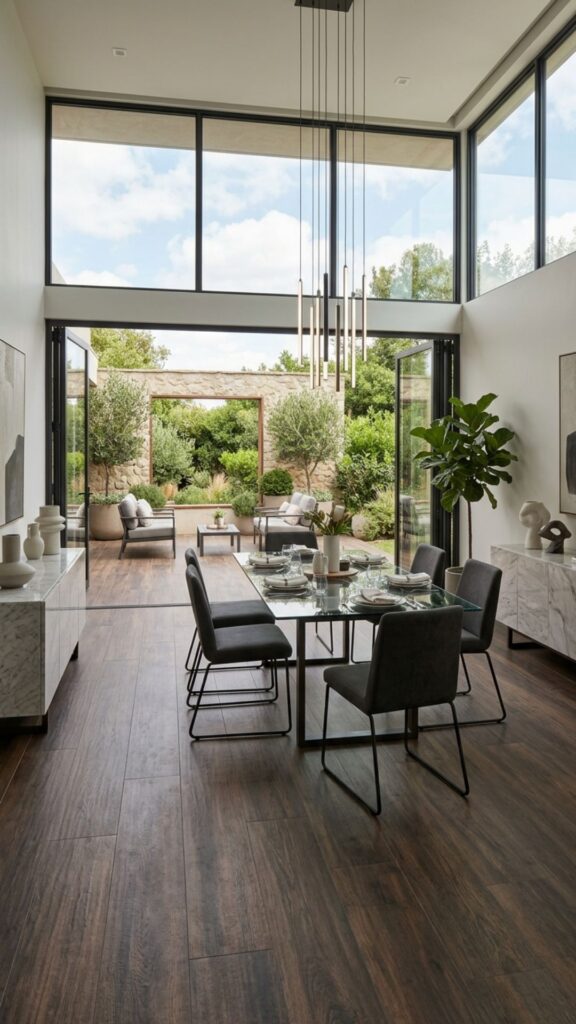
Technology has made wood-look porcelain tile incredibly convincing. Choose a dark walnut or mahogany-print tile in a large format, and you get the beauty of a dinning room dark floor combined with the near-indestructible nature of porcelain.
This is ideal for dining spaces that connect to outdoor areas or that experience high moisture. The tiles won’t warp, fade, or dent, and the grout — especially when color-matched to the tile — nearly disappears, leaving a seamless, luxurious surface.
13. Fumed Oak for Subtle Sophistication
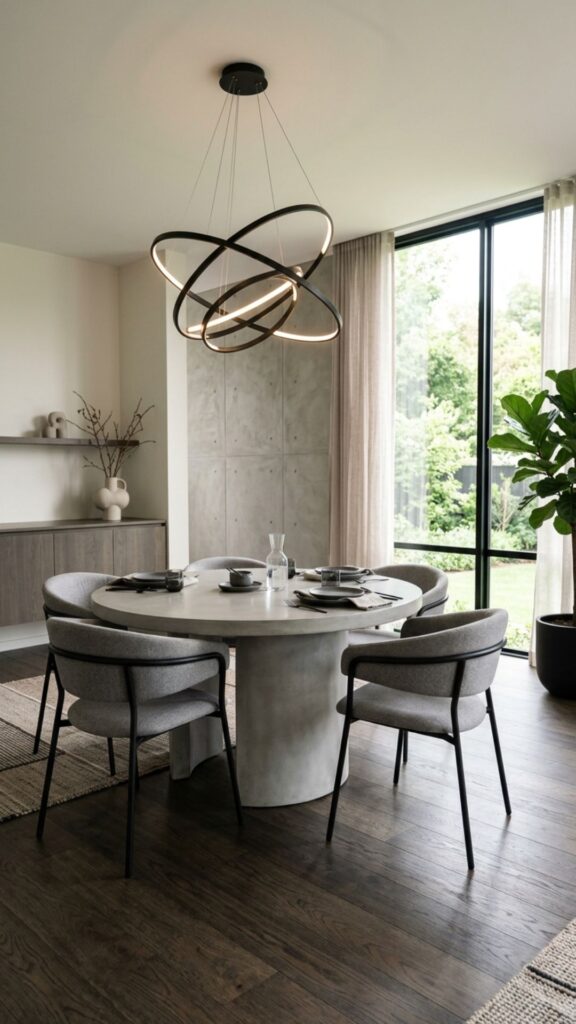
Fumed or smoked oak undergoes a chemical process that darkens the wood naturally, producing a deep, cool-gray tone with incredible grain definition. It’s less uniform than stained wood, which gives each floor a unique, artisanal character.
This flooring choice suits Scandinavian, Japanese minimalist, and contemporary dining rooms particularly well. The cool tone pairs beautifully with matte black hardware, concrete accents, and organic shapes.
14. Reclaimed Dark Wood for Character-Rich Interiors
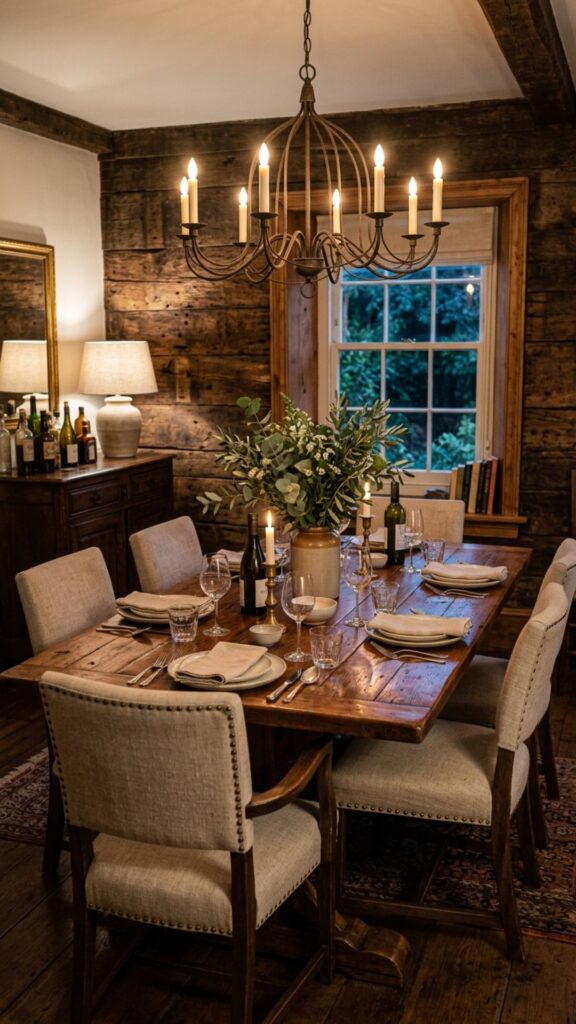
Reclaimed wood flooring brings history and soul into your dining room. The aged knots, nail holes, and natural variations in weathered planks tell a story that new flooring simply can’t fake.
Go for wider, rougher-textured planks in dark tones to maximize the visual impact. Balance the rustic quality of the floor with polished furniture and elevated accessories — the contrast between rough and refined is what makes this look genuinely luxurious.
15. Dark Parquet for Classic Grandeur
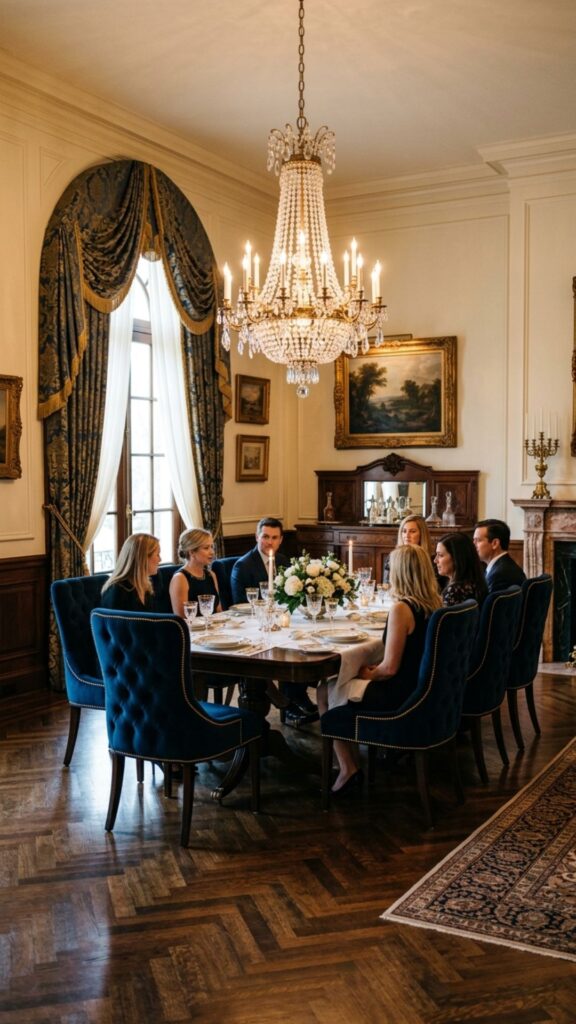
Parquet flooring has been a hallmark of formal European interiors for centuries, and it still delivers that sense of architectural significance today. Choose a dark finish — deep mahogany or rich chocolate tones work well — for a floor that looks genuinely built-in and intentional.
A parquet dark floor elevates even a modestly sized dining room. It works best with traditional or transitional design styles and pairs naturally with tufted chairs, crystal chandeliers, and layered window treatments.
16. Resin Floors in Deep Graphite
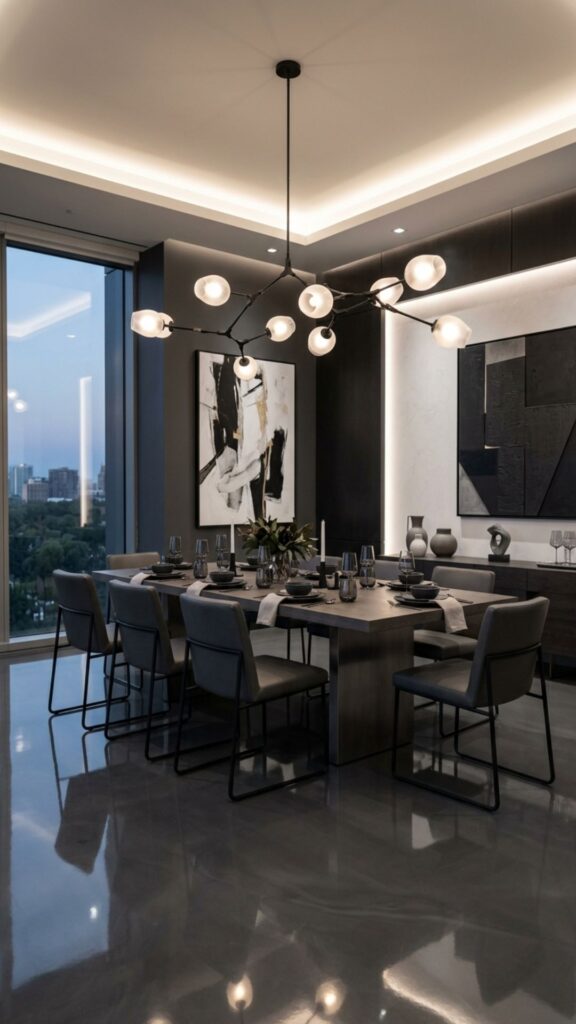
Poured resin floors in graphite or near-black tones are increasingly popular in contemporary and ultra-modern dining rooms. The mirror-like surface reflects light dramatically, making the space feel larger and more polished.
The seamless quality of resin eliminates grout lines and transitions, lending the room a gallery-like quality. Just be aware that high-gloss resin can show dust and footprints more readily — regular maintenance is key to keeping it looking its best.
17. Dark Limestone for Understated Luxury
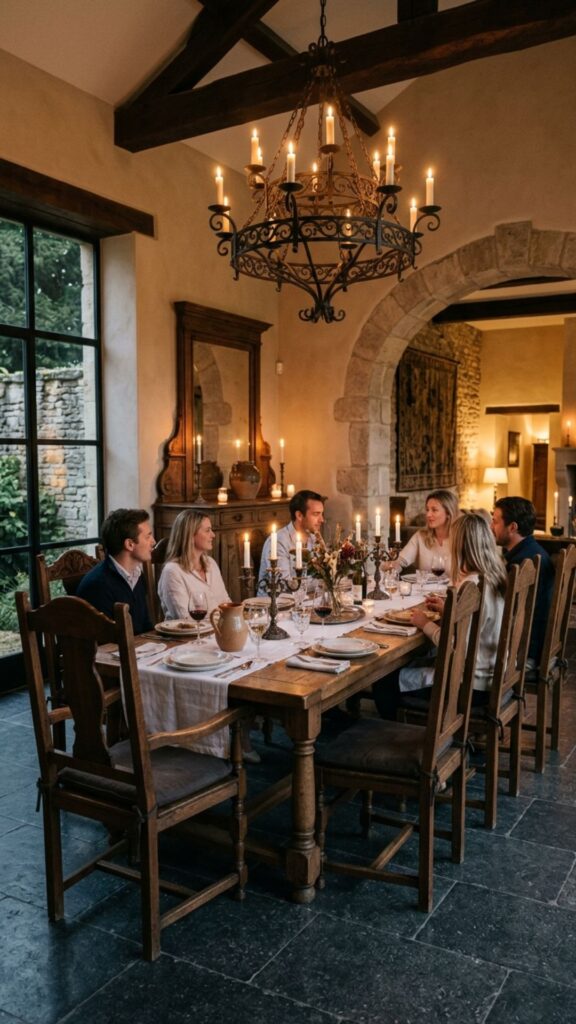
Honed limestone in a deep charcoal or dark gray tone offers a quiet, sophisticated beauty. Unlike marble, it doesn’t shout — it whispers luxury through its subtle texture and natural matte finish.
Limestone suits formal dining rooms with a European or Mediterranean influence. Pair it with iron accents, aged wood furniture, and ambient candlelight to bring out the stone’s natural warmth and depth.
18. Two-Tone Dark Flooring with Border Inlay
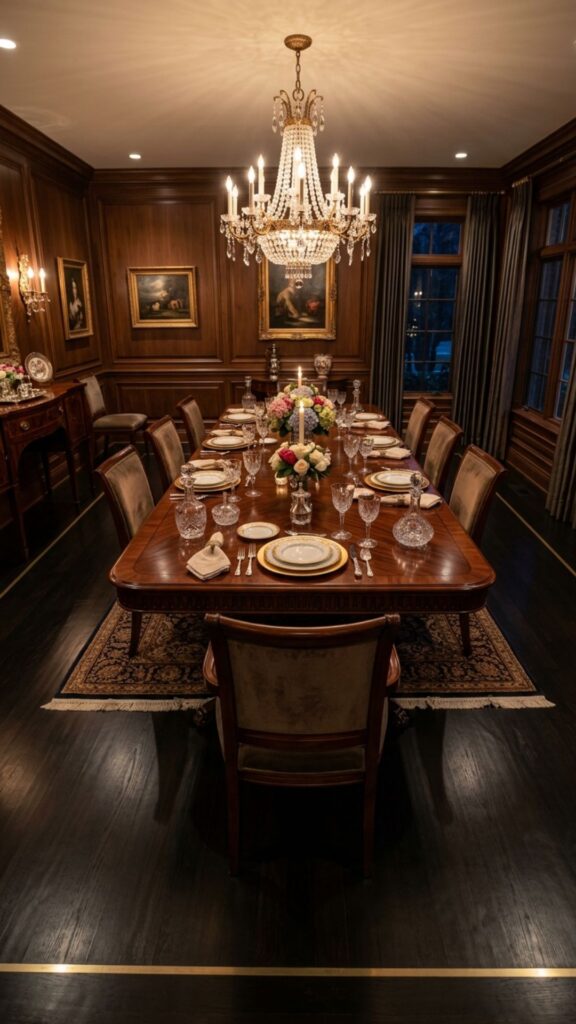
A dark floor with a contrasting inlay border is a design detail that instantly elevates a dining room. Picture deep ebony planks surrounded by a thin strip of lighter wood or even brass metal inlay — it’s architectural, intentional, and genuinely impressive.
This approach works best in formal dining rooms with a fixed table arrangement, since the border frames the dining zone visually. It takes more planning than a standard floor, but the result is a custom look that most people only see in high-end homes.
19. Dark Stain Over Existing Hardwood
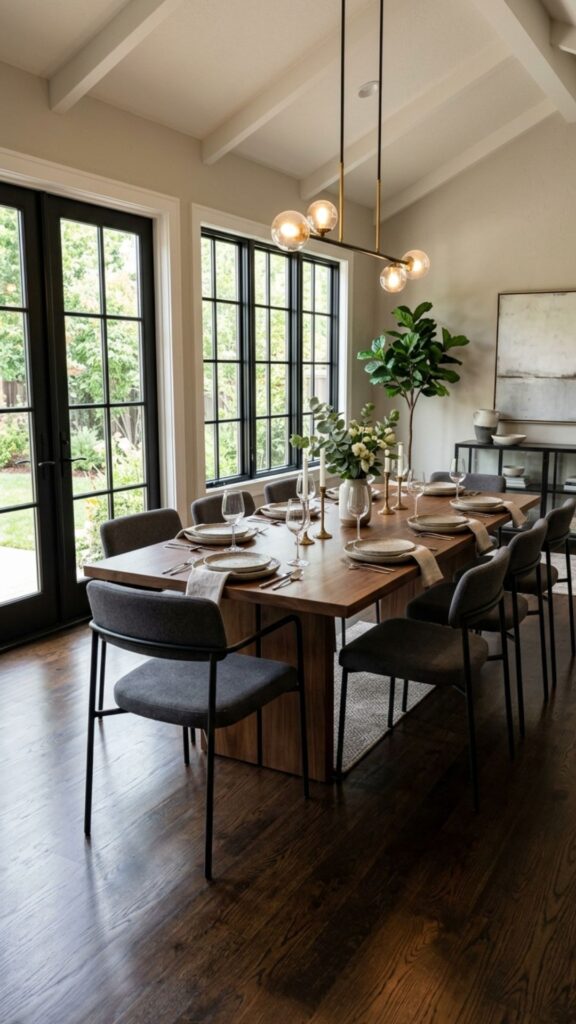
If you already have hardwood floors, staining them darker is one of the most cost-effective ways to achieve the dinning room dark floor look. A deep walnut, ebony, or jacobean stain can completely transform dated light oak flooring with relatively minimal disruption.
Work with an experienced flooring professional to sand and prep the wood properly before applying the stain. The finish matters as much as the color — a satin or matte polyurethane topcoat will give the floor a modern, refined appearance.
20. Dark Floor with High-Gloss Finish for Maximum Drama
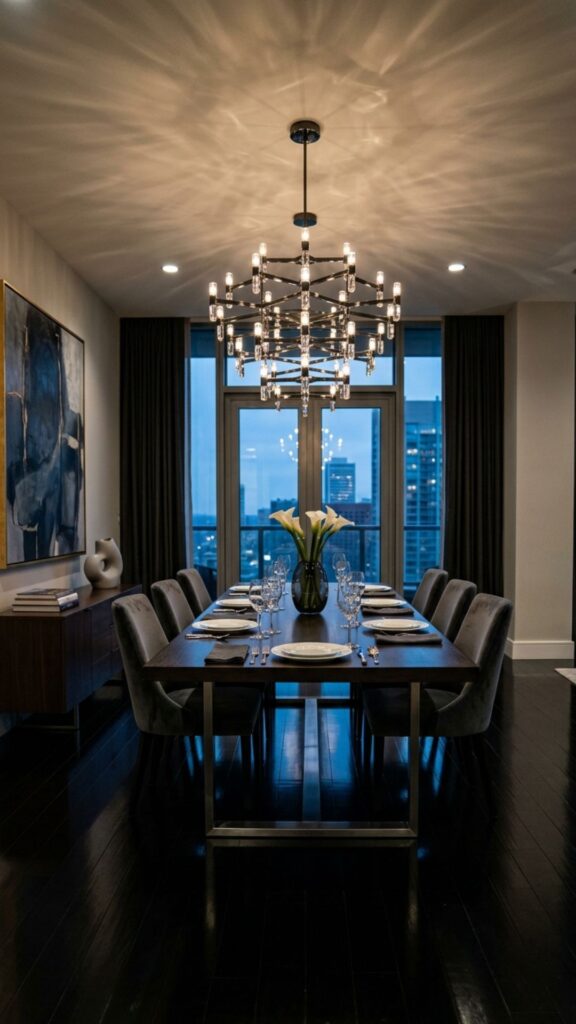
Sometimes the best way to make a dark floor feel truly luxurious is to turn up the gloss. A high-shine lacquer finish on deep mahogany or ebony wood creates a reflective surface that interacts with light throughout the day and evening in spectacular ways.
This look suits bold, confident dining rooms with strong design intentions. Keep the rest of the space relatively restrained — let the floor do the talking. A single oversized pendant light or chandelier will create a reflection on the floor that feels cinematic.
Conclusion
A dark floor can completely transform the feeling of a dining room — adding depth, drama, and a sense of luxury that lighter materials rarely achieve. Whether you’re drawn to the warmth of walnut, the boldness of black marble, or the practicality of luxury vinyl plank, there’s a dinning room dark floor idea on this list that fits your style and your budget.
The key is choosing a material and tone that works with your existing décor and lighting, then building the room around it thoughtfully. Take your time, gather samples, and see how the floor looks in your specific lighting conditions before committing.
Ready to give your dining room a luxury makeover? Start by ordering a few floor samples and laying them next to your furniture — you’ll know immediately which one belongs in your space.
What is the best dark floor for a dining room?
The best dark floor for a dining room depends on your budget and lifestyle. Hardwood in walnut or ebony offers the most timeless luxury, while luxury vinyl plank in dark tones provides durability and water resistance at a lower cost. Dark porcelain tile is an excellent choice for high-traffic or moisture-prone spaces.
Do dark floors make a dining room look smaller?
Dark floors don’t necessarily make a room look smaller. When paired with light walls, good lighting, and appropriately scaled furniture, a dark floor can actually add depth and make a room feel more defined and intentional. Mirrors and natural light help keep the space feeling open.
How do I maintain a dark hardwood floor in my dining room?
Sweep or vacuum dark hardwood floors regularly to remove dust and debris, which shows more visibly on dark surfaces. Use a slightly damp mop with a hardwood-safe cleaner, and add felt pads under all furniture legs to prevent scratches. Refinish every 7-10 years depending on wear.
What wall colors go best with a dark dining room floor?
Light, neutral wall colors work best to balance a dark dining room floor. Soft whites, warm off-whites, light gray, and pale sage green are all excellent options. For a bolder, more dramatic look, deep navy or forest green walls paired with dark floors create a rich, enveloping atmosphere.
Is a dark floor a good choice if I have young children?
Dark floors can work well in family dining rooms, but they do show dust, crumbs, and dried spills more readily than lighter floors. Opt for a matte or satin finish rather than high-gloss, and consider scratch-resistant materials like luxury vinyl plank, porcelain tile, or strand-woven bamboo for the most practical performance.