There’s something special about eating a meal with fresh air flowing through an open door, city lights glowing in the distance, or garden views stretching out before you. A dining room with balcony access takes everyday meals and turns them into something worth savoring.
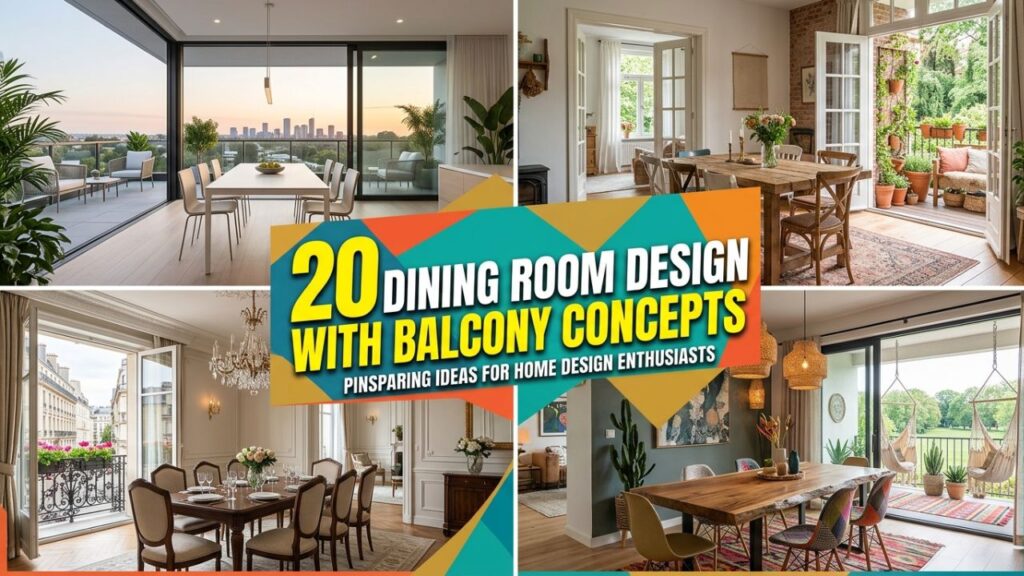
Whether you’re renovating a small apartment or redesigning a spacious home, connecting your dining space to a balcony opens up a world of creative possibilities.
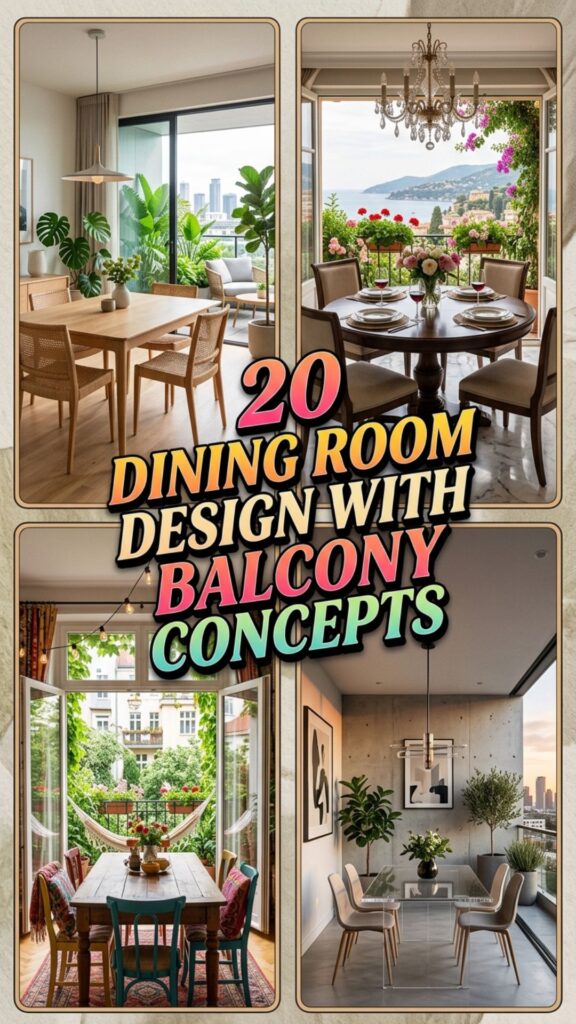
In this guide, you’ll find 20 practical and beautiful dining room design with balcony concepts — each one broken down with real design advice you can actually use. From choosing the right furniture to working with natural light, these ideas will help you build a space that feels both functional and genuinely inviting.
1. Open-Plan Dining Room With Sliding Glass Balcony Doors
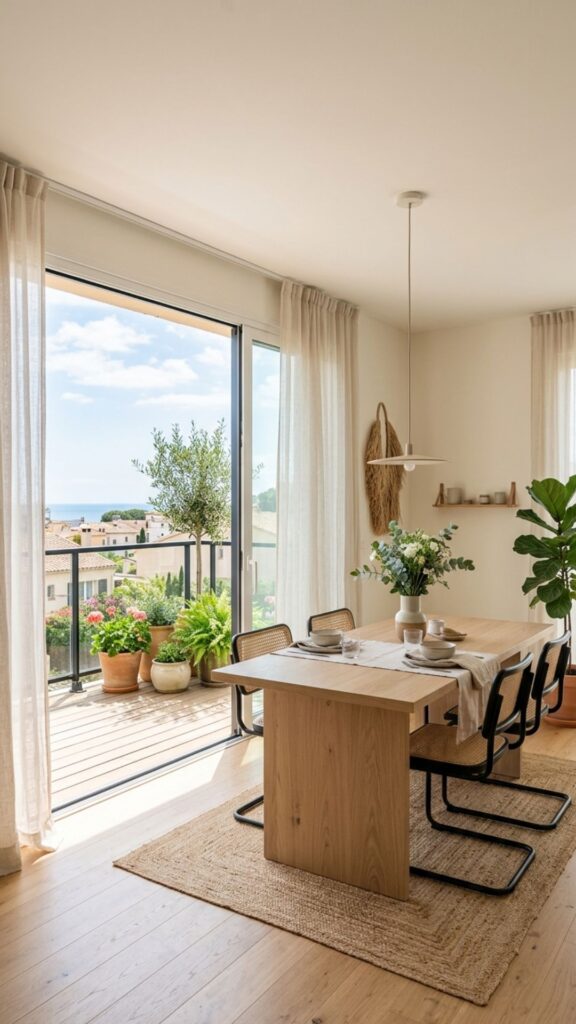
Sliding glass doors between your dining room and balcony are one of the most effective ways to blur the line between inside and outside. When open, they let in natural light, fresh air, and the sounds of the outdoors. When closed, they still offer a full, unobstructed view that makes the room feel larger than it is.
For this concept, keep your dining furniture low-profile and streamlined so it doesn’t block sightlines. A rectangular table in light wood or white lacquer pairs beautifully with the transparency of glass doors. Add sheer curtains on either side for soft filtering without blocking the view.
2. Bi-Fold Door Dining Room for Maximum Flow
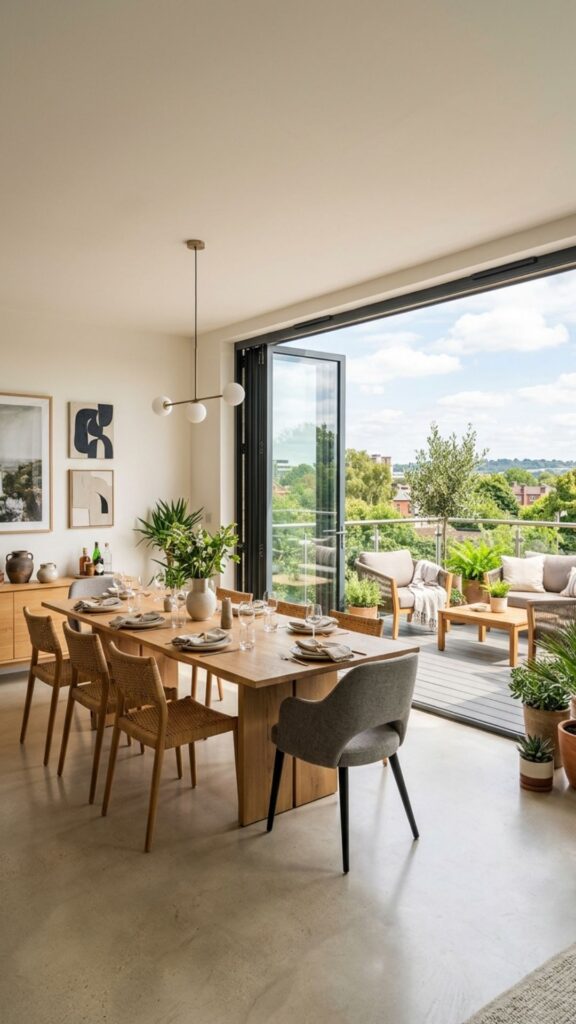
Bi-fold doors create a wide, wall-to-wall opening that essentially merges your dining room and balcony into one seamless living space. This works particularly well for entertaining — guests can flow naturally between both areas without feeling cramped or separated.
Choose doors with thin aluminum frames to maximize the glass panels and maintain a clean, modern look. For the dining space itself, use weather-resistant materials near the doorway, such as teak or sealed stone flooring, to handle foot traffic and occasional moisture from outside.
3. French Door Dining Room With a Classic Touch
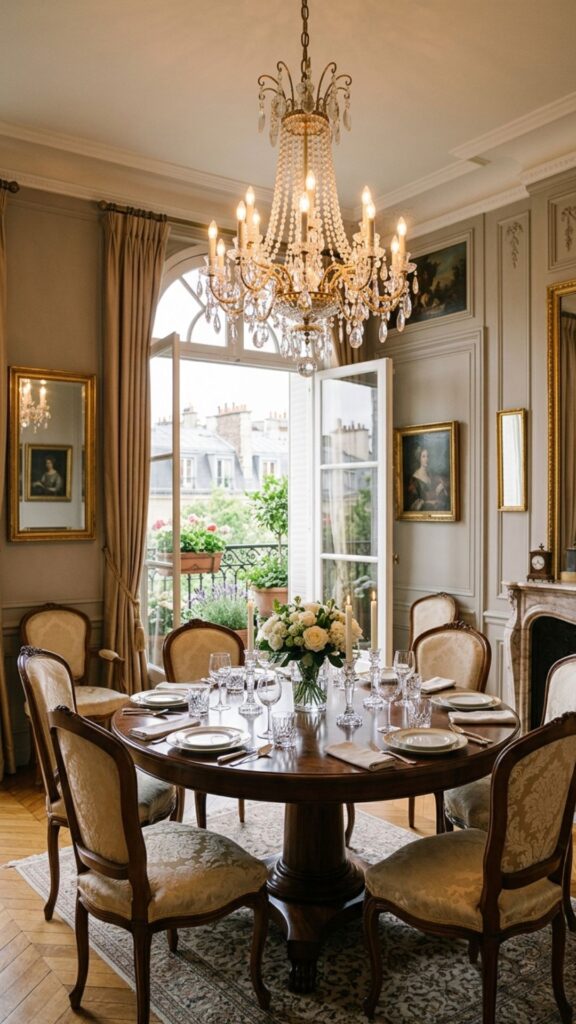
French doors bring timeless elegance to any dining room. The vertical grid of glass panes adds architectural character, and the traditional hinged design gives the room a charming, slightly formal quality that works with both classic and transitional interiors.
Pair French doors with a round pedestal dining table and upholstered chairs in neutral tones. Add wall sconces or a statement chandelier overhead to highlight the beautiful symmetry these doors naturally create. Crown molding around the doorframe reinforces that polished, put-together look.
4. Minimalist Dining Room With Frameless Glass Panels
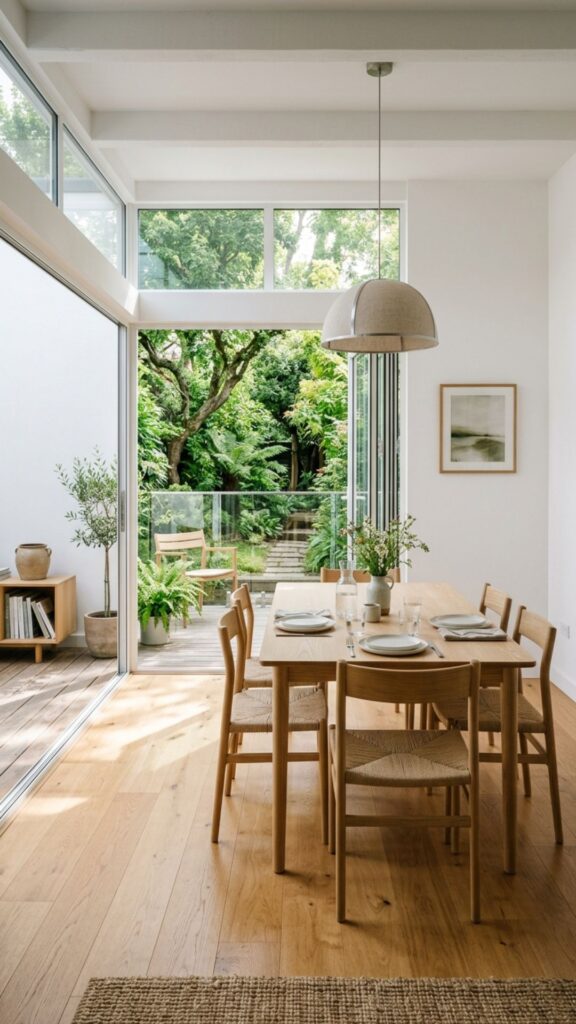
For a ultra-clean, contemporary feel, frameless glass balcony panels paired with a pared-back dining room create a striking visual effect. The absence of frames makes the wall practically disappear, so the outdoor view becomes the dominant design feature.
Keep the interior color palette simple — whites, soft grays, and natural wood tones. A floating shelf along one wall can hold plants or simple decor without adding visual noise. The less you put in this space, the more the architecture speaks for itself.
5. Bohemian Dining Room With Wraparound Balcony Access
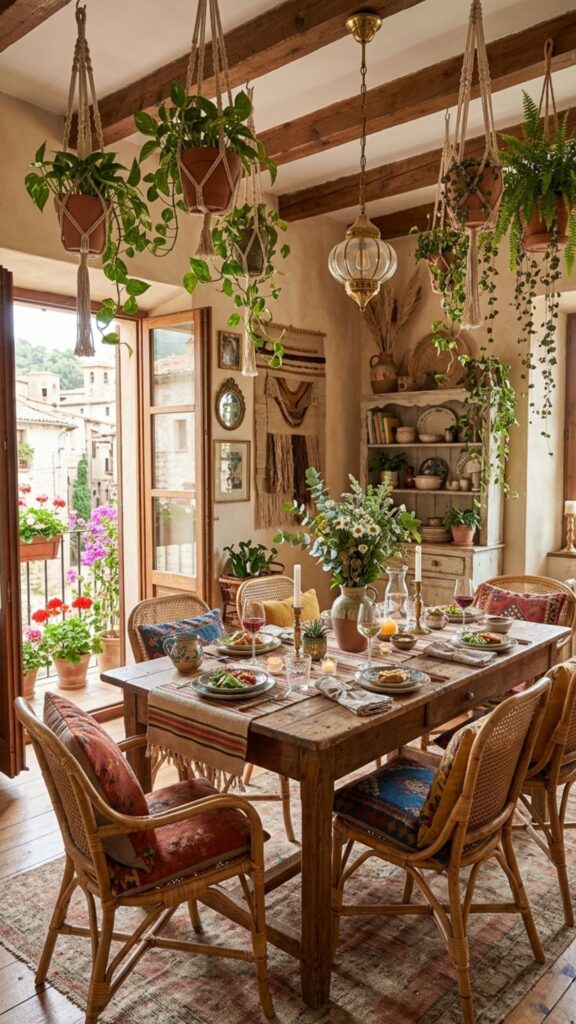
A wraparound balcony gives you multiple access points, which opens the door — literally — for a more relaxed, bohemian-inspired dining space. Think rattan chairs, a woven jute rug, layered textiles, and hanging plants near each doorway.
Use earthy tones like terracotta, warm amber, and deep green to create a cozy, lived-in atmosphere. String lights strung along the balcony railing visible through open doors add a warm glow in the evenings that makes dinner feel like a celebration, even on a Tuesday.
6. Industrial-Style Dining Room With Steel-Frame Balcony Doors
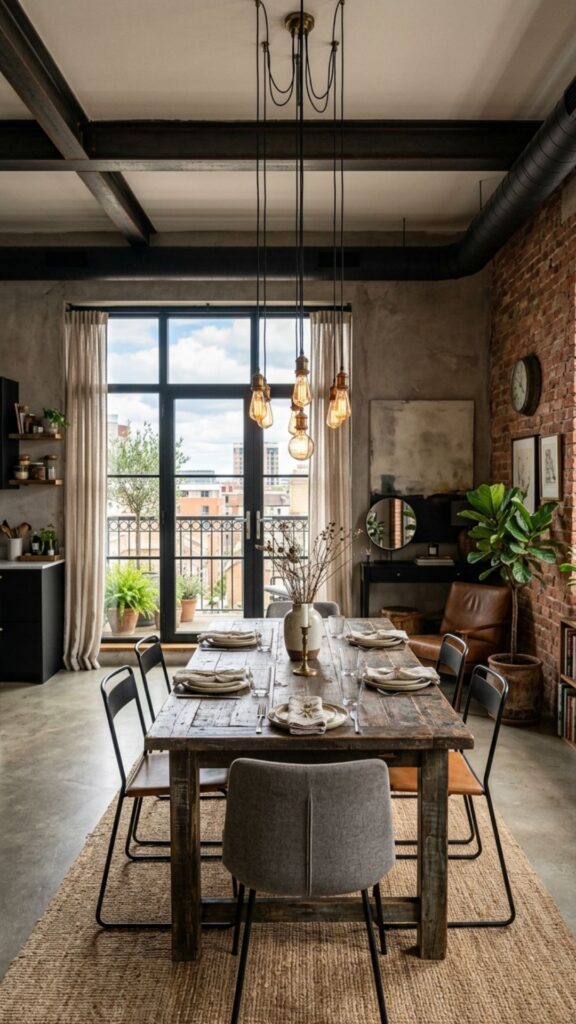
Steel-framed balcony doors are a hallmark of industrial design. The bold black or dark bronze frames contrast beautifully against exposed brick walls, concrete floors, and aged wood dining tables.
Pair this look with Edison bulb pendant lights and metal-legged chairs with leather or vinyl seats. Keep the balcony itself simple — a few plants and a metal railing extend the aesthetic outdoors. This design is especially effective in loft apartments and converted warehouse spaces.
7. Coastal Dining Room With Breezy Balcony Views
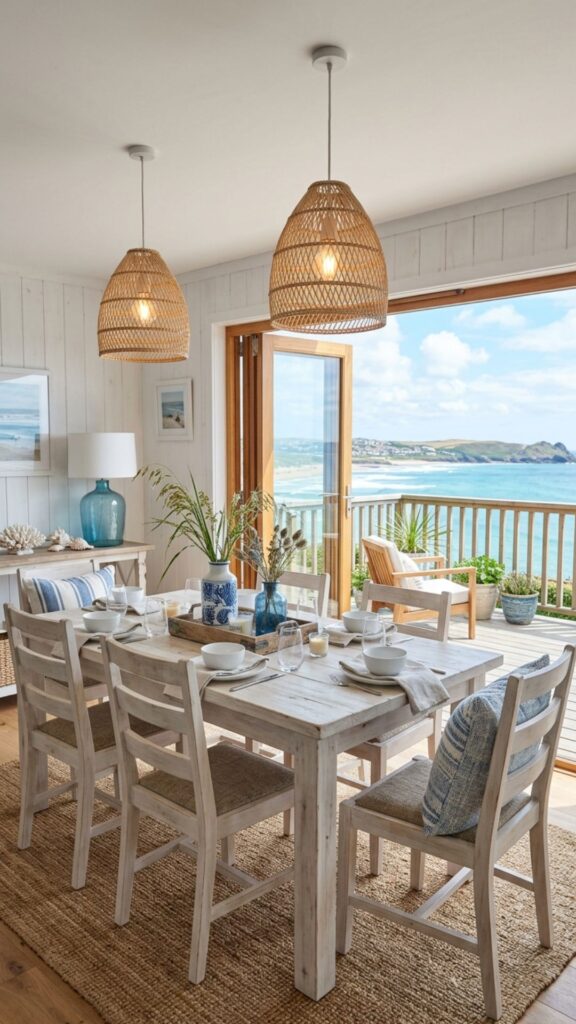
If your balcony overlooks water, a beach, or even a tree-lined street, lean into a coastal design theme. White shiplap walls, a whitewashed wood dining table, and blue or sandy-toned upholstery instantly evoke that relaxed seaside feeling.
Hang a large mirror on the wall opposite the balcony to reflect the view and double the natural light. Woven pendant lights, sea glass accents, and striped table linens complete the look without feeling forced or overdone.
8. Scandinavian Dining Room With Light-Filled Balcony Connection
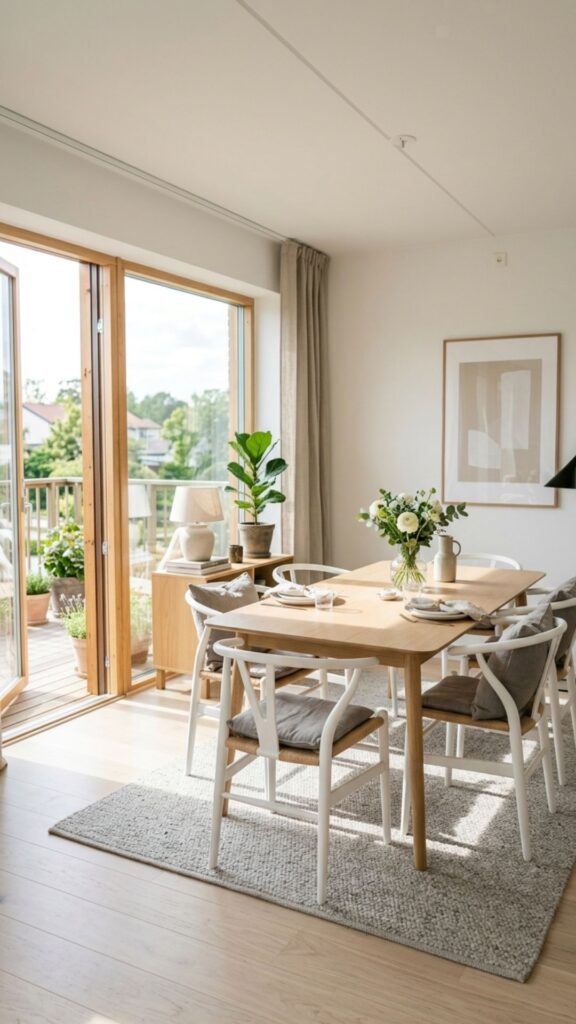
Scandinavian design thrives on natural light, and a balcony connection amplifies it beautifully. Wide doors, pale wood floors, and a simple dining set in white or birch create a bright, welcoming space that feels calm and uncluttered.
Add warmth with a wool throw over one chair, a ceramic centerpiece, and a single potted plant near the balcony door. The Scandinavian approach is all about intention — every piece in the room should serve a purpose or bring genuine joy.
9. Mediterranean Dining Room With Arched Balcony Doorway
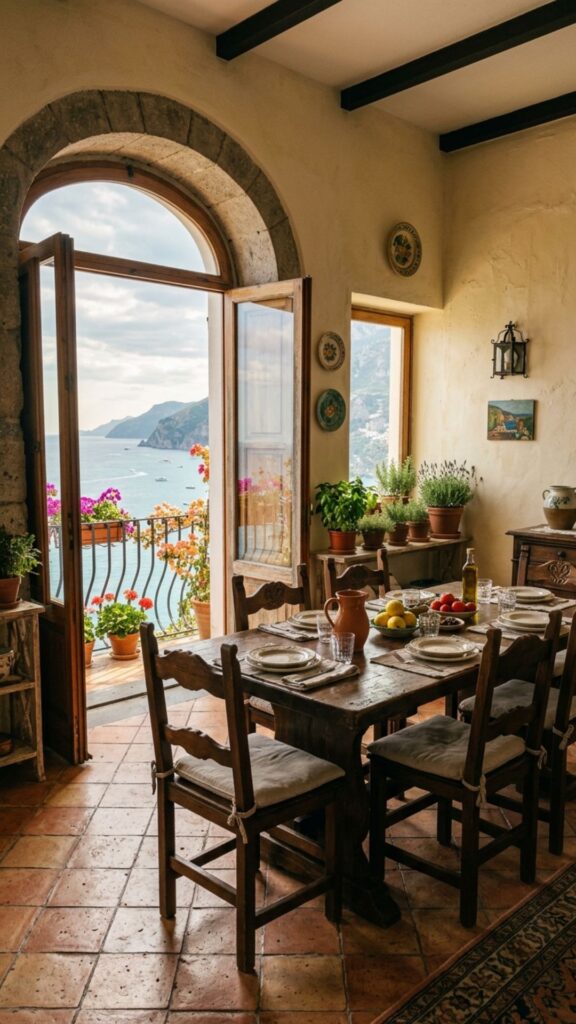
An arched doorway leading to a balcony brings instant Mediterranean warmth and romance to a dining room. Pair it with terracotta floor tiles, a dark wood dining table, and wrought-iron chairs with cushioned seats for that sun-soaked European feel.
Hang a colorful ceramic or textile piece on the wall and use rich, earthy tones throughout — deep orange, olive green, and navy blue work particularly well. Potted herbs near the balcony door are both practical and beautifully fragrant.
10. Japanese-Inspired Dining Room With Sliding Shoji Panels
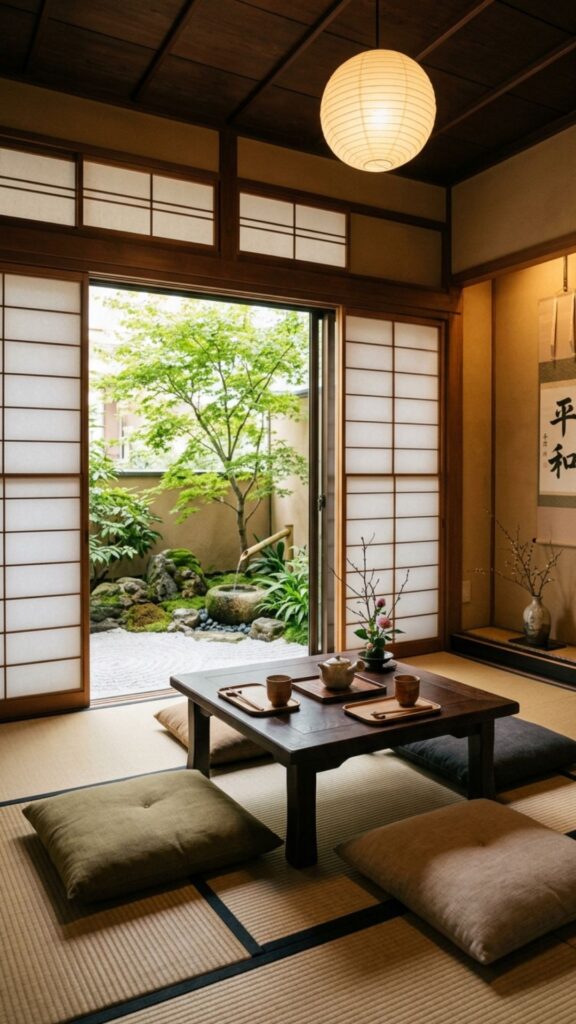
A Japanese-inspired dining space with sliding shoji screen panels creates an extraordinary sense of peace and balance. The rice paper panels diffuse light softly, casting a warm, even glow across the room, while still allowing access to the balcony.
Use a low dining table with floor cushions or low-profile chairs for an authentic experience. Bamboo, stone, and natural linen are ideal materials here. Keep the balcony itself minimal — a small bonsai or a row of smooth river stones reinforces the meditative quality of this design.
11. Smart Dining Room With Automated Balcony Door Integration
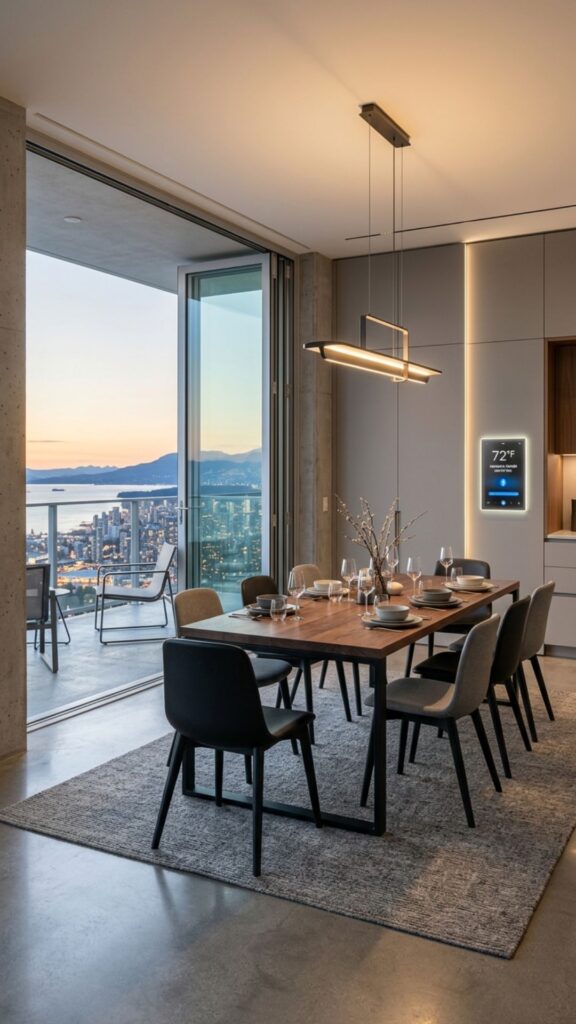
Technology can elevate a dining room with balcony access in genuinely practical ways. Automated sliding or folding doors that open at the touch of a button — or even voice command — add convenience and a luxurious, modern edge.
Pair this tech-forward approach with smart lighting that adjusts automatically as the doors open, matching the natural light outside. A clean, modern dining setup with integrated storage and hidden cable management keeps the space looking sharp without sacrificing function.
12. Small Apartment Dining Room With Compact Balcony Extension
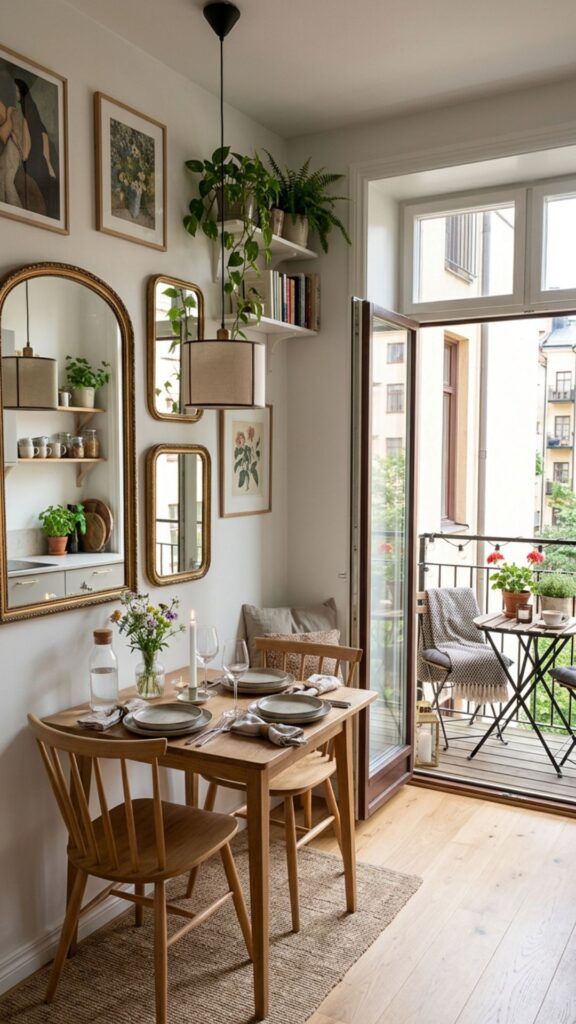
Small spaces can still make a big impact. If your apartment has a petite dining area connecting to a compact balcony, use that outdoor space as a visual extension rather than just a storage spot. A small bistro table on the balcony and a matching indoor dining set creates a cohesive look that makes both areas feel intentional.
Use mirrors inside to amplify light and create depth. Choose furniture with legs rather than solid bases to keep the floor visible and the space feeling open. Fold-away chairs or a drop-leaf table can help you manage tight square footage without sacrificing style.
13. Luxury Dining Room With Floor-to-Ceiling Balcony Windows
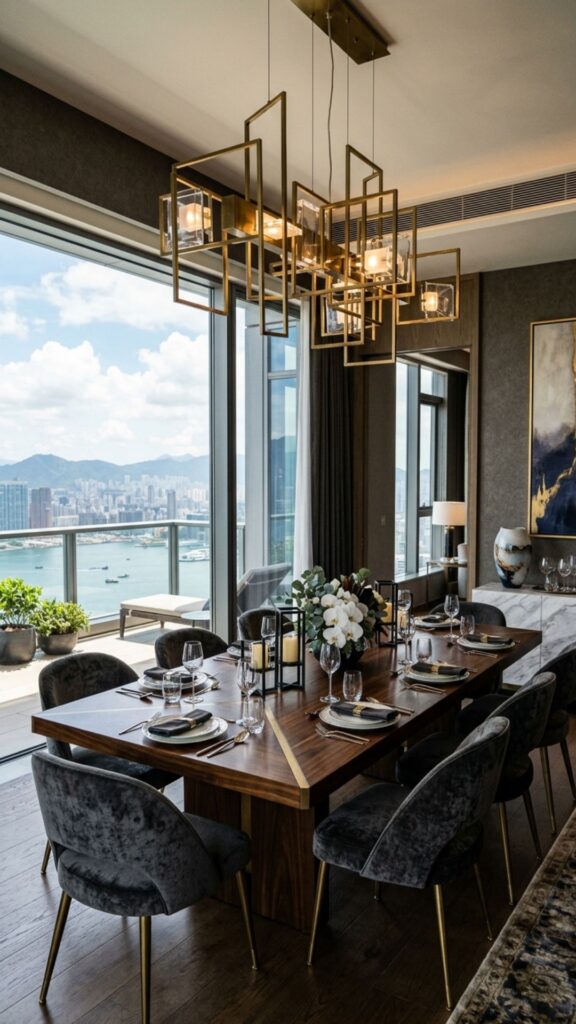
There’s nothing quite like a dining room framed by floor-to-ceiling windows with balcony access on one side. This design creates a dramatic sense of elevation and openness that makes every meal feel like a special occasion.
Invest in a statement dining table — marble, live-edge wood, or lacquered glass all work beautifully here. Pair it with sculptural chairs and a bold chandelier. Keep window treatments minimal so the view always remains the star of the room.
14. Family-Friendly Dining Room With Safe Balcony Access
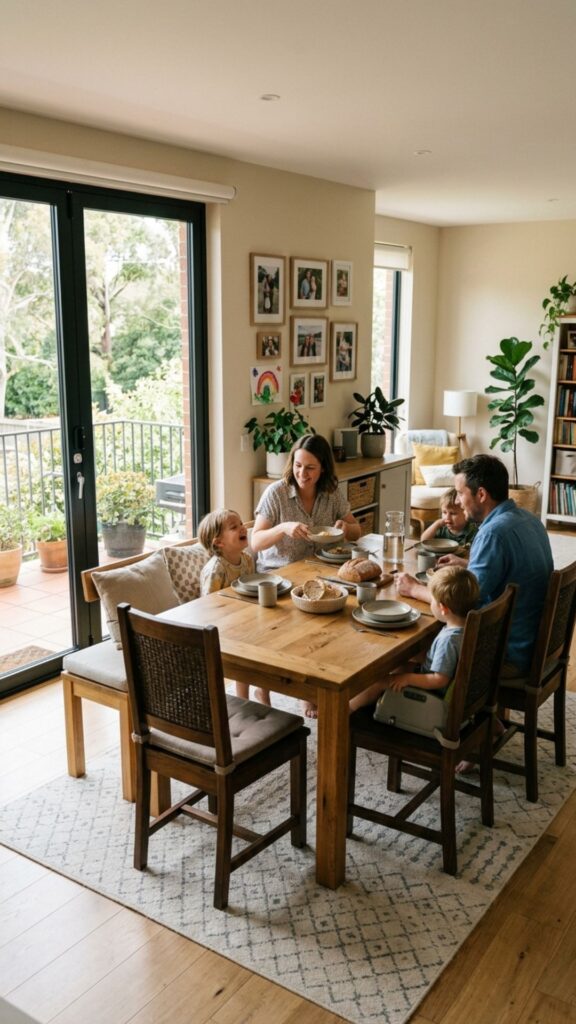
Families with young children need balcony access that’s both beautiful and safe. Childproof latches, reinforced glass railings, and doors that lock securely at height are non-negotiable features to build into the design from the start.
Choose durable, easy-to-clean furniture — upholstered chairs in performance fabric, a sturdy wood or resin table, and washable rugs all hold up well to daily family life. A bench along one side of the table maximizes seating and is easier for little ones to climb in and out of independently.
15. Eclectic Dining Room With a Gallery Wall Facing the Balcony
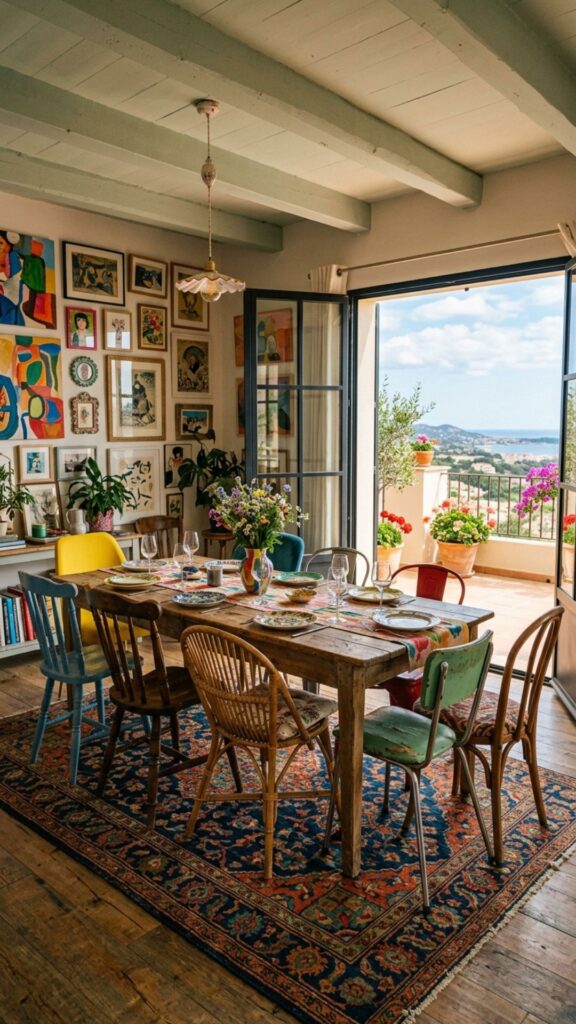
An eclectic dining room design celebrates personality. Create a bold gallery wall on the interior wall facing your balcony so guests seated at the table look inward at a curated collection of art, prints, and framed photography.
Mix chair styles intentionally — a velvet armchair at the head, mismatched wooden dining chairs along the sides, and a bench at the end. Use a patterned rug to anchor the space and tie the colors together. The contrast between the curated indoor chaos and the clean outdoor view becomes the whole point.
16. Green Dining Room With an Indoor-Outdoor Plant Scheme
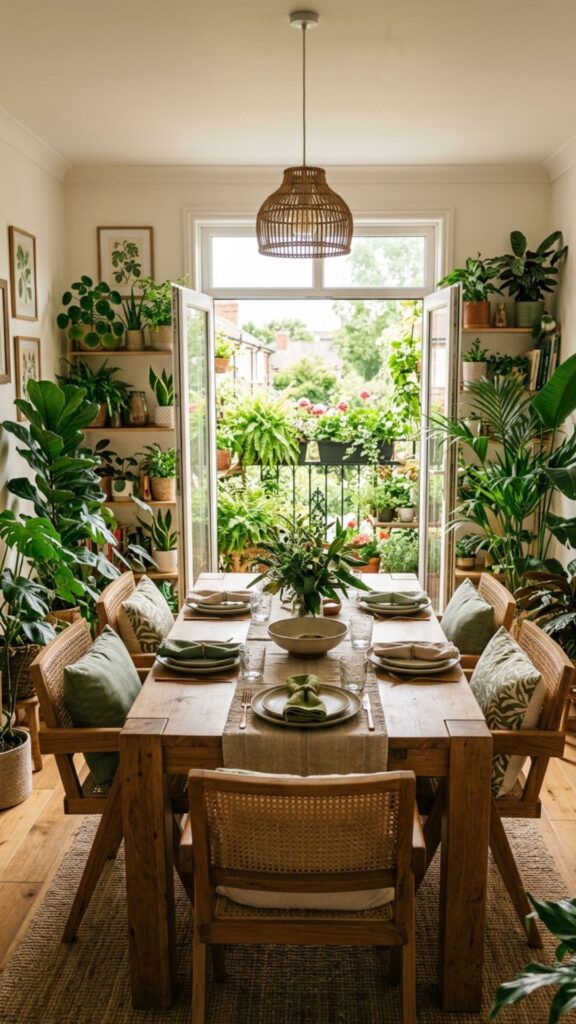
Plants can seamlessly connect your dining room to the balcony when you treat both spaces as one continuous garden. Use large indoor plants like fiddle-leaf figs, monstera, or olive trees near the balcony doors, and continue the greenery outside with planters and hanging baskets.
A dining table in natural wood or stone sits beautifully in this kind of organic, plant-filled environment. Use earthy green tones in your cushions, table linens, and ceramics to reinforce the connection to nature without making the room feel like a greenhouse.
17. Dark, Moody Dining Room With Evening Balcony Ambiance
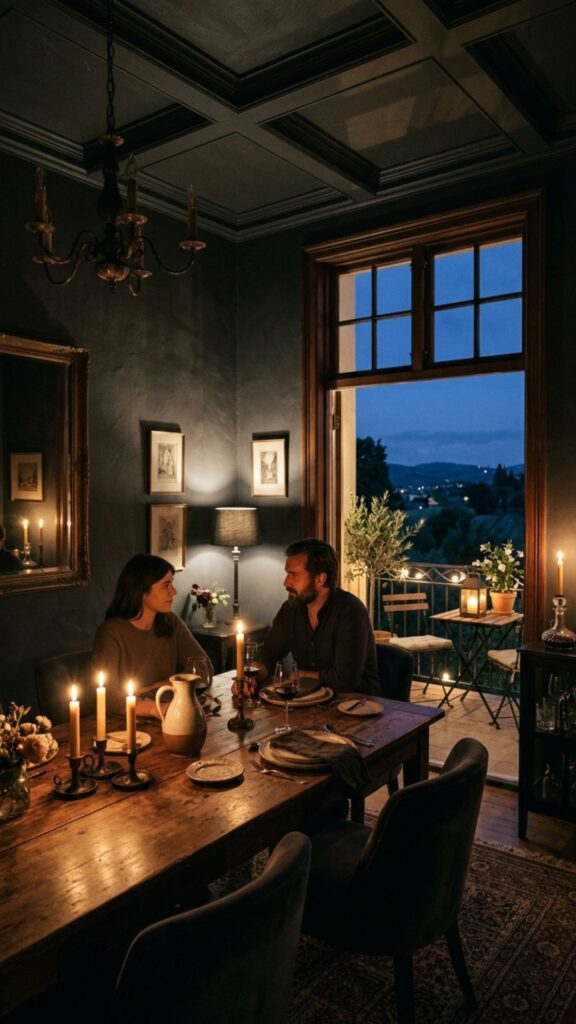
Deep, moody interiors come alive at night, especially when paired with a balcony and evening city or garden views. Dark navy, forest green, or charcoal walls create a cocooning atmosphere that feels intimate and sophisticated during dinner.
Layer your lighting thoughtfully — a dimmer-controlled chandelier overhead, candles on the table, and warm-toned outdoor lighting on the balcony. When the doors are open in the evening, the warm interior glow against the dark sky creates a genuinely stunning visual effect.
18. Rustic Farmhouse Dining Room With Balcony Barn Doors
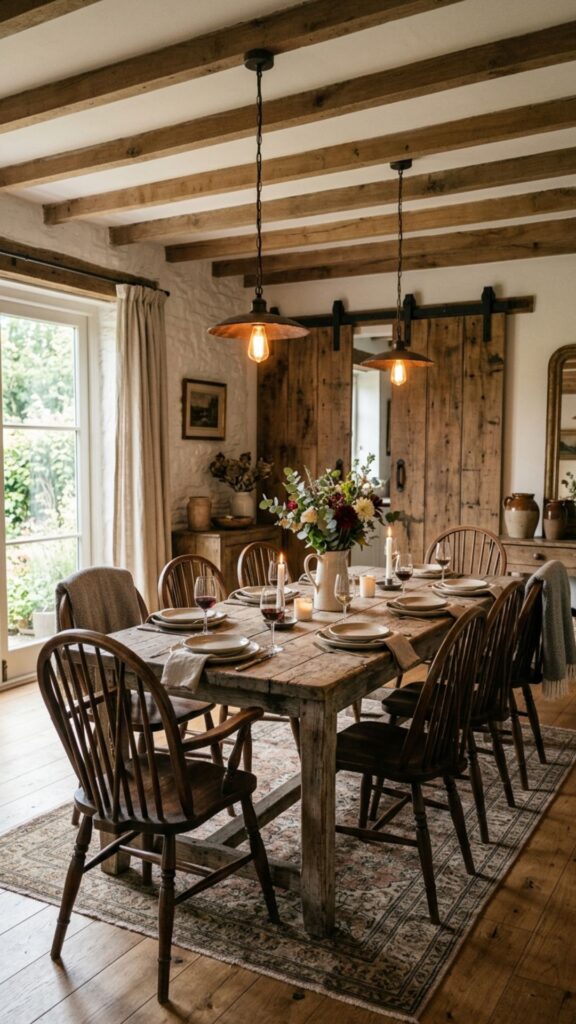
Sliding barn doors are a charming and unexpected way to separate a dining room from balcony access without using traditional hinged or glass doors. In a rustic farmhouse-style space, reclaimed wood barn doors add texture, warmth, and serious character.
Use a long farmhouse table with cross-back or Windsor chairs. Layer in galvanized metal accents, mason jar pendant lights, and a chunky knit or cotton runner down the center of the table. When the barn doors slide open to the balcony, the transition from cozy interior to fresh outdoor space feels effortless.
19. Monochrome Dining Room With a Graphic Balcony View
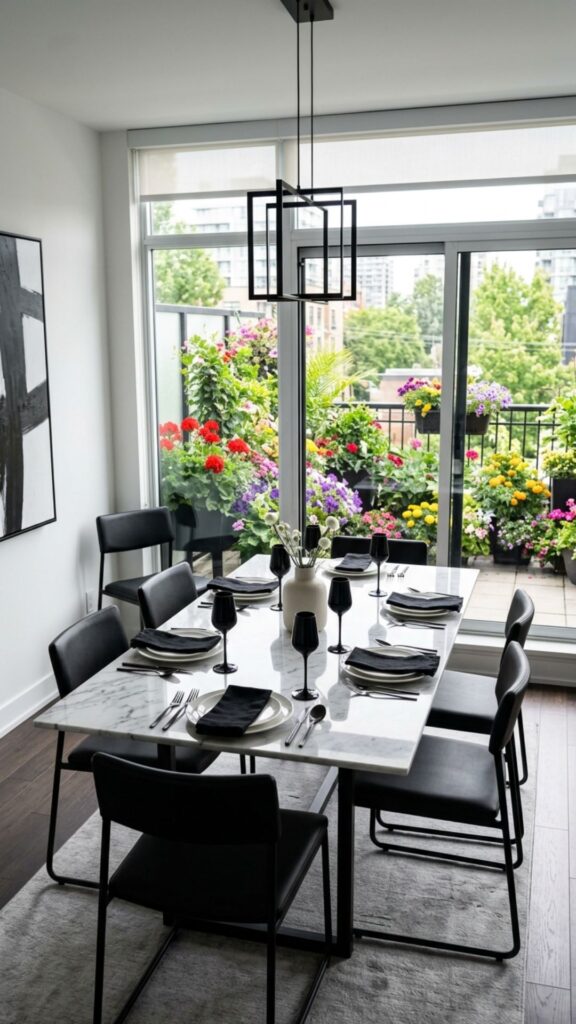
A monochrome dining room — all black, all white, or a strict combination of both — turns your balcony view into the only color element in the space. It’s a bold, graphic design choice that’s particularly effective in urban apartments where the cityscape provides all the visual interest you need.
Use high-contrast materials: black matte hardware, white marble dining table, black metal chairs, and white walls. Keep the balcony decor similarly restrained. This design is proof that constraint can be incredibly powerful in interior design.
20. Transitional Dining Room That Grows With Every Season
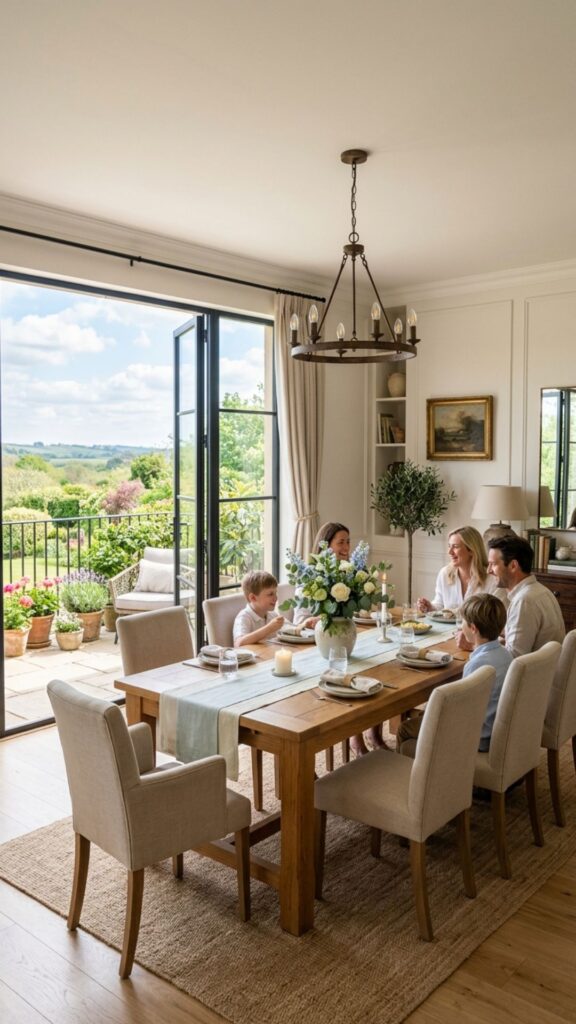
A transitional dining room with balcony access is designed to shift with the seasons. In winter, layered textiles, warm candlelight, and closed glass doors frame a cozy dining space with gorgeous seasonal views. In summer, the doors stay open, the furniture flows outside, and the dining experience expands.
Choose versatile, durable pieces that look great in both settings — a solid wood table, timeless upholstered chairs, and neutral flooring that works indoors and near outdoor elements. Swap out cushions, rugs, and centerpieces seasonally to keep the space fresh without a full redesign.
Conclusion
A well-designed dining room with balcony access does more than look beautiful — it changes how you experience your home. These 20 concepts show that no matter your style, space, or budget, there’s a way to make that indoor-outdoor connection feel intentional and special.
Start with the concept that resonates most with your lifestyle and your existing space. Even small changes — new door hardware, a better lighting setup, or a few well-placed plants — can transform the way your dining room feels. Take your time, invest in pieces you genuinely love, and let the view do the rest.
Ready to redesign your dining room? Start with one idea from this list, gather inspiration images, and bring your vision to life — one thoughtful detail at a time.
What is the best flooring for a dining room that opens onto a balcony?
Hardwood, large-format tile, and luxury vinyl plank are all excellent choices. They handle foot traffic well, are easy to clean, and transition smoothly toward outdoor surfaces.
How do I keep a dining room with balcony doors warm in winter?
Use thermal curtains or insulated door panels to reduce heat loss. A well-sealed door frame, a rug under the dining table, and layered lighting also help maintain warmth and coziness during colder months.
Can a small dining room still benefit from balcony access?
Absolutely. Even a narrow balcony adds light, ventilation, and a sense of space that makes a small dining room feel noticeably larger and more comfortable.
What type of dining table works best near a balcony door?
Round or oval tables work particularly well because they allow easier movement around the space, especially when doors are frequently opened and closed. Compact rectangular tables are also practical for narrow layouts.
How do I protect indoor dining furniture from sun damage near balcony doors?
Use UV-filtering window film or solar shades on glass doors to reduce direct sun exposure. Choose fabrics and finishes rated for light resistance, and rotate or reposition furniture periodically to prevent uneven fading.