Have you ever put together an outfit that looked perfectly fine in your wardrobe but somehow felt underwhelming once you wore it? The clothes might fit your budget, the colours might match, and the overall look might seem trendy, yet something still feels missing. The secret to looking well-dressed isn’t necessarily wearing expensive designer labels. More often, it comes down to how you style, combine, and present the pieces you already own.
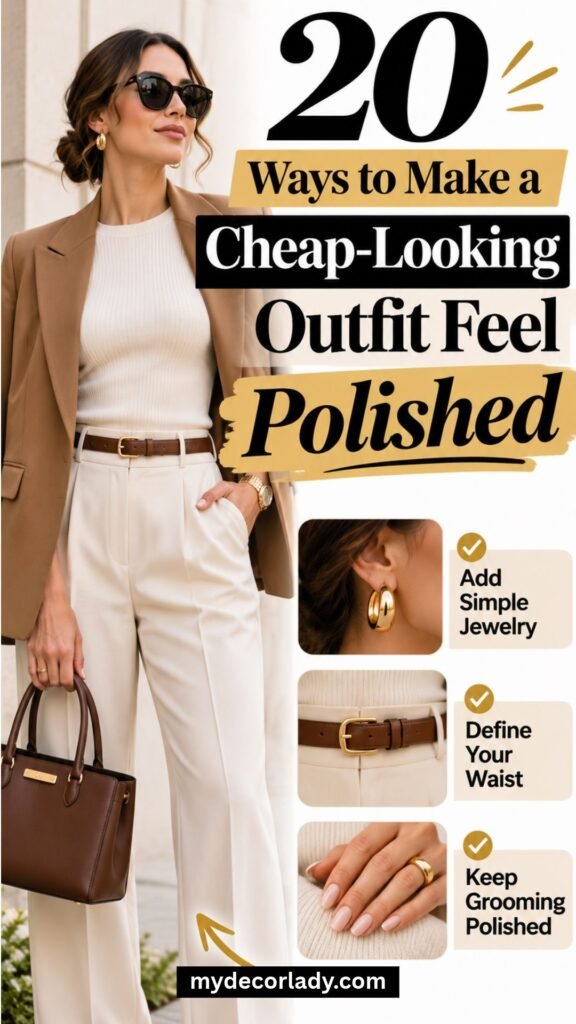
A polished outfit is all about paying attention to the little details. A wrinkled shirt, poorly fitted trousers, scuffed shoes, or mismatched accessories can make even a beautiful outfit look unfinished. On the other hand, simple, affordable clothing can look incredibly sophisticated when styled thoughtfully.
The good news? You don’t need a completely new wardrobe or a luxury shopping budget to achieve that effortlessly expensive appearance. With a few smart styling adjustments, you can transform everyday basics into outfits that look intentional, elegant, and put together.
Here are 20 practical ways to make a cheap-looking outfit feel polished without spending a fortune.
1. Prioritise the Perfect Fit Over Expensive Brands
One of the biggest differences between an outfit that looks ordinary and one that looks sophisticated is the fit. Even an inexpensive shirt can look elegant when it sits properly on your shoulders, follows your natural shape, and has the right sleeve length. In my opinion, a well-fitted budget outfit will almost always look better than an expensive outfit that doesn’t suit your proportions.
Styling Guide:
- Check your shoulders: Shirt and blazer seams should sit close to your natural shoulder line.
- Avoid excessive fabric: Choose trousers and tops that complement your body shape without looking overly tight.
- Pay attention to length: Trousers should fall neatly around your shoes rather than bunching excessively.
- Visit a local tailor: Simple alterations, such as shortening sleeves or adjusting trouser hems, can make affordable clothing look custom-made.
- Know your proportions: Balance oversized tops with more structured bottoms or fitted tops with relaxed trousers.
2. Choose Neutral Colours for an Expensive Appearance
Neutral colours have a naturally sophisticated quality that makes outfit coordination easier. Shades such as black, white, beige, cream, chocolate brown, grey, and navy create a clean appearance without requiring complicated styling. A neutral outfit doesn’t have to be boring; combining different shades and textures can make even the simplest clothing look thoughtfully put together.
Styling Guide:
- Build around classic shades: Start with black trousers, white shirts, beige tops, and navy basics.
- Try tonal dressing: Combine different shades of the same colour, such as cream, ivory, and beige.
- Use contrasting neutrals: Pair chocolate brown with cream or navy with white.
- Keep colour combinations intentional: Limit the number of competing colours in one outfit.
- Introduce subtle accents: Add burgundy, olive green, or muted blue through accessories.
3. Steam or Iron Your Clothes Before Wearing Them
Wrinkles can instantly make an outfit look neglected, regardless of how much the clothes cost. A freshly pressed shirt, smooth trousers, and wrinkle-free dress will always give a more refined impression. This is one of the easiest and most affordable styling improvements because it doesn’t require buying anything new.
Styling Guide:
- Steam delicate fabrics: Use a garment steamer where appropriate to remove creases without damaging the material.
- Iron structured pieces: Pay particular attention to shirt collars, cuffs, trouser creases, and hems.
- Check before leaving: Look for wrinkles around the waist, elbows, and back of your outfit.
- Hang clothes properly: Use suitable hangers instead of leaving garments folded in a crowded wardrobe.
- Follow fabric instructions: Always check the care label to avoid shine marks, shrinkage, or fabric damage.
4. Invest in a Structured Blazer
A structured blazer is one of those wardrobe pieces that can transform an otherwise ordinary outfit. It adds shape to relaxed clothing, creates a more defined silhouette, and brings a sense of sophistication to casual combinations. Even when worn with basic jeans and a simple top, a well-fitting blazer can make the entire look feel more intentional.
Styling Guide:
- Choose classic colours: Black, beige, charcoal, and navy are versatile options.
- Look for clean construction: Defined shoulders, neat lapels, and a good lining can improve the overall appearance.
- Try casual layering: Wear a blazer over a plain T-shirt with straight-leg jeans.
- Create an office look: Combine it with tailored trousers and a simple blouse.
- Avoid excessive decoration: Minimal buttons and subtle details generally offer more styling flexibility.
5. Keep Your Shoes Clean and Well-Maintained
Shoes can make or break an outfit. You might be wearing a beautifully styled dress or perfectly fitted trousers, but dusty sneakers, peeling footwear, or dirty soles can make the entire look feel unfinished. You don’t need expensive footwear; you need shoes that are clean, in good condition, and appropriate for the outfit.
Styling Guide:
- Clean regularly: Remove dust, dirt, and stains before they become difficult to manage.
- Choose versatile footwear: Simple loafers, ballet flats, clean sneakers, and classic sandals work with multiple outfits.
- Maintain the details: Replace damaged laces, repair loose soles, and polish suitable leather footwear.
- Coordinate thoughtfully: Match footwear with the overall mood of your outfit.
- Avoid visibly worn-out pairs: If shoes are badly damaged, consider repairing or replacing them.
6. Add a Quality-Looking Belt
A belt may seem like a small accessory, but it can bring an outfit together beautifully. It creates definition around the waist, adds structure to trousers, and makes basic combinations look more complete. A simple belt with a clean buckle often looks more sophisticated than an oversized design with too many decorative elements.
Styling Guide:
- Choose minimal buckles: Simple gold, silver, or understated metallic hardware works well.
- Stick to versatile colours: Black, tan, and dark brown are practical choices.
- Match the occasion: A slim belt works beautifully with tailored trousers, while a wider belt can complement certain dresses.
- Define your waist: Use a belt with dresses, high-waisted jeans, or oversized shirts.
- Check the proportions: Make sure the belt width complements your trousers and overall silhouette.
7. Upgrade Your Outfit with Minimal Jewellery
Jewellery doesn’t need to be expensive to look elegant. The secret is selecting pieces that complement your outfit rather than compete with it. Simple hoops, delicate necklaces, classic watches, and subtle rings can make everyday clothing feel more refined. Personally, I find that understated jewellery often creates a more timeless impression than wearing too many statement pieces together.
Styling Guide:
- Choose everyday essentials: Consider small hoop earrings, delicate chains, and simple rings.
- Coordinate metals: Gold and silver can both look beautiful; choose a combination that feels intentional.
- Avoid overcrowding: Let one statement piece stand out instead of wearing several competing accessories.
- Consider necklines: Pair shorter necklaces with open necklines and longer chains with simpler tops.
- Keep jewellery clean: Remove tarnish and store delicate pieces properly.
8. Tuck Your Shirt for a More Intentional Look
Sometimes the difference between looking casually dressed and looking polished is simply how you wear your shirt. An untucked oversized shirt can look relaxed and stylish, but a messy hem can make an outfit appear unbalanced. A thoughtful tuck creates structure, highlights your waistline, and makes even basic wardrobe pieces feel more coordinated.
Styling Guide:
- Try a French tuck: Tuck only the front of your shirt into jeans or trousers for an effortless appearance.
- Use a full tuck: Pair a fitted or lightweight shirt with high-waisted trousers for a cleaner silhouette.
- Smooth the fabric: Avoid bulky folds around the waistband.
- Choose the right belt: A simple belt can complete the tucked-in look.
- Balance proportions: Wear a relaxed shirt with structured bottoms or a fitted top with wider trousers.
9. Choose Fabrics That Hold Their Shape
Fabric quality plays a major role in how an outfit looks and feels. Some inexpensive fabrics can appear shiny, cling awkwardly, or lose their shape after a few washes. Instead of focusing only on the price tag, pay attention to how the material drapes, moves, and holds its structure. A simple cotton shirt or well-made knit can look more refined than an overly shiny synthetic garment.
Styling Guide:
- Look for structured cotton: It works well for shirts, trousers, and everyday dresses.
- Explore linen blends: These can create a relaxed yet sophisticated appearance.
- Choose substantial knits: Avoid overly thin knitwear that loses its shape quickly.
- Check transparency: Hold lighter fabrics against natural light to see whether they are excessively sheer.
- Inspect the finish: Look for uneven stitching, loose threads, and fabric pilling before purchasing.
10. Carry a Structured Handbag
A handbag is more than just a practical accessory; it can influence the overall impression of your outfit. A structured bag with clean lines often looks more refined than an overly slouchy or damaged one. You don’t need a luxury handbag to achieve this effect. A simple, well-maintained bag in a versatile colour can work beautifully across different occasions.
Styling Guide:
- Choose classic shapes: Consider structured totes, top-handle bags, and simple shoulder bags.
- Stick to versatile colours: Black, tan, beige, and chocolate brown are easy to coordinate.
- Keep hardware understated: Minimal metallic details generally offer a timeless appearance.
- Maintain its shape: Store your handbag properly and avoid overfilling it.
- Keep the interior organised: Remove unnecessary receipts, wrappers, and clutter.
11. Pay Attention to Your Hair and Overall Grooming
Even the most carefully styled outfit can feel incomplete when the overall presentation is neglected. Neat hair, clean nails, moisturised skin, and basic personal grooming help create a polished appearance without requiring expensive beauty treatments. You don’t need a complicated hairstyle; a simple, well-maintained look is often enough.
Styling Guide:
- Choose manageable hairstyles: A neat ponytail, smooth bun, natural waves, or well-maintained haircut can complement everyday clothing.
- Keep nails tidy: Clean, shaped nails make a subtle but noticeable difference.
- Maintain your hair: Use suitable products to manage frizz and keep your hairstyle looking intentional.
- Follow a simple skincare routine: Cleanse and moisturise according to your skin’s needs.
- Pay attention to small details: Clean glasses, fresh breath, and neat clothing contribute to an overall well-groomed appearance.
12. Wear Monochromatic Outfits
A monochromatic outfit uses different shades, tones, or textures of one colour. It is one of the easiest ways to create a coordinated appearance without spending time figuring out complicated colour combinations. An all-black outfit, for example, can look elegant when you combine different textures and silhouettes rather than wearing identical-looking pieces.
Styling Guide:
- Experiment with one colour family: Try all-white, beige, grey, navy, or black combinations.
- Mix different textures: Combine a cotton shirt with tailored trousers or a knit top with a structured skirt.
- Play with lighter and darker shades: Pair chocolate brown with caramel or cream with ivory.
- Keep accessories coordinated: Choose footwear and bags that complement the colour palette.
- Create visual interest: Use different fabric finishes and proportions to prevent the outfit from looking flat.
13. Replace Flashy Logos with Minimal Designs
Large logos, excessive branding, and overly decorative prints can sometimes make affordable clothing look less sophisticated. Minimal designs, on the other hand, are easier to style and tend to remain wearable for longer. This doesn’t mean you should avoid patterns or branded clothing; it simply means choosing pieces where the design complements rather than overwhelms the outfit.
Styling Guide:
- Choose simple basics: Plain T-shirts, understated shirts, and minimal dresses are versatile options.
- Avoid unnecessary embellishments: Too many sequins, oversized logos, and decorative elements can make an outfit visually busy.
- Try subtle patterns: Fine stripes, small checks, and understated prints can add personality.
- Prioritise clean designs: Look for simple necklines, neat buttons, and balanced detailing.
- Let one piece stand out: If you’re wearing a printed item, keep the remaining outfit relatively simple.
14. Layer Your Clothes Thoughtfully
Layering adds depth and dimension to an outfit while making basic clothing look more interesting. A simple T-shirt can feel completely different when worn underneath a blazer, cardigan, or lightweight jacket. The important thing is to layer with intention rather than simply adding more clothes.
Styling Guide:
- Start with a simple base: Use a fitted T-shirt, tank top, or lightweight shirt.
- Add a structured layer: Choose a blazer, cardigan, or jacket that complements your base outfit.
- Play with proportions: Balance oversized outerwear with slimmer bottoms.
- Keep colours coordinated: Use two or three complementary shades instead of too many competing colours.
- Avoid unnecessary bulk: Make sure each layer sits comfortably without bunching around the shoulders or waist.
15. Choose the Right Undergarments
A polished outfit starts with the foundation underneath it. Incorrectly fitted bras, visible underwear lines, or bulky undergarments can affect how clothing sits on your body. Even a beautifully tailored dress may not look its best when the foundation garments underneath are uncomfortable or unsuitable.
Styling Guide:
- Find your correct fit: Choose supportive undergarments that feel comfortable throughout the day.
- Consider seamless options: These can help minimise visible lines under fitted trousers and dresses.
- Choose suitable colours: Nude-toned undergarments often work better beneath light-coloured clothing.
- Pay attention to necklines: Select bras and innerwear that complement the cut of your outfit.
- Prioritise comfort: Avoid undergarments that dig into your skin or create unwanted lines.
16. Keep Your Accessories Coordinated
Accessories should make your outfit feel complete, not chaotic. When your handbag, footwear, jewellery, belt, and other details work together, even an inexpensive outfit can appear carefully styled. Coordination doesn’t mean every accessory must be the exact same colour; it means the overall combination should feel balanced.
Styling Guide:
- Create a colour connection: Coordinate your handbag and footwear through similar tones.
- Keep metal finishes consistent: Repeat gold or silver details where appropriate.
- Limit statement accessories: Avoid combining oversized earrings, bold necklaces, and dramatic bags in one look.
- Match the occasion: Choose refined accessories for formal settings and relaxed pieces for casual outfits.
- Maintain visual balance: If your outfit is already detailed, keep accessories understated.
17. Wear Classic Pieces Instead of Chasing Every Trend
Trends can be exciting, but building an entire wardrobe around fast-changing fashion can make getting dressed unnecessarily complicated. Classic pieces such as straight-leg jeans, white shirts, tailored trousers, simple dresses, and timeless outerwear offer more styling opportunities. In my view, a wardrobe built around versatile basics usually looks more sophisticated and provides better value over time.
Styling Guide:
- Invest in wardrobe staples: Consider a white button-down shirt, dark jeans, tailored trousers, and a neutral cardigan.
- Choose timeless silhouettes: Straight-leg, wide-leg, and gently tailored shapes are versatile options.
- Add trends selectively: Introduce fashionable details through affordable accessories or one seasonal piece.
- Avoid buying impulsively: Ask whether a new item works with at least three pieces you already own.
- Prioritise versatility: Choose clothes that work for multiple occasions rather than single-use outfits.
18. Pay Attention to Your Trouser and Sleeve Lengths
Small length adjustments can make a surprisingly big difference to the appearance of an outfit. Trousers that drag on the floor or sleeves that cover your hands excessively can make otherwise attractive clothing look ill-fitting. Getting the proportions right creates a cleaner silhouette and makes your outfit appear more thoughtfully selected.
Styling Guide:
- Hem your trousers: Adjust the length according to the footwear you plan to wear.
- Check sleeve proportions: Shirt and blazer sleeves should not overwhelm your hands.
- Roll sleeves neatly: A deliberate sleeve roll can make casual outfits look more relaxed but intentional.
- Avoid excessive bunching: Pay attention to fabric gathering around ankles and wrists.
- Consider your footwear: Different trouser lengths work better with flats, sneakers, heels, and boots.
19. Add a Touch of Fragrance
A pleasant fragrance may not be visible, but it can contribute to the overall impression you leave. A subtle, fresh scent can complement a well-maintained appearance and make your daily routine feel more complete. You don’t need an expensive perfume collection; one affordable fragrance that suits your preferences is more than enough.
Styling Guide:
- Choose subtle scents: Fresh, clean, woody, or soft floral fragrances are versatile options.
- Apply thoughtfully: Use a small amount on suitable pulse points.
- Avoid overapplication: Your fragrance should be pleasant rather than overwhelming.
- Consider the occasion: Lighter scents are often suitable for daytime and professional environments.
- Maintain personal freshness: Clean clothes and good hygiene matter more than perfume alone.
20. Build a Complete Outfit Before Leaving the House
Sometimes an outfit looks cheap not because of the individual clothing pieces but because the overall combination feels unfinished. A missing accessory, unsuitable shoes, or an unnecessary extra layer can interrupt the visual flow. Taking a few minutes to look at your outfit as a complete combination helps you identify small adjustments before stepping outside.
Styling Guide:
- Check the full silhouette: Look at how your top, bottoms, outerwear, and footwear work together.
- Review your colour palette: Make sure the colours complement each other.
- Remove unnecessary accessories: If something doesn’t improve the outfit, consider leaving it out.
- Check the details: Look for wrinkles, loose threads, stains, and visible clothing tags.
- Dress for the occasion: Make sure your outfit feels appropriate for the location, weather, and activity.
- Do a final mirror check: Notice whether anything looks out of place or needs adjusting.
Conclusion
Making a cheap-looking outfit feel polished isn’t about hiding affordable clothing or pretending to wear designer labels. It’s about understanding how fit, fabric, colour, grooming, and thoughtful styling work together. A simple white shirt, well-fitted trousers, clean shoes, and a structured handbag can create an elegant appearance without requiring an expensive wardrobe.
Start with the clothes you already own. Remove pieces that no longer fit properly, take care of your fabrics, experiment with neutral colour combinations, and pay attention to the little details. You can gradually introduce versatile wardrobe essentials without feeling pressured to follow every fashion trend.
Remember, looking stylish is not determined by how much money you spend on your clothes. It’s determined by how confidently and thoughtfully you put them together. The most polished outfit isn’t necessarily the most expensive one; it’s the one that looks effortless, intentional, and completely your own.