Winter fashion is all about combining your favourite pieces, playing with textures, and creating outfits that look effortlessly stylish while keeping you warm. But have you ever put on a thermal, sweater, cardigan, coat, and scarf, only to look in the mirror and feel like your outfit has swallowed your entire silhouette? You’re definitely not alone.
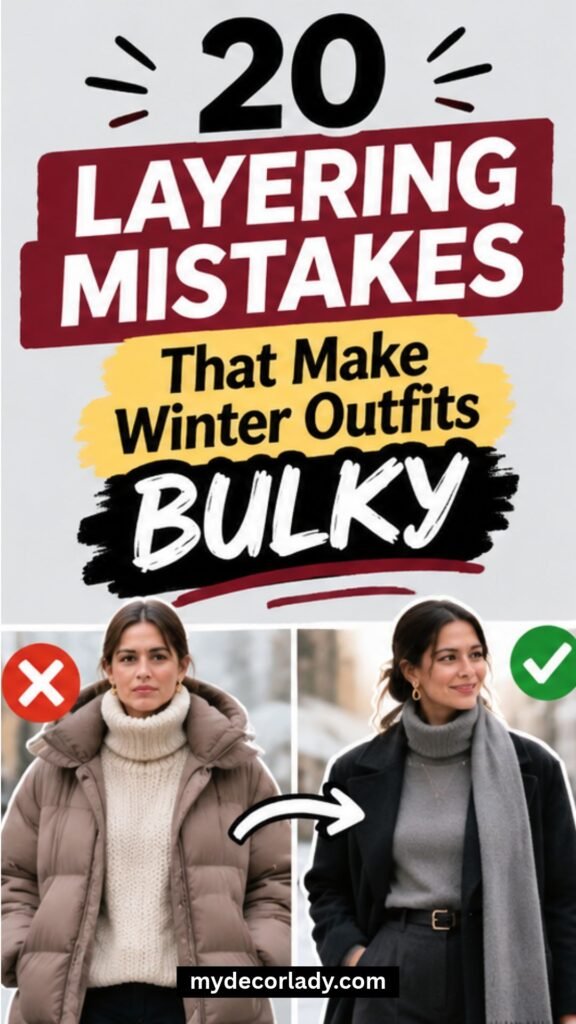
The secret to dressing well in winter isn’t wearing fewer clothes or sacrificing warmth for style. It’s understanding how different fabrics, lengths, proportions, and silhouettes work together. Even beautiful winter pieces can look unflattering when they’re layered without considering their weight or shape.
Sometimes, a simple change, such as swapping a chunky sweater for a fine-knit turtleneck or choosing a longer coat, can completely transform your appearance. The goal is to create warmth without unnecessary bulk and make every layer feel intentional.
If your winter outfits regularly end up looking oversized, shapeless, or heavier than you intended, these 20 common layering mistakes will help you understand what’s going wrong and how to fix it.
1. Wearing Too Many Thick Sweaters Together
One of the biggest winter layering mistakes is combining multiple chunky knits. A thick cable-knit sweater underneath a heavy cardigan and an oversized wool coat might sound cosy, but all those bulky fabrics compete for space. The result is often a stiff upper body, oversized arms, and a silhouette that feels unnecessarily heavy.
Styling Guide:
- Replace one chunky knit with a lightweight merino wool or cashmere sweater.
- Wear a fitted thermal or slim long-sleeve top underneath your favourite thick sweater.
- Save chunky knits for outfits where they can be the main statement piece.
- Choose a coat with enough room to accommodate your sweater without pulling around the shoulders.
2. Choosing the Wrong Base Layer
Your base layer creates the foundation for everything you wear on top. A loose cotton T-shirt or thick long-sleeve top can bunch up underneath sweaters, creating unwanted folds around the waist, sleeves, and shoulders. These small fabric bunches become even more noticeable when you add another layer.
Styling Guide:
- Choose fitted thermal tops made from lightweight materials that sit smoothly against your skin.
- Look for seamless or low-bulk designs to avoid visible lines.
- Try thin merino wool, thermal jersey, or moisture-wicking base layers.
- Match the neckline of your base layer to your outer top to prevent unnecessary fabric showing.
3. Layering Oversized Pieces From Head to Toe
Oversized clothing looks effortlessly fashionable, but wearing an oversized sweater, wide-leg trousers, a loose coat, and a large scarf together can make your outfit lose all its definition. The problem isn’t oversized clothing itself; it’s wearing too many relaxed silhouettes without creating balance.
Styling Guide:
- Pair an oversized sweater with straight-leg jeans or slim-fitting trousers.
- Balance wide-leg pants with a more structured or fitted top.
- Choose one oversized statement piece and keep the remaining layers relatively streamlined.
- Add a structured handbag or defined footwear to give the outfit a more polished finish.
4. Wearing a Thick Hoodie Under a Tight Jacket
A hoodie underneath a jacket is a classic casual winter combination, but the wrong fit can make it uncomfortable and bulky. When a thick hoodie is squeezed into a fitted denim jacket or narrow coat, the fabric gathers around the shoulders, arms, and back. It also restricts movement, making the outfit look awkward.
Styling Guide:
- Choose a lightweight hoodie when wearing a structured jacket.
- Look for jackets with relaxed sleeves and enough room through the shoulders.
- Try a zip-up hoodie instead of a heavy pullover to create a more adjustable silhouette.
- For extra warmth, wear a thin thermal underneath rather than adding another thick sweatshirt.
5. Ignoring the Length of Your Layers
Layer lengths can make a surprising difference to how balanced your winter outfit looks. When a long sweater, mid-length cardigan, and coat all end at slightly awkward points, they create several horizontal lines that can visually interrupt your silhouette. This can make even an otherwise beautiful outfit feel heavy.
Styling Guide:
- Experiment with contrasting lengths, such as a cropped jacket over a longer fitted top.
- Pair long cardigans with slim trousers or leggings for a cleaner shape.
- Avoid having multiple bulky layers end at exactly the widest part of your hips.
- Try a long coat over a shorter sweater to create a continuous vertical line.
6. Wearing Bulky Scarves With High-Neck Sweaters
A cosy oversized scarf can be the perfect winter accessory, but combining it with a thick turtleneck can create too much volume around the neck and shoulders. Instead of adding elegance, the combination can make the upper half of your outfit appear crowded.
Styling Guide:
- Wear a lightweight scarf with chunky turtleneck sweaters.
- Pair thick wool scarves with crew-neck or V-neck sweaters.
- Drape your scarf loosely rather than wrapping it several times around your neck.
- Choose a scarf in a complementary colour to create a coordinated look without adding visual clutter.
7. Wearing Multiple Oversized Cardigans
Cardigans are wonderful layering pieces, especially during transitional winter weather. However, wearing a loose cardigan over an oversized sweater or another thick cardigan creates unnecessary fabric around the arms and waist. The extra material can make your outfit look unstructured rather than comfortably relaxed.
Styling Guide:
- Wear a fitted long-sleeve top or lightweight turtleneck under an oversized cardigan.
- Choose a cardigan with a slightly open front to create a more relaxed vertical line.
- Try a fine-knit cardigan underneath a structured coat.
- If your cardigan is particularly chunky, let it serve as the main layering piece.
8. Choosing Coats That Are Too Tight for Layering
A beautiful winter coat can lose its appeal when it’s too small to accommodate the clothes underneath. Tight shoulders, stretched buttons, pulling sleeves, and fabric bunching are all signs that your outerwear isn’t designed for your usual winter layers. A coat should comfortably sit over your outfit without compressing everything.
Styling Guide:
- Check shoulder width and arm movement when trying on winter coats.
- Look for a slightly relaxed or straight-cut silhouette.
- Bring a typical winter sweater when shopping for a new coat.
- Consider structured wool coats with enough room through the chest and sleeves.
9. Mixing Too Many Heavy Fabrics
Winter fashion naturally involves heavier materials such as wool, fleece, leather, corduroy, and thick denim. However, combining several dense fabrics in one outfit can make the overall appearance feel visually overwhelming. A wool sweater, corduroy trousers, leather jacket, and heavy scarf may each look fantastic individually but can compete when worn together.
Styling Guide:
- Combine one heavy texture with lighter materials such as cotton, fine knits, or satin.
- Wear a leather jacket over a lightweight sweater instead of a thick sweatshirt.
- Pair corduroy trousers with a smooth-fitting top.
- Use texture contrast to create depth without adding unnecessary fabric.
10. Forgetting to Define Your Waist
When several layers fall loosely around your waist, your natural shape can disappear beneath the fabric. Long sweaters, oversized cardigans, and boxy coats can create a straight silhouette that looks heavier than intended. A little waist definition can make the entire outfit feel more intentional.
Styling Guide:
- Add a slim belt over a long cardigan or structured coat.
- Try a front tuck with lightweight sweaters when wearing jeans or tailored trousers.
- Choose coats with adjustable waist belts.
- Experiment with cropped knitwear that naturally highlights your waistline.
11. Wearing Thick Tops With Wide-Leg Trousers
Wide-leg trousers are comfortable, sophisticated, and easy to style during winter. However, pairing them with a thick oversized sweater and a bulky jacket can create too much volume on both the upper and lower halves of your body. The outfit may end up looking shapeless instead of effortlessly relaxed.
Styling Guide:
- Pair wide-leg trousers with fitted turtlenecks or fine-knit sweaters.
- Try a cropped sweater that finishes around your natural waist.
- Choose a structured coat to balance the relaxed shape of your trousers.
- Wear heeled ankle boots or sleek footwear to create a more elongated appearance.
12. Adding Too Many Accessories Around the Neck
Winter accessories are useful, but wearing a chunky scarf, thick hood, oversized collar, and statement necklace together can make the neckline look crowded. This is especially noticeable when your sweater already has a high neckline or decorative details.
Styling Guide:
- Choose one statement accessory around your neckline.
- Pair high-neck sweaters with simple earrings instead of bulky necklaces.
- Wear a lightweight scarf with coats that have oversized collars.
- Keep the neckline clean when your outfit already features a textured or patterned sweater.
13. Wearing Multiple Layers With Different Necklines
Layering a collared shirt under a crew-neck sweater, followed by a high-neck coat and a thick scarf, can create too many competing details around your face. While mixing necklines can look stylish, adding several different shapes without a clear visual plan can make the outfit appear cluttered.
Styling Guide:
- Keep your base layer simple when wearing a statement neckline.
- Try a collared shirt underneath a V-neck sweater for a classic layered look.
- Pair a turtleneck with a simple open-front cardigan or coat.
- Avoid combining too many visible collars, hoods, and scarf details.
14. Wearing Thick Leggings Under Already Heavy Trousers
Layering leggings underneath trousers is a practical way to stay warm, but choosing thick fleece-lined leggings under already heavy denim or corduroy can make the lower half of your outfit feel uncomfortable. Extra fabric around the thighs and knees can also affect how your trousers fall.
Styling Guide:
- Choose thin thermal leggings designed specifically for layering.
- Wear lightweight merino wool base layers underneath trousers.
- Look for trousers with a comfortable straight or relaxed fit.
- Consider fleece-lined trousers when you need extra warmth without adding a separate thick layer.
15. Choosing Bulky Puffer Jackets Over Bulky Sweaters
Puffer jackets are winter essentials, but they already have considerable volume because of their insulated construction. Adding an oversized cable-knit sweater underneath can make the combination look excessively padded. It may also prevent the jacket from sitting properly around the shoulders and arms.
Styling Guide:
- Wear slim-fit thermal tops or lightweight knitwear underneath puffers.
- Choose a slightly oversized puffer if you regularly wear sweaters underneath.
- Pair voluminous jackets with straight-leg or slim trousers.
- Consider a lightweight down jacket when you need warmth without excessive outer volume.
16. Neglecting the Power of Monochromatic Layering
Mixing several colours isn’t a mistake, but too many contrasting shades can make a heavily layered outfit appear visually fragmented. When every layer has a different colour, pattern, and texture, the eye moves between multiple elements instead of seeing one coordinated outfit.
Styling Guide:
- Experiment with different shades of one colour, such as cream, beige, and camel.
- Try an all-black winter outfit with contrasting textures for added interest.
- Use one accent colour through your scarf, handbag, or footwear.
- Keep your base layers neutral when your outerwear features a bold colour.
17. Wearing Long Tops Under Cropped Jackets Without Balancing Proportions
A long tunic, oversized shirt, or bulky sweater underneath a cropped jacket can sometimes create an awkward layered effect. The extra fabric extending below the jacket may visually shorten your legs, particularly when paired with low-rise trousers or wide silhouettes.
Styling Guide:
- Pair cropped jackets with fitted tops that sit close to your waist.
- If you want a longer layer underneath, choose a lightweight shirt with a clean hemline.
- Wear high-waisted trousers to create a more balanced proportion.
- Keep the cropped jacket structured to provide definition to the upper half.
18. Ignoring Sleeve Bulk
Sleeves are often overlooked when planning winter layers. Wearing a loose shirt underneath a thick sweater and then adding a fitted coat can create folds around your elbows and upper arms. These fabric bunches not only look untidy but can also make moving your arms uncomfortable.
Styling Guide:
- Choose fitted base layers with smooth sleeves.
- Look for sweaters with streamlined or slightly relaxed sleeves rather than exaggerated volume.
- Avoid pushing several thick sleeves up your arms, as this creates additional bunching.
- Try coats with wider armholes if you frequently wear layered knitwear.
19. Wearing Too Many Patterns and Textures Together
Winter clothing often features beautiful patterns, from Fair Isle sweaters and plaid coats to cable knits and herringbone trousers. The problem starts when every layer tries to become the centre of attention. Too many visual details can make an outfit look busy and less polished, even when the individual pieces are stylish.
Styling Guide:
- Let one patterned piece become the focal point of your outfit.
- Pair plaid trousers with a solid-coloured sweater and simple coat.
- Combine textured knitwear with smooth fabrics such as cotton or leather.
- Use neutral accessories to bring the entire outfit together.
20. Forgetting That Every Layer Should Have a Purpose
Perhaps the most common winter styling mistake is adding clothes simply because the weather is cold or because more layers seem fashionable. When every piece adds unnecessary thickness without providing warmth, structure, or visual interest, your outfit becomes complicated. Good layering should feel comfortable, look coordinated, and serve a practical purpose.
Styling Guide:
- Start with a lightweight thermal base layer that provides warmth without bulk.
- Add one insulating layer, such as a fine-knit sweater or fleece.
- Finish with weather-appropriate outerwear that protects you from wind and cold.
- Use accessories strategically rather than adding them automatically.
- Before leaving home, remove any layer that doesn’t improve warmth, comfort, or the overall look.
Conclusion
Creating stylish winter outfits doesn’t mean wearing fewer clothes or giving up your favourite chunky sweaters, oversized coats, and cosy scarves. It simply means understanding how to combine different pieces without allowing unnecessary fabric to overwhelm your silhouette.
The easiest way to avoid bulky winter outfits is to start with a lightweight base, add insulation through carefully selected middle layers, and finish with outerwear that offers enough room for comfortable movement. Pay attention to proportions, fabric weights, sleeve lengths, and the way each piece sits over the previous one.
Remember, you don’t need an entirely new winter wardrobe to improve your outfits. Sometimes, switching to a thinner base layer, choosing a more structured coat, or balancing an oversized sweater with fitted trousers makes all the difference.
Winter layering should make you feel warm, confident, and effortlessly stylish. Once you understand what works together, you can enjoy all the cosy fashion pieces you love without feeling like you’re carrying your entire wardrobe around!