A double height dining room is one of those architectural features that stops people in their tracks — and then leaves them wondering what to actually do with all that vertical space.
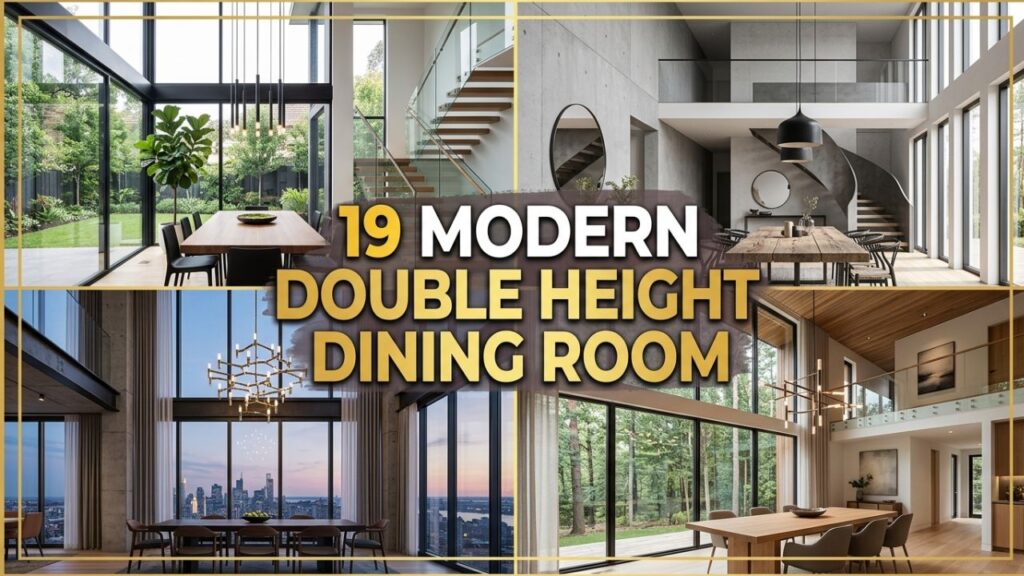
Grand ceilings can feel cold or cavernous if you don’t approach them thoughtfully. But when the design is right, a dining room double height setup becomes the most memorable space in a home.
This guide walks through 19 modern design ideas that make tall ceilings work for you, not against you.
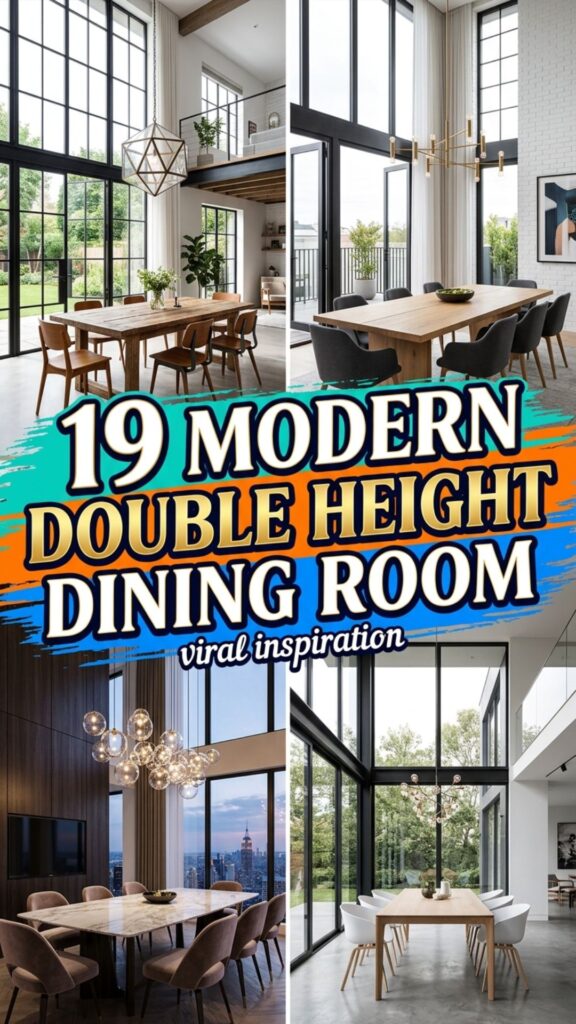
You’ll learn how to choose the right lighting scale, warm up hard surfaces, handle acoustics, decorate tall walls, and balance that sense of openness with genuine comfort. Whether you’re building from scratch or refreshing an existing space, these ideas give you a practical starting point.
1. Anchor the Room with an Oversized Pendant Light
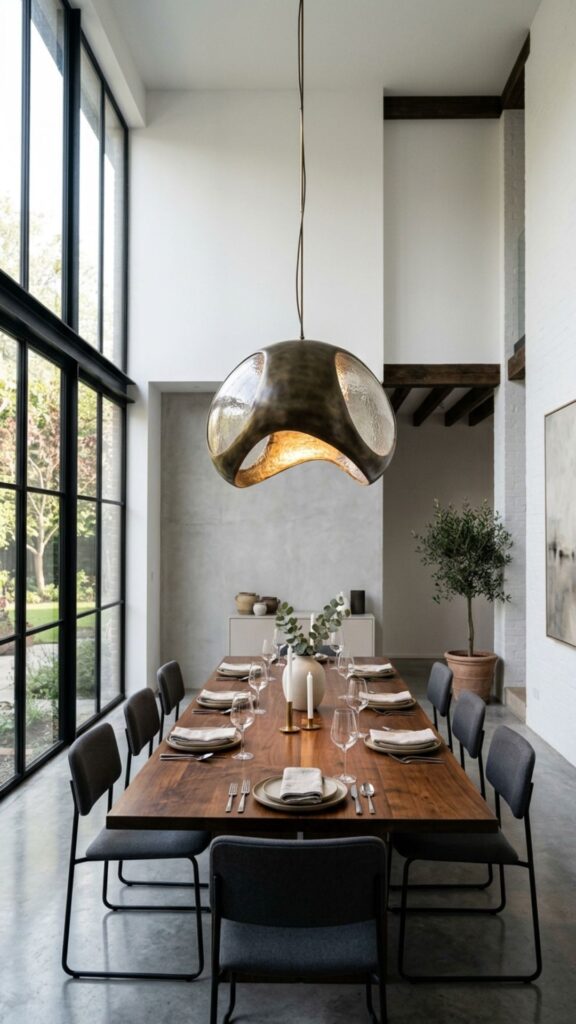
Scale is everything in a double height dining room, and nothing sets the tone faster than the right pendant light. A single oversized fixture — whether it’s a sculptural rattan ball, a tiered chandelier, or a large drum shade — draws the eye upward and gives the room a visual center of gravity.
Choose a pendant that hangs low enough to feel connected to the table below. A common mistake is hanging the light too high in tall spaces, which makes it disappear. Position the bottom of the fixture roughly 30 to 36 inches above the tabletop for the best visual balance and functional light output.
2. Stack Two Pendants for a Modern Layered Effect
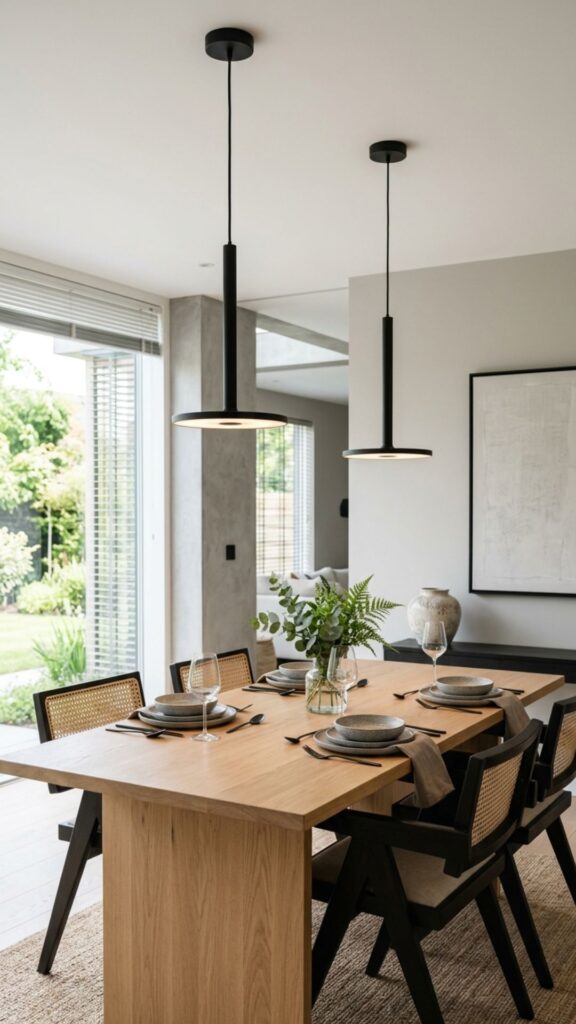
If one oversized fixture feels too dominant for your taste, stacking two matching pendants at slightly different heights creates a contemporary, layered effect that fills vertical space without overwhelming it. This works especially well in rectangular dining rooms with high ceilings.
Use pendants in the same finish and style but vary the drop cord length by 12 to 18 inches between them. The asymmetry adds visual interest, while the matching design keeps the look cohesive. Matte black, aged brass, and brushed nickel all translate well in double height spaces.
3. Use Floor-to-Ceiling Curtains to Add Warmth
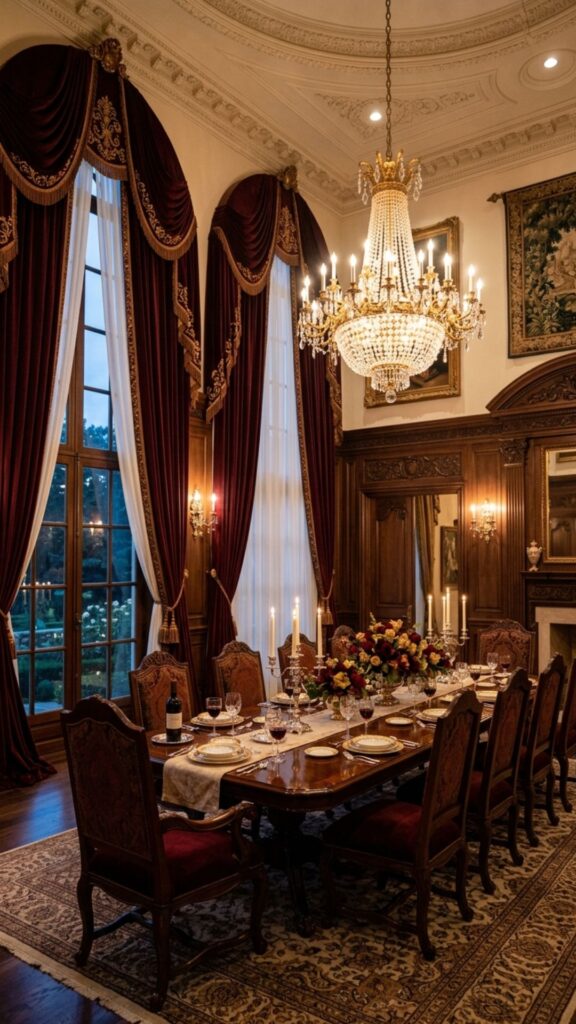
Tall walls can feel stark and cold, and sound bounces off hard surfaces in a way that makes conversation uncomfortable. Floor-to-ceiling curtains — even on walls without windows — absorb sound, add softness, and make a double height dining room feel more intimate.
Choose a heavyweight fabric like velvet, linen, or thick cotton in a tone that complements your walls. Mounting curtain rods close to the ceiling and letting the fabric pool slightly at the floor creates the illusion of even greater height while adding warmth that paint alone can’t deliver.
4. Install a Statement Wall of Vertical Shiplap or Paneling
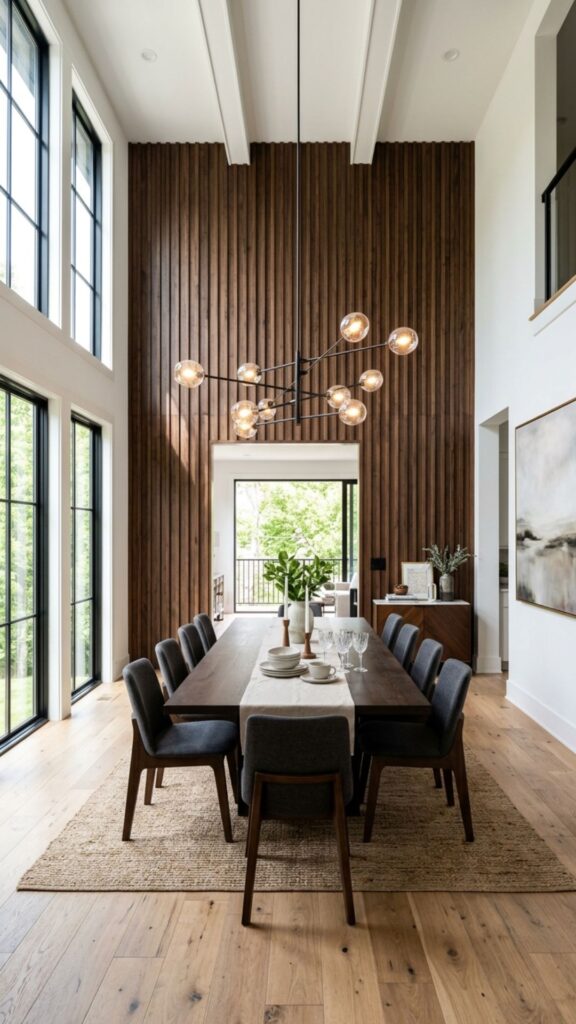
Vertical wall paneling is one of the most effective ways to handle a tall wall in a dining room double height space. It draws the eye upward intentionally, adds texture to an otherwise flat surface, and gives the room an architectural quality that feels designed rather than accidental.
Shiplap, board-and-batten, and wide plank paneling all work well. Paint it the same color as the rest of the wall for a subtle, tonal effect, or go bolder with a contrasting color below a picture rail line for a two-tone look. Either approach breaks up the visual mass of a tall wall in a way that feels intentional.
5. Hang a Large-Scale Piece of Art at Eye Level
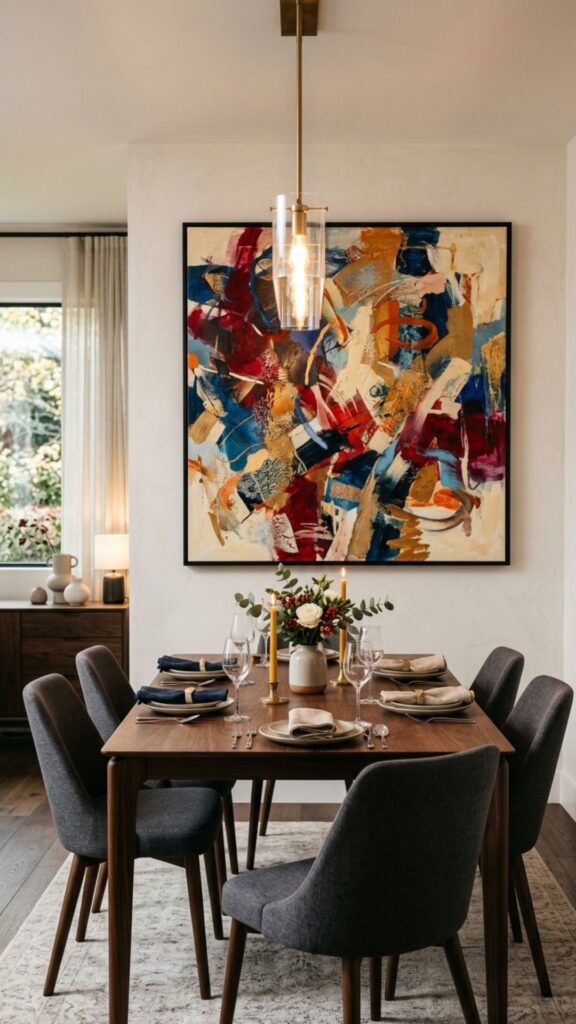
In a room with double height ceilings, the instinct is to fill the wall from top to bottom. Resist it. A single large artwork hung at eye level — where people actually look while seated — creates a focal point that grounds the space and makes the room feel more personal.
The art should be large enough to hold its own against the tall wall. As a general rule, aim for a piece that spans at least two-thirds the width of your dining table. A single statement canvas, triptych, or oversized framed print at seated eye height communicates confidence and calm rather than an attempt to fill every inch of wall.
6. Add a Mezzanine Railing as a Design Feature
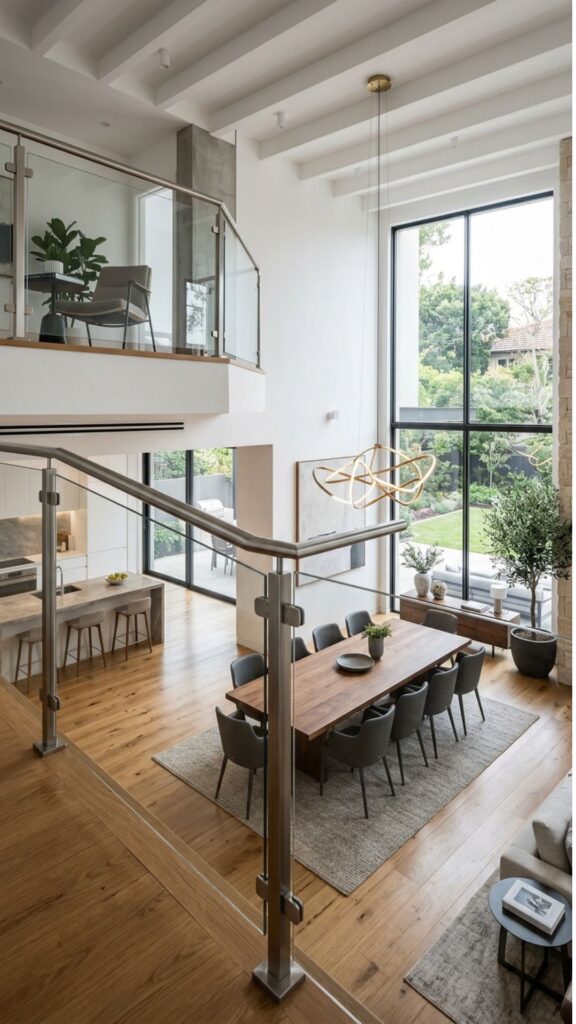
If your double height dining room is overlooked by a mezzanine or upper floor, the railing becomes an active part of the design. A modern cable railing, open steel frame, or warm wood balustrade adds visual interest to the upper volume of the space while keeping the dining area below feeling open and connected.
Choose a railing material that ties into your dining room’s palette. In modern spaces, powder-coated black steel with horizontal cables reads as clean and graphic. In warmer, more organic spaces, natural wood with minimal hardware keeps the mezzanine feeling grounded rather than industrial.
7. Choose a Dining Table That Commands the Space
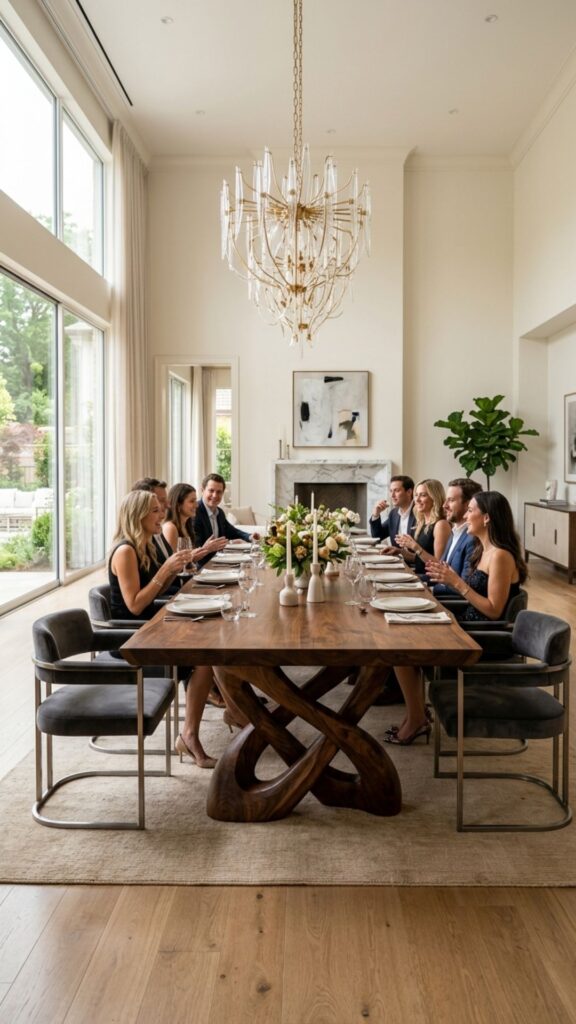
A dining room double height setup needs furniture with presence. A slim, minimalist table can disappear in a large, tall space — choose a table with visual weight, whether that means a thick stone top, a solid wood slab, or a sculptural base in metal or concrete.
The table doesn’t need to be enormous, but it should feel like it belongs in the space rather than floating in the middle of it. Round tables work especially well in square dining rooms with tall ceilings — they soften the geometry and encourage conversation, which counteracts the formal, echoey quality tall rooms can have.
8. Layer Rugs Under the Table to Define the Dining Zone
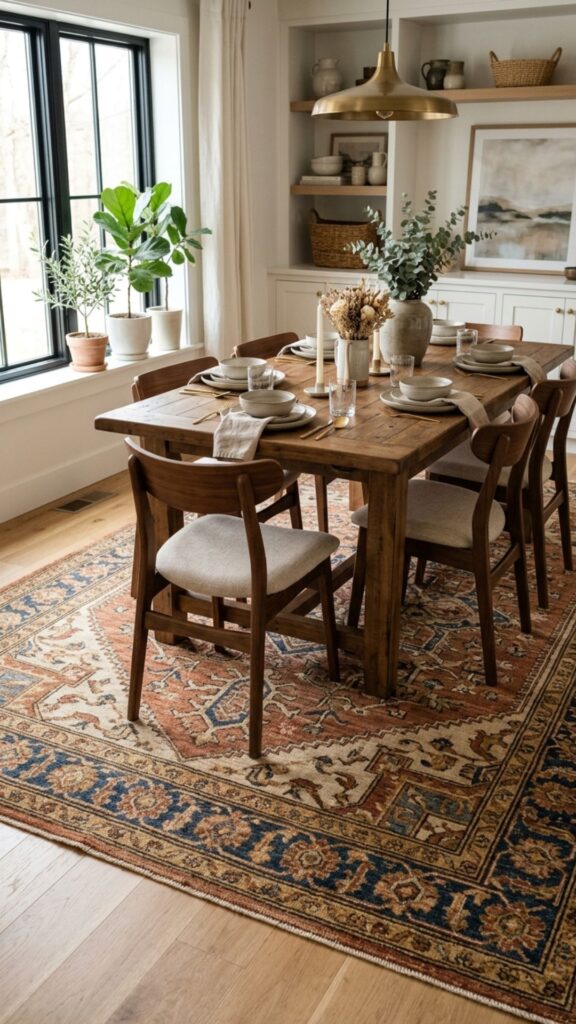
In an open-plan home or a large double height dining room, the table can feel adrift without a visual boundary beneath it. A large area rug under the dining table defines the zone, adds texture underfoot, and reduces the echo that hard flooring amplifies in tall spaces.
Size up — most people choose rugs that are too small for dining rooms. The rug should extend at least 24 to 30 inches beyond the table on all sides so chairs remain on the rug even when pulled out. Natural fiber rugs in sisal, jute, or wool add warmth without competing with other design elements.
9. Mount Sconces at Mid-Wall Height for Ambient Glow
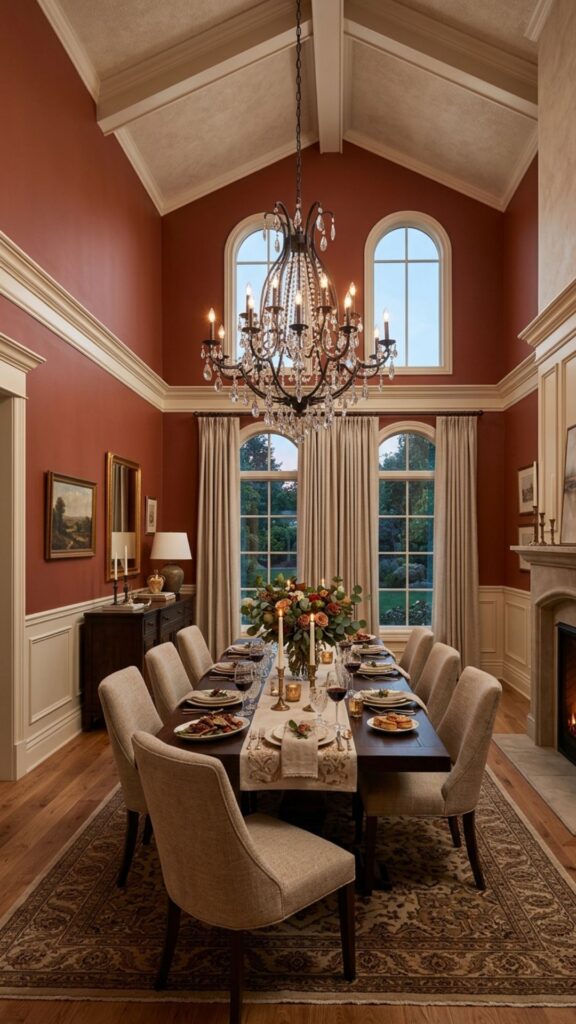
A single overhead fixture rarely provides enough light in a double height dining room, and it certainly doesn’t address the coldness of tall walls after dark. Wall sconces mounted at mid-wall height — roughly six to seven feet up — add a warm layer of ambient light that makes the space feel more intimate.
This is especially effective on the wall behind or beside the dining table. Sconces in a warm metal finish with exposed bulbs or fabric shades cast a soft glow that overhead lighting can’t replicate. They also break up the visual expanse of a tall wall in a way that feels natural rather than decorative for decoration’s sake.
10. Incorporate Tall Potted Plants for Vertical Life
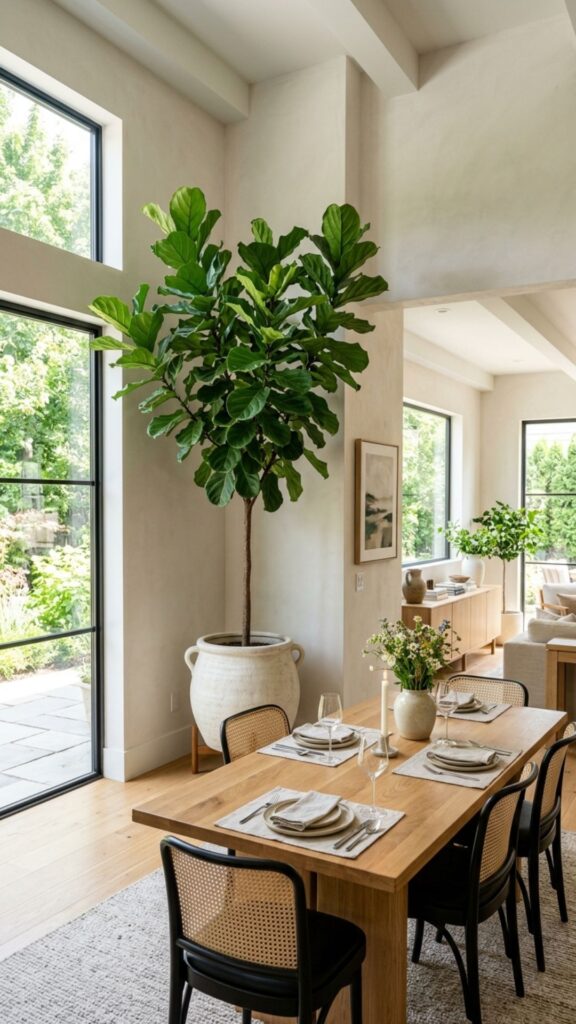
One of the most underused tools in a double height dining room is a tall indoor plant. A fiddle leaf fig, olive tree, or large monstera in a generous planter adds vertical interest, softens hard architectural lines, and introduces the kind of organic texture that makes a room feel lived-in.
Position the plant in a corner near natural light or beside a window, where it fills vertical space without crowding the dining area. A well-chosen planter — stone, ceramic, or woven basket — integrates the plant into the room’s design rather than making it look like an afterthought brought in from another room.
11. Use Exposed Beams to Add Warmth and Structure
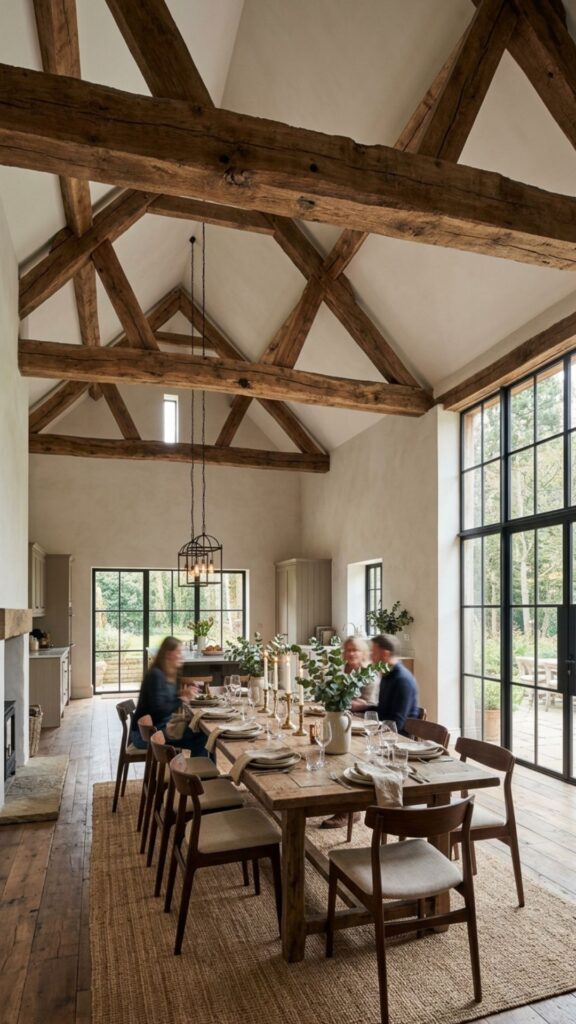
Exposed ceiling beams — whether structural or decorative — transform an open, neutral ceiling into a defining architectural element. In a dining room double height space, beams break up the ceiling plane, add texture overhead, and give the room a sense of structure that flat ceilings lack.
Stained wood beams add warmth in traditional, farmhouse, and transitional dining rooms. Painted beams in the same color as the ceiling create a subtler effect that adds dimension without drawing too much attention. Either approach makes a double height ceiling feel purposeful rather than simply tall.
12. Install High Windows to Flood the Room with Light
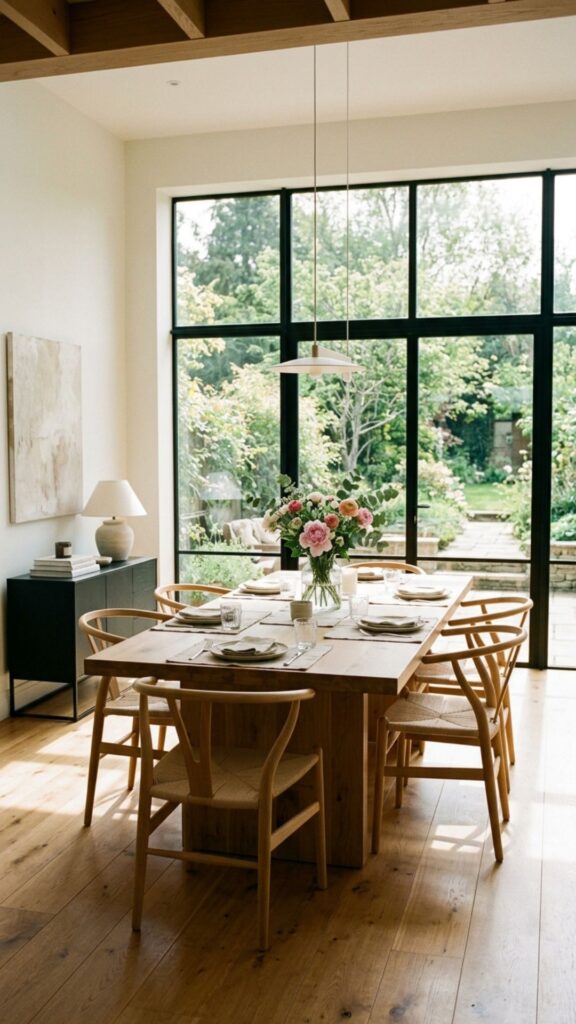
Double height spaces have a natural advantage: wall space that extends well above standard window height. Floor-to-ceiling or high clerestory windows bring in daylight from a higher angle, which fills the room more evenly and reduces harsh shadows at the dining level.
If the windows are already in place, keep them as unobstructed as possible. Minimal hardware, sheer panels that allow light through, or no treatment at all keeps the upper portion of the room bright and visually open. For privacy at lower levels, simple roller blinds in a tone-on-tone fabric handle the practical need without blocking upper light.
13. Paint the Upper Walls a Deeper Tone
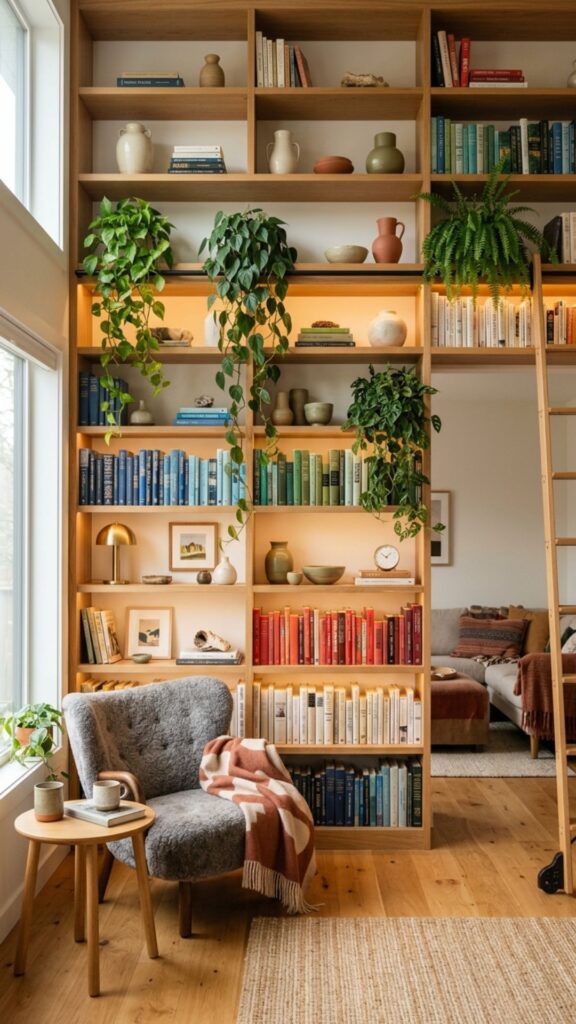
Painting the upper portion of a double height dining room a slightly deeper tone than the lower walls is a technique borrowed from set design: it draws the ceiling visually downward and makes the room feel more contained. This is one of the most effective ways to make a tall space feel cozy rather than cavernous.
Try a soft warm white below the midpoint and a muted greige or warm taupe above it. The transition point is usually where the upper windows begin or where the room’s architectural details change. You don’t need a sharp contrast — a tone or two darker is often enough to shift how the space feels.
14. Bring In a Large-Scale Chandelier with Warm Bulbs
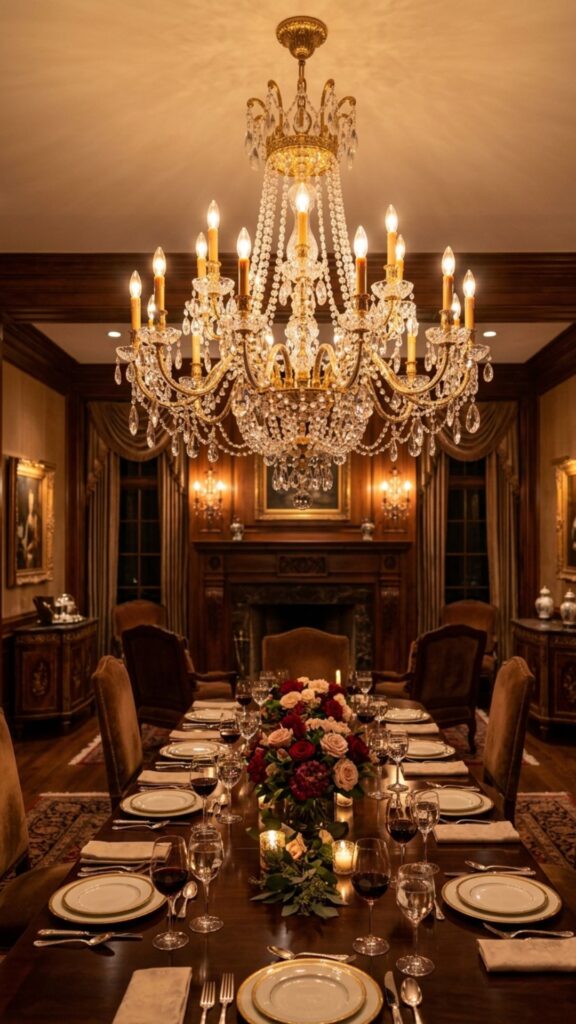
A chandelier with multiple arms and warm Edison or amber bulbs fills vertical space in a dining room double height setup while casting light in every direction. The warmth of the bulb color matters more than most people realize — cool white bulbs in a tall room make the space feel sterile, while warm tones (2700–3000K) make it feel inviting.
A multi-arm chandelier with visible bulbs also adds visual complexity to the upper volume of the room, which helps fill the space without adding physical objects. Choose a finish that connects to other metal accents in the room — drawer pulls, chair legs, or cabinet hardware — for a coherent design.
15. Use Dark Flooring to Ground the Space
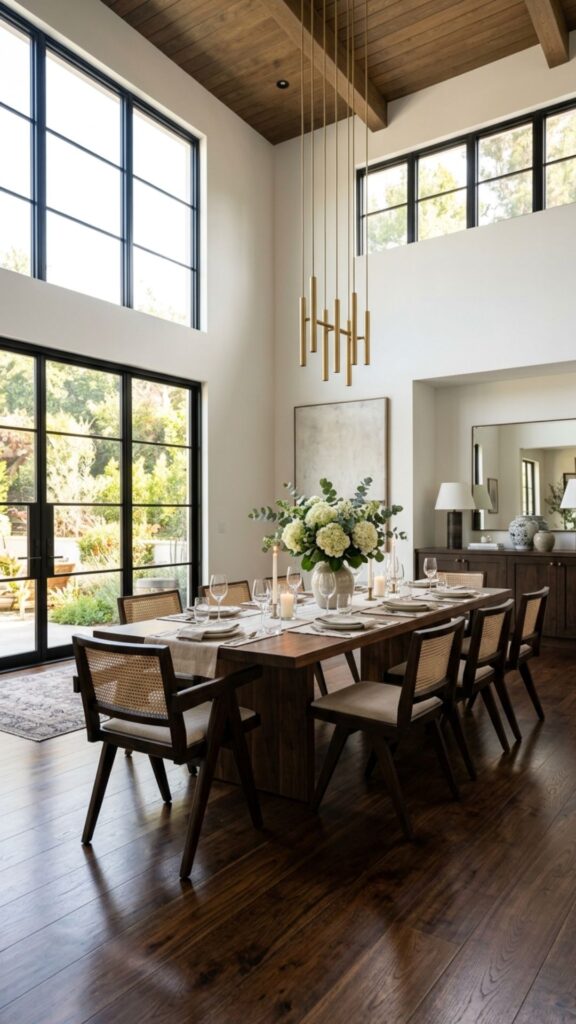
In a double height dining room, the floor is the element closest to the people in the room, and its tone sets the emotional register for everything above it. A dark floor — smoked oak, charcoal tile, or dark-stained concrete — grounds the space and prevents the room from feeling like it floats upward without a base.
Dark flooring also reflects less light, which reduces the bright, hollow feeling that polished light floors can create in tall rooms. Paired with warm-toned furniture and textiles, a dark floor makes a double height dining room feel anchored and intentional rather than uncommitted.
16. Add an Acoustic Panel or Textile Wall Hanging
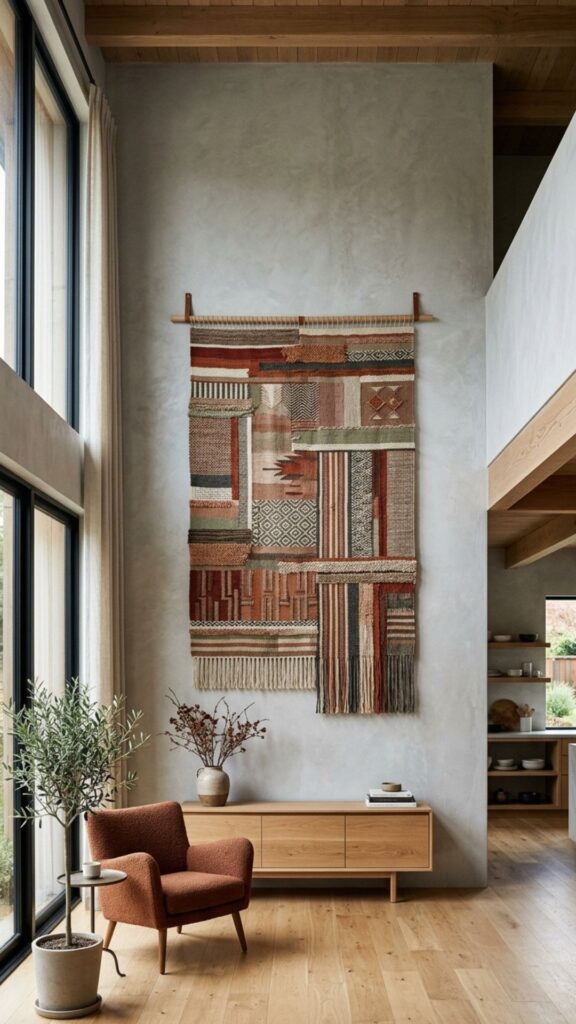
Echo is a real challenge in double height dining rooms, especially those with hard floors, glass, and minimal soft furnishings. A large textile wall hanging — a woven tapestry, macramé panel, or fabric art piece — absorbs sound in a way that also looks completely intentional.
Acoustic panels designed for residential spaces are another option and come in fabric-wrapped formats that read more like art than technical installation. Either approach makes conversation across the dining table noticeably more comfortable by reducing the hard reflective surfaces that amplify sound in tall rooms.
17. Frame the Dining Area with an Interior Arch
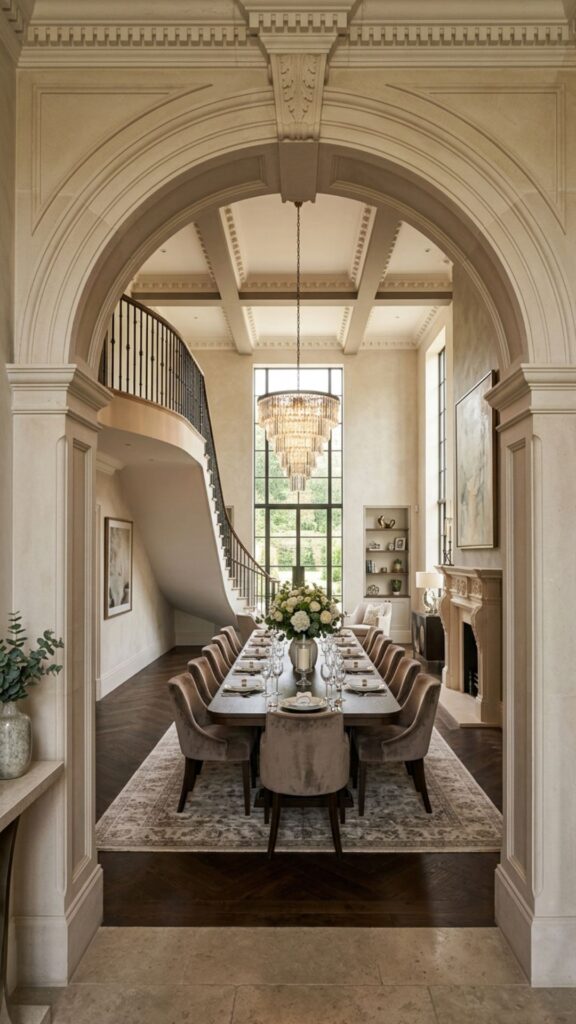
An archway framing the entry into the dining room creates a sense of arrival that heightens the drama of walking into a double height space. Whether it’s a plaster arch, a wood-framed opening, or a painted arch applied directly to the wall, the curved form softens the hard geometry of a tall room.
Interior arches work best when the arch height reflects the room’s scale — in a double height space, a taller arch that extends well above standard door height feels proportional. Paint the arch interior a contrasting tone to define it clearly, or keep it the same color for a more subtle architectural effect.
18. Combine Open Shelving at Different Heights
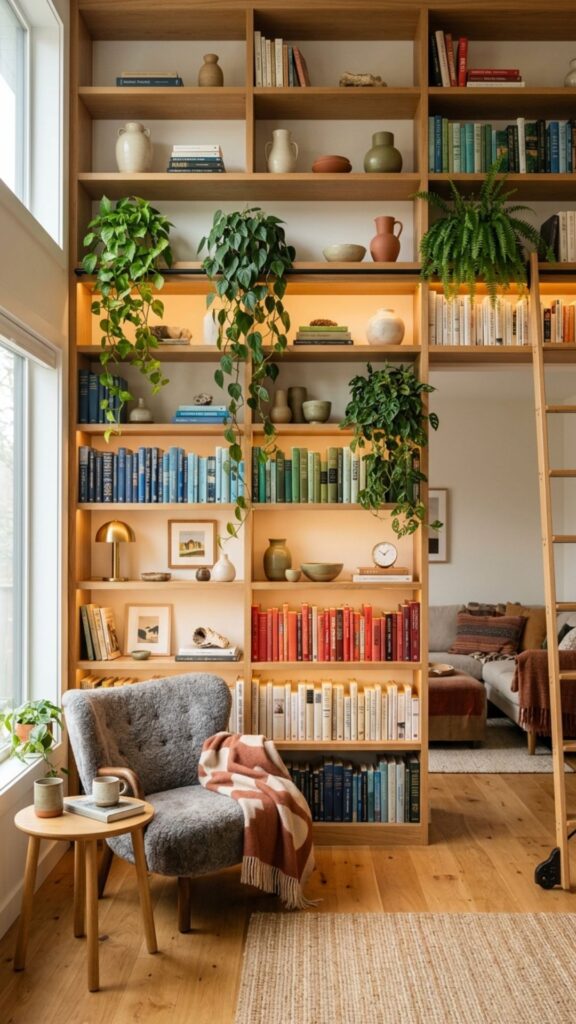
Built-in or floating shelves that extend from low on the wall to well above head height take full advantage of a double height dining room’s vertical space. Lower shelves hold serving items, barware, and books within easy reach, while upper shelves display ceramics, plants, or objects that add height without needing to be regularly accessed.
Keep the upper shelves less cluttered than the lower ones. A few carefully chosen objects at height — a large ceramic vase, a trailing plant, an oversized lantern — look purposeful and interesting from across the room. The gradation from functional lower shelves to decorative upper ones reflects how real people actually use a dining room.
19. Let the Architecture Speak — Resist Over-Decorating
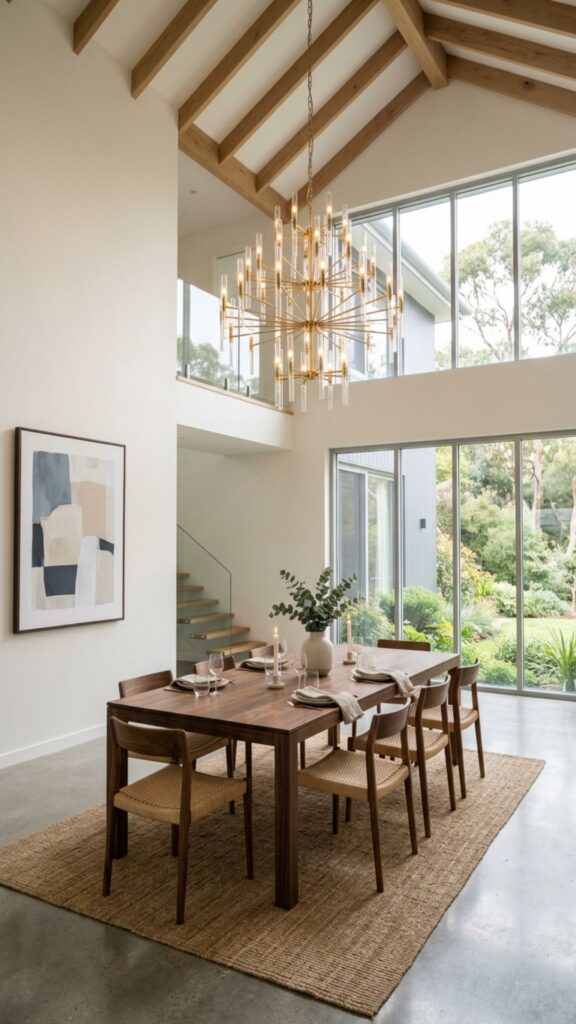
One of the most common mistakes in double height dining rooms is overcompensating for the scale with too much furniture, too many objects, and too many competing focal points. The architecture itself is the feature — good design in a tall space often means editing down rather than adding more.
Choose one dominant statement: a lighting fixture, a wall treatment, or a view. Let the other elements support it quietly. Fewer, larger pieces always read better than many smaller ones in a double height room. When in doubt, step back and live with less for a few weeks — you’ll quickly identify what the room actually needs versus what feels like filling space for its own sake.
Conclusion
A double height dining room doesn’t need to feel cold, echoey, or overwhelming. With the right choices — proper lighting scale, soft materials, defined zones, and a restrained approach to décor — tall ceilings become an asset rather than a design challenge.
Start with the element that bothers you most about your current space. If it’s the echo, add textiles. If it’s the lighting, rethink the fixture scale. If it’s the emptiness of the walls, pick one idea from this list and commit to it fully before adding more.
Pick one design from this guide and take action this week. Your dining room already has the bones — now it just needs the details that make it feel like home.
What is a double height dining room?
A double height dining room has a ceiling that spans two full floors in height, typically between 16 and 22 feet. The term refers to the vertical volume of the space rather than the floor area. These rooms are common in contemporary homes, converted lofts, and open-plan designs where the upper floor is set back to expose the full ceiling height below.
How do you make a double height dining room feel cozy?
Layer soft materials — curtains, rugs, upholstered chairs — and use warm-toned lighting at multiple heights. Hanging a pendant light low over the table, adding wall sconces at mid-height, and choosing warm bulb temperatures (2700–3000K) all reduce the cold, echoey quality that tall rooms can have. Dark flooring and deeper paint tones on upper walls also help visually lower the ceiling and create a more enclosed feel.
What size pendant light works in a double height dining room?
Scale up significantly. In a standard room, a 20 to 24-inch pendant works over a dining table. In a double height space, fixtures between 30 and 48 inches in diameter are more appropriate, and a chandelier with multiple arms can go larger still. The key is hanging it at the right height — the bottom of the fixture should be 30 to 36 inches above the tabletop regardless of how tall the ceiling is.
How do you handle acoustics in a tall dining room?
Hard surfaces — concrete, glass, tile, and painted plaster — reflect sound and create echo. Counter this with soft, sound-absorbing materials: a large area rug, upholstered dining chairs, heavy curtains, and textile wall art all help. Acoustic panels designed for residential spaces can be wrapped in fabric and function as wall décor while significantly reducing reverberation.