Most homes don’t have a dedicated home office. What they do have is a dining room — and increasingly, that space is being asked to do double duty. Whether you need a spot for remote work, homework, paying bills, or managing the household schedule, a well-planned dinning room desk setup can give you a real workspace without sacrificing the room’s primary purpose.
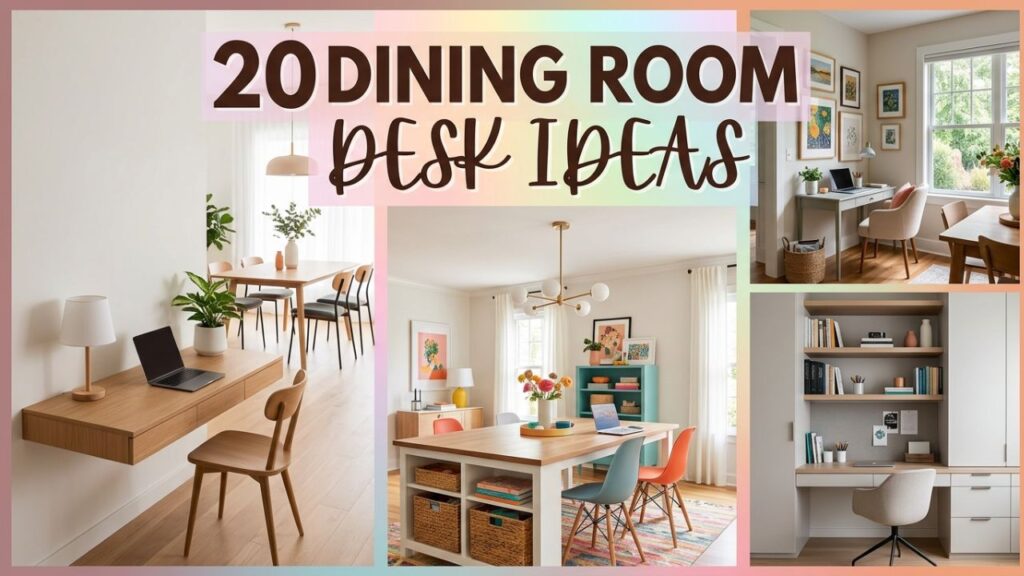
The challenge is always the same: how do you fit a functional desk into a room built for eating, without making it feel cramped or cluttered? This guide covers 20 practical ideas that real designers and homeowners use to make it work.
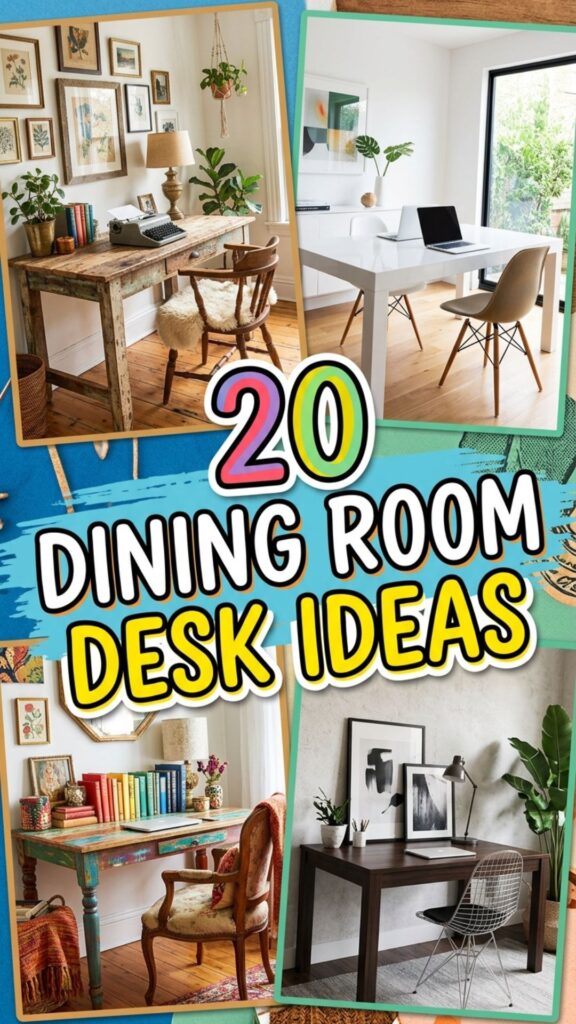
You’ll find solutions for tiny apartments, open-concept family spaces, and everything in between — with specific advice on size, storage, traffic flow, and how to keep the work stuff out of sight when guests arrive.
1. Wall-Mounted Fold-Down Desk
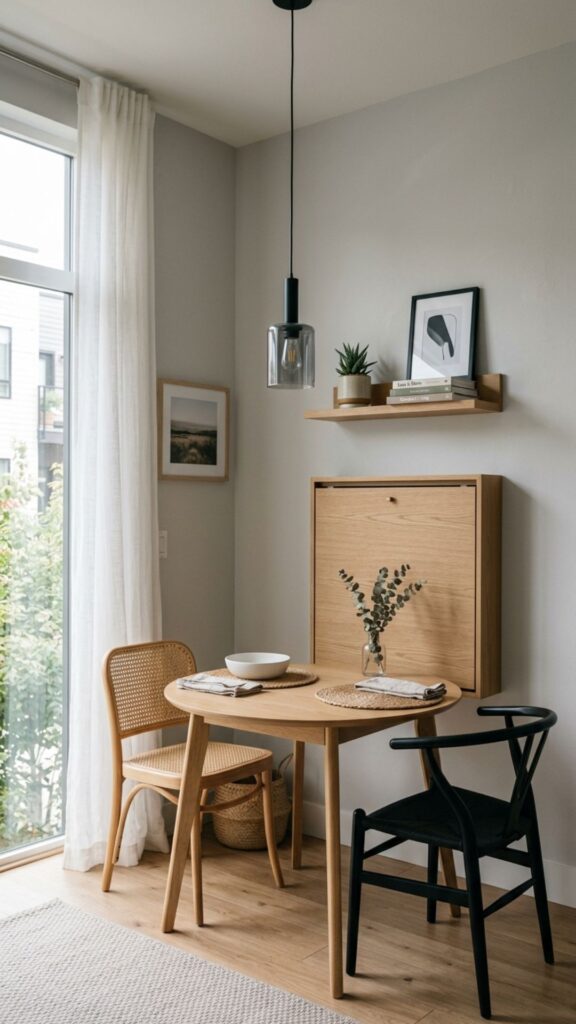
A fold-down desk mounted to the wall is one of the most effective dinning room desk solutions for small spaces. When you’re not using it, the surface folds flat against the wall, leaving the room looking clean and uncluttered. When work calls, you pull it down, and you have a proper surface in seconds. Most wall-mounted fold-downs offer a work area of around 24 to 30 inches wide — enough for a laptop and notebook.
Install it on a wall that doesn’t interrupt traffic flow to the dining table, ideally near an outlet. Choose a finish that matches your dining room furniture — white for a modern look, natural wood for a warm transitional feel. Add a small pegboard or floating shelf directly above it to hold supplies, so the desk itself stays clear when you fold it up.
2. Built-In Alcove Desk
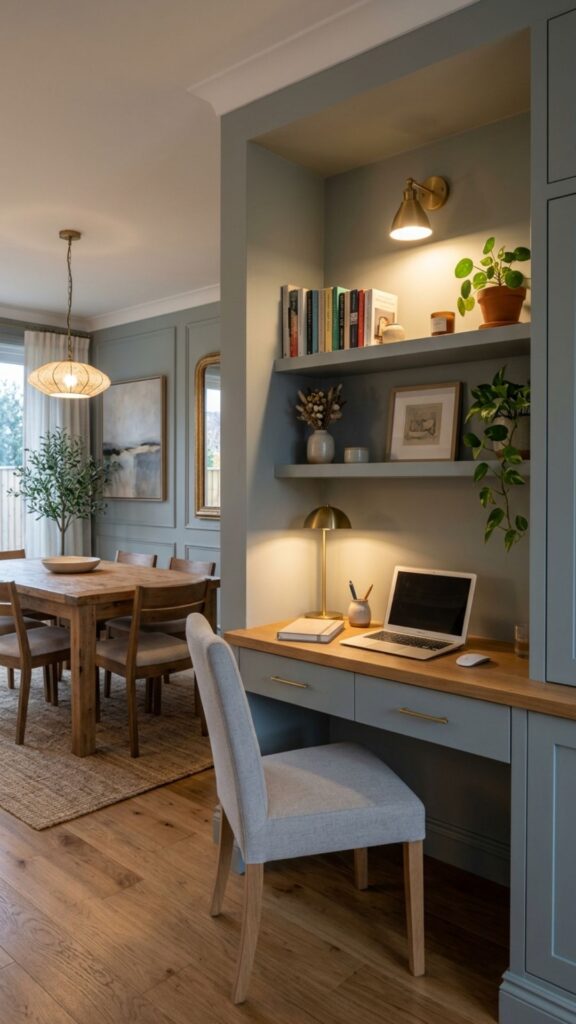
If your dining room has an alcove, recessed wall, or unused corner nook, a built-in desk is one of the smartest things you can do with that space. Built-ins use every inch efficiently and look intentional rather than improvised. A custom or semi-custom built-in can include drawers, shelves, and cabinets that keep all your work materials neatly contained.
The key is to design the built-in so it reads as part of the room’s architecture rather than a separate piece of furniture. Use the same paint color on the desk surround as the walls, or match the wood finish to your dining chairs. A built-in alcove dinning room desk works particularly well in older homes with interesting architectural features that already define separate zones within the room.
3. Console Table Desk Behind the Sofa or Dining Chairs
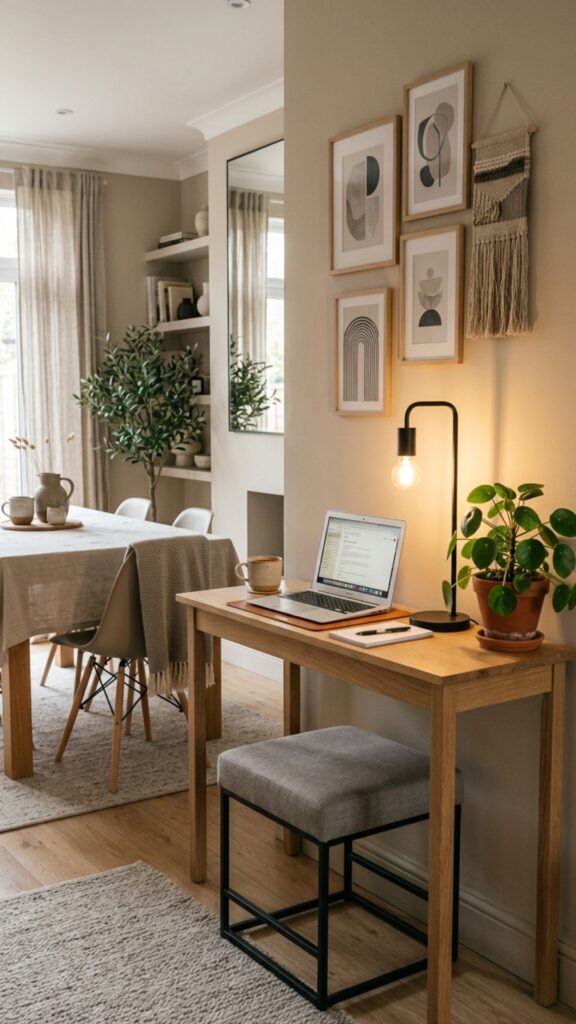
A slim console table positioned along one wall of the dining room pulls double duty beautifully. During the day, it functions as a dinning room desk — laptop open, a cup of coffee nearby. For dinner parties, it becomes a sideboard for serving dishes or drinks. The surface depth of most console tables (12 to 16 inches) is shallow enough that it doesn’t eat into the room.
Choose a console table in a finish that complements your dining table. If your dining table is dark walnut, a matching walnut console creates visual cohesion. Style the top with a small lamp, a plant, and minimal desk accessories so it always looks intentional. Push a compact stool or bench underneath during non-work hours to keep the area tidy.
4. Murphy Bed Cabinet Desk (Dining-Compatible Version)
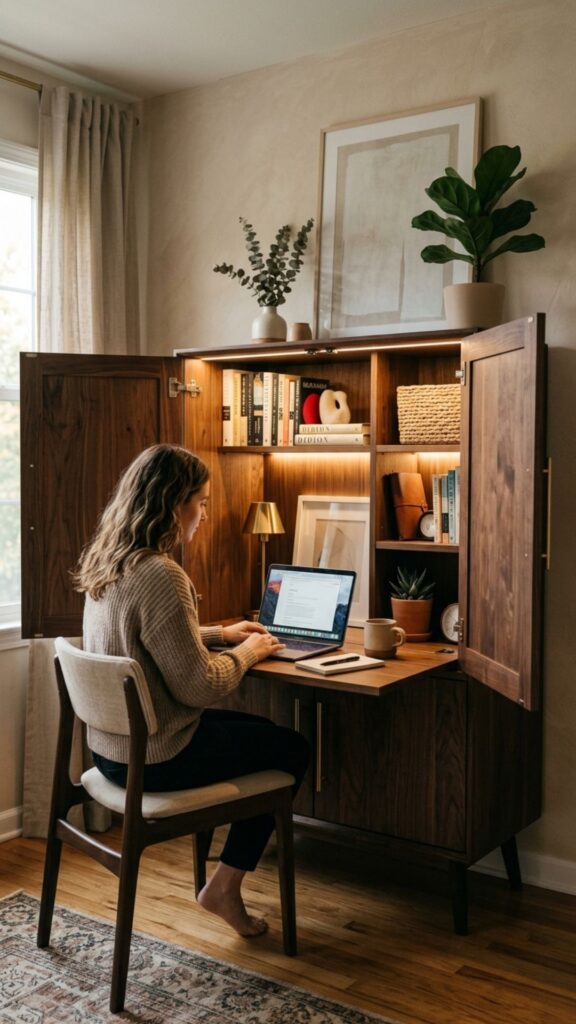
Murphy-style cabinet desks — the kind that fold out from inside a cabinet — aren’t just for bedrooms. In a dining room, a wall cabinet that conceals a full desk surface is one of the cleanest dinning room desk options available. When closed, it looks exactly like a buffet or display cabinet. Open it, and a full 48-inch work surface folds out, often with built-in shelves and a power strip.
This approach works especially well in open-plan dining areas where you want the workspace to completely disappear at the end of the day. Look for versions with a soft-close mechanism so the transition is smooth and quiet. Many are available in furniture-grade finishes that match traditional or transitional dining room aesthetics.
5. Corner Desk in the Dining Room
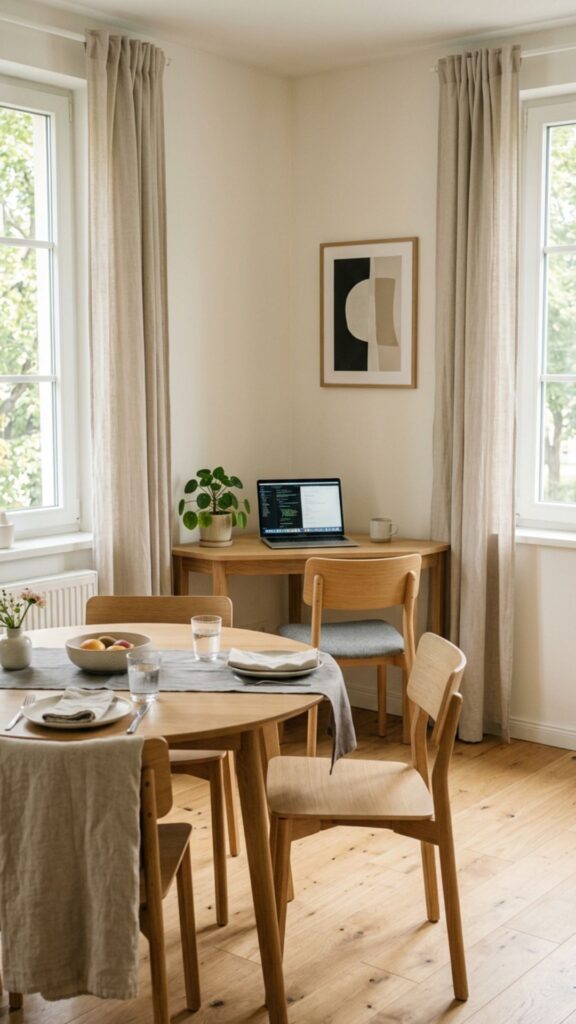
Corners are frequently wasted in dining rooms. A well-chosen corner desk uses that dead space productively without taking square footage away from the dining area itself. An L-shaped or simple triangular corner desk tucked behind the dining table can provide a surprisingly generous work surface while barely registering in the room’s overall layout.
Keep the corner desk low-profile — no towering hutches or bulky overhead storage. A clean, simple surface at desk height (28 to 30 inches) with a small drawer unit underneath keeps the look streamlined. Use a desk chair that can also serve as an occasional dining chair so it doesn’t look out of place when pulled up to the table for meals.
6. Floating Shelf Desk
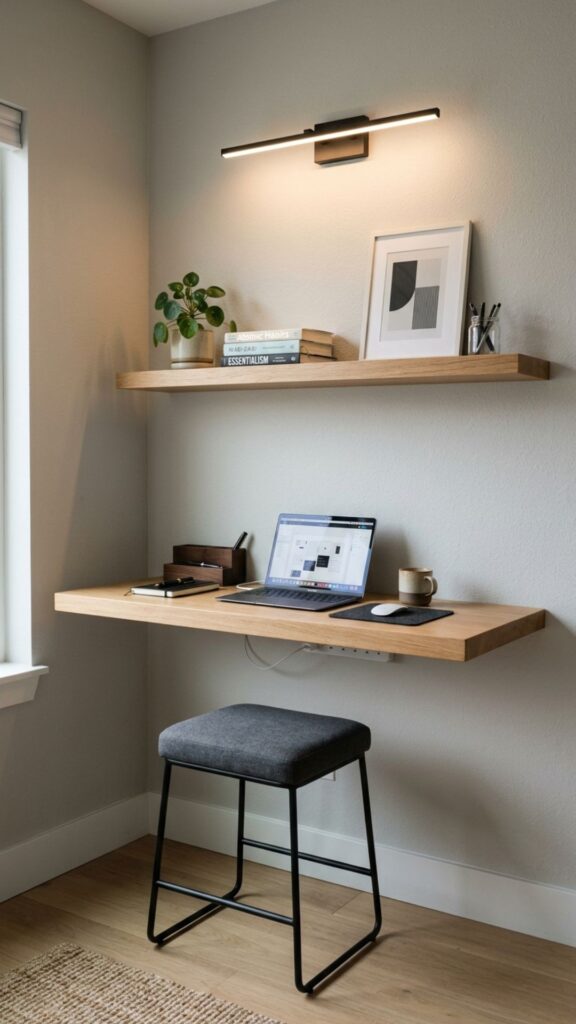
A deep floating shelf installed at desk height (around 28 to 30 inches from the floor) is one of the most minimal and affordable dinning room desk ideas available. A shelf that’s 20 to 24 inches deep provides enough surface for a laptop and a few essentials without the visual bulk of a full desk. Because it’s wall-mounted, the floor beneath it stays clear, making the room feel larger.
Pair two floating shelves — one at desk height for the work surface and one above at eye level for storage — to create a compact but complete workstation. Use matching shelf materials for a cohesive look. A small stool or backless bench tucks underneath neatly and doesn’t interrupt the visual flow of the room when not in use.
7. Dining Table That Converts to a Desk
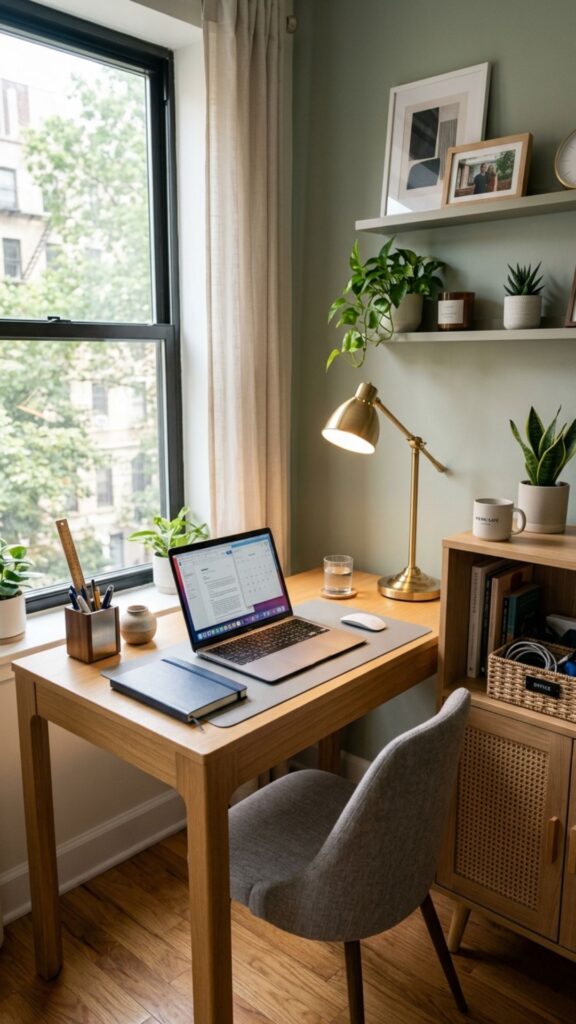
Some dining tables are designed specifically for dual use. Extension tables, for example, can be kept at a compact size for daily desk use and expanded when you need the full dining surface for entertaining. This is one of the most natural dinning room desk solutions because the dining table itself becomes the workspace.
The key to making this work is storage. If the dining table is your desk, you need a nearby cabinet, sideboard, or rolling cart where work materials can be stored and completely cleared away before meals. A simple rule: everything work-related lives in the storage unit, not on the table surface. That way, the transition from workspace to dining table takes five minutes, not twenty.
8. Rolling Cart Desk
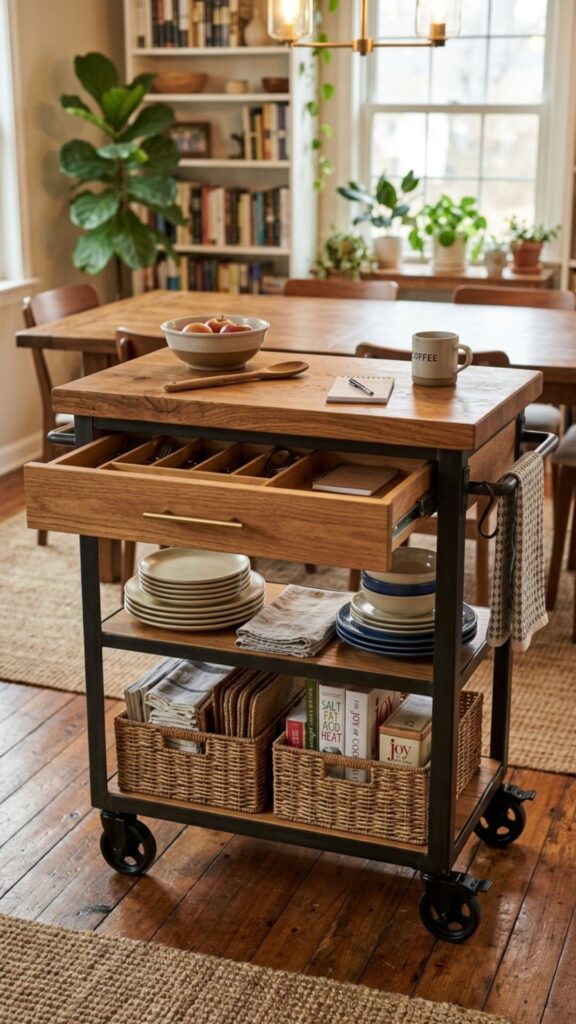
A rolling cart desk is the most flexible dinning room desk option for renters or anyone who doesn’t want to commit to a permanent setup. A sturdy rolling cart with a flat top surface, a drawer, and lower shelves can function as a compact desk during the day and roll into a closet or corner at mealtimes.
Look for carts with locking casters so the desk stays stable while you’re working. A butcher block or solid wood top gives you a proper writing surface, as opposed to wire-grid tops that are uncomfortable for anything other than storage. Rolling carts in matte black or natural wood blend naturally into most dining room aesthetics.
9. Window Seat Desk
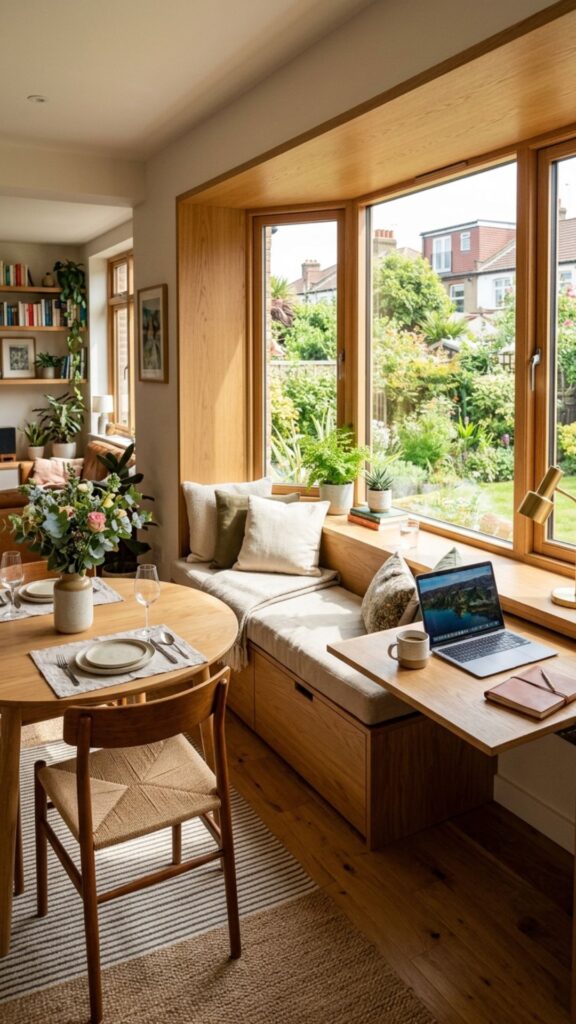
If your dining room has a bay window or a deep window ledge, building a window seat with a fold-out desk surface is both space-efficient and genuinely enjoyable to work at. The natural light from the window makes the work area brighter and more pleasant, and the seat provides comfortable seating during meals or casual gatherings.
Custom window seat desks can include storage drawers built into the seat base and a hinged desk surface that folds flat when not in use. This dinning room desk idea works best in rooms where the window creates a natural architectural nook separate from the main dining area — the physical distinction between the two zones makes the room feel more organized even without walls dividing them.
10. Pegboard Desk Wall
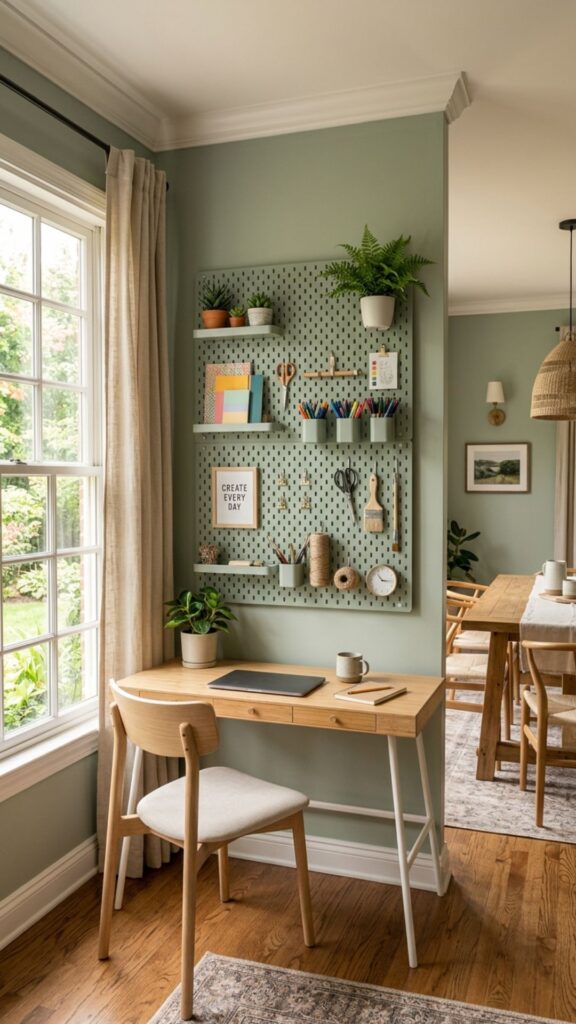
A pegboard mounted above a simple desk surface turns a blank dining room wall into an organized, functional workspace. The pegboard holds hooks for headphones, small shelves for supplies, and holders for documents — keeping everything off the desk surface and on the wall instead. The result is a dinning room desk that feels tidy even when it’s actively in use.
Paint the pegboard to match the wall color so it blends in and doesn’t dominate the room visually. Use a minimal desk surface below — a simple wall-mounted shelf or a slim console table works well. When dinner guests arrive, clear the desk surface in minutes, and the pegboard wall reads more as a design feature than a workspace.
11. Secretary Desk Against the Dining Room Wall
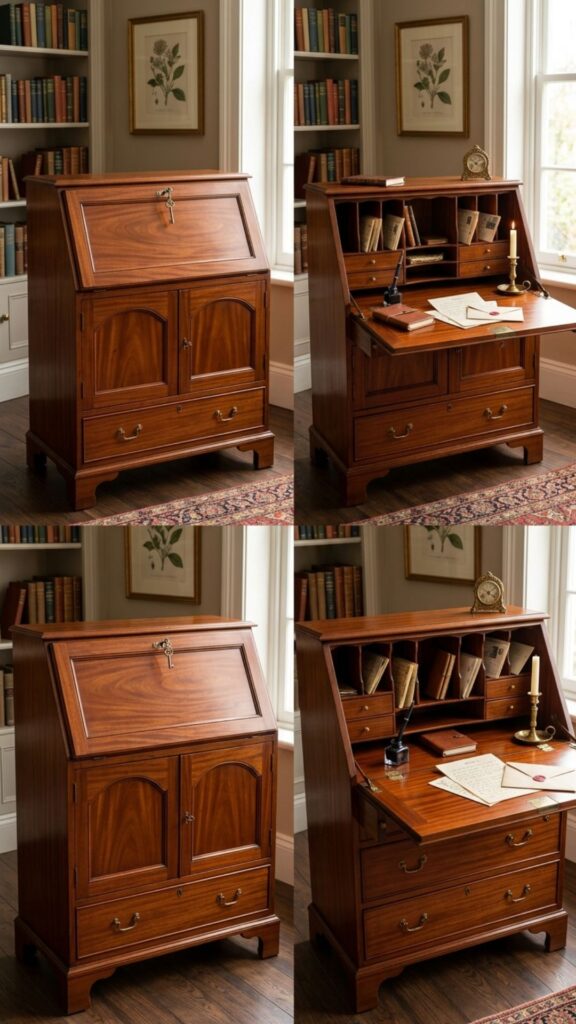
A secretary desk is a classic piece of furniture that was made for exactly this situation — a workspace that closes and disappears when not in use. The fold-down front creates a writing surface when open, and closes to reveal a neat cabinet face when the workday is done. It’s one of the most furniture-store-friendly dinning room desk options because it’s widely available in many price ranges and styles.
Choose a secretary desk that matches the scale of the room — a piece that’s 30 to 36 inches wide is appropriate for most dining rooms without overwhelming the space. Traditional styles in cherry or mahogany work well in formal dining rooms; painted or lacquered versions suit contemporary spaces. The interior compartments are ideal for organizing papers, chargers, and small office supplies.
12. Slim Desk Behind a Dining Bench
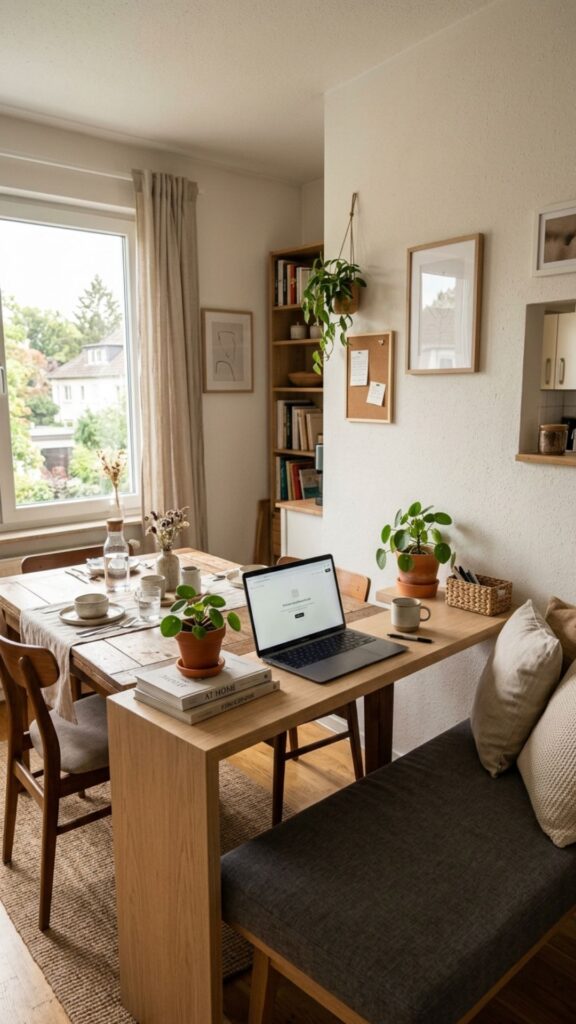
If your dining table uses a bench on one side rather than individual chairs, you have a natural opportunity to position a slim desk directly behind the bench along the wall. The bench acts as a visual and physical buffer between the dining area and the workspace, creating a soft zone division without any construction required.
Use a desk that’s no deeper than 18 inches so the bench and desk together don’t crowd the room. A lap desk or a wall-mounted shelf at desk height works well in tighter spaces. This approach is particularly effective in narrow dining rooms where space is limited on all sides — the bench-to-desk arrangement uses a single stretch of wall for two functions simultaneously.
13. Glass or Acrylic Desk
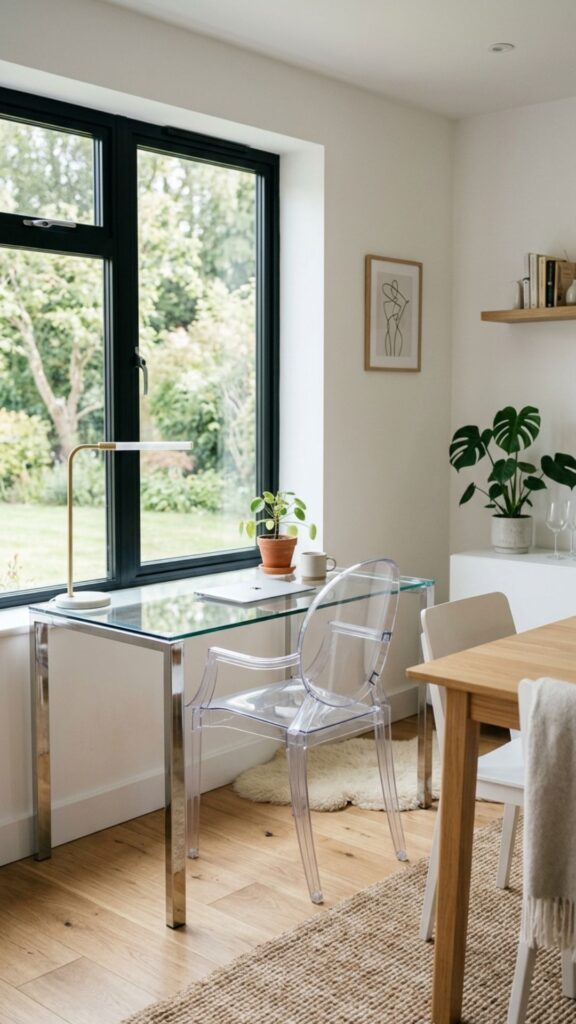
In a small or visually busy dining room, a glass or acrylic desk is the dinning room desk choice that takes up space without appearing to. The transparent surface allows the eye to pass through it, making the room feel less cluttered even when the desk is fully set up with a laptop and accessories. It’s a practical optical trick that interior designers use regularly in compact spaces.
Choose a simple ghost chair or a clear acrylic stool to complete the look — pairing transparent furniture creates a nearly invisible workspace. Keep the accessories on the desk minimal and contained (a small organizer, a single notebook, a charger) to maintain the clean aesthetic. Glass desks are easy to wipe clean, which is a real bonus in a room where food is served nearby.
14. Armoire-Style Desk Cabinet
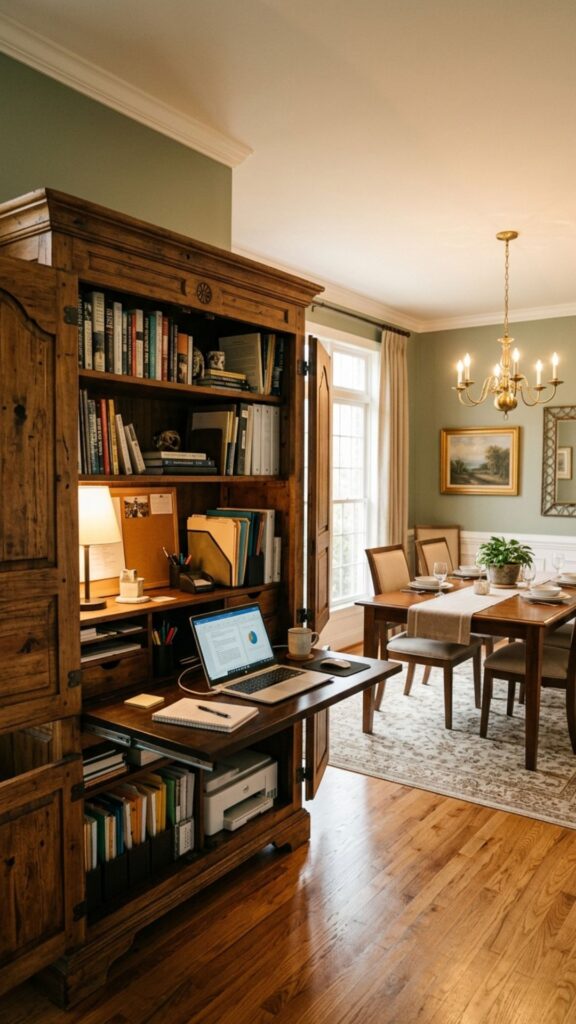
An armoire adapted for use as a home office is a smart and underused dinning room desk idea. Large armoires — originally built for clothing storage — can be retrofitted with a pull-out desk surface, interior shelves, and a power strip. When the doors close, the workspace is completely hidden inside a piece of furniture that looks like storage.
Choose an armoire in a wood finish or painted color that fits your dining room’s style. Many furniture retailers now sell armoires specifically designed as home office cabinets. Because they’re large and free-standing, they’re also easy to move if your room layout changes. This is one of the best solutions for completely concealing the work environment at the end of each day.
15. Built-In Banquette with Desk Extension
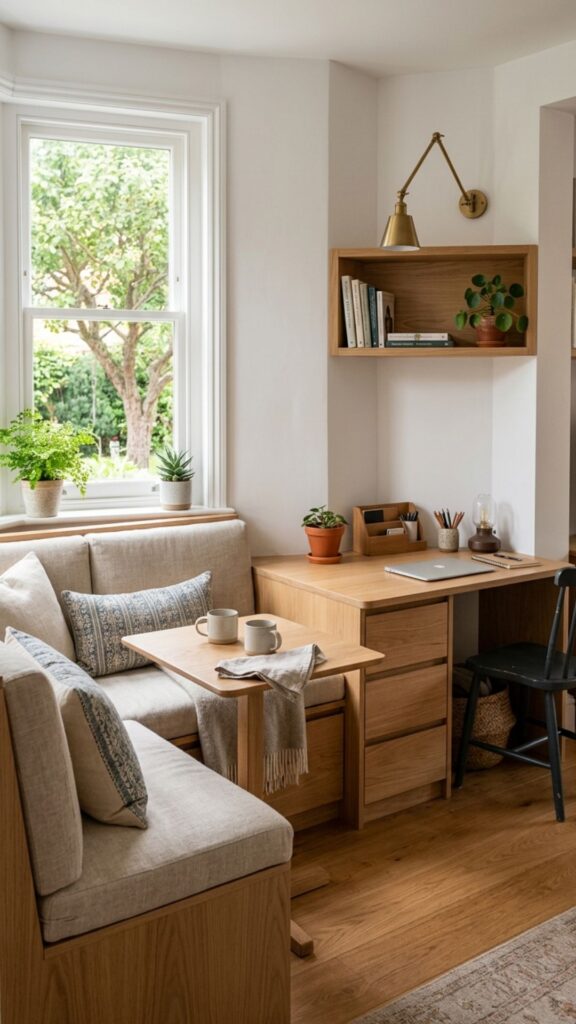
A built-in banquette — the upholstered booth-style seating often found in kitchen nooks — can be extended to include a desk surface at one end. The bench seating continues into a flat desk surface with storage below, creating a continuous piece of built-in furniture that handles both dining and desk work in a single compact footprint.
This dinning room desk idea is best executed during a renovation, as it requires some carpentry. However, the result is a highly efficient use of space that feels custom and intentional. The desk end of the banquette can be fitted with a small drawer unit underneath for office supplies, and the surface easily clears for use as additional table space when you’re hosting larger gatherings.
16. Bookcase with Integrated Desk
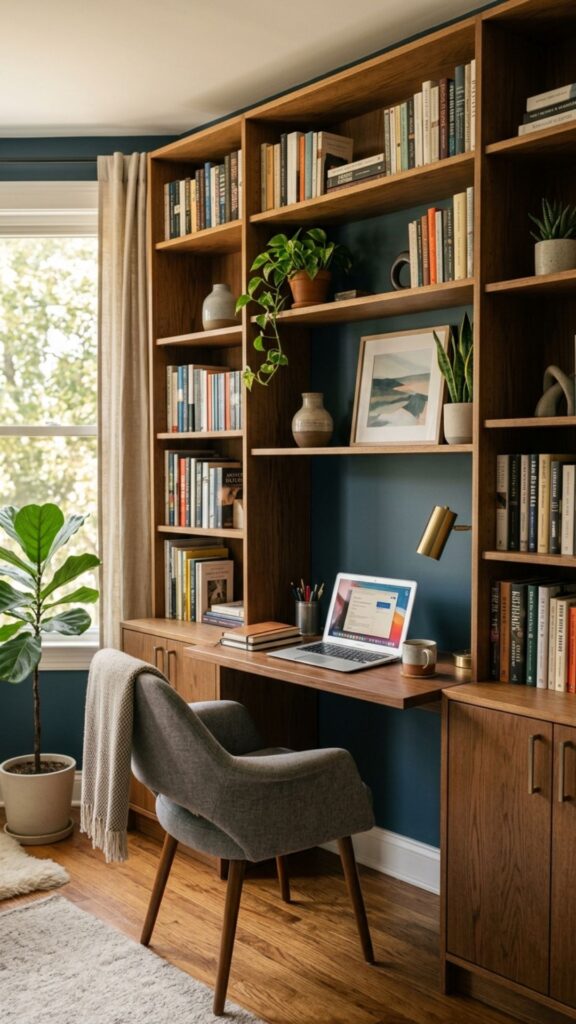
Some bookcases are designed with a built-in desk surface at mid-height — shelves above, storage below, and a fold-out or fixed desk in the middle. This type of unit works well as a dinning room desk because the bookcase portion serves the room aesthetically (books and decorative objects look at home in a dining room) while the desk section provides a practical workspace.
Position the bookcase along a wall that doesn’t block natural light or the main traffic path through the room. Choose a unit that’s 30 to 48 inches wide — large enough to be useful but compact enough not to dominate a smaller dining room. Styling the shelves with a mix of books, plants, and objects keeps the unit looking like a design choice rather than an office intrusion.
17. Ladder Shelf Desk Combo
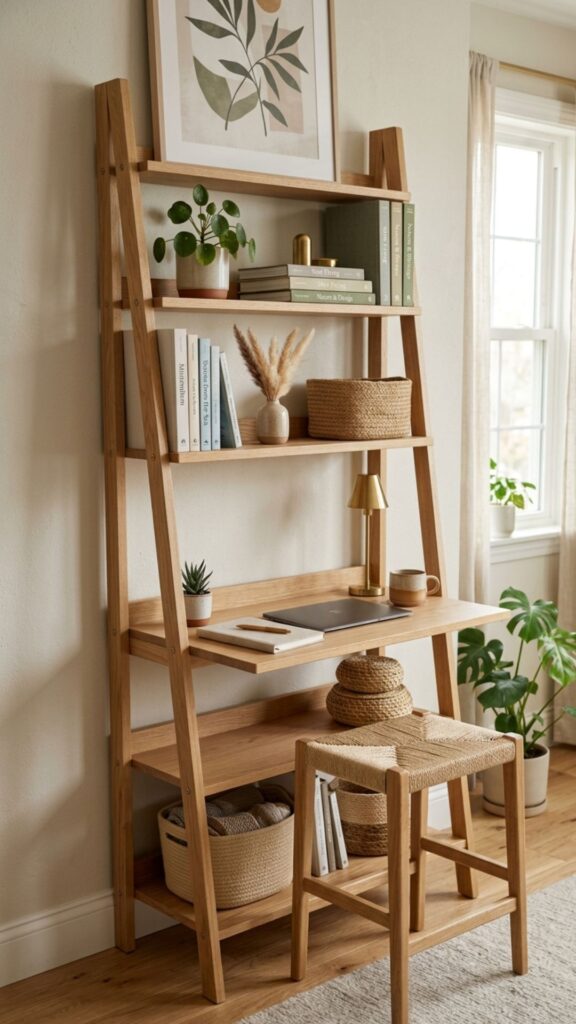
Ladder-style shelving units — those that lean against the wall with progressively wider rungs — can incorporate a desk surface on one of the wider lower rungs. This creates a lean-to dinning room desk that’s lightweight, easy to move, and visually open enough not to crowd a small space. Most ladder shelf desks take up less than 24 inches of wall space.
The open design means everything on the desk is visible, so organization matters. Use small baskets or boxes on the shelves to corral supplies, and keep the desk surface itself to just the essentials. A small upholstered stool tucks underneath when not in use. This solution is ideal for renters who can’t mount anything to the walls.
18. Nesting Tables as a Desk Solution
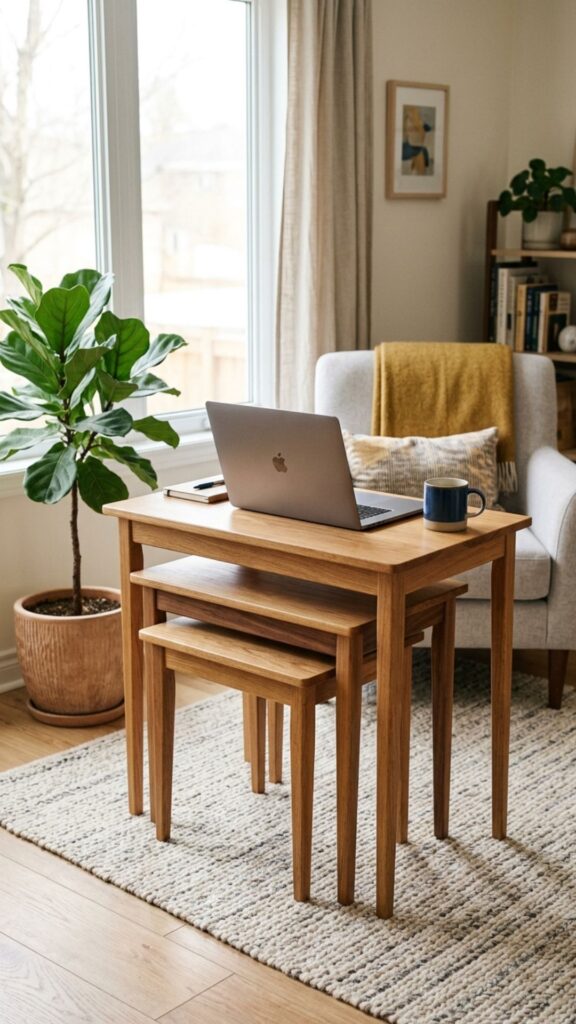
Nesting tables — a set of two or three tables of different sizes that stack together — offer an unexpectedly practical dinning room desk option. The largest table serves as a compact desk surface during work hours, and all three nest together in the corner or against the wall when the room returns to dining mode.
Choose nesting tables in a material that works with your dining room furniture — marble-topped nesting tables look elegant in a formal space, while natural wood works in a relaxed transitional room. The largest table in most nesting sets is around 24 by 18 inches, which is small but workable for a laptop or writing tasks. This is one of the most affordable and flexible solutions on this list.
19. Curtained Desk Nook
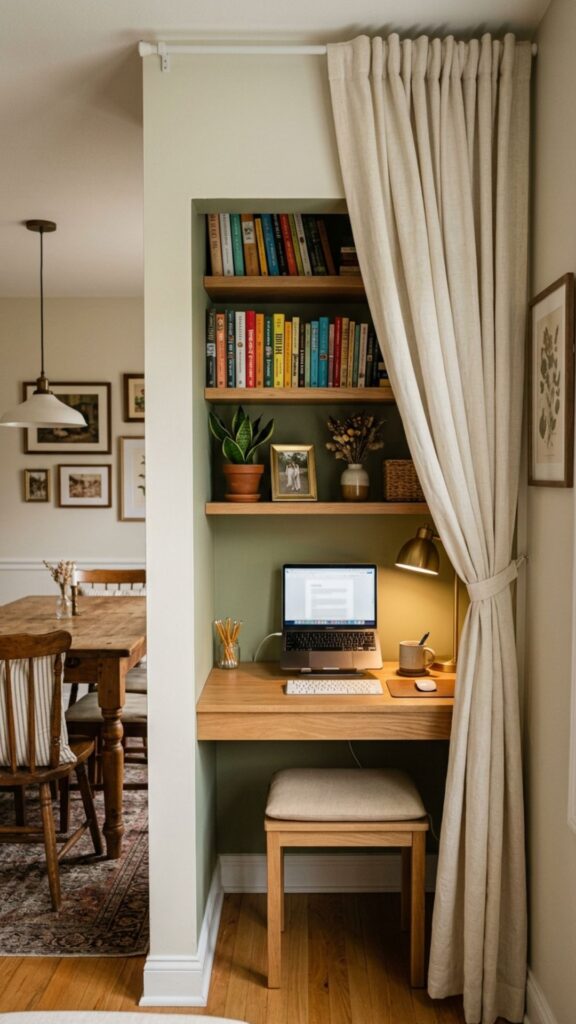
Creating a desk nook along one wall of the dining room and concealing it with a curtain panel is a simple, low-cost way to define a workspace and hide it completely when needed. A ceiling-mounted curtain track or tension rod holds a full-length curtain that draws across the desk area during meals and social gatherings. Behind it, the desk can stay exactly as you left it.
Choose a curtain fabric that ties into the dining room’s color scheme — linen, velvet, or cotton all work well and look intentional rather than improvised. The desk behind the curtain can be as simple as a door on two filing cabinets or as organized as a built-in desk with shelves. The curtain does all the heavy lifting by making the workspace visually disappear.
20. Repurposed Sideboard as a Standing Desk
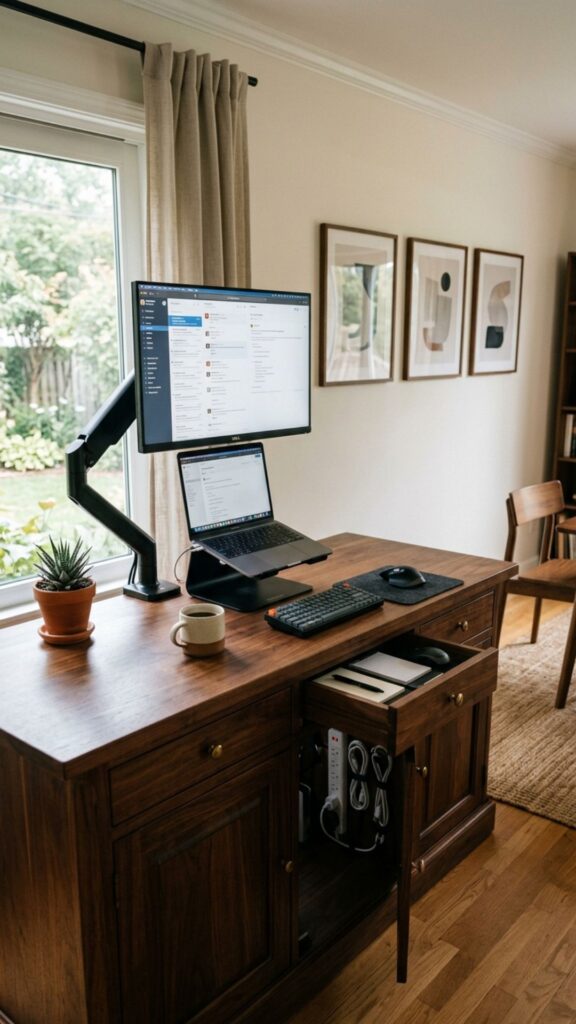
A sideboard or buffet table — already a staple piece in most dining rooms — is typically the right height for use as a standing desk (30 to 36 inches, depending on the model). Repurposing a sideboard as a dinning room desk during the day means you don’t need to add any new furniture to the room at all. The sideboard already belongs there and already serves the dining function.
Set up a small standing desk mat on the floor in front of it, position a monitor arm or laptop stand on the surface, and you have a functional standing workstation. At mealtimes, close the laptop, slide it inside one of the sideboard drawers, and the piece returns to being purely a buffet. This is the most seamless dinning room desk solution for anyone who already has a sideboard and wants zero visual disruption to the room.
Conclusion
A dinning room desk doesn’t have to be a compromise. With the right idea and a little planning, a dual-purpose dining room can be both a welcoming place for meals and a genuinely functional workspace — without either use suffering for the other.
Start by measuring your available wall space and thinking about which meal transitions matter most to you (daily lunch breaks versus occasional dinner parties require different levels of concealment). Then pick the idea from this list that fits your budget, your room size, and your style. A dimmer switch, a quality desk lamp, and a smart storage system will take you the rest of the way.
Ready to transform your dining room into a space that truly works for you? Start with one idea from this list — even the simplest fold-down shelf can change how your whole day flows.
What is the best dinning room desk idea for a small space?
For small spaces, wall-mounted fold-down desks and floating shelf desks are the most effective options. Both keep the floor clear, take up minimal wall space, and fold or clear away quickly before meals. A fold-down desk with a pegboard above it gives you a complete, organized workspace in as little as 18 inches of wall space.
How do I hide my desk in the dining room when guests come over?
The cleanest solutions are armoire-style desk cabinets, secretary desks, and curtained desk nooks — all of which physically conceal the workspace behind a door or fabric panel. If full concealment isn’t possible, a rolling cart that slides into a closet or a fold-down desk that closes flat against the wall are the next best options.
Can I use my dining table as a desk?
Yes — many people successfully use the dining table as their primary workspace. The key is having dedicated nearby storage (a sideboard, rolling cart, or cabinet) where all work materials live and can be cleared away quickly. Without storage, the transition from desk to dining table takes too long to be practical on a daily basis.
How deep does a dinning room desk need to be?
A desk surface should ideally be at least 20 inches deep to comfortably fit a laptop and leave room for a notebook or mouse. For monitor setups, 24 to 30 inches deep is more comfortable. Floating shelf desks and console tables on the shallower end (16 to 18 inches) work for laptop-only setups but feel cramped with a full monitor.
How do I make a dinning room desk look like it belongs in the room?
Match the desk’s material or finish to existing dining room furniture — the dining table, sideboard, or chairs. Avoid office-specific accessories like metal filing cabinets or plastic storage bins on open shelves. Style the desk area with a small lamp, a plant, and contained organizers that look more like decorative objects than office supplies. The goal is to make the workspace feel like a natural part of the room’s design, not an afterthought.