Apartment dining rooms are rarely generous. Most are squeezed into a corner, doubled as a workspace, or barely distinguished from the living room. But a tight footprint doesn’t mean you have to settle for a space that feels like an afterthought.
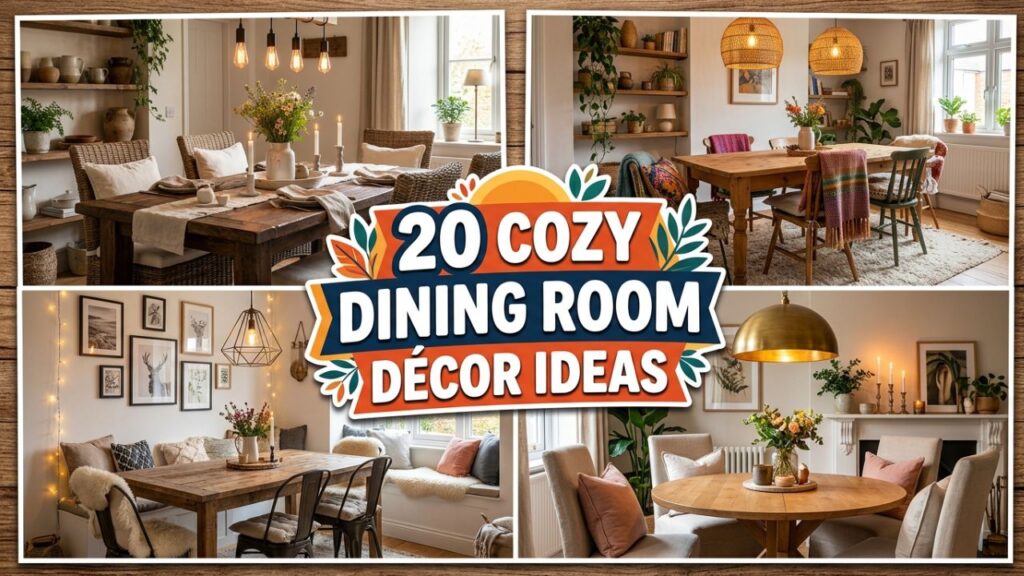
This post walks you through 20 dining room décor apartment ideas that are practical, budget-conscious, and designed specifically for smaller spaces. You’ll find guidance on furniture choices, lighting tricks, color strategies, and clever workarounds for common rental restrictions — all written so you can start making changes today, not after a full renovation.
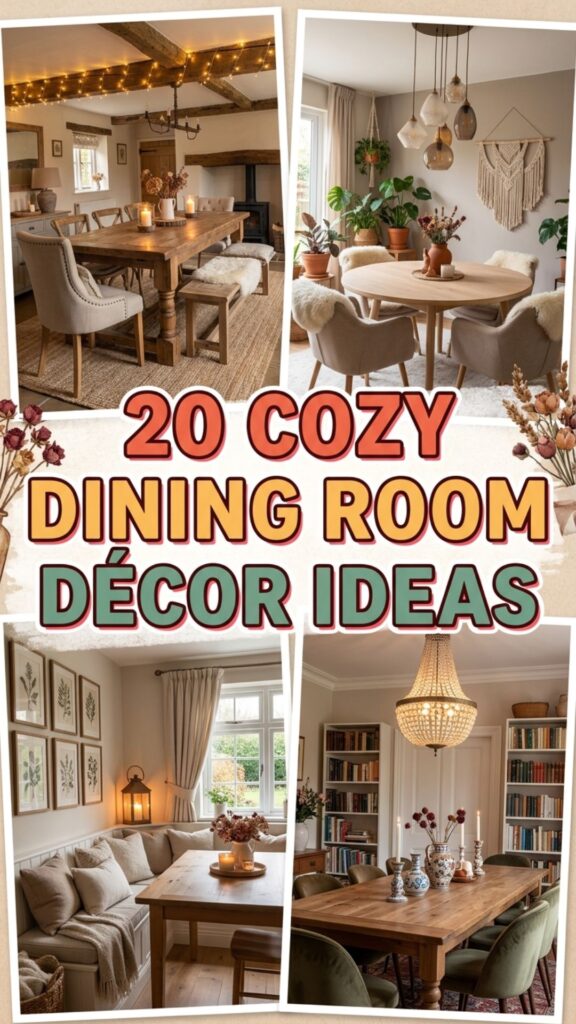
Whether you’re working with a windowless alcove or a shared open-plan space, there’s something here that fits your setup.
1. Choose a Round Table to Open Up the Room
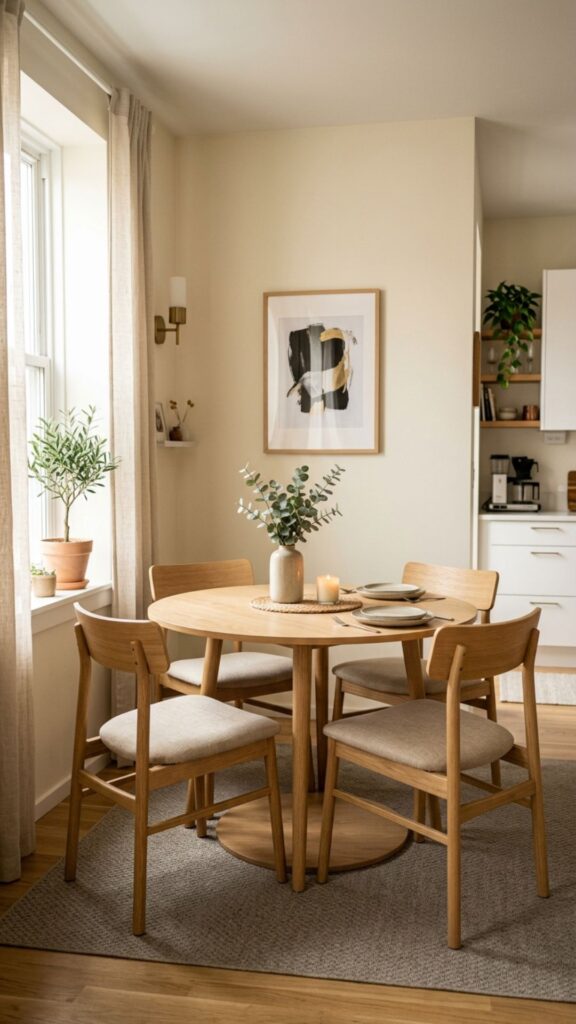
Round tables are one of the smartest moves you can make in a small apartment dining area. They eliminate sharp corners, allow easier movement around the space, and feel less imposing than a rectangular table of the same seating capacity.
A 36- to 42-inch round table comfortably seats four without dominating a small room. Look for pedestal-base versions — a single center leg frees up floor space and makes it easier to pull up an extra chair when needed.
2. Use a Mirror to Borrow Light and Space
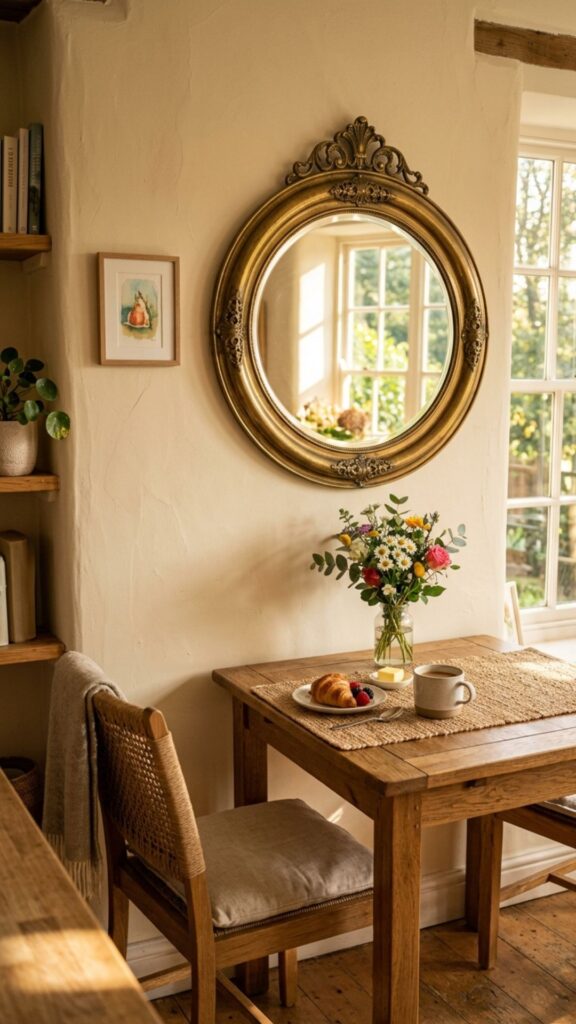
A large mirror placed on or near the dining room wall creates the illusion of depth and bounces natural light around the room. This is especially useful in apartments where the dining area gets little to no direct sunlight.
Lean an oversized mirror against the wall to avoid drilling — a practical workaround in rentals. A mirror with a warm-toned or brass frame adds decorative value without making the wall feel too utilitarian.
3. Hang a Statement Light Fixture
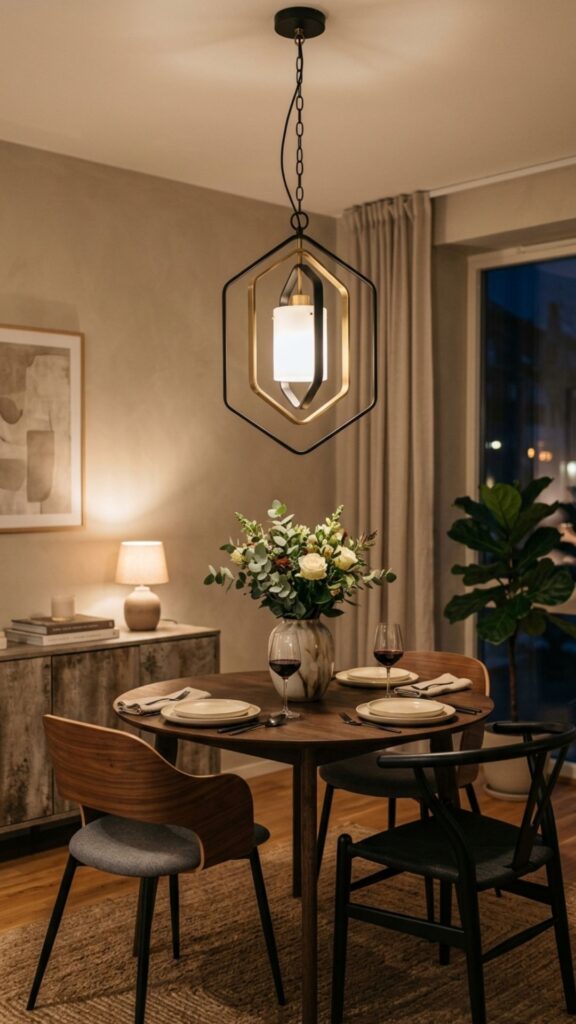
Lighting does more for a dining room’s atmosphere than almost any other element. Swapping out a builder-grade fixture for a pendant light or small chandelier immediately elevates the space, even if nothing else changes.
Choose a fixture that complements your table shape — a globe pendant over a round table, a linear pendant over a rectangular one. If hardwiring isn’t an option in your rental, plug-in pendant lights are widely available and surprisingly stylish.
4. Add a Bench to One Side of the Table
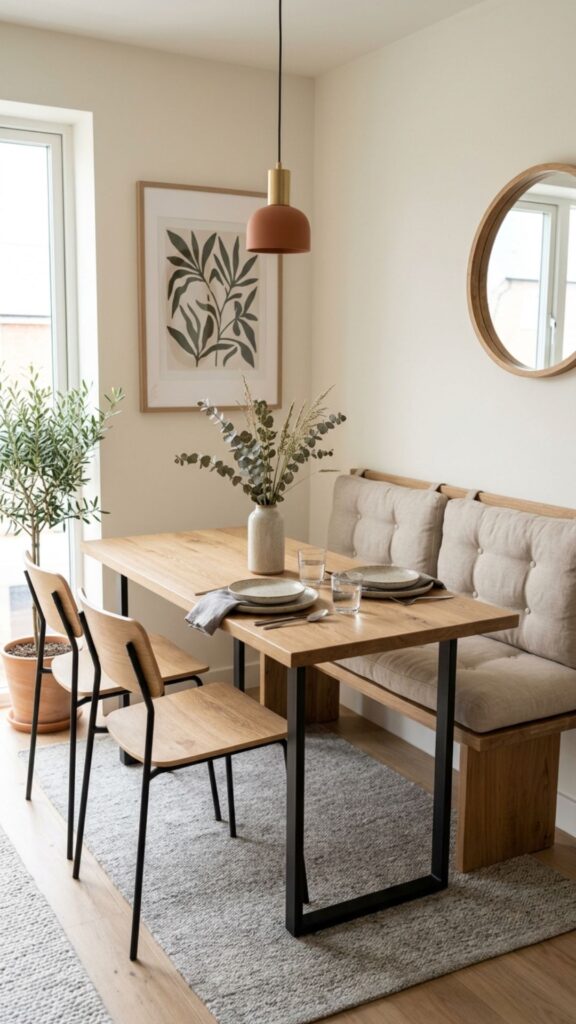
Replacing one row of chairs with a bench saves space, adds a relaxed feel, and makes the dining area more flexible. A bench can slide fully under the table when not in use, freeing up walking room in tight apartments.
Choose an upholstered bench for comfort during longer meals, or a storage bench with a hinged seat to solve two problems at once — extra seating and hidden storage for linens, candles, or serving accessories.
5. Layer Your Lighting with Candles or Battery-Powered Accents
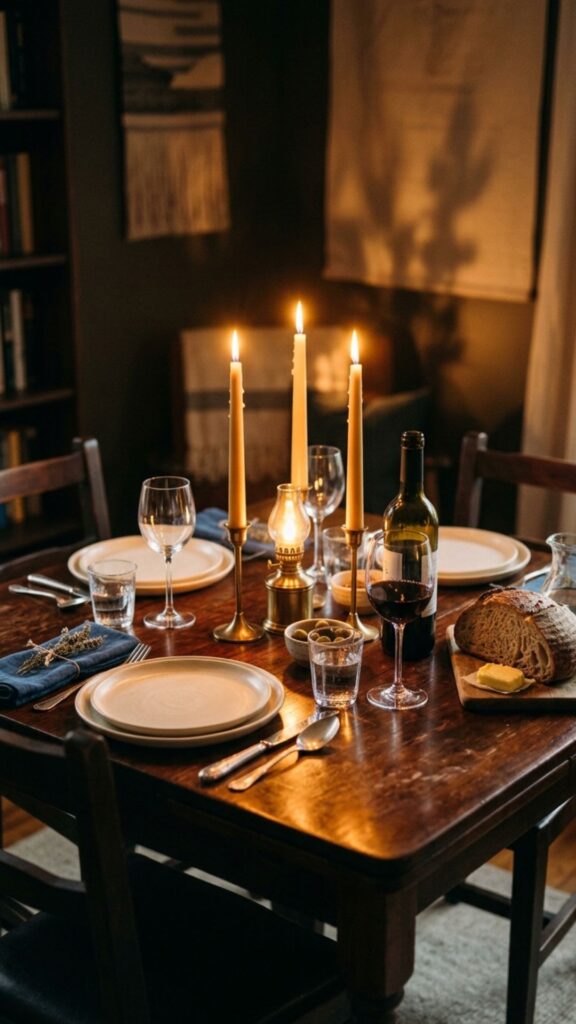
Overhead lighting alone tends to flatten a dining room. Layering in candles, a battery-operated table lamp, or small LED accent lights adds warmth and dimension — especially useful in apartments where adding new fixtures isn’t an option.
Tall taper candles in simple holders work beautifully as a centerpiece. Flameless LED candles are a practical alternative in buildings with open-flame restrictions. Either way, the effect softens the room and makes dinner feel intentional.
6. Choose Furniture with Exposed Legs
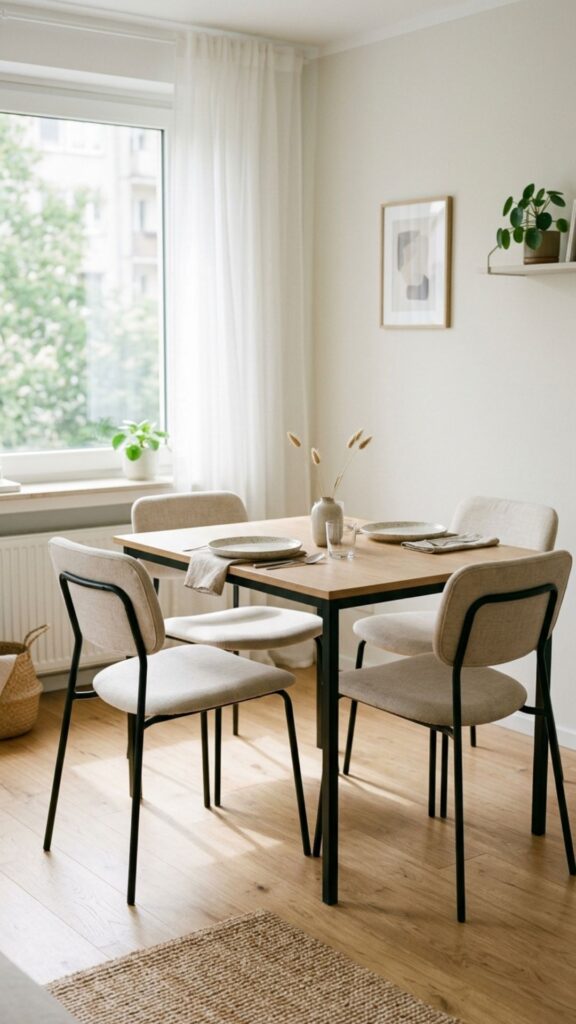
Furniture that sits close to the ground makes a small room feel heavier. Pieces with visible, slender legs — whether in wood, metal, or hairpin style — allow sightlines to carry across the floor, which makes the room feel airier and more open.
This applies to dining chairs especially. A set of chairs with tapered wooden legs or wire metal frames contributes to a lighter visual footprint than solid, upholstered side chairs that block the view of the floor.
7. Use a Rug to Define the Dining Zone
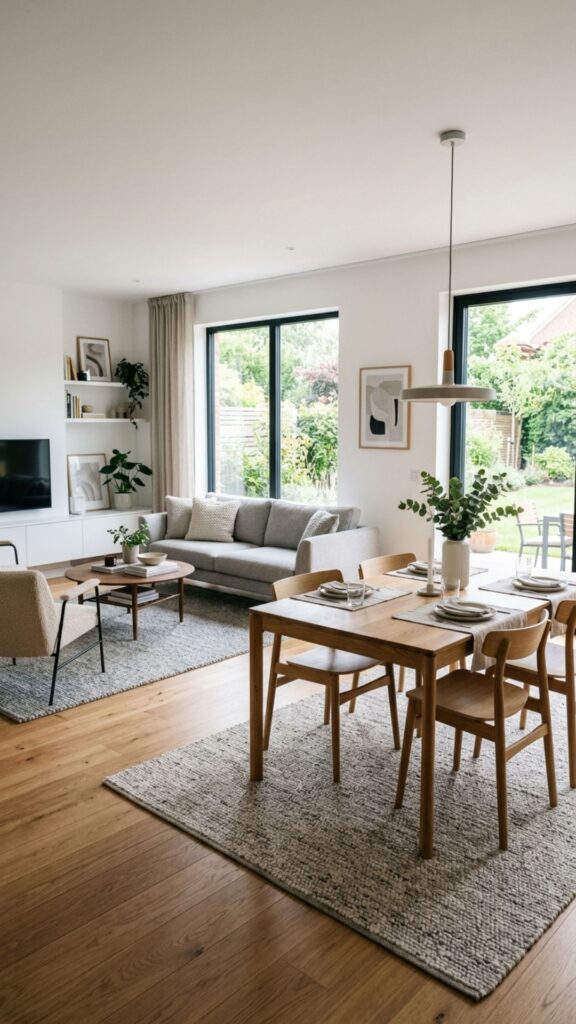
In open-plan apartments, a rug under the dining table does the important job of anchoring the space and separating it visually from the living area. Without it, the dining area can feel undefined and disconnected.
Choose a rug large enough that all chair legs rest on it when pulled out slightly — typically at least 8×10 feet for a four-person table. Flat-weave or low-pile rugs hold up better under chair movement and are easier to clean after meals.
8. Mount Shelves Instead of Adding a Sideboard
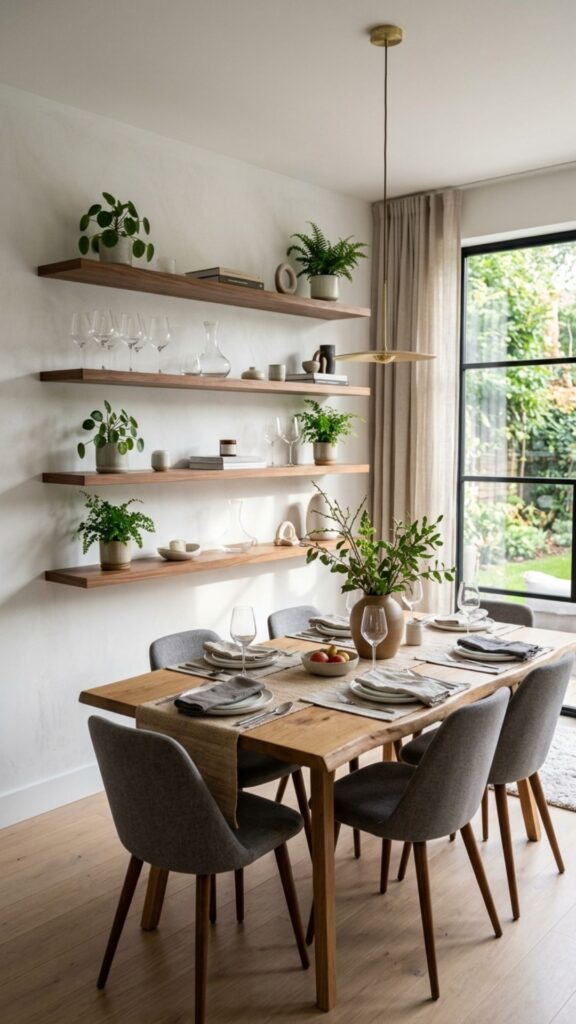
When floor space is limited, wall-mounted shelves give you the storage and display function of a sideboard without occupying any floor area. A pair of floating shelves above or beside the table can hold dishes, glassware, plants, or decorative objects.
Use command strips or damage-free mounting hardware for rental-friendly installation, keeping in mind weight limits. Styling the shelves with a mix of functional items and a few decorative pieces keeps the look intentional rather than cluttered.
9. Incorporate Plants for Texture and Life
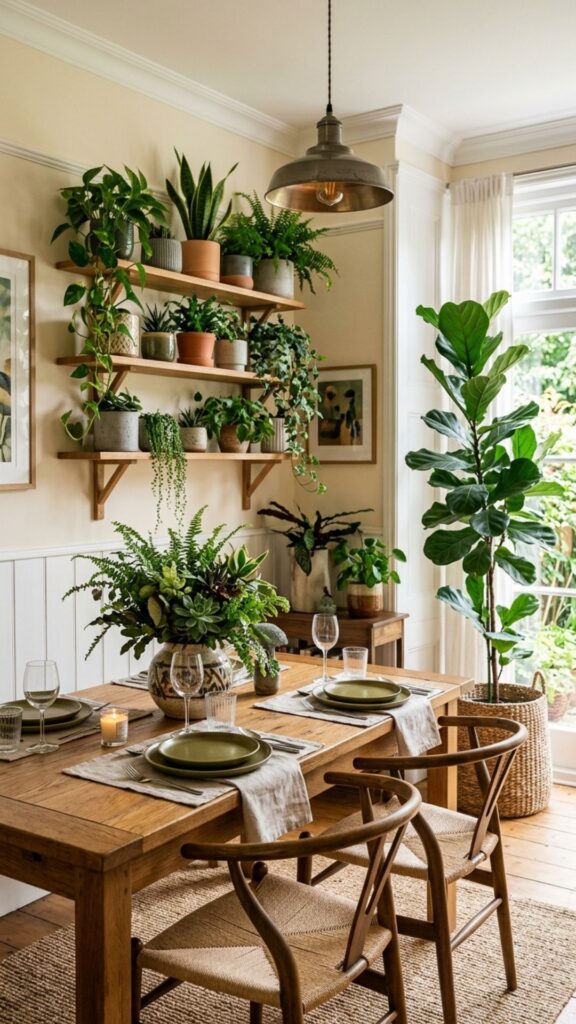
A few well-placed plants bring warmth, color, and texture to an apartment dining room without spending much. A trailing pothos on a shelf, a compact fiddle leaf fig in a corner, or a small herb pot on the table all add organic life to the space.
If natural light is limited, go for low-light tolerant plants like snake plants, ZZ plants, or pothos. They’re nearly indestructible and add just enough green to prevent the room from feeling sterile or flat.
10. Paint or Wallpaper One Accent Wall
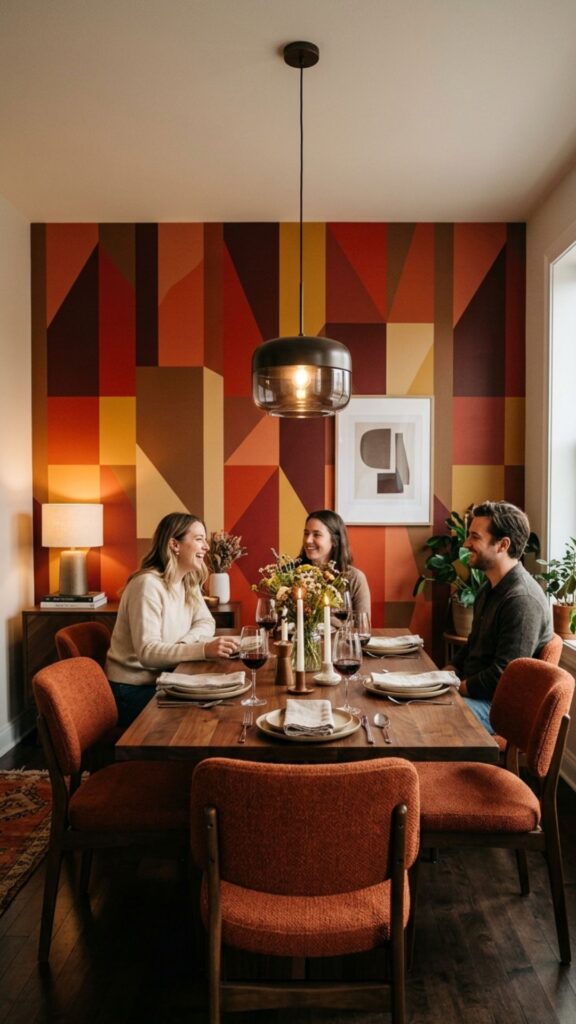
A single bold wall — whether painted in a deep color or covered with removable peel-and-stick wallpaper — transforms a dining area without touching the rest of the room. It gives the space a focal point and makes it feel like a distinct room, even in an open floor plan.
Sage green, terracotta, navy, and warm charcoal are all popular choices for dining rooms because they make the space feel enclosed and cozy without going too dark. Removable wallpaper has improved dramatically in quality and is fully renter-friendly.
11. Keep the Centerpiece Simple and Functional
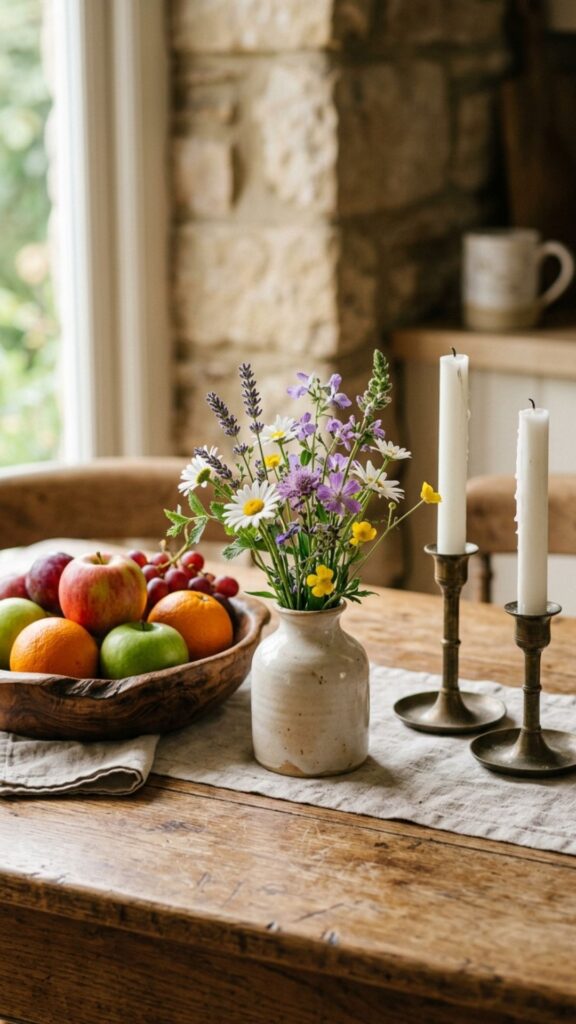
Centerpieces that are too tall or too sprawling make conversation difficult and shrink the usable table surface. The most effective dining room centerpieces in apartments are low, compact, and easy to move aside when you actually sit down to eat.
A small vase of flowers, a trio of candles at different heights, or a wooden bowl with seasonal fruit all work well. Rotate them with the season to keep the table looking fresh without spending much.
12. Choose Stackable or Foldable Chairs
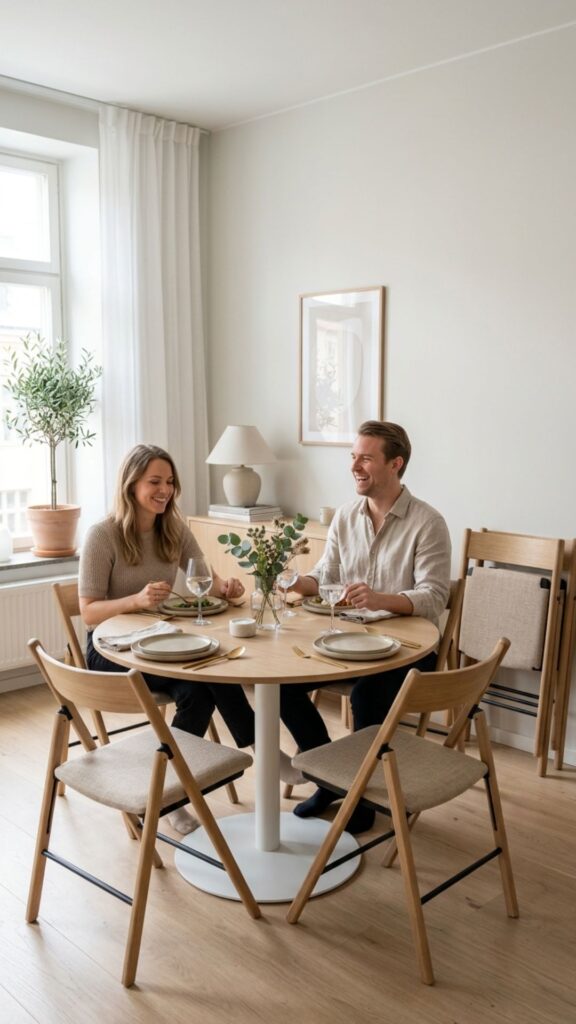
In apartments where the dining area doubles as a home office or flex space, stackable or foldable chairs are genuinely useful. You can pull them out for guests and store them flat against a wall or in a closet the rest of the time.
Several furniture brands now make folding chairs that look sophisticated rather than utilitarian. Powder-coated metal and molded plastic versions in muted tones work particularly well in modern apartment settings.
13. Use Curtains to Create a Sense of Enclosure
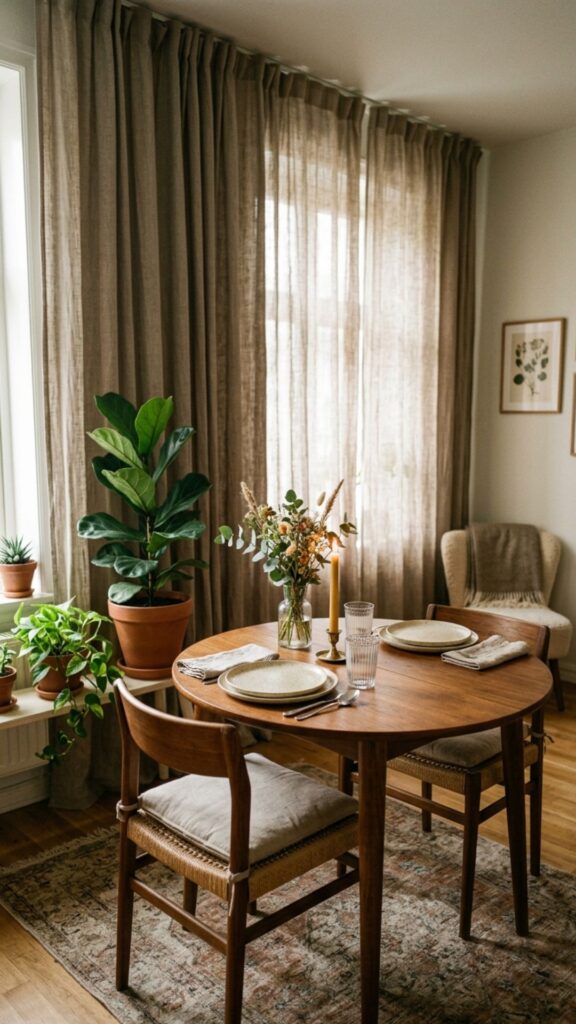
Hanging curtains behind the dining area — even on a wall with no window — creates a soft architectural backdrop that makes the space feel more deliberate. Floor-to-ceiling curtains draw the eye upward and add a sense of height and enclosure.
Linen and cotton in off-white, warm beige, or dusty sage work best in smaller dining areas. They soften hard surfaces and improve acoustics slightly, which makes a real difference in apartments with hard floors and minimal soft furnishings.
14. Incorporate a Gallery Wall for Personality
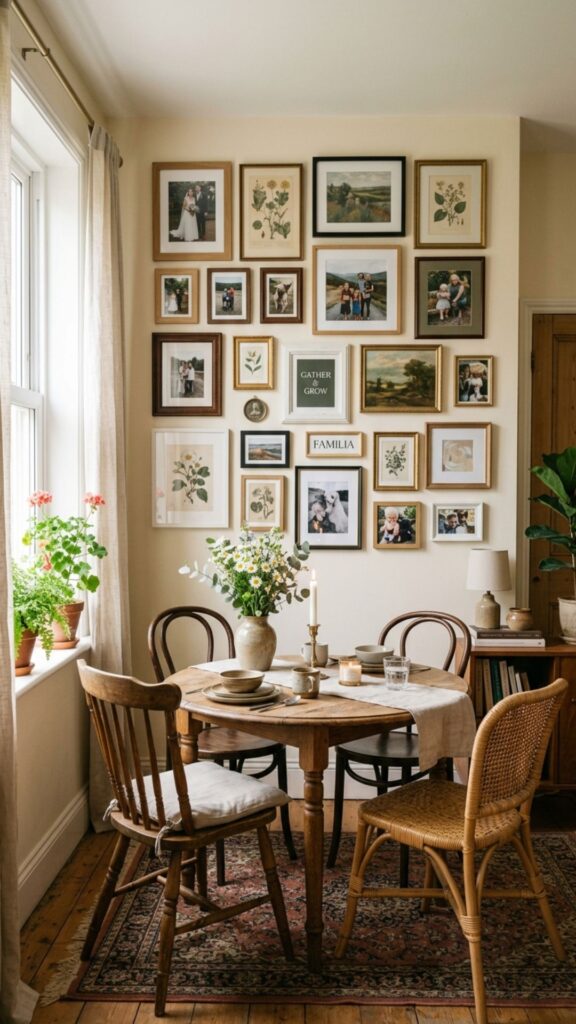
A gallery wall beside or behind the dining table is one of the easiest ways to personalize a rental without making permanent changes. Using removable adhesive strips, you can arrange a mix of prints, photos, and small art pieces that reflect your style.
Keep the arrangement contained — a tight grid or organic cluster works better in small spaces than a sprawling gallery that overtakes the wall. Stick to a consistent frame color or finish to unify the look without restricting your print choices.
15. Opt for a Fold-Down Wall Table
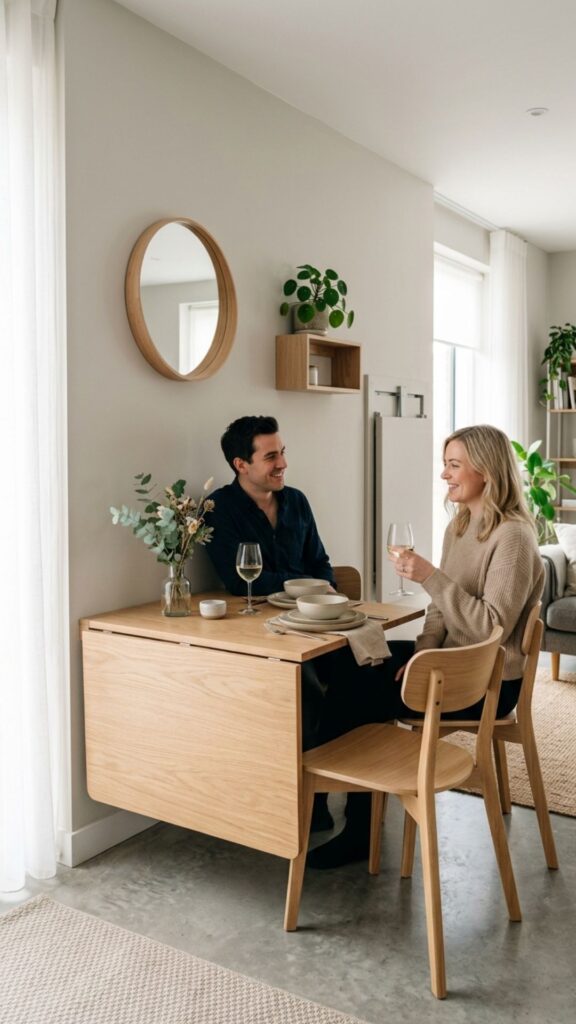
If your apartment has no dedicated dining area at all, a fold-down wall-mounted table is one of the most space-efficient solutions available. These hinged tables fold flat against the wall when not in use, taking up almost no room.
Many fold-down tables seat two comfortably and some extend to seat four. Pair with stools that tuck underneath a kitchen counter or under the table itself. It’s a practical setup for studio apartments or one-bedrooms where every square foot counts.
16. Choose a Light Color Palette for a Small Space
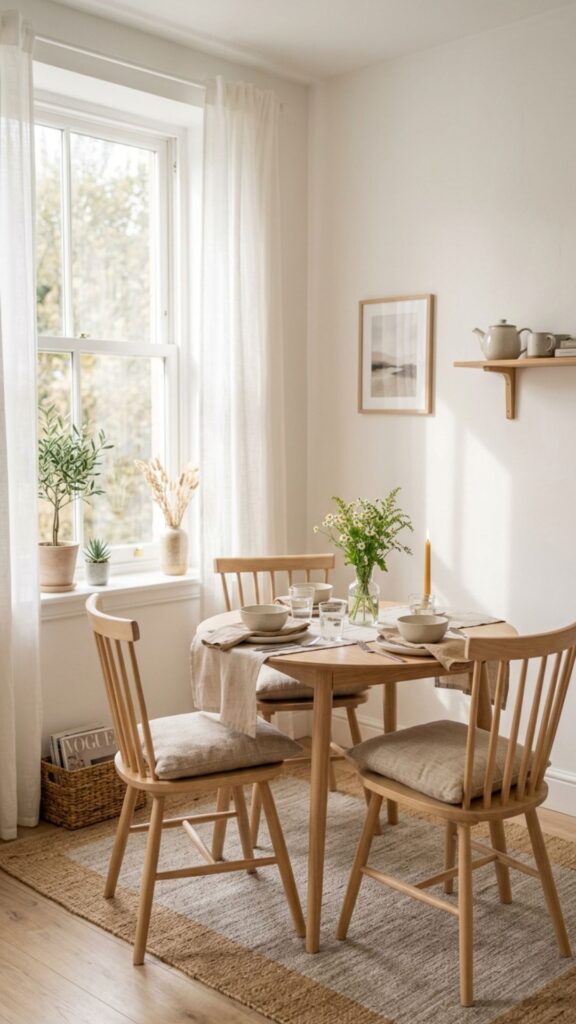
Lighter wall colors — soft whites, warm creams, pale grays, and light greiges — make small dining areas feel larger and more open. They reflect light rather than absorbing it, which matters most in apartments with limited natural light.
That doesn’t mean everything has to be white. Warm neutrals and off-whites are more forgiving and flattering at the dining table than stark, cool whites. Add color through textiles, plants, and art rather than walls, and the room stays flexible as your style evolves.
17. Layer Textiles for Warmth and Comfort
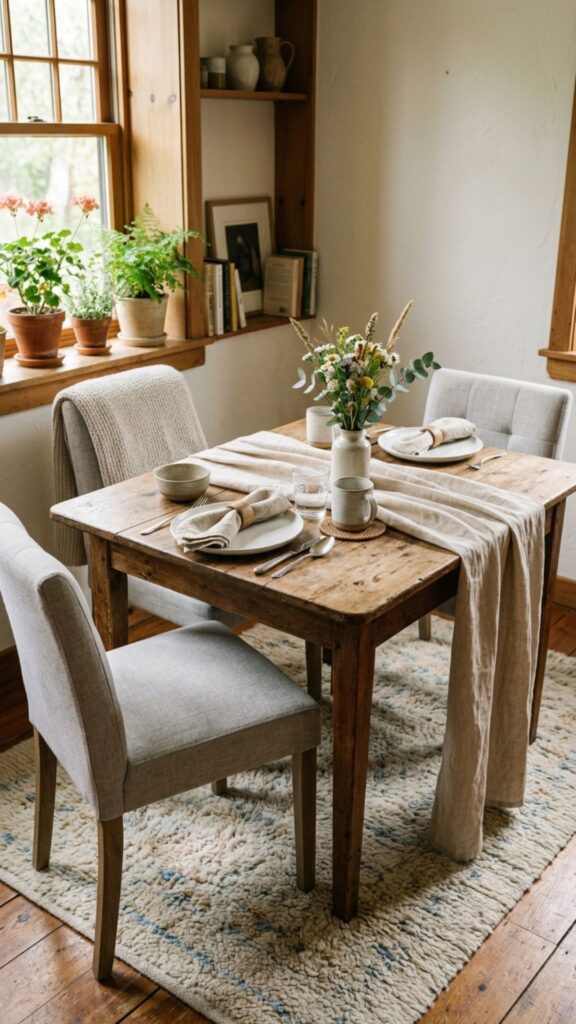
Textiles — table runners, placemats, cloth napkins, seat cushions, and a rug — add warmth that hard surfaces like tile, laminate, and painted walls simply can’t provide. In apartments, where many surfaces are unchangeable, textiles are one of the most effective décor tools you have.
A table runner in a natural linen or woven cotton grounds the table visually and makes daily meals feel more considered. Seat cushions on hard chairs improve comfort during longer meals and add color without any commitment.
18. Use Vertical Space for Storage and Display
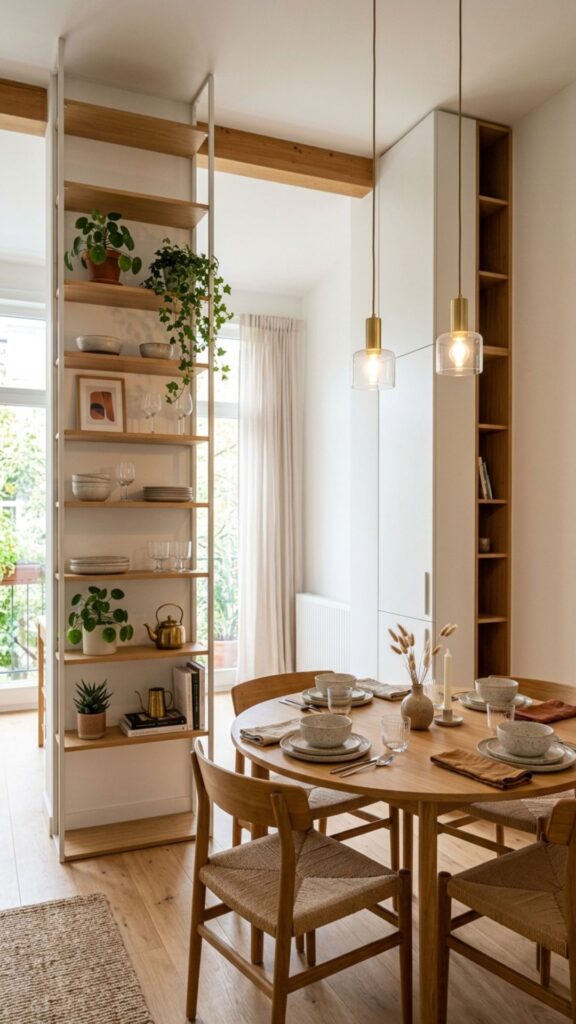
Most apartments have more vertical space than they use. In the dining room, this means mounting shelves, hanging artwork at ceiling height, or using a tall, slender cabinet or étagère to add storage without spreading across the floor.
A narrow, tall console positioned along a wall can serve as a bar cart, coffee station, or display surface for decorative objects. It holds a lot without consuming valuable floor space and keeps the dining area organized and visually cohesive.
19. Bring in Warm Metals for a Polished Look
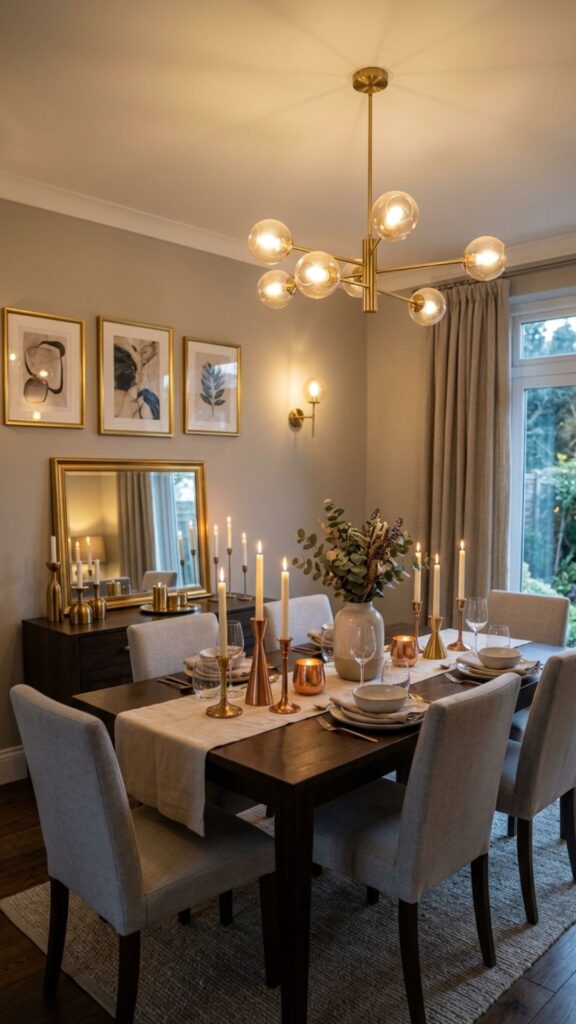
Brass, copper, and warm gold metal accents — in light fixtures, hardware, picture frames, or candle holders — add a sense of quality and intentionality to a dining room that’s otherwise neutral or low-budget.
You don’t need much. A brass-finish pendant light paired with matching candlestick holders and a few small accessories is enough to pull a room together and make it feel styled rather than assembled. Warm metals also complement wood tones and natural textiles especially well.
20. Declutter and Edit Ruthlessly
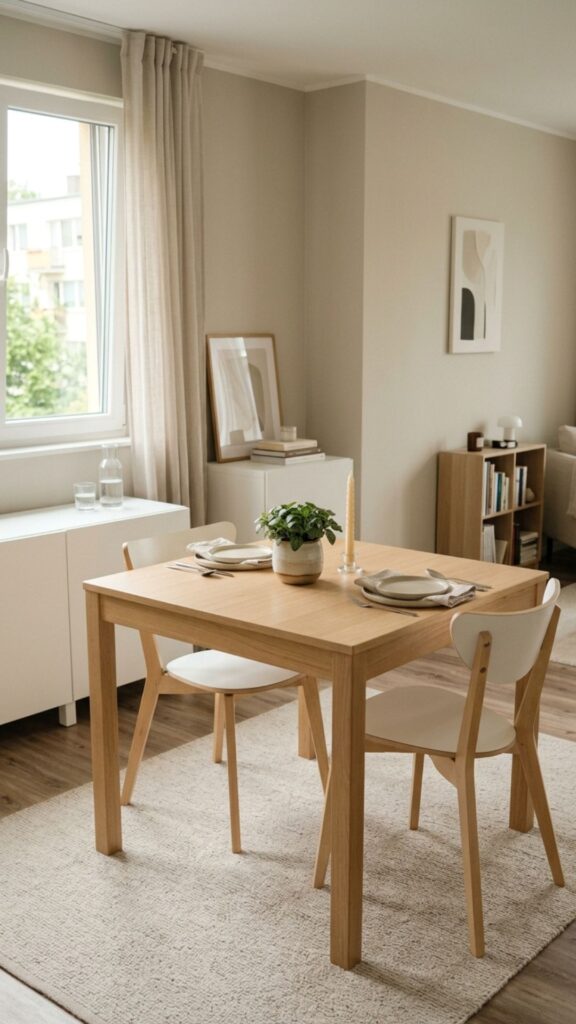
The single most impactful thing you can do in a small apartment dining room is remove what doesn’t need to be there. Surfaces that are clear of clutter immediately feel more spacious, intentional, and inviting — no new furniture required.
Keep only what you use or love in the dining area. Store seasonal items, excess tableware, and anything that doesn’t belong there somewhere else. A decluttered dining room looks put-together even with basic furniture and no budget for new purchases.
Conclusion
Small doesn’t have to mean cramped or uninspiring. The right mix of furniture choices, lighting, textiles, and smart storage can turn even the most awkward apartment dining corner into a space that feels warm, functional, and genuinely enjoyable to spend time in.
Start by identifying the one or two changes from this list that address your biggest pain point — whether that’s lack of light, too little storage, or a space that just doesn’t feel like your own. Make those changes first. Small, intentional improvements add up fast, and you don’t need a big budget or a landlord’s permission to make most of them work.
Pick your first idea and put it into action this week. Your dining room will thank you.
How do I decorate a dining room in a small apartment?
Focus on right-sized furniture, strategic lighting, and textiles that add warmth without taking up space. A round table, a statement pendant light, and a well-chosen rug are often all you need to define and elevate a small dining area.
Can I decorate my apartment dining room without making permanent changes?
Yes. Most of the ideas in this guide are fully renter-friendly. Removable wallpaper, command strips, plug-in pendant lights, and freestanding furniture allow you to create a stylish space without risking your security deposit.
What is the best color for a small apartment dining room?
Warm neutrals — soft white, cream, warm gray, or light beige — tend to work best in small spaces because they reflect light and feel open. If you want color, add it through textiles and art rather than wall paint for maximum flexibility.
How can I add storage to my apartment dining room?
Wall-mounted floating shelves, storage benches, narrow sideboards, and tall étagères are all effective options that work within a small footprint. Prioritize vertical storage over floor-level pieces to keep the room feeling open and uncluttered.