A dining table without a centerpiece feels oddly empty — like a room missing its focal point. But pulling one together doesn’t need to take hours or cost a fortune. The right dining room centerpiece can transform an ordinary table into something that feels intentional and inviting, even on a Tuesday night.
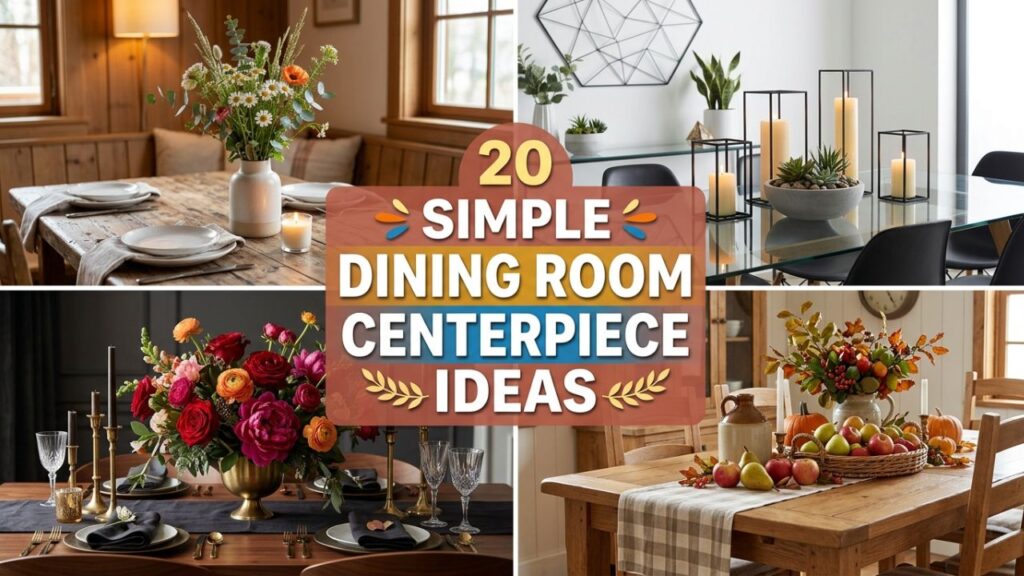
This guide gives you 20 specific, ready-to-use ideas that work across different budgets, table sizes, and home styles.

Each one is quick to set up, easy to maintain, and designed to actually look good — not just in theory, but in real homes.
1. A Single Statement Bloom in a Clear Glass Vase
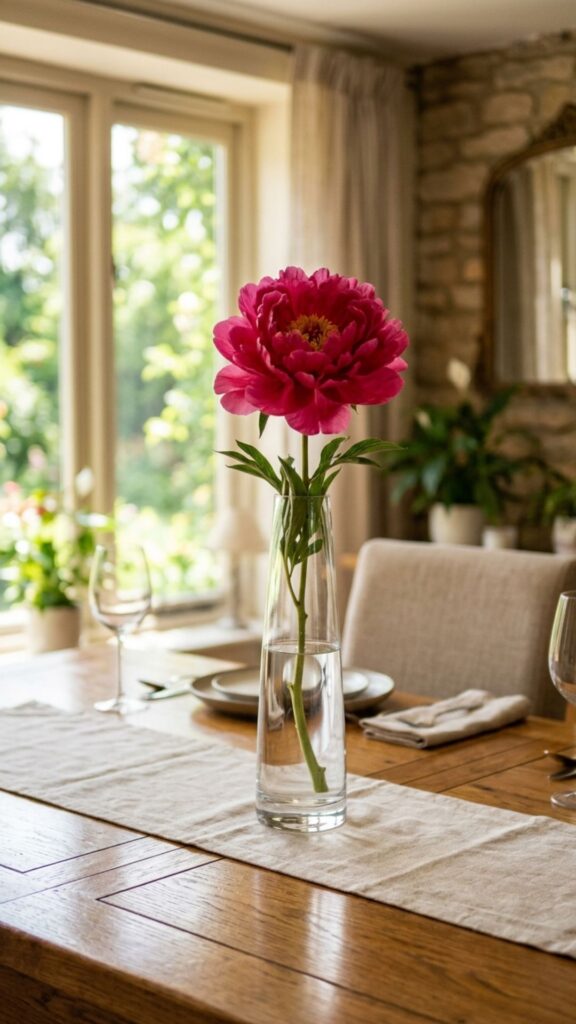
One oversized bloom — a peony, dahlia, or sunflower — in a tall clear vase is all you need to create a dining room centerpiece that looks deliberate. Let the flower do the work. Your job is simply to choose a color that already exists somewhere in the room: a cushion, a wall tone, or a nearby piece of art.
Swap it out weekly when you’re already buying groceries. Total cost: under three dollars. Total time: two minutes.
2. Grocery Store Bouquet in a Short Ceramic Pitcher
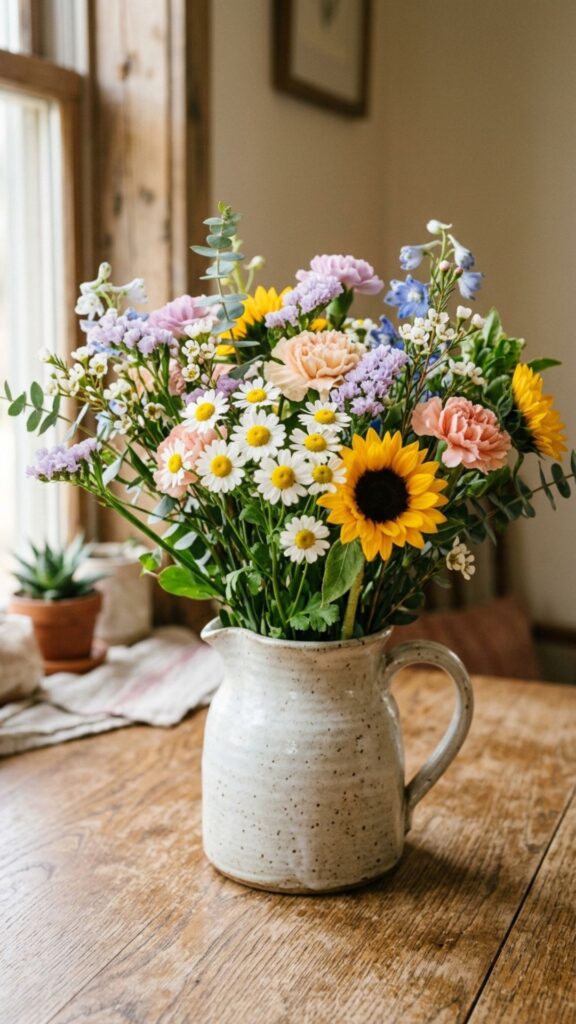
Pre-made bouquets from grocery stores are more versatile than most people realize. Cut the stems to varying heights, remove any leaves below the waterline, and place them loosely in a short pitcher or wide-mouth jar. The uneven heights create visual texture without any arranging skill required.
This setup stays low-profile, which is ideal for round or smaller tables where you want to keep sightlines open across the table. It’s casual, quick, and genuinely budget-friendly.
3. Three Pillar Candles Grouped on a Wooden Board
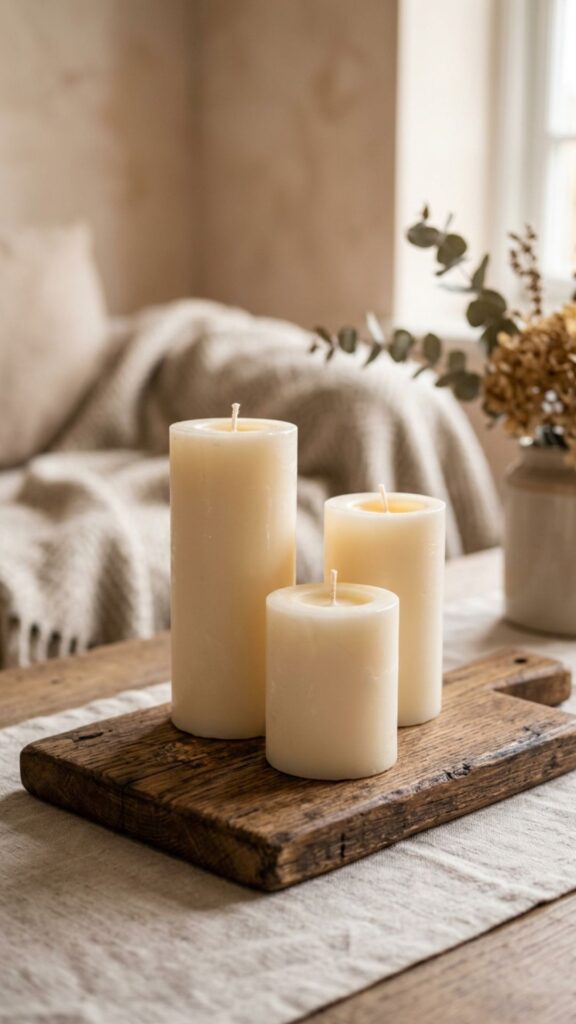
Choose three pillar candles in varying heights — same color family, different widths — and group them on a small wooden board or flat slate tile. The board anchors everything visually and protects your table surface at the same time. Ivory, cream, and warm white tones blend well with almost any dining room style.
This arrangement works for a relaxed weeknight dinner and a formal gathering alike. Light the candles before guests arrive and the mood shifts immediately without any extra effort.
4. Floating Candles in a Wide Glass Bowl
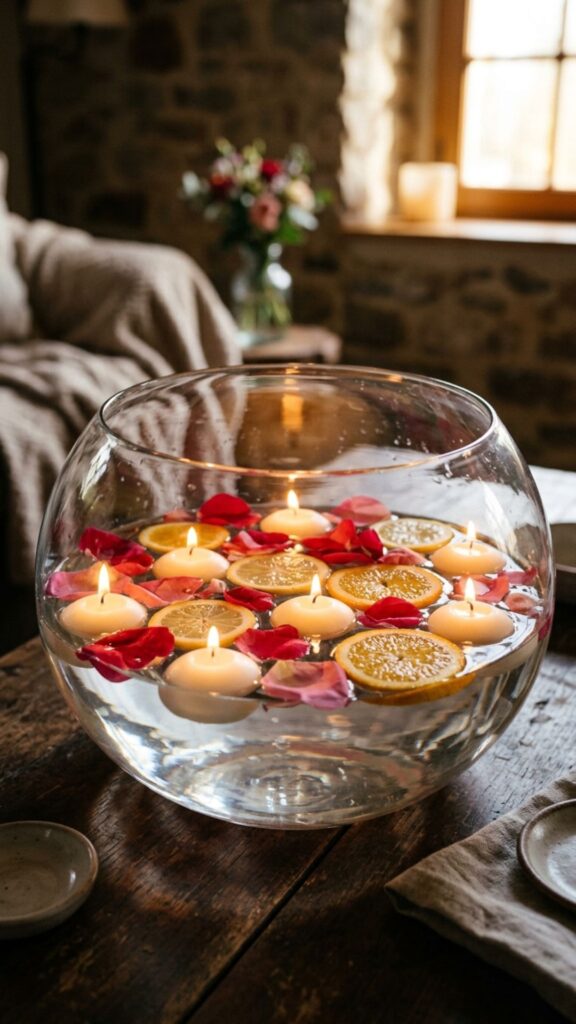
Fill a low, wide glass bowl with water, float two or three candles on the surface, and scatter rose petals or thin citrus slices around them. The candlelight reflects off the water in a way that creates soft, moving warmth — the kind that’s very hard to achieve with overhead lighting alone.
Scale the bowl to your table size. One large bowl works well on a long rectangular table. Two smaller bowls placed side by side suit a round or square table. Setup takes about three minutes.
5. Taper Candles in Mixed-Height Holders
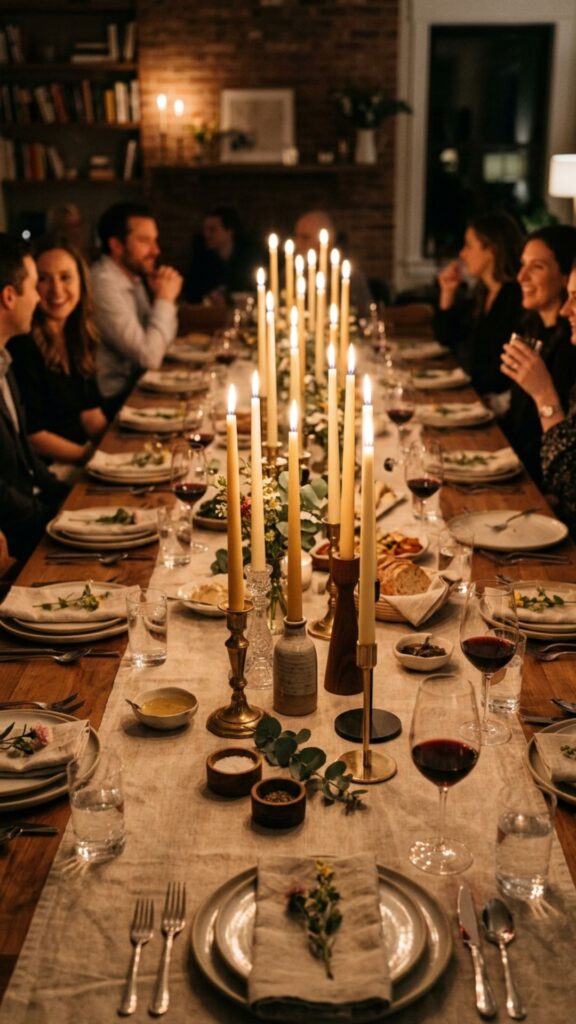
Line four or five taper candle holders down the center of the table and deliberately choose different heights. Mix complementary finishes — brass and black, matte white and natural wood — for a look that feels curated rather than perfectly matched.
Taper candles are particularly effective on long dining tables because they draw the eye along the length of the table. Holders are easy to find at thrift stores and discount home goods shops, making this one of the most affordable dining room centerpiece options on this list.
6. A Cluster of Potted Herbs on a Wooden Tray
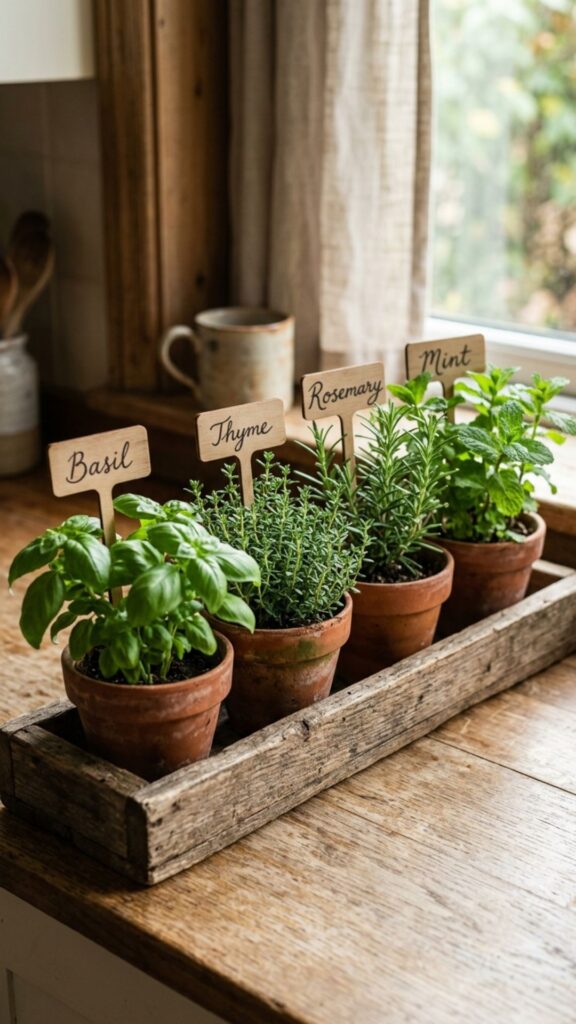
Small pots of basil, rosemary, thyme, or mint grouped on a wooden tray give you a centerpiece that’s both attractive and functional. They add natural color, smell wonderful, and you can snip directly from them while you cook.
Add small handwritten label stakes to make the arrangement feel more considered. When the herbs outgrow the tray, rotate them to a kitchen windowsill and bring in fresh pots. This works especially well in farmhouse and cottage-style dining rooms.
7. A Trailing Pothos or Ivy in a Woven Basket
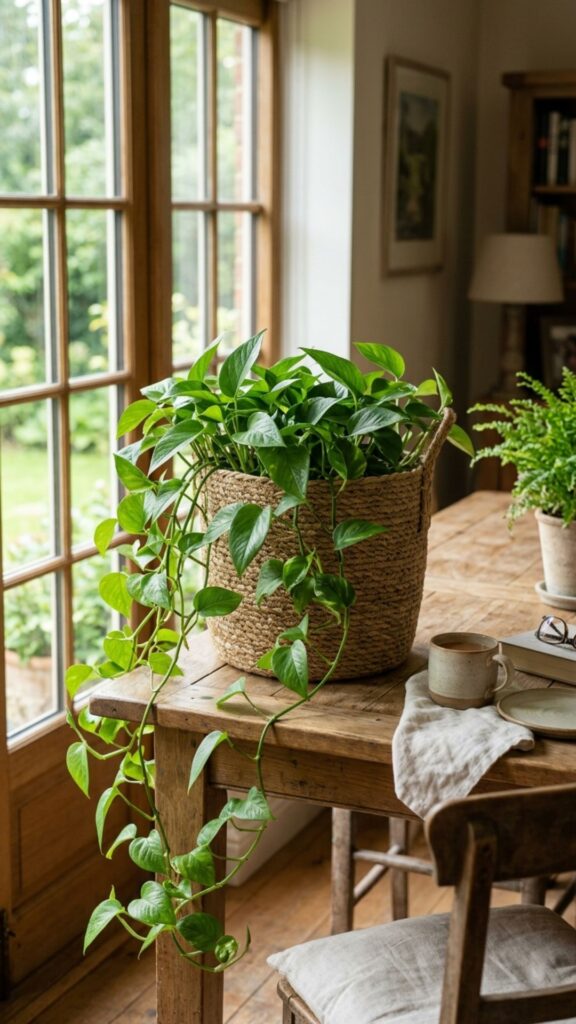
A trailing houseplant in a natural fiber basket is one of the most forgiving centerpiece choices available. Pothos and ivy tolerate low light and inconsistent watering, which makes them genuinely practical for daily life — not just for styled photos.
Let the vines trail loosely over the sides of the basket. Swap the basket cover seasonally — light wicker in summer, a dark felt sleeve in winter — and the centerpiece evolves without replacing the plant. Low effort, long-lasting, and visually grounded.
8. Eucalyptus Branches in a Low Ceramic Vase
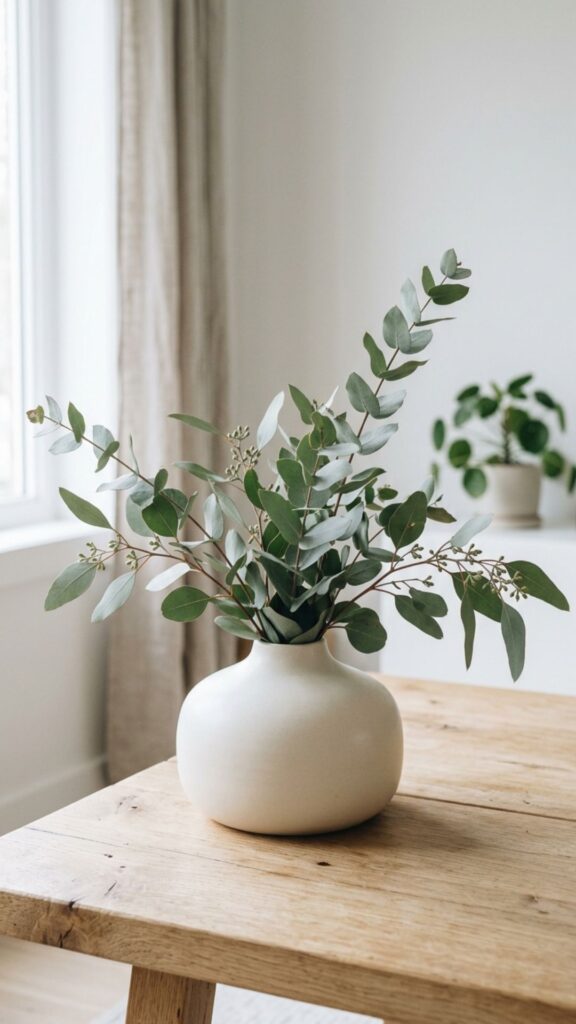
A few branches of fresh or dried eucalyptus in a short vase create a soft, elegant dining room centerpiece with almost no styling effort. The silver-green tones pair naturally with white, grey, terracotta, and warm wood finishes.
Dried eucalyptus is especially practical — it holds its color and shape for months without any maintenance. This makes it a reliable option when you want something that looks consistently good without weekly replacements.
9. A Shallow Bowl of Seasonal Fruit

A wide, shallow bowl filled with seasonal fruit is one of the oldest dining room centerpiece ideas — and it holds up because it genuinely works. Clementines, lemons, green apples, or plums all create rich, natural color that changes with the seasons.
Keep the arrangement loose rather than stacked too high. A flat layer of fruit across the bowl bottom looks more relaxed and modern than a towering pile. Plus, the fruit stays in rotation as you eat it, so there’s essentially no waste.
10. A Row of Bud Vases in Different Heights
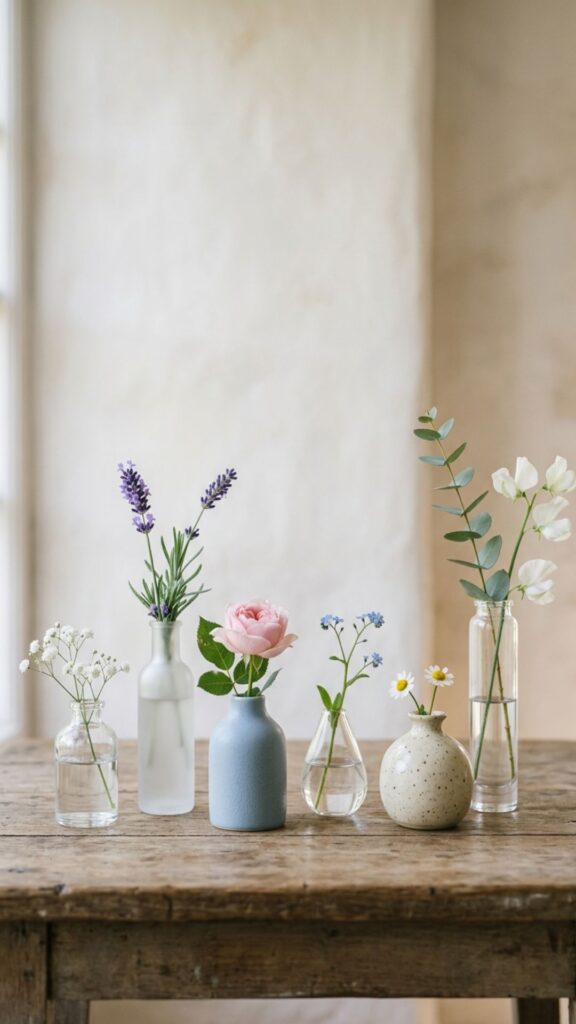
Collect three to five small bud vases — mix glass, ceramic, and metal — and line them down the center of the table. Add a single stem to each: one sprig of baby’s breath here, a single ranunculus there, a sprig of rosemary in another.
The individual stems look intentionally minimal rather than sparse because the collection of vases ties them together. This is a strong approach for narrow tables where a larger arrangement would feel crowded.
11. A Lantern With a Pillar Candle Inside
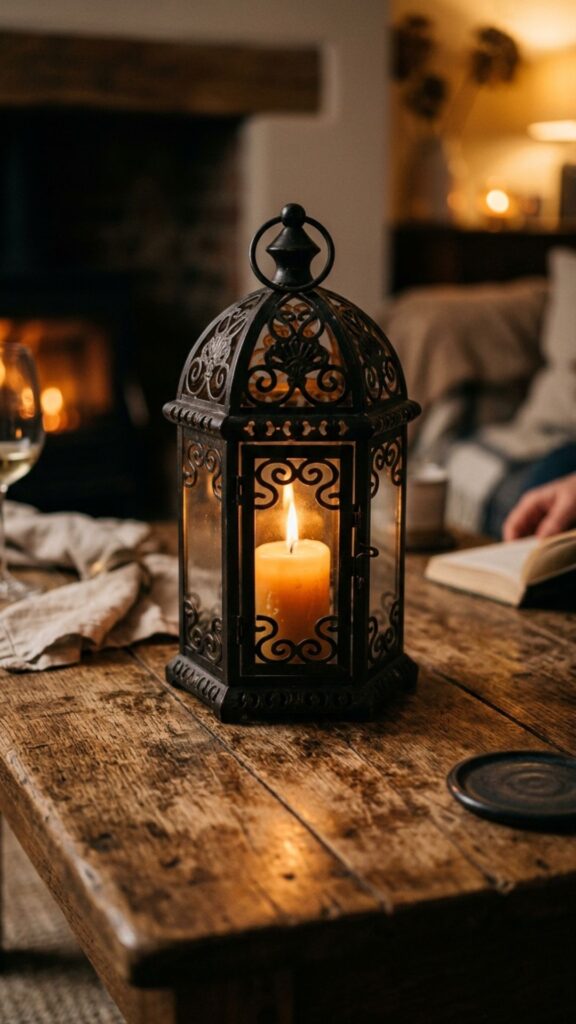
A single lantern placed at the center of the table adds height, warmth, and structure. Lanterns work in rustic, coastal, industrial, and contemporary dining rooms depending on the material and finish you choose — black metal reads modern, weathered wood reads coastal or farmhouse.
Place a pillar candle inside or use a battery-operated version for a no-flame alternative that’s safe around kids and pets. Either way, the effect is cozy and polished at the same time.
12. A Stack of Coffee Table Books With a Small Object on Top

Stack two or three large-format books and place a small decorative object on top — a smooth stone, a tiny vase, a sculptural figurine. The books add height and visual interest while feeling personal rather than generic.
Choose books with spines or covers that complement your color palette. This is a great no-cost option if you already own art books, travel photography collections, or design references. Swap the top object to refresh the look instantly.
13. A Terrarium or Glass Cloche With Succulents
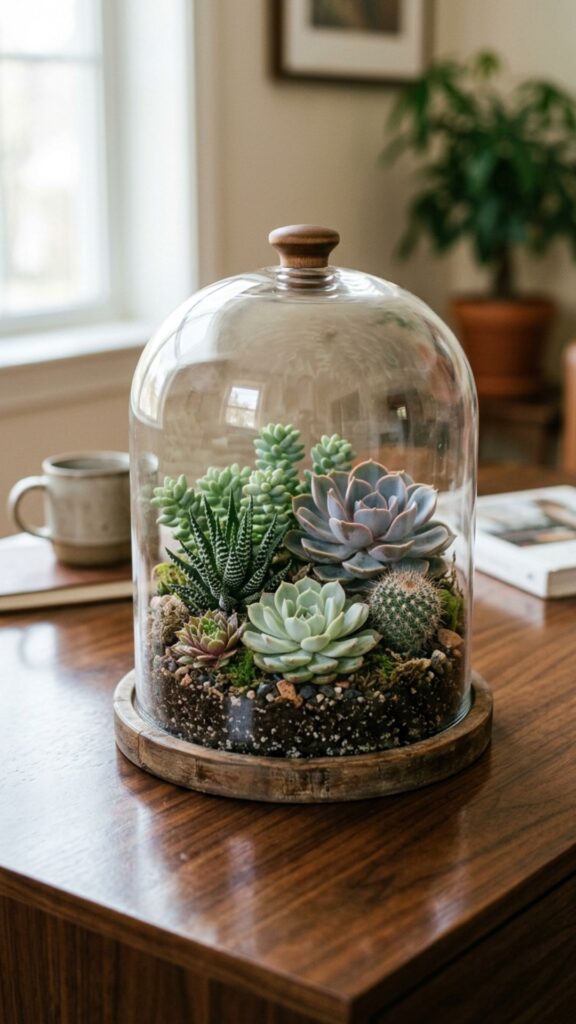
A small terrarium or glass cloche filled with a few succulents makes a dining room centerpiece that requires almost no upkeep. Succulents need very little water and tolerate indoor conditions well, making them one of the most practical plant-based options available.
Choose varieties with different textures — a spiky echeveria alongside a smooth haworthia — to create contrast within a contained space. The glass enclosure elevates even simple arrangements into something that looks considered and polished.
14. A Decorative Bowl Filled With Pinecones or Driftwood
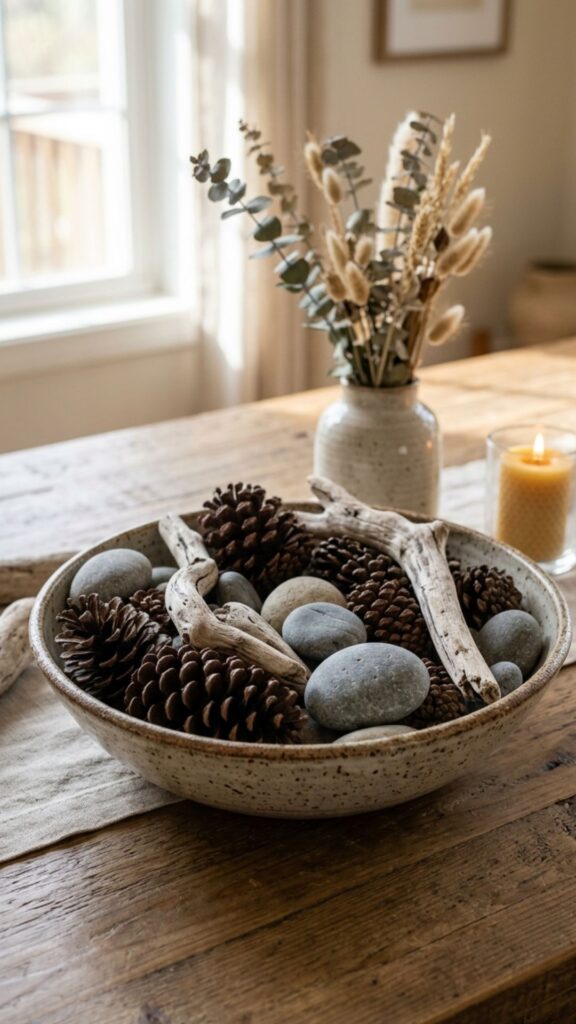
For a more textural, nature-inspired look, fill a wide decorative bowl with pinecones, smooth river stones, or small pieces of driftwood. The arrangement requires no maintenance and no water, and the materials can be sourced for free outdoors.
Spray pinecones with gold or copper metallic paint for a seasonal variation that works particularly well in autumn and winter. Store the materials between uses and the centerpiece costs nothing to recreate year after year.
15. A Vintage Tray With a Curated Collection of Objects
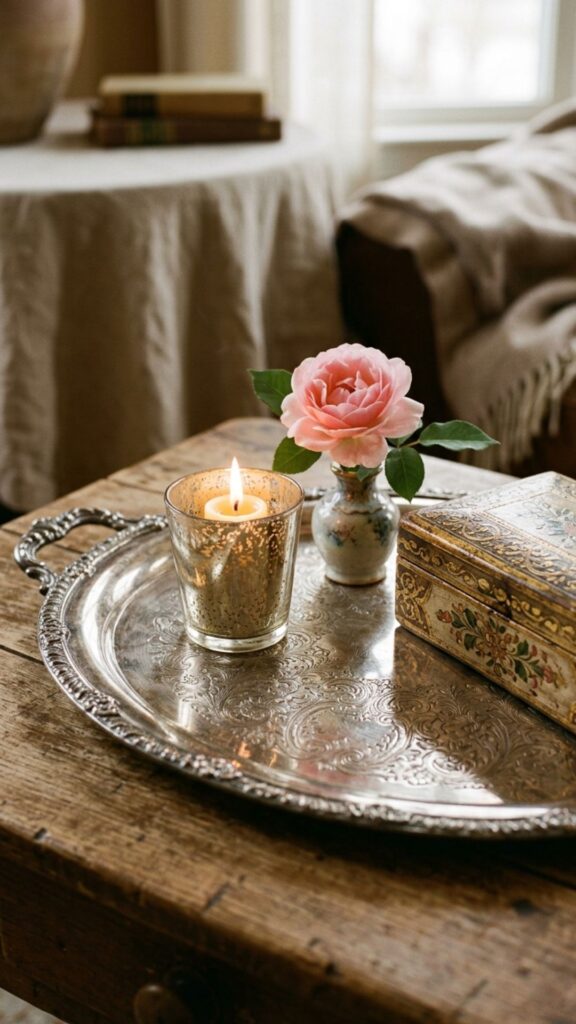
An antique or vintage-style tray holding a small collection of objects — a candle, a small vase, a decorative box — creates a dining room centerpiece that looks layered and lived-in. The tray acts as a visual boundary that makes the grouping feel intentional rather than cluttered.
Shop thrift stores and estate sales for the tray itself. The objects can rotate based on the season, the occasion, or simply what you currently love. This approach rewards collecting and makes the table feel personal.
16. A String of Low Votives Along the Table Center
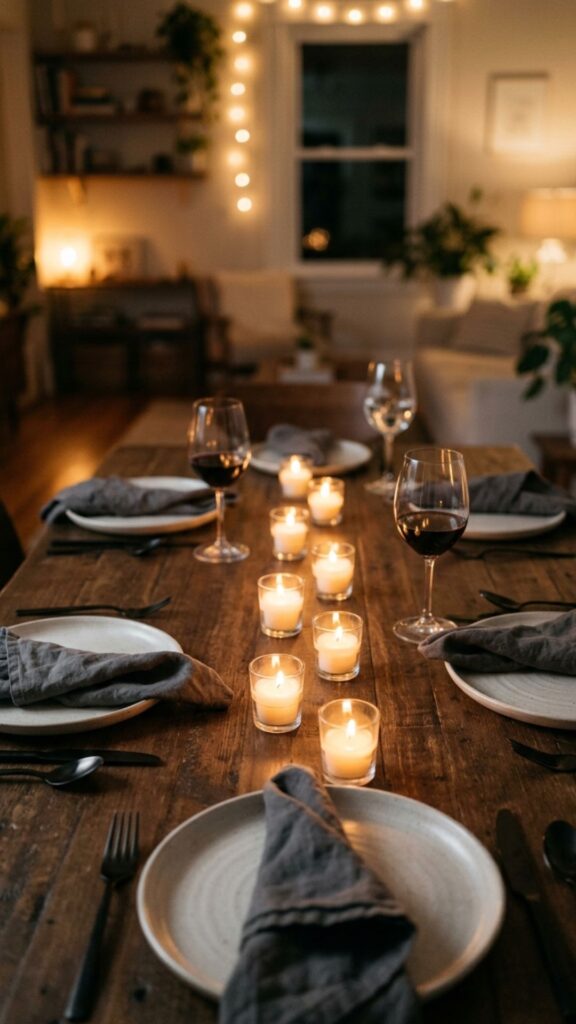
Line up five or seven small votive holders down the center of the table in an irregular, slightly offset pattern rather than a perfectly straight line. The subtle variation adds visual interest without looking sloppy.
Use unscented candles for dining so the fragrance doesn’t compete with the food. This is one of the quickest setups on the list — pull the votives from a drawer, place them down the center, light them, and you’re done in under a minute.
17. A Dried Flower Wreath Laid Flat as a Table Runner
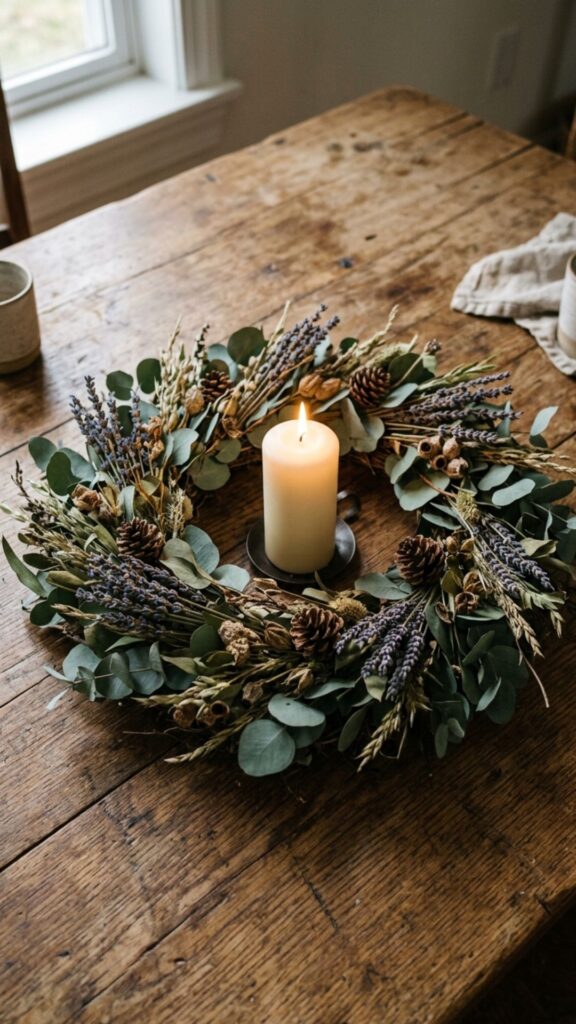
Take a dried flower wreath — lavender, wheat, or a mixed botanical wreath — and lay it flat at the center of the table instead of hanging it on a wall. The circular shape works especially well on round dining tables where it mirrors the table shape itself.
Dried wreaths are available at craft stores, farmers’ markets, and online, and they last for months without any care. Place a single candle in the center of the wreath to add warmth and complete the arrangement.
18. A Sculptural Object as a Standalone Centerpiece
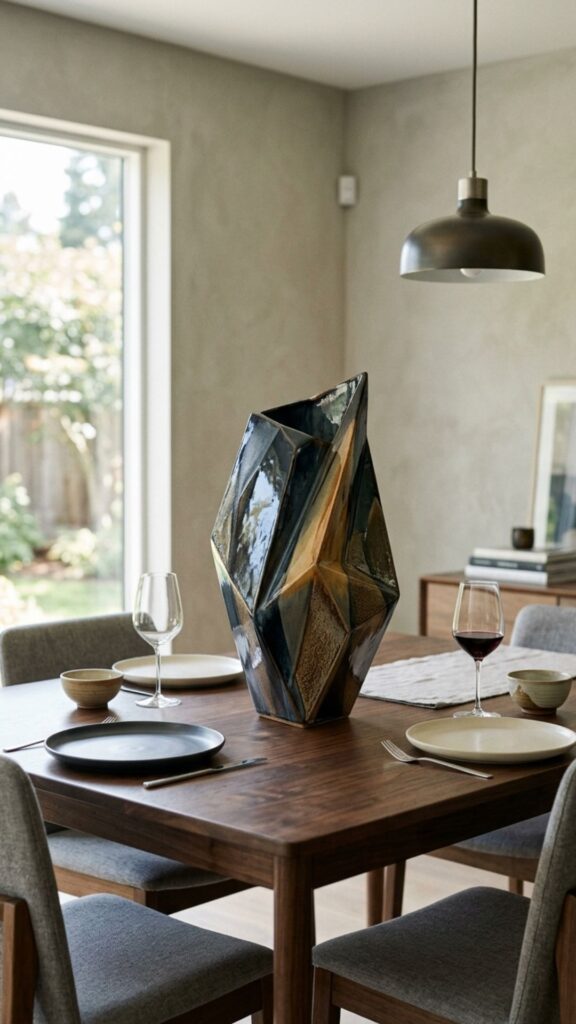
Not every dining room centerpiece needs flowers or candles. A single sculptural object — a ceramic hand, an abstract figurine, a hand-thrown bowl — can anchor a table with equal confidence and a more contemporary edge.
This approach suits minimalist and modern dining rooms particularly well. The key is scale: the object should be large enough to feel present but not so tall that it blocks eye contact across the table. A general guideline is to stay under 12 inches in height for everyday use.
19. A Wooden Dough Bowl Filled With Natural Elements
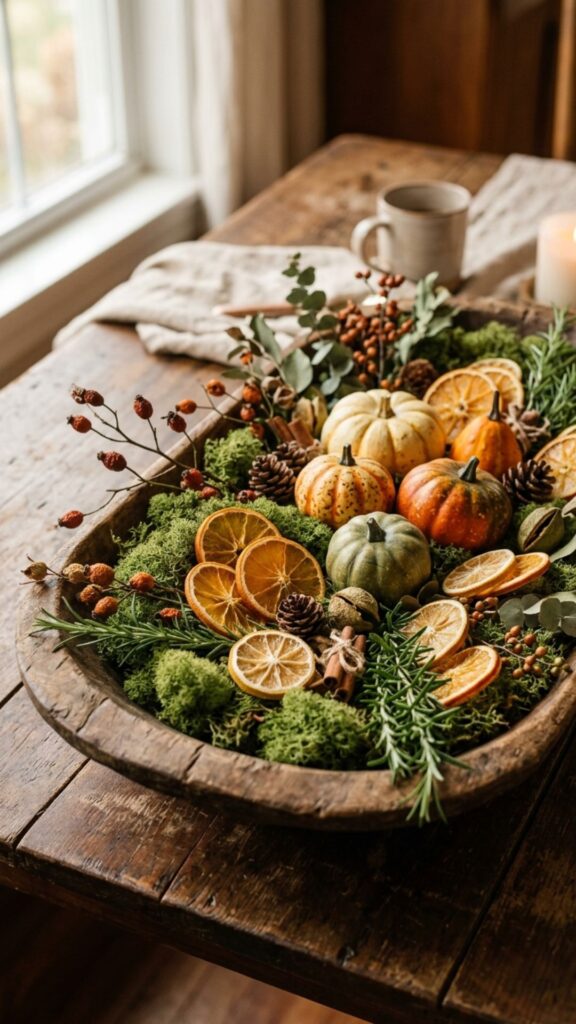
A large wooden dough bowl filled with seasonal natural elements — dried botanicals, moss balls, small gourds, or loose dried citrus slices — creates a rustic, organic centerpiece with real visual weight. The bowl itself is a statement piece even before you fill it.
Change the contents by season: dried flowers in spring and summer, small pumpkins and pinecones in fall, evergreen sprigs and cinnamon sticks in winter. The bowl stays on the table year-round; only the fillings change.
20. A Simple Linen Table Runner With a Single Candle
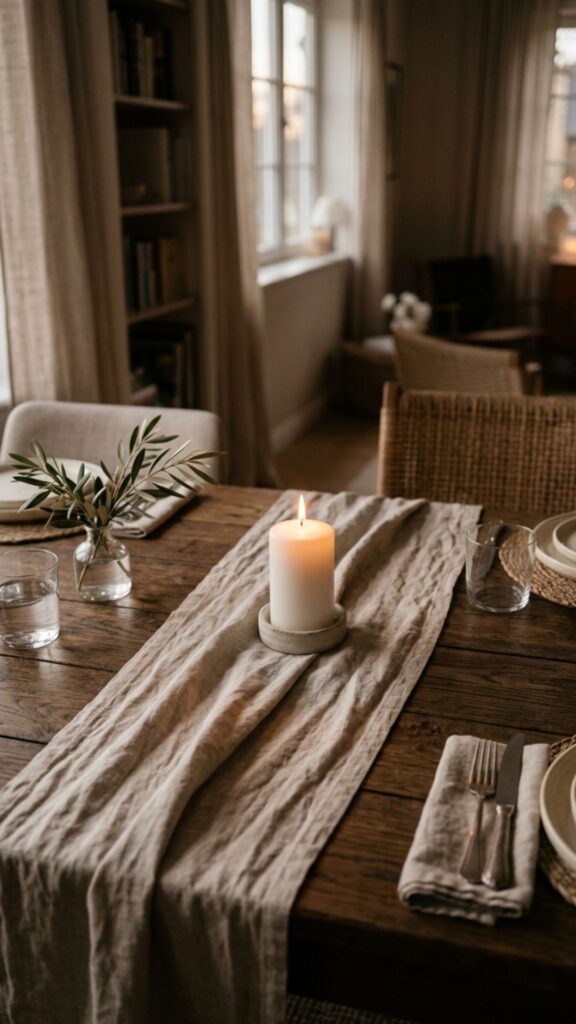
Sometimes the best dining room centerpiece is the most restrained one. A textured linen table runner laid down the center of the table with a single pillar candle placed at the midpoint keeps the table feeling open while still giving it a finished, intentional look.
Choose a runner in a neutral tone — oatmeal, cream, or soft grey — so it complements rather than competes with your tableware. This setup takes thirty seconds and costs almost nothing if you already own a candle. It proves that simplicity, done with intention, is its own kind of style.
Conclusion
A great dining room centerpiece doesn’t have to be complicated. As this list shows, the most effective arrangements are often the simplest — a single bloom, a row of candles, a bowl of seasonal fruit. The trick is choosing something that fits your table size, suits your home’s style, and works within your real daily life.
Start with one idea from this list that you can put together today using what you already have at home. Style it, live with it for a week, and see how it changes the feel of the space. Once you find a format that works, building on it becomes easy.
What makes a good dining room centerpiece?
A good dining room centerpiece has the right scale for your table, stays low enough to allow easy conversation, and suits the overall style of the room. It doesn’t need to be expensive or elaborate — it just needs to feel intentional and complement the space around it.
How tall should a dining table centerpiece be?
For everyday use, keep your centerpiece under 12 inches tall so it doesn’t block sightlines across the table. For formal occasions or on very long tables, taller arrangements can work as long as they’re slim enough to see around comfortably.
What are the easiest low-maintenance centerpiece options?
Dried botanicals, succulents, pillar candles, decorative bowls with stones or pinecones, and sculptural objects all require little to no upkeep. These are the best options if you want a consistently attractive table without weekly maintenance.
How do I choose a centerpiece for a small dining table?
For small tables, keep it compact and low. A single bud vase, a small cluster of votives, or one short ceramic bowl works much better than an oversized arrangement that takes up most of the table surface. Aim for something that leaves plenty of room for plates and glasses.
Can I use the same centerpiece year-round?
Yes. A base element — a wooden tray, a glass bowl, a lantern, a woven basket — can stay on the table all year. Simply swap out the fillings or accents seasonally to keep the look fresh without replacing everything from scratch.