Most people spend a lot of time thinking about dining room walls, floors, and furniture — and almost no time thinking about the ceiling. But the ceiling is the one surface every person at the table sees the moment they look up. Get it right, and it adds a layer of polish that ties the entire room together. Get it wrong — or ignore it entirely — and even a beautifully furnished dining room can feel unfinished.

This guide covers 20 of the most stylish dining room ceiling ideas working in modern homes right now. Whether you’re renovating from scratch, updating an older space, or simply looking for a refresh that doesn’t require a full remodel, you’ll find practical, design-forward ideas here.

From coffered beams to painted accents, bold wallpaper to exposed wood planks, there’s something in this list for every budget, style, and ceiling height.
1. Coffered Ceiling for Classic Structure
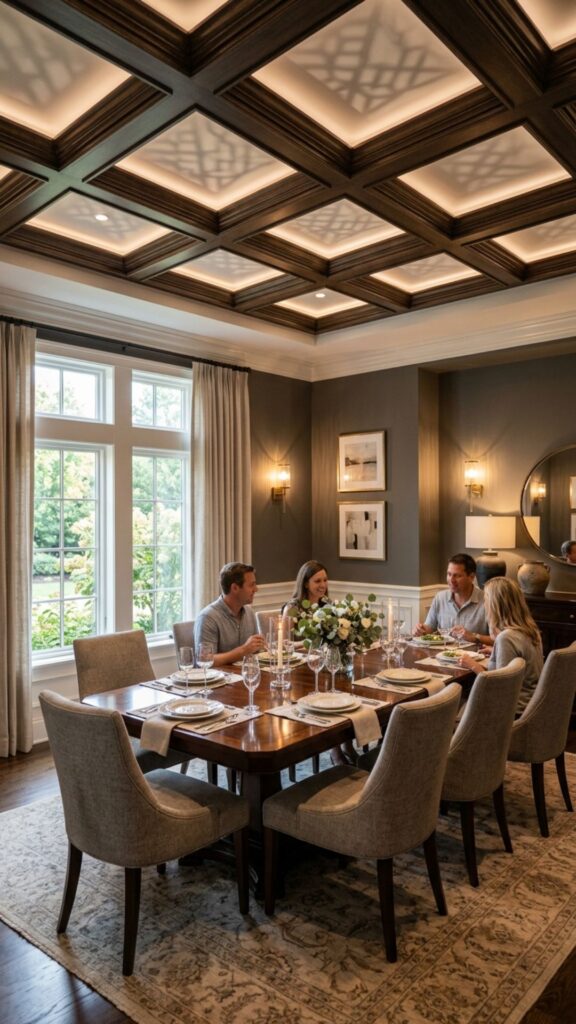
A coffered ceiling — with its grid of recessed square or rectangular panels — adds architectural depth that no paint color or light fixture can replicate. It suits formal dining rooms with higher ceilings, where the geometry becomes a visual focal point above the table.
You don’t need to invest in custom millwork to achieve the look. Pre-made MDF molding kits are available at most home improvement stores and can be installed over a standard flat ceiling. Paint the coffers the same color as the ceiling for a subtle, tone-on-tone effect, or go slightly deeper for more definition.
2. Exposed Wood Beams for Warmth
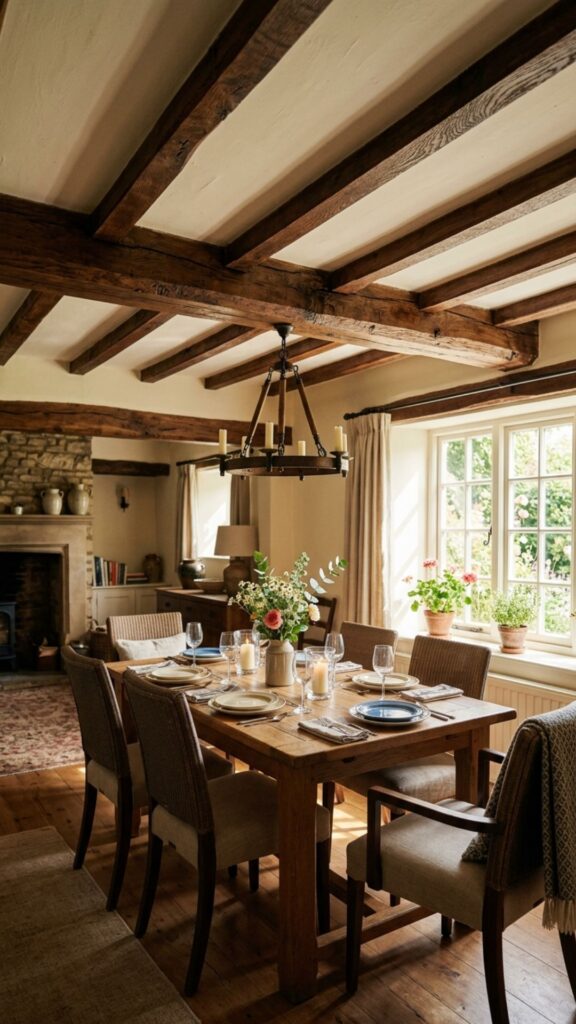
Exposed ceiling beams bring texture, warmth, and a sense of craftsmanship to a dining room without requiring any significant structural work. Faux wood beams — made from lightweight polyurethane — are nearly indistinguishable from real wood and can be mounted directly onto drywall.
Dark walnut or weathered oak beams pair naturally with a white or cream ceiling. In more contemporary dining rooms, natural unstained pine or whitewashed beams create a lighter, more relaxed look. Either way, beams draw the eye upward and make the room feel considered from top to bottom.
3. Statement Pendant Light as the Focal Point
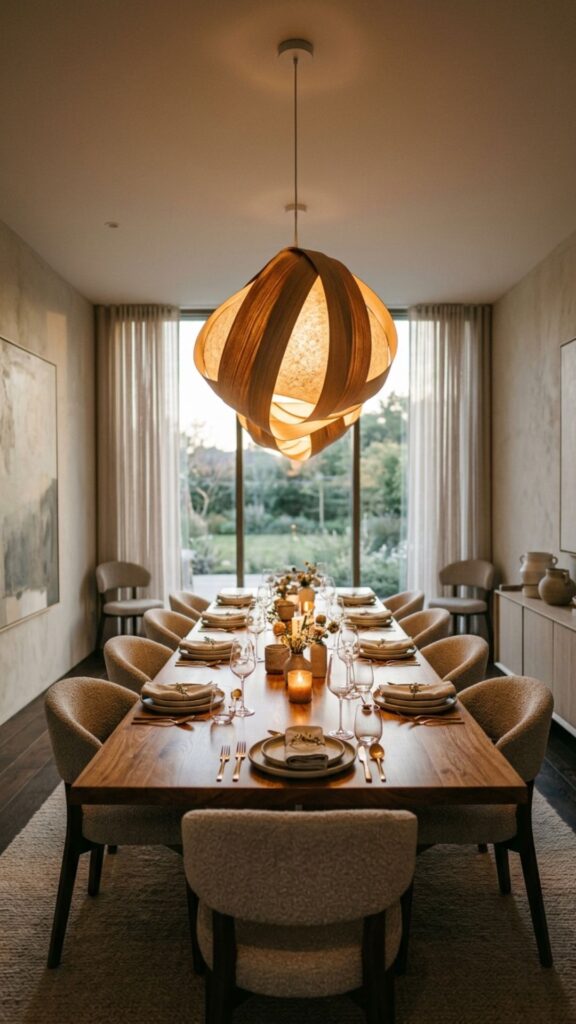
Sometimes the ceiling treatment is less about surface and more about what hangs from it. A single, oversized pendant — whether it’s a sculptural rattan globe, a cluster of glass drops, or a raw brass dome — can become the defining visual moment of the dining room ceiling.
The key is scale. The pendant should be wide enough to feel proportional to the dining table below it. A standard rule: choose a fixture that’s roughly half to two-thirds the width of the table. Hang it 30 to 36 inches above the tabletop for the best light distribution and visual balance.
4. Tray Ceiling with Accent Lighting
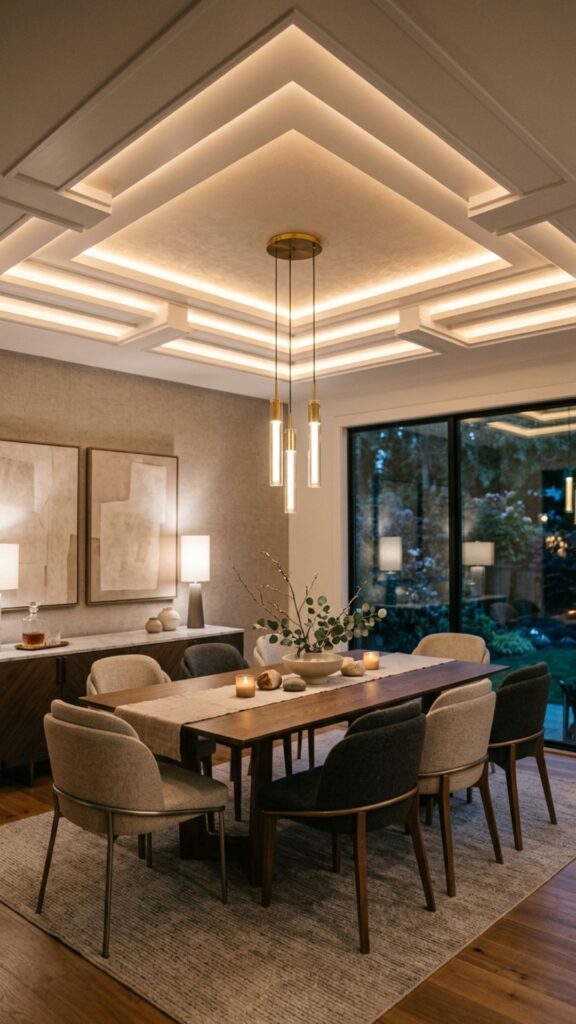
A tray ceiling — recessed in the center with a stepped border around the edges — creates a natural frame above the dining table and gives you a space to install accent lighting. LED strip lights tucked into the tray perimeter emit a soft, ambient glow that works beautifully for evening dining.
Paint the interior of the tray a slightly different shade from the rest of the ceiling to emphasize the depth. A warm gold or deep navy inside a white-bordered tray creates a sophisticated, layered effect that reads as intentional and high-end without requiring a complex renovation.
5. Painted Ceiling in a Bold Color
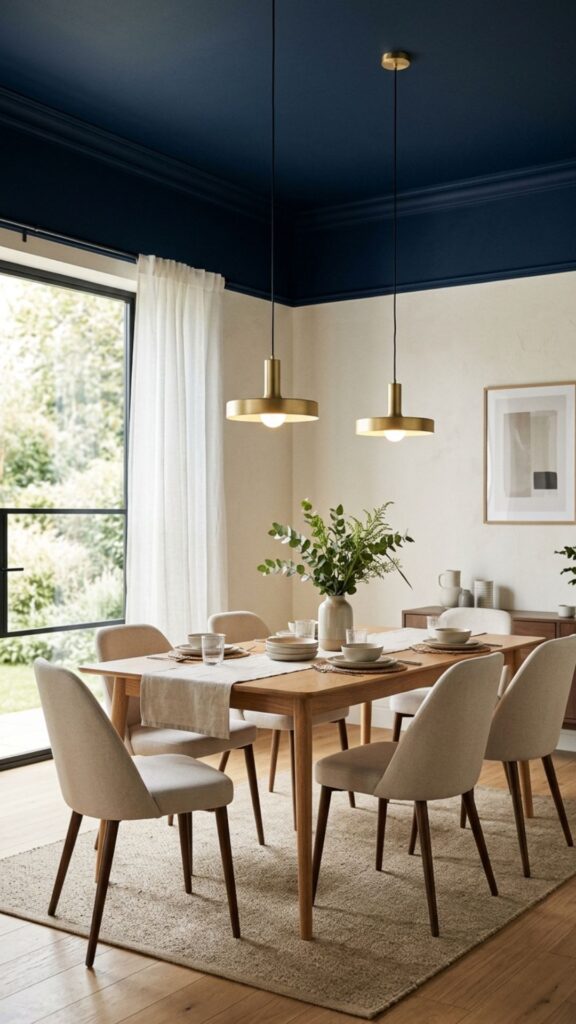
Painting the dining room ceiling a confident color is one of the most cost-effective ways to transform the room. Deep colors — forest green, navy, terracotta, charcoal — bring intimacy and drama to a space that might otherwise feel too large or too plain.
The practical trick is to carry the ceiling color two to three inches down the wall, past the crown molding. This makes the color feel intentional and saturated rather than like an afterthought. In rooms without crown molding, it also blurs the ceiling-wall boundary in a way that makes the whole room feel more cohesive.
6. Tongue and Groove Wood Planks
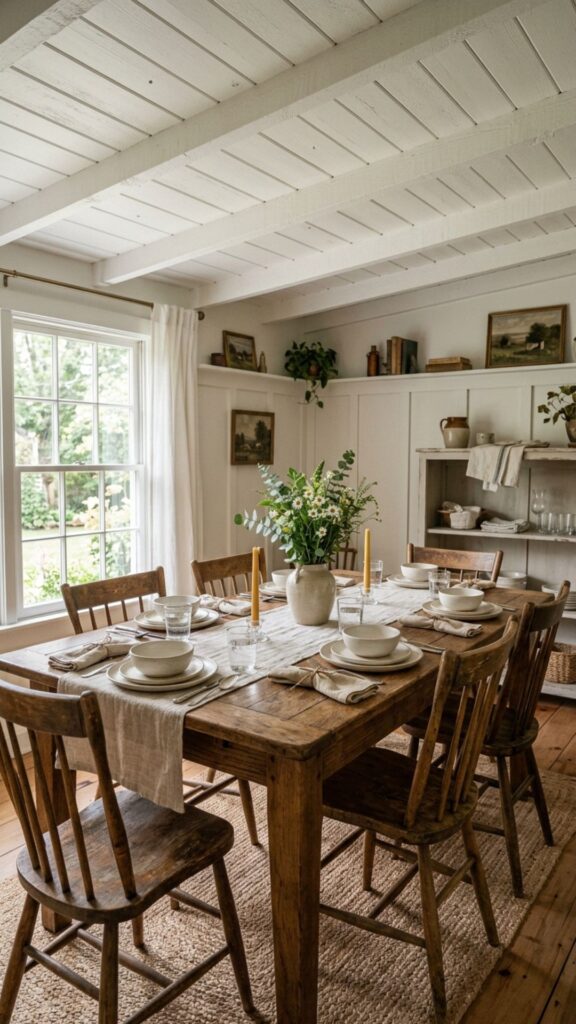
Tongue and groove planking installed horizontally across the ceiling adds texture and visual interest without overwhelming the room. White-painted planks suit coastal, farmhouse, and Scandinavian dining rooms. Natural stained planks work better in warm, rustic, or transitional spaces.
Installation is a weekend project for most confident DIYers. The planks attach directly to the existing ceiling with adhesive and finishing nails. Start from the center of the room and work outward for the most symmetrical result. The finished look is far more dynamic than a plain flat ceiling — and far more personal.
7. Wallpaper on the Ceiling
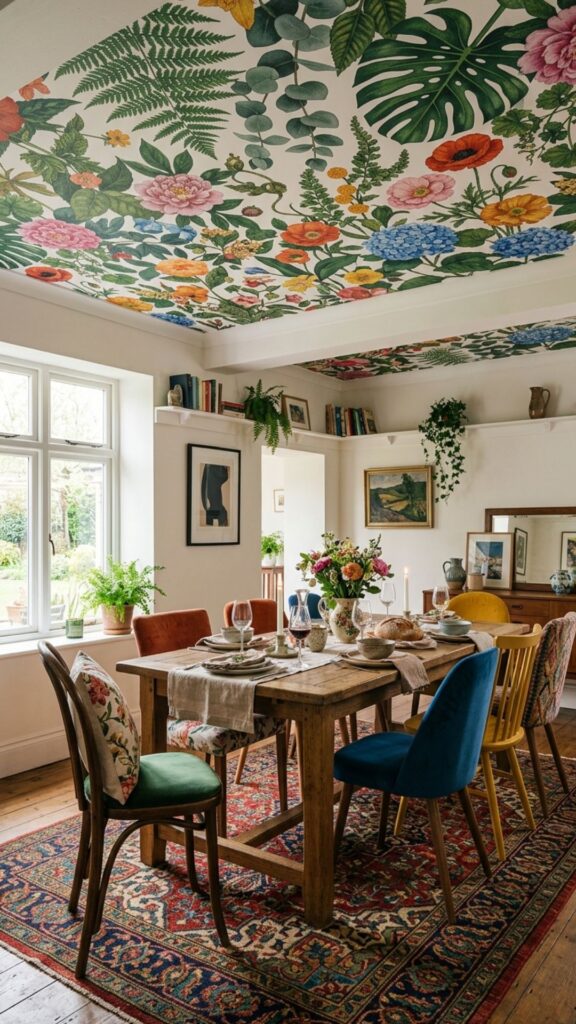
A patterned ceiling is an unexpected move that pays off significantly when it’s done well. Applying wallpaper to the dining room ceiling — botanical prints, geometric patterns, art deco designs — creates a fifth wall that adds color and personality from above.
This works particularly well in smaller dining rooms, where a patterned ceiling draws attention upward and makes the space feel larger than it is. Choose a pattern with colors that connect to what’s already in the room — your rug, chair upholstery, or artwork — so it feels curated rather than random.
8. Tin Tile Ceiling for Vintage Character
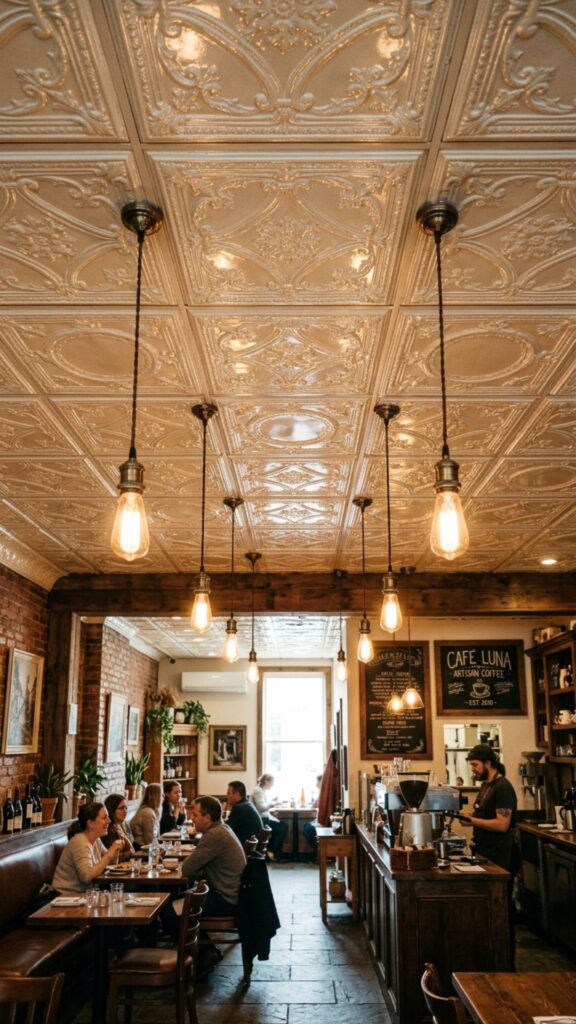
Pressed tin ceiling tiles were a hallmark of Victorian and Edwardian interiors. Today, they’ve found their way into eclectic, industrial, and even transitional dining rooms as a nod to craftsmanship and history. Modern versions are available in aluminum or PVC and install over existing ceilings.
Silver and antique white are the most popular finishes. For a more dramatic effect, paint the tiles black or oil-rubbed bronze and pair them with Edison bulb pendant lights. The texture and shine of tin tiles catch light in a way flat ceilings simply cannot replicate.
9. Shiplap Ceiling for a Modern Farmhouse Feel
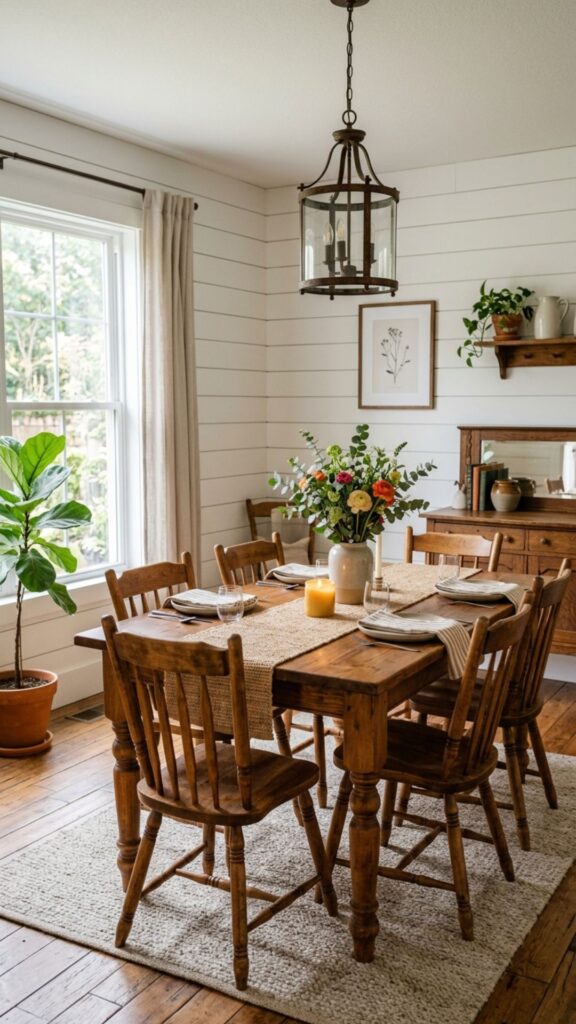
Shiplap — horizontal boards with a small reveal gap between each plank — has become one of the most recognizable hallmarks of the modern farmhouse aesthetic. On a dining room ceiling, it adds texture and casual elegance without requiring significant renovation.
White or light grey shiplap pairs well with black fixtures and natural wood furniture. For a bolder look, try a warm stain or even a muted sage green. Shiplap is also one of the most forgiving DIY ceiling treatments — the gaps between boards mean small misalignments are virtually invisible from normal viewing distance.
10. Cove Lighting for Soft Ambient Glow
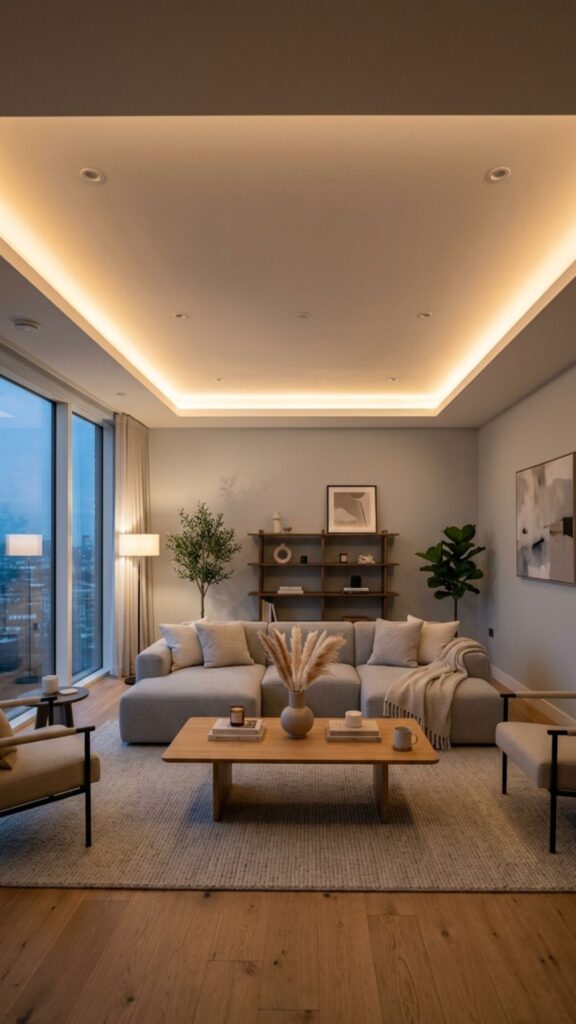
Cove lighting uses LED strips installed inside a recessed ledge or molding along the ceiling’s perimeter. The light bounces off the ceiling surface and diffuses into the room as a warm, even glow — the kind that flatters faces and makes everything on the table look better.
This is an excellent option for dining rooms where harsh overhead lighting has always been a problem. Cove lighting is non-directional by nature, which eliminates the shadows and glare associated with traditional ceiling fixtures. Pair it with a dimmer switch for full control over the room’s atmosphere.
11. Geometric Molding Patterns
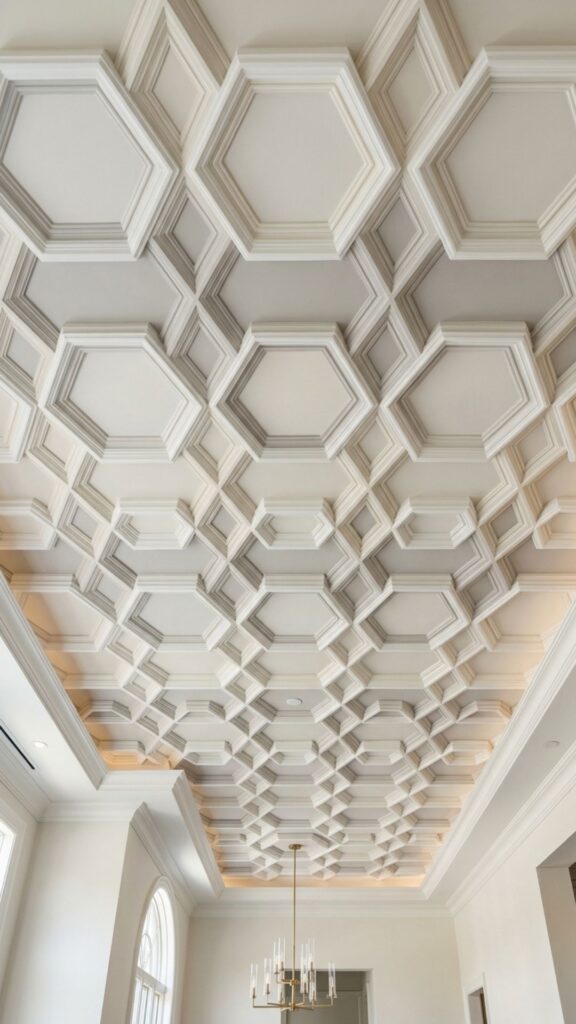
Beyond coffered grids, ceiling molding can be installed in a range of geometric patterns — herringbone, diamond, hexagonal, or overlapping rectangles. These create a custom, architectural look at a fraction of the cost of structural changes.
Lightweight MDF molding strips are easy to cut and apply. A chalk line and level are the most important tools for keeping the pattern straight. Once painted the same color as the ceiling, geometric molding adds a quietly sophisticated texture that rewards a second look — exactly the quality a dining room ceiling should have.
12. Double-Height Ceiling with Drama
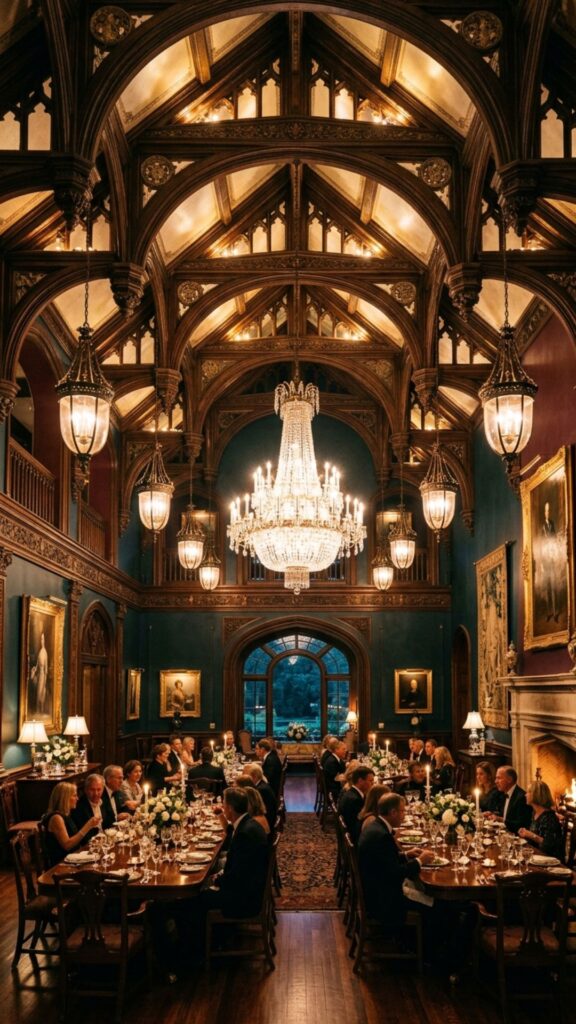
If your home has double-height or vaulted ceilings in the dining room, lean into the scale. A dramatic dining room ceiling like this calls for lighting that fills the vertical space — a large chandelier on an extended drop rod, or a cluster of pendant lights at varying heights.
The temptation is to ignore the upper wall and ceiling in tall rooms. Resist that. Paint the upper section of the wall a deeper shade than the lower half, or install a large architectural feature like a statement clock or sculptural wall panel to anchor the vertical space. Height is a design asset — use it deliberately.
13. Mirrored or Reflective Ceiling Panels
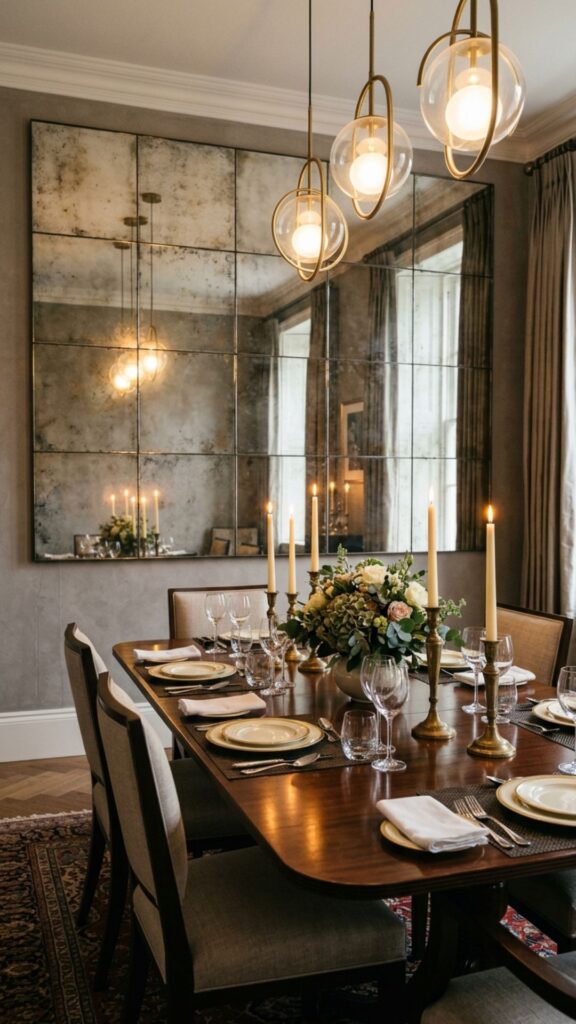
Mirrored panels on the dining room ceiling aren’t for every home — but in the right space, they’re a genuinely striking choice. They make compact rooms feel significantly larger and add a glamorous, almost theatrical quality to formal dining rooms.
Antiqued mirror panels — with a slightly aged, mottled surface — are more forgiving than fully polished mirror, which can feel too bright or too clinical. Apply them in a grid pattern using the same framing method as ceiling tiles. Combine with candlelight or warm-toned pendants for a moody, layered effect.
14. Skylight or Solar Tube for Natural Light
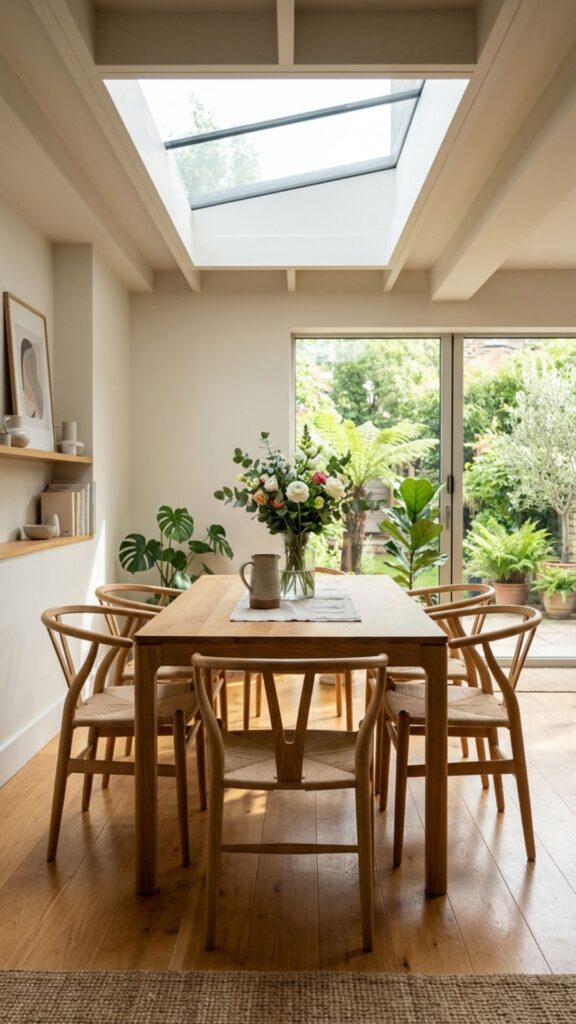
If the room’s architecture allows, adding a skylight or solar tube above the dining area transforms the quality of light in the room completely. Natural overhead light during the day makes the space feel airy and open — and removes the need for artificial lighting entirely for most daytime meals.
Solar tubes are a lower-cost alternative to full skylights. They channel outdoor light through a reflective tube from the roof to a diffuser mounted flush with the ceiling. The result looks like a soft, natural overhead light source — more flattering and energizing than any electric bulb.
15. Stenciled Ceiling Design
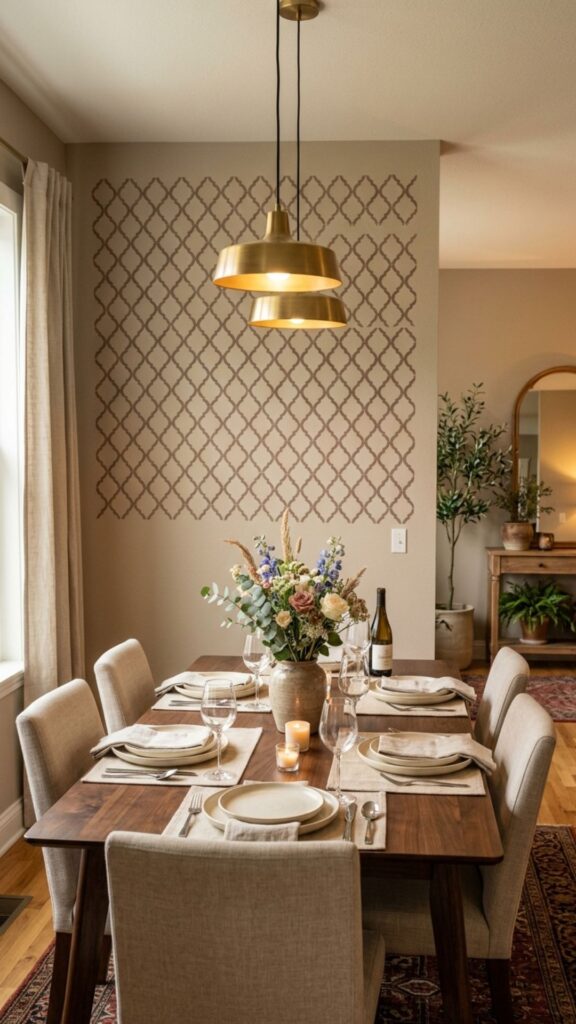
Stenciling is one of the most underrated ceiling treatments available. A well-executed stencil pattern — a Moroccan lattice, Scandinavian folk motif, or simple geometric repeat — adds visual depth and handcrafted character to an otherwise plain dining room ceiling.
Use a chalk-based or low-sheen paint over an eggshell base for the best results. Keep the tonal contrast subtle — a few shades lighter or darker than the base — for a sophisticated look. For bolder impact, use a contrasting color and apply the stencil only in the center of the ceiling, directly above the table.
16. Black Ceiling for Intimate Atmosphere
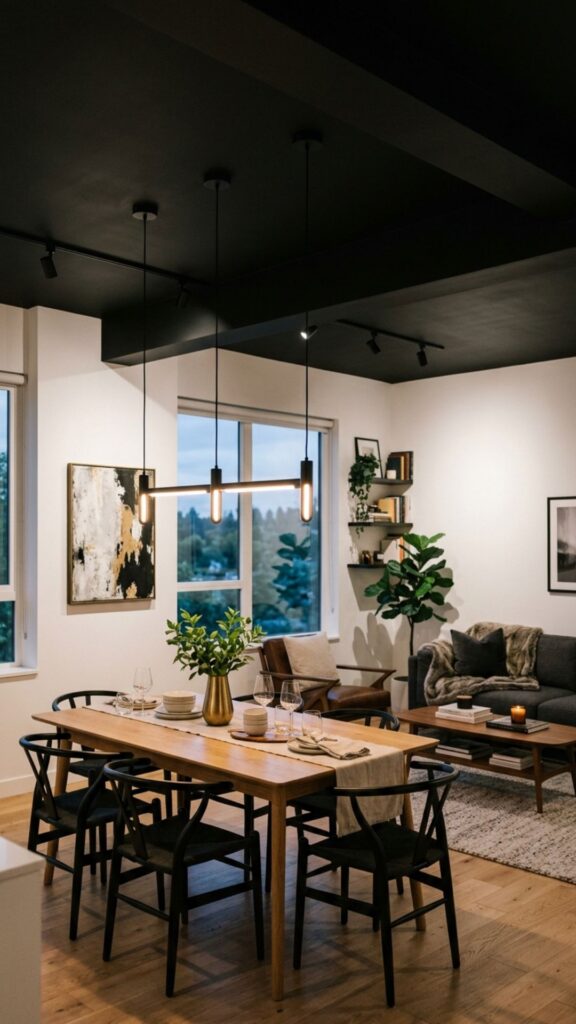
A black or near-black dining room ceiling immediately changes the room’s atmosphere. It lowers the perceived height of the space — in the best way — creating a sense of enclosure and intimacy that suits evening dining and long conversations around the table.
Black works best in rooms with at least one strong source of contrast: white walls, light-toned furniture, or warm metallic accents. Matte black finish is more forgiving on an imperfect ceiling surface. A semi-gloss or satin finish reads as more dramatic but will show any texture or imperfection in the substrate.
17. Reclaimed Wood Ceiling Panels
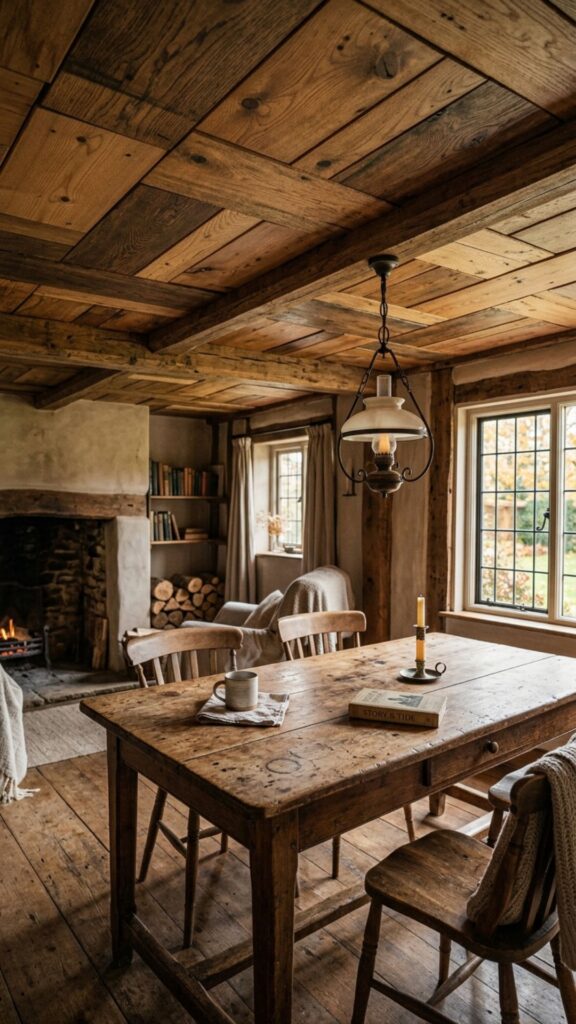
Reclaimed wood brings history, texture, and a one-of-a-kind quality that no new material can reproduce. Installed as ceiling panels above the dining area, old barn wood, salvaged pine, or reclaimed oak creates a surface that’s genuinely unique and deeply warm.
The tonal variation in reclaimed wood — the mix of grey, brown, and amber in natural wood that has aged over decades — is what makes it so visually interesting. No two pieces are the same. Seal the wood with a clear matte finish to protect it without diminishing its natural character.
18. Curved or Barrel Vault Ceiling
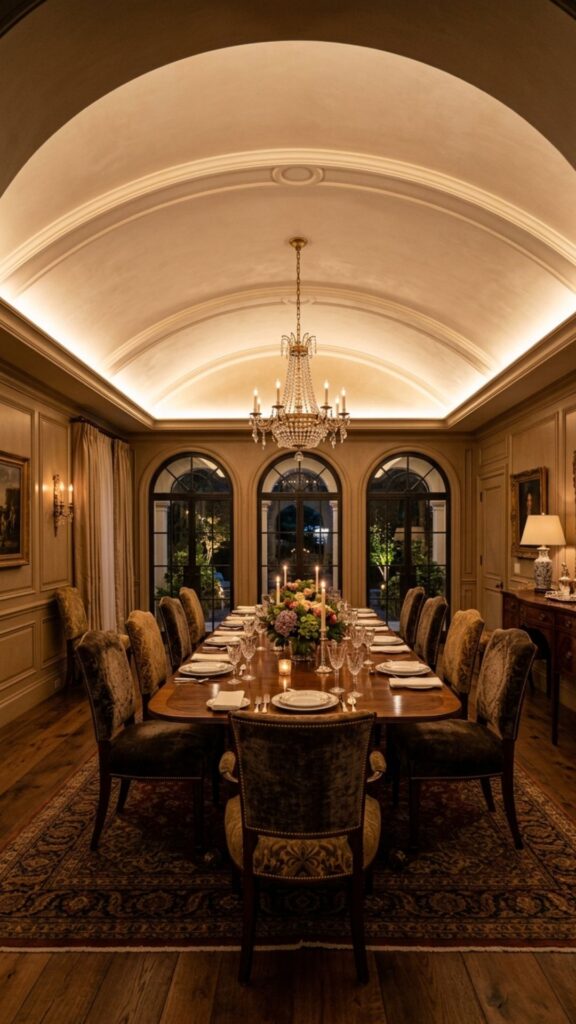
A barrel vault ceiling — curved from wall to wall in a half-cylinder shape — is one of the most architecturally impressive moves you can make in a dining room. It suits homes with a more classical or Mediterranean influence, but it also works in contemporary spaces that value sculptural design.
This is a renovation project rather than a DIY weekend, but the result is a dining room ceiling that reads as genuinely architectural. Pair a vault with indirect lighting installed at the base of the curve, where it meets the wall. The light will wash upward across the curved surface and fill the room with a soft, diffused glow.
19. Industrial Exposed Duct and Pipe

In loft apartments, converted warehouses, or deliberately industrial-themed homes, leaving mechanical elements — ductwork, pipes, conduit — fully exposed on the dining room ceiling turns necessity into design. The key is embracing it fully rather than half-committing.
Paint all exposed elements a consistent color: matte black, industrial grey, or raw steel. This unifies what might otherwise look chaotic into a deliberate aesthetic. Combine with concrete or wood surfaces in the room and Edison bulb pendants for the complete industrial dining room effect.
20. Layered Lighting on a Plain White Ceiling
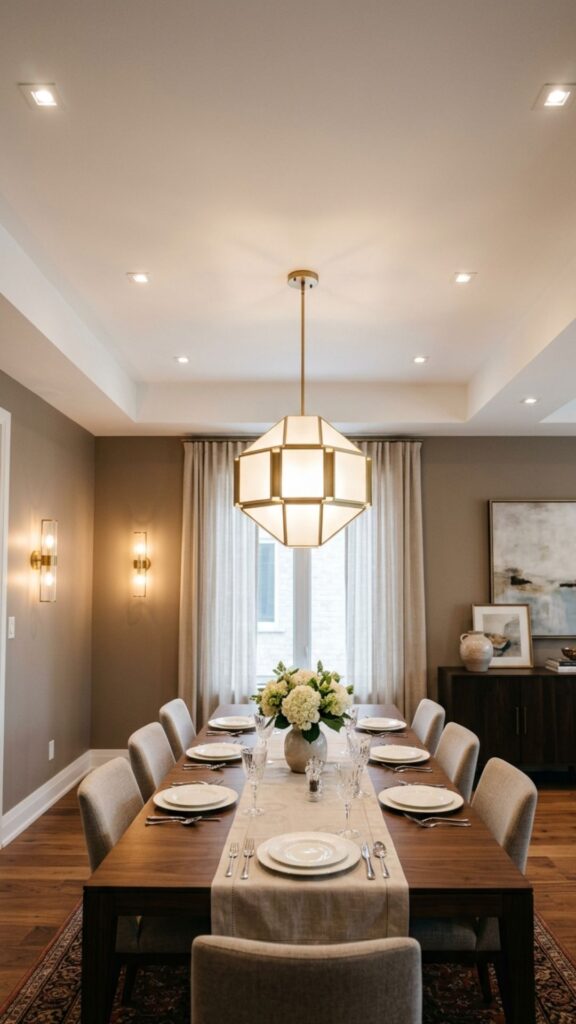
Not every dining room needs an elaborate ceiling treatment. Sometimes the right move is restraint — a clean white ceiling with a layered lighting scheme that does all the work. Combine a central pendant with recessed downlights and wall sconces to build multiple layers of light you can adjust by time of day and occasion.
The secret is dimmer switches on every circuit. A dining room that can shift from bright and practical for a family lunch to warm and intimate for a dinner party is more functional than one with an elaborate ceiling and only one lighting mode. Simplicity done thoughtfully is its own kind of statement.
Conclusion
The dining room ceiling is a blank canvas that most homeowners never fully use. Whether you choose the architectural drama of a coffered grid, the warmth of exposed wood beams, or simply a bold paint color that makes the room feel like itself, a considered ceiling completes the space in a way that no other element can.
Start by identifying what your current ceiling needs most — more texture, more warmth, better light, or a stronger focal point — and let that guide your decision. Measure, plan, and commit. The right dining room ceiling idea is the one you’ll stop noticing as a detail and start experiencing as part of the room.
What is the best color for a dining room ceiling?
White remains the most popular choice because it reflects light and pairs with almost any wall color. For more personality, soft warm tones like cream or pale linen add warmth without closing the room in. Bold choices — navy, forest green, charcoal — work well in rooms with enough natural light and confident décor.
How high should a dining room ceiling be?
Standard ceiling heights of 8 to 9 feet work well for most dining rooms. Heights of 10 feet or more allow for more elaborate treatments like coffered grids, barrel vaults, or oversized chandeliers. For low ceilings, vertical-stripe wallpaper, high-hung pendant lights, and light paint colors all help make the space feel taller.
How do I make my dining room ceiling look higher?
Mount pendant lights and curtain rods as close to the ceiling as possible. Use vertical lines in adjacent walls and paint the ceiling a shade lighter than the walls. Avoid heavy ceiling fixtures that visually weigh the ceiling down, and choose a clean or minimal ceiling treatment rather than a busy pattern that draws attention to how close the surface is.
Can I install a ceiling treatment myself?
Many of the most popular dining room ceiling ideas — shiplap, tongue and groove planks, faux beams, geometric molding, tin tiles, and stenciling — are achievable for confident DIYers with basic tools. More complex projects like barrel vaults, skylights, or cove lighting systems with custom millwork are better handled by a professional contractor.
How do I choose between a chandelier and a pendant for my dining room ceiling?
Chandeliers suit formal dining rooms with higher ceilings — they’re multi-arm fixtures designed to make a statement. Pendants are more flexible and suit modern, minimal, and casual spaces. A cluster of three pendants at varying heights can achieve a similar visual impact to a chandelier while feeling more contemporary. Base your decision on ceiling height, table size, and the overall style of the room.