Curtains are one of the easiest ways to change how a dining room feels — yet they’re one of the most overlooked finishing touches. The wrong pair can make a beautifully furnished room feel unfinished or cramped. The right pair pulls everything together and makes the space feel intentional, warm, and complete.
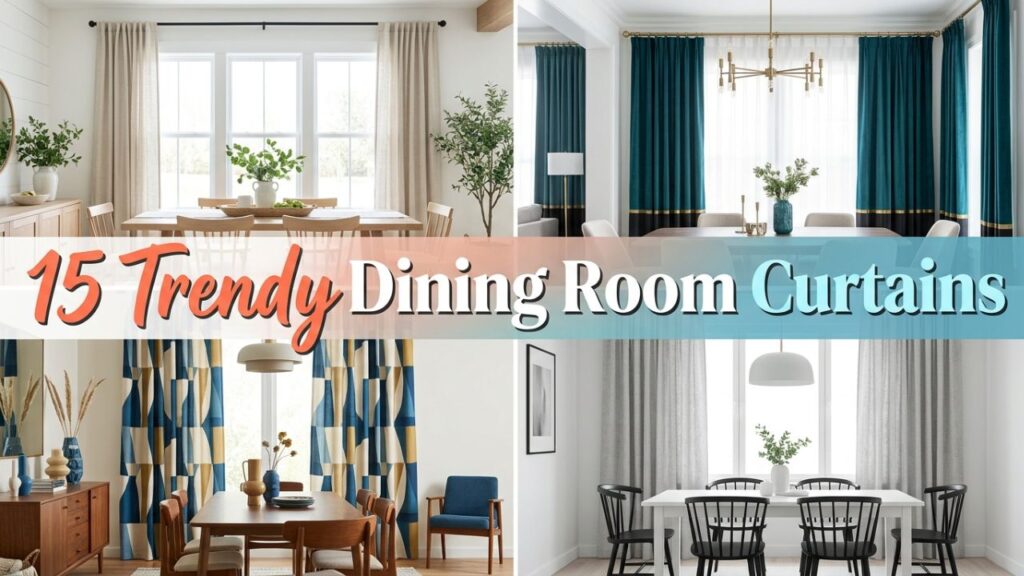
If you’ve been staring at bare windows or living with curtains that have never quite felt right, this guide is for you.
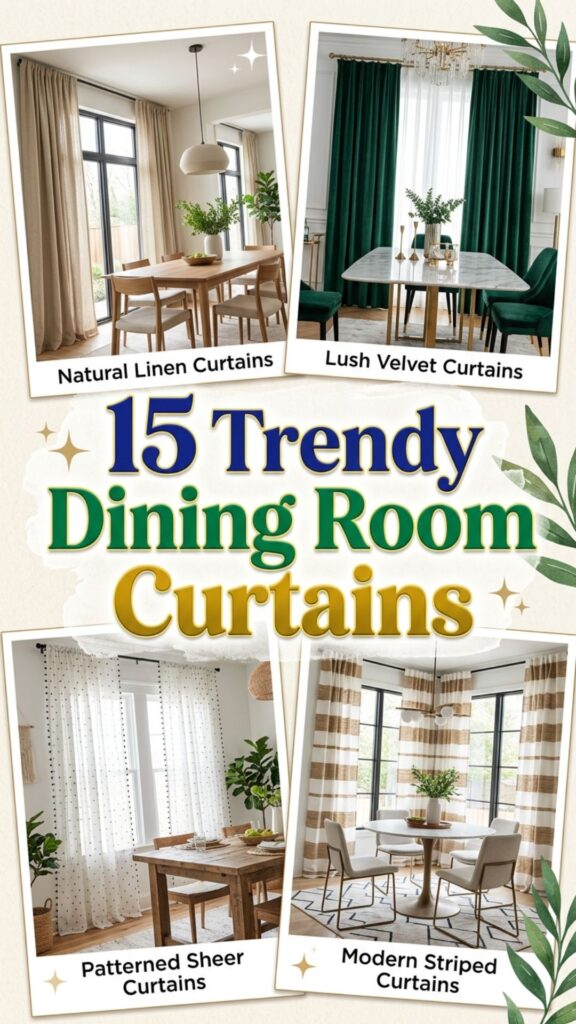
You’ll find 15 of the most popular and stylish dining room curtain ideas right now, with practical advice on fabric, color, pattern, and how to hang them for the best effect. Whether your dining room is formal or casual, large or compact, there’s a curtain style here that works.
1. Linen Curtains in Warm Neutral Tones
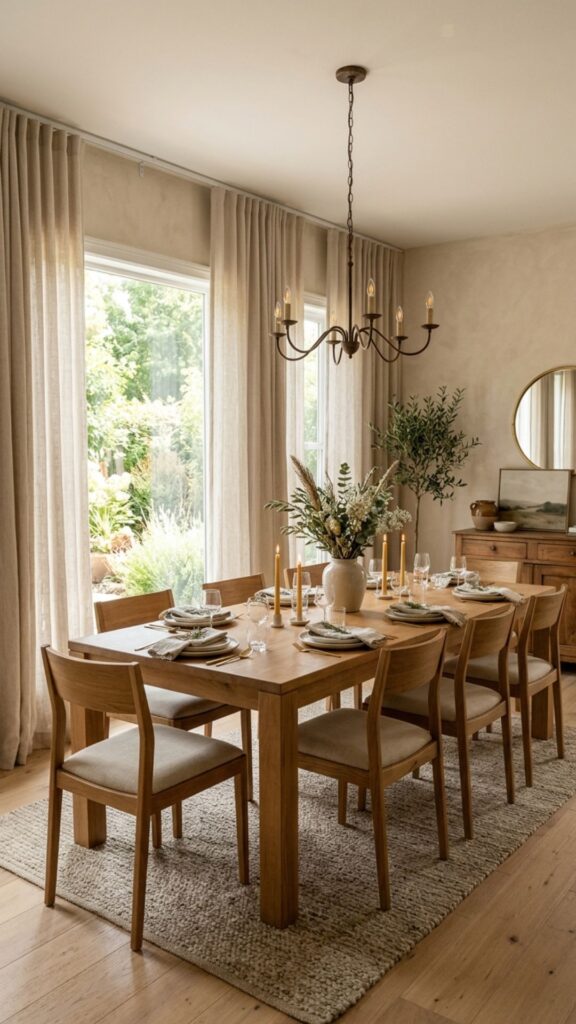
Linen curtains are having a major moment — and for good reason. Their natural texture adds warmth without being heavy, and shades like oatmeal, sand, and warm white complement virtually every dining room palette. They’re relaxed enough for casual spaces but refined enough for more formal settings.
The key to making linen work is getting the hang right. Mount the rod close to the ceiling rather than just above the window frame. This elongates the wall and makes the room feel taller. Choose unlined linen if you want a soft, breezy look, or opt for lined panels for better light control.
2. Velvet Curtains in Jewel Tones
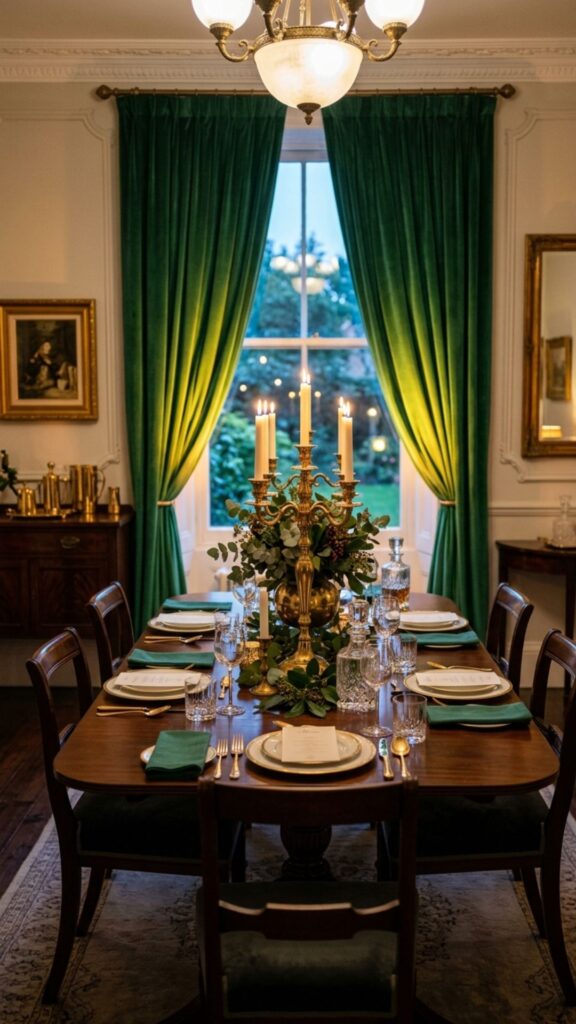
Deep velvet in emerald green, sapphire blue, or rich burgundy instantly elevates a dining room. The fabric has a natural sheen that catches light beautifully, and its density adds a layer of acoustic warmth — which matters in rooms where people gather to talk over meals.
Pair jewel-toned velvet dining room curtains with brass or gold hardware for a fully luxe effect. In smaller rooms, stick to one statement wall rather than framing every window, so the color creates impact without overwhelming the space.
3. Sheer White Panels for a Light-Filled Look
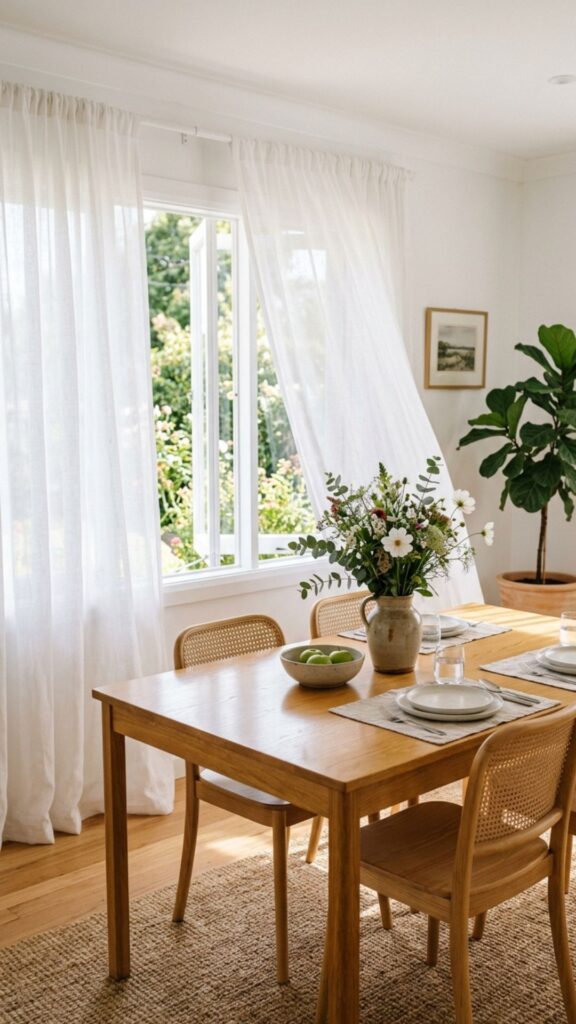
If your dining room gets good natural light, sheers let you keep it while still softening the window. White or ivory sheer panels diffuse sunlight into a warm, flattering glow — the kind of light that makes everything look better at the table.
Layer sheers under a heavier curtain panel on the same rod for maximum versatility. You can draw the sheers during the day for privacy and light diffusion, then close the heavier panels at night for a cozier atmosphere. This layered approach works especially well in dining rooms that open onto a busy street or face a neighbor’s window.
4. Earthy Terracotta and Clay Tones
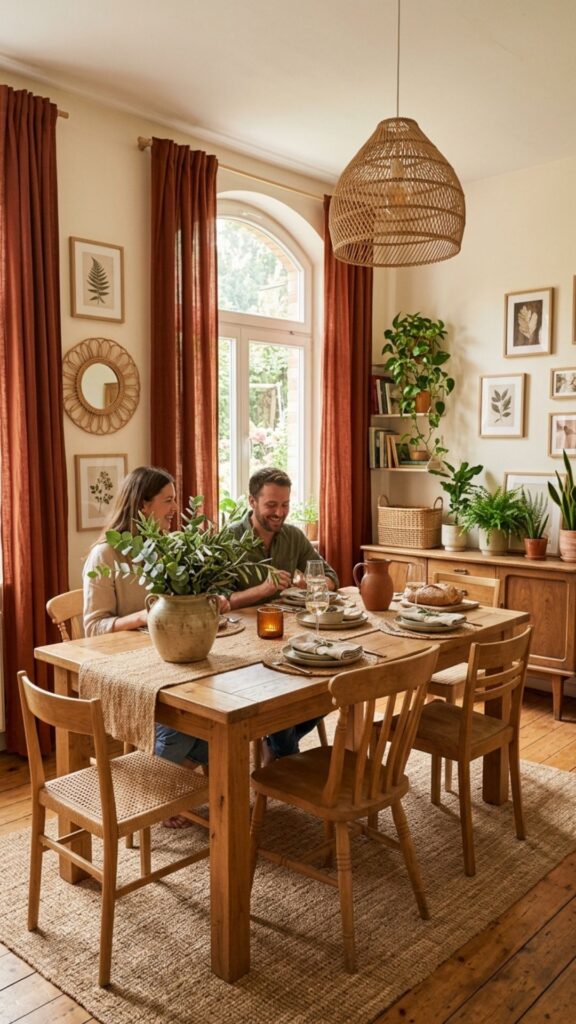
Warm earthy tones have become a staple in interior design, and terracotta curtains are one of the easiest ways to bring that palette into your dining room. These tones sit beautifully alongside natural wood furniture, rattan accents, and olive or sage greenery.
Terracotta curtains work in both bold and subtle forms. A solid terracotta linen reads as sophisticated and grounded. A terracotta-and-cream stripe feels more relaxed and playful. Either way, this color works harder than most neutrals to make a dining room feel alive and rooted.
5. Classic White Roman Shades
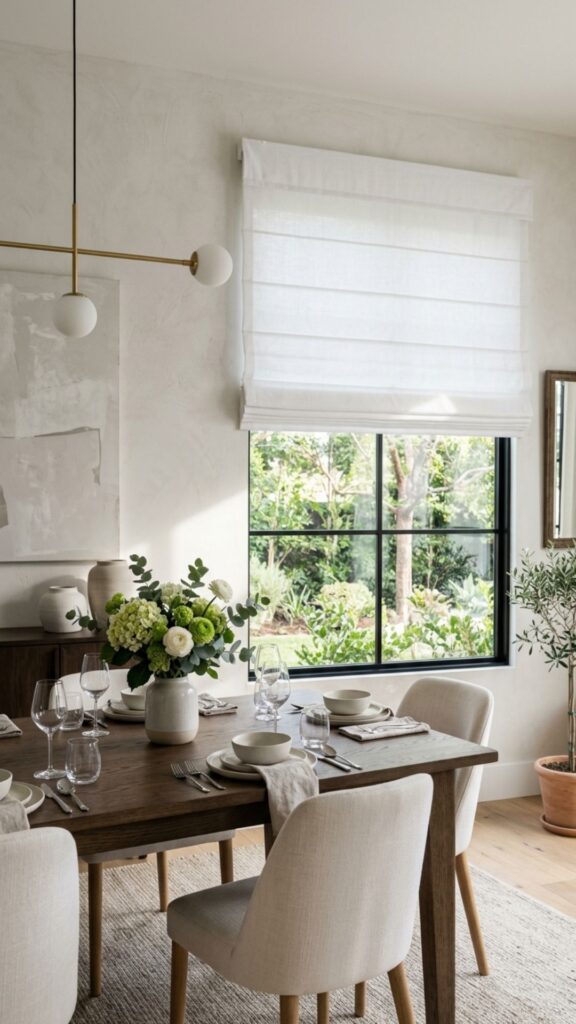
Roman shades offer the clean, tailored look of a curtain with the convenience of a blind. White Roman shades in cotton or linen are timeless — they sit flat against the window when raised and fold into neat horizontal pleats when lowered.
This style of dining room curtains suits transitional and traditional spaces equally well. They’re particularly useful in rooms where full-length panels would crowd the space or compete with low windowsills. Add a trim detail — contrast tape, fringe, or a subtle pattern — to give them visual interest without going overboard.
6. Bold Botanical or Floral Prints
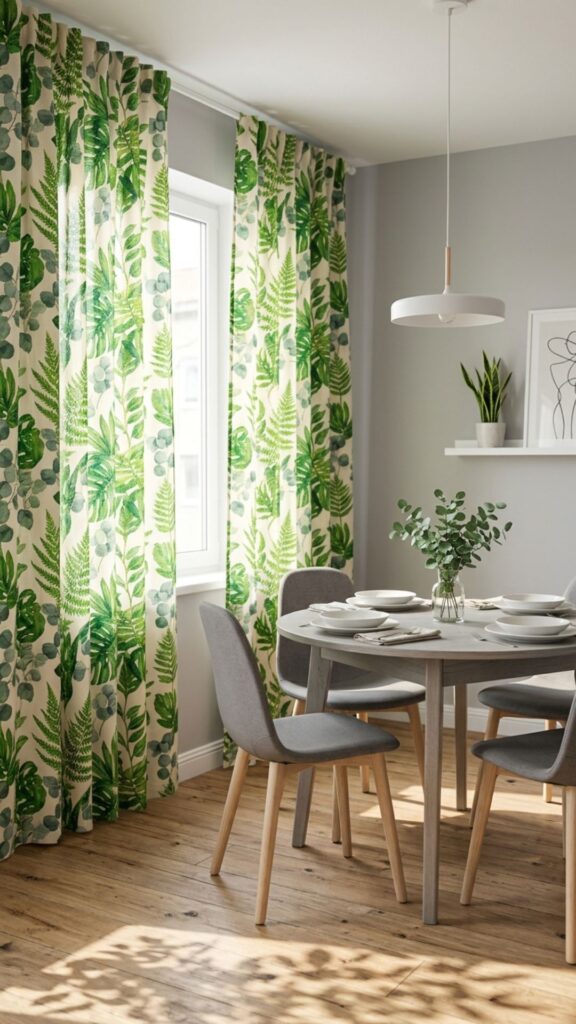
Printed curtains with large botanical motifs — oversized leaves, tropical palms, or graphic florals — are a strong trend for dining rooms that lean eclectic or maximalist. They add color, pattern, and personality all at once, doing the work of several décor pieces in a single element.
The practical rule with bold prints: keep the rest of the room relatively simple. If the curtains are the pattern statement, let the furniture and tableware stay neutral. This creates balance without making the room feel chaotic. Linen and cotton are the best base fabrics for botanical prints — they give the pattern a relaxed, almost hand-blocked quality.
7. Deep Navy Blackout Curtains
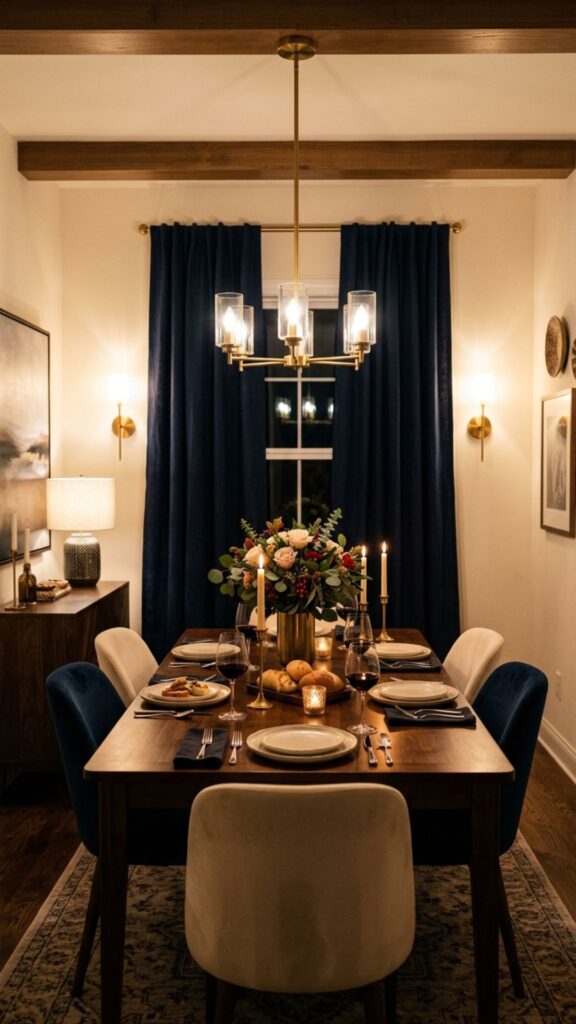
Navy is one of the most enduring colors in interior design, and blackout versions are especially useful for dining rooms used in the evening. They block light completely — useful if the room faces streetlights — and the deep color creates an intimate, cocooning atmosphere that suits dinner parties and long evenings at the table.
Navy pairs well with warm wood tones, brass fixtures, and cream or white walls. Hang the curtains high and wide — several inches beyond the window frame on each side — so the window looks larger and the room feels more expansive even as the curtains close it in.
8. Striped Curtains for a Timeless Appeal
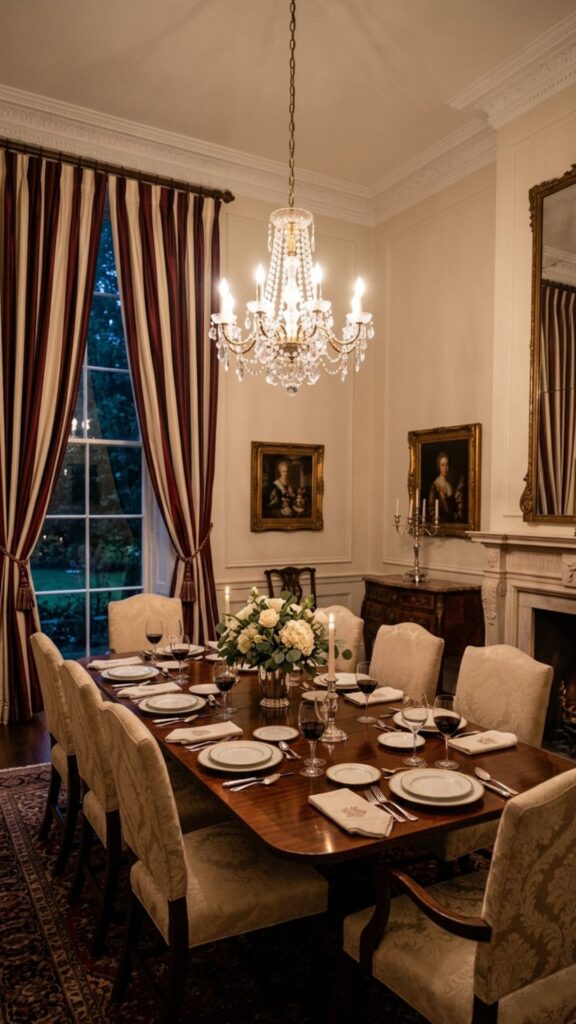
Vertical stripes are one of the most practical curtain choices you can make. They draw the eye upward, making ceilings feel higher and rooms feel more proportional. In a dining room, thin pinstripes in navy and white or forest green and cream have a crisp, tailored quality that suits both casual and formal settings.
Wider, bolder stripes — think cabana-style — work well in relaxed dining rooms with coastal or bohemian vibes. The key is matching the scale of the stripe to the scale of the room. Oversized stripes can feel busy in a smaller space; in a larger room, they add just the right amount of rhythm and energy.
9. Patterned Sheer Curtains
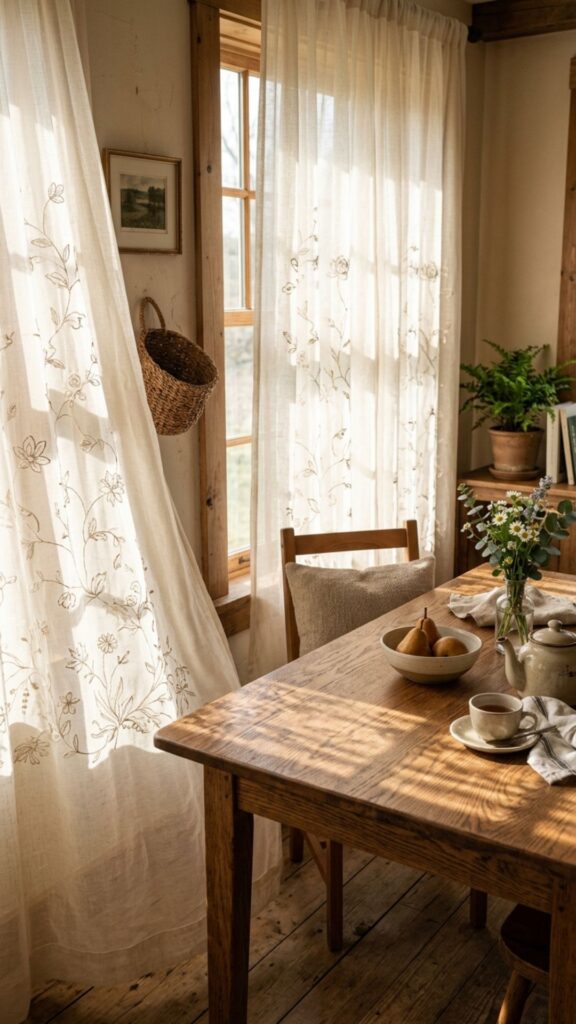
Sheer curtains don’t have to be plain. Patterned sheers — with embroidered motifs, woven geometric patterns, or subtle jacquard textures — add visual depth without the weight of a heavier fabric. During the day, the pattern is visible; at night, with the lights on inside, it creates a soft, glowing effect.
This style works particularly well in dining rooms where you want to maintain an airy feel but still want something more considered than plain white panels. Ivory or natural-toned embroidered sheers complement wood furniture and warm paint tones beautifully.
10. Dusty Pink or Blush Curtains
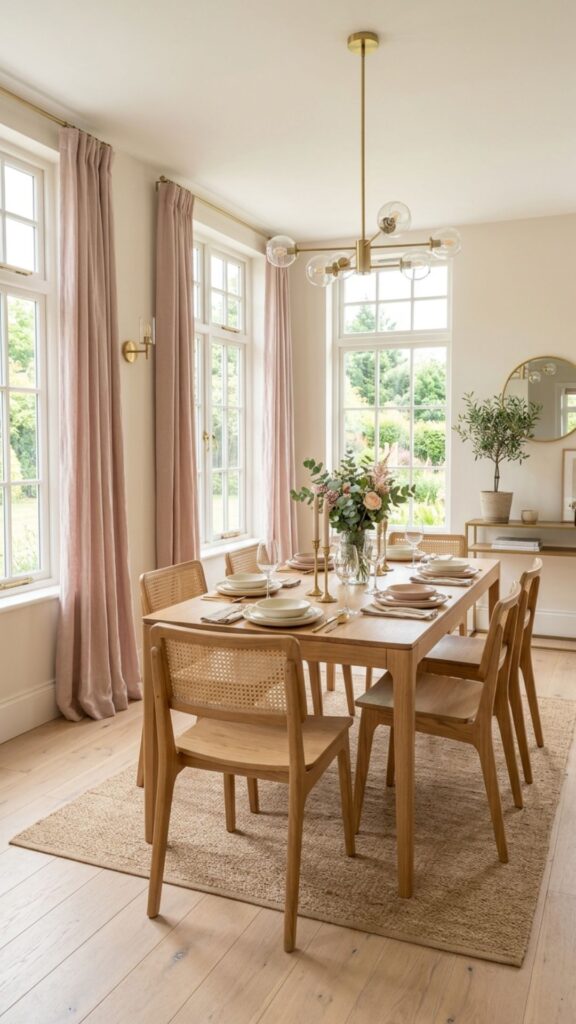
Blush and dusty pink have softened from trend to genuinely livable color. In a dining room, these tones bring warmth without the intensity of a bolder hue. They suit rooms with white or light grey walls, natural wood furniture, and brass or rose gold hardware.
Blush dining room curtains work best in heavier fabrics — velvet, linen, or a cotton-linen blend — where the color has enough substance to feel intentional rather than accidental. Avoid pale, washed-out shades in bright rooms, as they can look faded. Lean toward dusty or warm-toned pinks that hold their depth in natural light.
11. Rust and Burnt Orange for Autumn Warmth
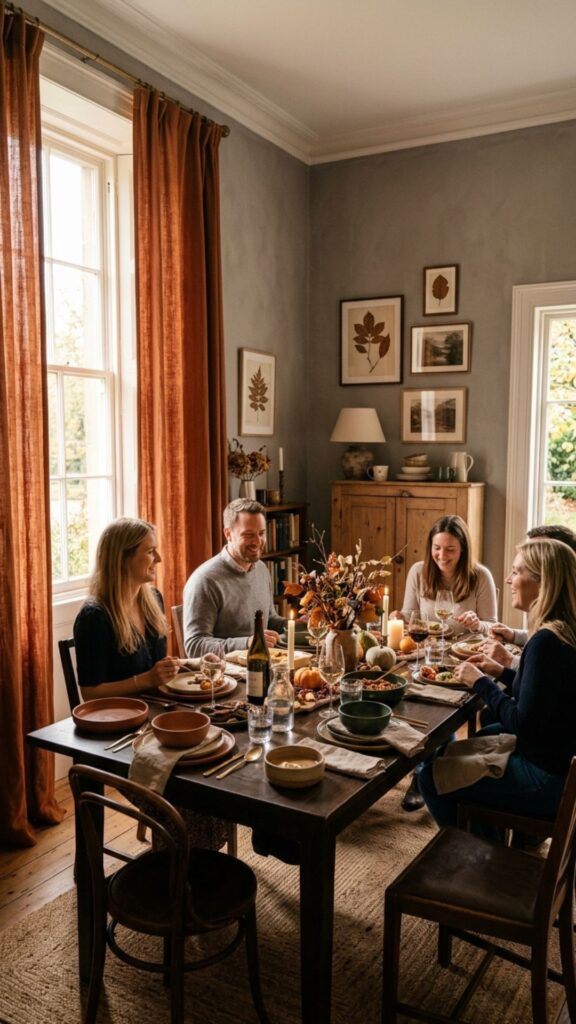
Rust and burnt orange curtains have moved from trend piece to reliable staple. These colors warm up north-facing rooms dramatically, create beautiful contrast against grey walls, and work naturally alongside aged wood, ceramic tableware, and natural fiber rugs.
Choose a linen or cotton fabric in a matte weave to keep the look grounded and modern rather than overly decorative. This is a curtain color that ages well — it deepens over time rather than fading flat. If full rust feels like too much commitment, consider using it on one window and pairing it with a neutral tone on others.
12. Black Curtains for a Dramatic, Modern Edge
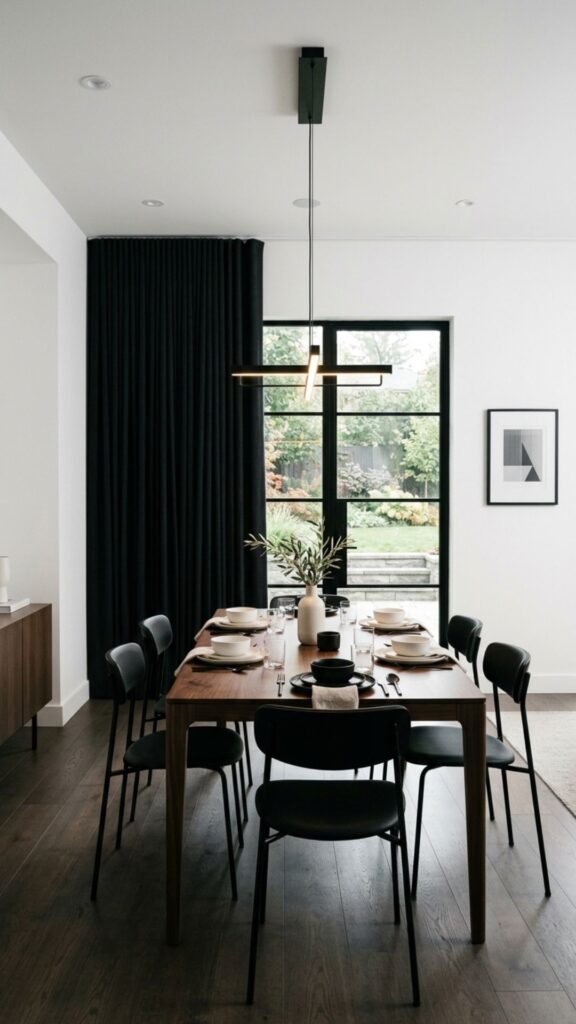
Black curtains in a dining room sound bold — and they are — but when done thoughtfully, they’re one of the most striking choices available. They create a sophisticated, gallery-like backdrop that makes everything in front of them look sharper, cleaner, and more considered.
Black dining room curtains work best in rooms with white or light walls, where the contrast is strong and intentional. Matte black linen or cotton avoids the heaviness of a shiny or synthetic fabric. This look suits minimalist, Japandi, and contemporary spaces where restraint and confidence go hand in hand.
13. Sage Green for a Calm, Nature-Inspired Vibe
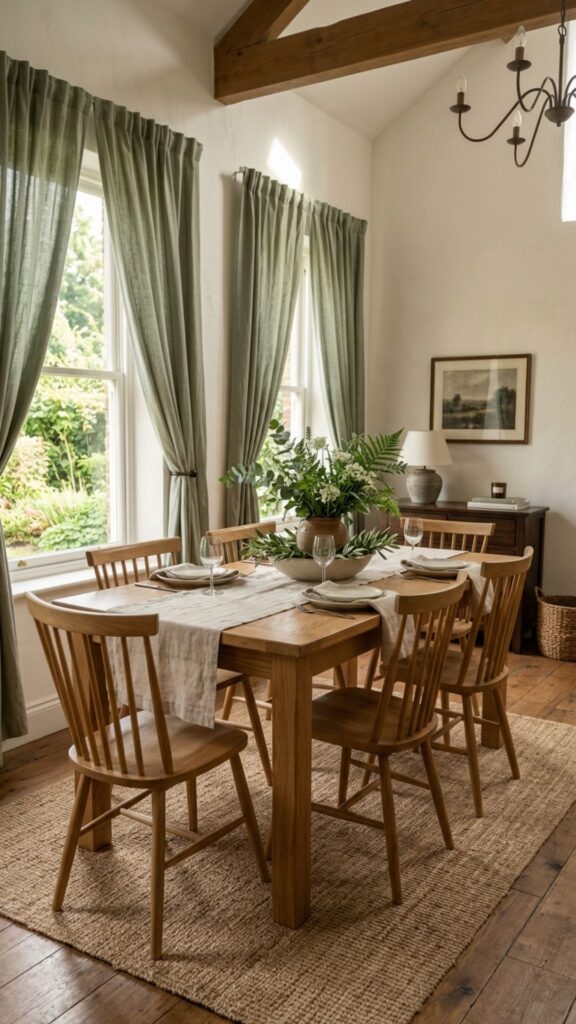
Sage green has become one of the most popular interior colors of recent years — and in curtain form, it brings a quiet, grounding quality to a dining room. It reads as calm and considered, without being bland. It pairs naturally with wood, linen, terracotta, and warm white.
Sage dining room curtains are among the most forgiving in terms of décor compatibility. They work in farmhouse, Scandinavian, transitional, and eclectic spaces without requiring significant adjustments to surrounding furniture or accessories. If you’re unsure about color but want something with personality, sage is one of the safest choices you can make.
14. Layered Curtains with Contrast Lining
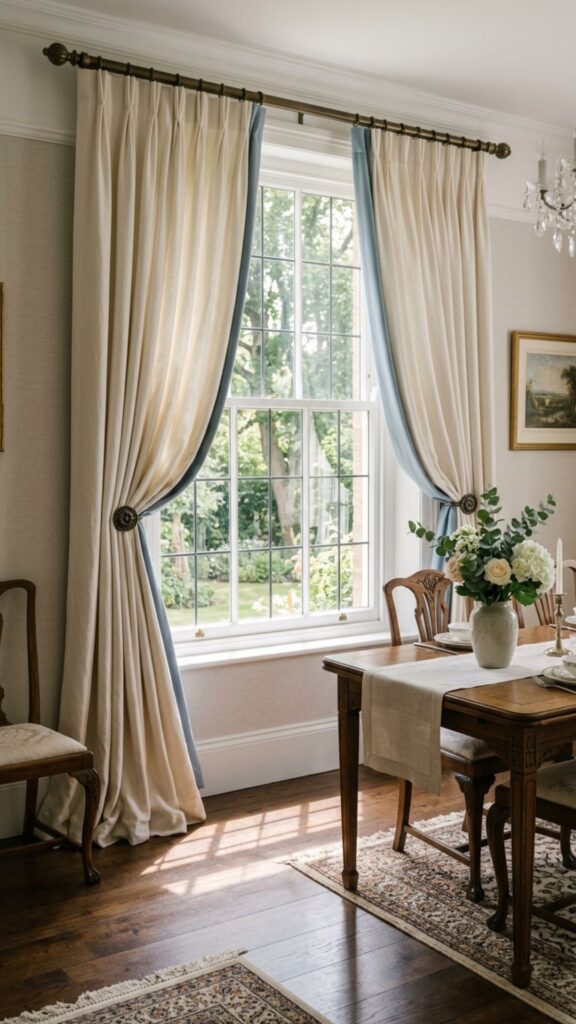
Contrast linings are the design detail you don’t see until the curtains move — and then they make the whole room more interesting. A cream curtain with a dusty blue lining, or a charcoal panel lined in burnt orange, adds depth and surprise to an otherwise quiet window treatment.
This approach works best with structured fabrics like cotton or medium-weight linen, which have enough body to show the contrast lining cleanly when the curtains billow or fold. It’s an easy way to add a designer-level detail to dining room curtains without significantly increasing cost.
15. Graphic or Abstract Printed Curtains
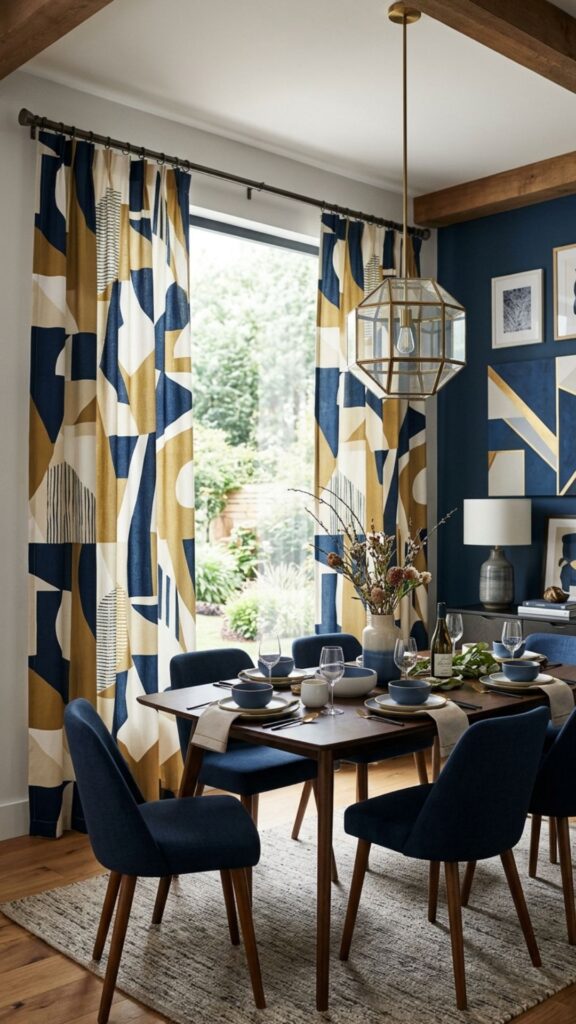
For dining rooms that already have a strong design identity — bold art, distinctive furniture, confident color — graphic or abstract printed curtains can feel exactly right. These aren’t wallflowers. They’re statement pieces that communicate taste and confidence.
Look for prints with a limited color palette — two or three tones pulled directly from your existing room colors — so the curtains feel like they belong rather than compete. Black, white, and one accent color is a reliable combination. Abstract prints in woven tapestry or block-print style tend to age better than digitally printed fabrics that can feel dated as trends shift.
Conclusion
The right dining room curtains don’t just cover a window — they shape how the whole room feels. From floor-to-ceiling velvet to breezy layered sheers, the options this year are varied enough to suit every style, budget, and room size. The most important thing is choosing a fabric, color, and length that works for how you actually use the space.
Start with one or two ideas from this list that align with your current room. Hold fabric swatches against your wall in both natural and artificial light before you commit. And hang your curtains high — it’s the single most effective styling move you can make with any window treatment.
Choose the style that resonates most and take the first step today, whether that’s ordering fabric swatches, measuring your windows, or bookmarking a specific look to revisit. Small decisions made now add up to a dining room that feels genuinely finished.
What curtains are best for a dining room?
Linen, cotton, and velvet are the most popular choices for dining room curtains. Linen is versatile and works in casual or formal spaces. Velvet adds luxury and warmth. Cotton is practical, widely available, and easy to maintain. Choose based on the mood you want to create and how much natural light the room gets.
How long should dining room curtains be?
For the most polished look, curtains should either skim the floor (about half an inch above it) or puddle slightly on the floor for a more dramatic effect. Avoid curtains that stop at the windowsill or mid-wall — these tend to make a room feel smaller and less intentional.
What color curtains make a dining room look bigger?
Light, neutral curtains — white, ivory, soft grey, or pale linen — make a dining room feel more open and spacious. Hanging the curtain rod close to the ceiling and extending the rod beyond the window frame on each side amplifies this effect by maximizing the apparent size of both the window and the wall.
Should dining room curtains match the walls or the furniture?
They don’t need to match exactly, but they should feel cohesive. A reliable approach is to pull a color from your existing furniture, rug, or artwork and use it in the curtains. This ties the room together without requiring a perfect color match. Neutral curtains are the easiest to blend into any existing palette.
How do I hang dining room curtains to make ceilings look higher?
Mount the curtain rod two to four inches below the ceiling, rather than just above the window frame. Use floor-length panels even if the window itself is short. This draws the eye upward and makes the ceiling feel significantly higher than it actually is — one of the most effective visual tricks in home design.