A small home office does not have to feel cramped, temporary, or uninspiring. In fact, some of the most stylish workspaces are created in places that were never designed to be offices at all—a quiet bedroom corner, an unused wall, a narrow hallway, or even the space beneath a staircase.
The secret is not having more square footage. It is making every inch work harder.
With smart furniture, clever storage, thoughtful lighting, and a few modern design details, even the tiniest workspace can feel organized, comfortable, and surprisingly luxurious. Whether you work from home every day or simply need a beautiful place to answer emails and manage household tasks, these 20 modern home office ideas for small spaces will help you create a workspace that looks amazing without taking over your home.
1. Create a Floating Desk Workspace
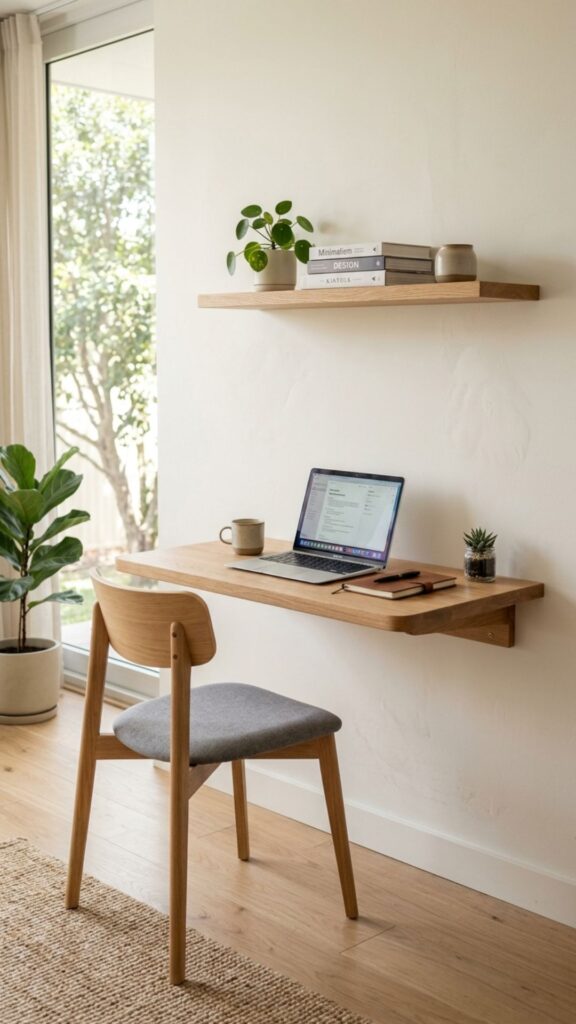
A floating desk is one of the easiest ways to create an office when floor space is limited.
Because it attaches directly to the wall, there are no bulky desk legs or cabinets underneath. The open space below keeps the room looking lighter and gives you plenty of legroom.
Choose a slim wood or white desktop for a clean modern appearance. Add a small floating shelf above it for books, stationery, or decorative pieces.
For an even more streamlined look, match the desk color to the wall so the workspace almost disappears when it is not being used.
2. Turn an Empty Corner Into an Office
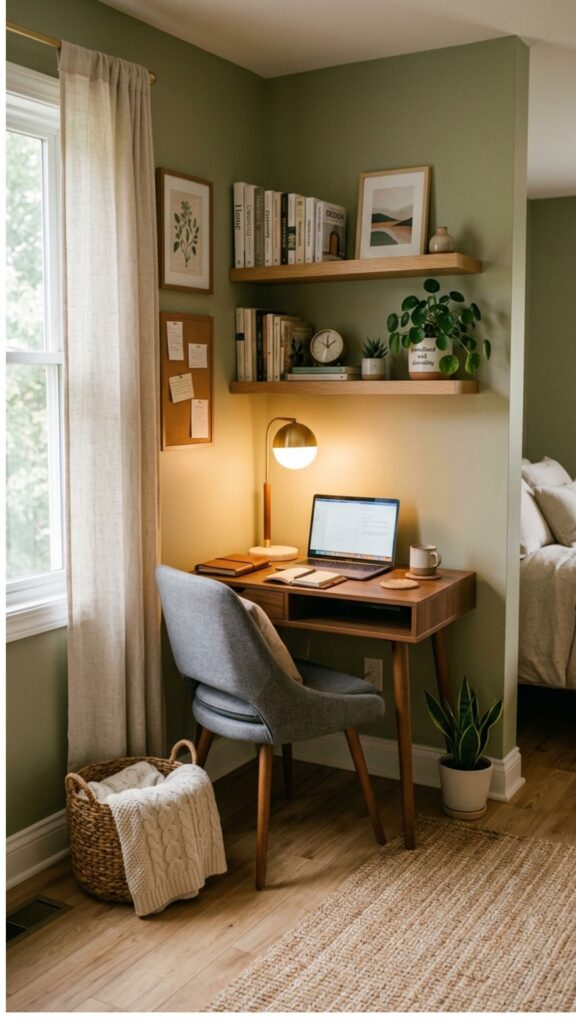
That forgotten corner of your living room or bedroom could be the perfect place for a compact workstation.
A small corner desk allows you to use space that might otherwise remain empty. Pair it with a comfortable chair and one or two wall-mounted shelves.
Keep the accessories simple to avoid making the corner feel crowded.
A desk lamp, small plant, framed print, and attractive organizer may be all you need to make the space feel intentional.
3. Use Vertical Storage
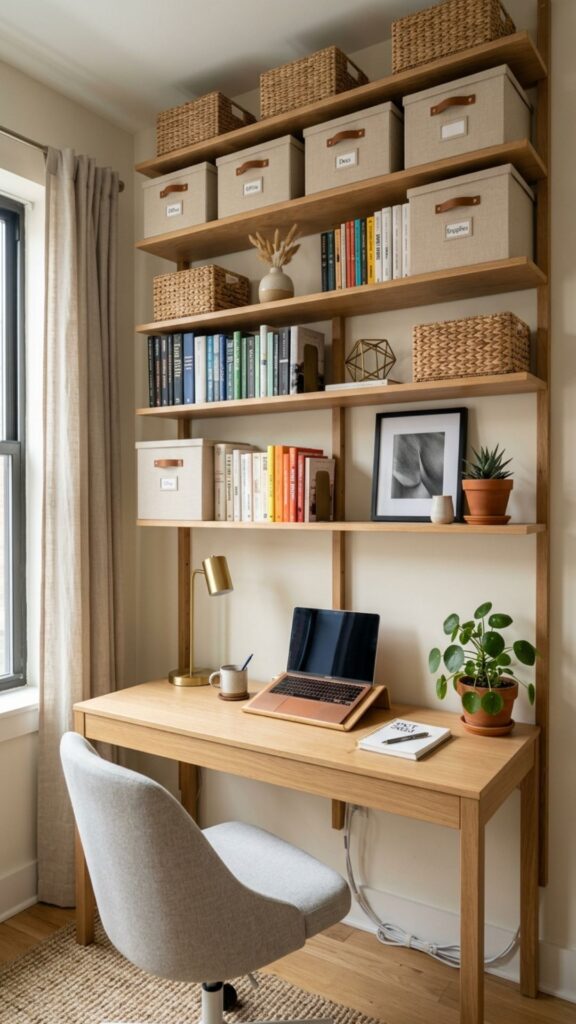
When you cannot expand outward, think upward.
Tall shelving is extremely useful in small home offices because it provides plenty of storage without requiring much floor space.
Install shelves above your desk for books, files, baskets, and supplies. Keep frequently used items within easy reach and place decorative objects on the higher shelves.
Using matching boxes or storage containers will also make open shelving look cleaner and more sophisticated.
4. Choose a Slim Writing Desk
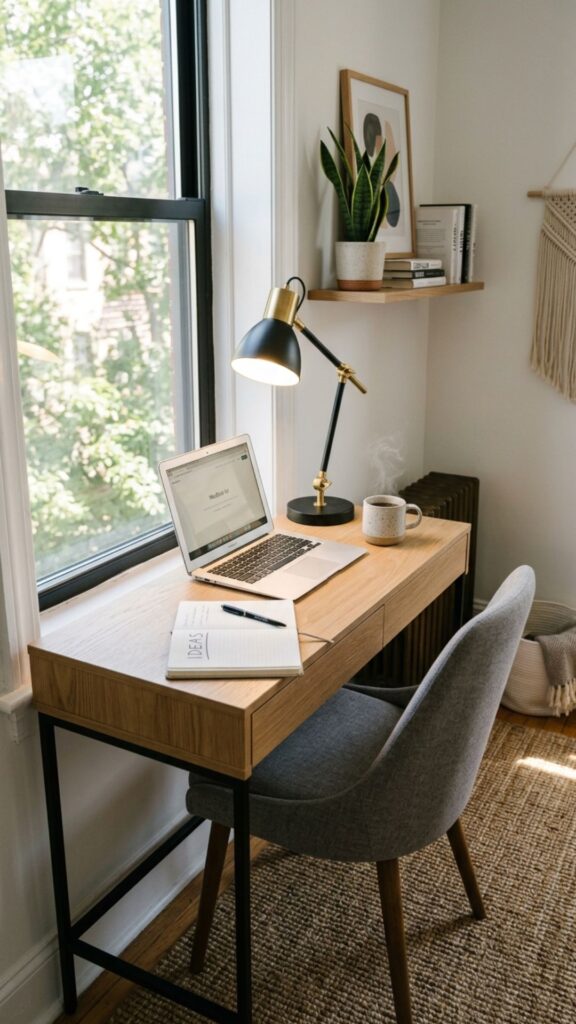
You do not necessarily need a traditional office desk.
A slim writing desk can provide enough room for a laptop, notebook, lamp, and coffee without dominating the room.
Look for desks that are approximately 16 to 20 inches deep if you are working with a particularly narrow space.
Designs with thin metal legs or light wood frames can make a compact office feel much more open.
5. Build an Office Inside a Closet
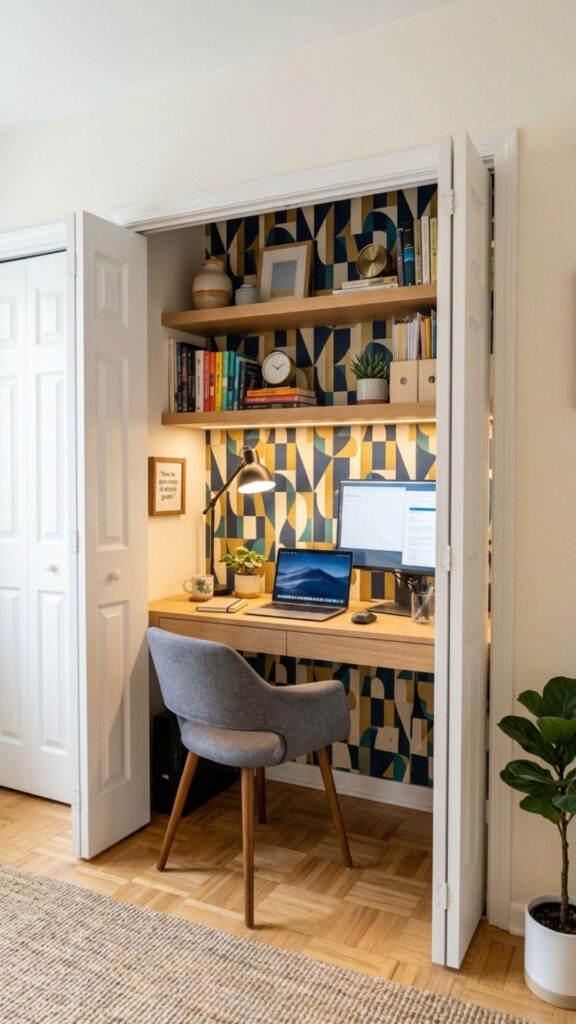
Have a closet that is not being fully used? Turn it into a hidden home office.
Often called a cloffice, this clever setup can include a fitted desktop, shelves, lighting, and storage inside an existing closet.
Remove the closet doors for an open workstation or keep them so you can completely hide the office at the end of the day.
Paint the interior a bold color or use patterned wallpaper to give your tiny workspace extra personality.
6. Try a Desk With Built-In Storage
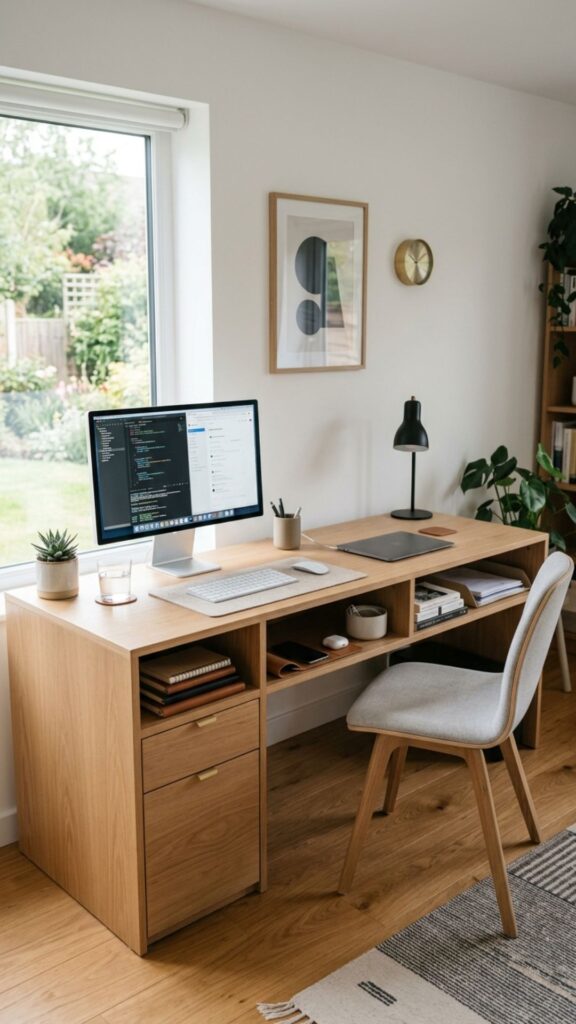
Multipurpose furniture is especially valuable in small spaces.
Instead of purchasing a desk and separate filing cabinet, choose a desk with drawers, shelves, or storage compartments already included.
This keeps paperwork, chargers, notebooks, and office supplies close at hand without creating extra clutter around the room.
Look for clean-lined designs with integrated storage to maintain a modern aesthetic.
7. Create a Monochromatic Office
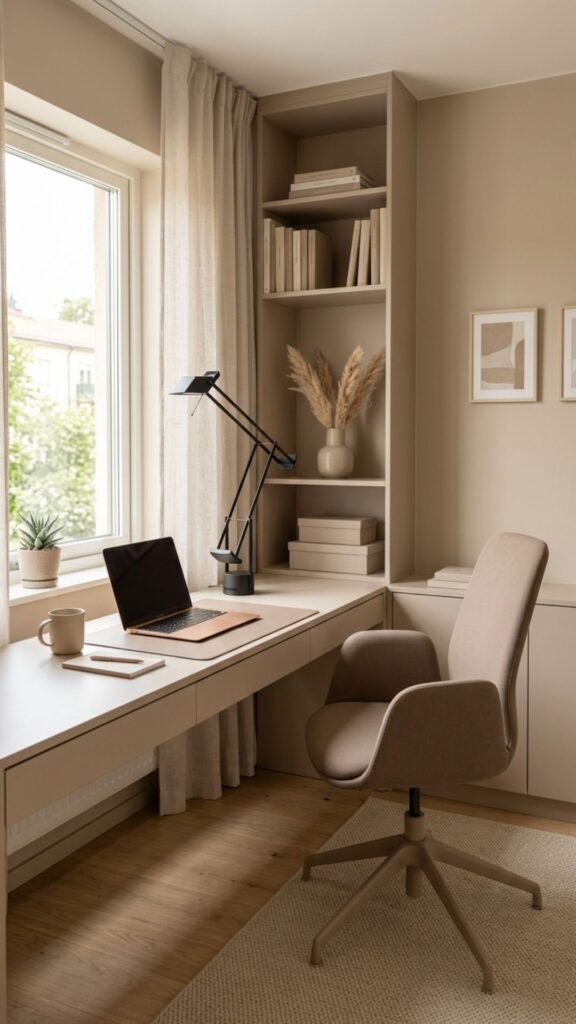
Using too many colors can sometimes make a tiny workspace feel visually busy.
A monochromatic palette creates a calmer, more spacious appearance.
Try shades of warm white, beige, gray, soft taupe, or muted green throughout the workspace. Choose a desk, shelves, organizers, and accessories in similar tones.
You can then introduce contrast through a black lamp, wooden chair, metallic hardware, or one colorful piece of artwork.
8. Place Your Desk Near a Window
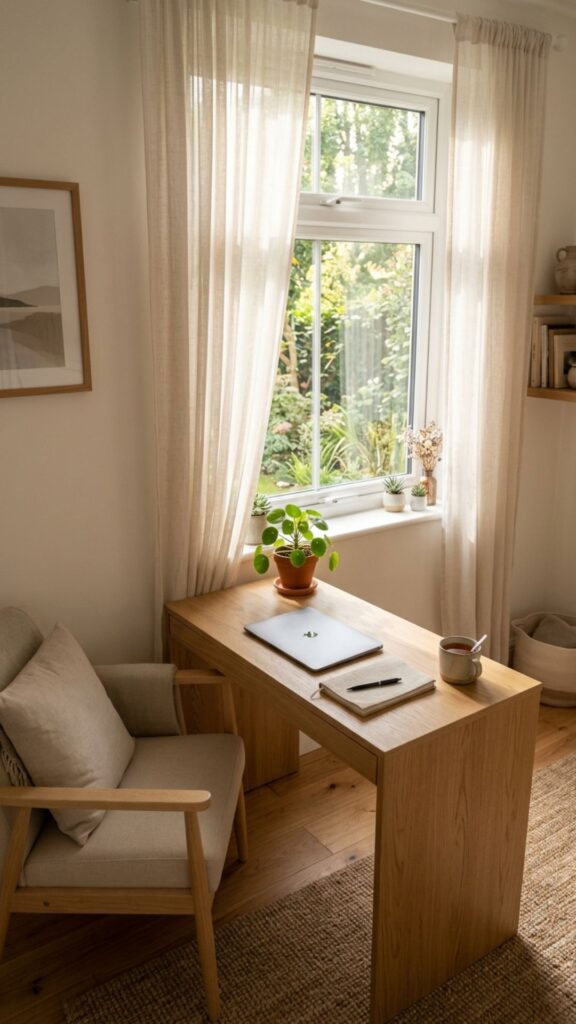
Natural light can instantly improve a small workspace.
If possible, position your desk beside or in front of a window. The daylight makes the area feel larger while creating a more pleasant working environment.
Avoid blocking the entire window with oversized furniture.
Instead, choose a low-profile desk and keep the window treatment simple. Sheer curtains or light-filtering blinds can provide privacy without making the space feel dark.
9. Use a Wall-Mounted Pegboard
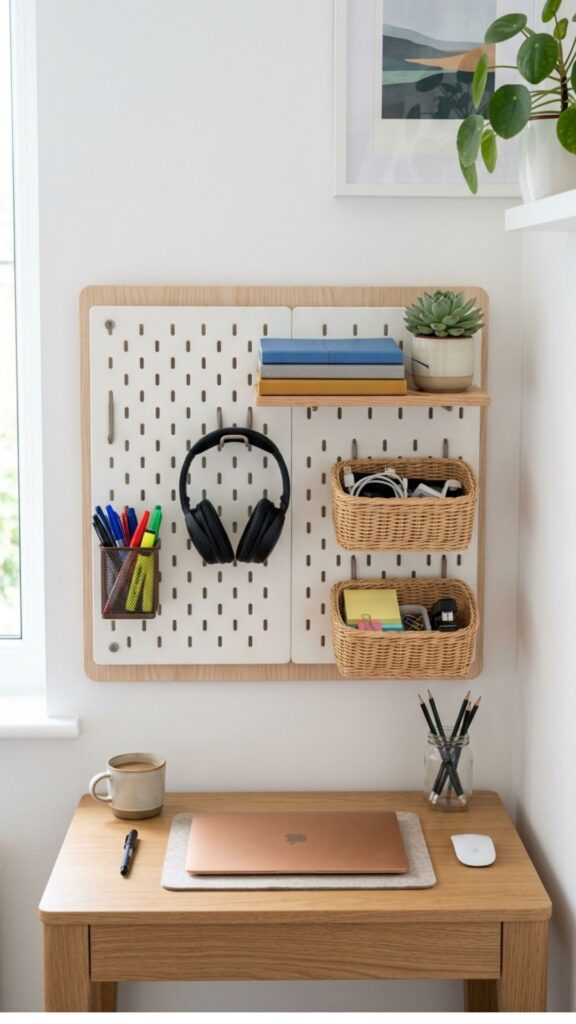
Pegboards are not only practical—they can also become part of your office decor.
Install one above your desk and use hooks, shelves, baskets, and clips to organize everyday essentials.
You can store headphones, scissors, pens, notebooks, calendars, and even small plants on the wall instead of covering your desktop.
Choose a pegboard in wood, white, black, or another color that complements the rest of the room.
10. Turn the Space Under the Stairs Into an Office
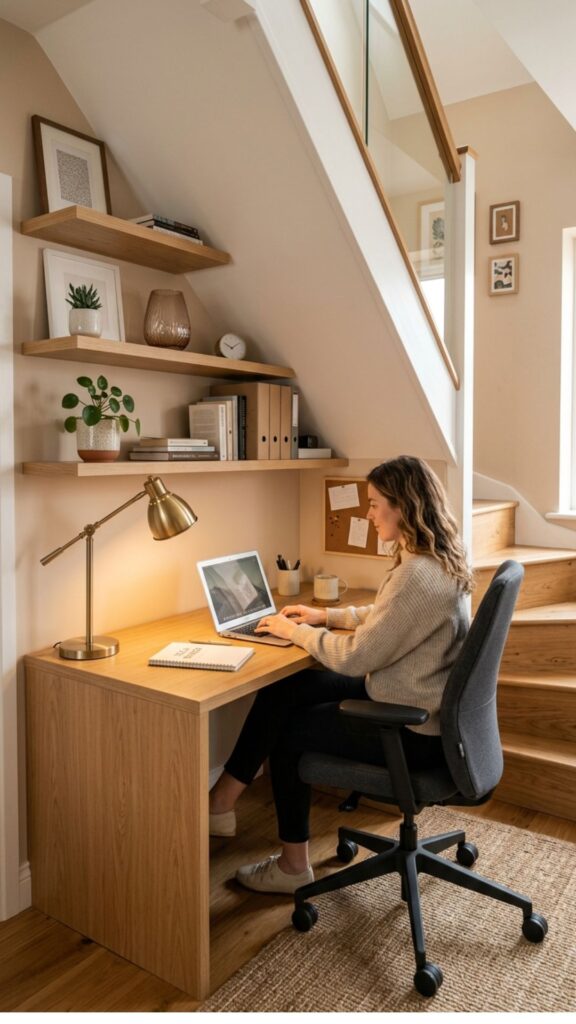
The area beneath a staircase is often overlooked, but it can become an impressive compact office.
A custom desk fitted into the space creates a built-in appearance while making use of an otherwise awkward area.
Add wall shelves, a task light, and a comfortable chair. If the space is dark, use light-colored finishes and warm lighting to make it feel more inviting.
The result can look like an intentional architectural feature rather than a last-minute workspace.
11. Add a Statement Office Chair
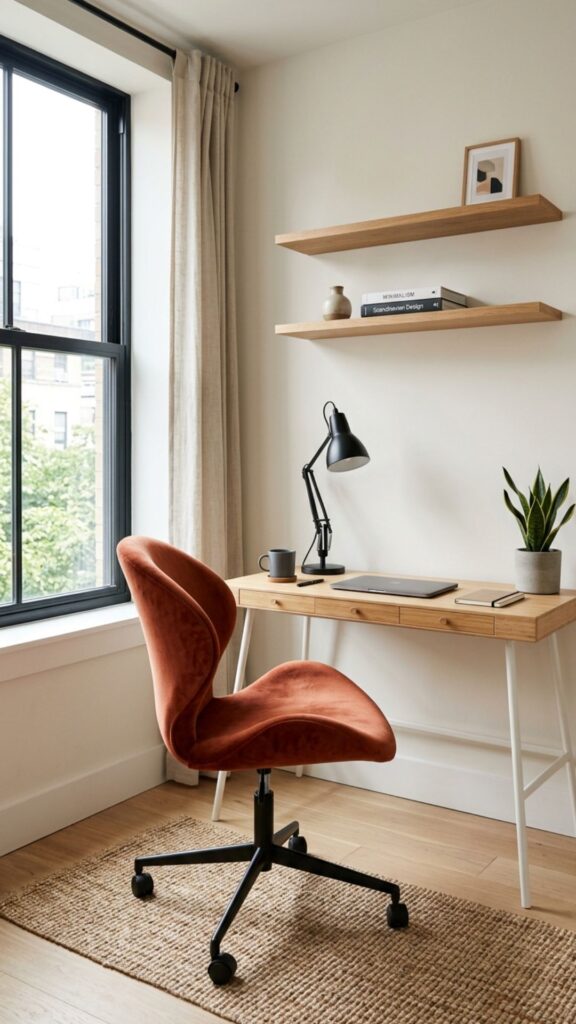
When the office is small, every piece of furniture becomes more noticeable.
Instead of filling the space with decorations, let your chair become the statement piece.
Try a sculptural chair, curved upholstered design, sleek leather seat, or modern ergonomic chair that complements your home’s interior.
Just make sure style does not replace comfort—especially if you spend several hours working at your desk.
12. Keep Your Desk Visually Clutter-Free
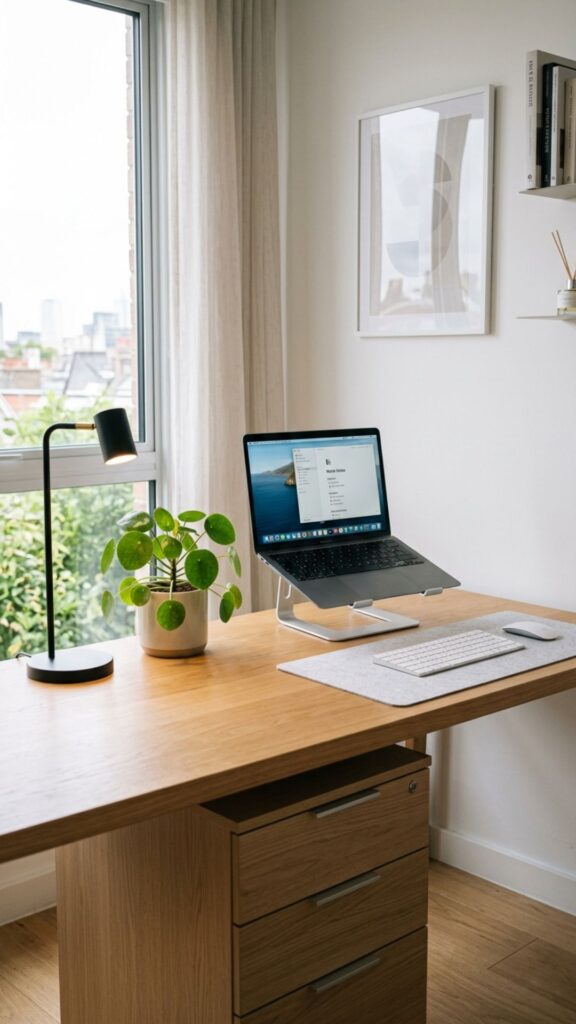
A cluttered desk can make even a reasonably sized office feel tiny.
Keep only the things you regularly use on the desktop.
Store extra cables, papers, supplies, and electronics inside drawers, baskets, or boxes. Consider using cable clips or an under-desk cable tray to hide wires.
A clear work surface creates an immediate sense of space and makes your office look more polished.
13. Use Mirrors to Make the Office Feel Larger
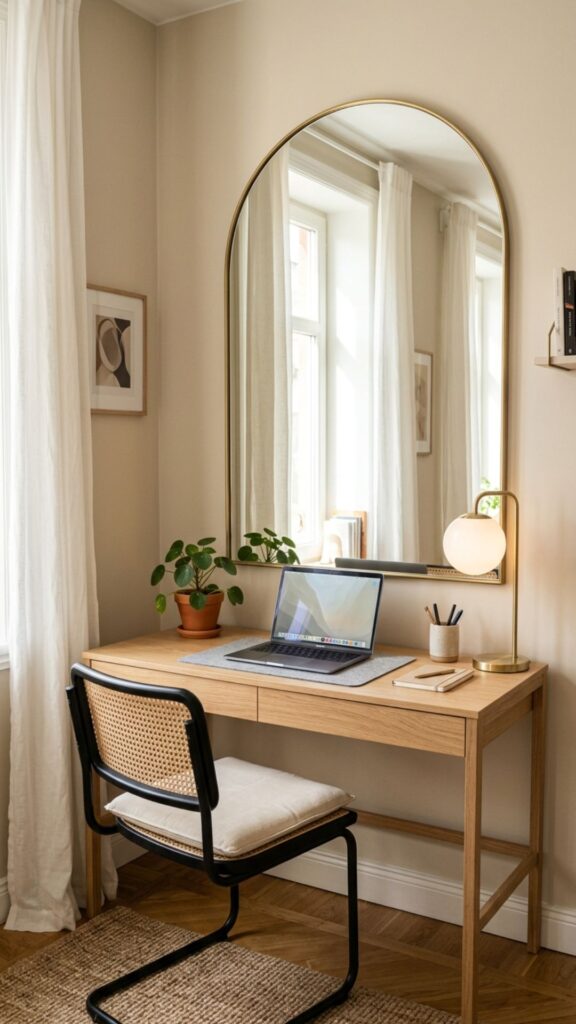
Mirrors are an excellent decorating trick for compact rooms.
Place a mirror above your desk or on the opposite wall to reflect light and create the illusion of additional depth.
For a modern look, choose a simple round, arched, or frameless mirror.
This idea works particularly well in windowless offices or darker corners where reflected light can make a noticeable difference.
14. Create a Built-In Desk Wall
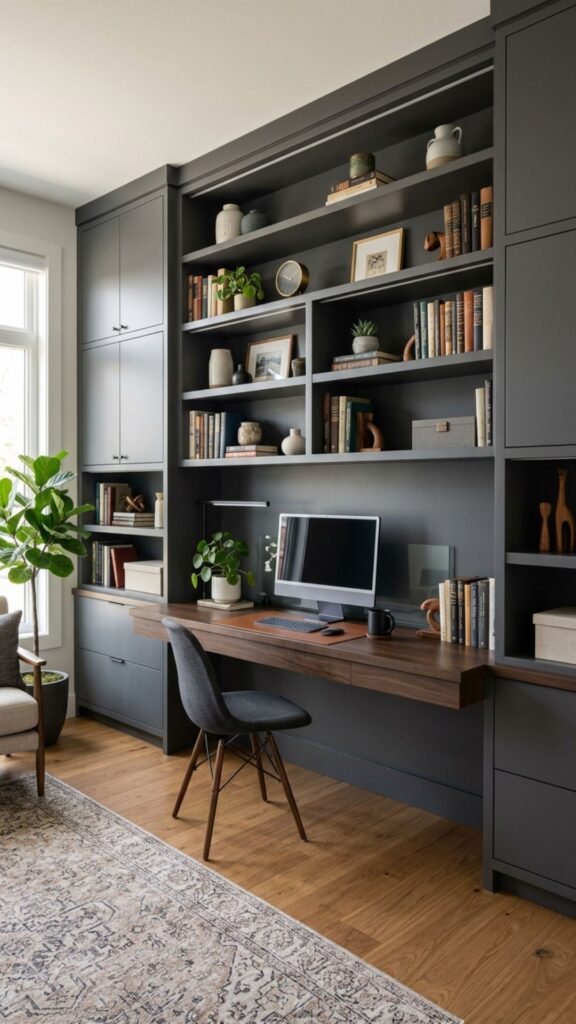
If you have one unused wall, consider turning the entire section into a compact office zone.
A wall-to-wall desktop combined with shelving can provide plenty of working and storage space while maintaining a clean, built-in appearance.
Paint the shelving and wall in the same color to create a seamless design.
This setup works especially well in bedrooms, living rooms, guest rooms, and studio apartments.
15. Use a Fold-Down Desk
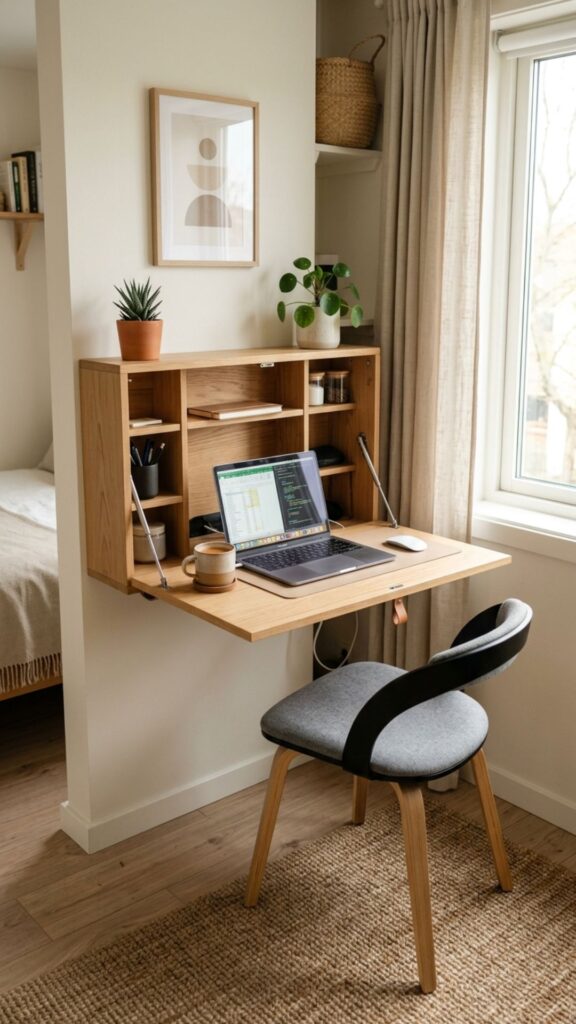
A fold-down desk may be the ultimate space-saving office solution.
When you need to work, lower the desktop. When you are finished, fold it back against the wall.
Some versions include internal shelves for stationery, chargers, and office supplies.
This design is ideal for extremely small apartments where a permanent desk would interfere with everyday living space.
16. Add Warm Layered Lighting
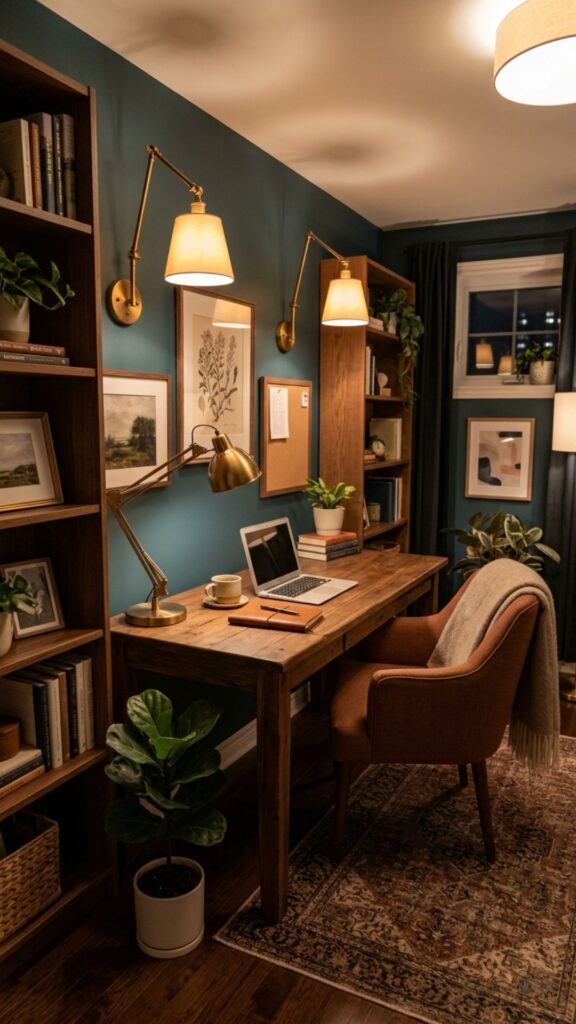
Good lighting can completely change the atmosphere of a compact office.
Instead of relying only on overhead lighting, combine several light sources.
Use a small desk lamp for focused work and consider wall sconces when desktop space is limited. Warm ambient lighting can make the workspace feel comfortable rather than corporate.
Adjustable wall-mounted lights are especially useful because they provide illumination without occupying valuable desk space.
17. Introduce Natural Materials
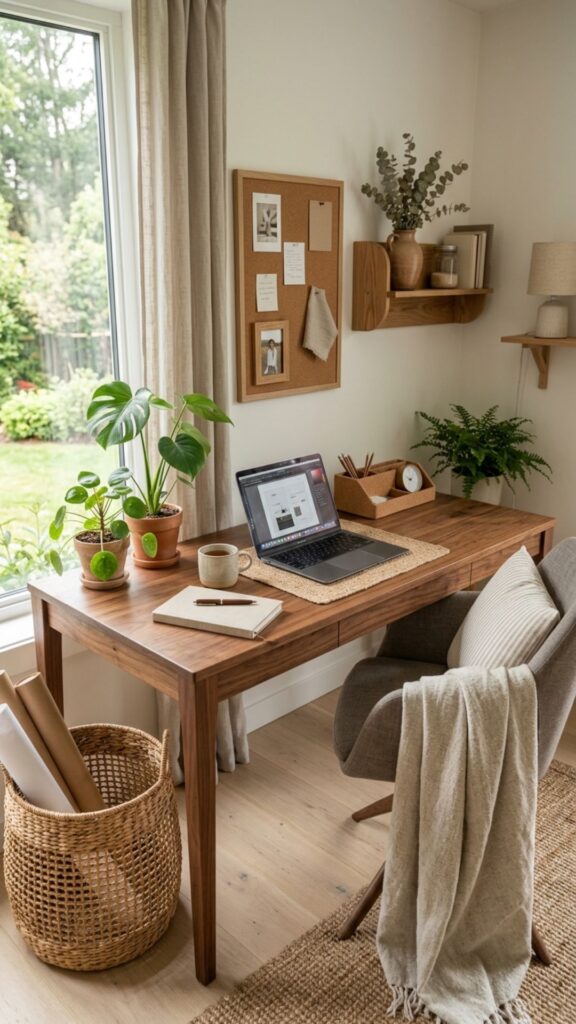
Modern offices do not have to feel cold or overly minimalist.
Natural materials can make a small workspace feel warmer and more inviting.
Consider incorporating a wooden desk, woven basket, linen accessories, corkboard, or rattan storage container.
Even a few natural textures can soften sleek furniture and create a balanced modern look.
18. Add One Bold Accent Wall
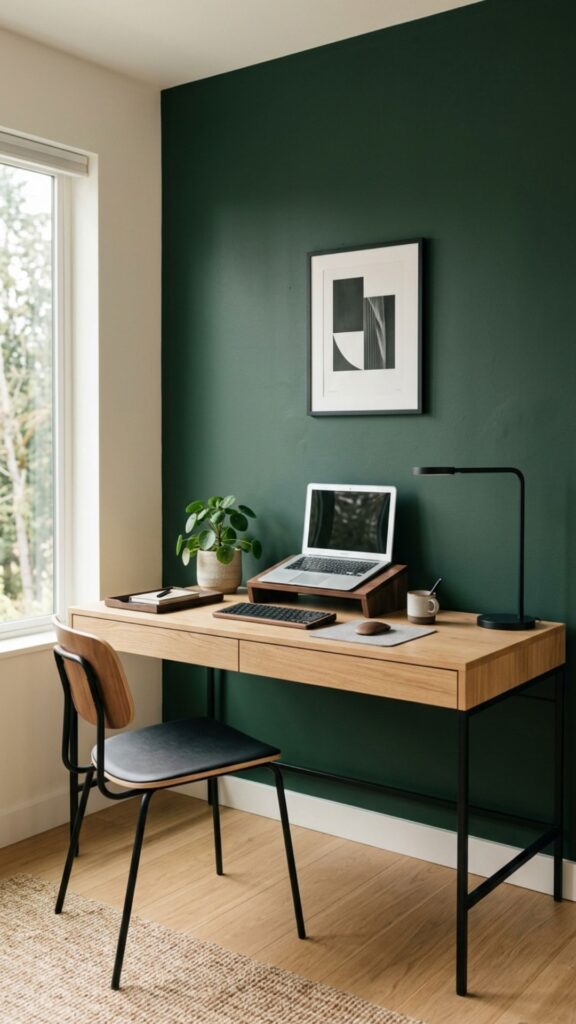
A tiny office can be the perfect place to experiment with color.
Instead of painting an entire room, create one dramatic wall behind your desk.
Deep navy, forest green, charcoal, terracotta, or dusty blue can provide a beautiful backdrop for simple furniture.
You could also use removable wallpaper if you want a renter-friendly solution.
Keep the surrounding furniture relatively simple so the accent wall remains the focal point.
19. Bring in a Little Greenery
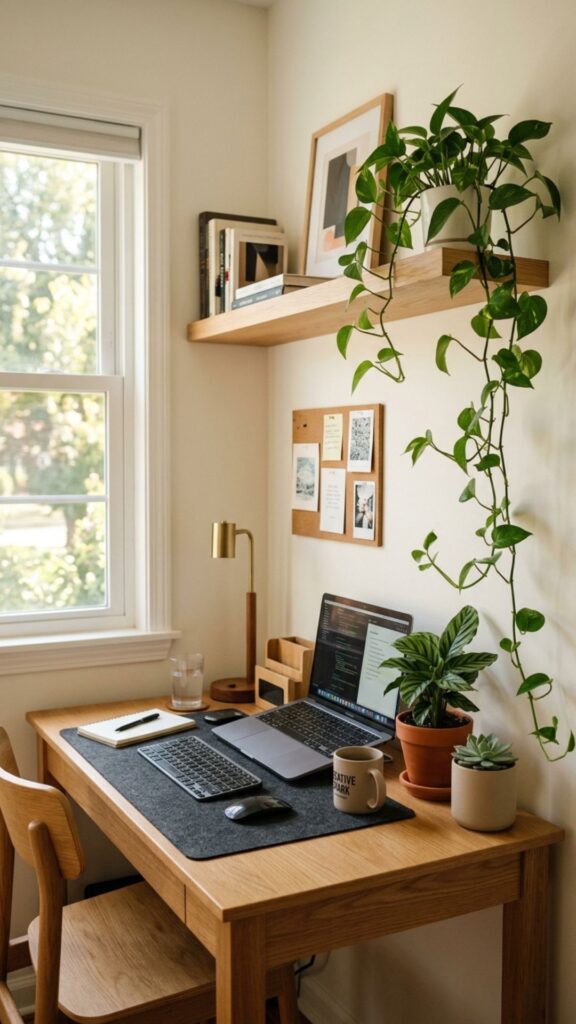
Plants can instantly make a workspace feel fresher and more welcoming.
Small offices do not require large floor plants. A tiny potted plant on a shelf, trailing plant above the desk, or small succulent beside your monitor can provide enough greenery.
If natural light is limited, choose low-maintenance plants suited to lower-light environments or use a realistic artificial plant.
The goal is to introduce life without creating additional clutter.
20. Make Your Office Blend With the Rest of the Room
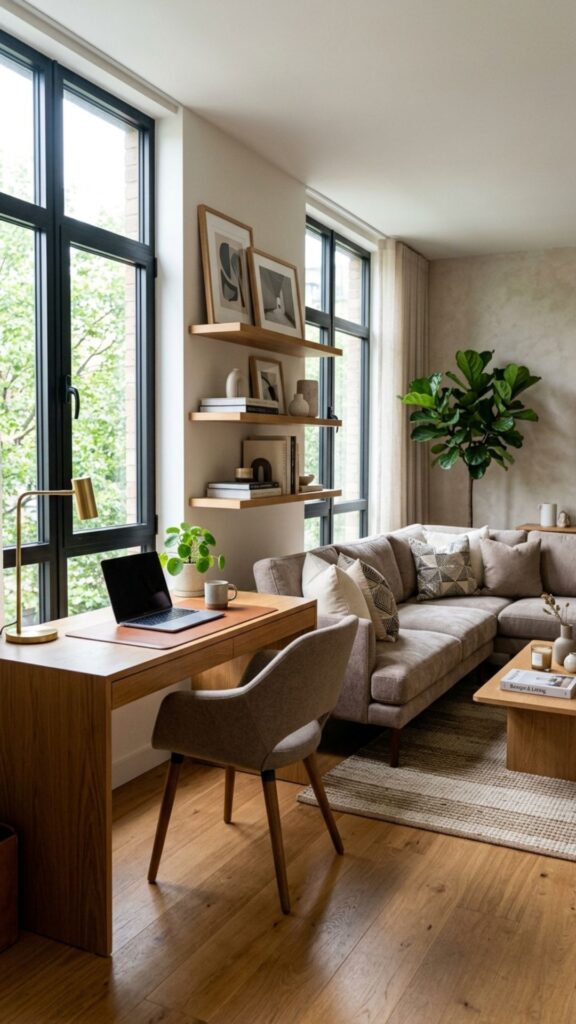
One of the biggest challenges with a small home office is making it feel like part of your home rather than a separate corporate workstation.
Choose furniture and accessories that coordinate with the room around it.
For example, if your living room has warm wooden furniture, select a desk in a similar finish. If your bedroom uses soft neutral colors, continue those tones in your office area.
Repeating colors, materials, and shapes throughout the room creates visual continuity and helps the workspace feel intentionally designed.
How to Make a Small Home Office Look Expensive
You do not need a huge decorating budget to create an elevated home office.
Focus on a few details that have a strong visual impact. Keep surfaces uncluttered, hide visible cables, use coordinated storage containers, and choose one or two quality-looking accessories instead of filling the space with decorations.
Good lighting also matters. A stylish lamp or wall sconce can make an inexpensive desk look much more sophisticated.
Finally, pay attention to consistency. When your desk, chair, shelves, artwork, and accessories share a similar color palette or design style, the entire workspace appears more polished.
What Should You Prioritize in a Tiny Home Office?
Start with function.
Think about what you actually need during a typical working day. Someone using only a laptop may need very little desk space, while someone working with multiple monitors, paperwork, or creative equipment will require more storage and surface area.
Prioritize these essentials:
- A comfortable chair
- Enough desk space for your daily tasks
- Good lighting
- Accessible storage
- Reliable power access
- Simple cable management
Once those practical elements are solved, decorate around them.
This approach prevents you from creating an office that looks beautiful in photographs but becomes frustrating to use every day.
Conclusion
Creating an impressive home office in a small space is less about squeezing in more furniture and more about making thoughtful design choices.
A floating desk can transform an empty wall. Vertical shelving can provide storage without sacrificing floor space. A closet can become a hidden workstation, while carefully chosen lighting, colors, plants, and accessories can make even the smallest desk area feel stylish and complete.
Most importantly, design your workspace around the way you actually work.
You do not need a separate room or a huge renovation budget to create an office you enjoy using. With the right combination of function, simplicity, and personality, even a few square feet can become a modern workspace that looks amazing and helps you stay productive.
What is the best desk for a very small home office?
A floating, fold-down, corner, or slim writing desk is usually ideal because it provides workspace without taking up too much floor area.
How can I make a small office look bigger?
Use light colors, vertical storage, mirrors, natural light, and furniture with slim profiles. Keeping clutter to a minimum also makes the space feel larger.
Where can I create an office if I do not have a spare room?
Try an unused bedroom corner, closet, hallway, living-room wall, landing, kitchen nook, or the area underneath a staircase.
How do I organize a tiny home office?
Use wall shelves, pegboards, drawer organizers, baskets, cable-management accessories, and furniture with built-in storage to keep the desktop clear.
How can I make my small home office look modern?
Choose clean-lined furniture, a simple color palette, attractive lighting, hidden storage, minimal accessories, and one or two stylish statement features.