A loft can be one of the most inspiring places to work from home. With sloped ceilings, tucked-away corners, exposed beams, skylights, and plenty of architectural character, even the smallest loft has the potential to become a workspace that feels completely different from the rest of the house.
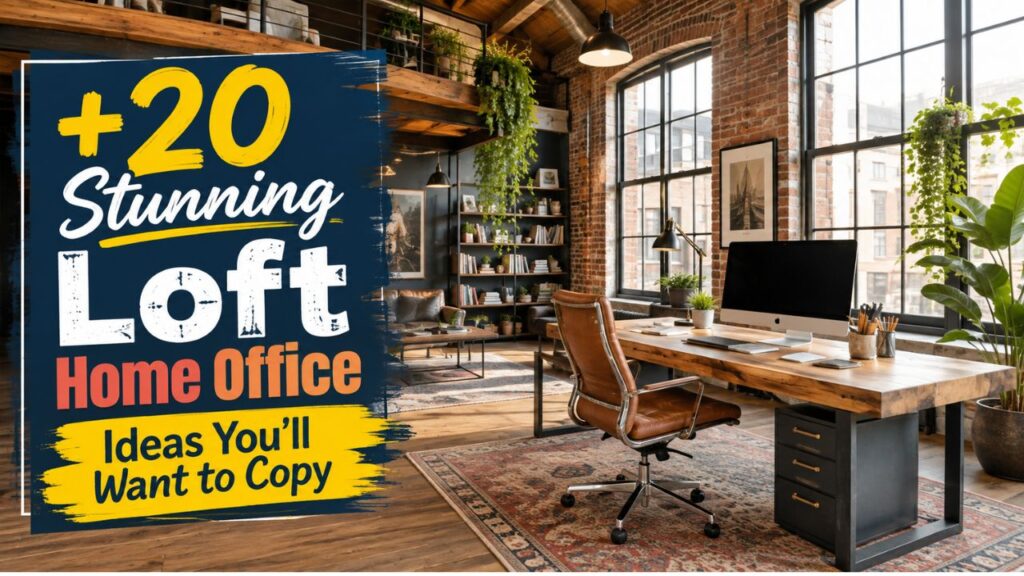
The challenge is making every inch count. Awkward rooflines, limited wall space, and unusual layouts can make decorating a loft office tricky—but they can also lead to some of the most creative home office designs.

Whether you have a spacious converted attic or a tiny nook at the top of the stairs, these 20 stunning loft home office ideas will help you create a workspace that is practical, comfortable, and seriously stylish.
1. Place Your Desk Beneath a Skylight
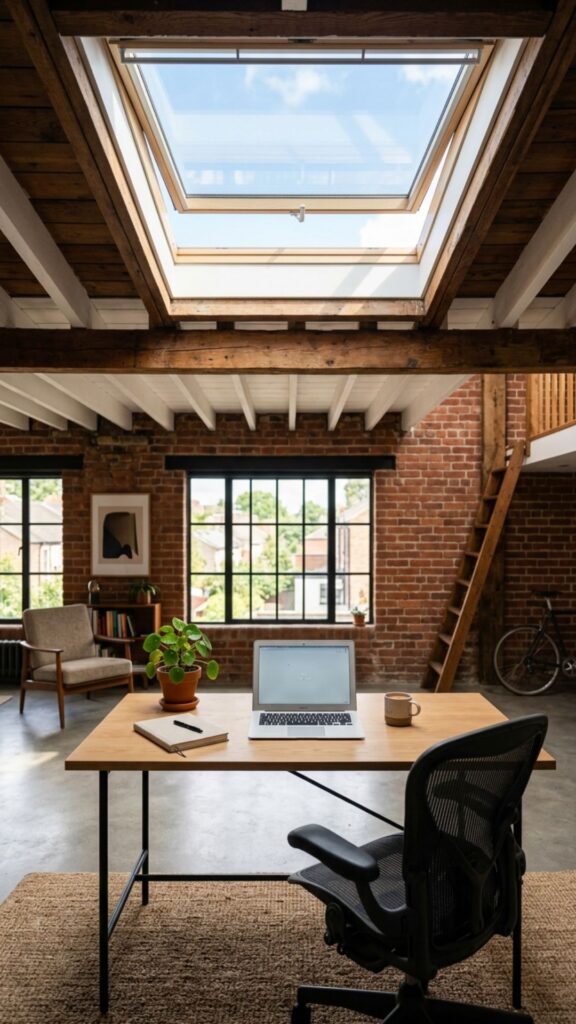
If your loft has a skylight, make it the star of your workspace.
Positioning your desk underneath or close to the window gives you plenty of natural light while creating an airy atmosphere. Looking up at the sky can also make a compact loft feel much more open.
Keep the furniture around the window simple so nothing competes with the view.
2. Turn the Lowest Part of the Ceiling Into Storage
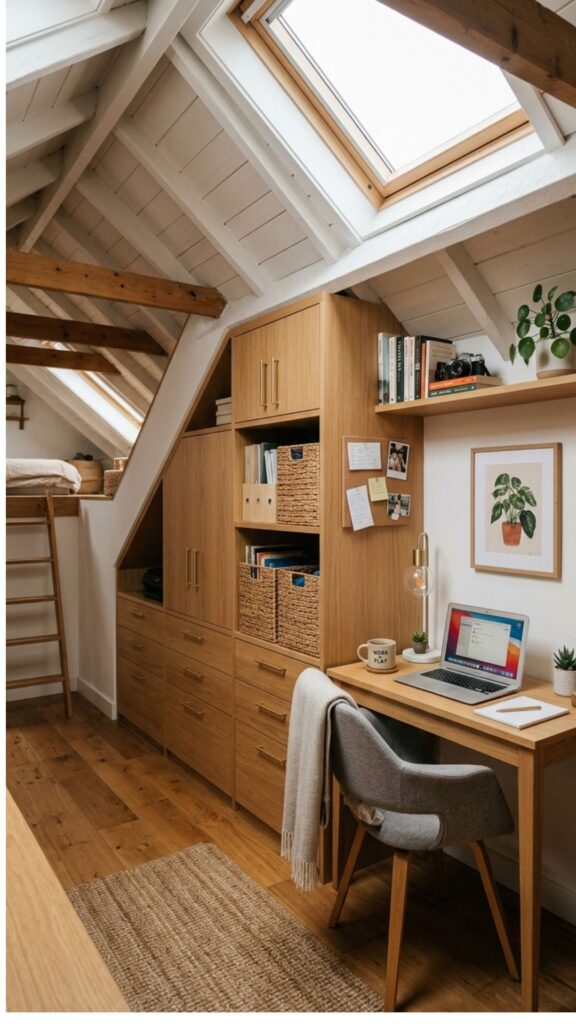
Those areas where the roof slopes too low to stand comfortably are often wasted.
Instead of ignoring them, install low cabinets, drawers, baskets, or custom shelving. You can store paperwork, office supplies, books, and equipment without sacrificing valuable working space.
It is one of the smartest ways to make an awkward loft layout work in your favor.
3. Create a Built-In Desk Along the Wall
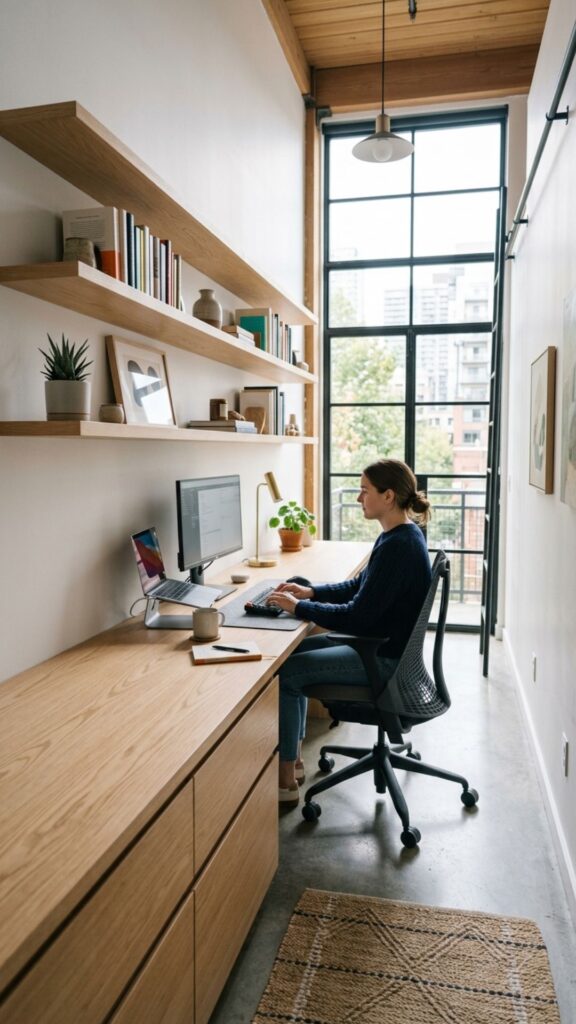
A built-in desk can instantly make a loft office look polished and intentional.
Run a long desktop along one wall and add drawers or cabinets underneath. This works especially well in narrow lofts because you can customize the depth of the desk to suit the available space.
Add floating shelves above it for an attractive and practical finishing touch.
4. Embrace Exposed Wooden Beams
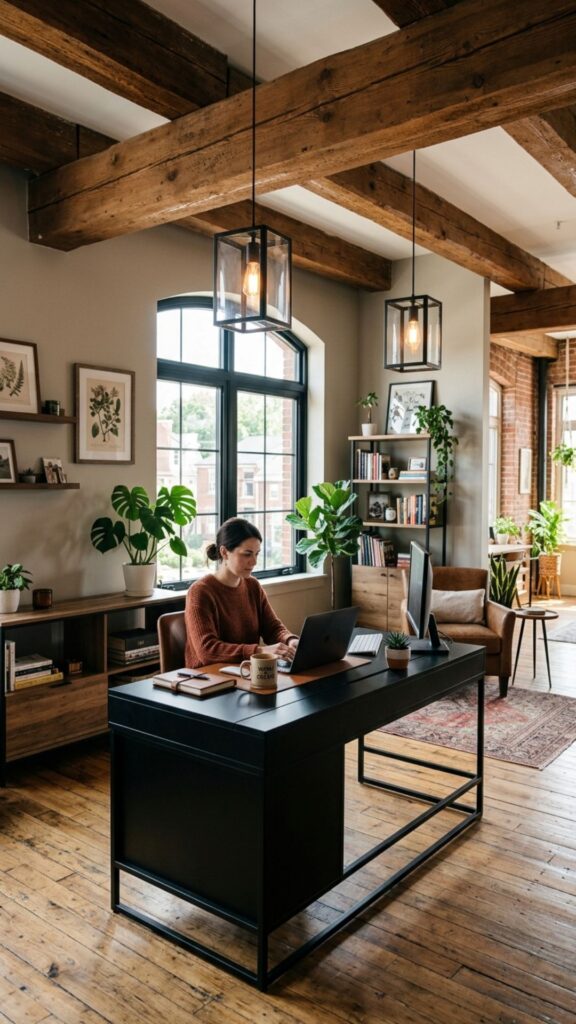
Do not rush to hide original loft features.
Exposed beams bring natural warmth, texture, and character to a home office. Pair them with simple furniture and neutral walls so the architecture remains the focal point.
A black desk or metal lighting can create a particularly striking contrast against rustic timber.
5. Go for an All-White Loft Office
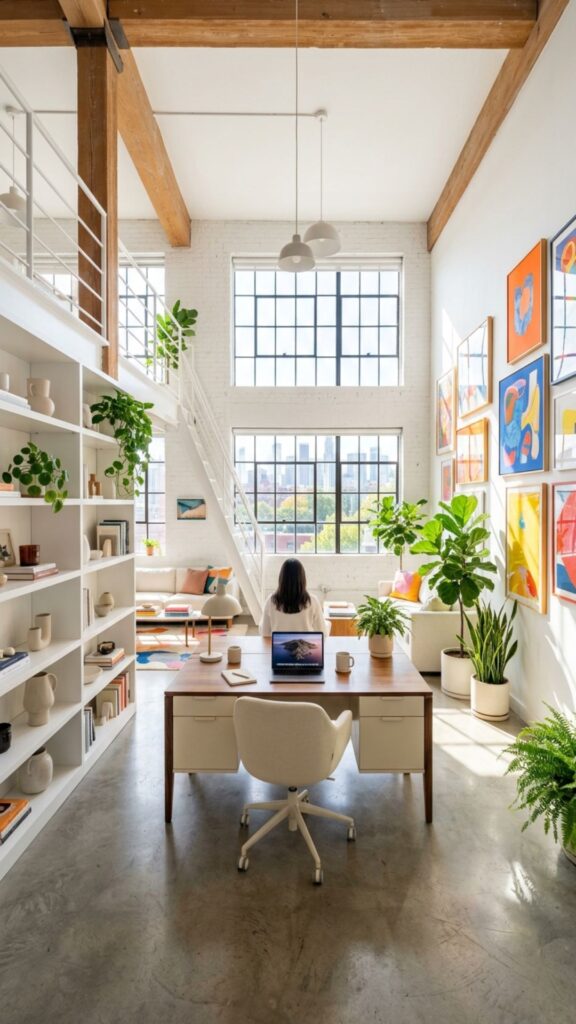
White is a classic choice for small or low-ceilinged lofts because it reflects light and helps the room appear larger.
Use white across the walls, ceiling, desk, and shelving, then introduce personality with artwork, plants, books, or a colorful office chair.
Layering slightly different shades of white and cream will keep the space from feeling flat.
6. Create a Cozy Dark and Moody Workspace
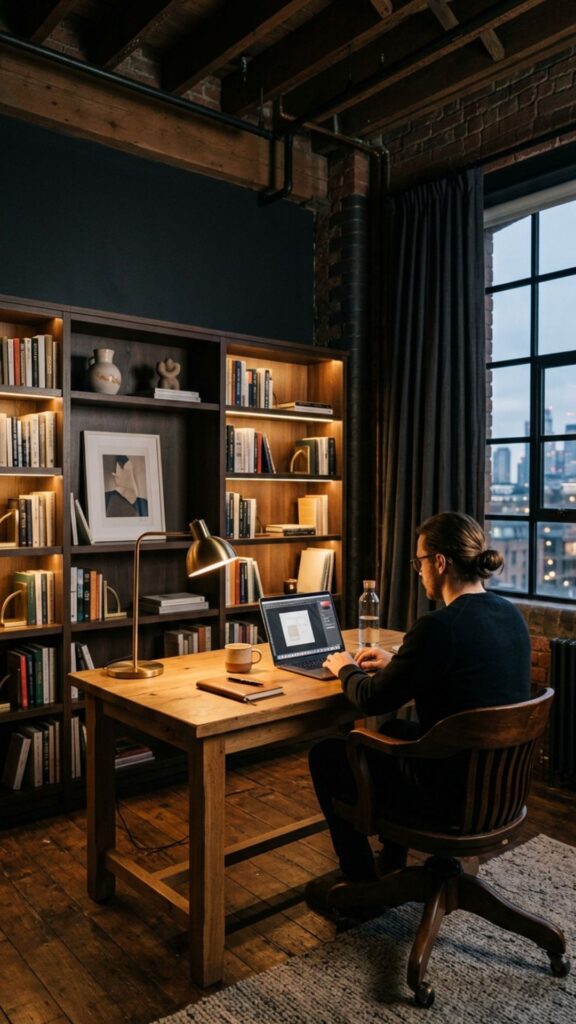
A loft office does not have to be bright and minimal.
Deep navy, charcoal, forest green, or even near-black walls can make an attic workspace feel incredibly cozy and sophisticated.
Balance darker colors with warm wood, metallic accessories, and focused task lighting for a dramatic office you will actually want to spend time in.
7. Add Floating Shelves Above the Desk
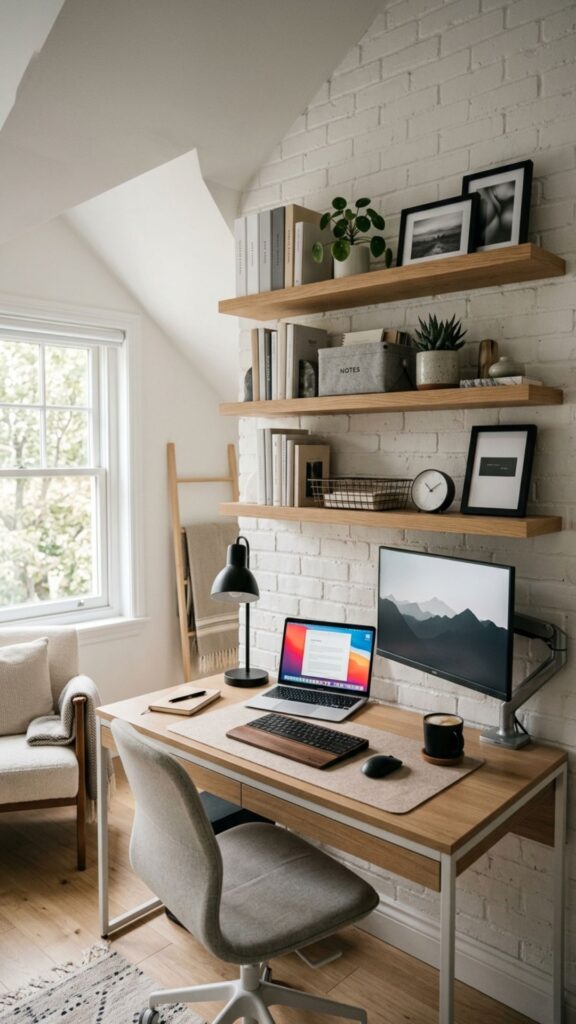
When floor space is limited, think vertically.
Floating shelves give you storage without making a compact loft feel crowded. Use them for notebooks, reference books, small storage boxes, photographs, and decorative objects.
Keeping everyday supplies within arm’s reach can also make your workday much more efficient.
8. Tuck a Desk Into a Loft Corner
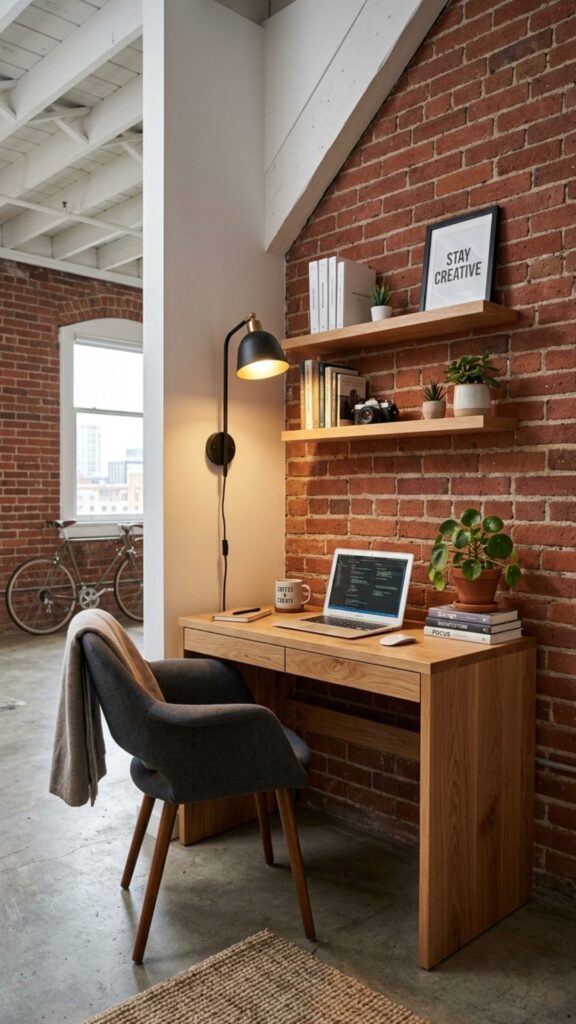
Sometimes the best office does not need an entire room.
An unused loft corner can become a functional workstation with nothing more than a compact desk, comfortable chair, wall lamp, and a few shelves.
This setup is especially useful if your loft also functions as a guest room, reading space, or hobby room.
9. Try a Scandinavian-Inspired Design
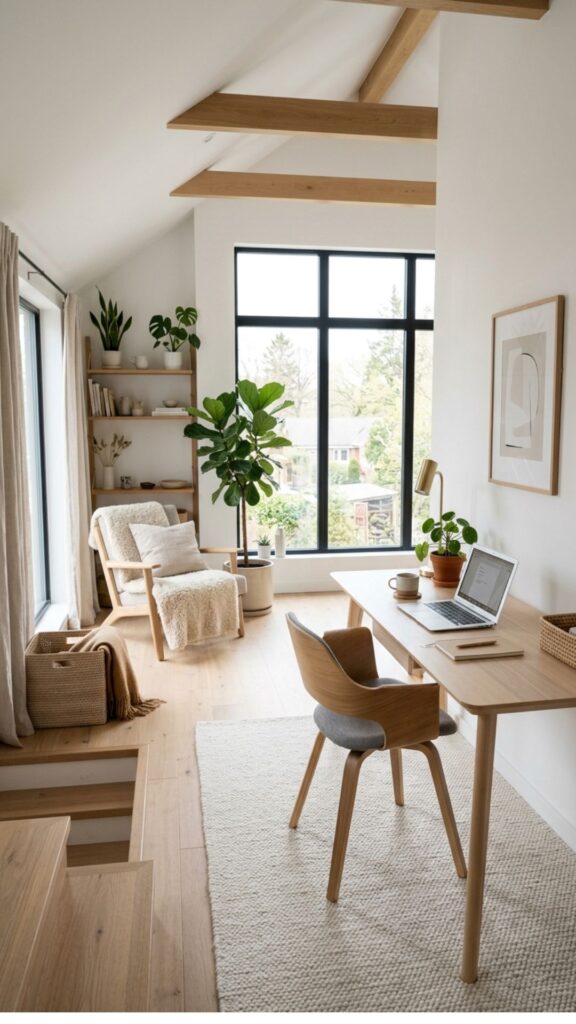
The light, uncluttered nature of Scandinavian interiors works beautifully in loft spaces.
Choose pale wood furniture, white walls, simple storage, soft textiles, and plenty of natural light. Add a few houseplants to introduce color without making the room feel busy.
The result is a peaceful workspace that feels warm rather than overly minimal.
10. Build a Desk Between Two Sloped Walls
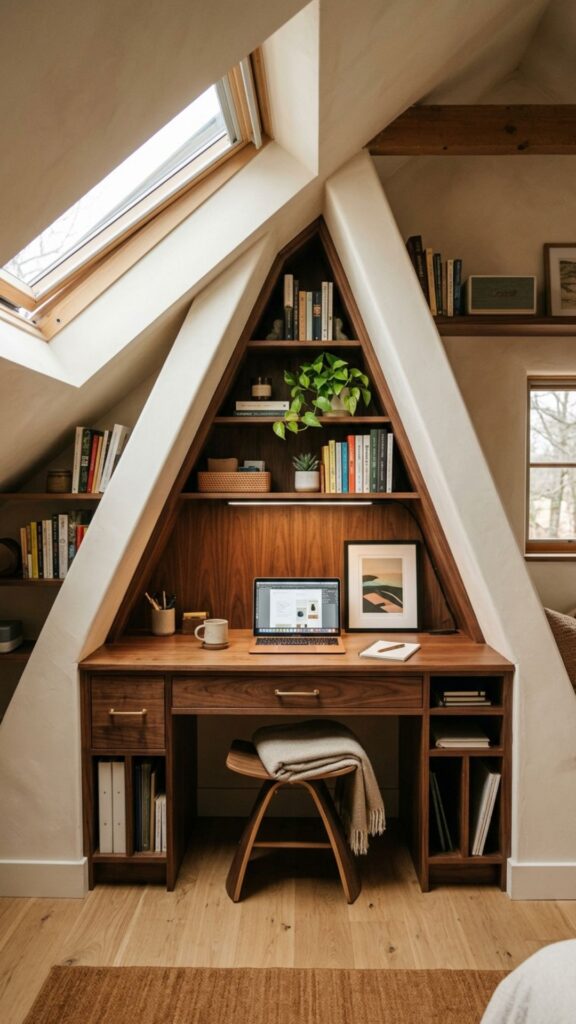
An unusual roofline can create the perfect location for a custom desk.
A fitted desktop positioned between two sloping sections can turn an otherwise difficult area into a practical workstation.
Because the desk follows the architecture of the room, it often feels more spacious and integrated than a freestanding piece of furniture.
11. Add a Statement Office Chair
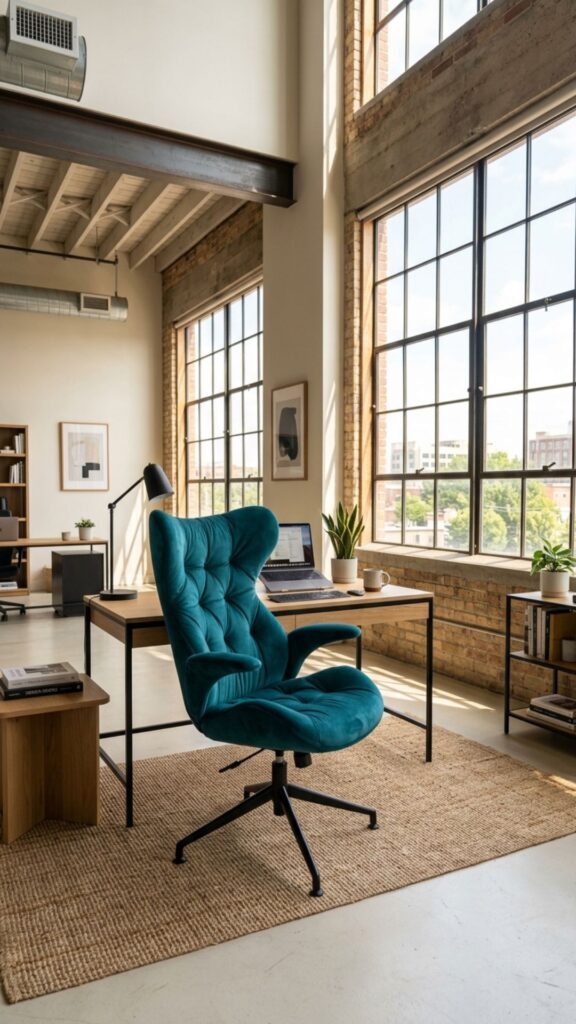
When your loft office is mostly neutral, your chair can become the design feature.
Try a rich leather chair, a sculptural upholstered seat, or a chair in a bold accent color.
Just remember that appearance should not replace comfort. If you spend several hours working at your desk, choose something with suitable back support and adjustability.
12. Introduce Plenty of Greenery
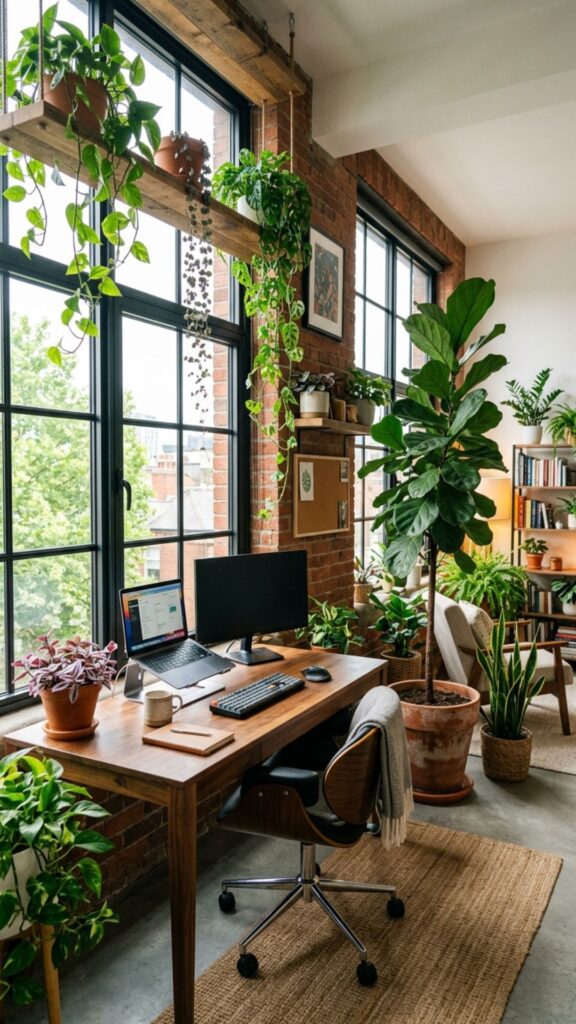
Plants can instantly make a loft office feel more inviting.
Place a tall plant beside your desk, trail greenery from shelves, or arrange several smaller plants along a windowsill.
If your loft receives limited natural light, choose plants suited to lower-light conditions or use realistic artificial greenery for a similar visual effect.
13. Create a Loft Office and Reading Nook
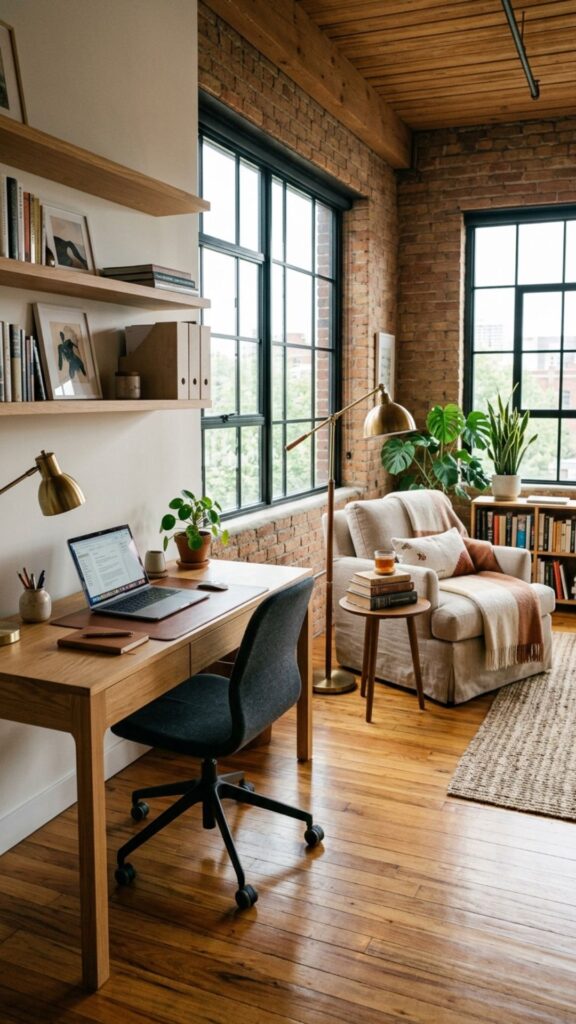
Have a little extra space? Divide your loft into two zones.
Use one area for your desk and create a cozy reading corner with an armchair, floor lamp, and small side table.
The second zone gives you somewhere to step away from your computer while still staying in a productive environment.
14. Use Glass to Keep the Office Feeling Open
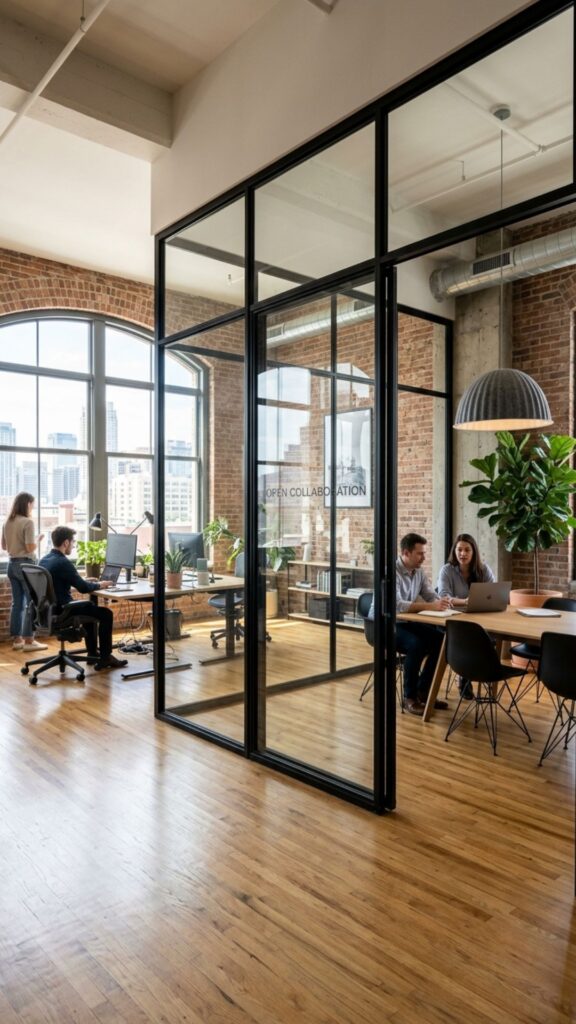
If your loft office needs to be separated from another area, consider a glass partition instead of a solid wall.
Glass allows light to travel through the space and prevents the office from feeling boxed in.
Black-framed glass can add an industrial feel, while frameless panels work beautifully in modern minimalist interiors.
15. Turn an Entire Wall Into Bookshelves
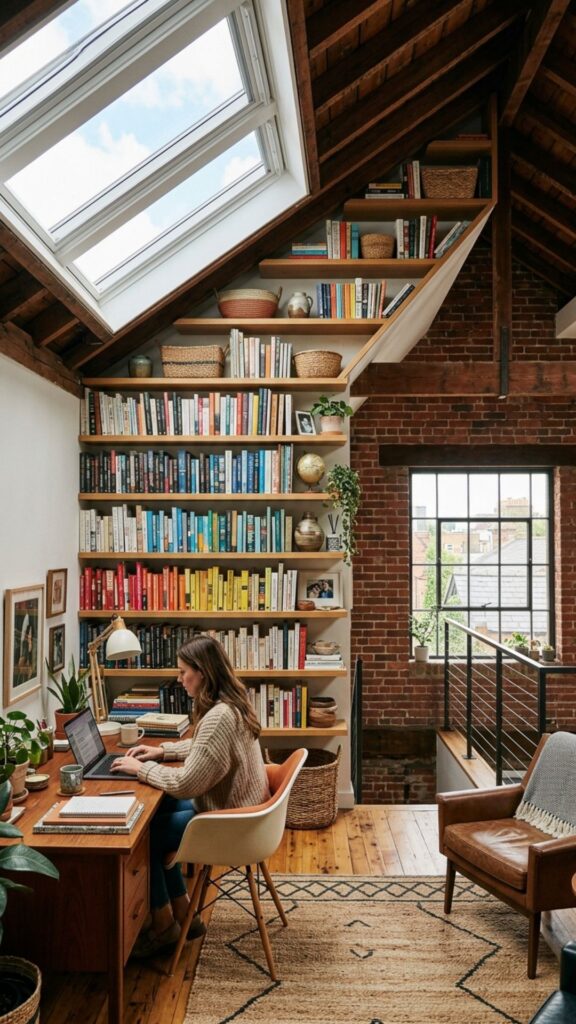
Book lovers can transform a plain loft wall into a miniature home library.
Floor-to-ceiling shelving creates impressive storage while adding personality to the room. Mix books with baskets, framed photographs, ceramics, and decorative objects for a more relaxed appearance.
If the ceiling slopes, custom shelving can follow the roofline and make use of every available inch.
16. Choose a Minimalist Floating Desk
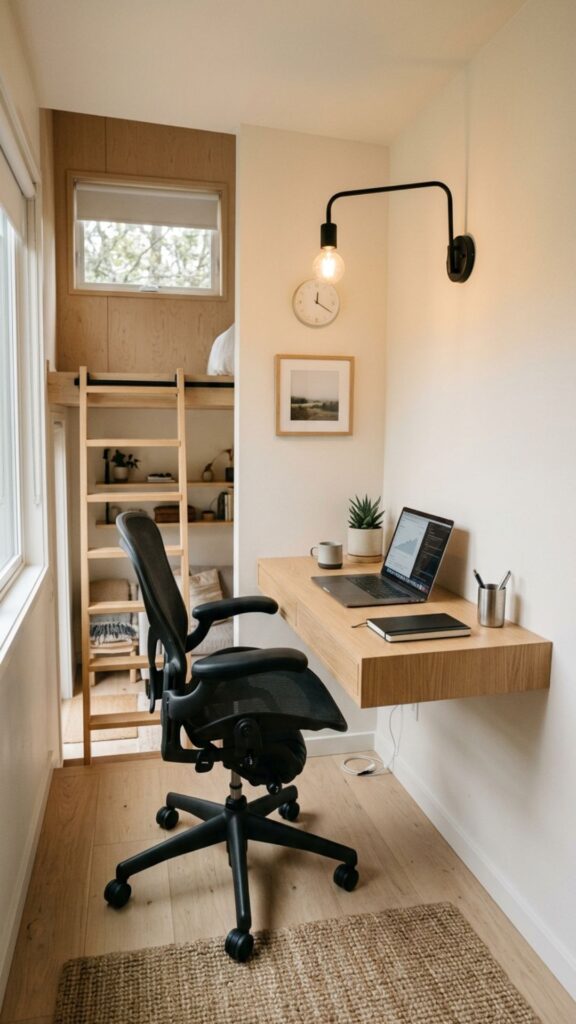
For very small lofts, a floating desk can be a game-changer.
Because there are no bulky legs or cabinets underneath, the floor remains visible and the room feels less crowded.
Pair the desk with a slim chair and wall-mounted lighting for a streamlined workstation that takes up surprisingly little space.
17. Bring in Warm Industrial Details
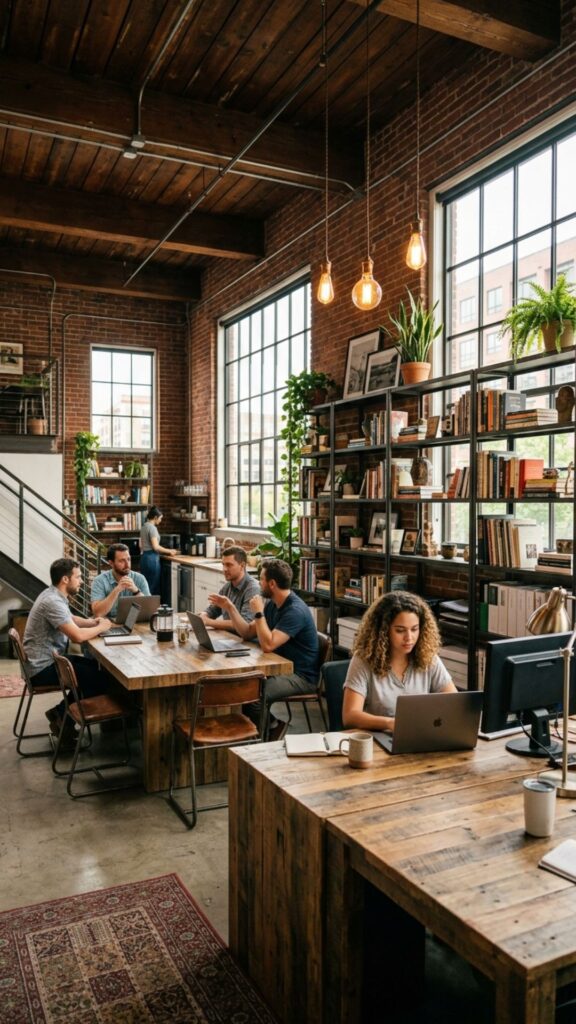
Lofts naturally suit industrial-inspired interiors.
Combine exposed brick, black metal, weathered wood, vintage-style lighting, and simple open shelving.
You do not need to turn the entire room into an industrial space. Even a metal desk lamp, black-framed shelf, or reclaimed wood desktop can provide just enough character.
18. Add a Gallery Wall
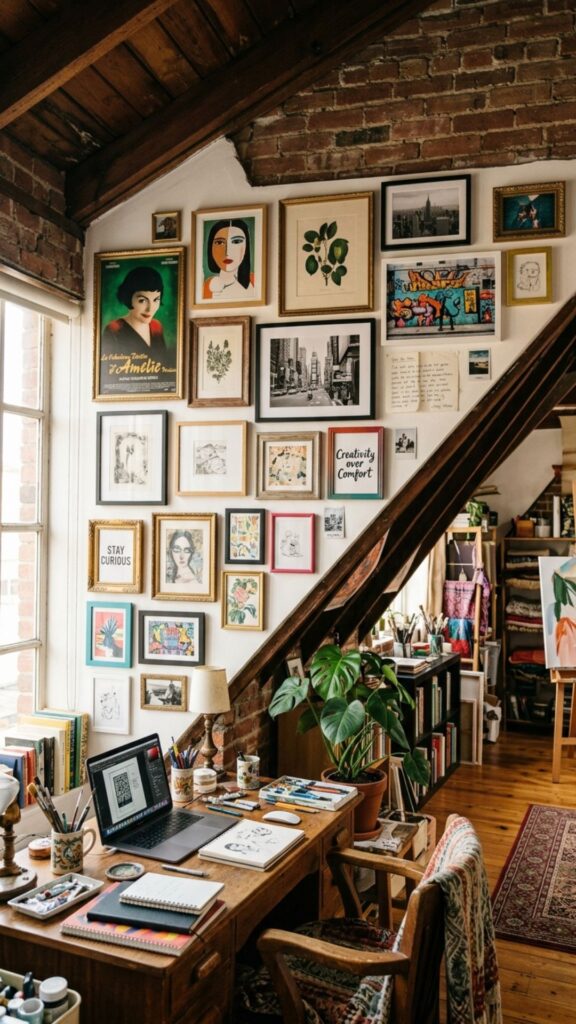
Working from home should not mean staring at blank walls all day.
Create a gallery wall with framed prints, photography, illustrations, motivational typography, or personal artwork.
In a loft with sloping ceilings, arranging frames at different heights can actually emphasize the unusual architecture rather than fight against it.
19. Design a Two-Person Loft Office
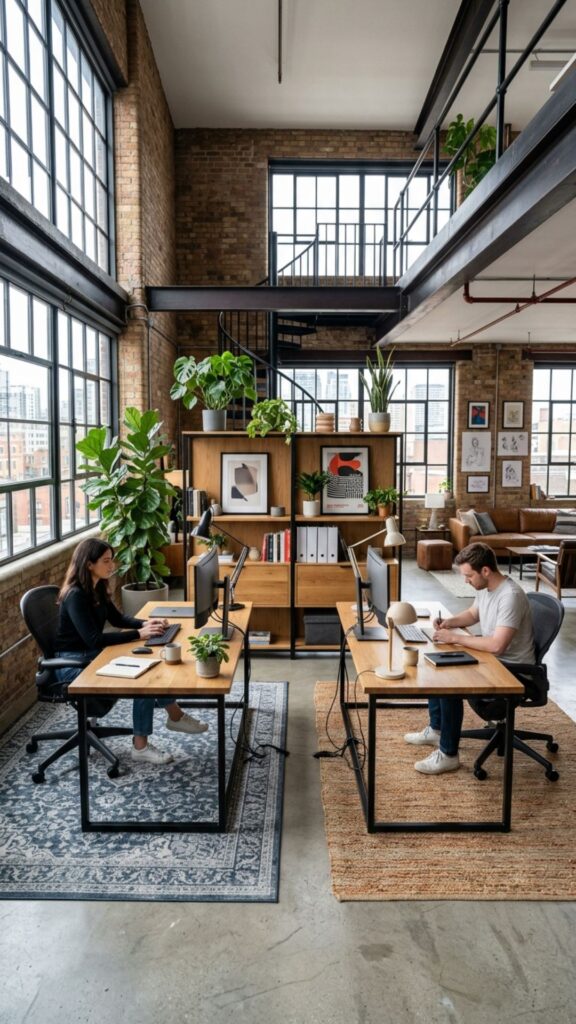
A wider loft can easily accommodate two workstations.
Place two desks side by side for a streamlined setup, or position them on opposite walls if you prefer greater separation.
Shared shelving in the middle can provide storage while visually connecting both work zones.
This layout is ideal for couples working from home or for creating a combined work-and-study area.
20. Make the View the Main Attraction
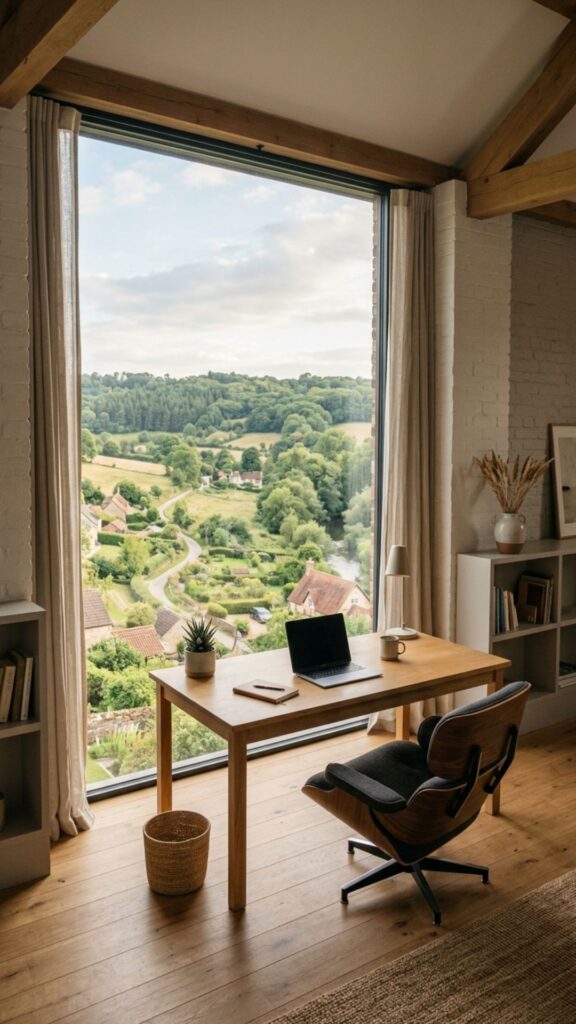
If your loft overlooks rooftops, gardens, countryside, or city streets, arrange your desk to take advantage of it.
A beautiful view can become part of the room’s design without requiring extra decoration.
Keep window treatments simple and avoid placing tall storage directly in front of the glass. The goal is to make the workspace feel connected to the outside world rather than hidden away in the attic.
Final Thoughts
A loft home office has something ordinary spare rooms often lack: character.
Instead of seeing sloping ceilings, awkward corners, exposed beams, and unusual dimensions as limitations, use them as design opportunities. A desk beneath a skylight, custom storage under the eaves, a dramatic dark color scheme, or a beautifully styled reading corner can turn even an overlooked attic into a workspace you love entering each morning.
You also do not need a huge renovation to make a noticeable difference. Start with one feature that improves how the space works—better lighting, smarter storage, a comfortable chair, or a properly positioned desk—and build from there.
With the right layout and a few thoughtful details, your loft can become much more than somewhere to answer emails. It can be the most inspiring room in the house.
Is a loft a good place for a home office?
Yes. Lofts can make excellent home offices because they are often quieter and more separated from busy living areas.
Where should I put a desk in a loft?
Place it where you have comfortable headroom and good natural light, ideally near a window or skylight without creating excessive screen glare.
How can I make a small loft office look bigger?
Use light colors, streamlined furniture, wall-mounted storage, good lighting, and minimal clutter to create a more open feeling.
What should I do with low areas under sloped ceilings?
Use them for low cabinets, drawers, bookshelves, baskets, or other storage that does not require full standing height.
How can I make my loft office feel cozy?
Add warm lighting, natural wood, soft rugs, plants, artwork, and comfortable seating to balance the practical elements of the workspace.