A home office can have plenty of floor space and still feel cramped if the desk is too small. Once your laptop, monitor, notebook, charger, coffee mug, and everyday essentials land on the surface, that supposedly spacious workspace can quickly become cluttered.
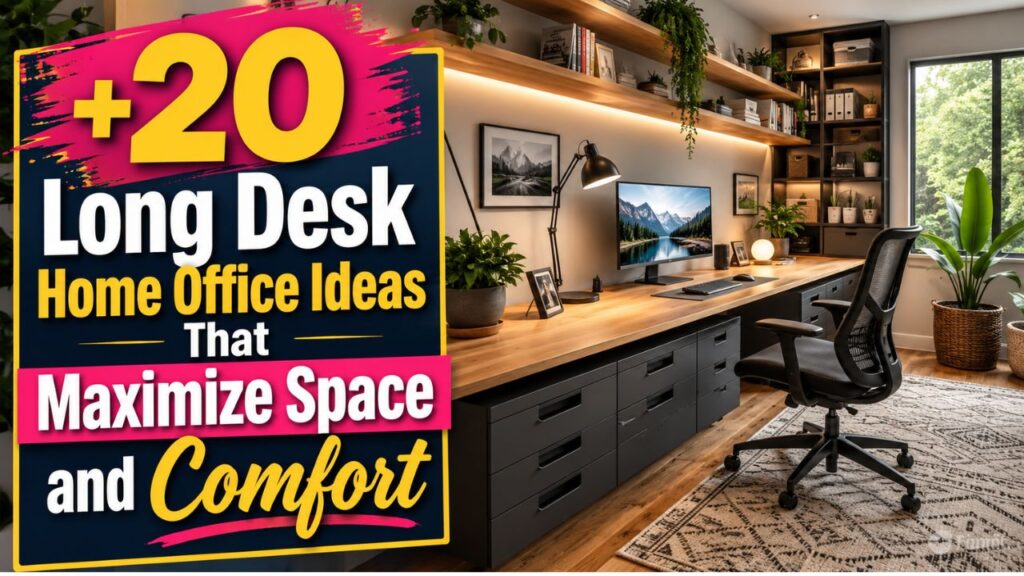
A long desk changes the equation. Instead of forcing everything into one compact work zone, it gives you room to spread out, create dedicated areas for different tasks, improve storage, and even accommodate two people without making the office feel crowded. Better still, a long desk can make use of walls and corners that might otherwise go unused.
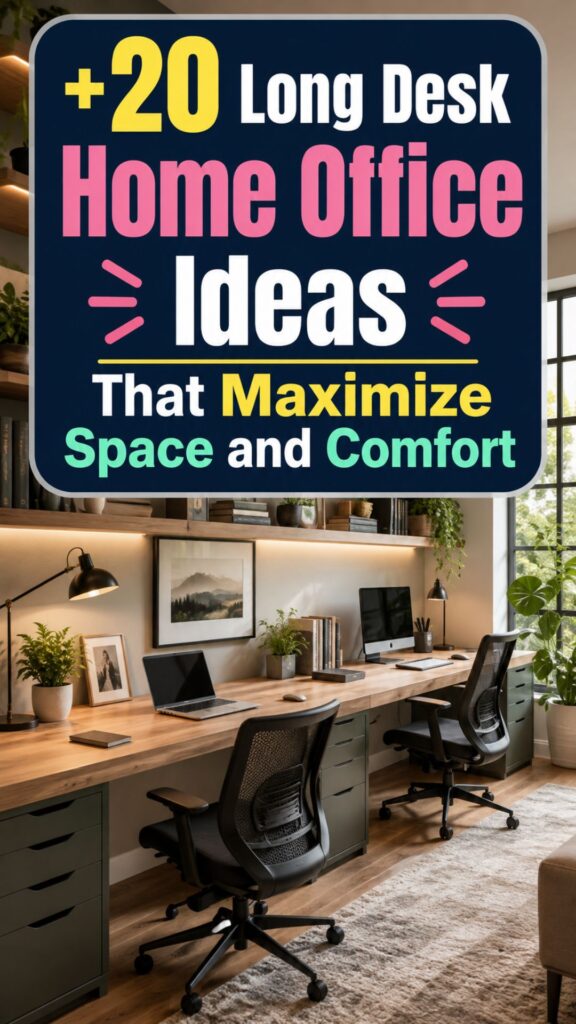
Whether you’re designing a dedicated office, upgrading a bedroom workspace, or creating a shared work-from-home setup, these 20 long desk home office ideas can help you maximize both space and comfort.
1. Stretch a Wall-to-Wall Desk Across the Room
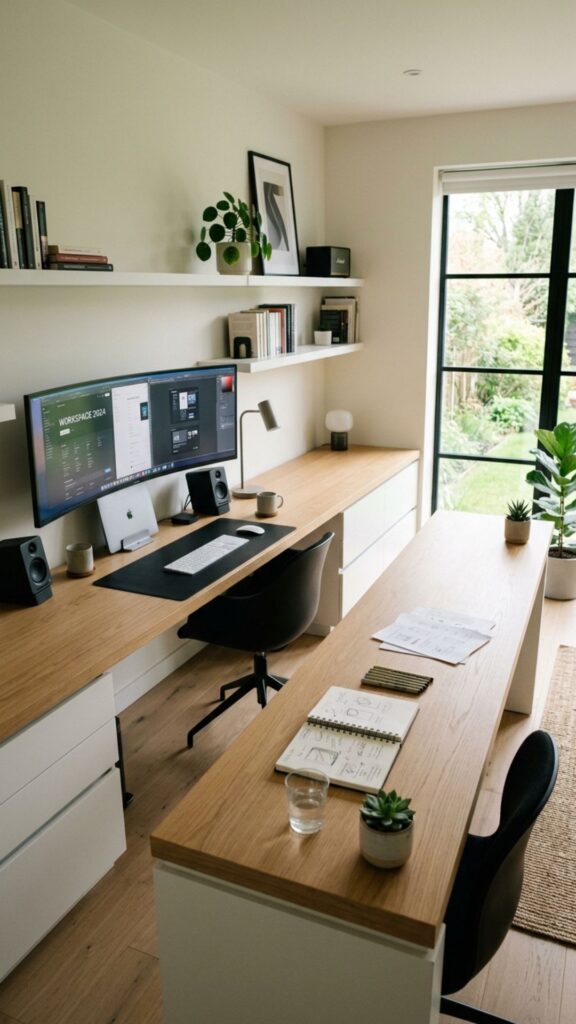
If you have an empty wall, turn the entire length into usable workspace.
A wall-to-wall desk creates a streamlined look while eliminating awkward gaps where furniture might otherwise collect clutter. It works especially well in narrow rooms because the long horizontal surface makes the space feel more intentional.
Use the center for your main computer setup and reserve the ends for paperwork, storage baskets, printers, or decorative accessories.
For an even cleaner appearance, choose a countertop-style surface with minimal supports underneath.
2. Create a Long Floating Desk
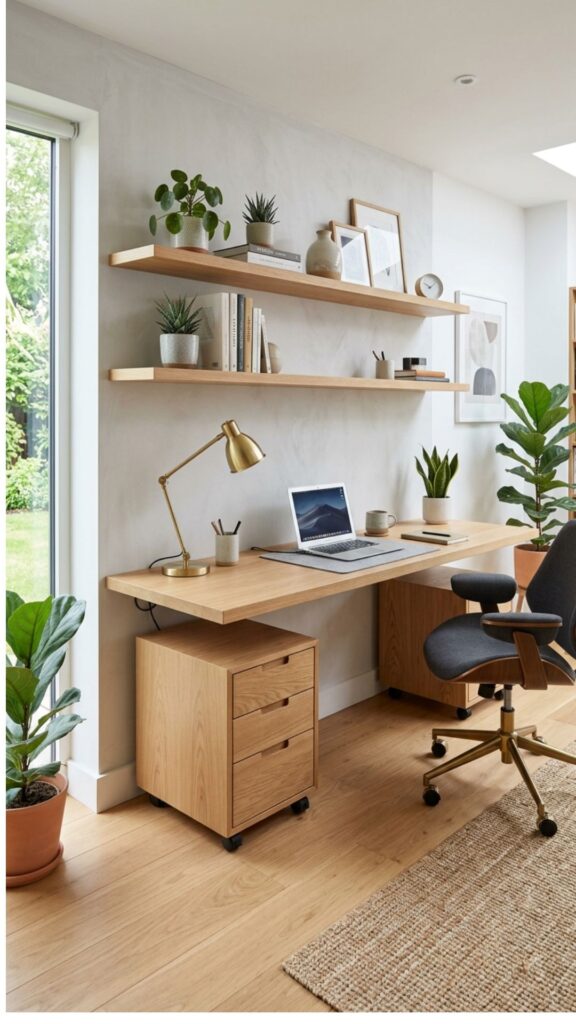
A floating desk is one of the smartest choices when you want a spacious work surface without visually crowding the room.
Mounted directly to the wall, it keeps the floor underneath open and creates a light, contemporary appearance. The extra floor space can also accommodate rolling drawers, storage baskets, or a small footrest.
Floating desks are particularly useful in apartments and compact home offices where bulky furniture can make the room feel smaller.
Add floating shelves above the desk to continue the streamlined look.
3. Build a Two-Person Home Office Desk
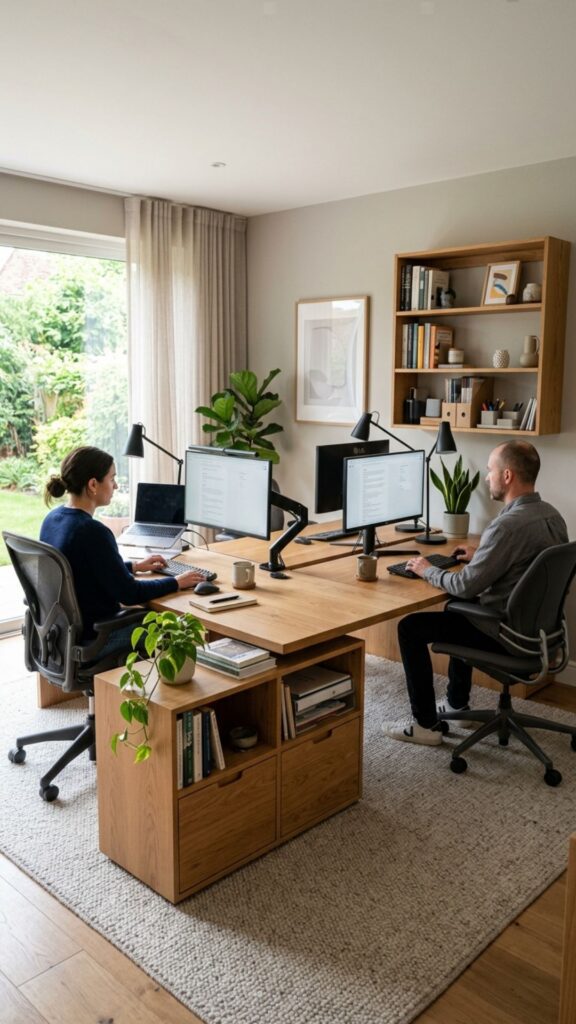
A long desk can easily transform one wall into a comfortable workstation for two.
Instead of purchasing two separate desks, use one continuous surface and create two clearly defined work zones. Give each person their own chair, monitor, task lamp, and storage drawer.
Keeping a small gap between the setups helps prevent the desk from feeling overcrowded.
This arrangement works well for couples working from home, siblings studying together, or parents who occasionally share an office with children.
4. Add Drawer Units Under Both Ends
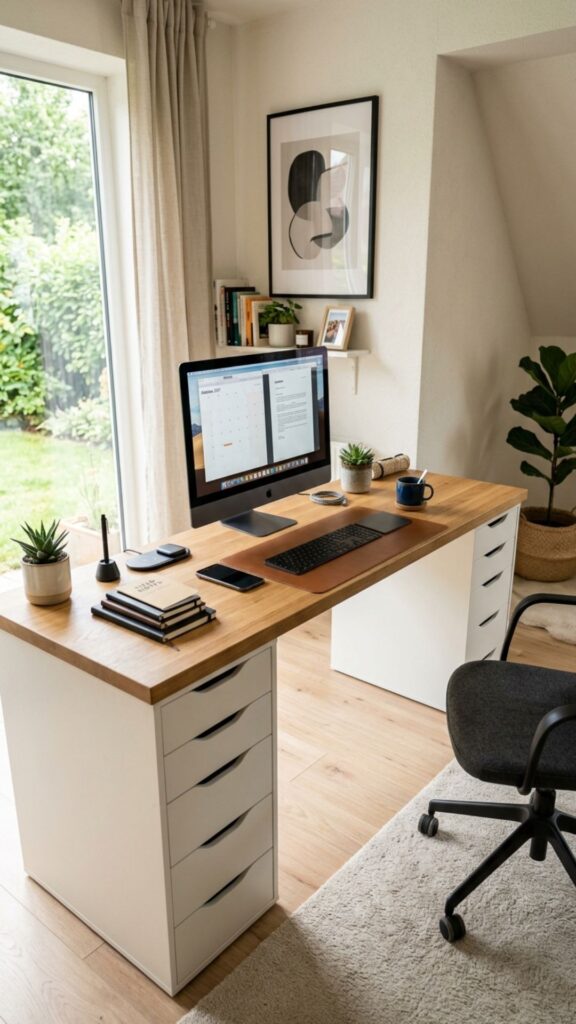
A long desktop doesn’t necessarily require traditional desk legs.
Two drawer units placed beneath each end can support the surface while adding valuable storage at the same time.
Store stationery, documents, electronics, notebooks, and office supplies inside the drawers so the desk itself remains relatively clear.
If your desk is particularly long, consider adding an additional support in the center to prevent the surface from sagging.
5. Turn a Long Desk Into Separate Work Zones
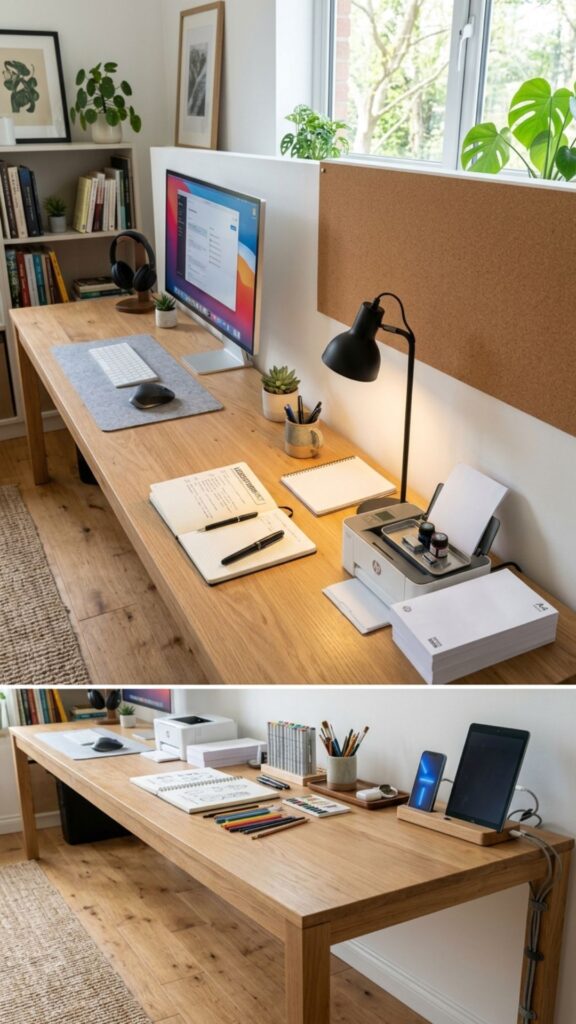
One of the biggest advantages of a long desk is the ability to divide it according to activities.
Instead of treating the entire surface as one workstation, create separate areas such as:
- A computer zone
- A writing or planning zone
- A printing station
- A creative area
- A charging station
This approach reduces constant rearranging. You can move from one task to another without clearing your desk every time.
6. Place Your Long Desk Beneath a Window
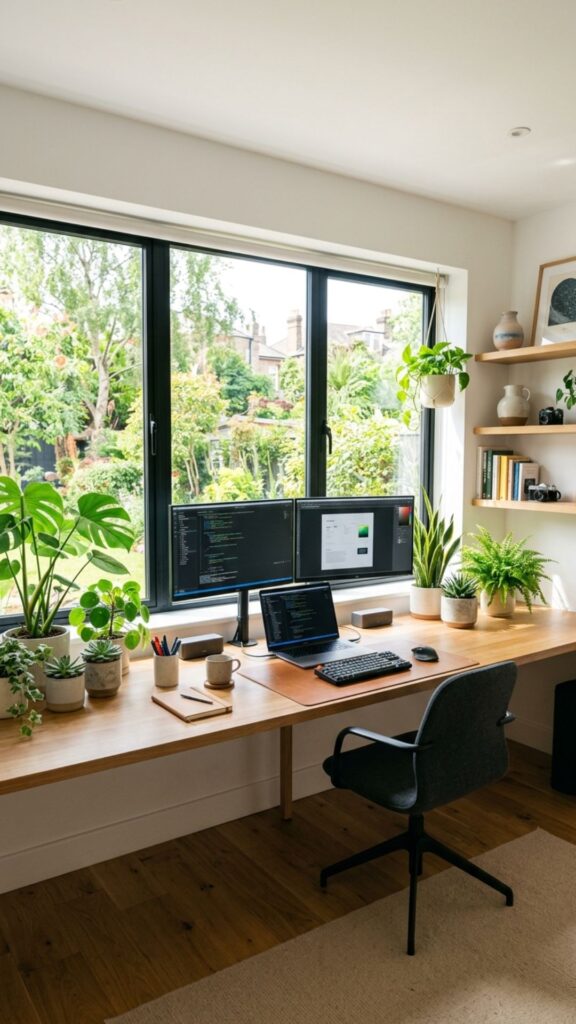
Natural light can make long workdays feel considerably more pleasant.
If your office has a wide window, positioning a long desk underneath it can provide both an inspiring view and plenty of daylight.
Keep the surface relatively low-profile so it doesn’t interfere with the window.
If screen glare becomes an issue, use adjustable blinds or curtains and position monitors slightly away from direct sunlight.
Plants along the windowsill can also make the workspace feel fresher without taking up much desk space.
7. Create an L-Shaped Workspace With Two Long Surfaces
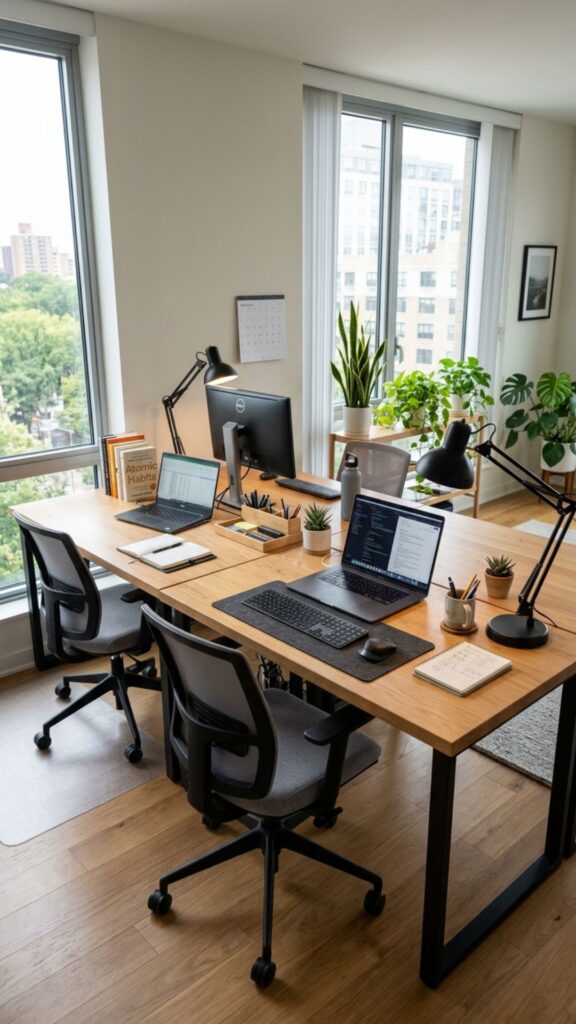
Need even more room?
Connect two long desk surfaces in a corner to form an L-shaped workstation.
Use one side for your computer and the other for writing, meetings, crafting, or organizing paperwork.
This setup allows you to keep essential equipment within reach while maintaining a surprisingly large amount of open workspace.
It is especially effective for people who use multiple monitors or regularly switch between digital and physical tasks.
8. Use a Long Desk Behind a Sofa
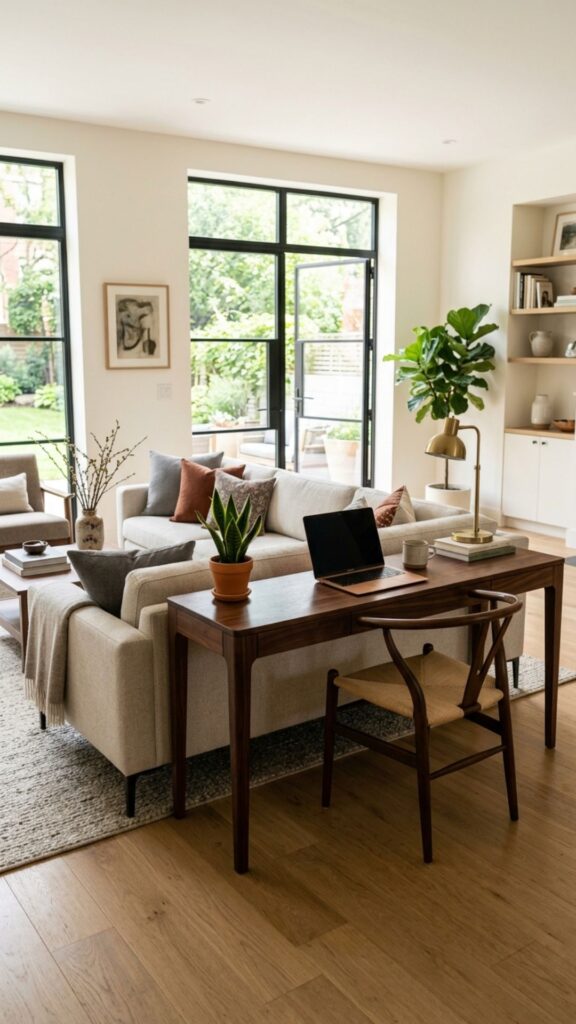
Not every home has a separate room available for an office.
If you’re working with an open-plan living room, position a narrow long desk behind the sofa.
The sofa naturally separates the workspace from the relaxation area, while the desk uses space that might otherwise remain empty.
Choose a desk that is roughly proportional to the sofa’s length to create a balanced appearance.
A slim chair that can tuck completely underneath the desk will help keep walkways clear.
9. Add Upper Cabinets Above the Desk
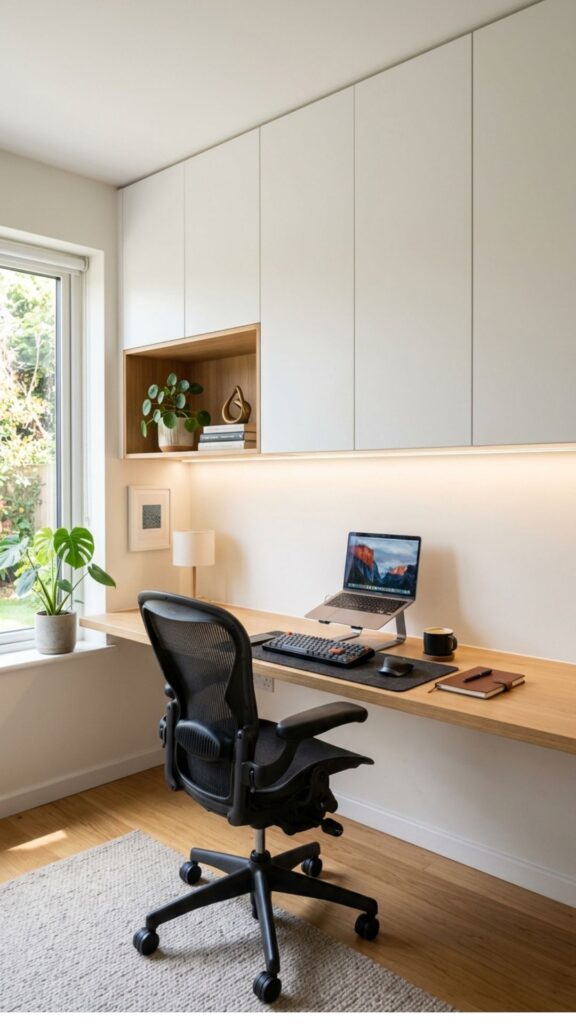
When floor space is limited, start thinking vertically.
Installing cabinets above a long desk provides generous storage without sacrificing working surface area.
Closed cabinets are especially useful for hiding paperwork, office equipment, and less attractive supplies.
You can leave a small open section between cabinets for books, artwork, or decorative objects so the workspace doesn’t feel overly utilitarian.
10. Combine Open Shelves and Closed Storage
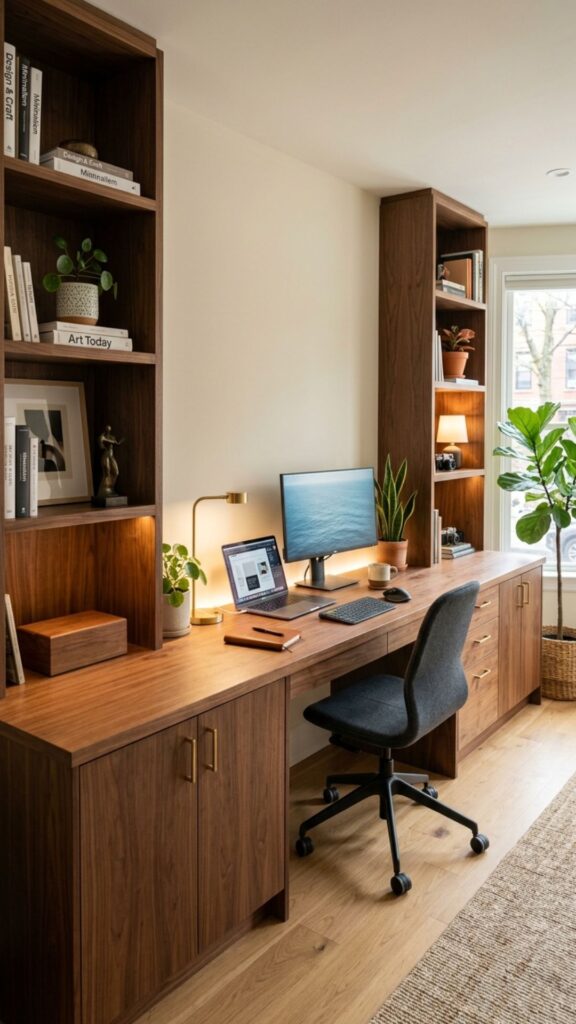
You don’t have to choose between displaying everything and hiding everything.
A combination of open shelves and closed cabinets gives a long home office desk a balanced, organized appearance.
Keep frequently used books and attractive accessories on open shelves while storing cables, paperwork, and miscellaneous supplies behind cabinet doors.
The result is a workspace that feels styled without becoming cluttered.
11. Build a Long Desk Into an Alcove
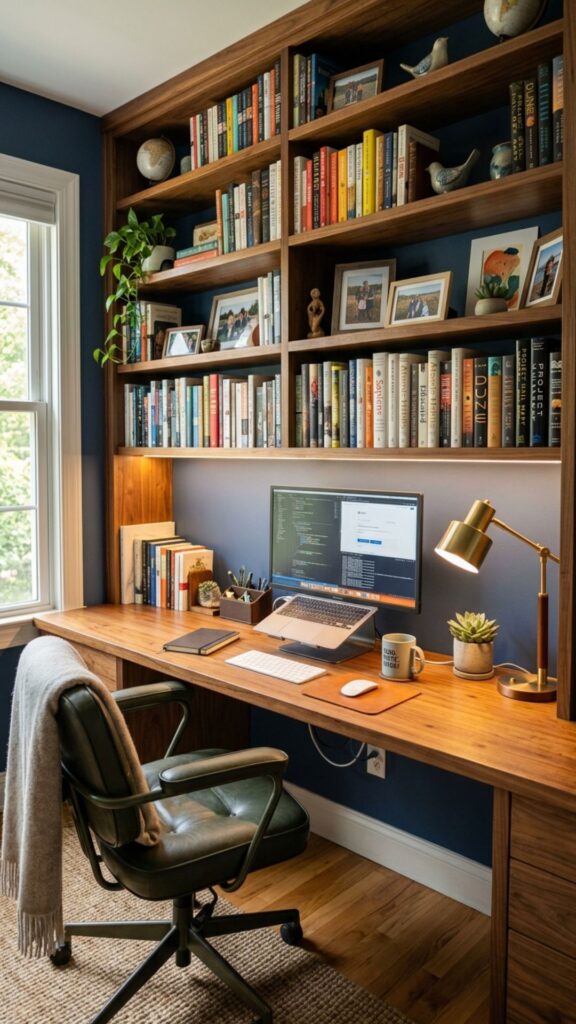
An awkward recessed wall can become one of the most practical areas in your home.
Install a custom desk that spans the width of the alcove and suddenly the previously unused space becomes a dedicated office.
Adding shelves from desk level to ceiling can dramatically increase storage capacity.
Because the office is contained within the recess, it also feels visually separate from the surrounding room—even without adding walls.
12. Choose a Narrow Long Desk for a Small Room
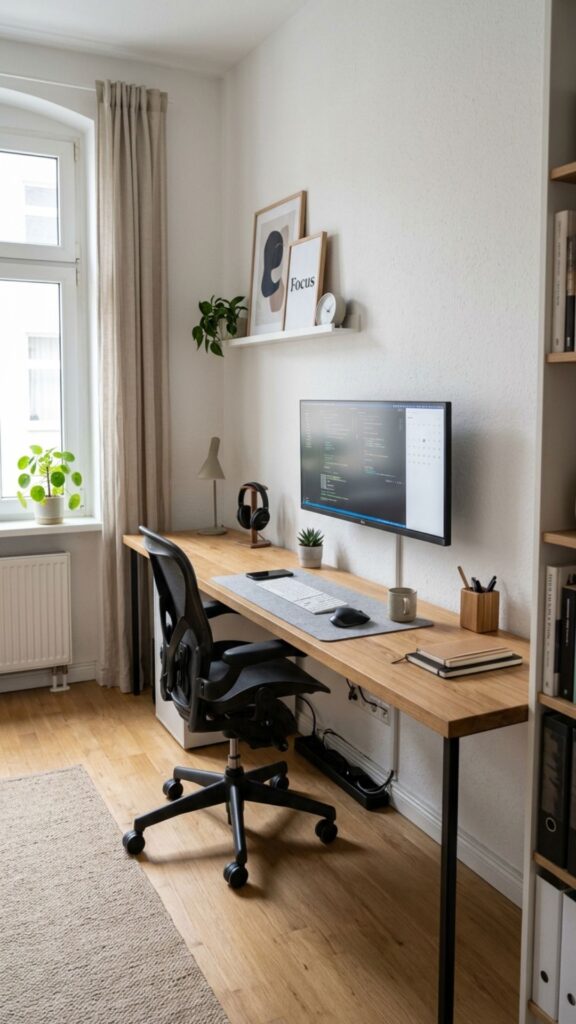
A desk doesn’t need to be extremely deep to be useful.
In narrow bedrooms, hallways, or small offices, prioritize length rather than depth.
A slim desk can still provide room for a laptop, monitor, keyboard, and accessories while preserving valuable walking space.
Wall-mounted monitor arms are particularly useful in this setup because they free additional desk depth.
13. Install a Pegboard Above the Desk
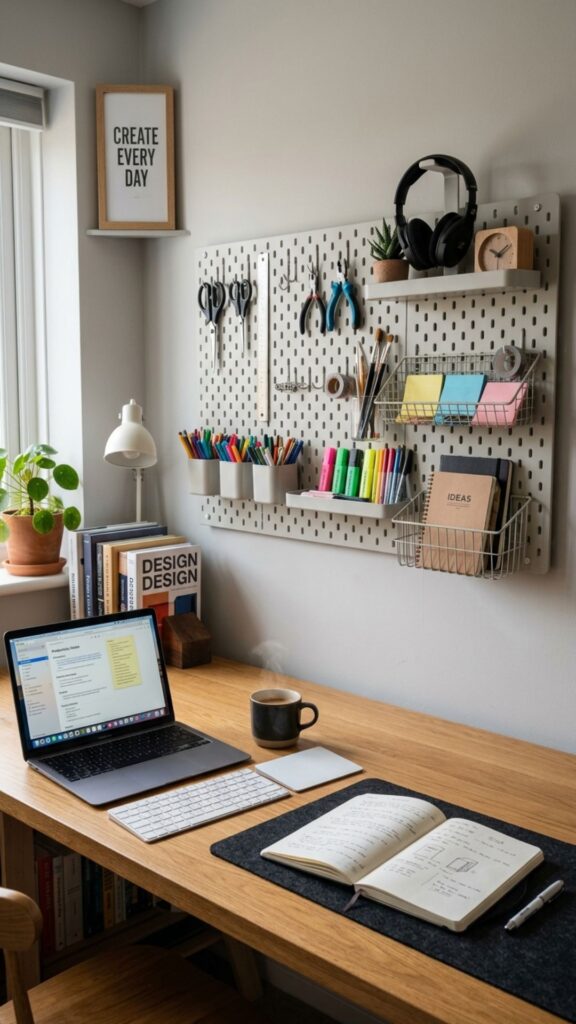
A long wall above your desk offers valuable organization potential.
Instead of filling it entirely with shelves, install a pegboard system.
Hooks, trays, baskets, and small shelves can be repositioned whenever your storage needs change.
Use the pegboard to organize headphones, stationery, cables, notebooks, scissors, and other everyday essentials.
It keeps frequently used items accessible without allowing them to spread across the desktop.
14. Use Monitor Arms to Free Up Desk Space
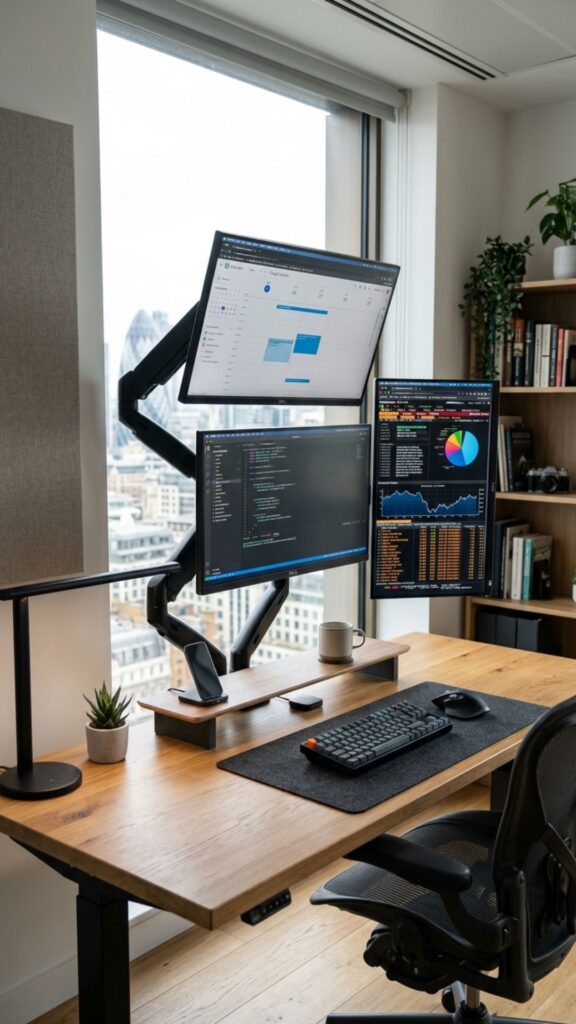
Even a large desk can become crowded when multiple monitors are sitting on bulky stands.
Monitor arms attach screens to the desk or wall, freeing up the area underneath.
The additional space can be used for notebooks, speakers, accessories, or simply left open for a cleaner appearance.
Adjustable arms can also improve ergonomics because they allow you to position screens at a more comfortable height and viewing distance.
15. Add a Comfortable Desk Chair With Room to Move
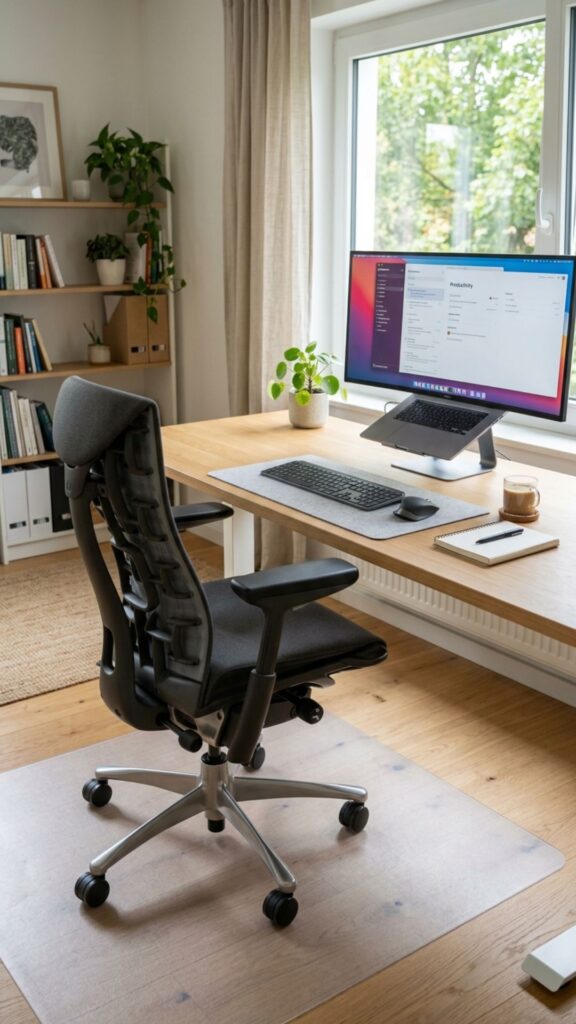
A beautiful desk won’t create a comfortable office if your chair is uncomfortable.
When designing a long workstation, make sure you leave sufficient space underneath for your legs and chair movement.
Look for an adjustable office chair that supports your back and allows your feet to rest comfortably on the floor or a footrest.
If multiple people use the desk, adjustable furniture becomes even more important because each person can customize the setup.
16. Create a Minimalist Long Desk Setup
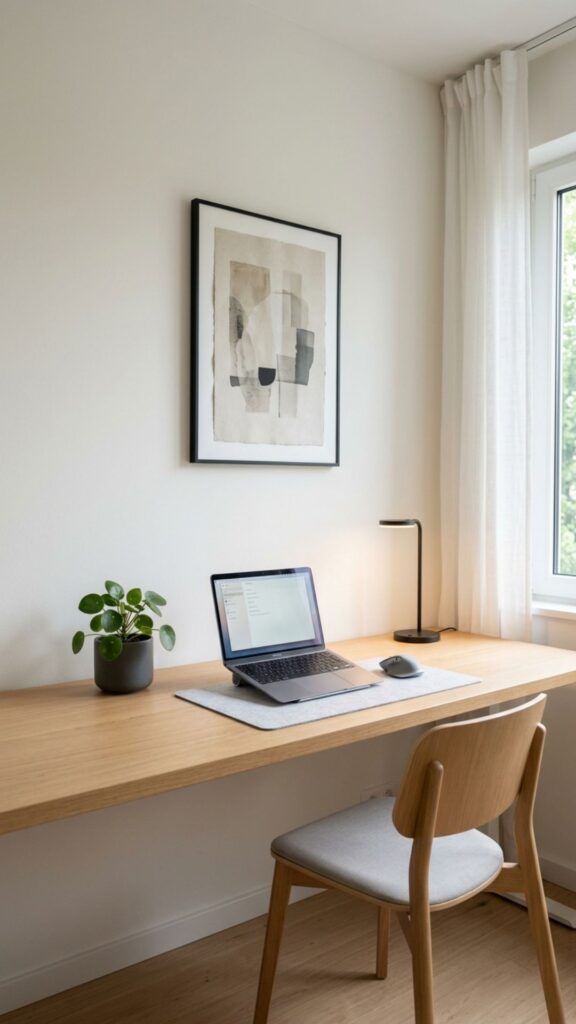
Sometimes maximizing space isn’t about adding more storage. It’s about keeping fewer things visible.
For a minimalist office, start with a simple long surface and limit the desktop to essential equipment.
Hide power strips underneath, route cables behind the desk, and keep stationery inside drawers.
A lamp, plant, or single piece of artwork can provide personality without creating visual clutter.
The long uninterrupted surface makes even a modest office feel calm and spacious.
17. Add Under-Desk Cable Management
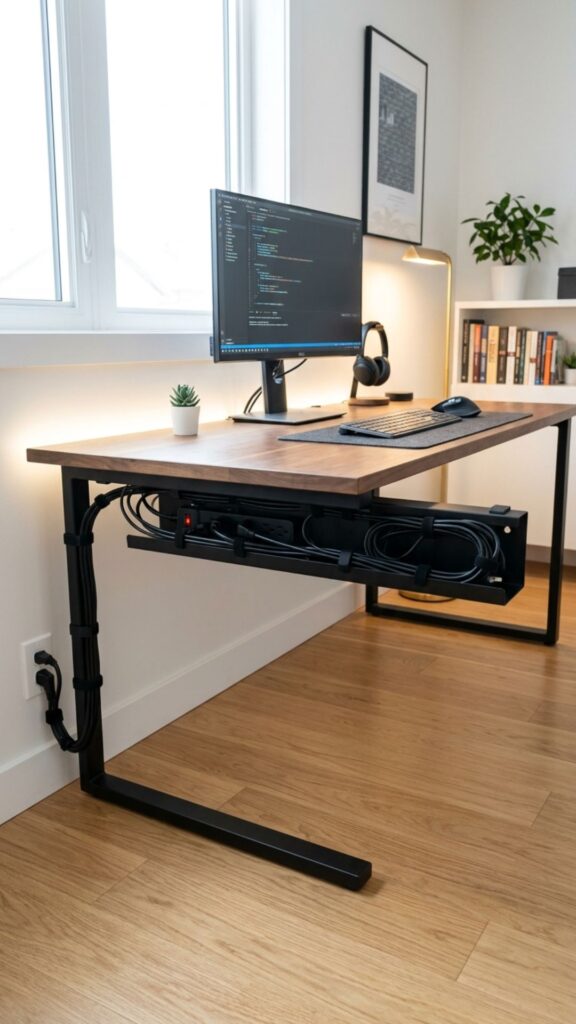
Long desks often come with one predictable problem: long cables.
Without a system, chargers and power cords can quickly create a tangled mess beneath the workstation.
Install a cable tray under the desktop to hold power strips and excess wiring.
Cable clips can guide individual cords toward laptops, monitors, lamps, and chargers.
Keeping cables off the floor makes the office look cleaner and also makes vacuuming and general maintenance easier.
18. Extend Your Desk Into Built-In Shelving
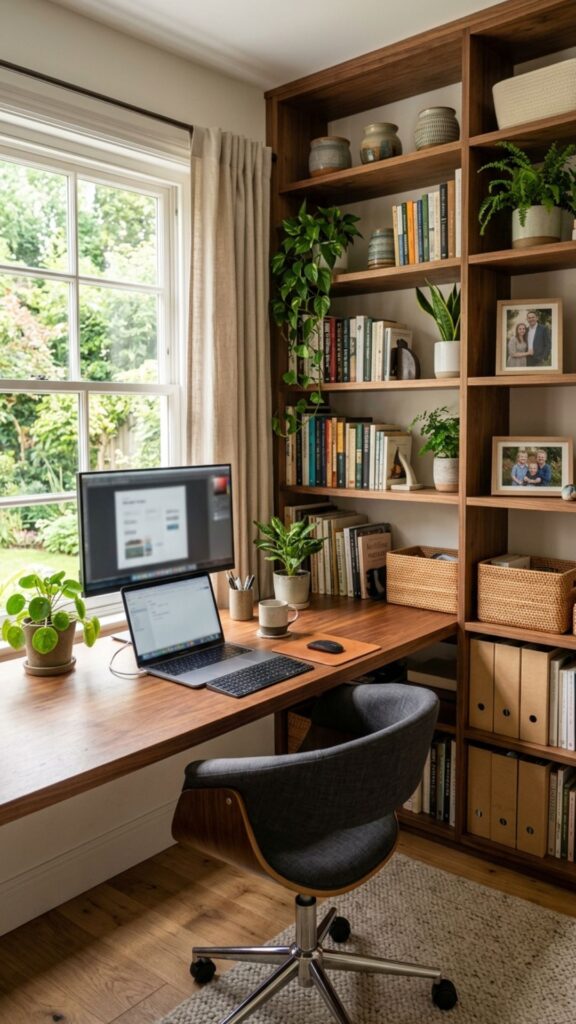
Instead of treating the desk and storage as separate pieces of furniture, combine them.
A long desktop can flow directly into built-in bookcases or cabinetry at one or both ends.
This creates a cohesive home office that looks custom-designed rather than assembled from unrelated furniture.
Use the shelves for reference books, storage boxes, plants, framed photographs, or work-related materials.
The result can be both practical and architecturally interesting.
19. Add Warm Lighting Across the Workspace
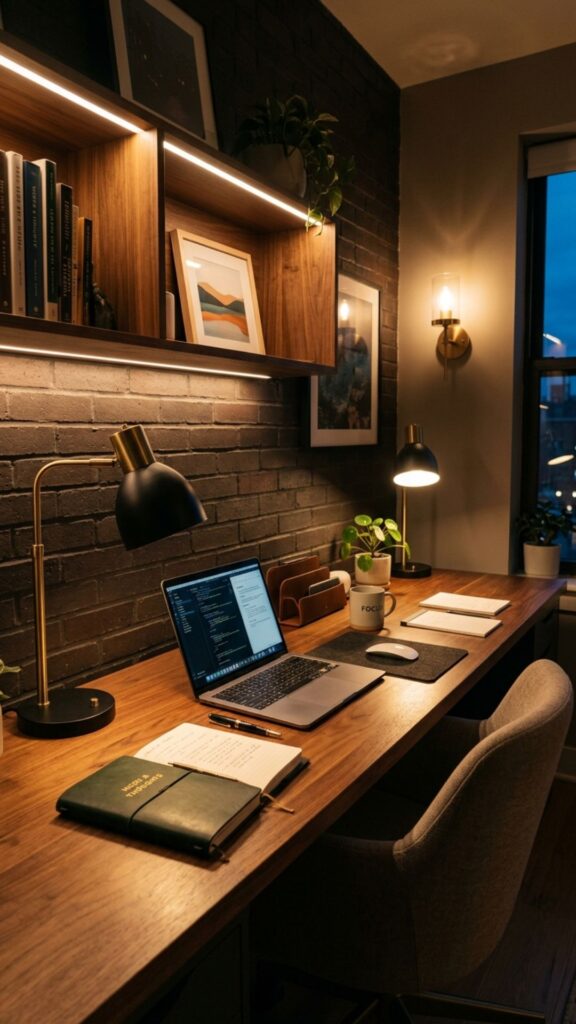
One lamp may not provide enough illumination for an extra-long desk.
Instead, layer several light sources.
A ceiling light can provide general illumination, while adjustable desk lamps or wall sconces provide targeted lighting for individual work zones.
LED lighting installed underneath shelving can also brighten the desktop without occupying surface space.
Using multiple light sources helps reduce harsh shadows and creates a more comfortable atmosphere for evening work.
20. Personalize the Long Desk Without Overcrowding It
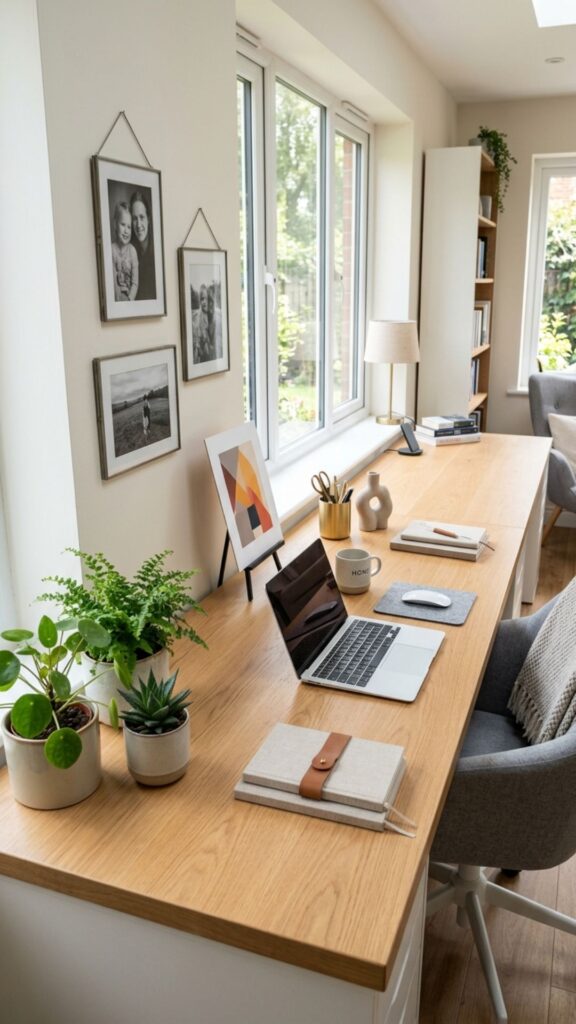
The best home offices aren’t simply functional—they’re spaces you actually enjoy spending time in.
A long desk provides plenty of opportunities for personalization, but avoid covering every available inch.
Choose a few intentional additions such as framed artwork, plants, photographs, a favorite desk lamp, or decorative storage containers.
Spread these elements across the workstation rather than grouping everything around your computer.
You’ll retain the spacious feeling that made a long desk appealing in the first place.
Tips for Making a Long Home Office Desk More Comfortable
Regardless of which layout you choose, comfort should remain a priority.
Position your monitor so you don’t have to continually tilt your head downward. Keep frequently used items within easy reach rather than stretching across the desk. Make sure your chair can slide comfortably beneath the surface and leave adequate space for your knees and legs.
Lighting matters too. Natural daylight is valuable, but dedicated task lighting can prevent your workspace from becoming dim later in the day.
Finally, don’t assume every inch of a long desk needs to contain something. Empty surface area is useful. It gives you room to open documents, brainstorm, work on larger projects, or simply enjoy a workspace that doesn’t feel crowded.
Conclusion
A larger home office isn’t always the answer to an uncomfortable workspace. Sometimes, the smarter solution is simply using the space you already have more efficiently.
A long desk can transform an unused wall, awkward alcove, bedroom corner, or open-plan living area into a highly functional workstation. It also gives you the flexibility to create multiple work zones, increase storage, accommodate two users, and keep everyday equipment from competing for the same few inches of space.
The key is to design around how you actually work. If you need storage, build upward. If your room is narrow, choose a slimmer surface. If two people share the office, divide the desk into individual zones. And if clutter is your biggest frustration, prioritize drawers, cable management, and open breathing room.
With the right layout, a long desk doesn’t simply give you more workspace—it can make your entire home office feel more organized, comfortable, and enjoyable to use.
How long should a home office desk be?
It depends on your room and work setup, but the desk should comfortably accommodate your equipment while leaving some open workspace.
Are long desks good for small home offices?
Yes. A long, narrow desk can maximize wall space while using less floor depth than bulky traditional desks.
Can two people comfortably share one long desk?
Yes. Create separate work zones for each person with individual chairs, lighting, storage, and computer equipment.
How can I keep a long desk from looking cluttered?
Use drawers, wall shelving, cable trays, monitor arms, and closed storage to keep unnecessary items off the desktop.
What should I put above a long office desk?
Consider floating shelves, cabinets, pegboards, artwork, task lighting, or a combination of storage and decorative elements.