Square footage is fixed. The list of things you need to do in it is not. If your home doesn’t have a dedicated office, the dining room is often the most practical place to absorb that function — it already has a table, decent lighting, and enough floor space to pull off a dual-purpose setup without major renovations.
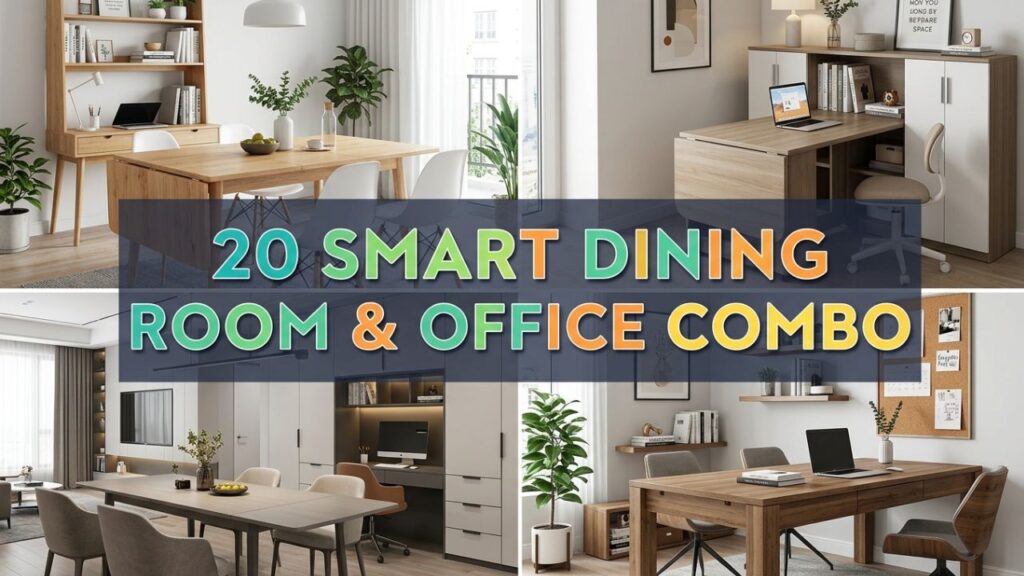
The challenge is keeping both functions working well without one swallowing the other. A cluttered desk during dinner feels stressful. A dining table buried under laptops and cables doesn’t exactly invite people to sit down and eat. Getting it right means building a layout that lets you shift cleanly between work mode and meal mode.
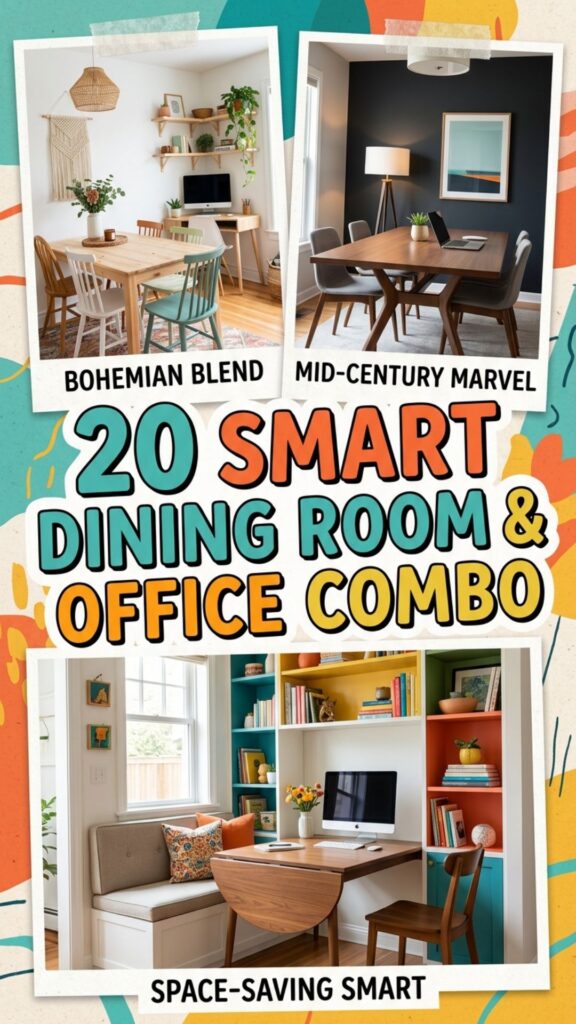
This guide gives you 20 specific, actionable ideas for a dining room and office combo that actually functions. You’ll find solutions for tight spaces, cable clutter, storage, lighting, and the psychological boundary between work and home.
1. Choose a Dining Table That Doubles as a Desk
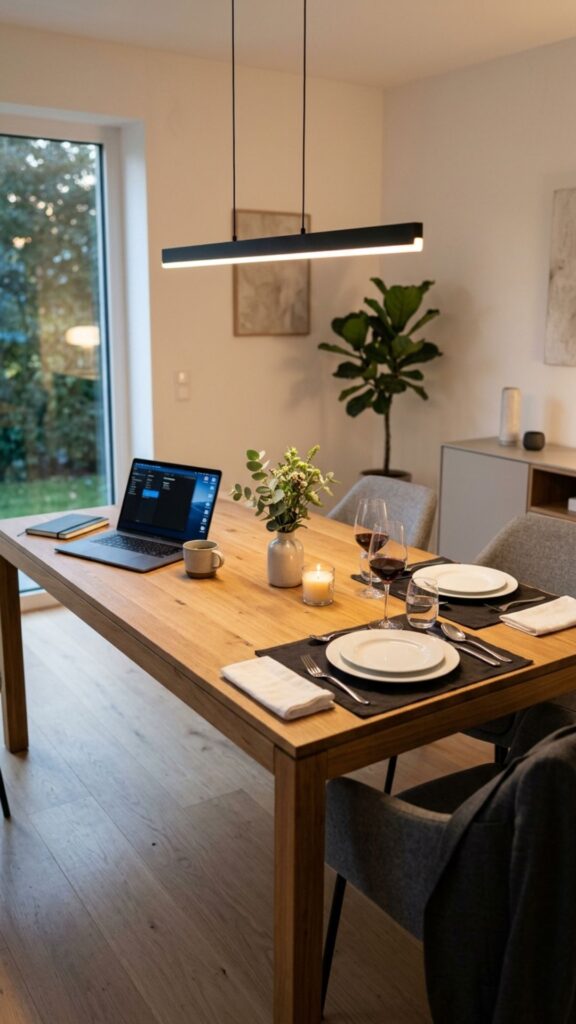
The dining table is the foundation of any dining room and office combo, so it needs to hold up to both roles without compromise. Look for a table with a clean, smooth surface — no raised edges or decorative grooves that make typing uncomfortable — and legs that allow for a proper seated working posture.
A rectangular table in the 60 to 72-inch range gives you dedicated work space on one end and keeps the other end clear for meals. Solid wood or a wood-veneer surface holds up better than glass under daily laptop use. If your space is very tight, an extendable table lets you shrink the footprint on workdays and open it up when you have guests.
2. Use a Credenza or Sideboard for Work Storage
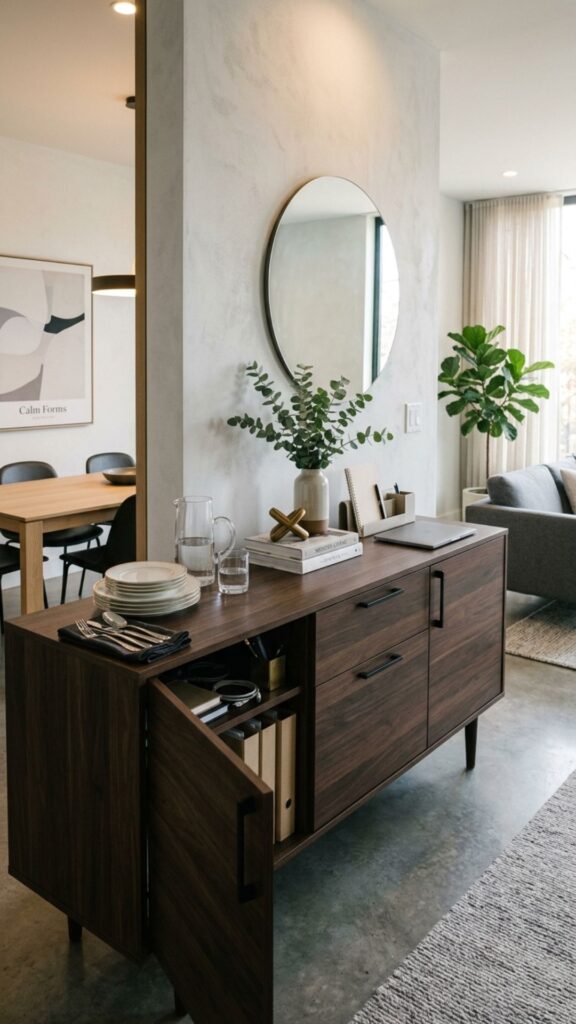
One of the biggest pain points in a dining room and office combo is having nowhere to put office supplies, files, and equipment when they’re not in use. A credenza or sideboard against the wall solves this cleanly — it’s a natural piece of dining room furniture that hides work life completely behind closed doors.
Dedicate one side of the credenza to dining essentials like napkins, serving pieces, and placemats, and the other side to office supplies, a portable filing system, and device chargers. When you sit down to eat, everything work-related disappears behind a cabinet door. This one habit does more for the room’s comfort than almost any other change.
3. Mount Floating Shelves for a Low-Profile Home Office
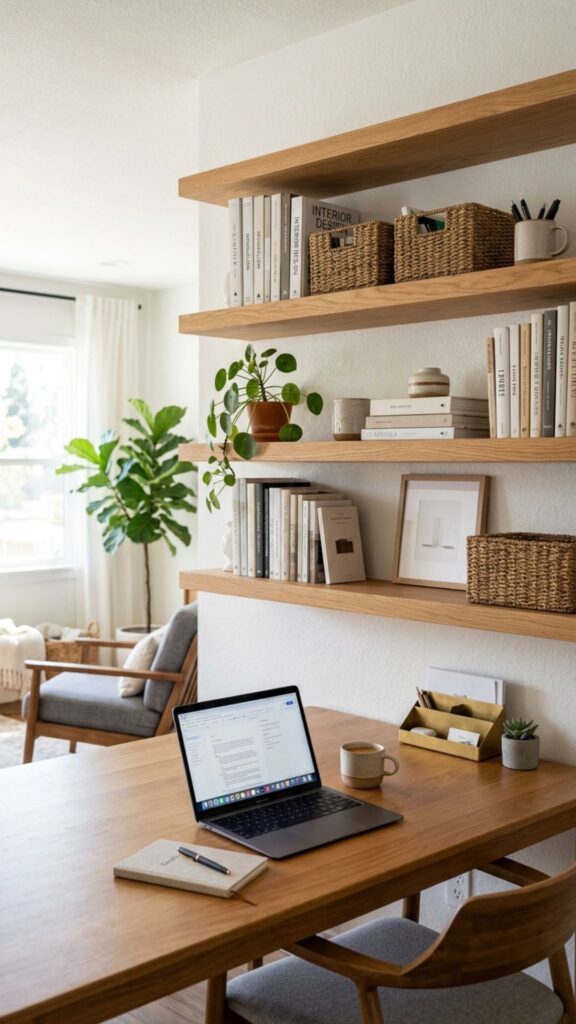
If floor space is limited, floating shelves on one wall of the dining room create vertical storage for work without consuming any square footage. A shelf at seated eye height holds a monitor riser, a few reference books, and a small plant — enough to define a working zone without turning the room into an office.
Keep the shelves styled consistently with the rest of the room. Baskets and bins in matching tones contain cables and accessories while looking intentional rather than utilitarian. A shelf that blends into the dining room’s aesthetic makes the office function feel like a considered addition rather than a workaround.
4. Define the Office Area with a Rug
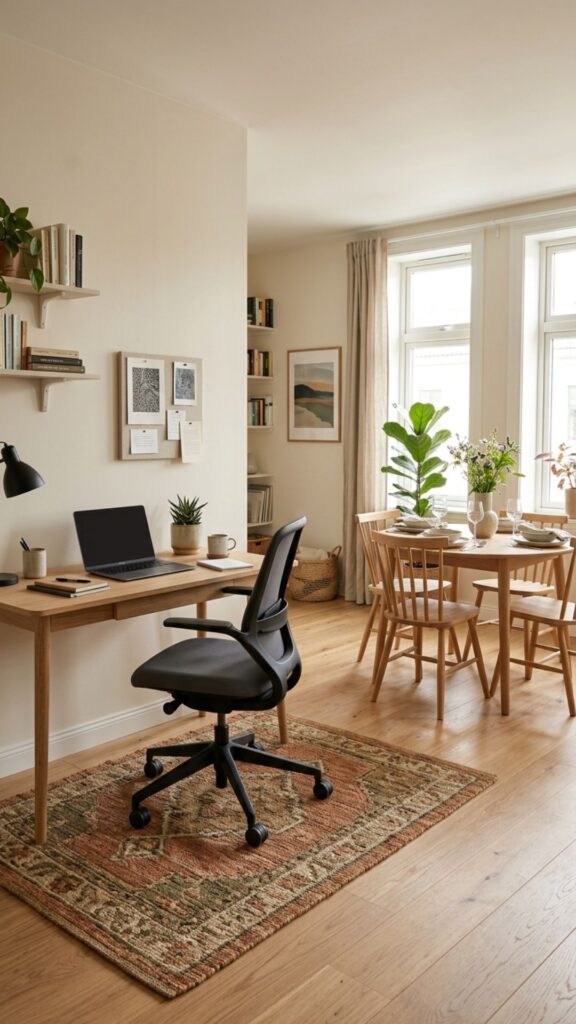
In an open-plan layout or a dining room that flows into a living space, a rug is one of the simplest tools for visually separating the office zone from the dining zone. Place a smaller rug under your work chair and let the dining area sit on a larger or different-toned rug nearby.
This visual separation matters more than it might seem. Having a defined physical zone for work helps your brain shift between modes — something that becomes genuinely important when you spend long stretches of time in the same room. The rug doesn’t need to be expensive; even a basic jute or flatweave style creates the boundary effectively.
5. Invest in a Task Chair That Fits the Room’s Style
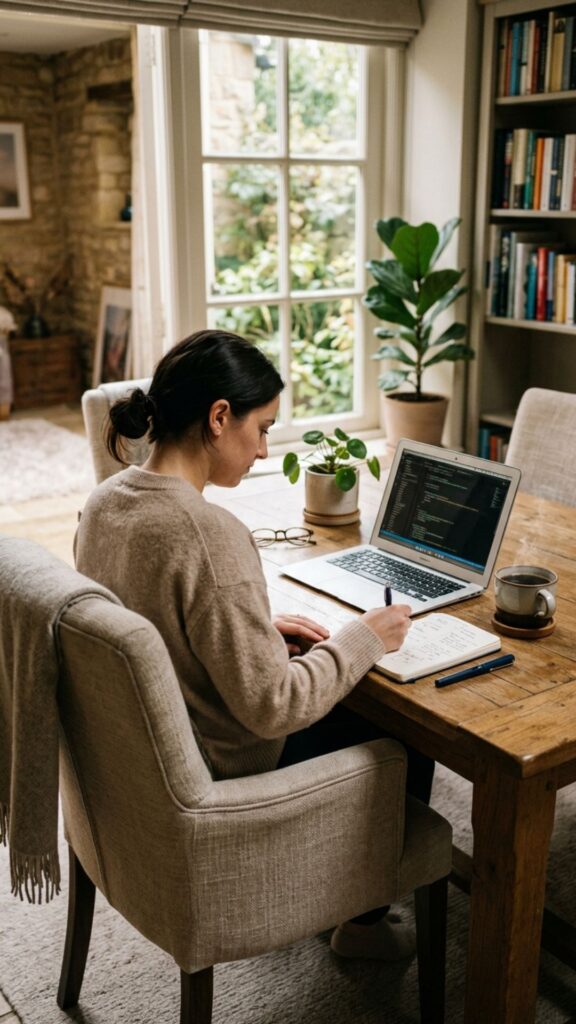
One of the most common complaints about a dining room and office combo is that the work chair looks completely out of place at the dining table. An ergonomic task chair on wheels is great for posture but tends to signal “office” loudly in a dining space.
The fix is finding a chair that satisfies both aesthetics and ergonomics. Wooden chairs with upholstered seats, sleek mid-century designs, or linen-covered chairs with back support all work well at a dining table while being comfortable enough for a full workday. If you need more lumbar support, a portable back cushion in a fabric that matches the chair is a low-cost solution.
6. Manage Cables with a Cord Box or Under-Table Tray
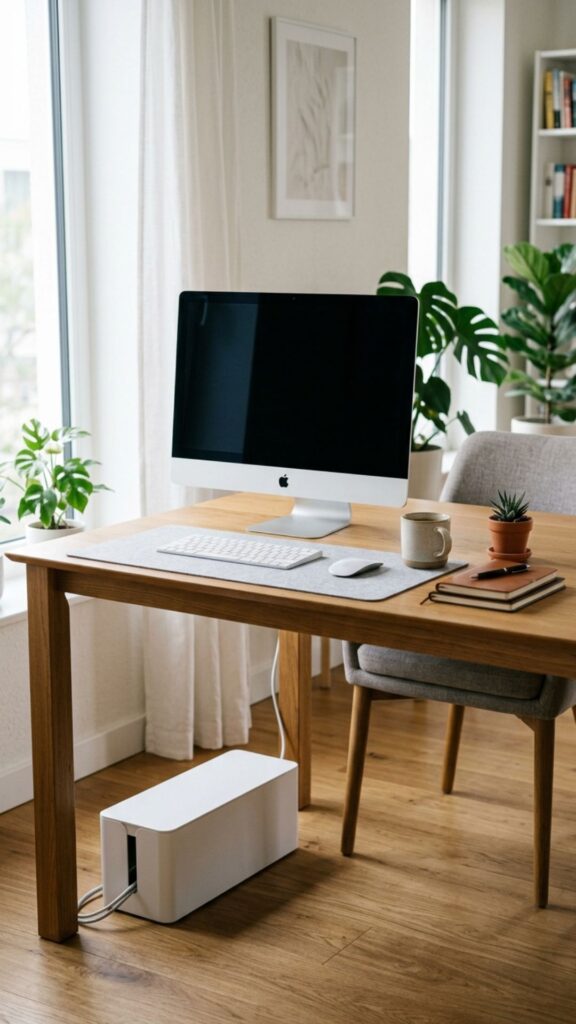
Cables are the fastest way to make a dining room and office combo look chaotic. A laptop charger, monitor cable, phone cable, and lamp cord can turn a clean dining table into something that looks like the back of a server rack within a week.
A cable management box on the floor or a mounted under-table cable tray keeps cords organized and hidden. Use Velcro cable ties rather than twist ties for anything you unplug regularly. When it’s time to eat, coiling your cables into the box and closing the lid takes about 30 seconds and entirely removes the visual association with work.
7. Add a Dedicated Pendant Light for the Work End
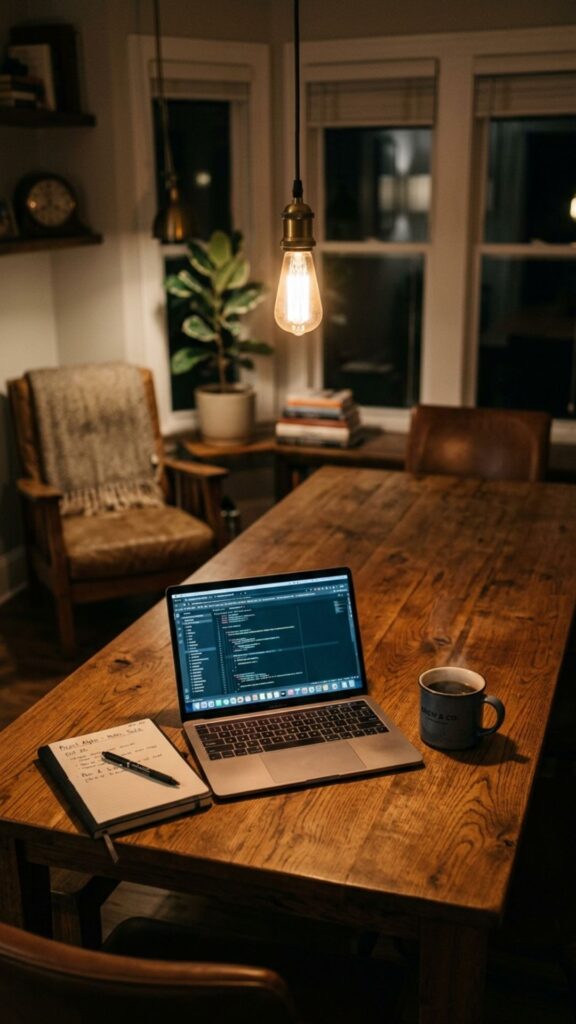
Lighting a dining room and office combo well means addressing two different needs from the same ceiling. A central pendant or chandelier centered over the dining table works beautifully for meals but often leaves the work end of a longer table in shadow.
The solution is a second directional light source: a plug-in pendant over the work area, a swing-arm wall sconce, or a solid desk lamp placed at the table’s work end. Position it so it illuminates the screen and work surface without causing glare. Having two light circuits — one warm for dining, one brighter for work — gives you the flexibility to set the right mood for either function.
8. Use a Rolling Cart for Mobile Storage
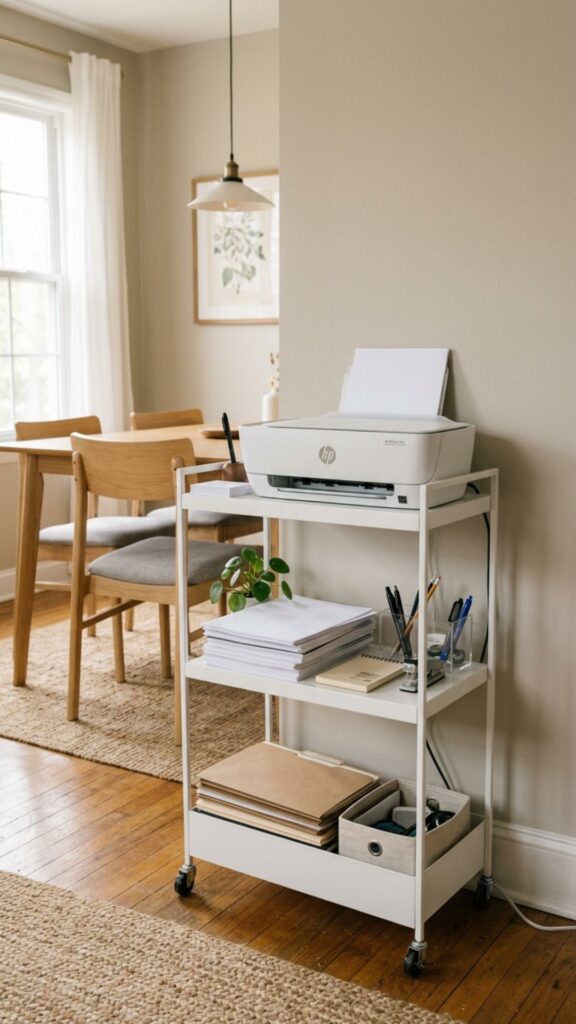
A rolling cart is an underused piece of furniture in a dining room and office combo. It holds your printer, extra paper, a filing tray, and desk accessories in a compact unit that can be wheeled into a closet, a hallway, or against a wall when you’re not working.
Choose a cart in a material that fits your room — wood-look, white metal, or rattan all translate well in a dining room context. Label each shelf so the system stays organized rather than becoming a dumping ground. The mobility is the key feature: it lets you physically remove the office infrastructure from the room during mealtimes.
9. Install a Pegboard Panel for Vertical Organization
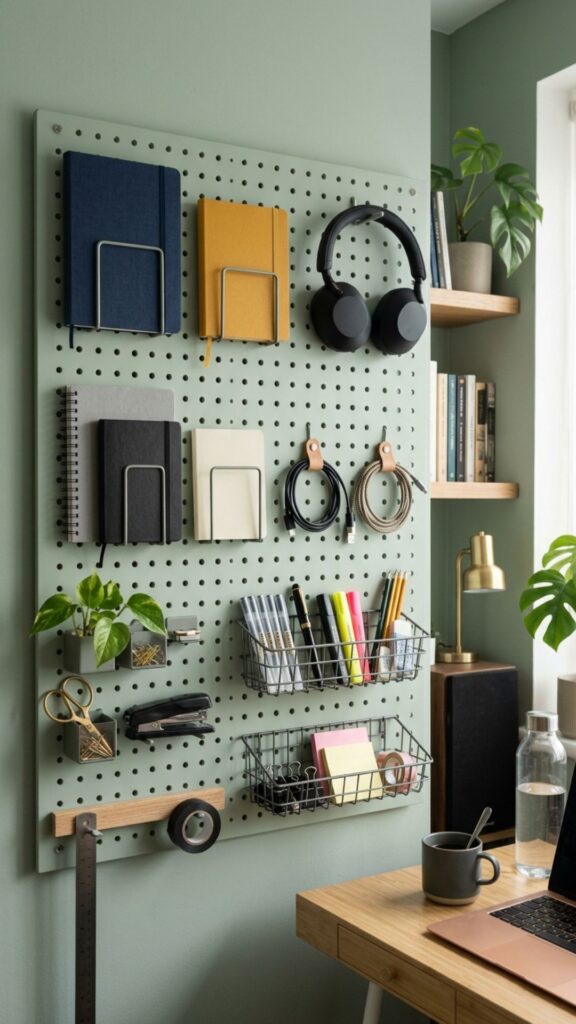
A pegboard mounted on the dining room wall near your work zone creates a customizable vertical organizer that keeps your desktop clear. Hang small shelves, hooks, and baskets to hold frequently used office supplies, headphones, notebooks, and chargers within arm’s reach.
Paint the pegboard in the same color as the wall behind it so it blends into the room rather than dominating it. This approach is especially effective in smaller dining rooms where a second piece of furniture for office storage isn’t practical. The pegboard does the storage work without taking up a single inch of floor space.
10. Choose a Fold-Down Wall Desk for Tight Spaces
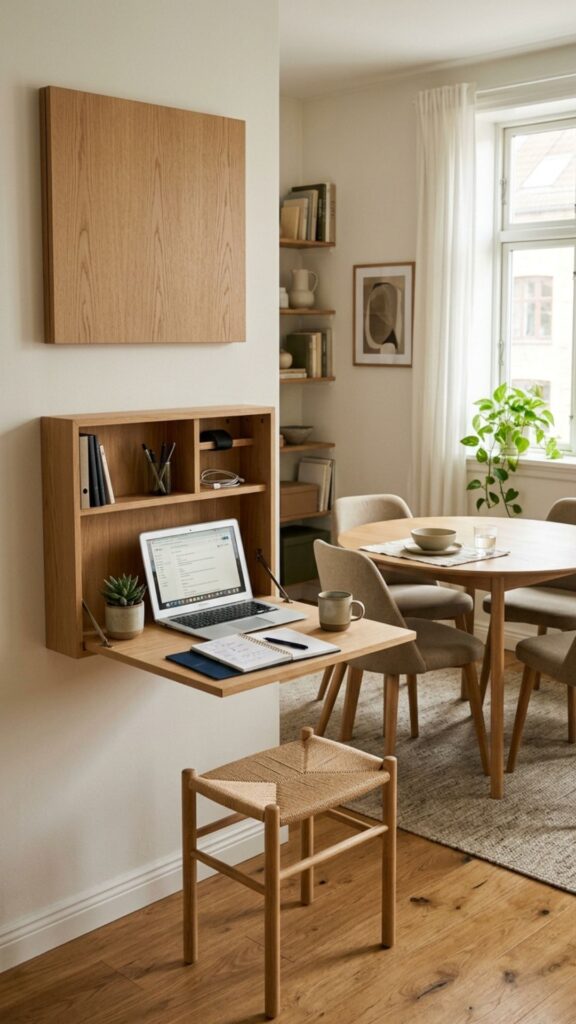
If your dining table doesn’t have enough room to serve as both a desk and a regular dining surface, a fold-down wall desk is one of the smartest additions to a dining room and office combo. Mounted to the wall, it folds flat when not in use and disappears completely.
Position it slightly away from the main dining table — on an adjacent wall or in a corner — so it functions as a true secondary work surface. This setup lets you keep the dining table clear for meals while having a dedicated work area available on demand. Small fold-down desks in wood or lacquer finishes can look deliberately decorative when closed.
11. Use Curtains or a Room Divider to Create a Visual Break
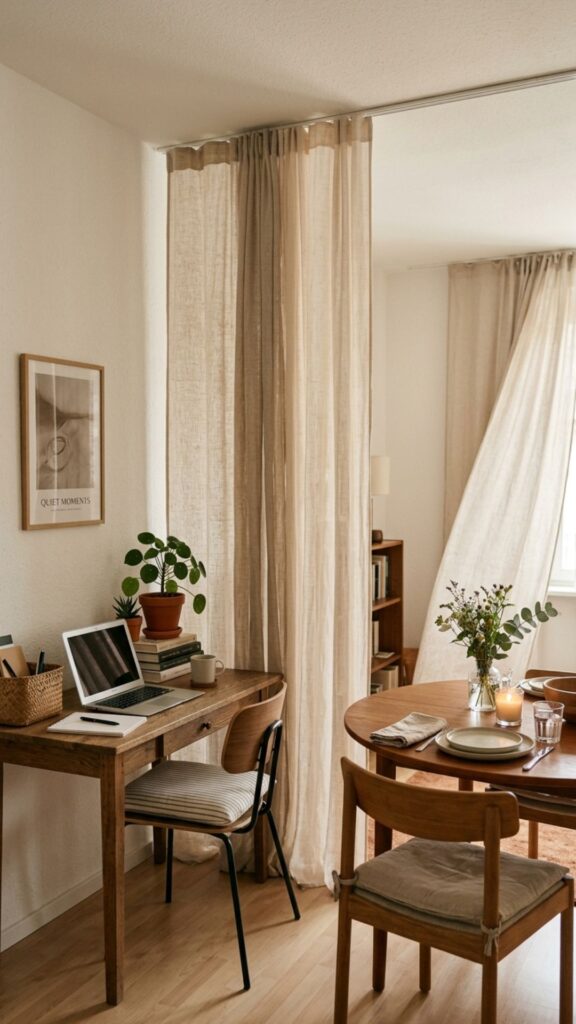
A soft divider between the dining and office areas helps both zones feel more intentional and separate. A ceiling-mounted curtain track with linen or cotton panels is inexpensive, doesn’t require any permanent installation in most cases, and creates an immediate visual boundary.
A decorative folding screen works similarly and adds texture and pattern to the room. Use a divider only when you need the separation — during focused work or during meals — and fold or draw it back the rest of the time. This flexible approach works especially well in open-plan spaces where the dining room sits within a larger area.
12. Go Wireless Wherever Possible
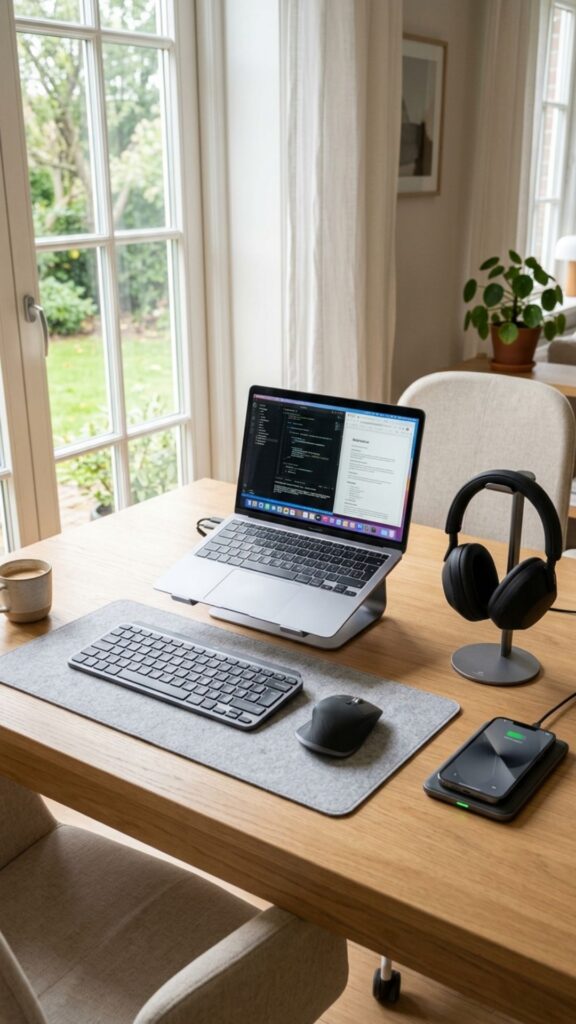
Every cable you eliminate from a dining room and office combo reduces visual clutter and makes the transition between work and dining faster. A wireless keyboard and mouse, a laptop with Bluetooth headphones, a wireless printer stored in the credenza, and a charging pad instead of a cable all contribute to a cleaner daily setup.
The upfront cost of going wireless is offset almost immediately by how much faster and easier it becomes to clear the table for meals. Fewer cables mean fewer decisions about what to tuck away, wrap up, or disconnect. Simplifying the technology setup is one of the more overlooked productivity and design improvements available in a shared-function room.
13. Add a Narrow Bookcase as a Room Anchor
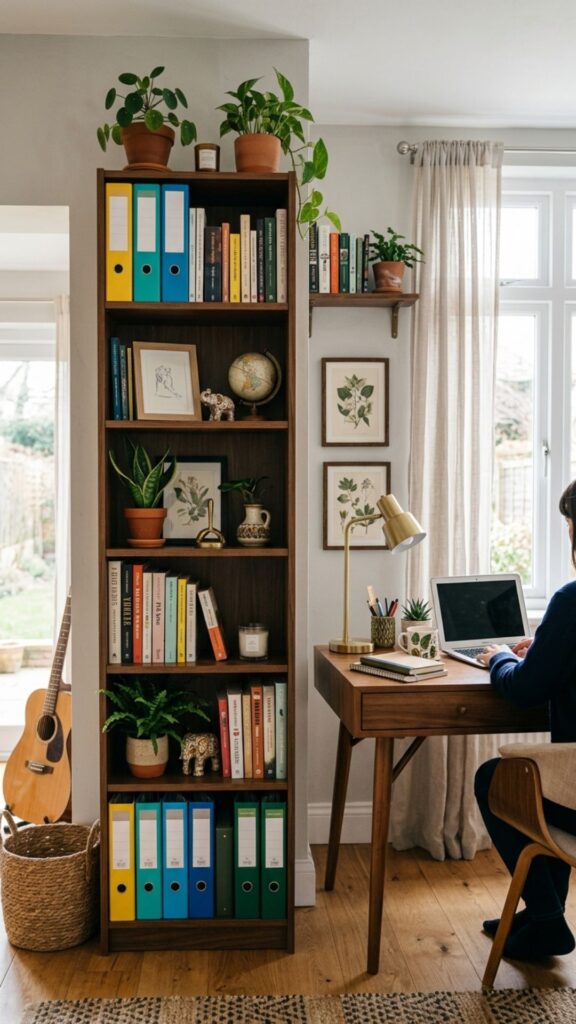
A narrow, floor-to-ceiling bookcase placed at the edge of the office zone anchors the work area visually without blocking light or sightlines. It provides storage for reference materials, binders, and books, and the upper shelves can be styled with plants and decorative objects to soften the utilitarian function.
Keep the bottom two shelves for practical office use and the top shelf or two for purely decorative items. This gradual shift from functional to decorative creates a visual transition between the office zone and the dining area. A bookcase in a wood tone that matches the dining table ties both functions together without forcing them to look identical.
14. Maximize Natural Light With Strategic Furniture Placement
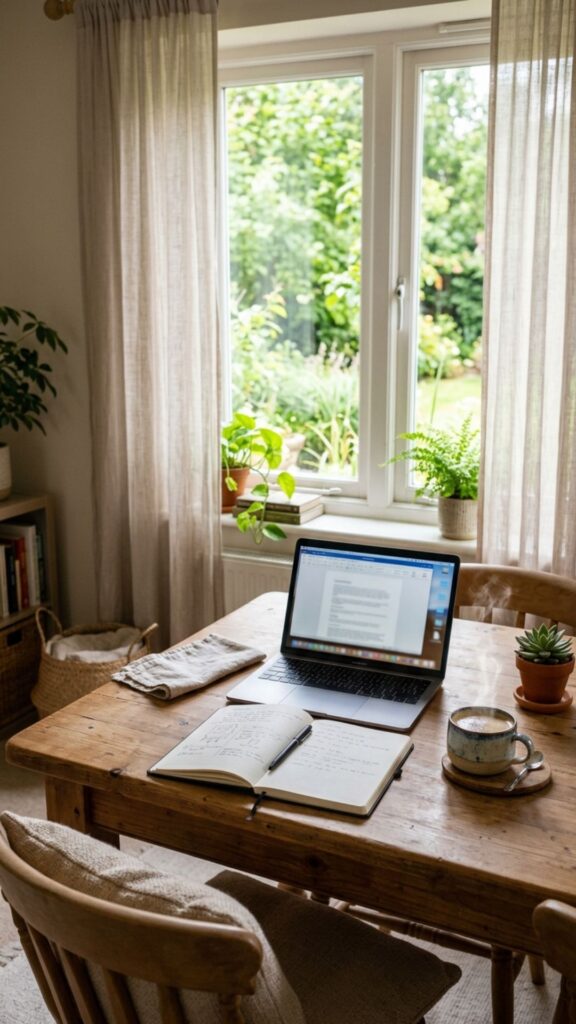
Natural light improves focus, reduces eye strain during screen time, and makes a dining room feel open and inviting at meals. In a dining room and office combo, positioning the work end of your table near a window — ideally to the side rather than directly facing it, to avoid screen glare — makes the work zone feel like a considered space rather than an overflow area.
Use sheer curtains or adjustable blinds that let you control light levels without fully blocking the window. During video calls, a window to your side creates flattering, natural fill light that a lamp behind a screen can’t replicate. Good natural light is a practical asset in a home office, not just an aesthetic one.
15. Create an End-of-Day Reset Ritual
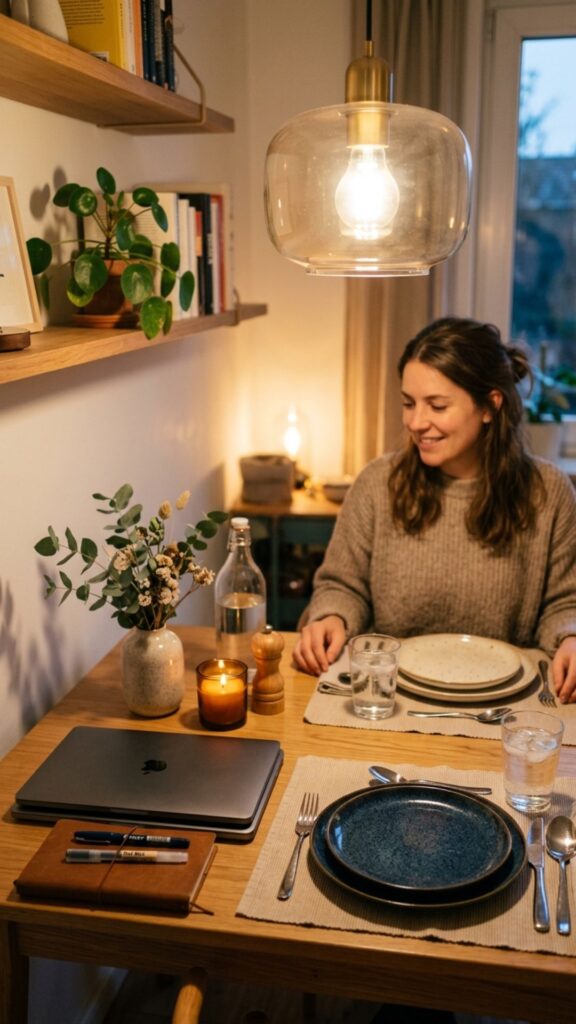
One of the most important ideas in a dining room and office combo isn’t about furniture at all — it’s about behavior. Without a physical door to close, you need a deliberate ritual that signals the workday is over and the room is shifting function.
Close your laptop, store it in the credenza or a dedicated bag, put office supplies away, and set the table for dinner or clear it completely. This three-minute habit creates a mental transition that a door would otherwise provide automatically. It also ensures that the room is genuinely welcoming for meals rather than carrying the residual stress of an unfinished work session.
16. Build a Command Center Into One Wall
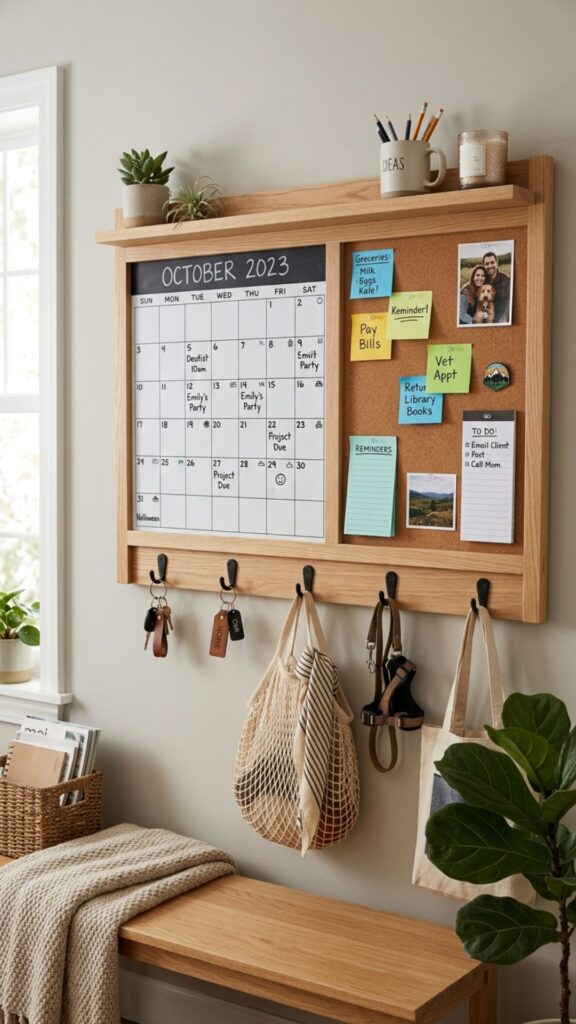
A wall-mounted command center — a combination of a small corkboard, a calendar, a few hooks, and a shallow shelf — concentrates your administrative work life into one contained zone of the dining room wall. Bills, notes, keys, chargers, and to-do lists have a designated home rather than spreading across the dining table.
Frame the command center in a way that looks intentional: a framed corkboard, a chalkboard panel in a decorative frame, or a grid of magnetic boards in matching frames. When it’s organized and visually contained, it reads as a feature rather than clutter. This approach particularly suits families who use the dining room as a household hub as well as a workspace.
17. Use a Monitor Arm to Reclaim Desk Space
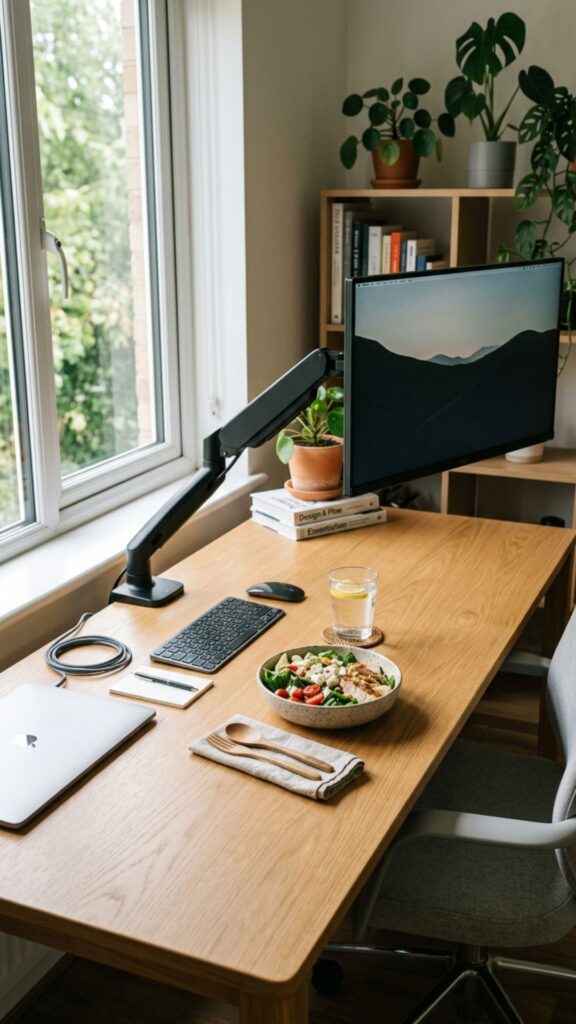
A monitor stand or monitor arm mounted to the edge of the dining table holds a screen at the correct eye height for work and folds flat or swings to one side when it’s not needed. It frees up the table surface that a static monitor base would permanently occupy.
This is one of the highest-return purchases available in a dining room and office combo. The table immediately feels larger, more flexible, and easier to clear for meals. Choose an arm with a clamp mount rather than a grommet mount to avoid permanently altering the table. Most clamp-mounted arms can be adjusted or removed in minutes.
18. Keep Décor Minimal and Consistent Across Both Zones
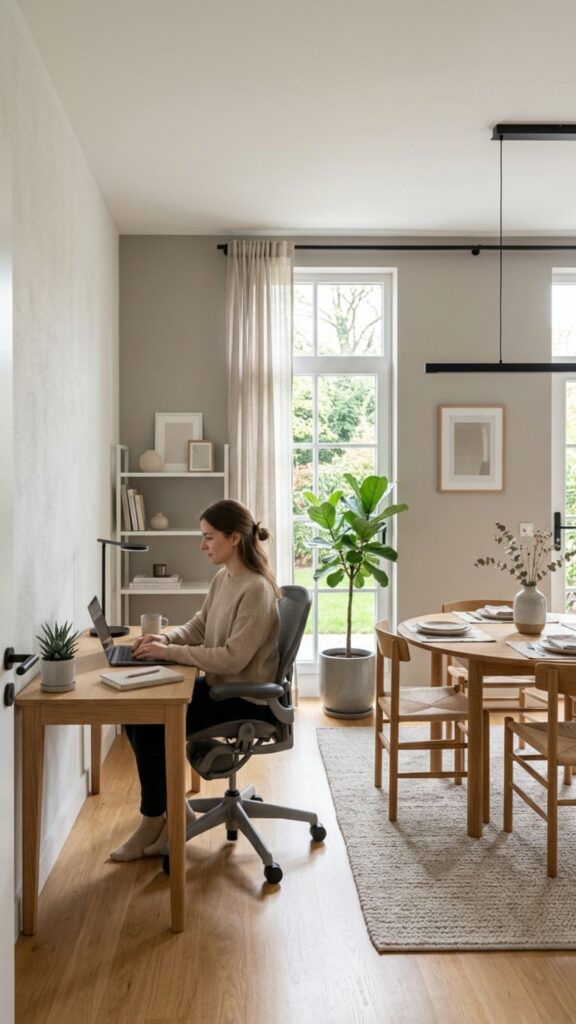
A dining room and office combo works best visually when both areas share the same color palette, materials, and decorative language. Mismatched zones — a warmly styled dining area next to a chaotic desk covered in office supplies — create cognitive dissonance that makes the room feel unsettled.
Choose two or three colors and carry them across both zones. Use the same metal finish on the lamp base, the pendant light, and any desk accessories. Keep decorative objects to a minimum in both areas. When the room has a single, coherent aesthetic, the dual function becomes an interesting detail rather than an obvious workaround.
19. Try a Murphy Bed–Style Fold-Away Desk Wall Unit
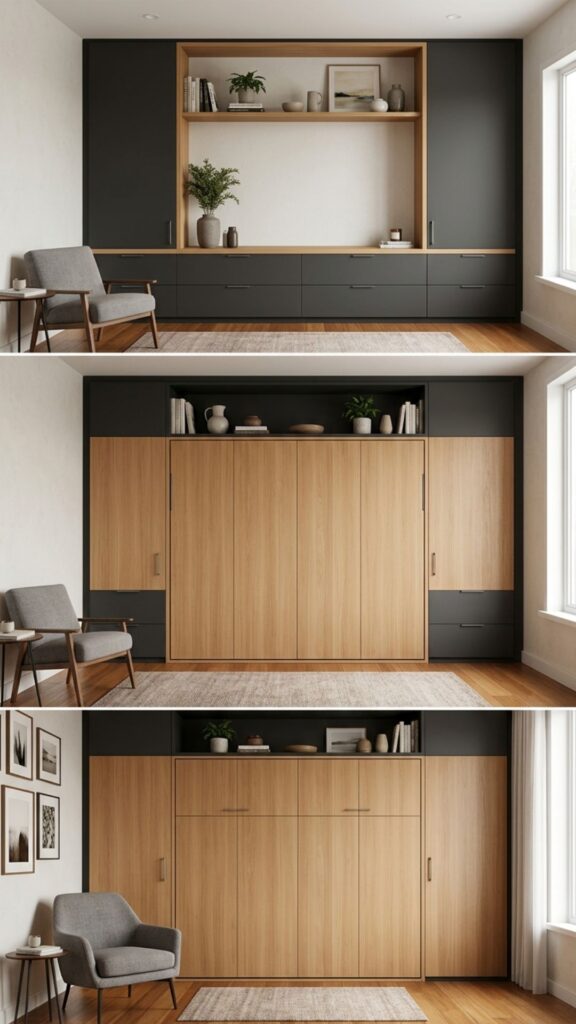
In very small homes where every piece of furniture must be fully multi-functional, a wall unit that combines storage, a fold-away desk, and shelving eliminates the need for a dedicated piece of office furniture entirely. The desk folds up and the unit reads as a built-in storage wall.
These units are available in a wide range of finishes, from lacquered white to warm wood, and can be styled to look like a dining room feature rather than a piece of office furniture. When the desk is closed, the dining room looks completely unaffected. This approach requires the most upfront investment but delivers the cleanest dual-function result.
20. Label and Organize Storage So It Actually Gets Used
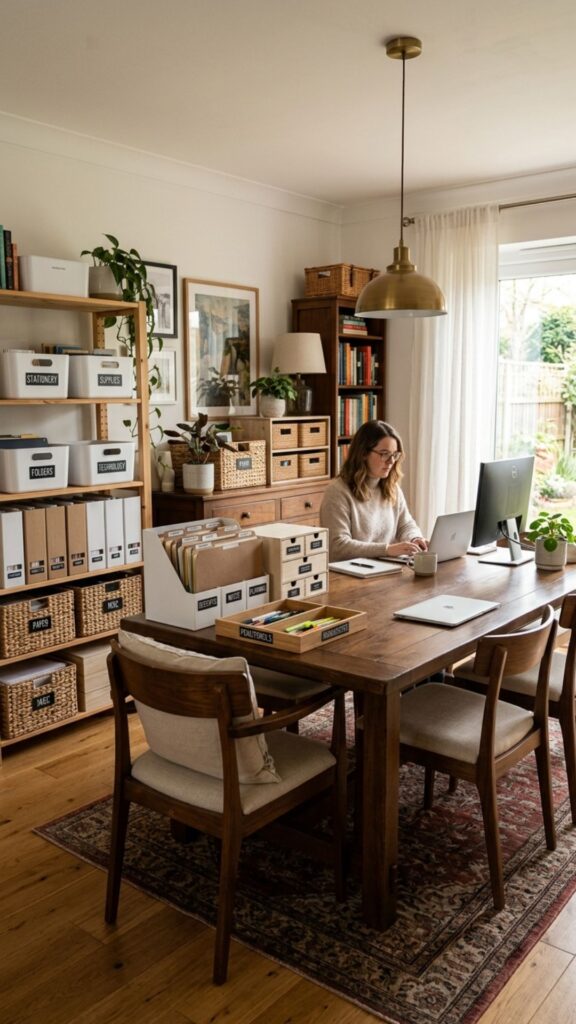
The best storage system in a dining room and office combo is the one you use consistently. Unlabeled bins, overstuffed drawers, and baskets with no defined purpose all degrade into clutter within a few weeks of being set up.
Label everything — bins, drawers, baskets, and folders — so that putting things away is as fast and automatic as taking them out. Keep like items together: all charging cables in one pouch, all stationery in one drawer, all mail in one tray. A ten-minute weekly reset to return items to their labeled homes keeps the system working without requiring a full reorganization every month.
How to Set Up a Dining Room and Office Combo That Works
A dining room and office combo works best when you choose furniture that serves both functions without compromise, designate specific storage for each role, manage cables proactively, and build a daily habit of clearing the work setup before meals. The goal is a room that shifts cleanly between work mode and dining mode rather than permanently looking like either one.
Conclusion
A dining room and office combo is one of the most practical solutions available to anyone living in a small home — but it only works when it’s set up intentionally. The 20 ideas in this guide give you a clear path forward, whether your biggest challenge is cable clutter, limited storage, poor lighting, or the psychological difficulty of switching off at the end of the day.
You don’t need to implement everything at once. Pick the one idea that solves your most immediate pain point — better storage, a dedicated work light, or a weekly reset habit — and start there. Small, deliberate changes compound into a room that genuinely supports both work and life.
Can a dining room really work as a home office?
Yes. A dining room and office combo works well when the table is sized and styled for both functions, office supplies are stored out of sight during meals, and lighting supports both work tasks and dining ambience. The key is building systems that allow you to shift between functions quickly and completely.
How do I keep my dining room from looking like an office?
Store all work equipment — laptop, cables, papers, and accessories — in a closed credenza, sideboard, or rolling cart at the end of each workday. Keep the color palette and décor consistent across both zones, and limit desk accessories on the table surface to what you actively use each day.
What’s the best desk setup at a dining table?
A laptop on a riser, a wireless keyboard and mouse, a monitor arm if you use an external screen, and a task light to one side is the most effective setup. It gives you a proper ergonomic working position, keeps the table surface clear, and can be collapsed and stored in minutes when the workday ends.
How do I handle video calls in a dining room?
Position yourself so a window is to your side for natural fill lighting. Keep the dining room background tidy — a styled credenza or a simple wall makes a better backdrop than a cluttered table edge. A good USB microphone or headset improves audio quality regardless of the room’s acoustics.
What furniture is essential for a dining room and office combo?
The three most important pieces are a dining table large enough to have a dedicated work end, a sideboard or credenza for closed storage, and a chair that’s both comfortable for long work sessions and visually appropriate for a dining room. Everything else — lighting, shelving, storage carts — builds out from those three foundations.