An L shape desk can completely change the way a home office looks and functions. Instead of squeezing your laptop, notebooks, coffee mug, and office supplies onto one crowded surface, an L-shaped setup gives you two connected work zones without taking over the entire room.
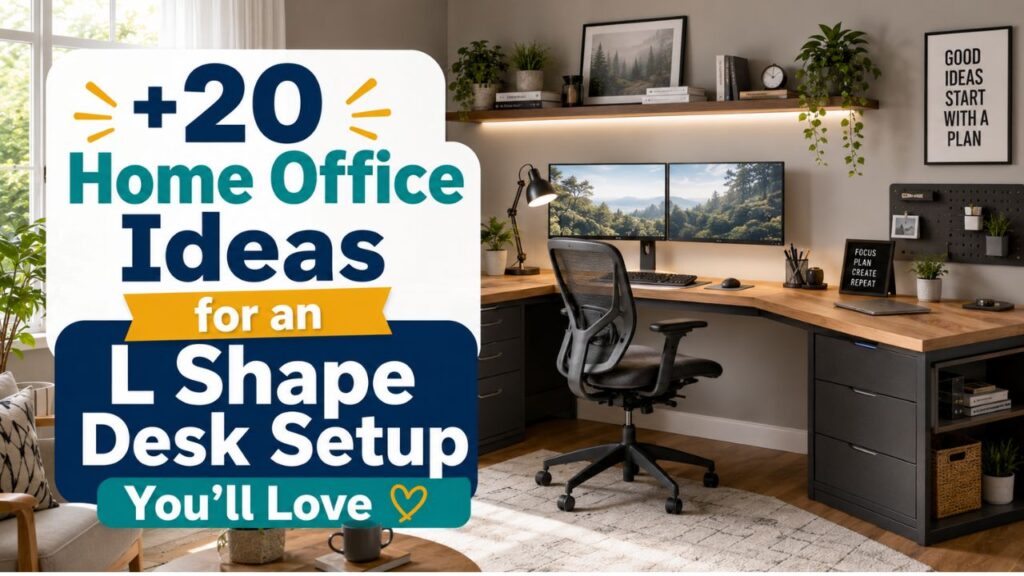
The best part? You can make an L shape desk work almost anywhere—from a dedicated office and spacious spare bedroom to a compact apartment corner. One side can handle focused computer work while the other becomes a space for writing, planning, creative projects, or storage.
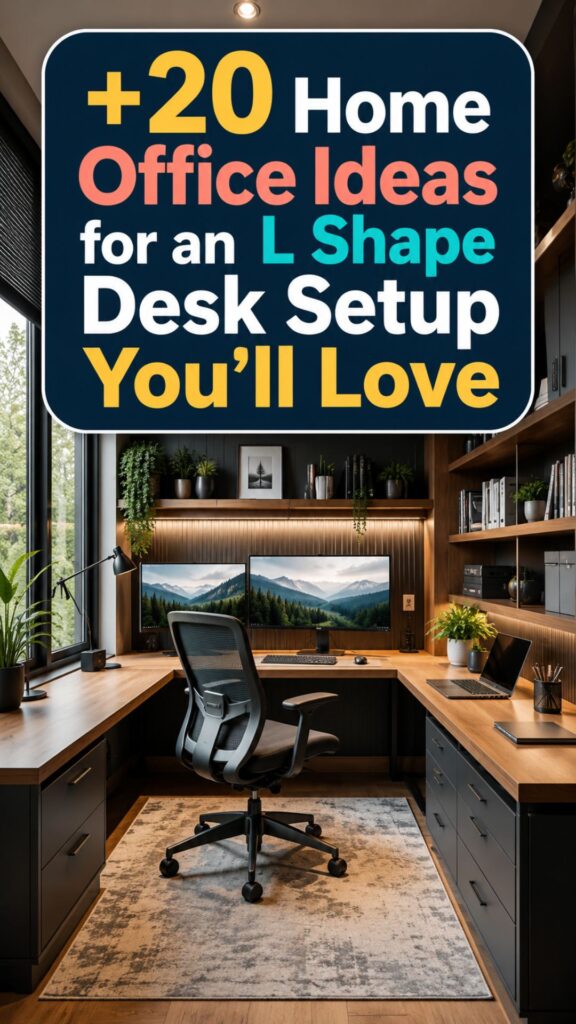
But simply placing an L-shaped desk against two walls isn’t enough to create a workspace you’ll actually enjoy using. Thoughtful lighting, storage, colors, accessories, and furniture placement can turn a basic desk into a comfortable and inspiring home office.
If you’re ready to upgrade your workspace, these 20 home office ideas for an L shape desk setup will help you create a space that’s organized, stylish, and designed around the way you work.
1. Create Two Separate Work Zones
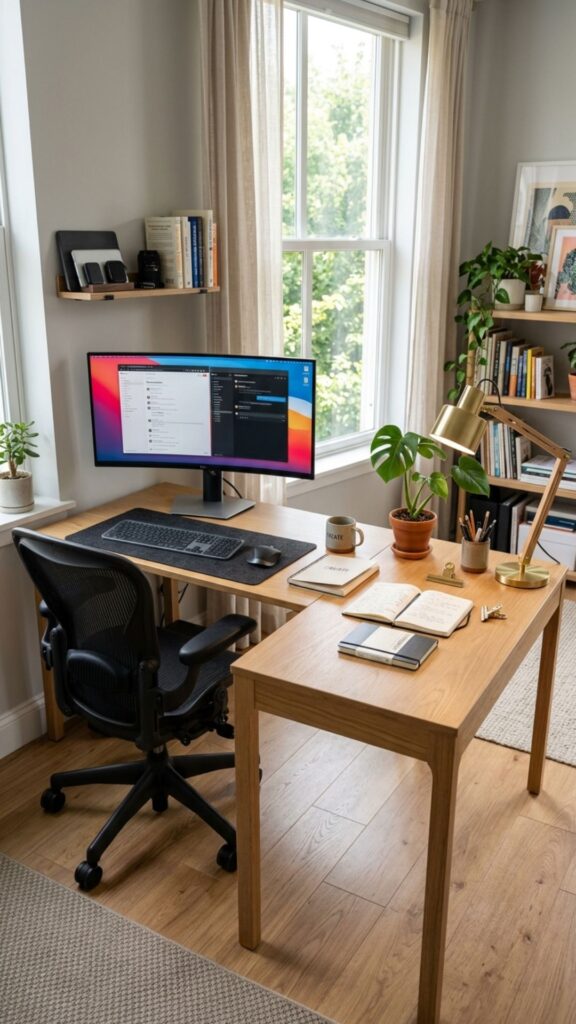
One of the biggest advantages of an L shape desk is the ability to divide your workspace into two distinct areas.
Use the main section for your computer, keyboard, and everyday tasks. Then dedicate the second side to paperwork, journaling, sketching, or planning.
Creating clear zones makes your desk feel less cluttered and can help you switch between tasks without constantly rearranging your workspace.
2. Place Your Desk in a Bright Corner
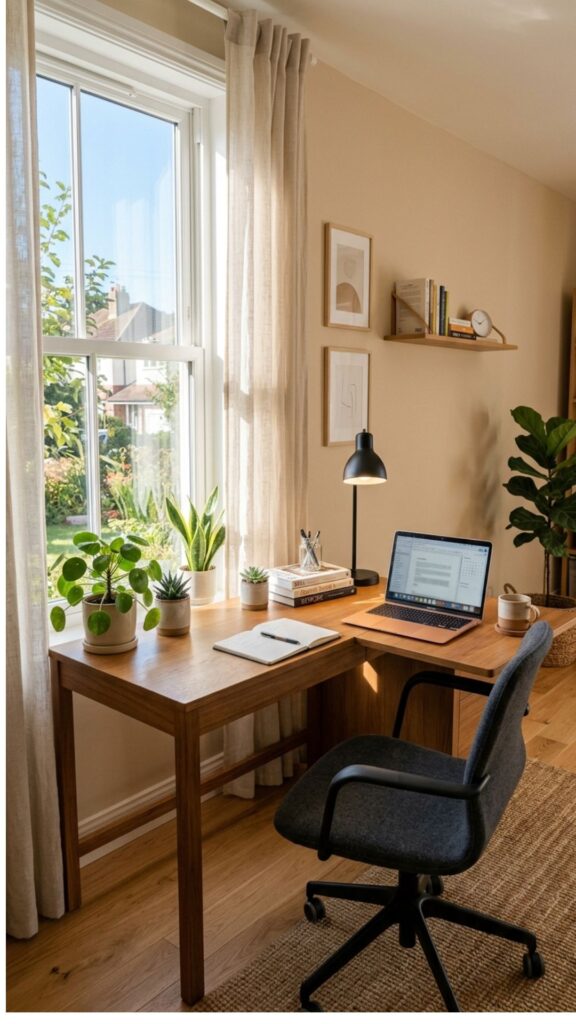
Corners are naturally suited to L-shaped desks, so take advantage of one near a window.
Natural light can make your home office feel larger, brighter, and more inviting. Position your desk so the window is beside you rather than directly behind your monitor to reduce screen glare.
Add lightweight curtains or blinds so you can control the brightness throughout the day.
3. Try a Minimalist L Shape Desk Setup
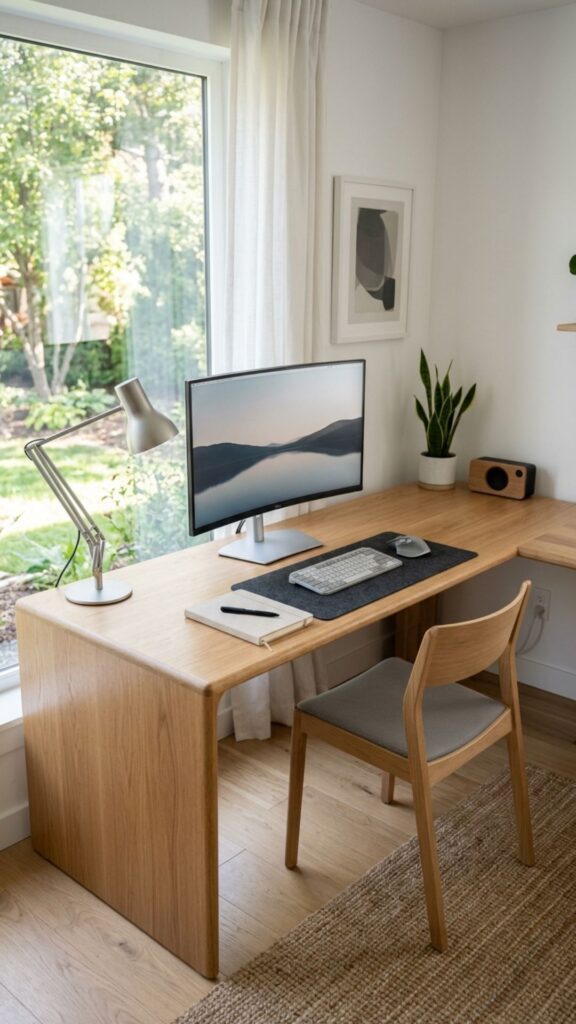
If visual clutter distracts you, keep your office intentionally simple.
Choose a desk with clean lines and limit accessories to the essentials—a monitor, keyboard, lamp, notebook, and perhaps one decorative object.
Hide charging cables and rarely used supplies inside drawers or storage boxes.
A minimalist setup allows the generous surface area of an L-shaped desk to feel spacious rather than crowded.
4. Add Floating Shelves Above the Desk
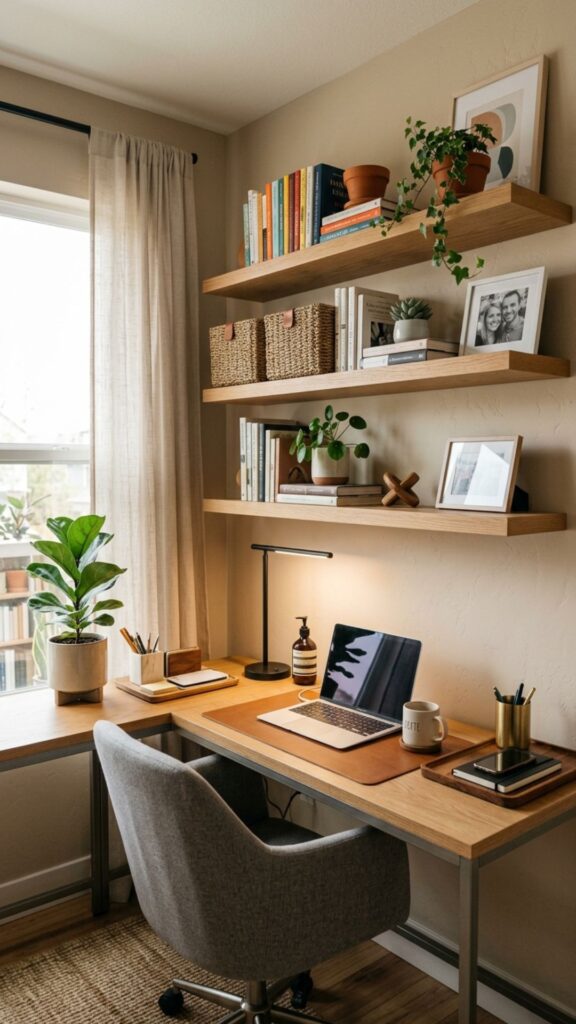
Don’t overlook the wall space above your workstation.
Floating shelves provide convenient storage without using valuable desk space. Use them for books, baskets, framed photos, small plants, or decorative pieces.
For a polished look, leave some open space between objects instead of filling every inch of shelving.
5. Build a Dual-Monitor Workstation
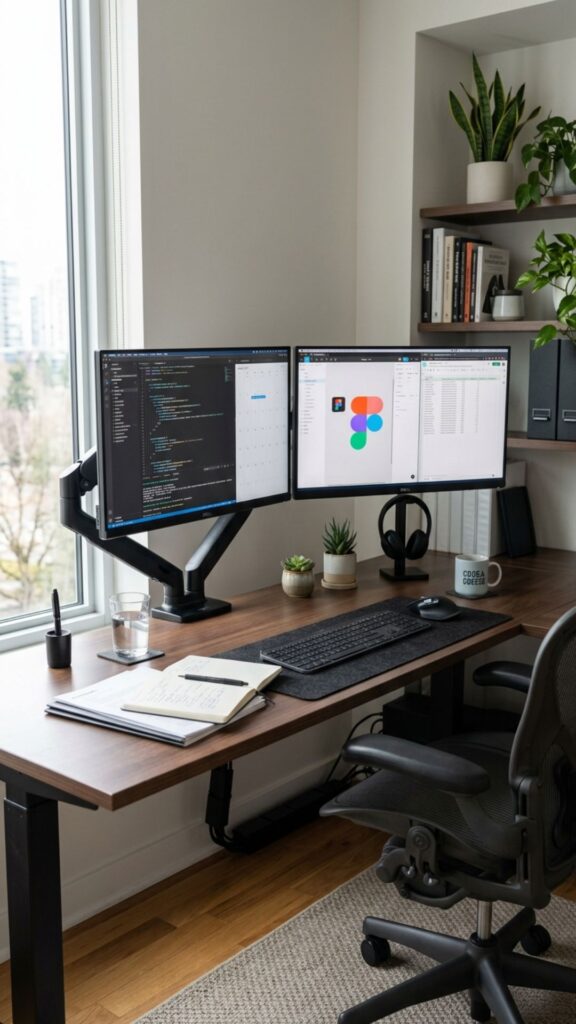
An L shape desk is ideal for anyone who works with multiple screens.
Place your primary monitor directly in front of your chair and position the second screen at a slight angle. A monitor arm can free up additional desk space and make screen positioning easier.
Keep the second side of your desk relatively open so you still have room for non-digital tasks.
6. Add a Cozy Desk Chair
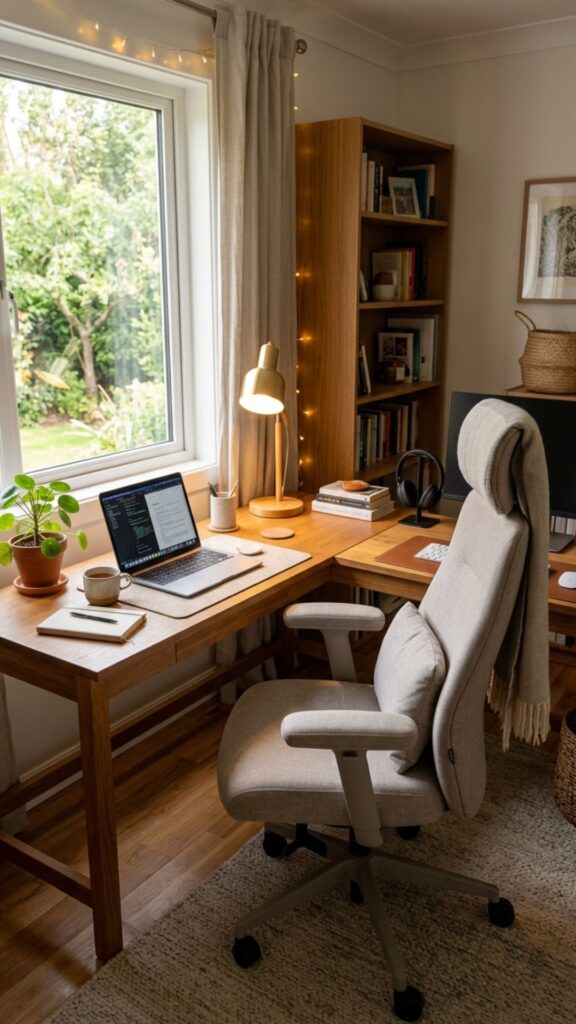
Your desk may set the layout, but your chair determines how comfortable the office feels.
Choose an ergonomic chair with proper back support and enough adjustability for your desk height. If aesthetics matter just as much as comfort, look for an upholstered or neutral-toned ergonomic design that complements your office.
A beautiful workspace won’t feel inviting for long if your chair is uncomfortable.
7. Use One Side as a Creative Station
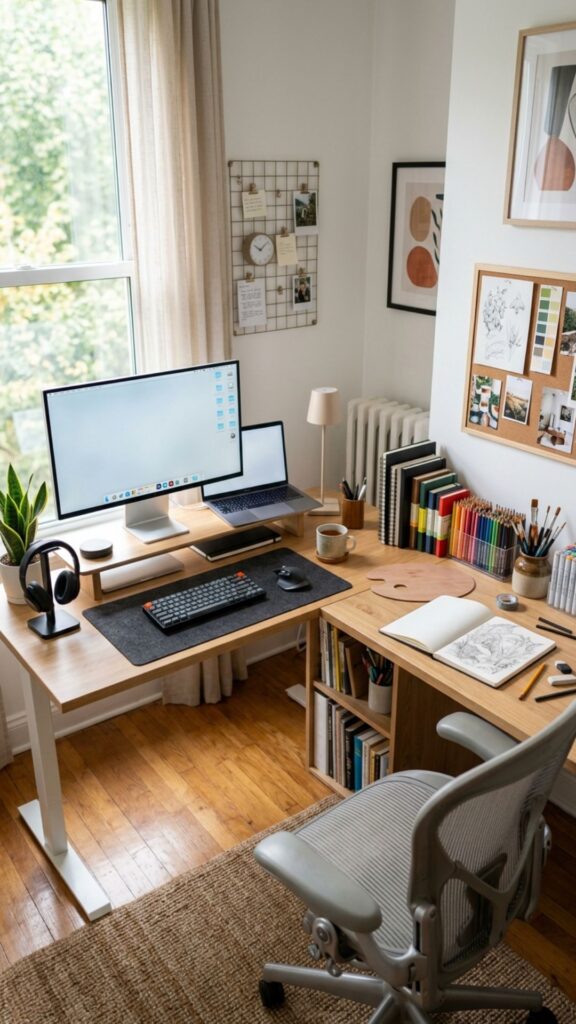
Not every inch of your desk needs to revolve around your computer.
Turn the second section into a creative zone for drawing, crafting, writing, photography, or brainstorming.
Store frequently used materials nearby so you can move from digital work to hands-on projects easily.
This arrangement is particularly useful for designers, artists, content creators, and anyone whose work involves multiple activities.
8. Bring in Warm Wood Tones
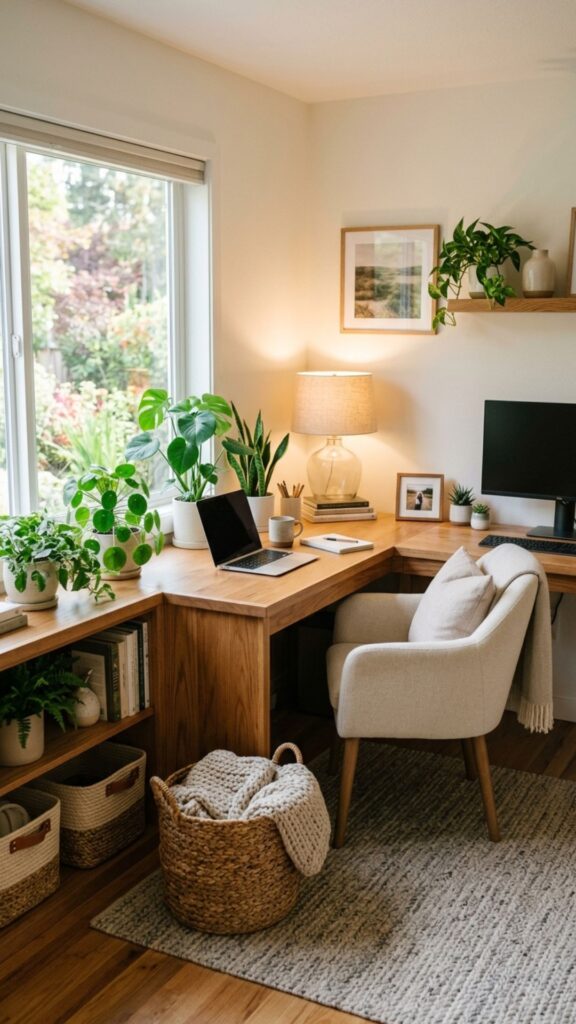
Wood can instantly soften the sometimes corporate appearance of an office.
A natural wood or wood-look L shape desk pairs beautifully with white walls, black accents, neutral rugs, and greenery.
For an especially warm atmosphere, combine the desk with woven baskets, a textured chair, and soft lighting.
The result feels more like an intentionally designed room and less like a workplace cubicle.
9. Make Cable Management Part of the Design
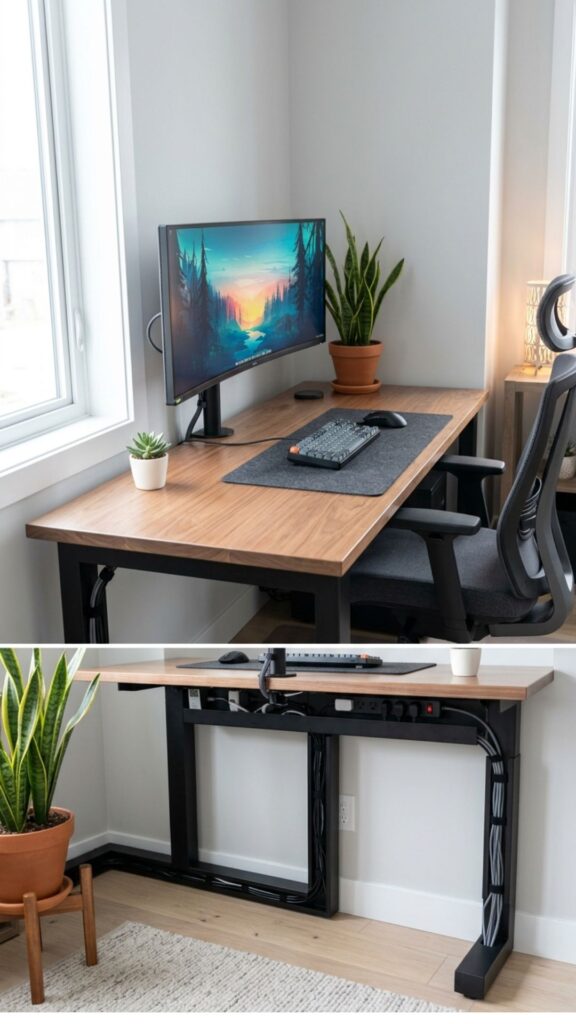
A beautiful desk can quickly look messy when cords are hanging everywhere.
Use cable trays beneath the desk, clips along the edges, and reusable ties to group cords together. Mounting a power strip underneath the desktop can also keep plugs and adapters out of sight.
Cable management is a small detail that can make your entire L-shaped setup look significantly more polished.
10. Add a Statement Desk Lamp
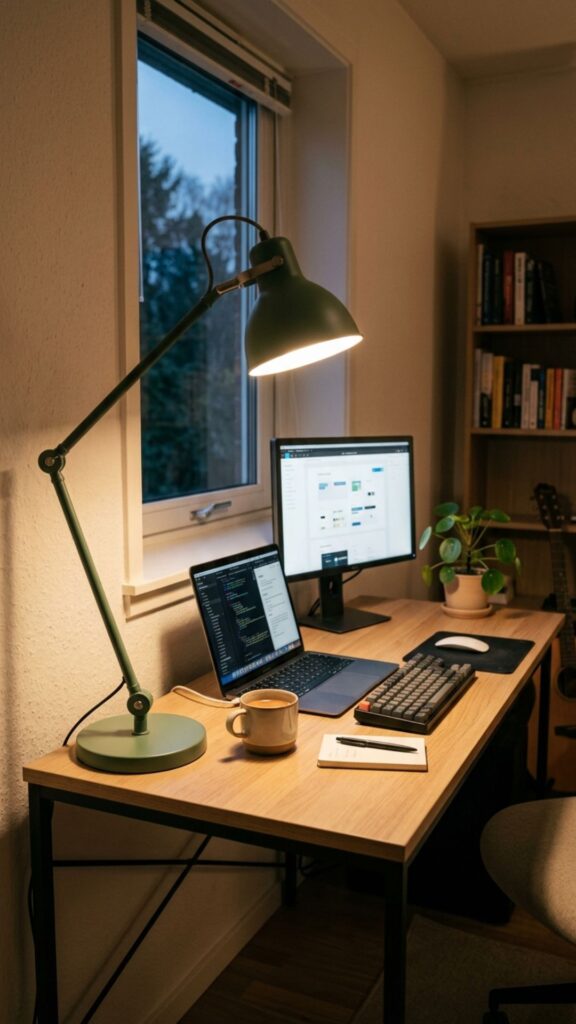
Lighting can serve both a practical and decorative purpose.
Place a stylish desk lamp on the less crowded side of your L-shaped desk. Adjustable lamps are especially useful because you can direct the light toward paperwork or creative projects when needed.
Consider warm lighting for a comfortable atmosphere, especially if you often work during the evening.
11. Decorate With Indoor Plants
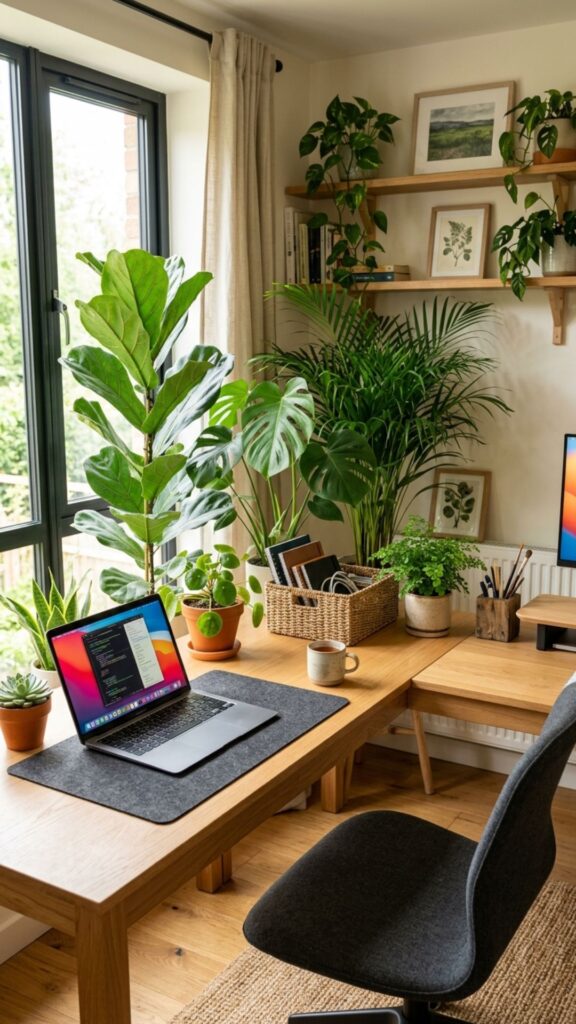
Plants are an easy way to bring color and life into a home office.
Place a small plant on your desk and larger varieties beside the workstation. If your office doesn’t receive much natural light, choose low-maintenance plants that tolerate indoor conditions well.
You can also use realistic faux greenery if caring for plants isn’t your thing.
Even one or two leafy accents can make a workspace feel more welcoming.
12. Design a Black and White Office
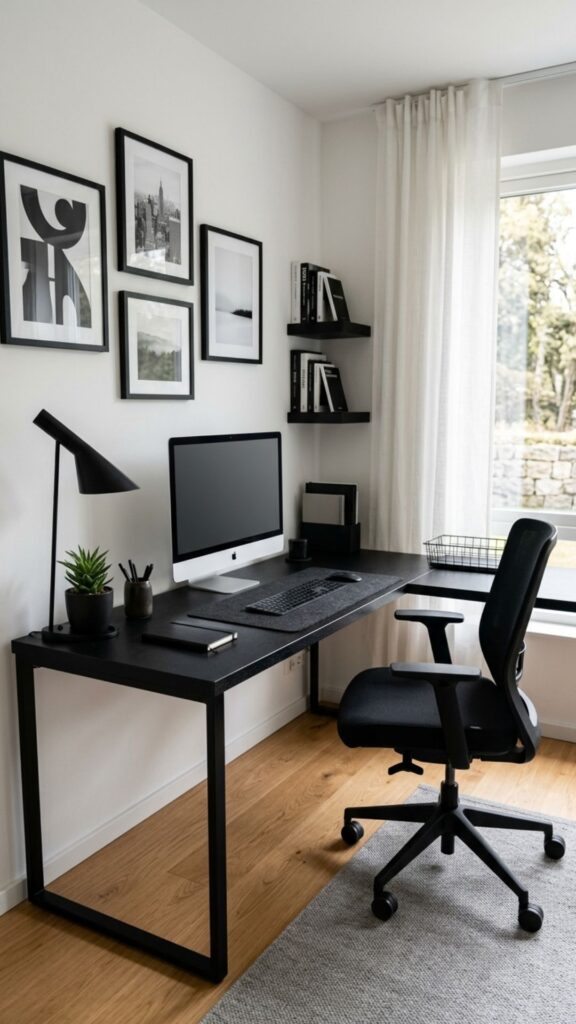
For a timeless home office, build your L shape desk setup around a simple black-and-white palette.
Try a white desk with black monitors, lighting, organizers, and picture frames. Or reverse the look with a dark desk against crisp white walls.
Introduce wood, greenery, or beige textiles if you want to keep the room from feeling too stark.
13. Use the Shorter Side for Storage
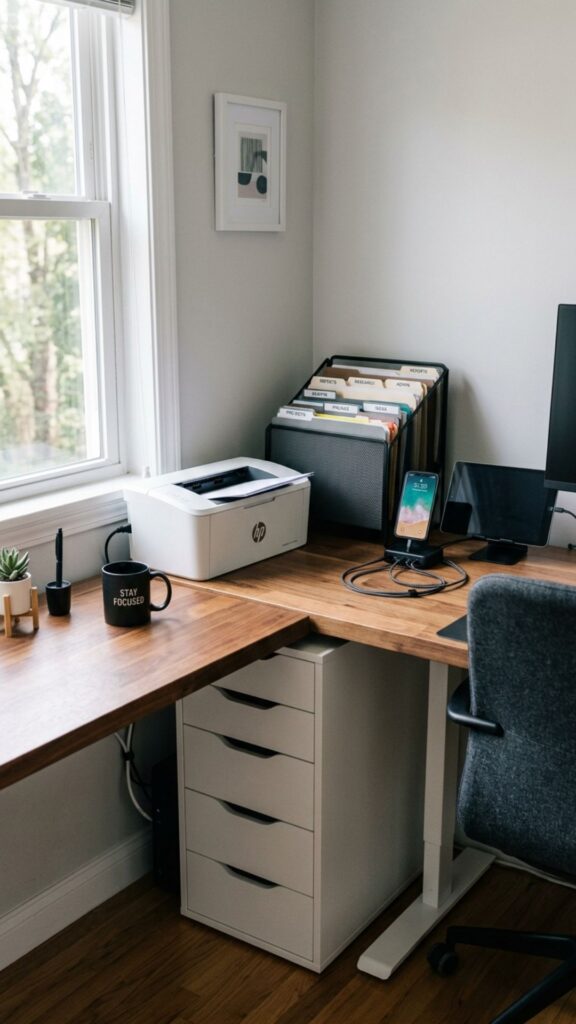
If your L shape desk has one shorter section, turn it into an organization zone.
Add a desktop file holder, printer, drawer unit, charging station, or supply organizer.
Keeping these items away from your primary work area prevents them from competing with your keyboard, monitor, and everyday essentials.
You’ll still have everything within reach without making the main desktop feel crowded.
14. Add a Large Area Rug
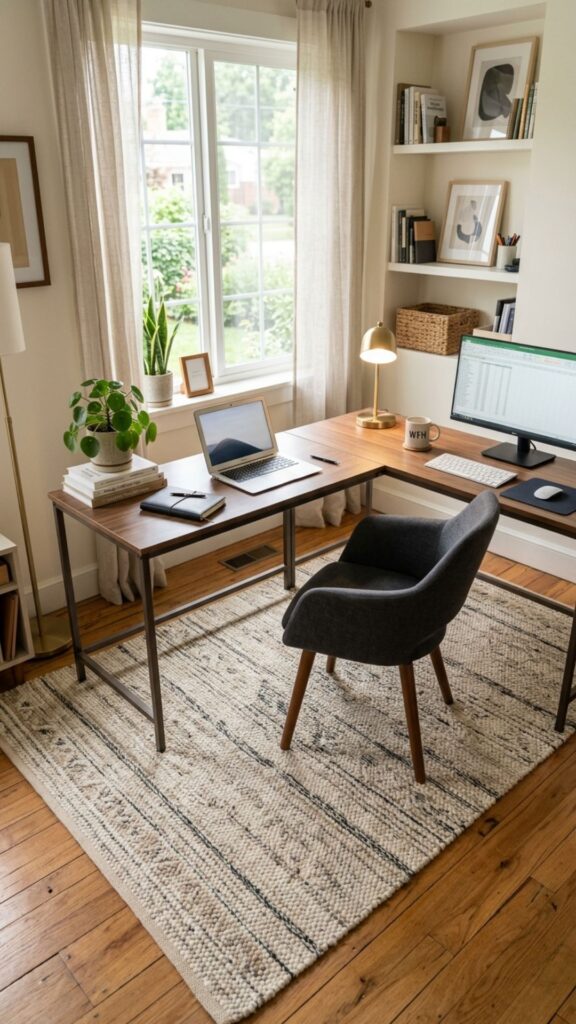
An area rug can visually define your office, particularly when your workspace shares a room with another function.
Choose a rug large enough to extend underneath your desk and chair. This creates a clear boundary around the workspace while adding softness and texture.
Low-pile rugs are generally easier for rolling office chairs to move across.
15. Create a Moody Home Office
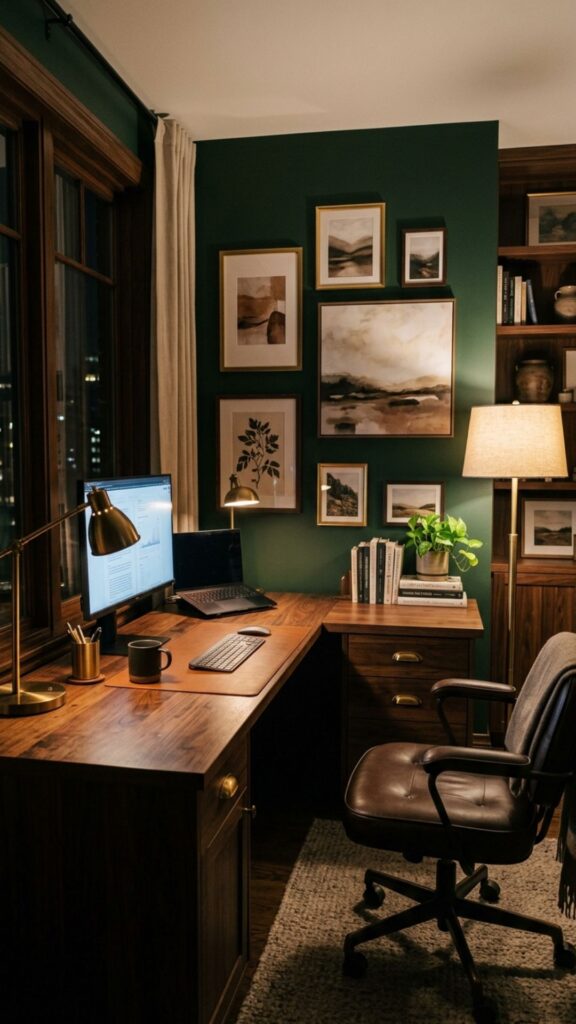
If bright white offices aren’t your style, embrace deeper colors.
Charcoal, forest green, navy, or rich brown walls can create a sophisticated backdrop for an L-shaped desk.
Pair darker walls with warm wood, brass accents, artwork, and layered lighting so the space feels cozy rather than gloomy.
A moody office can be especially appealing in rooms with plenty of natural light.
16. Build a Small L Shape Desk Setup
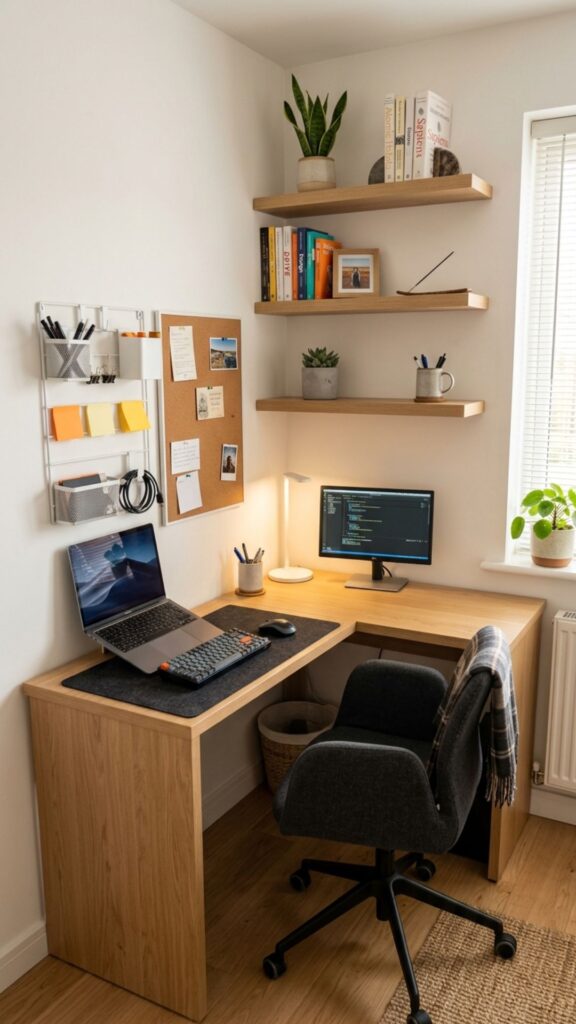
You don’t need a huge room to enjoy an L-shaped workstation.
Compact corner desks can maximize areas that would otherwise go unused. Keep the furniture proportionate to the room and use vertical storage instead of bulky floor cabinets.
Wall-mounted organizers, shelves, and pegboards can provide additional storage while maintaining precious floor space.
In a small home office, every square inch matters.
17. Add a Pegboard Organization Wall
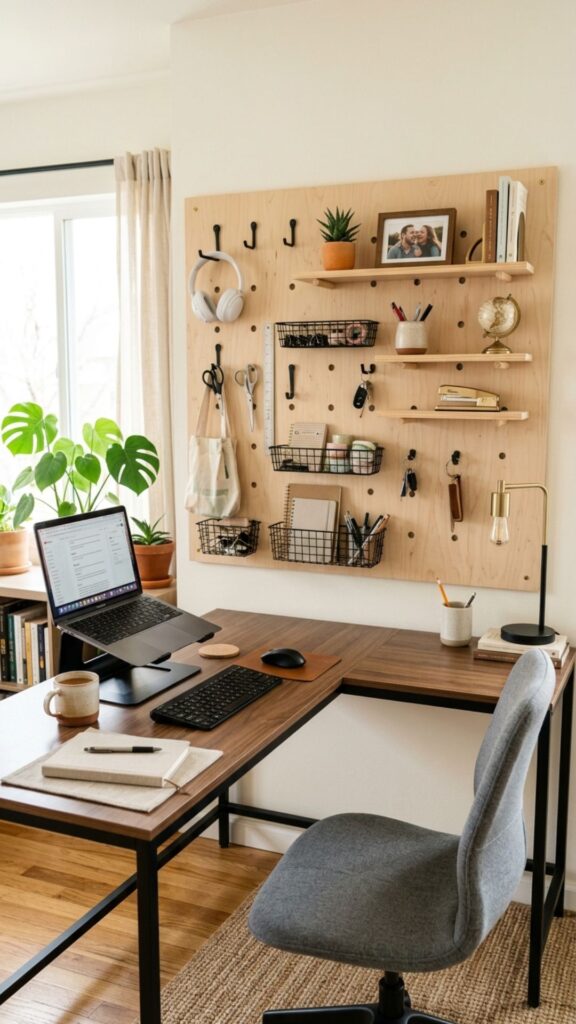
A pegboard above one section of your desk offers flexible storage that can change with your needs.
Add hooks, containers, shelves, baskets, calendars, headphones, and small office supplies.
Unlike fixed shelving, pegboard accessories are easy to rearrange whenever your workflow changes.
It also creates an opportunity to add personality through photos, artwork, or decorative objects.
18. Create a Shared L Shape Desk Office
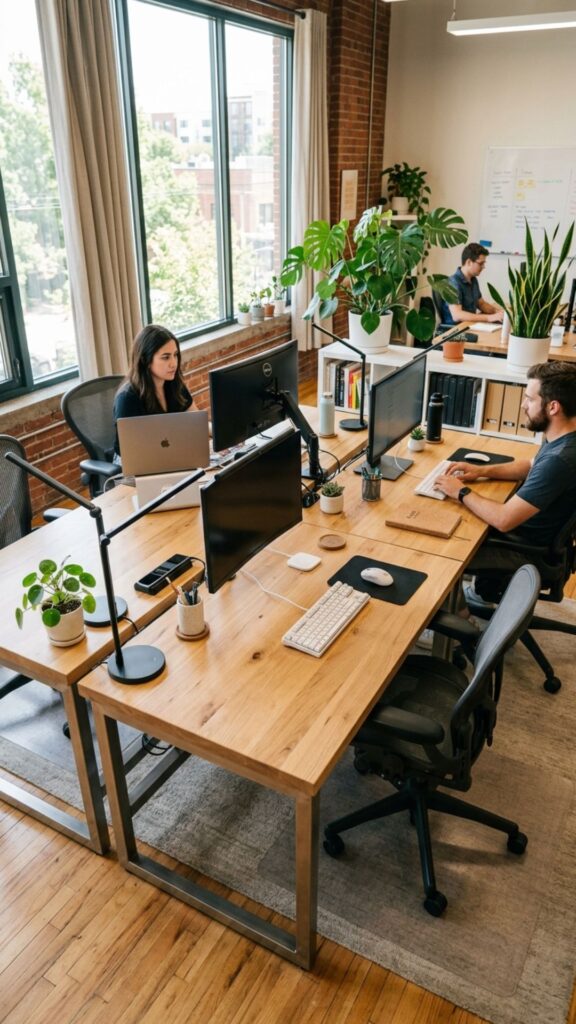
An L-shaped setup can also work for couples or family members sharing an office.
Each person can use one side of a larger workstation, particularly for occasional computer use or study sessions.
If both people work from home full-time, make sure each side has sufficient legroom, storage, lighting, and access to power outlets.
Matching chairs and coordinated accessories can help the shared workspace feel intentional.
19. Style the Wall Behind Your Desk
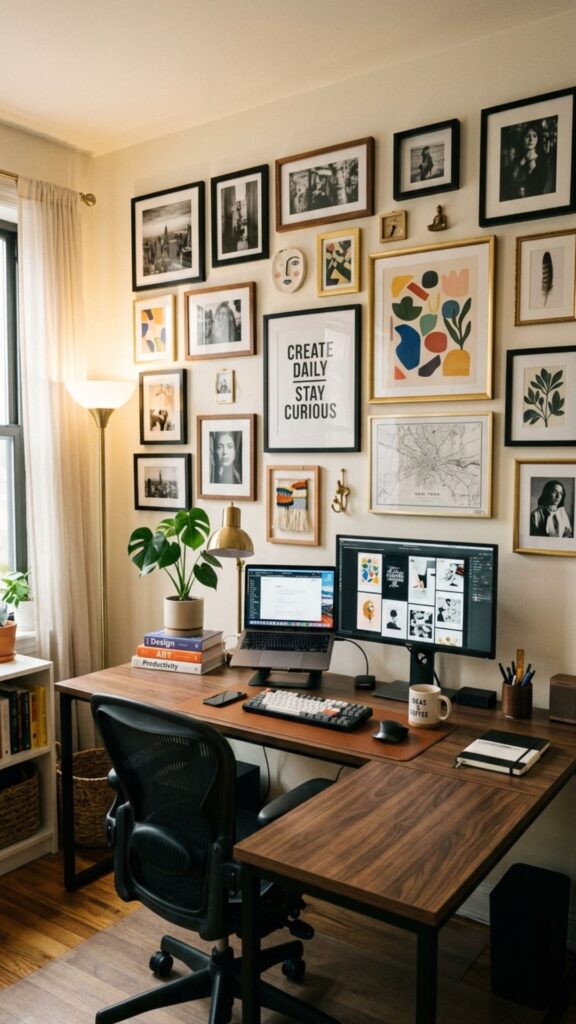
Your desk doesn’t have to be the only focal point.
Create a gallery wall using framed prints, photographs, motivational typography, or personal artwork. You could also install decorative wall panels, wallpaper, or a painted accent section.
If you frequently attend video meetings, consider decorating the wall that appears behind you on camera.
A thoughtful background can make your office feel professional while still reflecting your personality.
20. Add Personal Details You Actually Love
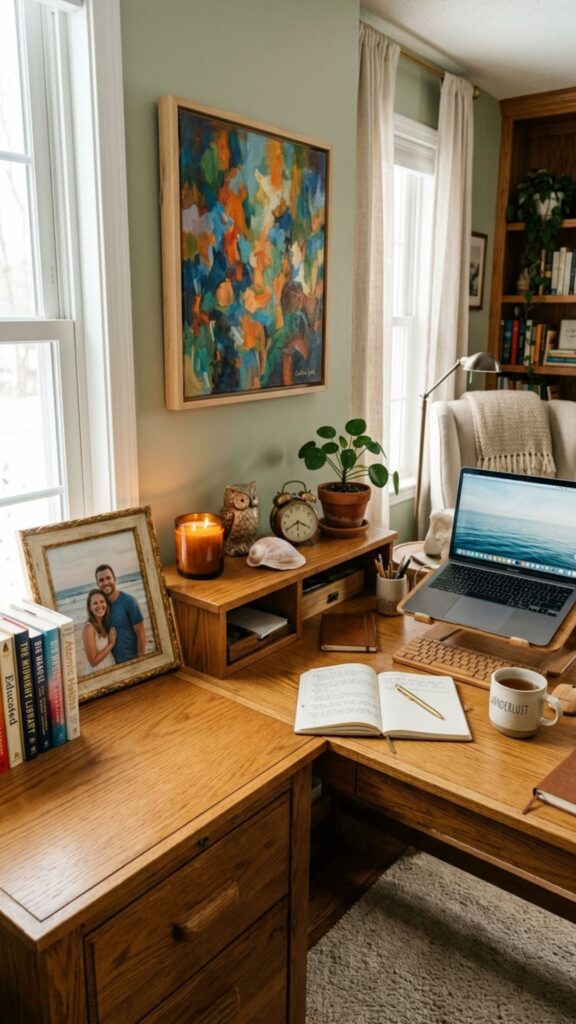
The best home office isn’t simply the most perfectly styled one. It’s the space you genuinely enjoy spending time in.
Add a framed photograph, favorite book, travel souvenir, candle, piece of artwork, or object that makes the office feel like yours.
Keep decorative pieces intentional rather than overcrowding the desk.
An L shape desk gives you enough room to combine productivity with personality, so don’t be afraid to make the space personal.
Conclusion
A well-designed L shape desk setup gives you something a traditional desk often can’t: room to separate your tasks while keeping everything close at hand.
Whether you prefer a clean minimalist office, a cozy wood-filled workspace, a dramatic moody design, or a practical workstation packed with storage, the key is to design around your daily routine. Start by deciding what each side of the desk will be used for, then add lighting, organization, comfortable seating, and a few personal touches.
You don’t need to use all 20 ideas at once. Even simple upgrades—such as hiding cables, adding floating shelves, introducing a plant, or creating separate work zones—can make a noticeable difference.
With the right setup, that empty corner can become a home office that looks great, stays organized, and makes sitting down to work feel a whole lot better.
Where should I place an L shape desk in a home office?
A corner is usually the most space-efficient location, especially near a window where you can benefit from natural light.
Is an L shape desk good for a small room?
Yes. A compact L-shaped desk can maximize corner space while giving you more usable desktop area than many traditional desks.
What should I put on each side of an L shape desk?
Use one side for computer work and the other for paperwork, storage, writing, meetings, or creative activities.
How can I make an L shape desk look less cluttered?
Use cable management, monitor arms, drawers, floating shelves, and simple desktop organizers while keeping unnecessary items off the surface.
Should an L shape desk face the wall or the room?
Either can work. Facing a wall saves space, while positioning one side toward the room can create a more open executive-style workspace if you have enough room.