Your living room corner may look too small, awkward, or forgotten to be useful—but it could be exactly the space you need for a comfortable home office. You don’t need a separate room, a major renovation, or an oversized desk to create a productive workspace. With the right furniture, lighting, storage, and a few clever styling tricks, even the smallest corner can become a practical place to work.

The best part? A corner office can blend naturally with your living room instead of making the space feel crowded or overly corporate.
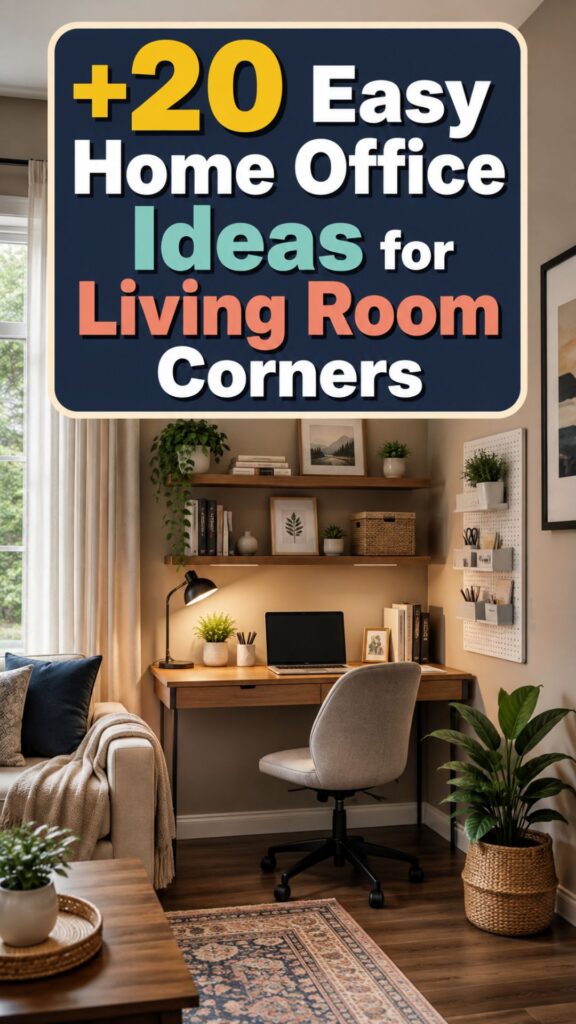
Whether you work from home every day or simply need a spot for emails, paperwork, studying, or creative projects, these 20 easy home office ideas for living room corners will help you turn unused space into something stylish and functional.
1. Choose a Compact Corner Desk
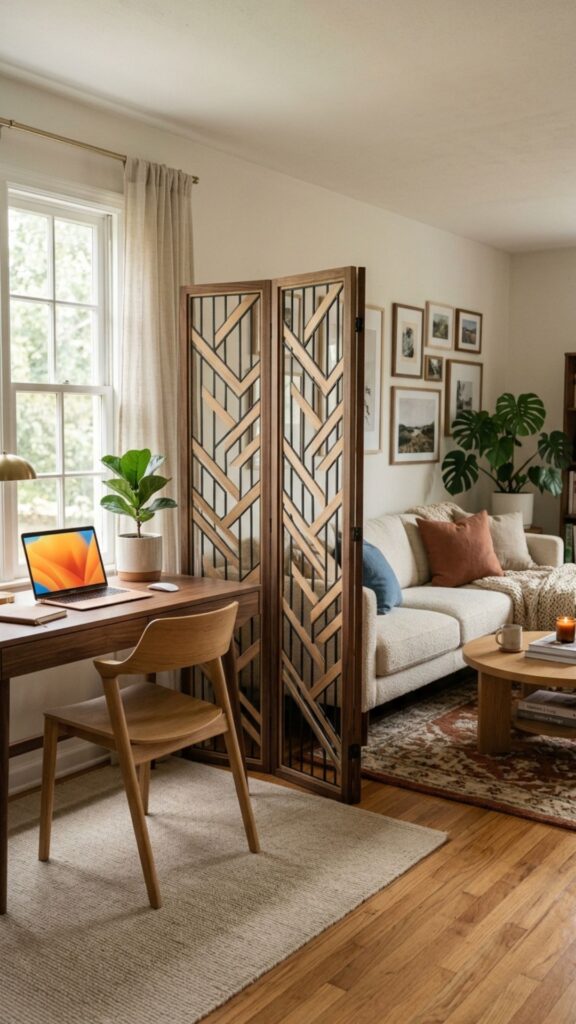
A small corner desk is one of the easiest ways to transform unused living room space. Look for a design with a shallow depth so it provides enough room for your laptop without extending too far into the room.
L-shaped corner desks can also work well when you have two available walls and need extra surface space.
2. Try a Floating Desk
When floor space is limited, take your workspace to the wall.
A floating desk creates a clean, lightweight look while leaving the floor underneath completely open. Pair it with a slim chair that can slide beneath the desktop when your workday is finished.
This approach is especially useful in smaller apartments where every square foot matters.
3. Use a Console Table as a Desk
Your home office furniture doesn’t necessarily have to look like office furniture.
A narrow console table can easily double as a desk in a living room corner. Its slim profile helps it blend with sofas, accent chairs, and other living room pieces.
Add a stylish desk lamp and a comfortable chair to complete the setup.
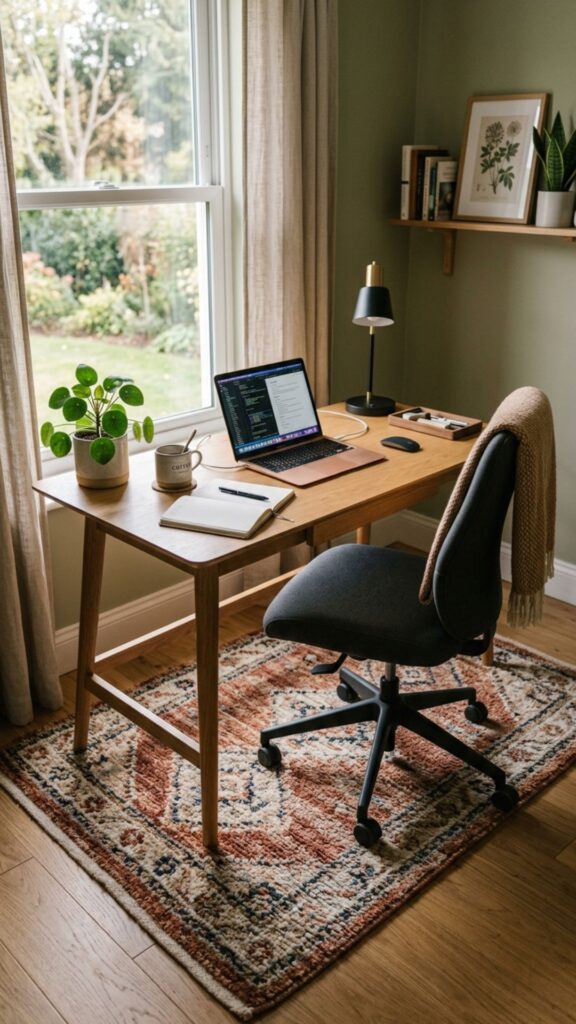
4. Build Your Office Around a Window
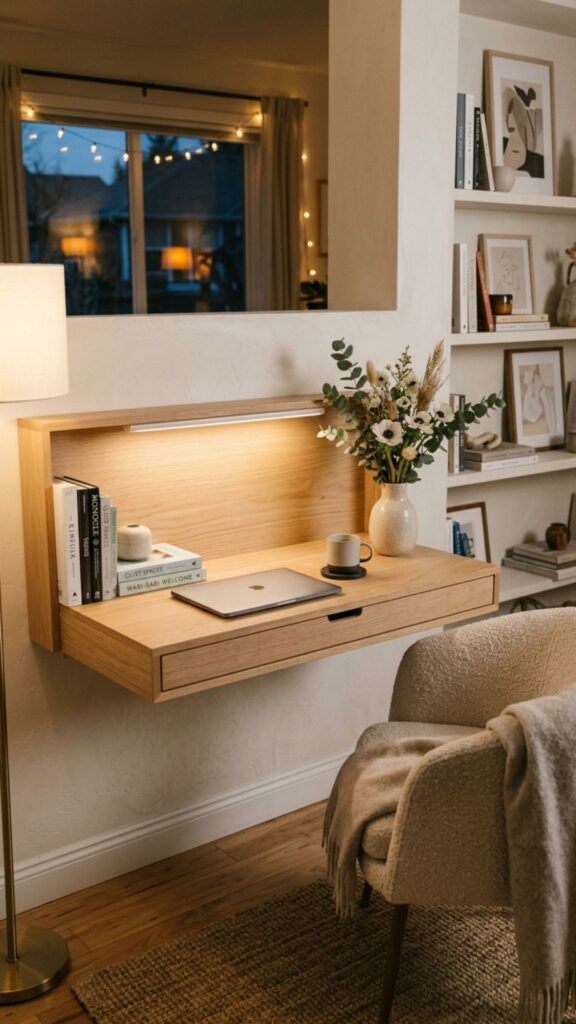
If your living room has an empty corner near a window, make the most of the natural light.
Position your desk so daylight reaches your workspace without creating too much glare on your computer screen. Natural light can make a small office corner feel more open and inviting.
A simple curtain or adjustable blind can help control brightness throughout the day.
5. Add Floating Shelves Above the Desk
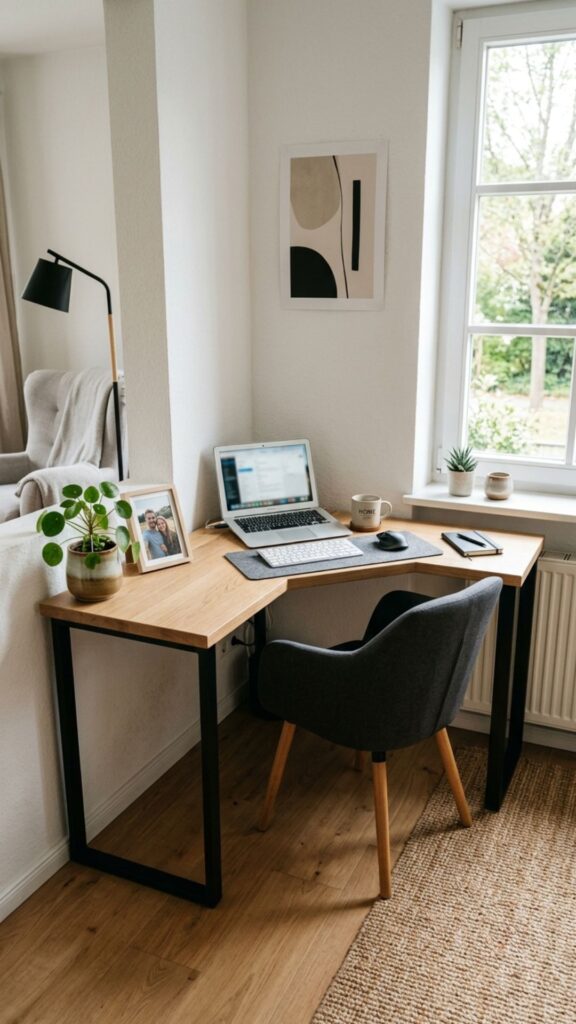
Vertical storage is incredibly valuable when you’re designing a small home office.
Install one or two floating shelves above your desk for notebooks, storage baskets, books, or decorative accessories.
Keeping supplies off the desktop gives you more room to work while creating an attractive display.
6. Create a Built-In Corner Workspace
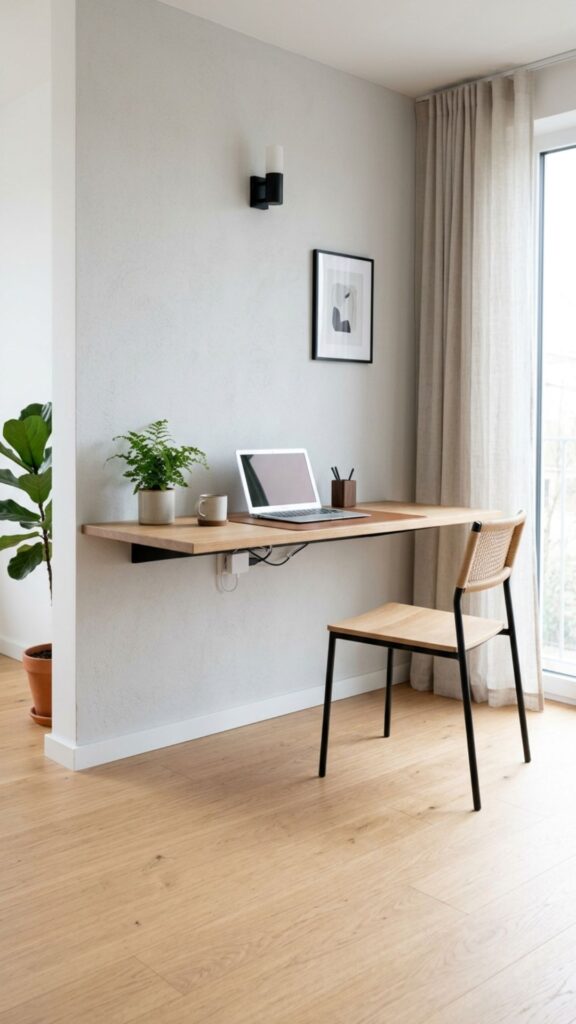
If you plan to use your living room office long-term, consider creating a simple built-in workspace.
A custom desktop fitted between two walls can turn an awkward corner into a seamless office area. Cabinets or shelves above the desk can provide additional storage without using much floor space.
Paint the workspace the same color as the surrounding wall to make it feel integrated into the room.
7. Hide the Office Inside a Cabinet
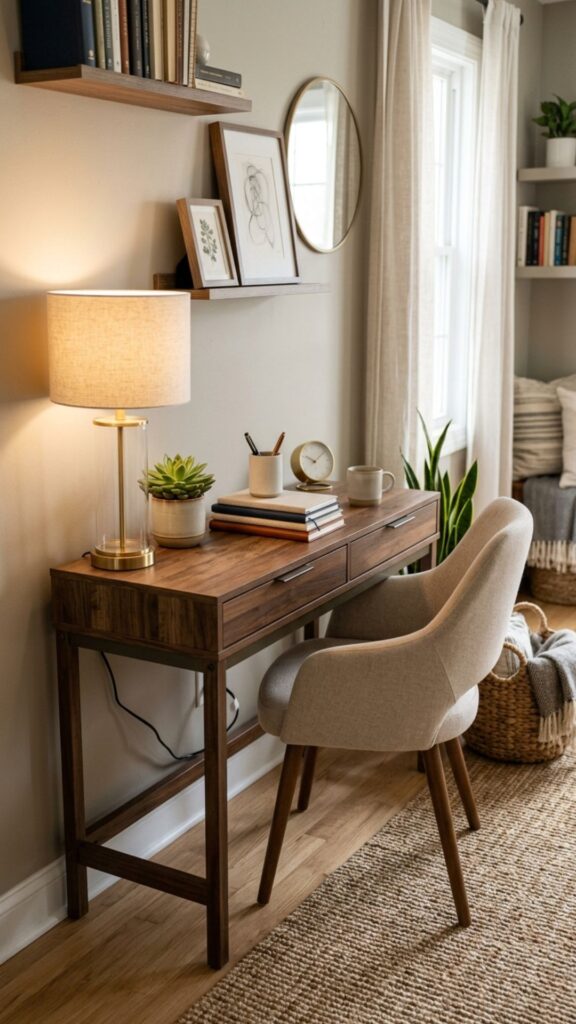
Not everyone wants to see their office after work hours.
A secretary desk, armoire, or office cabinet can keep your laptop, paperwork, and supplies hidden behind closed doors.
Open the cabinet when you’re ready to work, then close everything away when it’s time to relax.
This idea is perfect for living rooms that need to serve several purposes.
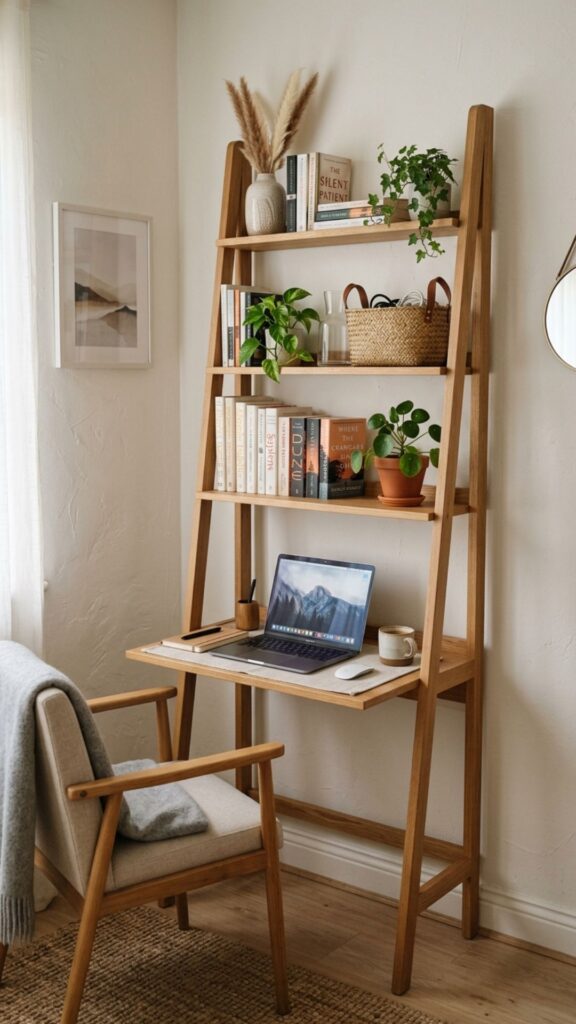
8. Use a Ladder Desk
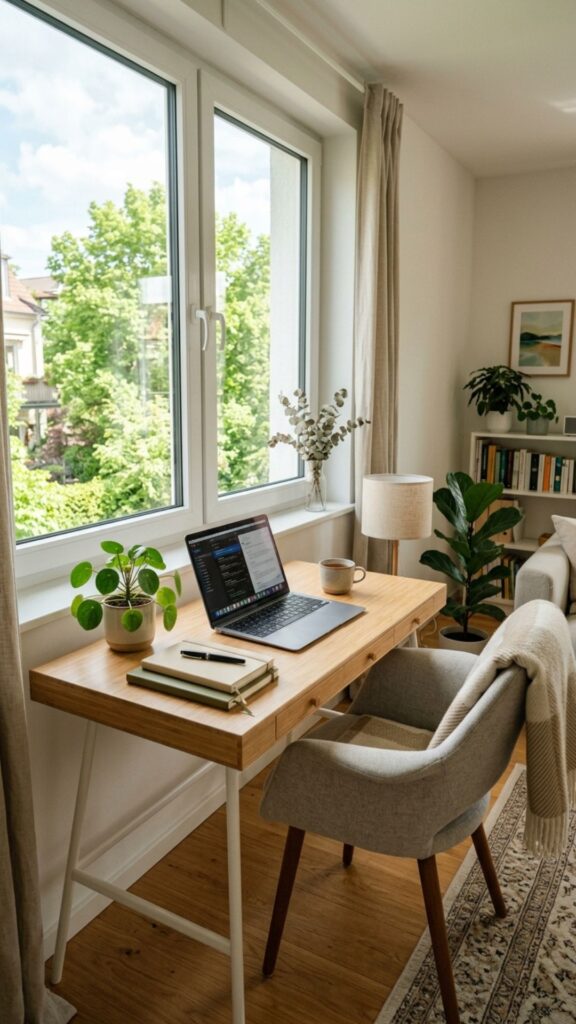
A ladder-style desk combines storage and workspace in one narrow piece of furniture.
The desk surface provides enough room for a laptop, while the shelves above can hold books, baskets, plants, or office essentials.
Its vertical design makes it especially useful for small living room corners.
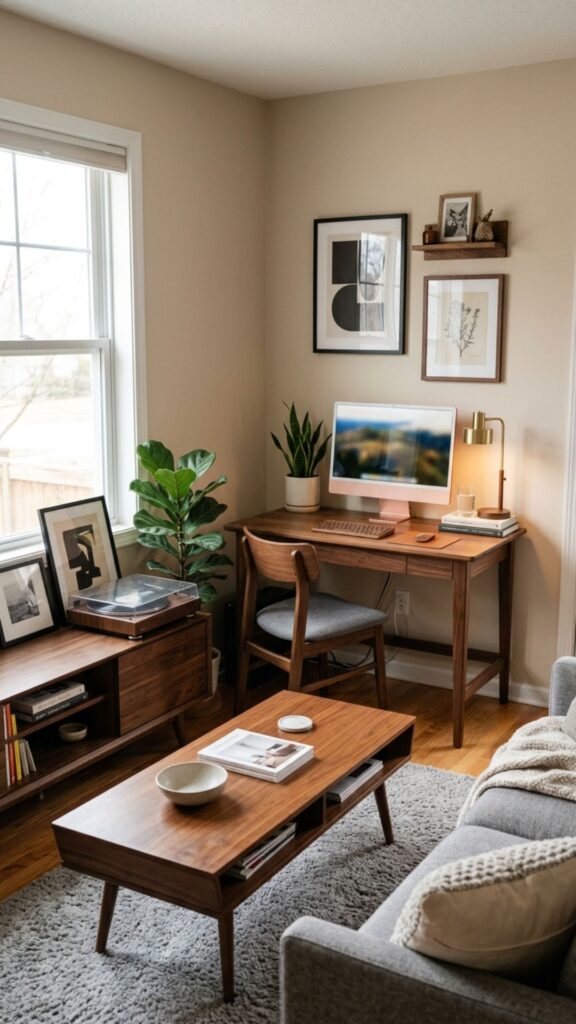
9. Match Your Desk to Your Living Room Furniture
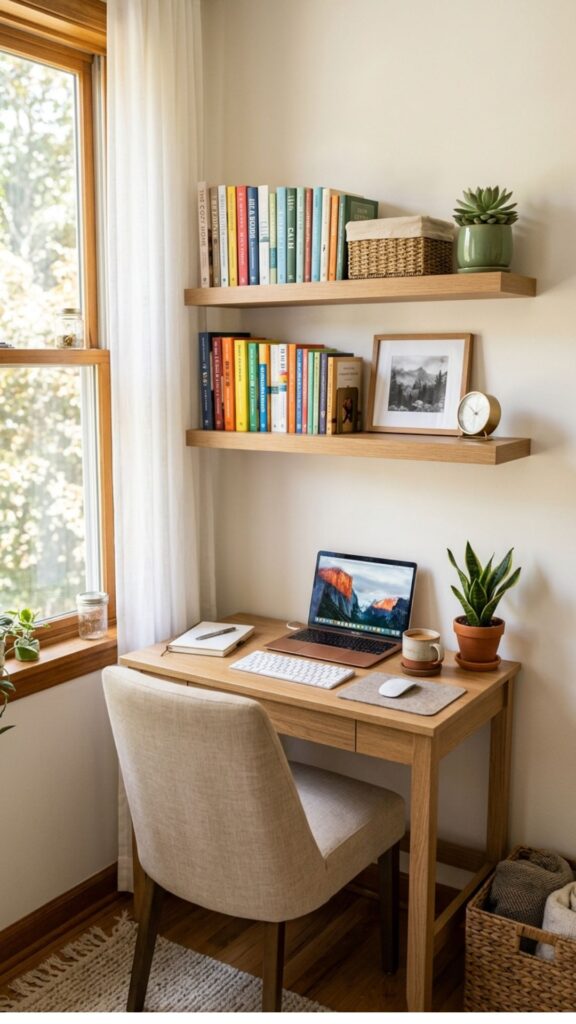
One simple way to make a living room office feel intentional is to coordinate the desk with the rest of the room.
For example, choose a wood desk that complements your coffee table or a black desk that matches your shelving.
Repeating materials and finishes helps the office look like part of the overall design rather than an addition squeezed into the corner.
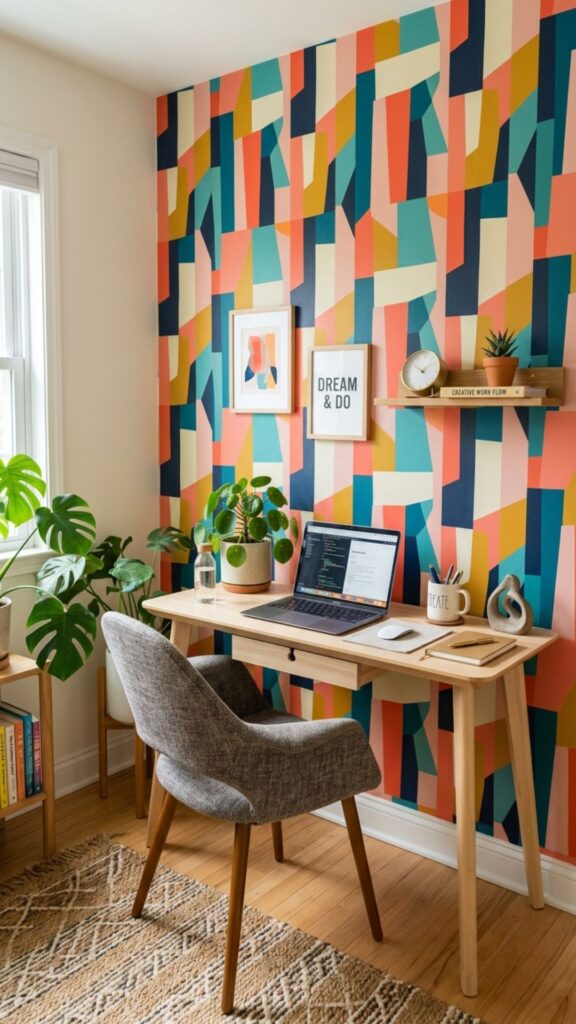
10. Define the Office With an Accent Wall
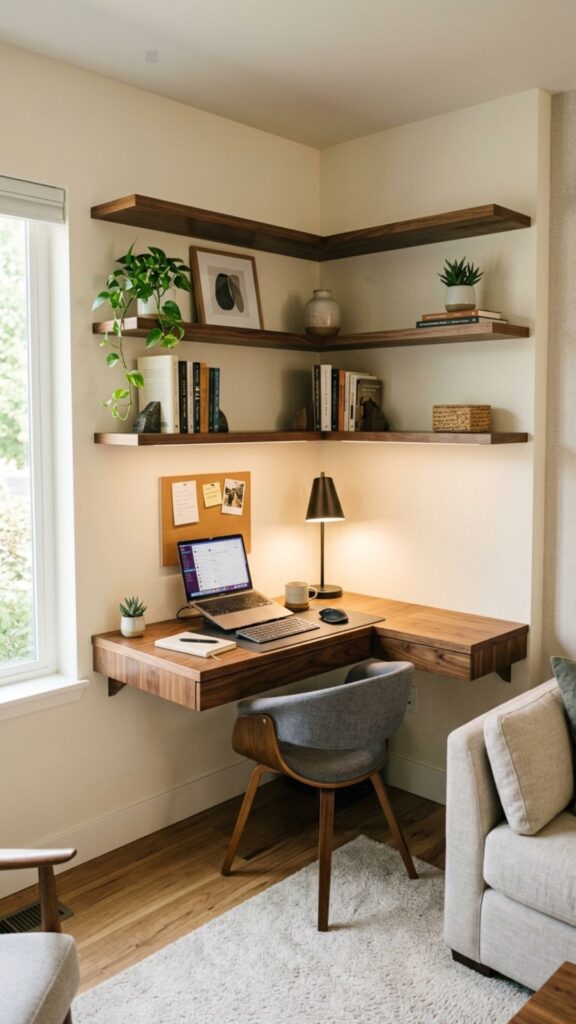
You don’t need physical walls to visually separate your workspace.
Paint the corner behind your desk in a different color, add removable wallpaper, or create a simple painted arch.
This small design detail gives your workspace its own identity while adding personality to the living room.
11. Place a Rug Under the Workspace
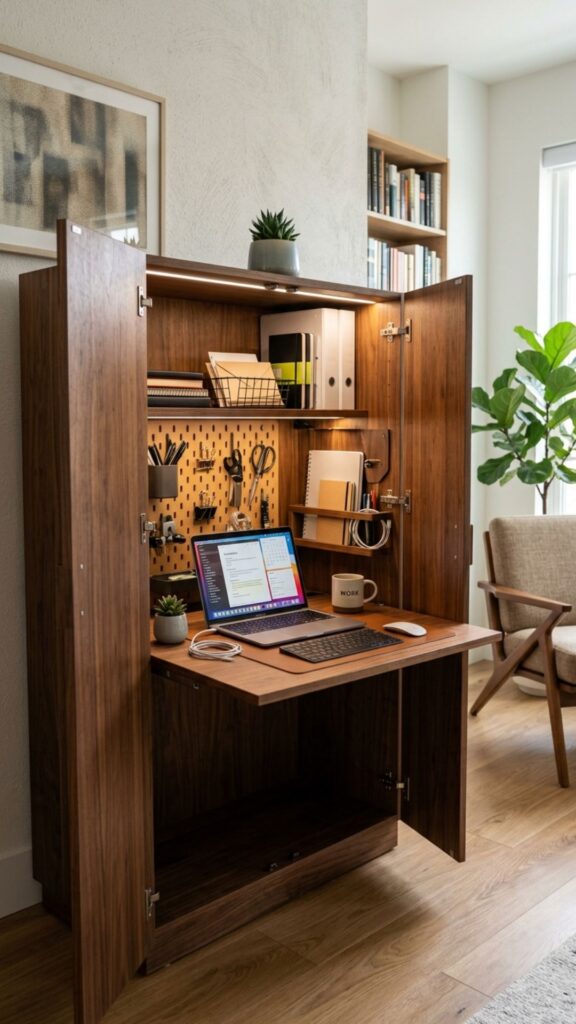
A small rug can create a visual boundary around your office corner.
Choose a rug that complements the main living room rug rather than competing with it.
This trick works particularly well in open-plan rooms because it subtly communicates that the corner has a separate function.
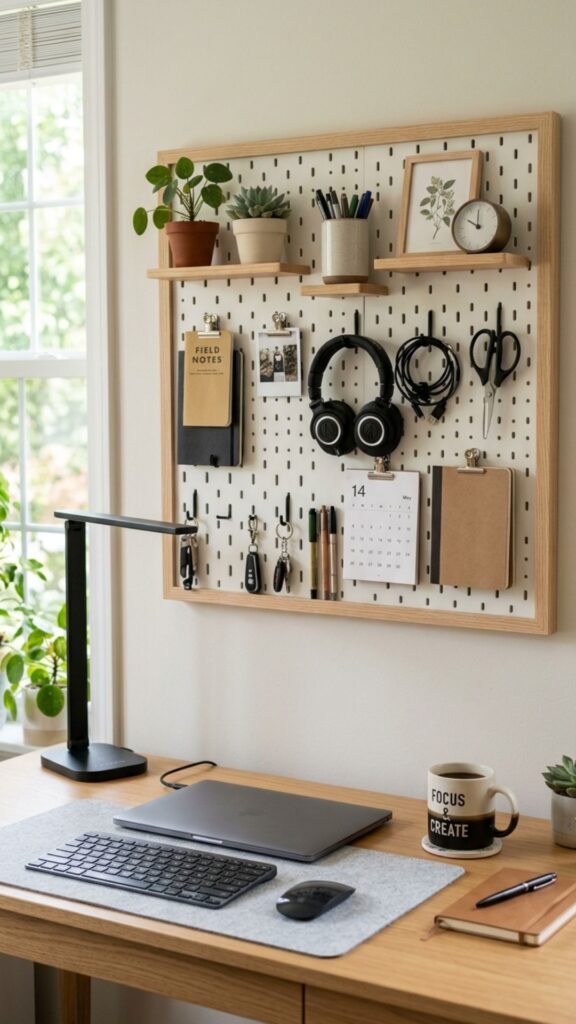
12. Add a Pegboard Organizer
When your desk doesn’t have drawers, the wall can become your storage system.
Install a pegboard above the workspace and customize it with small shelves, hooks, baskets, and organizers.
You can store stationery, headphones, notes, scissors, and other everyday essentials while keeping the desktop relatively clutter-free.
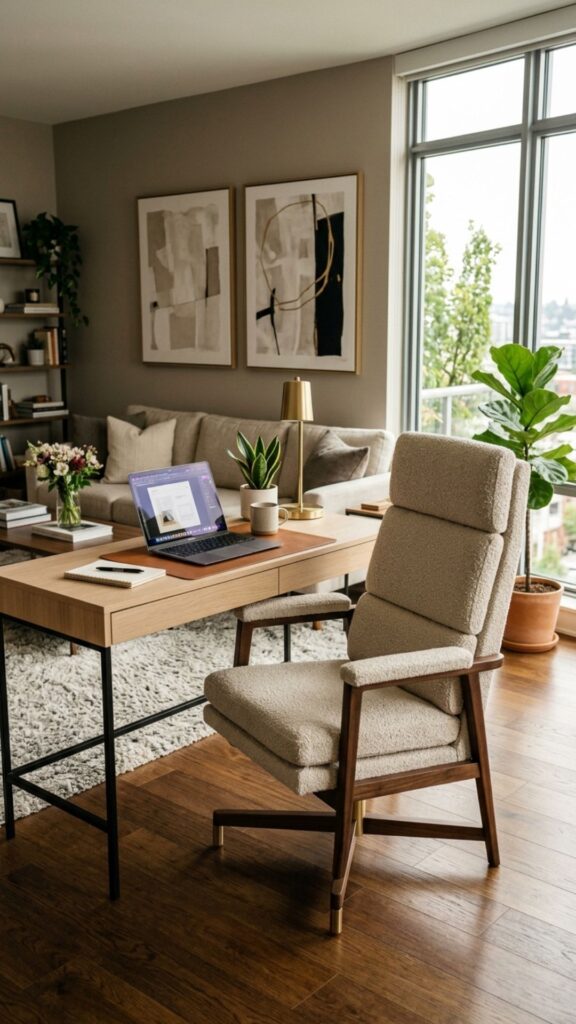
13. Choose a Stylish Office Chair
A traditional office chair can sometimes look out of place in a carefully decorated living room.
Instead, consider an upholstered dining chair, compact swivel chair, or attractive task chair that provides comfort without looking overly corporate.
Just make sure the seat and height are comfortable enough for the amount of time you plan to spend working.
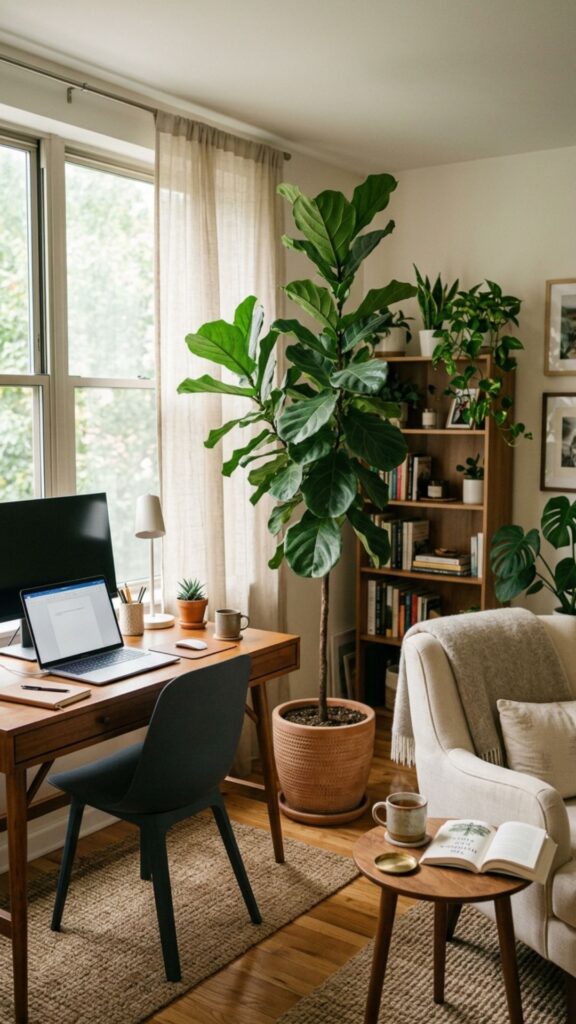
14. Use Plants to Separate Work From Relaxation
Plants can create a soft visual divider between your office corner and the rest of the living room.
Place a tall plant beside the desk or add several smaller plants to nearby shelves.
Besides defining the workspace, greenery can make the corner feel warmer and less utilitarian.
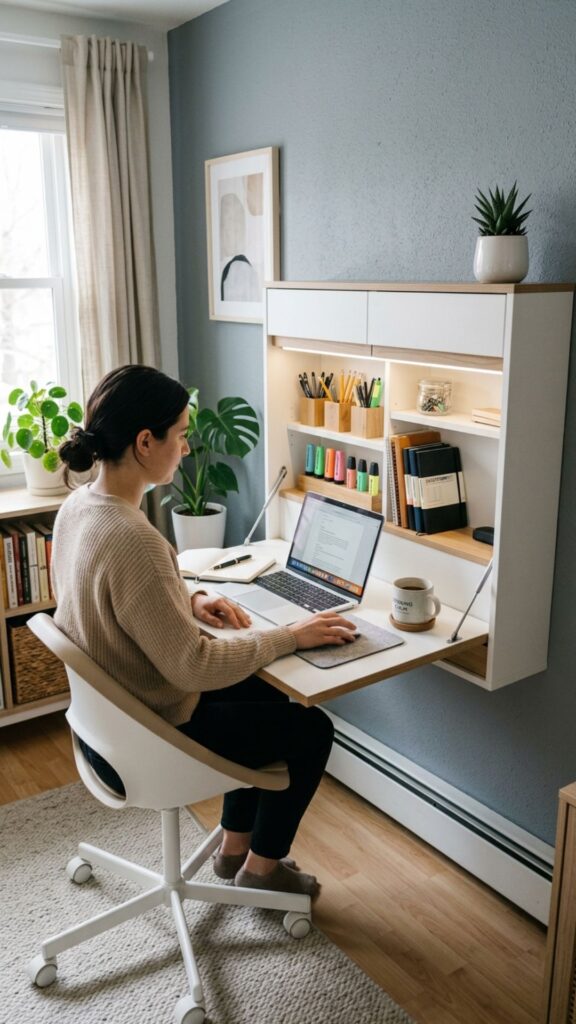
15. Install a Wall-Mounted Folding Desk
If you only need an office occasionally, consider a fold-down desk.
A wall-mounted folding desk opens when you need a workspace and folds away when you’re finished.
Some designs even include small storage compartments for chargers, notebooks, and stationery.
It’s an excellent solution for very compact living rooms.
16. Turn an Empty Alcove Into an Office
That shallow alcove or recessed section of your living room may be the perfect place for a desk.
Choose furniture that fits neatly inside the opening and use shelves above to take advantage of the full height.
Because the workspace sits inside its own architectural nook, it naturally feels separate without requiring a divider.
17. Use a Room Divider for Extra Privacy
If your living room is busy during the day, a small divider can help create a more focused working environment.
Try a folding screen, open bookcase, slatted divider, or even a curtain.
The goal isn’t necessarily to hide your workspace completely. Even partial separation can make your corner feel calmer and more purposeful.
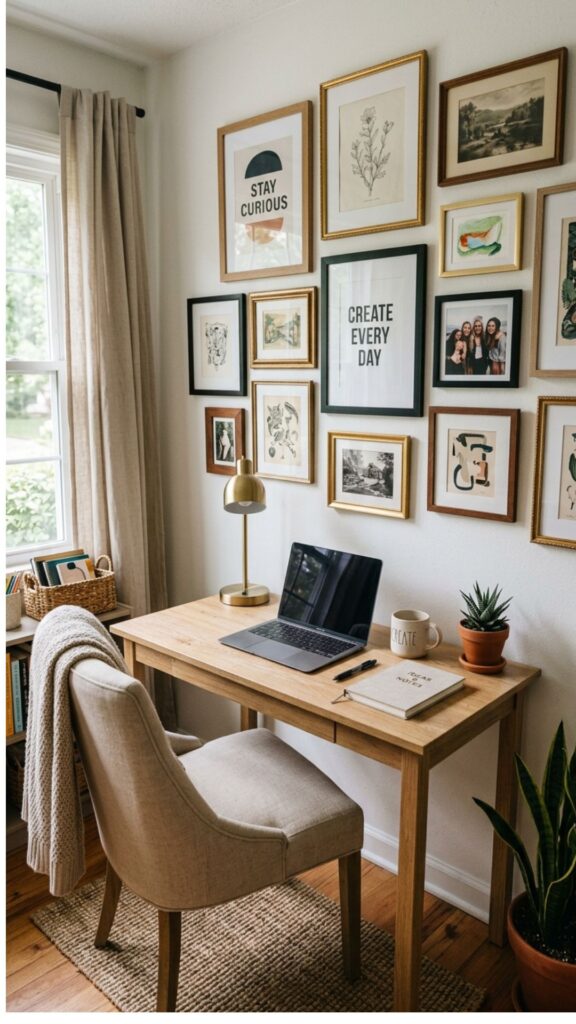
18. Add a Small Gallery Wall
A home office doesn’t have to feel plain.
Use the wall above your desk for a small collection of framed artwork, photographs, illustrations, or inspirational prints.
Keep the arrangement relatively simple so your workspace feels personal without becoming visually distracting.
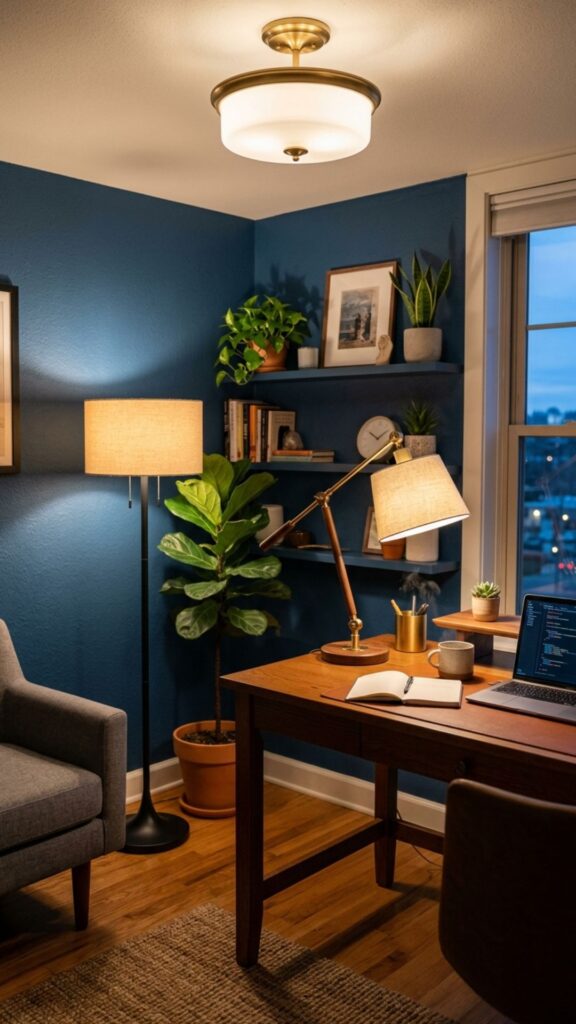
19. Improve the Corner With Layered Lighting
Good lighting can completely change how comfortable your office feels.
Natural light is helpful during the day, but you’ll also want dedicated task lighting for cloudy afternoons and evening work.
Combine a compact desk lamp with your living room’s existing floor lamps, wall sconces, or overhead lighting.
Warm, balanced lighting helps the office corner feel connected to the rest of the room.
20. Create an Office That Disappears After Work
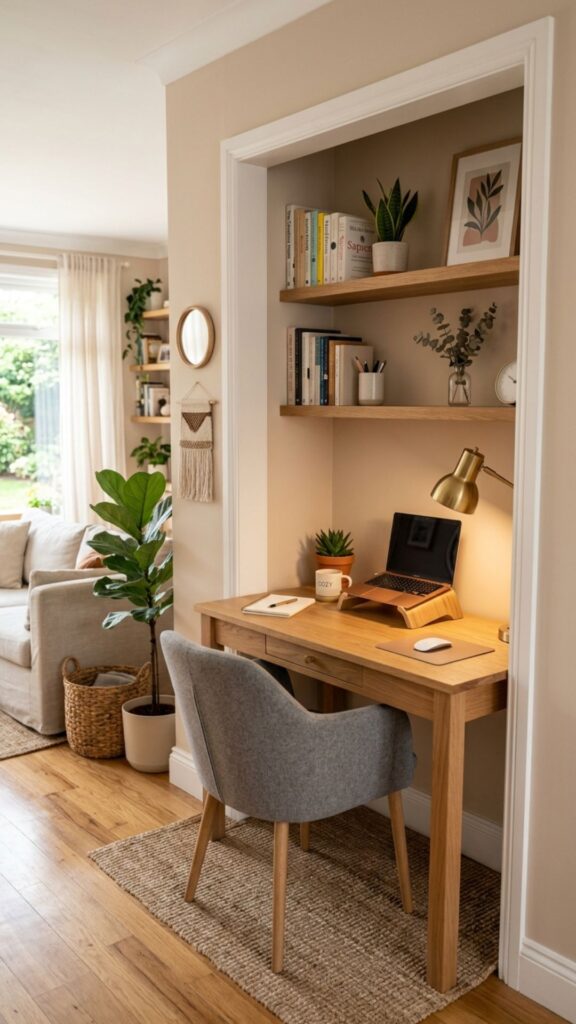
One of the smartest living room office ideas is designing the workspace around what happens when you’re not working.
Use a desk with drawers to hide supplies, add a basket for electronics, and create a simple routine for putting away your laptop at the end of the day.
You could even style the desktop with a vase, lamp, or decorative books after work.
Within a few minutes, your office corner can return to being part of your living space.
Small Details That Make a Living Room Office Better
No matter which idea you choose, focus on keeping the workspace comfortable and organized. Cable clips can prevent cords from becoming an eyesore, decorative boxes can hide paperwork, and wall-mounted storage can reduce desktop clutter.
It’s also worth thinking about what you actually need before buying furniture. Someone who works primarily from a laptop may only need a small desk and chair, while a workspace with multiple monitors may require a wider surface and better cable management.
Design around your daily routine rather than trying to recreate a traditional office in a much smaller space.
Conclusion
Creating a home office doesn’t always mean sacrificing an entire bedroom or finding extra square footage. Sometimes the perfect workspace is already sitting unused in the corner of your living room.
A floating desk can maximize a tiny area, shelves can provide vertical storage, and thoughtful furniture choices can help your office blend beautifully with your décor. Even simple touches such as better lighting, plants, artwork, and hidden storage can make a small workspace more enjoyable.
The key is to create a corner that works hard during office hours and still feels like part of your home when the workday ends.
Start with the space you already have, keep the design simple, and choose the ideas that fit your lifestyle. That overlooked living room corner might quickly become one of the most useful spots in your home.
Can I put a home office in my living room?
Yes. An unused corner, alcove, or wall can easily become a practical home office with a compact desk and comfortable chair.
What desk is best for a small living room?
Floating desks, narrow writing desks, corner desks, and folding wall desks are excellent space-saving options.
How can I hide my office in the living room?
Use a secretary desk, cabinet workstation, folding desk, decorative screen, or storage furniture that lets you hide work items afterward.
How do I separate a living room office visually?
Try an accent wall, small rug, shelving unit, plants, wallpaper, or a room divider to define the workspace.
How can I keep a living room office from looking cluttered?
Use vertical shelving, baskets, drawers, cable organizers, and closed storage while keeping only frequently used items on the desk.