A home office should do more than hold a desk and a laptop—it should help your mind settle the moment you enter. Japanese-style interiors are especially good at creating that feeling. With their emphasis on simplicity, natural materials, thoughtful organization, and a strong connection to nature, they can turn even a small work corner into a calm and focused retreat.
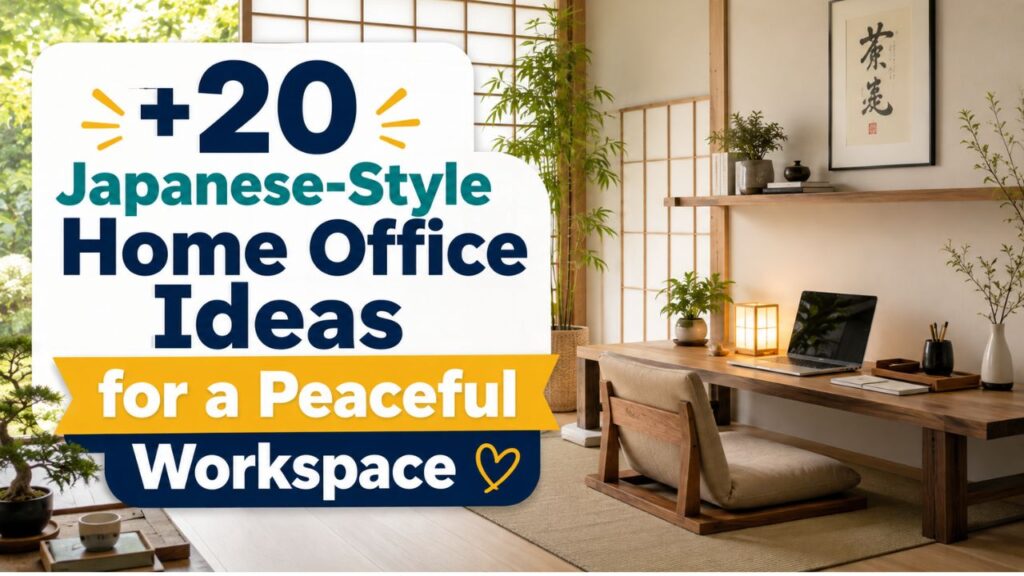
The beauty of a Japanese-inspired workspace is that it does not need to feel empty or overly minimal. Instead, every object has a purpose, every material adds warmth, and every detail contributes to a sense of balance.
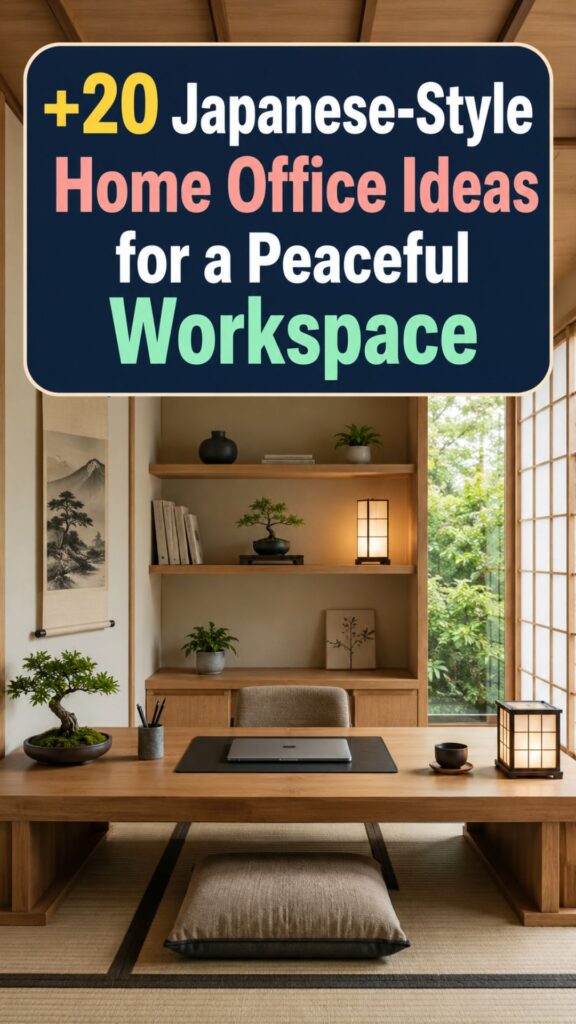
Whether you have an entire room or just a quiet corner, these 20 Japanese-style home office ideas can help you create a peaceful place where concentration comes more naturally.
1. Start With a Warm Neutral Color Palette
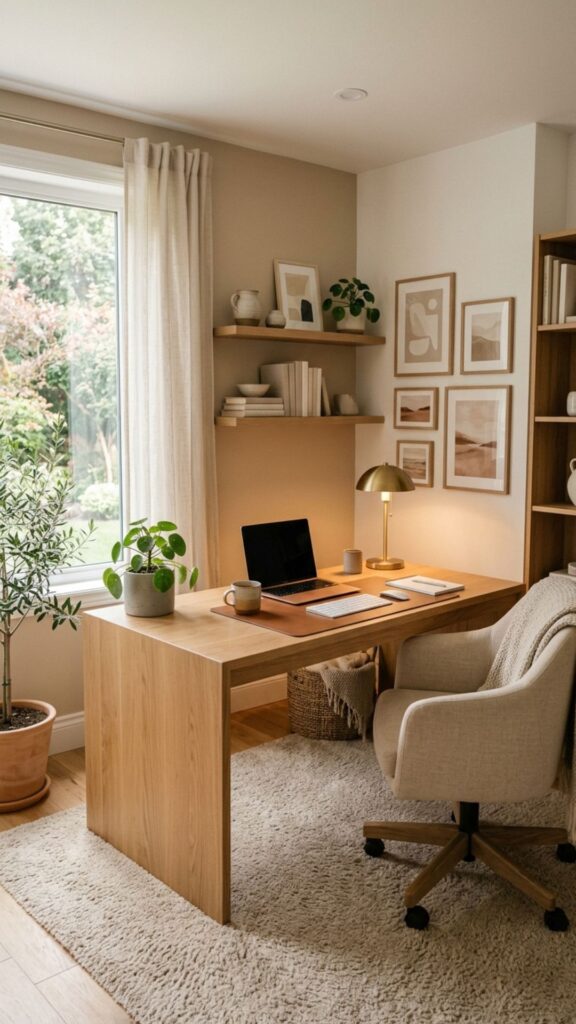
Japanese interiors often rely on soft, earthy shades rather than bright or highly contrasting colors. Think warm white, beige, sand, light gray, muted brown, and gentle clay tones.
Using these colors on the walls, furniture, and accessories creates a quiet visual background that makes your workspace feel less distracting. Add slightly darker wood accents to give the room depth without disturbing its peaceful atmosphere.
2. Choose a Simple Wooden Desk
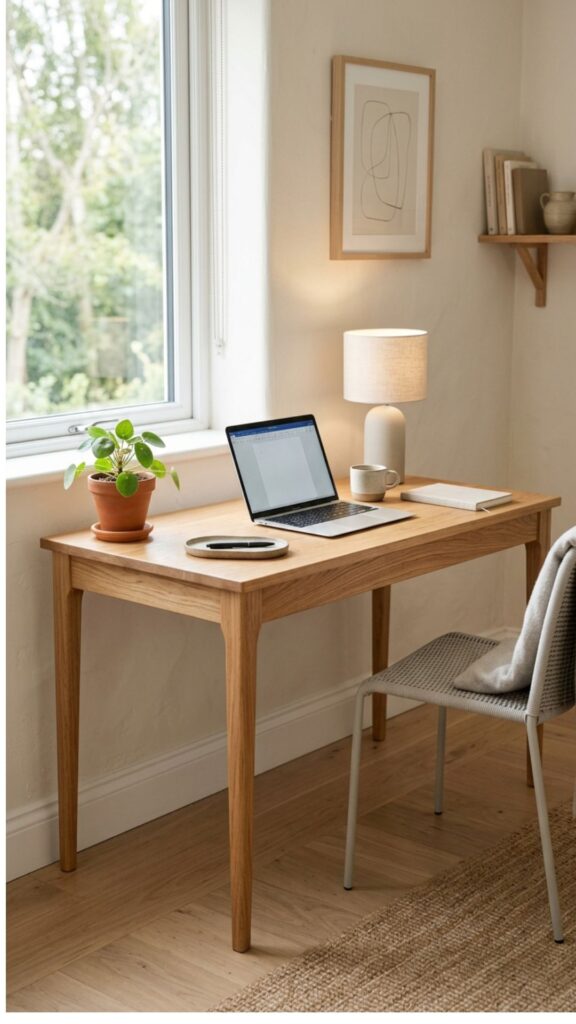
A clean-lined wooden desk is an ideal centerpiece for a Japanese-style home office. Light oak, ash, beech, and bamboo all work beautifully.
Look for a desk with minimal detailing and a natural finish that allows the wood grain to remain visible. Instead of choosing oversized furniture, select a desk that provides just enough surface area for your daily work.
The result feels intentional rather than crowded.
3. Keep the Desk Surface Almost Empty
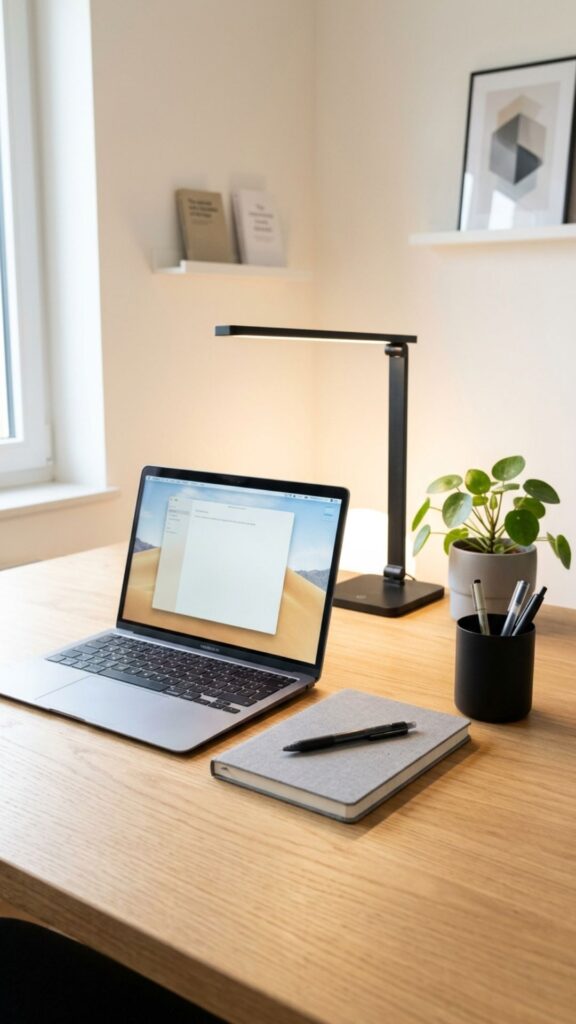
One of the easiest ways to create a calmer workspace is to reduce visual clutter.
Keep only the essentials on your desk, such as:
- Your computer
- A notebook
- One pen holder
- A small lamp
- A plant or decorative object
Store everything else in drawers, cabinets, or boxes.
A clear desk gives your eyes fewer things to process, helping the entire office feel more peaceful.
4. Bring Nature Indoors With Greenery
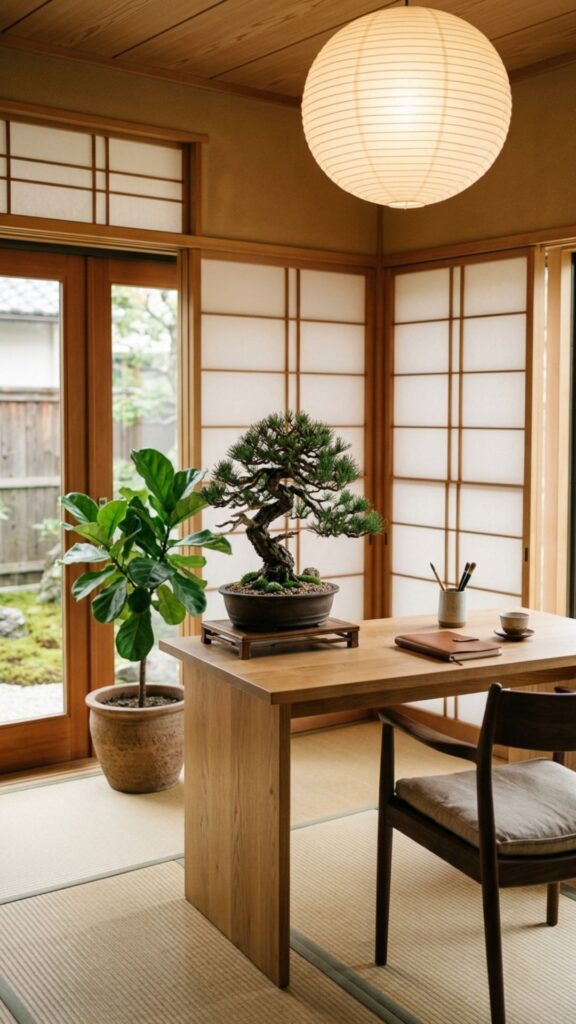
Nature plays an important role in Japanese design.
A small plant can instantly soften the hard edges of desks, screens, and shelves while giving your workspace a more refreshing atmosphere.
Consider plants with simple shapes, such as bonsai, bamboo, ferns, or small leafy houseplants. Instead of filling the room with greenery, choose one or two carefully placed plants that can become natural focal points.
5. Add a Shoji-Style Screen
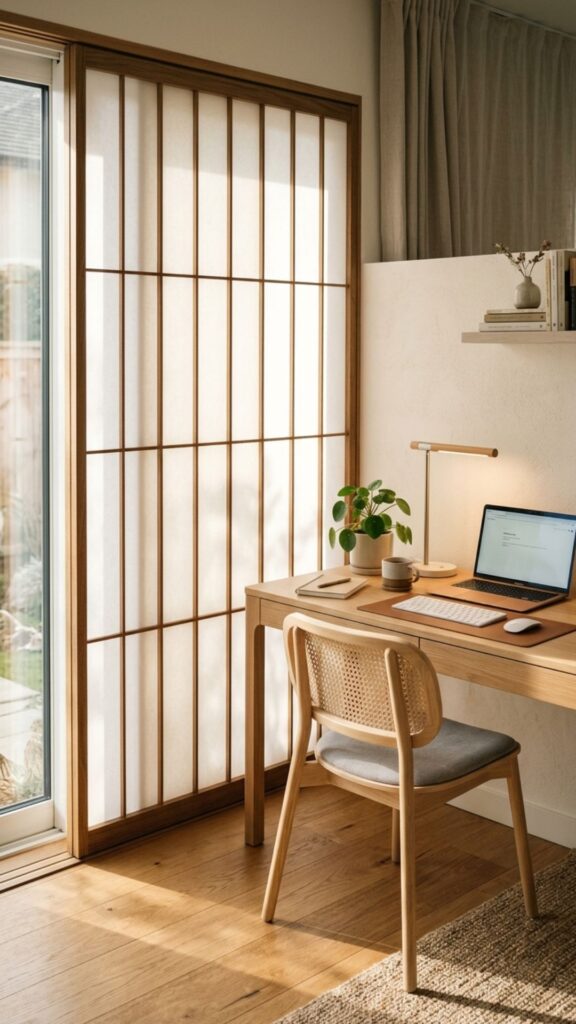
Traditional shoji screens feature translucent panels arranged within simple wooden frames.
You can introduce the same look into a modern home office with a shoji-inspired room divider, sliding door, or decorative screen.
The translucent surface allows light to pass through while creating privacy, making it especially useful when your office shares space with a bedroom or living room.
6. Create a Low-Profile Workspace
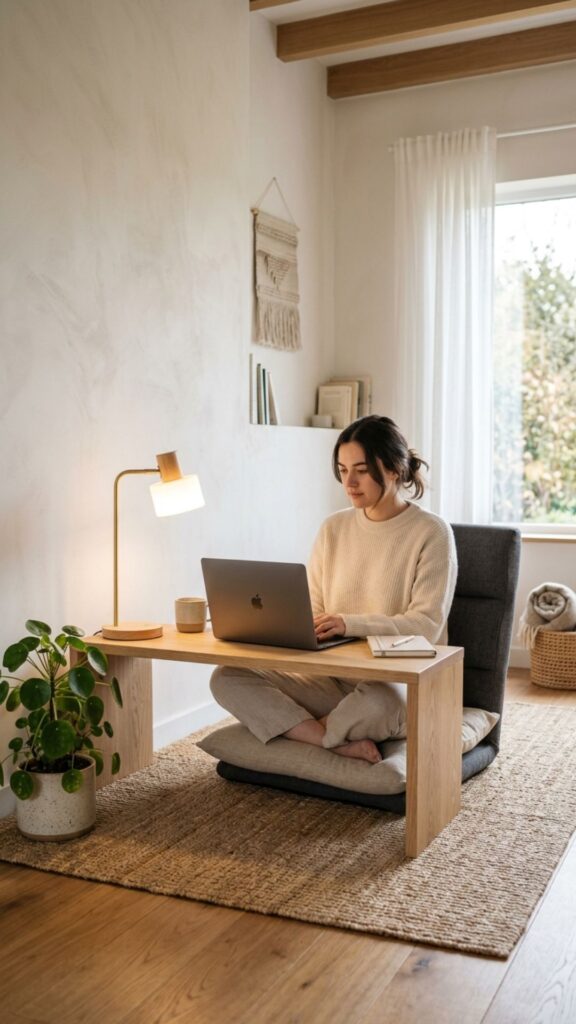
Japanese interiors frequently use furniture that sits closer to the floor.
For a more distinctive workspace, consider a low desk paired with a floor chair or comfortable cushion. This setup can create an intimate, grounded atmosphere and works particularly well in meditation-inspired offices.
If working close to the floor is not practical for long periods, you can achieve a similar aesthetic with a standard desk that has slim legs and a low visual profile.
7. Use Natural Textures
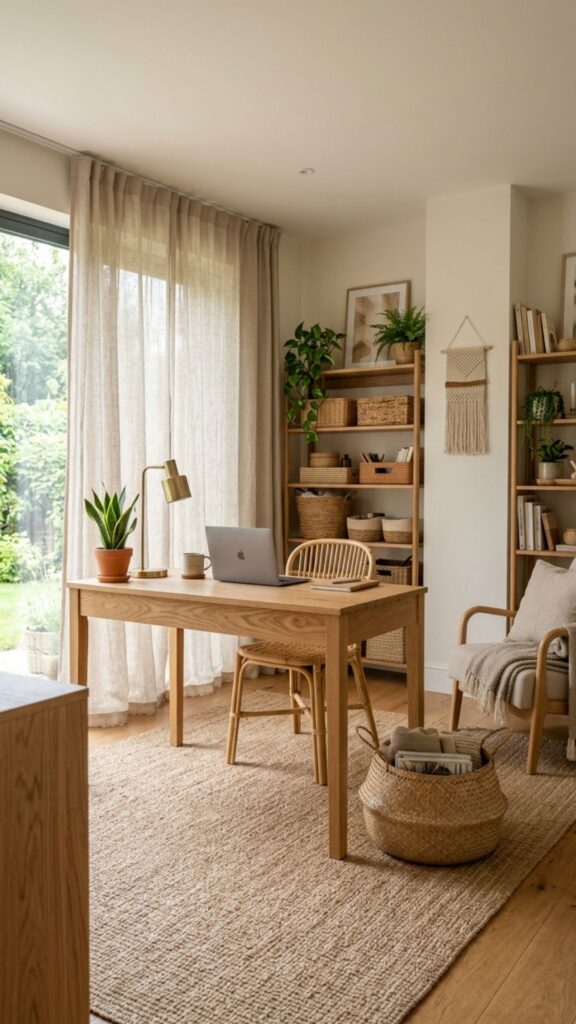
A peaceful Japanese-style office should feel warm rather than sterile.
Introduce materials such as:
- Linen
- Cotton
- Bamboo
- Rattan
- Wood
- Stone
- Woven grass
A linen curtain, woven basket, wooden desktop, or natural-fiber rug can add subtle layers of texture without making the room visually busy.
8. Let Natural Light Become Part of the Design
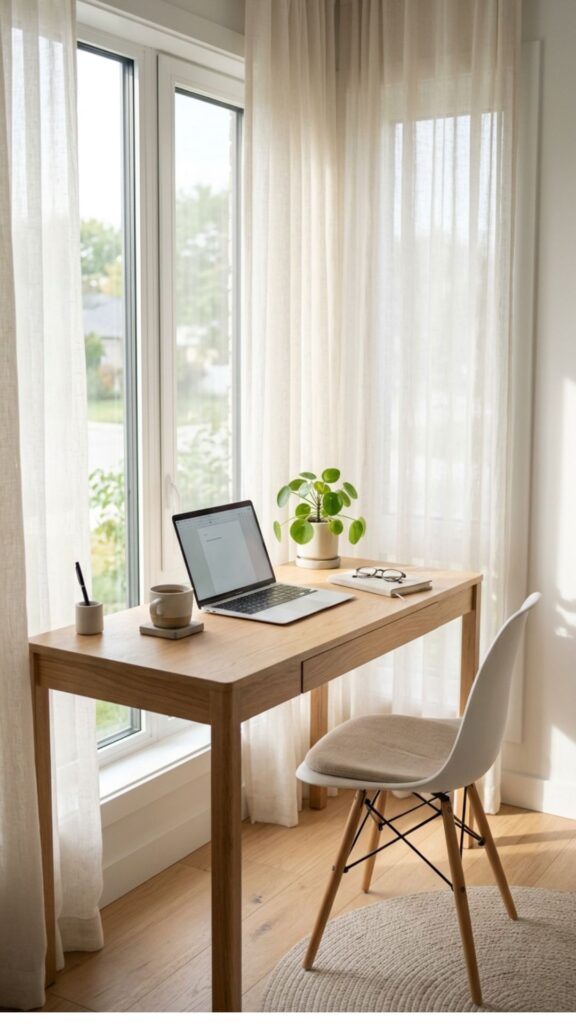
Whenever possible, position your workspace near a window.
Natural daylight can make a minimalist room feel warmer and more inviting. Instead of covering windows with heavy curtains, use lightweight linen panels, bamboo blinds, or sheer shades.
These treatments soften direct sunlight while preserving the airy quality associated with Japanese interiors.
9. Add a Small Zen Garden
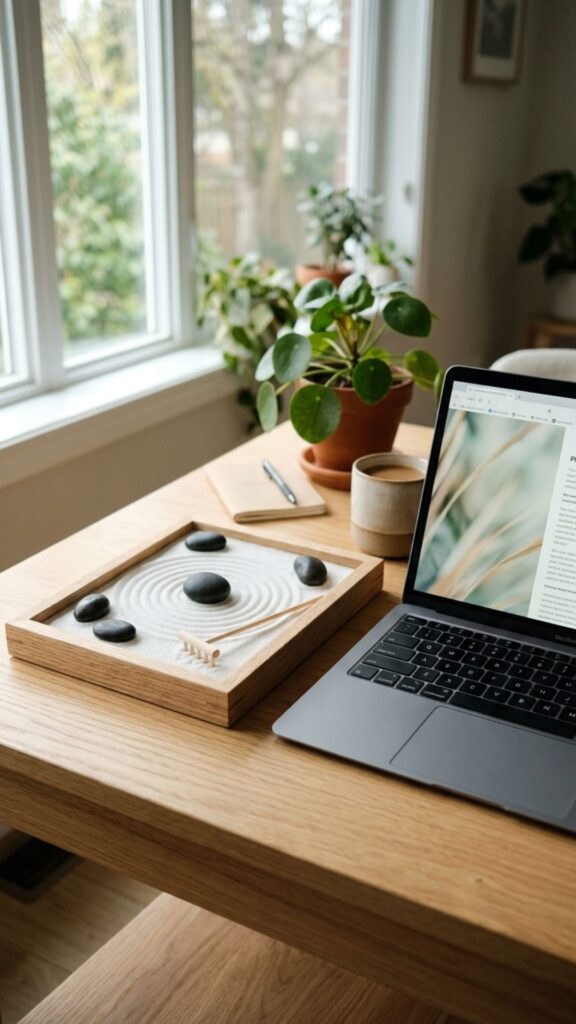
A miniature Zen garden can become a relaxing desk accessory.
Typically made with sand, stones, and a small rake, it gives you something calming to interact with during short breaks. Creating simple patterns in the sand can also provide a brief mental reset between tasks.
Choose a compact design so it enhances the desk without becoming another source of clutter.
10. Introduce Wabi-Sabi Details
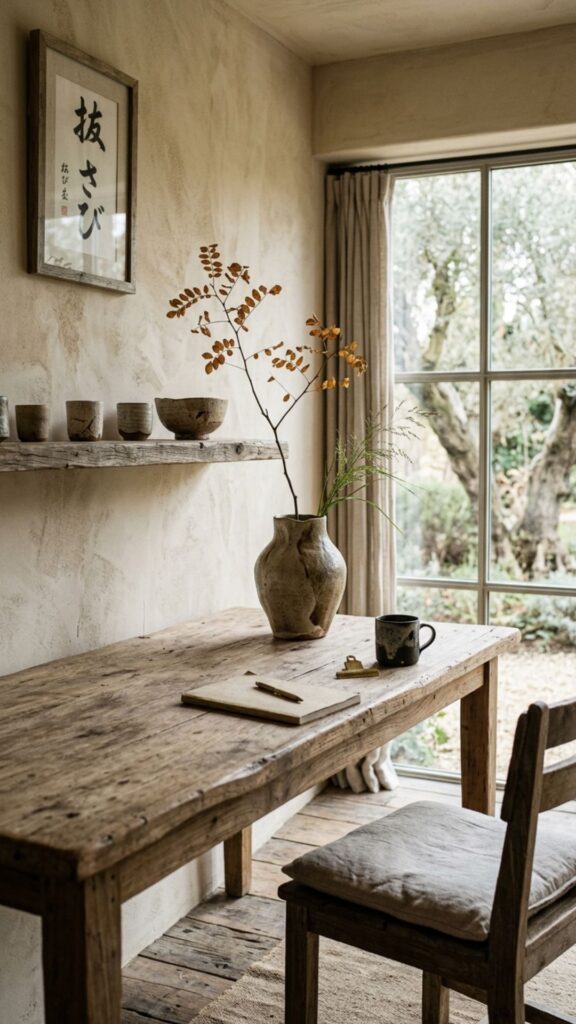
Japanese design does not always celebrate perfection. The concept of wabi-sabi appreciates simplicity, age, natural variation, and subtle imperfections.
Bring this philosophy into your office with handmade pottery, weathered wood, textured ceramics, or objects with irregular shapes.
A slightly imperfect clay vase can often add more personality to a minimalist room than a collection of perfectly matched decorations.
11. Install Floating Wooden Shelves
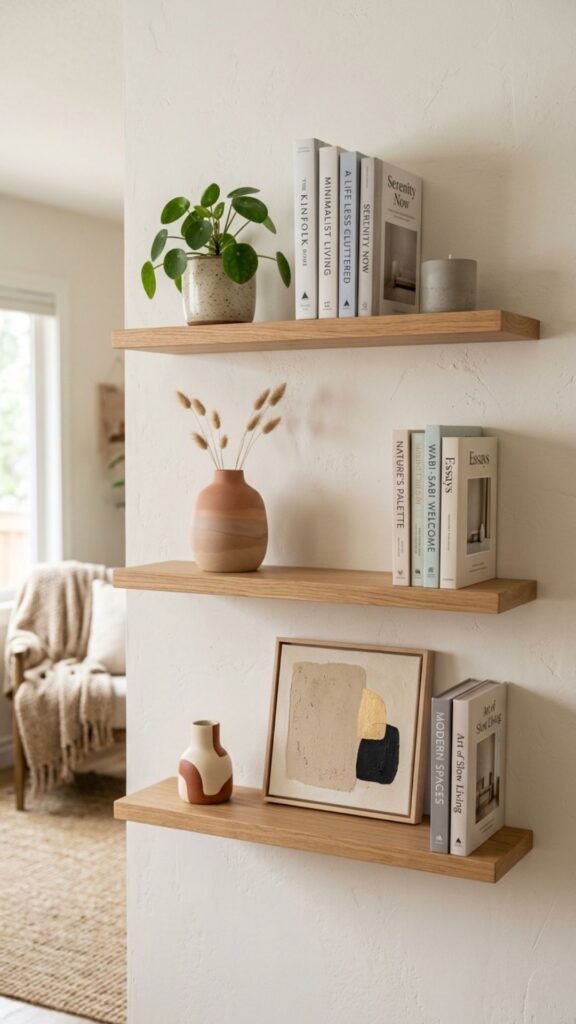
Storage is important in a functional home office, but large cabinets can quickly make a small room feel heavy.
Floating wooden shelves provide useful storage while maintaining an open appearance.
Use them sparingly and avoid filling every inch. A few books, a ceramic vase, a small plant, and one framed artwork can create a beautifully balanced display.
12. Hide Cables and Electronics
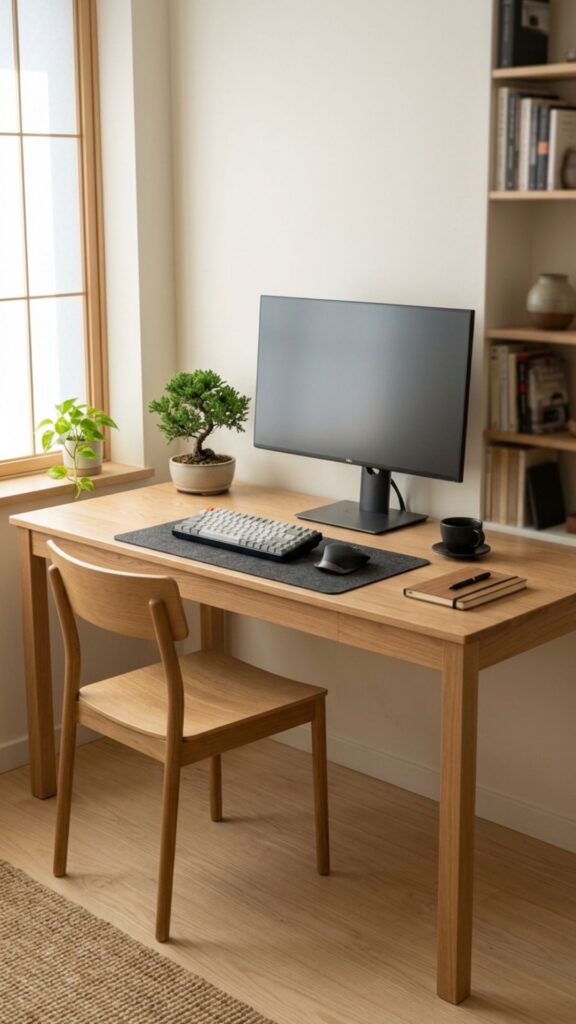
Visible wires can disrupt even the most carefully designed minimalist office.
Use cable trays beneath the desk, cord clips along furniture edges, and charging stations inside drawers whenever possible.
You can also choose wireless accessories to reduce the number of cords around your workspace.
The goal is not to hide technology completely, but to prevent it from dominating the room visually.
13. Decorate With Japanese-Inspired Art
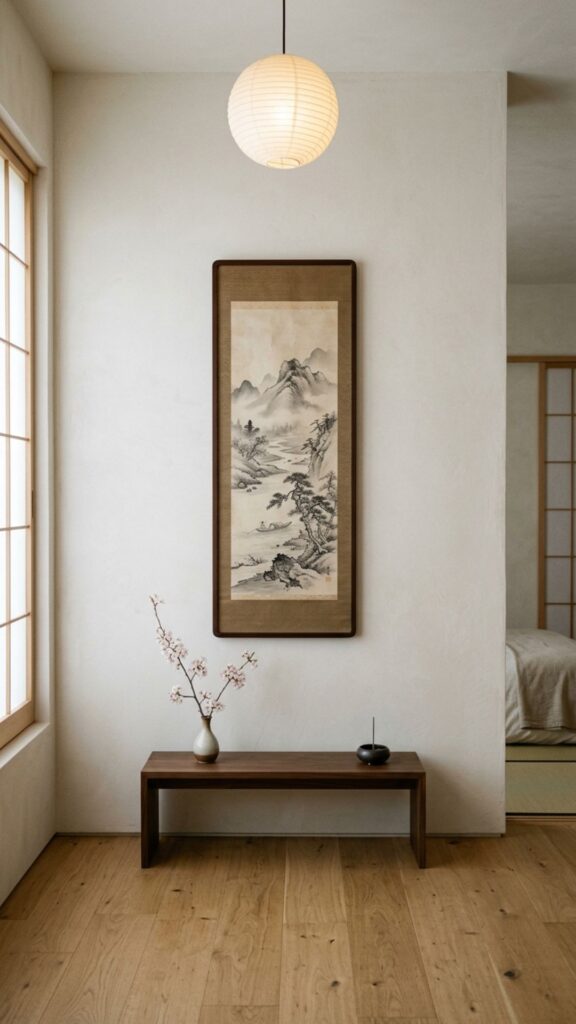
Wall art can add character without overwhelming the space.
Consider a single Japanese ink painting, landscape print, minimalist botanical illustration, calligraphy piece, or artwork inspired by mountains and nature.
Rather than creating a large gallery wall, allow one meaningful artwork to stand on its own.
The surrounding negative space becomes part of the composition.
14. Add a Soft Tatami-Inspired Rug
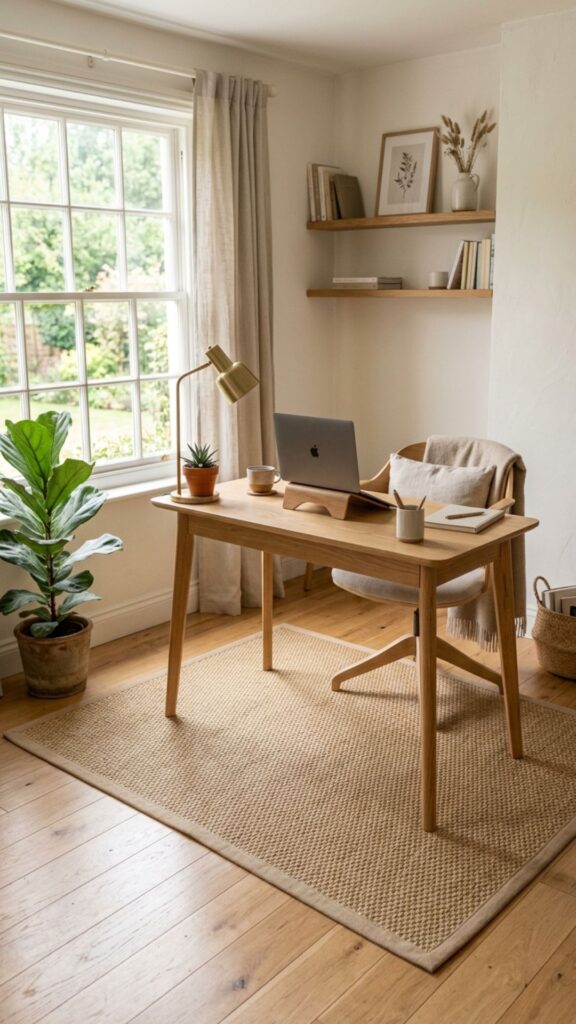
Traditional tatami mats bring natural texture and warmth into Japanese interiors.
While authentic tatami flooring may not suit every home office, you can achieve a similar feeling with a woven grass, jute, sisal, or neutral flatweave rug.
Choose a simple rectangular design that fits comfortably beneath or beside your desk.
It can visually define your workspace while keeping the room grounded.
15. Create a Small Tea Corner
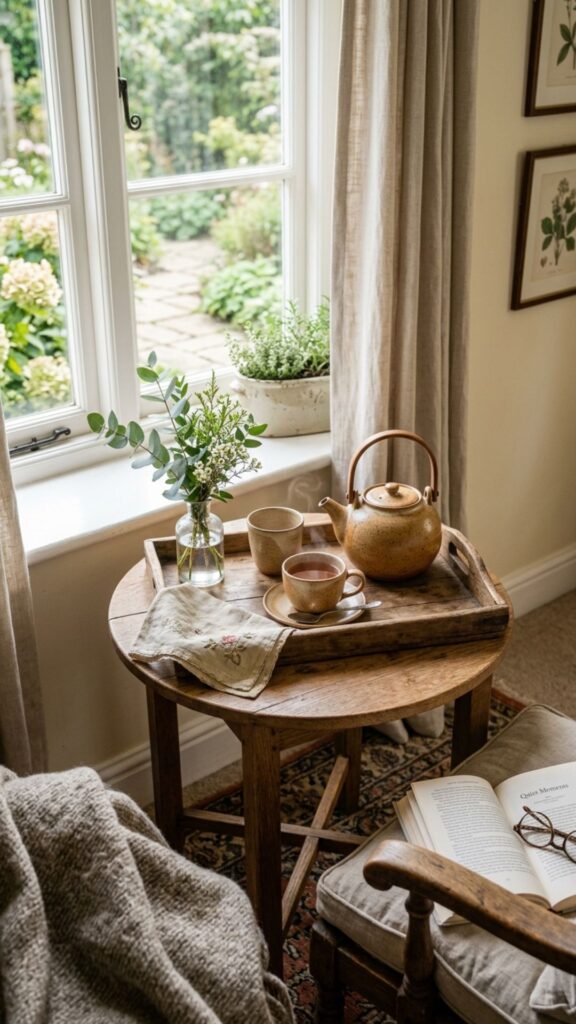
Work breaks feel more intentional when you have a dedicated place to slow down.
Set up a small tea station with a ceramic teapot, cups, tray, and your favorite tea. A compact side table or shelf is often enough.
Instead of reaching automatically for your phone during every break, preparing tea can become a quiet transition between periods of focused work.
16. Use Warm, Gentle Lighting
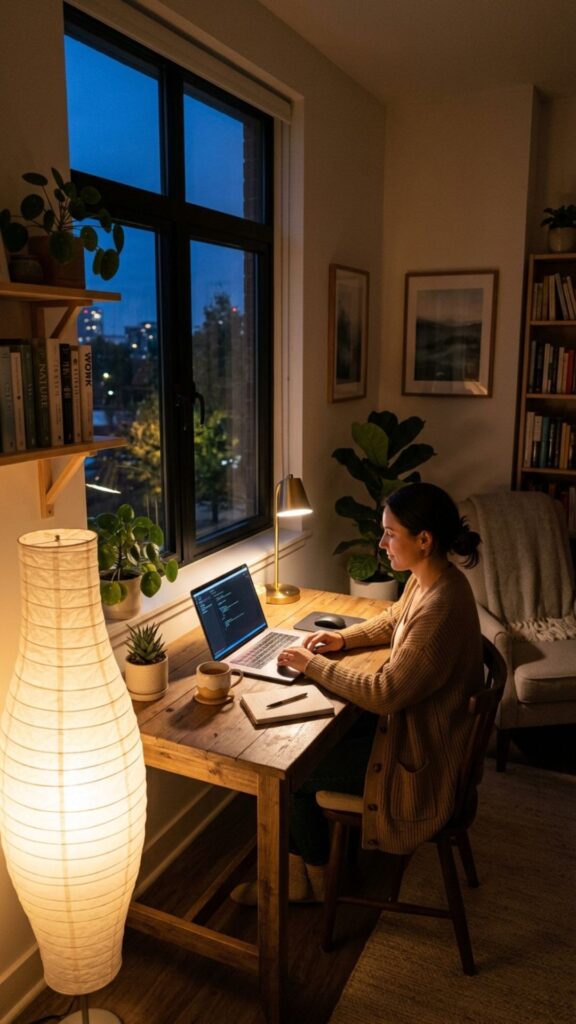
Harsh overhead lighting can make an otherwise peaceful office feel uncomfortable.
Layer softer lighting throughout the room instead. A simple desk lamp, paper lantern, wooden lamp, or warm floor light can create a more relaxed evening workspace.
Rice-paper-inspired lamps are particularly effective because they diffuse light gently rather than directing a strong beam across the room.
17. Embrace Empty Space
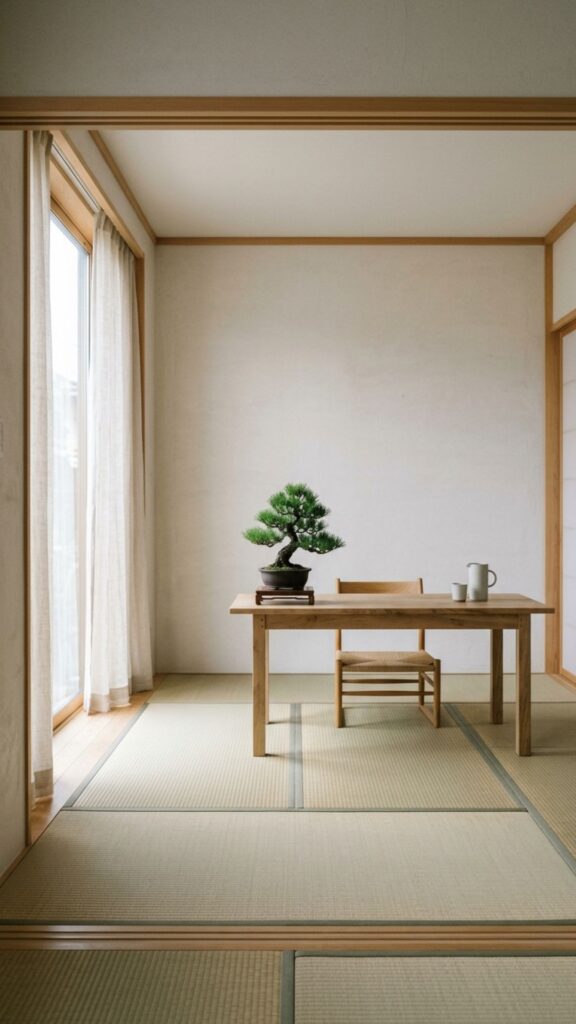
Not every wall needs decoration, and not every corner needs furniture.
Japanese interiors make thoughtful use of negative space, allowing individual objects to breathe.
Leaving part of your office intentionally empty can make the room feel larger and calmer. Instead of asking what else you can add, occasionally ask what you can remove.
That simple shift can dramatically improve the atmosphere.
18. Create Storage That Disappears
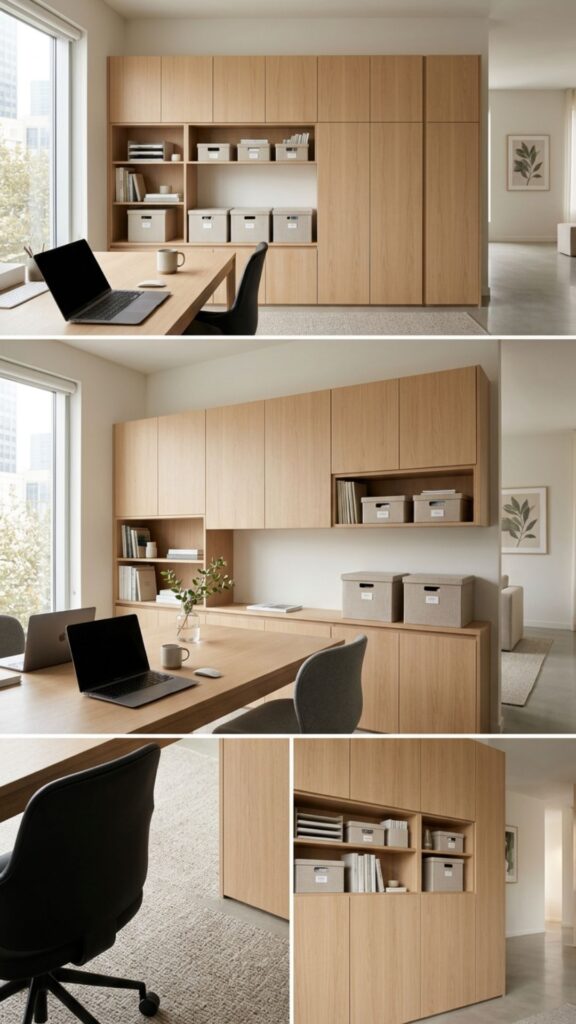
Visual organization is one of the most important parts of maintaining a peaceful workspace.
Choose storage with flat fronts, neutral finishes, and minimal hardware. Closed cabinets are particularly useful for hiding paperwork, chargers, office supplies, and equipment.
Matching wooden or fabric storage boxes can also keep open shelves organized without introducing unnecessary visual noise.
19. Add One Meaningful Decorative Object
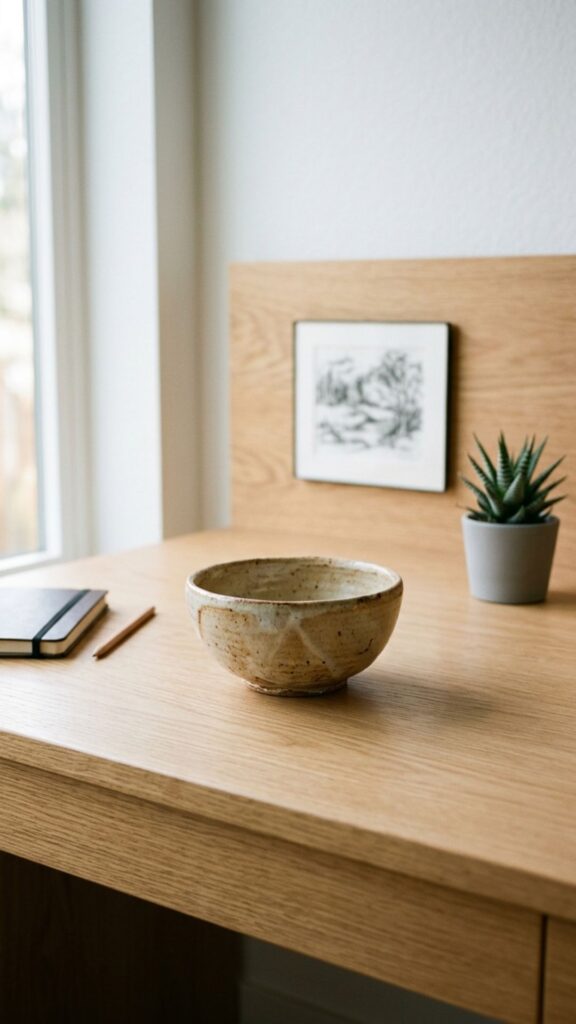
Rather than filling your workspace with numerous accessories, choose one object that carries personal meaning.
It might be:
- A handmade ceramic bowl
- A stone collected while traveling
- A favorite sculpture
- A vintage wooden box
- A special photograph
- A small piece of pottery
Japanese-inspired minimalism is not about removing personality. It is about giving meaningful possessions enough space to be noticed.
20. Design a View That Helps You Focus
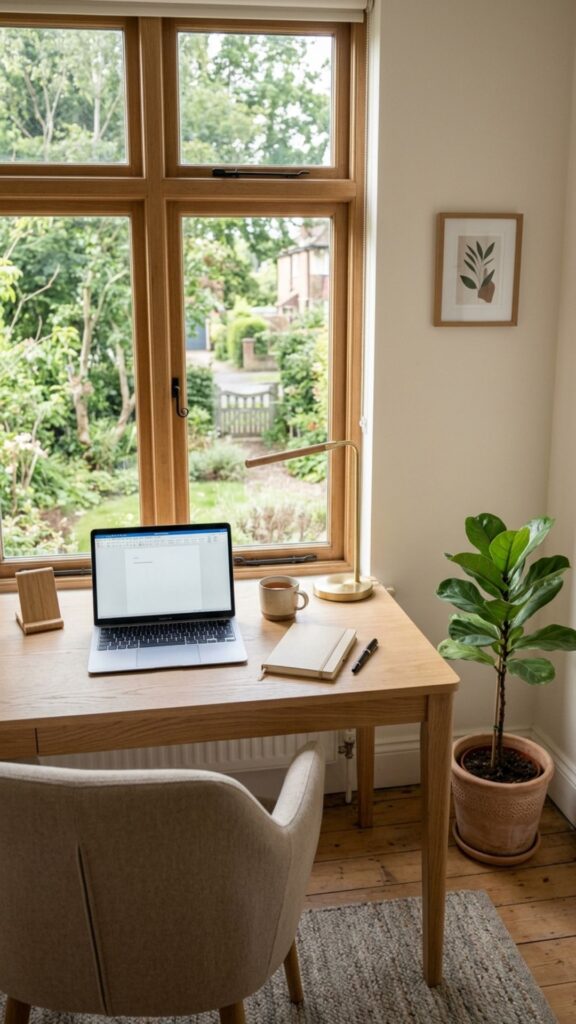
Finally, think carefully about what you see when you look up from your computer.
Instead of facing a crowded shelf or television, position your desk toward a window, blank wall, plant, artwork, or quiet section of the room.
Creating a restful visual focal point gives your eyes somewhere peaceful to land during breaks from the screen.
Even a single plant against a plain wall can create a surprisingly calming view.
Conclusion
Creating a Japanese-style home office is less about copying a particular decorating trend and more about changing the way your workspace feels. Natural wood, gentle colors, hidden storage, warm lighting, greenery, and carefully chosen objects can transform an ordinary office into a place that encourages clarity and calm.
The key is restraint. You do not need all 20 ideas in one room. Start by clearing unnecessary items, bringing in one natural material, improving the lighting, or adding a plant. Then allow the space to evolve slowly.
When every element has room to breathe and every object earns its place, your home office becomes more than somewhere to complete a task—it becomes a peaceful environment that makes focused work feel easier.
What colors work best in a Japanese-style home office?
Warm white, beige, cream, soft gray, muted brown, and other earthy neutral shades work especially well.
Can I create a Japanese-style office in a small space?
Yes. Minimal furniture, vertical storage, light colors, and clutter-free surfaces make Japanese-inspired design especially suitable for small offices.
What type of desk suits a Japanese-inspired workspace?
A simple wooden desk with clean lines and minimal detailing is usually the best choice.
Do I need traditional Japanese furniture?
No. Modern minimalist furniture can create the same atmosphere when combined with natural materials, simple shapes, and thoughtful styling.
How can I make my home office feel more peaceful?
Reduce clutter, use soft lighting, add natural materials and greenery, and leave some areas intentionally empty.