What if the quietest, most productive room in your home is sitting right beneath your feet?
Basements are often used for storage, laundry, or forgotten furniture, but with the right design choices, they can become surprisingly comfortable workspaces. Their separation from busy living areas makes them especially useful for anyone who needs fewer distractions, more privacy, and a clear boundary between work and home life.

The challenge is making a basement office feel bright, welcoming, and comfortable rather than cold or enclosed. Good lighting, thoughtful furniture placement, warm materials, and clever storage can completely change the atmosphere.
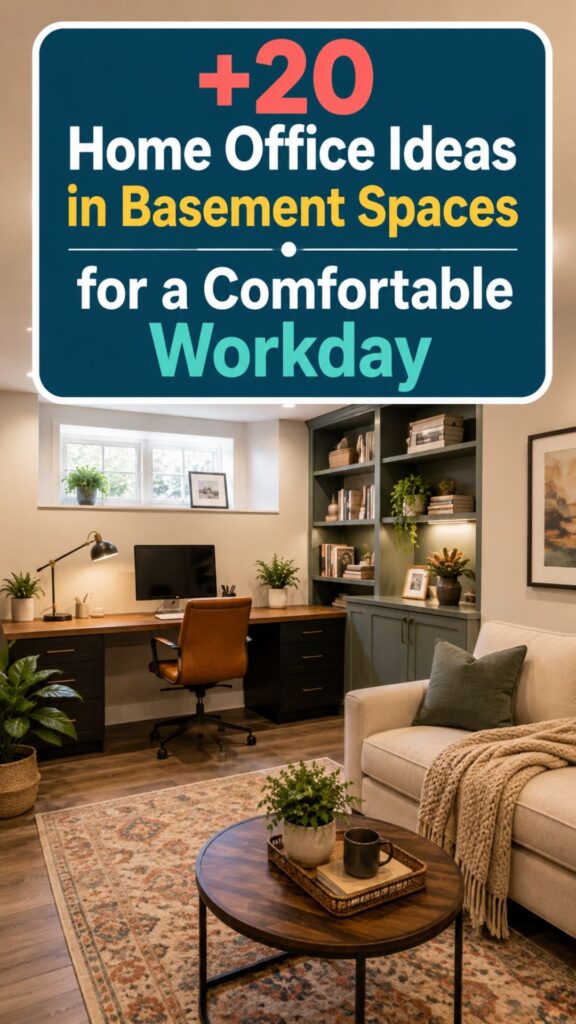
Whether you have a finished basement, a small corner beside the stairs, or an entire lower level available, these 20 home office ideas in basement spaces can help you create a workspace where long workdays feel much easier.
1. Position Your Desk Near a Basement Window
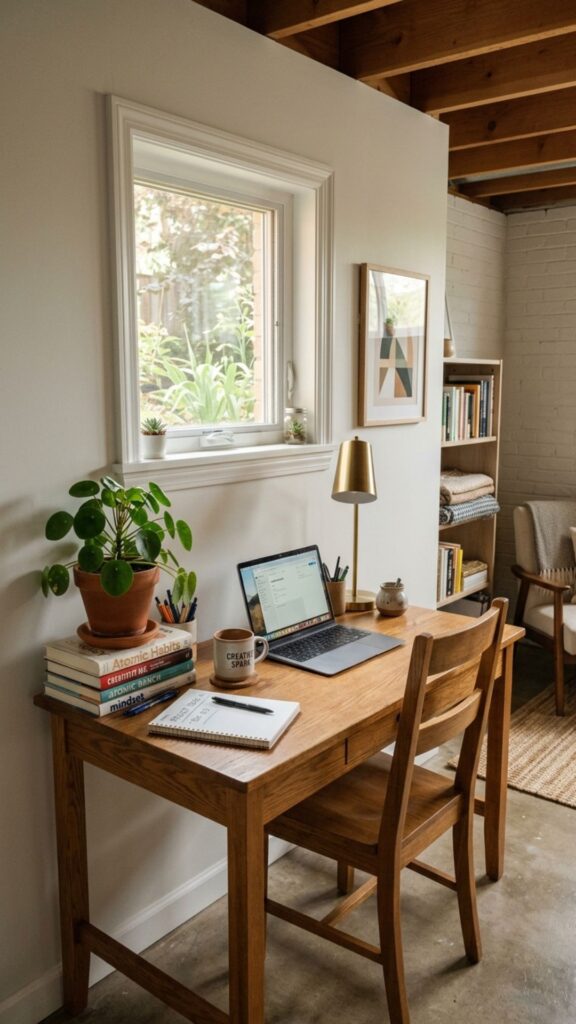
Natural light can instantly make a basement office feel more inviting.
If your basement has a window or window well, place your desk close enough to benefit from the daylight without positioning your computer directly in front of harsh glare. Even a small basement window can make a noticeable difference.
Use light curtains or simple blinds to maintain privacy while allowing as much daylight into the room as possible.
2. Brighten the Space With Layered Lighting
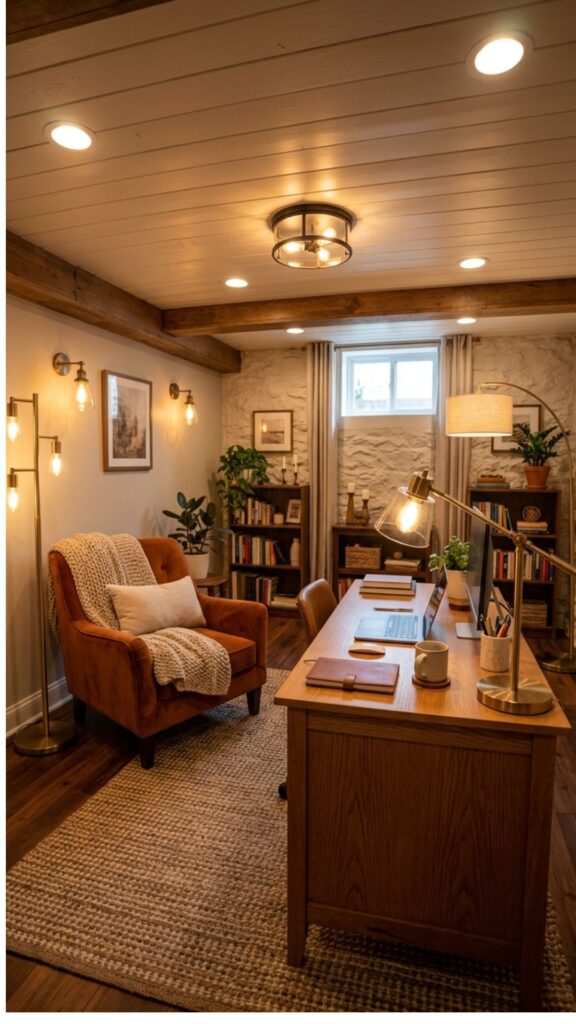
Basements rarely have enough natural illumination for an entire workday, so relying on one ceiling fixture isn’t ideal.
Combine several light sources, such as:
- Overhead lighting for general brightness
- A desk lamp for focused tasks
- Floor lamps for darker corners
- Wall sconces for softer ambient light
Layered lighting reduces gloomy shadows and helps the basement feel more like a finished room than an underground workspace.
3. Choose Light-Colored Walls
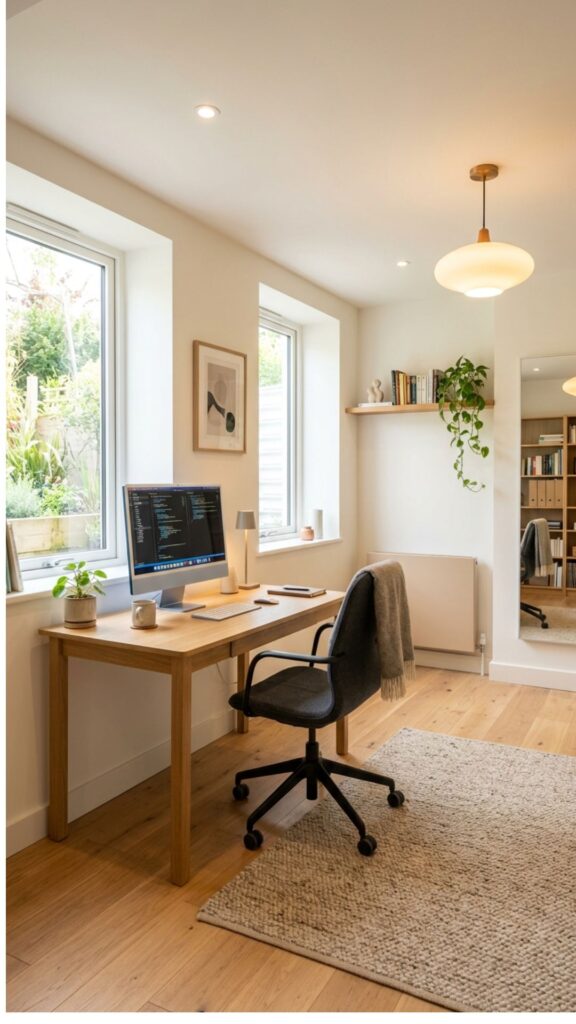
Dark basement walls can make an already enclosed space feel smaller.
Soft white, warm beige, pale gray, or muted cream can reflect available light and visually open the room. You don’t necessarily have to paint everything bright white, either.
A warm neutral shade often creates a more comfortable atmosphere while maintaining the bright effect you want.
4. Create a Cozy Office Under the Stairs
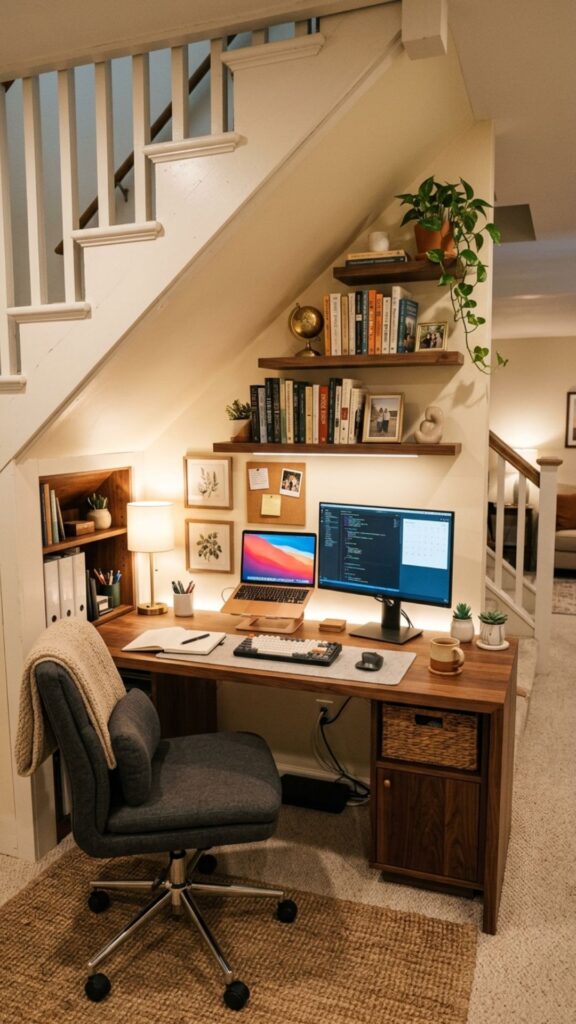
That awkward space underneath a basement staircase can become a surprisingly useful workstation.
Install a compact desk or floating work surface, add shelves above it, and use a comfortable task chair that can slide neatly underneath.
This setup works particularly well when you don’t want your office to take over the entire basement.
5. Use a Floating Desk in a Small Basement
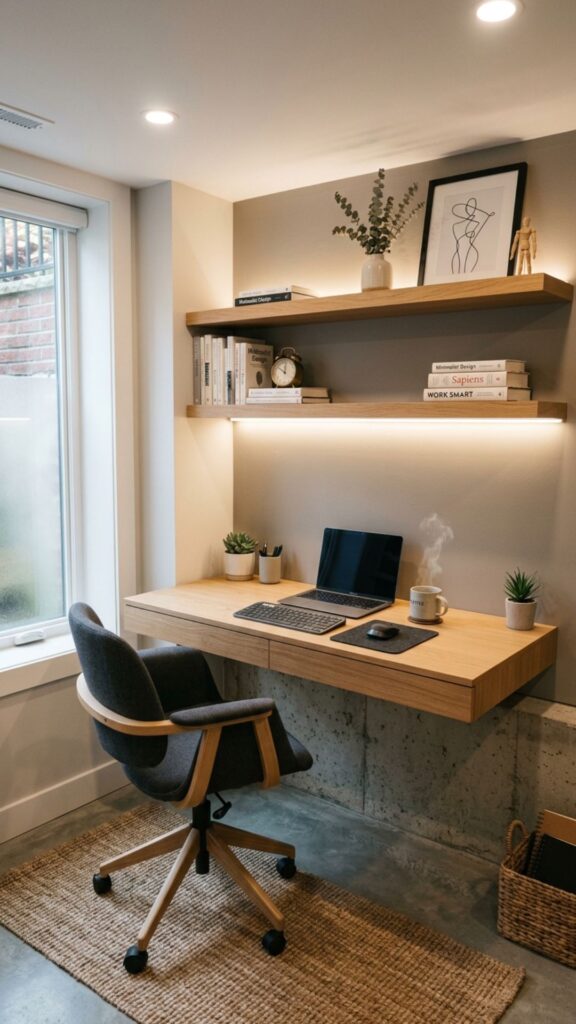
A bulky desk can overwhelm a narrow basement room.
A wall-mounted floating desk gives you the surface you need while leaving more floor space visible. That visual openness can make a small office feel significantly larger.
Pair the desk with floating shelves for documents, books, and decorative accessories.
6. Add an Ergonomic Office Chair
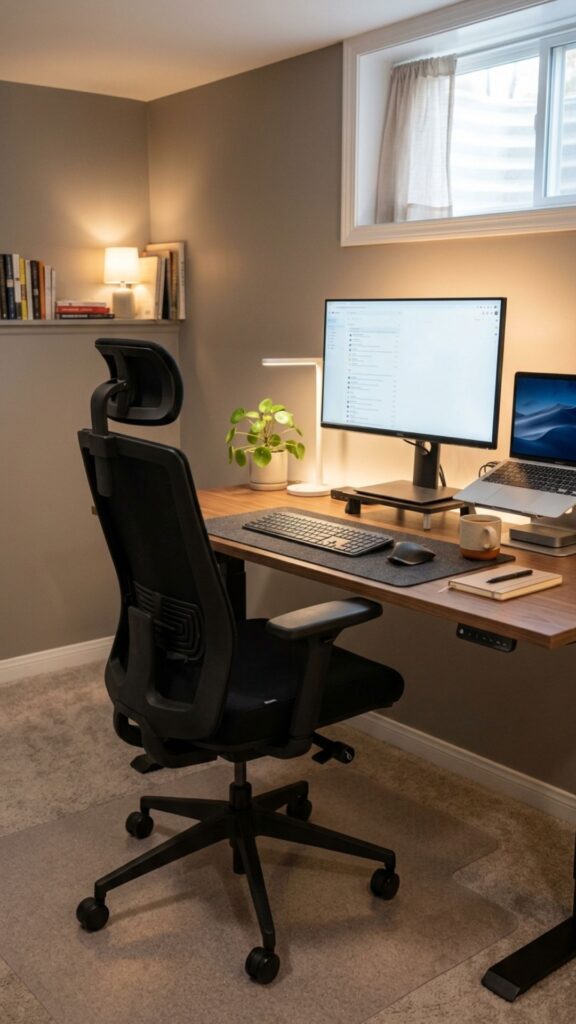
Your basement may look beautiful, but comfort should still be the priority.
Choose an ergonomic chair with proper lumbar support, an adjustable seat height, and comfortable armrests. Your feet should rest firmly on the floor while your monitor sits around eye level.
If you’re working downstairs for six or eight hours a day, supportive furniture matters much more than trendy furniture.
7. Warm Up the Floor With a Large Rug
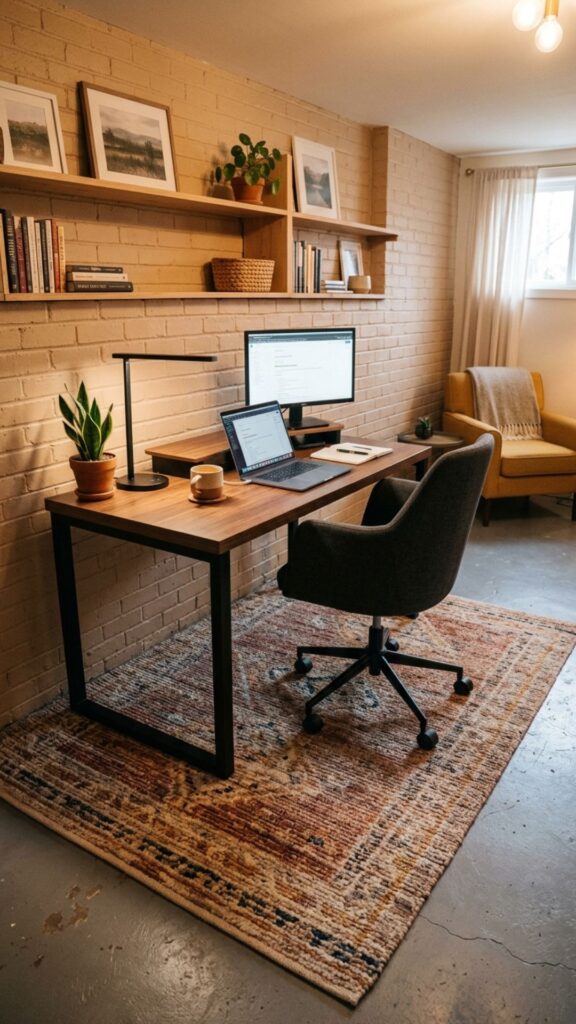
Basement flooring can sometimes feel cold, both physically and visually.
Placing a generous area rug beneath your desk and chair immediately makes the office feel warmer and more finished. It can also help absorb sound, which is useful if the basement has hard flooring.
Choose a low-pile rug so your office chair can still move comfortably.
8. Bring Natural Wood Into the Room
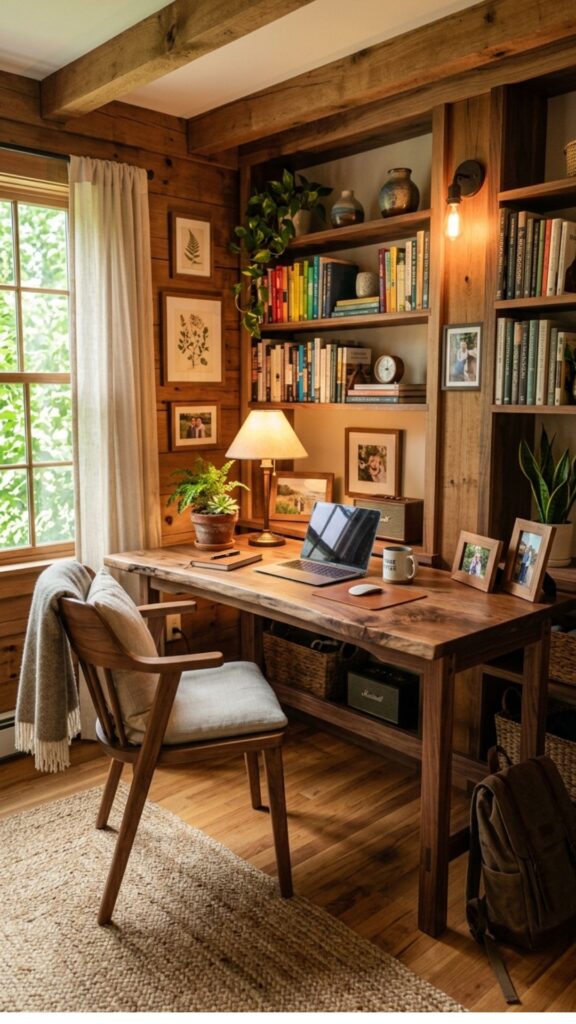
Wood is especially effective in basement spaces because it brings warmth to rooms that can otherwise feel sterile.
Consider incorporating:
- A wooden desk
- Floating timber shelves
- Storage cabinets
- Picture frames
- Decorative wall panels
Even a few natural wood accents can soften concrete floors, white walls, and artificial lighting.
9. Build a Basement Office Accent Wall
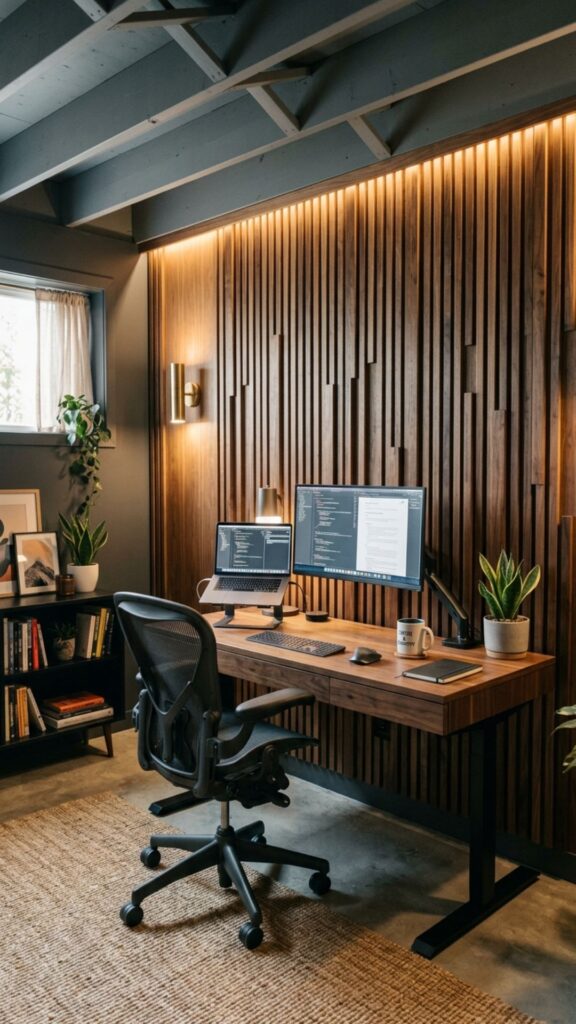
A basement office doesn’t have to feel purely functional.
Create visual interest behind your desk with an accent wall using paint, wallpaper, vertical wood slats, or simple wall paneling.
It can also provide an attractive background for video meetings without requiring complicated decorating.
10. Install Built-In Storage
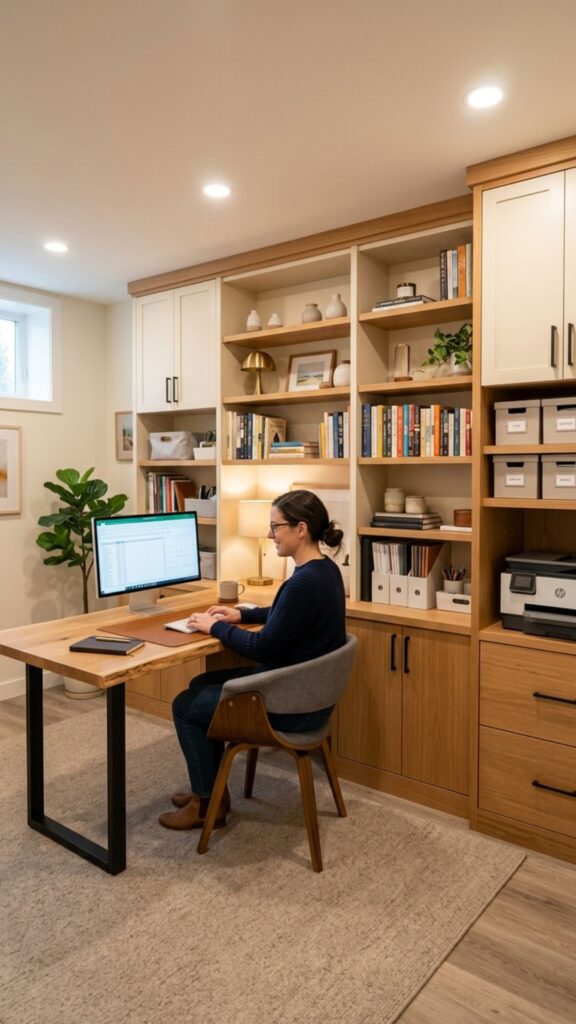
When your basement office needs to handle paperwork, equipment, supplies, and household storage, built-ins can help keep everything under control.
Use a combination of closed cabinets and open shelving. Keep visually distracting items behind cabinet doors while displaying books, plants, and decorative pieces on open shelves.
A tidy office generally feels calmer and easier to work in.
11. Create a Minimalist Basement Workspace
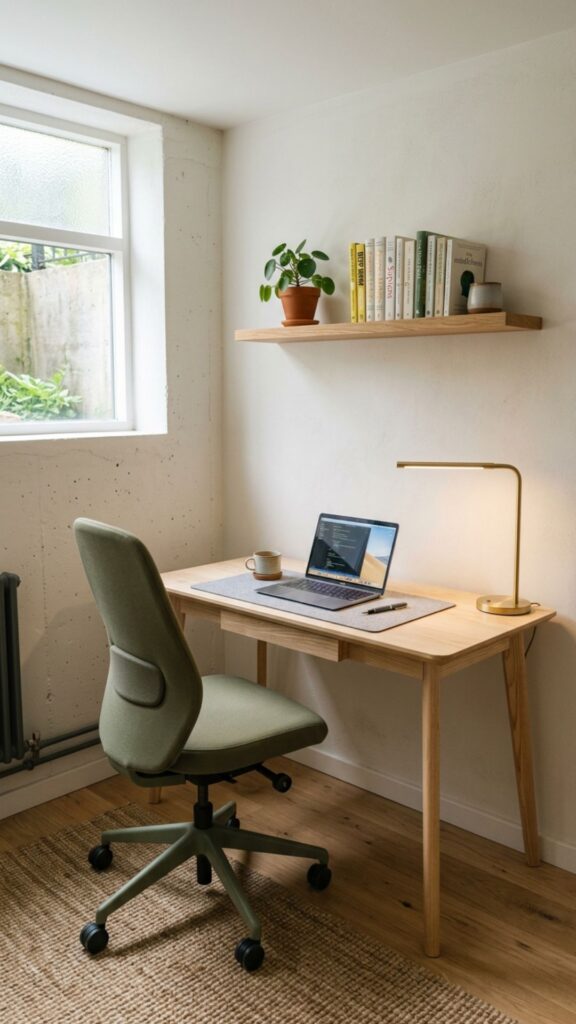
You don’t need to fill every available wall.
A minimalist basement office might include only a simple desk, supportive chair, lamp, small shelf, and one or two decorative pieces.
Keeping the surroundings uncluttered can be particularly helpful for concentration when your basement also serves other purposes.
12. Add Plants for a Fresher Atmosphere
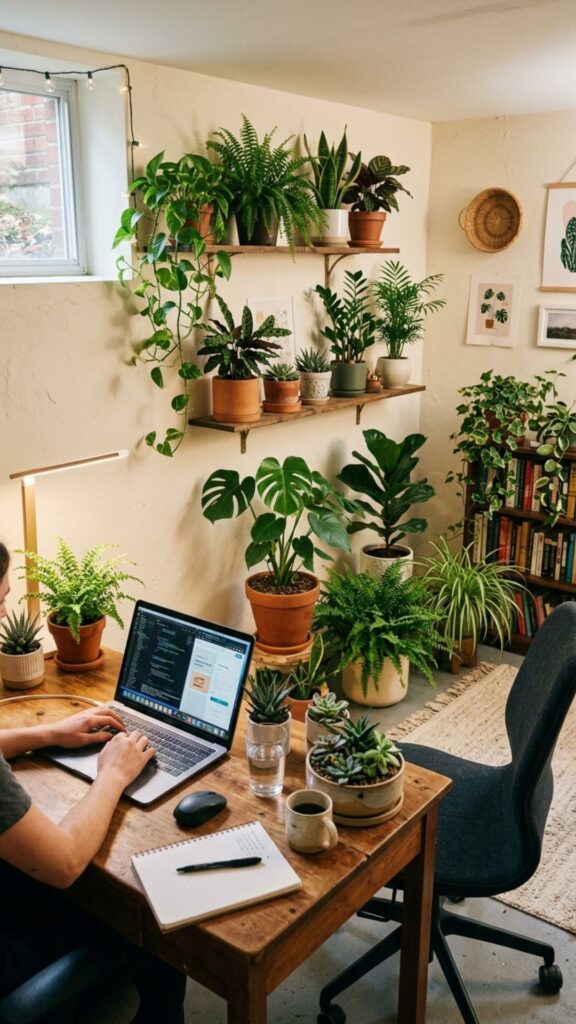
Plants can soften the enclosed feeling sometimes associated with basement rooms.
If natural light is limited, choose varieties that tolerate lower-light conditions or place plants close to available windows.
A small collection of greenery around your desk can introduce color and make the workspace feel livelier without requiring an elaborate makeover.
13. Divide a Multipurpose Basement Into Zones
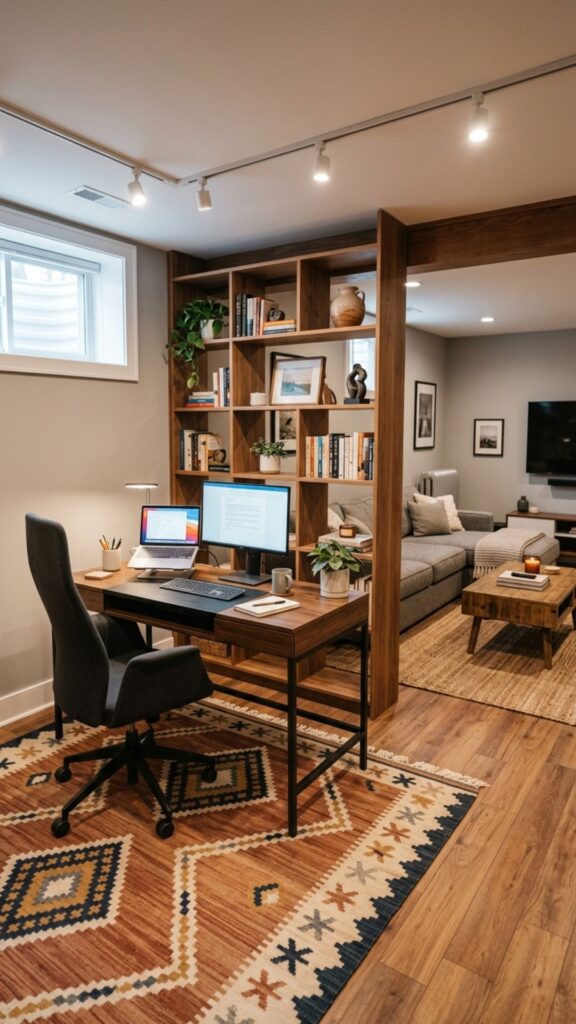
Your basement might need to function as an office, gym, family room, storage area, or playroom all at once.
Instead of trying to hide your desk somewhere in the corner, establish a distinct office zone.
You can separate it with:
- An open bookcase
- A room divider
- A curtain
- A large rug
- Different wall colors
Creating a visual boundary helps signal when you’re entering and leaving your work area.
14. Use Glass Partitions for Privacy Without Darkness
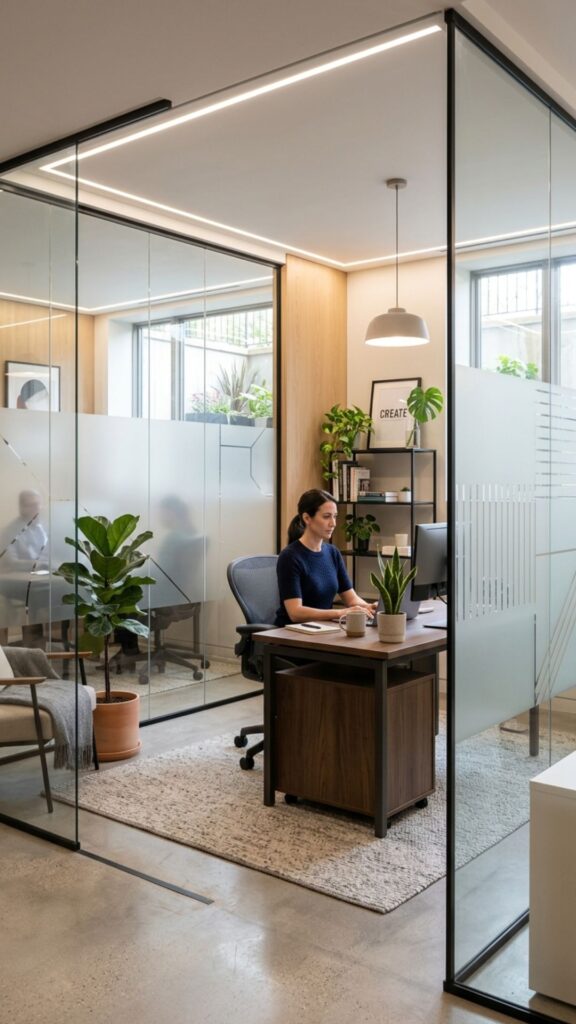
If you need a separate office but don’t want to block valuable light, consider a glass partition.
Glass walls or doors visually separate the workspace while allowing light to move throughout the basement.
They can be particularly useful for homeowners who regularly attend calls and need more acoustic privacy without creating a closed, windowless room.
15. Design a Basement Office for Two
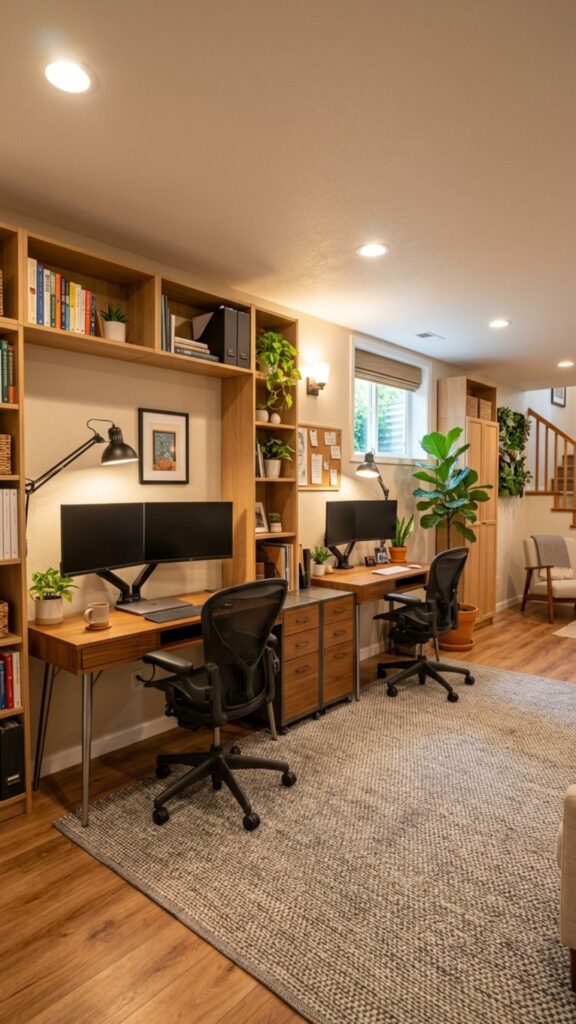
If two people work from home, the basement can provide enough room for a shared office.
Place desks side by side for a collaborative arrangement or position them on opposite walls to give each person a separate work zone.
Individual lighting, storage, and cable management will make the shared setup more practical.
If frequent video calls are part of both schedules, consider creating enough distance between workstations to reduce interruptions.
16. Hide Cables and Technology
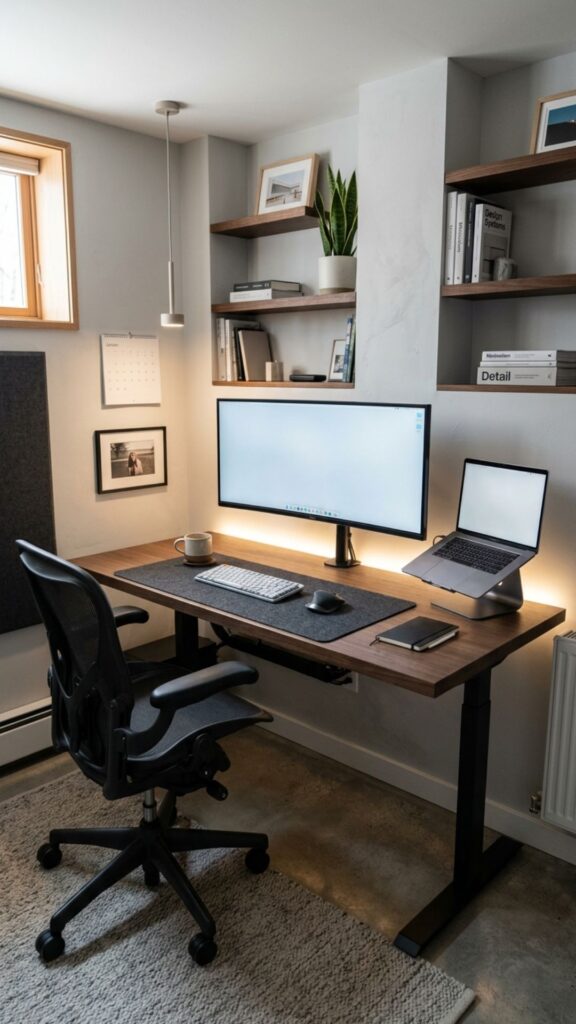
Messy cords can quickly make even a stylish office feel unfinished.
Use under-desk cable trays, cord clips, power-strip holders, and cable sleeves to organize your computer equipment.
Position outlets and charging stations close to the workstation whenever possible.
Reducing visible wires also frees up valuable desk space.
17. Create a Comfortable Video-Call Background
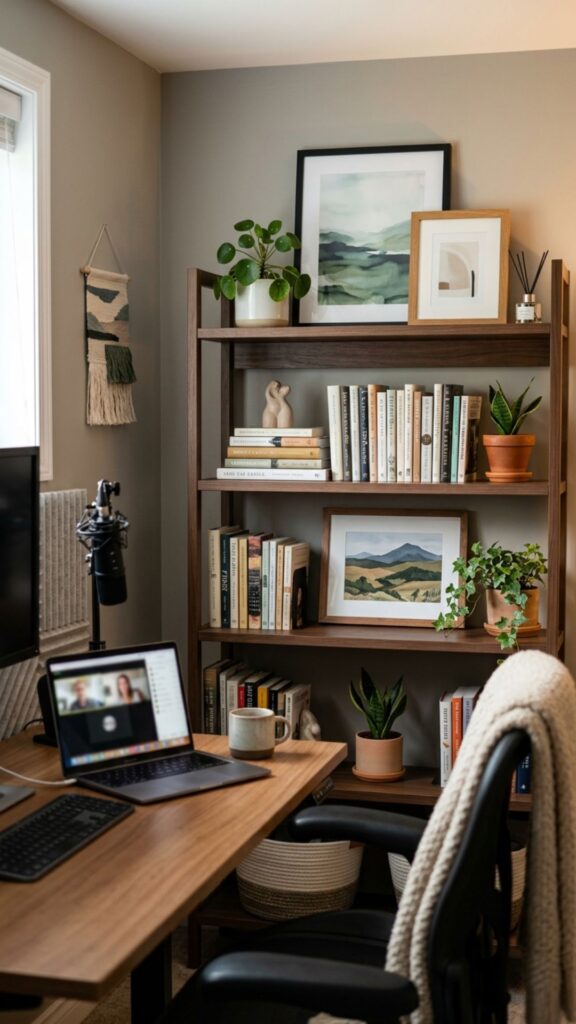
If virtual meetings are part of your routine, think about what appears behind your chair.
Instead of facing your camera toward storage bins or basement utilities, create a simple background with shelving, framed artwork, books, plants, or a clean accent wall.
You don’t need an elaborate display. A few carefully chosen items usually look better than an overcrowded bookshelf.
18. Add Sound-Absorbing Materials
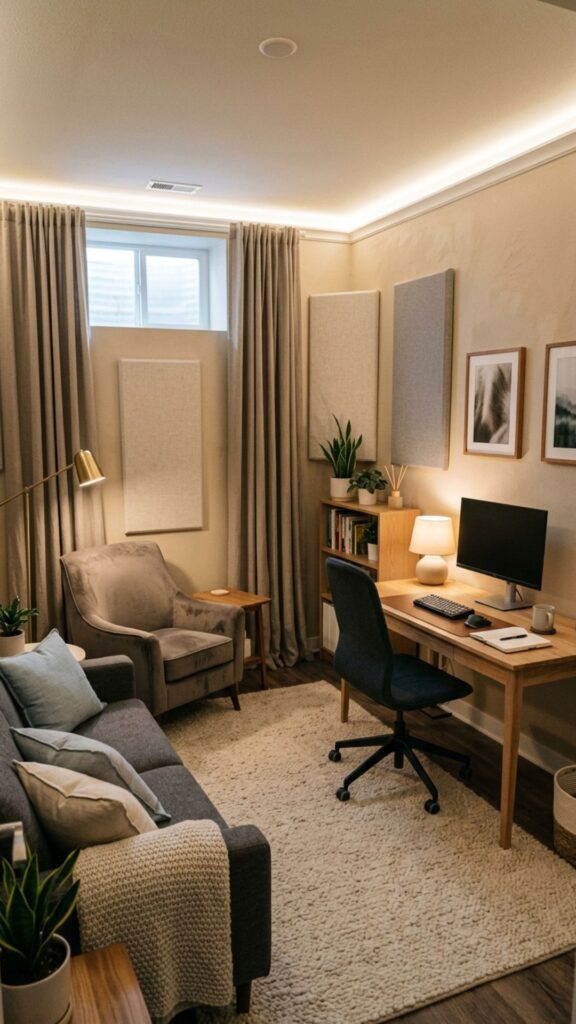
Basements can echo, especially when they contain concrete floors, unfinished ceilings, or large open rooms.
Soft furnishings can improve the acoustics considerably.
Try adding rugs, curtains, upholstered furniture, acoustic panels, or fabric-covered boards. These materials can reduce echoes during meetings while making the room feel warmer.
19. Include a Small Break Area
If your basement has enough space, create a spot where you can briefly step away from your computer.
A comfortable chair, small side table, and reading lamp may be all you need.
Having a separate place to drink coffee, read, or think through a problem can help you avoid spending the entire day sitting at your desk.
Just remember that a break area should complement the office rather than encourage the basement to become another cluttered living room.
20. Personalize the Office Without Overcrowding It
A comfortable workspace should feel like yours.
Display a few photographs, favorite books, artwork, meaningful objects, or travel souvenirs. These personal touches can make a basement office considerably more enjoyable.
The key is moderation. Leave enough clear space around your desk so the room still feels calm and functional.
Conclusion
A basement doesn’t have to be the darkest or least-used part of your house. In fact, its distance from everyday household activity can make it one of the best locations for a productive home office.
Start by solving the essentials: good lighting, comfortable seating, practical storage, proper temperature, and an organized desk setup. From there, introduce warmer materials, greenery, artwork, rugs, and personal details that make the room somewhere you genuinely enjoy spending time.
You also don’t need a complete basement renovation to see a difference. A brighter wall color, well-positioned desk, better lamp, supportive chair, or strategically placed rug can transform even a small basement corner.
The best basement home office isn’t necessarily the largest or most expensive one. It’s the space that helps you stay comfortable, focused, and ready to close the laptop when the workday is done.
Is a basement a good place for a home office?
Yes. Basements can provide a quiet, private workspace away from busy household areas, especially when they have suitable lighting, ventilation, and temperature control.
How can I make my basement office feel brighter?
Use light wall colors, layered lighting, mirrors, reflective surfaces, and position your desk near any available natural light.
What is the best lighting for a basement office?
A combination of overhead lighting, a focused desk lamp, and softer ambient lighting usually creates the most comfortable setup.
How can I make a small basement office look bigger?
Choose compact furniture, floating shelves, light colors, hidden storage, and minimal decor to keep more of the floor and walls visually open.
How can I make a basement office feel cozy?
Add a rug, warm wood finishes, plants, soft lighting, comfortable furniture, and a few personal decorative pieces.