Industrial design and rustic style may come from different worlds, but they work surprisingly well together. Industrial interiors bring in raw materials, dark metals, exposed details, and practical furniture, while rustic spaces soften those harder edges with warm wood, natural textures, vintage character, and a sense of comfort.

When combined thoughtfully, the result is a home office that feels productive without looking cold and stylish without feeling overly polished.
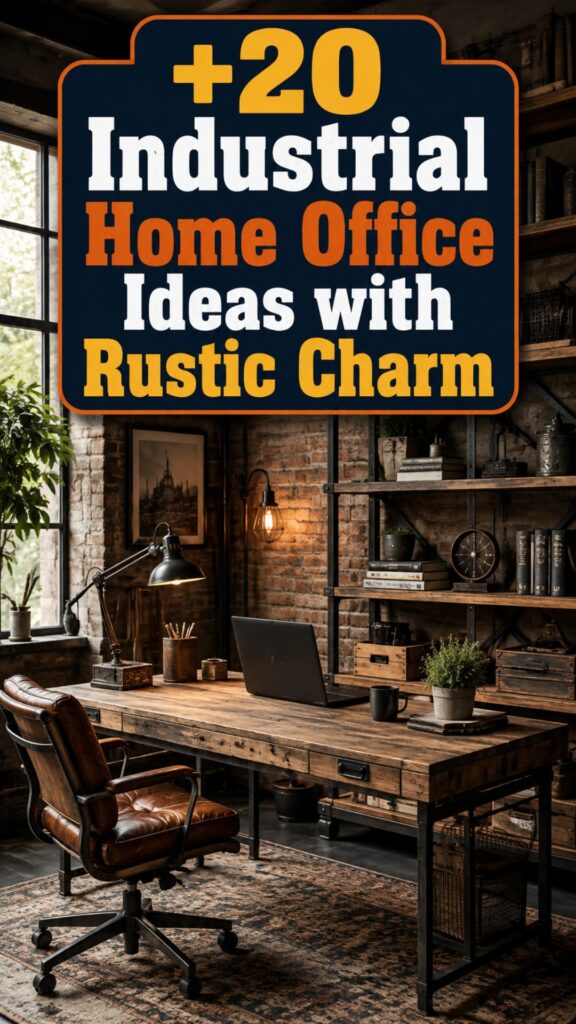
Whether you are transforming a spare bedroom, carving out a workspace in the living room, or refreshing an existing office, these 20 industrial home office ideas with rustic charm can help you create a workspace that feels distinctive, welcoming, and built to last.
1. Start with a Reclaimed Wood Desk
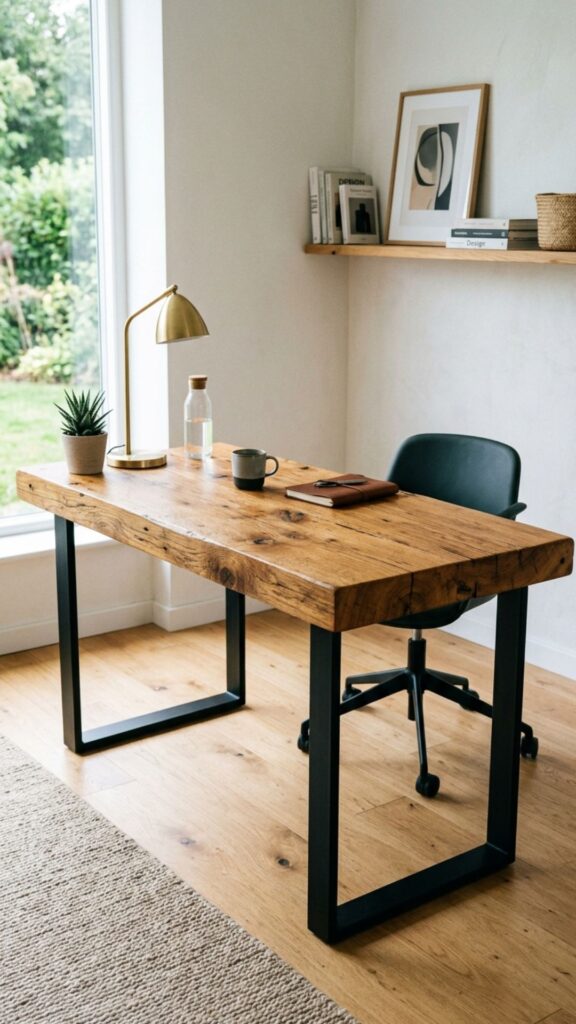
A reclaimed wood desk is one of the easiest ways to establish rustic warmth in an industrial office. Look for a thick wooden top with visible knots, cracks, grain patterns, or slightly uneven edges.
Pair the wood with black steel legs or a simple metal frame to introduce the industrial side of the design. The contrast between weathered timber and clean metal creates a workspace that feels both rugged and refined.
For extra character, choose a desk made from salvaged barn wood, old flooring, or repurposed factory timber.
2. Add a Brick Accent Wall
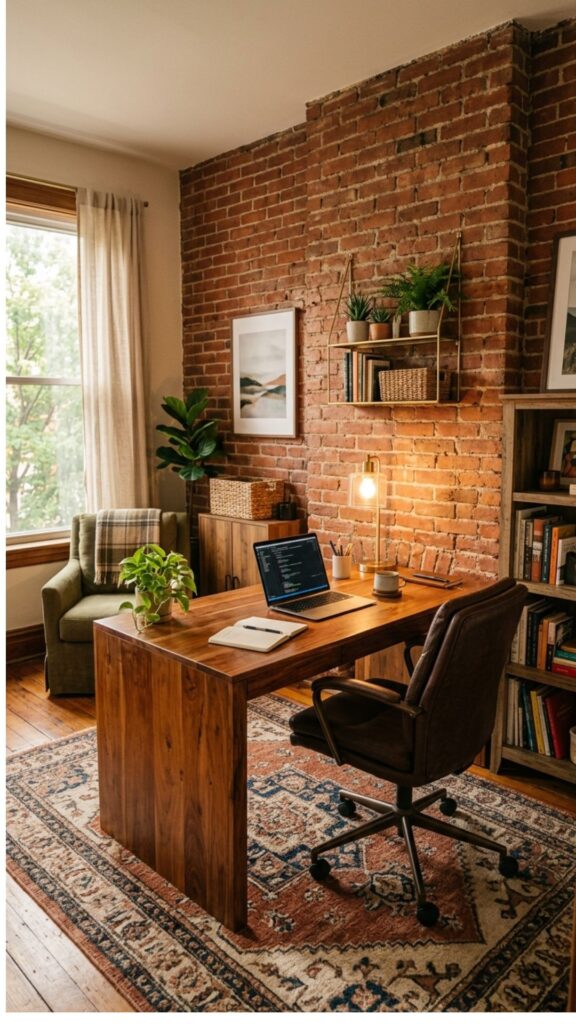
Few features create industrial atmosphere as quickly as exposed brick.
If your home already has an original brick wall, allow it to become the natural focal point of the office. Its texture provides plenty of visual interest without requiring additional decoration.
No real brick? Brick veneer or high-quality brick-effect panels can create a similar appearance.
Balance the rough surface with warm wooden furniture, soft lighting, and a few simple decorative pieces so the room remains inviting.
3. Use Black Metal Shelving
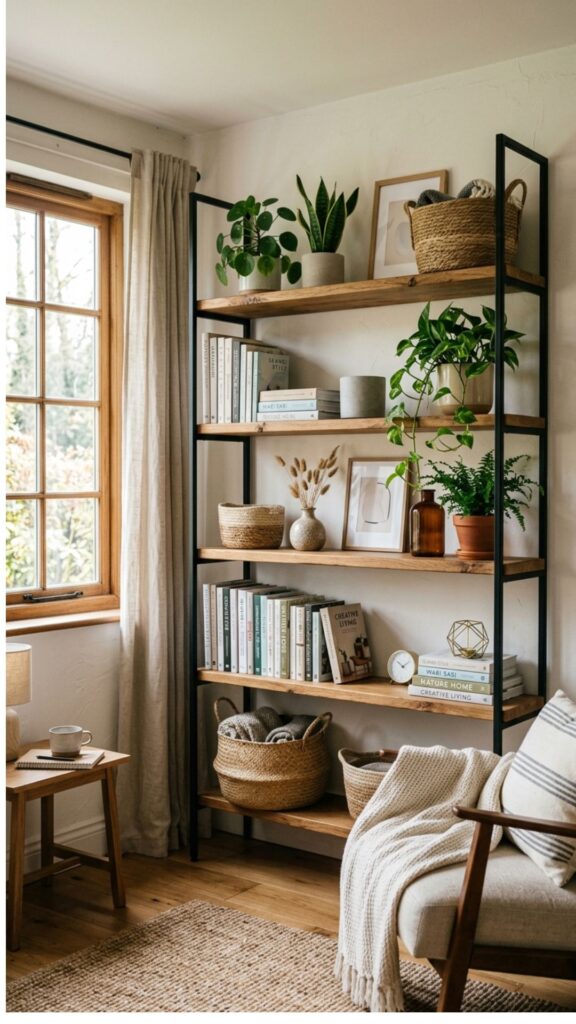
Open shelving with black metal frames fits perfectly into an industrial-rustic workspace.
Choose shelves made from dark steel combined with natural or distressed wood. They can hold books, office supplies, plants, baskets, and decorative objects while keeping everything easily accessible.
Avoid overcrowding the shelves. Leaving some empty space between objects will help the office feel organized instead of visually heavy.
4. Bring in a Vintage Leather Chair
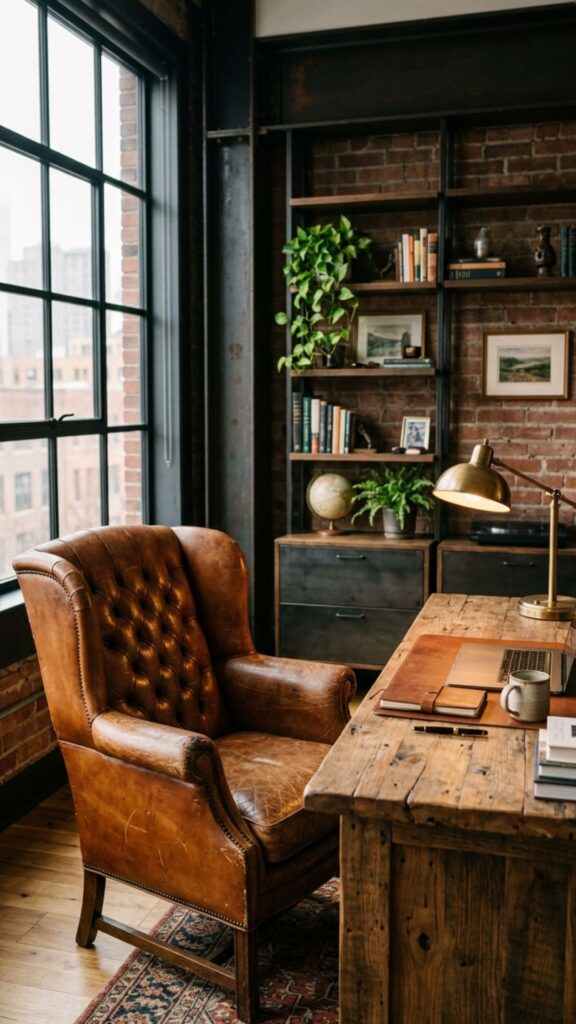
A leather office chair can instantly add warmth and sophistication.
Look for shades such as cognac, caramel, chestnut, or deep brown rather than stark black. These warmer colors complement reclaimed wood and soften darker industrial elements.
A slightly aged or distressed finish works particularly well because it adds the lived-in character associated with rustic interiors.
If comfort is a priority, choose an ergonomic office chair upholstered in leather or faux leather rather than sacrificing support purely for appearance.
5. Introduce Edison Bulb Lighting
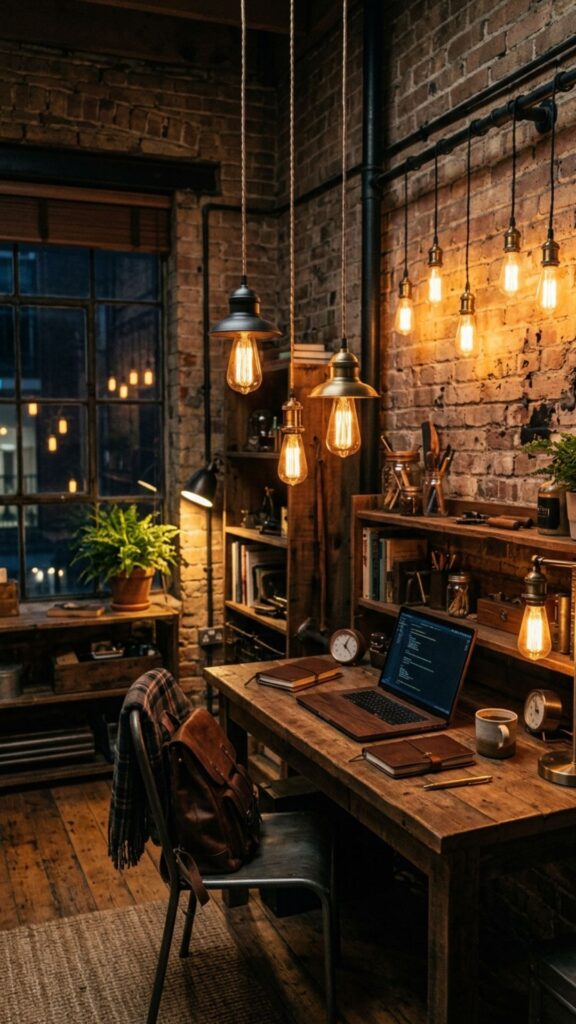
Lighting is an excellent opportunity to reinforce the industrial theme.
Pendant lights, wall sconces, or desk lamps featuring exposed Edison-style bulbs bring a factory-inspired look to the room. Fixtures made from black metal, brass, or aged bronze work especially well.
Because exposed bulbs can sometimes feel harsh, combine them with warmer ambient lighting.
A soft desk lamp or floor lamp can make evening work sessions much more comfortable.
6. Decorate with Industrial Pipe Shelves
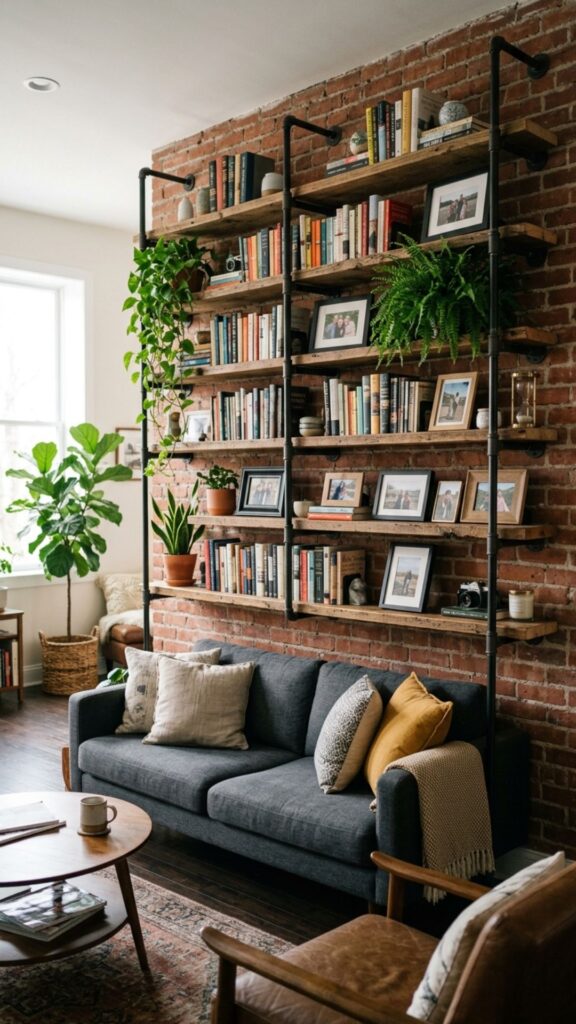
Pipe shelving gives a home office unmistakable industrial personality.
Black iron pipes can support thick wooden planks, creating shelves that feel handcrafted and architectural at the same time.
Install them above your desk for books, storage boxes, small plants, framed photographs, or work essentials.
The rugged pipes introduce industrial character while the wood keeps the display from appearing too cold.
7. Choose a Warm Neutral Color Palette
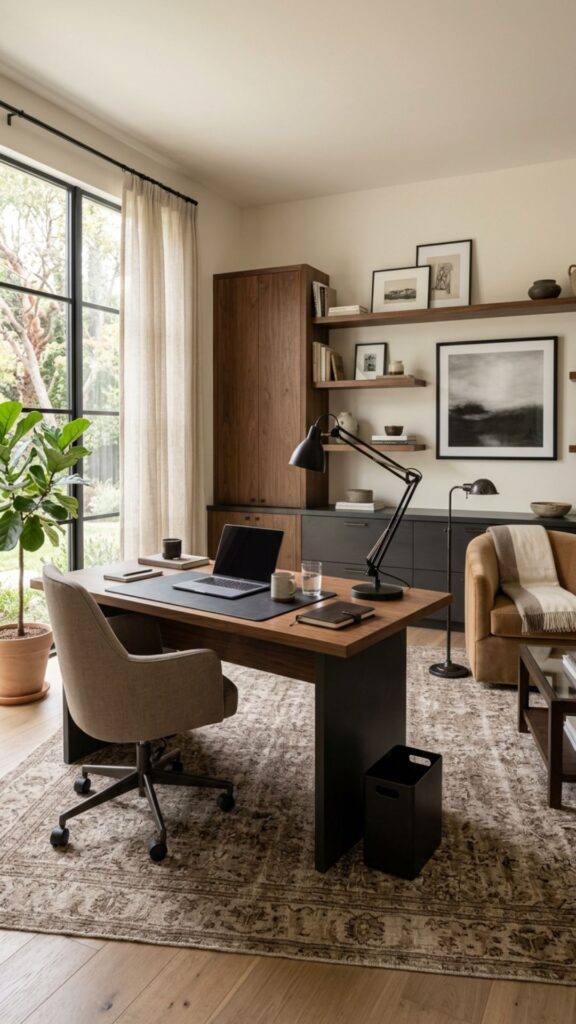
Industrial interiors often rely heavily on gray and black, but adding warmer neutrals prevents the office from feeling gloomy.
Consider shades such as:
- Warm white
- Taupe
- Beige
- Charcoal
- Soft gray
- Camel
- Chocolate brown
Use darker colors for metal furniture and accents, while keeping walls and larger surfaces slightly lighter.
The result will feel industrial without turning the room into a dark warehouse.
8. Add Rustic Wooden Storage Cabinets
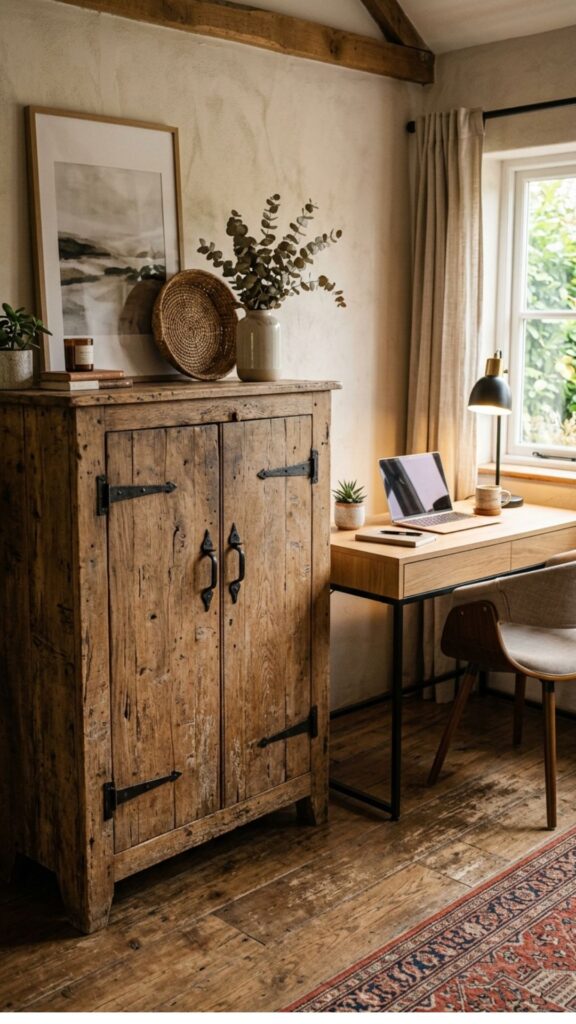
Office storage does not need to look purely functional.
A distressed wood cabinet, vintage filing unit, or farmhouse-style cupboard can introduce rustic charm while hiding paperwork and supplies.
For a stronger industrial look, select a cabinet with black metal handles, mesh doors, or iron framing.
You can also repurpose an old dresser or wooden sideboard as office storage for a more collected, one-of-a-kind appearance.
9. Create Contrast with Concrete Surfaces
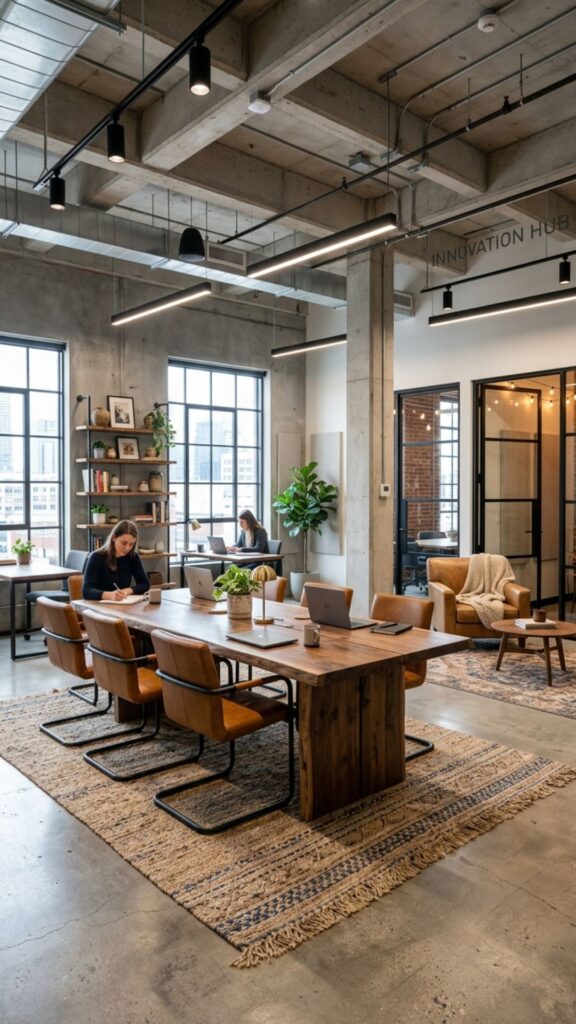
Concrete is a signature industrial material, and even a small amount can transform your office.
Consider using it for:
- A concrete-look desktop
- Planters
- Decorative trays
- A feature wall
- Flooring
- Desk accessories
Because concrete can appear cool and minimal, combine it with wood, woven materials, and leather.
This balance prevents the workspace from feeling overly stark.
10. Layer in a Vintage Area Rug
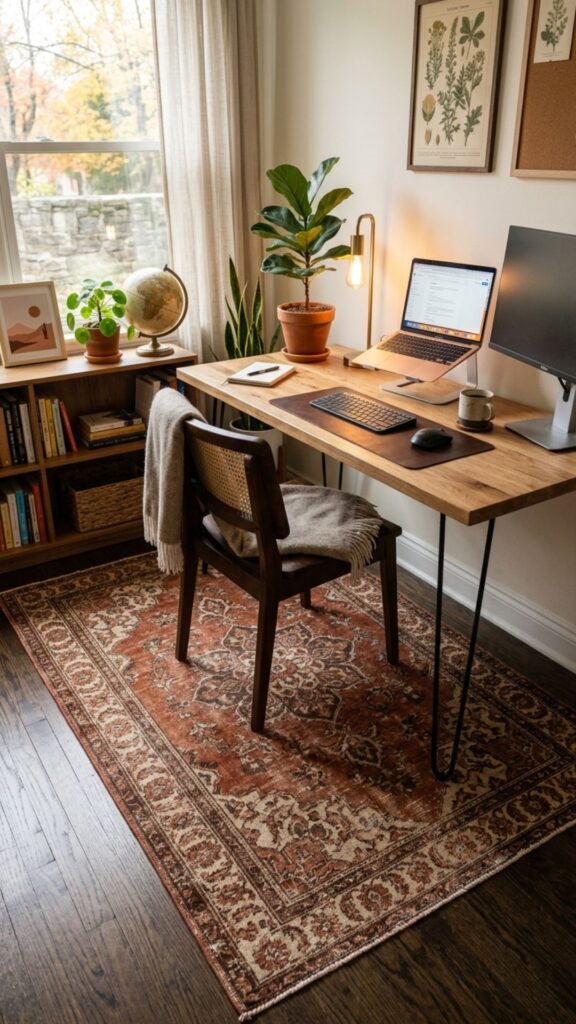
A patterned rug is one of the simplest ways to make an industrial office feel cozy.
Persian-inspired rugs, faded geometric patterns, or distressed vintage-style rugs work especially well.
Choose muted shades such as rust, burgundy, tan, navy, brown, or charcoal.
Placing the rug beneath the desk and chair will visually define the workspace while adding softness underfoot and helping reduce echoes in rooms filled with hard surfaces.
11. Add Industrial-Style Task Lighting
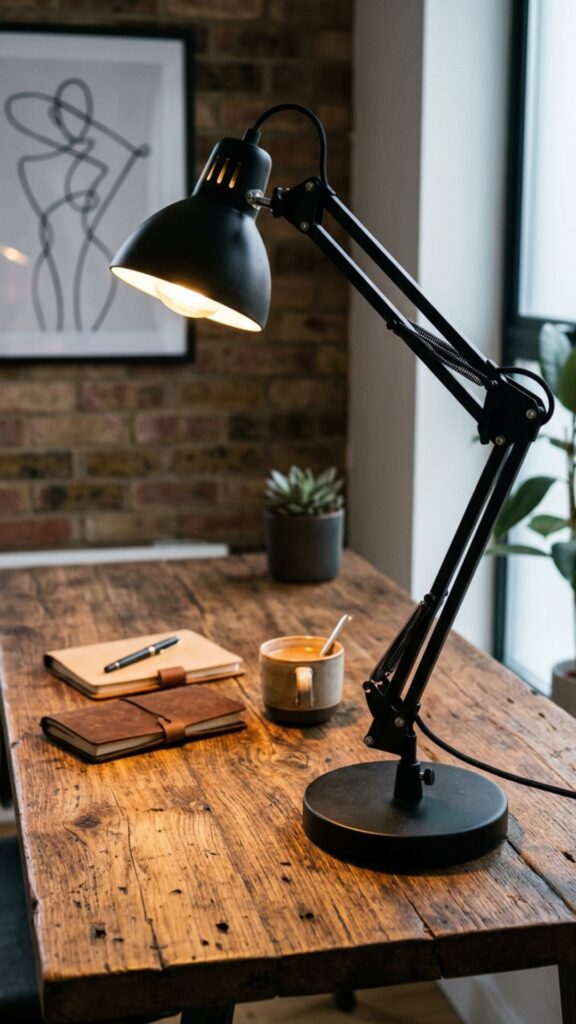
Good task lighting is essential in any productive workspace.
Instead of using a basic modern desk lamp, choose one with industrial character. Adjustable metal lamps, articulated arm designs, cage shades, and vintage workshop-inspired fixtures can all work beautifully.
Black, brass, bronze, and aged steel finishes tend to pair particularly well with rustic wooden desks.
Position the lamp so it illuminates your work area without creating glare on your computer screen.
12. Display Vintage Office Accessories
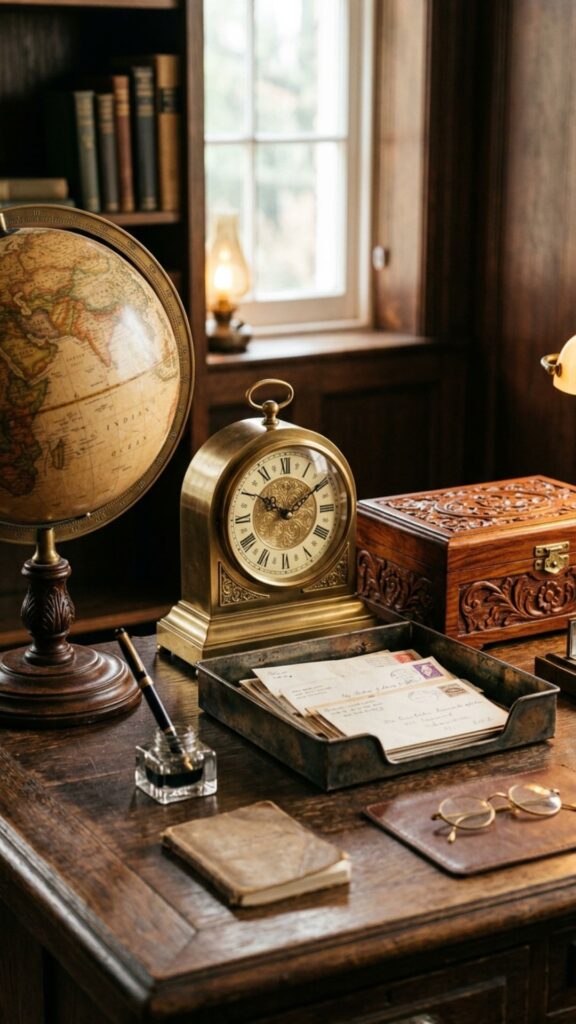
Small details can make a room feel far more personal.
Decorate your workspace with a few vintage-inspired pieces, such as an old-fashioned clock, metal letter tray, wooden storage box, antique-style globe, mechanical pencil holder, or retro calendar.
You do not need many objects.
Two or three carefully selected pieces can add personality without creating unnecessary clutter.
Whenever possible, choose accessories that are useful as well as decorative.
13. Incorporate Natural Greenery
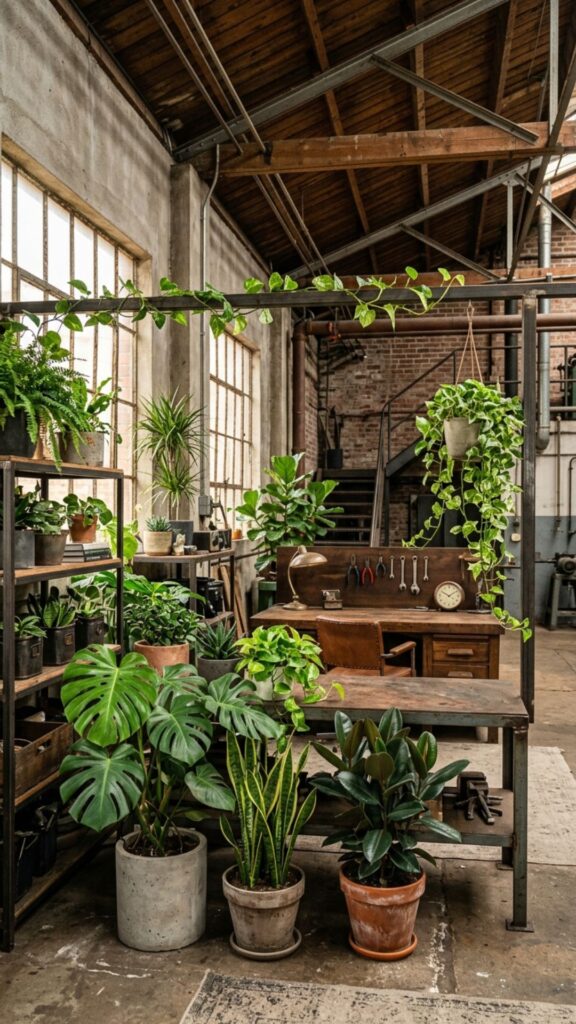
Plants introduce life and color into an industrial workspace.
Their natural softness contrasts beautifully with brick, concrete, metal, and dark furniture.
Snake plants, pothos, ZZ plants, succulents, and rubber plants are all attractive options that can work well indoors.
Place smaller plants on open shelves and larger plants beside the desk or in an empty corner.
For added industrial appeal, use concrete, galvanized metal, or aged terracotta planters.
14. Install a Wood and Metal Bookcase
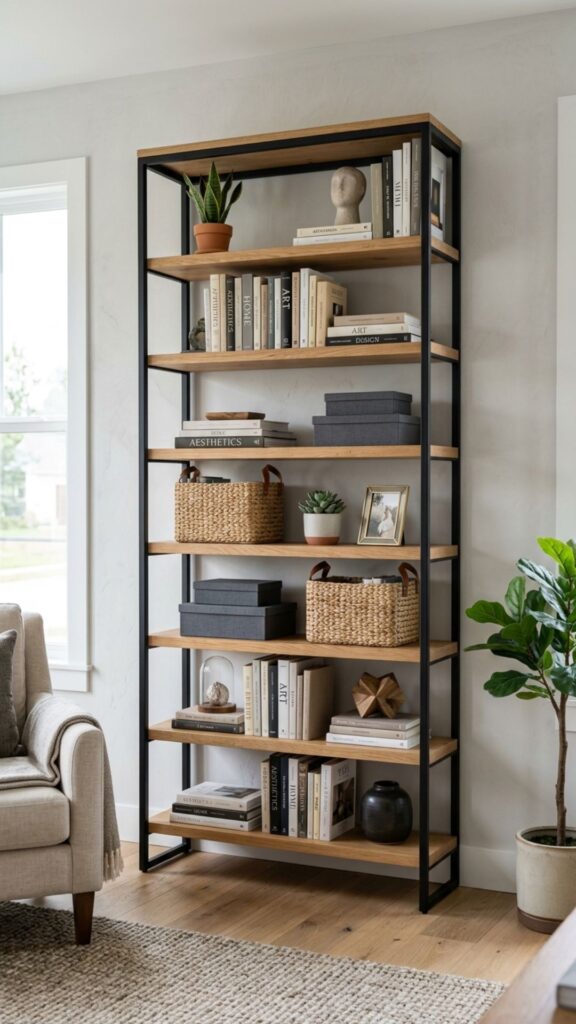
A tall bookcase can anchor the room while providing practical storage.
Choose a design featuring thick wooden shelves supported by a black metal frame. The combination echoes both rustic farmhouse furniture and traditional industrial shelving.
Arrange books both vertically and horizontally, then mix in a few decorative objects.
Wooden boxes and woven baskets can conceal chargers, documents, and smaller supplies while keeping the overall look tidy.
15. Use a Sliding Barn Door with Metal Hardware
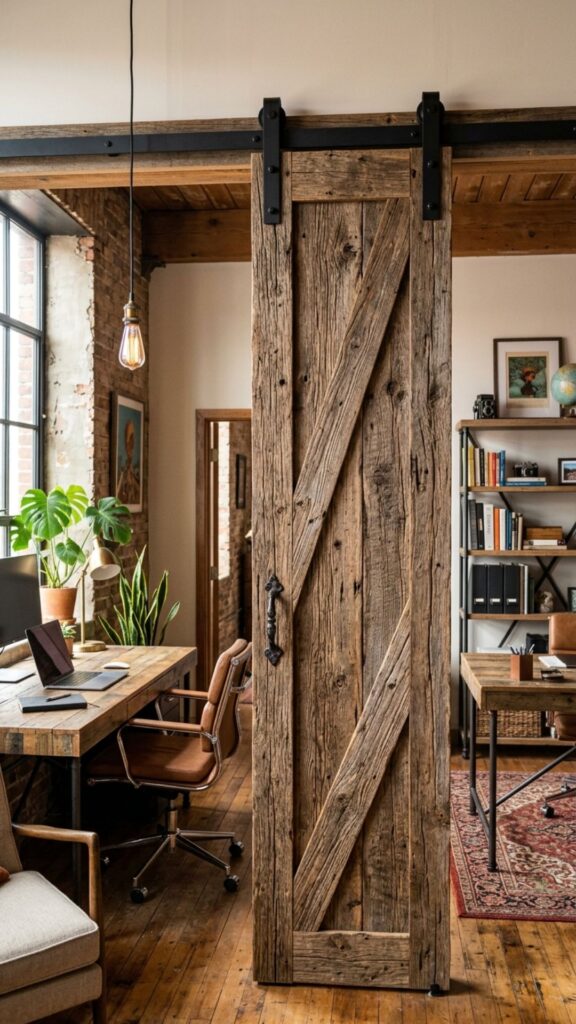
If your home office has its own room, consider replacing a traditional swinging door with a sliding barn door.
A weathered or stained wooden door introduces dramatic rustic character, while exposed black metal tracks and hardware strengthen the industrial aesthetic.
Barn doors are particularly useful in smaller spaces because they do not require floor clearance for the door to swing open.
For a cleaner look, choose a simple plank design rather than an overly decorative farmhouse door.
16. Add a Large Industrial Wall Clock
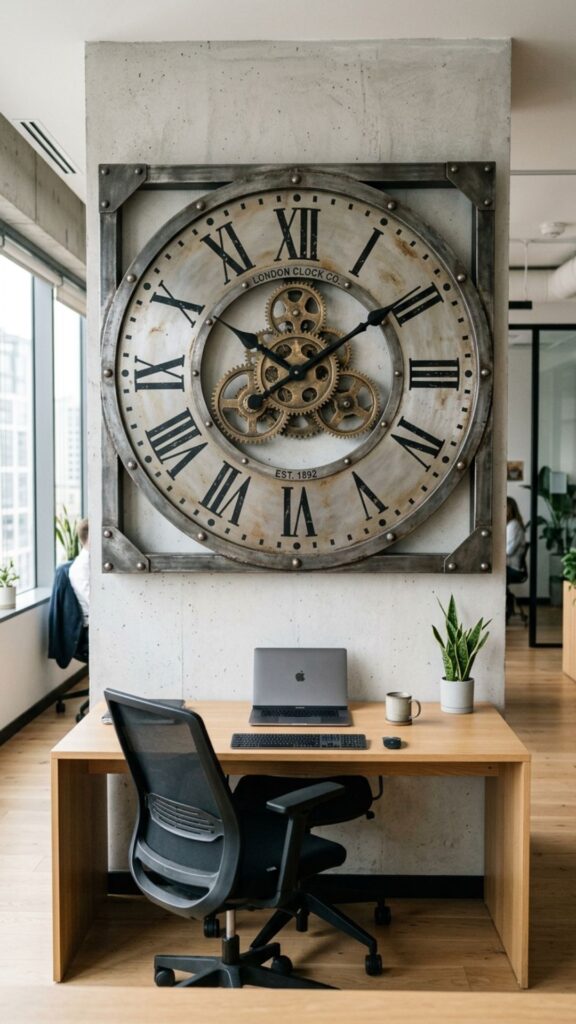
An oversized wall clock can function as both decoration and a practical office feature.
Look for designs with metal frames, Roman numerals, distressed wood, or exposed mechanical-inspired details.
Hang the clock above shelving, behind the desk, or on an otherwise empty wall.
Because large clocks already make a strong statement, keep nearby wall décor fairly simple to avoid overwhelming the space.
17. Create a Rustic Gallery Wall
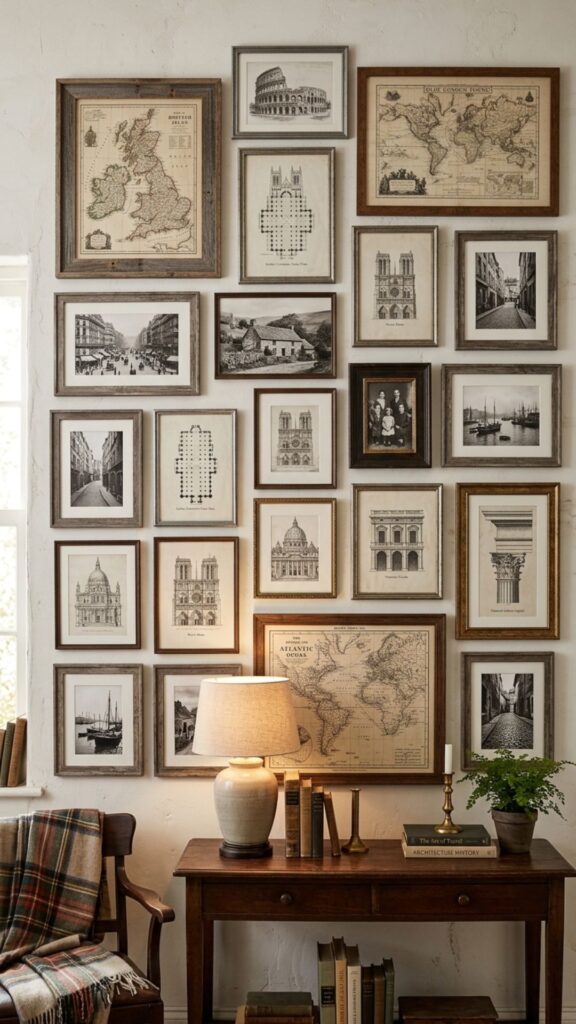
A gallery wall offers an opportunity to make your office feel personal without losing the industrial aesthetic.
Mix items such as:
- Black-and-white photography
- Architectural sketches
- Vintage maps
- Botanical prints
- Typography
- Old patent illustrations
- Wooden signs
Use black metal frames, distressed wood frames, or a combination of both.
Keeping the artwork within a consistent color palette will help the collection feel intentional rather than random.
18. Combine Closed and Open Storage
Industrial offices often feature plenty of open shelving, but too much exposed storage can quickly make a workspace feel cluttered.
Create a balance by mixing open shelves with cabinets, drawers, baskets, and storage boxes.
Display attractive objects such as books and plants while hiding cables, documents, stationery, and miscellaneous supplies.
Choose storage containers made from canvas, wire, wood, or woven materials to maintain the rustic-industrial theme.
19. Add a Wood Slat Feature Wall
If exposed brick feels too bold, consider a wooden feature wall instead.
Vertical wood slats, reclaimed timber boards, or weathered planks can add depth and warmth behind your desk.
Dark-stained wood creates a moodier industrial appearance, while lighter natural timber makes smaller offices feel more open.
Pair the wall with simple black furniture and minimal décor so the texture of the wood remains the main attraction.
20. Finish the Space with Personal Rustic Details
The most appealing home offices rarely look like they came straight from a furniture showroom.
Add a few pieces that have personal meaning.
A handmade wooden tray, vintage camera, family photograph, old toolbox, flea-market find, travel souvenir, or inherited object can give the room genuine character.
These imperfect, collected details are what make rustic design feel authentic.
Just remember that a home office still needs to support concentration. Choose a few meaningful objects rather than covering every available surface.
How to Balance Industrial and Rustic Style
The key to a successful industrial-rustic home office is balance.
Too much metal, concrete, and black can make the space feel cold. Too much distressed wood and farmhouse décor can push the room completely toward rustic style.
Instead, think about creating contrast.
Use industrial materials for structure: metal shelving, lighting, hardware, concrete accents, and dark frames.
Then introduce rustic warmth through wood, leather, textiles, plants, and vintage accessories.
You can also soften the room through lighting. Warm bulbs are particularly effective because they make brick, timber, and leather appear richer and more inviting.
Finally, remember that functionality should guide every design decision. Your desk height, chair comfort, lighting, storage, and computer setup matter just as much as decorative details.
Conclusion
An industrial home office does not have to feel cold, dark, or overly masculine. By introducing natural wood, vintage character, warm textiles, greenery, and comfortable furnishings, you can turn the raw industrial aesthetic into a workspace that feels genuinely welcoming.
Start with one or two defining features—a reclaimed wood desk, black metal shelving, a brick wall, or a leather chair—and build the room gradually around them. Mixing polished pieces with weathered textures will give your office more personality than perfectly matching furniture ever could.
Ultimately, the best industrial-rustic office is one that looks interesting while making your workday easier. Create a space that encourages focus, keeps essentials organized, and makes sitting down to work feel just a little more enjoyable.
What colors work best in an industrial home office?
Warm white, gray, charcoal, black, brown, beige, and earthy shades work particularly well.
How can I make an industrial office feel warmer?
Add natural wood, leather, rugs, warm lighting, plants, and soft textiles to balance harder materials.
Can industrial style work in a small home office?
Yes. Use lighter walls, open shelving, compact furniture, and a few industrial accents rather than filling the space with bulky pieces.
What type of desk suits an industrial-rustic office?
A reclaimed or natural wood desktop paired with black metal legs is one of the most versatile choices.
Does industrial décor have to use exposed brick?
No. You can create the same atmosphere using metal furniture, concrete accents, wood, industrial lighting, and darker finishes without exposed brick.