Working from home sounds wonderfully simple—until the dining table disappears under chargers, notebooks, coffee cups, and a laptop that never really gets put away. The good news? You don’t need a huge room, custom cabinetry, or an interior designer to create a workspace that feels organized and inviting.

That’s exactly why IKEA-inspired home offices are so appealing. Clean lines, modular storage, clever use of small spaces, and furniture that can serve more than one purpose make it easier to build an office around the way you actually work.
Whether you have an entire spare room or just an unused corner beside the sofa, these 20 home office ideas IKEA fans will love can help you create a workspace that looks polished without feeling overly formal.
1. Build a Long Desk With ALEX Drawer Units
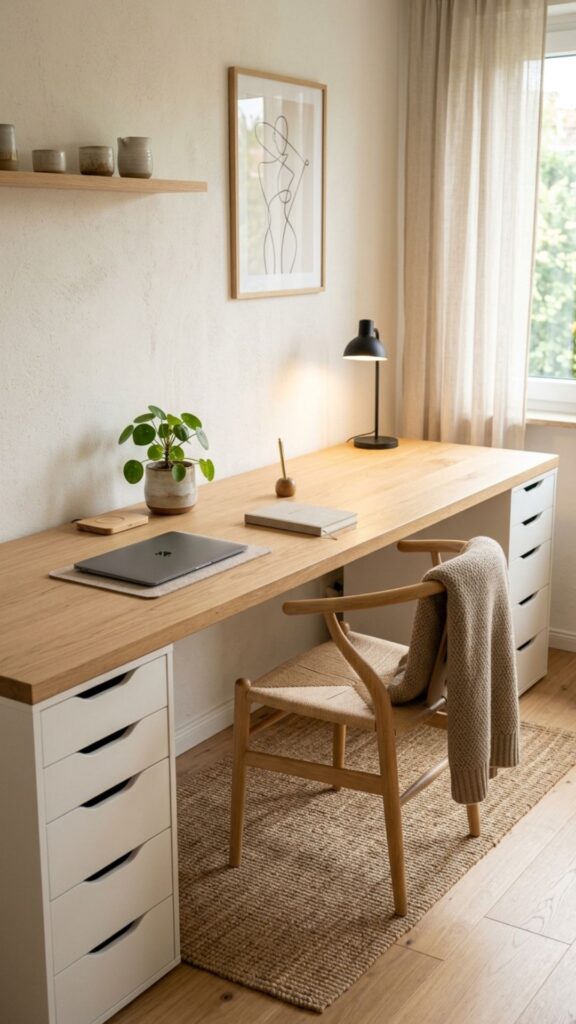
Few home office combinations feel as satisfyingly IKEA as a long desktop supported by drawer units.
Place ALEX drawer units beneath each end of your work surface to create storage for stationery, cables, files, notebooks, and all those tiny office supplies that otherwise end up scattered across the desk. IKEA describes ALEX as a drawer unit that can work alongside a desk or independently, making it particularly flexible for office setups.
For a cleaner finished look, keep the desktop mostly empty and let the drawers do the organizational heavy lifting.
Best for: Large workstations, creative offices, and people who need lots of hidden storage.
2. Turn a KALLAX Unit Into an Office Divider
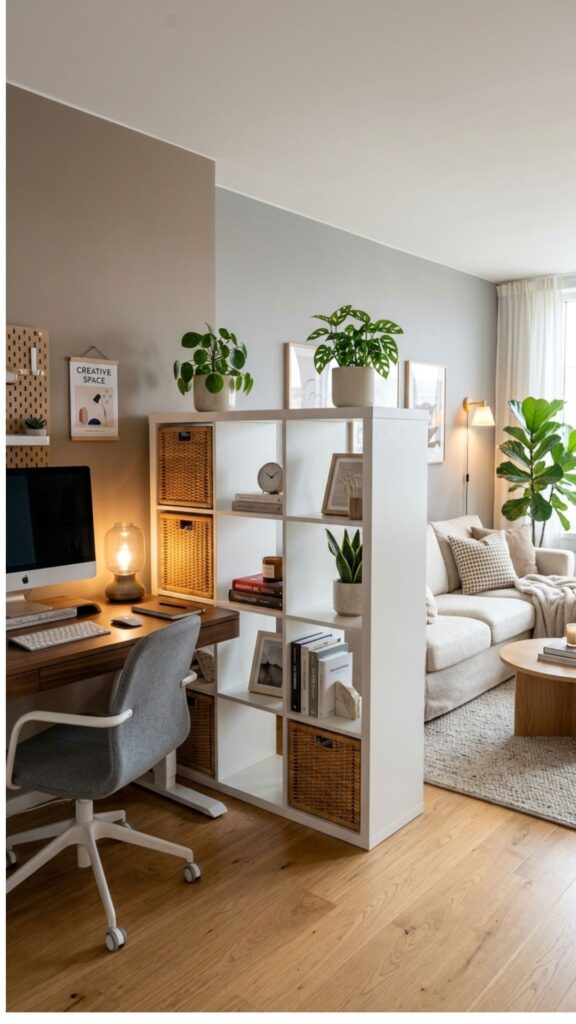
Your home office doesn’t necessarily need four walls.
A KALLAX shelving unit can visually separate a workstation from the rest of a bedroom, living room, or studio apartment. The open cubes provide space for books, baskets, plants, documents, and decorative objects without making the room feel completely closed off.
KALLAX can also be customized with boxes and inserts, allowing you to mix display space with concealed storage.
Try leaving some cubes intentionally empty. The negative space will make the room divider feel lighter.
3. Create a SKÅDIS Wall Command Center
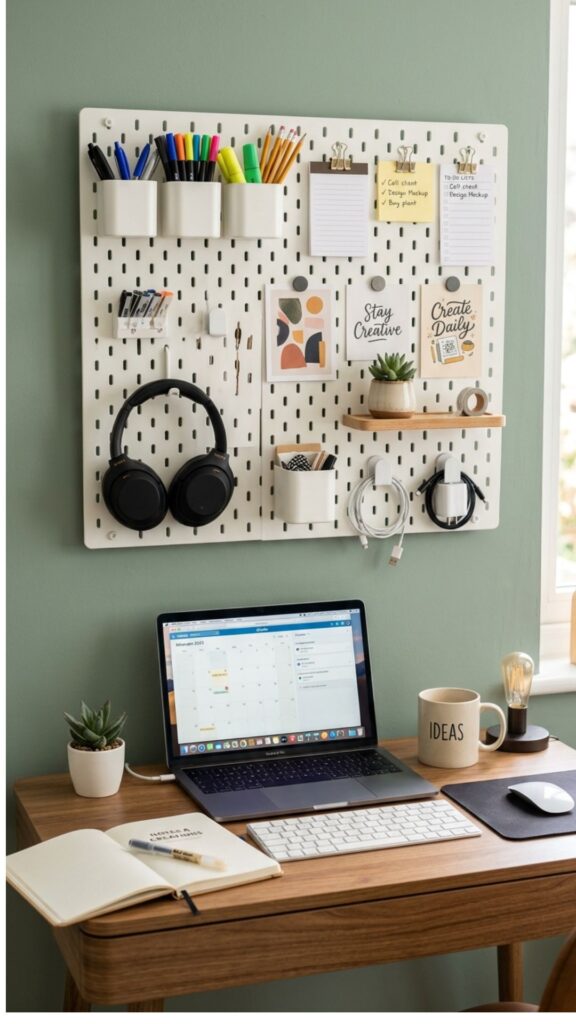
When the desktop is small, start thinking vertically.
Mount a SKÅDIS pegboard above or beside your desk and use it for pens, scissors, headphones, reminders, charging cables, and other frequently used items. IKEA’s SKÅDIS system is designed to work with movable accessories, so the arrangement can change whenever your workflow changes.
The result is practical storage that doubles as wall décor.
Add a few postcards, inspirational prints, or small personal items so the pegboard doesn’t feel purely utilitarian.
4. Make an Entire Wall Your Office
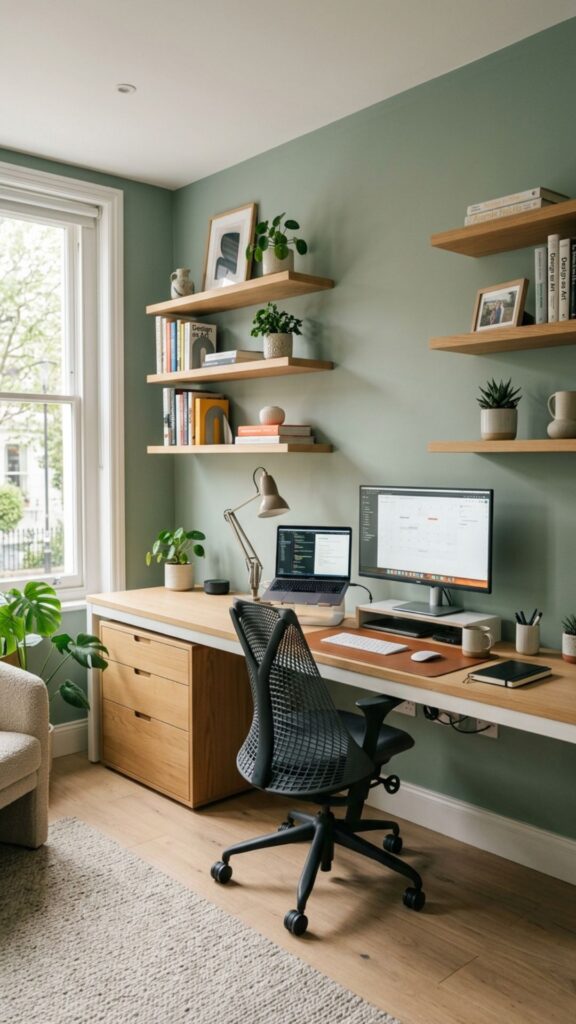
Don’t have an office room? Claim a wall instead.
Place a slim desk against one wall, add shelves above it, position drawers underneath, and install lighting around the workstation. By concentrating everything vertically, you can create a surprisingly complete office in a relatively shallow footprint.
Painting the office wall a slightly different shade from the surrounding room can make the workspace feel like its own little zone.
5. Try a Compact MICKE Workstation
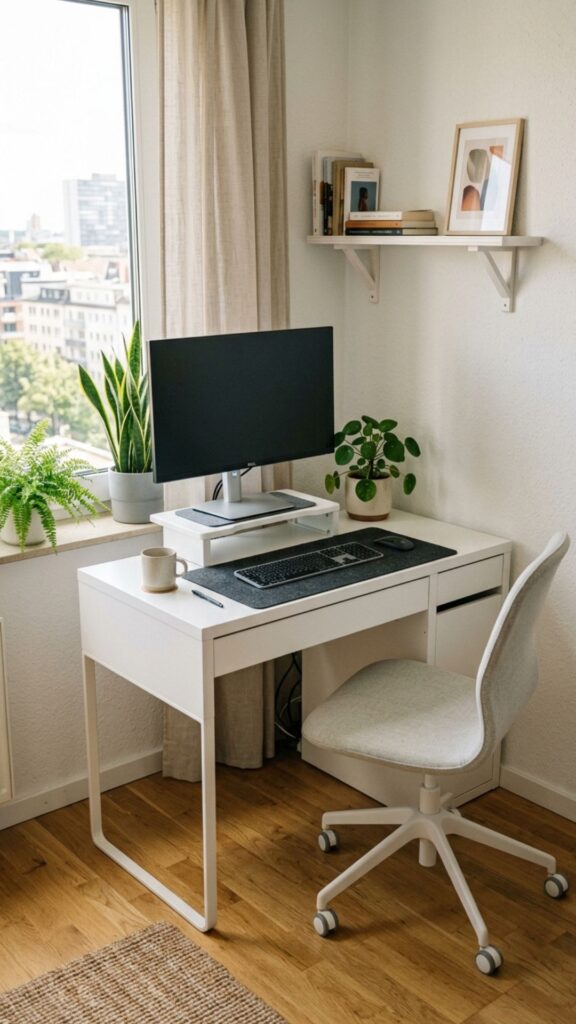
Small apartments require furniture that doesn’t overwhelm the room.
A compact MICKE desk can work well in a bedroom corner, hallway nook, guest room, or living area. Current MICKE designs include built-in cable-management features, which can be particularly useful when you’re trying to keep a small workstation looking tidy.
Keep your monitor raised and store only daily essentials on the desktop to prevent the area from becoming visually crowded.
6. Create a Two-Person IKEA-Style Office
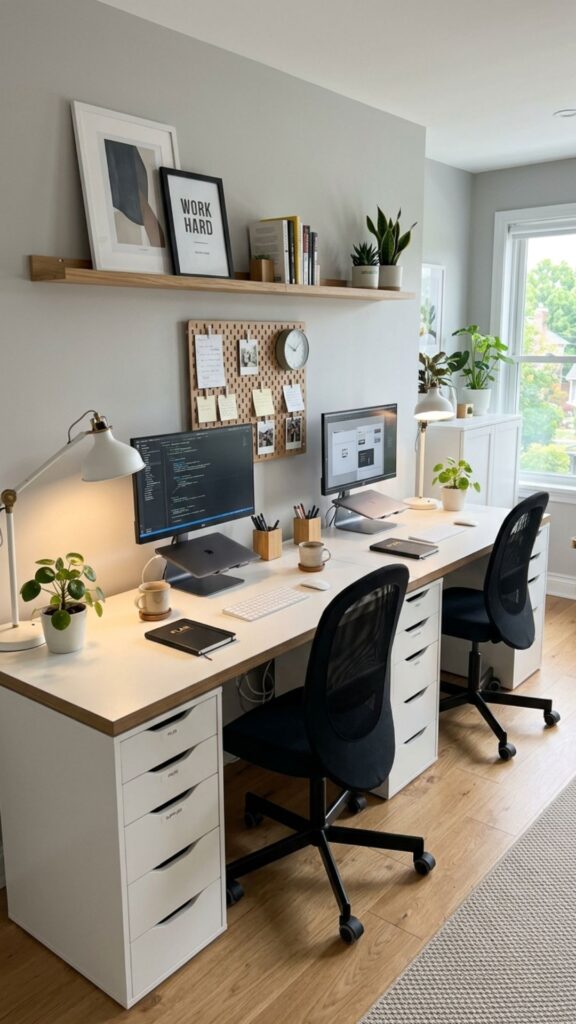
Sharing a home office doesn’t mean sharing one cramped desk.
Create a long workstation with two chairs and clearly defined work zones. Each person can have their own drawer storage, task lamp, pegboard, and set of accessories while sharing the same desktop.
A long LAGKAPTEN tabletop is one possible starting point because the range is designed for creating customizable desk combinations with separately chosen supports.
Symmetry can make a two-person office look especially intentional.
7. Put Floating Shelves Above the Desk
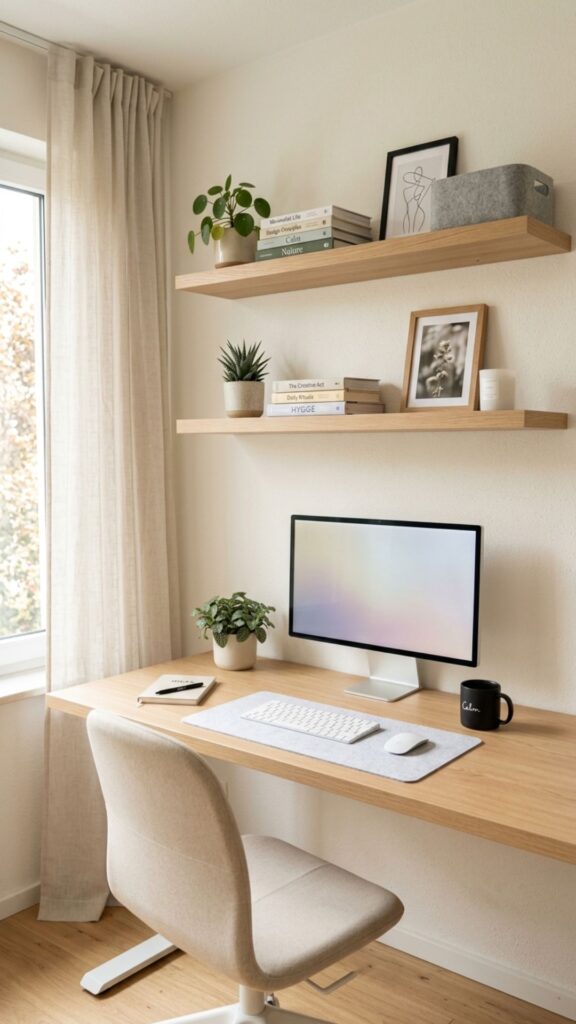
One of the easiest ways to give a basic workstation an IKEA-showroom feel is to use the wall above it.
Install two or three simple floating shelves and arrange them with a mixture of useful and decorative objects.
Think:
- Storage boxes
- Books
- Small plants
- Framed artwork
- Extra notebooks
- Pencil cups
- A small clock
Avoid filling every inch. A little empty space is what keeps open shelving looking stylish rather than cluttered.
8. Create a Calm Scandinavian Color Palette
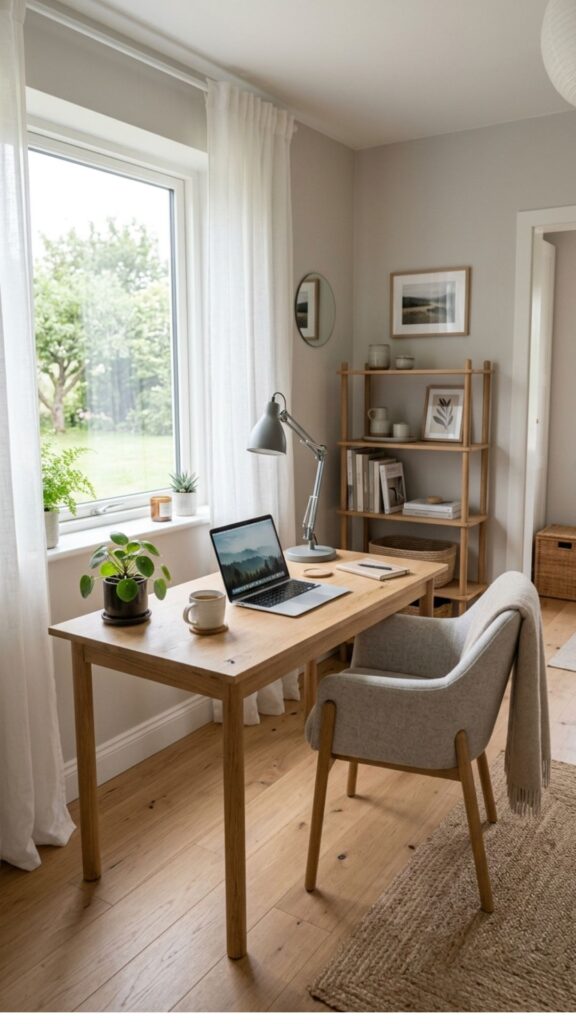
An IKEA-inspired office doesn’t have to mean an all-white room.
Start with warm white, beige, pale gray, natural wood, or soft taupe, then introduce one deeper accent color.
Muted green, dusty blue, terracotta, charcoal, or even burgundy can add personality while maintaining the Scandinavian-inspired simplicity associated with IKEA interiors.
Choose two or three main colors and repeat them throughout the room instead of introducing a new shade with every accessory.
9. Hide the Printer Inside an Office Storage Zone
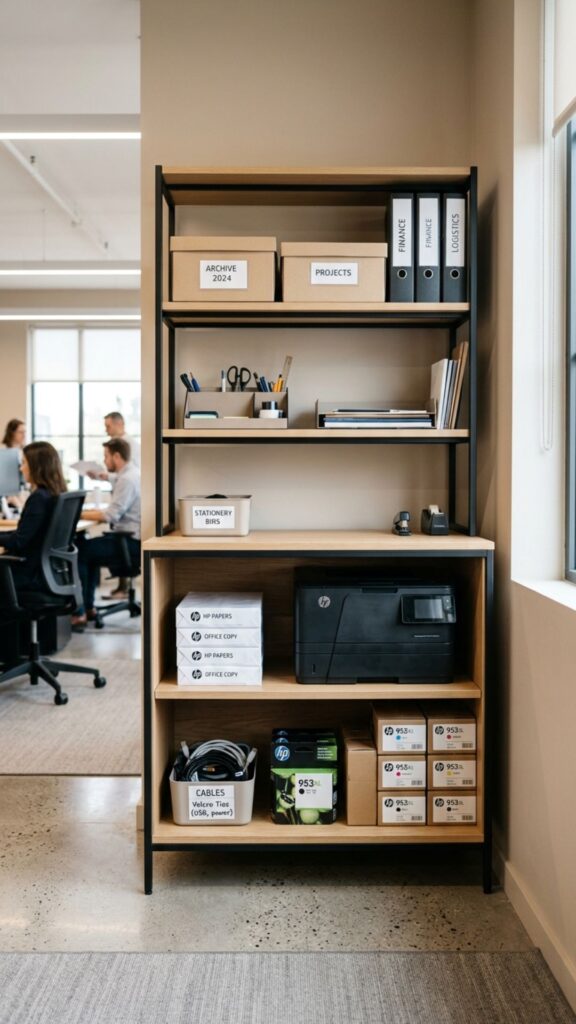
Printers rarely improve a room aesthetically.
Rather than letting yours dominate the desk, dedicate a lower shelf, cabinet, or nearby storage unit to technology. Keep paper, spare ink, labels, and cables in the same location.
Creating one “tech zone” helps prevent office equipment from spreading throughout the room.
Just make sure any enclosed equipment has suitable clearance and ventilation according to its manufacturer’s instructions.
10. Build a Bookshelf Office Backdrop
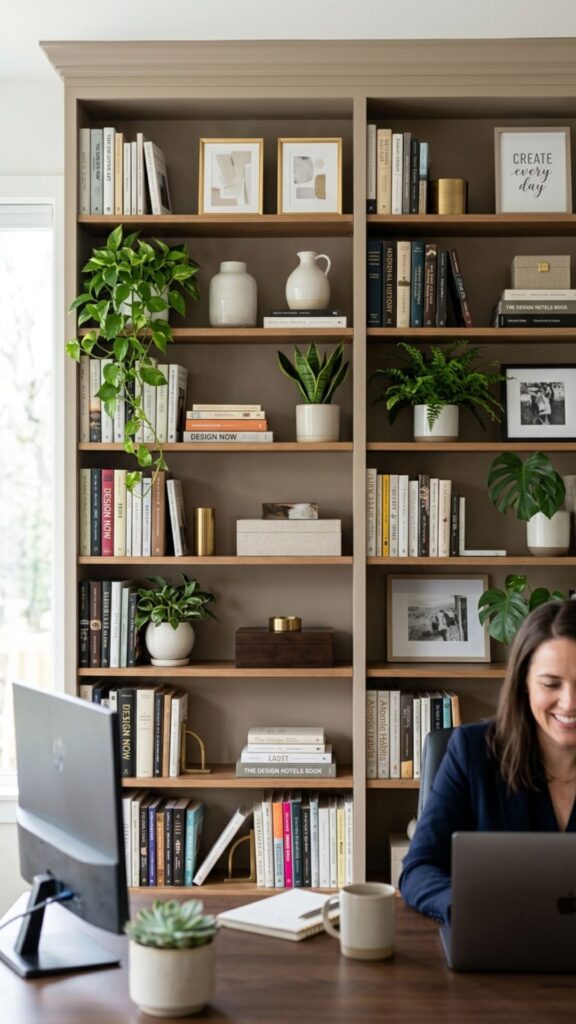
If video calls are part of your workday, design the wall behind you—not just the desk in front of you.
A bookcase filled with books, boxes, plants, ceramics, and a few framed objects creates a professional background without looking staged.
The trick is variation. Mix vertical books with horizontal stacks and alternate practical storage with decorative objects.
You don’t need every shelf to match. Controlled inconsistency often feels more natural.
11. Add Picture Ledges for Flexible Office Art
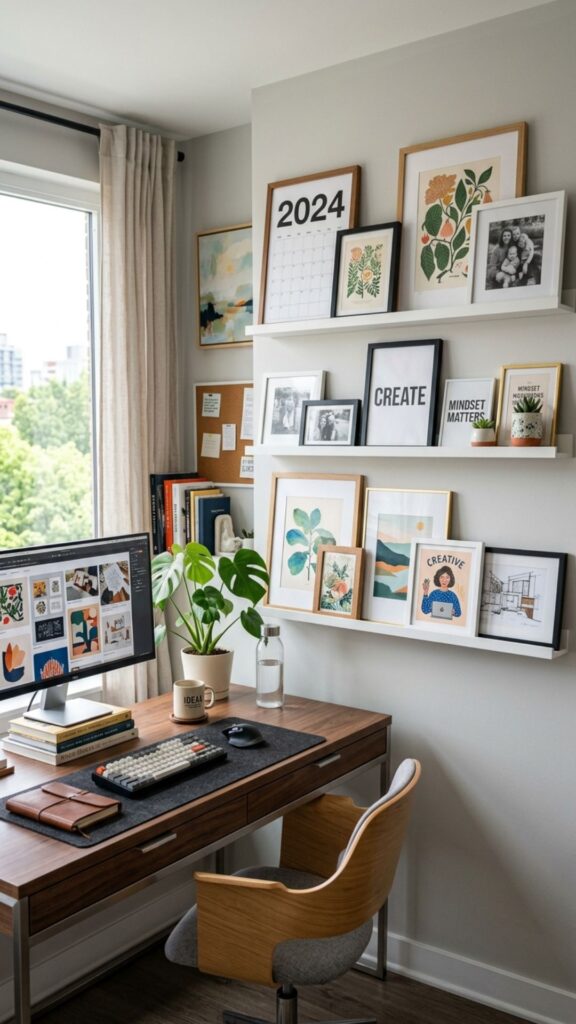
Gallery walls look beautiful, but repeatedly moving frames can leave you with an impressive collection of holes.
Picture ledges offer a more flexible alternative.
Lean prints, photographs, calendars, certificates, or small artwork against the wall and layer pieces of different heights. You can refresh the display whenever you feel like changing the mood of your workspace.
It is especially useful for renters or anyone who enjoys seasonal décor.
12. Turn an Awkward Corner Into a Micro Office
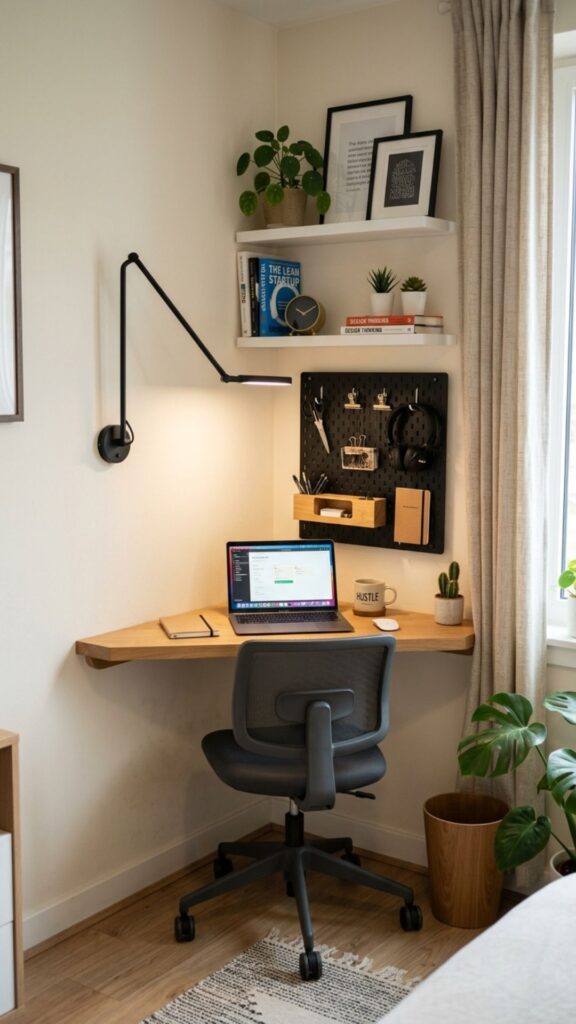
That strange empty corner you’ve never known what to do with might be exactly where your office belongs.
Measure it carefully and choose the shallowest desk that still accommodates your work essentials. Add a wall-mounted light rather than a large table lamp and use vertical storage instead of a bulky cabinet.
The goal isn’t to squeeze a traditional office into the corner. It’s to design specifically for the space available.
13. Use Closed Storage Below and Open Storage Above
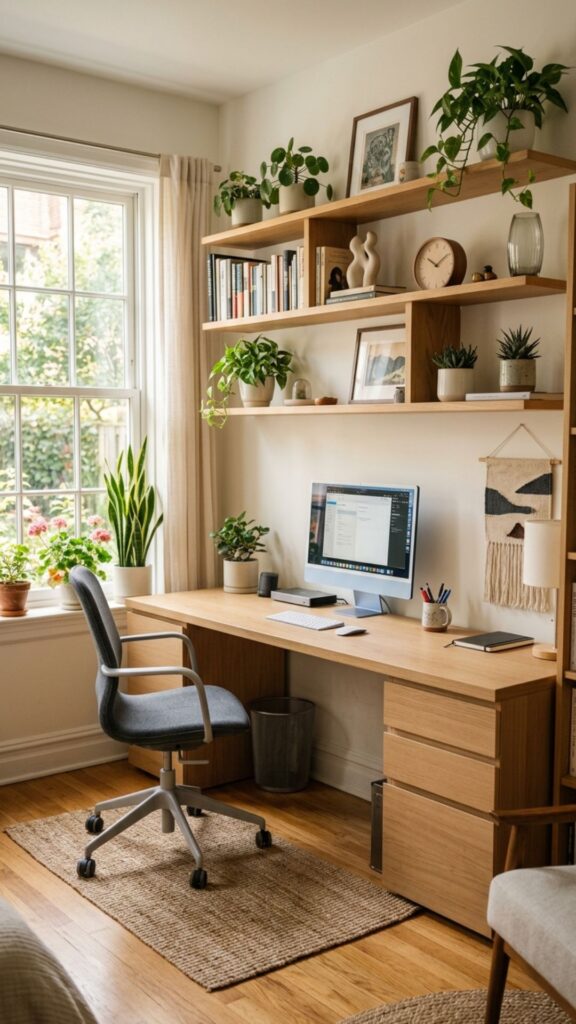
One of the easiest ways to keep an office from looking chaotic is to decide what deserves to be seen.
Place attractive items—books, plants, ceramics, and coordinated stationery—on open shelves.
Hide less attractive necessities—chargers, paperwork, packaging, spare equipment, and cables—in drawers, cabinets, or baskets.
This combination gives you the convenience of open storage without requiring every office supply you own to become part of the décor.
14. Give Your Desk a Natural Wood Look
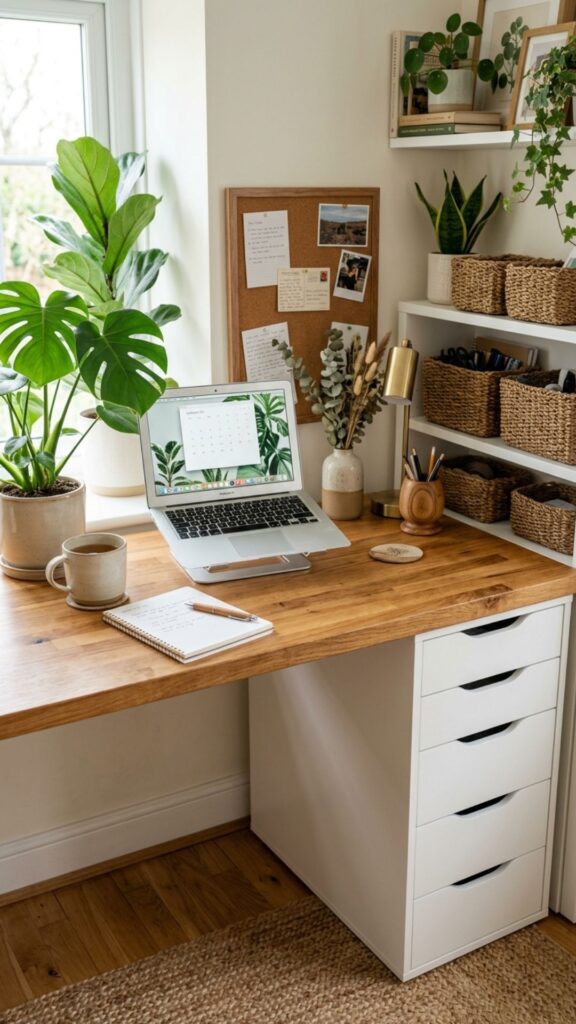
If an all-white IKEA-style workspace feels too clinical, bring in wood.
A wood-effect or natural-toned desktop instantly warms up white drawers, shelves, and cabinets. Repeat the same tone elsewhere through frames, trays, baskets, or shelving to tie everything together.
Add one or two leafy plants and the office will feel considerably softer without losing its minimal appearance.
15. Make Cable Management Part of the Design
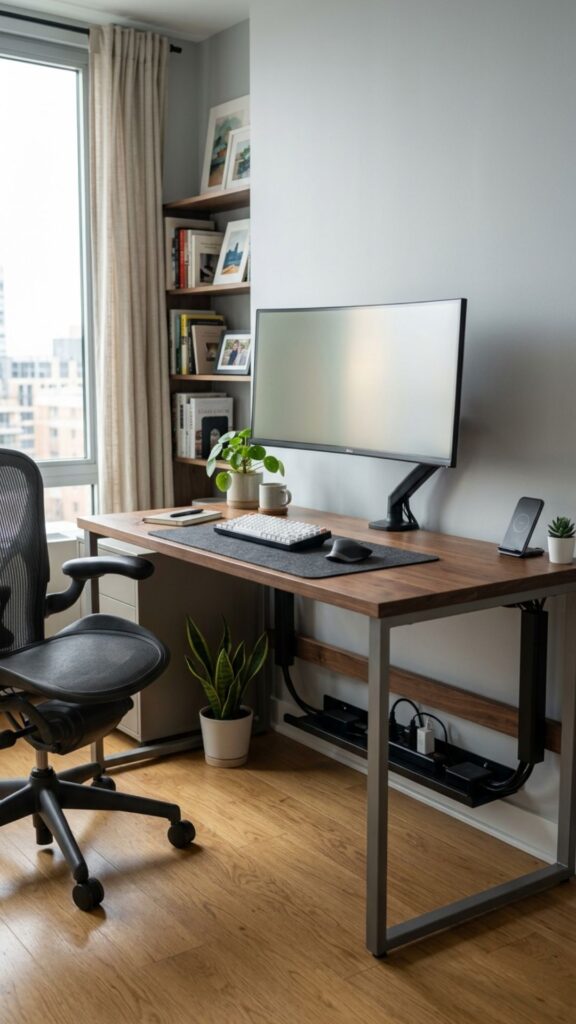
The fastest way to ruin a beautifully organized workstation may be to let six black cables dangle underneath it.
Mount a cable tray beneath the desk, secure loose cords together, label chargers, and position the power strip somewhere accessible but discreet.
Some IKEA desks, including MICKE models, incorporate spaces intended to keep cords out of sight while remaining accessible.
Once the cable mess disappears, even a basic desk setup can suddenly look much more expensive.
16. Create an Office Inside a Closet
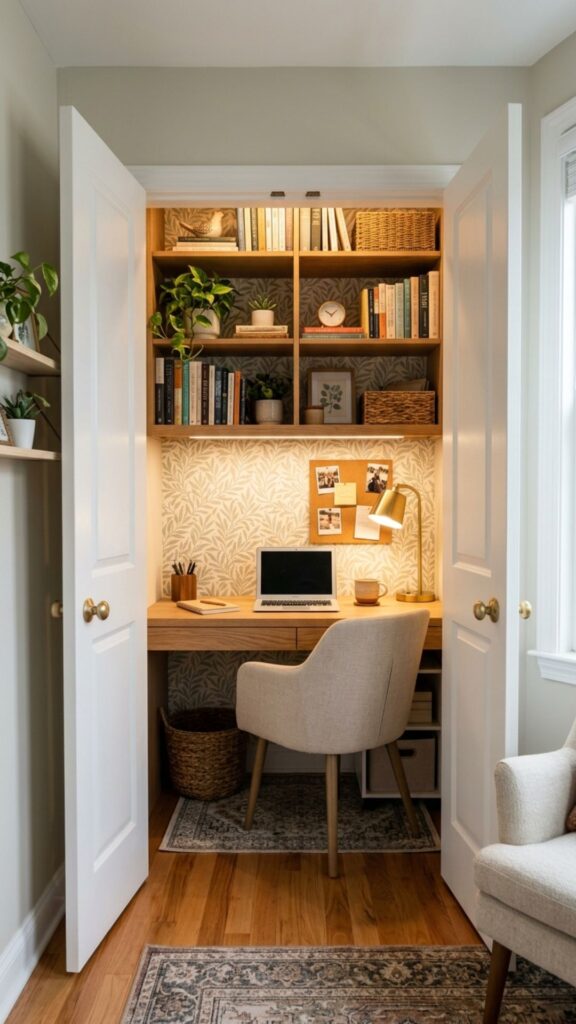
A spare closet can become a surprisingly charming workspace.
Remove unnecessary hanging rails, add a fitted work surface, mount shelves above it, and install appropriate lighting. Paint or wallpaper the inside of the closet to give the mini office its own personality.
When the workday ends, you may even be able to close the doors and visually switch off from work.
It’s an especially smart solution when the same room needs to serve multiple purposes.
17. Add a Rolling Storage Cart
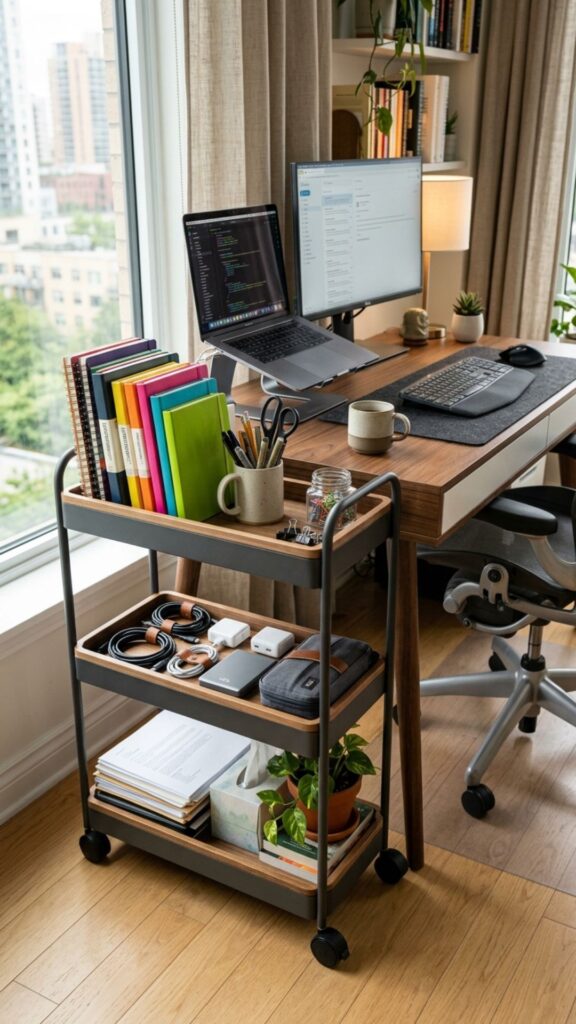
Not every office supply needs a permanent home on the desk.
Use a slim rolling cart for notebooks, crafting materials, chargers, camera equipment, or frequently used paperwork. During work hours, roll it beside your chair. When you’re finished, move it underneath a table or into a nearby corner.
Mobile storage is particularly valuable if you switch between different work areas throughout the week.
18. Design a Monochrome Black-and-White Office
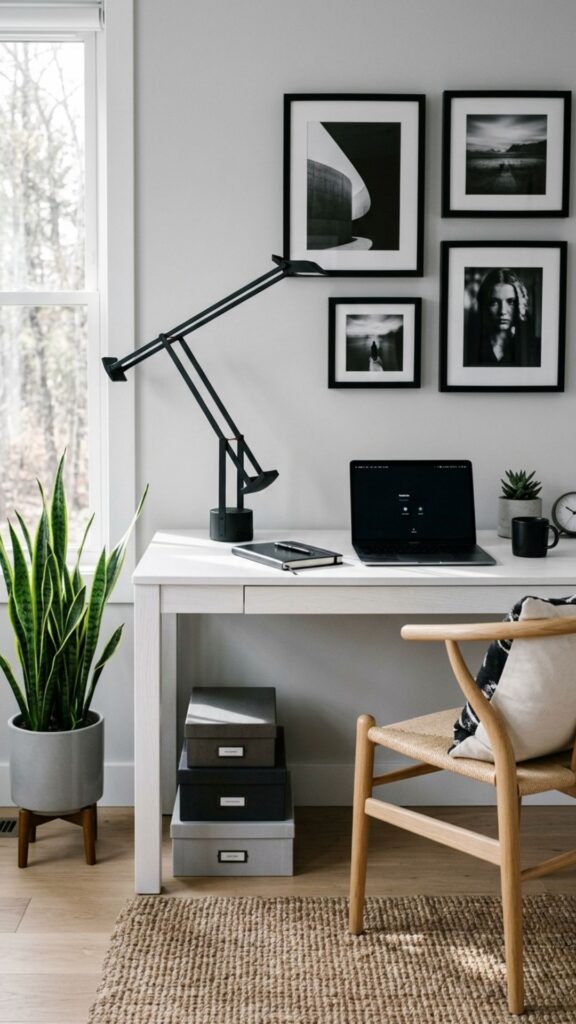
For a sharper version of IKEA minimalism, skip the soft neutrals and go graphic.
Pair a white desktop with black accessories, or reverse the combination with a darker work surface and light storage.
Keep the palette intentionally limited. Black frames, a black lamp, white boxes, and one or two natural textures can create contrast without making the workspace feel busy.
A single green plant is sometimes all the color the room needs.
19. Create a Desk-to-Ceiling Storage System
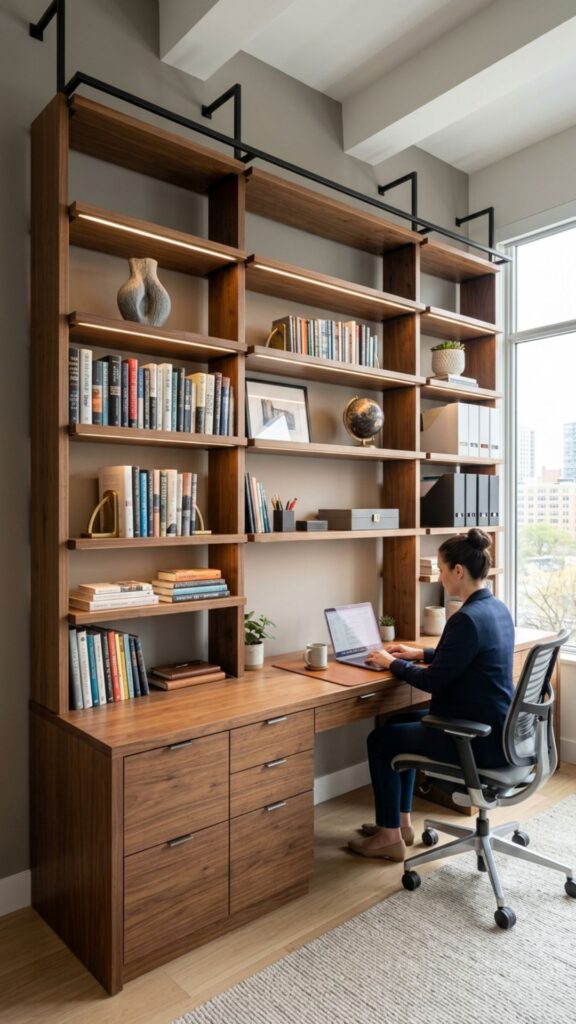
If floor space is scarce, use the height of the room.
Start with closed drawers near the desk, add open shelving above eye level, and reserve the highest shelves for things you don’t need every day.
Using one wall from floor to ceiling gives you significant storage while keeping the rest of the room relatively clear.
For a built-in appearance, choose furniture and shelving in similar finishes and keep gaps between pieces as consistent as possible.
Always secure tall or wall-mounted furniture according to the manufacturer’s installation and safety instructions.
20. Style the Office Like a Room, Not a Workplace
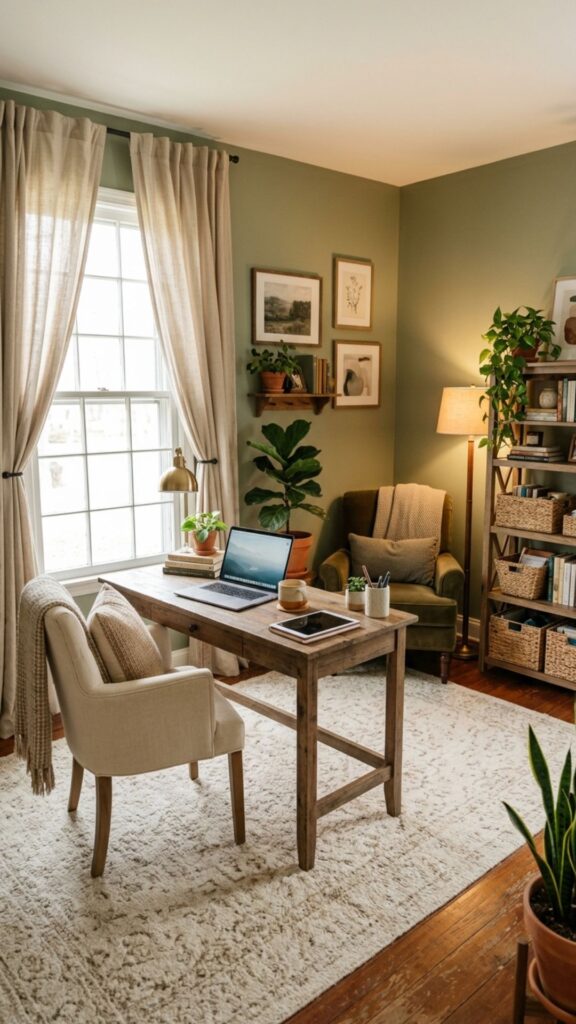
The best home offices don’t feel like miniature corporate cubicles.
Add elements you would happily use elsewhere in your house: a soft rug, curtains, artwork, a plant, a comfortable lamp, textured baskets, or a favorite object from your travels.
Then remove anything that doesn’t help you work or make you enjoy the space.
That’s the IKEA-inspired sweet spot—practical enough for Monday morning, attractive enough that you don’t want to hide it when the workday ends.
Conclusion
Creating a stylish home office isn’t really about buying the perfect desk. It’s about making smarter use of the space you already have.
A KALLAX unit can help define an office zone. A SKÅDIS pegboard can move storage off your desk. ALEX drawers can hide everyday clutter. And even the smallest MICKE-style workstation can turn an overlooked corner into a productive place to work.
But you don’t need to copy an IKEA showroom exactly.
Use the ideas you love, adapt them to your room, and leave out anything that doesn’t fit the way you work. Mix open and closed storage, make use of your walls, control the cables, and give the space enough personality that it still feels like part of your home.
Because the best home office isn’t necessarily the biggest or most expensive one.
It’s the one that makes sitting down to work feel just a little easier.
Is IKEA furniture good for a home office?
Yes. IKEA’s modular desks, drawers, shelves, and storage systems make it relatively easy to create a home office for different room sizes and layouts.
How can I make my IKEA home office look expensive?
Use a limited color palette, organize cables, reduce visible clutter, add warm lighting, and combine practical furniture with artwork, plants, and coordinated accessories.
How do I create an IKEA-style office in a small room?
Choose a compact desk, use wall-mounted storage, keep floor furniture minimal, and take advantage of vertical space above the workstation.
How can I add more storage without making my office cluttered?
Combine open shelving for attractive items with drawers, cabinets, baskets, or boxes for paperwork, electronics, and everyday supplies.
What colors work best for an IKEA-inspired home office?
White, beige, gray, black, and natural wood tones are easy starting points. Add muted green, blue, terracotta, or another accent shade for personality.