There’s a reason black and white never goes out of style. It’s clean, bold, and works in virtually any home. But pulling off a dining room black and white look that feels intentional — not cold or stark — takes a bit of know-how.

Whether you’re starting from scratch or refreshing what you already have, this guide gives you 20 practical, stylish ideas to work with.
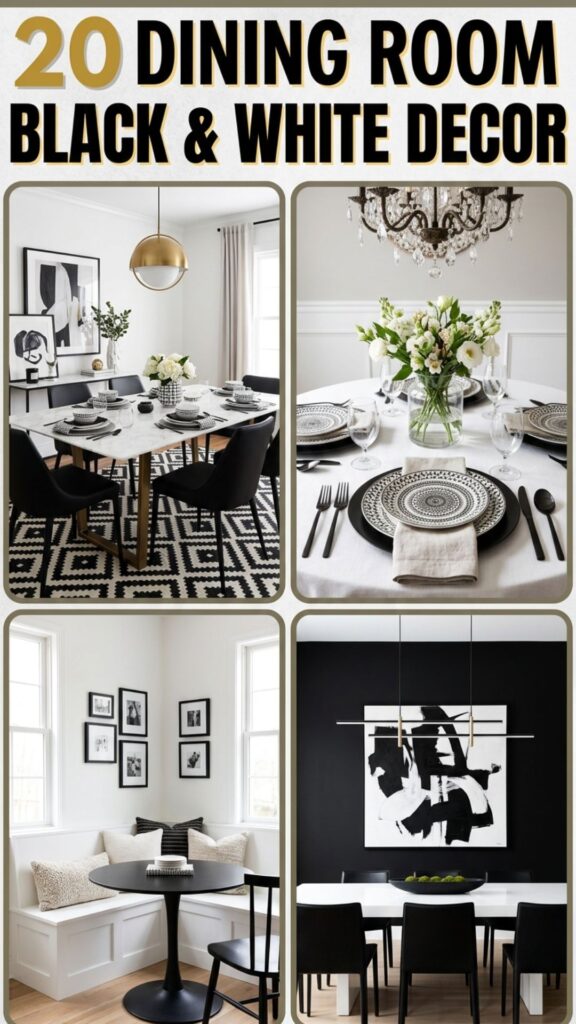
You’ll find options for small apartments, open-plan homes, traditional spaces, and modern ones. By the end, you’ll know exactly which direction to take your dining room and how to execute it well.
1. Go Bold with a Black Accent Wall
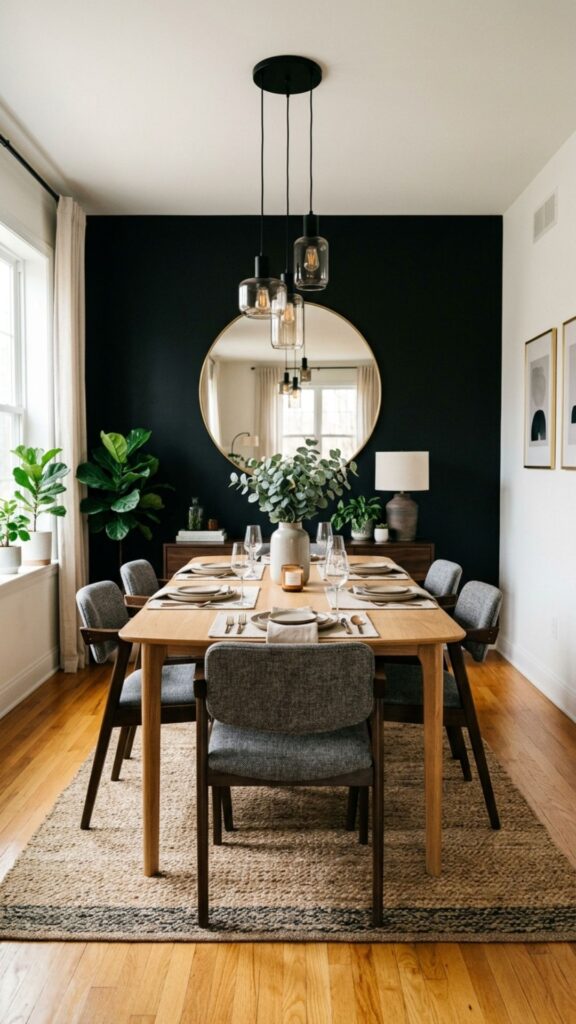
Paint one wall in deep matte black to create an instant focal point behind your dining table. This approach draws the eye and grounds the space without making the whole room feel heavy.
Pair the dark wall with a white ceiling and light flooring to keep things balanced. A large mirror on the black wall bounces light and adds depth — practical and beautiful at once.
2. Layer Black and White Textiles
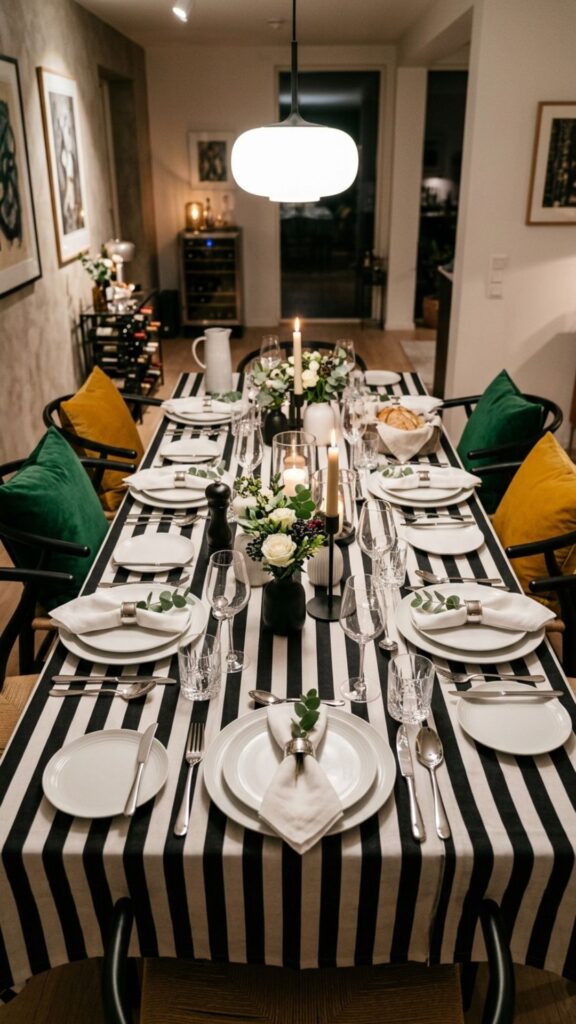
Textiles are one of the easiest, lowest-commitment ways to bring a dining room black and white palette to life. Start with a classic striped or checkered table runner, then layer in white linen napkins with black stitching for a polished look.
Don’t overlook chair cushions either. A set of black seat pads on white wooden chairs — or vice versa — ties a room together quickly and affordably.
3. Hang a Statement Monochrome Art Print
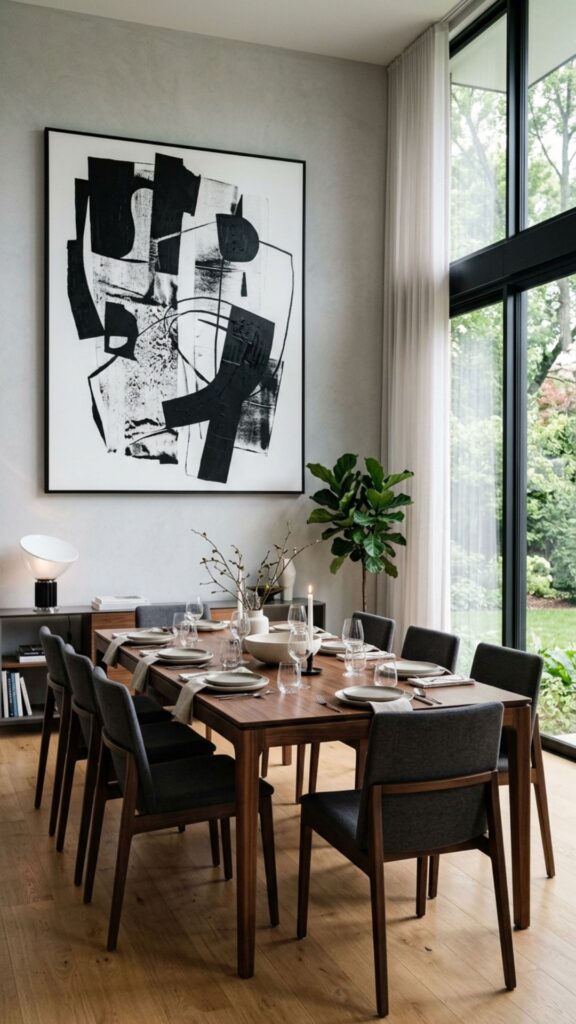
One oversized black and white art print can do more for a dining room than a gallery wall of five mediocre pieces. Look for abstract prints, architectural photography, or botanical illustrations in monochrome.
Sizing Tip
Aim for artwork that’s at least two-thirds the width of your dining table. Too small, and it gets lost on the wall. Too large, and it competes with everything else in the room.
4. Choose a Black Matte Dining Table
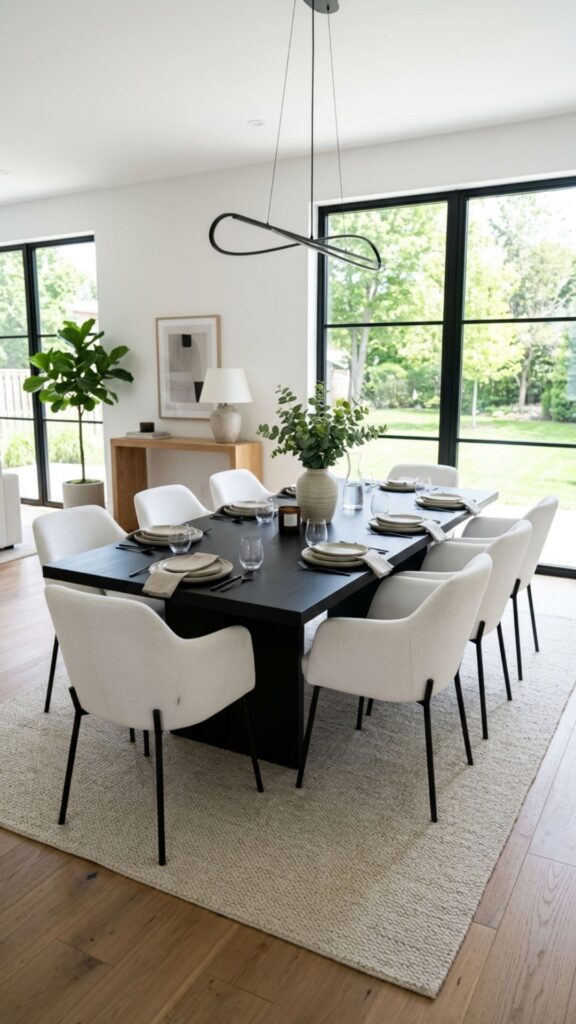
A matte black dining table is a grounding centerpiece that works with almost any chair style. Pair it with white upholstered chairs for a sharp contrast, or mix in natural wood tones to soften the look.
Matte finishes are also more forgiving than glossy ones — they hide fingerprints and minor scratches better, which is a real bonus in a high-use space like a dining room.
5. Use White Walls with Black Trim Details
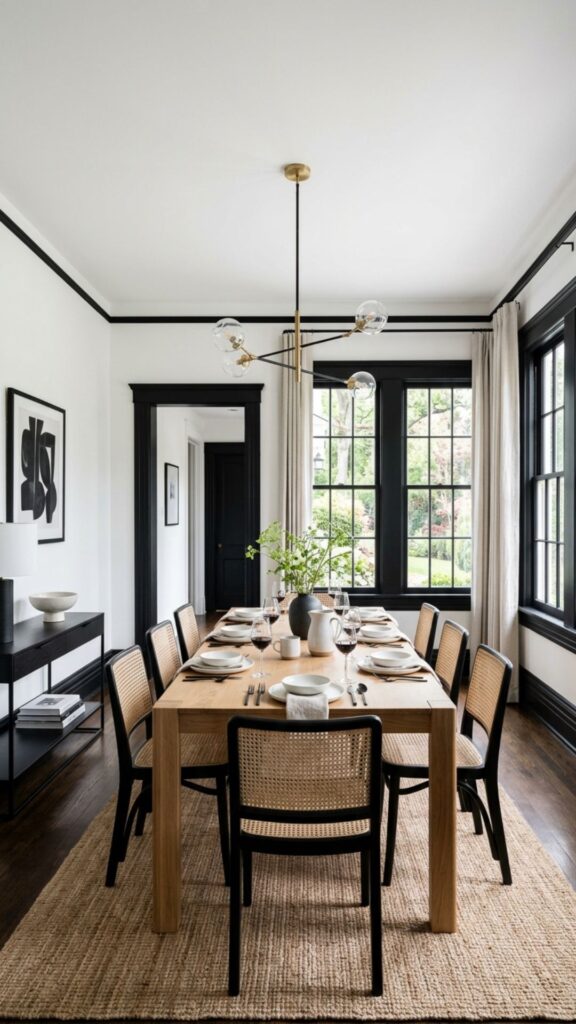
Instead of painting a full wall, focus your contrast on trim — baseboards, door frames, window casings, and crown molding in black against white walls. It’s an architectural detail that adds structure and sophistication.
This works especially well in traditional or transitional-style homes. The result feels curated rather than trendy, which means it holds up over time.
6. Install Black and White Geometric Floor Tiles
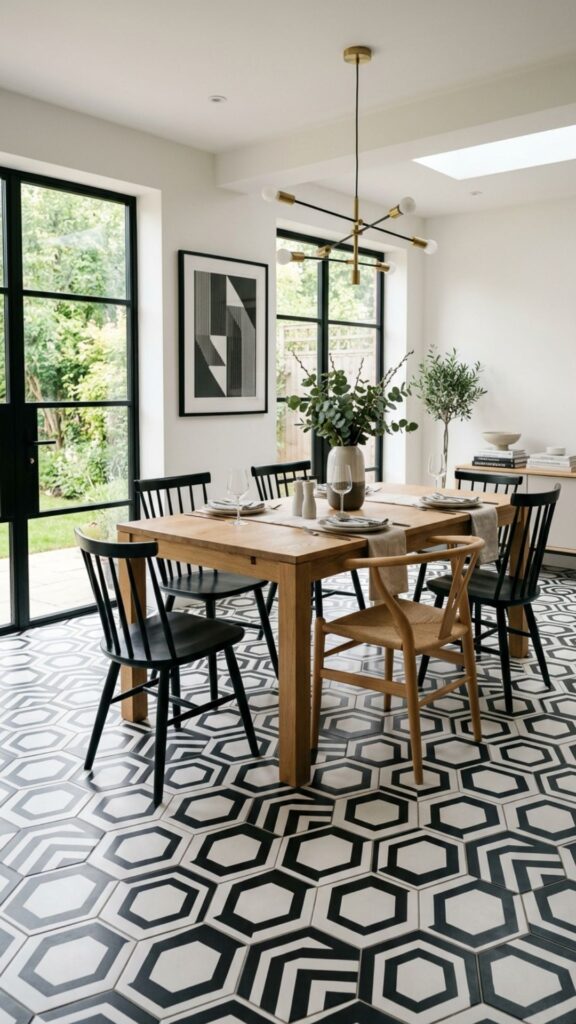
Geometric floor tiles are a standout choice for a dining room black and white scheme. Classic checkerboard, hexagonal, or Moroccan-inspired patterns all work well and add visual interest underfoot.
Keep the walls simple if you go bold on the floor. Let the tiles be the statement and build the rest of the room’s color palette around them.
7. Mix Patterned Black and White Wallpaper
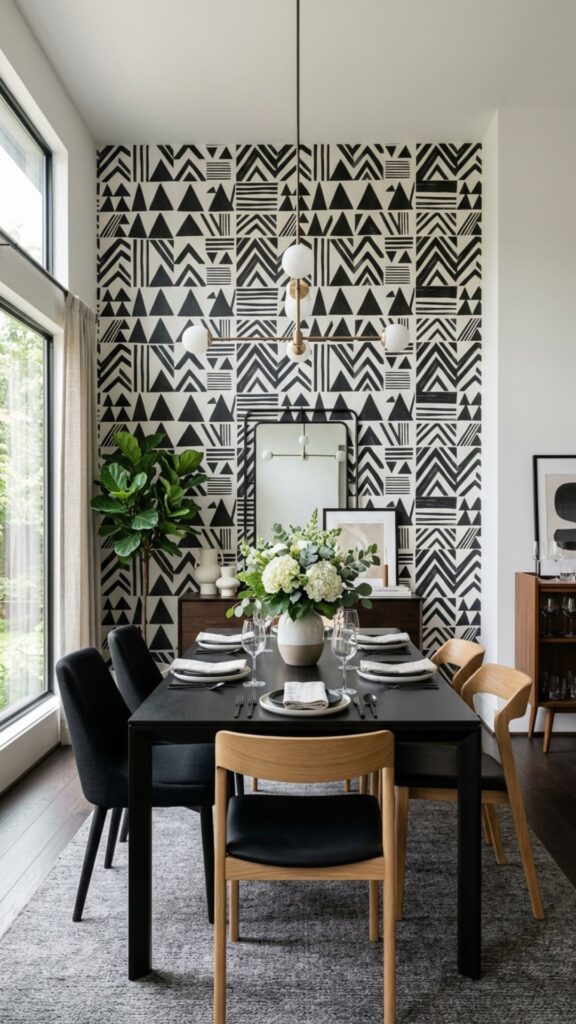
A patterned wallpaper — think bold stripes, subtle damask, or graphic florals — brings personality to a dining room without requiring a renovation. Apply it to all four walls for full impact, or use it on a single feature wall.
Common Mistake
Avoid using a busy wallpaper AND a patterned rug in the same space. Pick one dominant pattern and keep everything else calm.
8. Try a Black Chandelier or Pendant Light
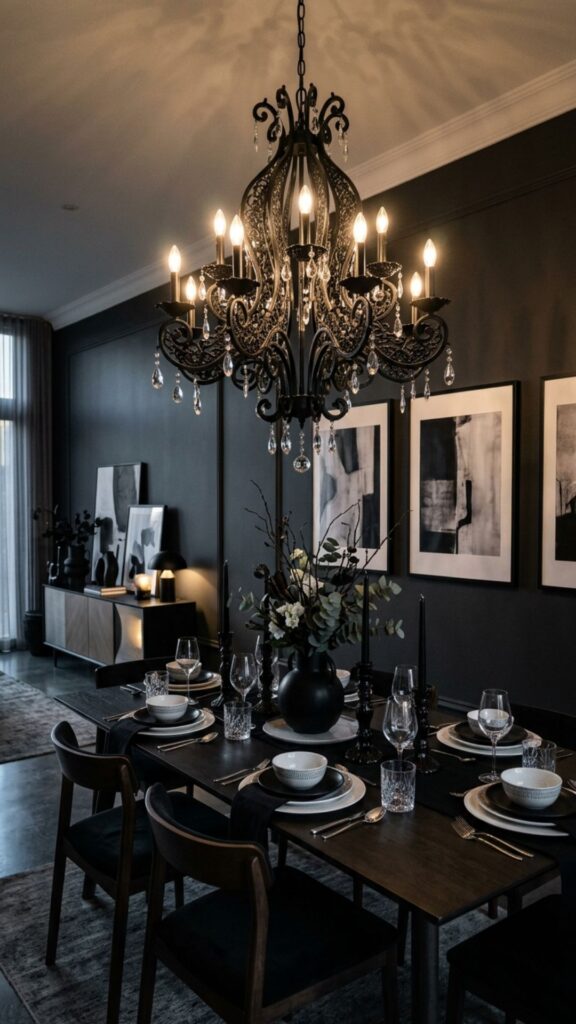
Lighting fixtures are often overlooked in dining room design. A black chandelier or cluster pendant above the table adds drama and ties into a monochrome scheme instantly.
Choose a shape that matches your overall style — a sleek linear fixture for modern spaces, or a wrought-iron chandelier for a more traditional or industrial feel.
9. Add Black and White Ceramic Tableware
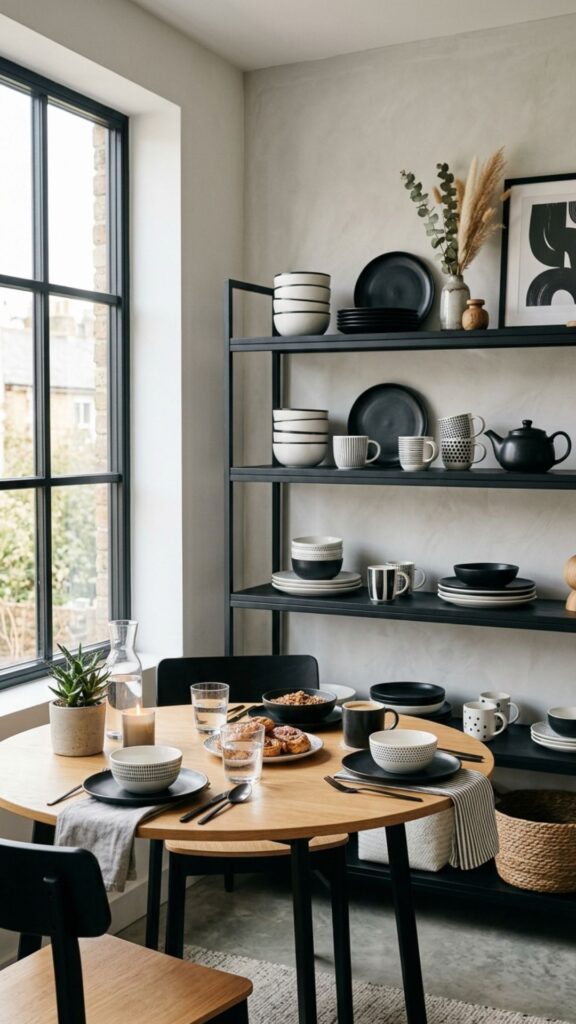
Your table setting is part of your decor. Invest in a set of black and white ceramic plates, bowls, and mugs that you can display on open shelving when not in use.
This is especially effective in smaller dining rooms where every surface matters. Matching tableware on a floating shelf looks deliberate and design-forward.
10. Incorporate Marble Surfaces
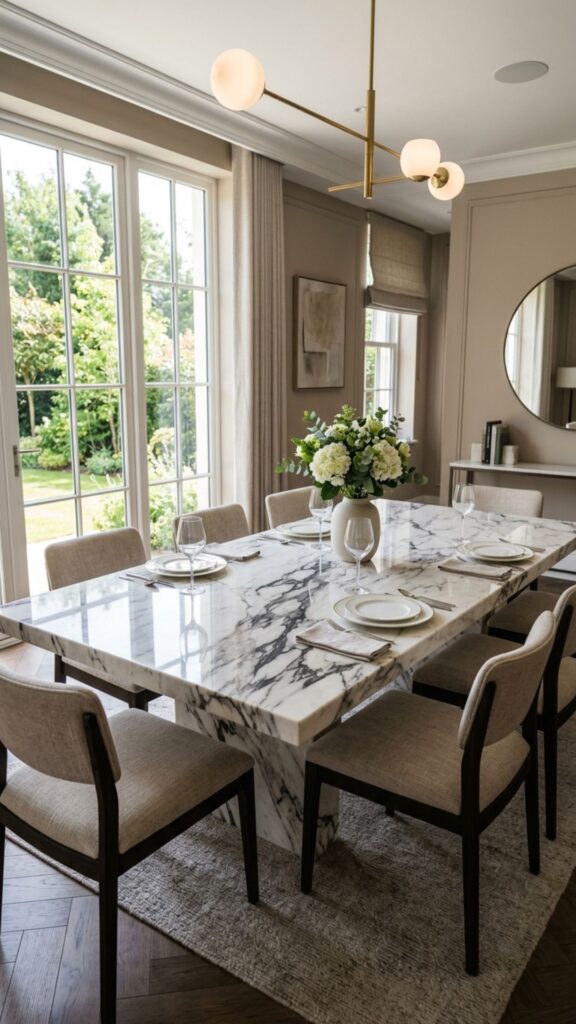
Marble naturally contains the black and white dining room palette within its veining. A marble dining table, sideboard top, or even a marble-effect vinyl wrap on an existing surface brings luxury and contrast.
White marble with dark grey or black veining is the sweet spot. It reads as polished and refined without feeling too cold.
11. Display a Black Metal Shelving Unit

Open shelving in black metal gives you both storage and style. Mount one along a dining room wall and style it with white ceramics, black-framed photos, and a few plants for contrast.
The industrial edge of black metal plays well with softer elements like woven baskets or linen textiles. It’s a great way to balance the look.
12. Opt for High-Contrast Chair Combinations
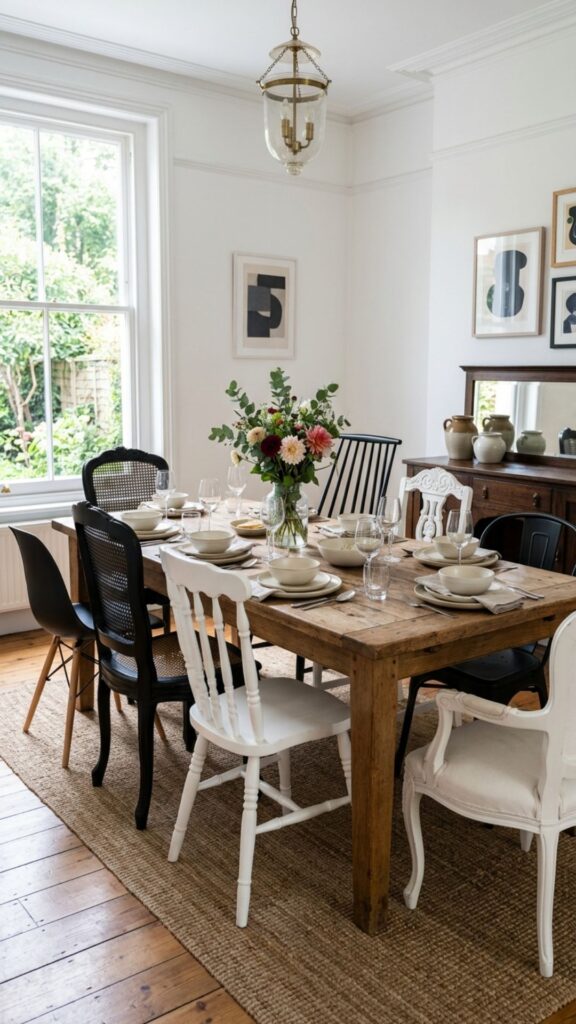
Mix chair styles — say, a white Tulip chair alongside a black ladder-back — around the same table. This eclectic approach feels intentional when you stick to the black and white color story.
Keep the table itself neutral (wood, white, or grey) so the chairs become the visual moment. Too many competing focal points in a dining room can feel chaotic.
13. Frame the Windows with Black Curtain Rods and Hardware
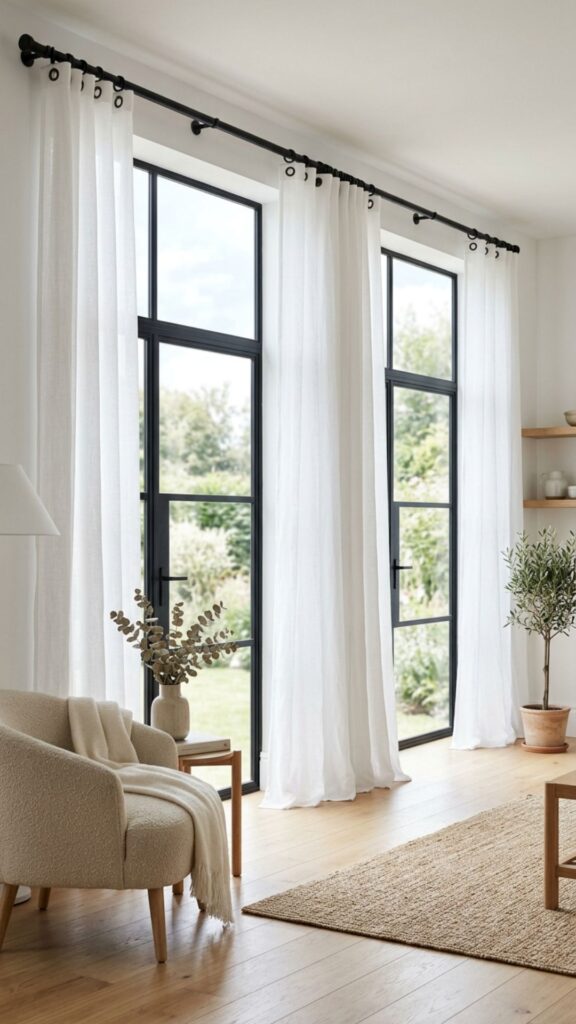
Black curtain rods and rings are a small detail that makes a big difference. They frame your windows, anchor the room, and reinforce the monochrome scheme without requiring a major investment.
Pair them with white or off-white curtain panels to keep the light coming in. Linen or cotton fabrics add warmth and texture against the hard lines of black hardware.
14. Use a Black and White Patterned Area Rug
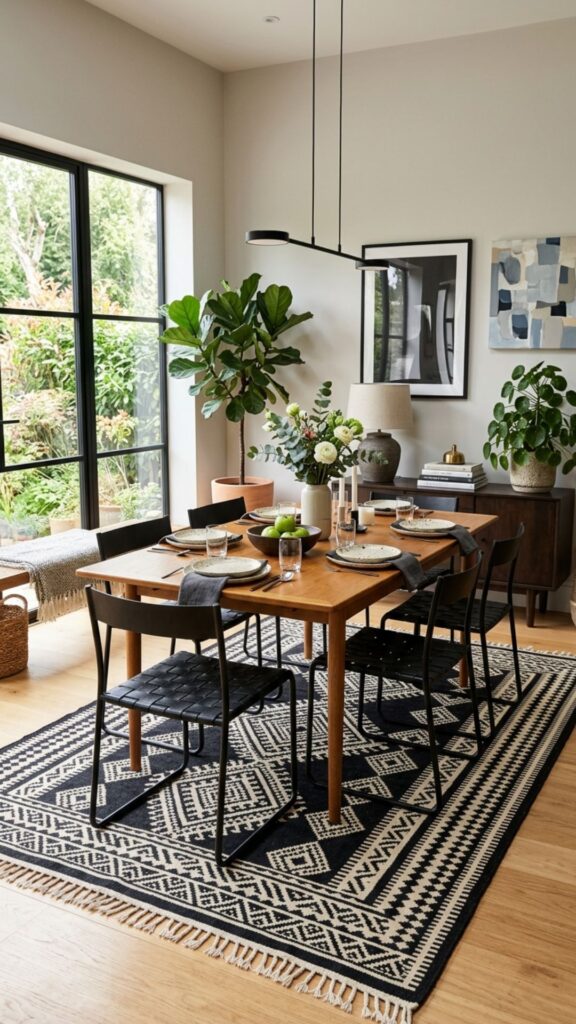
A rug under your dining table does double duty — it defines the dining zone and adds pattern. A black and white geometric or abstract rug works in both modern and classic spaces.
Sizing Tip
Make sure the rug extends at least 24 inches beyond all sides of the table. This allows chairs to slide out comfortably without catching on the edge.
15. Style Open Shelves with Black and White Books
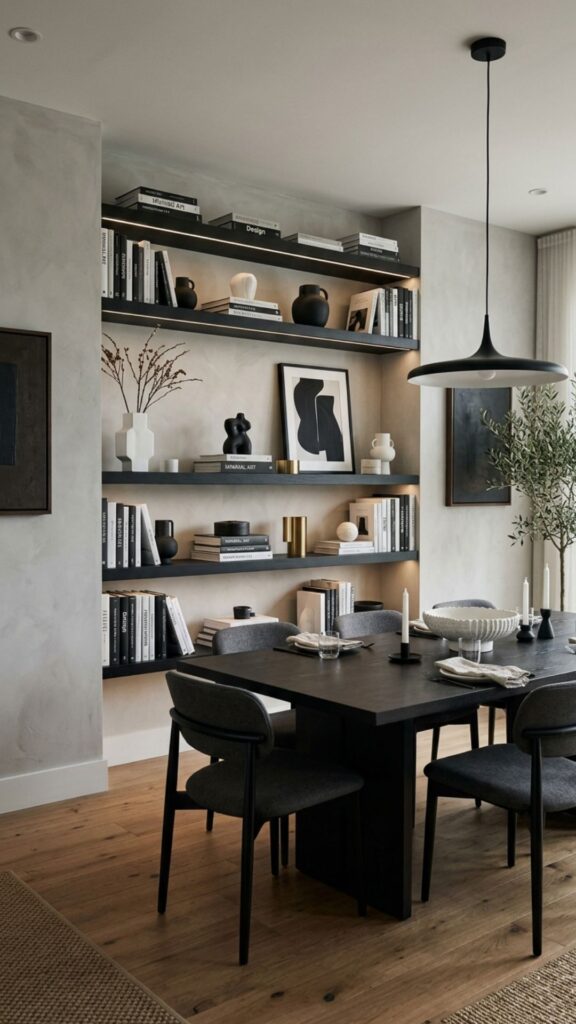
If your dining room includes a bookcase or built-in shelving, arrange books in a black and white palette. Remove dust jackets (or flip them) to expose neutral-toned spines.
Intersperse books with small white ceramics or black decorative objects. The result is a curated, editorial look that costs nothing extra if you already own the books.
16. Install Wainscoting in Contrasting Colors
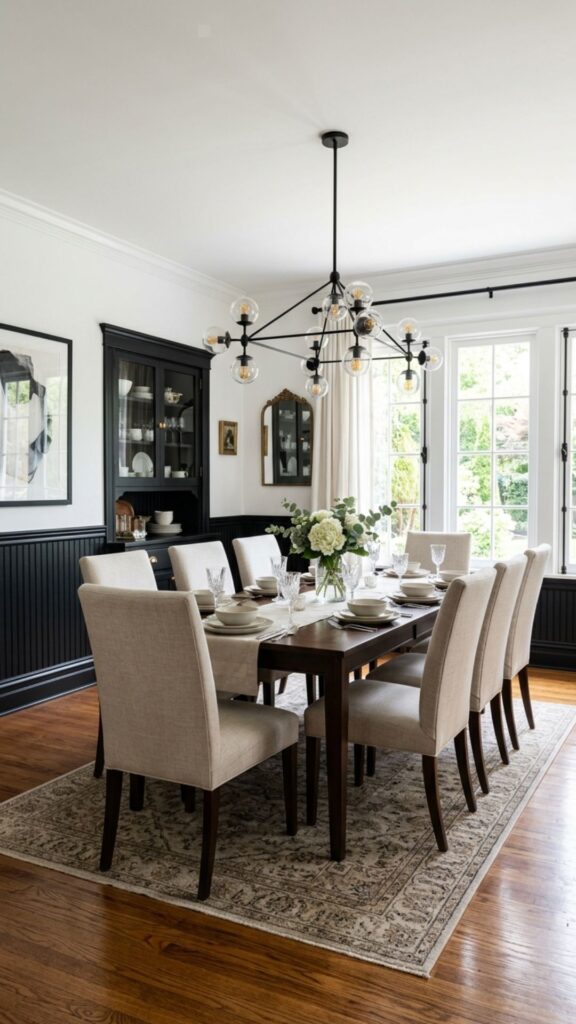
Wainscoting — wood paneling on the lower half of a wall — takes on a new dimension in a dining room black and white scheme. Paint the wainscoting black and the upper wall white, or reverse it for a lighter feel.
This architectural detail adds formality and character to an otherwise plain dining room. It works particularly well in older homes or spaces where you want to add a sense of history.
17. Choose Black and White Upholstered Dining Chairs
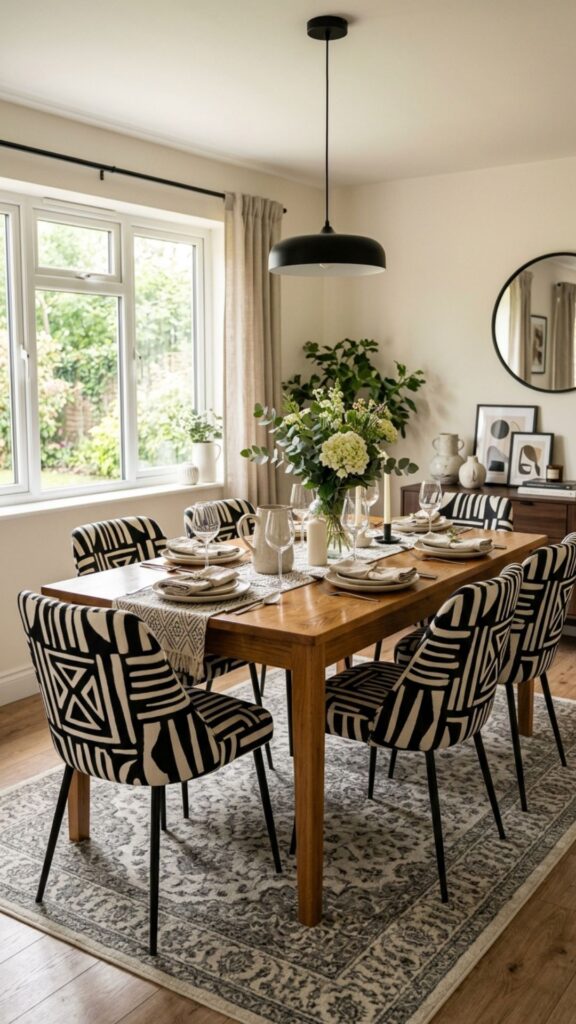
Upholstered chairs in a graphic black and white fabric — houndstooth, stripe, or abstract print — bring texture and personality to your dining space. They’re more comfortable than hard-back chairs and give the room a layered look.
Go for durable fabrics like cotton canvas or polyester blends that can handle spills and regular use. Dining chairs take a beating, so practicality matters as much as aesthetics here.
18. Lean Into a Minimalist All-White Setup with Black Accents
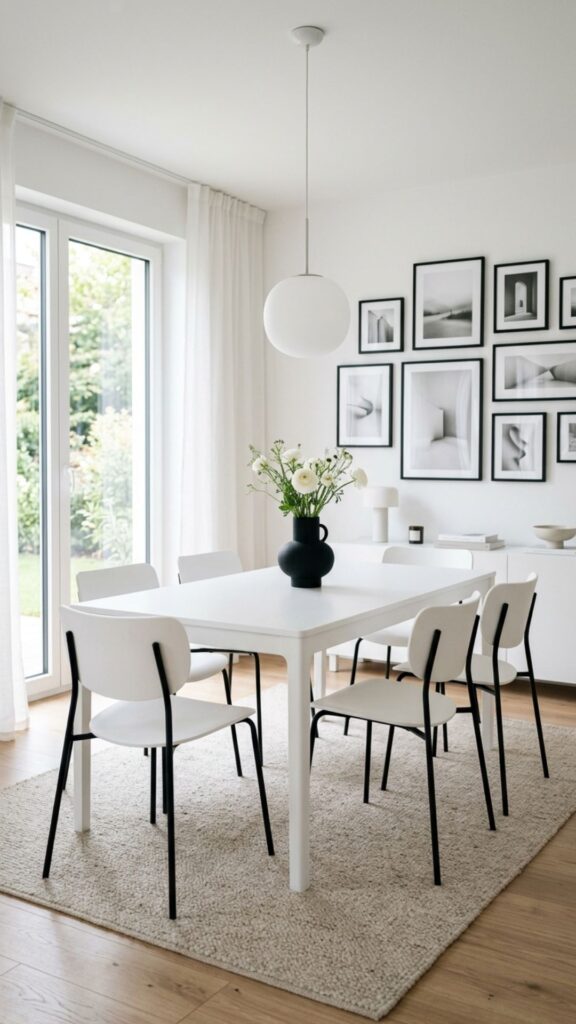
Sometimes less really is more. An all-white dining room with black accents — a single black vase, black chair legs, black picture frames — feels serene and sophisticated.
This approach suits smaller dining rooms especially well. White reflects light and makes a space feel larger, while the black accents keep it from looking unfinished.
19. Use Contrast Grout in Tile Work
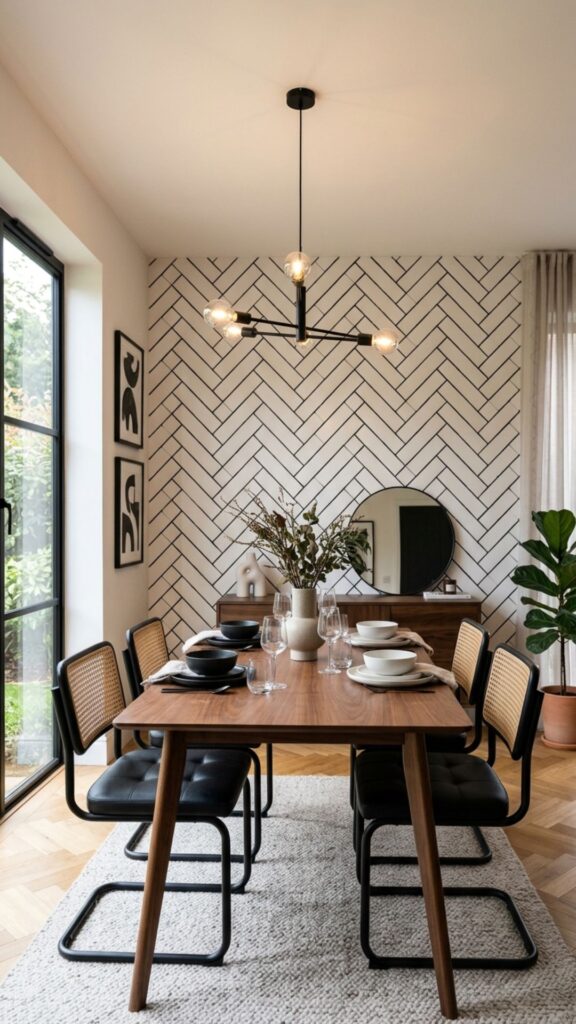
If you’re doing any tiling in your dining room, choose black grout with white tiles (or white grout with dark tiles). The contrast grout lines become part of the design and highlight the geometry of the tile layout.
This is a detail that elevates the whole room and looks far more intentional than standard matching grout. It works particularly well with subway tiles, hexagons, or large-format square tiles.
20. Create a Gallery Wall in Monochrome Frames
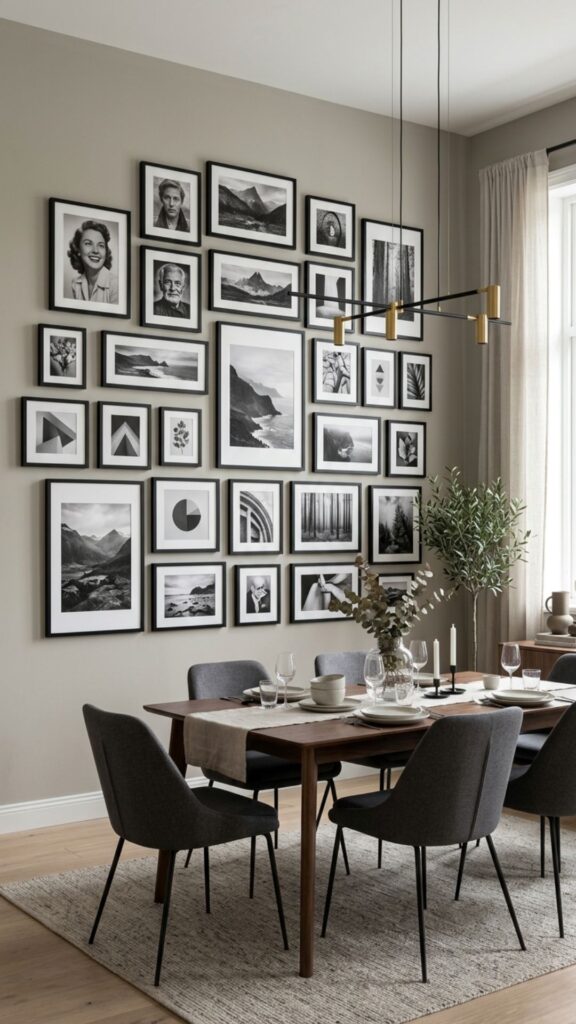
A gallery wall of black-framed prints, photographs, and artwork makes a strong visual impact in a dining room. Stick to black and white imagery inside the frames to keep the palette cohesive.
Plan your layout on the floor before hanging anything. Mix frame sizes — one or two large pieces with several smaller ones — for a dynamic arrangement that feels curated, not chaotic.
How to Pull the Whole Look Together
A successful dining room black and white design comes down to balance. Too much black makes a room feel heavy. Too much white can feel clinical. Aim for a rough 60/40 or 70/30 split between your dominant and secondary color.
Bring in warmth through natural materials — wood, rattan, linen, or leather — to keep the high-contrast palette from feeling too stark. Plants also help: a tall fiddle-leaf fig or trailing pothos adds life and organic texture to a monochrome space.
Finally, layer your lighting. Overhead light, wall sconces, and candles all working together create depth and ambiance that a single ceiling fixture can’t achieve on its own.
Conclusion
A black and white dining room is one of the most versatile and enduring design choices you can make. The 20 ideas in this guide range from simple, low-cost updates (art prints, textiles, table settings) to bigger commitments (feature walls, flooring, wainscoting). There’s no single right way to do it — the best approach is the one that fits your home, your lifestyle, and your budget.
Start with one or two ideas that excite you most. Layer in more elements as you go, and you’ll have a dining room that feels cohesive, chic, and completely your own.
Is a dining room black and white color scheme hard to decorate?
No — black and white is actually one of the most forgiving palettes to work with. Because there’s no color-matching required, you can mix patterns, textures, and styles more freely. The key is balancing contrast and adding warmth through natural materials.
Will a black and white dining room feel too cold or stark?
It can, if you rely only on hard surfaces and flat finishes. To prevent this, layer in warm textures like wood, linen, rattan, and leather. Candles and warm-toned lightbulbs also go a long way toward making the space feel welcoming.
What colors can I add to a black and white dining room without breaking the palette?
Warm metallics — gold, brass, and bronze — complement black and white beautifully without introducing a competing color. Natural wood tones work the same way. If you want a pop of true color, a single accent (one cushion, one plant pot, one art piece) keeps it intentional rather than chaotic.
What type of lighting works best in a dining room black and white design?
A black metal chandelier or pendant light above the table is a classic choice. For ambiance, layer in wall sconces or a buffet lamp. Warm white bulbs (around 2700K) prevent the space from feeling too clinical.
How do I make a small dining room work with a black and white palette?
Lean toward white as your dominant color and use black as an accent. White walls and ceiling reflect light, making the space feel larger. Add black through smaller elements — chair legs, picture frames, hardware — rather than large furniture pieces.