A corner can easily become one of the most useful areas in your home. Instead of leaving that space empty or filling it with furniture that does not quite fit, a well-planned corner desk can create a comfortable and productive place to work.
The best home office ideas corner desk layouts make smart use of floor space without making the room feel crowded. They can work in dedicated offices, bedrooms, living rooms, apartments, guest rooms, or even unused hallway corners. The key is choosing the right desk shape, storage, lighting, and furniture for the space you actually have.
Whether you work from home every day or simply need somewhere to manage paperwork and personal projects, these 20 ideas will help you create a corner workspace that feels organized, practical, and stylish.
1. Choose an L-Shaped Desk for Maximum Surface Space
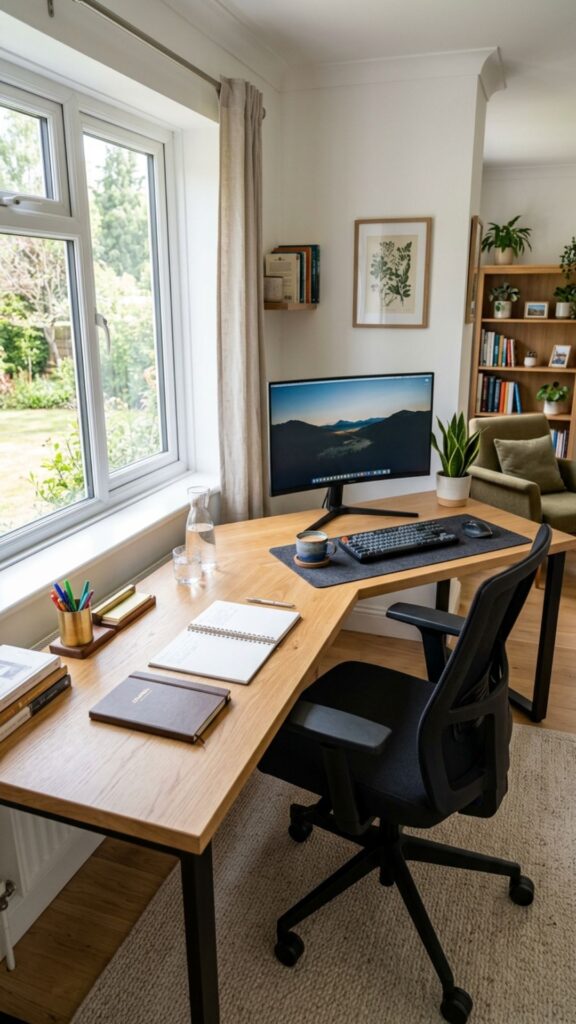
An L-shaped desk is one of the most practical options when planning a corner office. It follows two walls naturally, giving you more working surface without placing a large desk in the center of the room. One side can hold your computer while the other handles notebooks, paperwork, or equipment.
Before buying, measure both walls and check the desk depth carefully. In a small room, a slimmer L-shaped design usually feels more comfortable than a bulky executive desk. This layout works especially well for people who use multiple monitors or switch between digital and handwritten work.
2. Use a Floating Corner Desk in a Tiny Room
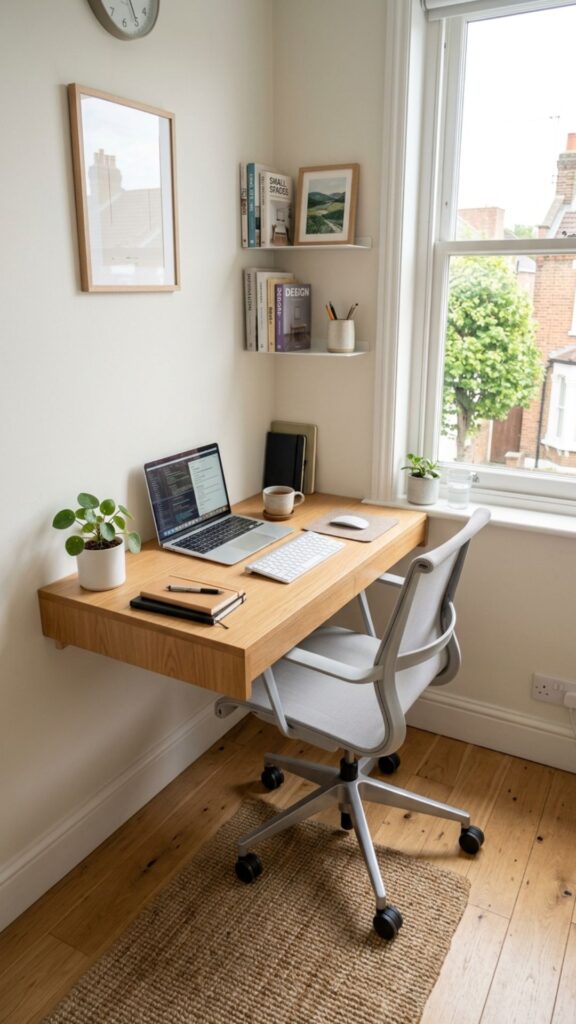
A floating desk can make a compact workspace feel noticeably larger because it keeps the floor visible. Mounting the desktop directly onto the walls also removes bulky legs, drawers, and supports that often make small corners feel crowded.
Pair the desk with a slim chair that can slide underneath when you are finished working. Among the easiest home office ideas corner desk solutions for apartments, this setup works particularly well in bedrooms, studio flats, and narrow living spaces where every square foot matters.
3. Turn an Empty Bedroom Corner Into a Workspace
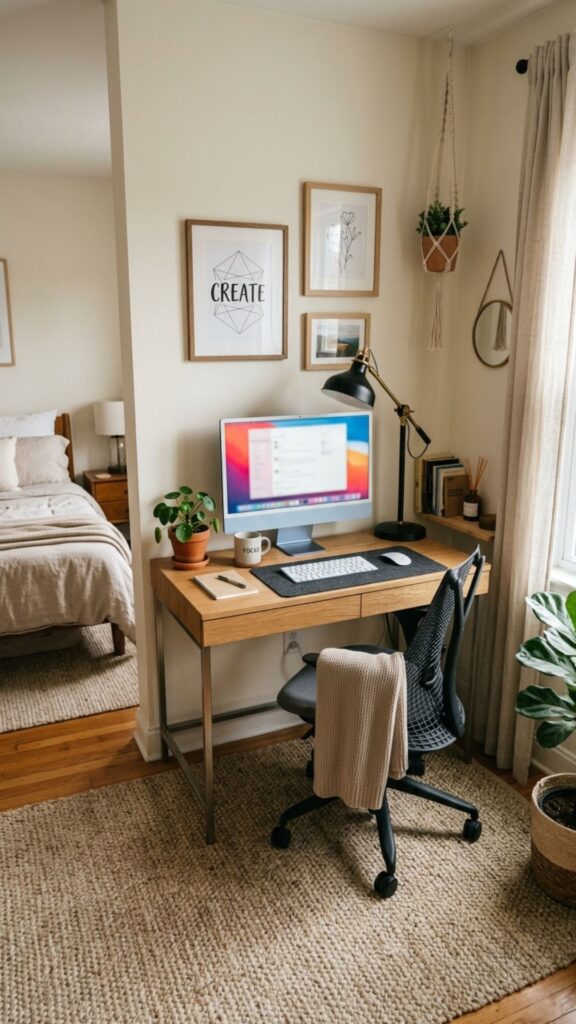
You do not need a separate room to build a functional home office. An unused bedroom corner can provide enough space for a compact desk, comfortable chair, task lamp, and a few shelves without changing the purpose of the room.
Keep the office visually separate from the sleeping area by using a rug, different wall color, or small shelving unit. Choosing furniture that matches your bedroom also helps the workspace blend naturally into the existing decor instead of looking like an afterthought.
4. Add Wall Shelves Above Your Corner Desk
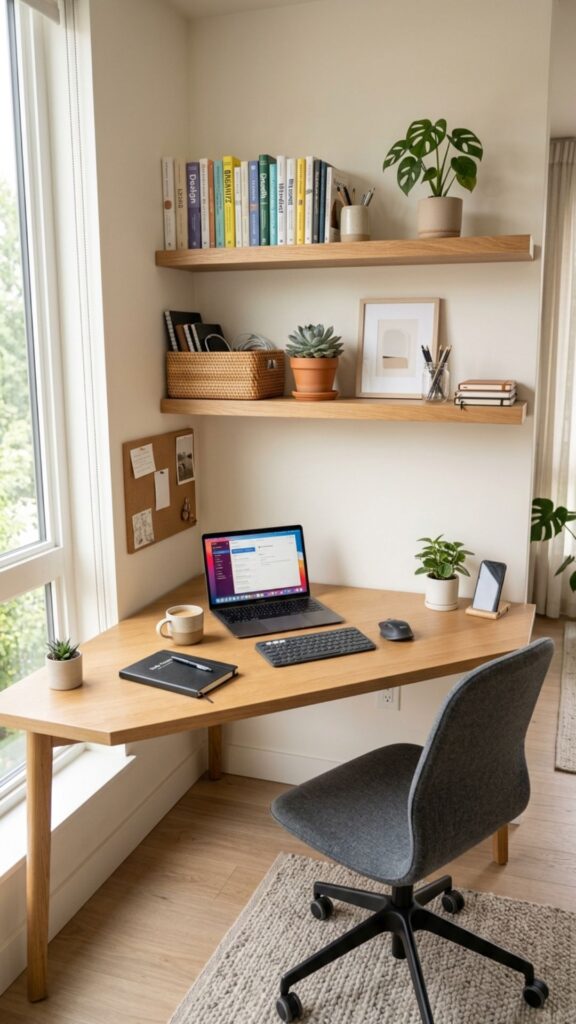
Vertical storage is especially valuable when floor space is limited. Installing two or three shelves above your desk gives you somewhere to store books, stationery, small baskets, plants, and decorative objects without taking away valuable working space.
Place frequently used items on the lowest shelf and decorative pieces higher up. Avoid filling every inch of the wall. Leaving some breathing room makes your workspace look cleaner and prevents the corner from feeling visually heavy.
5. Create a Built-In Corner Office
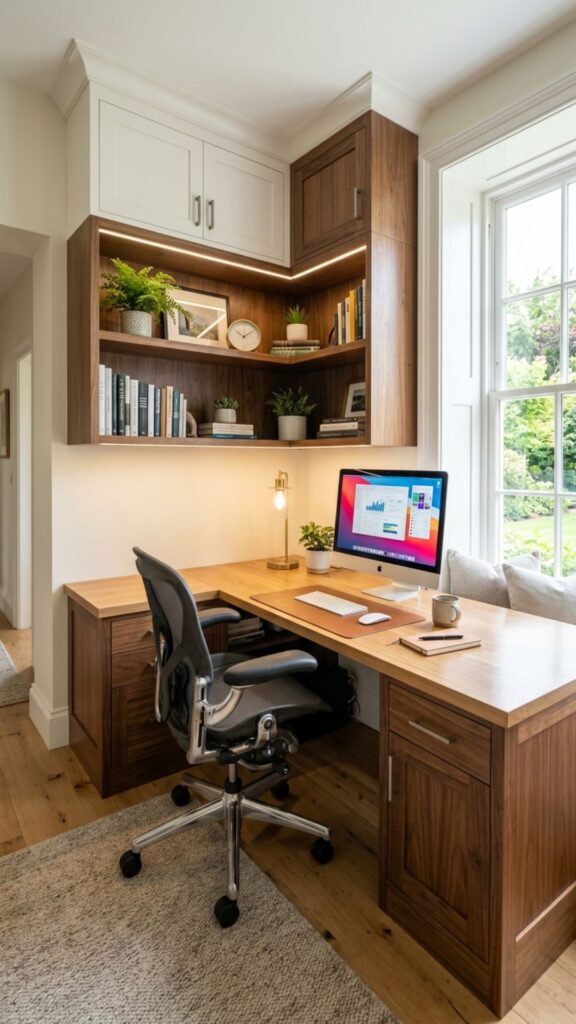
A built-in desk can make awkward corners much more useful. Custom cabinetry allows the work surface, shelves, and drawers to fit the exact dimensions of the room, which is particularly useful around unusual walls, windows, or architectural features.
Built-ins can also provide a more polished appearance than freestanding office furniture. For a timeless design, choose simple cabinetry and neutral finishes. You can add character through hardware, artwork, lighting, or a contrasting desk chair.
6. Position Your Desk Beside a Window
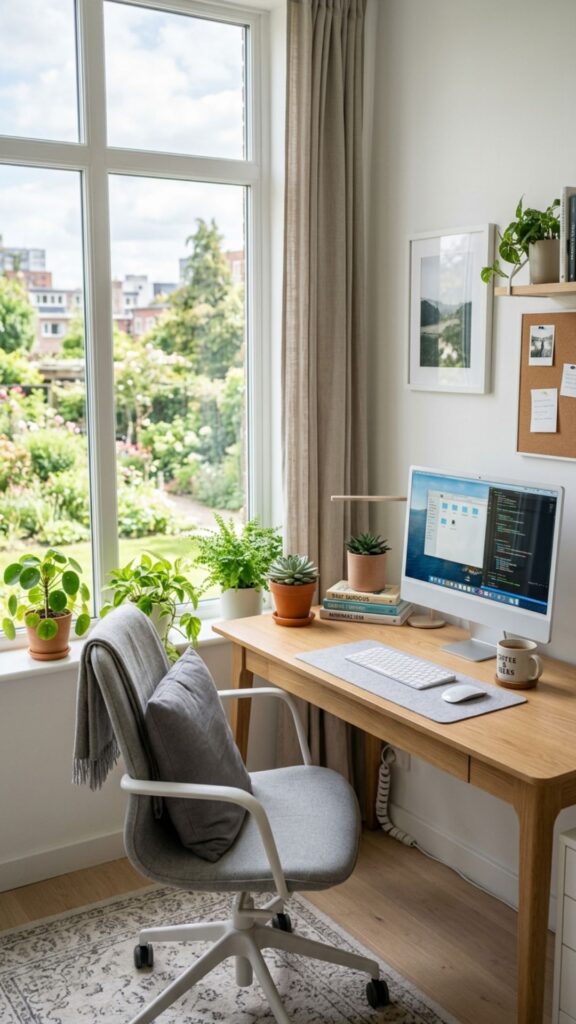
Natural light can make a corner office feel brighter and more pleasant throughout the day. Positioning the desk near a window also gives your eyes somewhere distant to focus during screen breaks, which can make long working sessions feel less enclosed.
Try placing your monitor perpendicular to the window rather than directly facing it. This arrangement can reduce glare while still allowing plenty of daylight into the workspace. Add blinds or lightweight curtains if afternoon sunlight becomes uncomfortable.
7. Try a Minimalist Corner Desk Setup
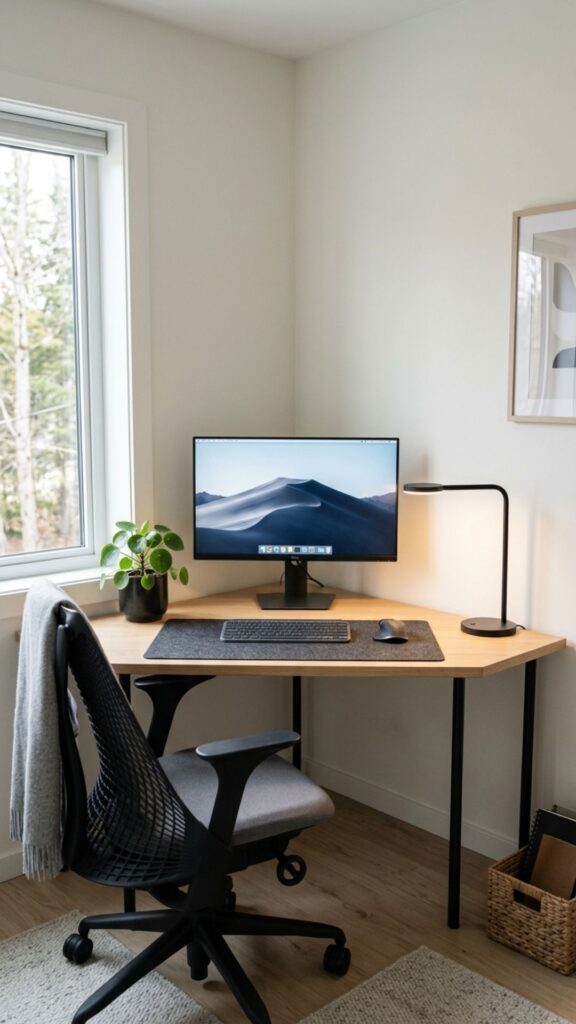
Small workspaces often benefit from simplicity. A streamlined desk, supportive chair, single monitor, task lamp, and one or two storage solutions may be all you need for an efficient setup.
Keep cables, paperwork, and accessories under control so the desktop remains mostly clear. Minimalist home office ideas corner desk designs are particularly effective when your office shares space with a bedroom or living room because the workstation does not dominate the rest of the interior.
8. Use a Corner Desk With Built-In Drawers
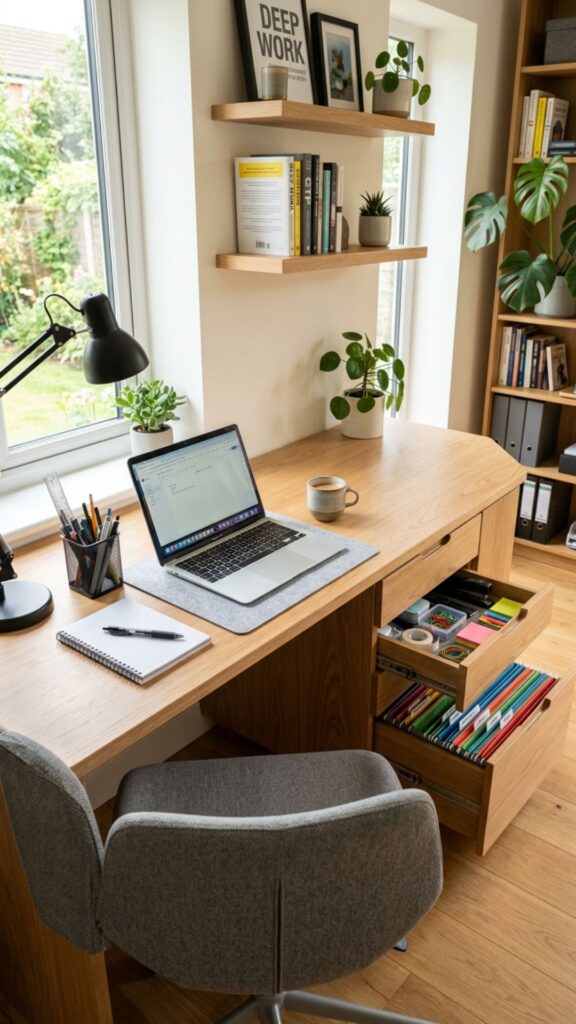
If you regularly use notebooks, chargers, documents, and office supplies, drawers can prevent these everyday items from covering your desktop. A desk with integrated storage keeps everything close while maintaining a cleaner working surface.
Look for a model with shallow upper drawers for small supplies and deeper drawers for files or larger equipment. Avoid buying more storage than you actually need, as oversized drawer units can quickly make a small corner feel cramped.
9. Create a Two-Monitor Corner Workstation
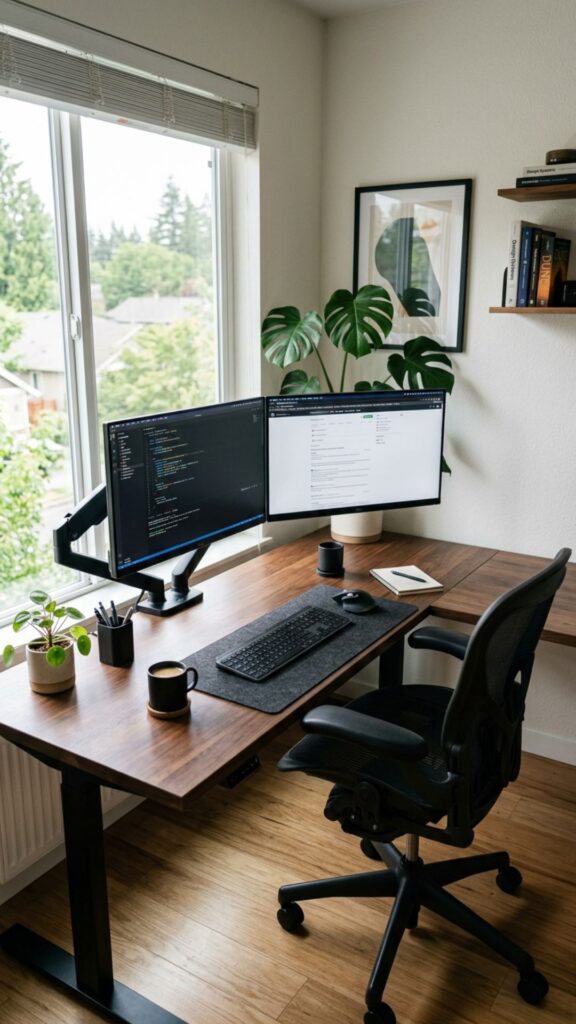
Corner desks are particularly useful for dual-monitor setups because the wider surface provides enough space for multiple screens without forcing them too close together. Position your main monitor directly in front of you and place the secondary screen slightly to the side.
Monitor arms can free additional desk space and allow easier screen adjustment. They are especially useful if your desk is relatively shallow. Keep your keyboard and mouse centered around your main working position to maintain a comfortable posture.
10. Add a Pegboard for Flexible Organization
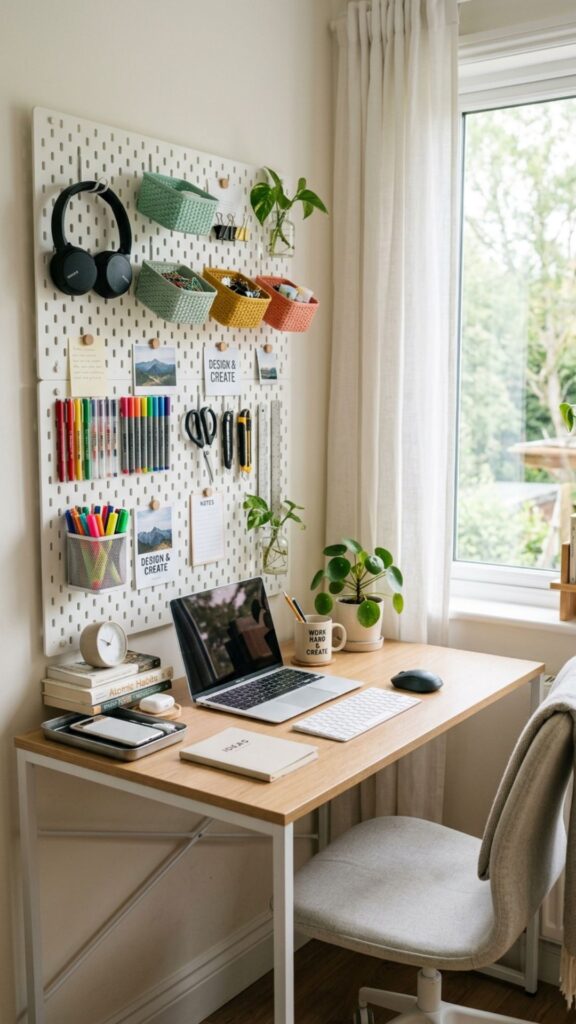
A pegboard above your desk offers practical storage without the permanence of fixed shelves. Hooks, trays, baskets, and small containers can be rearranged whenever your needs change.
Use it to hold scissors, headphones, notebooks, charging cables, or small stationery items. Keeping frequently used tools within reach can improve everyday efficiency while giving the workspace a more organized appearance.
11. Build a Corner Office Under the Stairs
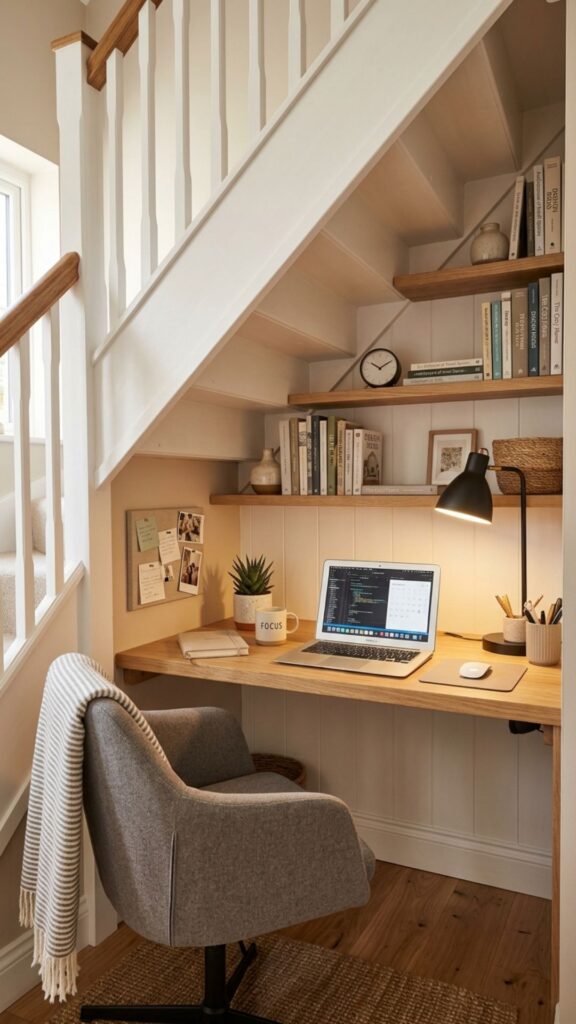
The area beneath a staircase is often overlooked, yet it can provide just enough room for a compact workstation. A custom or narrow corner desk can transform this awkward space into a useful office without taking over another room.
Good lighting is particularly important because under-stair spaces usually receive limited natural light. Add a bright desk lamp or wall-mounted light, and use pale finishes to prevent the workspace from feeling dark or enclosed.
12. Use a Corner Desk in the Living Room
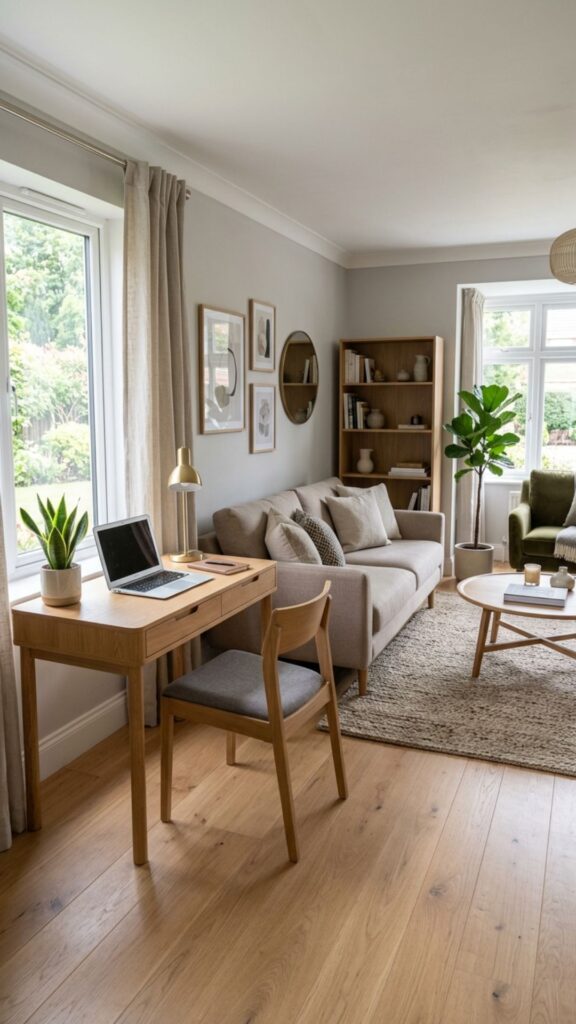
A living room office can work surprisingly well when the furniture is chosen carefully. Position a small corner desk away from the main seating area so work equipment does not become the visual focus of the room.
Choose a desk finish that coordinates with nearby coffee tables, shelving, or cabinets. Closed storage can hide documents and office supplies after work, allowing the space to return to a relaxed living-room atmosphere in the evening.
13. Combine Your Desk With a Bookcase
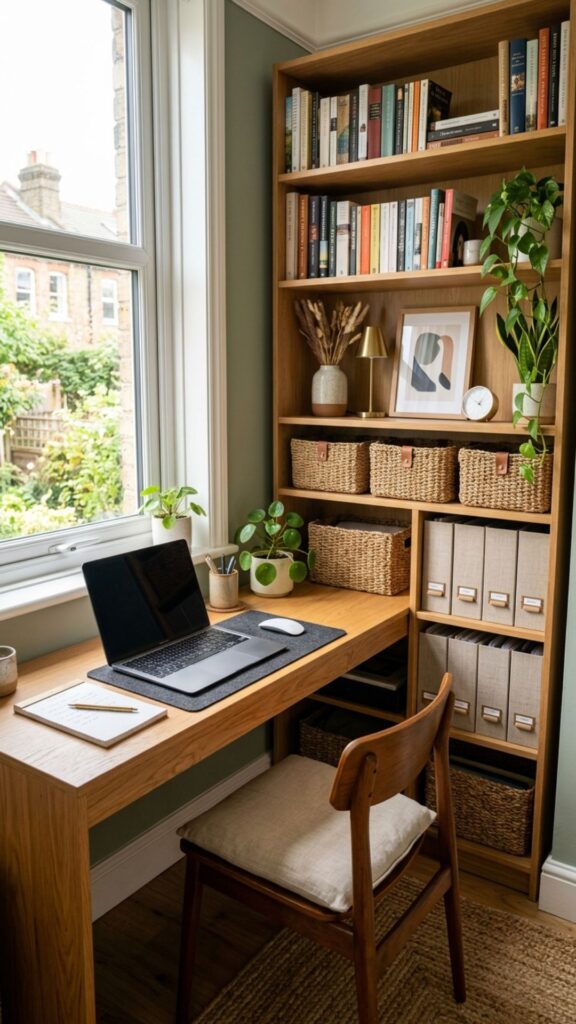
A desk-and-bookcase combination creates both workspace and storage within a relatively small footprint. Tall shelving beside the desk can hold books, files, baskets, and decorative objects while drawing the eye upward.
This is one of the more versatile home office ideas corner desk layouts for people who need storage but cannot dedicate an entire room to an office. Keep heavier items on lower shelves for stability and everyday essentials within comfortable reach.
14. Add Warm Task Lighting
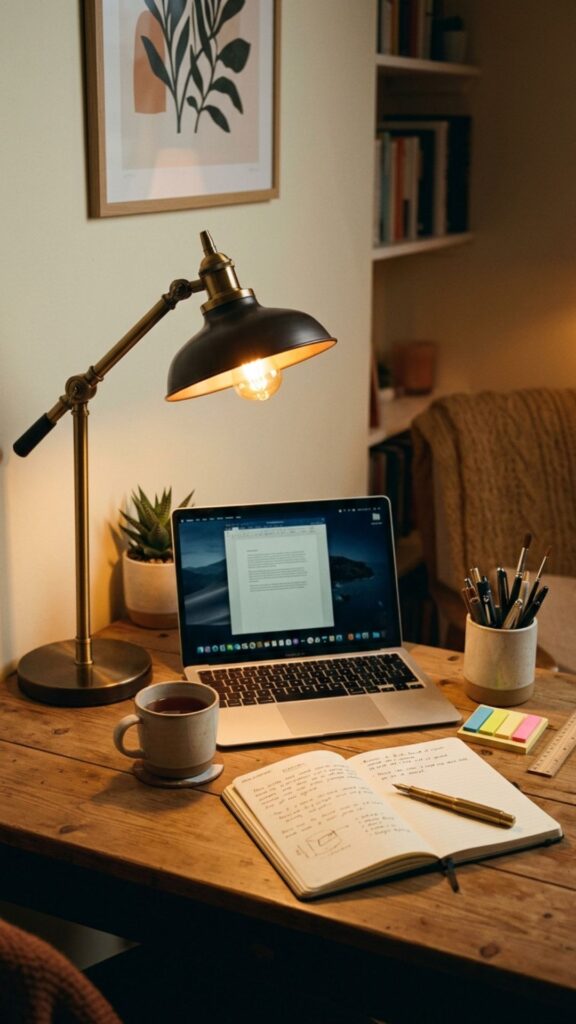
Even when your corner office receives good natural light, a dedicated task lamp is useful during cloudy days, early mornings, and evening work sessions. Adjustable lamps let you direct light exactly where you need it.
Choose a lamp that fits the size of your desk rather than overwhelming it. Wall-mounted or clamp lights are smart alternatives when desktop space is limited because they provide useful illumination without occupying the working surface.
15. Use a Corner Standing Desk
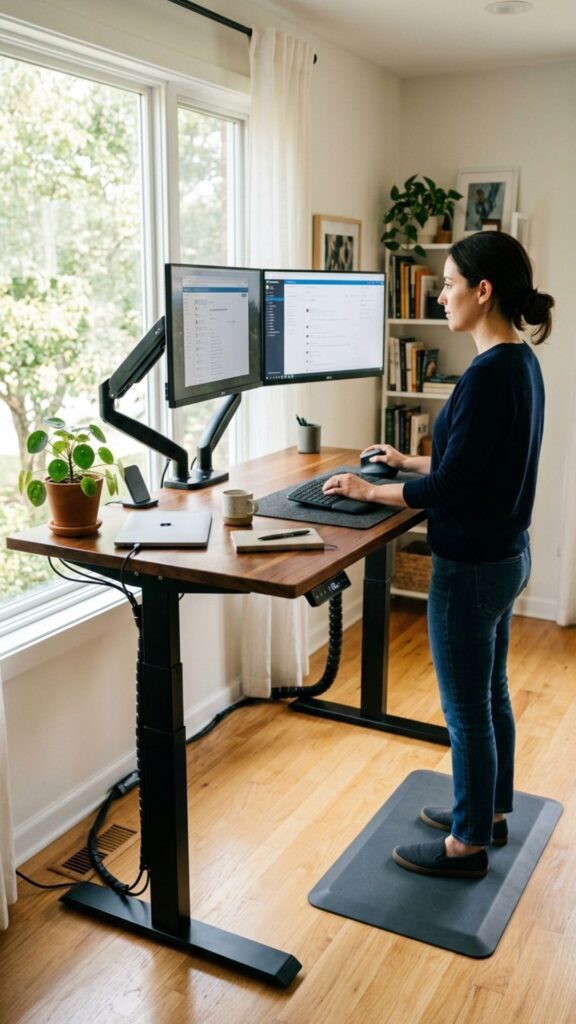
A standing corner desk can provide more flexibility during long working days. Adjustable models allow you to switch between sitting and standing instead of remaining in one position for several hours.
Make sure there is enough clearance around the desk for movement when adjusting its height. If you use monitors, select arms or stands that keep the screens at a comfortable viewing level in both positions.
16. Create a Corner Desk for Two People
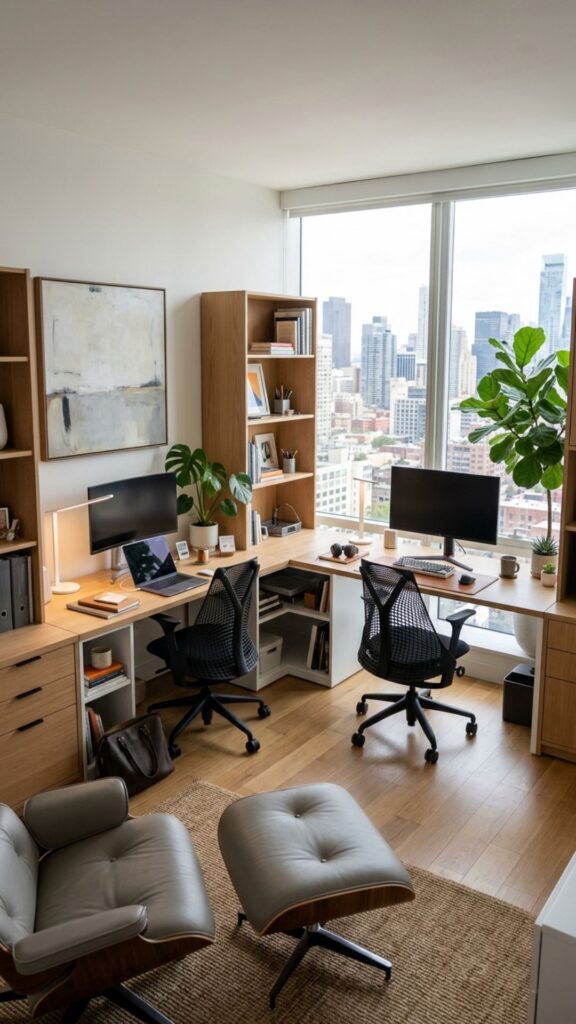
A larger corner can sometimes accommodate two workstations. Place desks along adjoining walls or use an extended L-shaped surface so each person has an individual working zone.
Provide separate storage, lighting, and power access whenever possible. Even in a shared office, having defined personal areas can reduce clutter and make the workspace easier to use when both people are working at the same time.
17. Use Light Colors to Make the Corner Feel Bigger
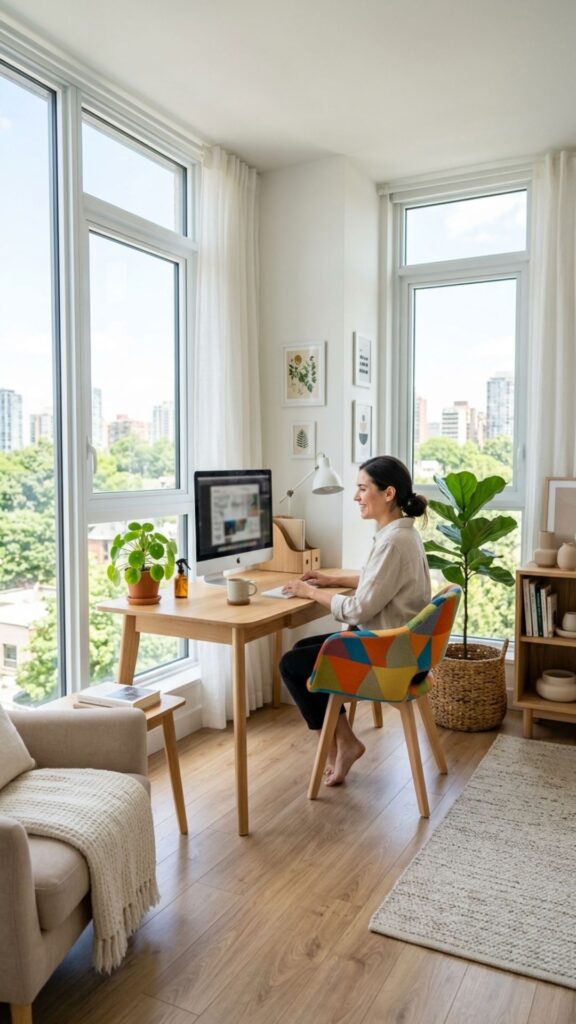
Light colors can visually open a compact workspace. White, cream, pale grey, soft beige, and light wood finishes reflect more light and prevent a corner desk from appearing too heavy.
You do not have to make everything white. Introduce personality through a colored chair, framed print, plant, or small accessories. A restrained color palette often gives small home offices a calmer and more cohesive appearance.
18. Hide Cables for a Cleaner Workspace
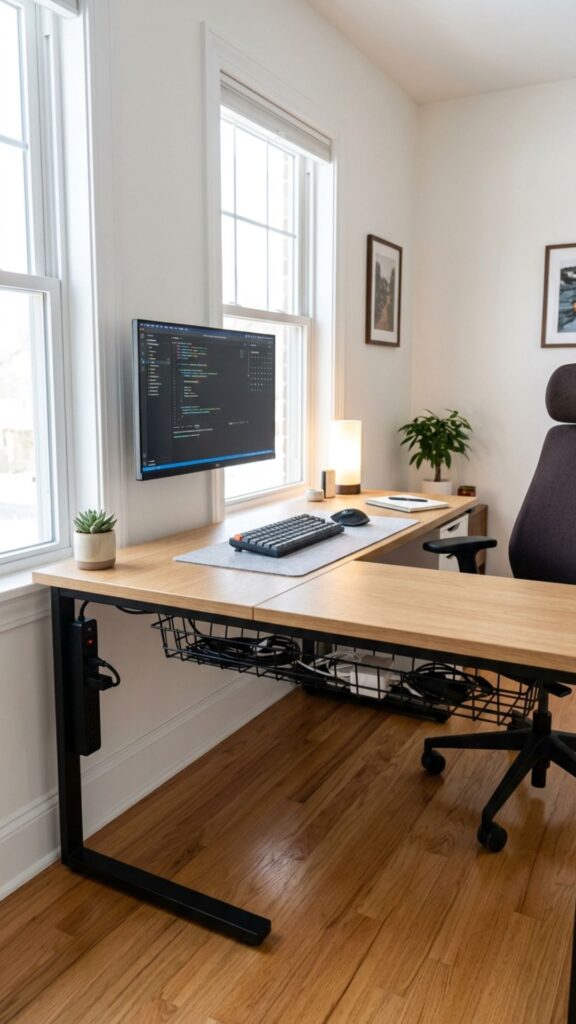
Visible cables can quickly make even a carefully designed office appear untidy. Use adhesive cable clips, under-desk trays, cord covers, or cable sleeves to guide wires away from the main working area.
Mounting a power strip beneath the desk can also prevent several cords from running across the floor. Cable management may seem like a small detail, but it can significantly improve both the appearance and practical usability of your workspace.
19. Personalize the Corner Without Adding Clutter
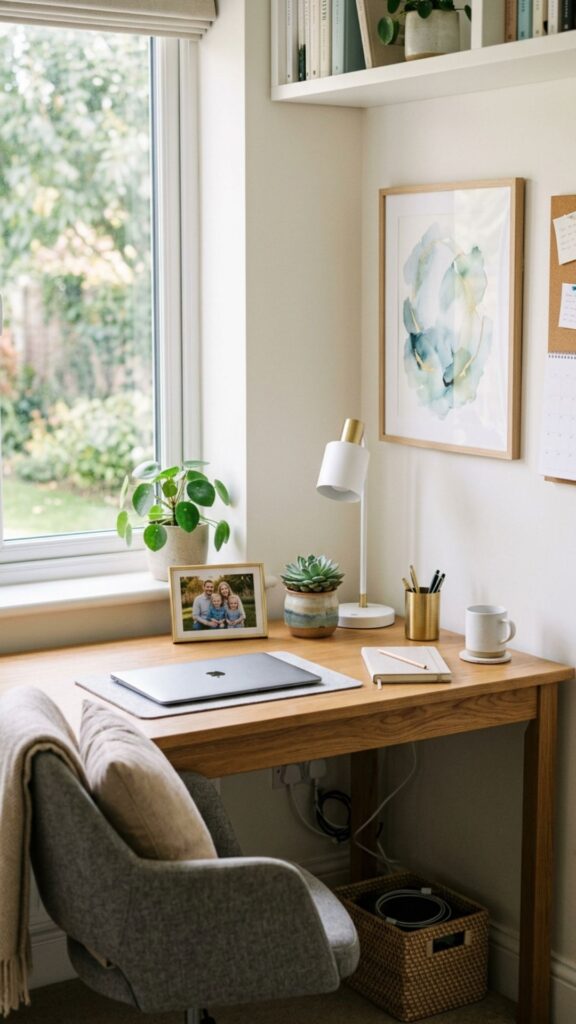
Your workspace should feel comfortable and personal, but too many decorative objects can reduce valuable desk space. Choose a few meaningful items rather than filling every available surface.
A framed photograph, small plant, favorite print, or attractive desk accessory can add character without creating visual noise. The strongest home office ideas corner desk setups usually balance personality with enough empty space to work comfortably.
20. Add Closed Storage for a Clutter-Free Finish
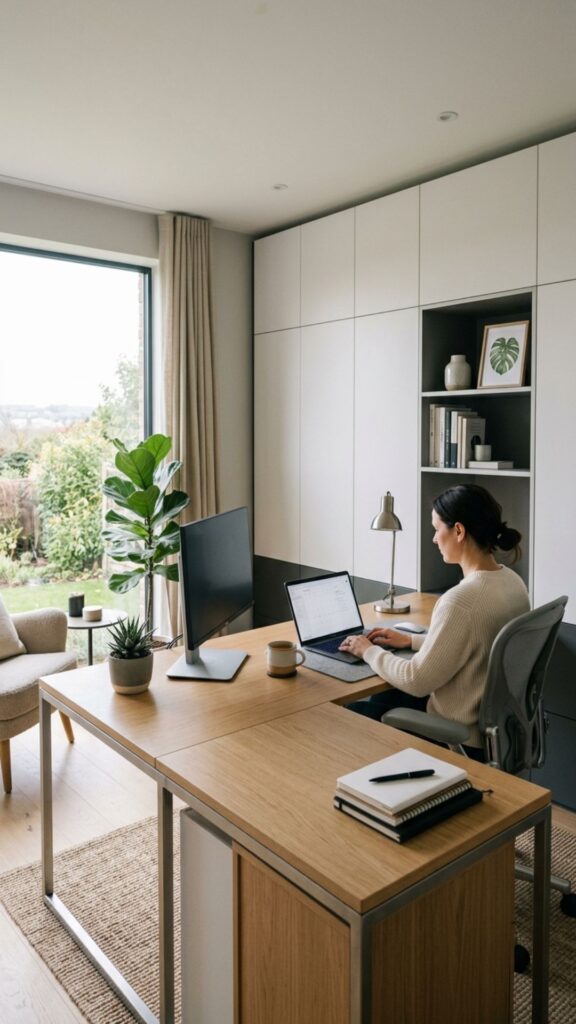
Closed cabinets are useful when your workspace contains paperwork, electronics, stationery, or supplies you would rather not display. A small cabinet beneath or beside the desk can keep these items organized and out of sight.
This becomes especially valuable when your office is located in a shared room. At the end of the working day, you can store equipment quickly and leave the surrounding space looking calm rather than permanently resembling an office.
Conclusion: Make Your Corner Work Harder
A successful corner office does not depend on having a large room or expensive furniture. Good measurements, comfortable seating, thoughtful storage, suitable lighting, and an efficient desk layout matter far more.
Use these home office ideas corner desk examples as inspiration, but adapt them to your own routine. Think about what you use every day, how much storage you genuinely need, and how the desk will fit with the rest of your room.
Start by measuring your available corner and identifying your three most important needs. From there, you can build a workspace that uses every inch wisely while remaining comfortable, organized, and enjoyable to work in.
Is a corner desk good for a small home office?
Yes. A corner desk can be an excellent choice for a small home office because it uses space along two walls that might otherwise remain empty. Floating and compact L-shaped desks are particularly useful in smaller rooms.
Where should a corner desk be placed?
Place your desk where you have enough room to sit comfortably, access power outlets, and avoid excessive screen glare. A corner beside a window often works well, provided direct sunlight does not reflect strongly on your monitor.
What size corner desk is best for a small room?
The best size depends on your available wall space and equipment. Measure both walls before shopping and allow enough clearance for your chair. A desk approximately 18 to 24 inches deep can provide useful workspace without occupying too much floor area.
How can I make a corner desk look less cluttered?
Use drawers, wall shelves, cable management, and closed storage to keep everyday items organized. Keep only frequently used equipment on the desktop and store paperwork, chargers, and extra accessories elsewhere.
How do I make a corner home office look stylish?
Keep the furniture finishes consistent with the surrounding room, use a coordinated color palette, and add a few carefully chosen decorative elements. Good lighting, tidy cables, attractive storage, and a comfortable chair can make even a very small corner workspace feel intentional and polished.