A home office should help you focus, think clearly, and speak confidently on calls. Unfortunately, hard walls, bare floors, large windows, and minimal furniture can turn even a beautiful workspace into an echo chamber. Every keyboard tap feels louder, video meetings sound hollow, and outside noise becomes harder to ignore.
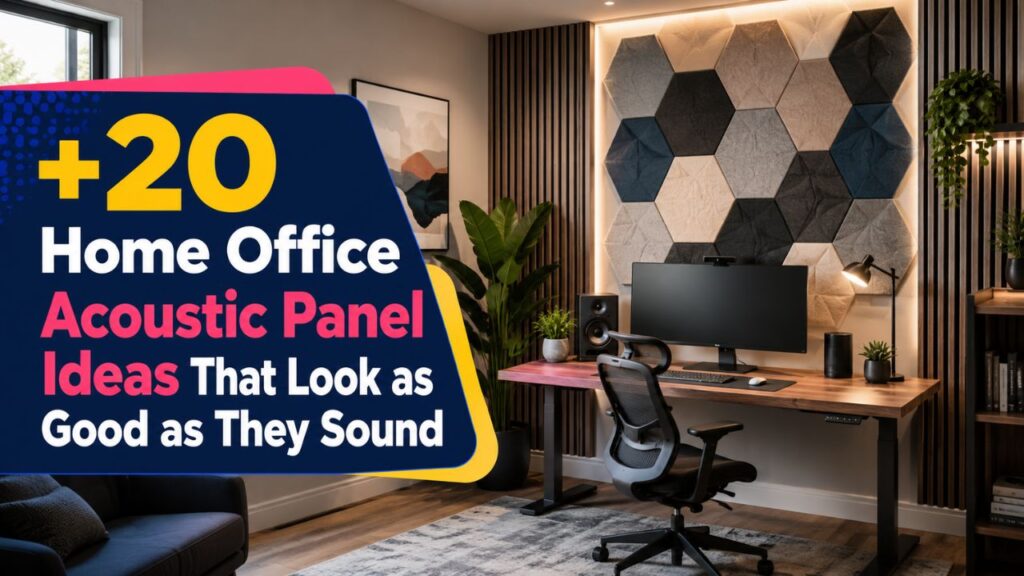
That is where smart home office ideas acoustic panels can make a noticeable difference. Modern acoustic panels no longer have to look like bulky recording-studio equipment. They now come in wood finishes, fabric designs, geometric patterns, subtle neutral shades, and even decorative artwork.

The right choice can improve sound while becoming part of your office design. Whether you have a dedicated room, bedroom workspace, or compact apartment office, these 20 ideas will help you combine better acoustics with a professional, comfortable look.
1. Create a Wood Slat Acoustic Feature Wall
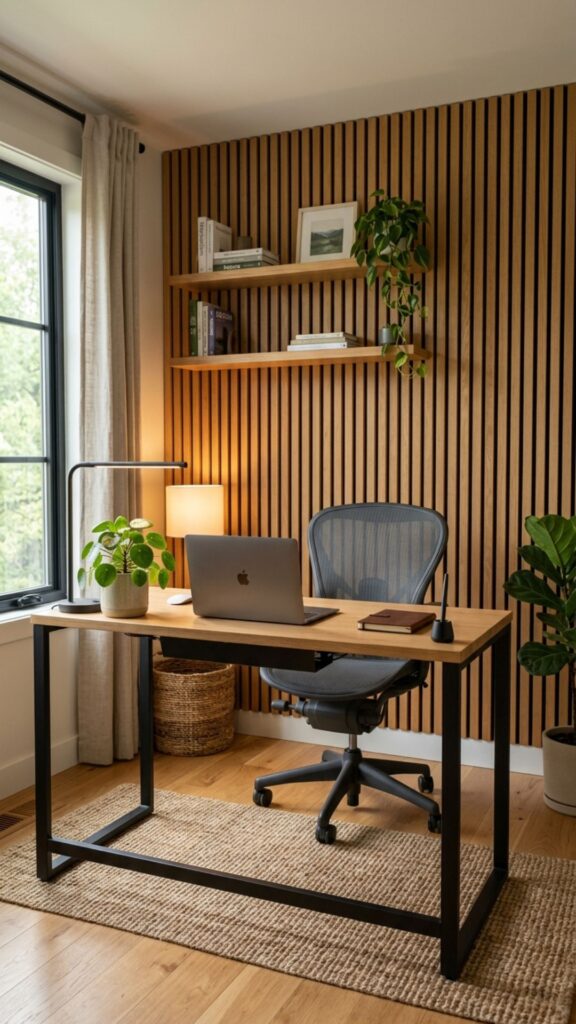
Wood slat panels are one of the easiest ways to make sound treatment look intentional. They combine narrow wooden strips with sound-absorbing backing, creating a warm architectural finish while helping reduce reflected sound.
Install them behind your desk or on the wall visible during video meetings. Dark walnut works beautifully in executive-style offices, while lighter oak suits Scandinavian and minimalist spaces. Among modern home office ideas acoustic panels, this option offers an excellent balance between decoration and function.
2. Place Fabric Panels Behind Your Desk
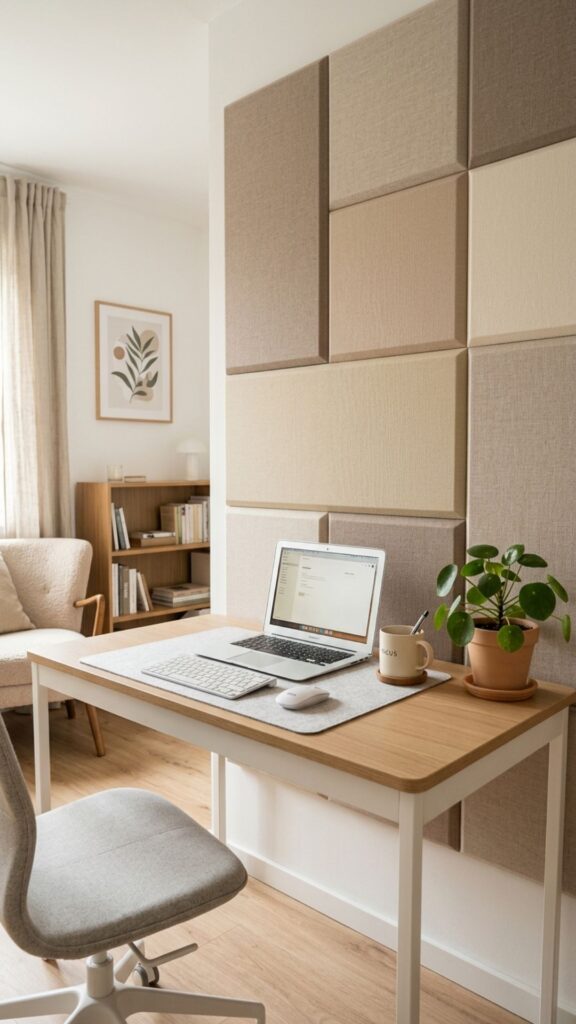
Fabric-covered panels are practical because they come in many colors and sizes. Positioning several behind your desk can help absorb sound that would otherwise bounce from the wall directly behind you.
Choose fabric that complements your chair, curtains, rug, or shelving. Soft gray, beige, navy, and muted green are easy choices for professional offices. Keep the panels evenly spaced for a clean, organized appearance rather than making them look like technical equipment.
3. Build a Floor-to-Ceiling Acoustic Wall
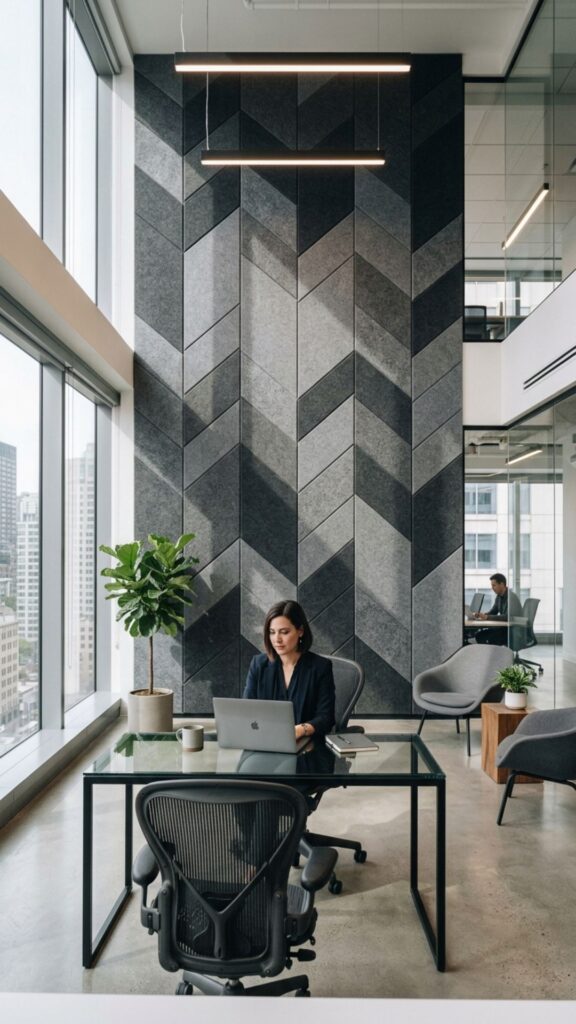
If echo is a major problem, covering a larger wall area can provide more effective sound absorption. A floor-to-ceiling installation also creates a strong visual feature without adding furniture or clutter.
This approach works particularly well in rooms with tiled floors, large windows, or high ceilings. You can use wood slats, felt panels, or upholstered sections depending on your interior style. It is one of the most dramatic home office ideas acoustic panels can provide.
4. Use Geometric Acoustic Tiles as Wall Art
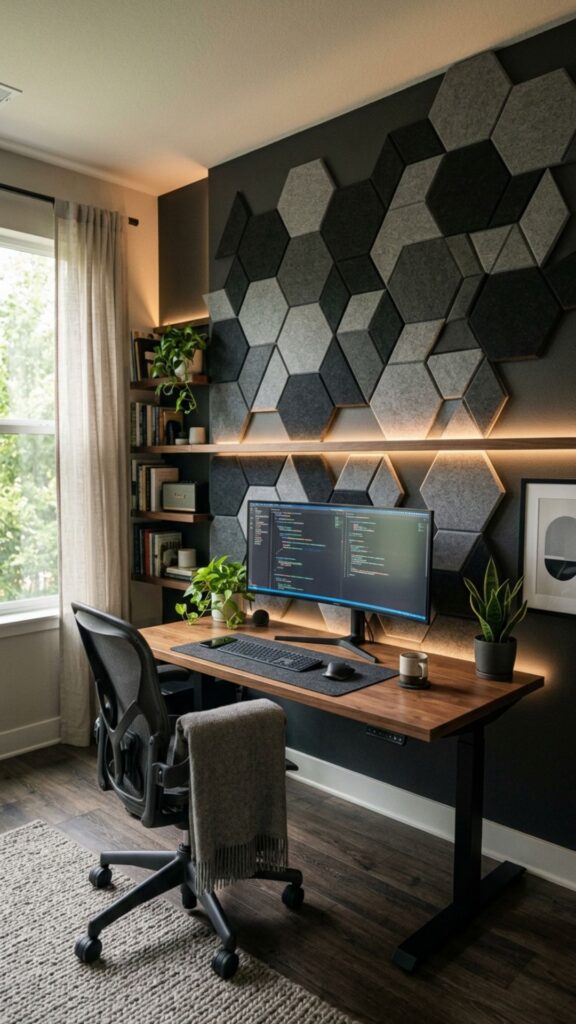
Acoustic panels do not need to be rectangular. Hexagons, triangles, diamonds, and other geometric shapes can turn a blank office wall into a custom design.
Mix several shades from the same color family for a polished appearance. For example, combine charcoal, medium gray, and light gray hexagons behind a monitor setup. The finished arrangement absorbs sound while giving your office more personality.
5. Install Acoustic Panels Behind Your Monitor
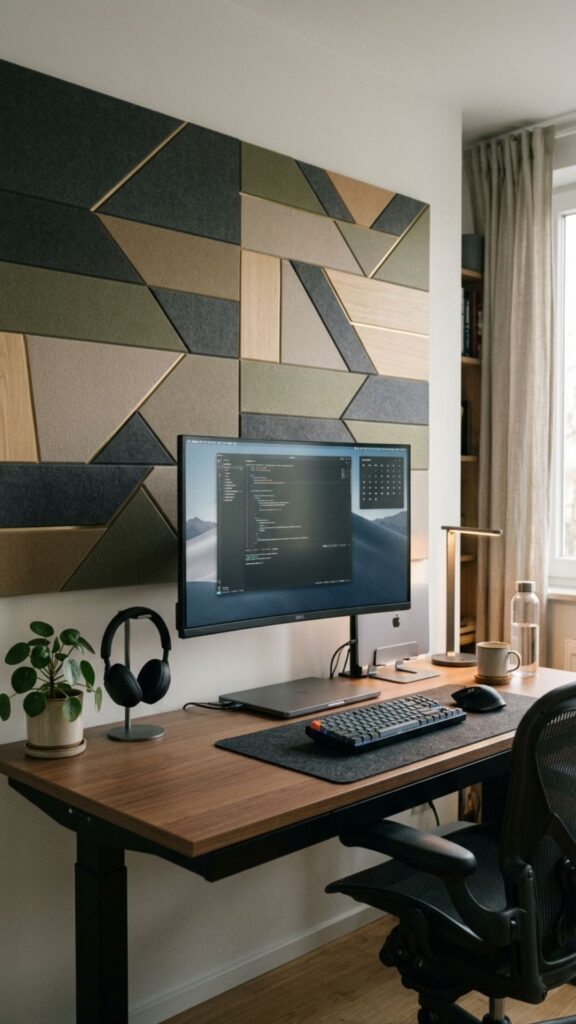
The wall directly behind your computer is often an ideal location for acoustic treatment. It usually has open space and sits close to where you speak during meetings or recordings.
A horizontal row of panels can frame your monitor without overwhelming the room. Choose panels slightly wider than your desk to create visual balance. This setup works especially well for podcasting, online teaching, consulting, and frequent video conferencing.
6. Create a Neutral Felt Panel Arrangement
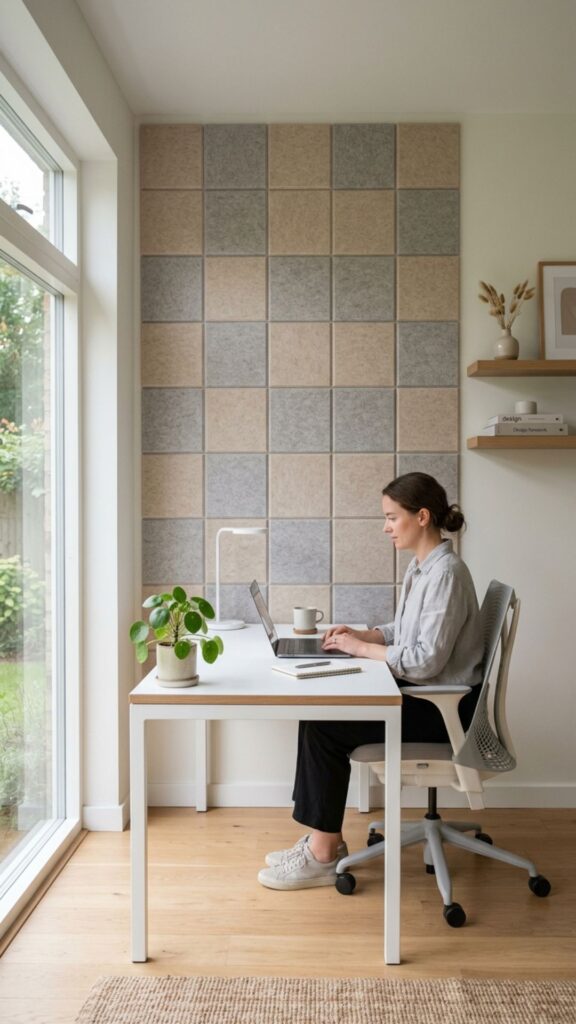
Neutral felt panels are ideal when you want acoustic treatment to disappear into your decor. Beige, cream, taupe, and soft gray can blend naturally with modern home office furniture.
Arrange several panels in a symmetrical grid for a calm, professional effect. These home office ideas acoustic panels are especially useful for people who want better sound without creating an obvious studio environment.
7. Frame Acoustic Panels Like Artwork
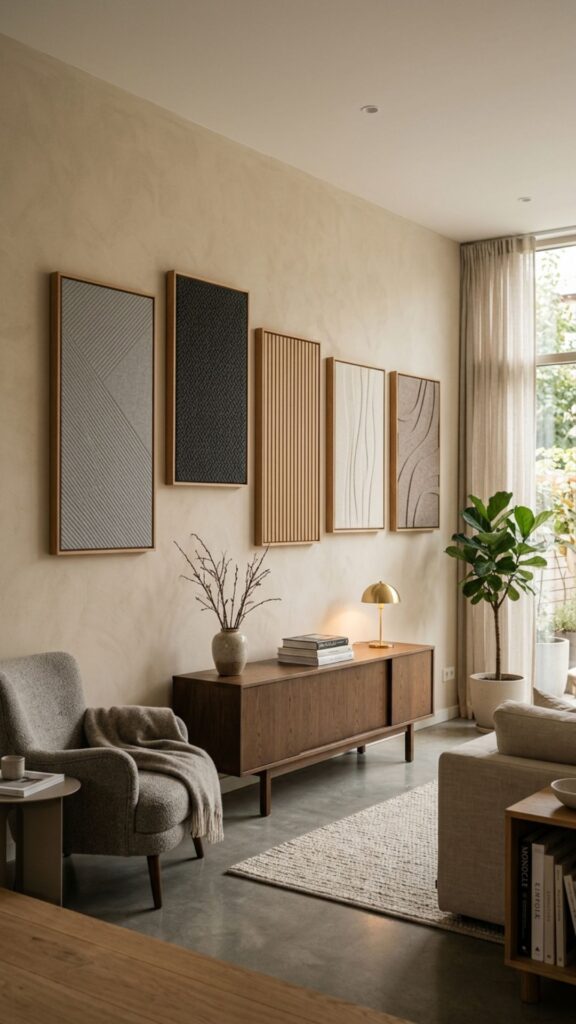
One easy design trick is treating acoustic panels like framed artwork. Place individual panels inside slim wooden or metal frames so they feel more like decorative wall pieces.
You can use one large panel or create a gallery-style arrangement. This approach works well in traditional, transitional, or luxury offices where exposed foam or plain acoustic tiles may feel too casual.
8. Add Acoustic Panels to a Video Call Background
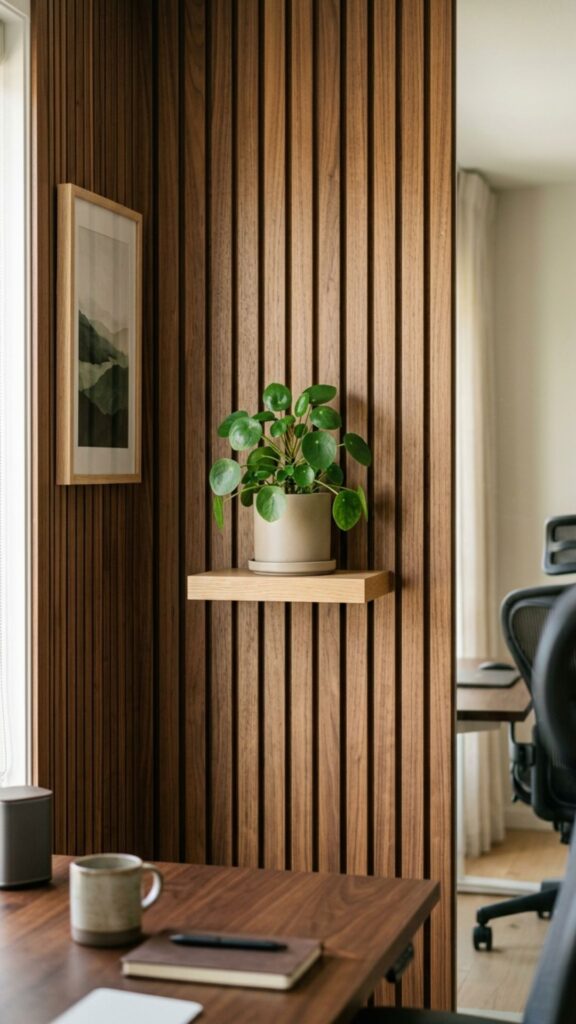
Your video call background is valuable design space. Instead of filling it with random shelves and decorations, use acoustic panels to create a clean backdrop that also improves your voice quality.
Wood slats, upholstered panels, or simple geometric designs can make your background appear more professional. Add one plant or a small shelf for visual interest, but keep the overall setup uncluttered.
9. Combine Acoustic Panels With Floating Shelves
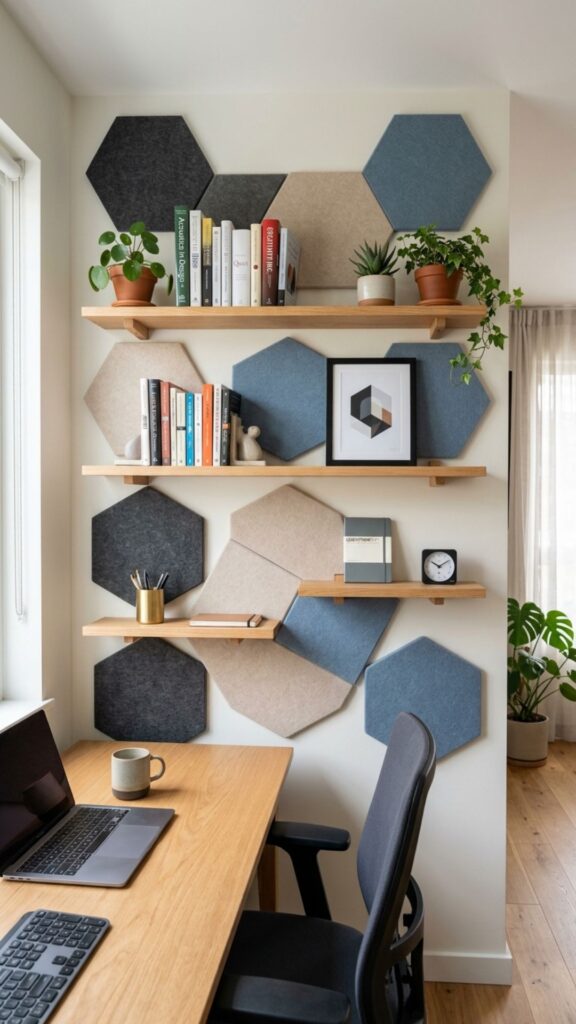
You do not need to choose between storage and sound control. Install acoustic panels first, then position floating shelves across or beside them.
The combination adds depth while keeping books, plants, and office accessories within reach. Use shelves sparingly so they do not cover too much of the sound-absorbing surface. This is one of the more practical home office ideas acoustic panels can support in small rooms.
10. Cover a Corner With Acoustic Panels
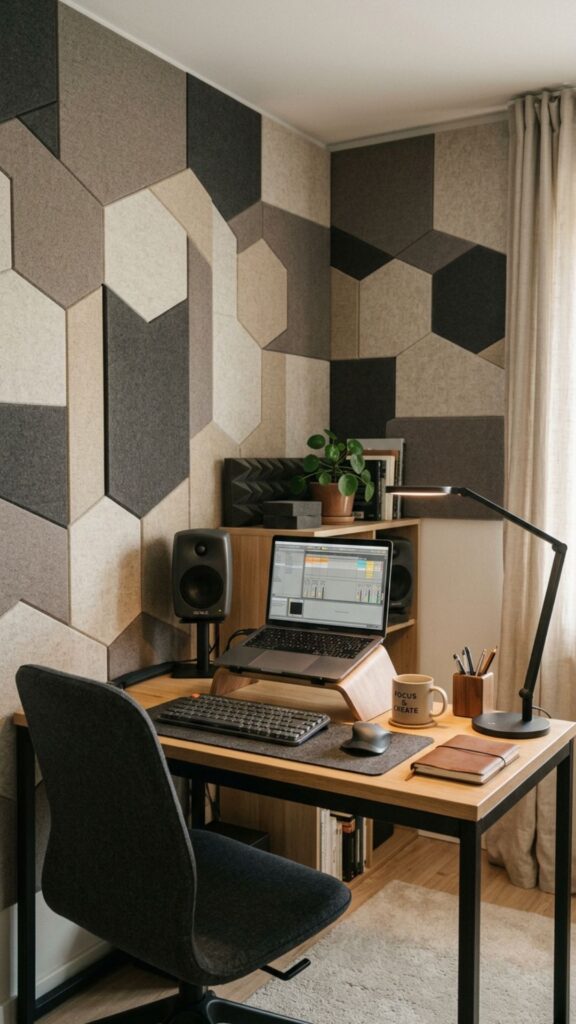
Corners can create noticeable sound reflections, particularly in smaller rooms. Adding panels across one or two adjoining walls can soften the acoustic environment.
This does not require covering the entire room. Even a focused treatment near your desk can make speech sound less harsh. Match both walls with the same panel style so the corner feels deliberate rather than patched together.
11. Use Vertical Panels to Make the Ceiling Look Higher
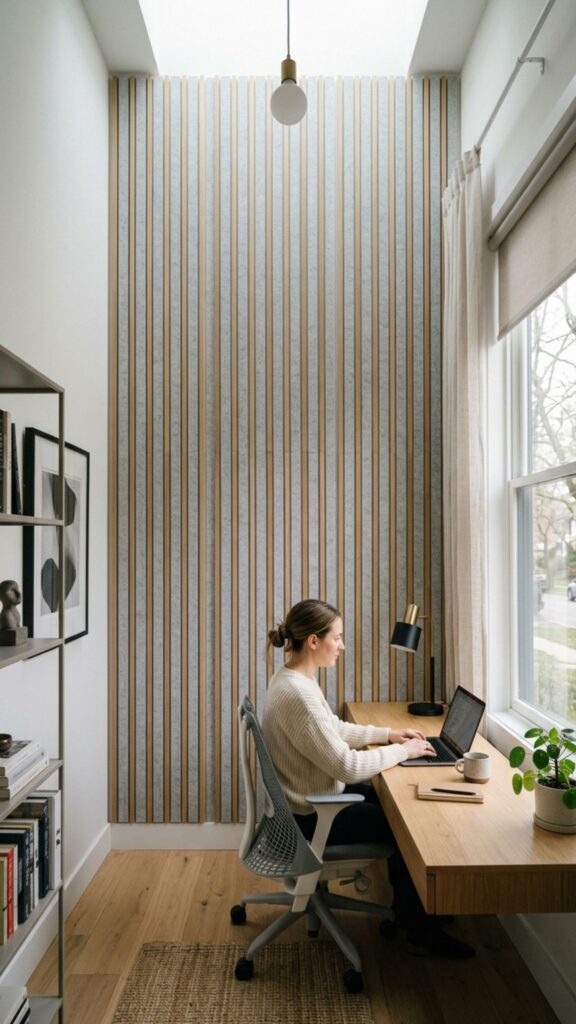
Vertical design lines naturally draw the eye upward. Tall acoustic panels can therefore make a compact office feel slightly more spacious while reducing unwanted reflections.
Install narrow panels from desk height toward the ceiling. This technique works particularly well behind small desks or in narrow workspaces where wide decorative treatments could make the room feel crowded.
12. Try Decorative Printed Acoustic Panels
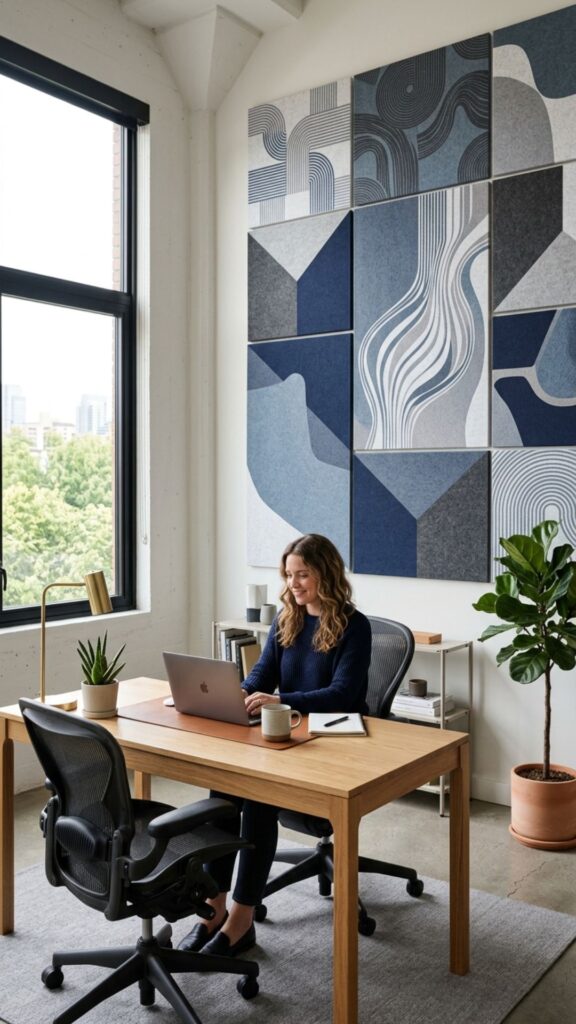
Some acoustic panels can be printed with photographs, patterns, abstract graphics, or artwork. They allow you to improve acoustics without sacrificing a decorative focal point.
Choose artwork that fits your office mood rather than something overly busy. Landscapes, architectural photography, and abstract designs often work well. These home office ideas acoustic panels are useful when wall space is limited and every decorative element needs a purpose.
13. Match Acoustic Panels to Your Wall Color
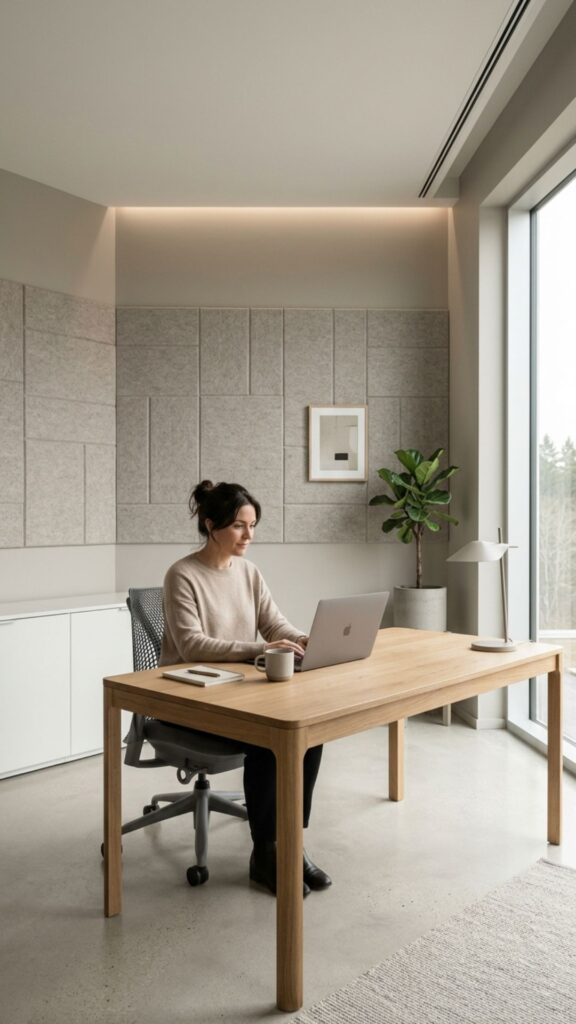
If you prefer a seamless look, select panels in nearly the same shade as your wall. Dark panels on a dark wall can feel sophisticated, while cream panels on warm white walls create a softer effect.
Matching colors lets texture provide the visual interest instead of contrast. This is particularly effective in minimalist offices where too many colors can make the room feel less organized.
14. Create a Two-Tone Acoustic Wall
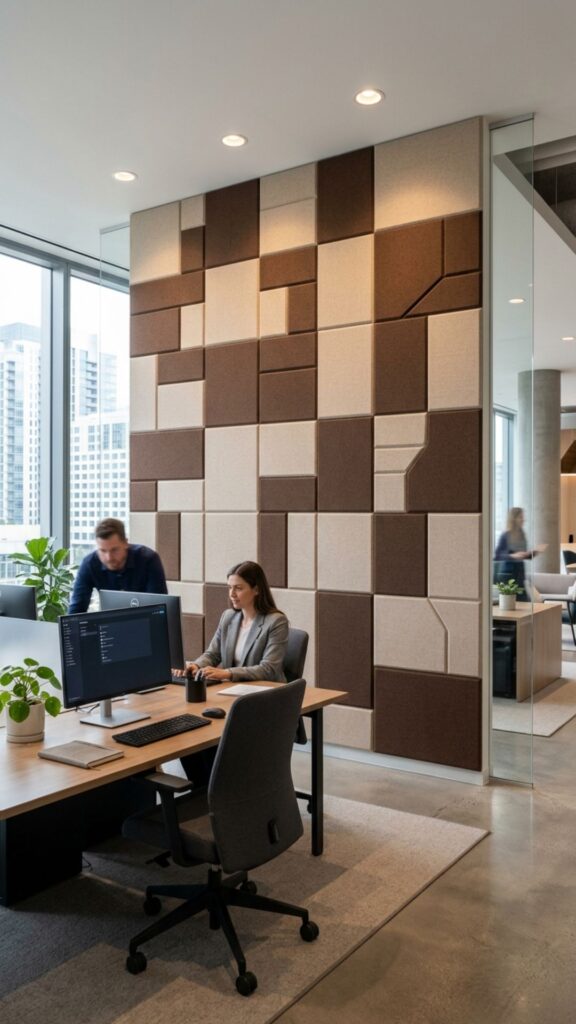
A two-tone design provides more personality without becoming distracting. Choose one main neutral color and one slightly darker or lighter accent.
You might use beige and brown, charcoal and gray, or navy and soft blue. Arrange the colors in simple blocks rather than complicated patterns. The result can feel modern while keeping your workspace visually calm.
15. Add Acoustic Panels Above a Standing Desk
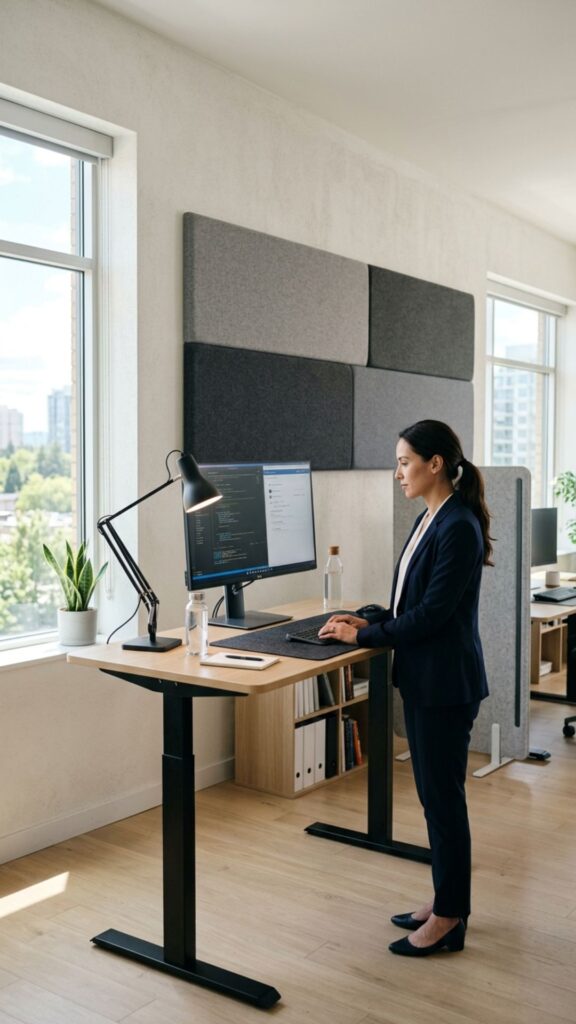
Standing desks often sit against large empty walls, making that area perfect for acoustic treatment. Install a wide panel or several smaller sections above the desktop.
Position the panels around your normal speaking height when possible. This can be particularly helpful if you take calls while standing. It also gives the workstation a finished look without reducing valuable floor space.
16. Use Cork-Based Acoustic Panels
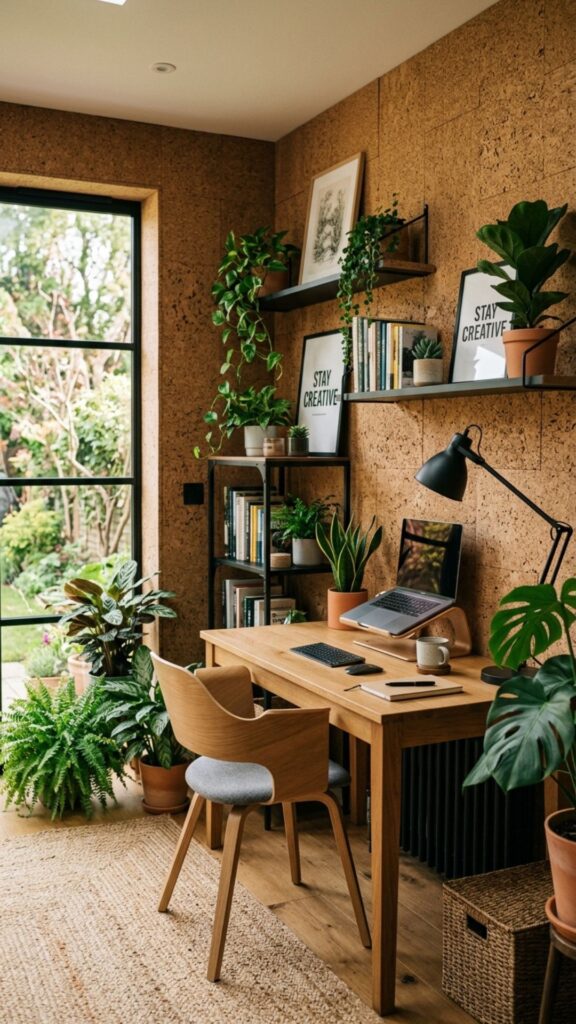
Cork offers a natural texture that works well in relaxed, earthy office interiors. Depending on the product and construction, cork-based panels can contribute to reducing sound reflections while adding warmth to blank walls.
Another advantage is visual versatility. Cork pairs easily with wood furniture, black metal, plants, and neutral fabrics. For nature-inspired home office ideas acoustic panels, it can be an attractive alternative to standard fabric finishes.
17. Create a Minimal Black Acoustic Wall
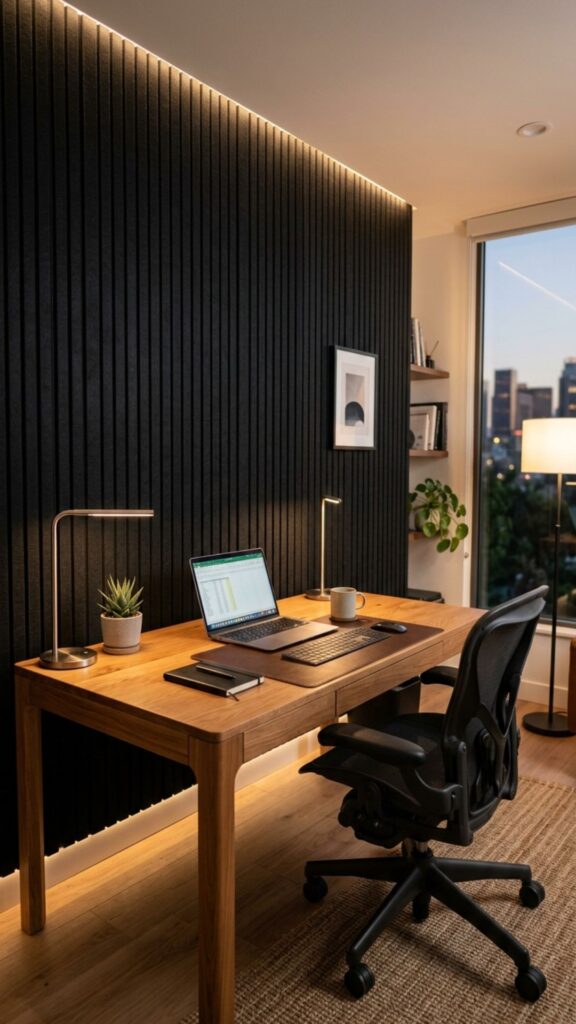
Black acoustic panels can create a striking office backdrop, especially when combined with light desks, metallic details, or warm wood.
Use black strategically because large amounts can make a small room feel darker. One feature wall is usually enough. Good lighting, including a desk lamp and soft ambient lighting, will help keep the workspace comfortable.
18. Install Acoustic Panels on the Ceiling
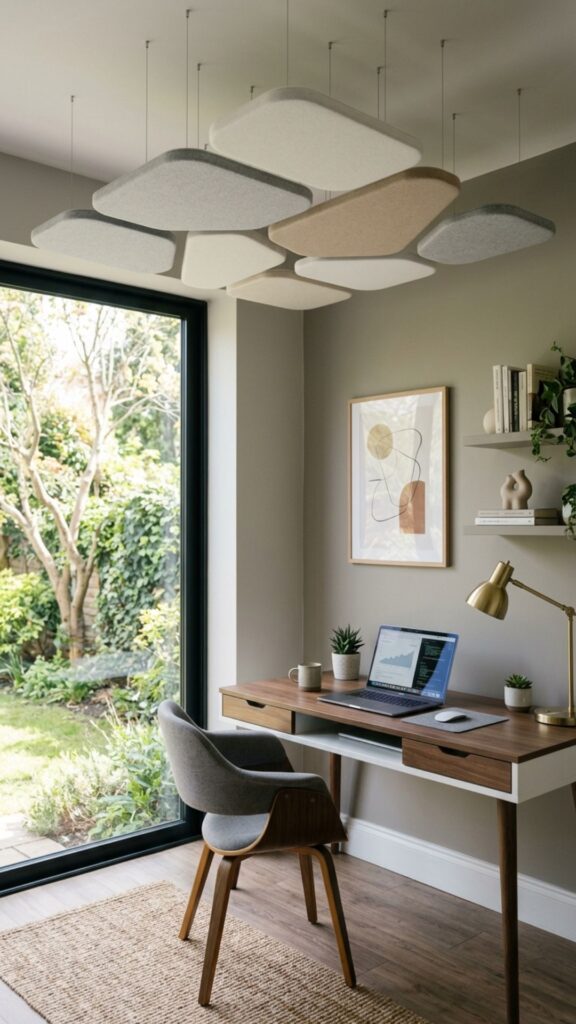
Walls are not the only surfaces that reflect sound. In rooms with hard flooring and high ceilings, ceiling-mounted acoustic panels can help control reflections without taking up wall space.
These panels are sometimes called acoustic clouds. They can be useful when your walls already contain shelves, artwork, or storage. Choose simple shapes and neutral colors so the ceiling treatment integrates naturally with the room.
19. Combine Acoustic Panels With Soft Furnishings
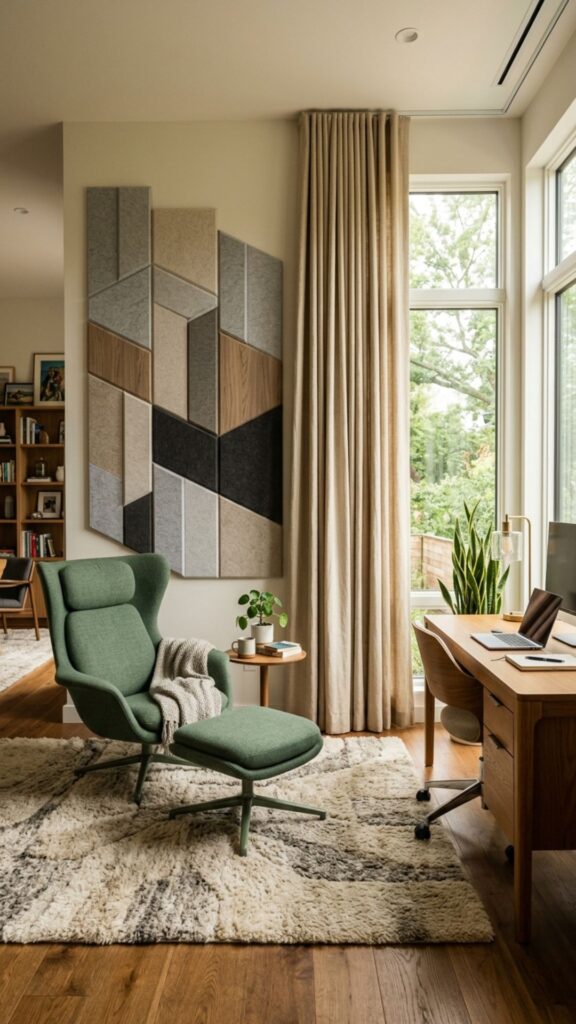
Acoustic panels work best as part of the overall room rather than as the only sound-control feature. Curtains, rugs, upholstered chairs, and fabric blinds can also help soften reflected sound.
For example, combine wall panels with a thick rug under your desk and curtains near large windows. This layered approach often feels more comfortable and avoids covering every wall with panels. Good home office ideas acoustic panels should always consider the room as a whole.
20. Build a Custom Acoustic Panel Gallery Wall
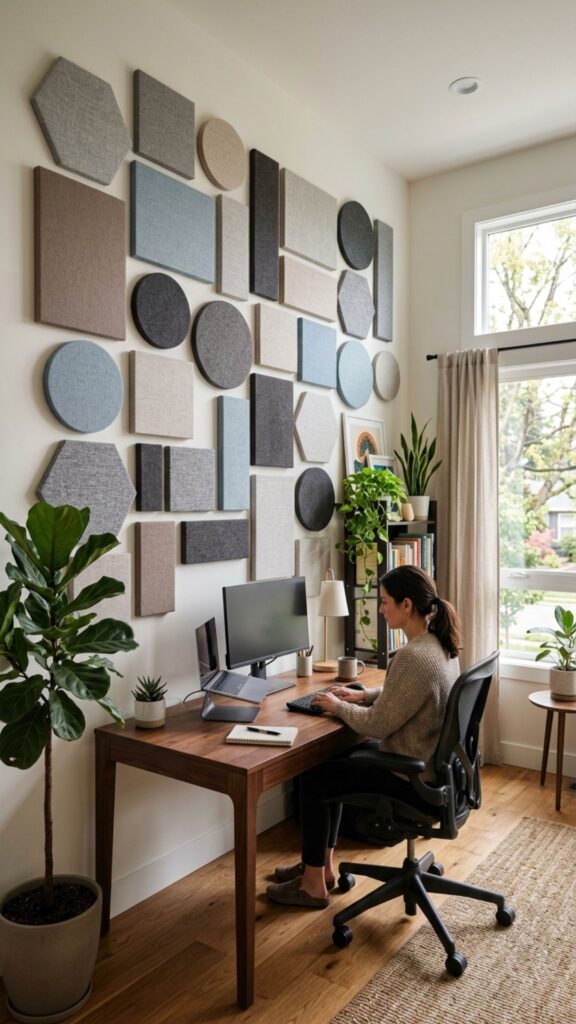
A gallery wall gives you complete creative control. Combine panels in several sizes while maintaining a consistent color palette or material.
Start by arranging the pieces on the floor before mounting them. Keep enough spacing between each panel so the design feels intentional. You can even mix acoustic panels with one or two framed prints to create a workspace that feels personal rather than purely functional.
How to Choose Acoustic Panels for a Home Office
Start by identifying your main problem. If your voice sounds hollow during meetings, you are usually dealing with excessive sound reflection rather than simply outside noise. Sound-absorbing panels are designed primarily to reduce those reflections and improve the acoustic character of a room.
Consider thickness, material, placement, room size, and appearance before buying. Product specifications can vary widely, so check the manufacturer’s acoustic performance information rather than choosing panels based only on appearance.
Placement also matters. Panels positioned near your speaking and listening area are often more useful than random panels spread around distant walls. If possible, begin with the wall behind or opposite your desk and adjust after listening to the results.
Home Office Acoustic Panels vs Soundproofing
Acoustic treatment and soundproofing solve different problems. Acoustic panels mainly control sound reflections inside a room. Soundproofing focuses on reducing sound travelling into or out of the room.
If you hear traffic, conversations, or television noise through walls and doors, acoustic panels alone may not solve the problem. Door seals, heavier construction materials, insulation, or other sound-isolation methods may be required.
However, if your main complaint is echo, harsh recordings, or poor video-call sound, the right home office ideas acoustic panels can provide a noticeable improvement without major renovation.
Conclusion: Create a Better-Looking and Better-Sounding Office
A productive home office is about more than choosing a comfortable chair and a good desk. Sound affects meetings, recordings, concentration, and how comfortable a room feels during long working sessions.
The best home office ideas acoustic panels combine smart placement with thoughtful design. Wood slats can create warmth. Fabric panels offer flexible colors. Geometric tiles add personality. Ceiling panels save wall space. Even a small arrangement behind your desk can transform the appearance of your workspace.
Start with the area closest to where you work and speak most often. Choose a panel style that fits your existing decor, test the difference, and expand the treatment only when necessary.
Ready to upgrade your workspace? Pick one acoustic panel idea from this list, measure your available wall space, and start creating a home office that looks polished and sounds far more comfortable.
Do acoustic panels actually work in a home office?
Yes. Acoustic panels can reduce sound reflections and echo when they are properly selected and positioned. They are particularly useful for video calls, voice recordings, online meetings, and rooms with many hard surfaces.
Where should I place acoustic panels in my home office?
Start near your main working position. Common locations include the wall behind your desk, the wall opposite your desk, nearby side walls, and sometimes the ceiling. The best placement depends on your room layout and sound problem.
How many acoustic panels does a home office need?
There is no single number that works for every office. Room size, ceiling height, furniture, flooring, panel dimensions, and acoustic performance all matter. Begin with the strongest reflection areas and add more treatment only if needed.
Can acoustic panels soundproof my office?
Not completely. Acoustic panels are mainly designed to absorb reflected sound inside the room. Preventing noise from entering or leaving usually requires sound-isolation measures involving doors, walls, windows, ceilings, or floors.
What type of acoustic panel looks best in a home office?
Wood slat panels suit warm and modern interiors, while fabric and felt panels offer more color flexibility. Printed panels work well when you want functional wall art. The best choice should match both your acoustic needs and your existing office style.