A spare room often has to work harder than expected. One day, it is your quiet workspace. The next, it needs to welcome friends or family for an overnight stay.
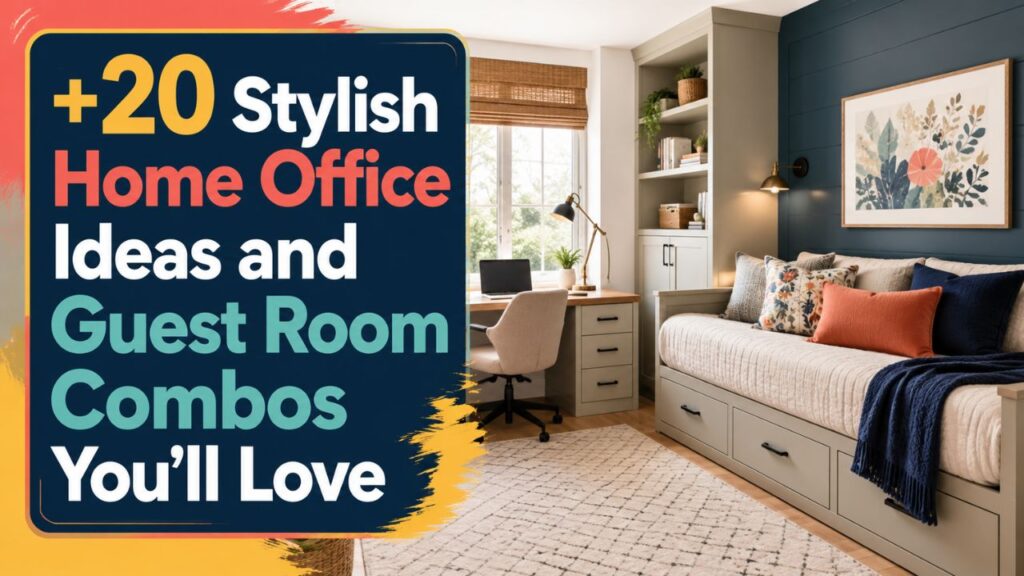
Fortunately, combining these two functions does not mean sacrificing style or comfort. The best home office ideas and guest room designs use flexible furniture, thoughtful storage, and smart layouts to create a room that changes purpose easily.
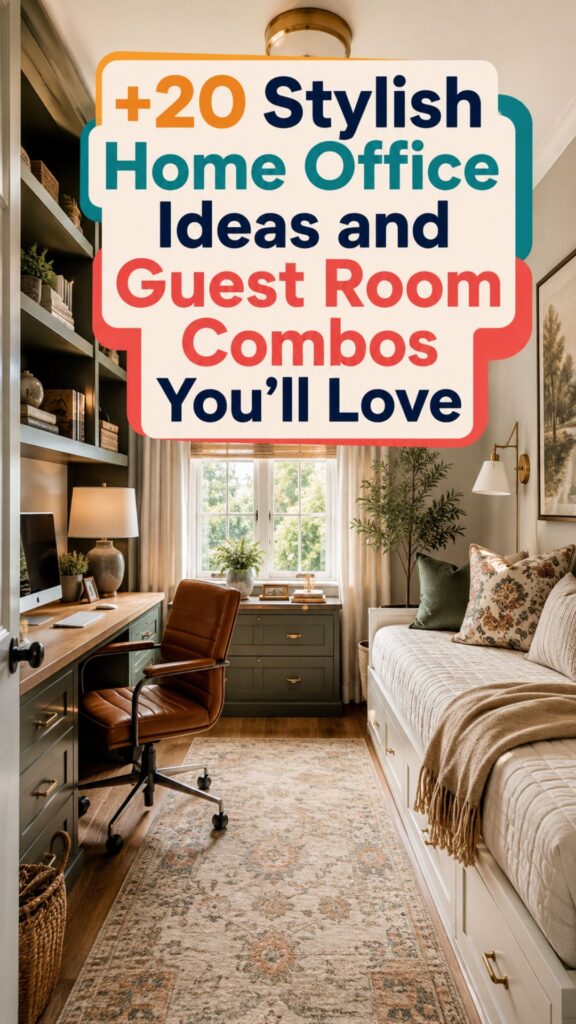
Whether you have a compact bedroom or a larger spare room, these ideas will help you build a workspace that feels productive while still giving guests somewhere comfortable to relax.
1. Choose a Sleeper Sofa Instead of a Traditional Bed
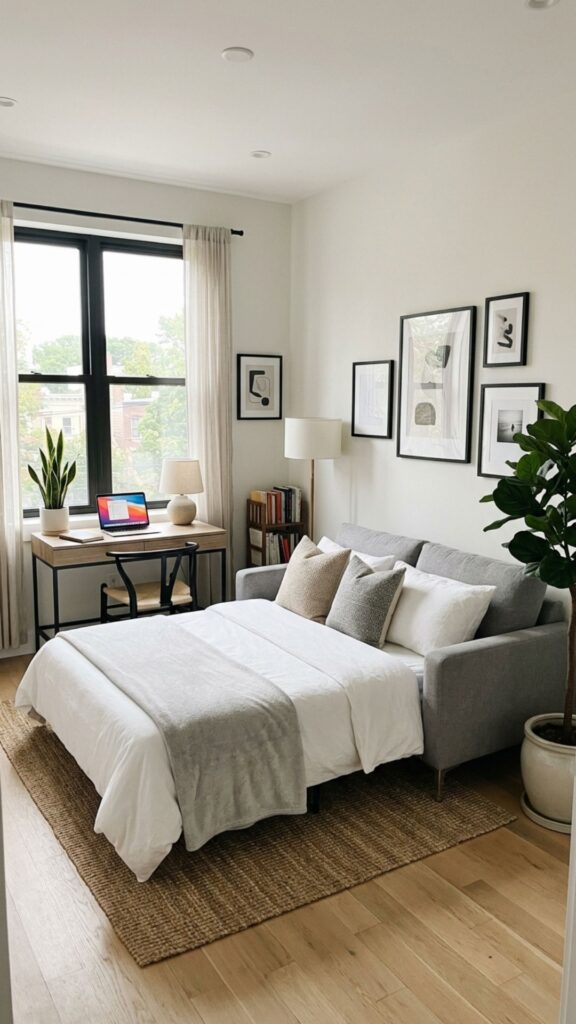
A sleeper sofa is one of the easiest ways to make a dual-purpose room work. During normal working days, it provides comfortable seating without allowing a large bed to dominate the room.
When guests arrive, simply unfold the sofa into a sleeping area. Choose a design with a supportive mattress and neutral upholstery so the room continues to look polished when used as an office.
2. Install a Space-Saving Murphy Bed
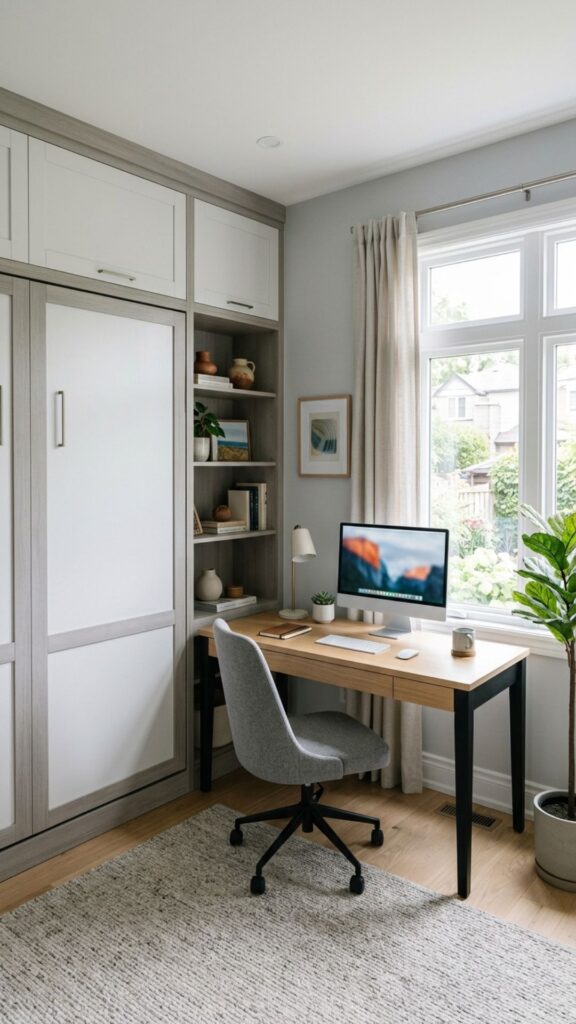
A Murphy bed is ideal when you want a proper guest bed without losing valuable floor space. It folds vertically against the wall when it is not needed.
Place your desk on another wall so your workspace remains available throughout the day. Some modern Murphy bed systems even include shelving or cabinets, making them especially useful for home office ideas and guest room layouts.
3. Position the Desk Near a Window
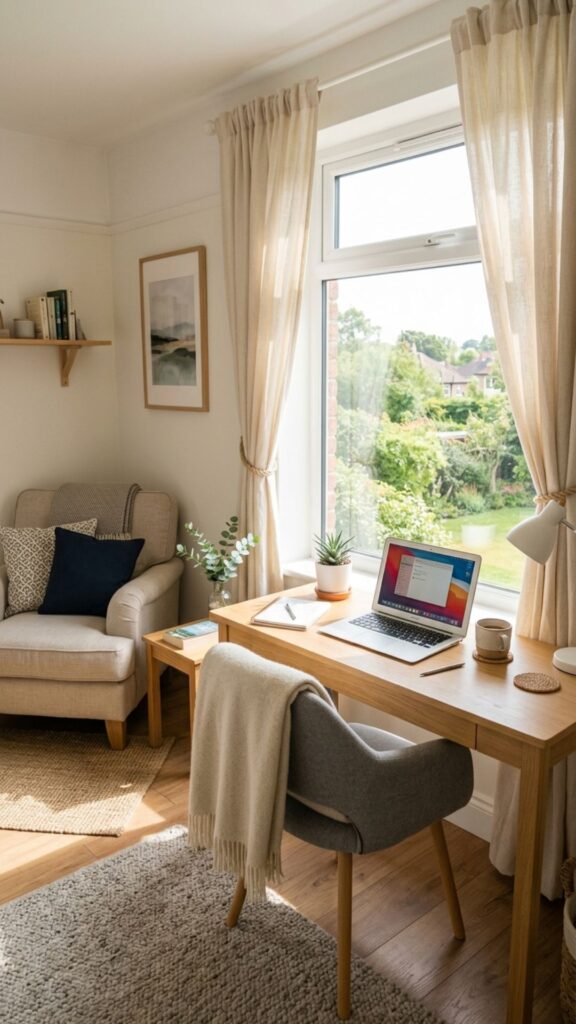
Natural light can make working from home much more pleasant. If possible, position your desk beside or directly in front of a window.
This arrangement keeps the main sleeping area open while creating a clearly defined work zone. Add simple curtains or blinds so overnight guests can control light and privacy.
4. Use a Daybed for a Relaxed Look
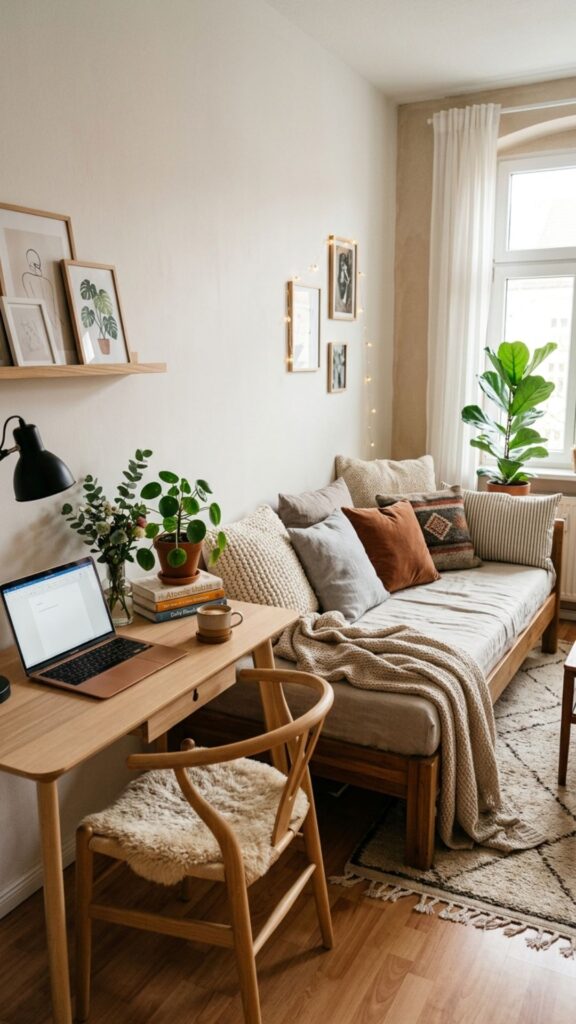
A daybed works as seating during office hours and becomes a comfortable bed when needed. It is particularly useful in smaller rooms where every piece of furniture needs more than one purpose.
Add cushions and a throw blanket during the day to make it resemble a sofa. When guests stay overnight, remove the decorative cushions and add fresh bedding.
5. Create a Floating Wall Desk
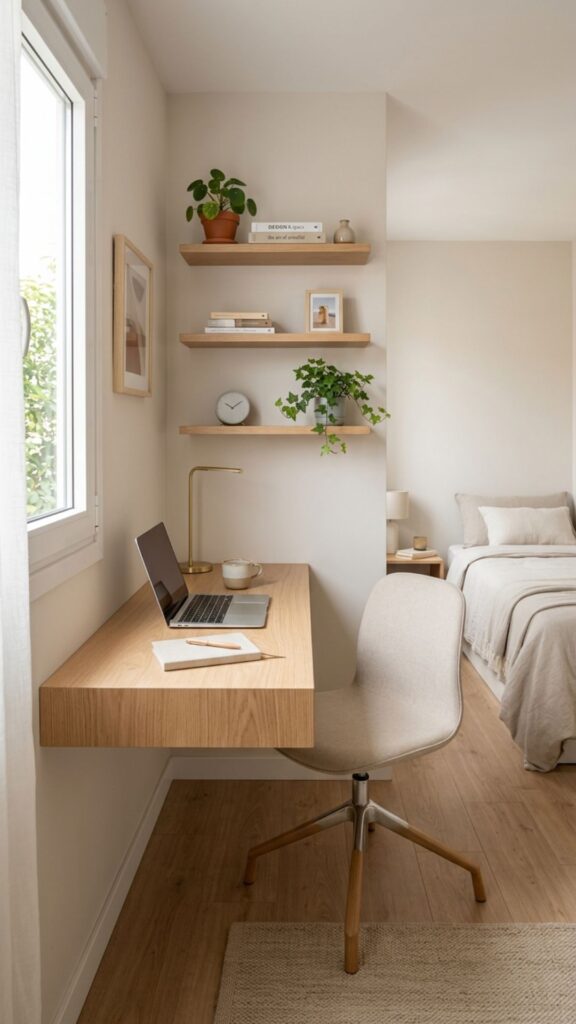
A floating desk provides workspace without using much floor area. It can be installed along an empty wall and paired with a slim chair.
This approach works especially well in narrow guest rooms. Add floating shelves above the desk to store office supplies while keeping the floor uncluttered.
6. Separate Work and Sleep Zones Visually
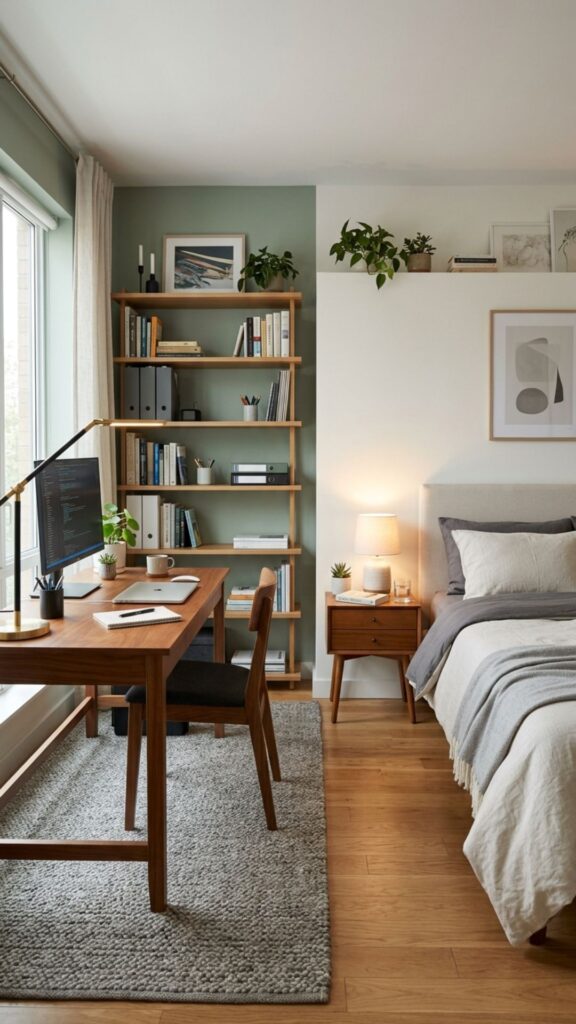
A dual-purpose room feels more organized when each activity has its own zone. You do not necessarily need a permanent wall or divider.
Use an area rug under the desk, a different paint shade, or strategically placed shelving to separate the office area. Guests will feel like they are staying in a bedroom rather than sleeping inside your workplace.
7. Add a Desk That Doubles as a Nightstand
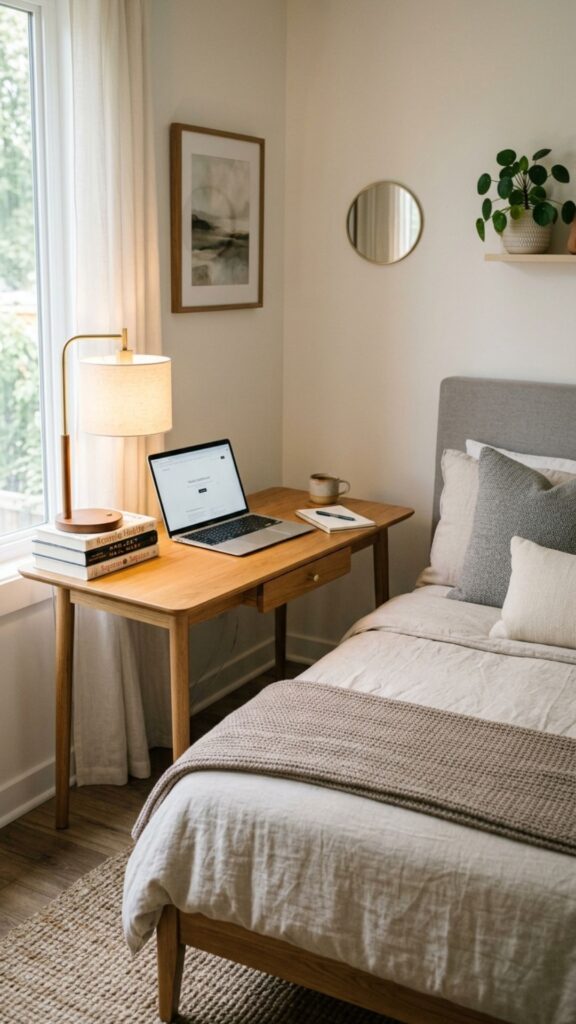
In a very small room, one piece of furniture can perform multiple jobs. Position a compact desk beside the guest bed so it can also function as a bedside table.
Add a small lamp that works for both reading and office tasks. This simple solution reduces unnecessary furniture and keeps the layout spacious.
8. Choose a Neutral Color Palette
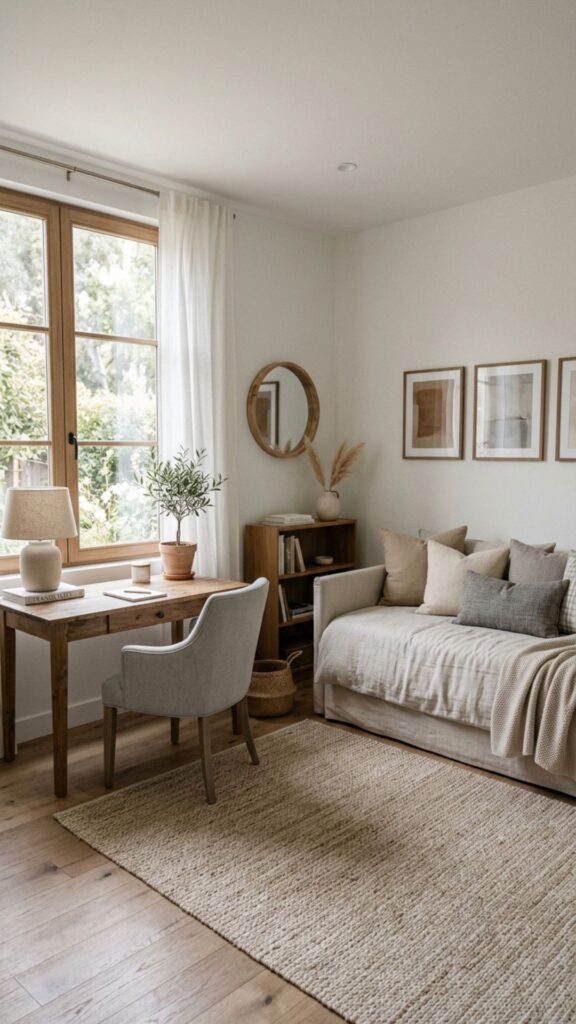
Neutral colors help a multipurpose room transition easily between work and relaxation. Soft white, warm beige, light gray, and muted earth tones create a calm foundation.
You can introduce personality through artwork, cushions, plants, or desk accessories. Keeping the larger surfaces neutral also helps prevent the office section from feeling visually overwhelming.
9. Use Built-In Storage Around the Desk
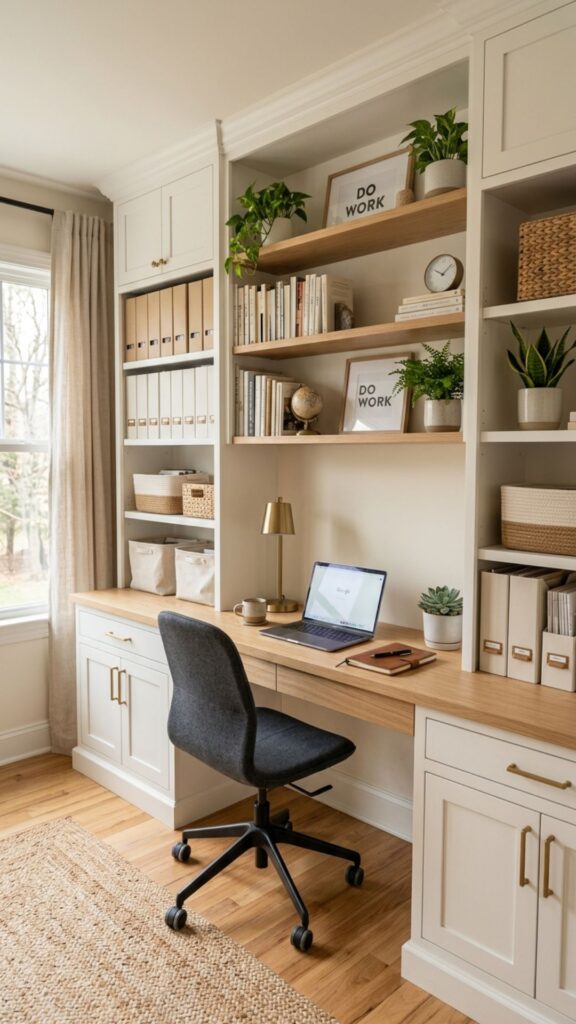
Storage is one of the biggest challenges in a combined office and guest room. Built-in shelves or cabinets can make excellent use of vertical space.
Store work supplies in closed cabinets and display decorative pieces on open shelves. Guests will see an organized room rather than stacks of paperwork and office equipment.
10. Create a Closet Office
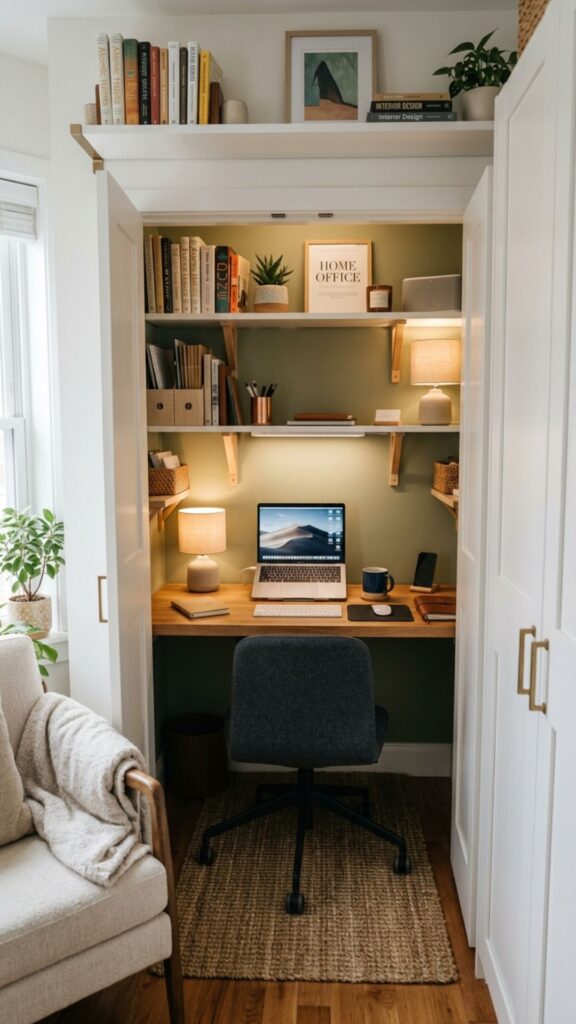
If your guest room has an underused closet, consider converting it into a small office. Remove the hanging rail and install a desktop with shelves above it.
When work finishes, close the closet doors and hide your computer, stationery, and paperwork. This is one of the most practical home office ideas and guest room solutions for maintaining a relaxing atmosphere.
11. Select a Foldable Desk
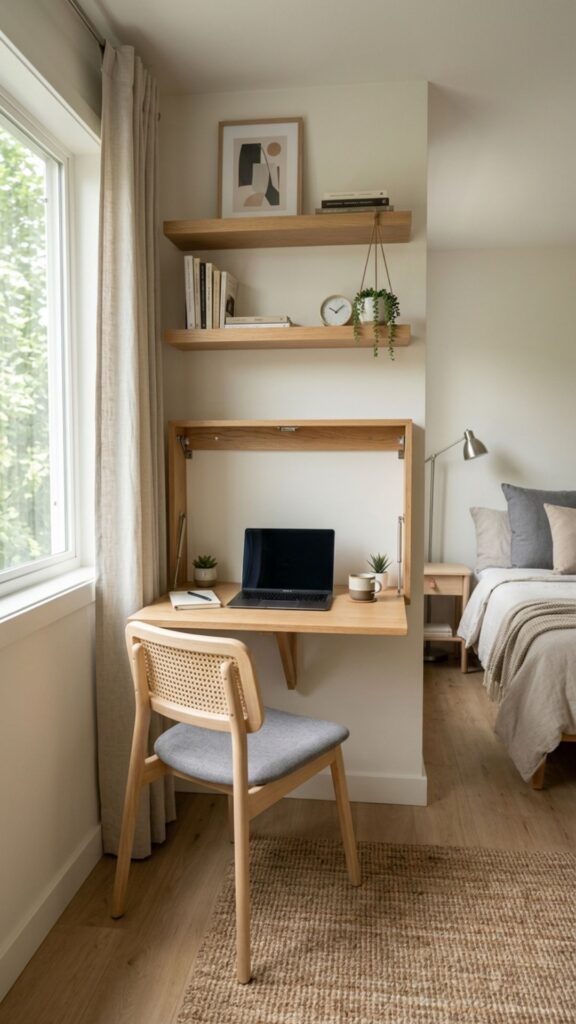
A folding desk gives you workspace only when you need it. Wall-mounted designs can fold almost completely flat after the working day ends.
Pair the desk with a lightweight chair that can slide into a closet or corner. Your guests then receive more walking space without requiring major changes to the room.
12. Use a Room Divider for Extra Privacy
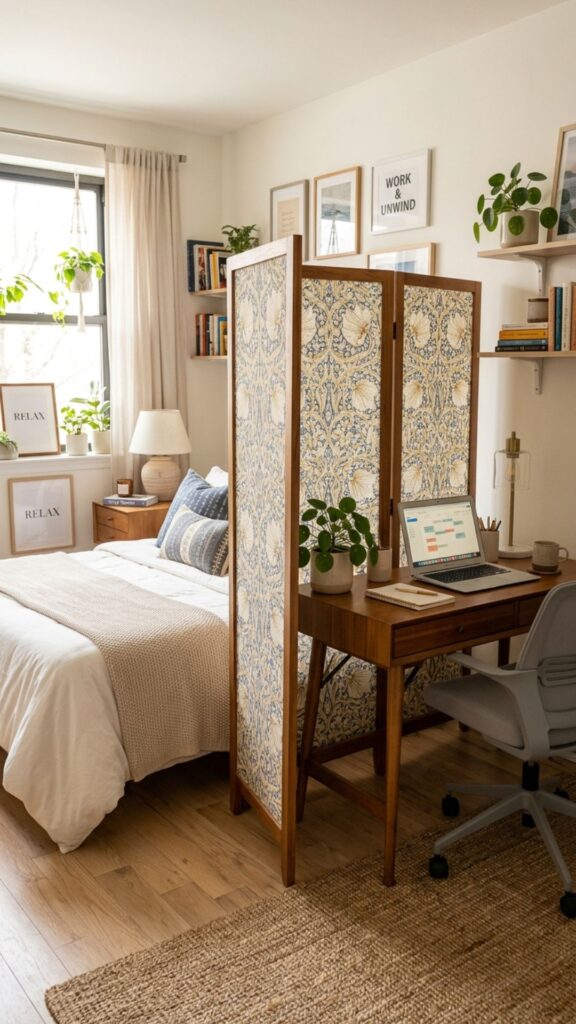
A decorative room divider can separate a guest bed from your office equipment. It creates privacy without requiring permanent construction.
Consider a folding screen, open bookcase, or curtain mounted from the ceiling. These options are easy to adjust whenever the room changes from office mode to guest mode.
13. Add Comfortable Layered Lighting
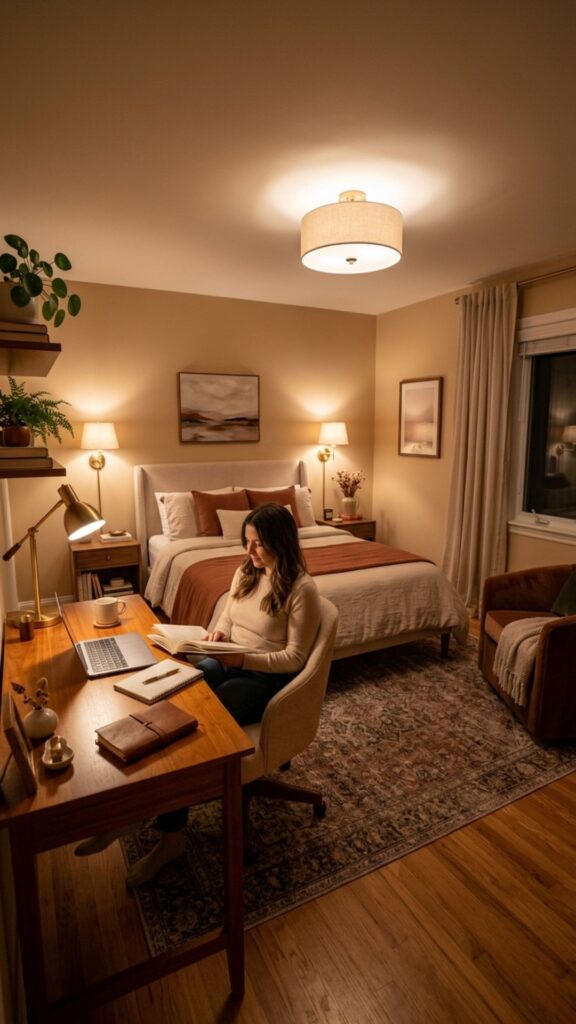
A home office needs focused lighting, while guests usually prefer softer lighting. Using several light sources solves both needs.
Place a task lamp beside your computer and use bedside lamps or wall sconces for evening lighting. A ceiling fixture with a dimmer can provide additional flexibility throughout the day.
14. Keep Office Technology Easy to Hide
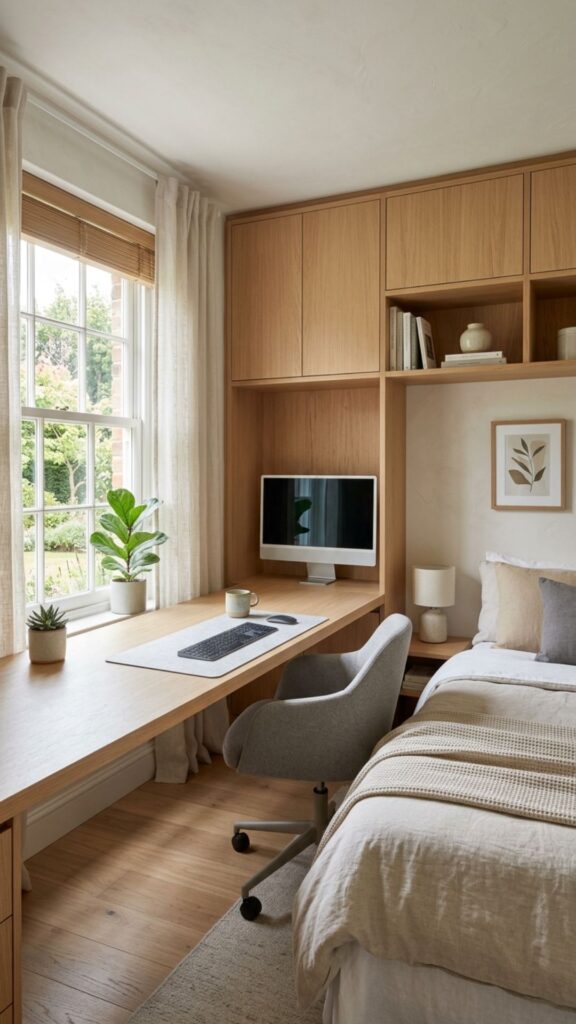
Computer monitors, cables, printers, and chargers can quickly make a guest room feel like a corporate office. Look for ways to minimize their visual impact.
Use cable management boxes, wireless accessories, and cabinets with doors. A small printer can also be stored inside a cupboard and taken out only when needed.
15. Build Storage Under the Guest Bed
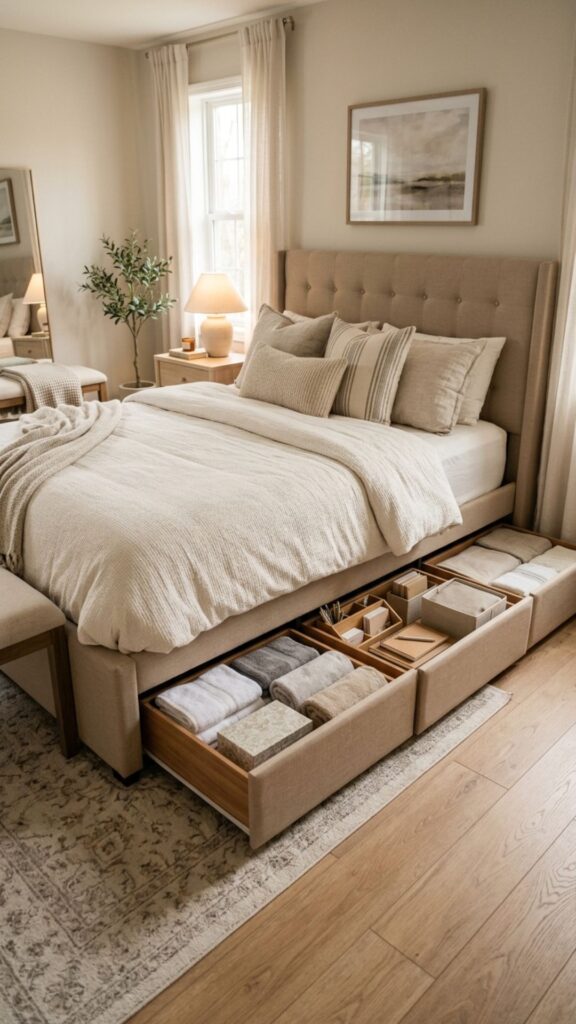
The space beneath a guest bed should not go unused. Choose a bed frame with drawers or use attractive storage boxes underneath.
Store spare linens, office documents, seasonal items, or rarely used supplies there. Hidden storage is particularly valuable when planning home office ideas and guest room combinations in smaller homes.
16. Use a Large Desk as a Multipurpose Surface
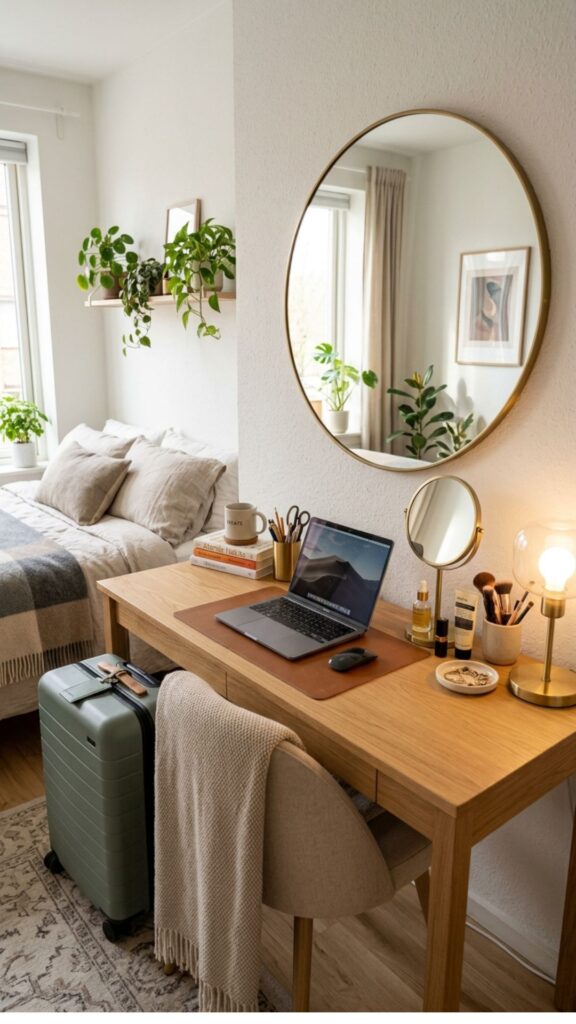
If space allows, a larger desk can do more than hold your laptop. It can function as a workspace, dressing table, luggage surface, or temporary storage area for guests.
Keep most office supplies inside drawers so guests receive a clear surface. Add a mirror nearby to make the desk even more useful during overnight stays.
17. Introduce Plants for a Softer Atmosphere
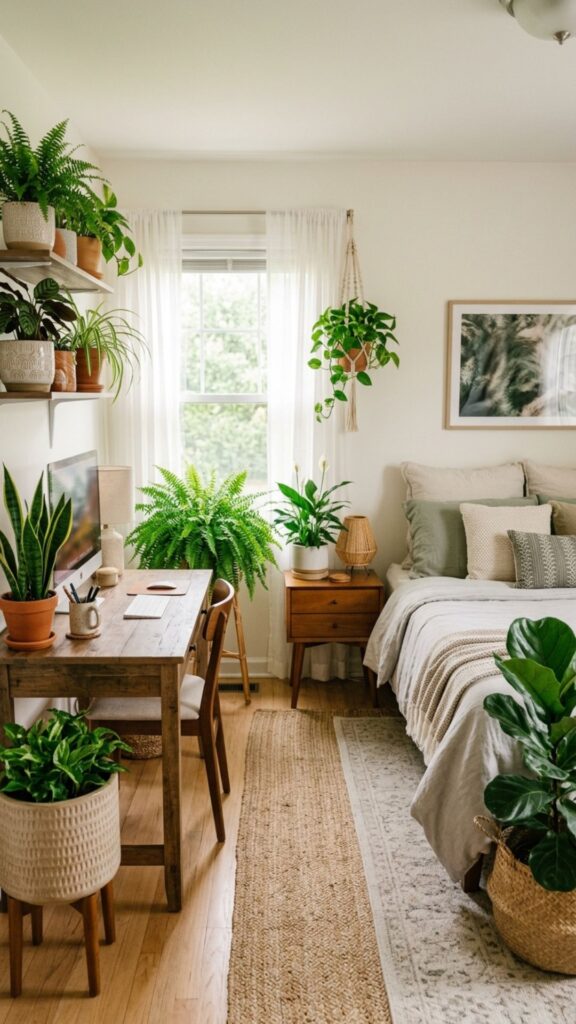
Office equipment can sometimes make a room feel cold. Indoor plants help soften the space and make the guest room feel more welcoming.
Choose low-maintenance options such as snake plants, pothos, or ZZ plants. Place one beside the desk and another near the guest bed to visually connect both areas.
18. Create a Small Guest Welcome Station
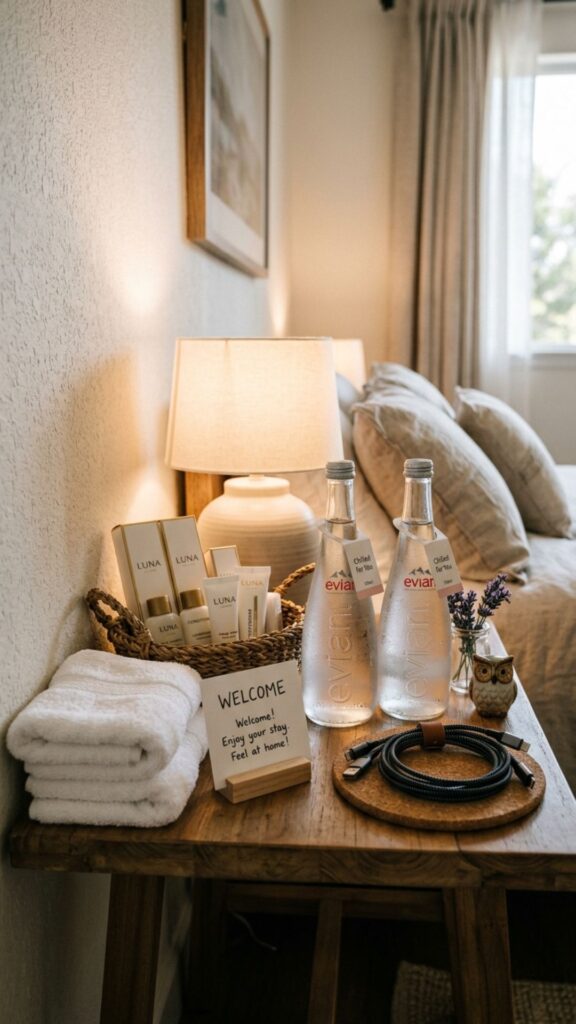
A few thoughtful touches can quickly transform your workspace into an inviting guest room. Leave part of a shelf, drawer, or bedside table available for visitors.
You could add bottled water, clean towels, phone chargers, or a small basket containing basic toiletries. These details help guests feel comfortable without requiring a dedicated bedroom.
19. Use Matching Furniture Finishes
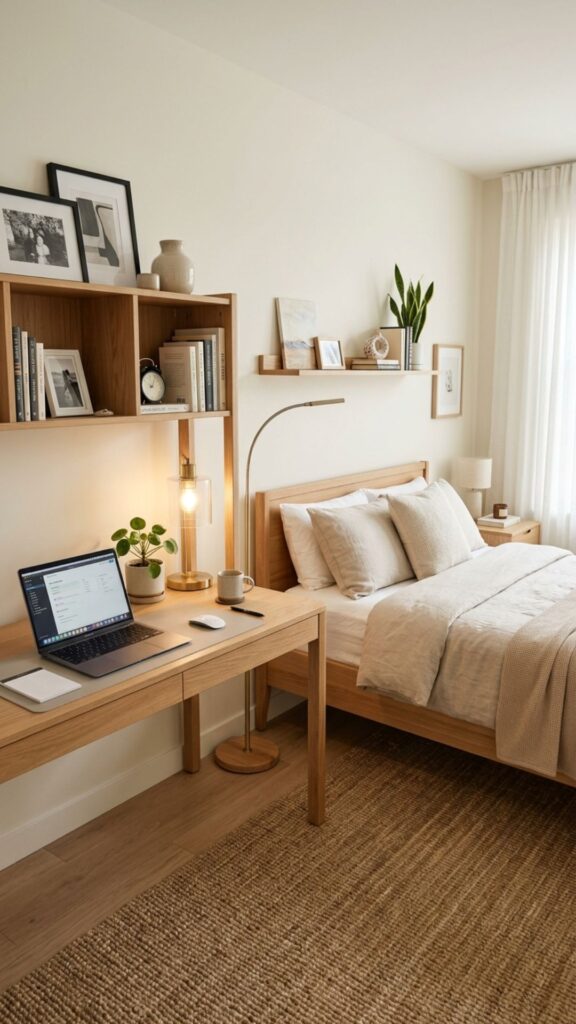
Using similar furniture colors and finishes helps different areas of the room feel intentional. A random collection of office and bedroom furniture can make the space appear cluttered.
For example, pair a light oak desk with a similar wooden bed frame or shelving unit. Repeating materials creates visual harmony and helps your dual-purpose room look professionally designed.
20. Keep the Overall Design Simple
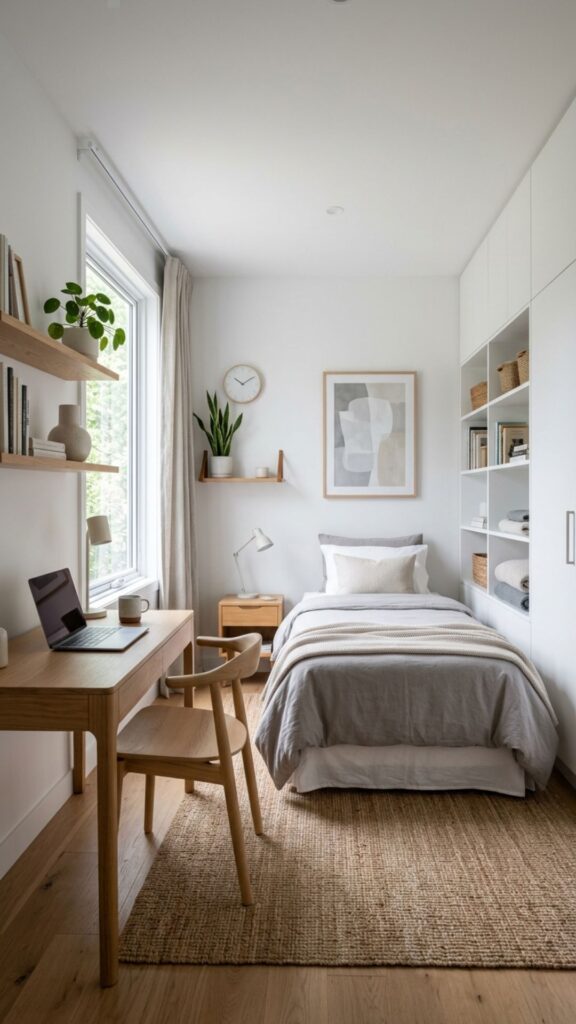
The most successful multipurpose spaces usually avoid unnecessary furniture. Start with the essentials: somewhere to work, somewhere to sleep, practical lighting, and enough storage.
Then add decorative elements carefully. A clean layout allows the room to switch functions quickly, which is ultimately the key to successful home office ideas and guest room design.
How to Make Your Office and Guest Room Work Better Together
The easiest way to create a successful dual-purpose room is to decide which function you use most often. If you work there every weekday and host guests occasionally, prioritize an ergonomic desk and flexible sleeping solution.
If visitors stay regularly, invest more heavily in the mattress, bedside lighting, and accessible storage. Furniture such as sleeper sofas, Murphy beds, daybeds, and folding desks helps you balance both needs without overcrowding the space.
Before buying anything, measure the room carefully. Mark the dimensions of larger furniture on the floor using painter’s tape. This simple step can prevent you from choosing furniture that blocks doors, closets, or comfortable walking paths.
Conclusion: Create a Room That Works Every Day
A spare room does not need to choose between being productive and welcoming. With thoughtful furniture and clever storage, it can perform both roles beautifully.
The best home office ideas and guest room combinations focus on flexibility. Choose furniture that performs more than one job, keep office clutter under control, and make sure your guests still have enough space to relax.
Start by identifying the least-used area of your current guest room. A better desk position, a sleeper sofa, or some extra storage might be all you need to transform it into a stylish and practical multipurpose space.
How do you combine a home office and guest room?
Create separate work and sleep zones and choose flexible furniture. A sleeper sofa, Murphy bed, daybed, or folding desk allows the room to change functions without requiring extra space.
What is the best bed for a home office guest room?
A Murphy bed is excellent for maximizing floor space, while sleeper sofas and daybeds are useful when you also want everyday seating. The right choice depends on your room size and how frequently guests stay.
How can I hide my office when guests arrive?
Use closed cabinets, desk drawers, cable organizers, or a closet office. You can also position a folding screen around the workspace to visually separate it from the sleeping area.
Can a small room work as both an office and guest bedroom?
Yes. Small rooms often work well when you use vertical storage, compact desks, folding furniture, and beds with built-in storage. Avoid filling the room with furniture that only performs one function.
Where should a desk go in a guest bedroom?
Place the desk near natural light whenever possible while keeping comfortable walking space around the bed. Empty corners, window walls, closet areas, and walls opposite the bed are usually strong options.