Attics often become forgotten storage spaces filled with boxes and old furniture. Yet with a little planning, that unused area can become one of the most peaceful places to work at home.
The best home office ideas attic spaces use their unusual shape rather than fighting against it. Sloped ceilings, exposed beams, awkward corners, and small windows can all add personality when you design around them.
You also do not need a huge renovation budget. Smart furniture choices, good lighting, practical storage, and a comfortable desk setup can make a major difference.
Below, you will find 20 stylish and practical ideas for turning a small attic into a workspace you will actually enjoy using.
1. Place Your Desk Under a Skylight
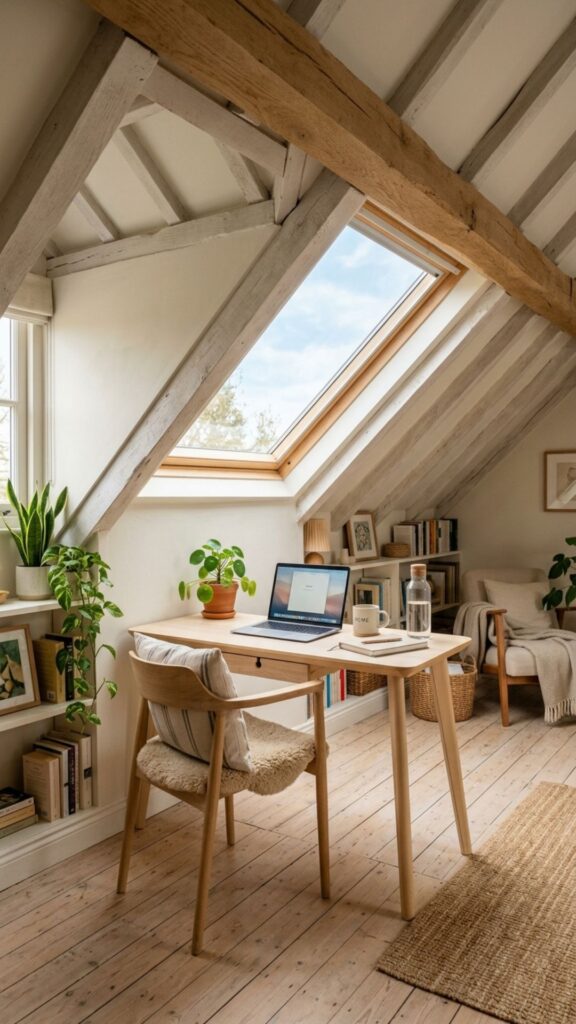
A skylight can instantly make a small attic feel brighter and more spacious. Positioning your desk underneath or close to one gives you plenty of natural light while working. It can also reduce your need for artificial lighting during daytime hours.
Keep your computer slightly away from direct sunlight to reduce screen glare. A simple roller blind can also help on particularly bright afternoons. Among practical home office ideas attic rooms can use, maximizing natural light should always be a priority.
2. Make Sloped Ceilings Part of the Design
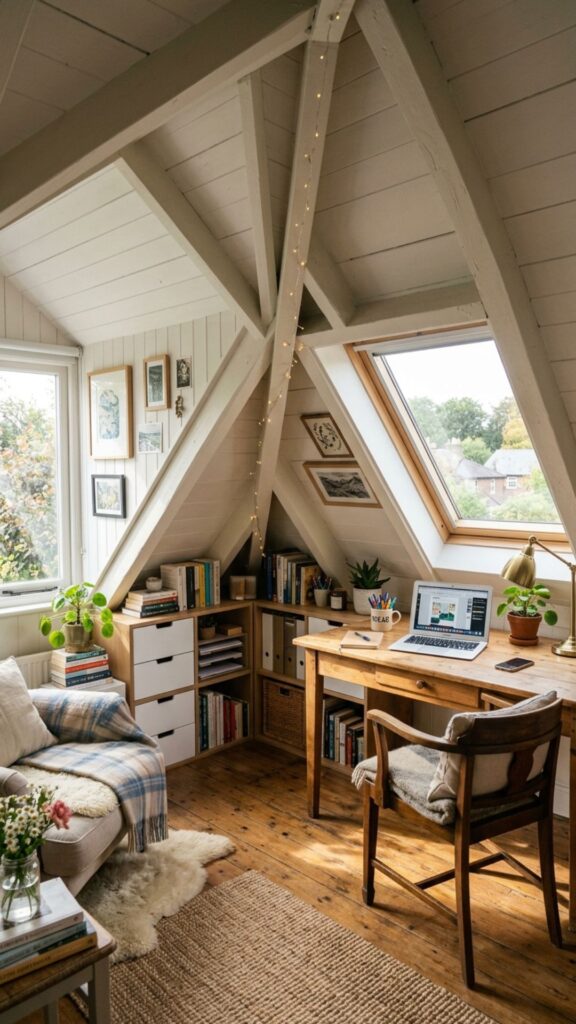
Sloped ceilings can initially feel like a problem, but they can become one of your office’s best features. Instead of hiding them, paint the slopes in a light shade and let their shape create a cozy, defined workspace.
Place low furniture beneath the lowest sections. Filing cabinets, storage boxes, bookshelves, or a small bench fit naturally in areas where standing is difficult. This leaves the taller sections available for your desk and chair.
3. Choose a Slim Desk for a Small Attic
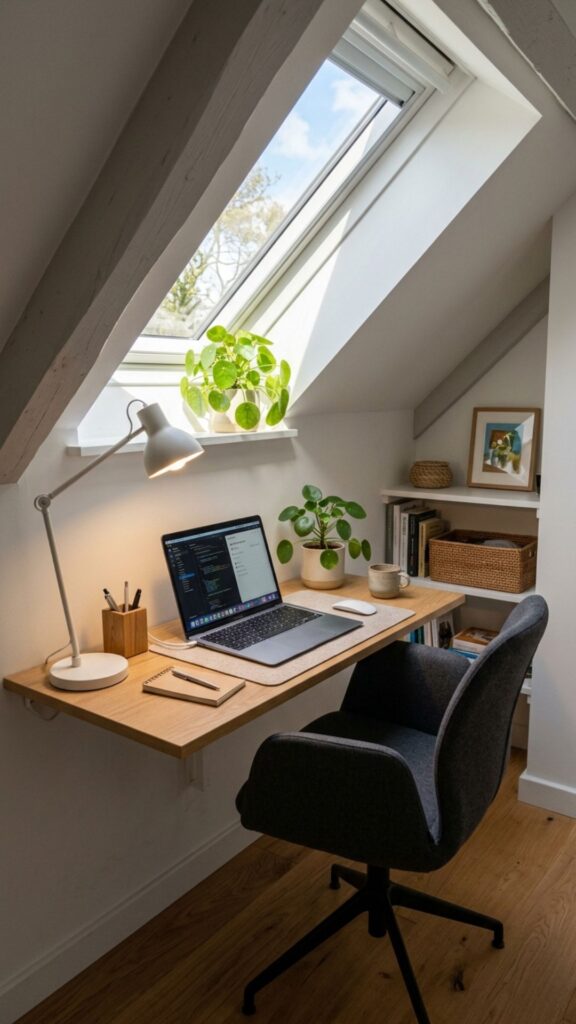
Bulky office furniture can quickly overwhelm an attic. A slim desk provides enough room for a laptop, notebook, lamp, and everyday essentials without taking over the entire space.
Look for desks around 40 to 60 cm deep if space is especially limited. Designs with narrow drawers are useful for keeping chargers and stationery hidden. Choosing furniture that matches the scale of the room makes the office feel much more comfortable.
4. Build a Desk Into an Awkward Corner
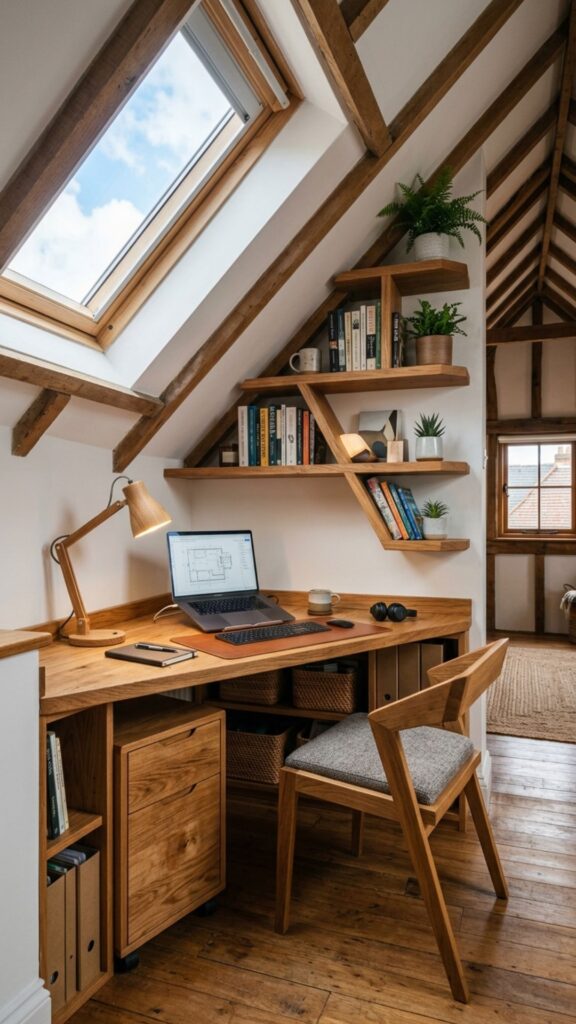
Attics often have corners that standard furniture cannot use effectively. A custom or fitted desk can transform one of these awkward areas into valuable working space.
You do not necessarily need expensive cabinetry. A sturdy wooden worktop fixed between two walls can create a simple built-in desk. Add a comfortable chair underneath and floating shelves above for an efficient workstation with very little visual clutter.
5. Keep the Color Palette Light
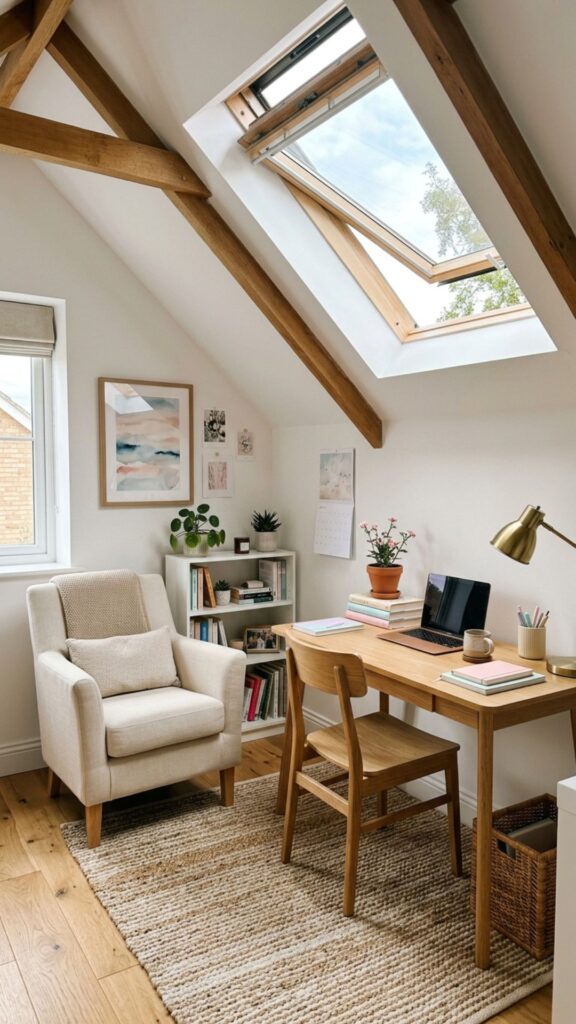
White, cream, soft beige, pale gray, and muted neutral shades reflect light and help small attic rooms appear larger. They work especially well where windows are limited.
You can still add personality through artwork, desk accessories, plants, rugs, or a colorful office chair. Many successful home office ideas attic designs start with a calm neutral base and add color through smaller decorative details.
6. Add Floating Shelves Above the Desk
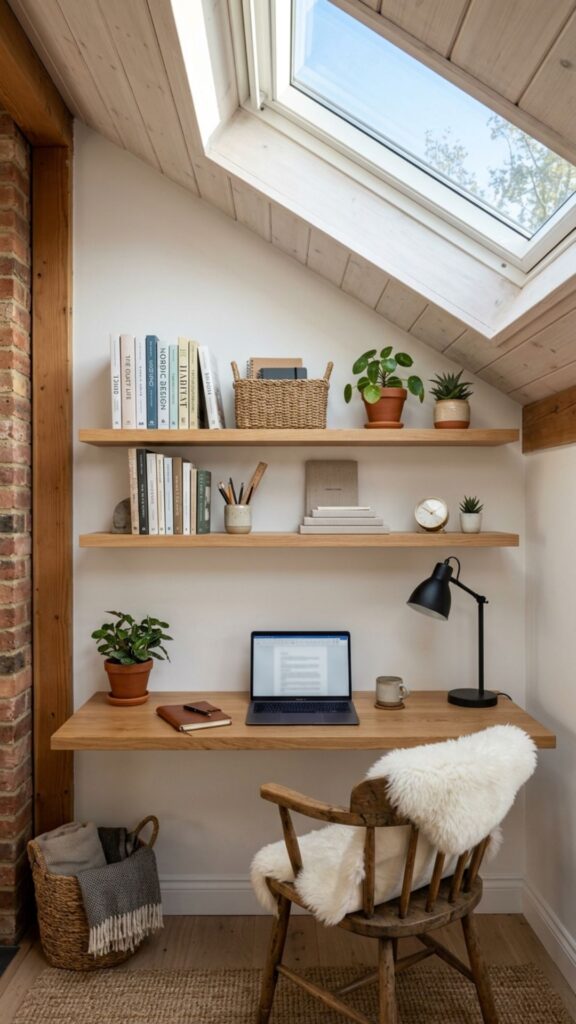
When floor space is limited, walls become valuable storage areas. Floating shelves provide space for books, notebooks, decorative pieces, baskets, and office supplies without requiring another cabinet.
Avoid covering the entire wall with shelves. Two or three carefully positioned shelves usually provide enough storage while maintaining an open appearance. Keep frequently used items within easy reach and place decorative pieces higher up.
7. Use Built-In Storage Under the Eaves
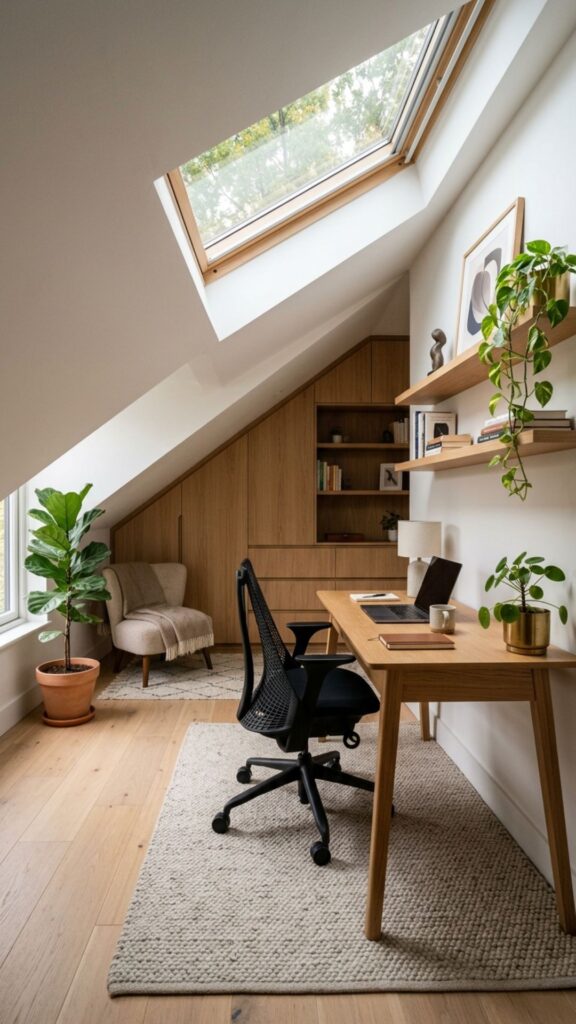
The lowest sections beneath attic eaves are often difficult to use. Custom drawers, cabinets, or cupboards can turn those awkward spaces into surprisingly useful storage.
Use them for paperwork, printer supplies, seasonal items, spare technology, and things you do not need every day. Closed storage also helps reduce visual clutter, which is particularly important when working in a small room.
8. Create a Minimalist Attic Office
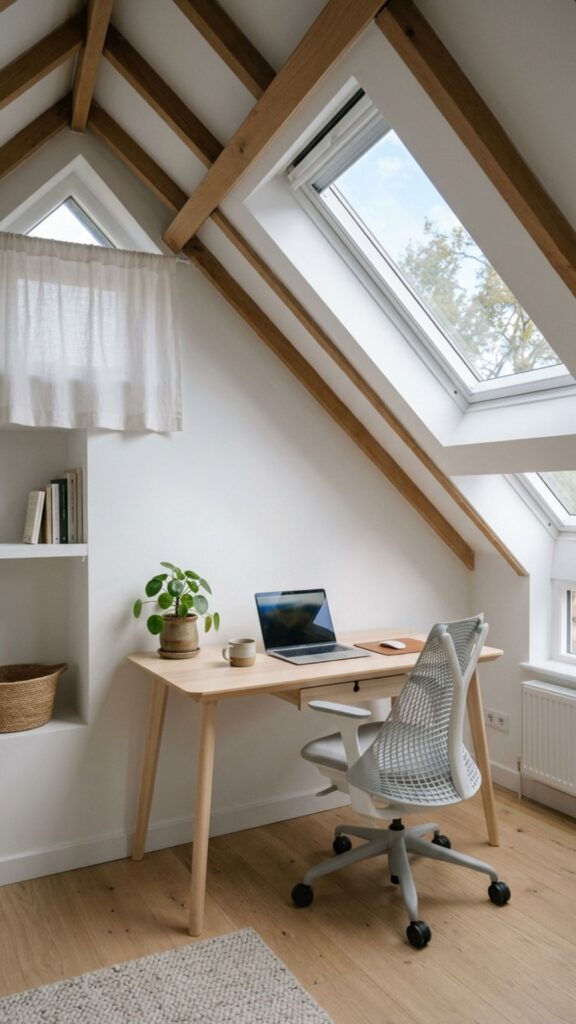
A minimalist workspace can make a compact attic feel calmer and easier to work in. Start with the basics: a comfortable desk, supportive chair, good lighting, and enough storage for essential equipment.
Keep decorations intentional rather than filling every available surface. One piece of artwork, a small plant, and a stylish desk lamp may be all you need. Simpler surroundings can also make it easier to focus during busy working days.
9. Turn Exposed Beams Into a Feature
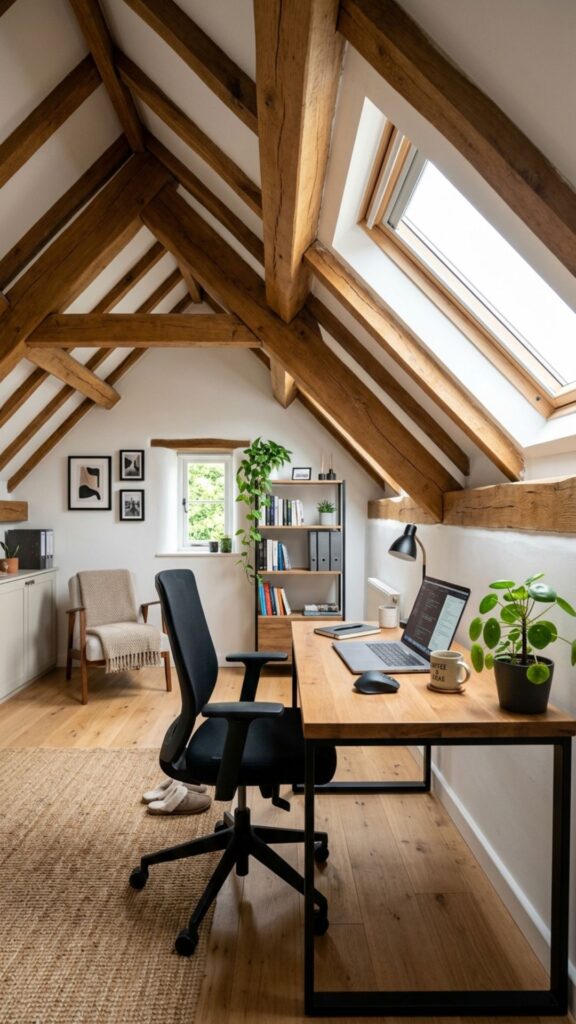
Original wooden beams give attic offices character that ordinary rooms often lack. Instead of covering them, consider making them part of your overall design.
Natural timber works beautifully with white walls, black accents, and simple furniture. If the beams are already dark, keeping surrounding surfaces light can create an attractive contrast without making the room feel heavy.
10. Add a Comfortable Reading Corner
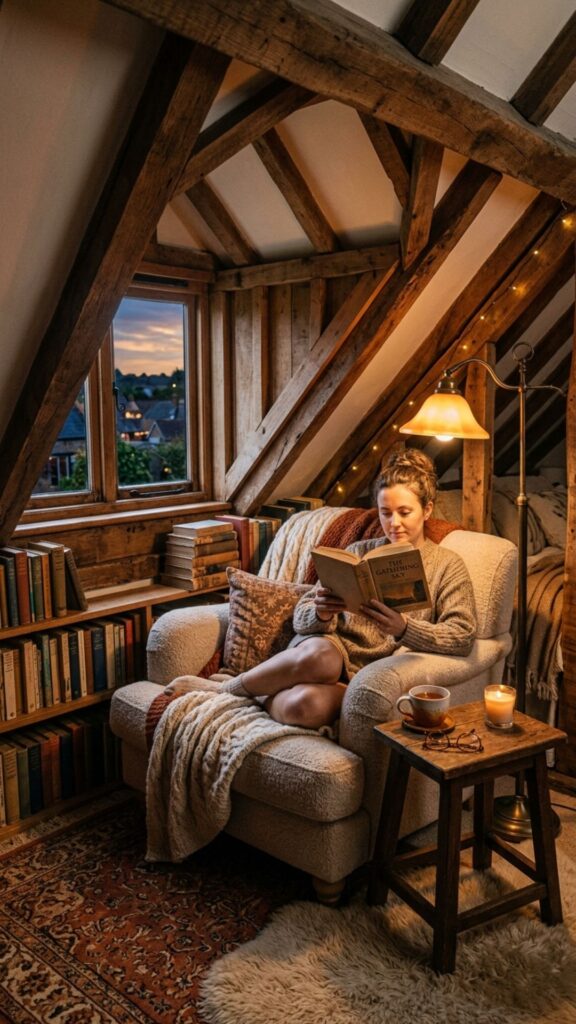
If your attic has a little extra room, create a separate corner for reading, planning, or taking short breaks. A compact armchair positioned beneath a sloping roof can work perfectly.
Add a small side table and floor lamp to complete the area. This approach makes your attic more flexible because you are not forced to spend your entire working day sitting behind a desk.
11. Install a Wall-Mounted Desk
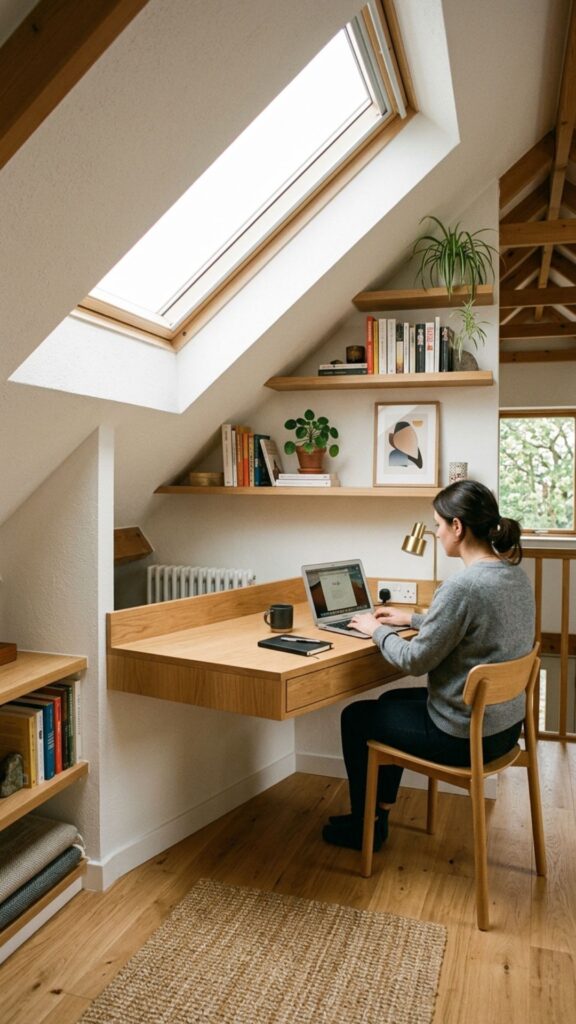
A wall-mounted desk is one of the smartest solutions for extremely small attic offices. It keeps more floor area visible, making the room feel less crowded.
Some wall desks can also fold away when they are not being used. This is particularly useful when the attic doubles as a guest room, hobby space, or storage area. Add shelves above for a complete compact workstation.
12. Use an L-Shaped Layout
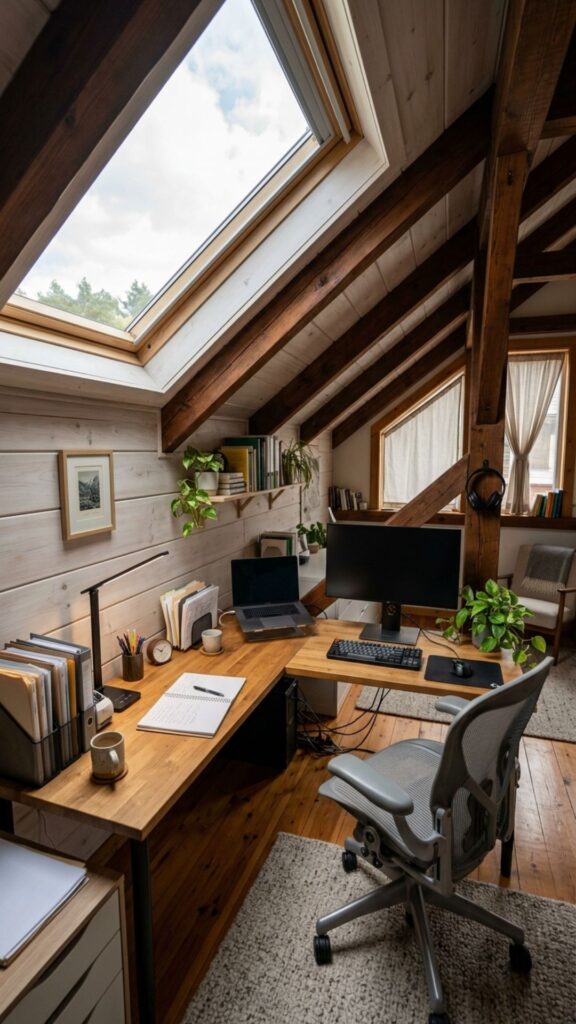
An L-shaped desk can make excellent use of an attic corner while providing more working surface. You can use one section for your computer and the other for paperwork, creative tasks, or equipment.
Measure carefully before buying furniture. In attic spaces, ceiling height can change quickly across only a short distance. This is why the best home office ideas attic layouts usually begin with accurate measurements rather than furniture shopping.
13. Bring Plants Into Your Workspace
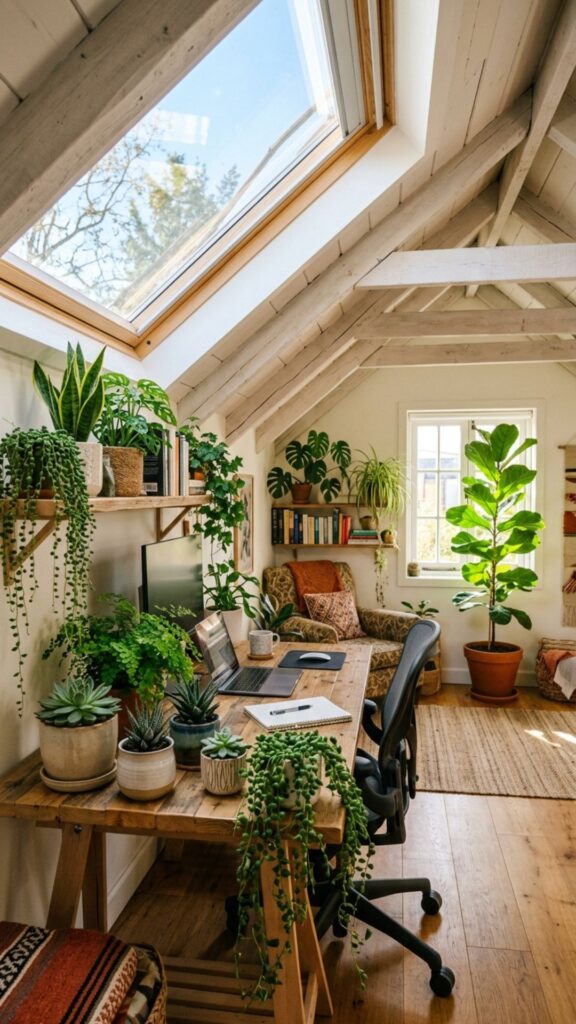
Plants can soften hard lines and make an attic office feel more welcoming. Choose smaller plants for desks and shelves or place a taller plant in a corner with enough headroom.
Consider the amount of natural light your attic receives before choosing plants. Snake plants, pothos, and ZZ plants are popular choices for rooms with moderate light and generally need less attention than more demanding varieties.
14. Add Warm Layered Lighting
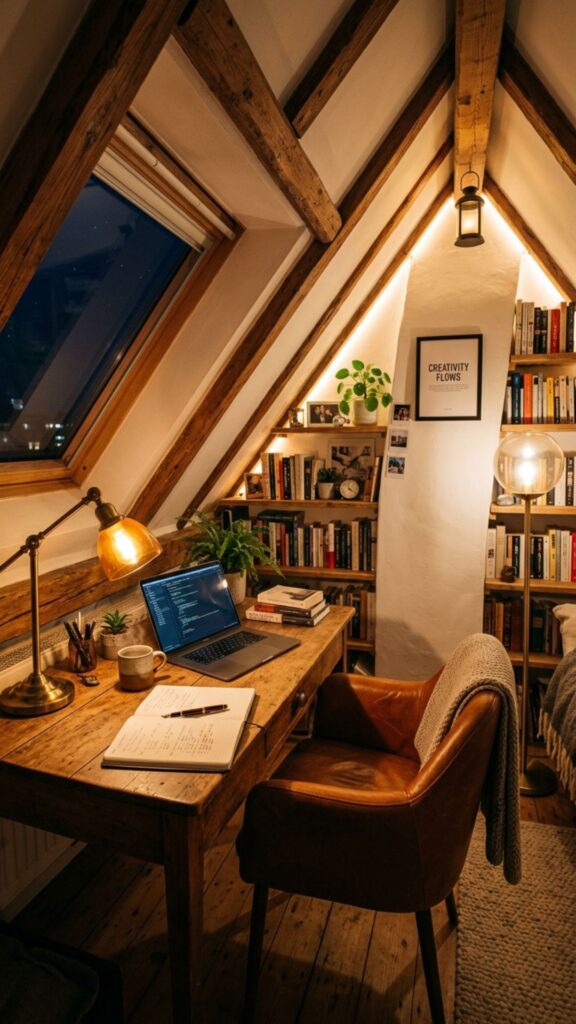
Natural light is wonderful during the day, but attic offices need good evening lighting too. Instead of depending on one ceiling fixture, combine several light sources.
Use a desk lamp for focused work, a floor lamp for darker corners, and ceiling lights for general brightness. Warm lighting can also stop an attic office from feeling cold or unfinished after sunset.
15. Create a Scandinavian-Style Office
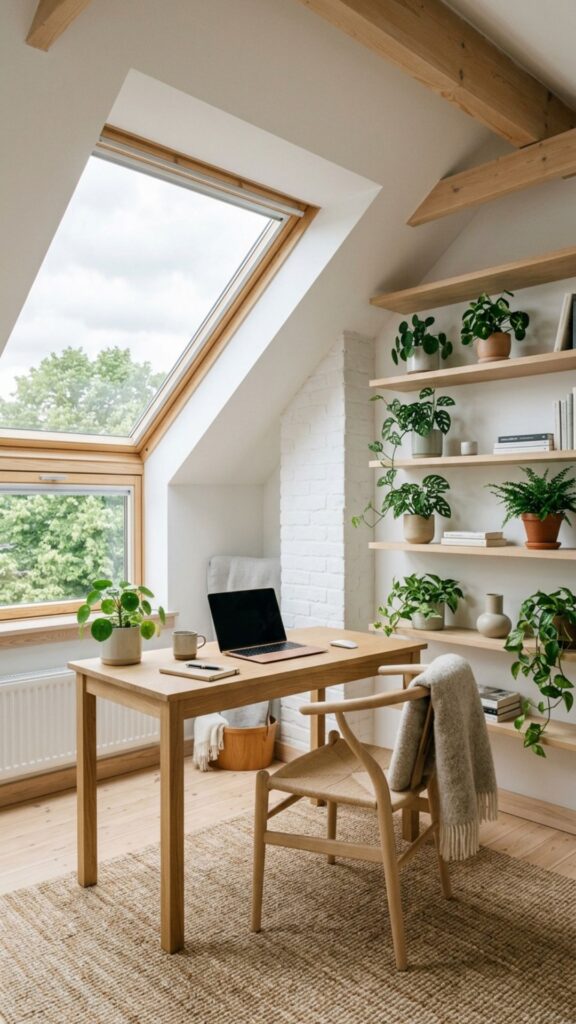
Scandinavian design works particularly well in small attic spaces because it focuses on light colors, simple furniture, natural materials, and practical layouts.
Combine white walls with pale wooden furniture and subtle gray or beige accessories. Add a textured rug and a few plants to keep the room from looking too plain. The result feels clean without becoming uncomfortable or overly formal.
16. Use a Statement Office Chair
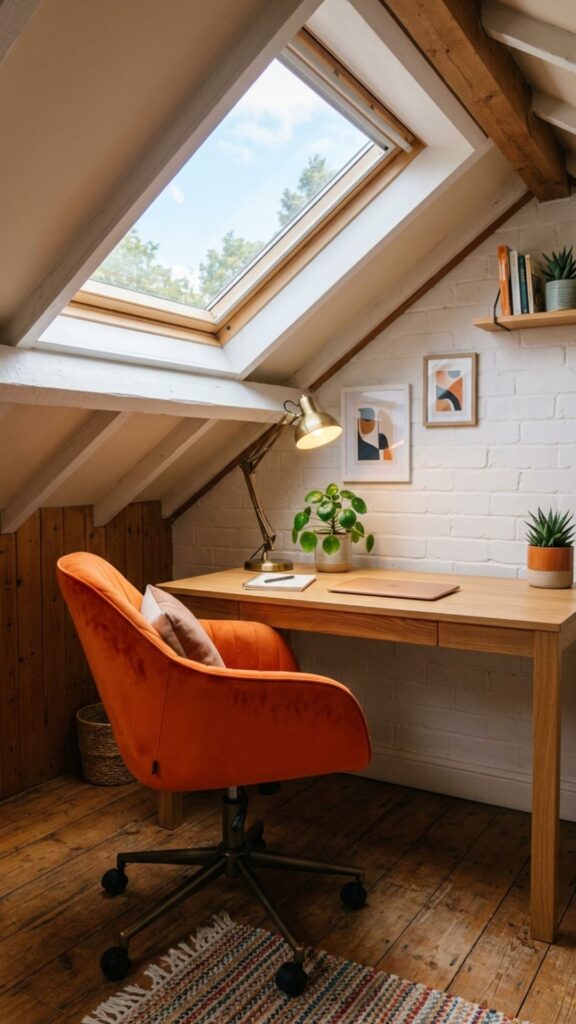
When your attic office is small, you may not have space for many decorative features. A distinctive office chair can provide both function and personality.
Choose a color or material that stands out against your desk and walls. However, comfort should always come first. Look for adjustable height, proper back support, and enough cushioning if you regularly work for several hours.
17. Hide Cables for a Cleaner Look
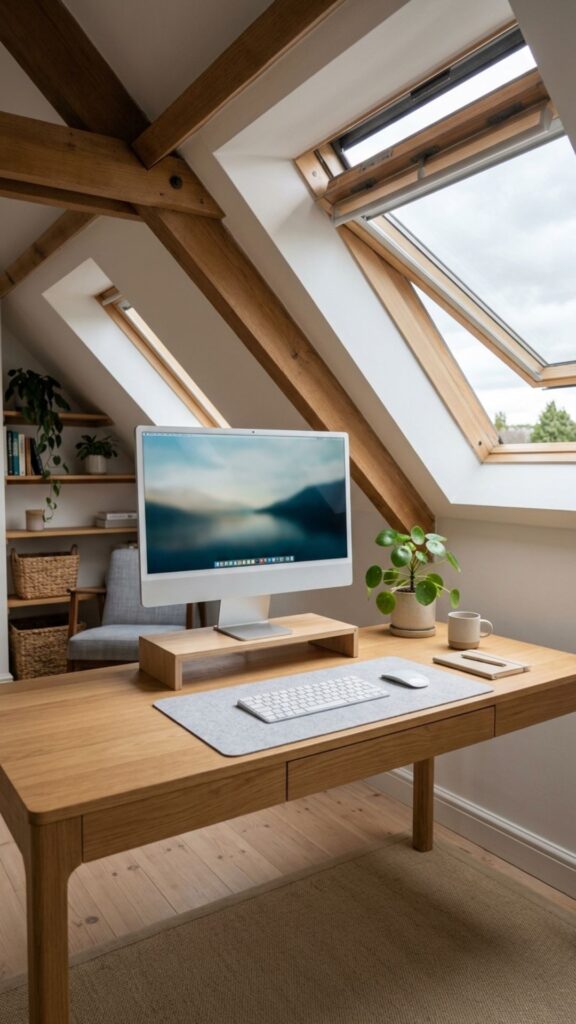
Loose charging cables and extension cords can make even a stylish workspace appear messy. Attic rooms often have limited electrical outlets, which makes cable organization particularly important.
Attach a cable tray beneath your desk and use small clips to guide wires along the back edge. A cable box can hide larger adapters and extension boards. Small changes like these create a much cleaner workstation.
18. Create a Two-Person Attic Office
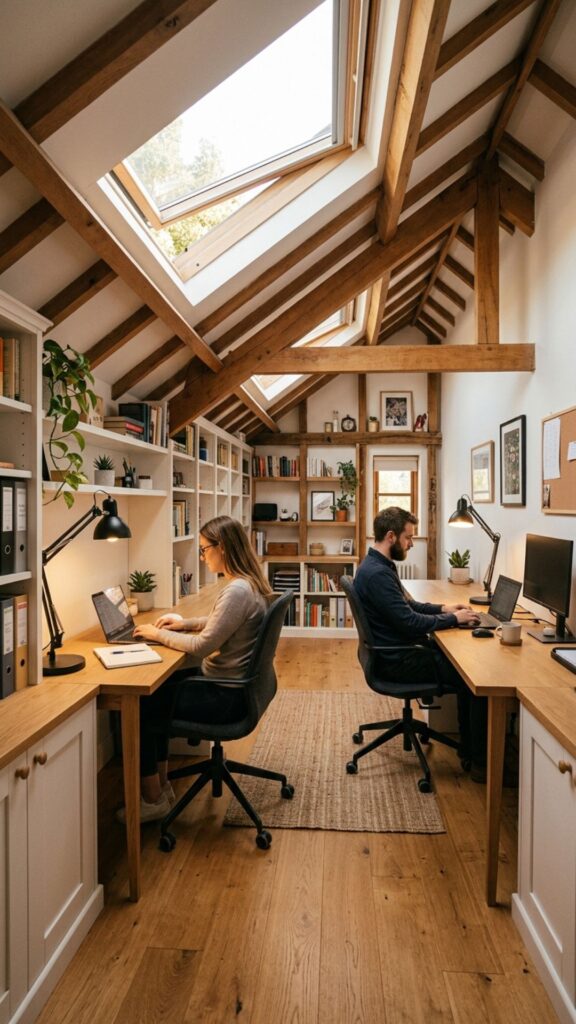
A long attic can often accommodate two workstations without feeling crowded. Position two slim desks side by side or place one desk against each opposite wall.
Give each person dedicated storage and lighting so both work areas function independently. This layout works well for couples working from home, siblings studying together, or households where adults and children share office space.
19. Mix Vintage and Modern Furniture
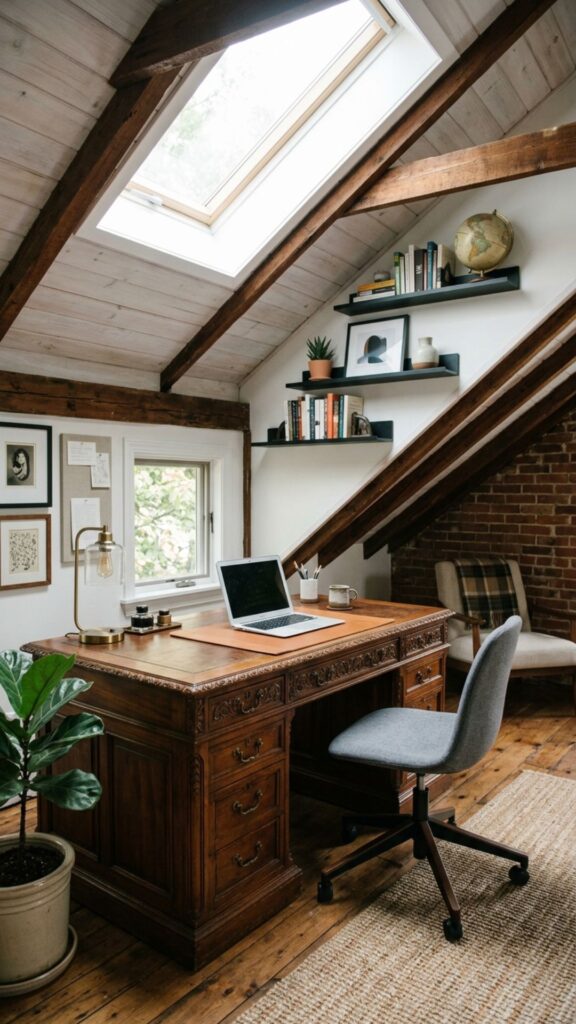
You do not need matching furniture to create a beautiful attic workspace. Mixing modern office equipment with vintage furniture can give the room more warmth and personality.
For example, pair a simple modern chair with an old wooden desk or place a vintage cabinet beside sleek floating shelves. This is one of the more flexible home office ideas attic spaces can use when you already own furniture worth keeping.
20. Create a Calm Office With a View
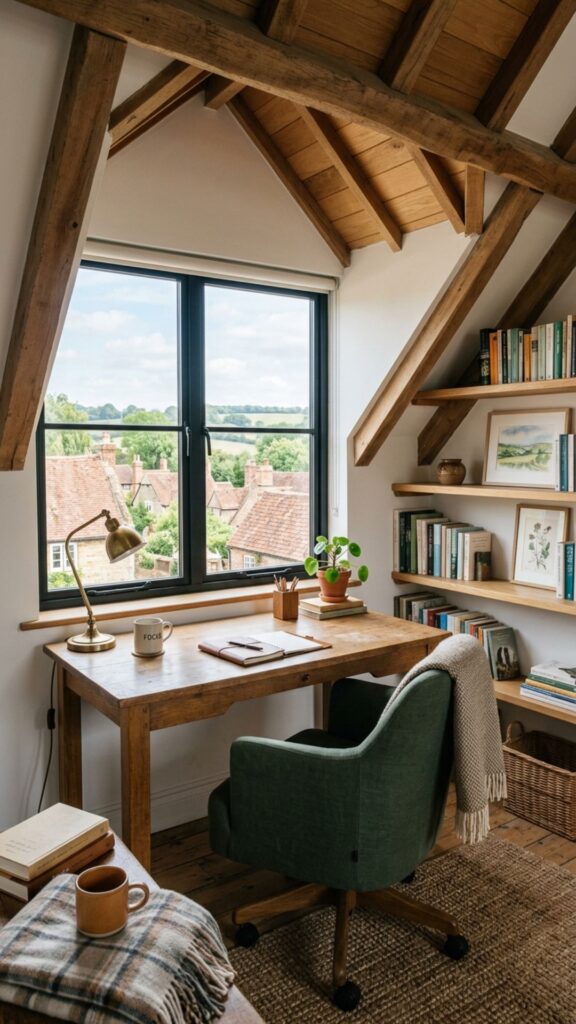
If your attic window overlooks a garden, rooftops, countryside, or even an interesting street, make that view part of the room. Position your workspace so you can occasionally look outside without twisting around.
A pleasant view provides a natural visual break from your computer screen. Keep window treatments simple so they do not block daylight, while still adding blinds or curtains when privacy or glare becomes an issue.
How to Make a Small Attic Office Feel Bigger
The easiest way to make a small attic office feel larger is to reduce visual clutter. Choose appropriately sized furniture, keep walls light, and use vertical or built-in storage wherever possible.
Avoid filling every corner simply because space is available. Leaving some areas open gives the eye somewhere to rest. Mirrors can also reflect daylight and make darker attic spaces feel more open.
Pay attention to furniture placement too. Your main working area should ideally sit within the tallest part of the attic, while storage can occupy lower areas beneath the roof.
What to Consider Before Creating an Attic Home Office
Before decorating, check that your attic provides enough headroom, ventilation, electrical access, insulation, and natural or artificial lighting. Temperature can also be an issue because attics often become hotter in summer and colder during winter.
Think about how many hours you will actually spend there. If it will become your main workplace, invest in an ergonomic chair, suitable desk height, reliable internet access, and good task lighting.
Practical planning should come before decoration. The most attractive home office ideas attic rooms use are successful because the workspace remains comfortable and functional throughout the year.
Conclusion
An attic does not need to remain an unused storage area. Even a small loft can become a stylish, comfortable, and productive workspace with the right approach.
Use awkward corners for storage, take advantage of natural light, choose furniture that fits the room, and keep your layout simple. Most importantly, design the office around the way you actually work rather than copying a beautiful setup that does not meet your needs.
Start by measuring your attic and choosing one idea from this list that solves your biggest challenge. A few thoughtful changes may be all you need to turn your forgotten loft into your favorite place to work.
Can an attic be used as a home office?
Yes. An attic can make an excellent home office when it has suitable flooring, lighting, ventilation, insulation, electrical access, and enough usable headroom. Requirements may vary depending on local building regulations, especially when converting unfinished attic space.
Where should I put a desk in an attic office?
Place your desk in an area with comfortable headroom and useful natural light. Near a skylight or window often works well, but position your screen carefully to prevent glare. Lower areas beneath sloping ceilings are better suited to storage.
How do I make an attic office comfortable in summer?
Good insulation, ventilation, blinds, and suitable cooling can help manage attic temperatures. Skylight blinds are especially useful because roof windows can allow significant sunlight into the room during hotter parts of the day.
What furniture works best in a small attic office?
Slim desks, floating shelves, low cabinets, wall-mounted desks, and built-in storage work particularly well. These pieces provide useful workspace without making the room feel overcrowded.
How can I decorate an attic office on a small budget?
Start with paint, improved lighting, cable organization, simple shelves, and furniture you already own. You can then add affordable items such as plants, artwork, baskets, and a rug. Good home office ideas attic designs depend more on thoughtful planning than expensive furniture.