Open-concept living spaces bring a lot of light and energy into a home, but they also bring a unique set of design challenges. When your dining room and living room share the exact same footprint, figuring out how to make them feel distinct yet connected can feel overwhelming.
You want a space that flows naturally when hosting friends, but you also need cozy, distinct zones for everyday life.
If you struggle with arranging furniture, picking colors, or making a large room feel inviting, you are in the right place.
We compiled a list of practical, stylish ways to merge these two essential areas without losing their individual charm. Read on to discover 20 actionable ideas that will help you design a stunning, cohesive open space that works perfectly for your lifestyle.
1. Use Area Rugs to Define Zones
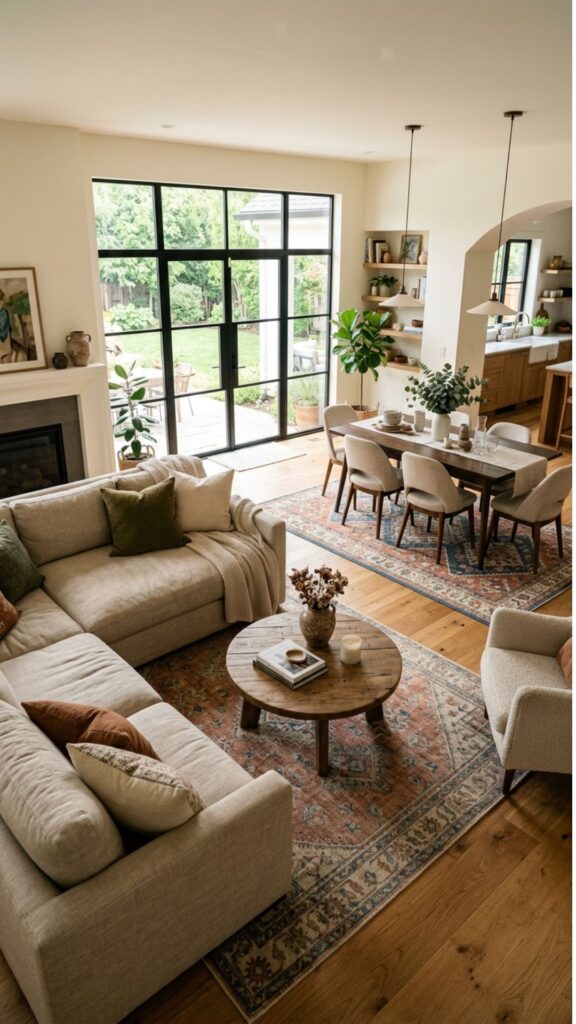
The easiest way to separate a dining room and living room without building walls is through the smart placement of area rugs. A large rug anchors the furniture in your seating area, telling the eye exactly where the living space begins and ends. You can place a second, complementary rug under your dining table to establish that specific zone.
Make sure the rugs coordinate without matching exactly. For example, you might choose a subtle geometric pattern for the seating area and a solid, durable rug in a matching color for the dining table. This prevents the room from feeling like a showroom while still keeping a strong visual connection between the two spaces.
2. Keep the Color Palette Cohesive
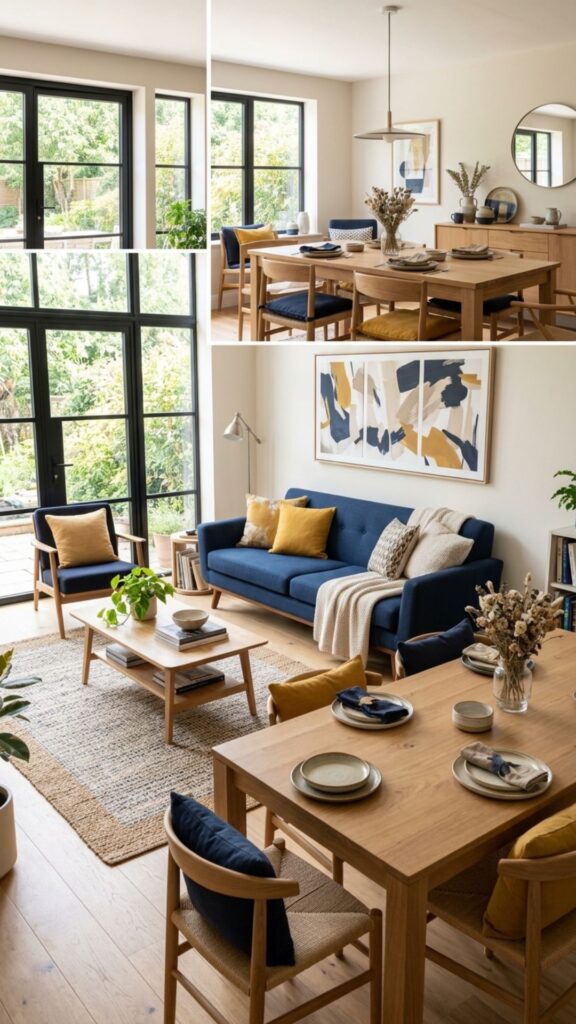
When decorating an open floor plan, a unified color palette is your best friend. Choosing two or three main colors and carrying them throughout the entire space prevents the room from looking cluttered or chaotic. You do not need to paint every wall the same color, but the undertones of your paints, fabrics, and decor should talk to one another.
If your seating area features a navy blue sofa with mustard yellow throw pillows, bring those same colors into the dining space. You can achieve this by hanging a piece of art with hints of navy near the table or placing a mustard yellow vase as a centerpiece. This deliberate color mapping makes the transition seamless.
3. Anchor with Statement Lighting
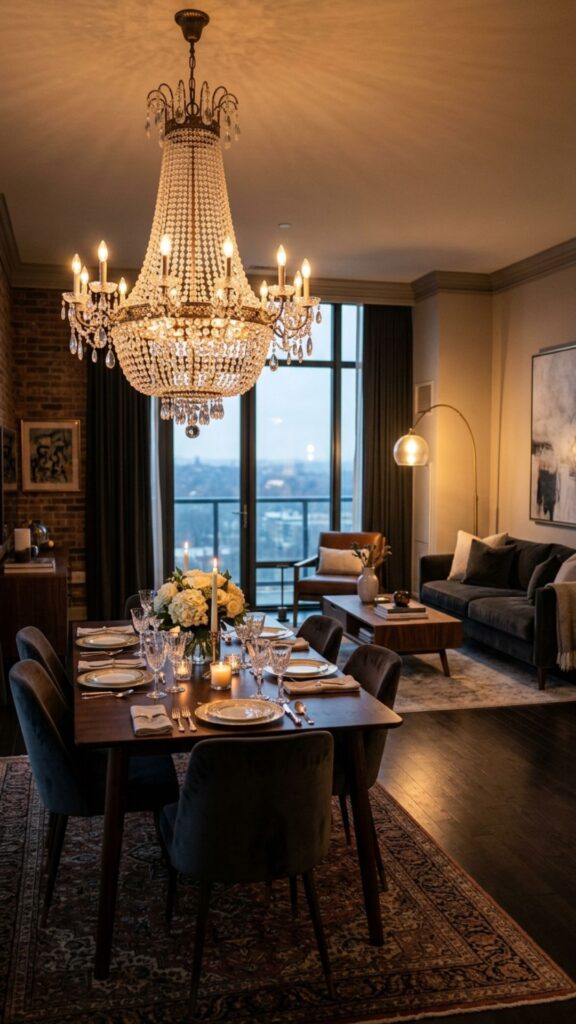
Lighting does more than just brighten a room; it acts as a visual boundary. Hanging a dramatic chandelier directly over your dining table instantly centers the space and gives it a distinct purpose. Meanwhile, a different but complementary fixture in the lounge area gives that zone its own identity.
Avoid the common mistake of ignoring ceiling height and fixture scale. If you have a bulky, heavy chandelier in the dining area, balance it with a sleeker, semi-flush mount or a modern arc floor lamp near the sofa. This variety adds layers to your design while clearly marking where you eat and where you relax.
4. Position Furniture to Direct Traffic
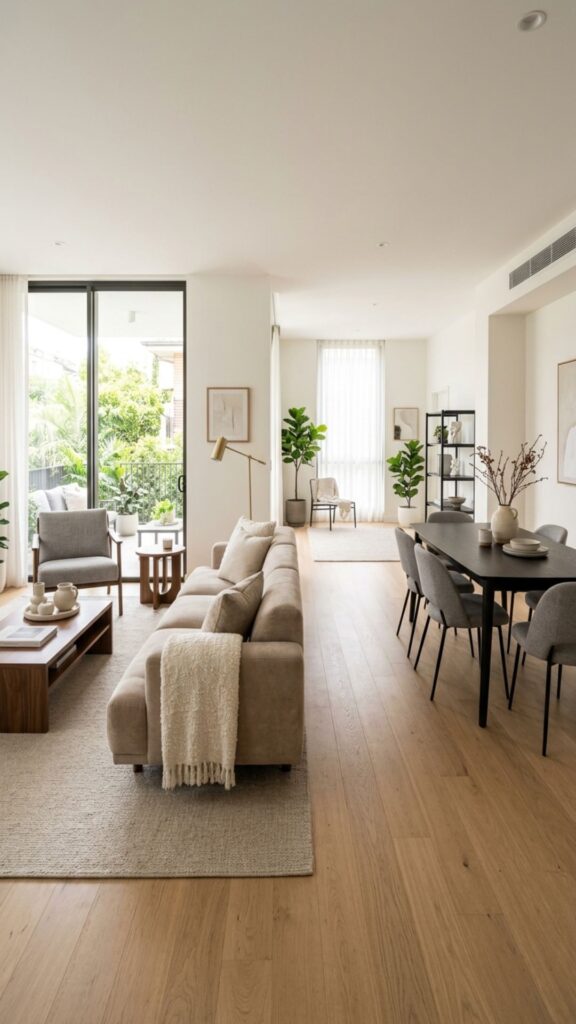
Poor traffic flow is a major pain point in an open layout. Nobody wants to squeeze past a dining chair to reach the sofa. You need to create clear, unobstructed pathways that guide people through the room without forcing them to interrupt a conversation or a meal.
Use your sofa or a pair of armchairs to build a natural hallway. By leaving at least three feet of walking space between the dining chairs and the back of your seating arrangement, you establish a physical boundary. This makes the entire room feel larger and much more functional for daily life.
5. Float Your Sofa
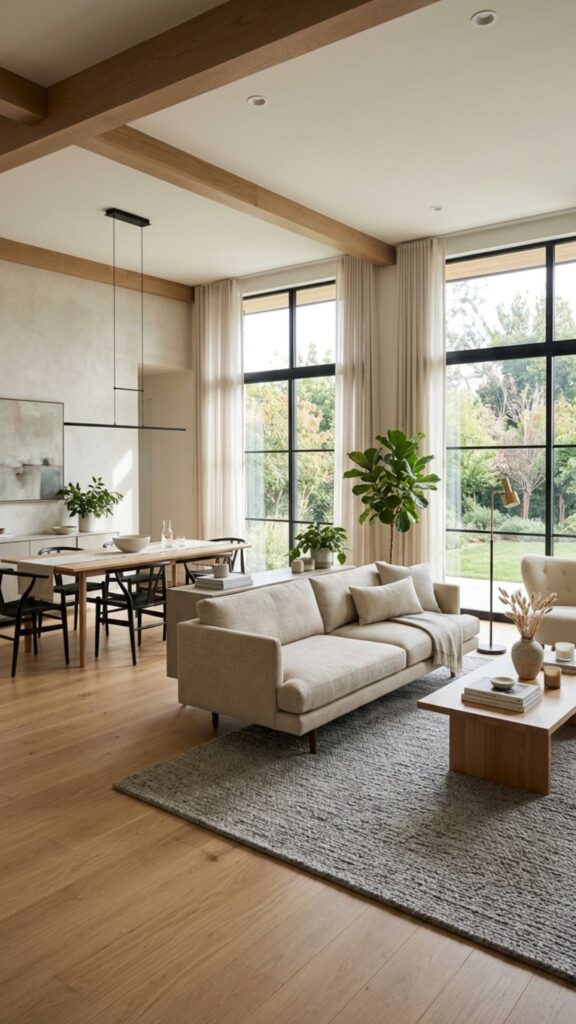
Pushing all your furniture against the walls is a tough habit to break, but it rarely works in a shared dining room and living room layout. Floating your sofa in the middle of the room acts as a soft divider. The back of the couch draws a clear line between the relaxation zone and the eating area.
To make the back of the sofa look intentional rather than awkward, pay attention to its design. A low-profile couch works best because it keeps sightlines open across the room. You can also drape a textured throw blanket over the back to add warmth and visual interest from the dining side.
6. Add a Console Table Behind the Sofa
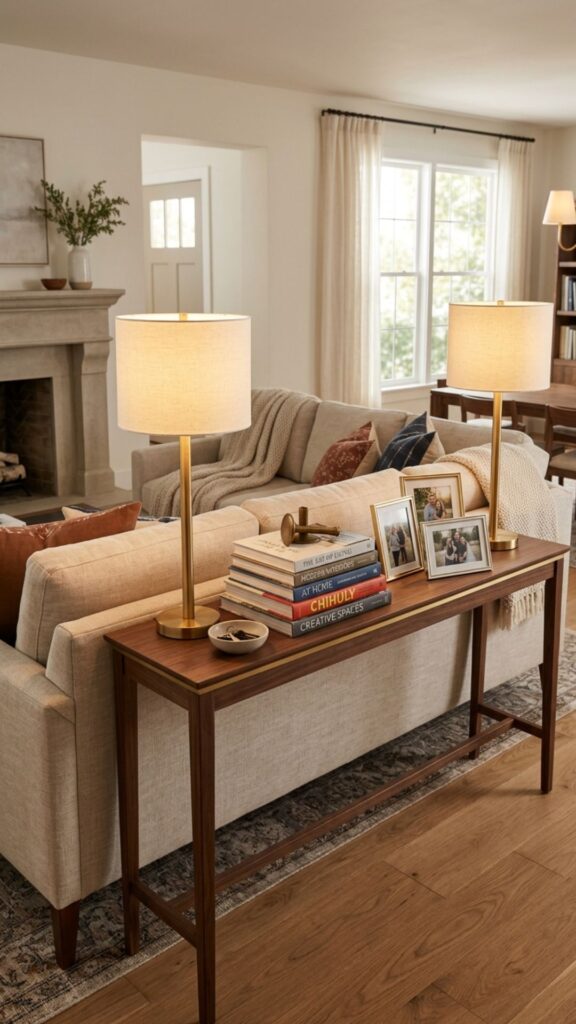
If floating your sofa leaves you staring at a large, blank piece of upholstery from the dining table, a console table is the perfect solution. Tucking a slim table directly behind the couch bridges the gap between the two zones. It provides a functional transition piece that looks highly intentional.
You can use this table to display family photos, stack your favorite coffee table books, or hold a pair of matching buffet lamps. These lamps offer soft ambient lighting for evening dinners, adding a cozy atmosphere while physically separating the lounging space from the dining space.
7. Match the Wood Tones
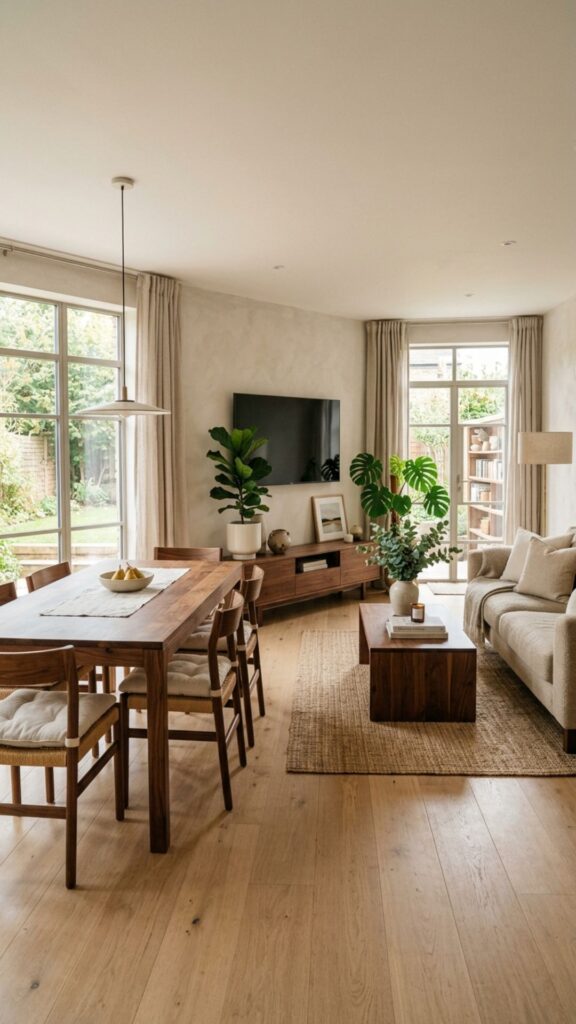
Mixing too many different wood finishes in a single open room can make the space feel disjointed and messy. While everything does not need to come from the same matching furniture set, keeping your wood tones in the same family creates a strong sense of harmony.
If your dining table features a warm walnut finish, look for a coffee table or a TV stand with a similar warm undertone for the lounge side. You can still mix up the styles—pairing a rustic table with mid-century modern chairs—but matching the color temperature of the wood ties everything neatly together.
8. Blend Textures for Warmth
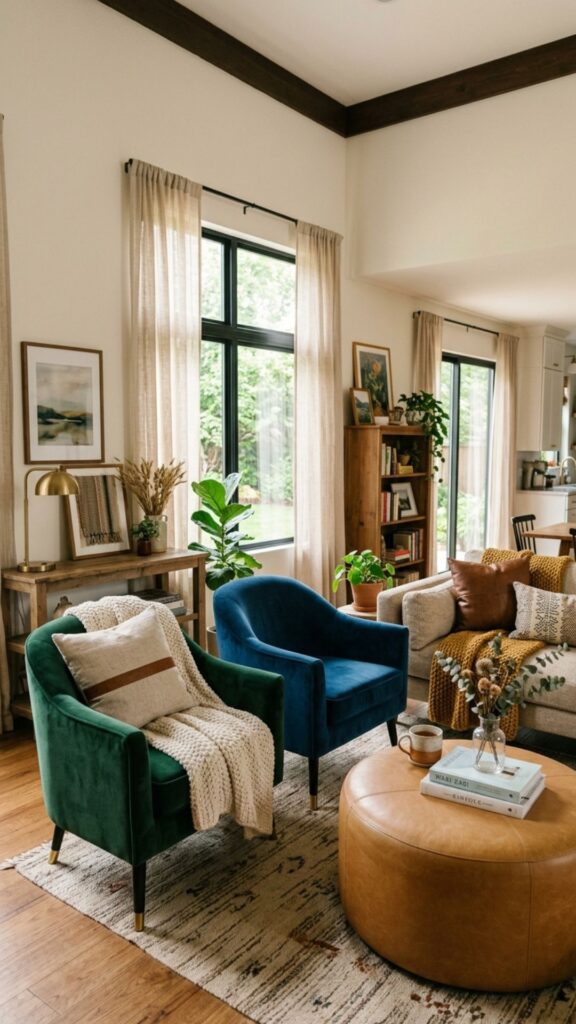
Large, open-concept rooms often suffer from an echoing, cold feeling. To fix this, you need to layer multiple textures throughout both the dining and living spaces. Soft materials absorb sound and make a cavernous room feel inviting and lived-in.
Pair a sleek, glass dining table with upholstered velvet dining chairs to soften the hard edges. In the lounge area, mix chunky knit blankets, linen curtains, and leather ottomans. By distributing cozy textures evenly across both zones, the entire footprint feels equally comfortable and connected.
9. Install Open Shelving as a Divider
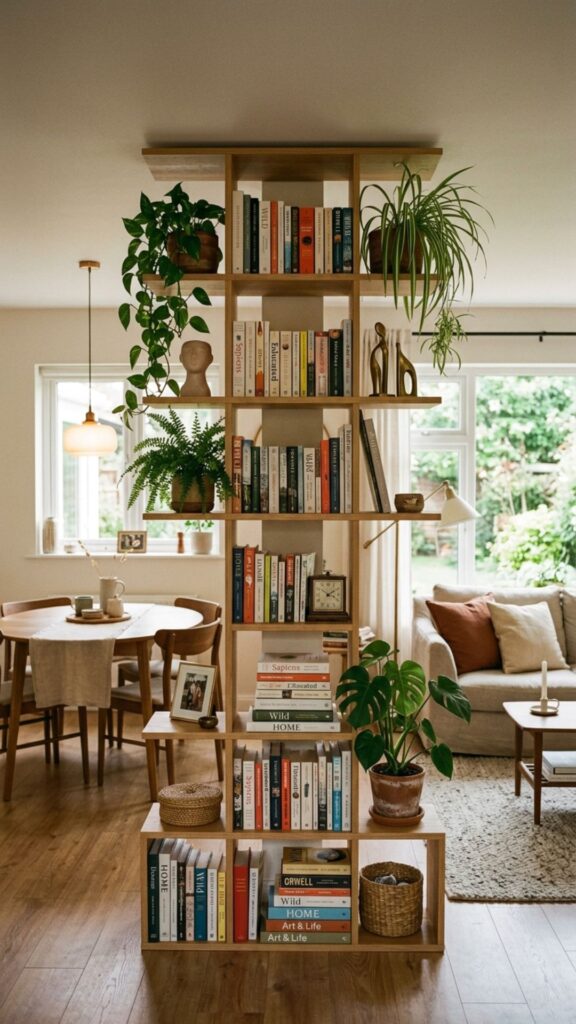
If you crave a little more physical separation but do not want to block the light, a freestanding open bookshelf is an excellent choice. Placing a shelving unit between the two areas gives you a structural divider that still lets the room breathe.
Style the shelves carefully so they look great from both sides. Mix hardback books, trailing houseplants, and decorative bowls, making sure not to pack the shelves too tightly. This approach gives you extra storage while creating a stylish, semi-private barrier for your dining area.
10. Coordinate Art and Accessories
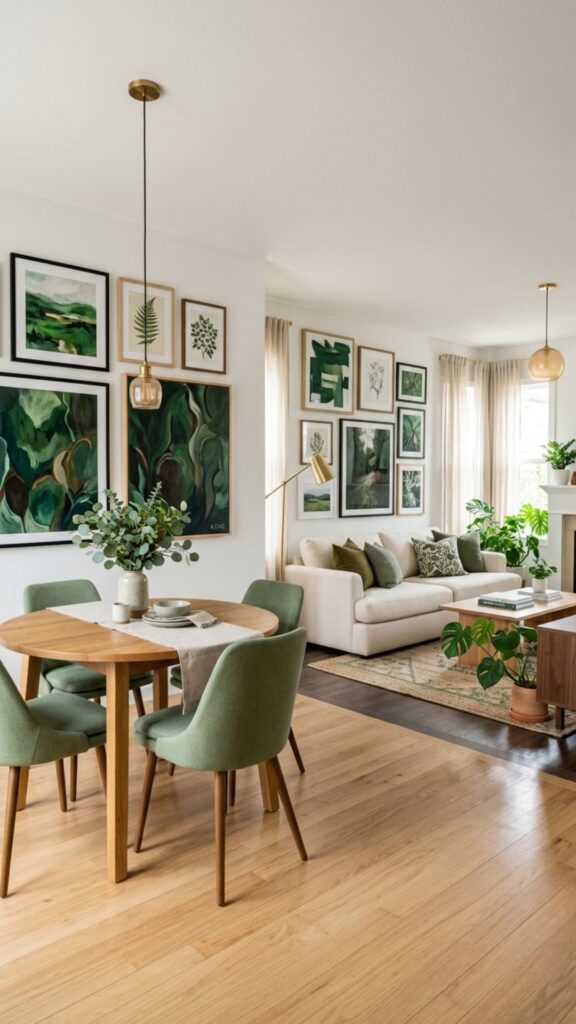
Artwork and small decor items act as the glue in a combined dining room and living room. If the art in your dining space feels completely disconnected from the art near your sofa, the room will feel like an accident rather than a planned design.
Create a dialogue between the walls. If you have a large, abstract canvas with bold strokes of green in the dining space, hang a gallery wall in the lounge that incorporates smaller green accents. Carrying a specific style or color theme through your wall decor effortlessly pulls the whole layout together.
11. Choose Multipurpose Furniture
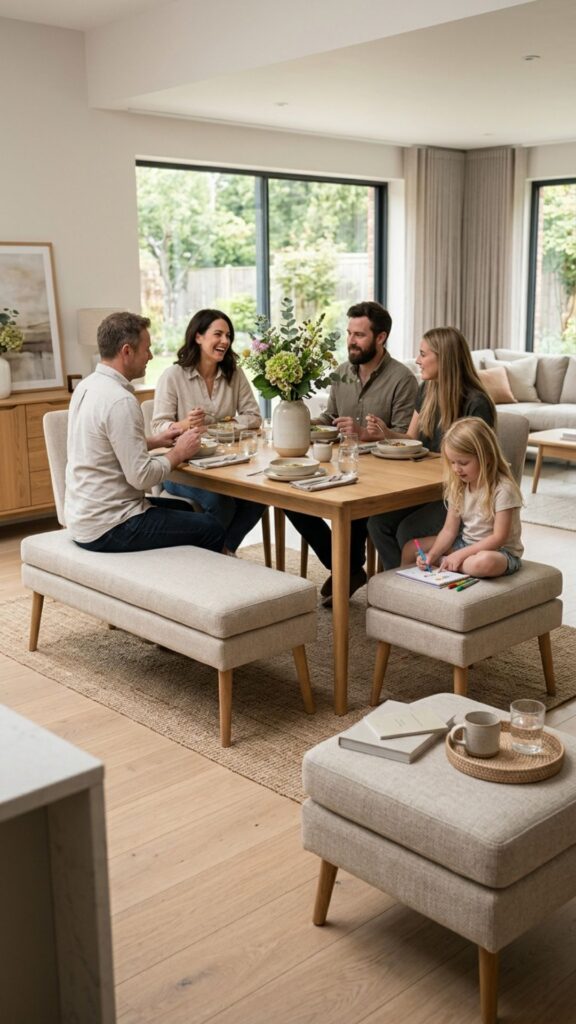
In smaller open plans, flexibility is crucial. When space is tight, every piece of furniture needs to earn its keep. Multipurpose pieces allow you to shift the function of the room depending on whether you are hosting a dinner party or enjoying a quiet movie night.
Consider using a stylish upholstered bench on one side of your dining table. When you have extra guests in the lounge area, you can easily turn the bench around to face the sofa. Similarly, sturdy ottomans can serve as coffee tables, footrests, or extra seating for either zone.
12. Tie Spaces Together with Window Treatments
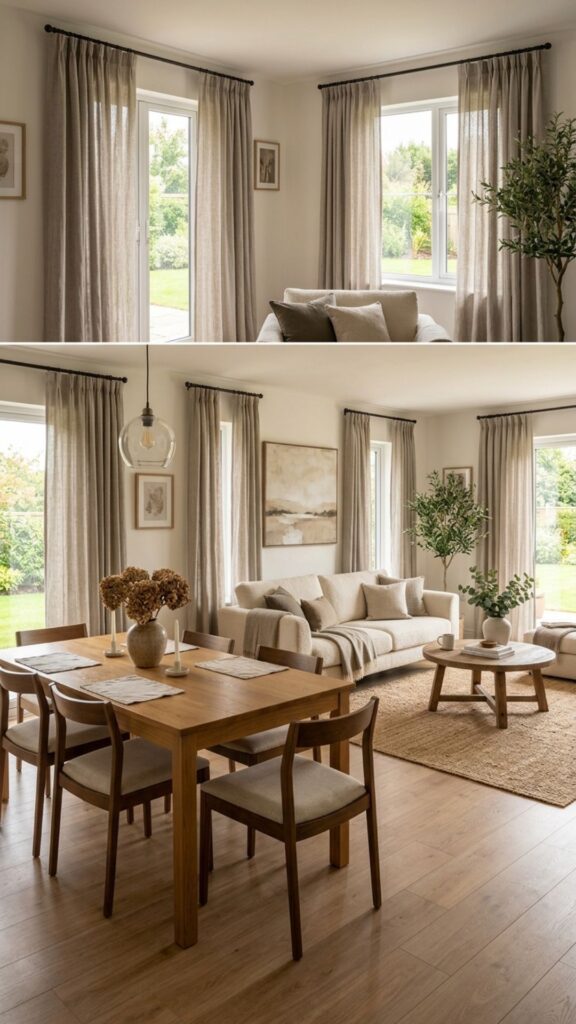
Hanging different curtains in the living and dining areas visually chops the room in half. To maintain a smooth, uninterrupted flow, treat all the windows in the shared space exactly the same. Consistent window treatments draw the eye upward and make the room feel cohesive.
Hang your curtain rods high and wide to make the ceilings look taller and the windows wider. Choose a neutral, breezy fabric like linen or cotton blends to let natural light filter in. This simple, unified backdrop allows your furniture and colorful decor to take center stage.
13. Play with Scale and Proportion
A common mistake in large open spaces is buying furniture that is too small, which makes the room look cluttered and empty at the same time. You need to pay close attention to scale to ensure neither the dining room nor the living room overpowers the other.
If you have a massive sectional dominating the lounge area, a tiny bistro table will look completely out of place nearby. Balance a large sofa with a substantial, solid dining table. Keeping the visual weight equal prevents one side of the room from feeling like an afterthought.
14. Use Accent Colors Deliberately
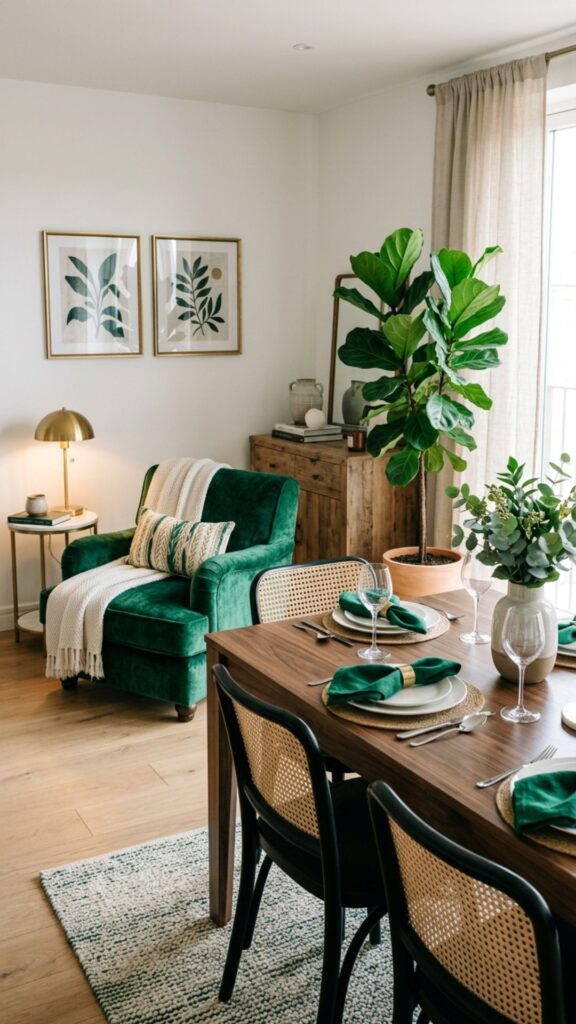
While a neutral base keeps the room calm, deliberate pops of accent colors add personality and connect the zones. Instead of scattering colors randomly, use a specific accent hue to guide the eye from one end of the room to the other.
Choose an accent color you love—like burnt orange or emerald green. Place a green armchair in the seating area, set the dining table with green cloth napkins, and place a large green plant in the corner. This subtle repetition acts as a visual breadcrumb trail across the space.
15. Incorporate Large Indoor Plants
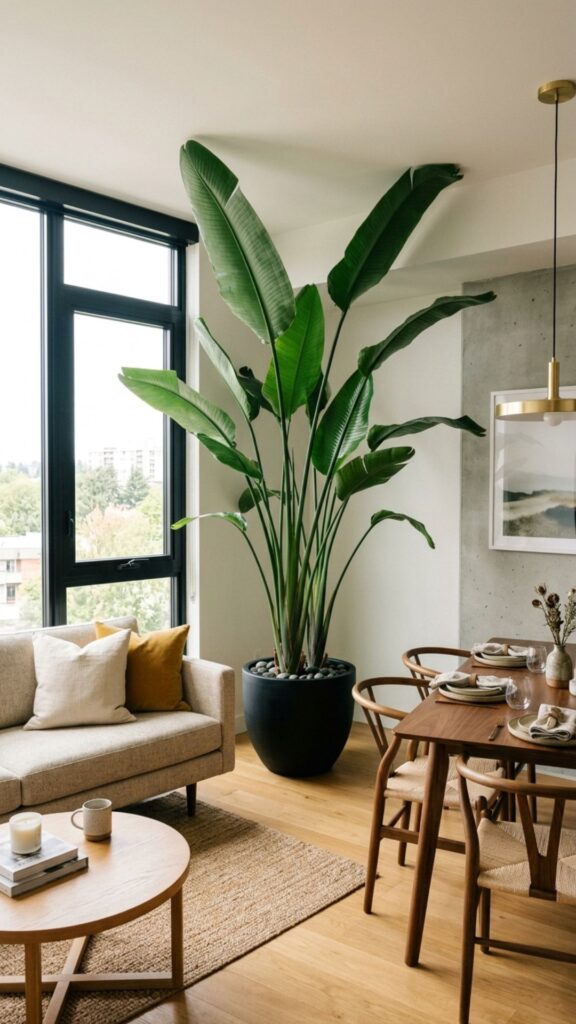
Plants bring instant life and freshness to any room, and they also work beautifully as soft boundaries. A large, leafy houseplant can easily hide an awkward corner or act as a natural screen between your dining chairs and your sofa.
Place a tall Fiddle Leaf Fig or a Bird of Paradise near the transition point of the room. The height draws the eye upward and breaks up the horizontal lines of your heavy furniture. Plus, the organic shapes of the leaves soften the hard edges of dining tables and television screens.
16. Pick Complementary Dining Chairs
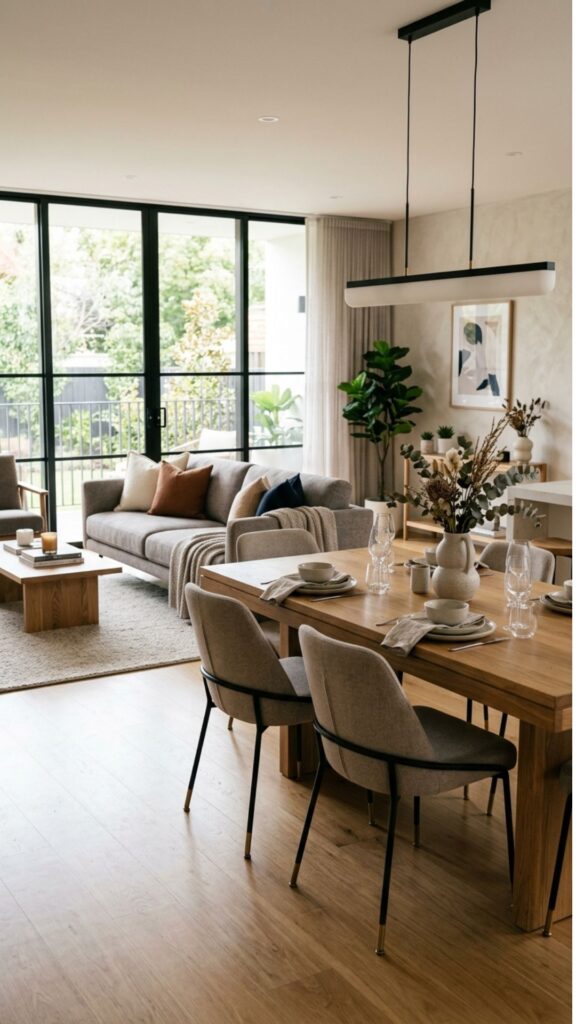
Your dining chairs do not exist in a vacuum; they will be highly visible from your sofa. Buying a dining set that drastically clashes with your living room style creates visual friction. Instead, treat your dining chairs as an extension of your lounge seating.
If your sofa features clean, modern lines with black metal legs, look for dining chairs with a similar modern silhouette and matching black legs. You can vary the fabric and the color, but keeping the core design language similar ensures the two areas get along beautifully.
17. Utilize a Room Divider or Screen
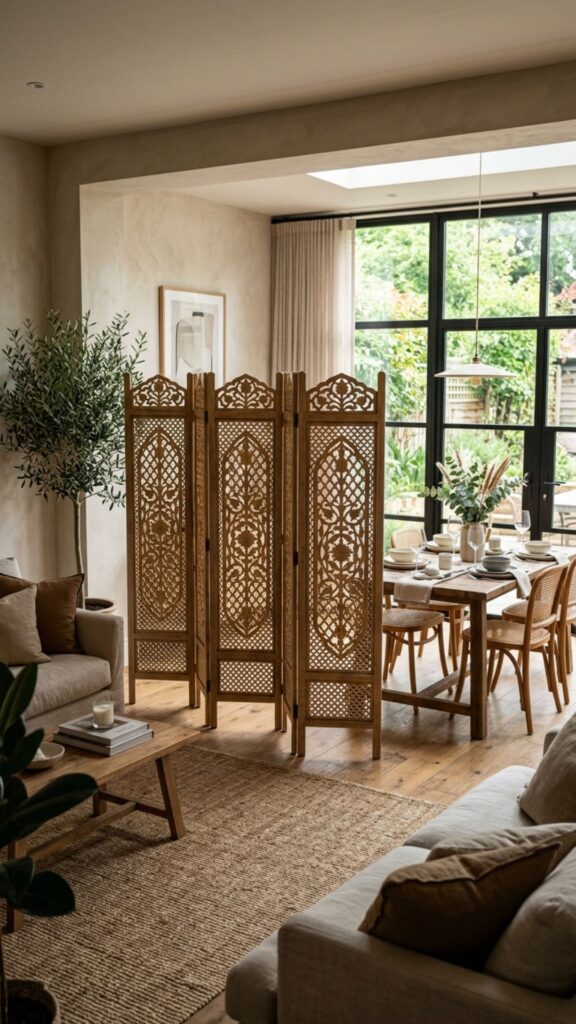
Sometimes you just want to hide the messy dining table after a meal while you watch television. A folding screen or a decorative room divider offers a temporary, stylish way to block sightlines without committing to a permanent wall.
Choose a screen that complements your overall aesthetic, like a slatted wood divider for a mid-century look or an intricately carved panel for a bohemian vibe. When you host a large gathering and need the floor space, simply fold the screen up and tuck it out of the way.
18. Maintain Consistent Flooring
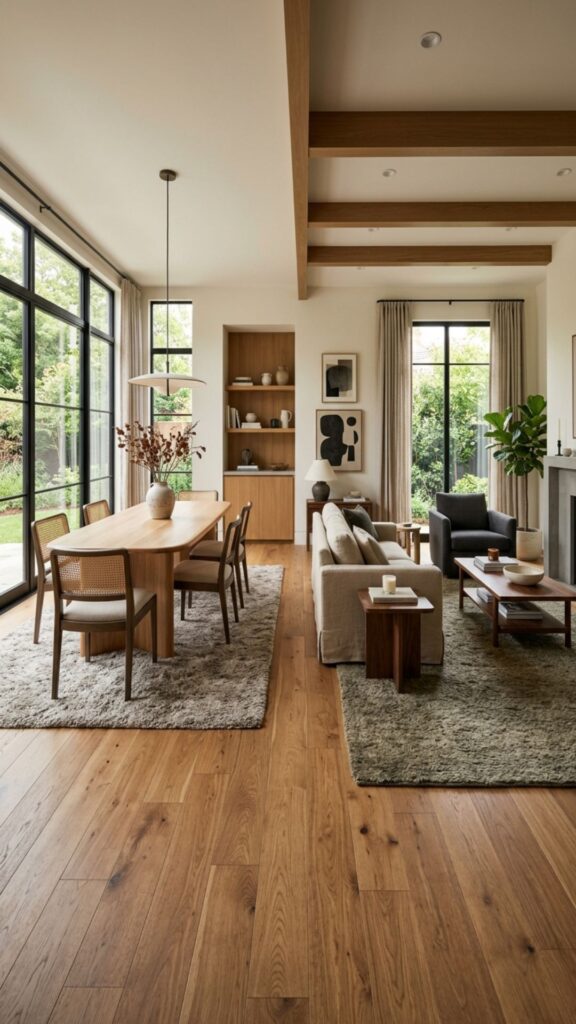
Nothing ruins the flow of an open-concept layout faster than an abrupt change in flooring. Switching from hardwood in the lounge area to tile under the dining table creates a harsh visual line that makes both spaces feel much smaller than they actually are.
Run the same continuous flooring throughout the entire footprint. Continuous wood or high-quality laminate expands the room visually and provides a beautiful, blank canvas. You can then use your area rugs, as mentioned earlier, to softly define the specific zones without jarring the eye.
19. Layer Your Lighting Strategically
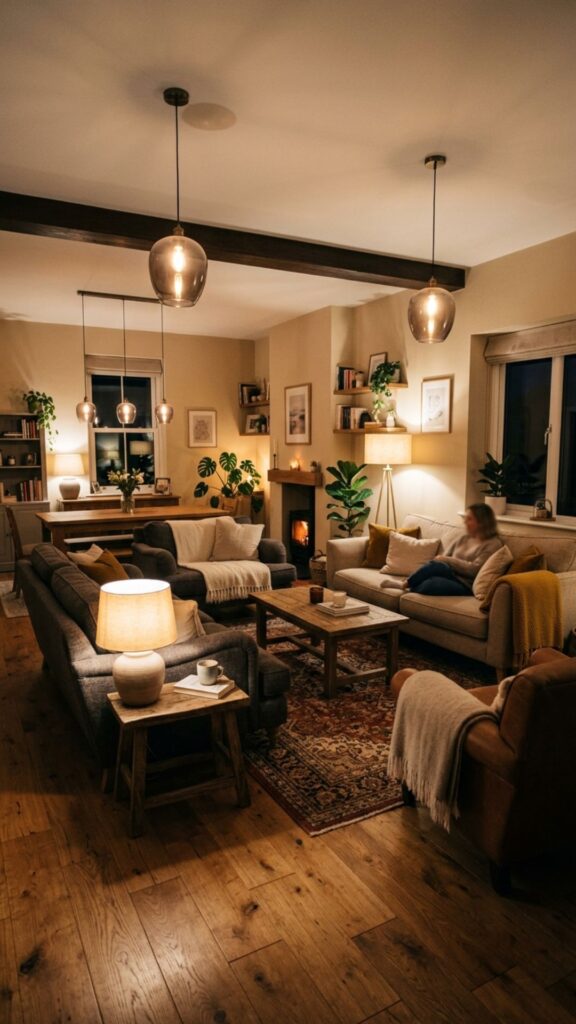
A single, glaring overhead light will make your open space feel like a cafeteria. To create a cozy atmosphere, you must layer different types of lighting throughout both zones. You need a mix of ambient, task, and accent lighting to control the mood.
Install dimmer switches on your main overhead fixtures so you can lower the lights over the dining table once dinner is finished. Add floor lamps near reading chairs, and place a small, warm lamp on the media console. This layered approach allows you to highlight the active zone while letting the unused space fade into the background.
20. Design a Focal Point for Each Area
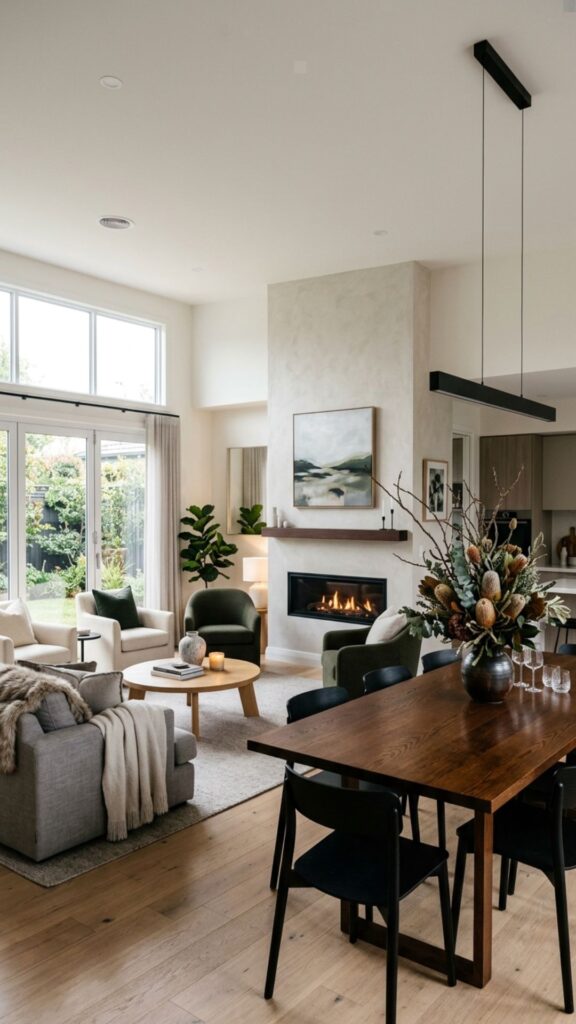
Every room needs a focal point to anchor the design, and an open plan needs two. Without distinct focal points, the eye wanders aimlessly, making the room feel chaotic. Give your guests something specific to look at in both the eating and relaxing zones.
In the living space, the focal point is often a fireplace, a large window, or an entertainment center. In the dining area, make the table itself the star by adding an eye-catching centerpiece and a bold light fixture above it. Two strong focal points help each zone hold its own weight within the shared room.
Conclusion
Combining a dining room and living room into one open space does not have to be a frustrating puzzle. By focusing on cohesive colors, strategic furniture placement, and thoughtful lighting, you can create a layout that feels both unified and beautifully organized. Remember to use rugs and floating furniture to build natural boundaries, and let your personal style shine through consistent textures and art.
Ready to transform your open-concept space? Start by picking one simple idea from this list, like rearranging your sofa or adding a new area rug, and see how quickly the flow of your room improves.
How do you transition between a dining room and living room?
The best way to transition between these spaces is by using visual dividers rather than physical walls. Floating a sofa with its back to the dining area creates a clear line. You can also use separate, complementary area rugs to anchor each zone, or place a console table behind the sofa to gently bridge the gap between the two areas.
Should the living and dining room match exactly?
No, they should not match exactly. If you buy identical furniture sets for both areas, the room will look flat and uninspired. Instead of matching, aim for coordination. Keep the wood undertones similar, carry a consistent color palette across the room, and make sure the overall design styles complement each other.
How do you arrange furniture in an open-concept living and dining area?
Start by identifying the natural traffic patterns in the room. Keep clear walkways between doorways and avoid blocking the flow with large pieces. Anchor your dining table under the main lighting fixture, and position your seating area around a central focal point like a window or television. Keep a minimum of three feet of walking space between the dining chairs and the living room furniture.