The dining room is more than just a place to eat meals; it is a space where families gather, conversations flow, and memories are made. If your walls are looking bare, adding the right dining room artwork can completely transform the space.
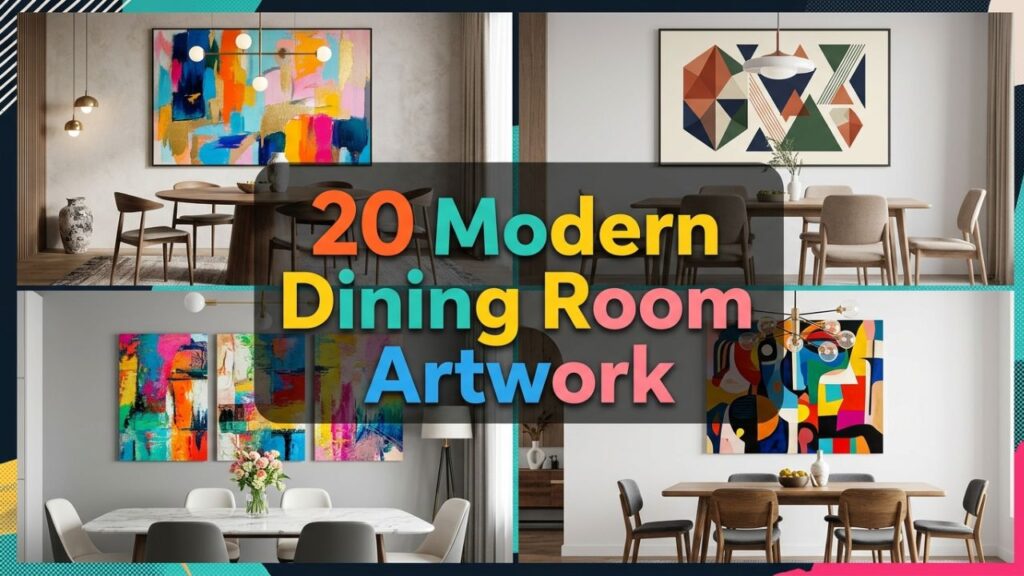
Art does heavy lifting in interior design by instantly defining the mood, elevating your personal style, and bringing balance to the room. Whether you want to create a calm, intimate atmosphere or a vibrant, energetic dining experience, the art you choose sets the stage.
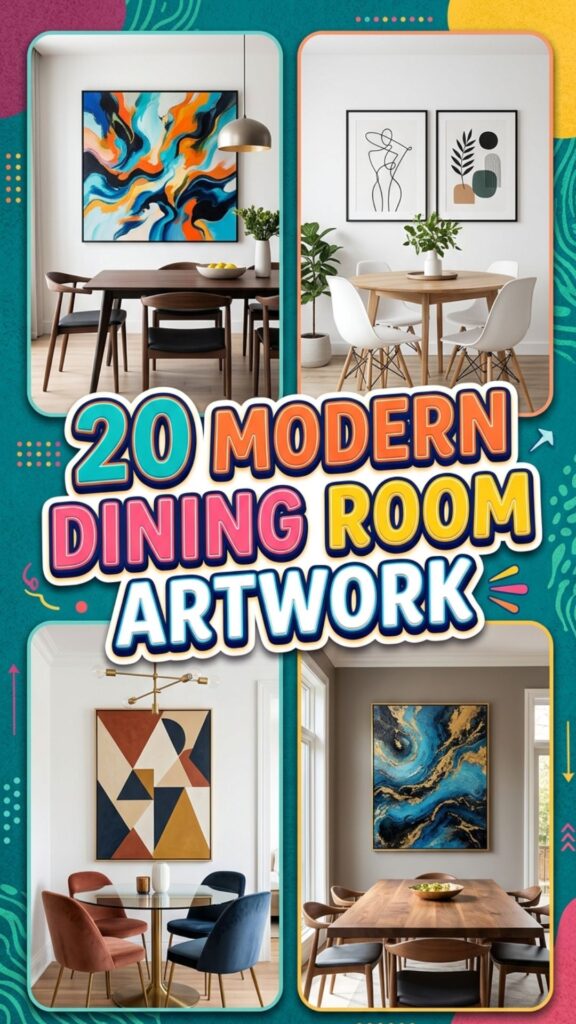
Finding the perfect dining room artwork does not have to be intimidating. By understanding a few simple design rules about scale, placement, and color, you can curate a space that looks like it was styled by a professional. Read on to explore 20 modern artwork ideas that will bring life, texture, and personality to your dining area.
1. The Oversized Abstract Canvas
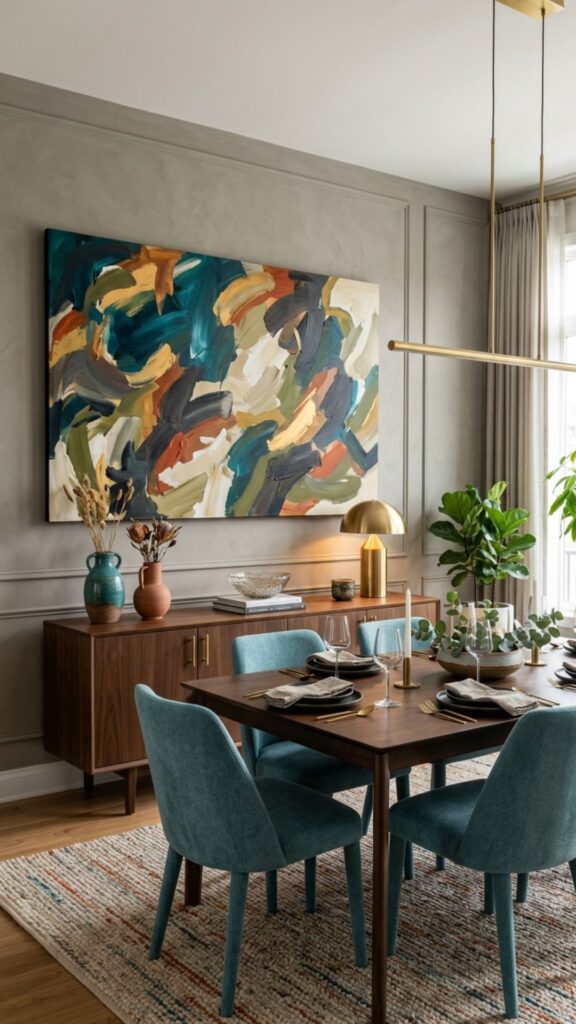
An oversized abstract canvas acts as a stunning focal point, immediately drawing the eye and setting a contemporary tone. Large-scale dining room artwork simplifies your design choices because you only need one impactful piece to make the room feel complete. Choose an abstract painting featuring colors pulled directly from your dining chairs, rug, or table runner to create a cohesive look.
When hanging a massive canvas, center it on the longest wall or directly above a buffet. Keep the bottom edge about 6 to 8 inches above any furniture to anchor the piece visually. Avoid the common mistake of hanging a large canvas too high on an empty wall; the center of the artwork should sit at eye level, generally around 57 to 60 inches from the floor.
2. A Curated Gallery Wall
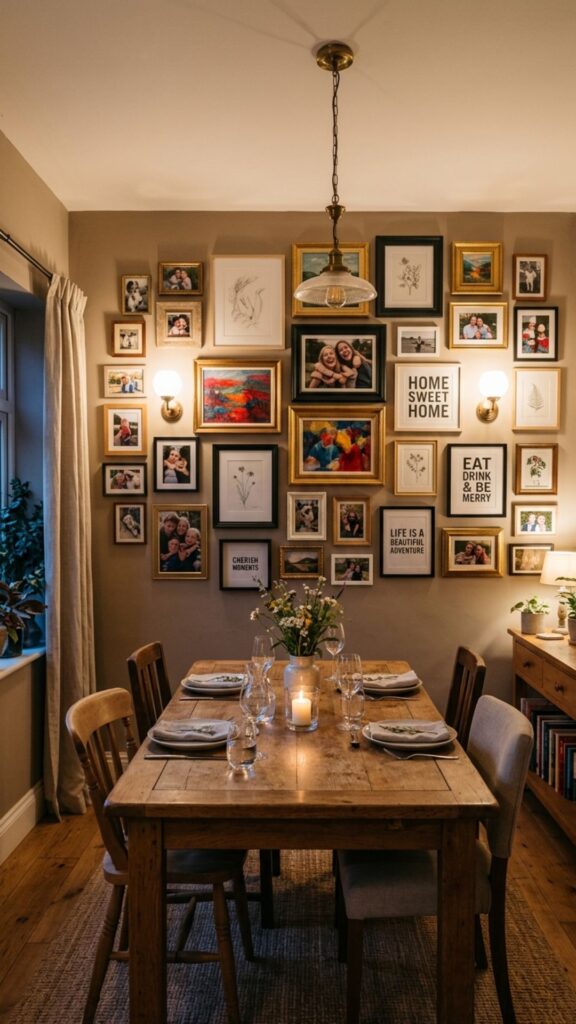
Gallery walls remain a timeless way to showcase your personality while filling a large, empty wall. Mix and match different frames, mediums, and sizes to create a dynamic display. You can blend family photographs with small paintings, sketches, and typography prints. This approach gives your dining room artwork a layered, lived-in feel that sparks conversation during dinner parties.
Before picking up a hammer, trace your frames on craft paper and tape them to the wall to plan your layout. Space your frames about two to three inches apart to keep the arrangement feeling connected. A frequent mistake is using art pieces that are too small and spaced too far apart, which makes the wall look cluttered rather than curated.
3. Minimalist Line Art
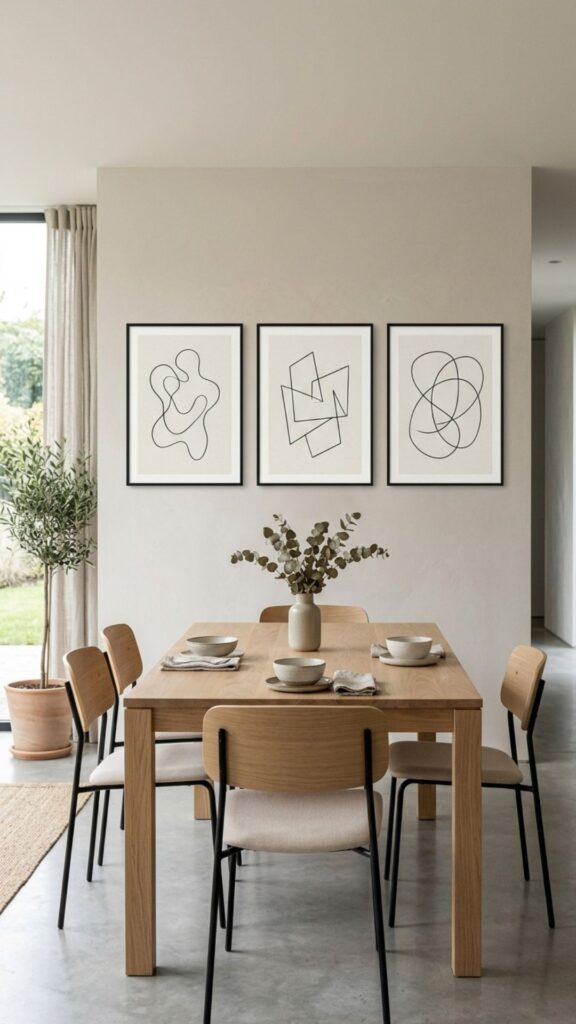
Minimalist line art offers a sleek, sophisticated touch for modern dining spaces. These simple, continuous line drawings usually feature faces, figures, or abstract shapes against neutral backgrounds. They bring an artistic flair without overwhelming the room, making them perfect for smaller dining areas or rooms with busy wallpaper.
Frame your line art in thin, black metal or light oak frames to maintain the minimalist aesthetic. A great styling tip is to hang a series of three complementary line drawings side-by-side. Make sure to align them perfectly horizontally, leaving just a few inches between each frame. Resist the urge to use heavy, ornate frames, as this clashes with the delicate nature of the art.
4. Vintage Botanical Prints
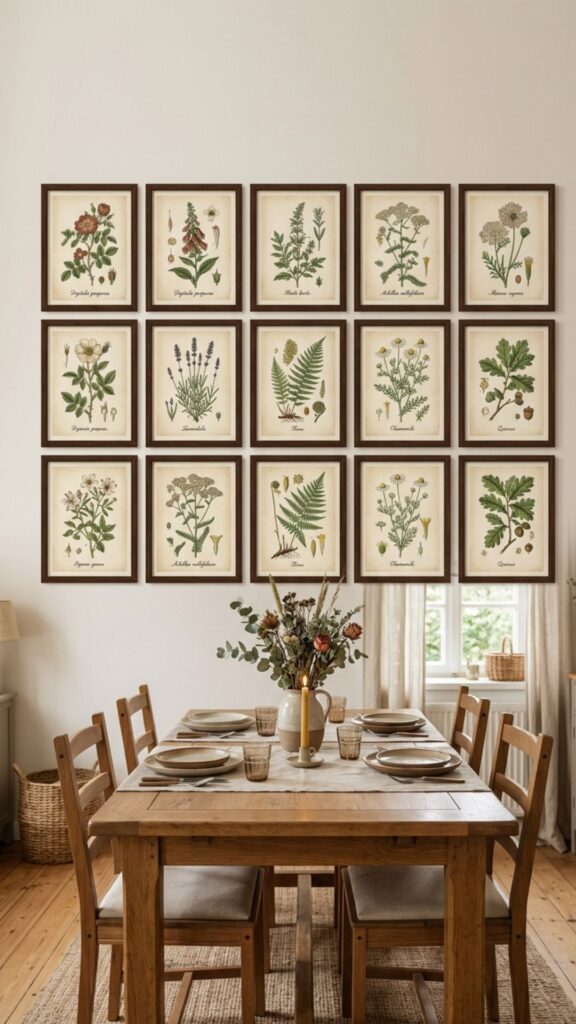
Vintage botanical prints bring a touch of nature indoors while adding classic charm to your dining space. These detailed illustrations of leaves, flowers, and herbs work beautifully in transitional or farmhouse-style homes. They introduce soft greens and earthy tones, which naturally promote a calming atmosphere for enjoying meals.
For maximum impact, display an even grid of four, six, or eight botanical prints in identical frames. This symmetrical arrangement looks tailored and high-end. When hanging a grid, precision is essential; use a laser level to ensure all frames line up perfectly. Do not mix vastly different frame styles in a grid layout, as it ruins the clean, structured look.
5. Textured Macrame Wall Hangings
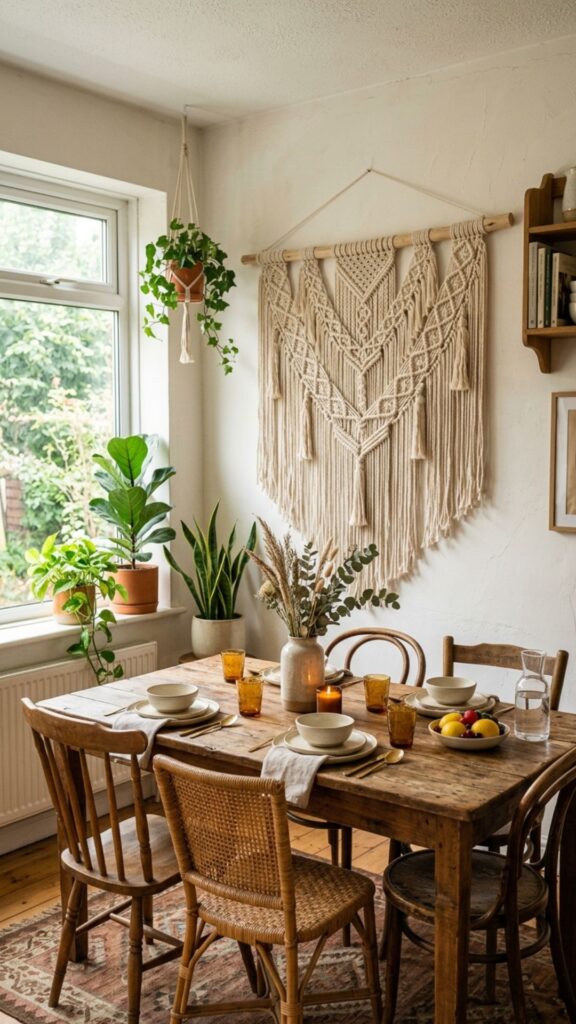
If you want to move away from traditional framed dining room artwork, a textured macrame wall hanging offers a brilliant alternative. These woven pieces introduce warmth, softness, and a bohemian vibe to modern spaces. The tactile nature of macrame contrasts beautifully with the hard surfaces of wooden dining tables and metal light fixtures.
Hang a large macrame piece centered on an accent wall to create a cozy, inviting backdrop. Ensure the dowel or branch supporting the weaving is wide enough to take up significant visual space without dwarfing your dining table. Avoid placing fabric art too close to a dining room fireplace or busy serving areas where it might absorb food odors or face fire hazards.
6. Bold Typography Prints
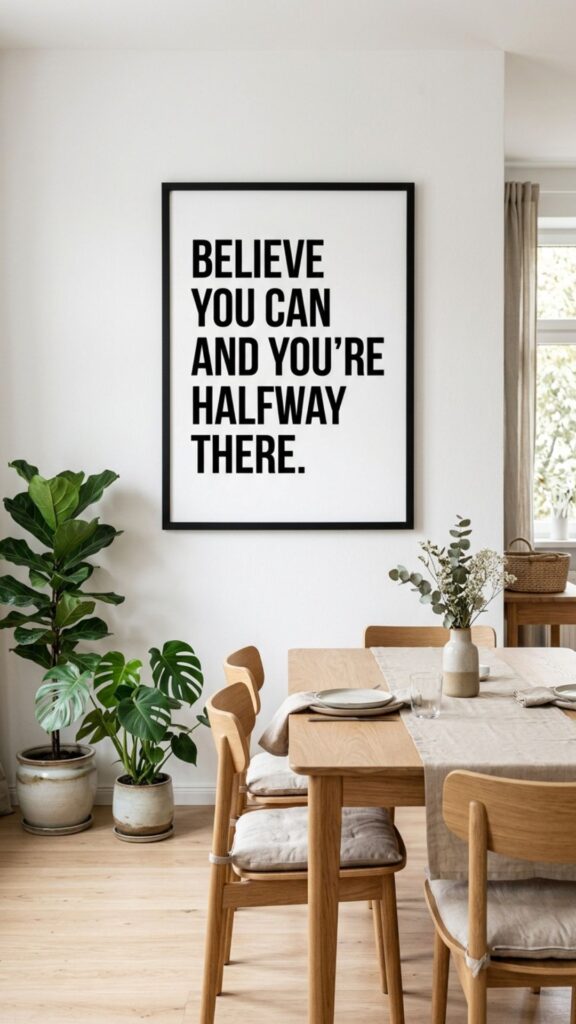
Typography prints use words, quotes, or letters to make a stylish statement. A well-chosen typography piece can set a playful, welcoming, or chic tone in your dining room. Think about selecting a meaningful phrase, a funny quote about food, or a single oversized letter in a modern font.
To style typography art, pair it with more traditional pieces or place it on a floating shelf alongside small indoor plants. Stick to crisp black and white designs if you want a sleek, modern look. The biggest mistake with text-based art is choosing words that are too small to read from across the room, rendering the artwork ineffective as a focal point.
7. Framed Photography Scapes
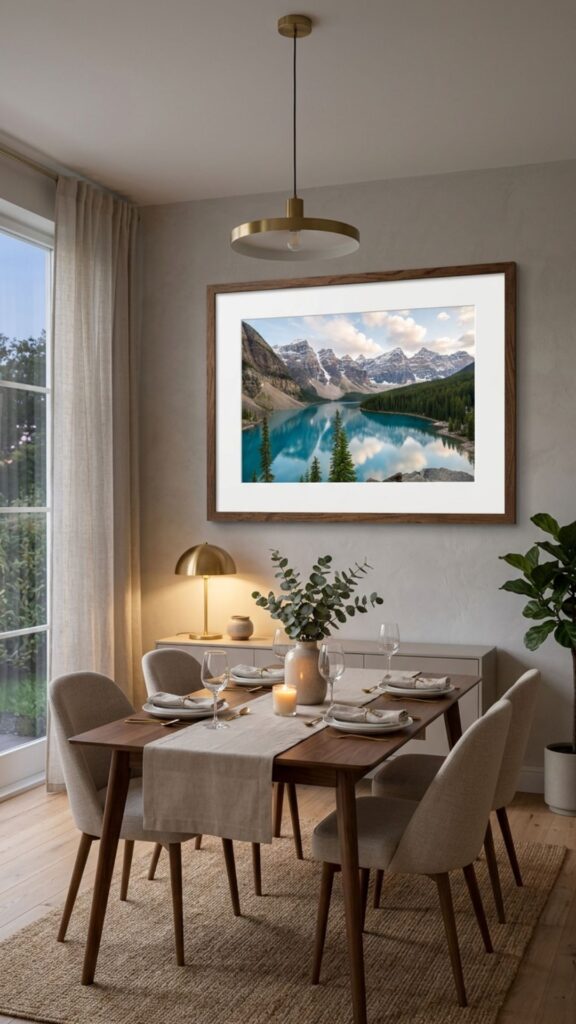
Sweeping landscape photography instantly opens up a dining room, creating a sense of depth and tranquility. Black and white architectural photos or vibrant nature scapes act like a window, making a cramped dining area feel much larger. This style of dining room artwork is perfect for adding sophistication and a sense of wanderlust to your home.
When selecting photography, opt for a large, single print with an oversized white mat board. The matting provides breathing room around the photo, elevating it to gallery quality. Make sure to use anti-reflective glass in your frame to prevent glare from your dining room chandelier or nearby windows.
8. Geometric Wood Panels
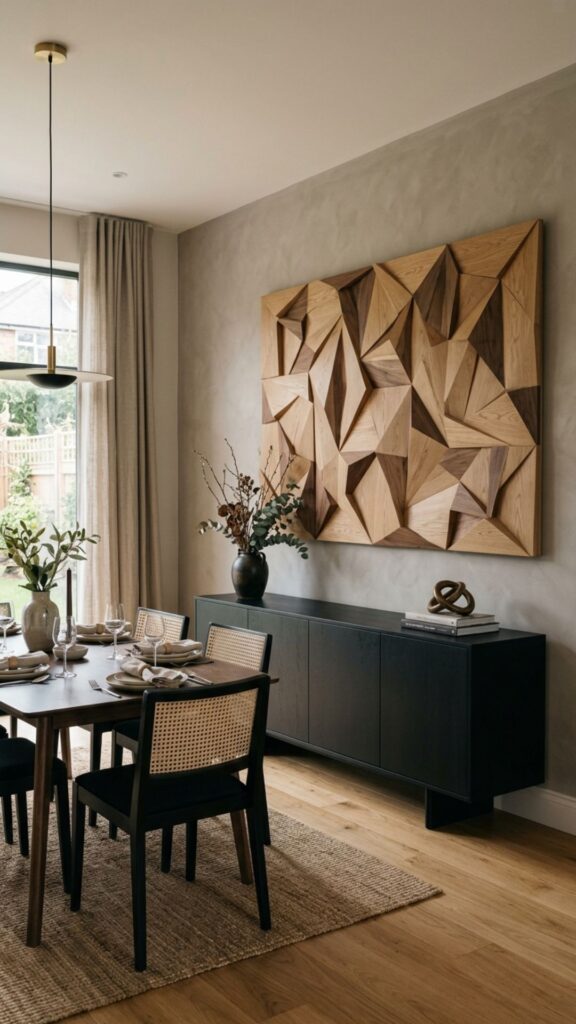
Geometric wood panels bring architectural interest and a mid-century modern feel to your dining area. These sculptural art pieces use varying shades of stained or painted wood pieced together in striking patterns. Because they are three-dimensional, they play beautifully with the natural and artificial light in the room, creating shifting shadows throughout the day.
Mount geometric wood art above a sleek modern sideboard to anchor the space. Make sure the width of the wooden artwork spans about two-thirds the width of the furniture below it for optimal balance. Avoid placing heavy wooden pieces on a weak drywall anchor; always locate a stud or use heavy-duty hardware for safety.
9. Metallic Wall Sculptures
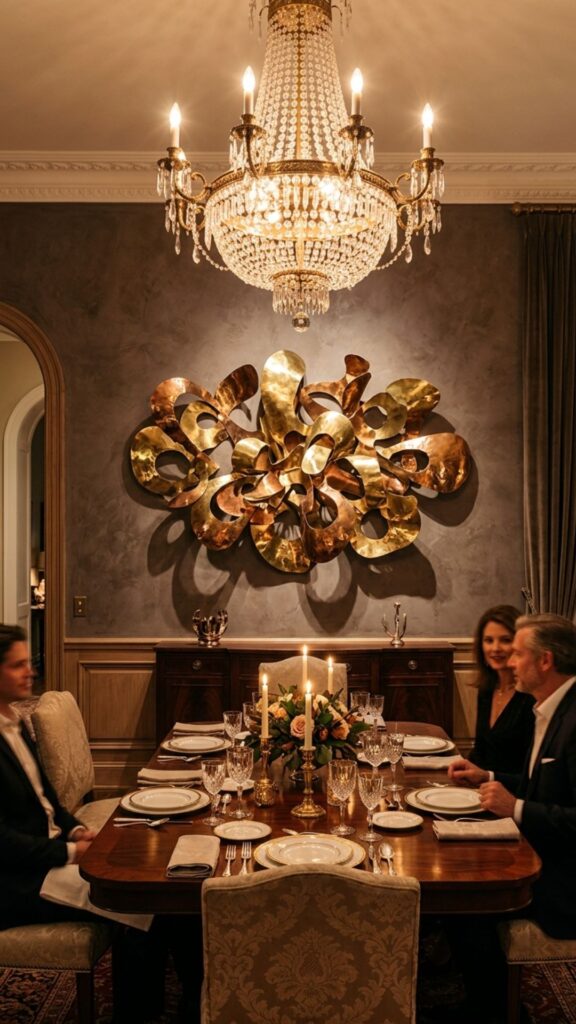
Metallic wall sculptures introduce a touch of glamour and luxury to your dining space. Whether it is a cluster of brass disks, a sprawling iron branch, or copper geometric shapes, metal art catches the light and adds a dynamic energy. This is a fantastic option if you want to break up a room full of square windows, rectangular tables, and straight lines.
Style metallic dining room artwork by coordinating the metal finish with your light fixtures or cabinet hardware. If your chandelier is brass, a warm-toned sculpture ties the room together beautifully. Do not hang metal sculptures too high; they should be positioned so that seated guests can comfortably admire the details.
10. A Pair of Symmetrical Prints
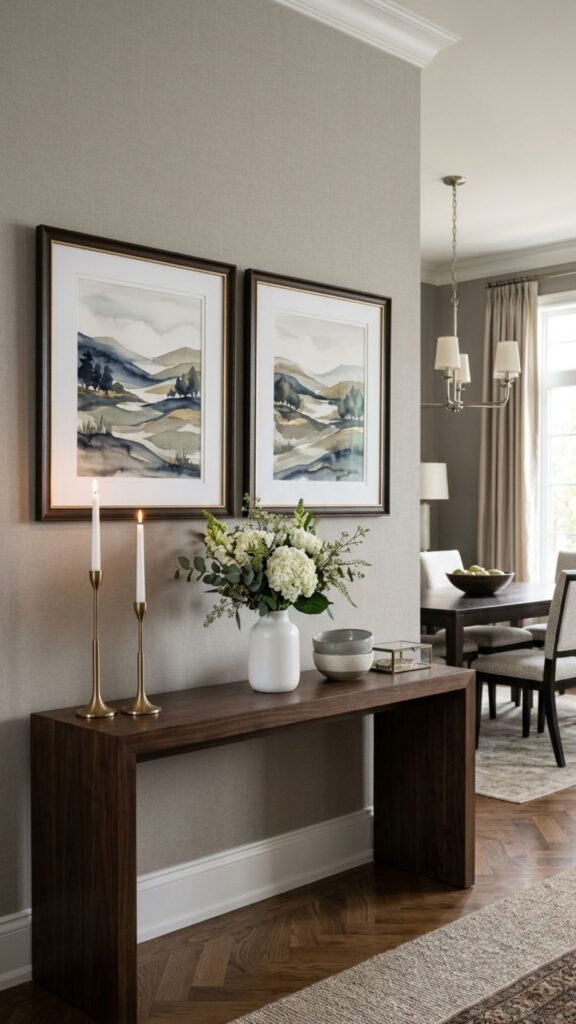
Sometimes, two is better than one. A pair of symmetrical prints, known as a diptych, creates an incredibly balanced and orderly feel. This classic approach works well with modern abstract shapes, color-blocked designs, or split landscape scenes. Symmetry brings a sense of calm and formality to the dining room.
Hang the pair side-by-side, leaving exactly two to three inches between the frames to ensure they read as a single visual unit. The combined width of the two frames should relate to the furniture below them. A common mistake is spacing them too far apart, which causes them to look disconnected and floating aimlessly on the wall.
11. Colorful Pop Art Pieces
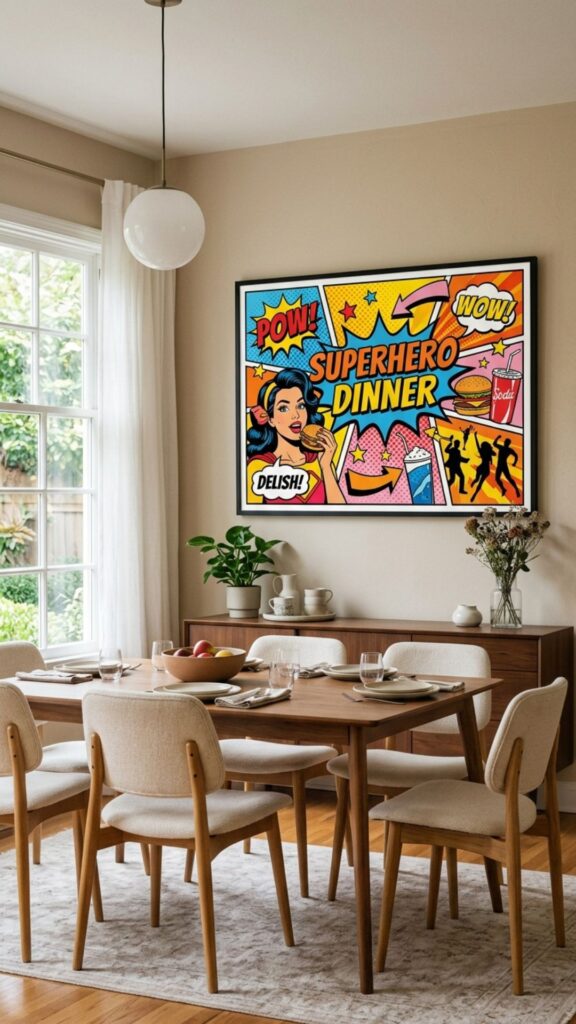
For those who love vibrant, energetic spaces, colorful pop art is the ultimate choice. Bright, graphic prints featuring bold colors and everyday objects inject a sense of fun and playfulness into dinner parties. This style of dining room artwork acts as a fantastic conversation starter and pairs wonderfully with eclectic or ultra-modern decor.
Let the pop art be the star of the room by keeping the surrounding wall color neutral, like a crisp white or soft gray. Choose a simple, unobtrusive frame that does not compete with the artwork’s vivid colors. Avoid overwhelming the space by introducing too many competing bright patterns in your rugs or curtains when using bold pop art.
12. Subtle Watercolor Landscapes
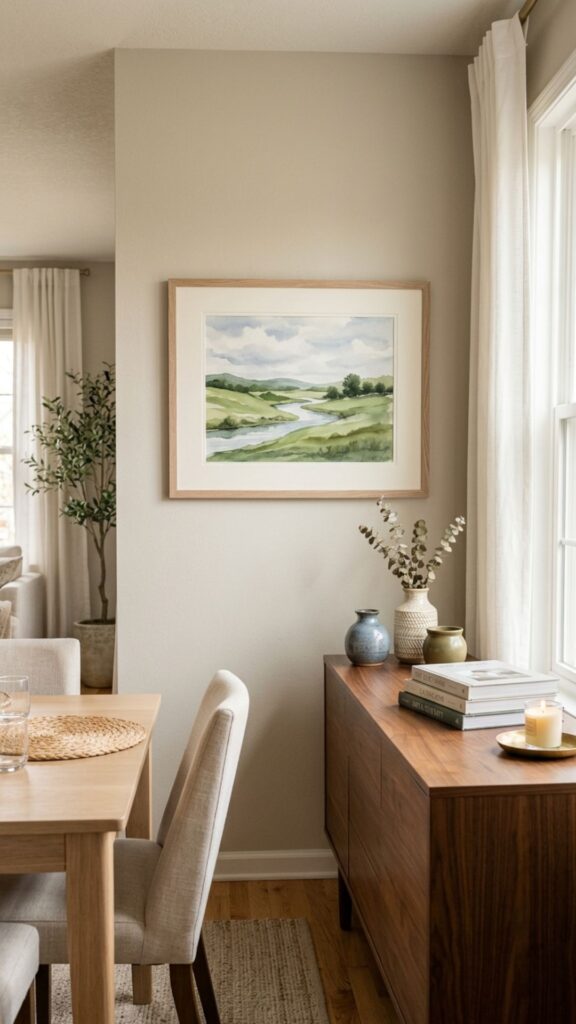
Subtle watercolor landscapes offer a gentle, soothing aesthetic for a relaxed dining environment. The soft blending of colors and dreamy imagery work beautifully in coastal, traditional, or shabby-chic dining rooms. Watercolors introduce color without commanding all the attention, allowing your furniture and lighting to shine.
Frame your watercolor art behind glass with a generous mat to protect the delicate paper and enhance its visual presence. Hang a horizontal watercolor above a low console table to ground the room. Be careful not to place original watercolor pieces in direct, harsh sunlight, as the delicate pigments will fade over time.
13. Floating Acrylic Frames
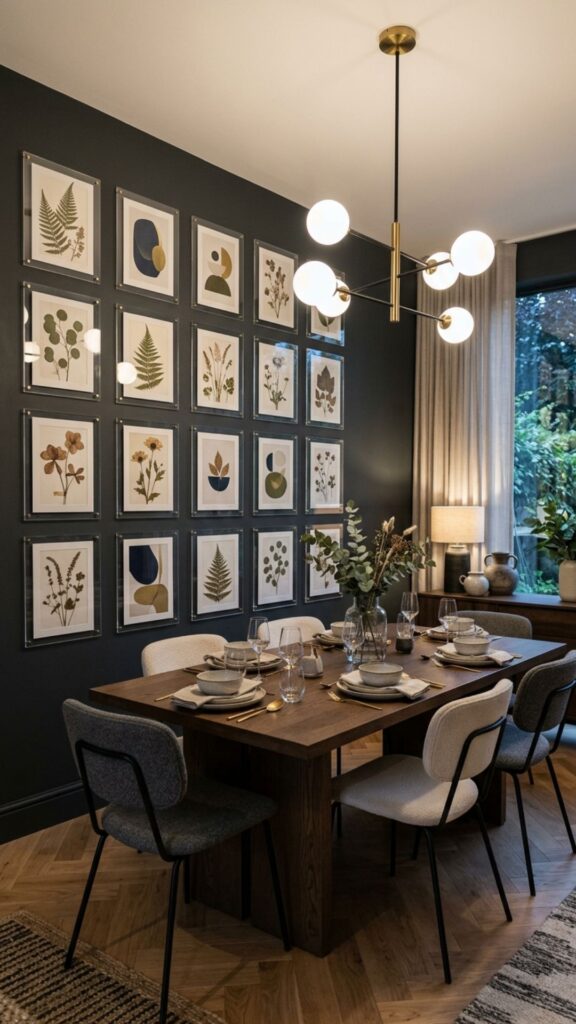
Floating acrylic frames give traditional artwork a highly modern, airy update. These frames consist of two pieces of clear acrylic sandwiching the art, mounted to the wall with sleek metal standoffs. This technique allows the wall color to show through the borders, creating a seamless integration between the art and the room.
Use floating acrylic frames for pressing dried botanicals, displaying vintage menus, or showcasing modern prints. They look especially striking mounted on deep, moody wall colors or textured wallpaper. Make sure to clean the acrylic thoroughly during installation, as trapped dust or fingerprints will be highly visible.
14. Woven Baskets Arrangement
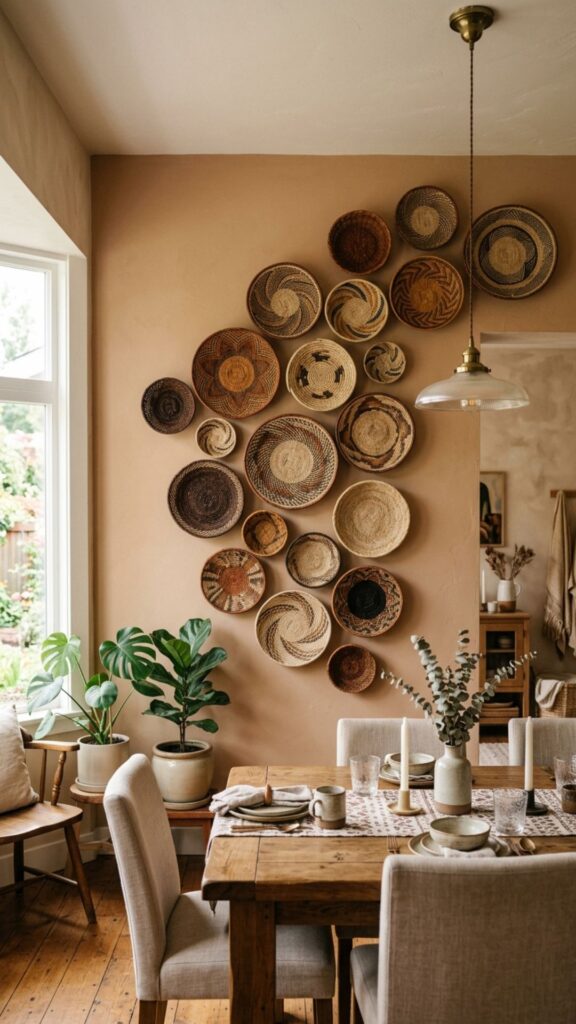
Grouping flat, woven baskets on the wall is an affordable and highly textured way to decorate your dining room. Originating from global design trends, this idea brings warmth, earthy tones, and a handcrafted feel to the space. Baskets come in various sizes, patterns, and natural materials, allowing for endless customization.
Create an organic, asymmetrical arrangement by clustering three, five, or seven baskets together. Overlap their edges slightly to create depth and visual connection. Avoid arranging the baskets in a rigid, straight line, as this defeats the organic, fluid nature of this specific type of dining room artwork.
15. Oversized Round Mirrors (As Art)
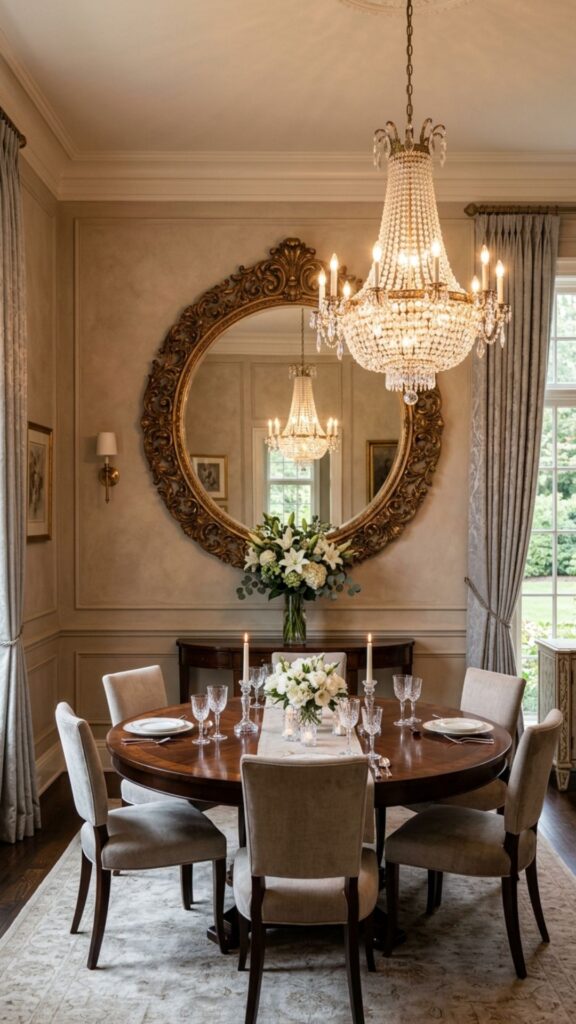
While technically not a painting or print, an oversized round mirror functions beautifully as dining room artwork. A large mirror reflects the light from your chandelier, making the dining room feel brighter and twice as large. The circular shape softens the hard angles of the dining table and chairs.
Choose a mirror with an interesting, artistic frame—such as deep walnut, sleek brass, or a sunburst design—to ensure it acts as a decorative feature. Position the mirror so that it reflects something beautiful, like a window or a stylish light fixture. Do not place a mirror where it will reflect an empty hallway or an unappealing angle of the kitchen.
16. Dark and Moody Still Lifes
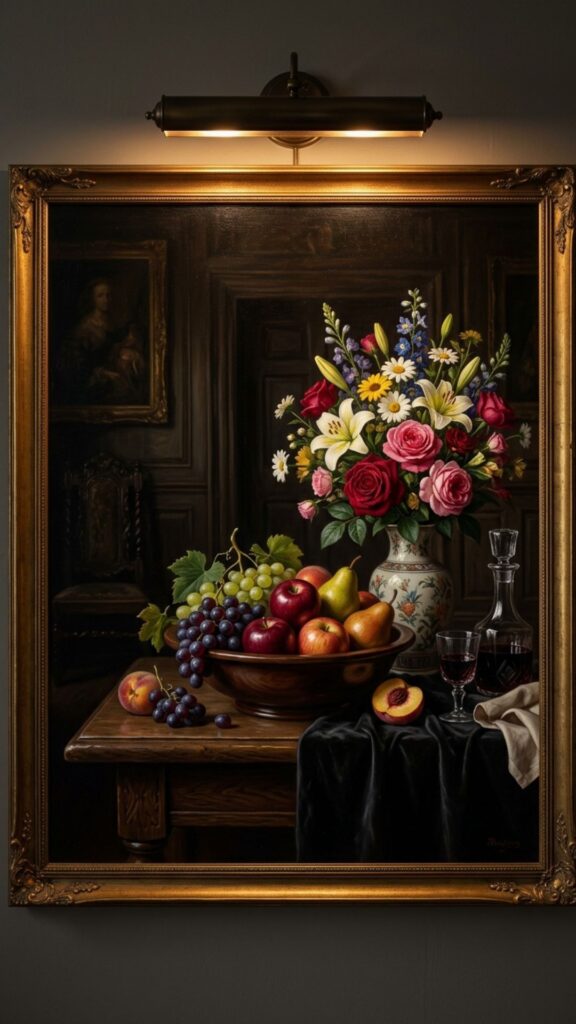
Embrace a dramatic, intimate dining atmosphere with dark and moody still life paintings. Historically popular in dining rooms, modern interpretations feature deep, rich backgrounds with vibrant fruits, flowers, or objects in the foreground. This style of dining room artwork looks incredibly sophisticated in spaces with dark, saturated wall colors.
To make a moody still life stand out, use a picture light mounted above the frame. This highlights the artwork and adds a layer of ambient lighting to your dining room. Avoid placing dark artwork on a brightly lit, stark white wall without any supporting dark elements in the room, as the contrast can feel too jarring.
17. Mid-Century Modern Shapes
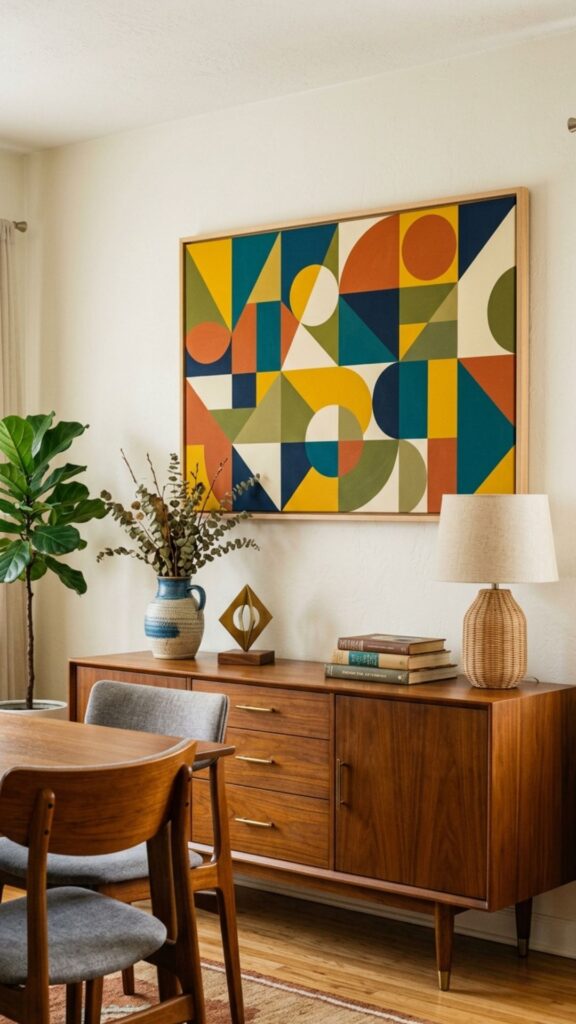
Mid-century modern art often features overlapping geometric shapes, kidney bean motifs, and a distinct retro color palette of mustards, teals, and oranges. This artwork style injects immediate character into a plain dining room and pairs flawlessly with tapered-leg furniture and wooden sideboards.
To style mid-century pieces, look for wooden frames that match the finish of your dining table. Hang a large horizontal piece directly above the seating area. Avoid cluttering the wall with too many small mid-century prints; a few substantial pieces capture this era’s bold aesthetic much better.
18. Tapestry or Fabric Art
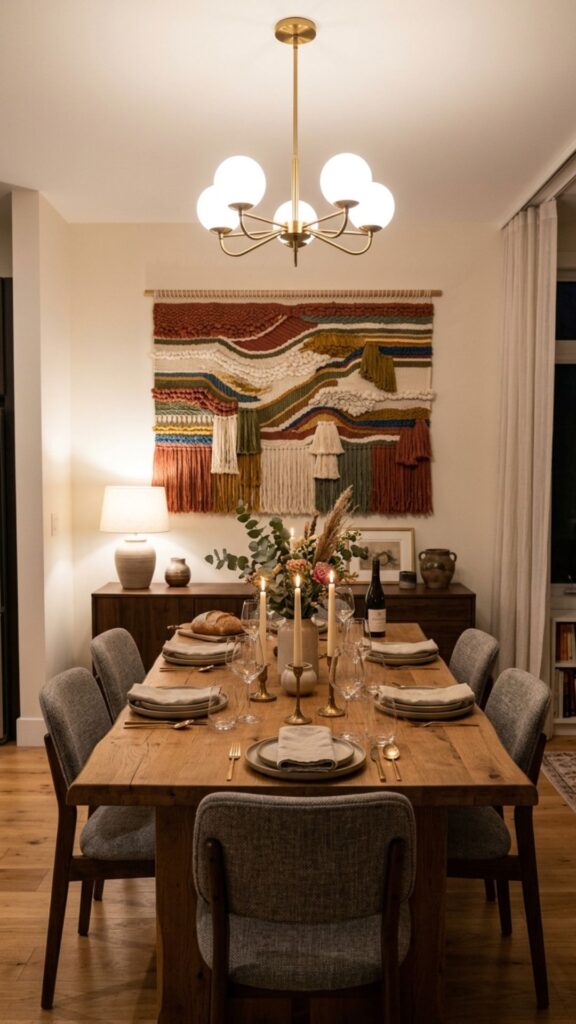
Large-scale tapestries and framed fabric art add incredible softness and acoustic dampening to a dining room. Echoing spaces naturally benefit from fabric wall hangings, which absorb sound and make dinner conversations much clearer. You can frame a beautiful piece of vintage textile or hang a modern, printed tapestry from a decorative rod.
If framing a textile, use a shadow box frame to accommodate the thickness of the fabric and add a museum-quality feel. Hang the tapestry slightly lower than you might hang a traditional painting to anchor the room. Be cautious of hanging fabric art in a dining room that gets a lot of grease or smoke from an adjacent open kitchen.
19. Black and White Architecture Prints
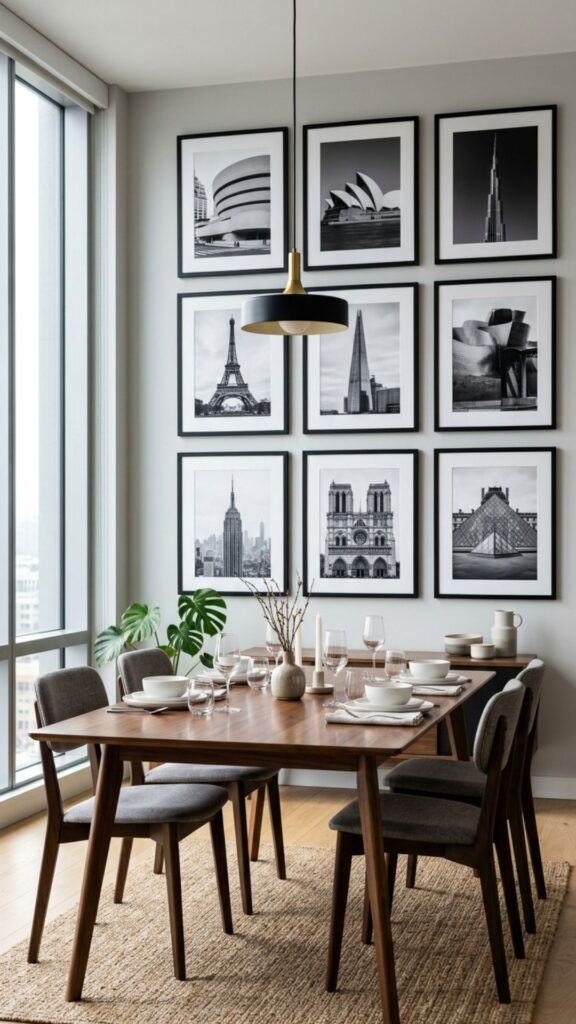
Black and white architectural photography offers a crisp, tailored, and highly intellectual vibe for a dining space. Images of sweeping bridges, intricate building facades, or grand staircases add a sense of structure and scale. Because they lack color, they blend seamlessly into any existing color palette.
Create a massive statement wall by hanging a large grid of architectural prints in matching black frames. This works incredibly well in industrial or modern-minimalist homes. Avoid choosing prints with poor resolution; architectural art relies heavily on sharp, crisp lines to make a visual impact.
20. Mixed Media Canvas
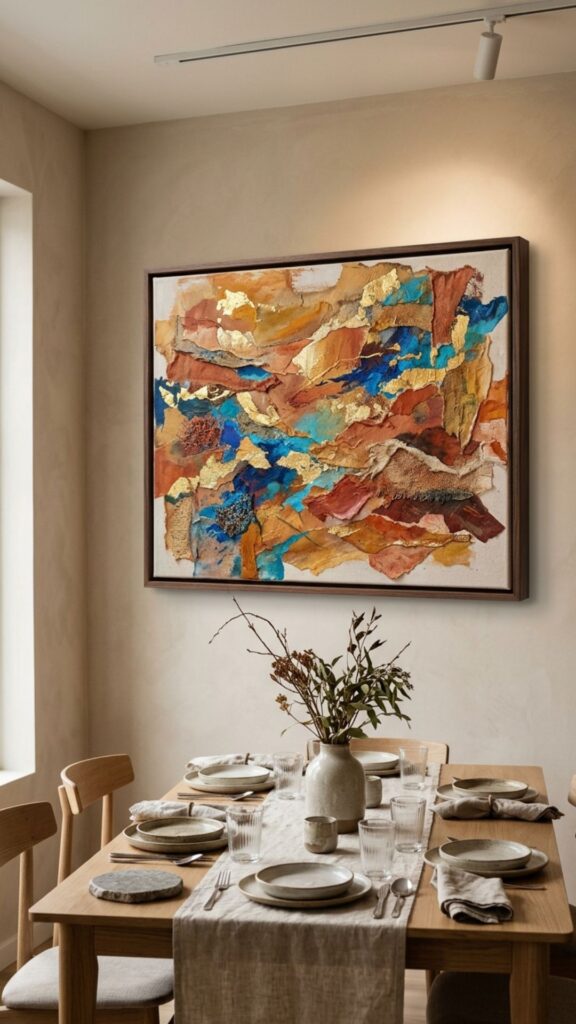
Mixed media art combines different materials—such as paint, paper, metal leaf, and fabric—onto a single canvas. These pieces are highly textural and invite viewers to step closer to admire the details. A mixed media canvas provides a unique, custom feel that mass-produced prints simply cannot match.
When displaying mixed media dining room artwork, skip the glass and opt for an open floater frame so the texture remains visible. Use angled ceiling spots to cast light across the canvas, highlighting the varied materials. Never hang mixed media art in direct sunlight or highly humid areas, as the different materials may warp or fade at different rates.
Conclusion
Choosing the right dining room artwork is one of the easiest and most effective ways to elevate your home’s interior. From the dramatic impact of oversized abstract canvases to the subtle charm of vintage botanicals, the art you select dictates the energy of your space. Remember to keep scale, placement, and lighting in mind to ensure your pieces look intentional and balanced. Ready to transform your space? Start exploring pieces that speak to your personal style and create a dining room you’ll love showing off at your next dinner party!
What is the best height to hang dining room artwork?
The center of your dining room artwork should generally sit about 57 to 60 inches from the floor, which is standard eye level. However, if you are hanging art over a buffet or console table, leave 6 to 8 inches of space between the bottom of the frame and the top of the furniture.
Should dining room artwork match the decor?
Your dining room artwork does not need to match your decor perfectly, but it should coordinate. Pull one or two subtle colors from your rug, curtains, or upholstery and find artwork that features those same tones to create a cohesive, intentional look.
How big should art be over a dining table?
If you are placing art on the wall closest to your dining table, the artwork (or the total grouping of art) should span about two-thirds to three-quarters the length of the table or the nearby furniture. This ensures the art feels proportional to the space.
Is it okay to mix different frame styles on one wall?
Yes, mixing frame styles is a great way to create a curated, eclectic gallery wall. To keep the look intentional rather than messy, try to unify the arrangement by sticking to a consistent color palette in the artwork or keeping the spacing uniform between the frames.