A dining room accent wall serves as the visual anchor of your gathering space. It draws the eye, sets the mood for your meals, and defines the room’s overarching style.
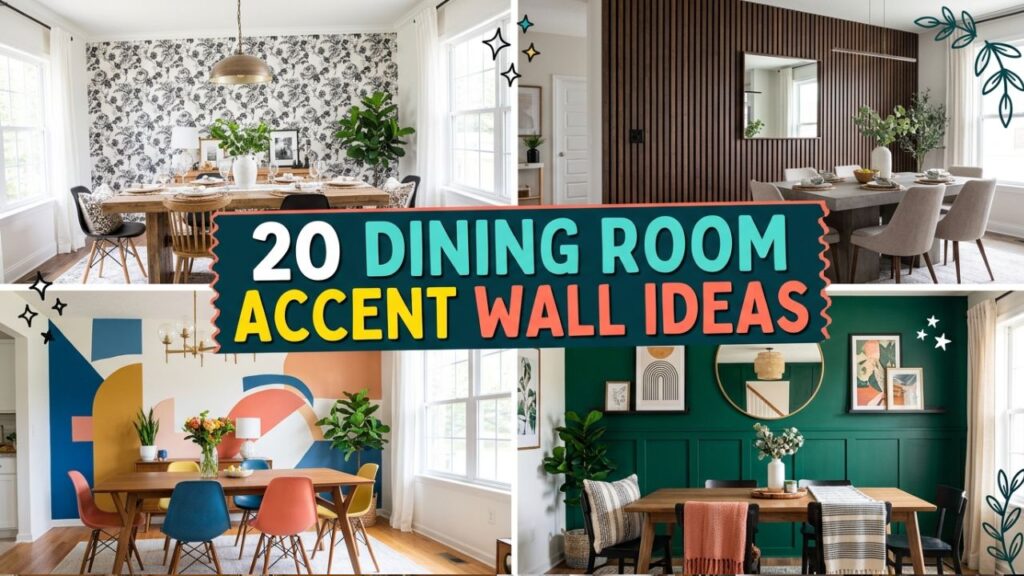
The best dining room accent walls combine color, texture, and smart design to complement your dining table and lighting without overwhelming the senses.
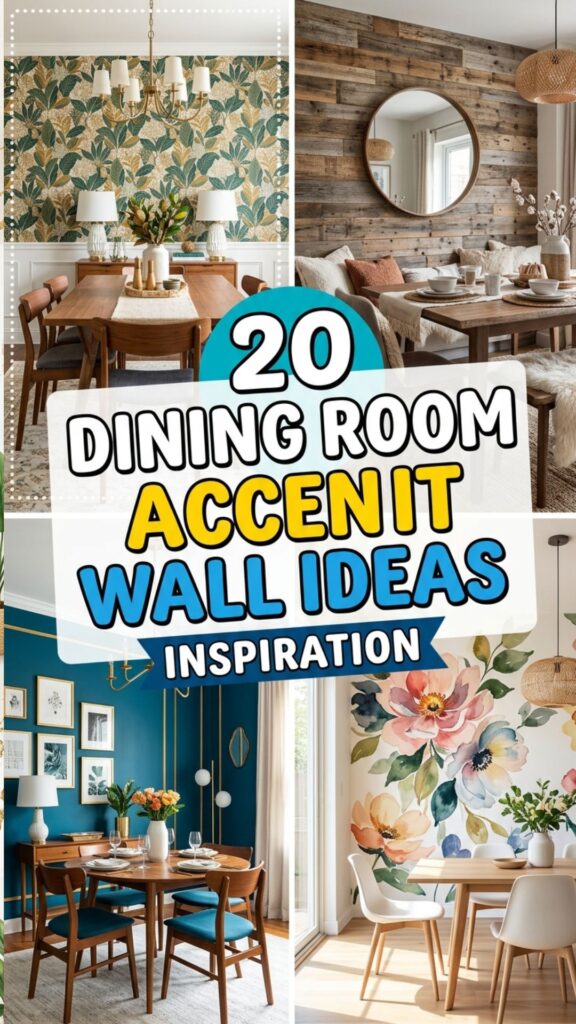
We will show you exactly how to upgrade your dining space, no matter your budget or room size. You will learn how different materials, colors, and treatments can solve common design problems like lack of depth or poor lighting. From classic panel molding to modern wood slats, here are 20 inspiring ideas to help you create a stunning focal point.
1. Bold Dark Paint
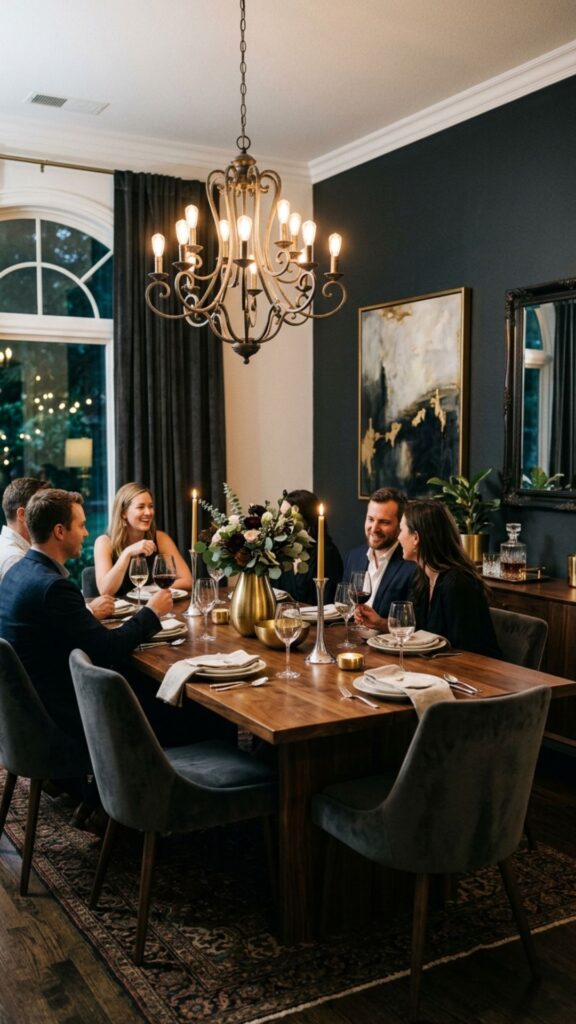
Dark colors like charcoal, navy, or emerald green instantly add drama and intimacy to your dining area. A dark dining room accent wall creates a striking backdrop that makes your lighting fixtures and table centerpieces pop. This approach works exceptionally well in rooms with plenty of natural light or statement chandeliers, as the deep tones absorb light and create a cozy atmosphere.
When working with dark paint, use an eggshell or matte finish to avoid harsh glares. If you have a small space, a dark wall pushes the visual boundary back, making the room feel larger than it is. Pair this look with a warm wood dining table and metallic accents to balance the moody vibe with inviting warmth.
2. Classic Panel Molding
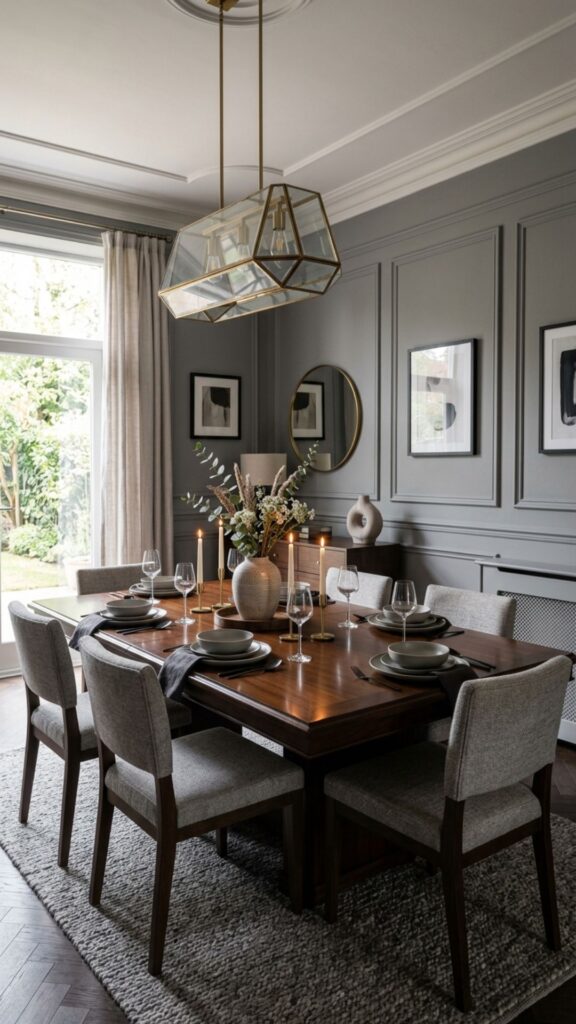
Panel molding brings architectural interest to plain drywall, giving your dining space a custom, high-end look without a massive budget. Picture frame molding or wainscoting adds subtle texture and traditional elegance. This design works perfectly behind rectangular dining tables, as the geometric boxes of the molding echo the table’s shape.
Maintaining a panel-molded wall is simple, requiring only occasional dusting. To keep the look modern, paint the molding and the wall the exact same color. This monochromatic approach hides minor imperfections and makes the wall feel cohesive while still providing essential depth and shadow.
3. Modern Wood Slats
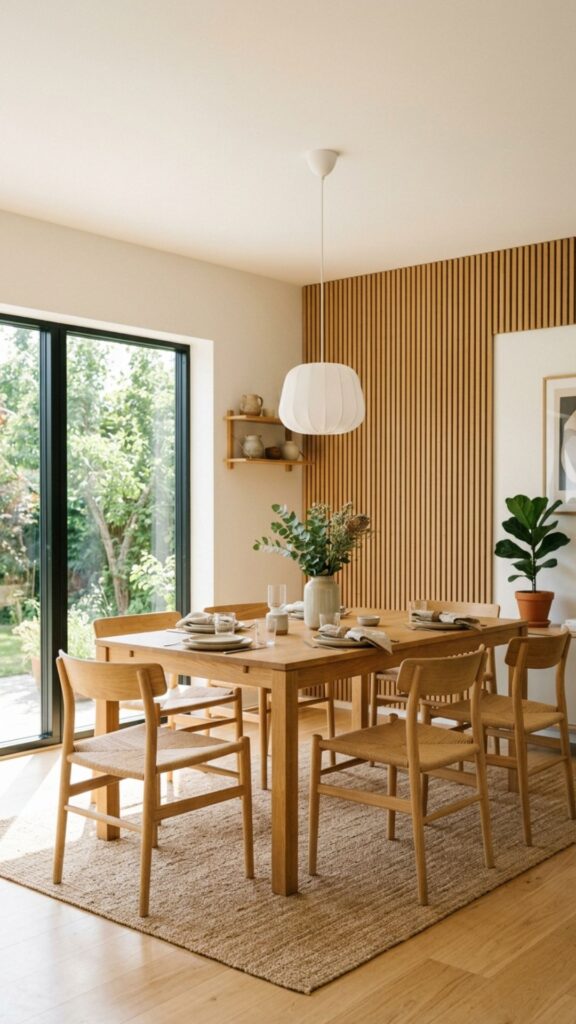
Vertical wood slats offer a contemporary, Scandinavian-inspired look while providing excellent acoustics. A wood slat dining room accent wall absorbs sound, which is highly practical in dining rooms where conversations and clinking glasses can cause echoes. The vertical lines also draw the eye upward, making low ceilings feel taller.
You can buy pre-made wood slat panels to keep installation costs low. Match the wood tone of the slats to either your dining table or your flooring for a unified look. If your room lacks natural light, opt for lighter woods like ash or white oak to keep the space feeling bright and open.
4. Dramatic Floral Wallpaper
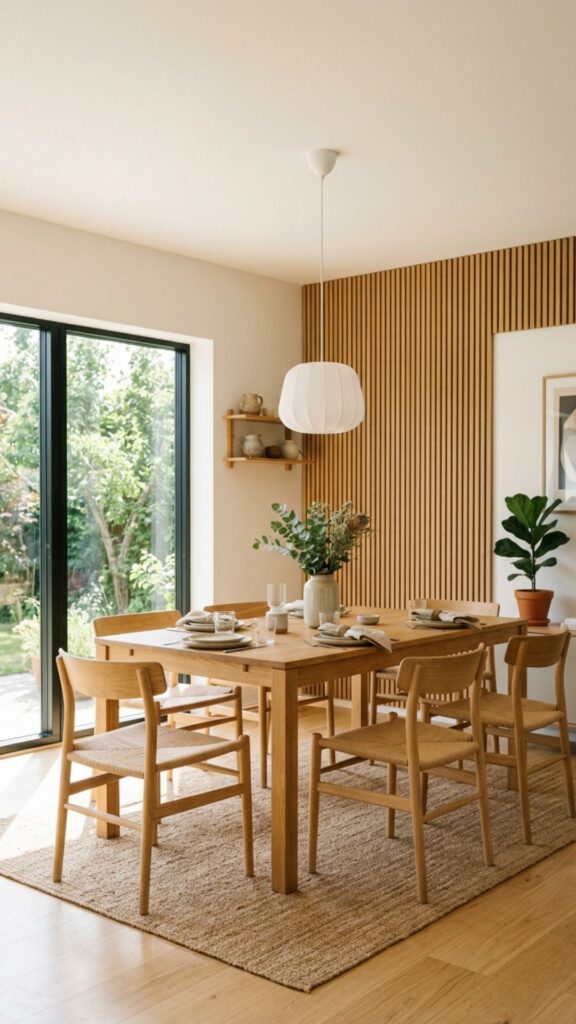
Wallpaper has made a massive comeback, and oversized floral patterns are perfect for a dining room. A bold wallpaper acts as large-scale art, setting a specific mood ranging from vintage romance to moody maximalism. This works exceptionally well on the wall directly behind your head table setting.
To avoid visual clutter, keep the rest of your dining room decor relatively simple. Choose a wallpaper that incorporates the color of your adjacent walls to tie the room together. Wipeable vinyl wallpapers are best for dining spaces, as they easily resist food splashes and scuffs from moving chairs.
5. Natural Stone Veneer
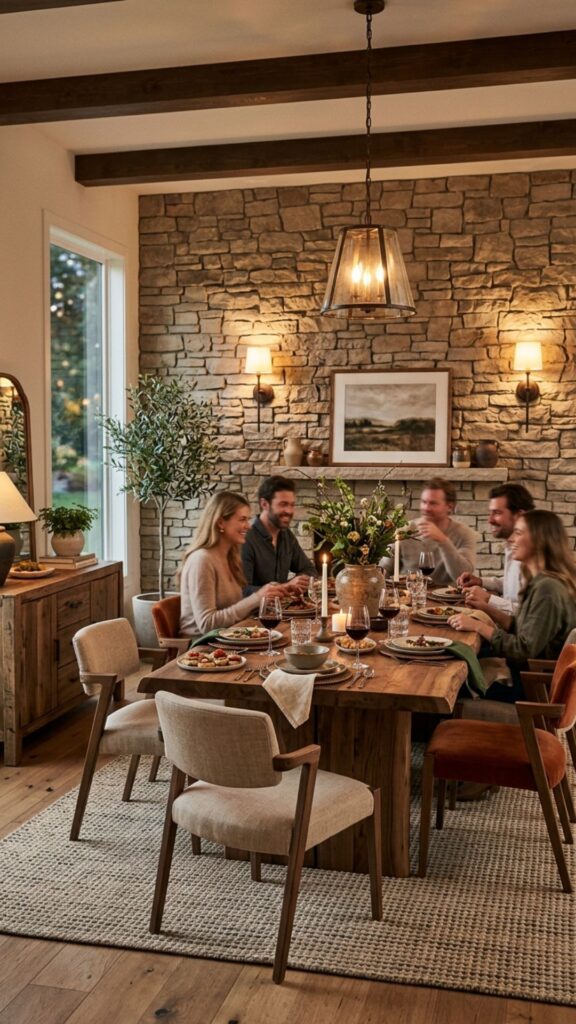
A stone dining room accent wall brings rugged, earthy texture indoors. Whether you choose sleek slate or rustic stacked stone, this material adds undeniable architectural weight to the room. It is highly durable and serves as an excellent backdrop for mid-century modern or rustic industrial dining furniture.
Real stone can be heavy and expensive, so consider manufactured stone veneer as a budget-friendly, lightweight alternative. Highlight the rough texture by installing wall sconces or recessed ceiling lights that wash down the wall. This grazing light effect casts beautiful shadows and emphasizes the natural variations in the stone.
6. Immersive Wall Murals
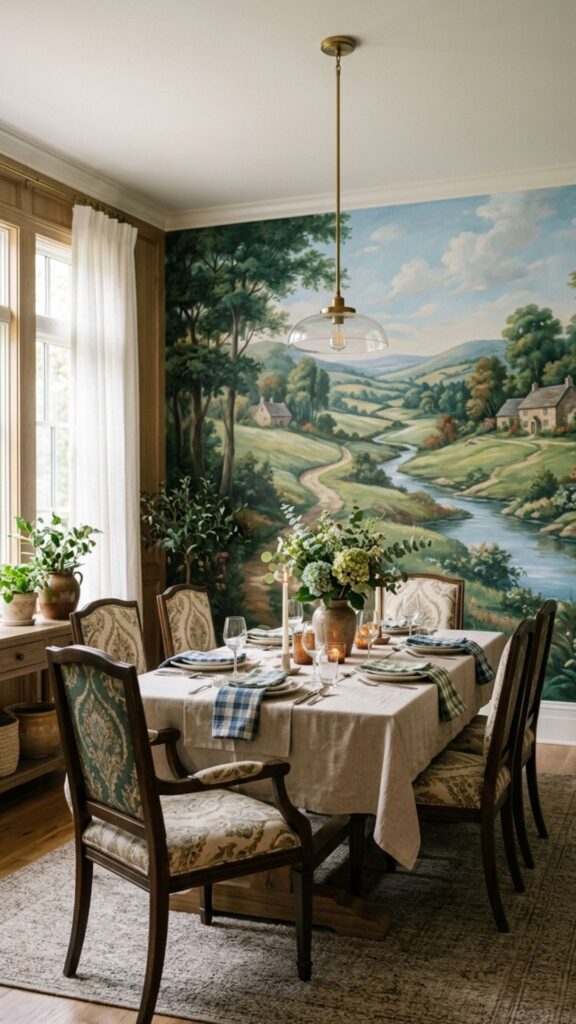
For a truly custom look, a full-wall mural transports your dining room to another place. Landscape scenes, abstract watercolor designs, or vintage map prints create an instant conversation starter for your dinner guests. Murals work best on uninterrupted walls without windows or large doors breaking up the image.
When styling around a mural, pull one or two subtle colors from the artwork to use in your dining chairs or table linens. Make sure to measure your wall carefully before ordering a peel-and-stick mural to ensure the scale of the image fits your space. This approach is highly impactful and surprisingly renter-friendly.
7. Warm Two-Tone Treatments
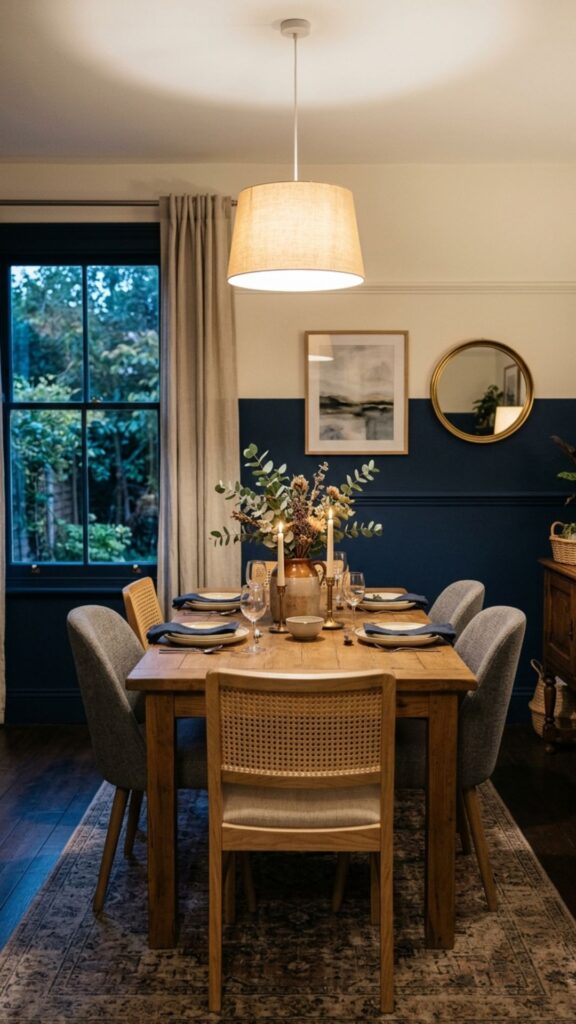
A two-tone wall splits your space horizontally, usually with paint, wallpaper, or molding. This technique grounds the room and allows you to use a bold color on the bottom half while keeping the top half light and airy. It is an excellent trick for dining rooms with high ceilings, as it brings the visual scale down to a more intimate human level.
Typically, the split happens at chair rail height, which naturally protects the wall from dining chairs bumping against it. For a modern twist, try placing the dividing line much higher, around two-thirds up the wall. Pair a dark, moody shade on the bottom with a crisp white or soft cream on top for maximum contrast.
8. Curated Gallery Walls
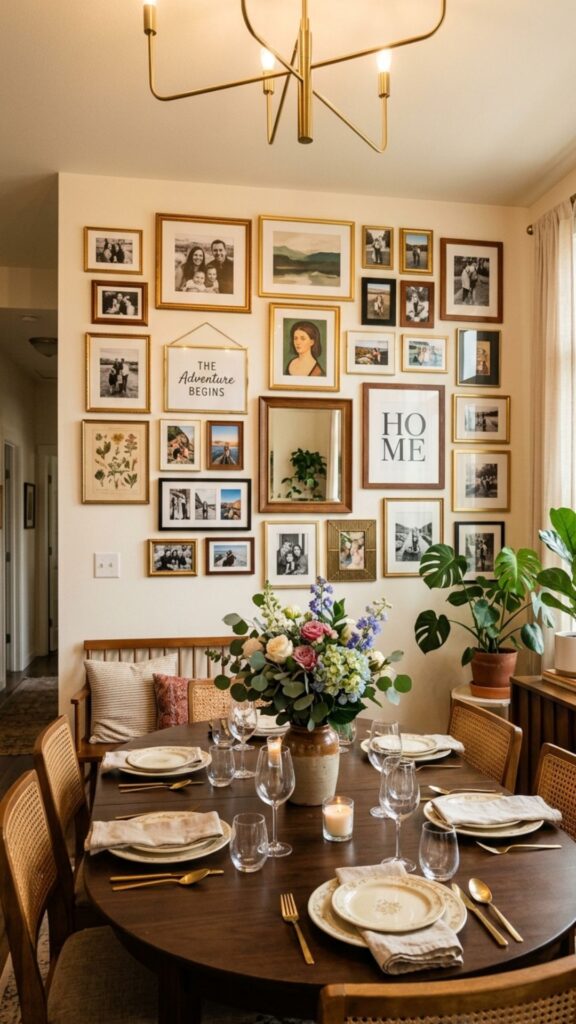
If you love collecting art, a gallery wall allows you to display your personality. Grouping photographs, paintings, and prints turns a blank dining room accent wall into a dynamic focal point. This is an highly flexible option, as you can easily swap out pieces as your tastes change or your budget grows.
To keep the gallery from looking chaotic, unify the collection with a common element. You might use identical frames in different sizes, or stick to a specific color palette across all the artwork. Before hanging anything, lay your arrangement out on the floor to find the perfect balance of sizes and shapes.
9. Textured Plaster Finishes
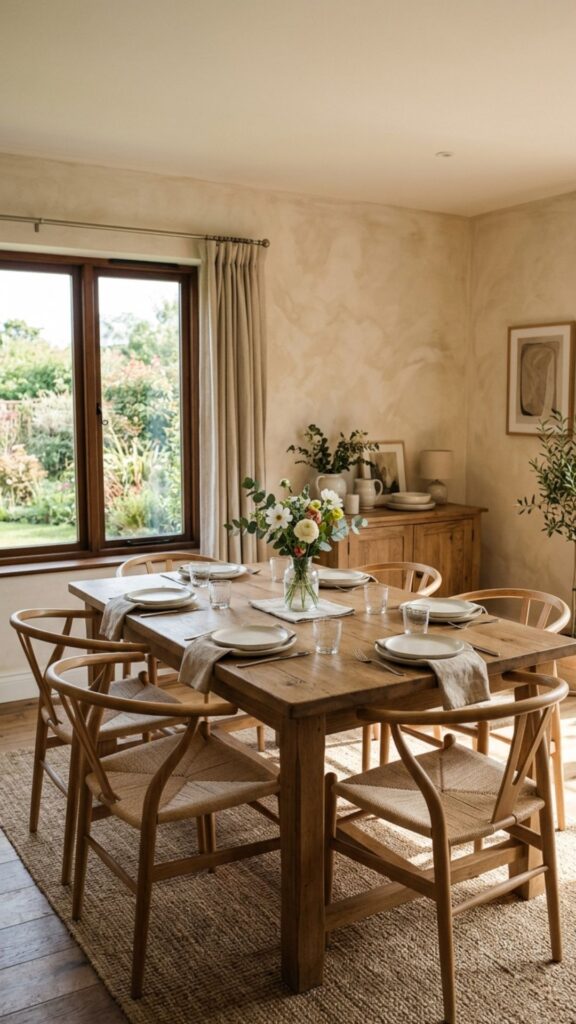
Limewash, Roman clay, and Venetian plaster bring a soft, cloudy texture to your dining room. These finishes create a sense of movement and old-world charm that flat paint simply cannot achieve. A plaster dining room accent wall catches the light beautifully throughout the day, adding warmth and sophistication.
Applying textured plaster requires a bit of technique, but many modern products are designed for DIY application. Because the texture is subtle, it pairs beautifully with both minimalist and traditional decor. Choose earthy tones like terracotta, sage, or warm beige to maximize the organic feel of the finish.
10. Built-in Open Shelving
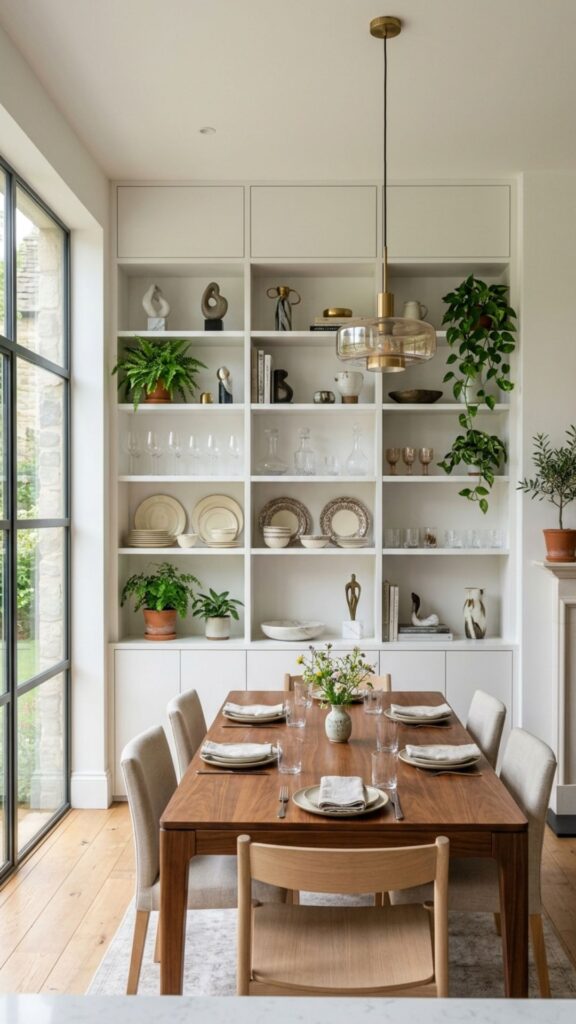
Open shelving combines aesthetics with practicality, giving you a place to display fine china, glassware, and plants. A wall of built-in shelves adds incredible depth and makes your dining room feel like a customized, high-end space. It is particularly useful in smaller homes where dining storage is limited.
Paint the shelves the same color as the wall behind them to create a seamless, built-in look. Be mindful not to overcrowd the shelves, which can make the room feel messy. Use the “rule of three” when styling objects, grouping items of varying heights to create balanced, visually pleasing displays.
11. Oversized Floor Mirrors
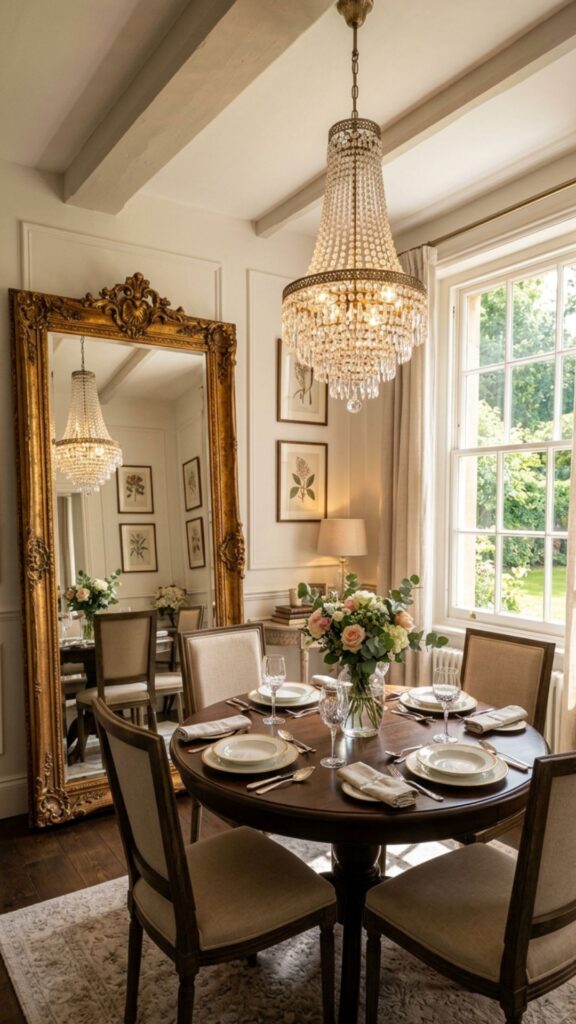
Placing a massive floor mirror against one wall is a brilliant way to transform a cramped dining area. The mirror acts as an accent piece while instantly doubling the perceived size of the room. It also bounces light around the space, making it an ideal solution for dining rooms with small windows.
Secure heavy floor mirrors to the wall to prevent accidents, especially if you have children or pets. Position the mirror so it reflects something beautiful, like a statement chandelier or a window with a nice view, rather than a messy kitchen counter. A thick, ornate frame adds an extra layer of style to the space.
12. Metallic Leaf Accents
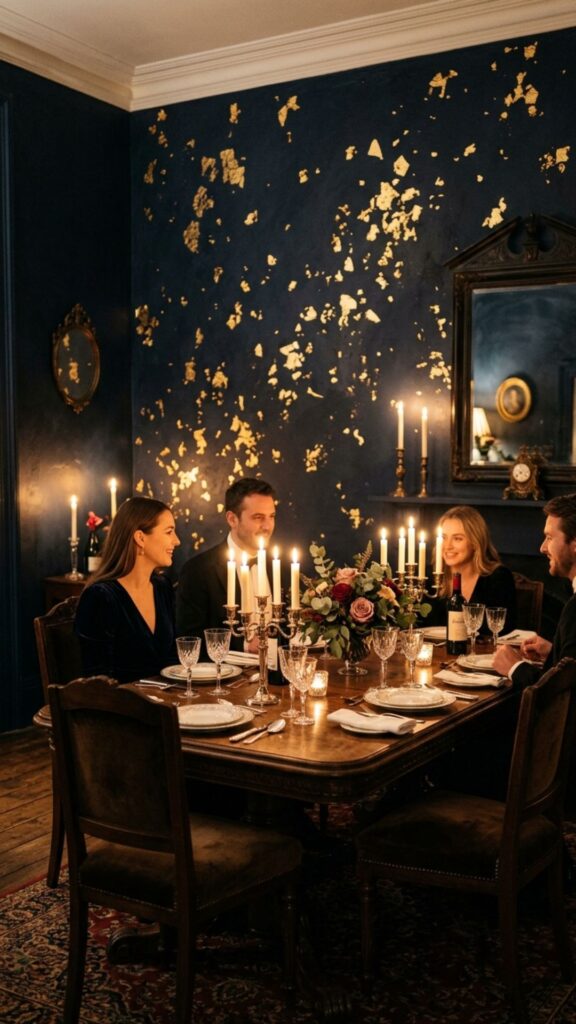
For a touch of pure glamour, consider adding metallic gold, silver, or copper leaf to your accent wall. You can apply it in geometric patterns or random, organic flakes over a dark base color. The metallic finish reflects candlelight beautifully, creating a magical atmosphere during evening dinner parties.
Because metallic leaf makes such a loud statement, use it sparingly. A solid metallic wall can easily overpower a room, so consider a distressed finish where the background color peeks through. Keep your dining table and chairs understated to let the wall remain the star of the show.
13. Shiplap for Farmhouse Charm
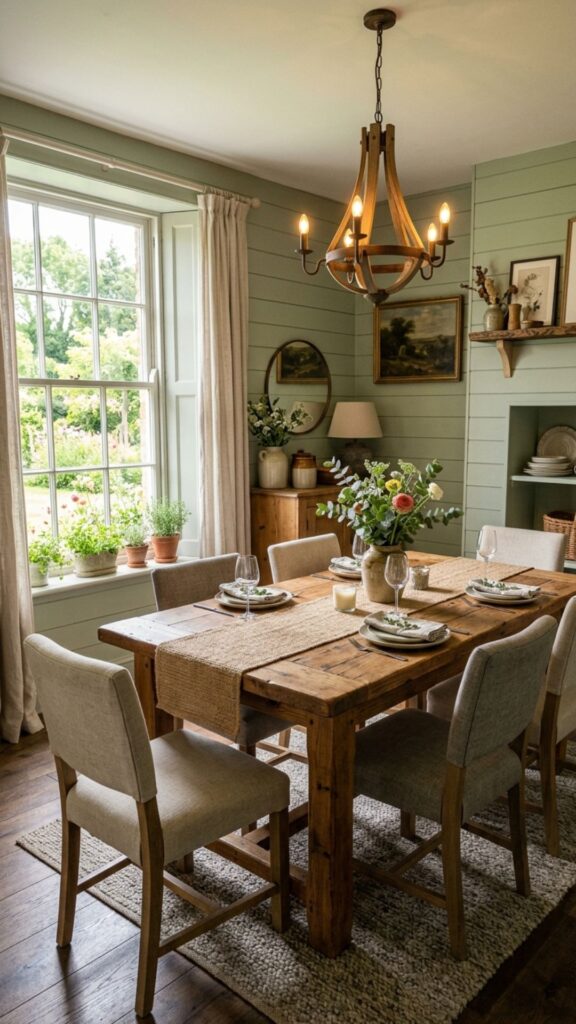
Horizontal wood boards, commonly known as shiplap, bring relaxed, rustic charm to a dining space. A shiplap dining room accent wall adds subtle horizontal lines that can make a narrow dining room feel wider. It is an enduring favorite for modern farmhouse, coastal, and cottage interior styles.
While white shiplap is classic, painting the boards in a soft sage green or slate blue offers a fresh, modern update. Dusting the grooves requires a bit of maintenance, but the durable wood surface holds up well to daily wear and tear. Pair it with a chunky farmhouse table and linen upholstery for a complete look.
14. Exposed Brick Charm
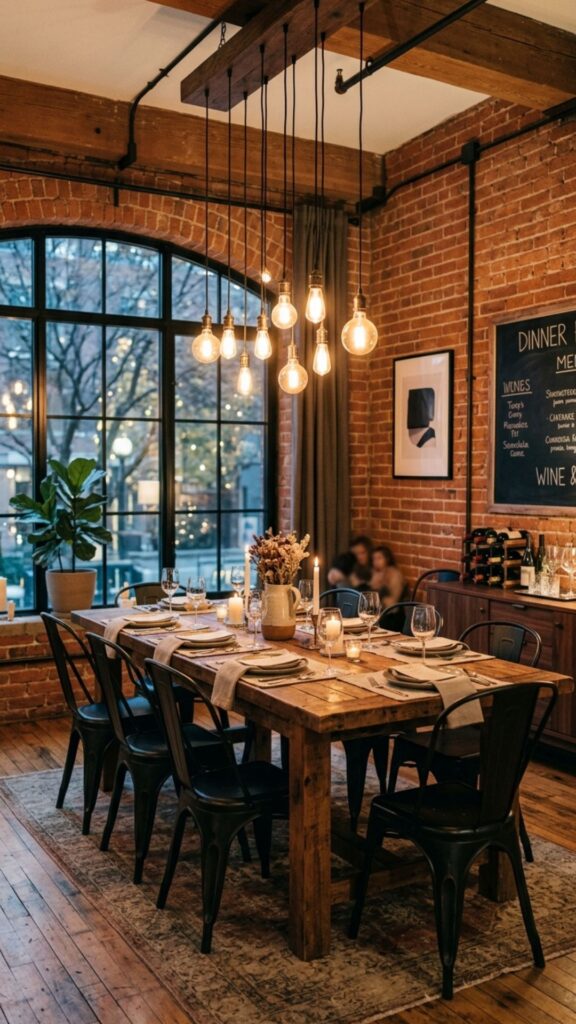
An exposed brick wall brings warmth, history, and industrial edge to your dining area. The rough texture and varied colors of the bricks create an inviting, relaxed backdrop for family meals. If you do not have original brick hiding behind your drywall, thin brick veneers offer the exact same look with a much easier installation.
Sealing the brick is essential to prevent dust from crumbling onto your dining floor. If the red brick feels too dark or heavy for your space, a light “German smear” mortar technique or a coat of white paint softens the look. Brick pairs beautifully with metal dining chairs and warm Edison-bulb lighting.
15. Chalkboard Paint Practicality
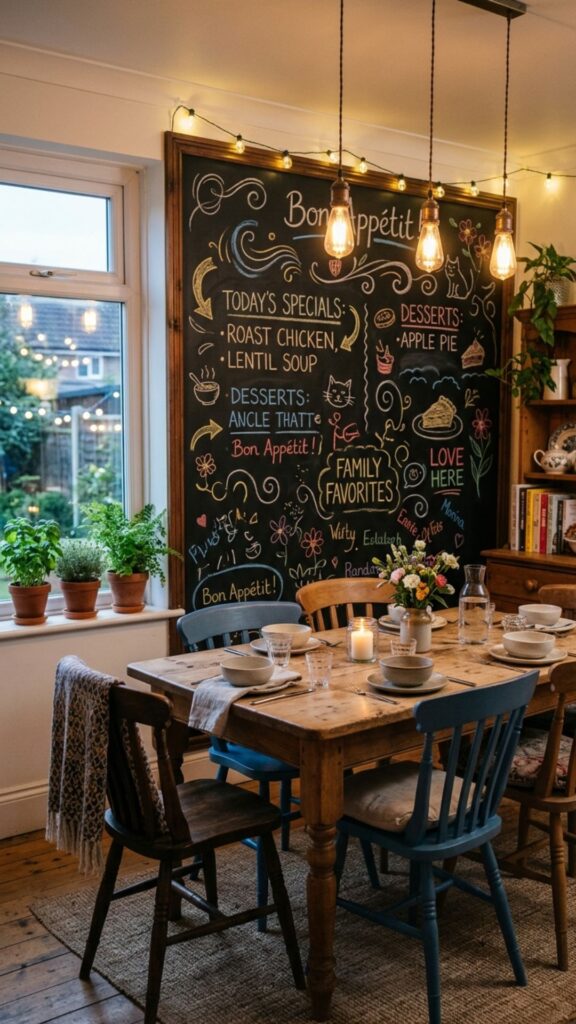
Chalkboard paint transforms a standard wall into an interactive canvas. This is a remarkably fun and functional accent wall for families with young children or those who host casual gatherings. You can write dinner menus, welcome messages, or let guests draw their own artwork.
Chalkboard walls require frequent wiping down with a damp cloth to prevent a messy, chalk-dust buildup. Because the paint is inherently matte black, it absorbs a lot of light, so ensure the room has adequate overhead and task lighting. Frame the chalkboard area with wood trim for a more finished, intentional appearance.
16. Painted Arch Designs
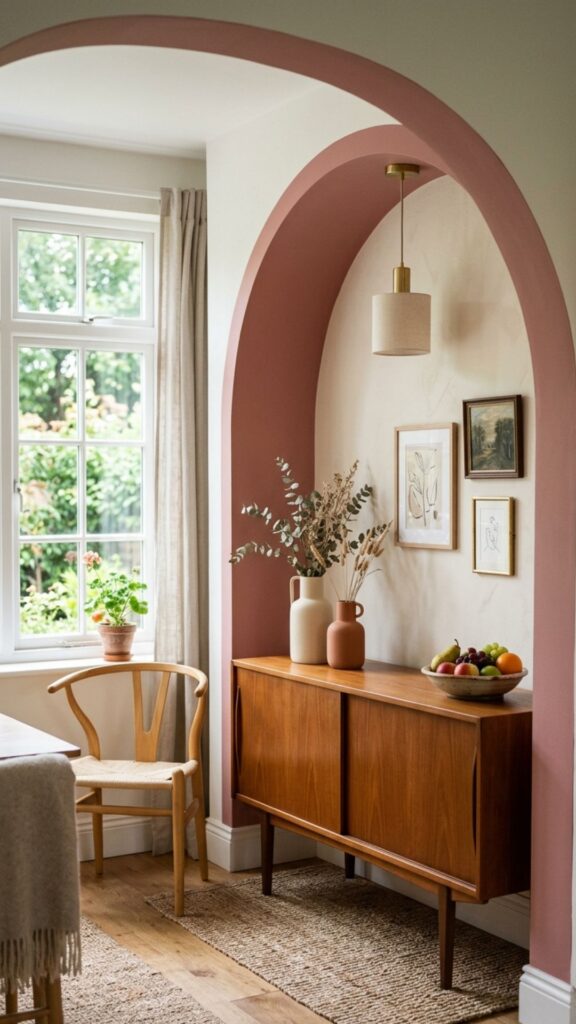
A painted arch is a highly affordable, trendy way to highlight a specific area of your dining room. Painting a large, solid-color arch on the wall directly behind a buffet table or bar cart creates a designated zone within a larger open-concept space. It adds soft, organic curves to a room typically filled with the hard, straight lines of tables and cabinets.
Drafting the perfect arch is easy using a piece of string and a pencil. Choose a color that contrasts nicely with your primary wall color, like a dusty rose against a warm white. This design trick requires only a quart of paint and an hour of your time, making it the most budget-friendly idea on this list.
17. Board and Batten Depth
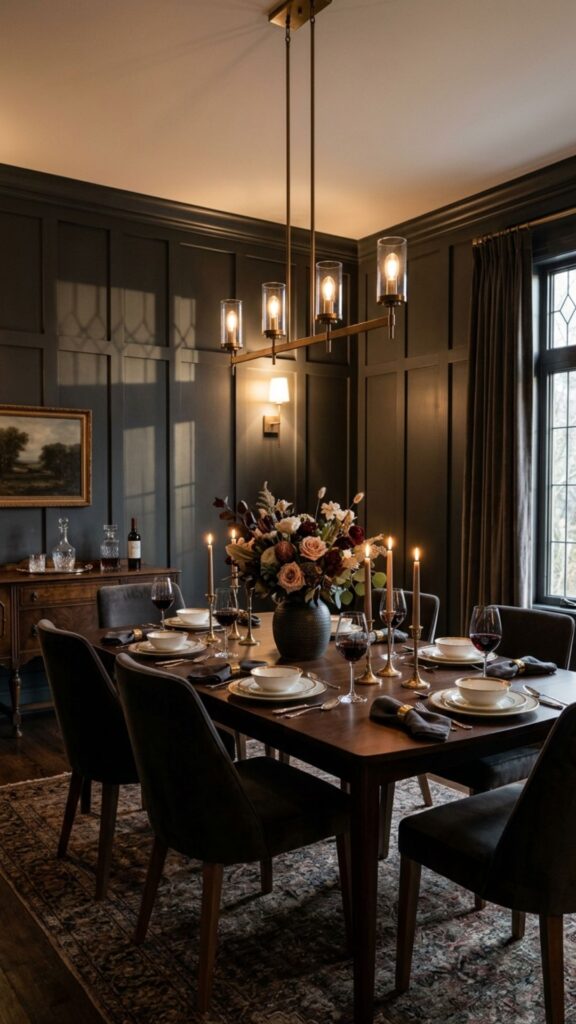
Board and batten features a pattern of vertical and horizontal wooden strips that create large rectangular grids. This wall treatment adds immediate architectural elegance and structure to a plain dining room. It works well at full height or installed halfway up the wall, depending on your ceiling height.
Use a semi-gloss paint finish on the board and batten to make it easy to wipe down. This treatment solves the problem of boring, flat walls by introducing bold shadows that shift throughout the day. It provides a highly tailored backdrop that looks fantastic behind both round and rectangular dining tables.
18. Geometric Paint Patterns
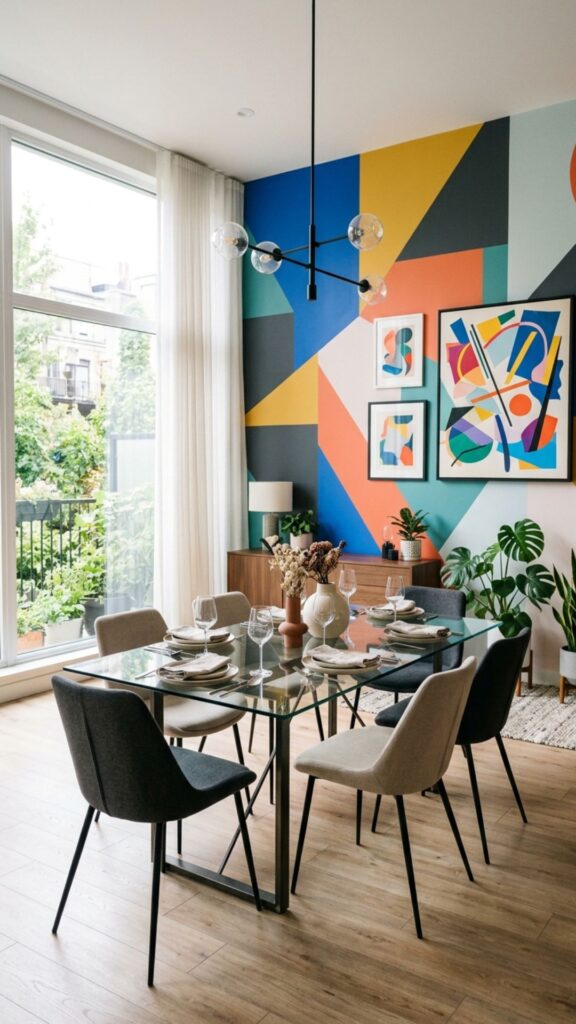
Using painter’s tape to create crisp, geometric color-blocked patterns results in a vibrant, modern accent wall. Triangles, diagonals, or asymmetrical shapes add incredible energy and contemporary flair to your dining space. This is a fantastic weekend DIY project that allows you to incorporate multiple colors from your home’s palette.
When planning your geometric design, sketch it out on paper first to balance the proportions. Stick to three or four colors maximum to avoid making the wall look too chaotic. This energetic style pairs best with sleek, minimalist dining furniture that won’t compete with the busy wall pattern.
19. Fabric or Upholstered Panels
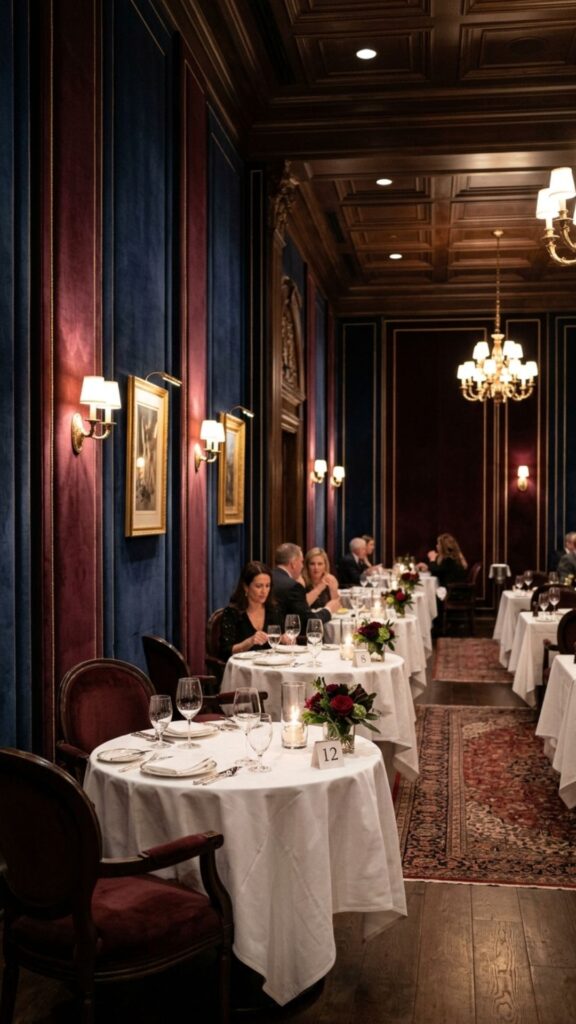
Upholstered wall panels bring supreme luxury and comfort to a dining room. Padded fabric panels absorb sound remarkably well, creating a quiet, intimate dining experience resembling a high-end restaurant. They look incredibly sophisticated behind a dining bench or banquette seating arrangement.
Select performance fabrics like treated velvet or faux leather that easily wipe clean, as dining rooms are prone to spills. You can choose tall vertical panels for a modern look or classic tufted designs for traditional elegance. Upholstered walls immediately soften the room, contrasting beautifully with hard wood floors and glass tables.
20. Ceiling-Extended Accent Colors
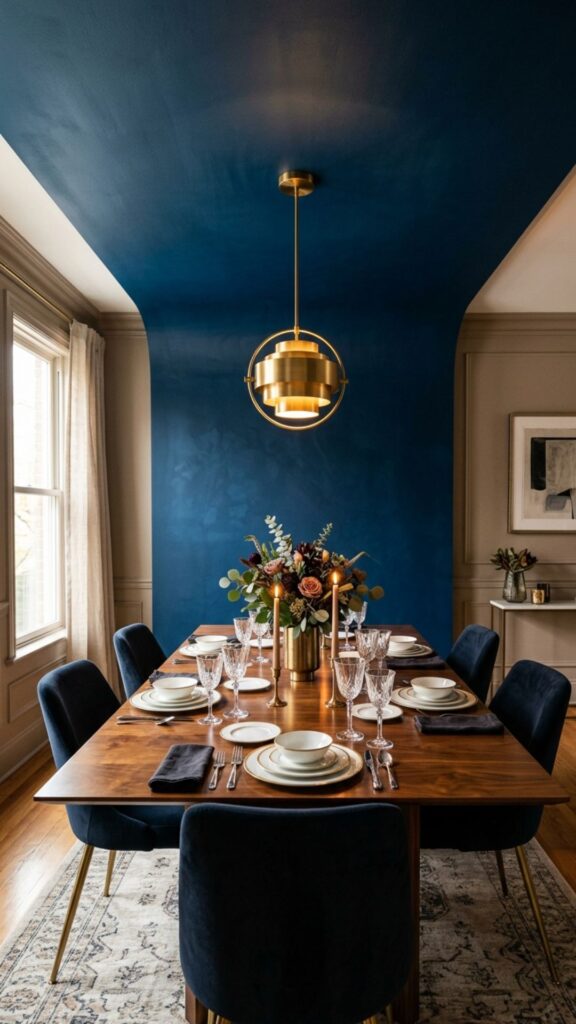
Instead of stopping at the top edge of the wall, carry your accent paint or wallpaper up onto the ceiling. This creates a cozy, canopy effect that visually defines the dining zone in large, open-concept homes. A ceiling-extended accent wall draws the eye up and makes a dramatic statement above your dining table.
This technique is highly effective when defining a dining area that shares space with a living room or kitchen. Use a lighter shade of the wall color on the ceiling to keep the room feeling tall, or use the exact same dark color for a moody, jewel-box effect.
Conclusion
Your dining room should be a place where friends and family want to linger long after the meal is over. A well-designed dining room accent wall transforms a basic eating area into a captivating space that reflects your personal style. Whether you choose the architectural elegance of panel molding, the cozy texture of wood slats, or a weekend paint project, you have the power to elevate your home. Review your budget, consider your room’s lighting, and pick one of these 20 ideas to start planning your dining room transformation today.
What makes a good dining room accent wall?
A good dining room accent wall provides a strong visual focal point without overwhelming the space. It typically features contrasting paint, textured materials like wood or stone, or bold wallpaper. The best accent walls complement your dining table’s shape and improve the room’s overall proportions and lighting.
Which wall should be the accent wall in a dining room?
Choose the first wall you see when entering the room, or the solid wall behind the head of the dining table. Avoid walls with large windows or doors, as these architectural features break up the design and compete for attention.
What colors work best for a dining room accent wall?
Warm, dark colors like navy, charcoal, or forest green create a cozy, intimate dining atmosphere. If you want a brighter space, earthy tones like terracotta, sage green, or warm greige provide excellent depth without darkening the room.
Can I have an accent wall in a small dining room?
Yes, an accent wall works wonderfully in a small dining room. Using a dark color on one wall can actually make the space feel deeper by pushing the visual boundary back. Using vertical features like wood slats or tall mirrors also tricks the eye into thinking the ceiling is higher.