Creating an outdoor kitchen is about more than adding a grill and countertop to the backyard. The best spaces feel comfortable, practical, and connected to the surrounding landscape. A pergola can bring all three elements together by adding shade, structure, and a natural focal point.
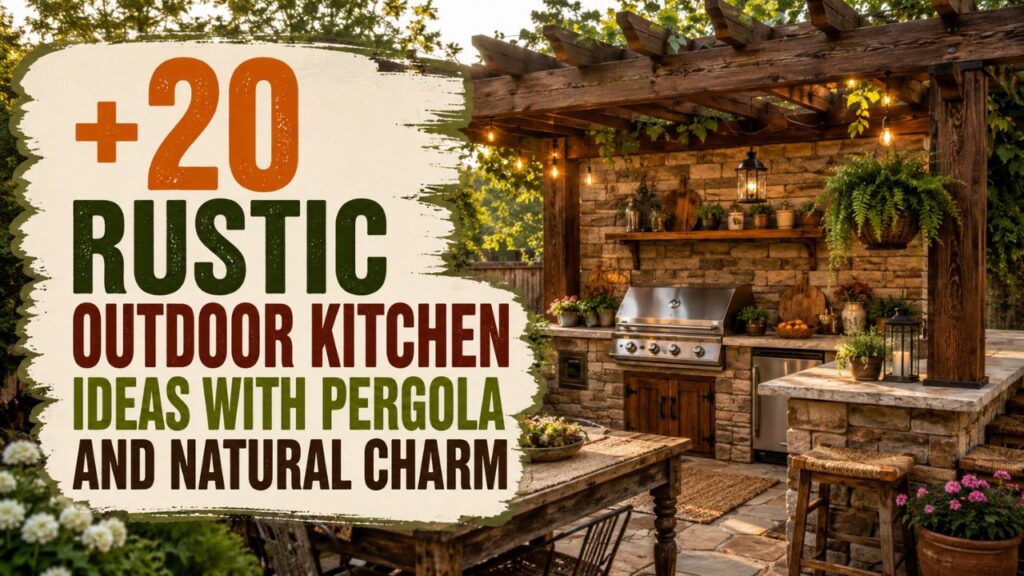
If you are searching for outdoor kitchen ideas pergola designs that feel warm rather than overly polished, rustic materials are a great place to start. Timber beams, stone counters, brick details, aged metal, and earthy colors can make a new kitchen feel established and inviting.
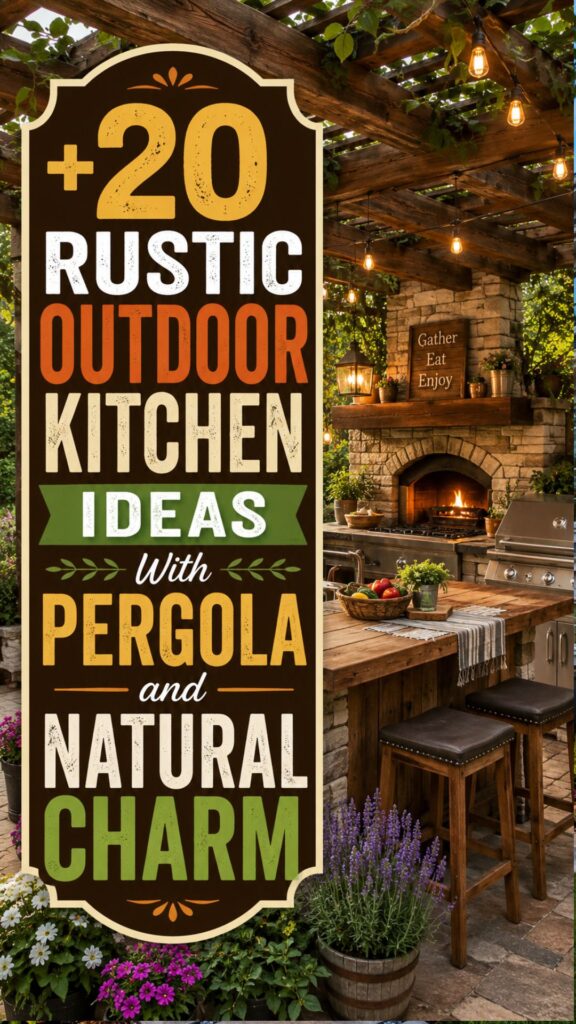
A good design also needs to work in everyday life. You need enough preparation space, sensible appliance placement, weather-resistant materials, comfortable seating, and protection from strong sun. The following ideas combine those practical needs with relaxed rustic character.
1. Build a Timber Pergola Over a Stone Kitchen
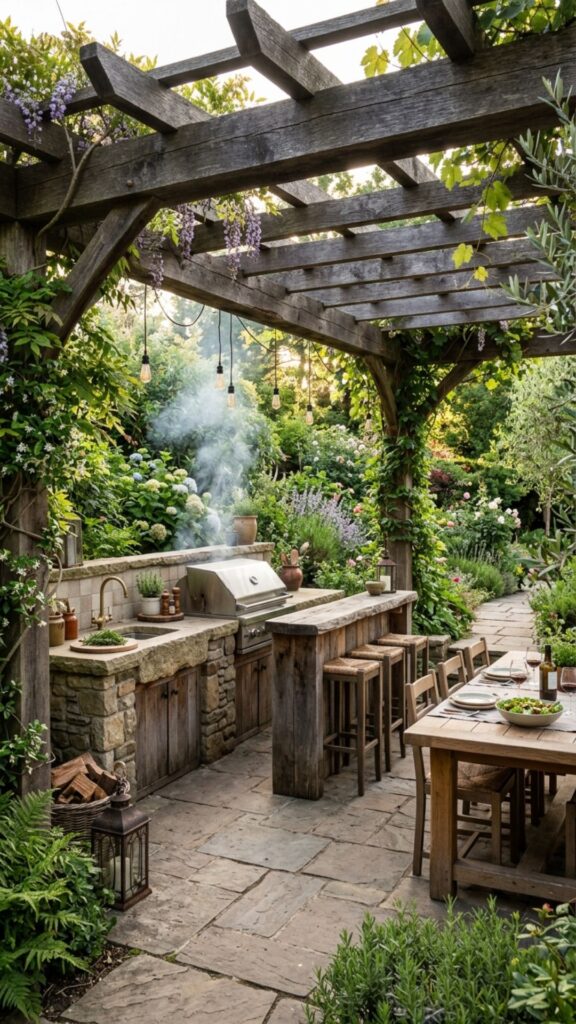
A heavy timber pergola pairs naturally with a stone outdoor kitchen. Thick wooden posts and visible grain bring warmth, while stacked stone or natural veneer creates a solid foundation below. This combination works particularly well in gardens surrounded by mature trees or natural landscaping.
Keep the cooking zone simple with a built-in grill, stone countertop, and closed storage underneath. Leave enough open space around the grill for food preparation and serving. Among classic outdoor kitchen ideas pergola combinations, timber and stone remain popular because both materials age attractively outdoors.
2. Create a Rustic Kitchen With Reclaimed Wood
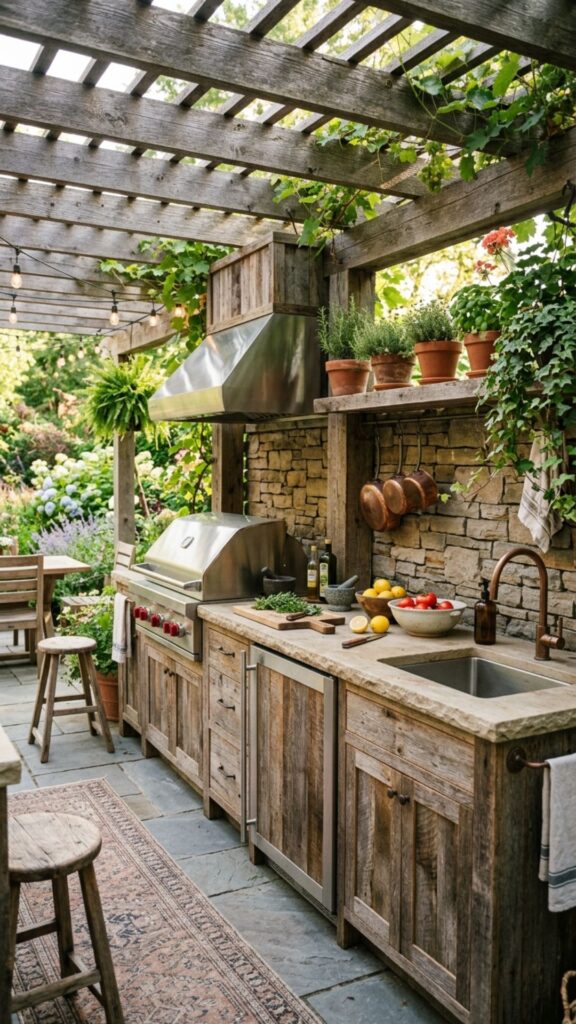
Reclaimed timber adds instant character to an outdoor cooking area. Use it around cabinet fronts, pergola beams, shelving, or decorative walls rather than directly beside high-heat appliances.
Pair the wood with concrete or stone countertops for easier cleaning and better durability. Old-looking materials do not mean the kitchen needs to feel outdated. Modern appliances combined with weathered timber create a balanced space that feels rustic without sacrificing convenience.
3. Add a Brick Cooking Station Beneath the Pergola
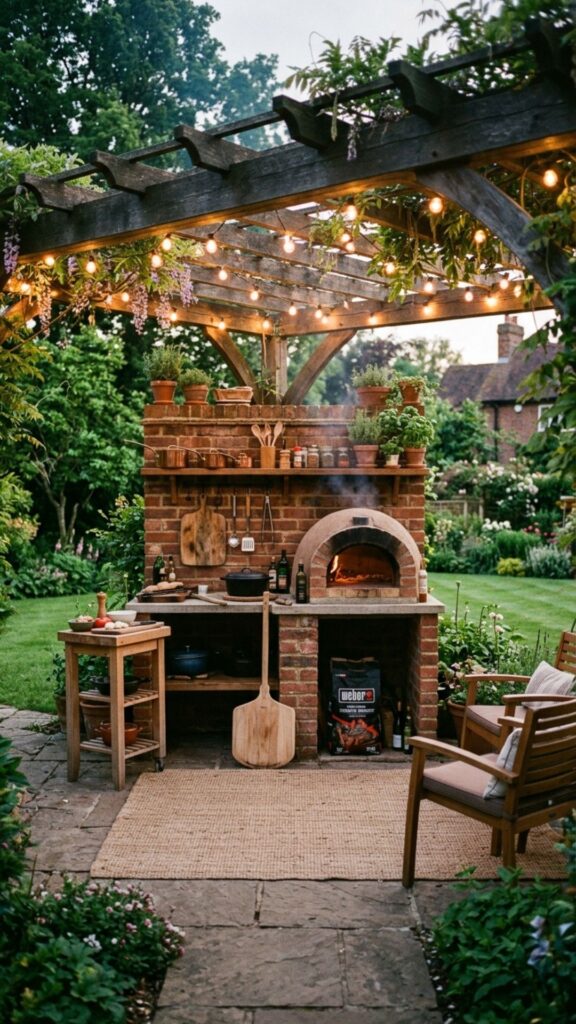
Brick is a practical choice when you want warmth, texture, and a traditional backyard atmosphere. Build the grill surround or kitchen base from red, brown, or softly weathered brick.
Above it, a wooden pergola softens the masonry and defines the cooking zone. Add warm pendant lighting or discreet string lights beneath the beams so the space remains useful after sunset. This design works especially well beside brick homes because the outdoor kitchen can visually connect with the existing architecture.
4. Use Natural Stone Columns for the Pergola
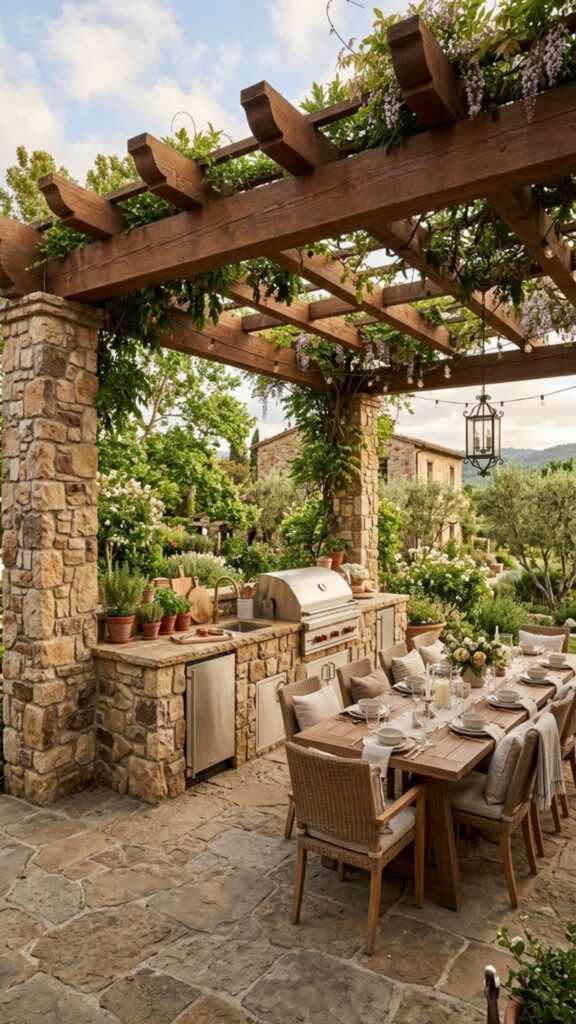
Instead of supporting your pergola entirely with timber posts, build stone bases or full-height stone columns. They give the structure more visual weight and create the feeling of a permanent outdoor room.
Match the columns with stone used around the grill island or fireplace. Repeating materials across the space keeps the design coordinated. If you are exploring substantial outdoor kitchen ideas pergola layouts, stone columns can make a large backyard kitchen feel more intentional and architectural.
5. Design an L-Shaped Outdoor Kitchen
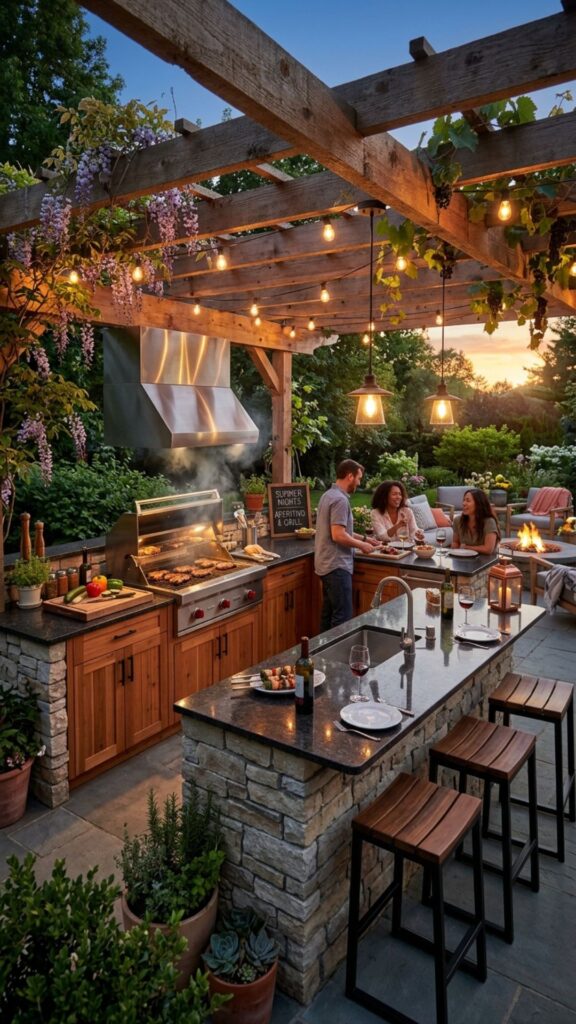
An L-shaped layout creates separate areas for cooking and serving without taking up excessive space. Place the grill and appliances along one side, then use the shorter section as preparation space or a casual dining counter.
Position the pergola directly above the working area so the cook receives shade without closing off the surrounding garden. Add stools along the outer edge if you want guests to sit nearby without entering the main cooking zone.
6. Add a Rustic Outdoor Bar Under the Pergola
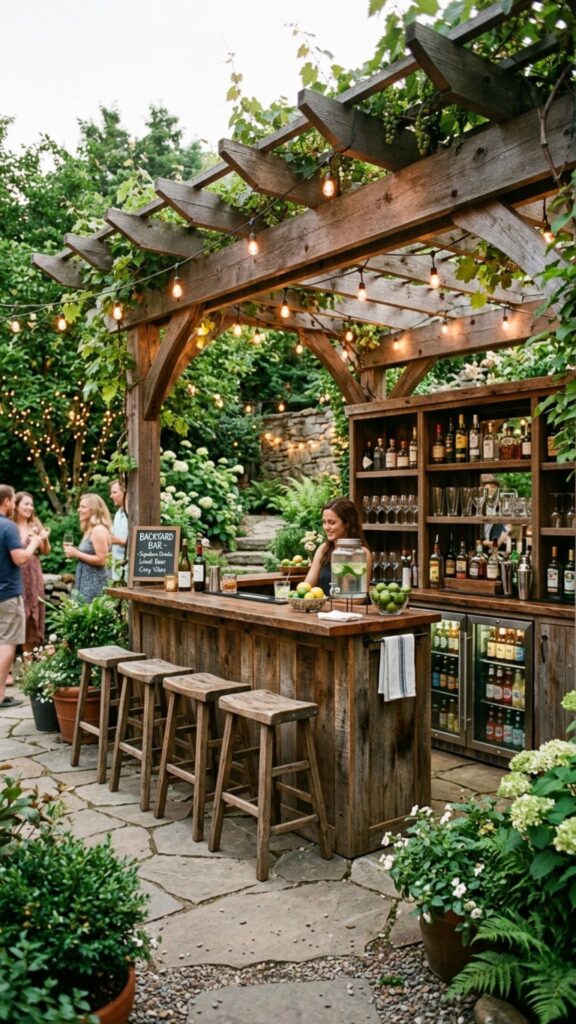
A bar can turn an outdoor kitchen into a more social entertaining space. Extend the countertop beyond the main kitchen and add comfortable stools facing the cooking area.
Wooden beams, stone bases, and a thick countertop help maintain the rustic theme. You can also include an under-counter refrigerator for drinks. Keeping beverages outside reduces unnecessary trips indoors when family and friends gather in the backyard.
7. Create a Pergola Kitchen With a Pizza Oven
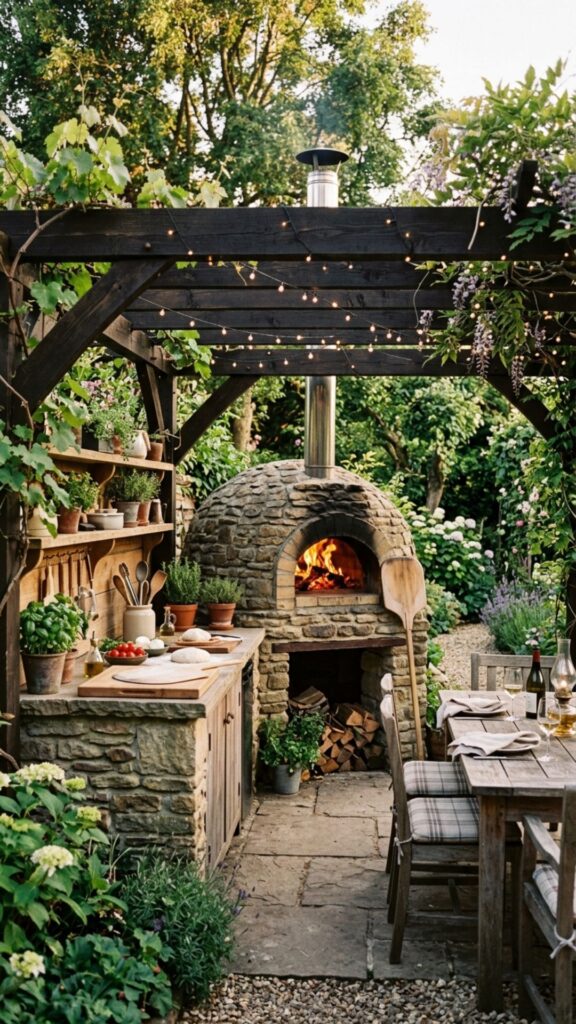
A built-in pizza oven creates a strong focal point while adding another way to cook outdoors. Brick and stone ovens naturally complement rustic pergola designs.
Give the oven enough surrounding counter space for preparing dough, toppings, and serving finished pizzas. It is also important to follow the manufacturer’s clearance and ventilation requirements. A pizza oven looks beautiful, but safe placement should guide the layout before decorative details are added.
8. Introduce a Farmhouse-Style Outdoor Sink
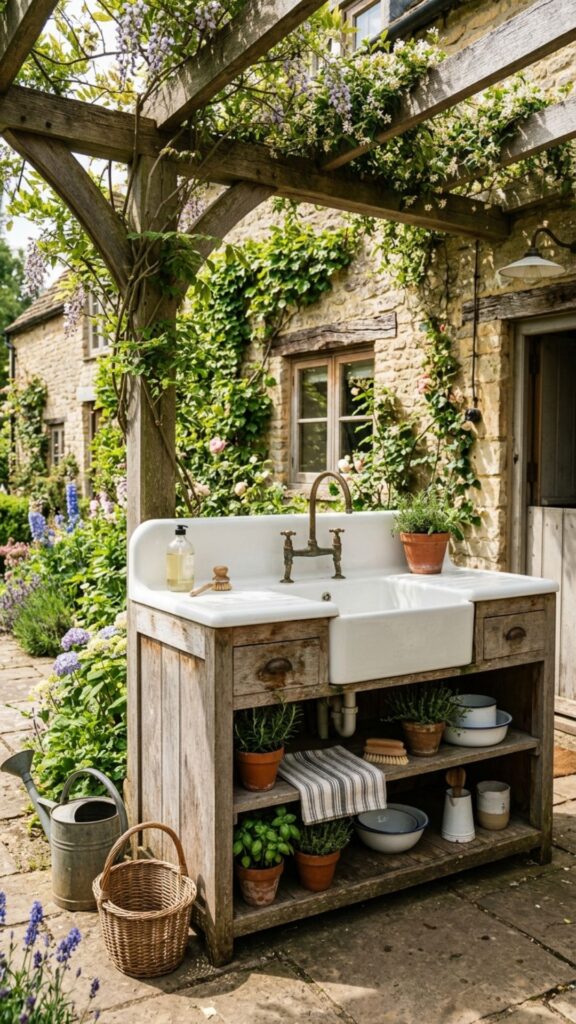
A deep farmhouse-inspired sink can add personality while making the kitchen more useful. Choose a durable outdoor-compatible material and install it near your main preparation counter.
Finish the surrounding cabinetry with wood-look doors, stone, or muted neutral surfaces. Small features such as black hardware and open wooden shelves can strengthen the farmhouse character without overwhelming the design.
9. Cover the Pergola With Climbing Plants
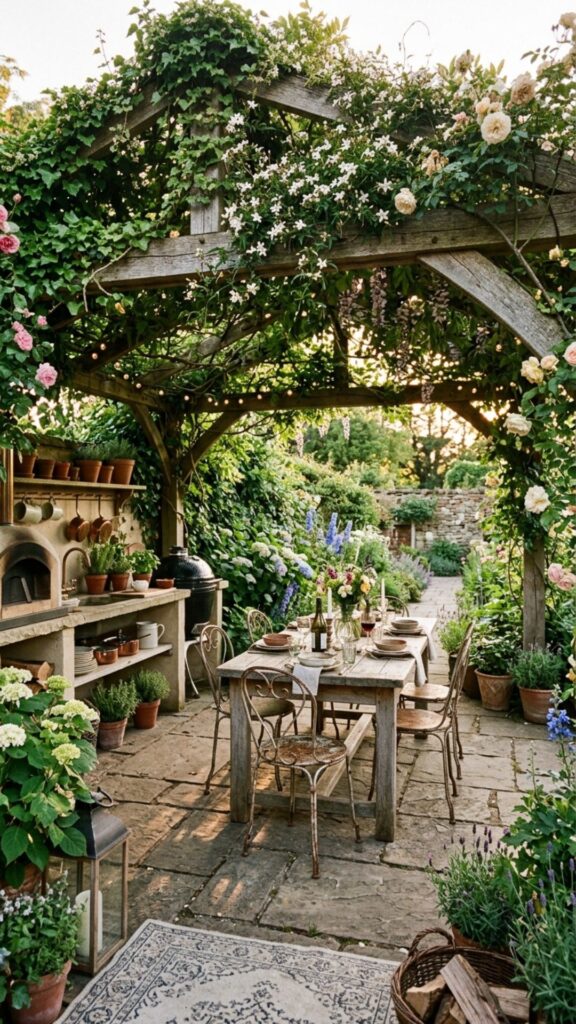
Climbing greenery can make a pergola feel naturally integrated into the garden. Grapevines, jasmine, or other suitable regional plants can gradually grow across the overhead structure and provide additional filtered shade.
However, vegetation should be carefully positioned around heat-producing equipment. Keep leaves, branches, and dry plant material away from grills, ovens, and chimneys. Used thoughtfully, greenery makes outdoor kitchen ideas pergola designs feel softer and more established.
10. Install Warm Lighting Between the Pergola Beams
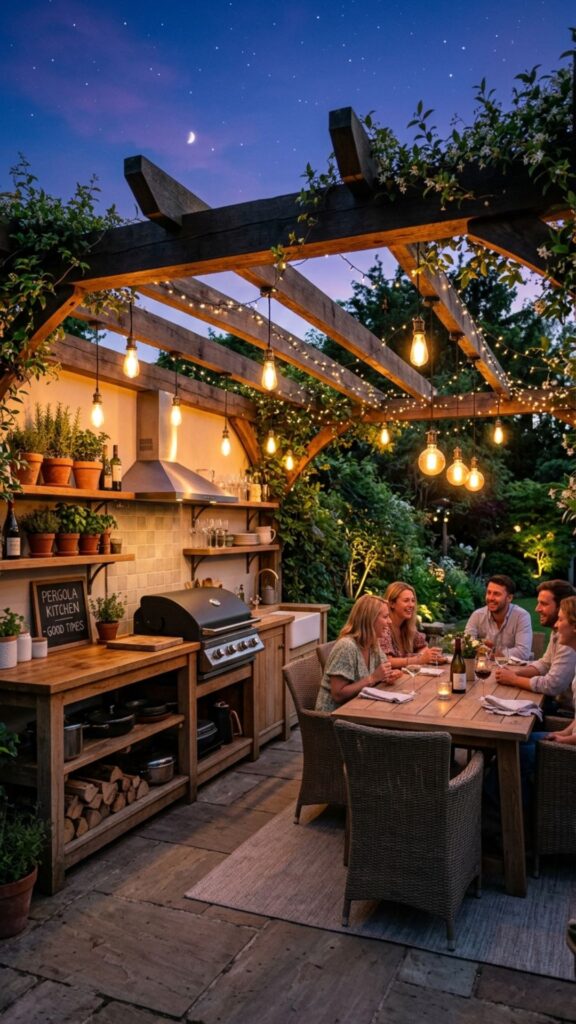
Outdoor kitchens need more than decorative lighting. The grill, sink, countertops, and pathways should all remain clearly visible after dark.
Install practical task lights near preparation areas, then layer them with warmer fixtures for atmosphere. Pendant lights, small wall fixtures, and subtle string lighting work especially well beneath exposed wooden pergola beams. The result feels cozy while remaining functional.
11. Combine Wood With Black Metal Details
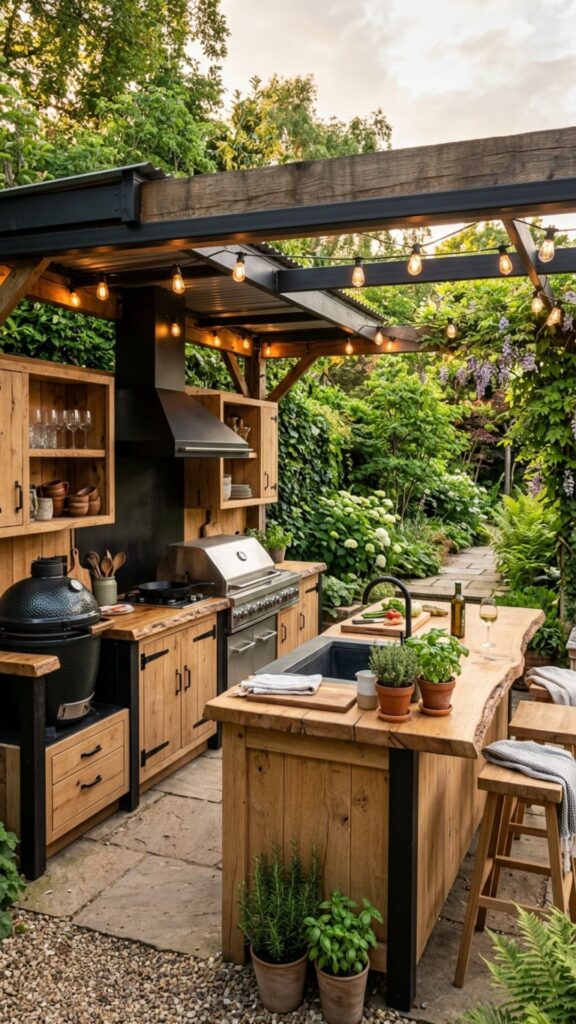
Rustic design does not have to rely entirely on brown materials. Black metal brackets, lighting fixtures, cabinet handles, and pergola connectors add contrast and help sharpen the overall look.
Use black accents sparingly so the space remains warm. They look especially effective beside natural timber, pale stone, or brick. This combination suits homeowners who want rustic character with a slightly more modern finish.
12. Add a Stone Fireplace Beside the Kitchen
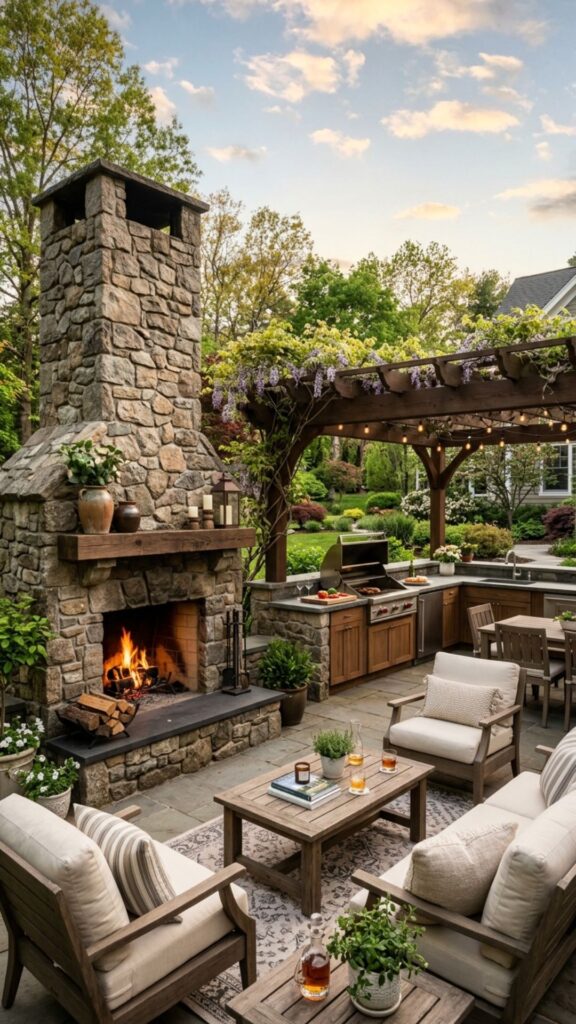
An outdoor fireplace can extend the usefulness of the space into cooler evenings. Position it near the seating area rather than directly in the primary food preparation zone.
Using the same stone for the fireplace and kitchen island creates continuity across the entire patio. The pergola can then visually connect the cooking and gathering areas, making them feel like one complete outdoor room.
13. Keep a Small Pergola Kitchen Simple
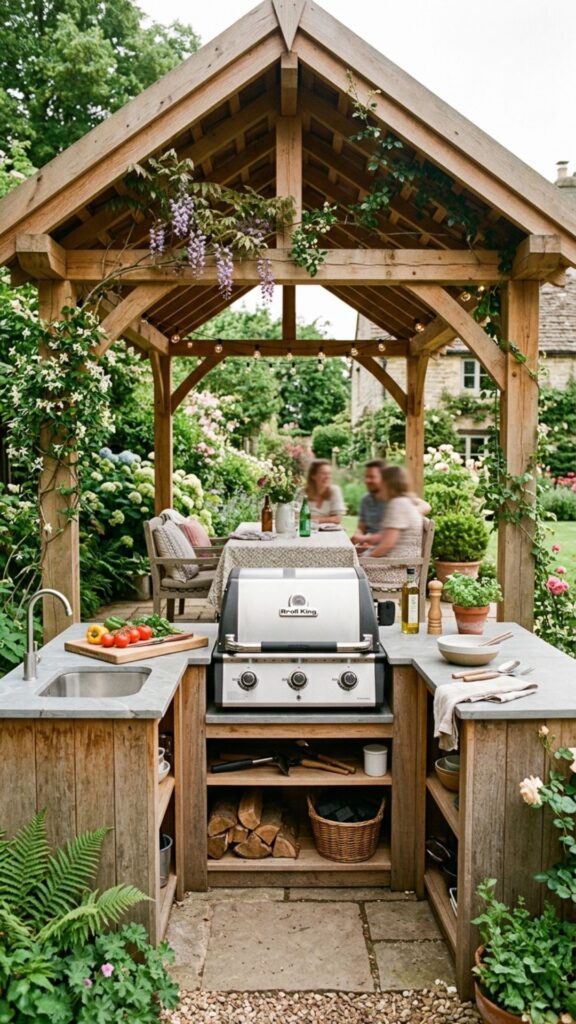
You do not need a large backyard to create a practical outdoor cooking area. A compact pergola can cover a straight kitchen run containing a grill, preparation counter, and small sink.
Prioritize the appliances you will genuinely use instead of filling limited space with unnecessary features. For smaller homes, the best outdoor kitchen ideas pergola layouts often succeed because they focus on efficient movement rather than size.
14. Use Flagstone or Natural Pavers Underfoot
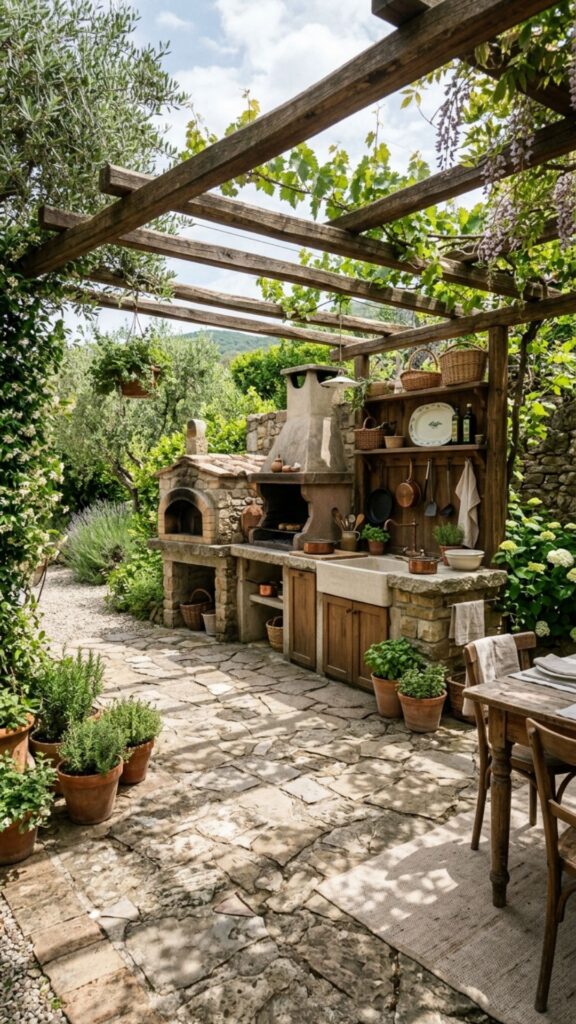
Flooring has a major effect on the final appearance of an outdoor kitchen. Flagstone, textured porcelain, brick pavers, and natural-looking concrete can all support a rustic aesthetic.
Choose a surface designed for outdoor use with suitable slip resistance. Cooking areas are exposed to water, grease, rain, and changing temperatures, so appearance should never be the only consideration. Durable flooring makes the entire space easier to maintain.
15. Add Open Shelving for Rustic Character
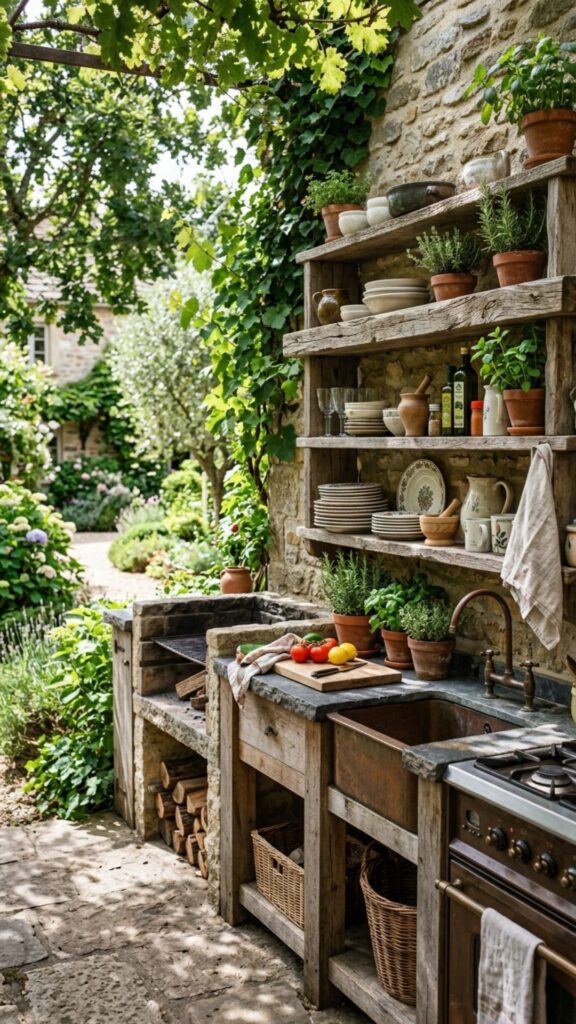
Open shelves allow frequently used dishes, serving boards, herbs, and decorative pieces to become part of the design. Thick wooden shelves look especially attractive against brick or stone walls.
Keep everyday outdoor items in weather-resistant containers and avoid leaving delicate tableware exposed year-round. A mixture of open shelving and closed cabinets usually offers the best balance between attractive styling and practical storage.
16. Build a Central Kitchen Island Beneath the Pergola
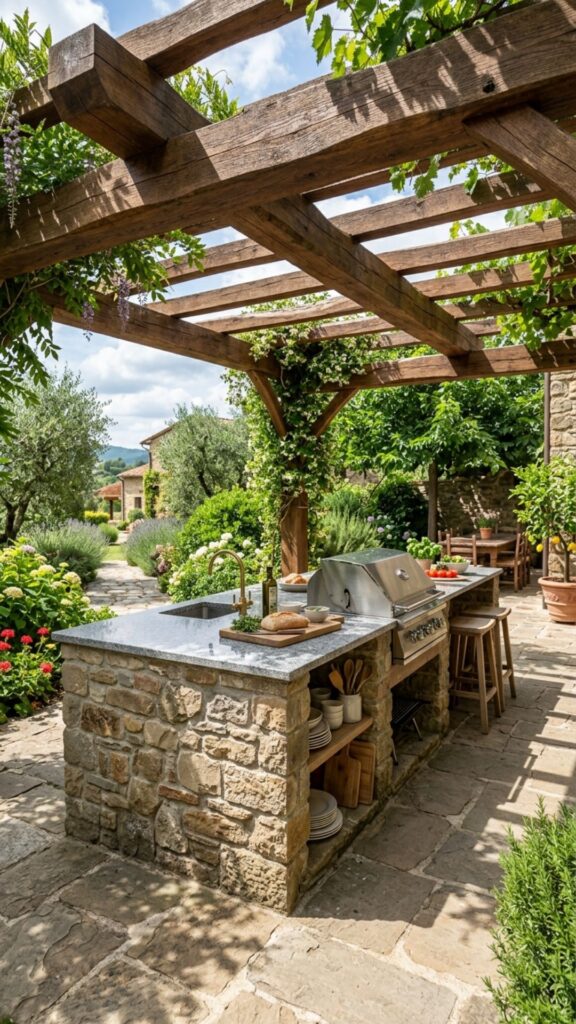
A freestanding island can make a spacious outdoor kitchen easier to use. It provides extra preparation space while giving guests somewhere to gather.
Leave generous walkways between the island and cooking appliances. Outdoor kitchens often become crowded during parties, so circulation matters. A stone-faced island topped with a simple concrete or natural stone counter works particularly well beneath a rustic wooden pergola.
17. Use a Slatted Pergola for Filtered Shade
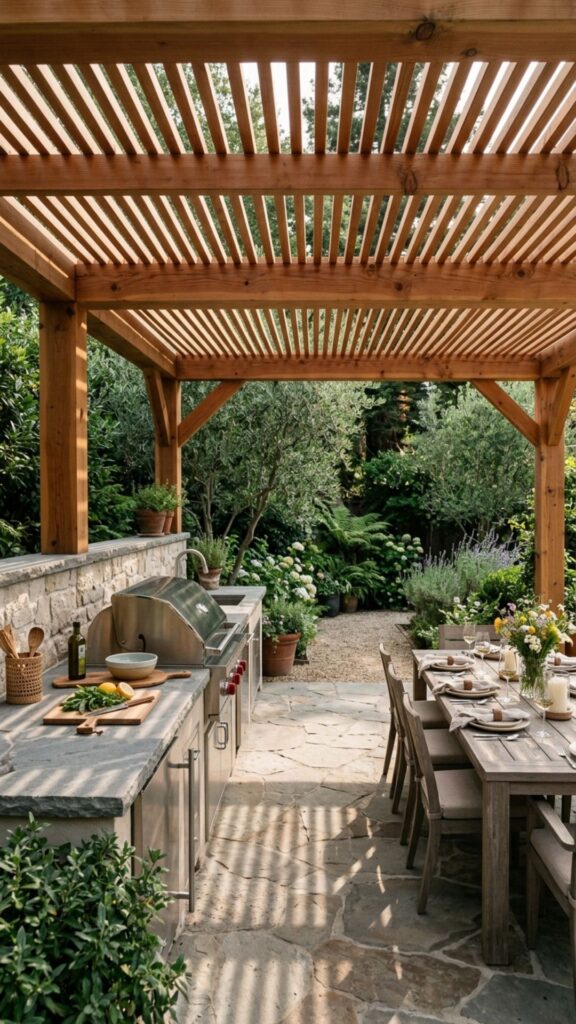
A traditional open pergola creates attractive shadows but may not provide complete protection from midday sun. Adjusting the spacing and direction of the overhead slats can improve shade depending on the pergola’s orientation.
For stronger weather protection, consider adding a retractable canopy or another outdoor-rated covering where appropriate. When comparing outdoor kitchen ideas pergola styles, think about your local sun, rainfall, and wind conditions before deciding how open the roof should be.
18. Add Comfortable Dining Beside the Cooking Zone
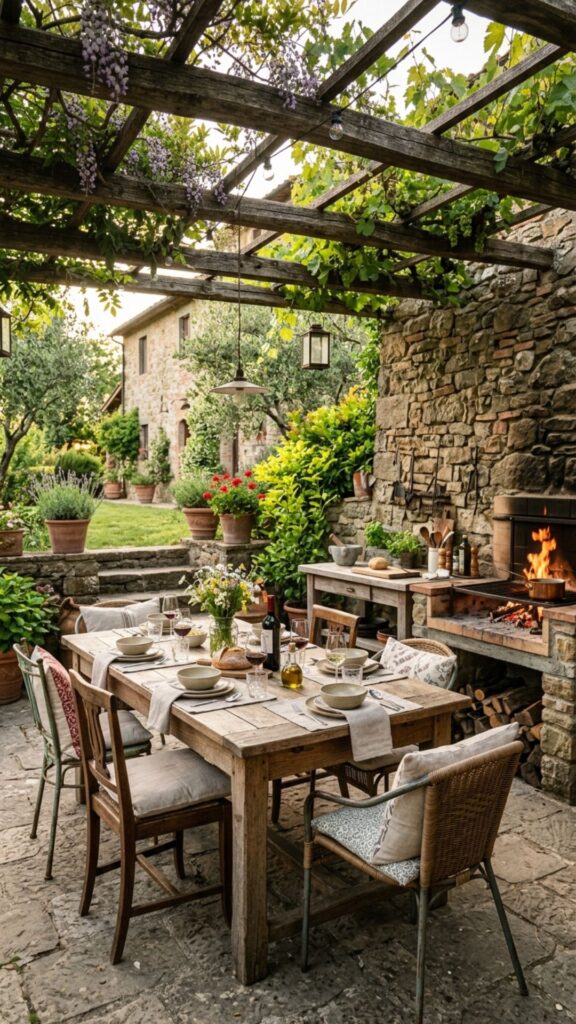
A good outdoor kitchen should give people somewhere comfortable to eat. Place a rustic dining table beneath an extended section of the pergola or immediately beside the kitchen.
Wooden tables, woven chairs, benches, and neutral cushions work naturally with stone and timber surroundings. Keep the dining area close enough for easy serving but far enough from the grill to avoid smoke, heat, and cooking traffic.
19. Mix Rustic Materials Instead of Matching Everything
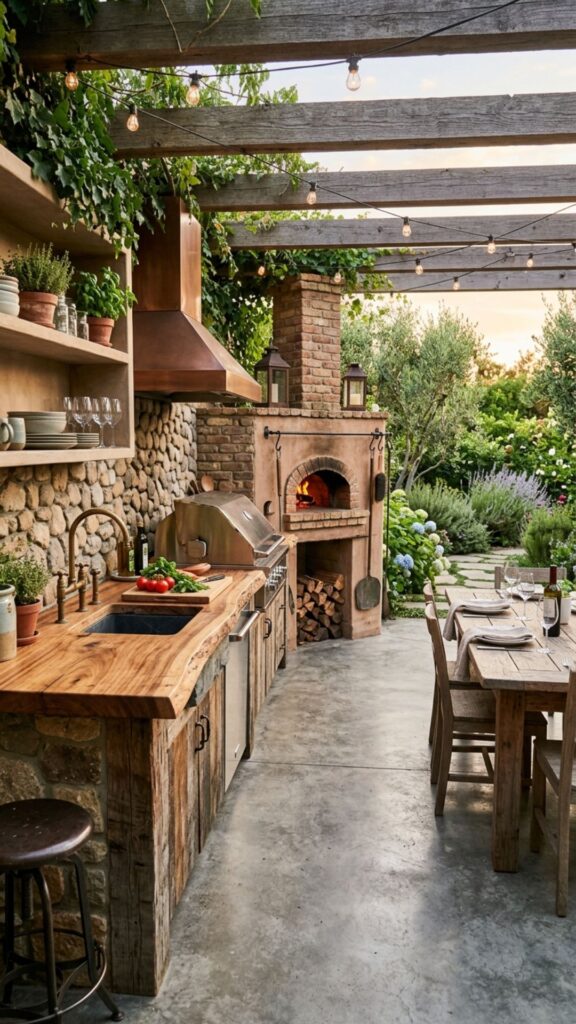
The most convincing rustic spaces rarely look perfectly matched. Combining timber, stone, brick, concrete, and aged metal can create more visual depth.
The key is repetition. If you use black metal on the pergola, repeat it in the lighting or cabinet hardware. If your kitchen has warm stone, bring a similar tone into the flooring. This approach keeps mixed materials looking intentional rather than random.
20. Create a Complete Outdoor Room
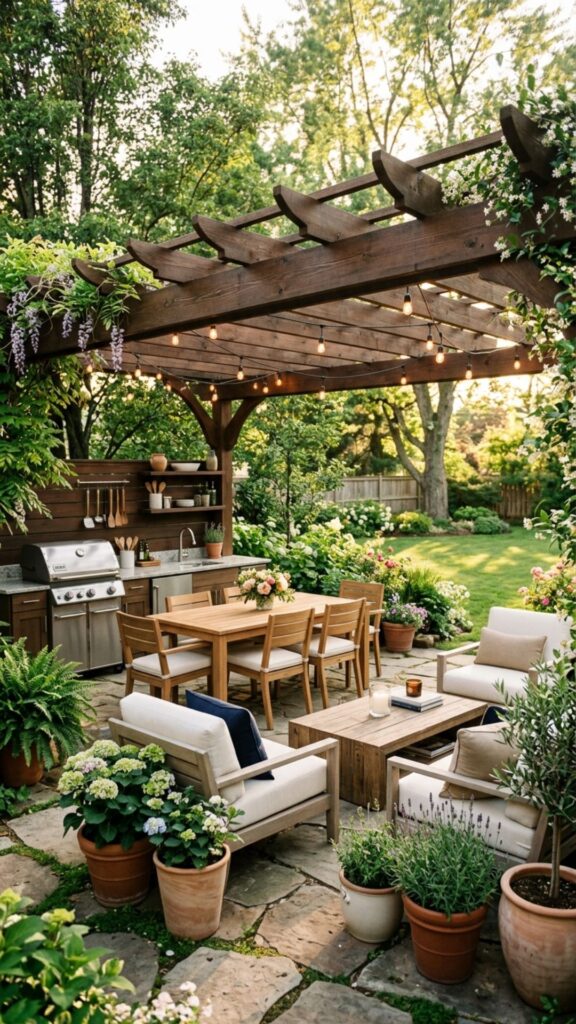
For the most functional result, think beyond the kitchen itself. A larger pergola can connect the grill, dining table, lounge seating, lighting, and storage within one defined area.
Plan the kitchen first around cooking workflow, then arrange seating and decorative features around it. This creates a backyard space that works for quiet family meals as comfortably as larger gatherings. Among larger outdoor kitchen ideas pergola designs, this complete-room approach often delivers the most everyday value.
How to Choose the Right Pergola Outdoor Kitchen Design
The best design depends on how you actually use your backyard. Someone who grills twice a week may benefit more from generous counter space than an oversized collection of appliances. A homeowner who frequently entertains may place greater importance on seating, refrigeration, lighting, and serving areas.
Start with the practical questions. Consider where utilities can be installed, how smoke will travel, how much afternoon sun reaches the patio, and where people naturally walk between the house and garden. Once those details are settled, choose materials and decorative features that fit your home.
Durability also matters. Outdoor-rated cabinetry, suitable countertops, proper drainage, safe electrical installation, and manufacturer-recommended appliance clearances can prevent expensive problems later. Rustic style should complement good construction rather than replace it.
Conclusion
The most inviting outdoor kitchen ideas pergola designs combine shelter, practical cooking space, durable materials, and a sense of connection with the garden. Natural stone, timber beams, brick, warm lighting, and comfortable furniture can give the space rustic charm without making it feel old-fashioned.
You do not need to use every feature at once. Start with the essentials: a sensible cooking layout, reliable work surfaces, enough shade, and materials suitable for your climate. Then add elements such as a pizza oven, fireplace, bar, lighting, or greenery as space and budget allow.
Ready to plan your backyard kitchen? Choose two or three ideas from this list that suit your available space, cooking habits, and home style, then use them as the foundation for a practical outdoor kitchen design you will genuinely enjoy using.
What is the best pergola material for an outdoor kitchen?
Wood is one of the most popular choices because it gives an outdoor kitchen natural warmth and rustic character. Cedar and other suitable exterior timbers are commonly considered because of their appearance and outdoor performance. The right option ultimately depends on local weather, maintenance expectations, building requirements, and budget.
Can you put a grill underneath a pergola?
A grill may be installed beneath some pergolas when proper ventilation, clearance, fire-resistant surroundings, and manufacturer requirements are followed. Never position combustible roofing, timber, plants, or decorations too close to the heat source. Local building and fire requirements should also be checked before installation.
How can I make an outdoor kitchen look rustic?
Start with natural-looking materials such as timber, stone, brick, textured concrete, and aged metal. Add warm lighting, simple furniture, open shelving, and earthy colors. Rustic design works best when materials look relaxed and coordinated rather than perfectly matched.
Does a pergola provide enough shade for an outdoor kitchen?
A standard open pergola provides partial or filtered shade rather than complete coverage. Shade levels depend on the direction of the sun, beam spacing, location, and time of day. Retractable covers, slatted systems, or appropriate climbing plants can increase shade when needed.
How much space should an outdoor kitchen with a pergola have?
There is no single ideal size. A compact layout may only need space for a grill, counter, and sink, while larger kitchens can include islands, bars, dining tables, and fireplaces. Prioritize comfortable walkways, appliance clearance, food preparation space, and safe separation between cooking and seating areas.