Rain, wind, and a summer that shows up for about three weeks — that’s the reality of cooking outdoors in Ireland. Most outdoor kitchen guides assume you live somewhere dry and sunny. This one doesn’t. If you’ve ever pictured grilling in your back garden only to remember the forecast, you’re in the right place.

Here’s what you’ll learn: how to build a space that works in drizzle as well as sunshine, which materials survive damp winters, and the smart features that make an outdoor kitchen genuinely usable year-round.

I’ve pulled together 20 outdoor kitchen ideas Ireland homeowners can actually use — practical, tested, and built around our unpredictable weather.
Let’s get into it.
1. Covered Cooking Zone — Shelter First, Everything Else Second
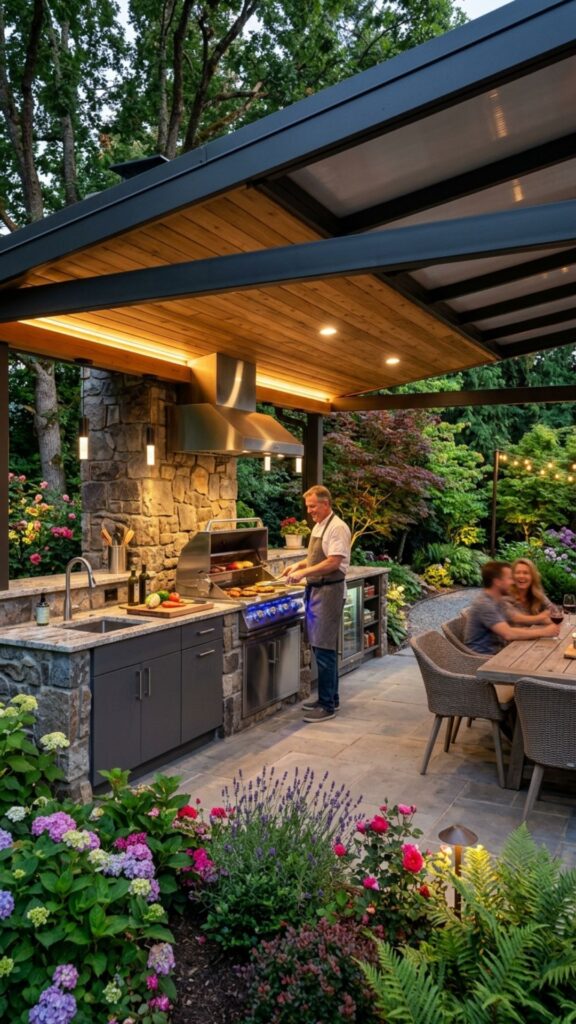
The single most important decision you’ll make is overhead cover. In Ireland, an open kitchen sits unused for most of the year. A solid roof — pergola with polycarbonate, a lean-to, or a proper canopy — changes everything. Suddenly you can cook in a downpour and still enjoy it.
Aim for a pitched or angled roof so rain runs off cleanly rather than pooling. Extend the cover at least a metre beyond your cooking line so wind-driven rain doesn’t reach the hob. This one feature separates a kitchen you use twice a year from one you use every week.
2. Louvered Pergola — Open When It’s Dry, Sealed When It’s Not
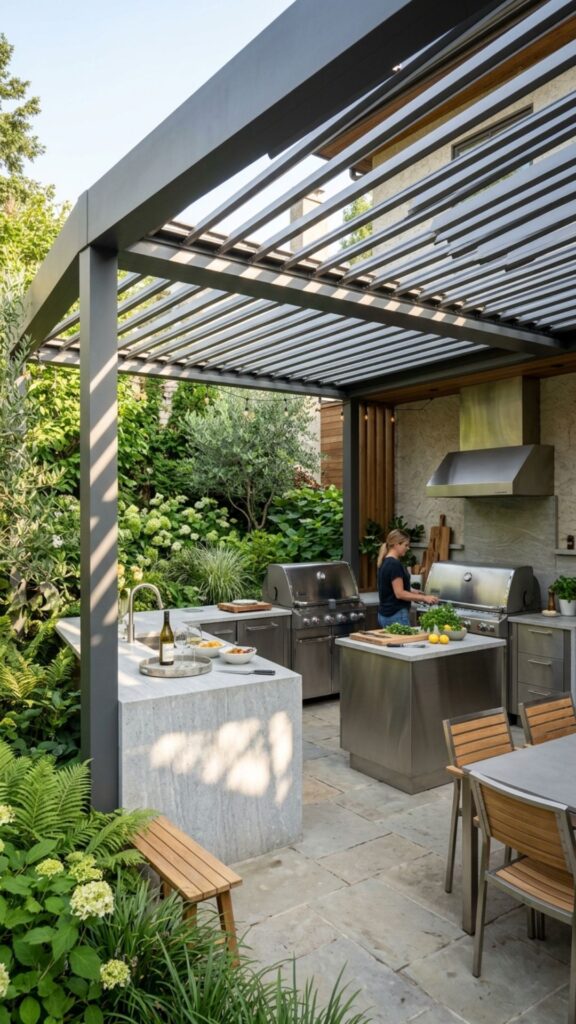
A motorised louvered pergola gives you the best of both. Adjustable slats let sun in on rare bright days, then close tight when the clouds roll back in. Many models include rain sensors that shut automatically.
Look for aluminium frames with a powder-coated finish — they handle salt air and constant damp without rusting. Yes, they cost more upfront, but they’re the difference between hiding indoors and eating outside on a grey Tuesday.
3. Weatherproof Stainless Steel Cabinets — Rust-Free | Sealed | Low-Maintenance
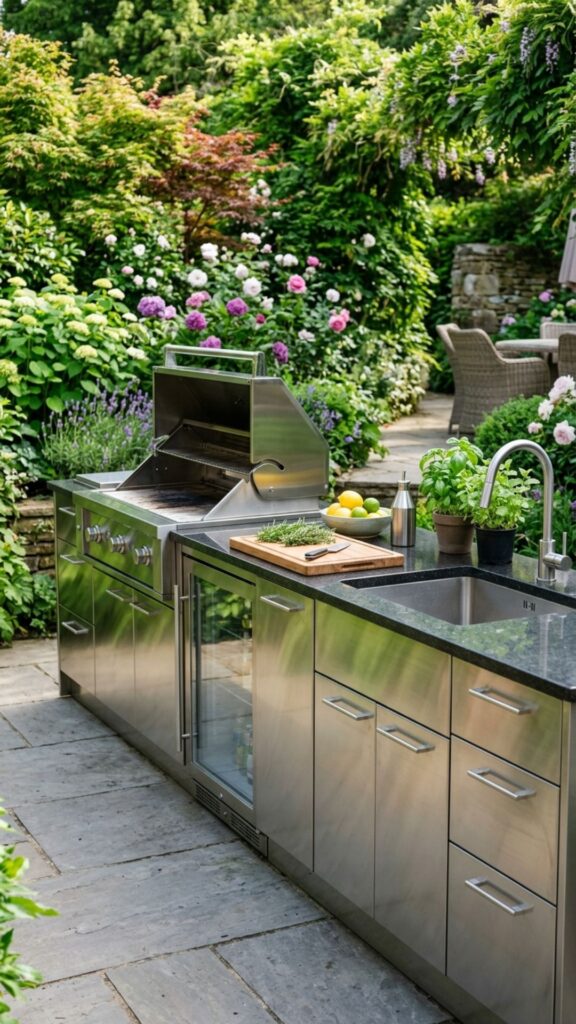
Timber cabinets look lovely for one season, then swell and rot. Marine-grade stainless steel (grade 316) is the smarter buy for Irish gardens, especially near the coast where salt accelerates corrosion.
Choose fully sealed units with gaskets around the doors to keep moisture out of storage. Wipe them down occasionally and they’ll look sharp for a decade. Practical beats pretty when the rain’s coming sideways.
4. Built-In Gas Grill — Reliable Heat in Any Weather
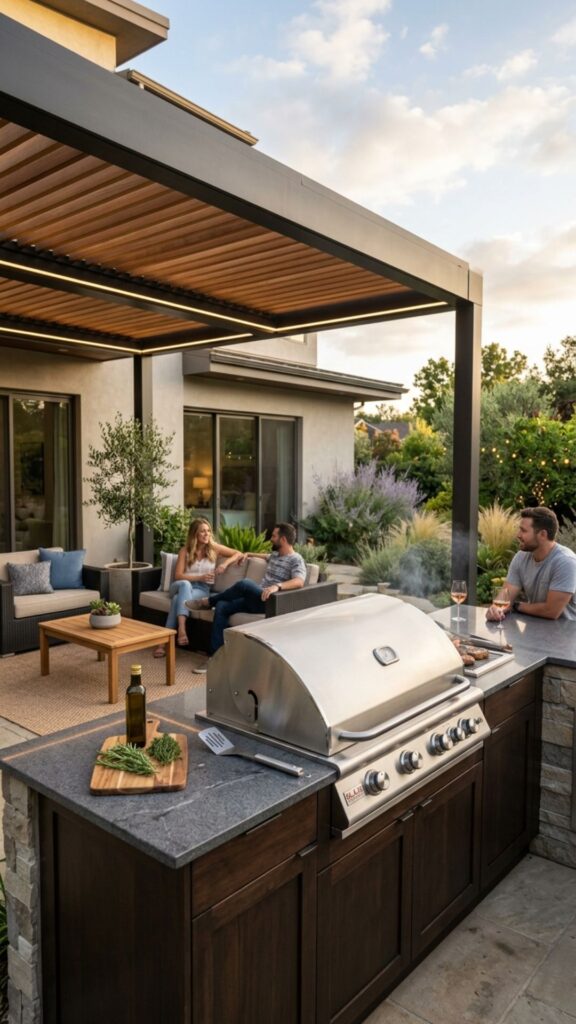
Charcoal is great until the wind won’t let it light. A built-in gas grill delivers instant, controllable heat, which matters when your cooking window might be twenty minutes between showers.
Position it under your covered zone with proper ventilation above. Connect it to a mains gas line if possible — no more running out mid-cook. A quality gas grill is the workhorse of most Irish outdoor kitchens.
5. Pizza Oven Corner — Warmth, Cooking, and a Reason to Linger
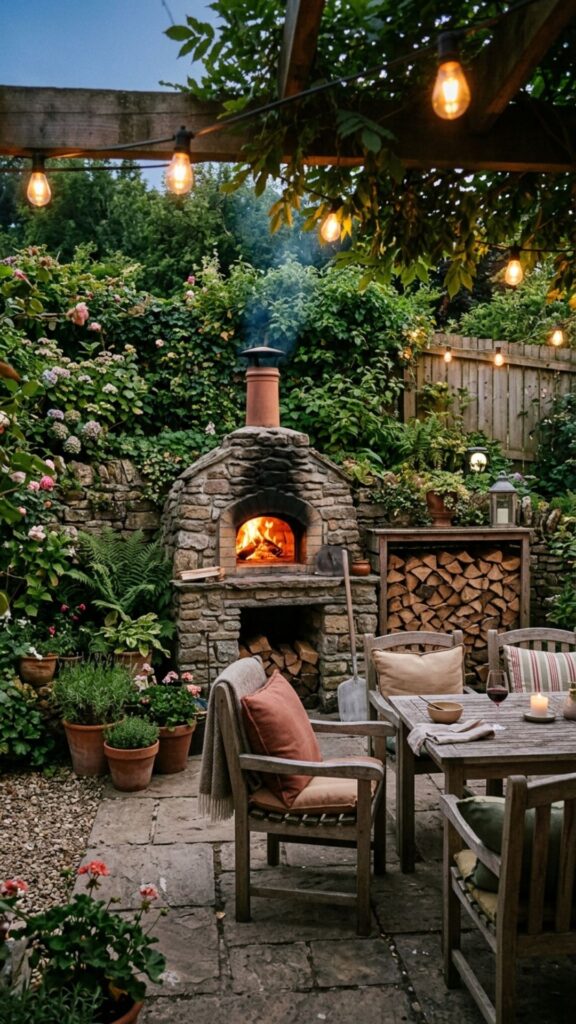
A wood-fired pizza oven does double duty: it cooks brilliantly and throws out serious heat, taking the chill off a cool evening. It’s one of the most-used features in Irish gardens for exactly that reason.
Site it under cover with a heatproof surround and a spot to stack seasoned wood nearby. Cast or refractory brick ovens hold temperature well even when the air’s cold. Friday-night pizza works in October when you’ve got one of these.
6. Sheltered Seating Nook — Eat Outside Without Getting Soaked
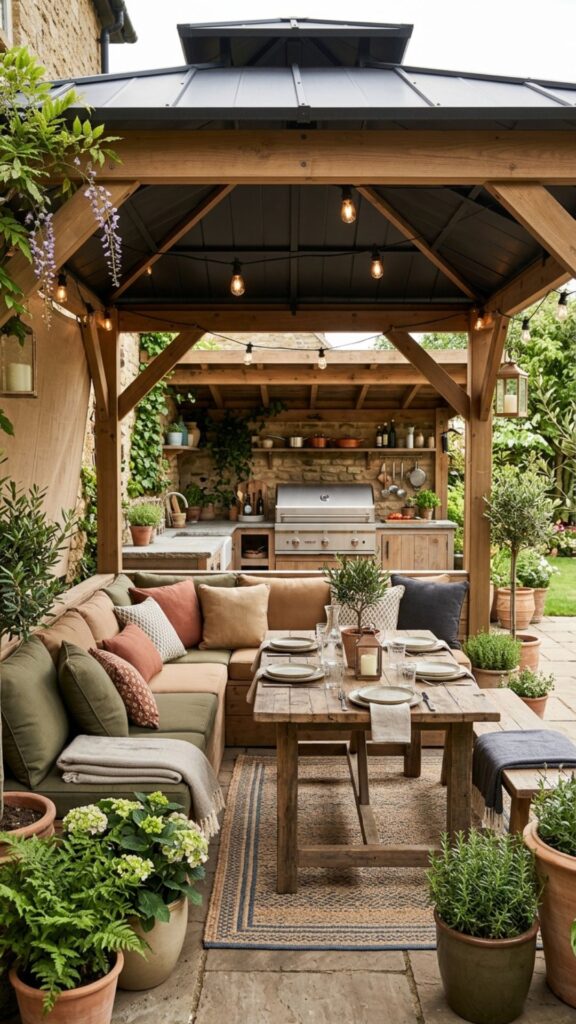
An outdoor kitchen isn’t just for cooking — you need somewhere to sit and eat. Build a sheltered seating area beside the cooking zone, sharing the same roof line where possible.
Use fixed benches with waterproof cushion storage underneath. Add roll-down side screens for windy days. The goal is simple: a dry, comfortable spot where people actually want to stay after the food’s done.
7. Infrared Patio Heaters — Instant Warmth, No Waiting
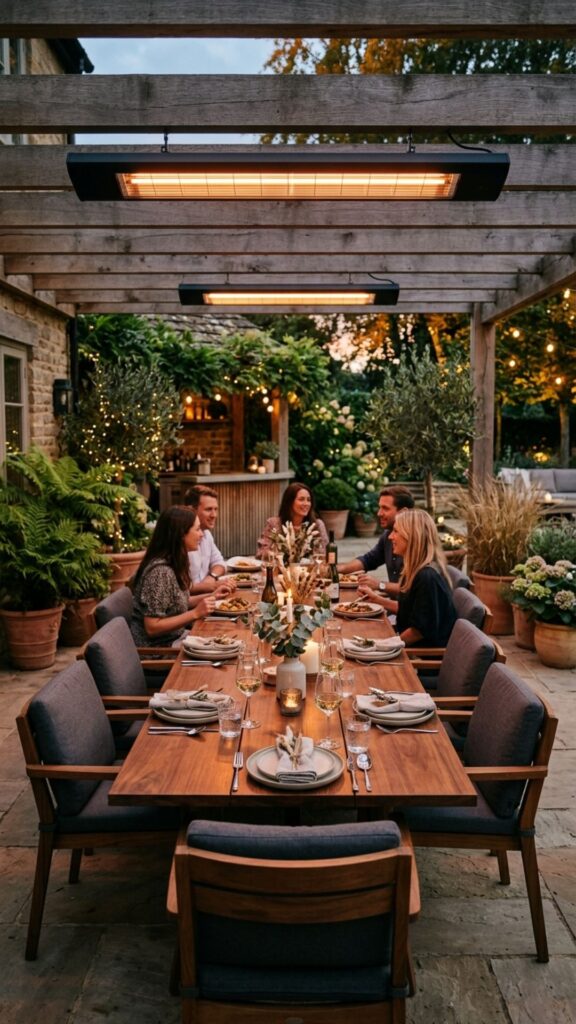
Electric infrared heaters warm people and surfaces directly, not just the air, so they work even when there’s a breeze. Mount them under your canopy and you extend your outdoor season by months.
They’re cleaner and cheaper to run than gas patio heaters and need no refilling. Wire them to a switch inside your kitchen zone so you can flick them on the second the temperature drops.
8. Non-Slip Porcelain Flooring — Safe Underfoot When Wet
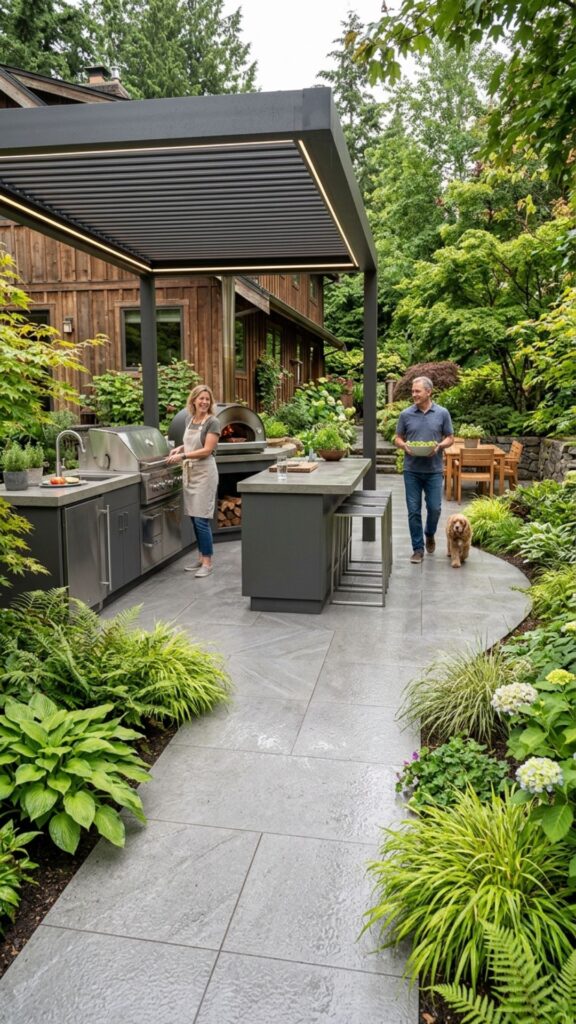
Smooth tiles turn lethal in Irish rain. Textured porcelain paving gives you grip when it’s wet, resists frost cracking, and needs almost no upkeep.
Choose a slip-rating of R11 or higher for the cooking and dining zones. Lay tiles with a slight fall toward a drain so water clears fast. Your floor should never be the reason someone takes a tumble carrying a hot dish.
9. Proper Drainage System — Keep Water Moving Away
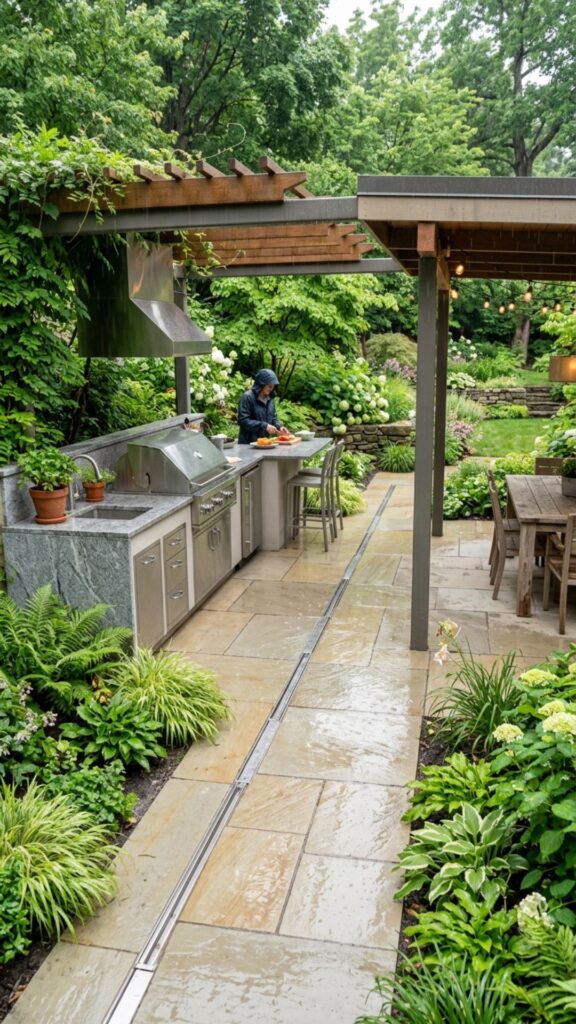
Standing water is the enemy of any Irish outdoor space. Build in linear channel drains around the perimeter and grade all surfaces to shed rain toward them.
Connect drainage to your existing surface water system, not the foul sewer. Add a small soakaway if your ground holds water. Get this right during the build and you’ll avoid puddles, damp cabinets, and slippery slabs forever.
10. Overhead Storage Racks — Dry Space for Everything
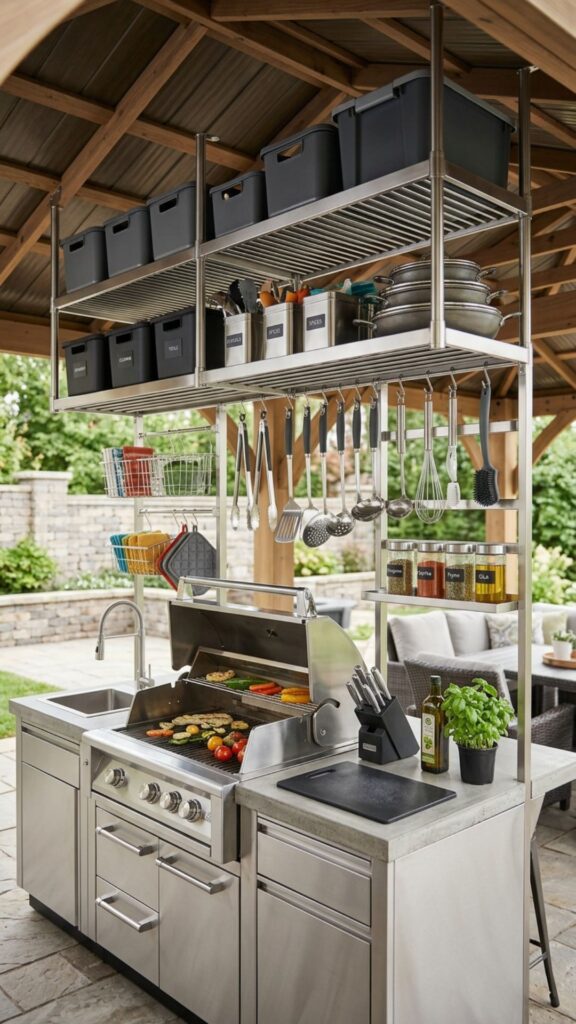
Damp air ruins utensils, spices, and anything left out. Install enclosed overhead racks and sealed drawers under your covered zone to keep the essentials dry and within reach.
Stainless hooks and rails work well for tools you use daily. Anything that can rust or absorb moisture belongs behind a gasketed door. Smart storage means you’re not hauling gear back and forth from the house every time.
11. Compact Galley Layout — Big on Function, Small on Footprint
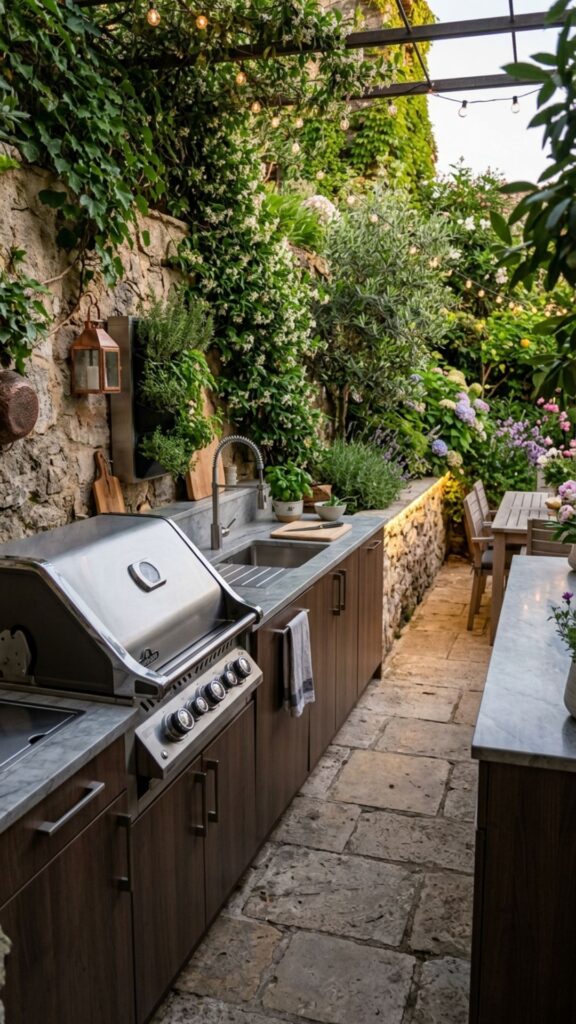
Most Irish gardens aren’t huge, so a galley layout — a single run or an L-shape against a wall — makes the most of limited, sheltered space. It’s efficient and easy to cover with one roof.
Keep your grill, prep counter, and sink in a logical line so you’re not stepping into the rain to move between tasks. A tight, well-planned layout beats a sprawling one you can’t shelter properly.
12. Outdoor Sink With Hot Water — Wash Up Where You Cook
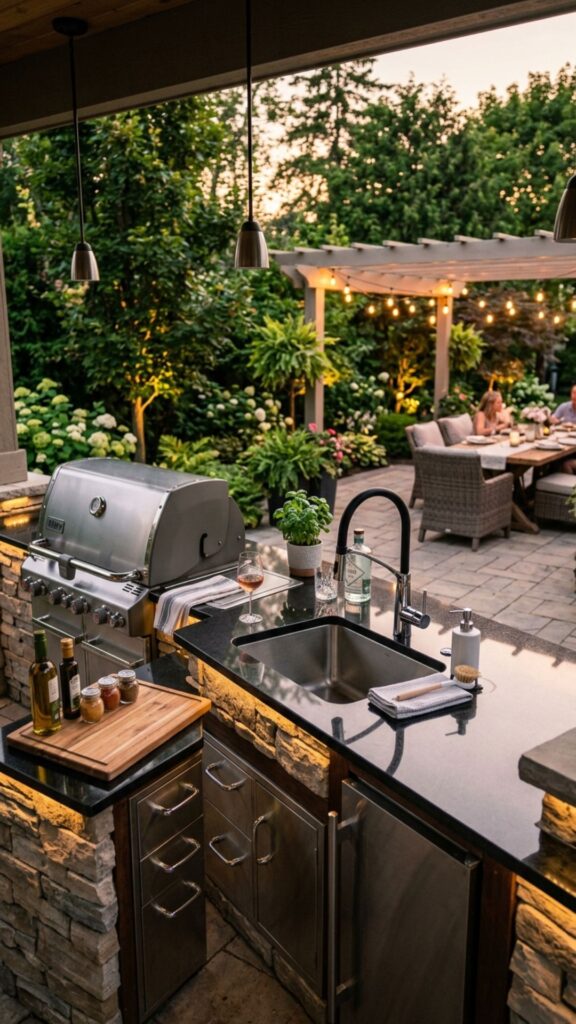
Trekking dirty dishes indoors kills the flow of an outdoor kitchen. A plumbed sink with hot and cold water keeps everything on-site and makes cleanup painless.
Fit isolation valves so you can drain the pipes before a hard frost — burst pipes are a real risk in an Irish winter. Insulate any exposed plumbing. A working sink is a small feature that makes a massive difference day to day.
13. Weatherproof Fridge — Cold Storage That Handles the Damp
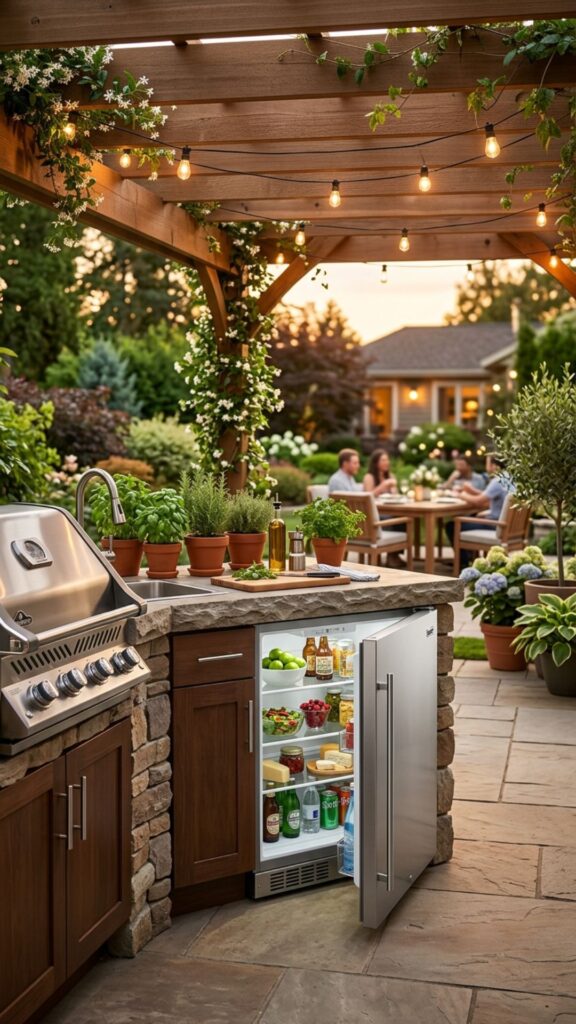
An outdoor-rated fridge keeps drinks and ingredients close by, but a standard indoor unit won’t survive the humidity. Buy one rated for outdoor use with a sealed, corrosion-resistant body.
Site it in the shade under your cover, away from the pizza oven’s heat. Check the ambient temperature rating too — you want one that runs efficiently in cold conditions, not just hot ones.
14. Retractable Side Screens — Block the Wind on Demand
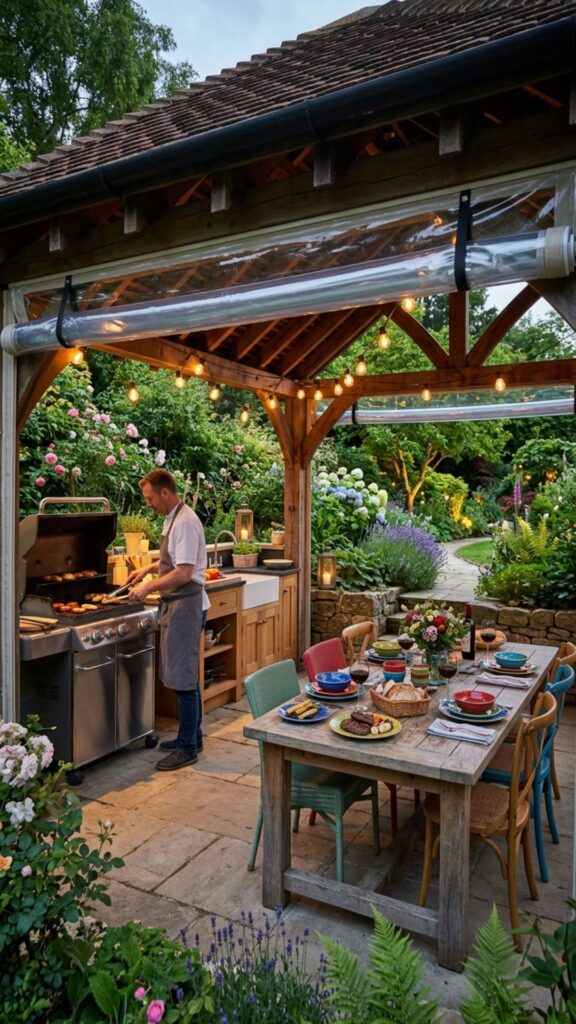
Wind is often more of a problem than rain in Ireland. Clear PVC or fabric side screens roll down to shelter your space, then tuck away when the weather turns kind.
Motorised versions with wind sensors retract themselves in gusts to avoid damage. They keep heat in, rain out, and let you keep the open feel when conditions allow. A genuinely underrated upgrade.
15. Charcoal Kamado Grill — Versatile and Weather-Tough
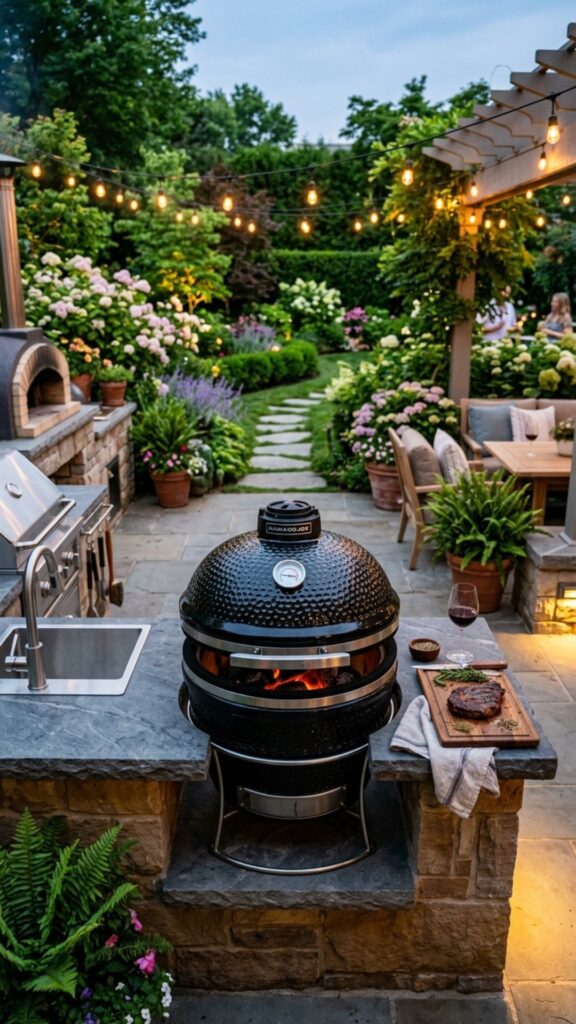
A ceramic kamado grills, smokes, and bakes, and its thick walls hold heat brilliantly even in cold, damp air. That thermal mass makes it far more reliable outdoors than a thin metal barbecue.
The ceramic shell shrugs off frost and rain. Keep it under cover and fit a fitted cover for extra protection. If you want one grill that does everything through an Irish year, this is a strong pick.
16. Sheltered Bar Counter — Somewhere to Perch and Chat
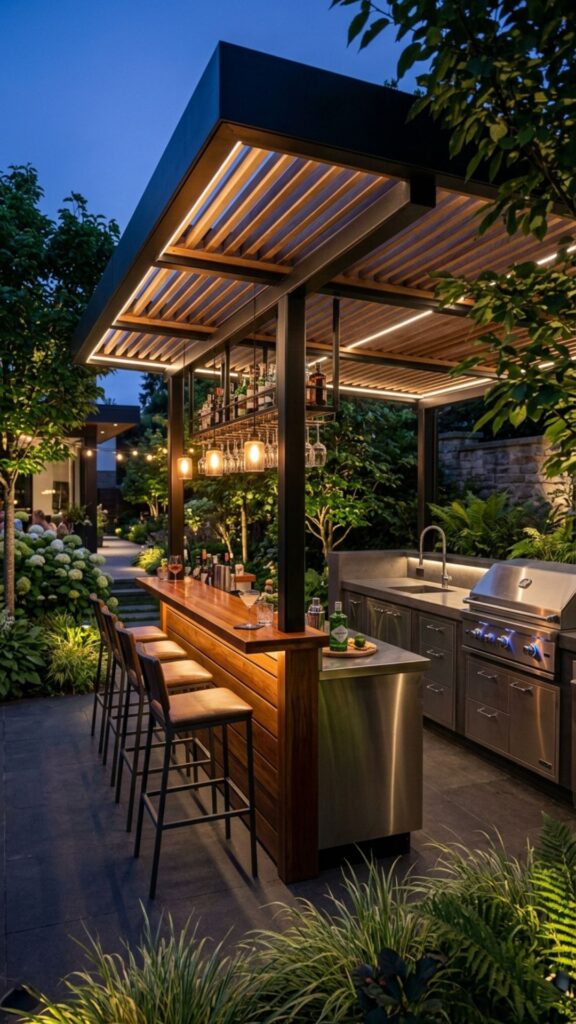
A raised bar counter along the edge of your cooking zone gives guests a place to sit, drink, and keep the cook company — all under cover. It turns the kitchen into a social hub.
Top it with sealed granite or porcelain that laughs off spills and weather. Add a couple of outdoor-rated stools with quick-dry seats. It’s a small touch that makes the whole space feel finished.
17. Low-Voltage LED Lighting — Long Evenings, Short Days
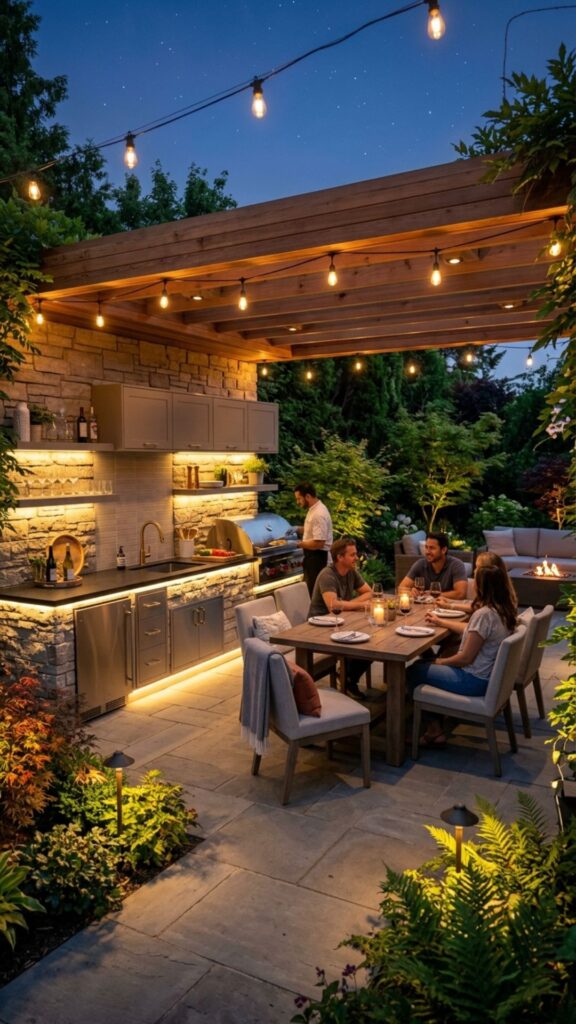
Irish winter days are short, so good lighting extends your usable hours dramatically. Waterproof (IP65-rated) LED strips and spots let you cook and dine well after dark.
Layer it: task lighting over the grill and prep areas, softer ambient light over seating. Put it on a dimmer or smart switch. Warm, well-placed lighting makes even a drizzly November evening feel inviting.
18. Frost-Proof Countertops — Surfaces Built to Last
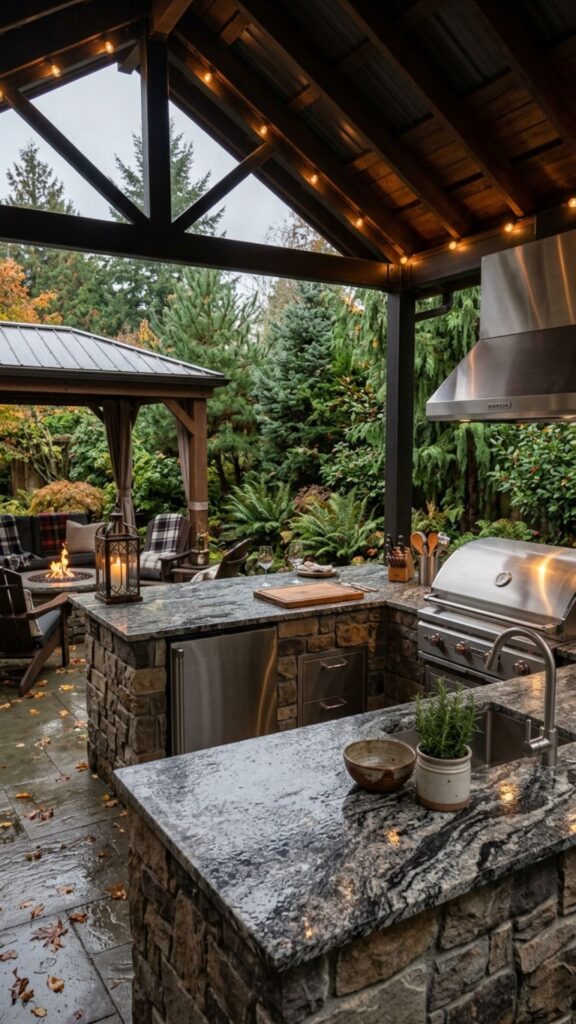
Cheap concrete and untreated stone crack when water freezes inside them. Choose sealed granite, quartzite, or porcelain slabs rated for outdoor and frost conditions.
Seal natural stone annually to keep moisture out. Slope counters very slightly so water runs off rather than sitting. Get the surfaces right and you won’t be replacing them after the first harsh winter.
19. Integrated Firepit Table — Heat and Gathering in One
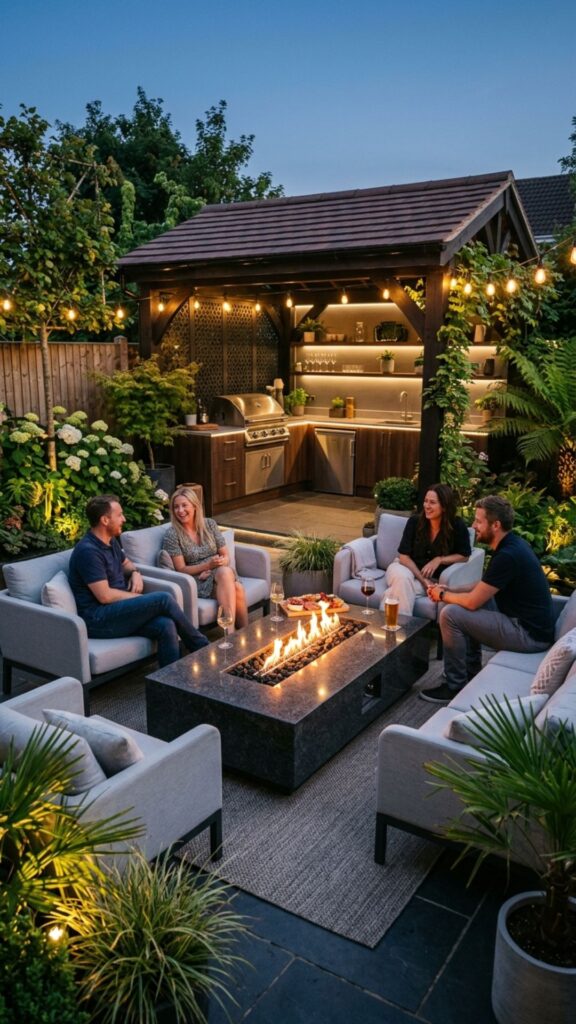
A gas firepit built into a low table gives you warmth and a natural place for people to cluster on cool evenings. Gas over wood means no smoke, no sparks, and instant control.
Choose weatherproof materials and a cover for the burner. Position it just outside — or at the edge of — your covered zone so the heat spreads across your seating. It’s the feature that keeps everyone outside longer.
20. Modular Weatherproof Furniture — Flexible and Rain-Ready

Fixed furniture limits how you use the space. Modular pieces with all-weather frames and quick-dry foam let you rearrange for a barbecue, a quiet dinner, or a full-on party.
Look for powder-coated aluminium or HDPE rattan with drainage in the cushions. Store cushions in a sealed deck box when not in use. Flexible, durable furniture rounds out a kitchen that genuinely works in the Irish climate.
Build a Kitchen That Beats the Irish Weather
The trick to a great outdoor kitchen in Ireland is planning around the rain, not despite it. Cover your cooking zone, pick weatherproof materials, add heat and light, and sort your drainage — do those four things and you’ll have a space you use through most of the year, not just a fortnight in July.
Ready to plan yours? Start with the shelter and drainage first, then build outward feature by feature. Talk to a local landscaper or outdoor kitchen specialist who understands Irish conditions, and get a design that fits your garden and your budget. Your best outdoor season starts with the right plan.
Can you use an outdoor kitchen in Ireland all year round?
Yes, with the right setup. A covered cooking zone, patio heaters, windbreak screens, and weatherproof materials let you use an outdoor kitchen through most of the year, including winter. Shelter and heat are the two features that make year-round use possible.
What materials are best for an outdoor kitchen in the Irish climate?
Marine-grade (316) stainless steel, sealed granite or porcelain, powder-coated aluminium, and frost-proof porcelain paving all handle Ireland’s damp, salty, and cold conditions best. Avoid untreated timber and low-grade metals, which rot or rust quickly.
How much does an outdoor kitchen cost in Ireland?
Costs vary widely depending on size and features. A basic covered setup with a grill and counters can start around €3,000–€5,000, while fully fitted kitchens with premium appliances, roofing, and plumbing often run €15,000 or more. Shelter and drainage should be budgeted first.
Do I need planning permission for an outdoor kitchen in Ireland?
Usually not for a standard garden kitchen, but larger permanent structures or roofed extensions may require permission depending on size and location. Always check with your local county council before building anything substantial.
How do I protect an outdoor kitchen from rain and frost?
Install overhead cover, grade surfaces toward drains, use frost-proof materials, and fit isolation valves so you can drain water pipes before a freeze. Fitted covers for grills and appliances add another layer of protection through winter.