The best camping meals rarely come from a cold sandwich eaten out of a bag. They come from a warm skillet, a good setup, and a little planning. We’ve spent enough nights fumbling with gear in the dark to know that a smart camp kitchen changes everything.
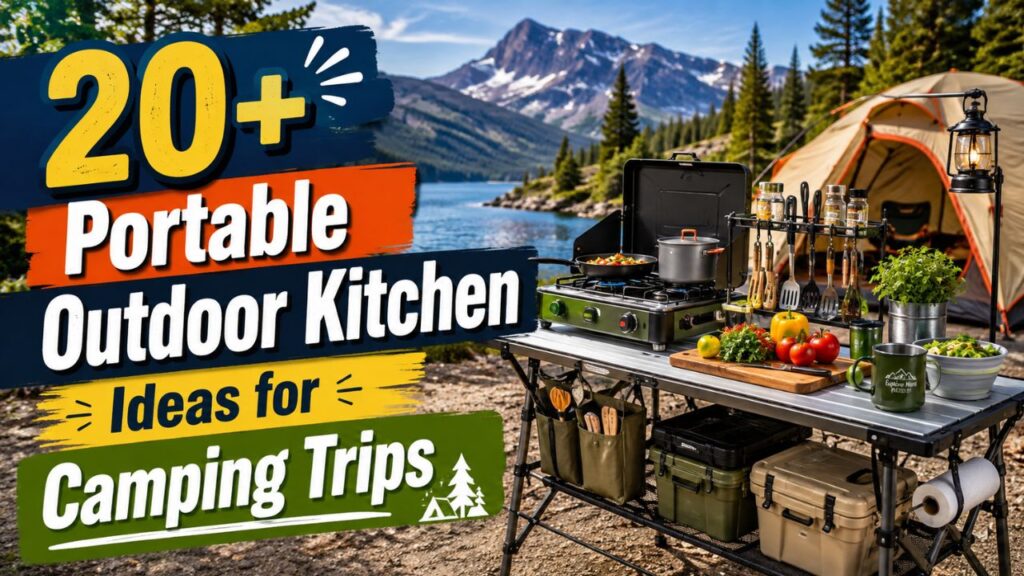
That’s why we pulled together these outdoor kitchen ideas for camping. Whether you pitch a tent twice a year or live half your summer in the woods, these tips help you cook well, pack light, and enjoy the process.
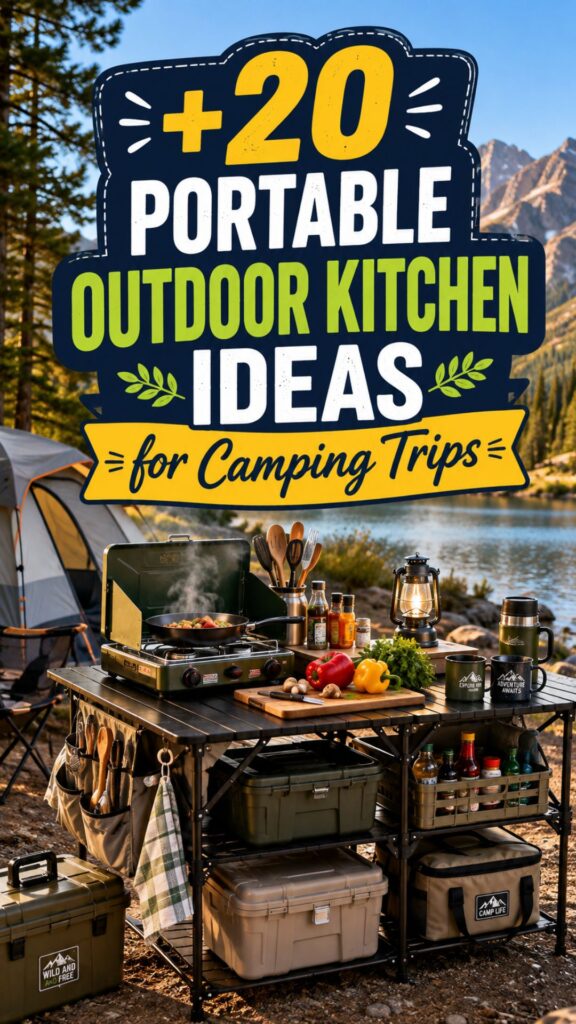
Here’s what you’ll get:
- Gear picks that pack small and work hard
- Layout tips for cooking and cleaning
- Meal-prep tricks that save time and mess
Let’s set up a camp kitchen you’ll actually look forward to using.
1. Fold-Flat Camp Kitchen Station
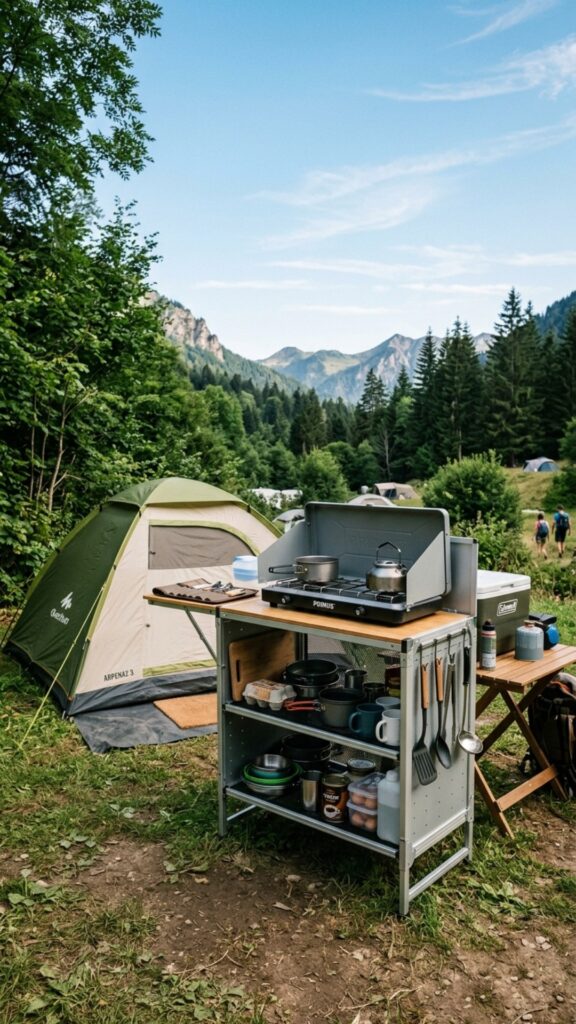
A fold-flat kitchen station gives you a sturdy surface without hauling a full table. Most models open in seconds and include shelves, hooks, and a windscreen for your stove. When you’re done, they collapse into a slim case that fits behind the back seat.
We reach for these on almost every trip because they keep the workflow tidy. You get a spot to chop, a spot to cook, and a spot to stack clean dishes. That separation matters more than you’d think when you’re feeding a hungry group.
2. Two-Burner Propane Stove
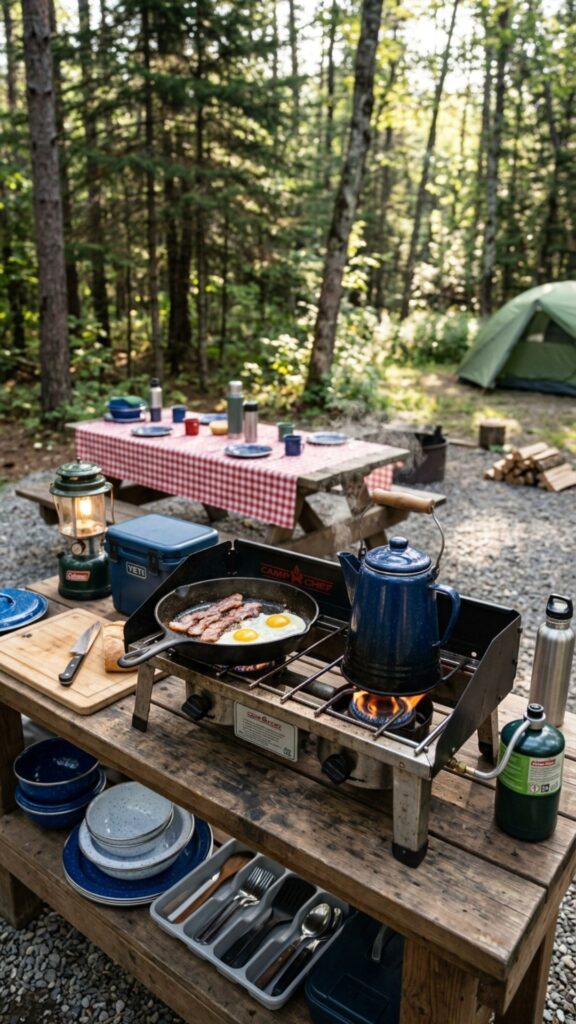
The two-burner propane stove is the workhorse of camp cooking. One burner boils water for coffee while the other handles eggs or oatmeal. It’s fast, reliable, and easy to control, which beats guessing over an open flame.
Look for a model with adjustable heat and a wind guard. We’ve cooked full dinners on these for years, and the trick is simple: keep spare fuel canisters on hand. Running dry mid-meal is a mistake you only make once.
3. Compact Single-Burner Backpacking Stove
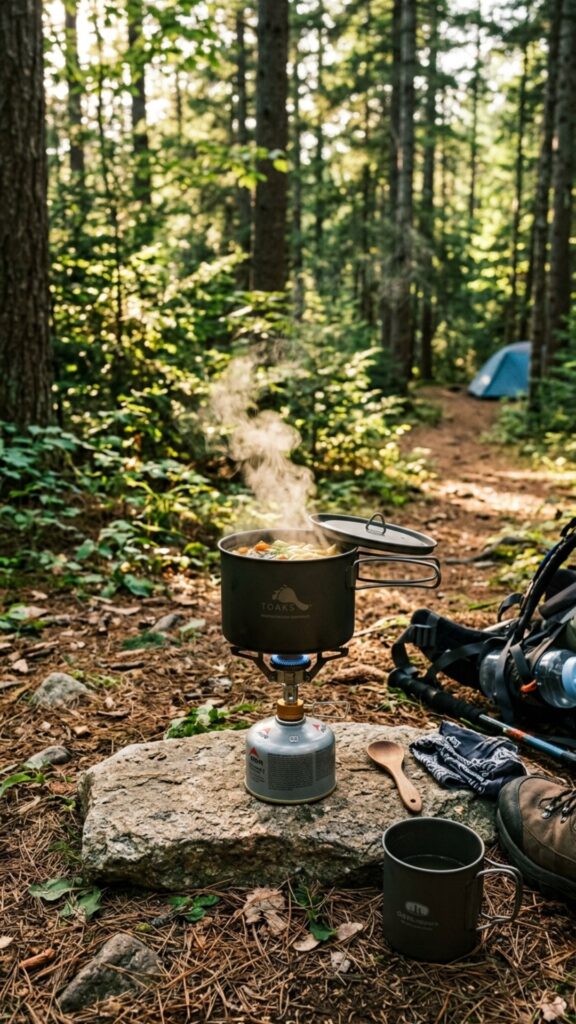
If you hike to your site, a single-burner backpacking stove is your best friend. These screw onto a small fuel canister and weigh next to nothing. They’re built for solo cooks and minimalists who count every ounce.
They shine for boiling water, heating soup, or making a quick one-pot meal. We keep one in the bottom of our pack as a backup even on car trips. Redundancy in the backcountry is never wasted.
4. Portable Grill Grate Over a Fire Pit
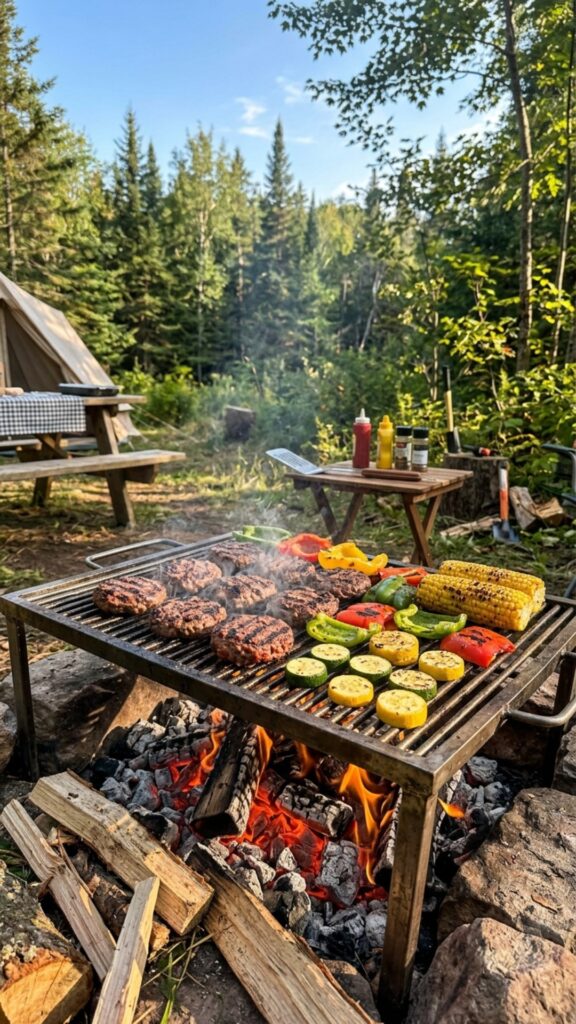
A simple grill grate turns any fire pit into a cooking surface. Set it over the coals, let the flames settle, and you’ve got a grill for burgers, veggies, or foil packs. It’s cheap, light, and packs completely flat.
The key is patience. Cook over glowing coals, not roaring flames, so nothing scorches. We learned this the hard way with a batch of charred sausages, and the coals-not-flames rule has saved every meal since.
5. Collapsible Sink for Dish Duty
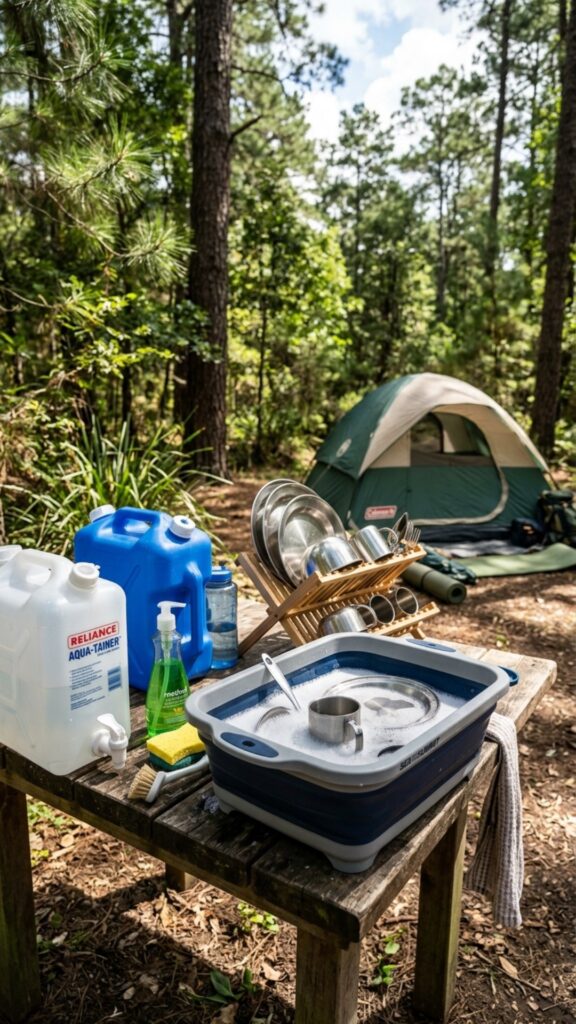
Cleanup is the part everyone dreads, and a collapsible sink makes it bearable. These silicone basins pop up when you need them and flatten for storage. Fill one with soapy water and one with rinse water for a proper two-basin system.
Good hygiene at camp keeps everyone healthy. We always wash dishes well away from streams and lakes, and we pack out greywater when required. A clean camp kitchen isn’t just nicer to use, it’s safer, too.
6. Cast Iron Skillet for One-Pan Meals
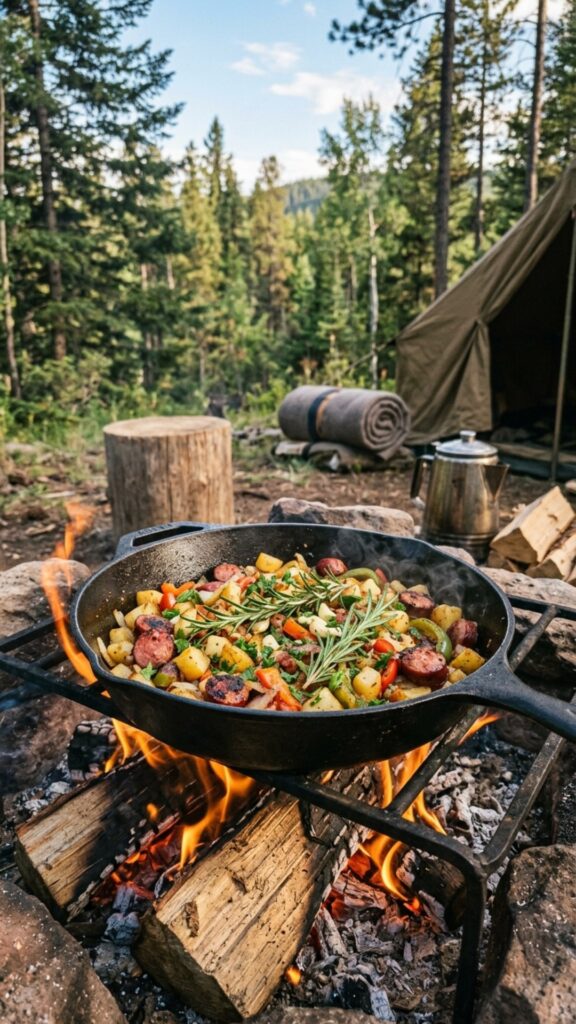
Nothing beats a cast iron skillet for camp cooking. It holds heat evenly, works over fire or stove, and lasts a lifetime with basic care. From bacon to cornbread to a full skillet dinner, it does almost everything.
Yes, it’s heavy, so it’s a car-camping pick, not a backpacking one. We season ours after each trip and store it dry to prevent rust. Treat it well, and it becomes the piece of gear you pass down.
7. Nesting Cookware Set
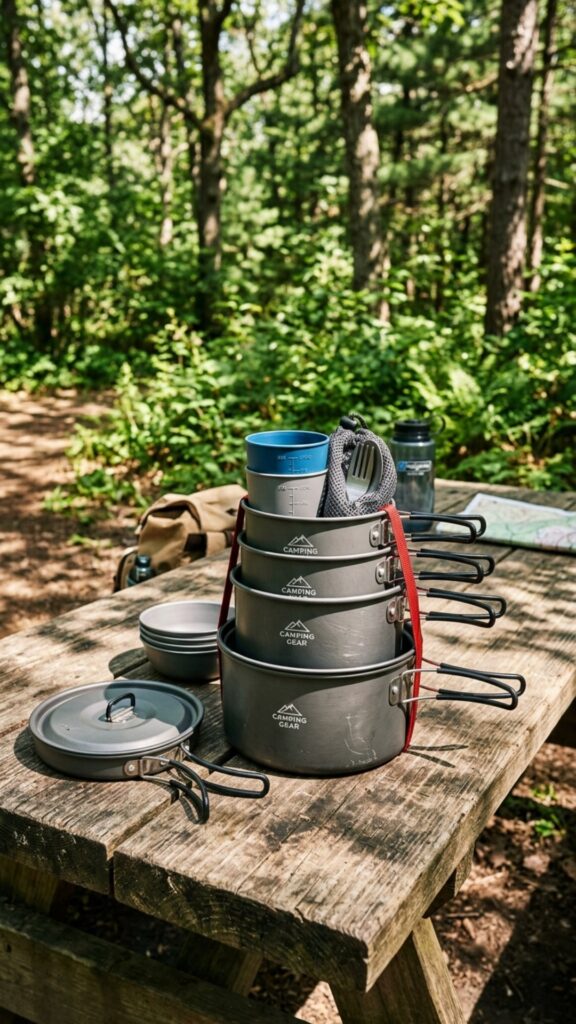
A nesting cookware set solves the storage puzzle. Pots, pans, and cups stack inside one another, shrinking a full kitchen into a single bundle. Many sets include lids that double as strainers or plates.
We love how they save space without cutting corners on function. Choose hard-anodized aluminum or stainless steel for durability. Cheap thin pans warp and burn food, and that’s a shortcut you’ll regret at dinner.
8. Portable Water Container with Spigot
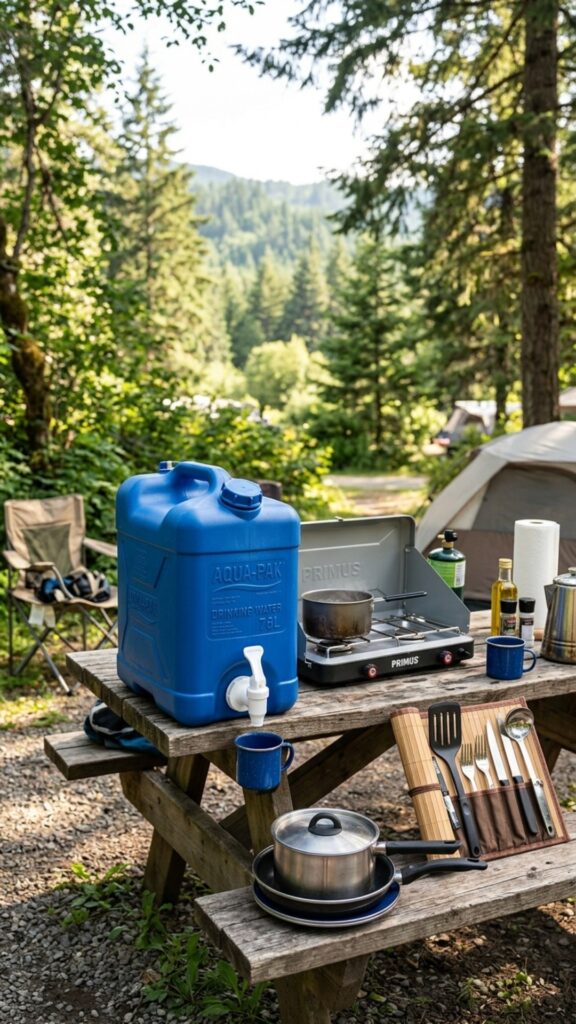
Clean water access shapes your whole setup. A rolling or jug-style container with a spigot gives you running water for cooking, drinking, and washing. Set it at the edge of your kitchen station for easy access.
We fill ours before leaving the trailhead or the campground tap. A 5- to 7-gallon container usually covers two people for a weekend. Running out of water is stressful, so we always pack a little more than the math suggests.
9. Roll-Up Prep Table
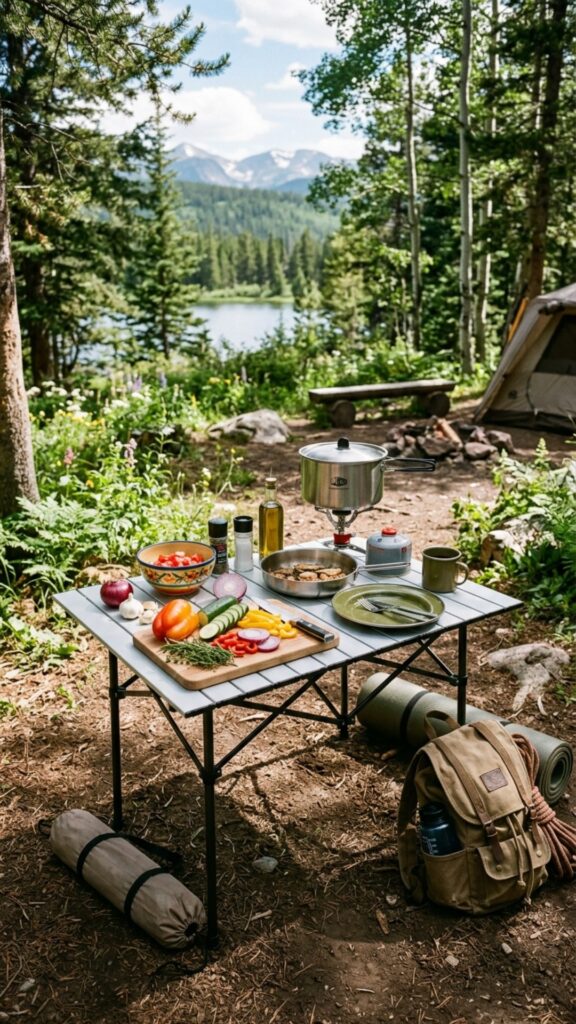
A roll-up table adds workspace without adding bulk. The aluminum-slat top rolls into a bag and sets up on a folding frame in under a minute. It handles hot pots, cutting boards, and the general chaos of meal prep.
We use one as a dedicated prep zone so the picnic table stays free for eating. Keeping cooking and dining separate cuts down on clutter and cross-contamination. Small habits like this make camp meals feel calm instead of frantic.
10. Cooler with Dedicated Food Zones
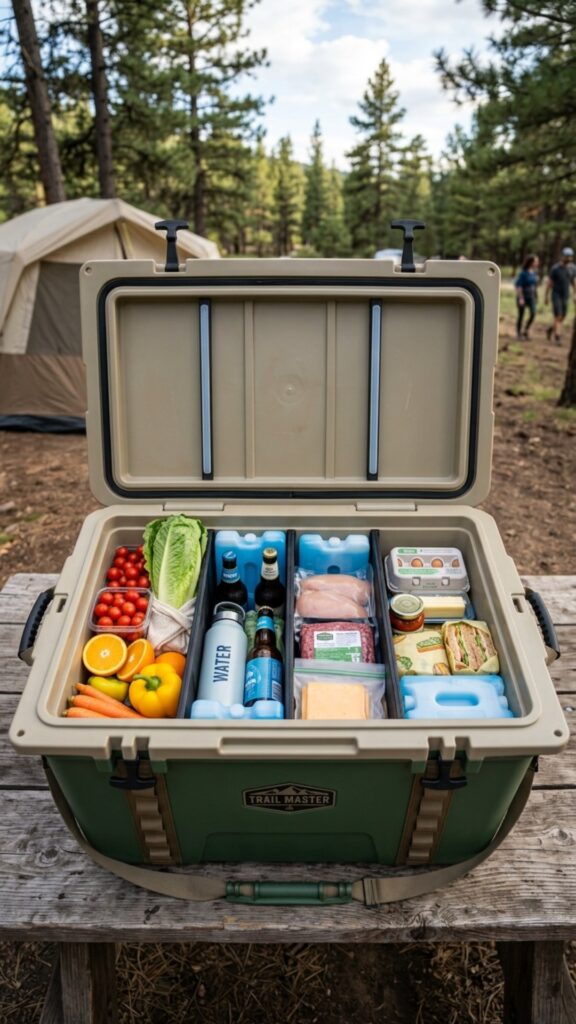
A quality cooler is the heart of your food storage. Models with baskets and dividers keep raw meat separate from ready-to-eat items. Good insulation holds ice for days, which protects both your food and your health.
We pre-chill the cooler and pack it in reverse order of use. Meals for the last day go on the bottom, day-one food on top. Frozen water bottles double as ice and drinking water once they melt.
11. Spice Kit in a Compact Case
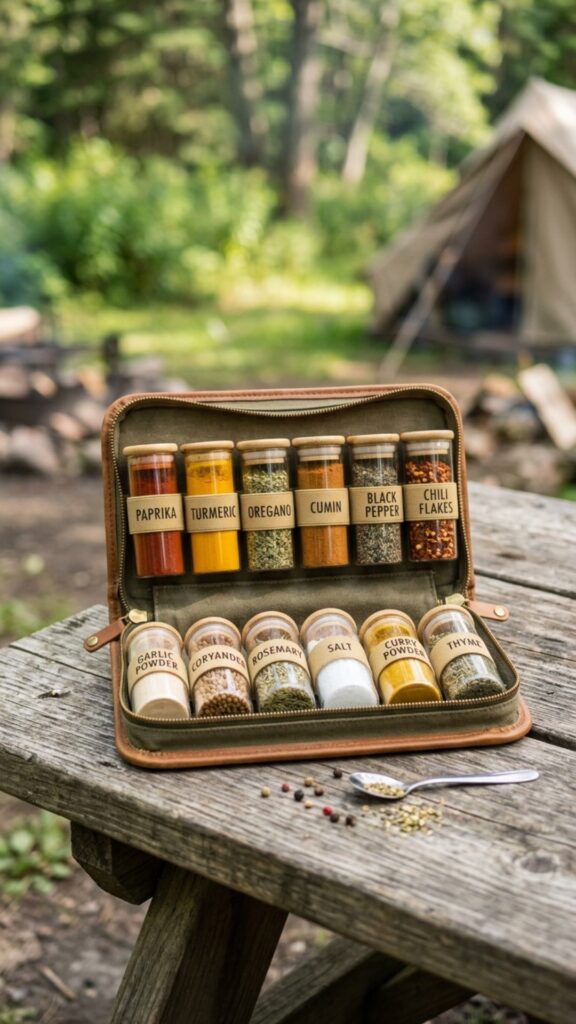
Bland camp food is a solved problem. A compact spice kit with refillable containers brings salt, pepper, garlic, and your favorite blends along for the ride. Small bottles mean big flavor without the weight of full jars.
We label ours clearly and refill before every trip. A pinch of the right seasoning turns plain rice or eggs into something worth remembering. Flavor is the cheapest upgrade in any camp kitchen.
12. Portable Coffee Setup
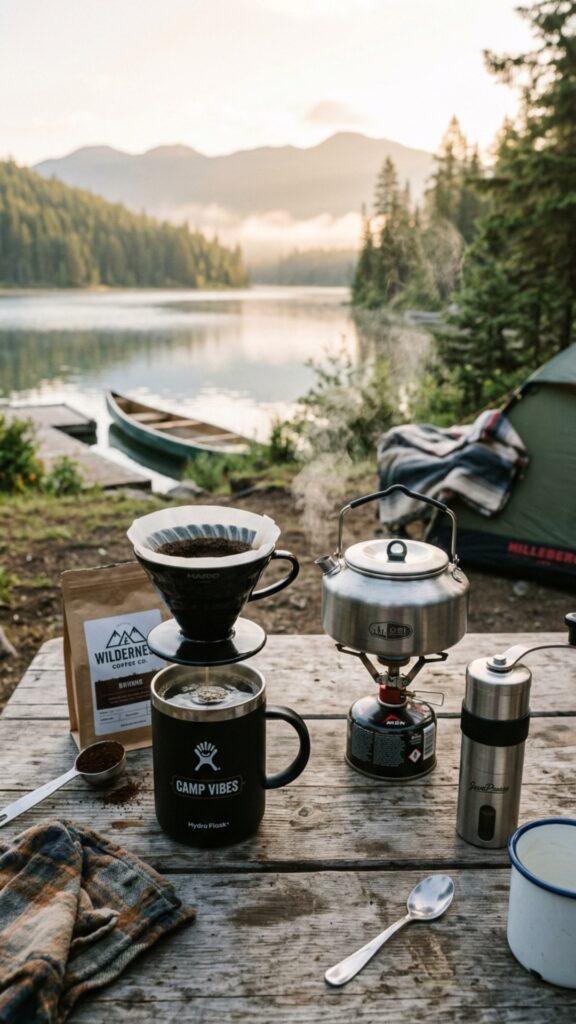
Good coffee sets the tone for the whole day. A pour-over dripper, French press, or AeroPress packs small and brews a real cup. Pair it with a kettle or your stove, and morning at camp gets a lot brighter.
We’re partial to a simple pour-over for its light weight and easy cleanup. Pre-measure grounds into a small container at home to skip the fuss. First light and fresh coffee is a combination that’s hard to beat.
13. Hanging Utensil Organizer
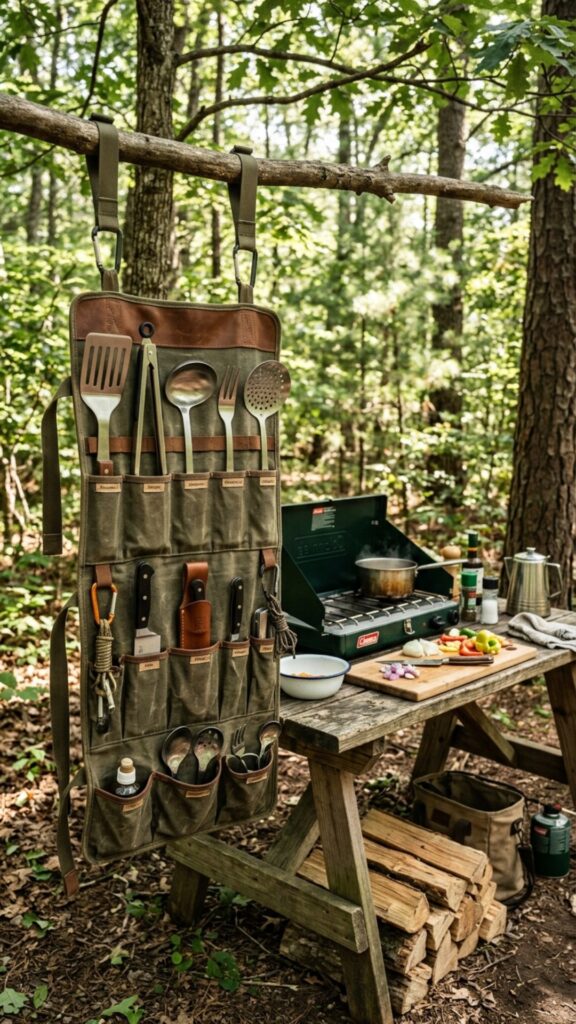
Loose utensils vanish into bags and drift to the bottom of bins. A hanging organizer with pockets keeps spatulas, knives, and tongs in view and within reach. Hook it on your kitchen station or a nearby branch.
We treat visibility as its own feature. When you can see every tool, you cook faster and lose less. It’s a tiny change that removes a surprising amount of daily frustration.
14. Dutch Oven for Slow Cooking
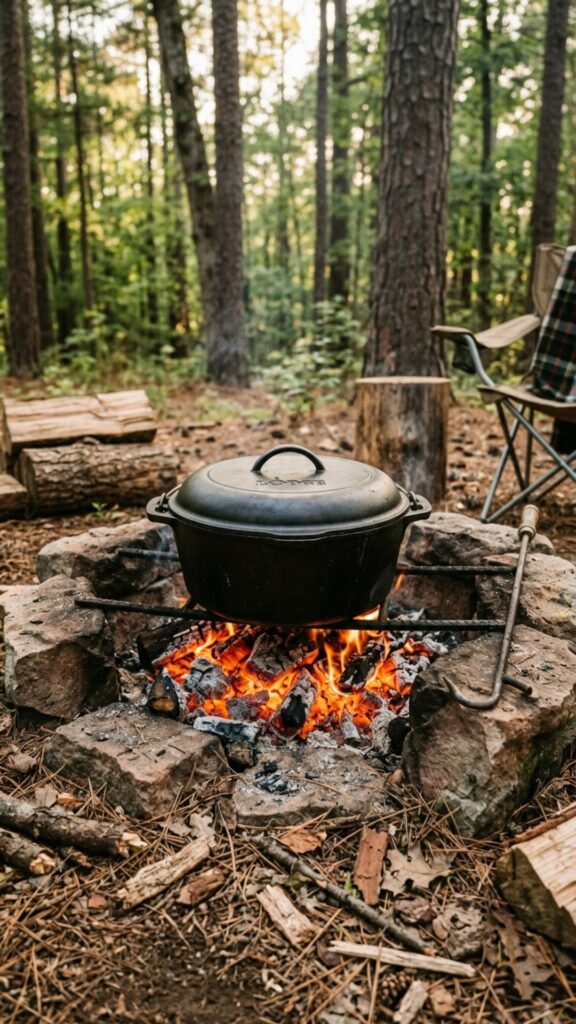
A cast iron Dutch oven unlocks camp cooking’s greatest hits: stews, chili, bread, even cobbler. Nestle it in coals and pile a few on the lid for even, all-around heat. Then walk away and let the fire do the work.
We plan one Dutch oven meal per trip because the payoff is huge. It feels like a treat after a long hike. Wrap the lid lifter and heavy gloves in your kit so you can handle it safely.
15. Portable Propane Fire Pit
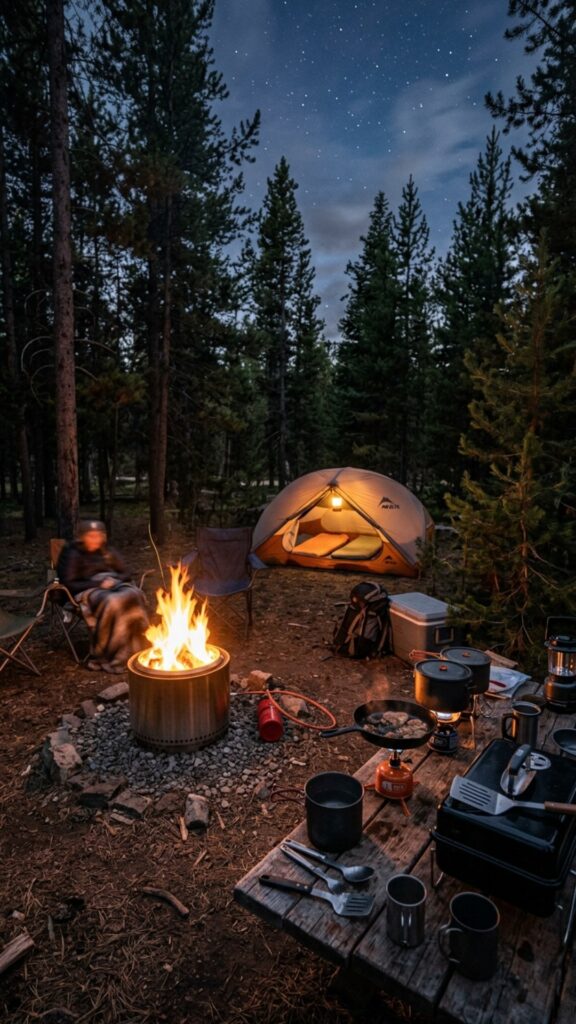
Where open fires are banned, a portable propane fire pit keeps cooking alive. It lights instantly, produces no sparks, and shuts off in a second. Many campgrounds allow them even during fire restrictions, though you should always check first.
We appreciate the control most of all. No coaxing damp wood, no smoke chasing you around the site. Add a grill topper, and you’ve got a clean, reliable heat source for meals and warmth alike.
16. Reusable Food Storage Containers
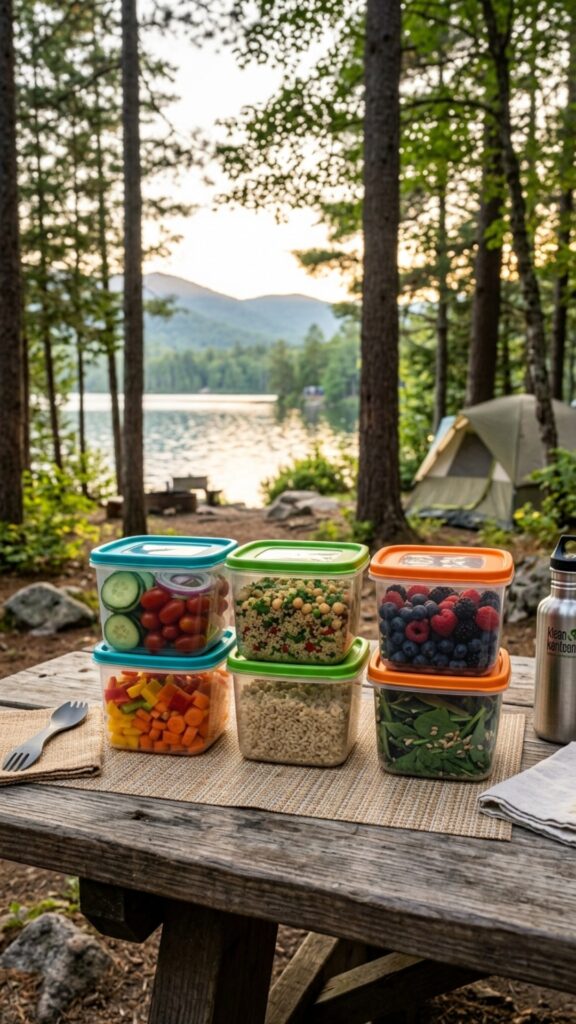
Leftovers deserve a plan. Stackable, leakproof containers store extra food, hold pre-chopped ingredients, and double as bowls. They cut down on waste and keep critters out of your snacks.
We prep as much as we can at home and pack it in these. Chopped onions, marinated meat, and mixed dry goods travel neatly and speed up dinner. Less prep at camp means more time by the fire.
17. Portable Cutting Board Set
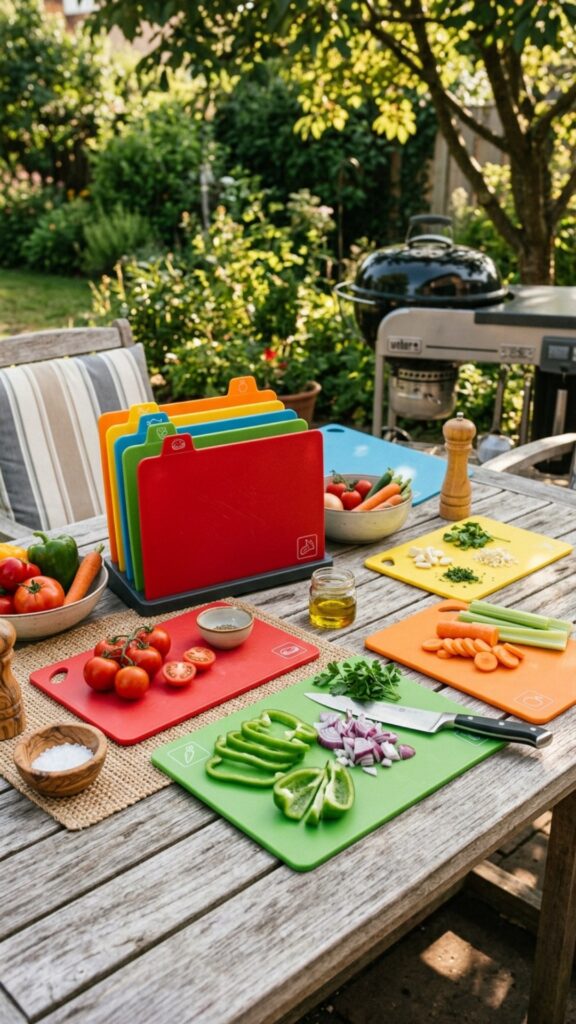
Flexible cutting mats weigh almost nothing and clean up in seconds. Color-coded sets let you keep one board for meat and another for produce. That small step reduces the risk of foodborne illness on the trail.
We rinse and dry ours immediately after use. Bacteria loves a warm, damp board left in the sun. A quick wash keeps your kitchen safe and your food tasting the way it should.
18. LED Lantern or Headlamp for Night Cooking
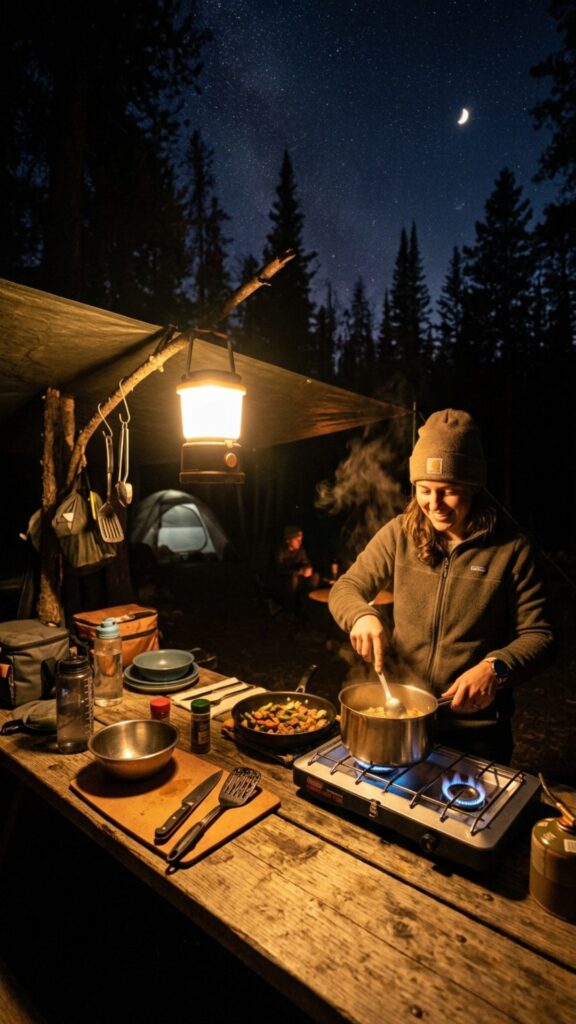
Cooking after dark is normal at camp, so light matters. A bright LED lantern lights your whole prep area, while a headlamp keeps your hands free. Together, they make evening meals safe and simple.
We hang a lantern above the kitchen station and wear a headlamp for detail work. Warm-toned light is easier on the eyes and gentler on the mood. Never underestimate how much good lighting improves late dinners.
19. Trash and Recycling Bag System
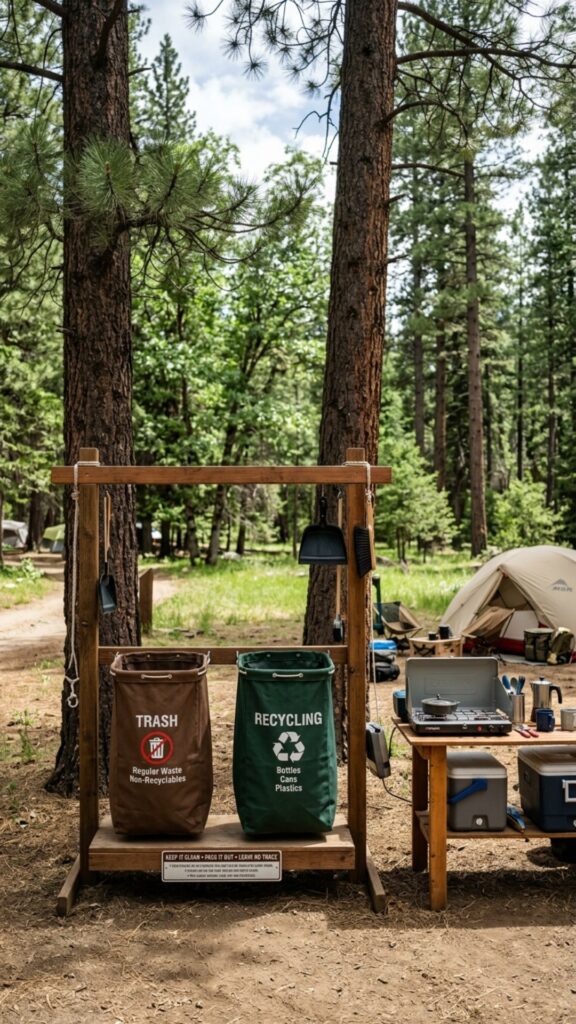
A clean kitchen isn’t complete without waste management. Hanging trash bags with a sturdy frame keep garbage off the ground and away from wildlife. Separate bags for trash and recycling make packing out easy.
We follow Leave No Trace and haul out everything we bring in. Food scraps attract animals and damage the places we love. A simple bag system protects both your site and the next campers who use it.
20. Multi-Tool with a Built-In Knife
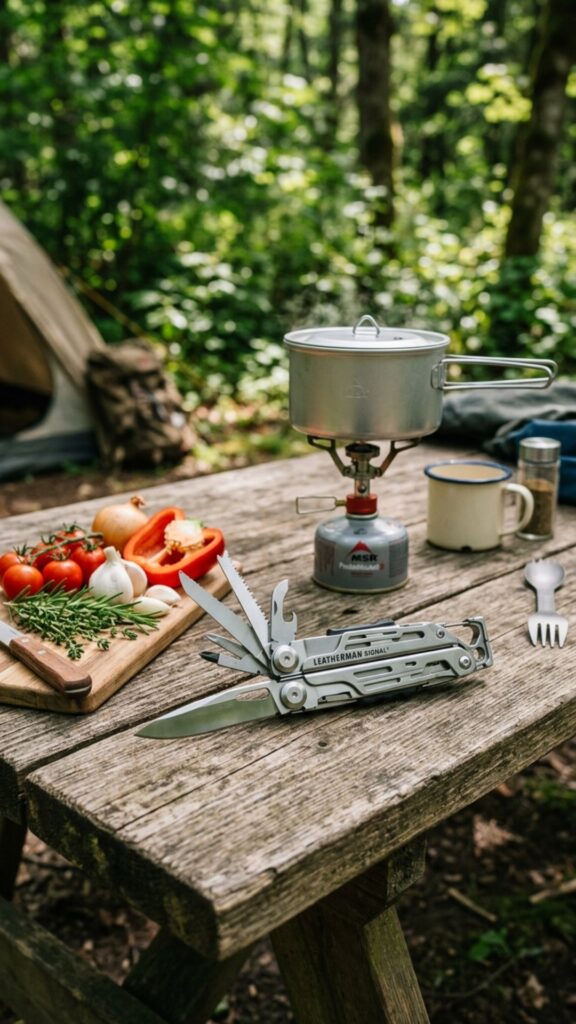
A good multi-tool earns its spot in every camp kitchen. It opens cans, slices cheese, tightens a loose stove, and handles the odd repair. One compact tool replaces a handful of single-use gadgets.
We keep ours clipped where we can grab it fast. Choose a model with a locking blade and a can opener at minimum. Versatile gear like this is exactly what makes packing light possible.
Wrapping Up Your Camp Kitchen Plan
A great camp kitchen helps you cook well, pack smart, and relax more. Start with the essentials: a stove, a prep surface, clean water, and a cleanup station. Add pieces as you learn what your trips really need.
We believe good food outdoors should feel easy, not like a chore. Pick two or three ideas from this list and try them on your next trip. Then tell us which setup made your camp meals shine. Happy cooking out there!
What are the essentials for a camping kitchen?
A basic camping kitchen needs a stove and fuel, a pot and pan, a prep surface, clean water storage, and a cleanup station with soap and a collapsible sink. Add utensils, a cutting board, and lighting for night cooking. These essentials cover cooking, cleaning, and food safety for most trips.
How do you set up an outdoor kitchen for camping?
Set up your outdoor kitchen on flat, stable ground away from your tent and water sources. Place your stove on a fold-flat station, keep a separate prep table for chopping, and position water and a cleanup sink nearby. Organize tools where you can see them, and add lighting for evening meals.
What is the best portable stove for camping?
A two-burner propane stove is best for car camping because it cooks fast and handles full meals. For backpacking, a single-burner canister stove is the top pick since it’s lightweight and compact. Choose based on how you travel and how many people you’re feeding.
How do you keep food cold while camping?
Use a well-insulated cooler, pre-chill it before packing, and add plenty of ice or frozen water bottles. Pack food in reverse order of use and keep raw meat in a separate zone. Keep the cooler in shade and open it as little as possible to hold the cold longer.
How do you wash dishes while camping?
Set up a two-basin system with one tub of soapy water and one of rinse water, located at least 200 feet from lakes and streams. Scrape food scraps into your trash, wash, rinse, and air-dry. Strain and pack out greywater where required to protect the environment.