Cooking outside beats hunching over a tiny stove inside a hot camper. Fresh air, more elbow room, no lingering food smells in your sleeping space — that’s the real payoff. The tricky part is fitting a working kitchen into a rig that already feels full.
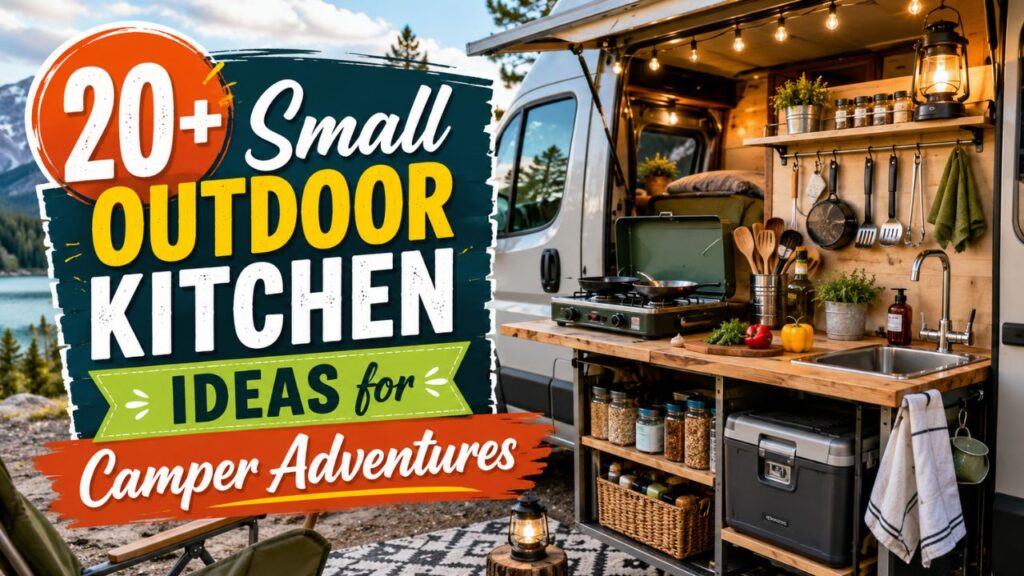
Good news: you don’t need a huge setup to eat well on the road. The best outdoor kitchen ideas for camper life focus on gear that folds, stacks, or does double duty.
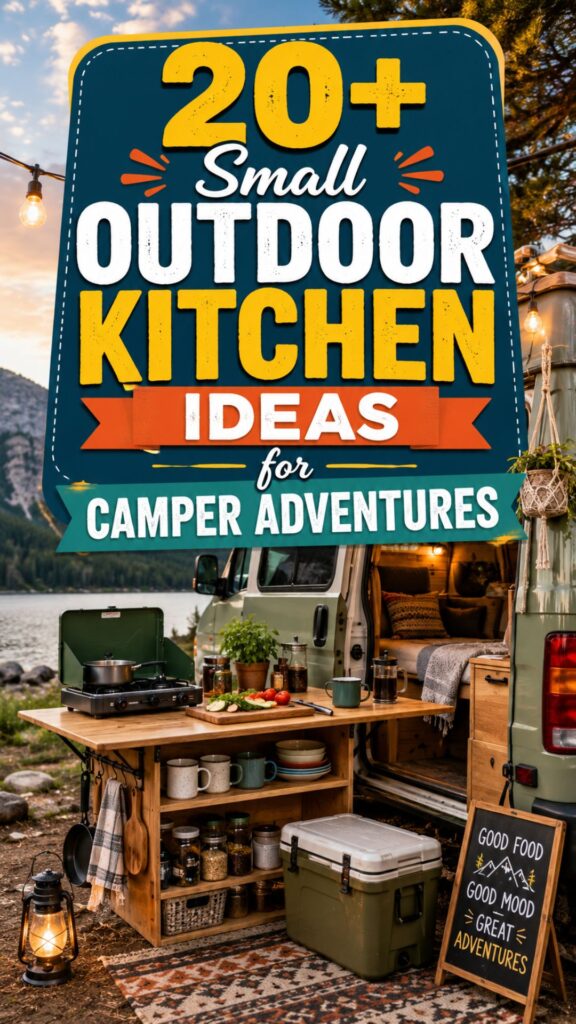
We’ve spent years testing setups on everything from teardrops to travel trailers, and these 20 ideas cover the ones that actually hold up. You’ll find real examples, space-saving tricks, and honest notes on what works.
1. Slide-Out Kitchen Drawer — Cook Without Unpacking
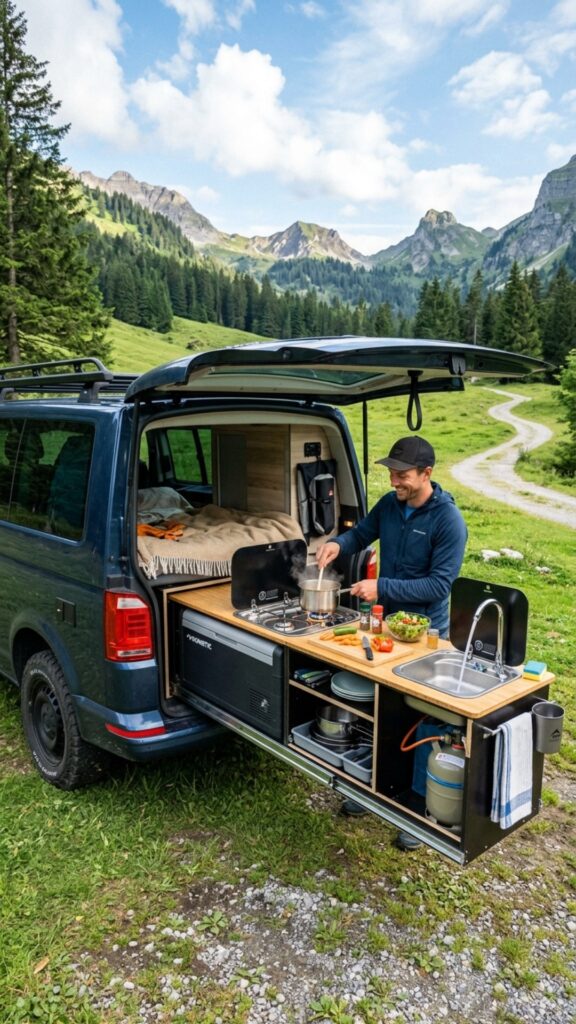
A slide-out kitchen drawer built into your camper’s exterior storage is the fastest setup out there. You pull one handle and a full prep station rolls out — stove, sink, counter, all in place. Many newer travel trailers ship with these, but you can retrofit one using heavy-duty drawer slides rated for 250 pounds or more.
The beauty here is speed. No hauling boxes or assembling legs. Pull it out at camp, push it back before you drive off. Add a folding wind screen and you’ve got a reliable spot even on breezy evenings. Mount a small paper towel holder on the inside wall for the little touches that make cooking smoother.
2. Foldout Wall-Mounted Counter — Instant Prep Space
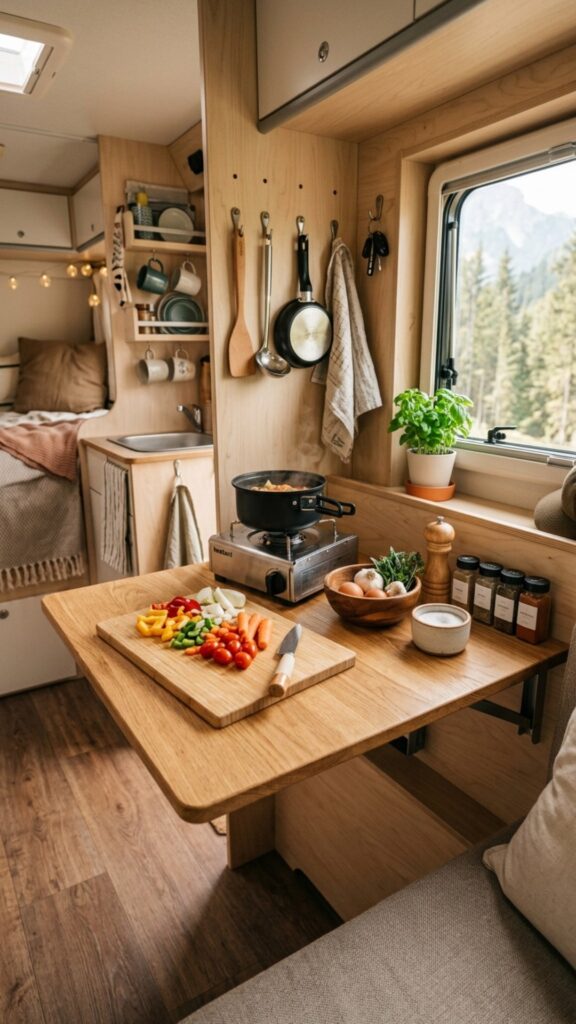
Mount a folding shelf to the outside wall of your camper and you get counter space that disappears when you’re done. A piano-hinge design with a fold-down support leg holds a cutting board, a stove, and your ingredients without eating into storage.
Choose marine-grade plywood or bamboo sealed against moisture. A 24-by-16-inch surface handles most one-pot meals. When it folds flat against the wall, it adds almost no bulk. This is one of the cheapest outdoor kitchen ideas for camper owners who want function without a full rebuild.
3. Portable Two-Burner Camp Stove — The Everyday Workhorse
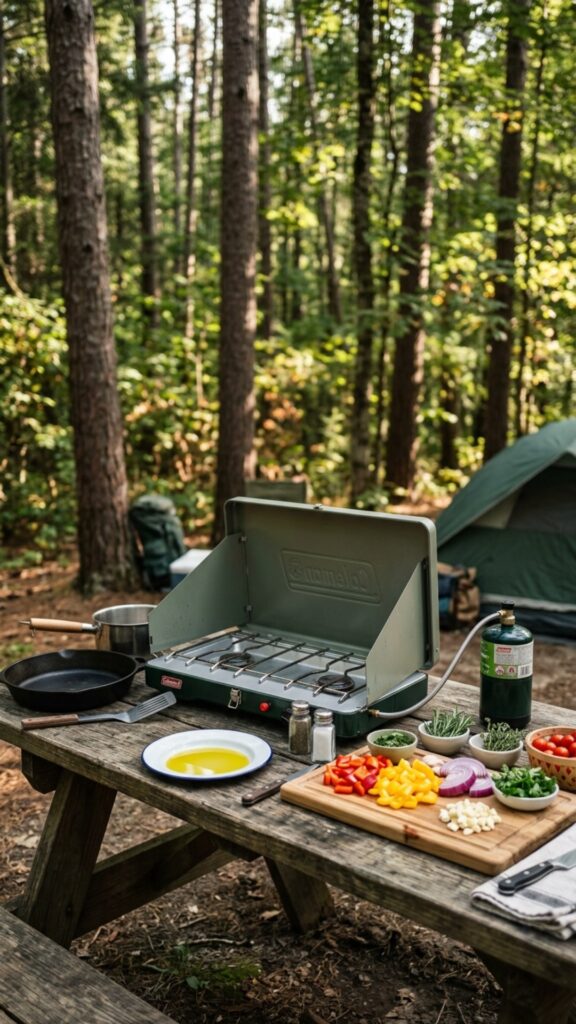
A propane two-burner stove is the heart of most camp kitchens. You can boil pasta on one burner and sauté vegetables on the other, cutting cook time in half. Coleman and Camp Chef models run reliably and pack down to the size of a briefcase.
Look for wind guards and adjustable flame control. A single one-pound propane canister lasts several meals, though a hose adapter to a larger tank saves money over long trips. Store the stove in an exterior bay so it’s ready without digging through cabinets.
4. Magnetic Spice Rack — Everything Within Reach
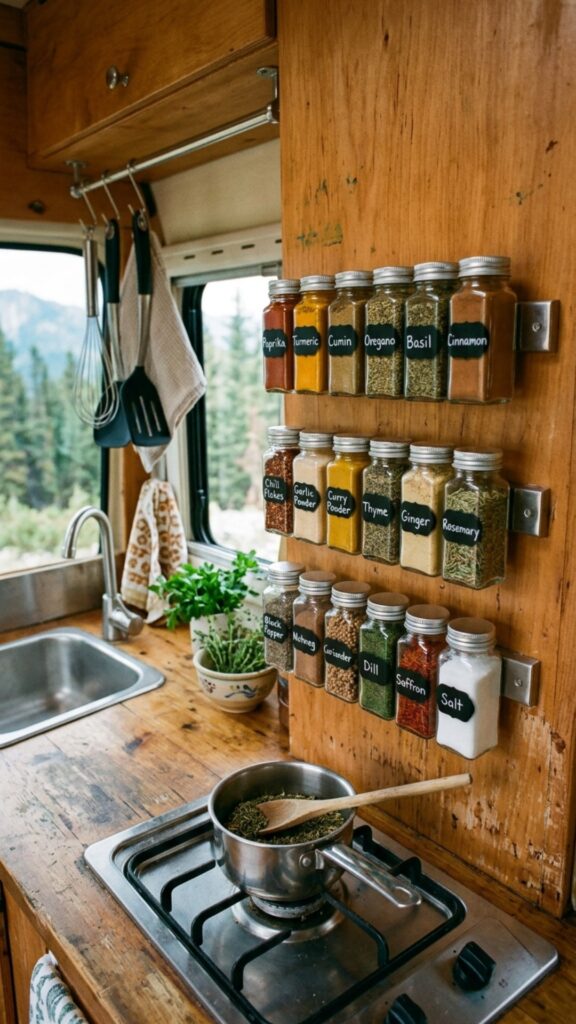
Loose spice jars roll around and spill in a moving camper. A magnetic spice rack fixes that. Mount a steel strip inside a cabinet door or on the exterior kitchen wall, then stick small magnetic tins to it.
Label the lids on top so you can spot each one at a glance. This keeps salt, pepper, garlic powder, and paprika lined up and off your limited counter. It’s a five-dollar fix that punches above its weight, and it survives bumpy roads without a single jar going flying.
5. Collapsible Sink and Dishwashing Station — Clean Up Fast
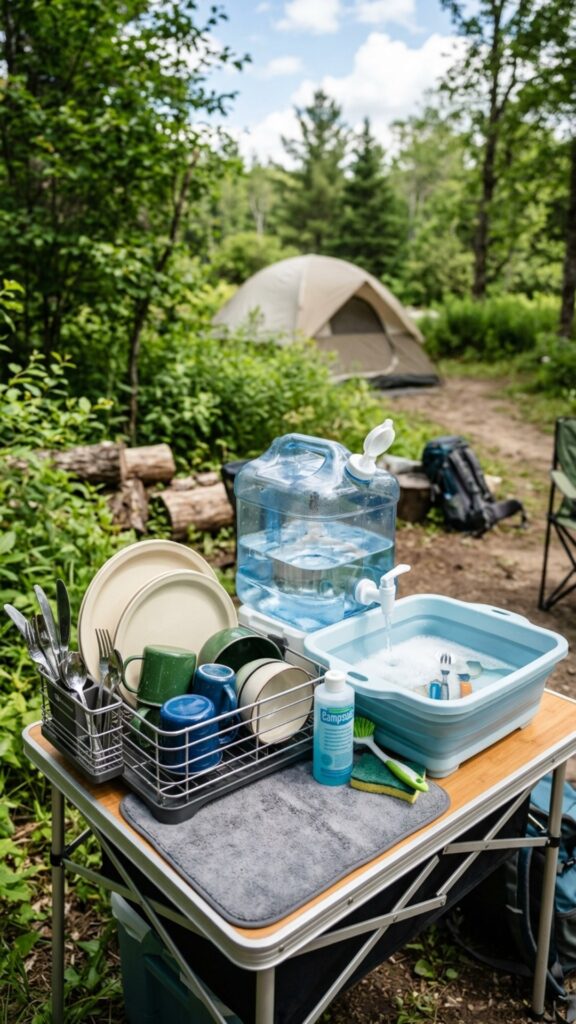
Dishes pile up quick when you’re feeding a group. A collapsible silicone sink pops up when you need it and flattens to an inch thick when you don’t. Pair it with a jug of water and a spray nozzle for a working wash station.
Set up a two-basin system — one for washing, one for rinsing. Grey water goes into a sealed container for proper disposal, not the ground. This keeps your outdoor kitchen tidy and respects the campsite rules most parks enforce.
6. Hanging Storage Organizer — Use Vertical Space
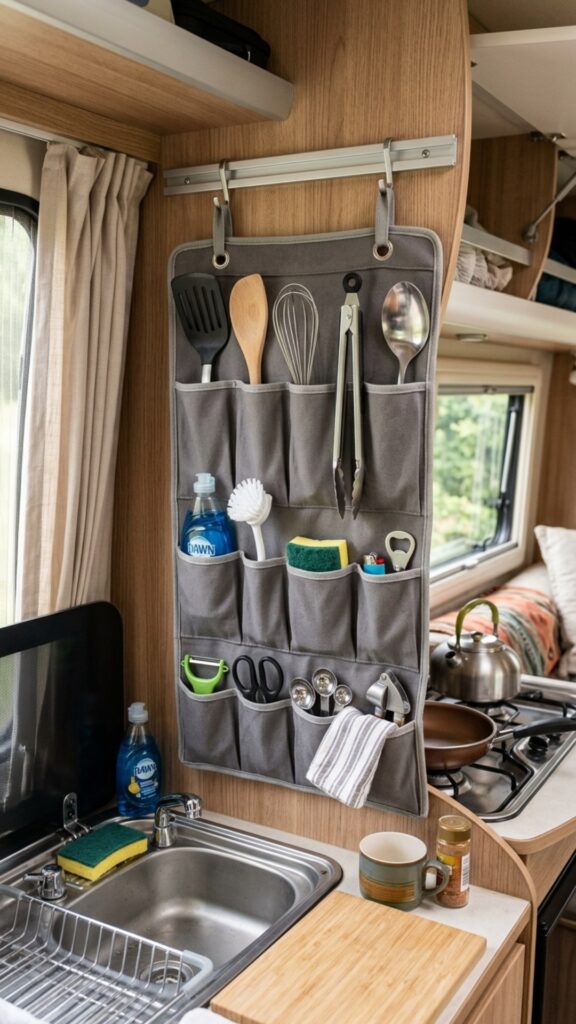
Flat surfaces are scarce, so go up. A hanging fabric organizer with clear pockets holds utensils, dish soap, sponges, and small tools. Clip it to an awning arm or a hook on the camper wall.
The see-through pockets mean you grab what you need without rummaging. Roll it up and tuck it away in seconds when you break camp. It’s one of the simplest outdoor kitchen ideas for camper trips where every square inch counts.
7. Fold-Flat Camp Table — Your Movable Base
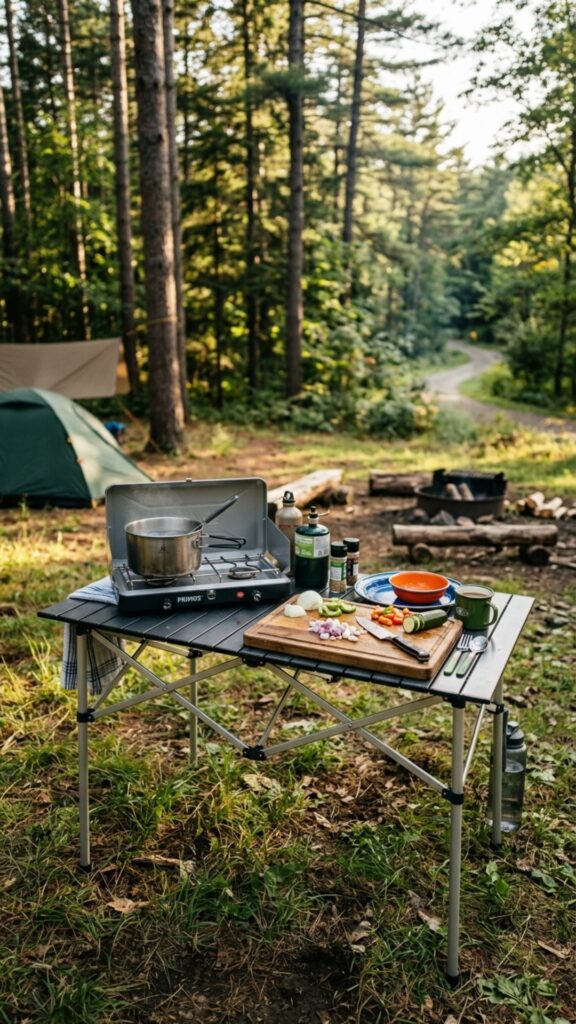
A roll-top aluminum table sets up in under a minute and holds your stove, cutting board, and dishes. Look for adjustable legs so you can level it on uneven ground — a common headache at rustic sites.
Aluminum stays light and shrugs off rain. Many models pack into a carry bag the size of a folding chair. Add a clamp-on side hook for a trash bag and you’ve turned a plain table into a full prep hub.
8. Portable Grill Setup — Real Flame Flavor
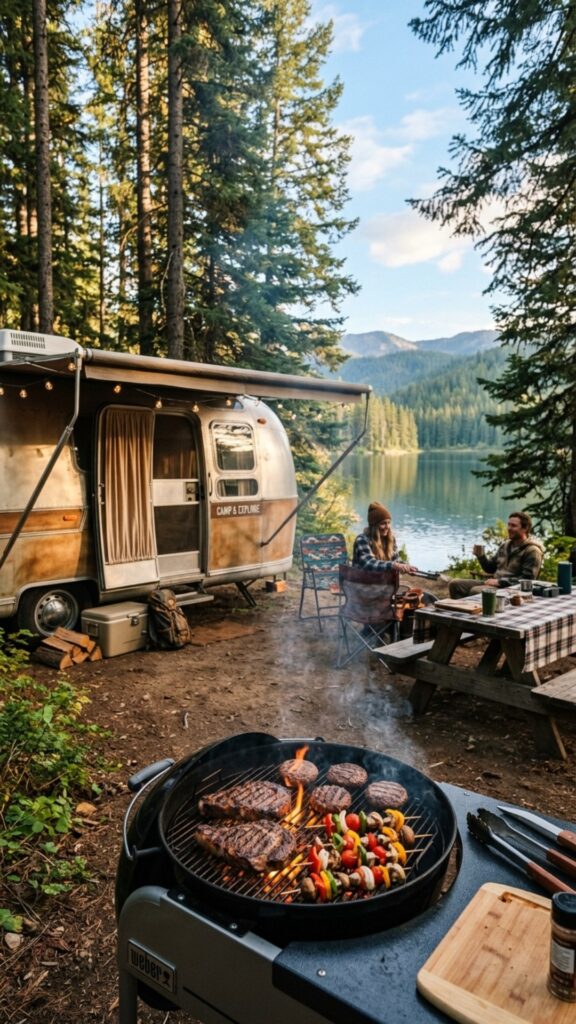
Nothing beats grilled food after a day outdoors. A compact propane or charcoal grill gives you that char without a bulky build-in. Weber’s portable line and the Blackstone 17-inch griddle are camp favorites for good reason.
A griddle surface handles breakfast for a crowd — eggs, bacon, and pancakes all at once. Grease scrapes into a catch cup for easy cleanup. Store the grill in a protective case so soot stays off your other gear.
9. Under-Awning Kitchen Zone — Shelter From the Elements
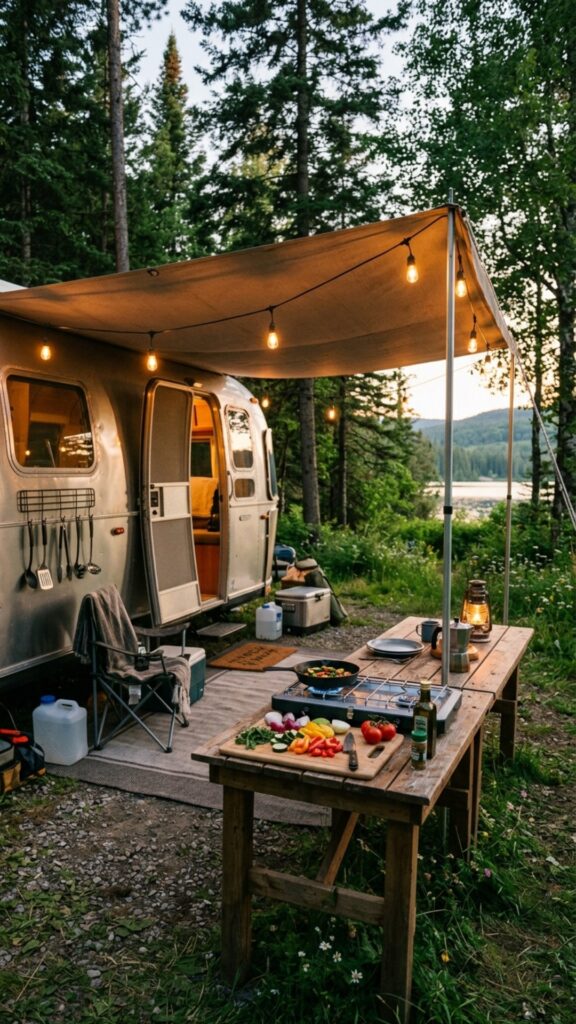
Your awning already blocks sun and light rain, so build your kitchen under it. Position your stove and prep table in that shaded strip and you’ll cook comfortably even at midday.
String up a set of LED lights along the awning arm for night cooking. Add drop-down side walls in wind or rain, and your outdoor kitchen keeps running when the weather turns. This zone approach keeps everything grouped and easy to manage.
10. Nesting Cookware Set — One Stack, Every Pot
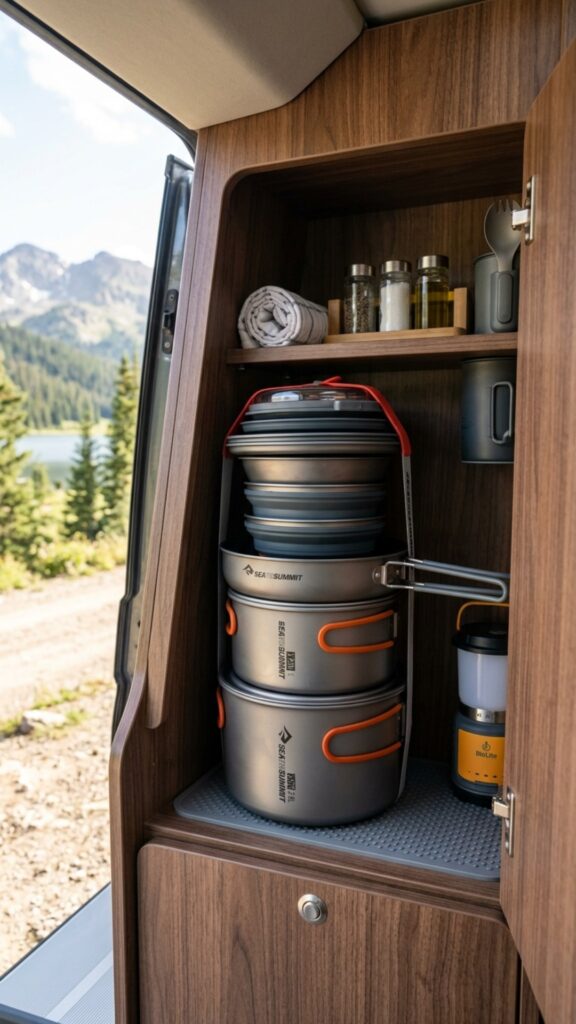
Camp-specific nesting cookware packs pots, pans, and bowls into one tidy stack. The pieces fit inside each other like Russian dolls, saving huge amounts of cabinet space.
Look for sets with removable handles — they collapse flatter and store easier. GSI and Sea to Summit make durable options that handle daily use. One good set replaces a whole drawer of mismatched kitchen gear.
11. Fold-Down Bumper Kitchen — Turn Dead Space Into a Station
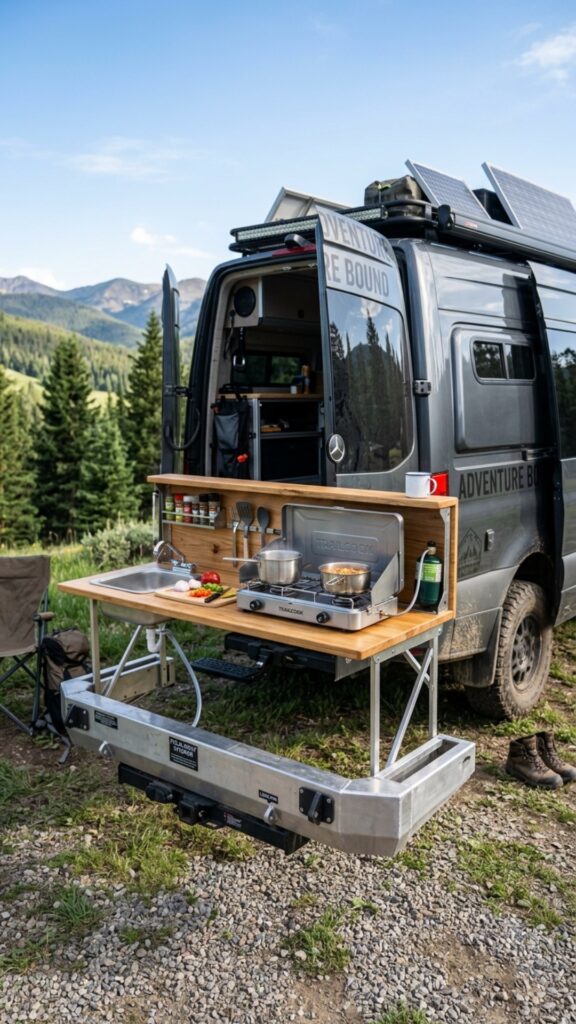
The rear bumper is prime real estate most campers ignore. A fold-down bumper kitchen uses a hinged platform that drops to hold a stove or prep surface, then folds up flush for travel.
This works especially well on toy haulers and larger trailers with sturdy bumpers. Reinforce the mount and check the weight rating before loading it up. It’s a clever way to add a full station without touching your interior at all.
12. Clip-On Cutting Board — Extend Your Counter
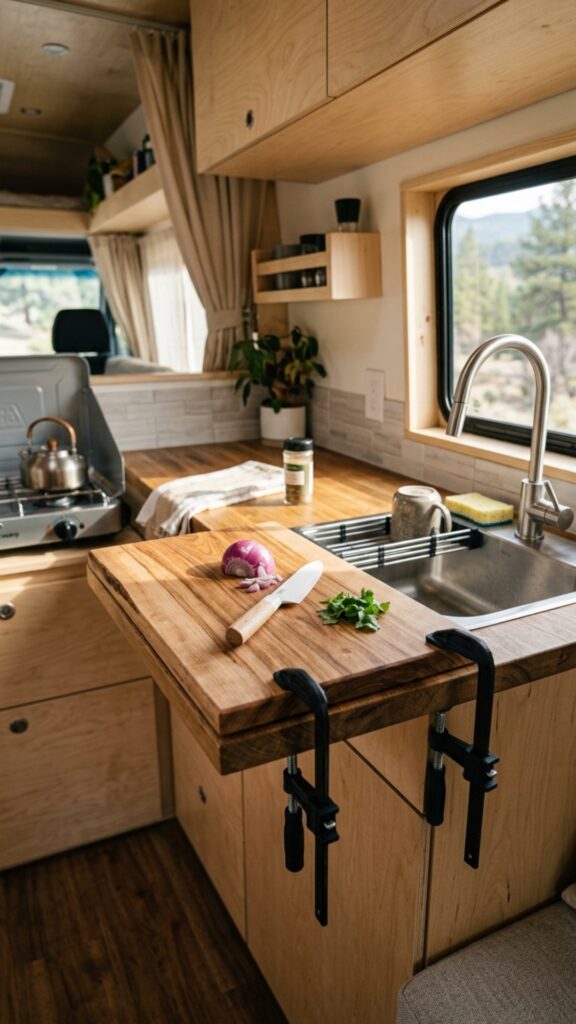
A cutting board that clips onto your table edge or sink rim adds instant workspace. Some models come with a built-in colander that hangs over the sink, so you rinse and chop in one spot.
Bamboo boards resist knife marks and stay light. When you finish, unclip and store it flat against a wall. This tiny upgrade solves the constant “nowhere to chop” problem that plagues small camper kitchens.
13. Portable Fridge or Cooler Setup — Keep Food Fresh Longer
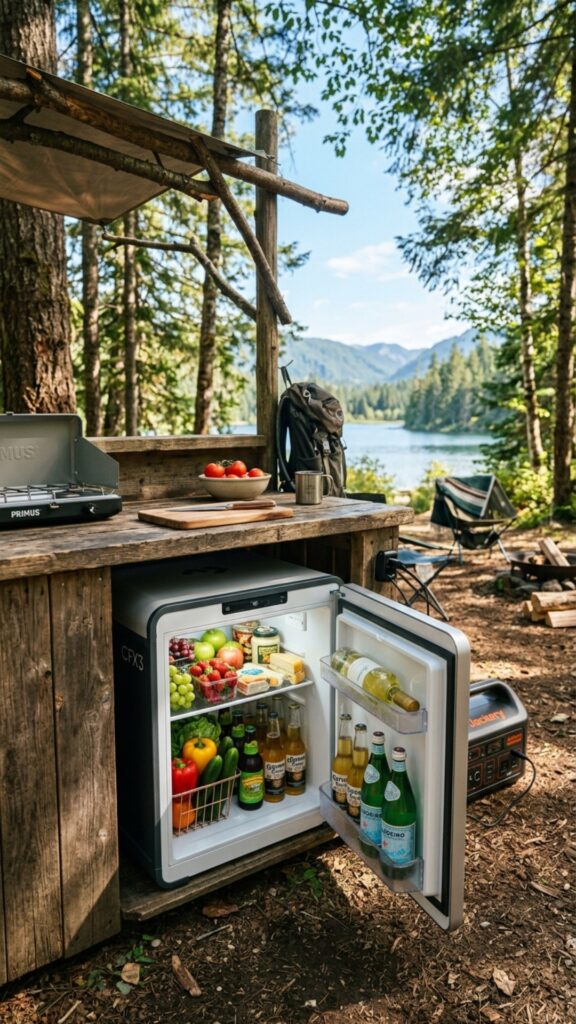
A 12-volt portable fridge runs off your camper battery and holds temperature far better than an ice cooler. No soggy sandwiches, no daily ice runs. Dometic and Iceco models fit under most exterior counters.
If a powered fridge stretches your budget, a high-end rotomolded cooler still holds ice for days. Freeze water bottles before your trip — they chill the cooler and give you drinking water as they melt. Fresh food changes how well you eat on the road.
14. Overhead Utensil Rail — Hang Your Tools
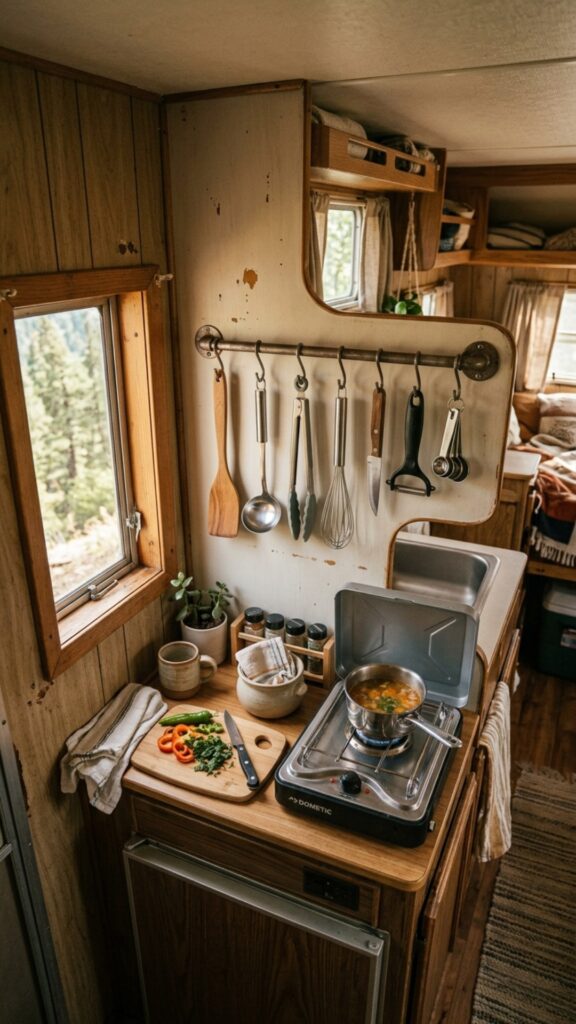
A tension rod or metal rail mounted under a shelf turns dead overhead space into utensil storage. Hang spatulas, tongs, and ladles from S-hooks so they stay off your counter and in easy reach.
This keeps your most-used tools visible and grabbable. Space the hooks so nothing clangs together while you drive. It’s a two-minute install that clears clutter from every flat surface you own.
15. Solar Oven Add-On — Cook With Free Sunlight
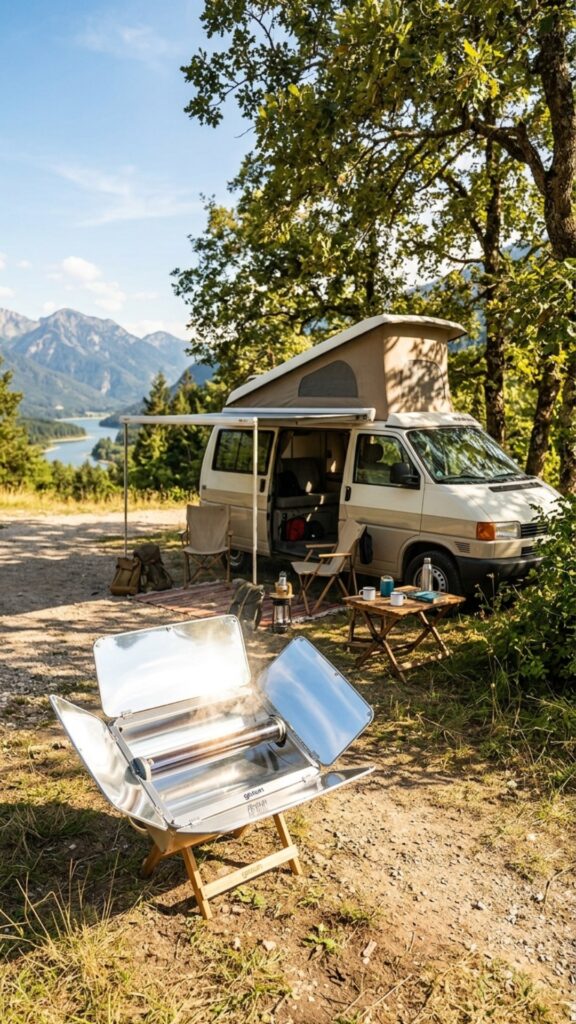
A portable solar oven bakes and slow-cooks using nothing but sunshine. No fuel, no flame, no fire ban worries. Set it up in the morning, load your meal, and let the sun do the work while you hike.
Models like the GoSun cook rice, roast vegetables, and even bake bread on a clear day. It’s slower than propane, but the fuel savings and zero fire risk make it worth a spot in your kit for sunny climates.
16. Fold-Out Pantry Box — Organized Dry Goods
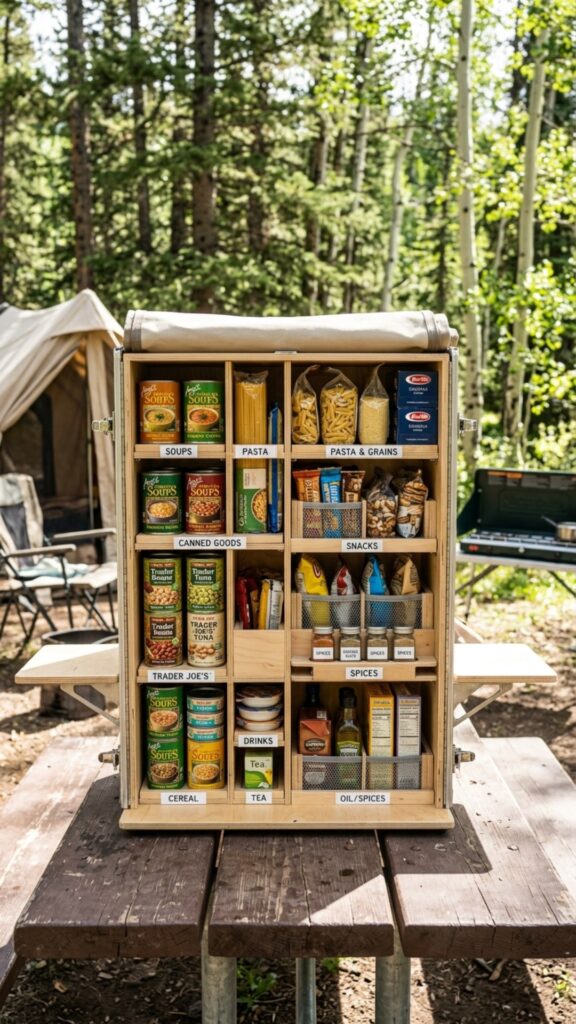
A collapsible pantry box keeps canned food, pasta, and snacks sorted in one grab-and-go container. Dividers stop cans from rolling and crushing your bread.
Pick a box with a locking lid to keep critters out at night. Stack two if you cook for a family. When empty, they fold flat for the drive home. Organized dry goods mean less digging and faster meals every single day.
17. Griddle-Top Tailgate Station — Feed the Whole Group
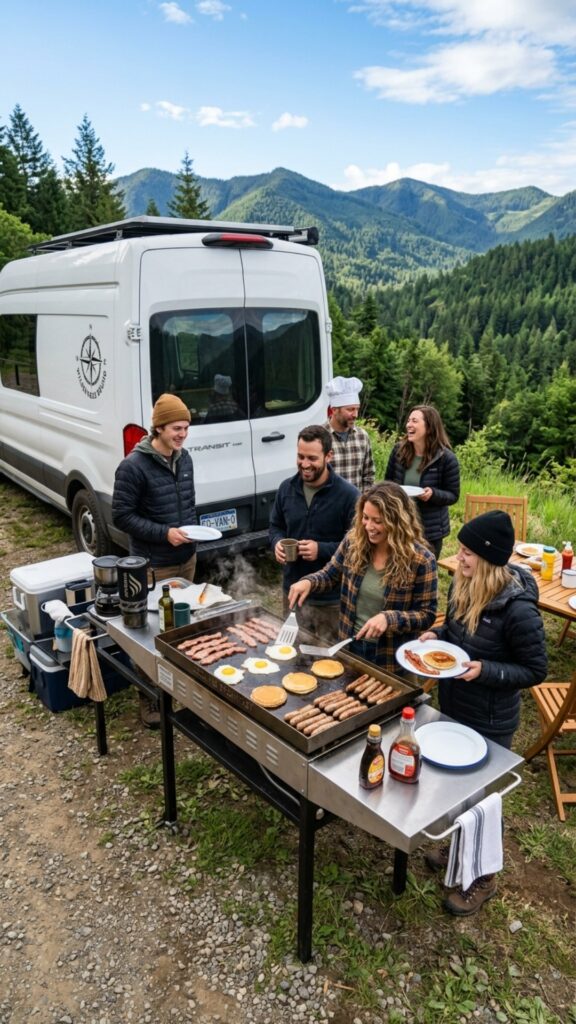
Mount a flat-top griddle to a tailgate-style swing arm and you get a big cooking surface that swings out from your camper’s rear. Great for group trips where one small stove can’t keep up.
The swing arm folds back against the camper for travel and locks in place. Season the griddle well and it doubles as your pancake, burger, and stir-fry station. This is a strong pick among outdoor kitchen ideas for camper owners who host big crowds.
18. Compact Coffee Corner — Start Every Morning Right
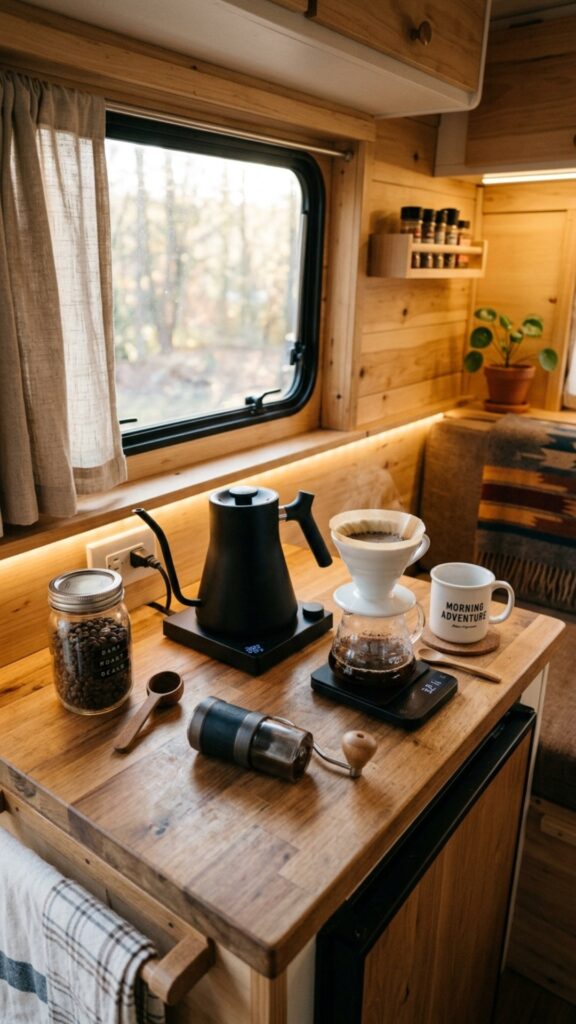
Set aside a small dedicated coffee spot and mornings get easier. A pour-over dripper, a collapsible kettle, and a sealed bean container take up almost no room. Store them together so the setup is grab-and-brew.
Coffee lovers swear by an AeroPress for camp — it’s light, unbreakable, and cleans up in seconds. A single burner or a kettle over your stove handles hot water. Small ritual, big morale boost on cold mornings.
19. Weatherproof Prep Mat — Protect and Contain
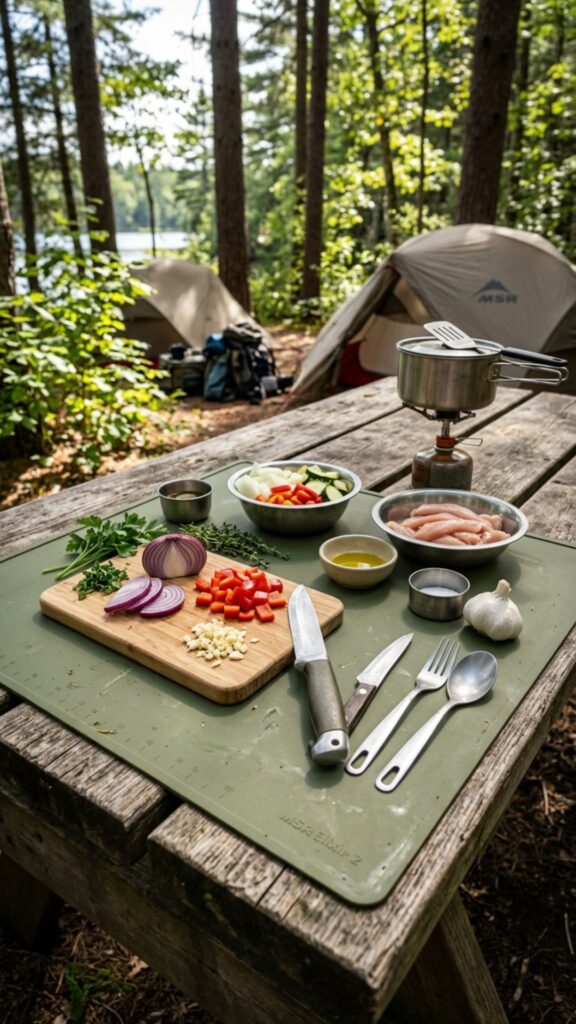
A silicone or rubber prep mat catches spills, crumbs, and grease so your table stays clean. Shake it out and wipe it down — no scrubbing baked-on messes off raw surfaces.
The mat also grips your cutting board so it won’t slide while you work. Roll it up when done and it stores anywhere. This cheap layer protects your gear and speeds up cleanup after every meal.
20. All-In-One Chuck Box — The Complete Portable Kitchen
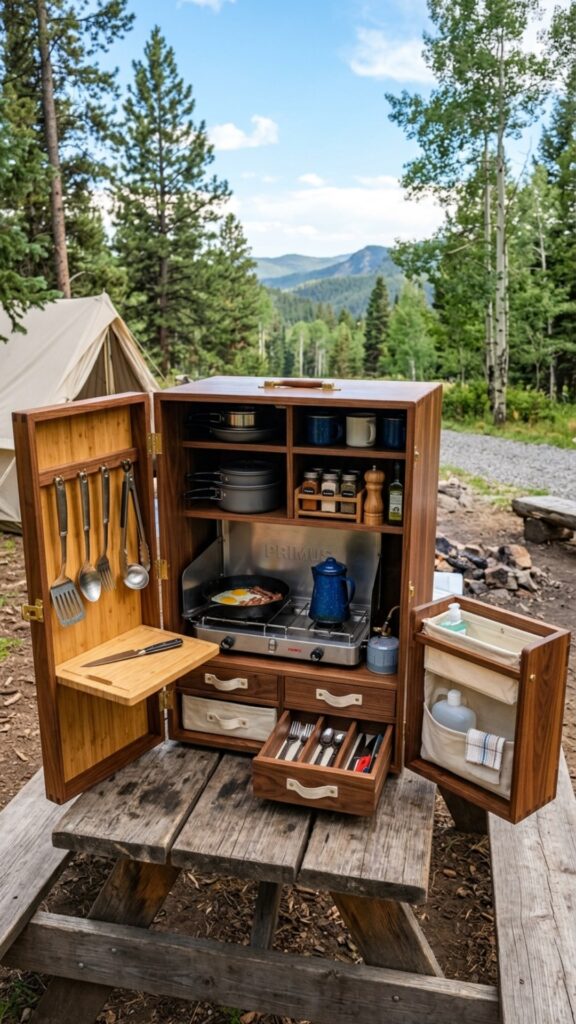
A chuck box packs your entire kitchen into one crate — stove, utensils, spices, plates, and cleaning gear. Open the lid and a folding shelf turns the box itself into a prep station.
You can build one from plywood for around $80 or buy a ready-made model. Everything lives in its assigned slot, so nothing gets lost between trips. Load it once, and you’re ready to roll out the door with a full kitchen in a single grab.
Conclusion — Build the Camp Kitchen That Fits Your Trip
The best outdoor kitchen ideas for camper adventures share one trait: they save space while making cooking easier. Start with a stove, a fold-out counter, and smart storage. Add a fridge, a griddle, or a chuck box as your needs grow.
You don’t have to build it all at once. Pick two or three ideas that solve your biggest headaches, test them on your next trip, and add from there. Grab your gear list, choose your first upgrade, and start cooking better outdoors this season.
What is the best outdoor kitchen setup for a small camper?
The best setup for a small camper combines a portable two-burner propane stove, a fold-out wall-mounted counter, and a collapsible sink. This trio gives you cooking, prep, and cleanup space that all pack away flat, making it ideal for tight rigs.
How much does it cost to build a camper outdoor kitchen?
A basic DIY camper outdoor kitchen costs $150 to $400 using a camp stove, folding table, and storage bins. A built-in slide-out or bumper kitchen runs $500 to $1,500 depending on materials and whether you add a sink or fridge.
Do I need a permit or special gear to cook outside my camper?
No permit is needed to cook outside your camper, but check for fire bans at your campsite before using propane or charcoal. A collapsible grey-water container is also smart, since most parks require you to contain dishwater rather than dump it on the ground.
How do I keep food cold without a built-in fridge?
volt portable fridge runs off your camper battery and holds food safe for days. If you prefer a cooler, a rotomolded model with frozen water bottles keeps ice for four to five days in warm weather.
What's the easiest way to save space in a camper kitchen?
Use vertical storage and gear that folds. A magnetic spice rack, hanging organizer, nesting cookware set, and fold-out counter all reclaim space while keeping your tools within reach — the fastest way to shrink a kitchen footprint.