A covered patio changes everything about cooking outside. You get shade in summer, shelter when it drizzles, and a spot that feels like a second living room. Add a working kitchen to that space, and suddenly your backyard becomes the place everyone wants to gather.
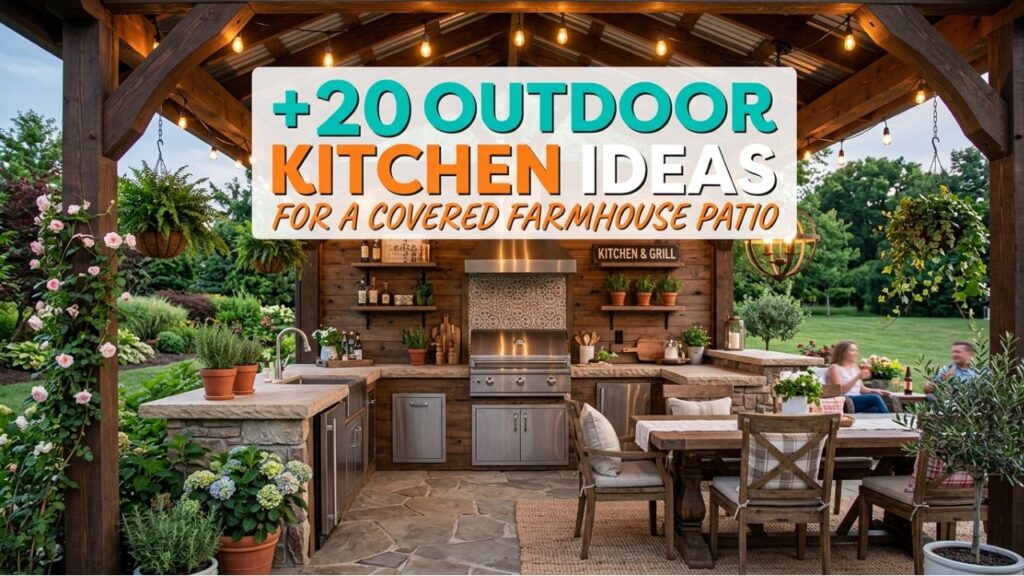
Farmhouse style fits this setup perfectly. It leans on natural wood, warm metals, and honest materials that age well. In this guide, we walk through 20 outdoor kitchen ideas for a covered farmhouse patio.
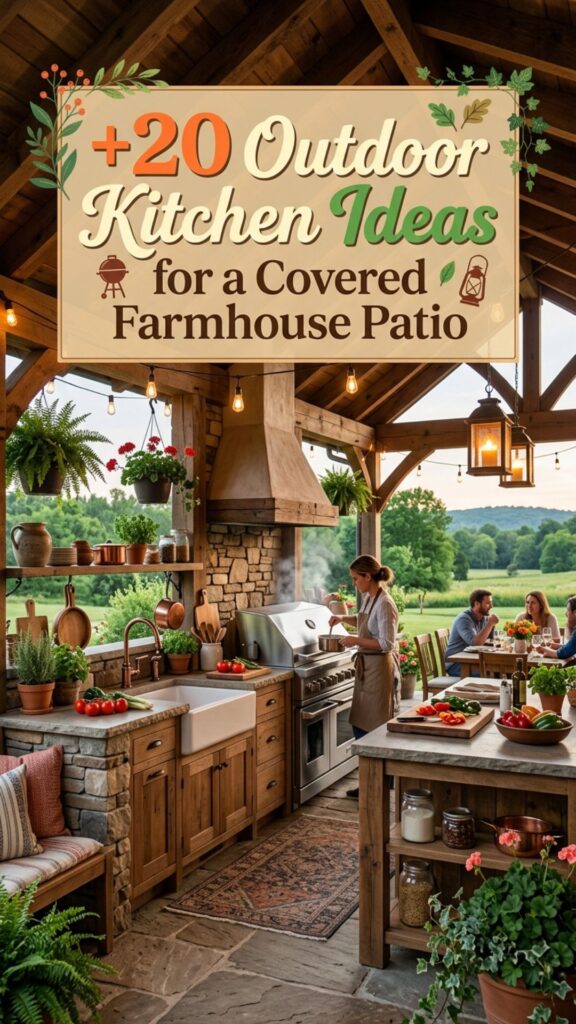
You’ll find layouts, materials, and small touches that make the space work hard while still feeling relaxed. Whether you’re starting from a bare slab or updating what you already have, there’s something here to steal.
1. Build a Rustic Stone Island as the Anchor
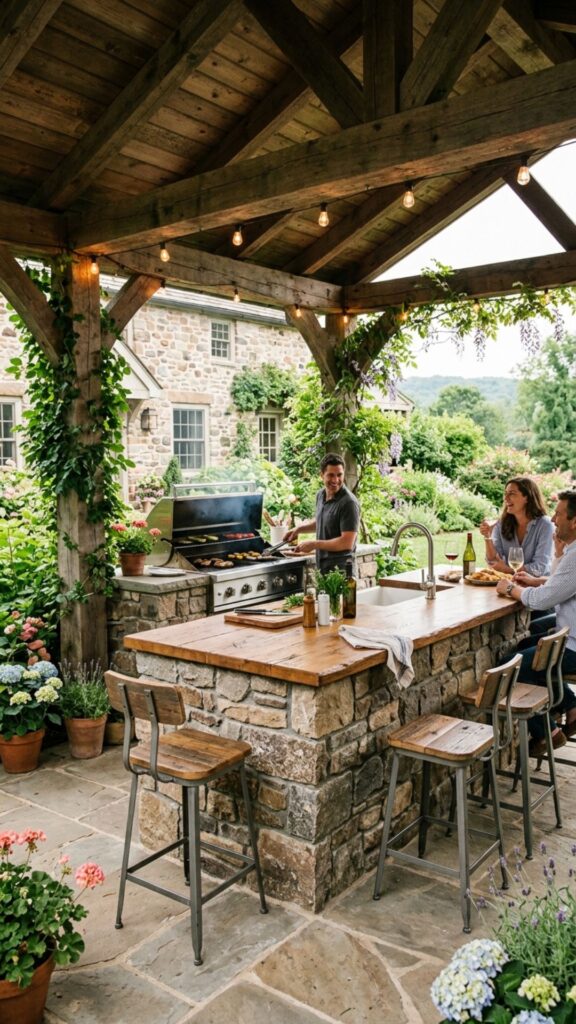
Every good outdoor kitchen needs a center of gravity, and a stone island does that job well. Use stacked fieldstone or a veneer that mimics it, then top the whole thing with a thick butcher block or honed granite counter. The stone reads farmhouse instantly, and it holds up to heat, spills, and years of weather.
Size the island for how you actually cook. A run of about six to eight feet gives you room for a grill, prep space, and a small sink. We like leaving one end open for bar stools so guests can sit close while you work. That way the cook never gets stuck alone in the corner.
2. Install a Built-In Grill with a Stainless Hood
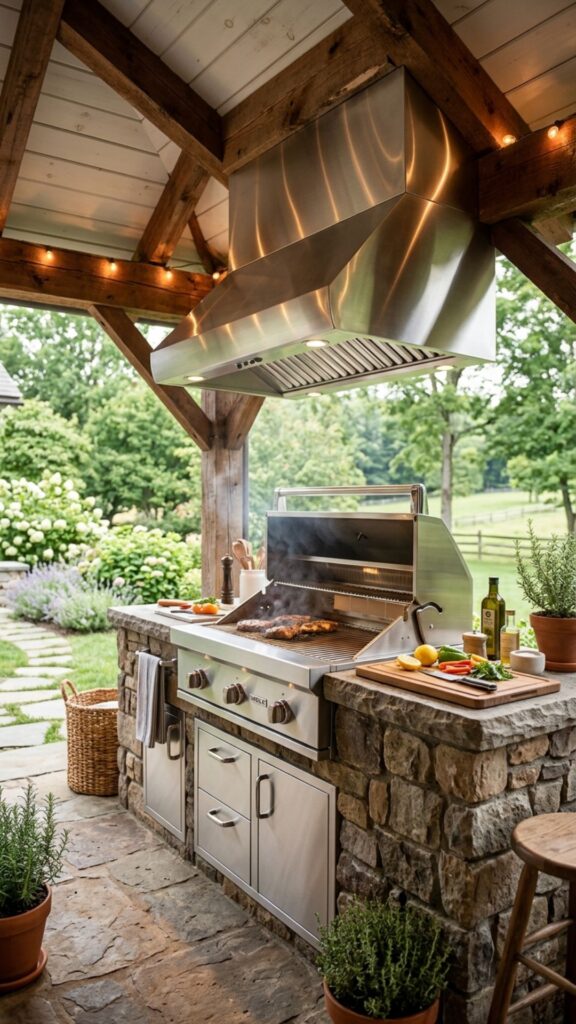
A freestanding grill works, but a built-in unit looks intentional and frees up floor space. Set it into your island or a masonry surround so the finished edge sits flush with the counter. Choose a grill wide enough for your crowd, usually 30 to 36 inches for a family that entertains.
Under a covered patio, ventilation matters more than people expect. Smoke needs somewhere to go, so pair the grill with a stainless hood vented to the outside. It keeps the ceiling clean and pulls heat away from your guests. That single upgrade separates a comfortable kitchen from a smoky one.
3. Choose Reclaimed Wood for Overhead Beams
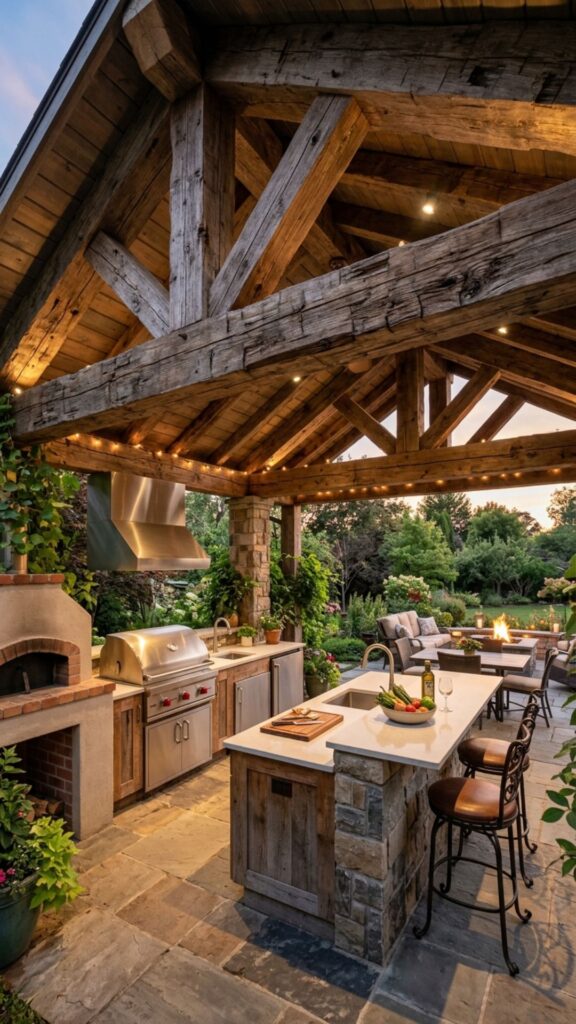
Look up, because the ceiling is prime real estate on a covered patio. Reclaimed wood beams add instant age and character, and they draw the eye upward to make the space feel taller. Barn wood with visible grain and old nail holes tells a story no new lumber can match.
If true reclaimed timber sits outside your budget, distressed new wood stained a weathered gray gets close. Seal it against moisture so it lasts. We’ve seen a plain covered slab turn into a showpiece just by dressing the beams and leaving the rest simple.
4. Add a Wood-Fired Pizza Oven
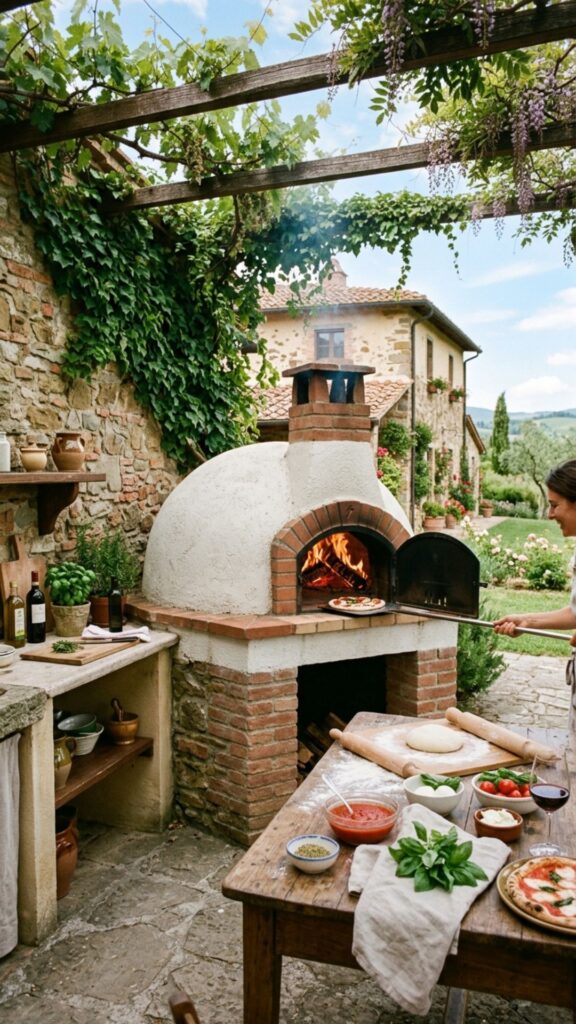
Few things pull a crowd like a pizza oven. The dome shape brings a cozy, old-world look that suits farmhouse design, and the smell of wood smoke does half your hosting for you. Kids love watching pies bubble in under two minutes.
Place the oven near your prep area but away from main traffic, since the exterior gets hot. A brick or stucco finish blends with stone counters and wood beams. Beyond pizza, you can roast vegetables, bake bread, or slow-cook a shoulder, so it earns its footprint many times over.
5. Mix Butcher Block and Concrete Countertops
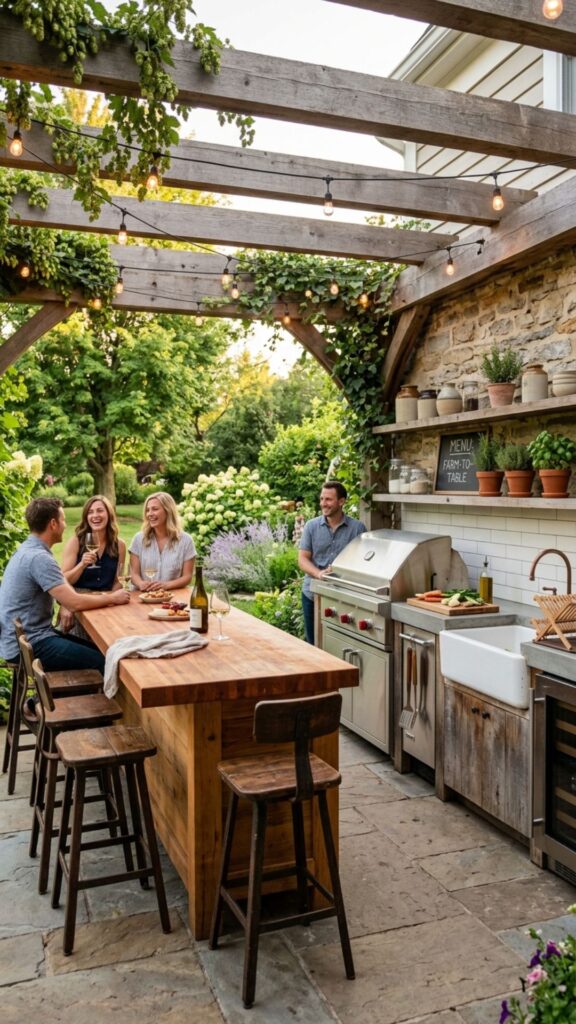
You don’t have to pick one counter material. Mixing surfaces gives you the right tool for each task and adds visual interest. Butcher block warms up the space and gives you a safe spot to chop, while concrete handles heat and heavy prep without complaint.
Run butcher block along the bar seating and concrete near the grill and sink. The contrast feels collected rather than matched, which is the heart of farmhouse style. Oil the wood a few times a year and seal the concrete, and both will hold up for a long time.
6. Hang Warm Edison-Bulb String Lights
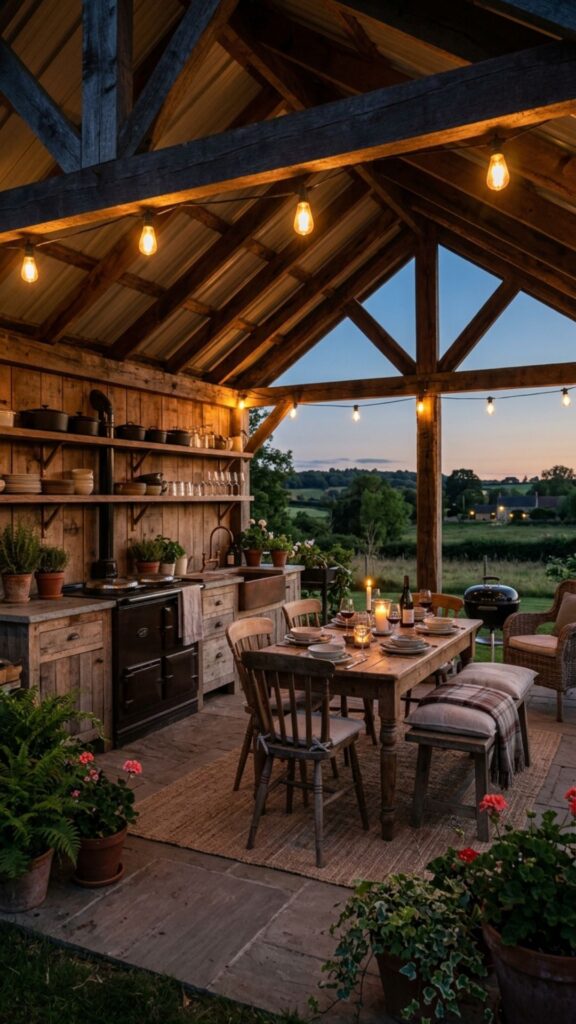
Lighting sets the mood, and nothing beats the soft glow of Edison bulbs strung across a covered patio. The amber light flatters everyone and turns an ordinary evening into something special. Drape them along the beams or zigzag them across the ceiling for even coverage.
Put the lights on a dimmer so you can go bright for cooking and low for lingering. Layer in a few lanterns or a small pendant over the island for task light where you need it. Good lighting is cheap compared to stonework, yet it changes the whole feel of the room.
7. Include a Farmhouse Apron Sink
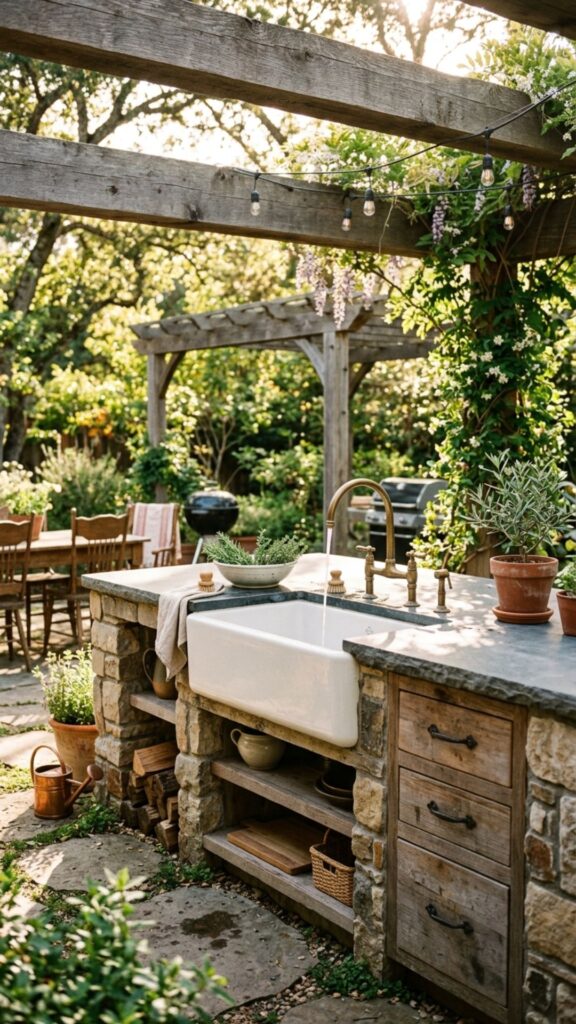
An apron-front sink, sometimes called a farmhouse sink, fits the theme by name and by looks. The deep basin handles big pots, muddy vegetables, and cleanup after a long cookout. In fireclay or stainless, it stands up to the weather under cover.
Plumb it with hot and cold water if you can, since warm water makes cleanup faster and more pleasant. Set it into your stone or concrete island with the front panel exposed. That single detail signals to everyone that this is a real kitchen, not just a grill on a patio.
8. Create a Cozy Fireplace Seating Nook
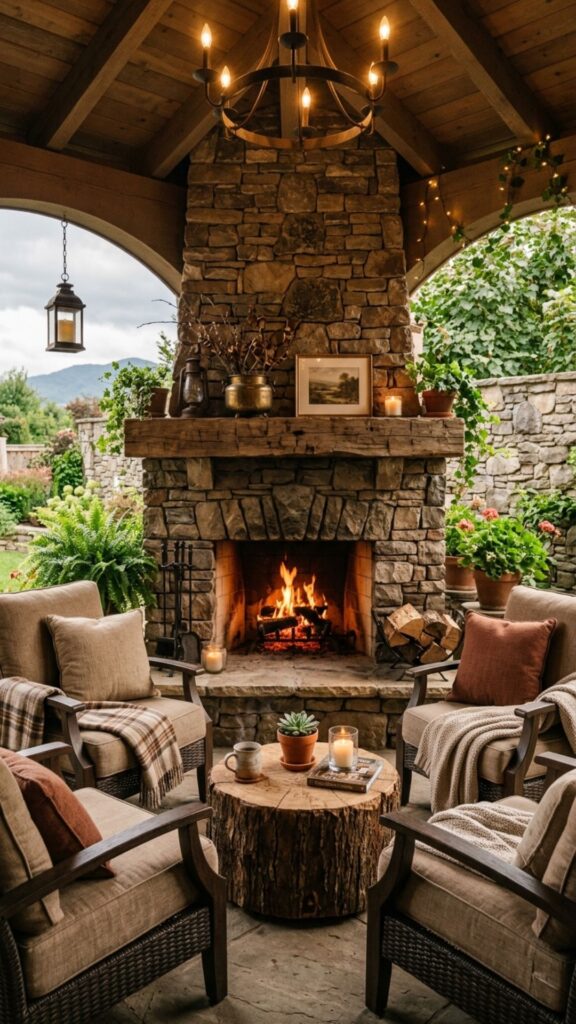
A covered patio invites you to stay after the food is gone, and a fireplace makes that easy. Build a stacked-stone hearth at one end of the space and arrange a few weatherproof chairs around it. The fire extends your season well into fall and cool spring nights.
Keep the seating simple with a couple of rockers or a small sofa in a durable outdoor fabric. Add a rustic mantel from a salvaged beam to tie it back to the kitchen. This nook gives non-cooks a place to relax while still being part of the action.
9. Use Galvanized Metal Accents Throughout
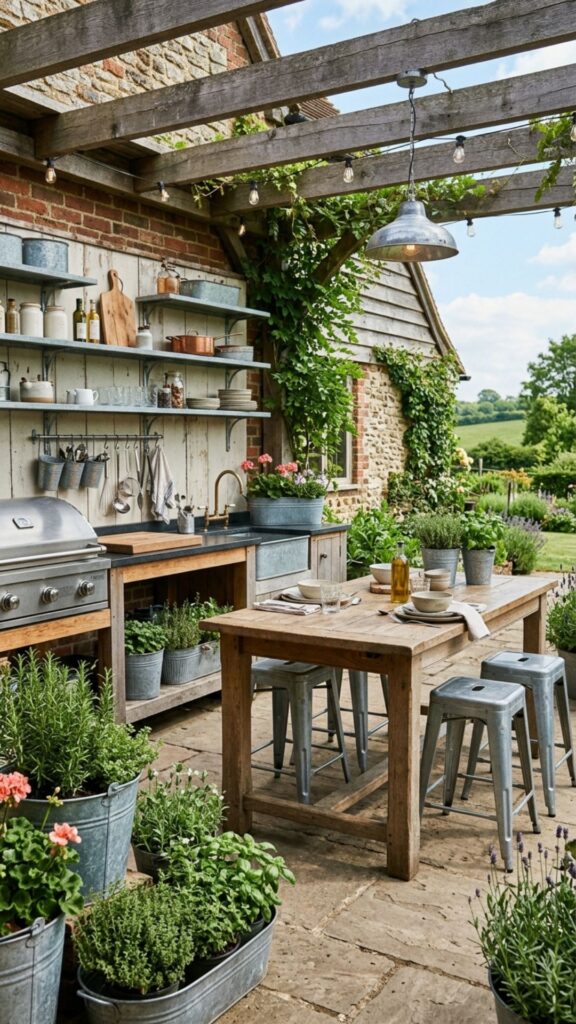
Galvanized metal is a farmhouse staple, and it plays well outdoors. Think metal bar stools, a corrugated backsplash, or buckets turned into planters and utensil holders. The cool gray tone balances all the warm wood and stone around it.
Small doses work best, so let metal act as a supporting player rather than the star. A galvanized shelf for spices or a metal bin for kindling near the pizza oven adds function and looks the part. These pieces are usually affordable and easy to swap when you want a change.
10. Design a Long Harvest-Style Dining Table
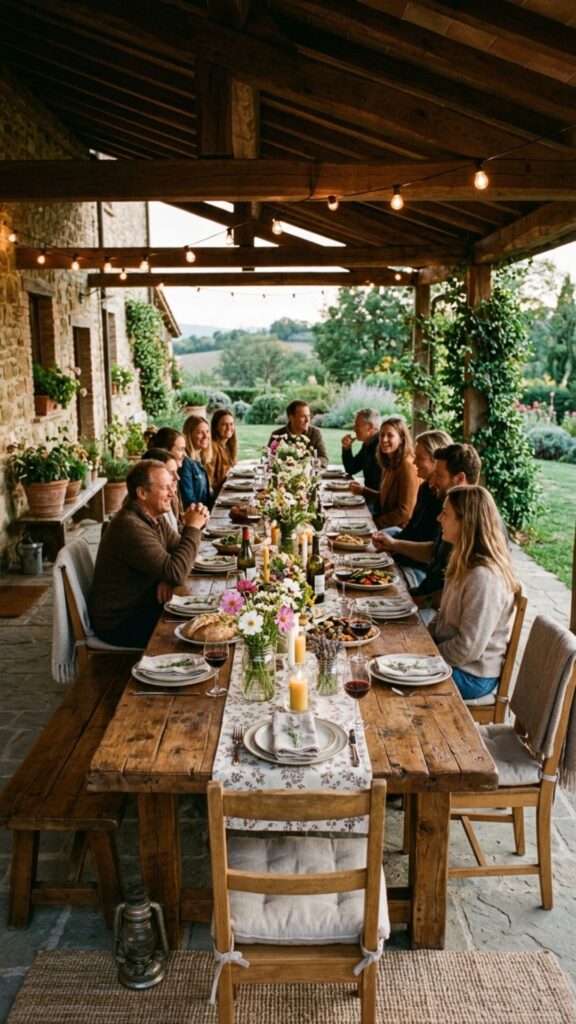
The table is where the real memories happen, so give it room to breathe. A long harvest table made from thick planks seats a big group and matches the wood beams overhead. Pair it with a mix of benches and chairs for a casual, gathered look.
Under cover, you can leave the table out year-round without much worry. Choose a hardwood like teak or a sealed pine, and top it with a simple runner and a few mason jars of wildflowers. This is where guests will settle in for hours, so make it comfortable and generous.
11. Add a Beverage Station with a Built-In Fridge
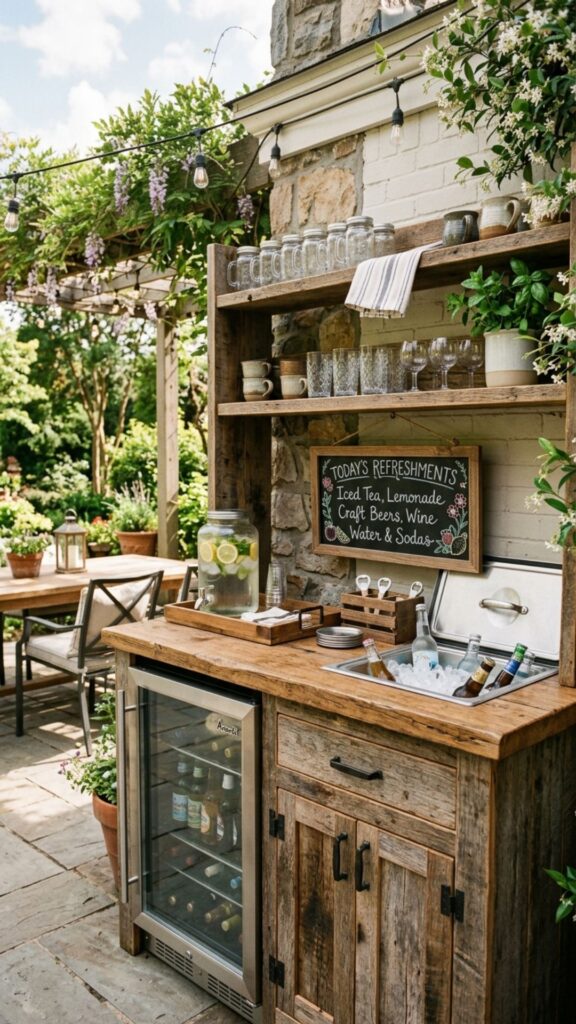
Nobody wants to run inside for drinks every ten minutes. A dedicated beverage station keeps everyone hydrated and happy while you cook. Build in an outdoor-rated fridge, add a small ice bin, and leave counter space for glasses and mixers.
Frame the station with reclaimed wood or the same stone as your island so it looks planned. A chalkboard sign listing the night’s drinks adds a friendly, homemade touch. This small zone quietly reduces the number of trips indoors, which means you stay part of the party.
12. Lay Down a Brick or Flagstone Floor
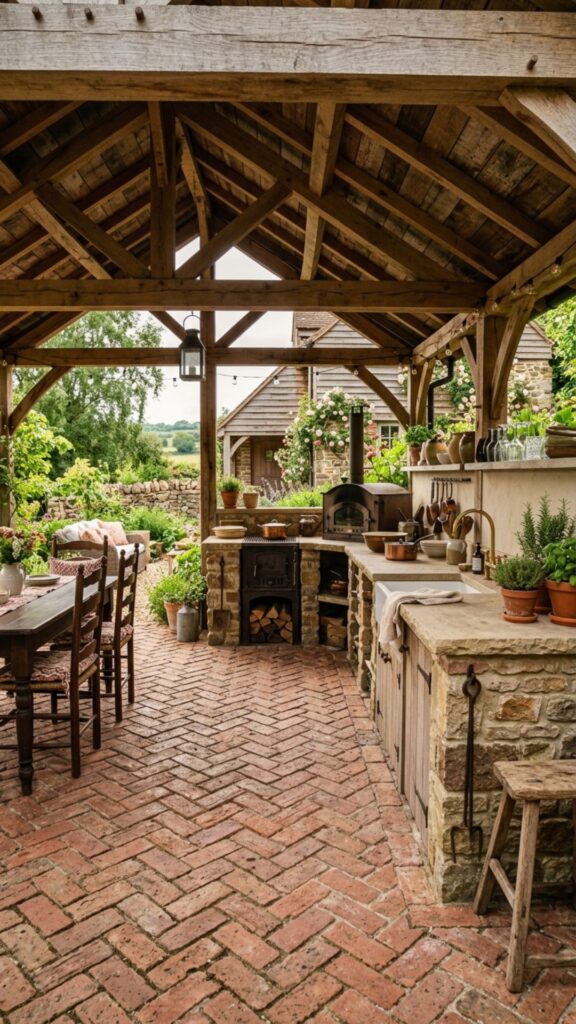
The floor grounds the whole space, and natural materials suit farmhouse style best. Brick laid in a herringbone pattern feels timeless, while irregular flagstone brings an easy, cottage charm. Both hide dirt well and give good footing even when wet.
Under a covered roof, you can pick materials that might stain in open weather, since rain won’t pound them directly. Seal the surface so grease from the grill wipes up cleanly. A textured floor also softens the sound of a busy patio, which makes conversation easier.
13. Build Open Shelving for Everyday Dishes
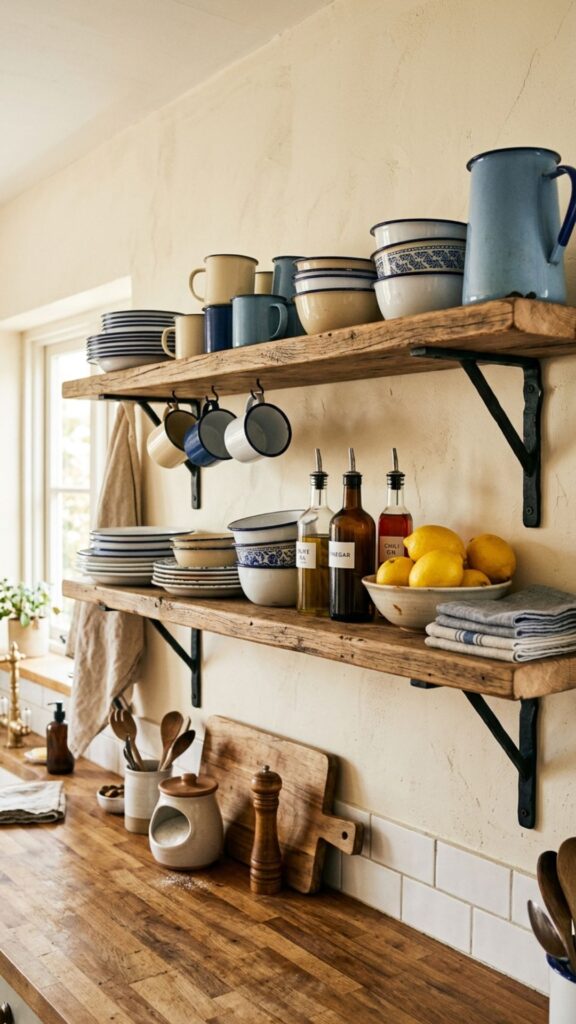
Open shelves make a space feel lived-in and keep your gear within reach. Mount a few thick wood boards on iron brackets against a wall or the back of your grill surround. Stack them with enamelware plates, mixing bowls, and stacked mugs.
Since these shelves sit under cover, your dishes stay mostly clean between uses. Keep the styling loose and practical rather than perfectly staged. A row of oil bottles, a bowl of lemons, and a stack of napkins reads warm and real, exactly what farmhouse aims for.
14. Install a Ceiling Fan for Airflow
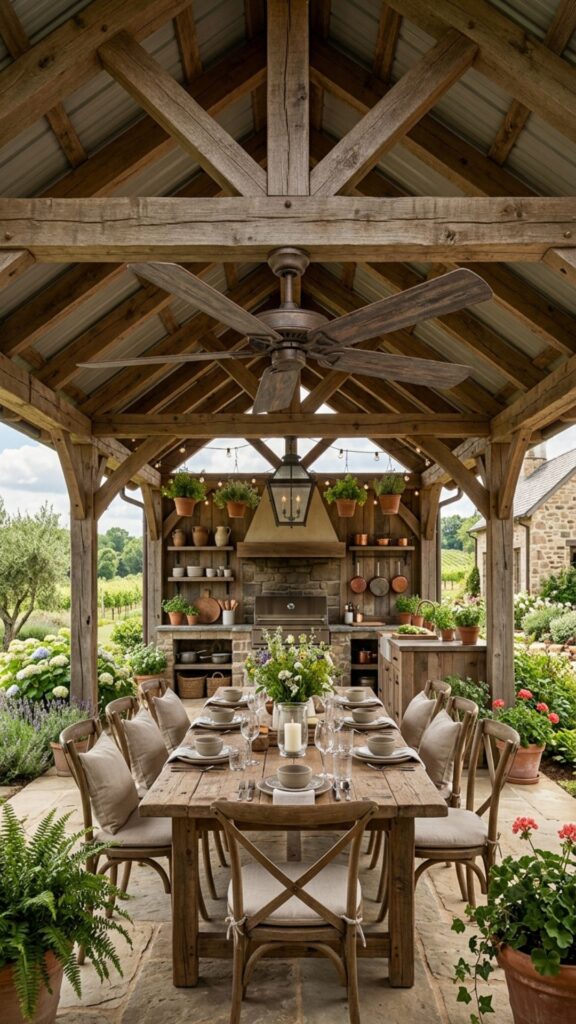
Covered patios trap heat in summer, so airflow keeps everyone comfortable. A large outdoor-rated ceiling fan moves air, cools the cook, and helps clear lingering smoke. Pick one with a rustic wood-blade finish to match your beams.
Mount it high enough for clearance and centered over the main gathering spot. Some models include a light kit, which doubles your lighting plan. On still summer evenings, this fan is the difference between guests staying and guests drifting toward the air conditioning inside.
15. Add a Side Burner for Sauces and Sides
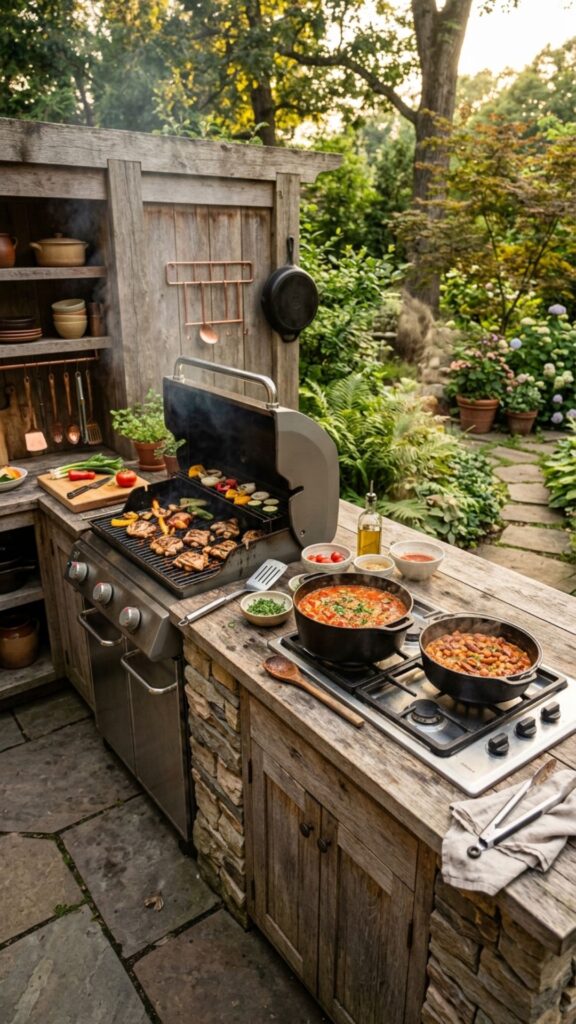
A grill handles the main event, but a side burner rounds out your menu. Use it to simmer barbecue sauce, boil corn, or keep beans warm while the meat rests. It turns your setup from a grill station into a full outdoor kitchen.
Set the burner into the island near the grill so everything stays within a step or two. A two-burner unit gives you flexibility for larger meals. This addition is modest in cost but big in payoff, since it lets you cook a complete dinner without a single trip to the indoor stove.
16. Frame the Space with Potted Herbs and Greenery
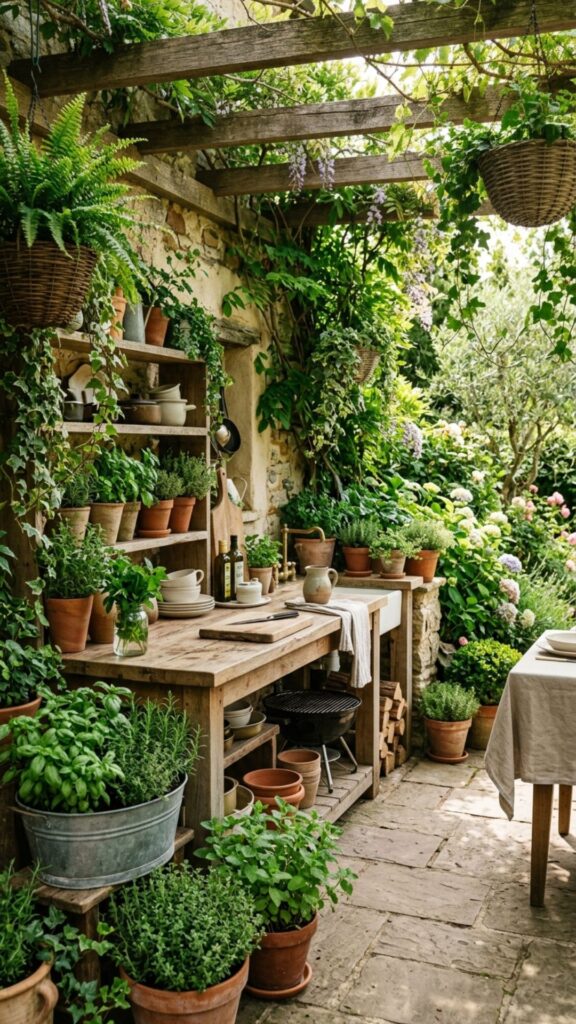
Plants soften hard surfaces and bring the patio to life. Cluster potted herbs like rosemary, basil, and thyme near your prep zone so you can snip them straight into the pan. Fresh herbs steps from the grill make every dish taste better.
Add larger planters of ferns or trailing greenery at the corners to blur the line between kitchen and yard. Galvanized tubs or terracotta pots keep the look grounded and rustic. Greenery also improves the air and adds a pleasant scent, which turns cooking into something calmer.
17. Incorporate a Sliding Barn Door for Storage
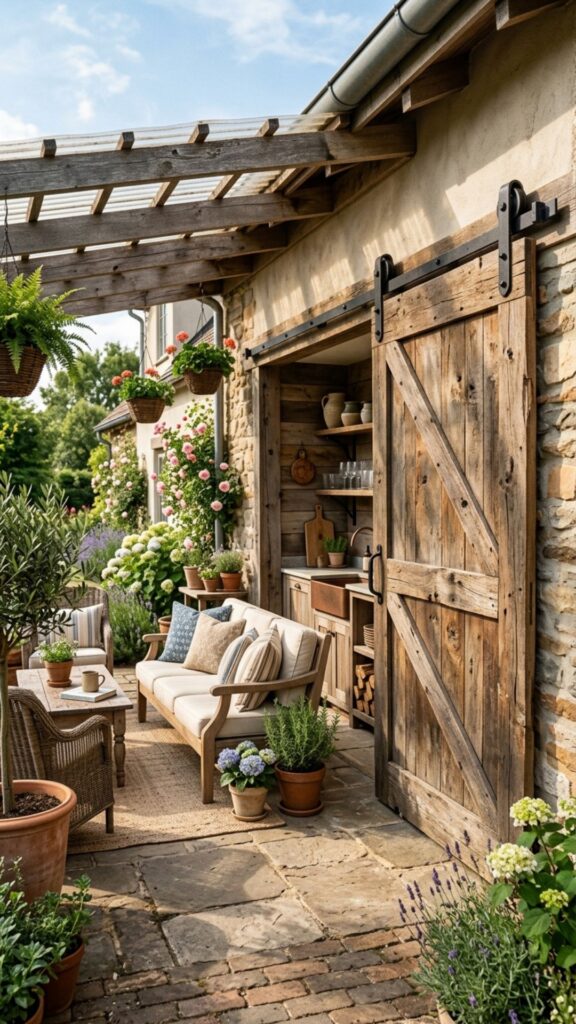
Storage keeps clutter down, and a sliding barn door hides it in style. Build a cabinet or small closet into one wall for propane tanks, cushions, and off-season gear. Fit it with a barn-style door on a black iron track for a signature farmhouse look.
The sliding design saves space because it never swings into your walkway. Choose weathered wood planks to match your beams and table. Behind that one good-looking door, you can tuck away all the practical clutter that would otherwise crowd your counters.
18. Choose a Neutral, Earthy Color Palette
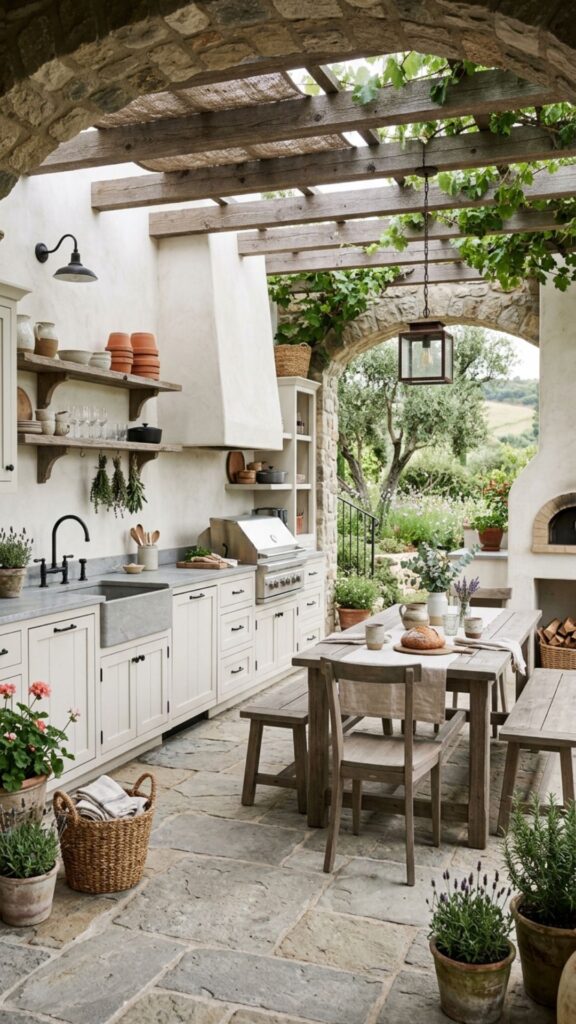
Color ties a space together, and farmhouse leans on calm, natural tones. Stick with warm whites, soft grays, weathered wood, and touches of black iron. These shades let your materials shine and keep the patio feeling restful.
Add small pops of color through seasonal items like linens, flowers, or dishware. Because these accents are easy to change, you can shift the mood from summer bright to autumn warm without repainting anything. A steady base palette makes the whole kitchen look pulled together with little effort.
19. Add a Smoker for Low-and-Slow Cooking
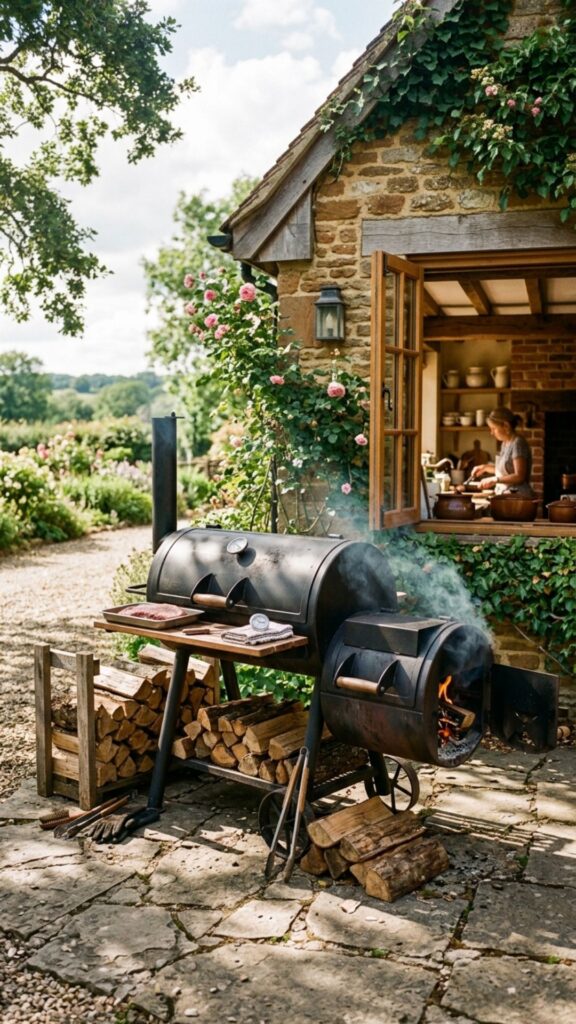
Serious backyard cooks will want a smoker in the lineup. A built-in or freestanding smoker lets you turn out brisket, ribs, and pulled pork with real depth of flavor. The slow rhythm of smoking pairs perfectly with a lazy weekend on the patio.
Place the smoker where its exhaust won’t blow toward the seating, and give it clearance from wood surfaces. Under a well-vented cover, you can smoke through light rain without a hitch. Keep a stack of seasoned hardwood nearby, both as fuel and as rustic decor.
20. Layer in Comfortable, Weatherproof Seating
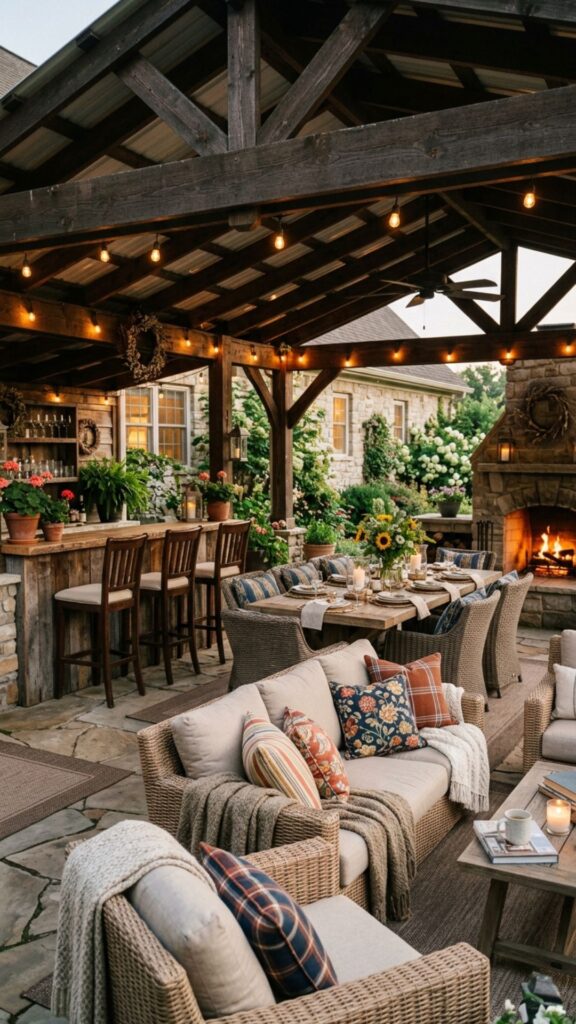
Comfort is what makes people linger, so don’t skimp on seating. Mix bar stools at the island, dining chairs at the table, and a soft spot near the fire. Choose cushions in fade-resistant, water-friendly fabrics so they survive the seasons.
Layer in a few outdoor pillows and a throw blanket basket for cool nights. Since the patio is covered, your soft goods last longer and stay drier than they would in the open. Good seating turns a working kitchen into a room where guests happily stay past midnight.
Bringing Your Covered Farmhouse Patio Together
A great outdoor kitchen isn’t about buying the most gear. It’s about building a space that cooks well, looks warm, and pulls people together. Start with a solid anchor like a stone island, add the workhorses you’ll actually use, then layer in the wood, metal, and greenery that make farmhouse style feel like home.
You don’t have to do all 20 ideas at once, and honestly, few people should. Pick the three or four that fit how you live, get those right, and grow from there. Ready to plan your own space? Sketch your layout this weekend, set a budget for phase one, and talk to a local builder about the pieces that need permits or gas lines. Your covered farmhouse patio is closer than you think.
How much does a covered farmhouse outdoor kitchen cost?
A basic setup with a grill, counter, and storage runs about $5,000 to $15,000. Mid-range kitchens with stone, a sink, and appliances land around $15,000 to $30,000. High-end builds with pizza ovens, fireplaces, and full masonry can top $50,000, depending on materials and labor in your area.
What is the best material for outdoor kitchen countertops?
Concrete and granite are the top choices because they handle heat, moisture, and heavy use without staining or cracking. For farmhouse style, mix in sealed butcher block for warmth and a safe chopping surface. Avoid unsealed marble outdoors, since it stains and etches easily.
Do you need ventilation for a grill under a covered patio?
Yes. Any built-in grill under a solid roof needs a vent hood ducted to the outside to remove smoke and heat safely. Open-air or louvered covers allow more natural airflow, but a hood is still the safest and most comfortable option for enclosed spaces.
What flooring works best for a covered outdoor kitchen?
Brick, flagstone, and textured concrete are the best options because they resist stains, provide grip when wet, and match farmhouse style. Since a covered patio blocks direct rain, you have more freedom to choose materials that need light sealing to stay clean.
Can you use an outdoor kitchen year-round?
In mild climates, yes, especially with a covered patio, a ceiling fan for summer, and a fireplace or heater for winter. In cold regions, you can extend the season with heaters and windbreaks, though you’ll want to shut off water lines before a hard freeze.