A covered patio changes how you cook and gather outside. Rain, harsh sun, or a chilly evening no longer sends everyone indoors. You get a real room without walls, and the kitchen becomes the heart of it.
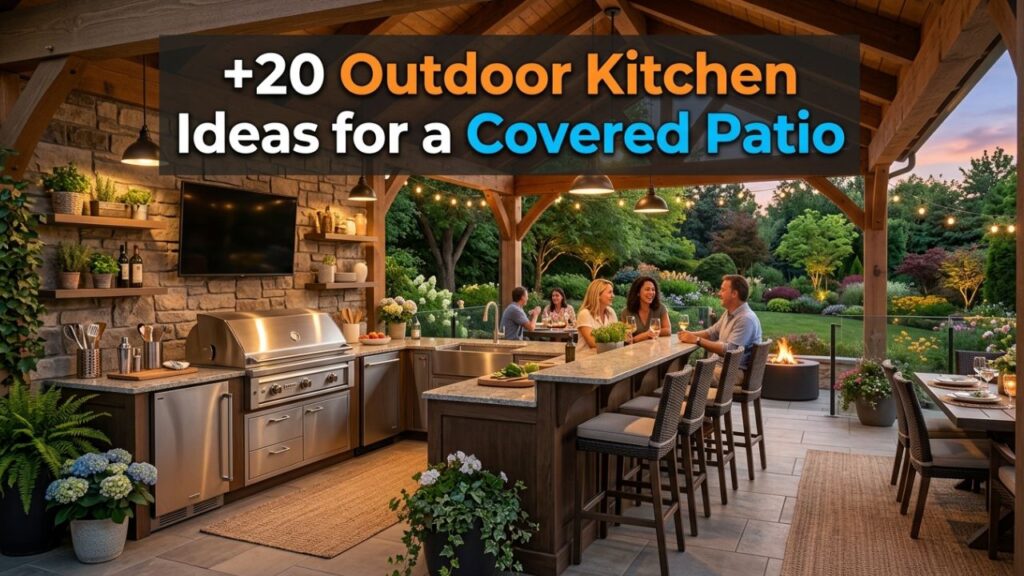
We put together 20 outdoor kitchen ideas for a covered patio that balance beauty and everyday use. You’ll learn how to plan the layout, pick the right materials, add comfort, and build a space made for real life.
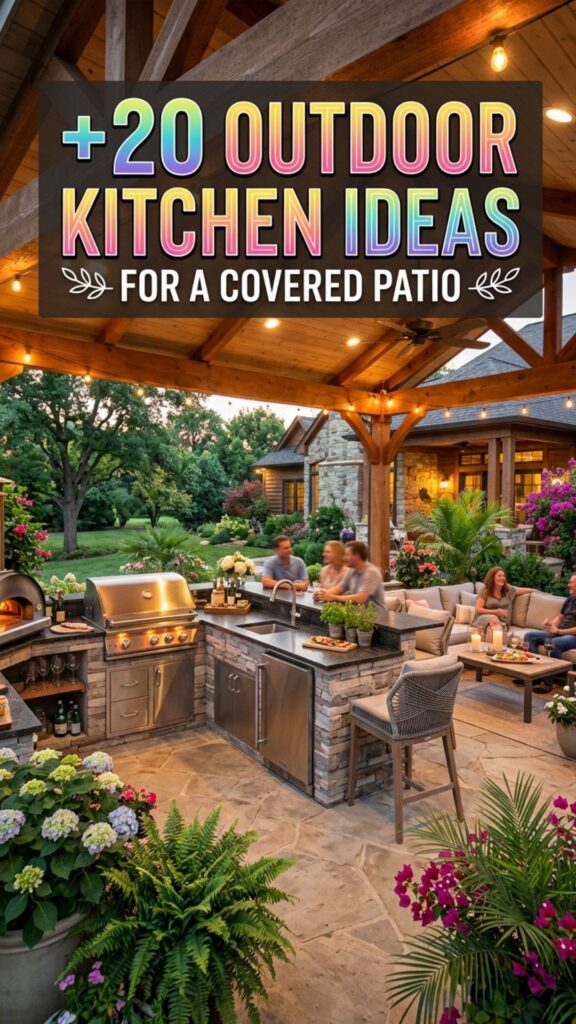
Whether you host big family dinners or quiet weekend brunches, there’s something here for you.
Let’s walk through the ideas one by one.
1. Start With a Smart Layout Plan
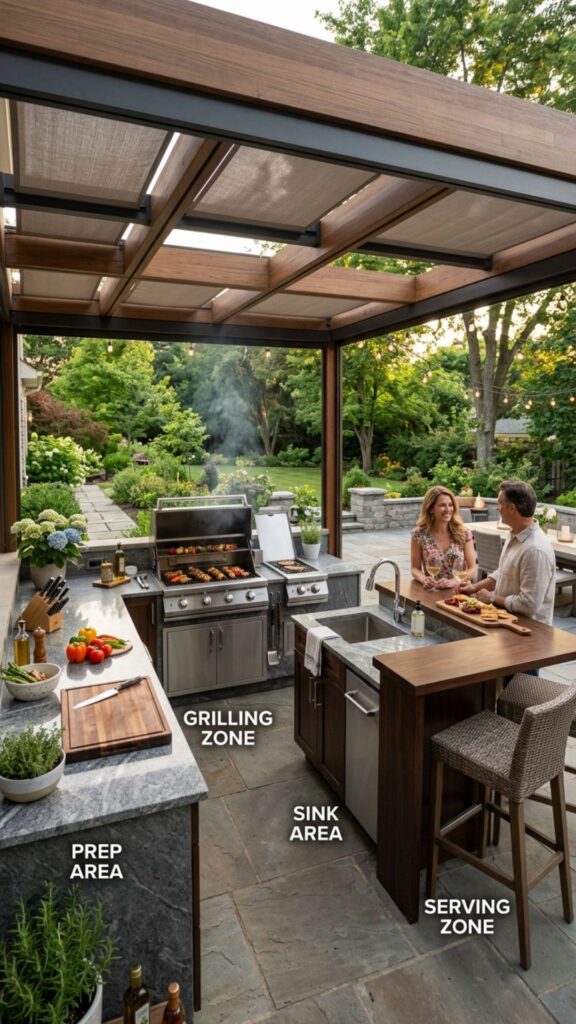
Before you buy a single appliance, sketch how you’ll move through the space. A good outdoor kitchen follows the same logic as an indoor one: a prep zone, a cook zone, and a serving zone. Keep them close but not cramped. The classic work triangle between grill, sink, and fridge still holds up outside.
Think about foot traffic too. You don’t want guests crossing in front of a hot grill to reach the drinks. Leave at least three feet of walking space around each station. A clear plan saves money, prevents rework, and makes the finished kitchen feel effortless to use.
2. Build an L-Shaped Counter for Flow
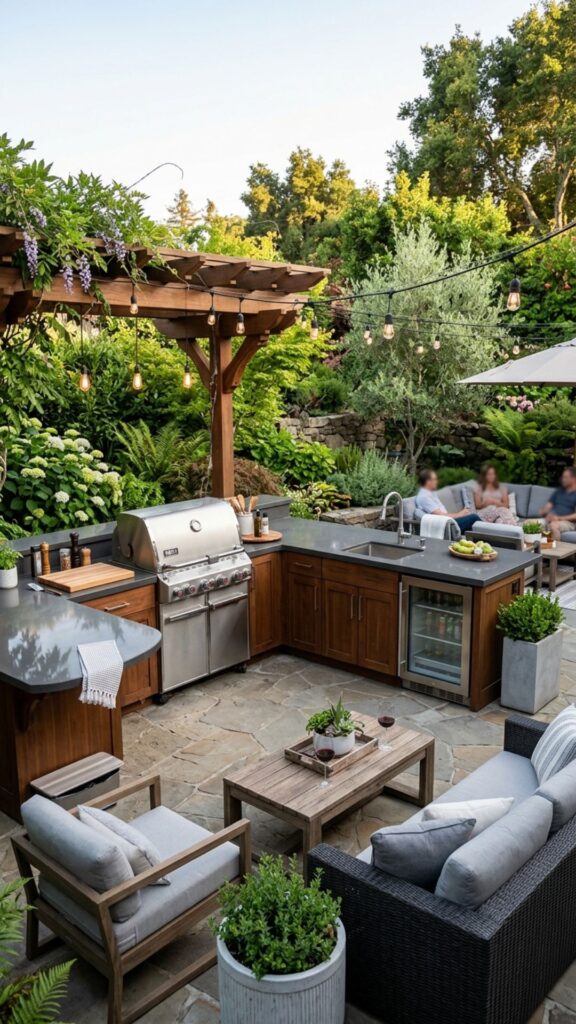
An L-shaped counter is one of the most reliable layouts for a covered patio. It tucks neatly into a corner, uses your wall space well, and separates cooking from serving. One leg can hold the grill and prep area, while the other holds the sink and a bit of open counter.
This shape also opens up naturally toward your seating. Guests can chat with the cook without getting in the way. If your patio is medium-sized, an L-shape gives you plenty of function without eating up the whole floor.
3. Add a U-Shaped Design for Bigger Spaces
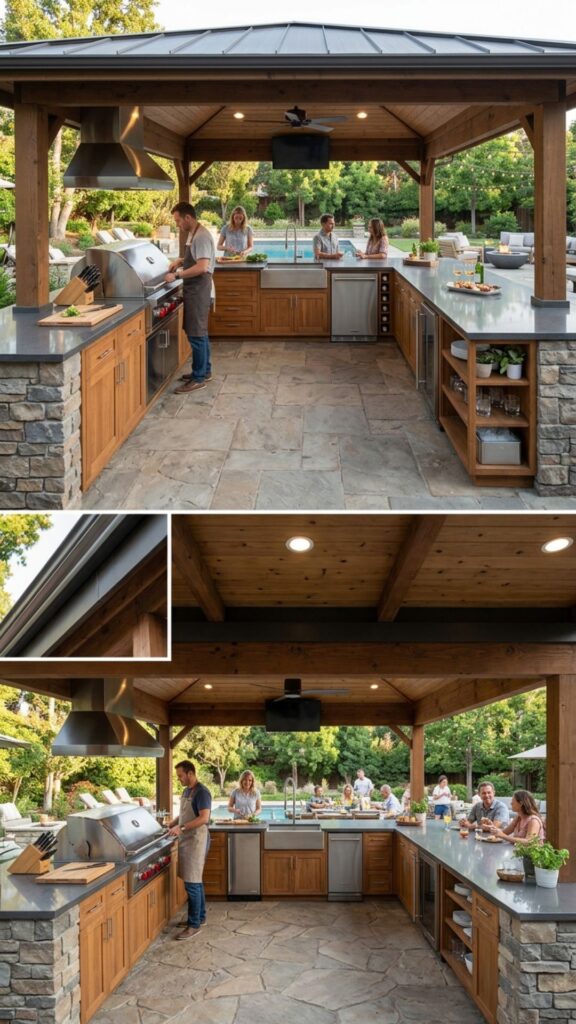
If you have a large covered patio, a U-shaped kitchen gives you room for everything. You get three connected counters, which means more storage, more prep surface, and space for extra appliances like a smoker or a pizza oven.
The open center keeps the cook in one comfortable spot. Everything stays within arm’s reach, so you’re not walking back and forth all evening. For families who love to entertain, this layout turns cooking into a shared, social event.
4. Install a Kitchen Island With Seating
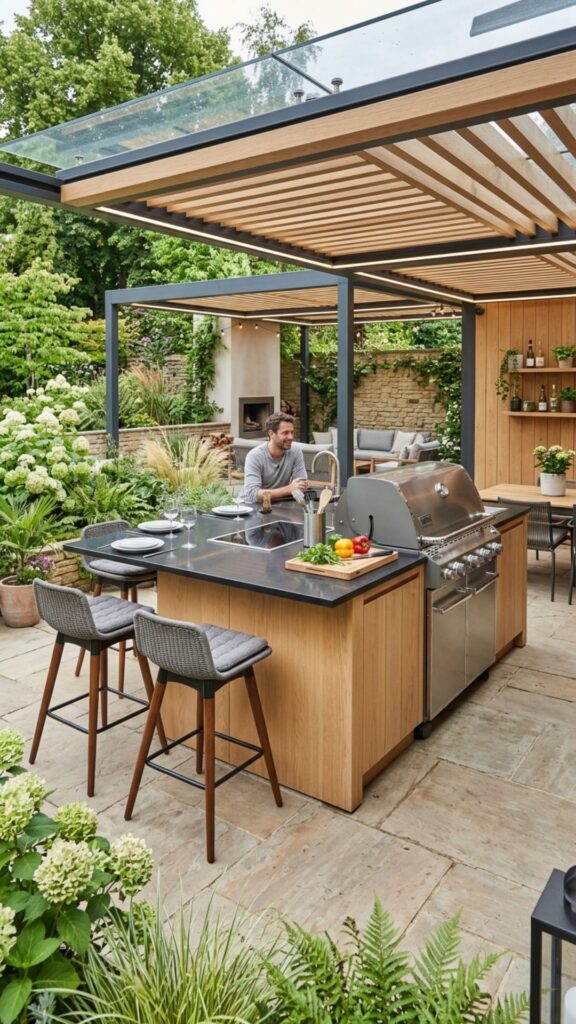
An island does double duty. On one side, it holds your cooktop or extra counter space. On the other, it becomes a casual bar where friends can sit, sip, and talk while you cook. That connection between cook and guests is what makes outdoor kitchens special.
Add two or three counter stools with weather-resistant cushions. Keep the overhang deep enough, around 12 to 15 inches, so knees fit comfortably underneath. An island keeps the conversation going and the mood relaxed.
5. Choose Weatherproof Cabinetry
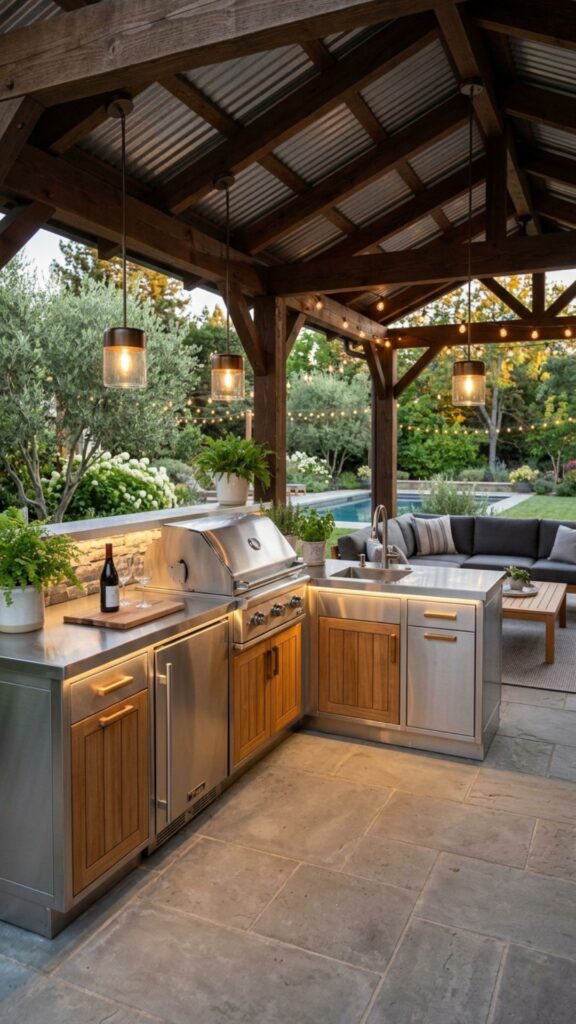
Cabinets take a beating outside, even under a roof. Humidity, temperature swings, and the odd splash all wear them down. Marine-grade polymer, stainless steel, or teak stand up best to the elements. They resist rust, warping, and fading over the years.
We believe your investment should last. Skip standard indoor cabinets, no matter how tempting the price looks. Pick materials rated for outdoor use, add soft-close hinges, and you’ll enjoy a kitchen that looks fresh season after season.
6. Pick Durable Countertops That Handle Heat
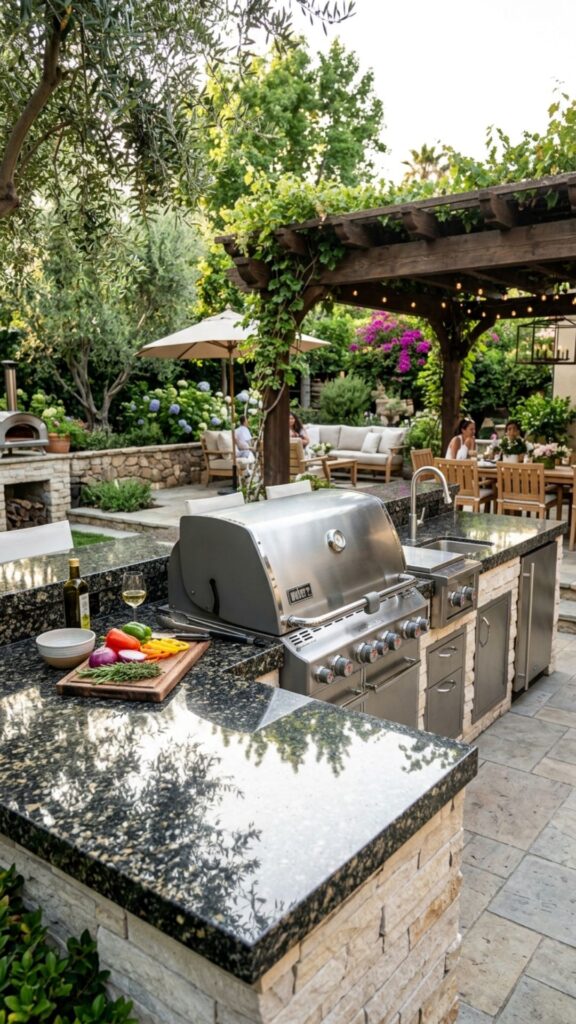
Countertops need to handle heat, moisture, and daily wear. Granite is a favorite because it resists heat and rarely stains. Concrete offers a modern, custom look and takes color well. Porcelain and soapstone also perform beautifully in outdoor settings.
Avoid materials that fade in sunlight or crack in the cold. Even under cover, temperature changes affect surfaces near the edges. A sealed, heat-tolerant countertop gives you a safe spot to set hot pans and a surface that wipes clean in seconds.
7. Light It Up for Evening Gatherings
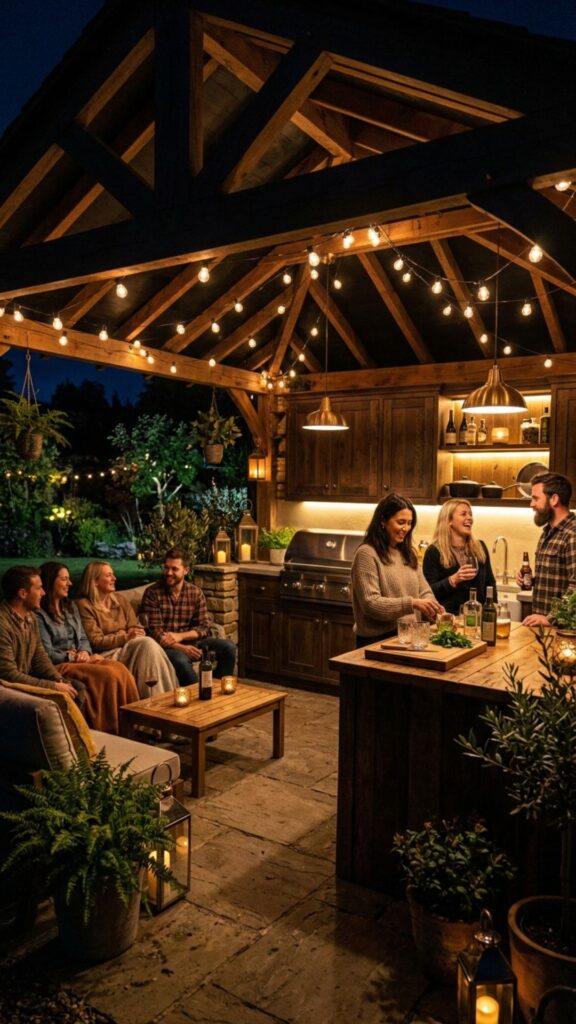
Good lighting stretches your evenings and keeps cooking safe after dark. Layer your light in three ways: task lighting over the grill and prep area, ambient lighting across the seating, and a few accent lights for warmth. That mix keeps the space both useful and inviting.
String lights add an easy, festive glow overhead. Under-counter LEDs help you see what you’re chopping. Dimmable fixtures let you shift from a bright cooking mode to a soft, relaxed dinner mood with one turn of a knob.
8. Include a Built-In Grill Station
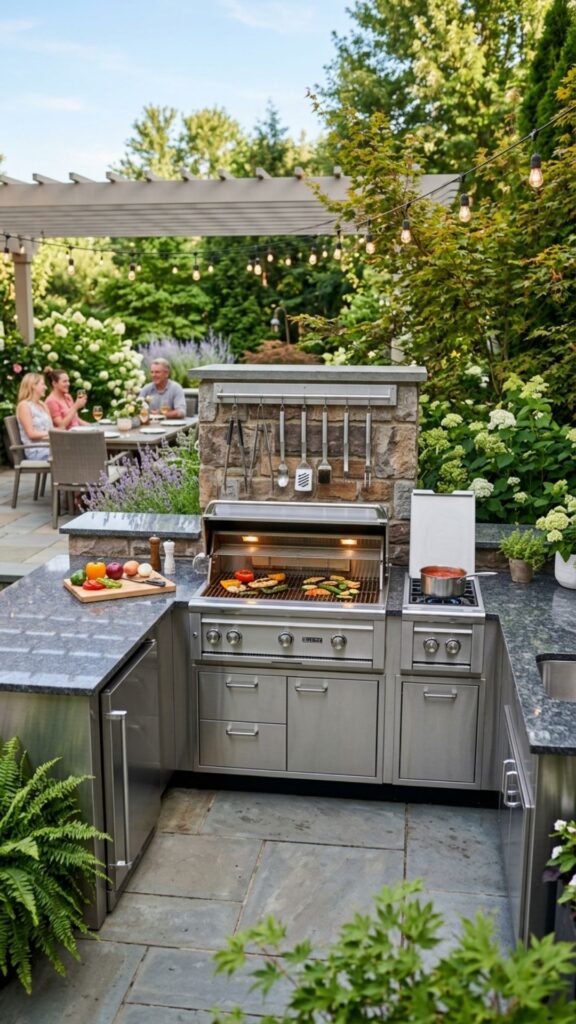
The grill is the star, so give it a proper home. A built-in grill sits flush in your counter, looks polished, and frees up space around it. Surround it with heat-resistant counter on both sides so you always have a landing spot for plates and tools.
Choose a size that matches how you cook. A 30-inch grill suits most families, while frequent hosts may want 36 inches or more. Add a side burner nearby for sauces and sides, and your grill station handles a full meal on its own.
9. Add a Pizza Oven for Weekend Fun
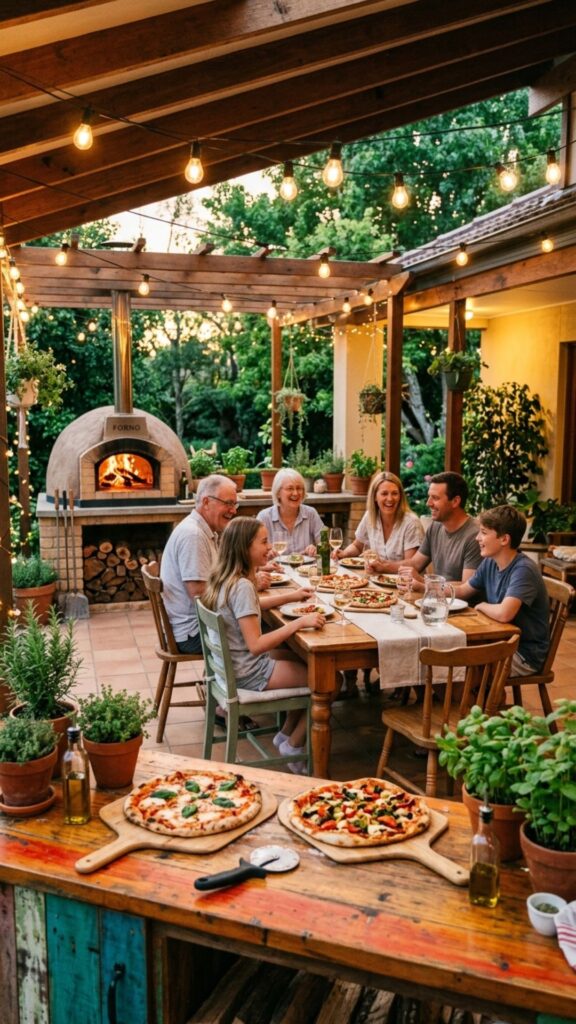
A wood-fired or gas pizza oven turns an ordinary dinner into an event. Kids love shaping their own pizzas, and the high heat cooks each one in minutes. It’s a small addition that creates big memories around the table.
Place the oven on a sturdy, non-combustible base and keep clearance from walls and roofing. Beyond pizza, these ovens roast vegetables, bake bread, and cook fish beautifully. It’s a versatile piece that earns its spot fast.
10. Set Up a Dedicated Beverage Center
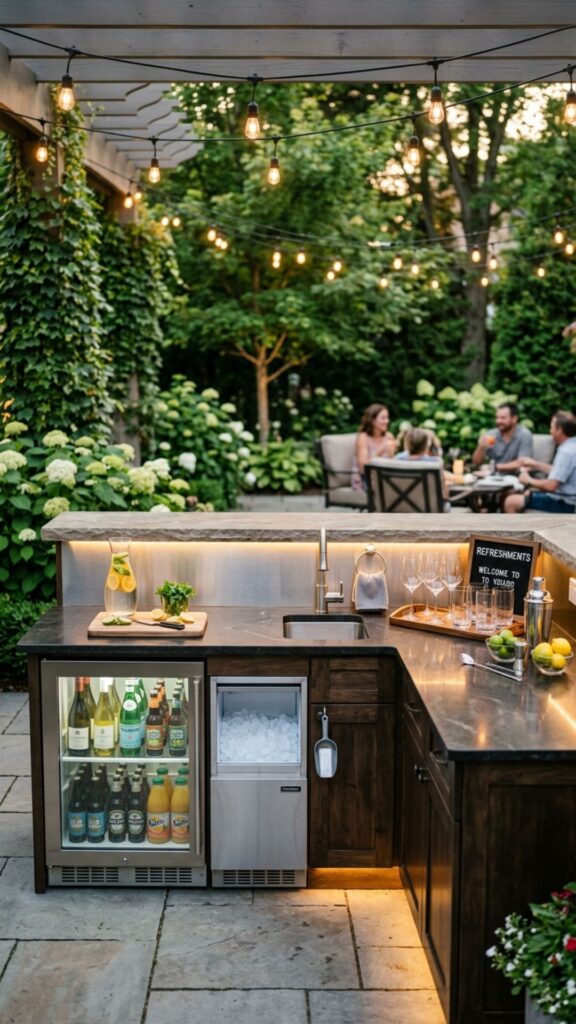
A beverage station keeps drinks flowing without constant trips indoors. Add a compact outdoor fridge, an ice maker, and a small sink for rinsing glasses. Guests help themselves, and you stay focused on the food.
For families who entertain often, a kegerator or wine fridge is a welcome touch. Keep this zone slightly apart from the cooking area so the crowd naturally spreads out. A little planning here makes hosting feel calm instead of chaotic.
11. Warm the Space With a Fireplace or Fire Pit
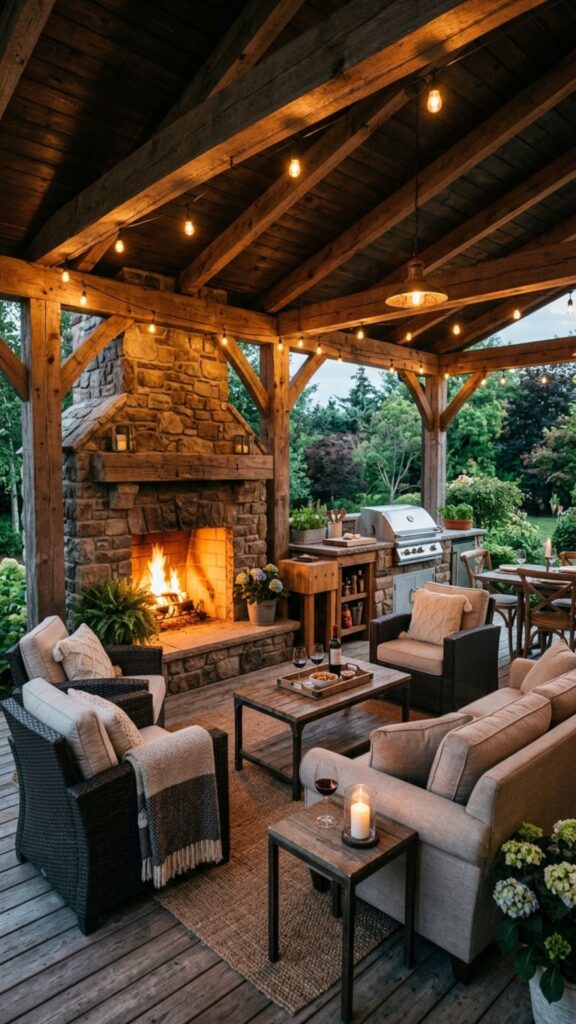
Heat extends your season and pulls people together. An outdoor fireplace anchors the patio with a cozy focal point, while a fire pit invites everyone to circle up. Either one turns a cool night into a reason to stay longer.
Keep any flame source well clear of your roof and follow local safety codes. Gas versions offer instant warmth with a switch, while wood-burning options bring that classic crackle and scent. Pair it with soft seating and the space feels like a living room outdoors.
12. Bring Comfort With Ceiling Fans
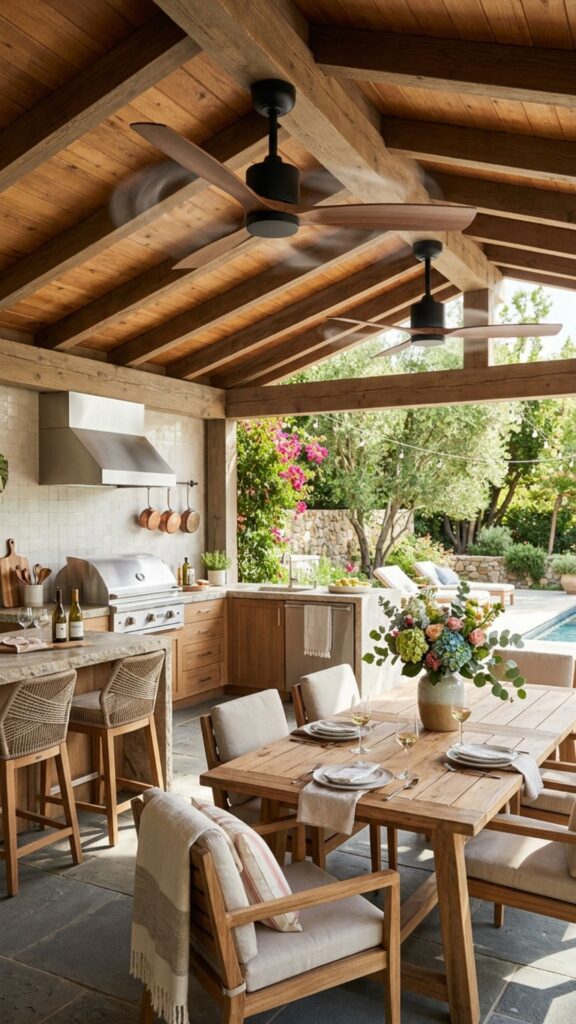
A covered roof traps warm air on hot days, so airflow matters. Outdoor-rated ceiling fans keep the space cool, move fresh air, and quietly shoo away bugs. They’re an easy upgrade with a big payoff in comfort.
Choose fans made for damp or wet locations, depending on how exposed your patio is. Mount them high enough for safe clearance over standing guests. On a warm summer evening, that steady breeze is the difference between staying outside and heading in.
13. Design Plenty of Storage
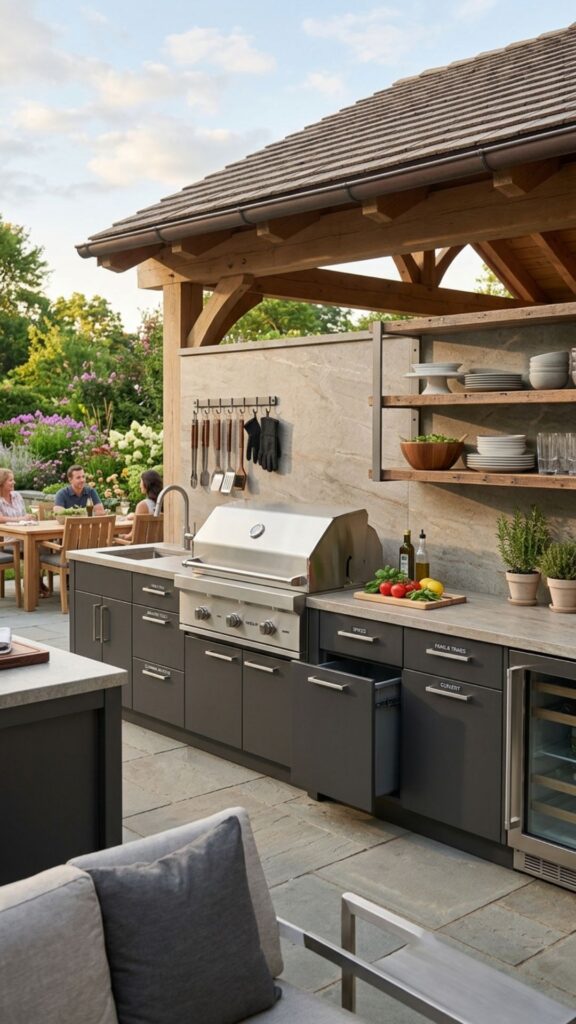
Storage keeps your kitchen tidy and ready to use. Build in drawers for utensils, cabinets for platters, and a spot for propane or grilling tools. When everything has a home, cleanup takes minutes instead of an ordeal.
We realize outdoor storage often gets ignored until it’s too late. Plan it early so you’re not hauling supplies back and forth. Add a lockable cabinet for valuables and weatherproof bins for cushions, and your patio stays organized all year.
14. Add a Prep Sink With Running Water
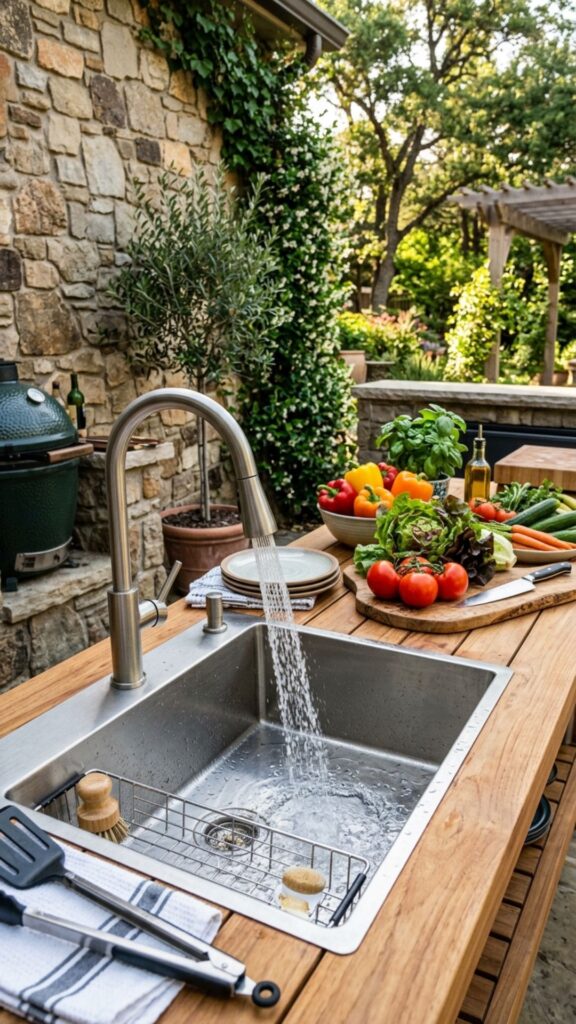
A sink outside saves countless trips to the indoor kitchen. Rinse produce, fill pots, and wash hands right where you cook. It’s a small feature that makes the whole space feel like a true kitchen.
Connect it to a proper water and drainage line, ideally during the build phase. In colder regions, add a shutoff valve so you can drain the pipes before winter. Once you cook with running water outside, you’ll wonder how you managed without it.
15. Create Zones for Cooking and Dining
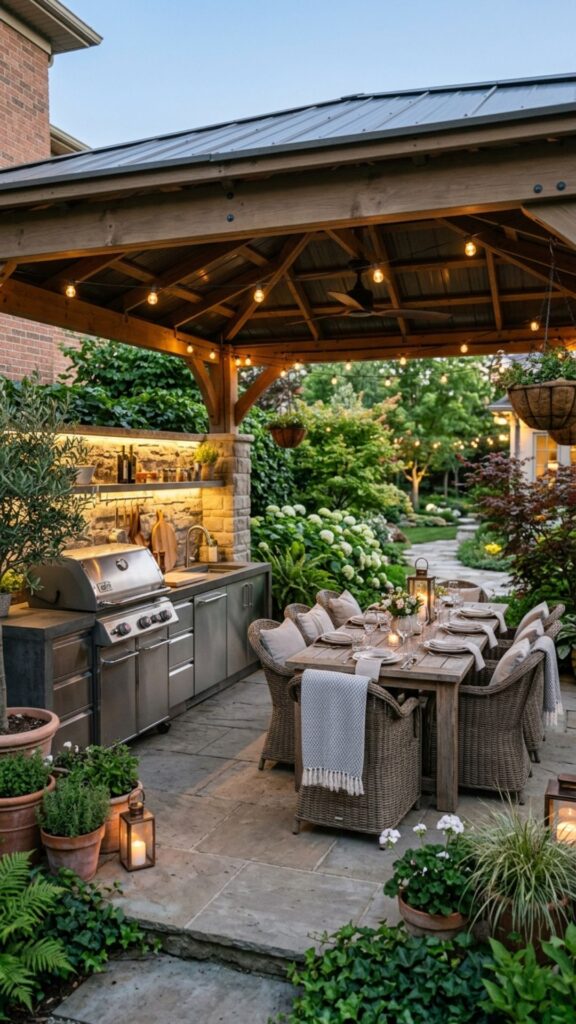
Separate your cooking and dining areas so the two never crowd each other. The cook gets room to work, and guests get a relaxed place to sit and eat. A clear divide, even a subtle one, makes the patio feel larger and calmer.
Use a change in flooring, a rug, or the counter itself to mark the shift. Position the dining table close enough for easy serving but far enough from grill smoke. Thoughtful zones let you cook, gather, and unwind all in one place.
16. Use Weather-Resistant Flooring
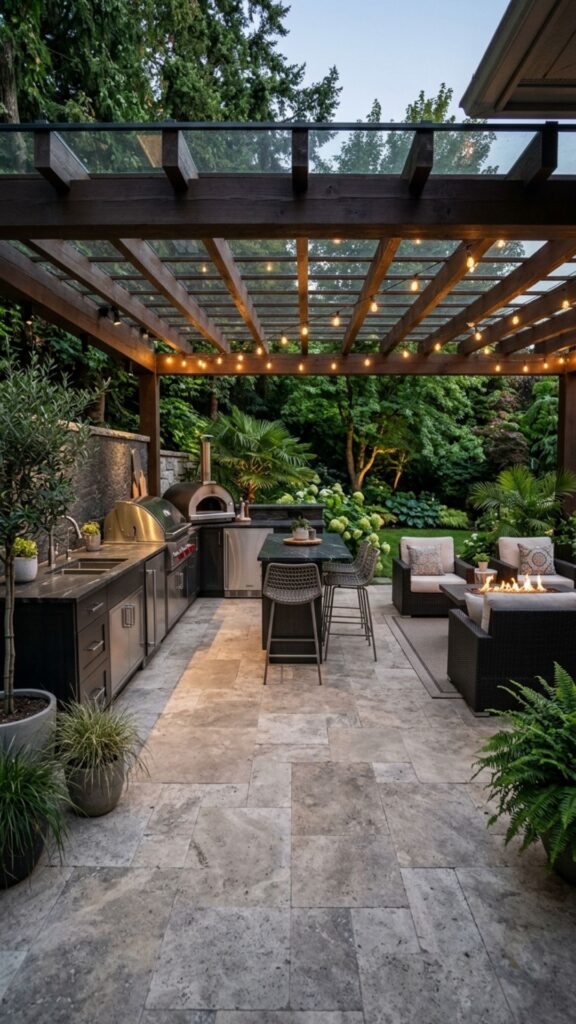
Flooring sets the tone and takes daily abuse. Porcelain tile, natural stone, and stamped concrete all handle moisture and heavy foot traffic well. Pick a slip-resistant finish, since spills near a cooking zone are a given.
Match the flooring to your home’s style for a seamless look. Textured surfaces stay safer when wet, and darker tones hide the odd stain. A durable floor ties the whole kitchen together and holds up for many years.
17. Incorporate Greenery and Herb Gardens
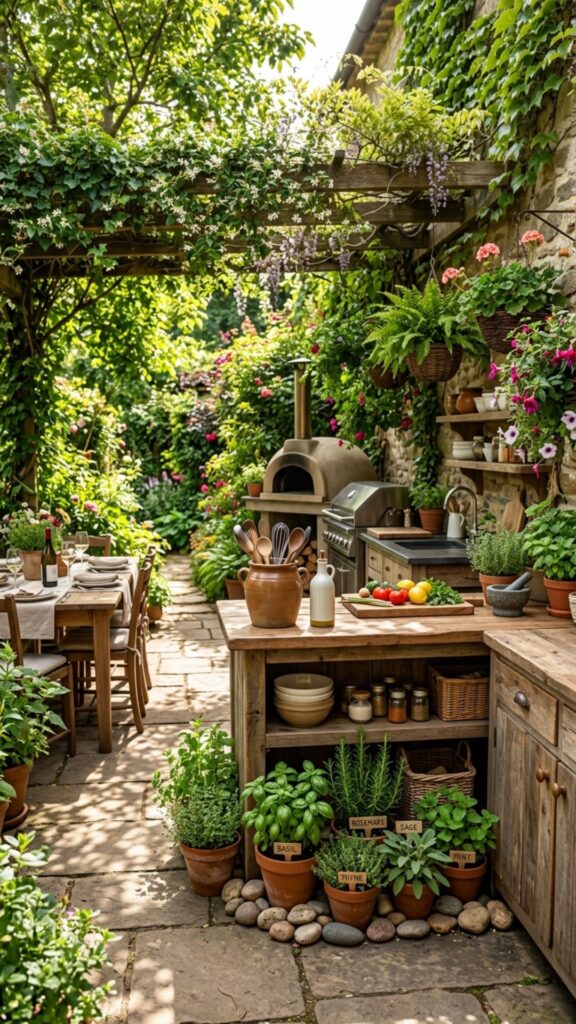
Plants soften the hard edges of an outdoor kitchen and bring it to life. A small herb garden nearby means fresh basil, mint, and rosemary within reach while you cook. Snip what you need and taste the difference in every dish.
Add potted plants, hanging baskets, or a vertical garden along a wall. Greenery cools the space, cleans the air, and adds color that changes with the seasons. It’s a simple touch that makes the patio feel warm and cared for.
18. Match the Style to Your Home
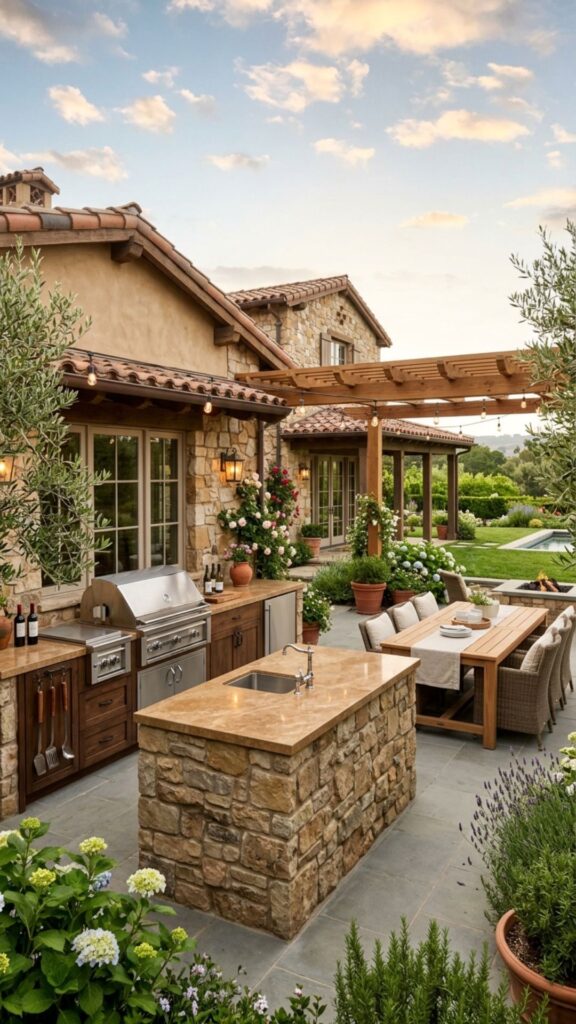
Your outdoor kitchen should feel like an extension of your house, not an afterthought. Echo the colors, materials, and lines of your home’s exterior. A modern house pairs well with sleek stainless and clean stone, while a traditional home suits brick, wood, and warm tones.
This connection makes the patio feel intentional and inviting. Carry a few indoor details outside, like matching tile or a shared color palette. When the two spaces speak the same language, the whole property feels bigger and more unified.
19. Plan for Year-Round Use
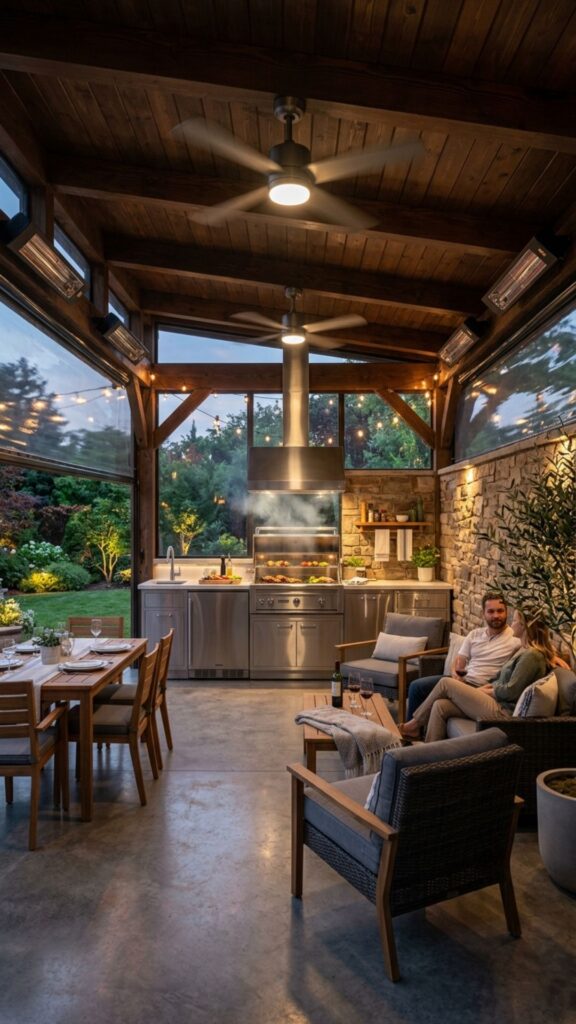
A covered patio already protects you from rain and sun, so lean into all-season use. Add heaters for winter, fans for summer, and roll-down screens or curtains for wind and privacy. With a few adjustments, the kitchen works in every month.
We believe outdoor spaces should earn their keep all year. Waterproof outlets, sealed appliances, and drainage that handles storms all help. Build for every season, and your patio becomes a space you actually use, not just admire from the window.
20. Add Personal Touches That Feel Like You
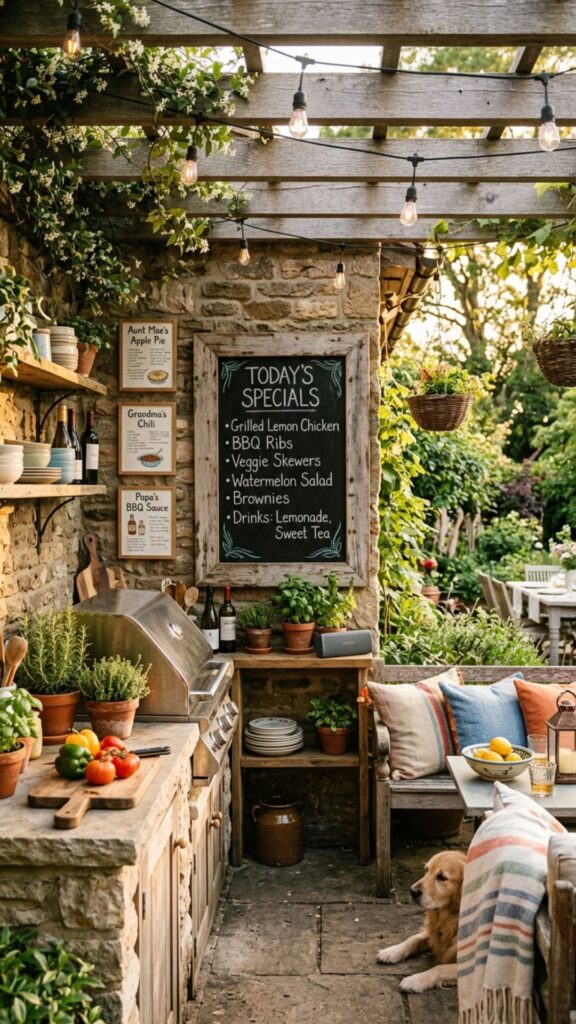
The best outdoor kitchens reflect the people who use them. Add a chalkboard menu, framed family recipes, or a sound system for your favorite playlist. These small details turn a cooking area into a gathering place with heart.
Think about how your family really spends time together. Maybe it’s game nights, big holiday meals, or lazy Sunday breakfasts. Design for those moments, and the space becomes more than a kitchen. It becomes the spot everyone remembers.
Bringing It All Together
A covered patio kitchen lets you cook, gather, and relax without watching the weather. Start with a smart layout, choose materials that last, and add the comfort touches that make people linger. Every idea here works on its own, and they work even better together.
Pick two or three ideas that fit your space and budget, then build from there. Sketch your plan, set your priorities, and talk to a local contractor about what your patio can handle. Your dream outdoor kitchen is closer than you think, so take the first step today.
How much does an outdoor kitchen on a covered patio cost?
A basic setup with a built-in grill and counter often runs between $5,000 and $15,000. Larger kitchens with premium appliances, stone counters, and a pizza oven can reach $30,000 or more. Your final cost depends on size, materials, and whether you add water and gas lines.
Do I need a roof vent for a grill under a covered patio?
Yes, ventilation matters. Grills release smoke, heat, and carbon monoxide, which can build up under a roof. Install a vent hood over the grill or leave open sides for airflow. Always check your local building codes before you install.
What is the best material for outdoor kitchen countertops?
Granite is a top pick because it resists heat, stains, and weather. Concrete and porcelain also perform well and offer a modern look. Choose a sealed, heat-tolerant surface, and avoid materials that fade in sunlight or crack in the cold.
Can I use an outdoor kitchen in winter?
Absolutely, especially under a covered patio. Add patio heaters, roll-down screens, and sealed, weatherproof appliances. In colder climates, drain water lines before a freeze to protect the pipes. With a little prep, your kitchen works comfortably all year.
How much space do I need for an outdoor kitchen?
A functional layout can fit in as little as 100 to 150 square feet. That leaves room for a grill, counter, and small prep zone. For islands, dining areas, and extra appliances, aim for 200 square feet or more so the space feels open and easy to use.