Cooking outside doesn’t require a sprawling backyard. Even a modest balcony can become a functional, good-looking spot for grilling, prepping, and hosting friends. The trick is working smart with the square footage you have.
I’ve helped design and troubleshoot dozens of small-space cooking setups, and the same lessons come up again and again: measure twice, plan for airflow, and never skimp on safety.
Below you’ll find 20 outdoor kitchen ideas for balcony spaces, each with practical tips you can act on this weekend. We’ll tackle the big pain points too, including tight square footage, ventilation, fire safety, and where to stash everything when you’re done.
Let’s get into the ideas.
1. Start With a Folding Wall-Mounted Countertop
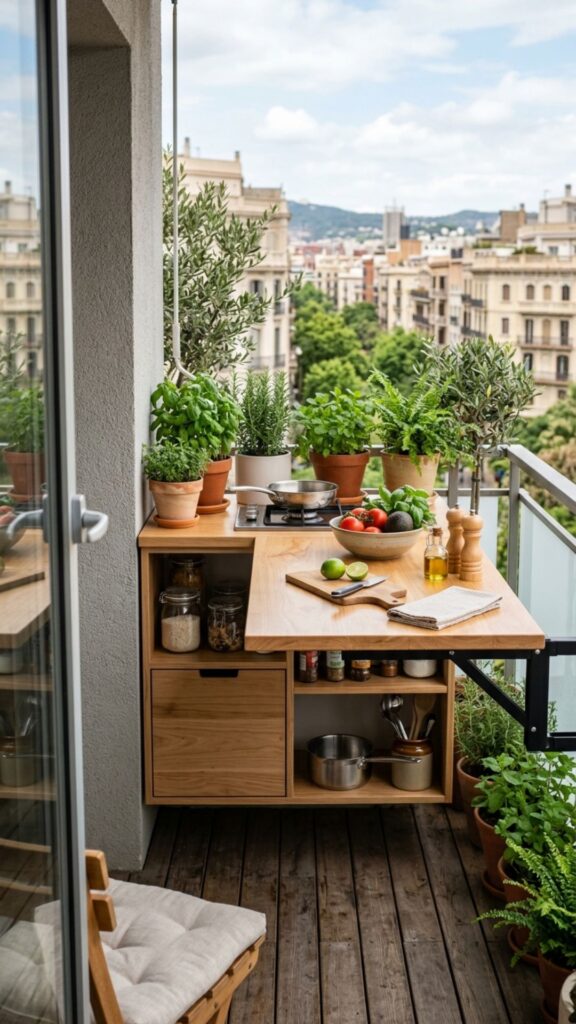
A folding countertop bolted to the balcony wall gives you prep space that disappears when you’re finished. Look for models rated to hold at least 100 pounds, and mount them into studs or masonry with proper anchors. When folded flat, you reclaim nearly all your floor space.
I recommend a stainless steel or treated hardwood surface here. Both shrug off rain and sun, and they wipe clean in seconds. Pair the counter with a small fold-out stool so you can sit while you chop.
2. Choose a Compact Electric Grill
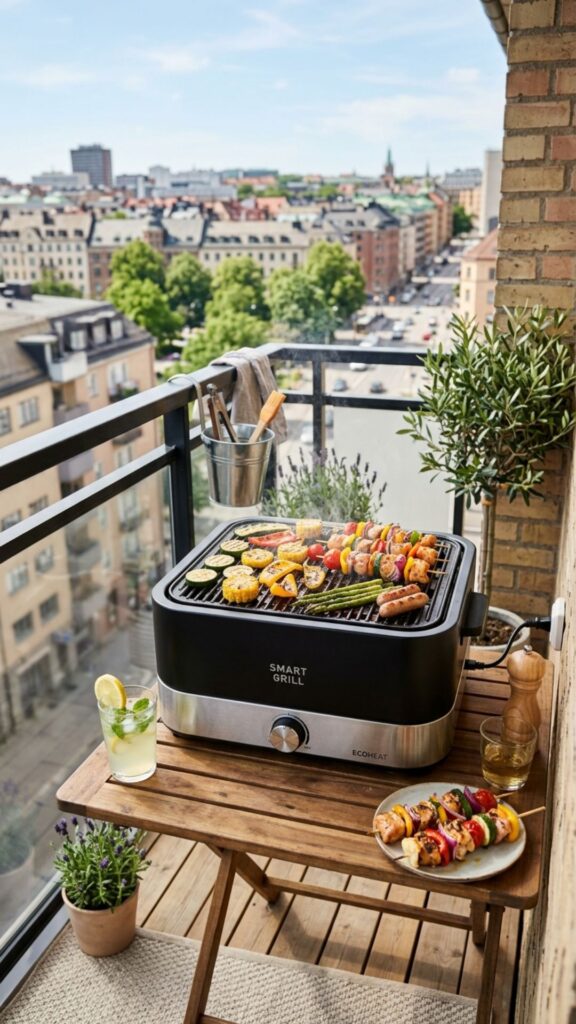
Many apartment buildings ban propane and charcoal on balconies because of fire risk. An electric grill sidesteps those rules while still giving you those sear marks you want. Check your lease and local codes first, since regulations vary widely by city.
Electric models heat up fast and produce far less smoke, which keeps neighbors happy. Place the unit on a heat-resistant mat and keep it at least three feet from walls, railings, and anything flammable.
3. Build Vertical Storage With a Slatted Rail System
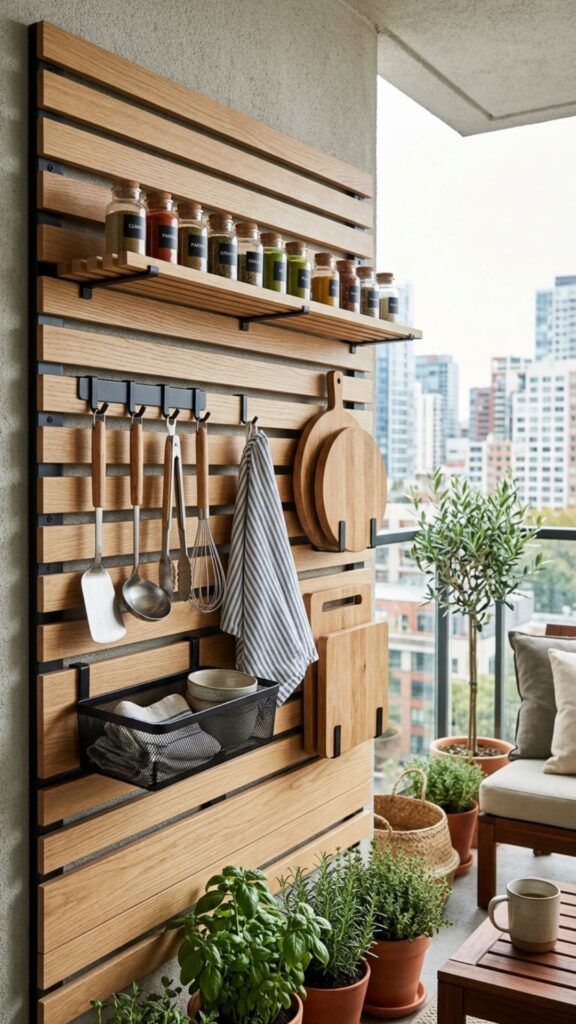
When floor space runs out, go up. A slatted rail or pegboard system mounted on the wall holds utensils, cutting boards, spice jars, and towels within easy reach. This keeps your counters clear for actual cooking.
Use weatherproof hooks and containers so nothing rusts or fades. I like grouping tools by task, so grilling gear hangs near the grill and prep tools sit by the counter.
4. Add a Rolling Cart for Flexible Prep
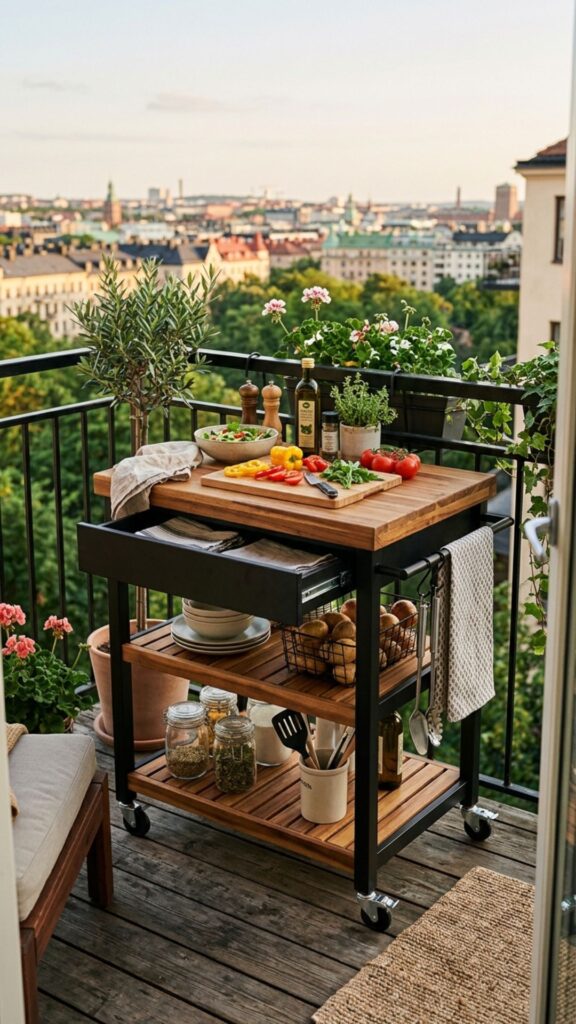
A rolling cart is the workhorse of small outdoor kitchens. Wheel it out when you’re cooking, then tuck it into a corner or indoors when you’re done. Choose one with locking casters so it stays put on uneven balcony tiles.
Carts with drawers and a lower shelf double your storage. Store charcoal alternatives, plates, and cleaning supplies below, and use the top as extra prep surface.
5. Install a Drop-Leaf Dining Table
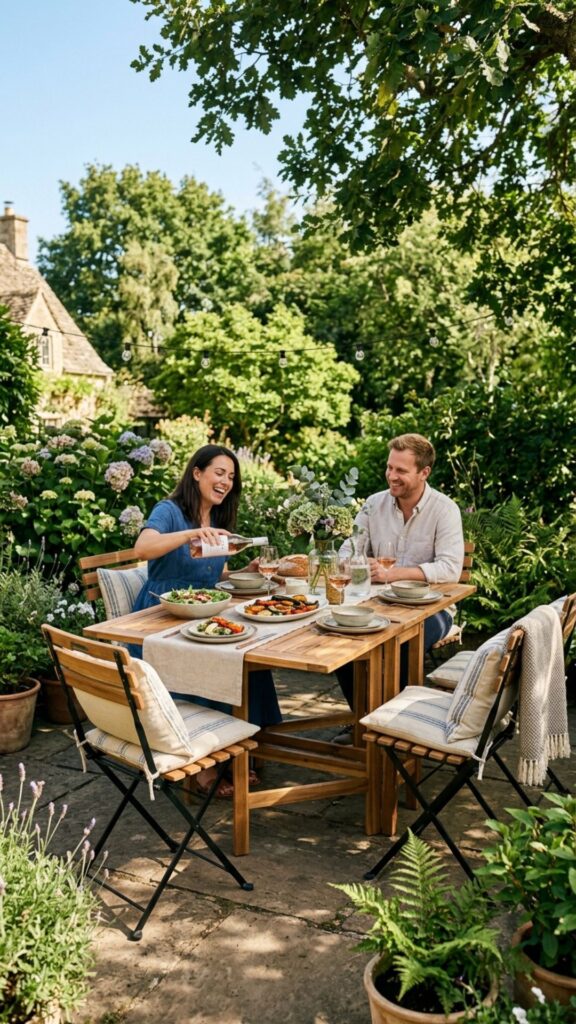
A drop-leaf table lets you serve meals outside without hogging space full-time. Fold both leaves down against the wall between meals, then extend them when guests arrive. Wall-mounted versions save even more room.
Match the table height to your countertop for a seamless workflow. A 30-inch height works for most people and pairs well with folding bistro chairs.
6. Use Stackable or Nesting Seating
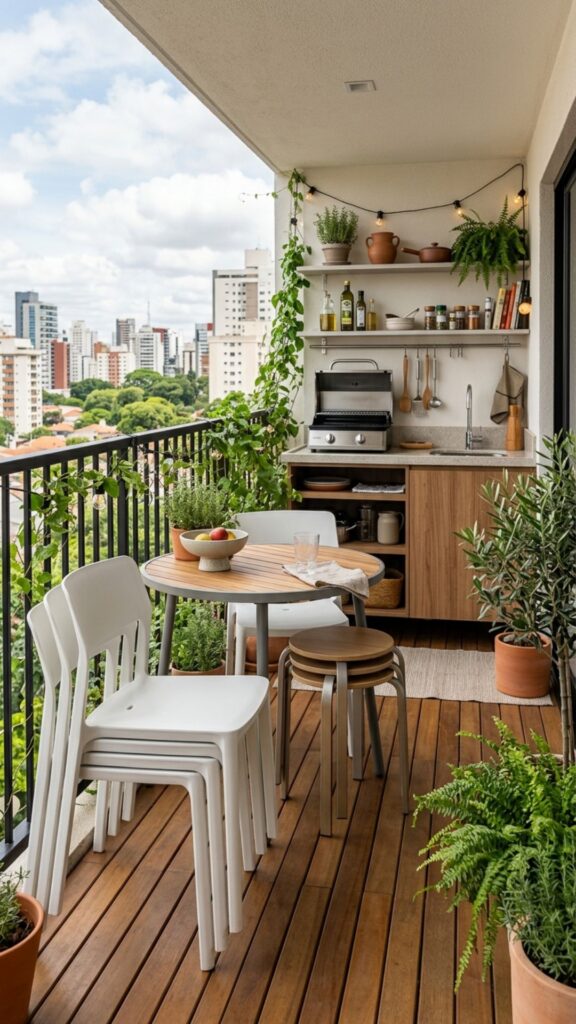
Bulky patio furniture eats up balcony floor fast. Stackable chairs or nesting stools store in a fraction of the space and pull out only when needed. Aluminum and resin options resist weather and stay light enough to move easily.
For a cozier feel, add one or two cushioned seats with removable covers. Bring the cushions inside during storms to extend their lifespan.
7. Create a Herb Garden Wall
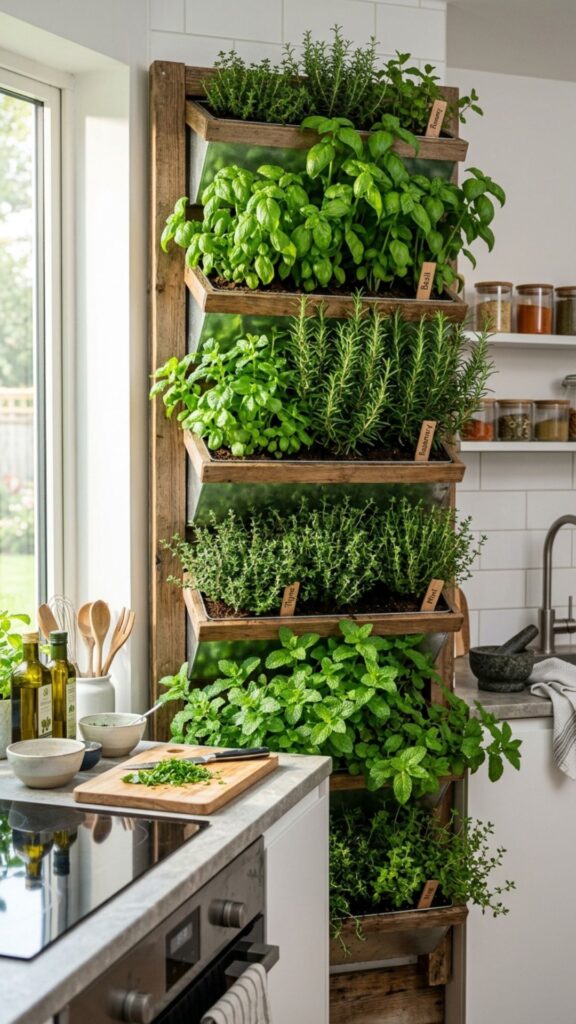
Fresh herbs steps from your grill make every dish better. A vertical planter or hanging pocket garden lets you grow basil, thyme, rosemary, and mint without sacrificing floor space. South-facing balconies give herbs the sun they crave.
Water-wise self-watering planters cut your maintenance in half. Snip what you need right before cooking, and you’ll taste the difference immediately.
8. Pick a Two-Burner Portable Induction Cooktop
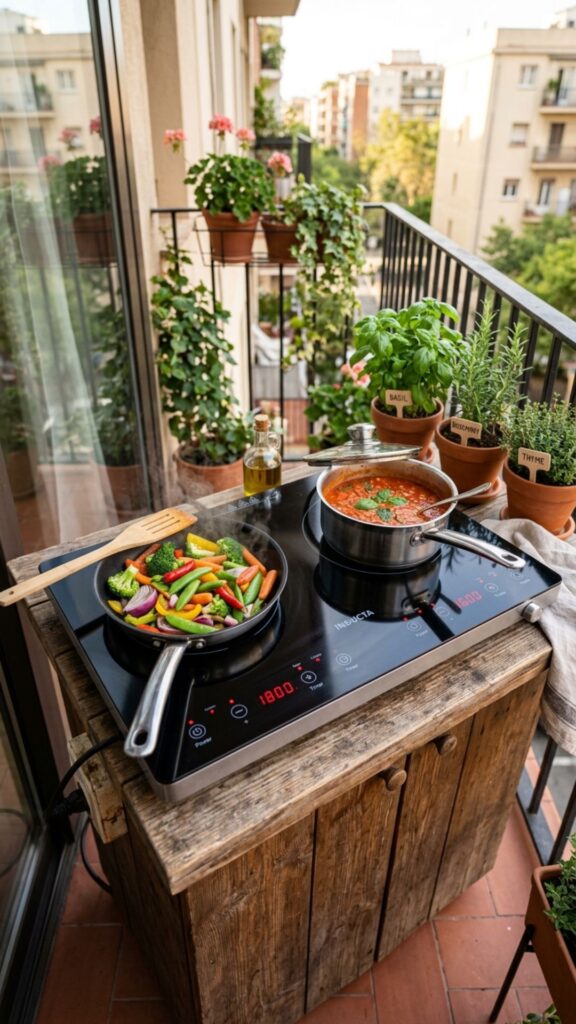
Induction cooktops heat cookware directly, so they’re efficient and cool to the touch around the pot. A two-burner portable unit gives you real cooking power without a permanent installation. Store it in a cabinet when not in use.
Induction requires magnetic cookware, so check your pans with a fridge magnet first. These cooktops also reduce ambient heat, a real bonus on a hot balcony.
9. Add a Weatherproof Mini Fridge
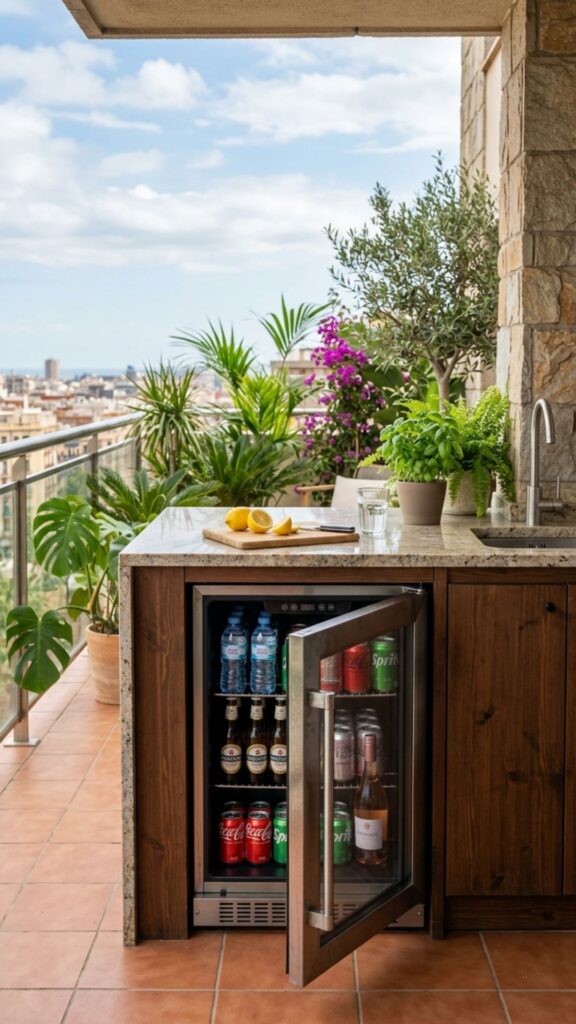
A compact outdoor-rated fridge keeps drinks and ingredients cold without endless trips indoors. Look for models built for outdoor use, since they handle temperature swings and moisture better than indoor units. Tuck one under your counter to save floor space.
Position the fridge in shade if possible, which helps it run efficiently. A 3.2-cubic-foot model fits most balconies and holds enough for a small gathering.
10. Prioritize Ventilation and Airflow
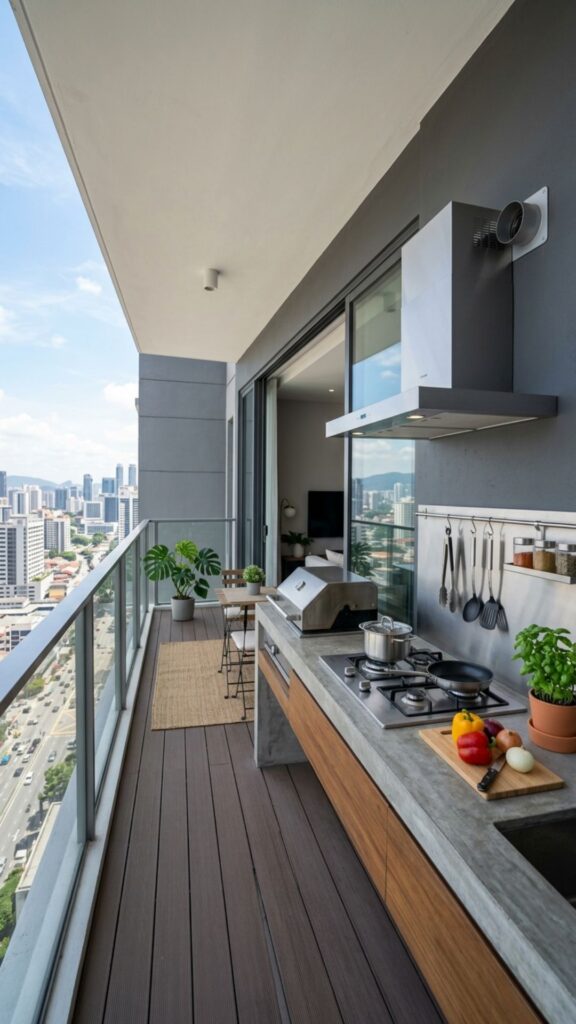
Ventilation is the most overlooked part of balcony cooking. Smoke and cooking odors need somewhere to go, especially in enclosed or semi-enclosed balconies. Always cook near the open edge and never grill in a fully enclosed space.
A small clip-on fan can push smoke away from your building and neighbors. For electric setups, a portable range hood with a carbon filter helps trap grease and steam.
11. Lay Down Interlocking Deck Tiles
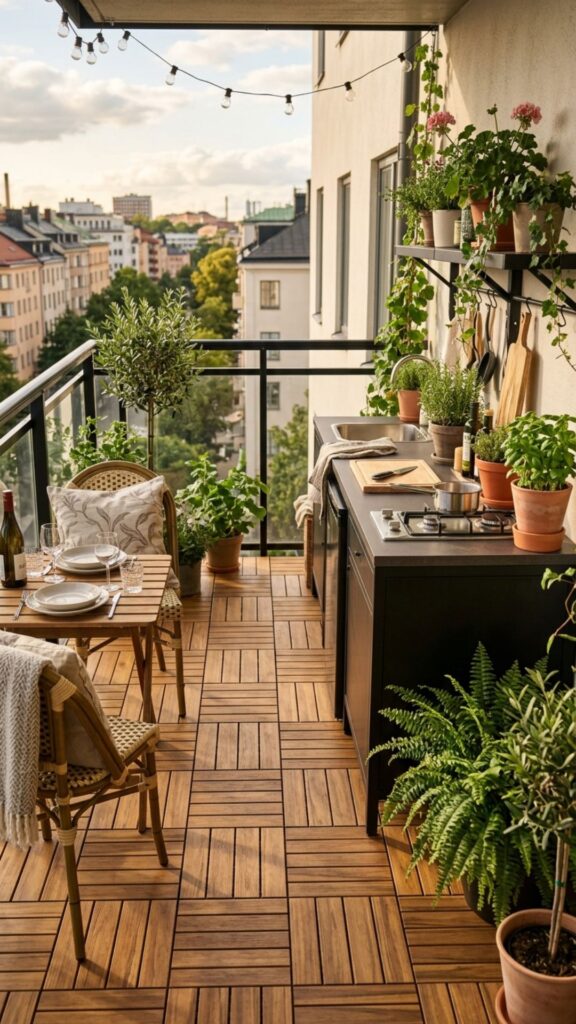
Interlocking deck tiles transform a plain concrete balcony into an inviting cooking zone. They snap together over your existing surface and lift out for cleaning. Wood-look and stone-look options both drain well and stay cooler underfoot.
Choose tiles rated for outdoor use with slip-resistant surfaces. They also protect your original flooring, which matters if you’re renting.
12. Set Up a Bar-Height Ledge for Dining and Prep
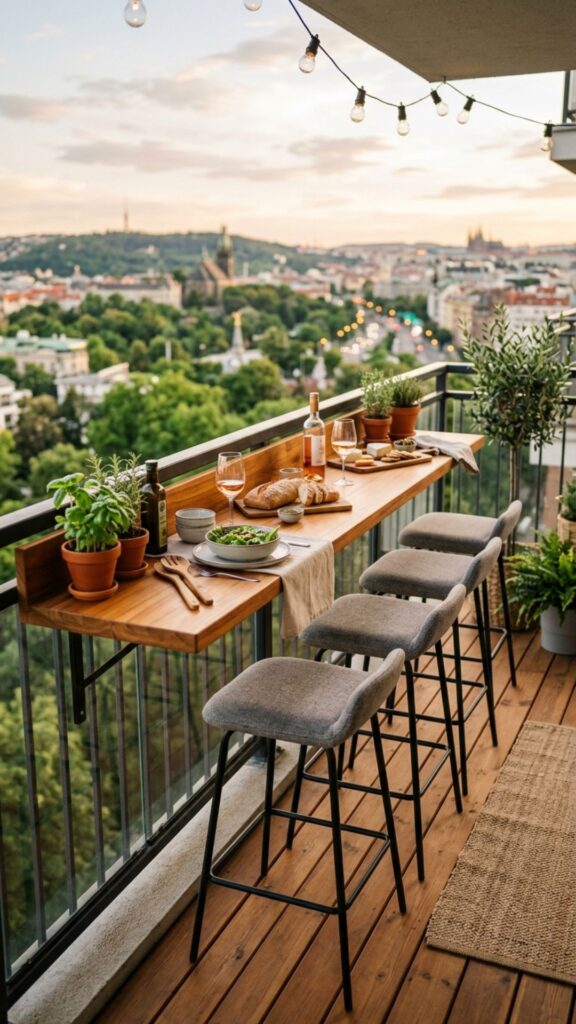
A narrow bar-height ledge along the railing doubles as a prep station and a dining counter. It uses the perimeter, leaving the center of your balcony open. Pair it with tall stools that slide underneath when not in use.
Measure your railing height and local code requirements before installing, since safety rules govern anything mounted near the edge. A depth of 10 to 12 inches works well for plates and cutting boards.
13. Incorporate a Foldable Sink Station
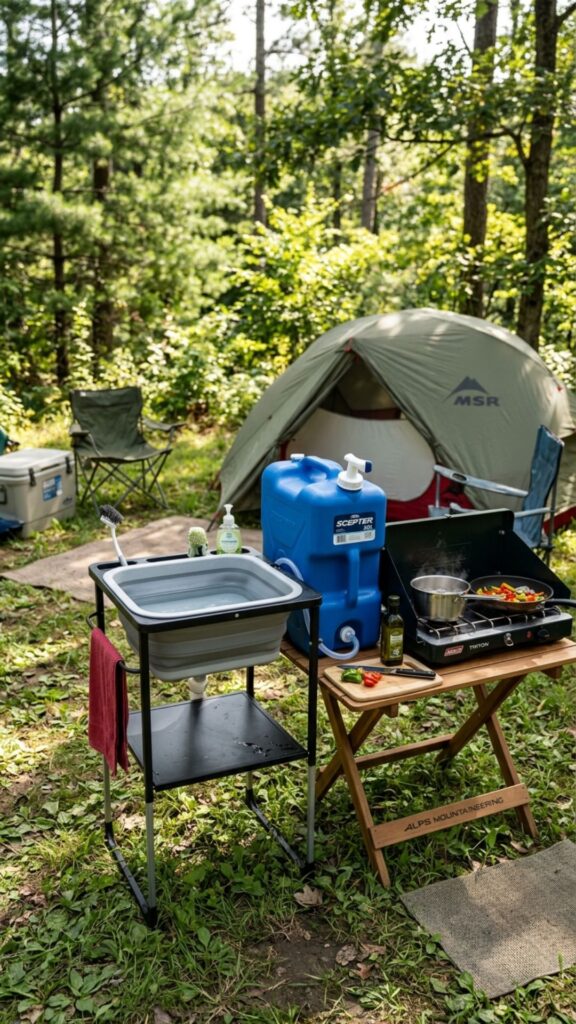
Rinsing hands and produce outside beats running inside every few minutes. A portable sink with a refillable water tank gives you a basic washing station without plumbing. Some models fold flat for storage between uses.
Keep a small trash and recycling bin nearby to complete the cleanup zone. This one addition makes cooking outdoors far more pleasant and hygienic.
14. Use Magnetic Strips for Knives and Tools
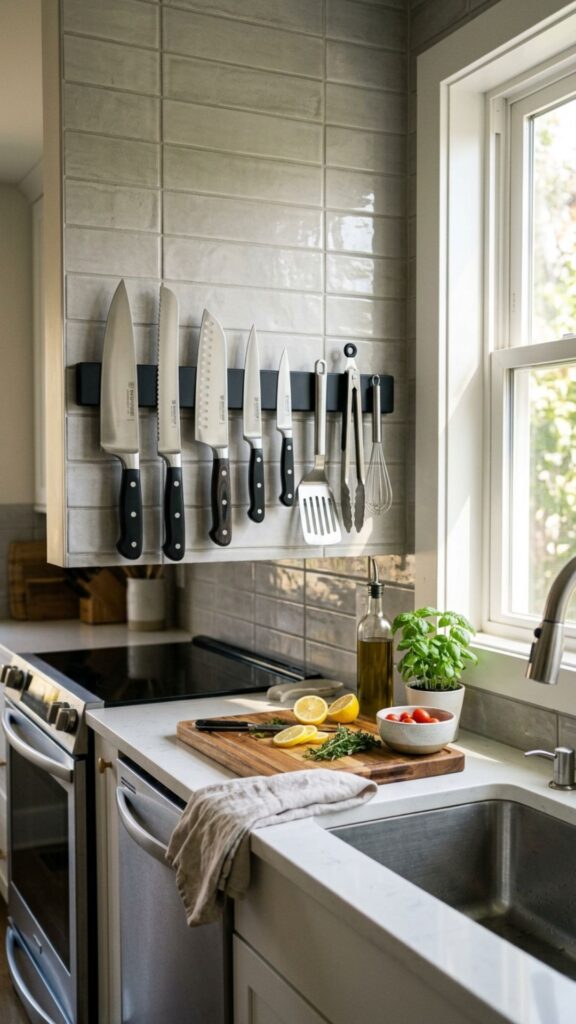
A magnetic strip mounted on the wall keeps knives and metal tools organized and off your prep surface. It’s a space-saver borrowed from professional kitchens that works beautifully outdoors. Choose a coated strip that resists rust.
Mount it at a comfortable height, away from where kids or pets can reach. Bring knives indoors after cooking to protect their edges from the elements.
15. Add Warm, Weatherproof Lighting
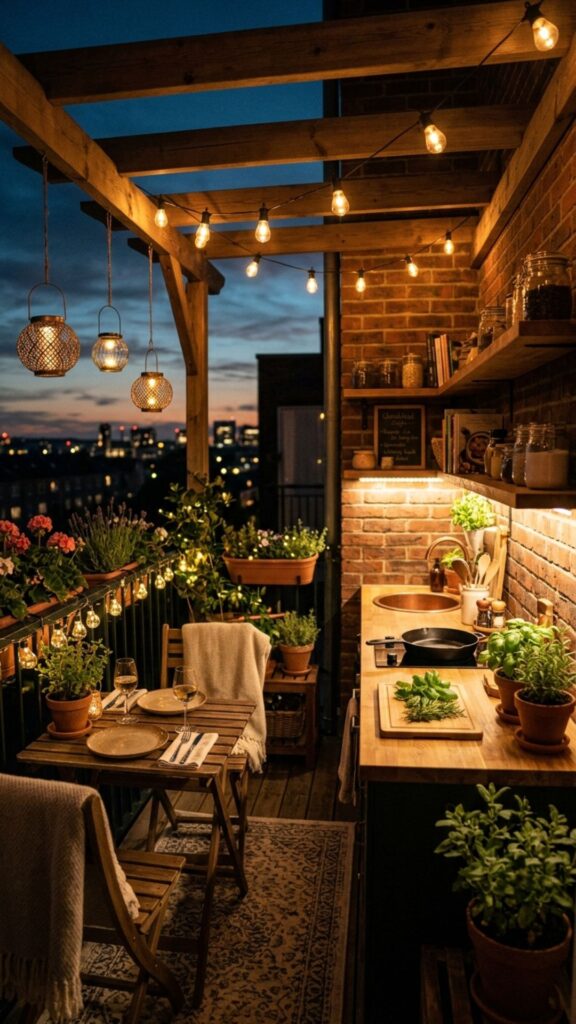
Good lighting extends your cooking hours well past sunset. String lights, solar lanterns, and LED strips under counters create a warm glow without a big electric bill. Solar options need no wiring, which simplifies rental setups.
Aim for a mix of task lighting over your prep area and softer ambient light for dining. Warm white tones (around 2700K) feel cozy and flatter your food.
16. Build a Compact Coffee and Beverage Nook
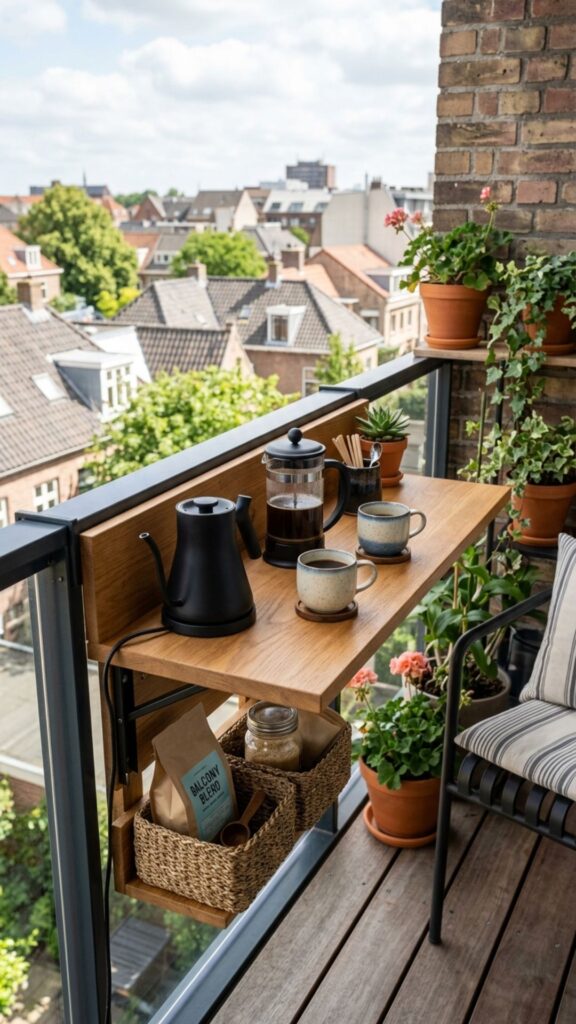
Morning coffee outside is one of life’s small joys. A slim shelf or cart dedicated to a kettle, French press, and mugs turns a corner into a beverage station. Add a lidded canister for grounds and a few weatherproof cups.
This nook works double duty for evening drinks too. Swap the coffee gear for glasses and a small ice bucket when guests come over.
17. Choose Multi-Functional Furniture With Hidden Storage
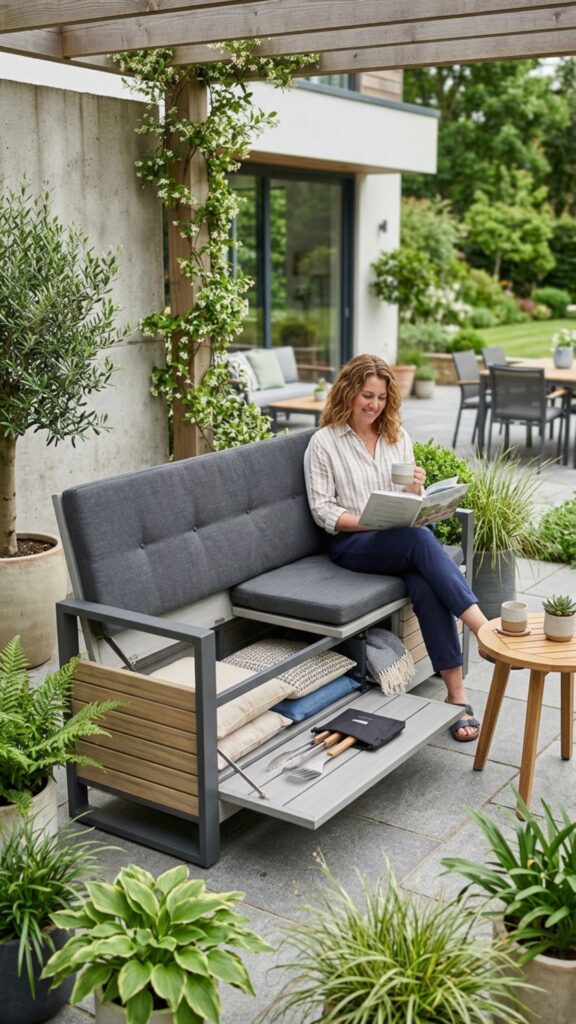
Storage benches and ottomans hide clutter while giving you a place to sit. Lift the lid to stash cushions, tools, or grilling accessories out of the rain. This dual purpose is gold on a tight balcony.
Look for pieces with weather-sealed interiors and drainage. A single storage bench can replace both a seat and a cabinet, freeing up precious square footage.
18. Install a Retractable Awning or Shade Sail
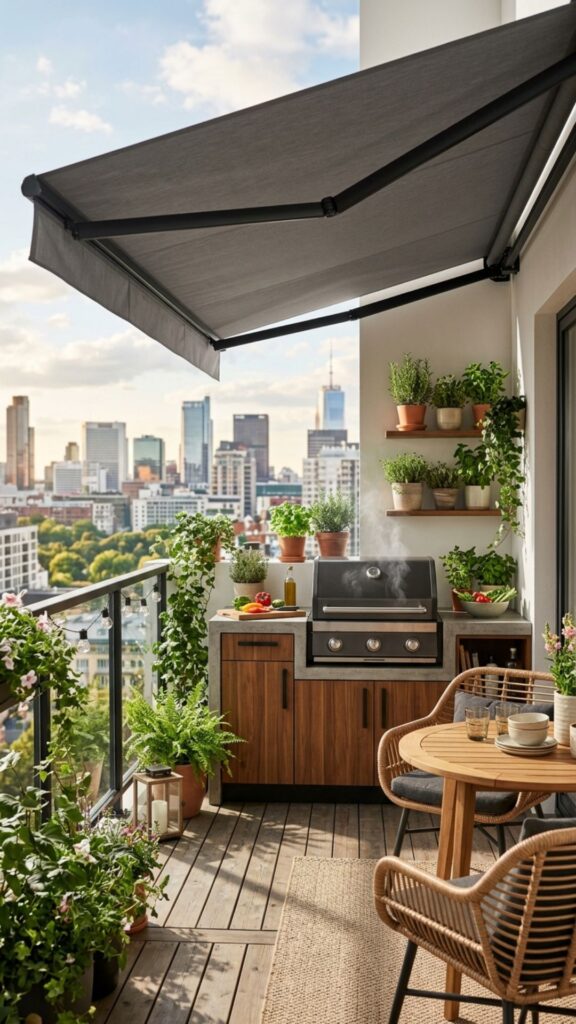
Sun and rain both cut your cooking time short. A retractable awning or triangular shade sail protects you and your gear while letting you open things up on nice days. Retractable models roll away when you want full sun.
Check that any overhead cover sits well above heat sources for safety. Adequate clearance prevents scorching and keeps your setup within fire code.
19. Add Fire Safety Essentials Within Reach
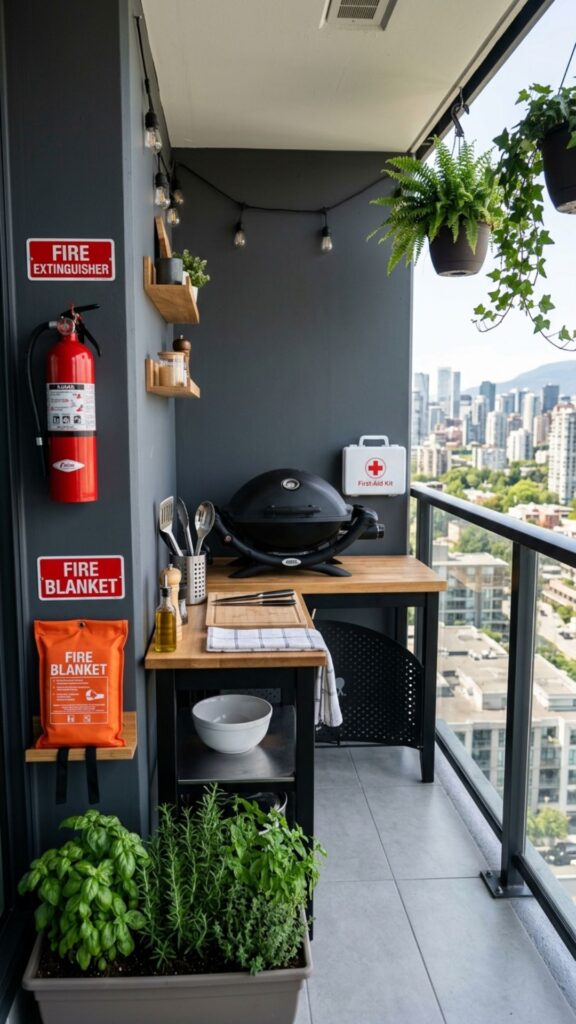
Every outdoor kitchen needs safety gear close by. Keep a fire extinguisher rated for kitchen fires within a few steps of your cooking area, plus a fire blanket for quick smothering. Test the extinguisher gauge regularly.
Never leave a hot appliance unattended, and keep flammable items well clear. A small first-aid kit stored in a weatherproof box rounds out your safety plan.
20. Personalize With Weatherproof Decor
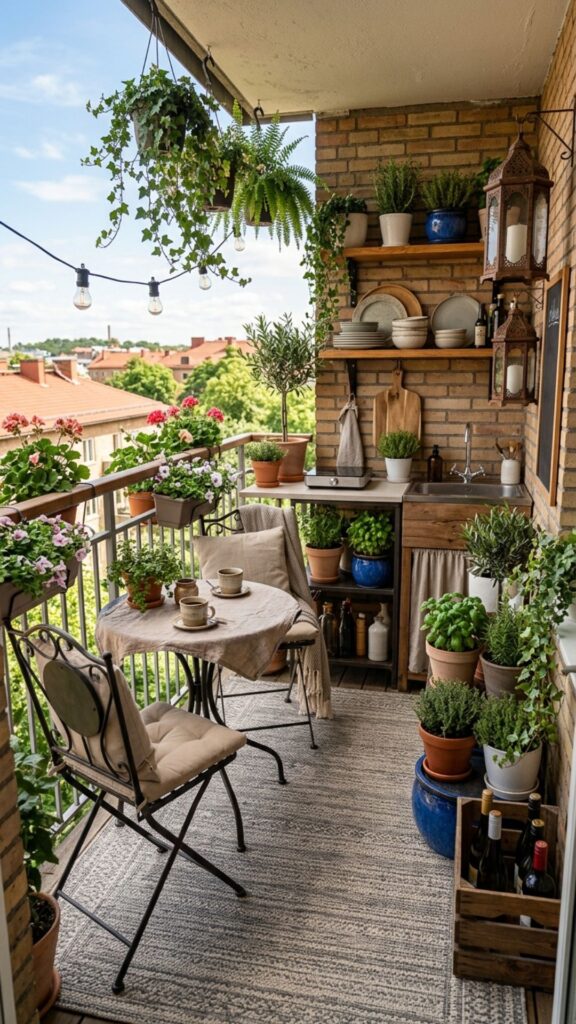
The final touch is making the space feel like yours. Outdoor rugs, potted plants, and a few weatherproof accents give your balcony kitchen personality without cluttering it. Stick to a simple color palette so the small space feels calm, not busy.
Choose materials that handle sun and rain, like polypropylene rugs and ceramic planters. A cohesive look ties all your practical choices into one welcoming outdoor room.
Conclusion
A balcony can absolutely become a hardworking outdoor kitchen with the right planning. Focus on the essentials first: smart storage, solid ventilation, fire safety, and space-saving furniture that folds, rolls, or stacks. From there, layer in the comforts like herb gardens, warm lighting, and personal decor.
Pick two or three ideas from this list that solve your biggest pain point, then build from there. Measure your space today, check your building’s rules, and start with one weekend project. Your best meals outdoors are closer than you think.
Can you have an outdoor kitchen on a balcony?
Yes, you can build an outdoor kitchen on a balcony using compact, portable equipment like electric grills, induction cooktops, folding counters, and rolling carts. Always check your lease and local fire codes first, since many buildings restrict propane and charcoal.
What is the best grill for a balcony?
An electric grill is usually the best choice for a balcony because it produces less smoke, heats quickly, and complies with most apartment fire rules. Place it on a heat-resistant mat at least three feet from walls and railings.
How do you handle ventilation when cooking on a balcony?
Cook near the open edge of the balcony, never in a fully enclosed space, and use a clip-on fan to direct smoke away from your building. A portable range hood with a carbon filter also helps trap grease and odors.
How do you save space in a small balcony kitchen?
Use vertical storage like slatted rails and magnetic strips, choose folding or wall-mounted counters, and pick furniture with hidden storage. Rolling carts and stackable seating let you clear the space quickly when you’re not cooking.
Is it safe to cook on a balcony?
Cooking on a balcony is safe when you keep a fire extinguisher and fire blanket within reach, maintain clearance from flammable items, and never leave hot appliances unattended. Follow your building’s specific rules for the safest setup.