A cluttered counter, a drawer that won’t close, pots you can never find — sound familiar? Most kitchen frustrations come down to one thing: poor functionality.
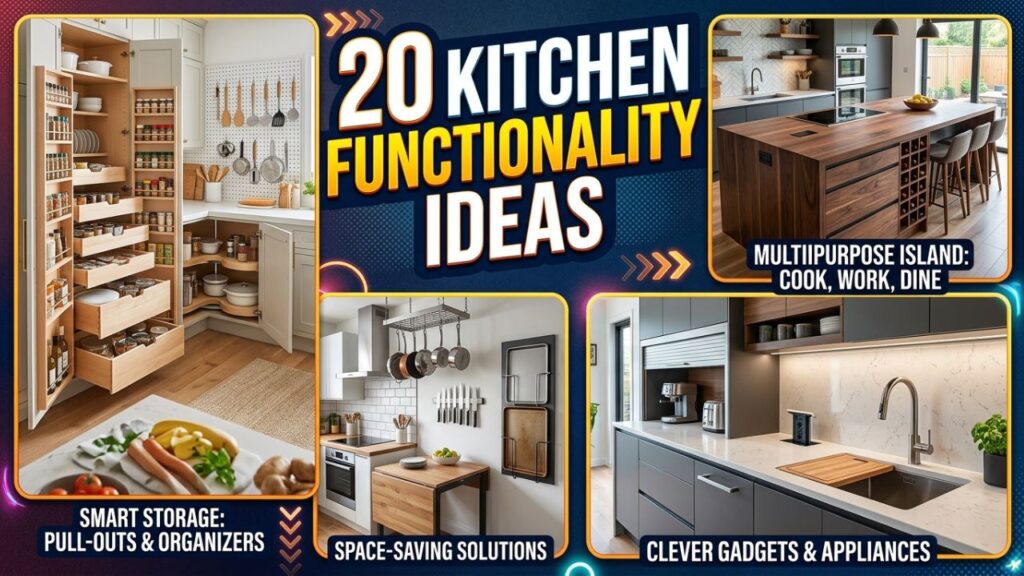
The good news is you don’t need a full renovation to fix it. Small, intentional changes can completely transform how your kitchen works for you.
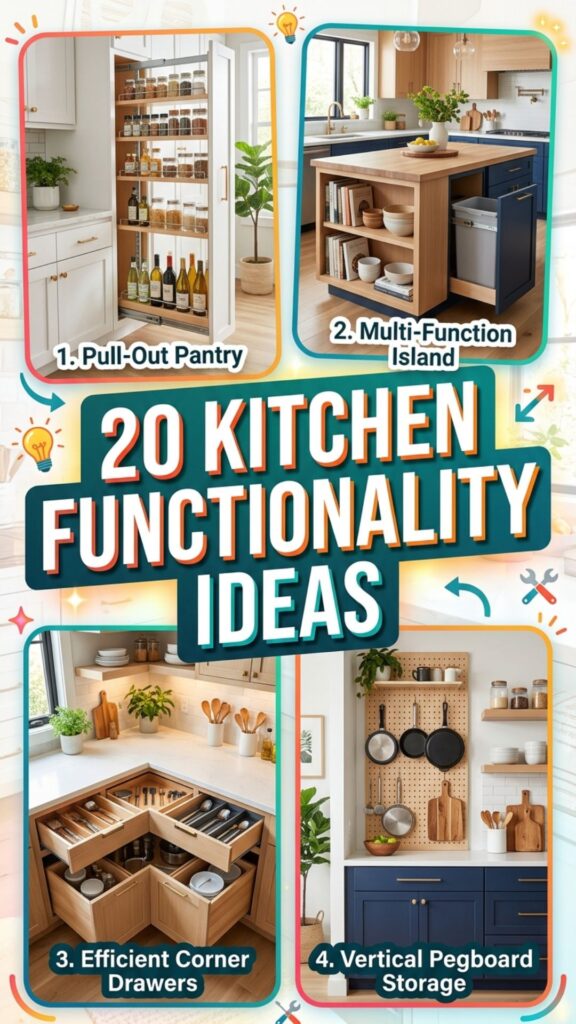
In this article, you’ll find 20 practical kitchen functionality ideas that address real cooking pain points. Whether you’re working with a tiny apartment kitchen or a spacious open-plan layout, these tips will help you cook faster, stay more organized, and actually enjoy spending time in the kitchen.
1. Install a Pull-Out Pantry for Easy Access
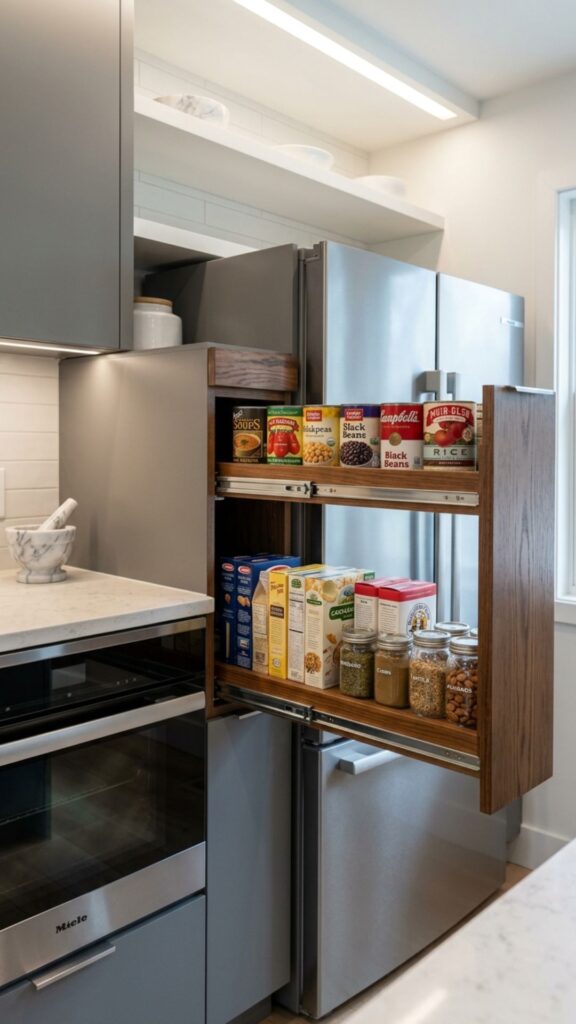
Deep cabinets are notoriously wasteful — things get pushed to the back and forgotten. A pull-out pantry shelf or slide-out cabinet insert fixes this instantly by bringing everything to the front with a single pull.
You can retrofit most existing cabinets with pull-out organizers for under $50. Look for options with adjustable shelves so you can accommodate everything from cereal boxes to canned goods without wasting vertical space.
2. Use a Pegboard to Free Up Counter Space
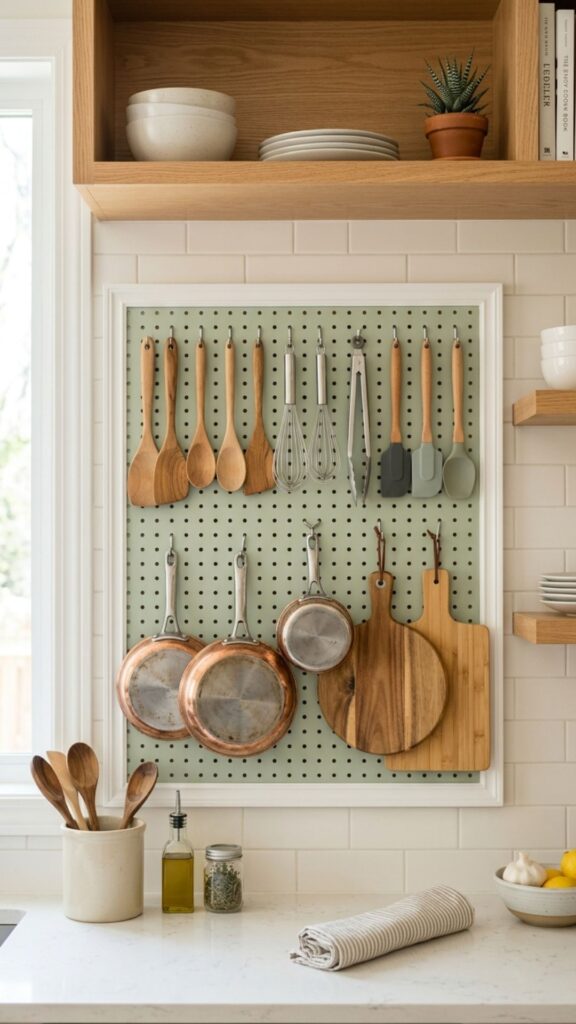
Hanging your most-used tools on a wall-mounted pegboard keeps them visible, accessible, and off the counter. It works for spatulas, ladles, whisks, cutting boards, and even small pans.
Pegboards are inexpensive and easy to install. Paint them to match your kitchen’s color scheme and rearrange the hooks as your cooking habits change. It’s one of the simplest kitchen functionality ideas that has an immediate visual and practical impact.
3. Add a Kitchen Island With Built-In Storage
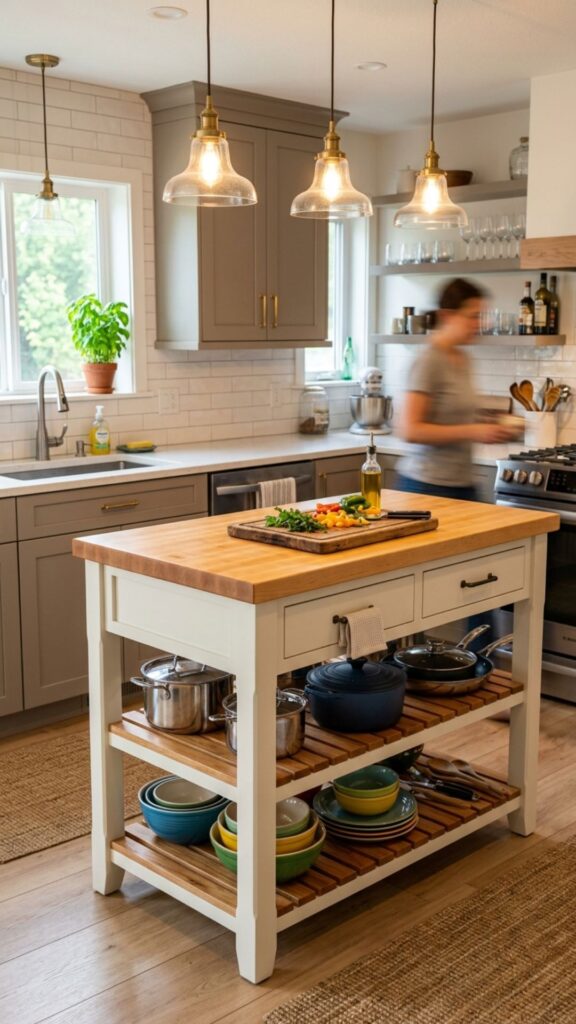
A kitchen island gives you extra prep space, but when it’s designed with drawers, shelves, or cabinets underneath, it doubles as a serious storage solution. Rolling islands are especially useful in smaller kitchens — you move them when you need space and pull them back when you need to prep.
Look for islands with a butcher block top if you want a durable prep surface, or one with a built-in trash pull-out to keep waste hidden and accessible at the same time.
4. Mount Your Microwave to Reclaim Counter Space
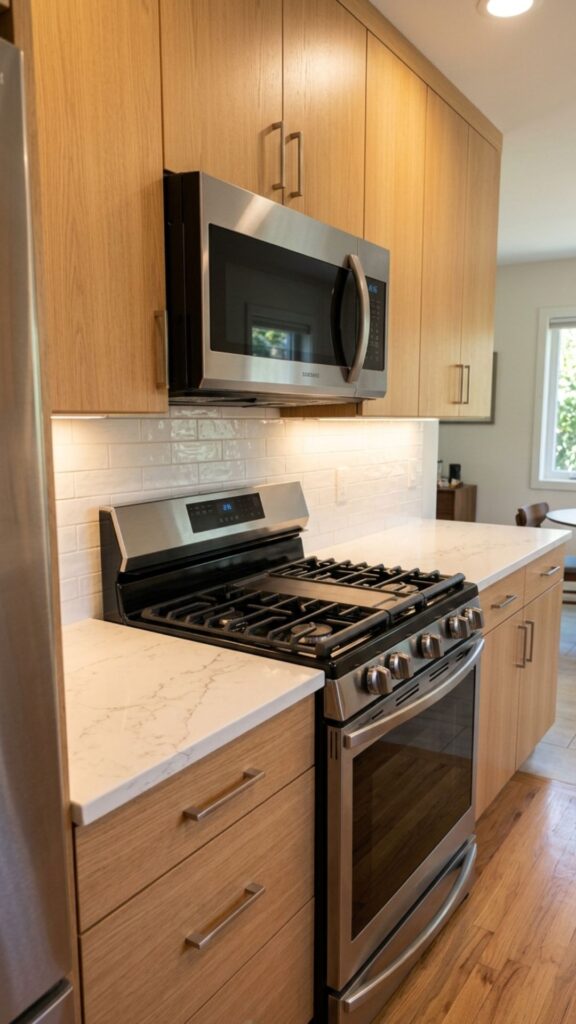
Countertop microwaves are counter hogs. Moving yours to a wall mount, an over-the-range position, or inside a cabinet frees up significant workspace — especially important in smaller kitchens.
Over-the-range microwaves also come with built-in ventilation fans, which means you eliminate two appliances with one installation. If wall-mounting isn’t an option, consider a microwave drawer built into your lower cabinetry for a sleek, space-efficient alternative.
5. Organize Spices With a Deep Drawer Insert
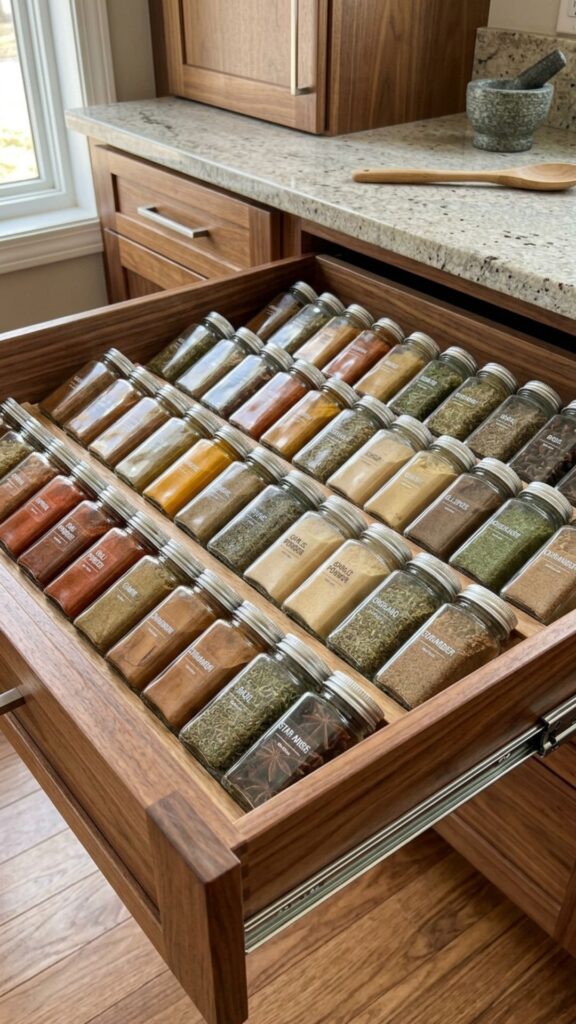
Rummaging through a spice cabinet mid-cook is one of the most frustrating kitchen experiences. A tiered drawer insert or a pull-out spice rack solves this by letting you see every label at a glance.
Alphabetical organization works well for large collections, but grouping by cuisine type — Italian, Asian, baking — can be even more intuitive depending on how you cook. Either way, having every spice visible and reachable speeds up meal prep considerably.
6. Invest in a Quality Cutting Board With Juice Grooves
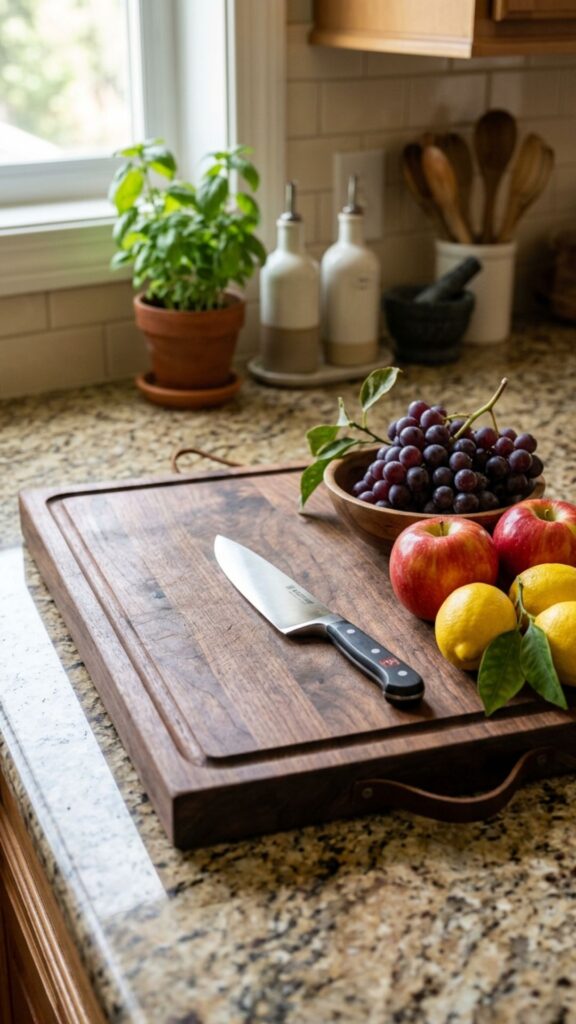
A good cutting board does more than protect your counters. Boards with juice grooves catch liquid from meat and fruit, keeping your workspace cleaner and reducing cross-contamination risks.
Choose a board large enough to work comfortably — at least 12 by 18 inches for most tasks. Wooden boards are gentler on knife edges, while plastic boards are easier to sanitize. Having two boards (one for meat, one for produce) is a practical habit that serious home cooks swear by.
7. Add Under-Cabinet Lighting for Better Visibility
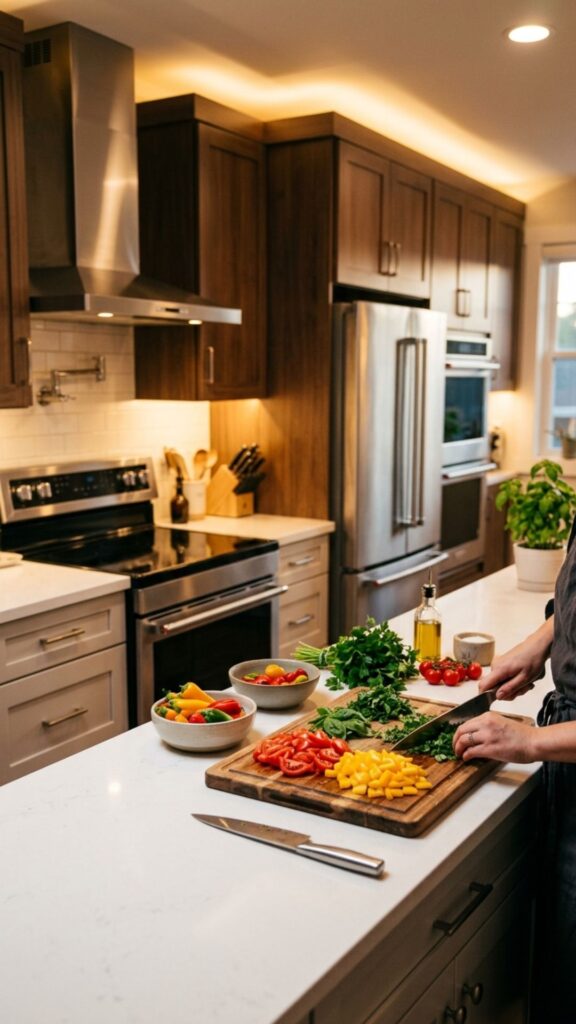
Poor lighting is one of the most overlooked kitchen problems. Shadows cast by overhead lights make it hard to see what you’re chopping, measuring, or reading. Under-cabinet LED strips fix this by illuminating your work surface directly.
Most LED strip kits are easy to install without an electrician and can be plugged into existing outlets. Warm white light (around 3000K) is flattering and functional. Bright, well-lit surfaces genuinely make cooking faster and safer.
8. Use Drawer Dividers to Organize Utensils
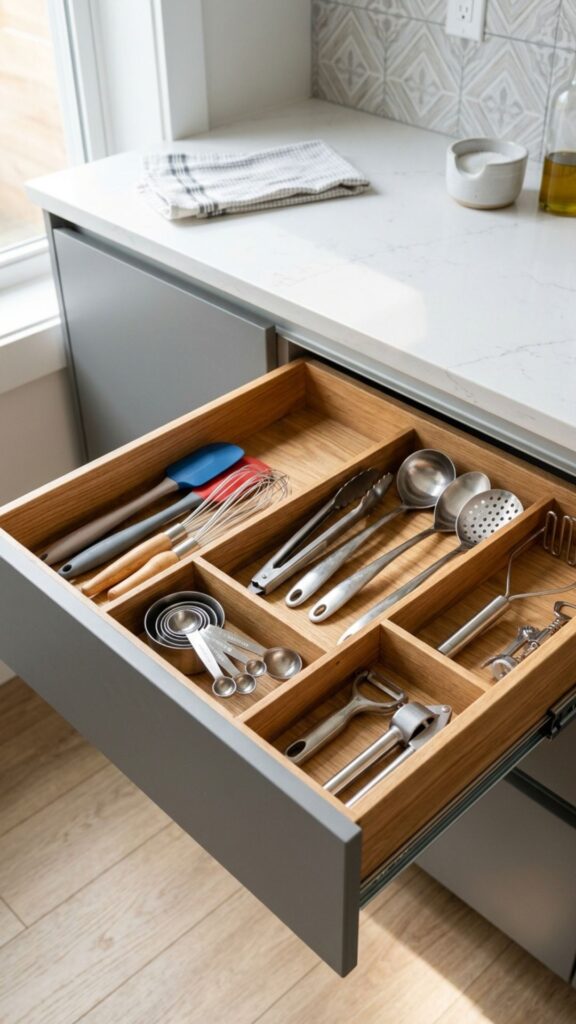
A jumbled utensil drawer is a time-waster. Adjustable drawer dividers let you create dedicated zones for different tool types — spatulas with spatulas, measuring spoons with measuring spoons — so you’re never digging around mid-recipe.
Bamboo or plastic drawer organizers are widely available and can be cut to fit most drawer sizes. The goal is to make every tool findable within two seconds. That small change reduces mental friction and keeps cooking flow uninterrupted.
9. Install a Pot Filler Faucet Near Your Stove
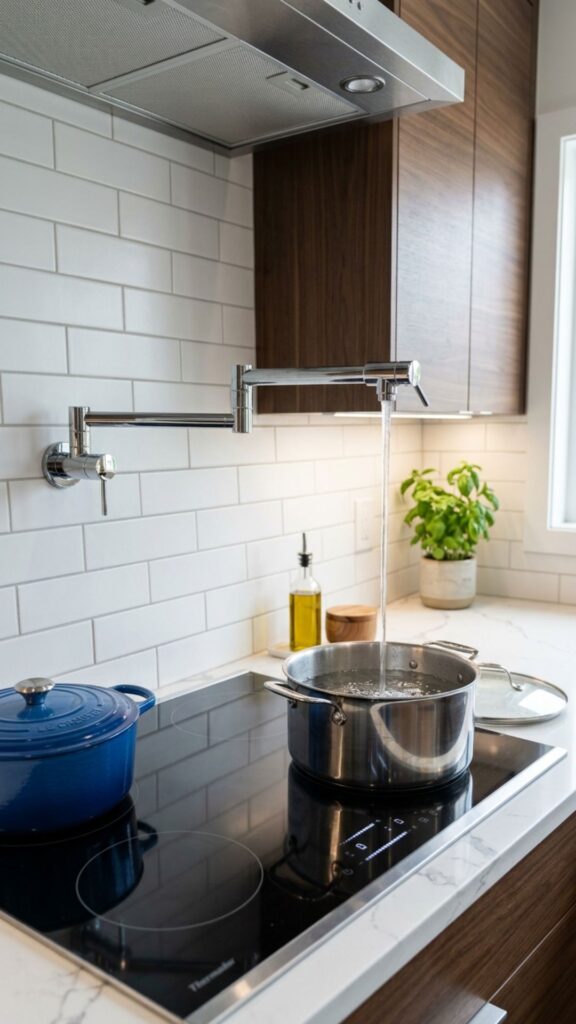
Carrying a heavy pot full of water from the sink to the stove is annoying and potentially dangerous. A pot filler — a wall-mounted faucet that swings out over your burners — eliminates that walk entirely.
While installation does require a plumber, the long-term convenience is real, especially for people who cook pasta, soups, or large batches regularly. It’s one of those kitchen functionality ideas that seems like a luxury until you use it daily.
10. Group Your Kitchen Into Functional Zones
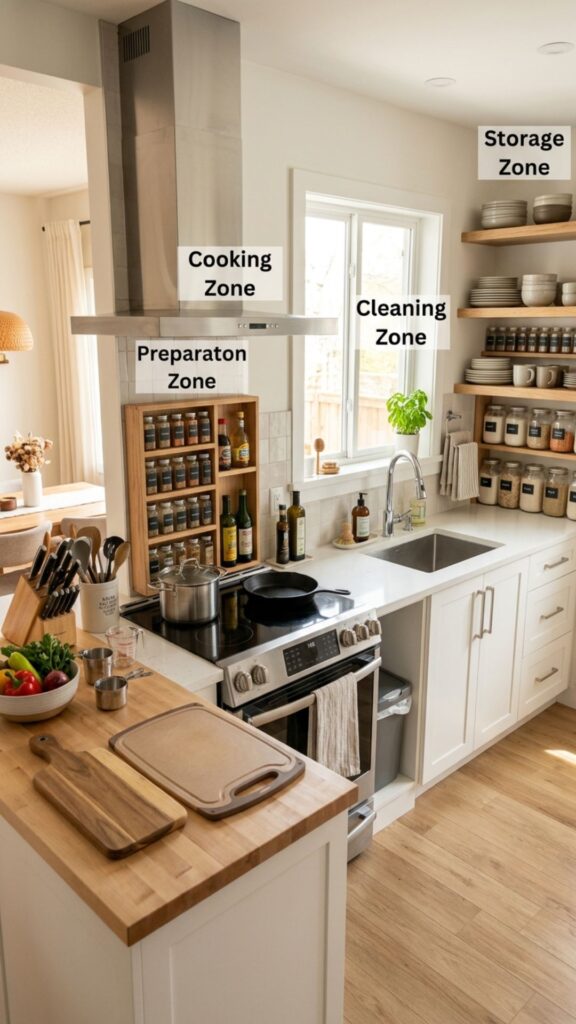
The most efficient kitchens are organized by task: a prep zone, a cooking zone, a cleaning zone, and a storage zone. When tools, appliances, and ingredients are clustered by how they’re used, cooking becomes more intuitive and less interrupted.
For example, keep your cutting boards, knives, and mixing bowls near the prep counter. Store pots and pans near the stove. Keep baking ingredients together near a lower counter. This zone-based approach is a core principle of professional kitchen design.
11. Use Vertical Space With Open Shelving
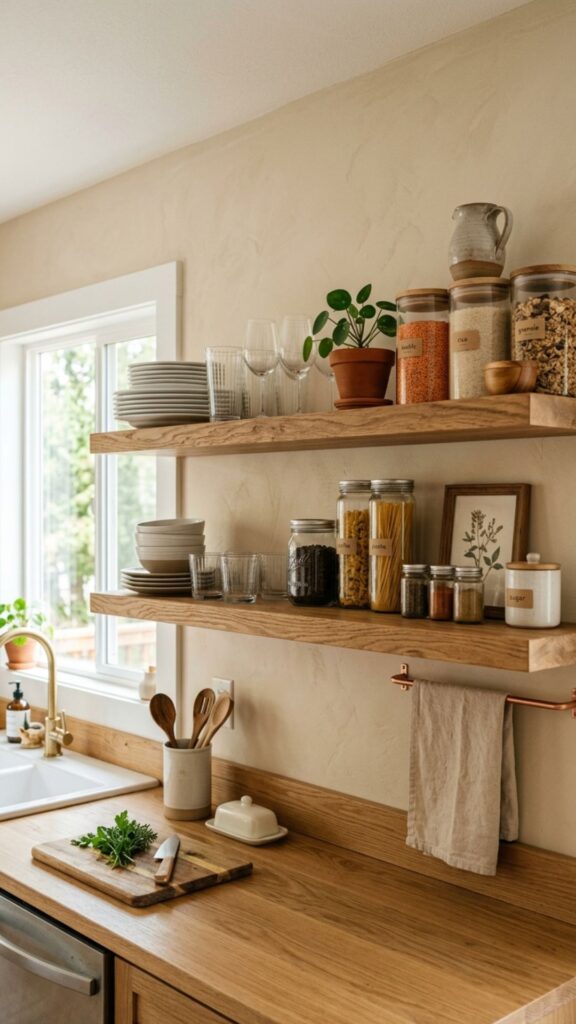
Wall space above the counter is often completely unused. Open shelves give you accessible storage for everyday items — glasses, plates, frequently used pantry staples — while also keeping the kitchen feeling open and airy.
Style them with a mix of functional items and a few decorative pieces to avoid visual clutter. The key rule: only put things you use regularly on open shelves. Rarely used items belong in closed cabinets.
12. Add a Pull-Out Trash and Recycling Station
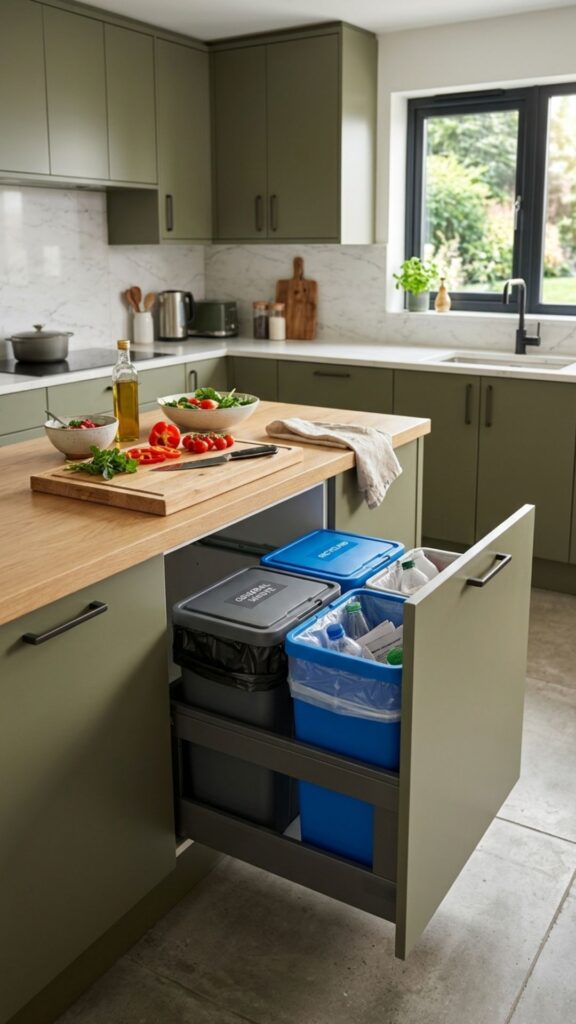
A trash can sitting in the open is inconvenient and unsightly. A built-in pull-out trash and recycling station keeps waste hidden while making disposal quick and easy during meal prep.
Most cabinet manufacturers offer pull-out waste bin inserts that can be retrofitted into existing lower cabinets. Having separate bins for trash and recycling side-by-side also makes sorting automatic rather than a second thought.
13. Hang Pots and Pans With a Ceiling Rack
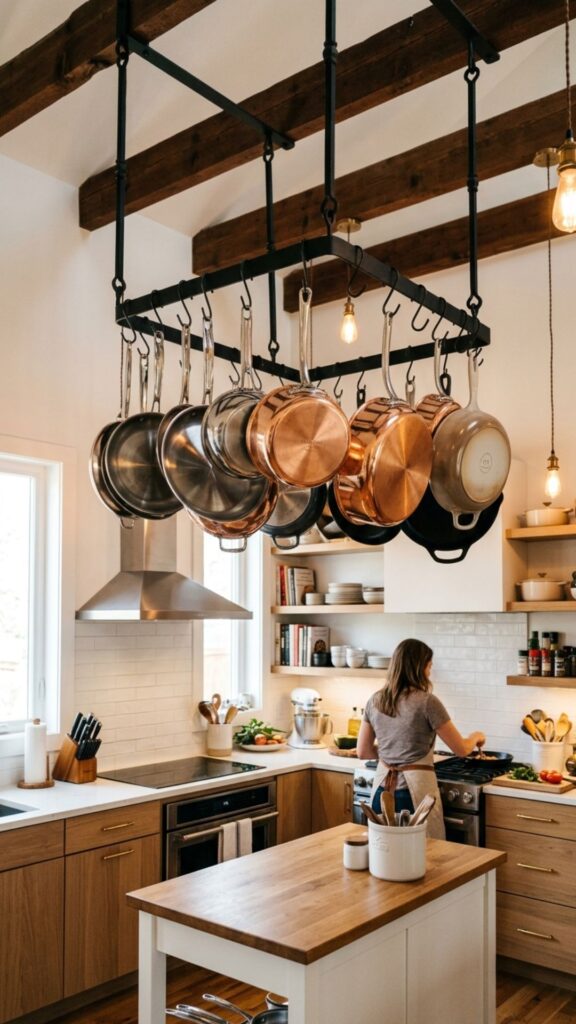
If cabinet space is at a premium, a ceiling-mounted pot rack moves your cookware overhead and out of the way. It keeps pots and pans organized, ventilated, and easy to grab.
Make sure the rack is anchored into ceiling joists, not just drywall, to handle the weight safely. A hanging pot rack can free up one or two full cabinets — significant storage you can repurpose for other kitchen needs.
14. Choose Appliances That Do Double Duty
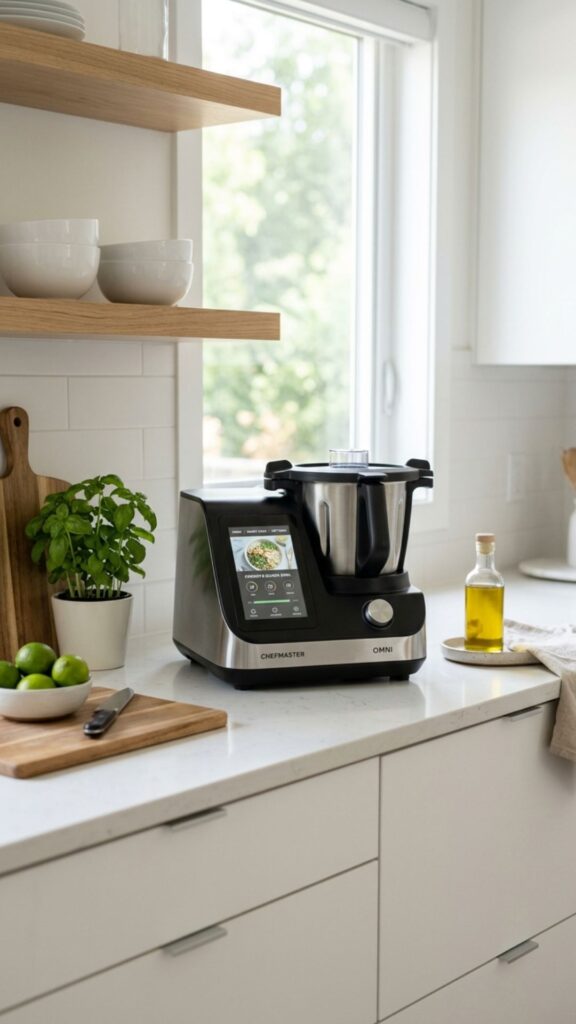
Every appliance on your counter should earn its place. Devices like an Instant Pot (pressure cooker, slow cooker, sauté pan, rice cooker in one) or a combination convection microwave can replace several single-purpose gadgets.
Fewer appliances mean less counter clutter, less cleaning, and less storage needed. When shopping for new equipment, ask yourself: does this do something I can’t already do with what I have? If not, it’s probably not worth the space.
15. Label Everything in Your Pantry and Fridge
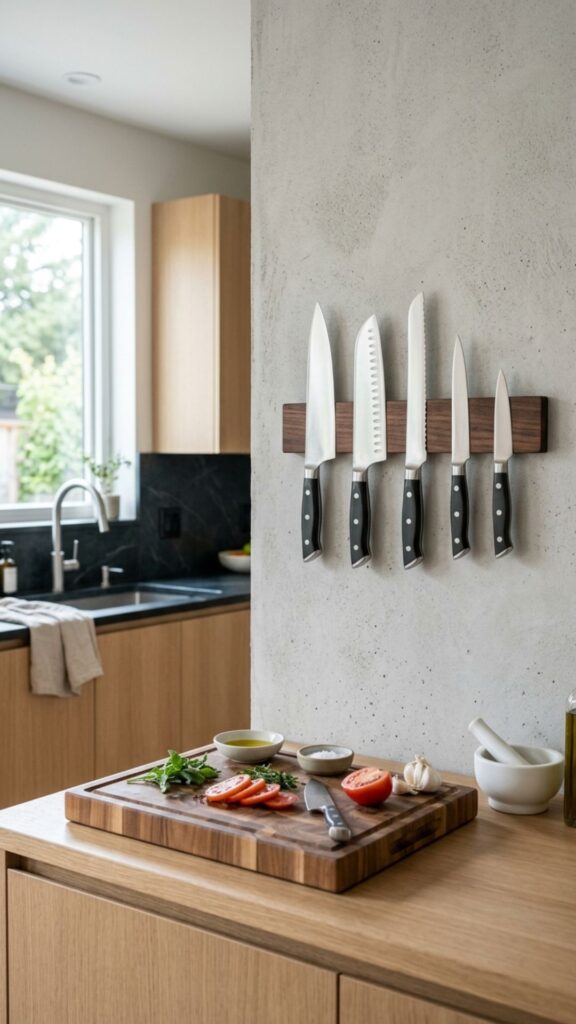
Labels sound simple, but they dramatically reduce decision fatigue in the kitchen. Clear containers with labels on your pantry shelves let you see quantities at a glance, plan meals faster, and avoid buying duplicates.
Use a label maker or simple masking tape with a marker. Include the item name and, for opened packages, the date. Transparent bins grouped by category — grains, snacks, baking — make your pantry feel organized and actually functional.
16. Install a Magnetic Knife Strip
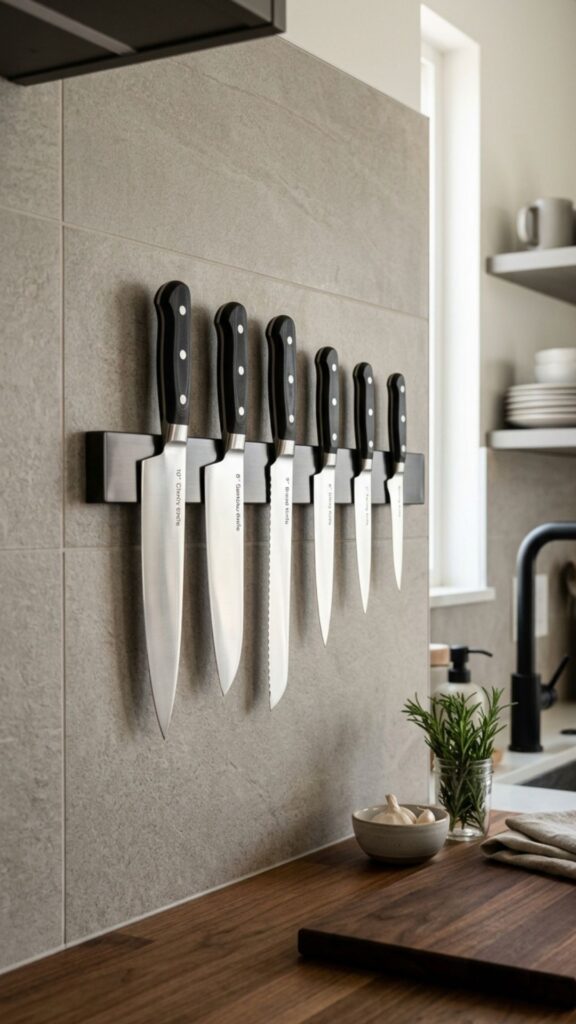
Knife blocks take up counter space and can harbor bacteria in the slots. A magnetic wall strip keeps knives visible, accessible, and air-dried — better for both hygiene and edge preservation.
Mount it at eye level within easy reach of your prep area. Most magnetic strips hold 6 to 8 knives and can also hold metal tools like scissors or a peeler. It’s a small installation that clears clutter and looks clean.
17. Upgrade Your Kitchen Faucet to a Pull-Down Sprayer
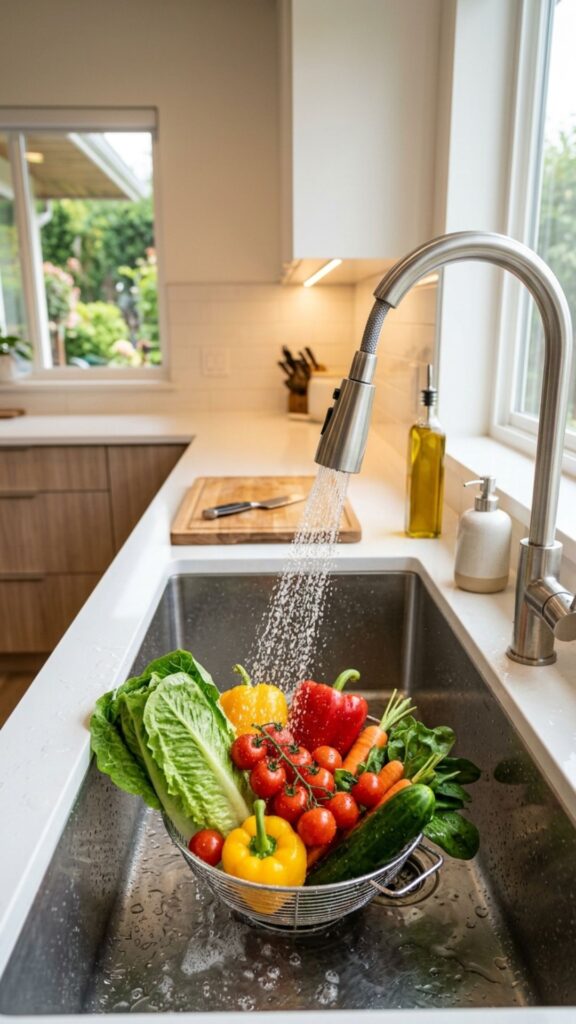
A pull-down or pull-out faucet with a sprayer makes rinsing vegetables, cleaning large pots, and filling tall containers significantly easier. If your current faucet has fixed flow, upgrading is a relatively affordable improvement.
Look for faucets with dual-spray settings — a focused stream for filling pots and a wider spray for rinsing — and a pause button for hands-free convenience. It’s one of the most practical upgrades in terms of daily use.
18. Use a Lazy Susan in Corner Cabinets
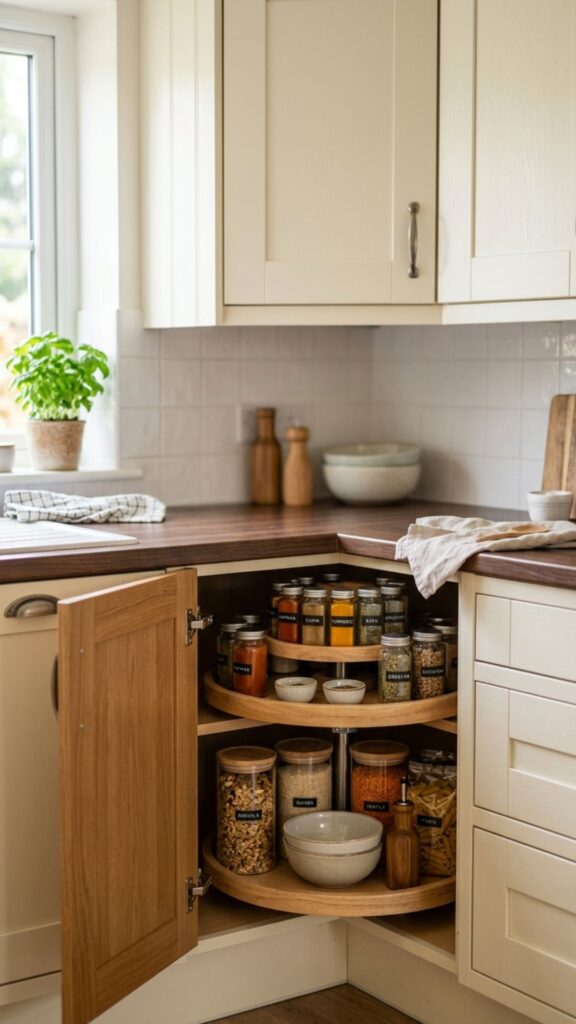
Corner cabinets are notorious dead zones. Items get pushed to the back and never see daylight again. A lazy Susan — a rotating tray inside the cabinet — makes everything in that corner accessible with a simple spin.
You can find lazy Susans in different sizes and configurations, including D-shaped options designed specifically for corner cabinets. They’re affordable, easy to install, and immediately solve one of the most common kitchen storage frustrations.
19. Create a Dedicated Baking Station
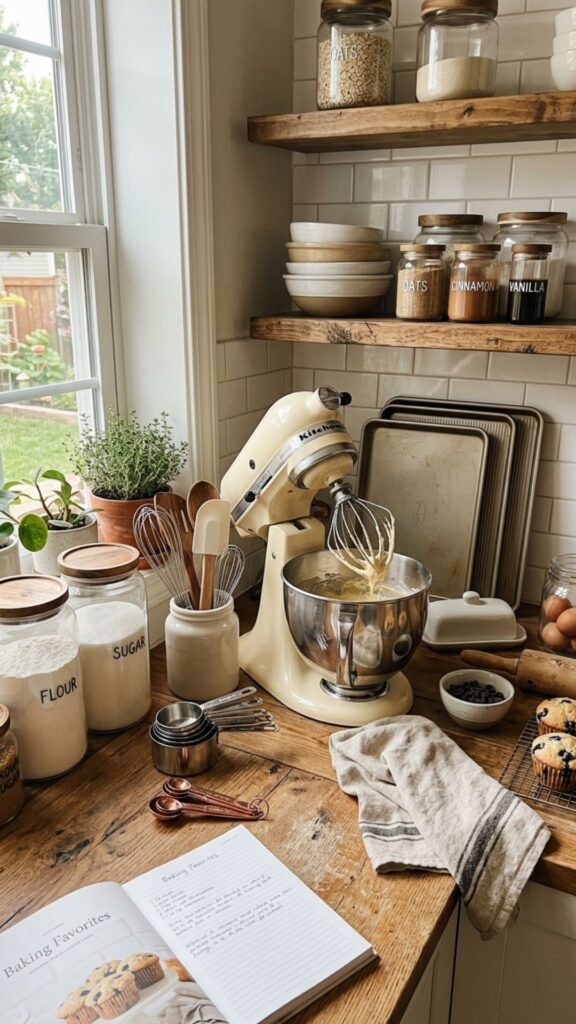
If you bake regularly, having a dedicated space for all your baking tools and ingredients saves enormous setup time. Designate a lower cabinet and section of counter near an outlet for your stand mixer, baking sheets, flour, sugar, and measuring tools.
Keep your most-used baking items at the front and accessible. When everything is in one place, baking shifts from a production to a smooth, enjoyable process. This kind of functional zoning applies to any cooking specialty — a coffee station, a smoothie corner, a cocktail bar.
20. Improve Workflow With a Kitchen Work Triangle Review
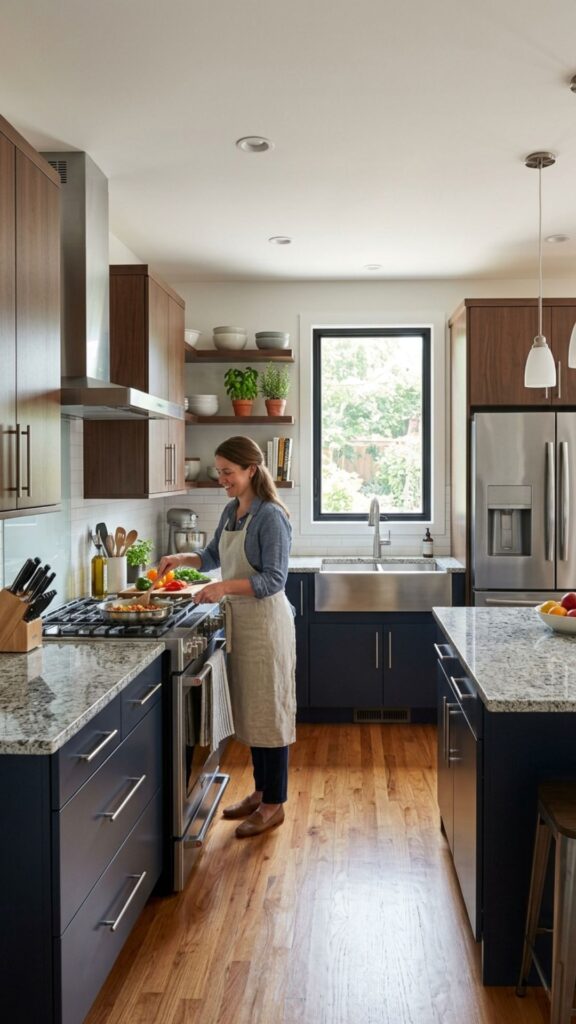
The classic work triangle — the path between your sink, stove, and refrigerator — should be clear and efficient. If any of those three areas are blocked, too far apart, or cluttered, your cooking flow suffers.
Walk through your typical cooking routine and note where you’re backtracking or bumping into obstacles. Sometimes reorganizing items, removing a free-standing furniture piece, or simply clearing a pathway is enough to dramatically improve daily kitchen efficiency.
Conclusion
Great kitchen functionality doesn’t require spending thousands on a renovation. The ideas above prove that targeted improvements — better lighting, smarter storage, deliberate zoning — can make a massive difference in how your kitchen works day to day.
Start with two or three ideas that address your biggest pain points right now. Even one change, like adding a spice drawer insert or hanging a magnetic knife strip, can shift how you feel about cooking. The kitchen should work for you, not against you.
Take one idea from this list today and put it into action. Small improvements compound over time into a kitchen you genuinely love using.
What are the most important kitchen functionality ideas for small kitchens?
For small kitchens, the highest-impact changes are maximizing vertical storage (open shelves, pegboards, ceiling racks), eliminating single-use appliances, and creating a clear prep zone. Pull-out organizers and drawer dividers help you use existing space more efficiently without adding square footage.
How do I improve kitchen functionality on a tight budget?
Many of the best kitchen functionality upgrades cost very little. Drawer dividers, pantry labels, pegboards, lazy Susans, and under-cabinet LED strips can all be done for under $30 to $50 each. Start with organization and storage before investing in new appliances or cabinetry.
What is the kitchen work triangle and why does it matter?
The kitchen work triangle refers to the layout connecting your refrigerator, sink, and stove — the three areas you use most while cooking. An efficient triangle minimizes unnecessary movement and keeps cooking flow smooth. The total distance of all three sides should ideally be between 12 and 26 feet for optimal functionality.
How can I make my kitchen more functional without renovating?
You can significantly improve kitchen functionality without touching walls or cabinets. Focus on organizing what you have (drawer inserts, pantry bins, labels), freeing up counter space (wall-mount your microwave, use a pegboard), improving lighting (LED strips), and creating task zones based on how you actually cook.