A gable front porch does something quiet but powerful. It gives your home a face. That triangle of roof over your entry catches the eye, frames the door, and welcomes people before they even knock.
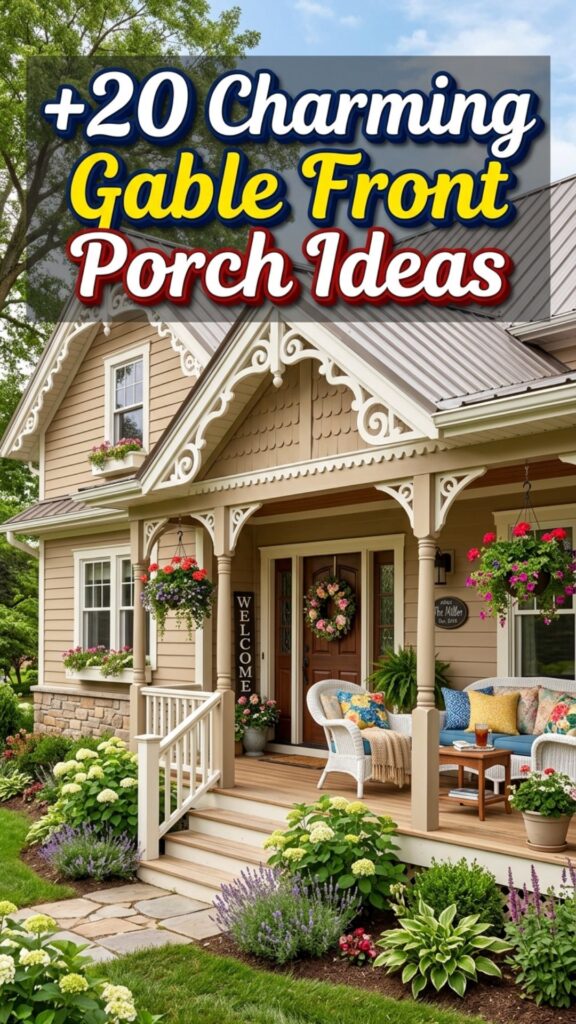
We’ve watched a simple gable turn a plain house into a home people slow down to admire.
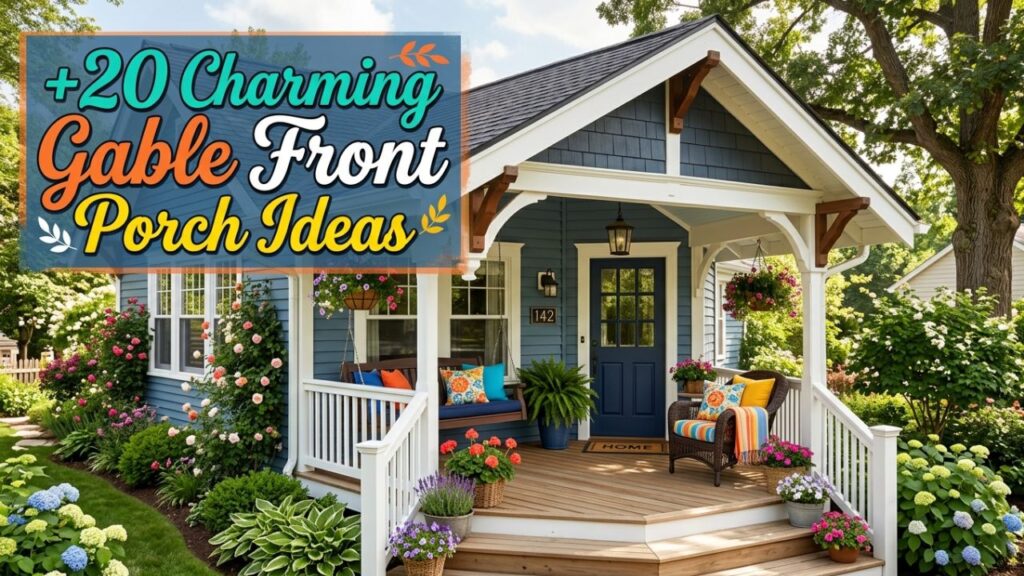
If you’re planning a build or a refresh, you’re in the right place. Below, we share 20 gable front porch ideas that work across styles, from farmhouse to craftsman to modern. You’ll find real materials, practical details, and small touches that make a big difference. Let’s give your entry the character it deserves.
1. The Classic Open Gable
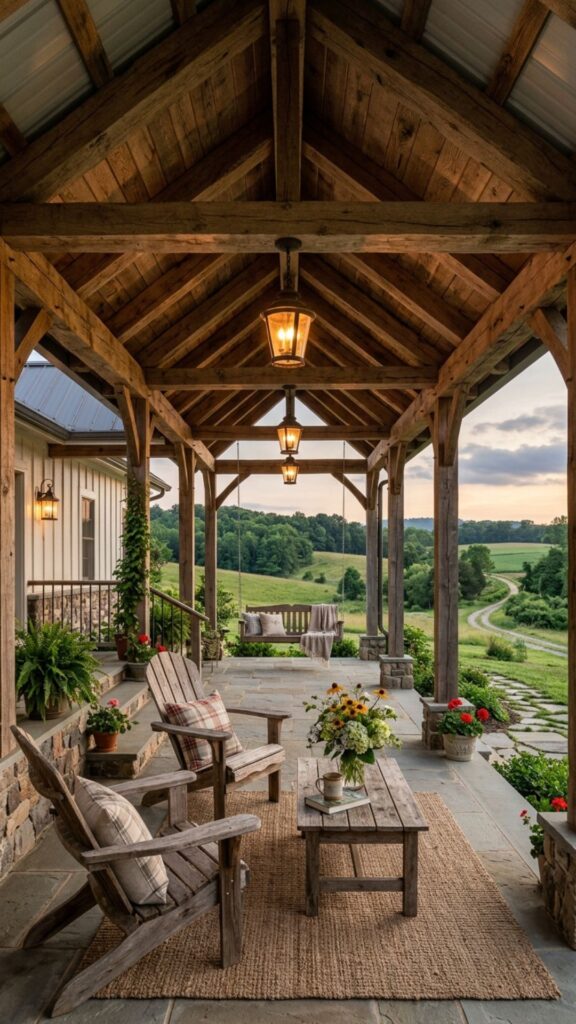
An open gable leaves the triangular roof structure exposed, showing off the beams and trusses inside. It feels airy and honest. You see the bones of the porch, and those bones become part of the design. This works beautifully on farmhouses and cottages where simple, sturdy carpentry is the whole point.
Keep the timber clean and let the wood grain show. Stain it a warm honey tone or paint it crisp white to match your trim. A pair of hanging lanterns tucked under the peak adds a soft glow at night. The result feels open, looks timeless, and stays easy to maintain.
2. Craftsman Tapered Columns
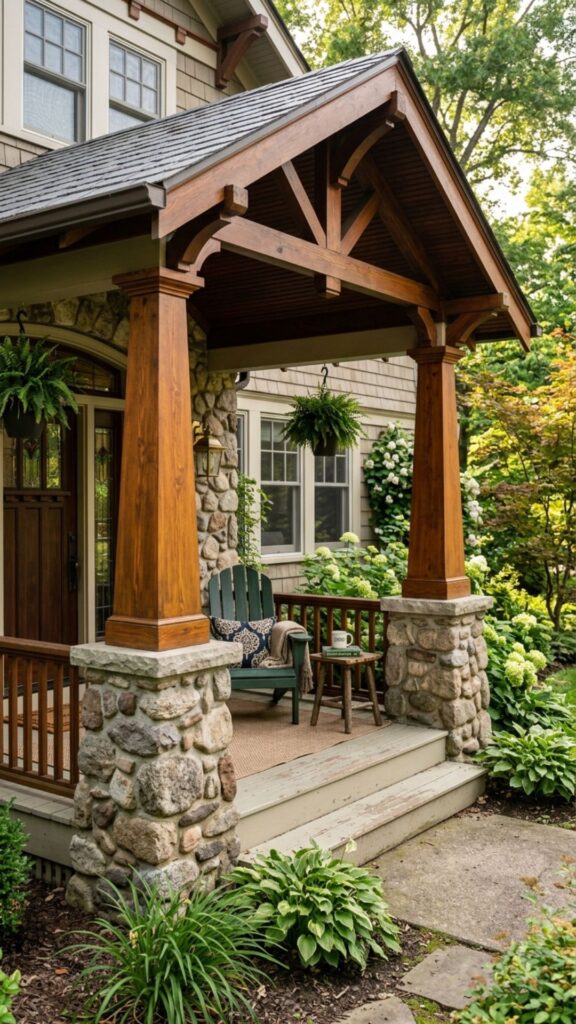
Craftsman homes love a gable, and the tapered column is their signature move. These columns are wide at the base and narrow toward the top, often resting on stone or brick piers. They give the porch a grounded, solid feel that suits bungalows perfectly.
Pair the columns with exposed rafter tails and a low-pitched gable for an authentic look. Natural cedar or painted wood both work well here. Add a swing or two Adirondack chairs, and you’ve got a front porch that invites long afternoons and easy conversation.
3. Board-and-Batten Gable Detail
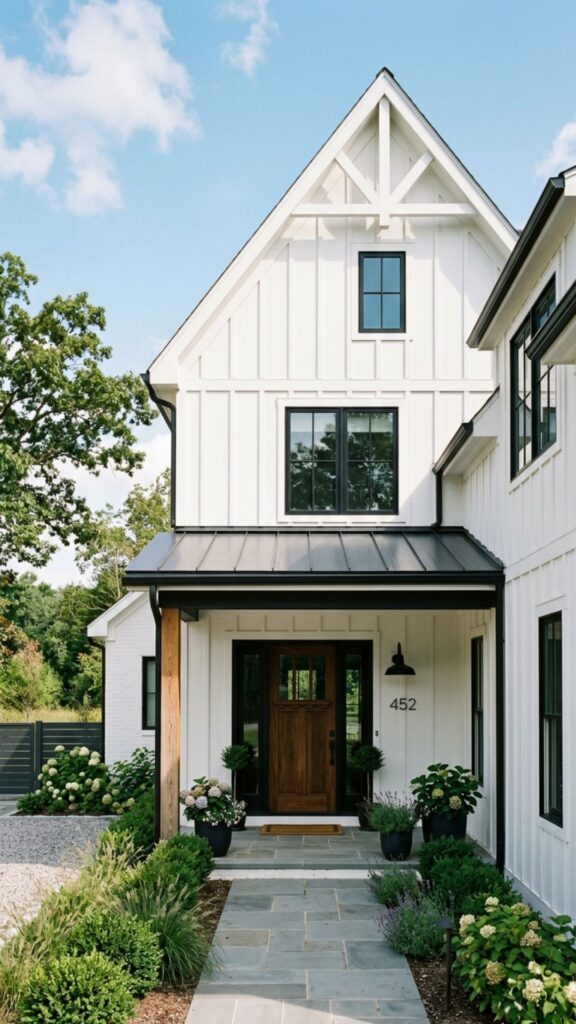
Board-and-batten siding inside the gable peak adds instant texture. The alternating wide boards and narrow strips draw the eye upward and give the porch a handcrafted charm. This detail shines on modern farmhouses and rustic cottages alike.
Paint the battens to contrast with the field boards for a bold look, or keep them the same shade for something quieter. We love pairing white board-and-batten with a black metal roof below it. It’s simple, it looks sharp, and it costs less than most decorative options.
4. Stone Accent Base
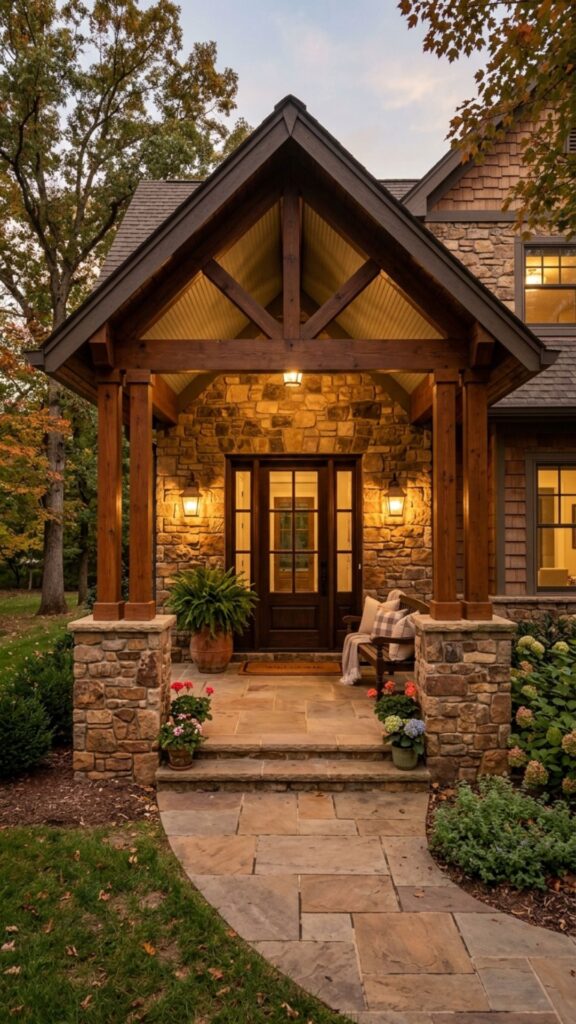
Wrapping the lower porch columns or the foundation in natural stone grounds the whole gable. Stone brings weight and warmth, and it plays nicely with wood above. This idea suits homes in wooded or mountain settings, but it works in the suburbs too.
Choose a local stone for the most natural fit, since regional materials weather beautifully over time. Fieldstone gives a rugged look, while cut stone feels more refined. Either way, the contrast between heavy stone and light gable trim creates a porch that feels rooted and welcoming.
5. Steep-Pitched Gable for Drama
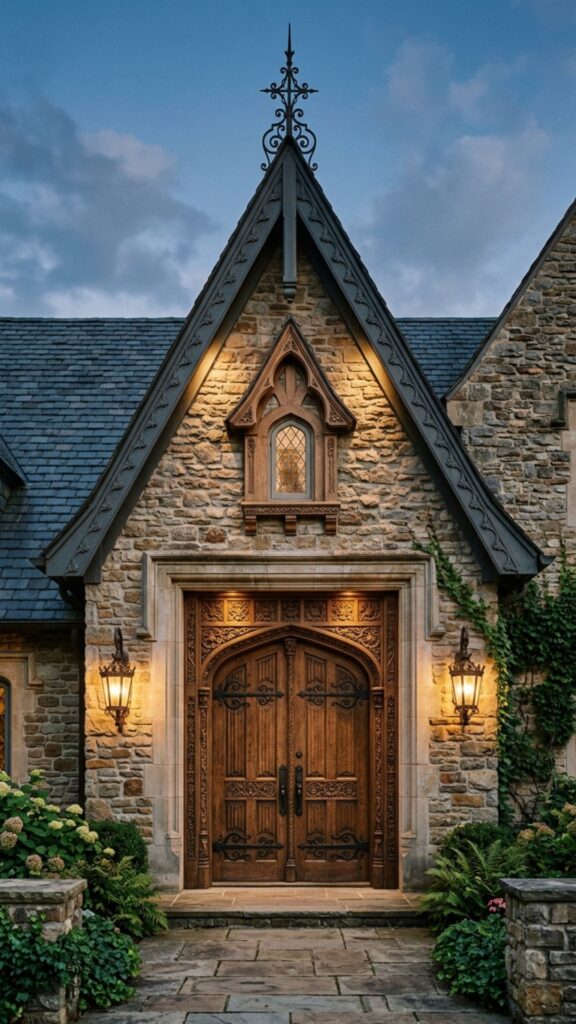
A steep gable pitch adds height and presence. That sharp peak reaches skyward and makes even a modest home feel grand. Colonial, Tudor, and Gothic-inspired homes carry a steep gable especially well.
The extra height also handles rain and snow better, so this choice is as practical as it is pretty. Consider a decorative finial or a small window in the peak to fill the taller space. A steep gable turns your entry into a real focal point without much extra square footage.
6. Modern Metal Roof Gable
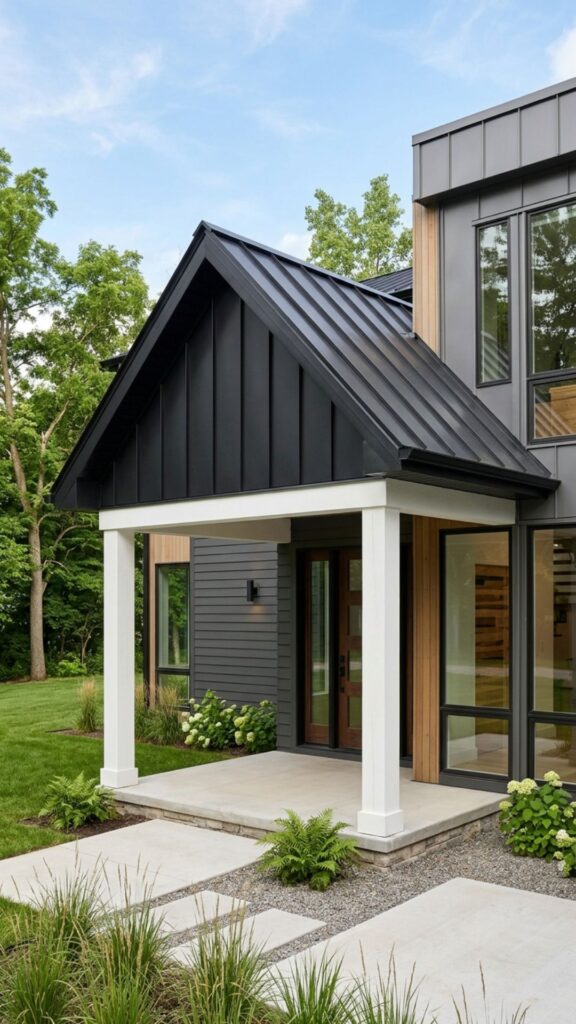
Swap traditional shingles for a standing-seam metal roof and your gable gets a clean, contemporary edge. Metal roofs last for decades, shed weather easily, and come in colors from matte black to soft gray. They suit modern, farmhouse, and transitional homes.
The crisp lines of a metal roof pair well with simple square columns and minimal trim. Keep the palette tight for the best effect. This is a smart pick if you want low maintenance and a look that feels current for years to come.
7. Double Gable Symmetry
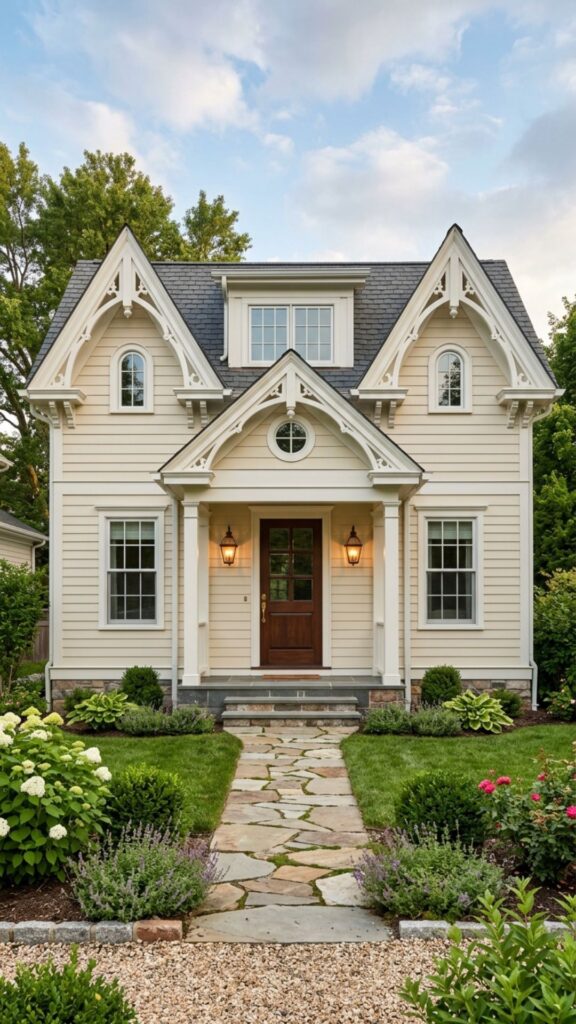
Two matching gables framing a central entry create instant balance. Symmetry feels calm and orderly, and it tells guests exactly where to go. This layout works on larger homes and dovetails with colonial and traditional styles.
Center your front door between the two peaks and let the porch stretch across the middle. Matching light fixtures on each side reinforce the balance. A double gable takes a wider facade and turns it into something purposeful and grand.
8. Cozy Cottage Gable with Scalloped Trim
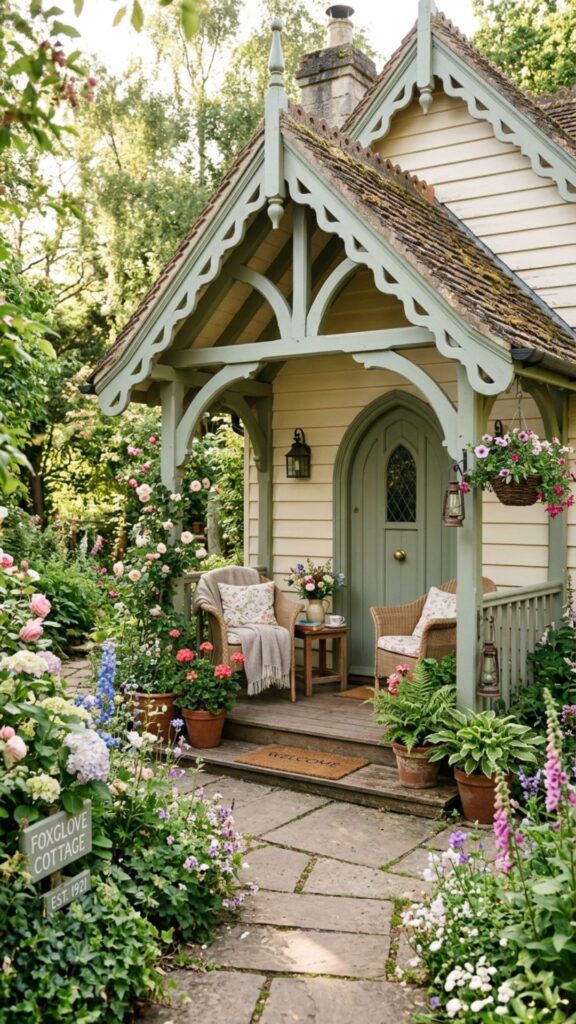
Scalloped or gingerbread trim along the gable edge brings storybook charm. Those curved wooden details soften the roofline and add personality. This idea belongs on cottages, Victorians, and any home that leans playful.
Paint the trim a soft contrasting color so it stands out against the siding. Sage green trim on cream siding feels fresh and inviting. A little decorative woodwork goes a long way, so start small and see how it transforms the entry.
9. Wraparound Porch with a Gabled Entry
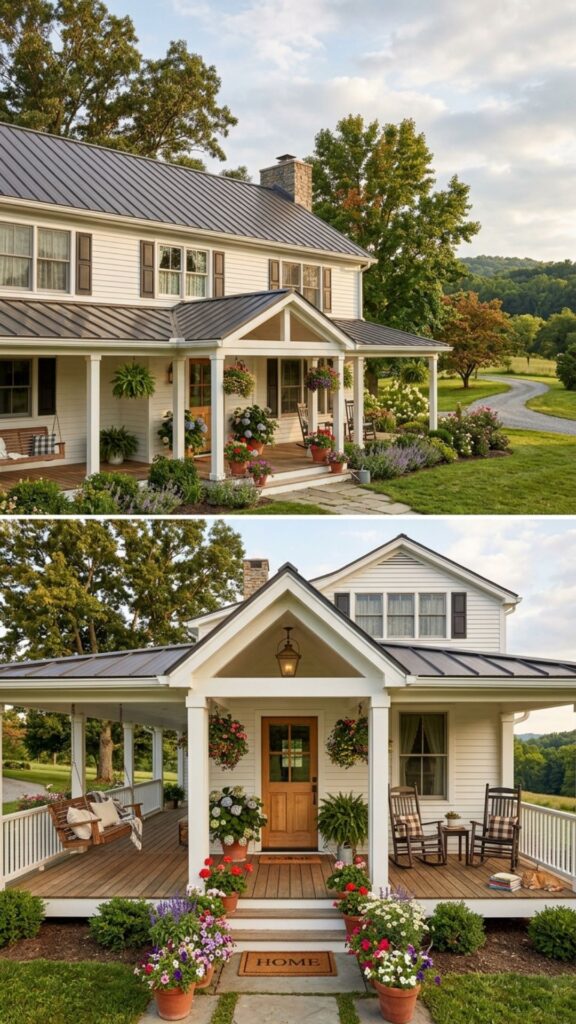
A wraparound porch gives you room to breathe, and a single gable over the main steps marks the front door clearly. This combination offers both function and focus. Farmhouses and country homes wear it especially well.
The gable acts like a signpost, guiding visitors to the right spot along a long porch. Fill the rest of the space with rockers, a swing, and potted plants. You get shade on every side and a warm, obvious welcome at the center.
10. Exposed Timber Truss Gable
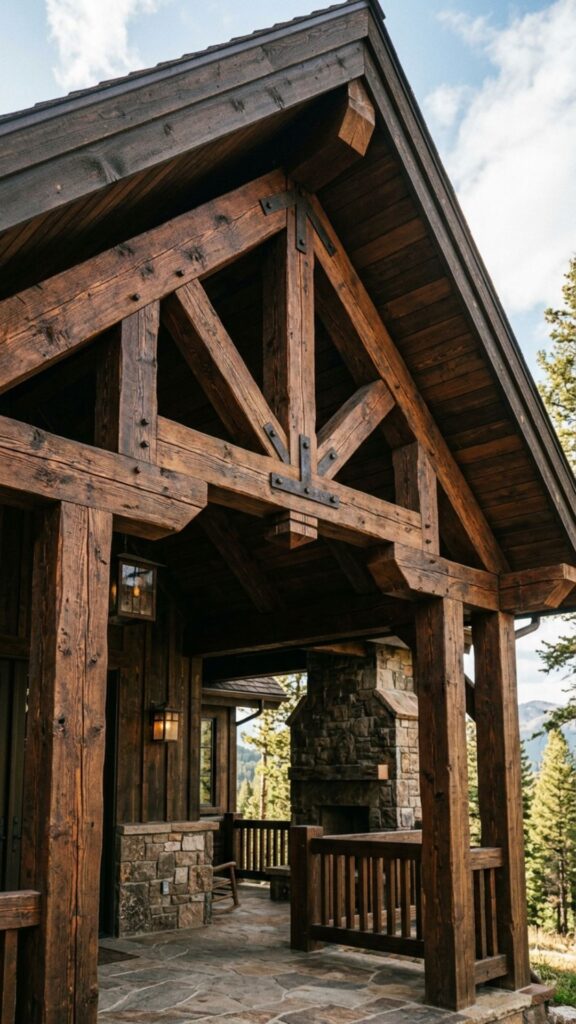
A decorative timber truss inside the gable peak adds craftsmanship you can see. Heavy beams joined with visible brackets or bolts feel handmade and strong. This detail suits rustic, mountain, and craftsman homes.
Use rough-sawn or reclaimed wood for extra character and a story worth telling. Stain it a deep brown to make the grain pop. A timber truss turns the empty triangle above your porch into a piece of art that lasts for generations.
11. Brick Gable for Timeless Appeal
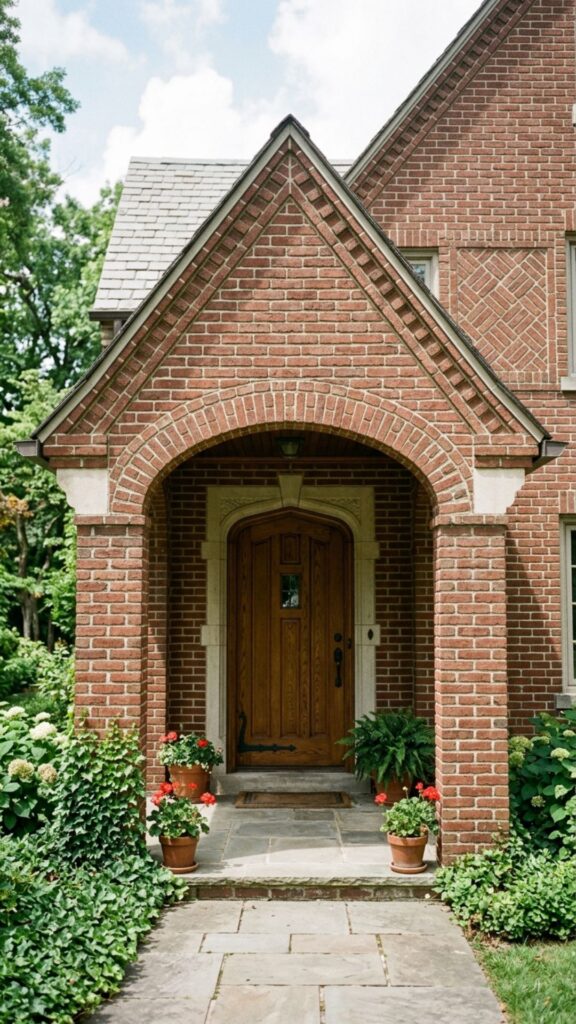
Brick brings a classic, sturdy feel that never goes out of style. Carrying brick up into the gable, or framing the peak with brick detailing, ties the porch to the rest of the house. This works on colonial, Georgian, and traditional homes.
Mix in a soldier course or an arched brick detail above the door for extra interest. Brick handles weather with ease and needs little upkeep. If you want a porch that looks established and holds its value, brick is a dependable friend.
12. Pediment Gable Over the Door
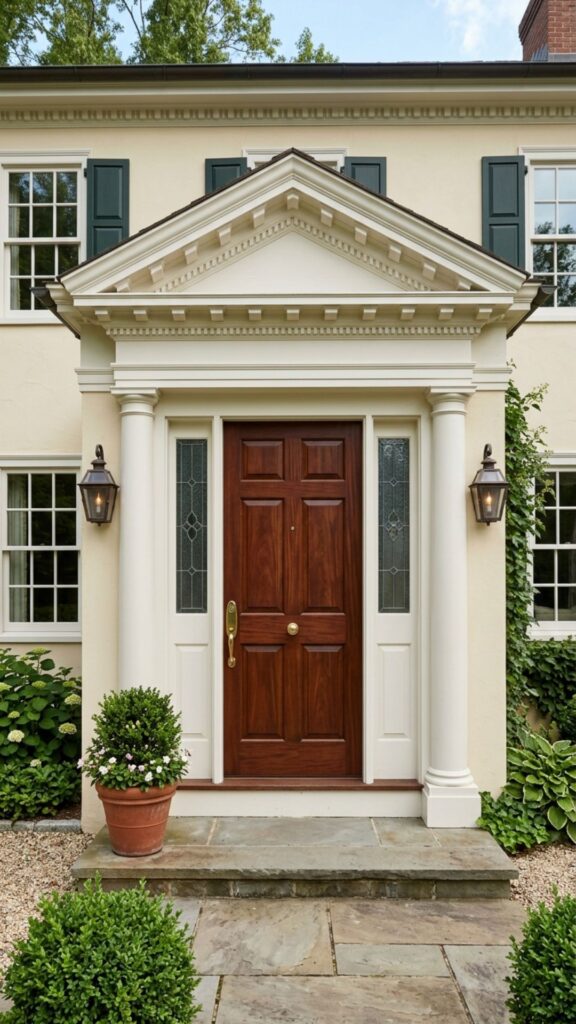
A pediment is a small, refined gable set directly above the entry. It frames the door like a piece of jewelry and adds a touch of formality. Colonial and Greek Revival homes use pediments to great effect.
You can go simple with a clean triangle or add dentil molding for extra detail. A pediment doesn’t require a full porch, so it’s a great option for smaller entries. It’s a modest addition that makes your doorway feel important.
13. Farmhouse Gable with Metal Accents
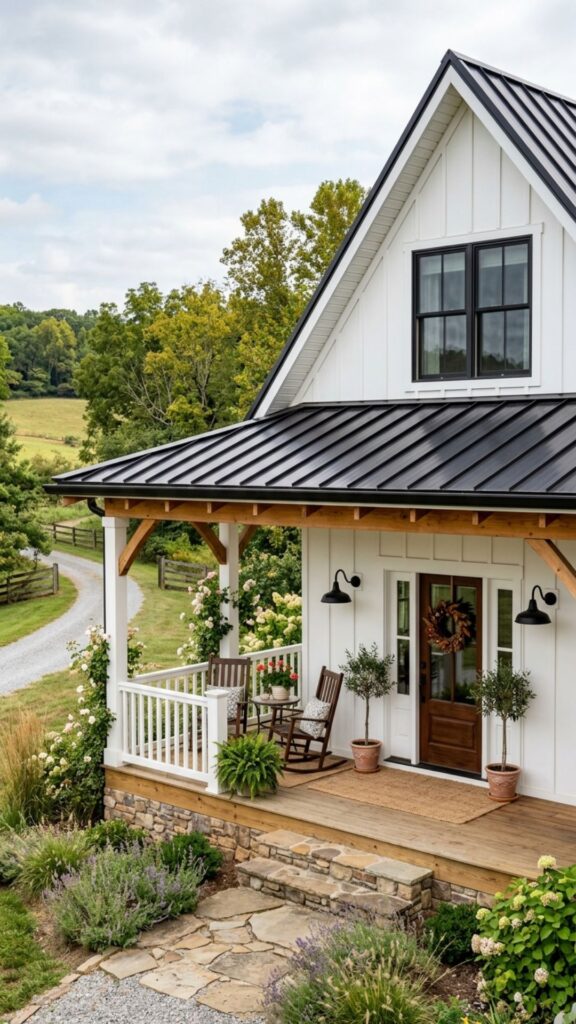
Combine white board siding, black window frames, and a metal roof over the gable for that beloved modern farmhouse look. The high contrast reads clean and current while still feeling warm. This style has staying power for a reason.
Add gooseneck barn lights on either side of the door and a natural wood beam across the porch. Keep the plantings simple with boxwoods or ferns. The mix of soft farmhouse charm and crisp black details strikes a balance that photographs beautifully.
14. Gable with a Statement Window
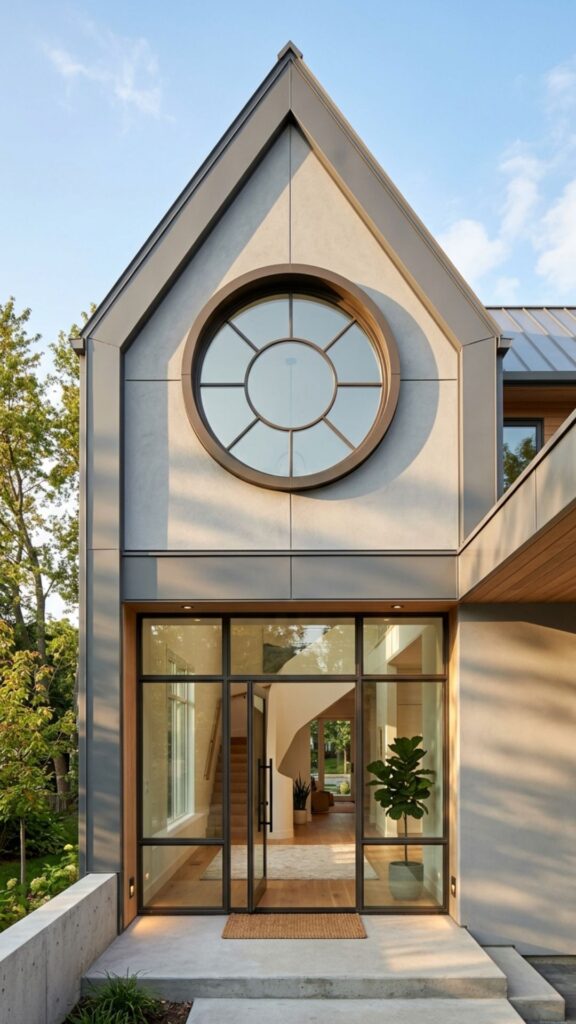
A window set high in the gable peak lets light pour into an upstairs room or a vaulted porch ceiling. A round, arched, or triangular window fills the space and becomes a design highlight. This idea suits many styles, from Tudor to modern.
Choose a shape that echoes your home’s other windows for a cohesive look. Frame it in a contrasting color to make it stand out. That single window turns the top of your gable from empty space into a bright, intentional feature.
15. Rustic Log or Reclaimed Wood Gable
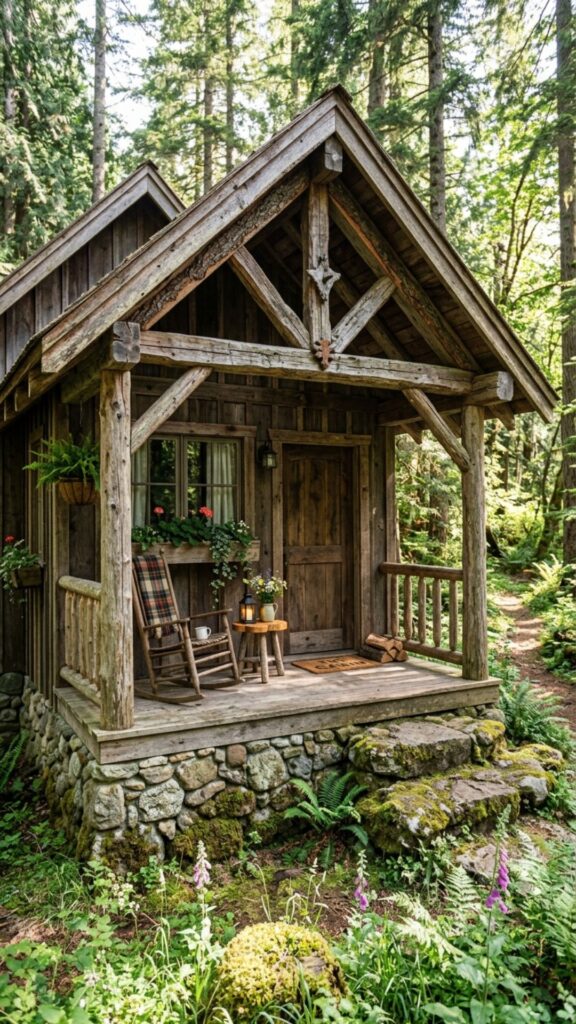
Reclaimed wood or log accents in the gable give a warm, weathered feel. Old barn wood carries texture and history that new lumber can’t match. This suits cabins, lodges, and rustic country homes.
Mix the aged wood with stone below for a true woodland cabin vibe. Seal the wood to protect it while keeping that lived-in look. A rustic gable feels honest and welcoming, like a place where boots by the door are always expected.
16. Painted Ceiling Under the Gable
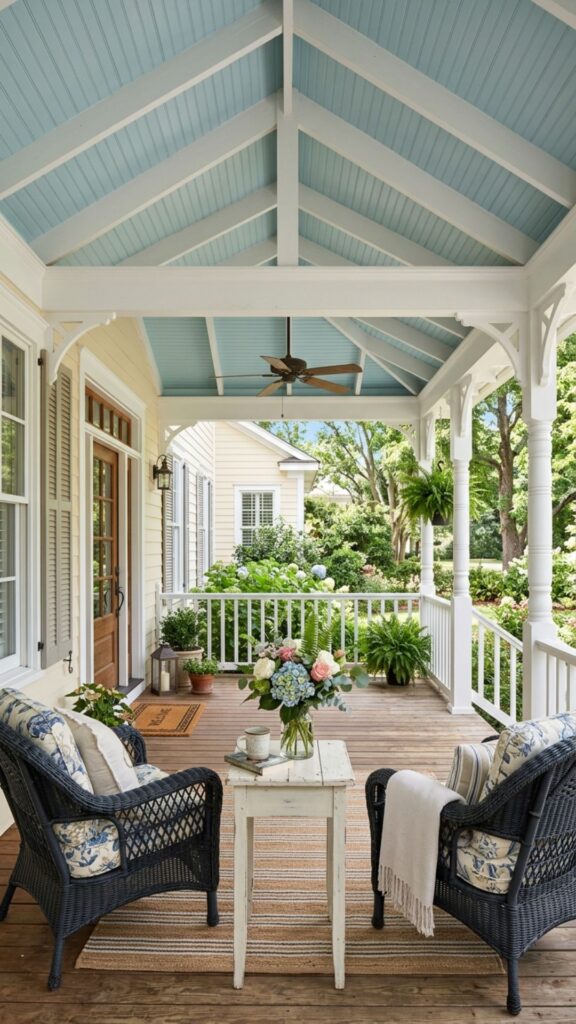
The porch ceiling under your gable is prime real estate for a splash of color. A soft “haint blue” ceiling is a Southern tradition believed to keep the space feeling cool and calm. Beadboard painted a pale sky tone looks especially charming.
Beyond blue, try warm cream or even a bold green to match your trim. The color draws the eye up and makes the covered space feel finished. It’s an easy weekend project that adds real character to any gable front porch.
17. Modern Minimalist Gable
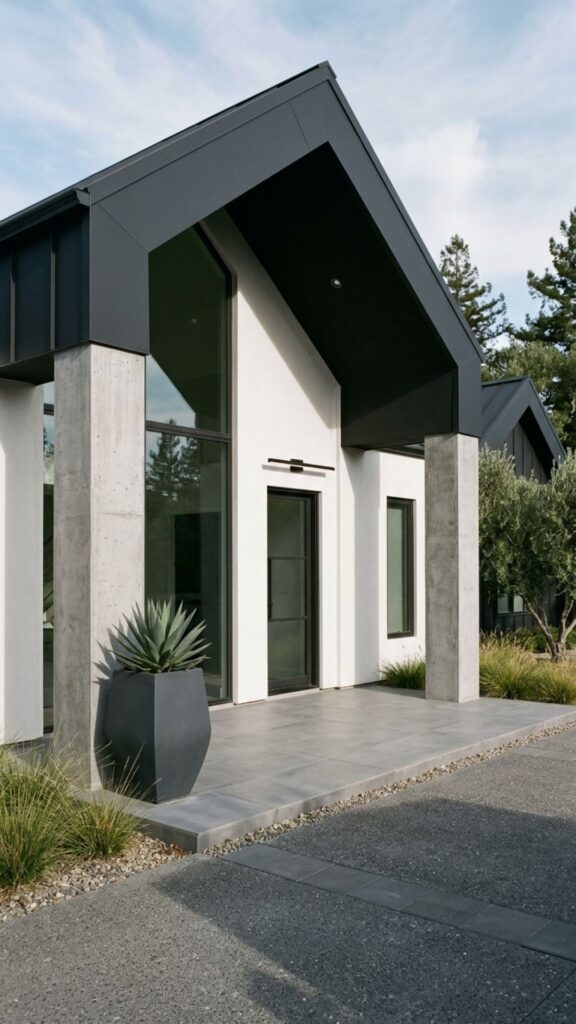
Strip a gable down to clean lines, square columns, and a single crisp color for a minimalist look. No fussy trim, no extra details, just simple geometry. This suits contemporary and Scandinavian-inspired homes.
Let the shape do the talking with a sharp roofline and a neutral palette of white, gray, or black. Add one sculptural planter and a sleek light fixture. Minimalism proves that a gable doesn’t need decoration to look striking.
18. Gable with Decorative Corbels
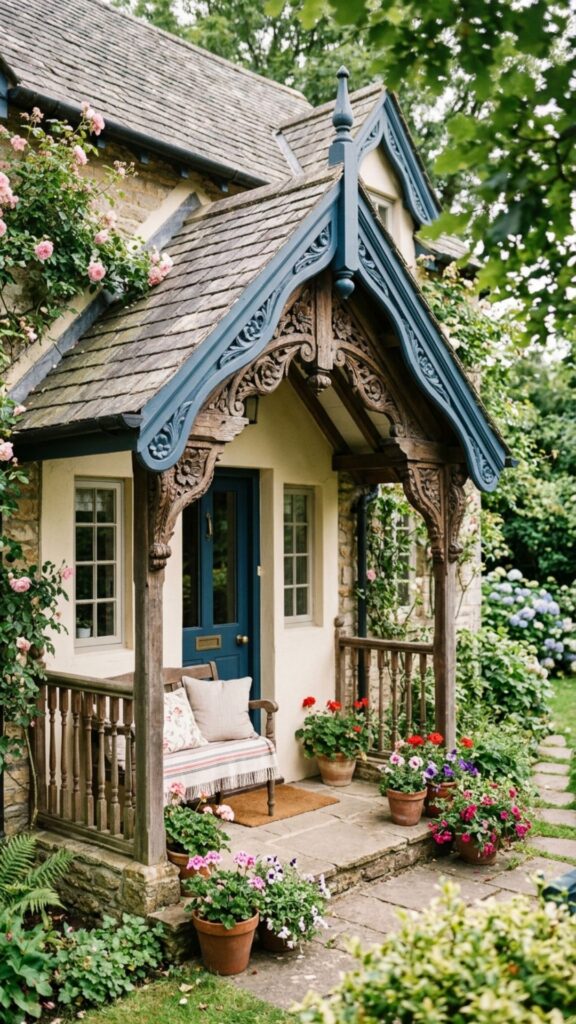
Corbels are the carved brackets that sit under the gable eaves. They add ornamental support and a hint of old-world craftsmanship. Victorian, Italianate, and cottage homes all pair well with these charming details.
Choose corbels that match your home’s era, since heavier ones suit grand homes and delicate ones fit cottages. Paint them to match or contrast your trim. These small brackets tuck into the corners of your gable and reward anyone who looks closely.
19. Two-Story Gabled Portico
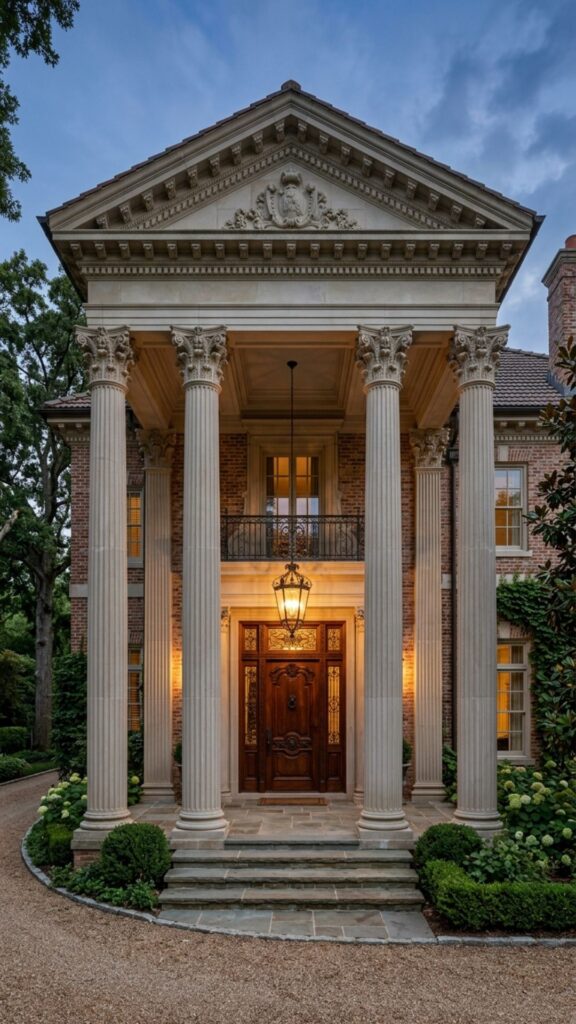
A tall, two-story gabled portico over the entry makes a bold statement. The columns rise the full height of the facade and frame the door with real presence. Colonial, plantation, and traditional homes carry this grand look well.
This design works best on homes with matching proportions, so a taller facade balances the height. Pair it with a substantial front door and a hanging lantern. A two-story portico says arrival the moment anyone pulls into the driveway.
20. Gable Softened by Climbing Greenery
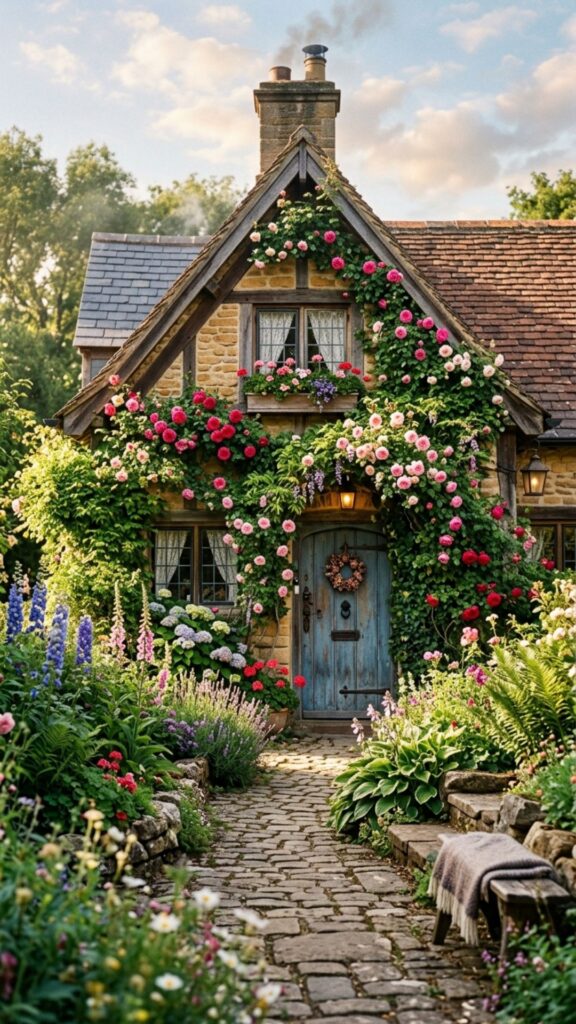
Let nature dress your gable. A climbing rose, wisteria, or ivy trained along a trellis softens the hard roofline and adds living color. This idea suits cottages, farmhouses, and anyone who loves a garden.
Install a sturdy trellis on one side of the porch and guide the plant as it grows. Fragrant blooms near the door greet every guest with a scent, not just a sight. Greenery makes a gable feel settled, cared for, and full of life.
Bringing Your Gable Front Porch to Life
A gable front porch is more than a roofline. It’s the first thing people see and the last place they linger before leaving. Whether you choose exposed timber, a metal roof, or a soft blue ceiling, the right details make your entry feel good, look good, and last long. Start with the style that matches your home, then layer in one or two touches that feel like you.
We believe your front porch should welcome you home every single day. Pick a few of these ideas, sketch a simple plan, and talk to a local builder about what fits your space and budget. Your perfect porch is closer than you think. Take the first step today.
What is a gable front porch?
A gable front porch has a triangular roof section, called a gable, over the entry. The two roof slopes meet at a peak, creating a pointed shape that frames the front door and adds height and character to a home.
What roof pitch is best for a gable front porch?
A pitch between 4:12 and 8:12 works well for most gable front porches. Steeper pitches shed rain and snow better and add drama, while lower pitches suit craftsman and ranch-style homes.
How much does a gable front porch cost to build?
A gable front porch typically costs between $5,000 and $25,000, depending on size, materials, and labor. Simple wood designs sit at the lower end, while stone, brick, or custom timber work push costs higher.
What materials work best for a gable front porch?
Cedar, treated wood, stone, brick, and metal roofing are all strong choices. Cedar and metal resist weather with little upkeep, while stone and brick add lasting value and a timeless look.
Can I add a gable porch to an existing home?
Yes, you can add a gable porch to most existing homes. A contractor will check your foundation, rooflines, and structure to ensure the new gable ties in safely and matches your home’s proportions.