Your porch is the first thing people see when they visit. It sets the mood before anyone knocks. And the flooring? That’s the part doing quiet, heavy work every single day.
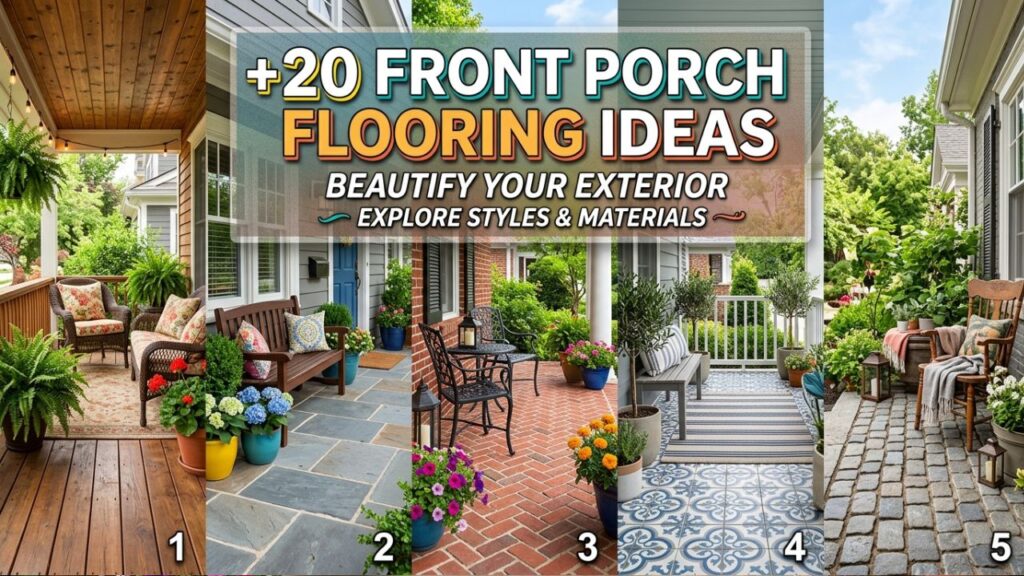
We put together 20 front porch flooring ideas to help you pick the right surface for your home. Whether you want something warm underfoot, easy to clean, or built to survive rain and sun, there’s an option here for you. We’ll cover cost, durability, and the little details that make each one shine.
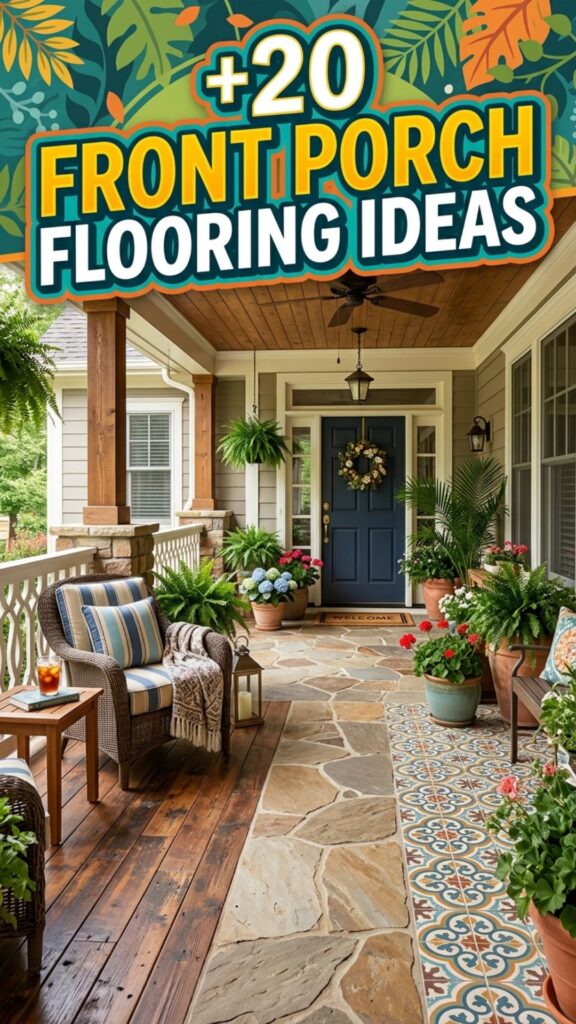
We’ve spent years watching homeowners regret rushed flooring choices. So we’ll keep this practical, honest, and simple. Let’s find the floor that fits your style, your weather, and your budget.
1. Classic Brick for Timeless Warmth
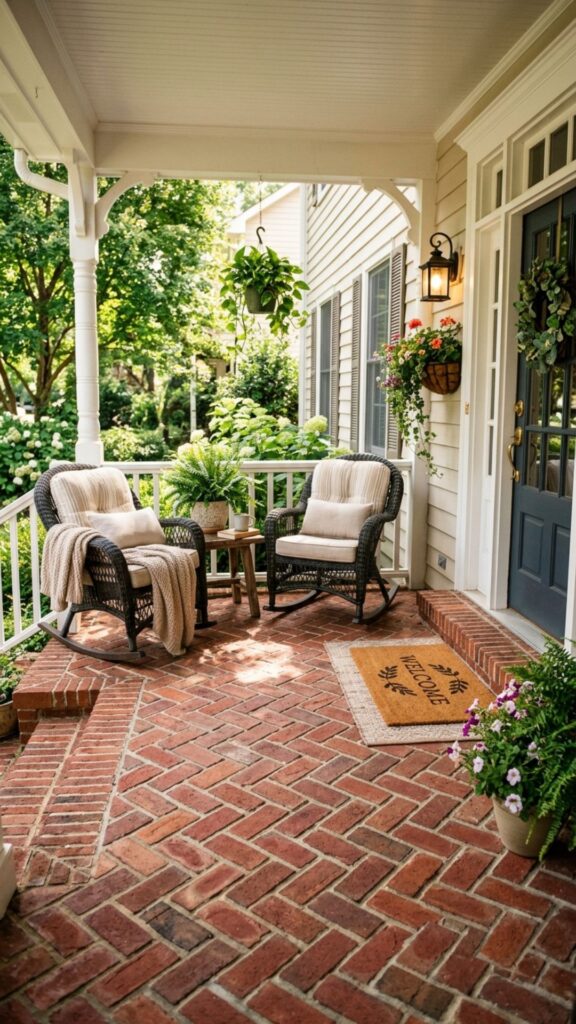
Brick has been a porch favorite for generations, and for good reason. It handles heat, cold, and heavy foot traffic without complaint. The reddish tones bring instant warmth to any entrance, and brick pairs beautifully with both old cottages and modern builds.
You can lay brick in patterns like herringbone or basketweave for extra character. It does need occasional sealing to fight moss and stains. But once it’s down, brick lasts for decades and only looks better with age.
2. Natural Stone Tile for a Rich Look
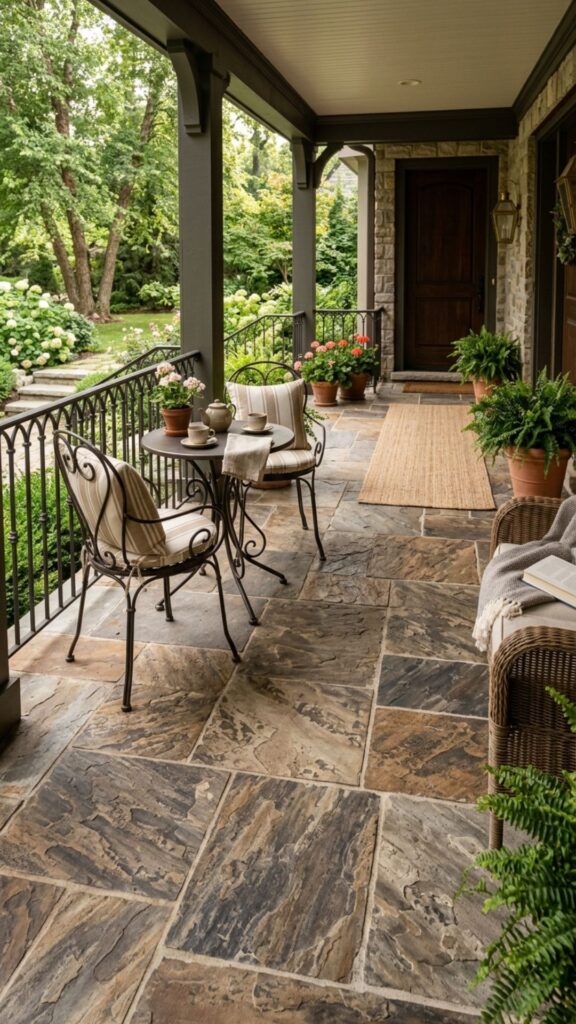
Natural stone tile, like slate or travertine, gives your porch a grounded, earthy feel. Each piece has its own veining and color shift, so no two floors look alike. That uniqueness is exactly why so many homeowners love it.
Stone stays cool in summer and resists scratches well. It can be pricey and heavy, so a solid subfloor matters. If you want a floor that feels rooted in tradition and craftsmanship, stone rewards the investment.
3. Porcelain Tile for Low-Maintenance Beauty
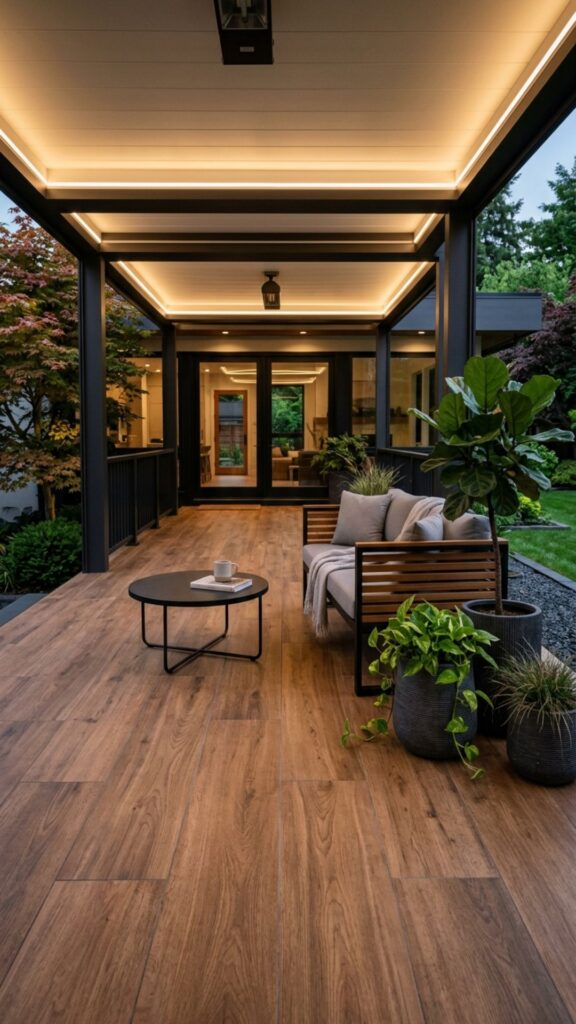
Porcelain tile is dense, water-resistant, and tough enough for outdoor use. It comes in styles that mimic wood, stone, or concrete, so you get the look you want without the upkeep. Cleaning is as easy as a quick mop.
Choose a textured, slip-resistant finish for safety when it rains. Porcelain handles freezing and thawing better than many materials. For busy families who want beauty and easy care, it’s a smart pick.
4. Stained Concrete for Modern Simplicity
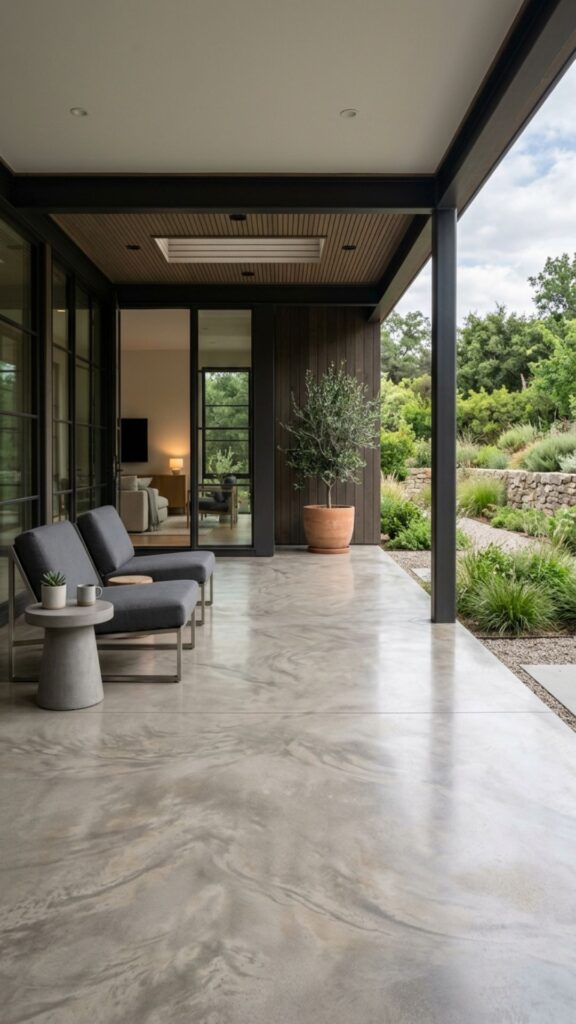
Stained concrete turns a plain slab into a design feature. Acid or water-based stains create soft, marbled color that looks custom and clean. It suits minimalist and contemporary homes especially well.
Concrete is affordable and incredibly durable. Seal it every few years to keep moisture out and color vibrant. If you already have a concrete porch, staining is one of the cheapest ways to upgrade its whole look.
5. Stamped Concrete That Mimics Stone
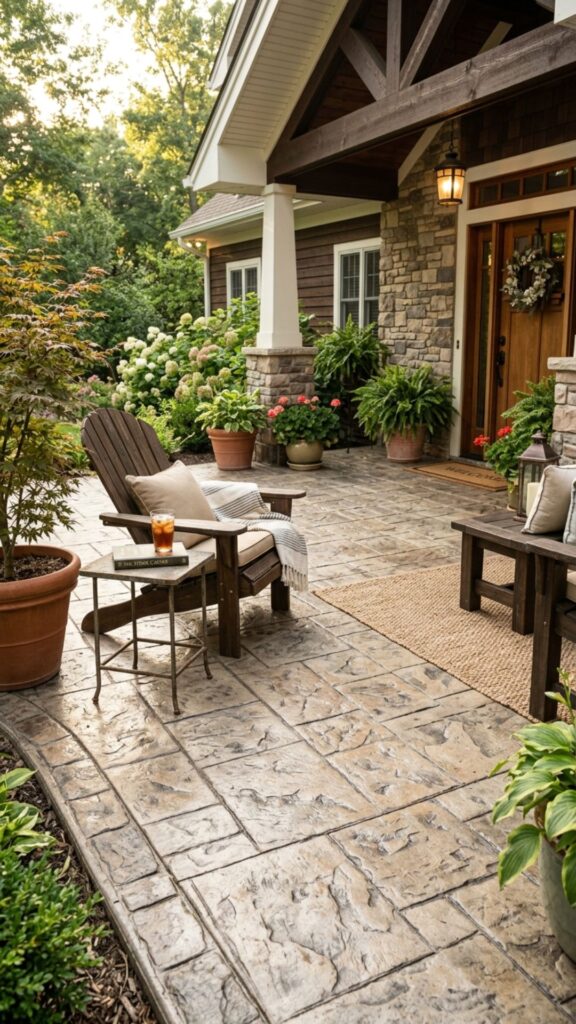
Stamped concrete gives you the texture of brick, slate, or cobblestone at a lower cost. Workers press patterns into wet concrete, then color it to match. The result fools the eye and saves your wallet.
This option resists weather and needs little repair over the years. Resealing keeps the pattern crisp and the color deep. It’s ideal if you want a high-end look without a high-end price tag.
6. Wood Decking for Cozy Charm
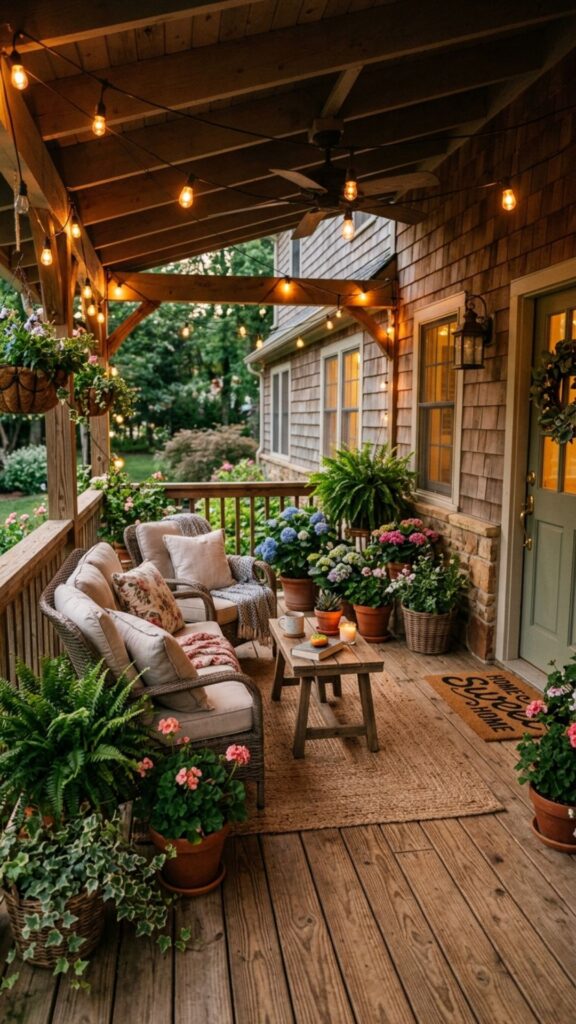
Wood decking brings a classic, welcoming feel to any front porch. Cedar and redwood naturally resist rot and insects, making them popular choices. The soft, warm surface feels good under bare feet on a summer morning.
Wood does need regular staining or sealing to fight moisture and sun damage. Sweep it often to prevent debris buildup. For homeowners who love a traditional, homey entrance, wood never goes out of style.
7. Composite Decking for Worry-Free Living
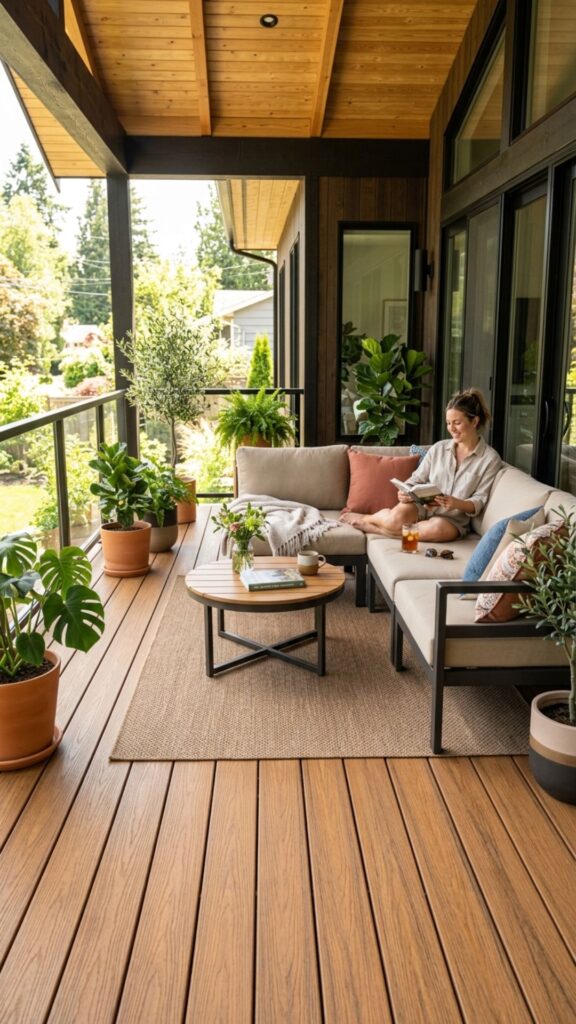
Composite decking blends wood fibers and recycled plastic into boards that resist rot, fading, and splinters. It looks like real wood but skips the yearly maintenance. That trade-off wins over a lot of busy homeowners.
You’ll pay more upfront than for natural wood. But you save time and money on upkeep for years. If you want the wood look with none of the fuss, composite delivers.
8. Painted Wood for a Fresh Pop of Color
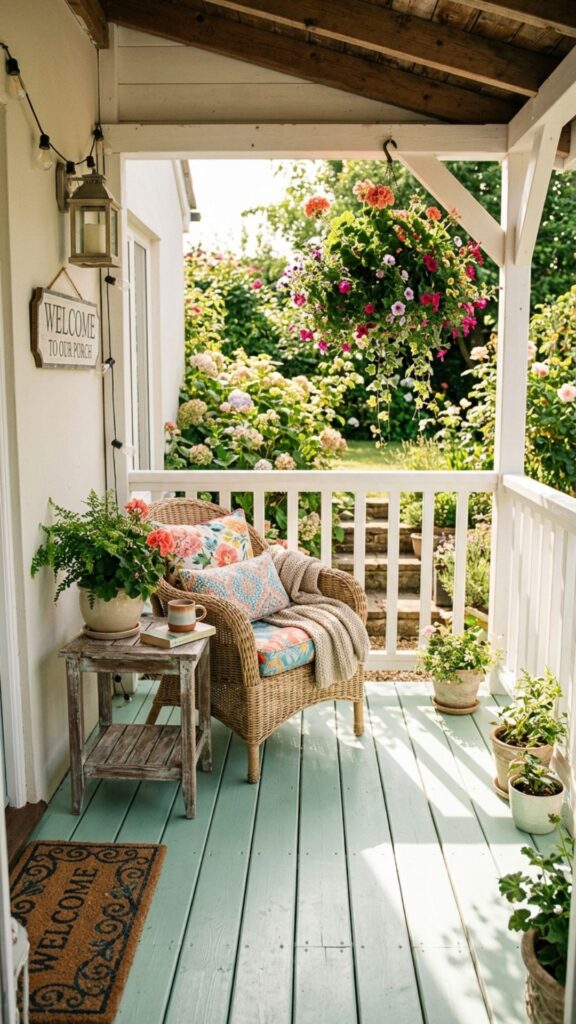
A coat of porch paint can transform tired wood boards into something cheerful and new. You can go bold with navy or sage, or keep it soft with gray or cream. Paint hides wear and adds personality fast.
Use paint made for exterior floors so it grips and lasts. Repaint every few years as it wears. This is a budget-friendly weekend project that makes a big visible difference.
9. Tile Mosaic for Artistic Flair
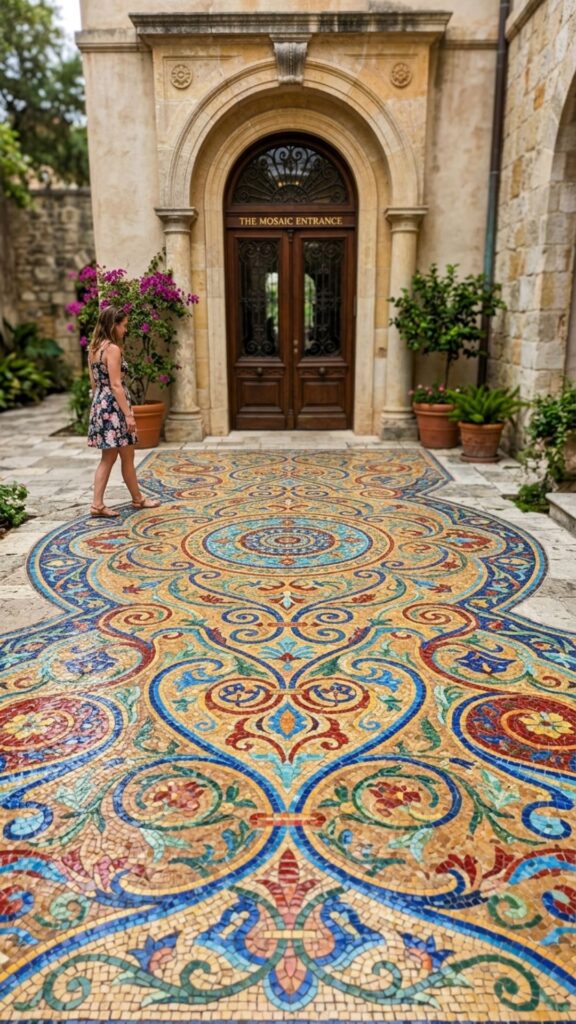
A tile mosaic entrance turns your porch floor into a piece of art. Small colorful tiles form patterns, borders, or even a welcome design. It’s a wonderful way to celebrate your heritage and personal taste.
Mosaic work takes time and skill to install well. But the payoff is a one-of-a-kind entrance that guests remember. Pair it with plain surrounding tile so the mosaic stays the star.
10. Flagstone for a Rustic, Natural Feel
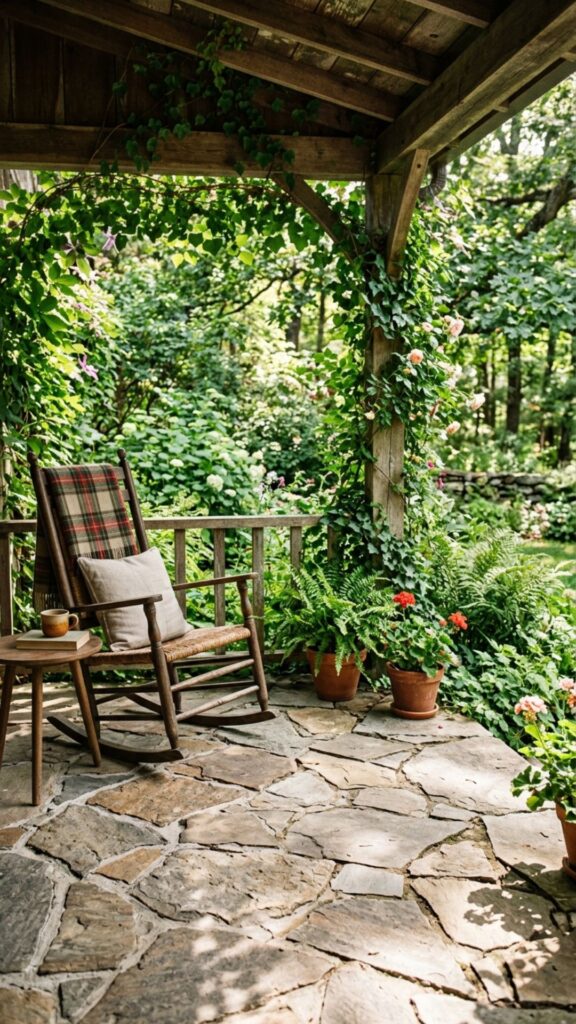
Flagstone uses large, irregular slabs of stone laid in a loose puzzle pattern. The uneven shapes feel organic and relaxed, perfect for country and cottage homes. Colors range from warm sand to cool gray.
Flagstone drains water well through the gaps between stones. It can shift over time, so a good gravel or mortar base matters. For a porch that feels connected to nature, flagstone is hard to beat.
11. Ceramic Tile for Affordable Style
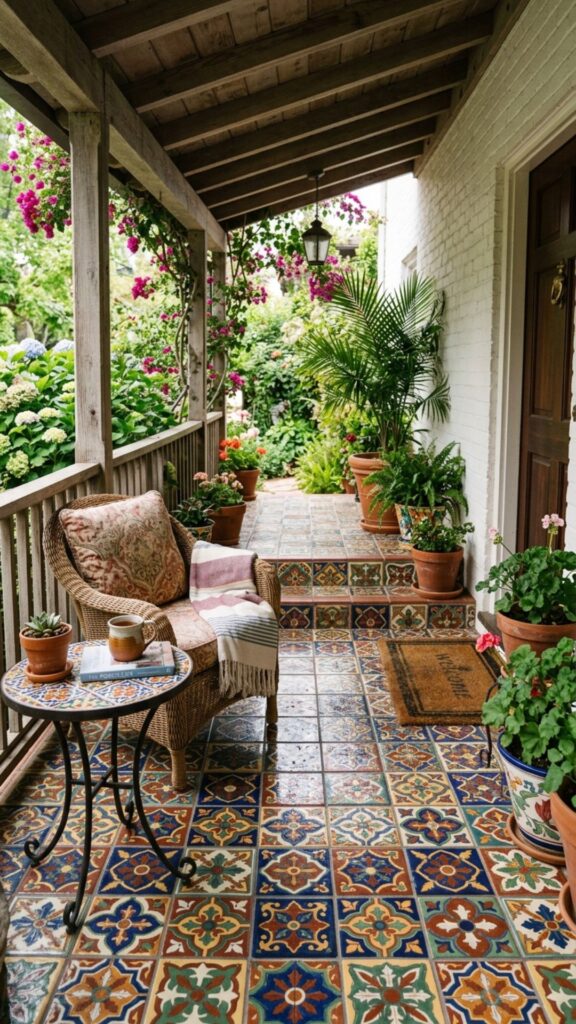
Ceramic tile costs less than porcelain and still offers plenty of design options. Glazed ceramic resists moisture and comes in endless colors and patterns. It’s a friendly entry point for tile beginners.
Ceramic is a little softer than porcelain, so it suits covered porches best. Grout lines need occasional cleaning to stay bright. For a stylish look on a modest budget, ceramic delivers real value.
12. Bluestone for Cool, Elegant Tones
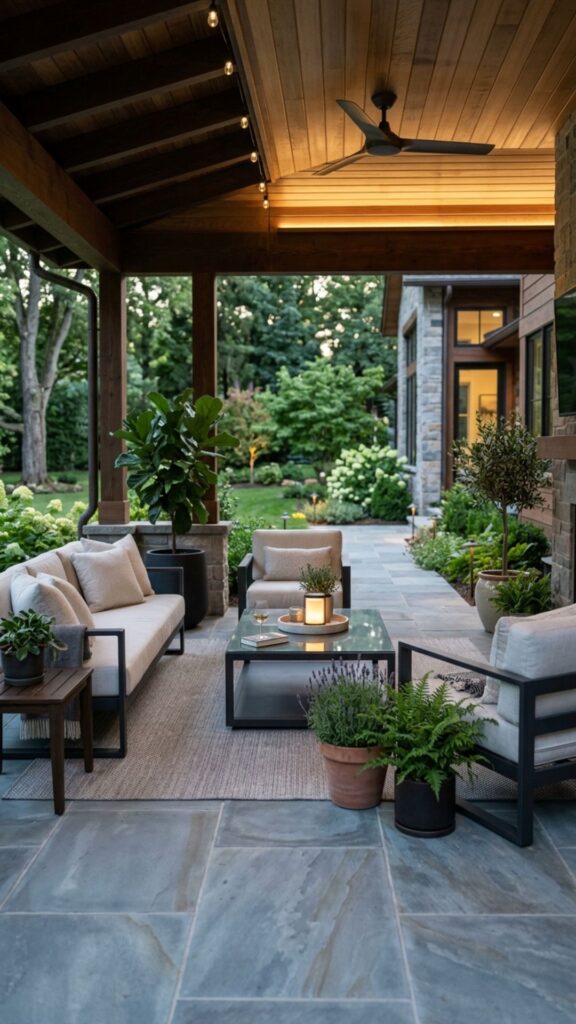
Bluestone is a dense sandstone known for its blue-gray color and smooth finish. It gives a refined, understated look that pairs well with both traditional and modern homes. The color deepens slightly when wet.
This stone is strong and holds up to heavy use for decades. It costs more, but its clean elegance justifies the price. If you want quiet sophistication, bluestone is a lasting choice.
13. Pavers for Flexible Design
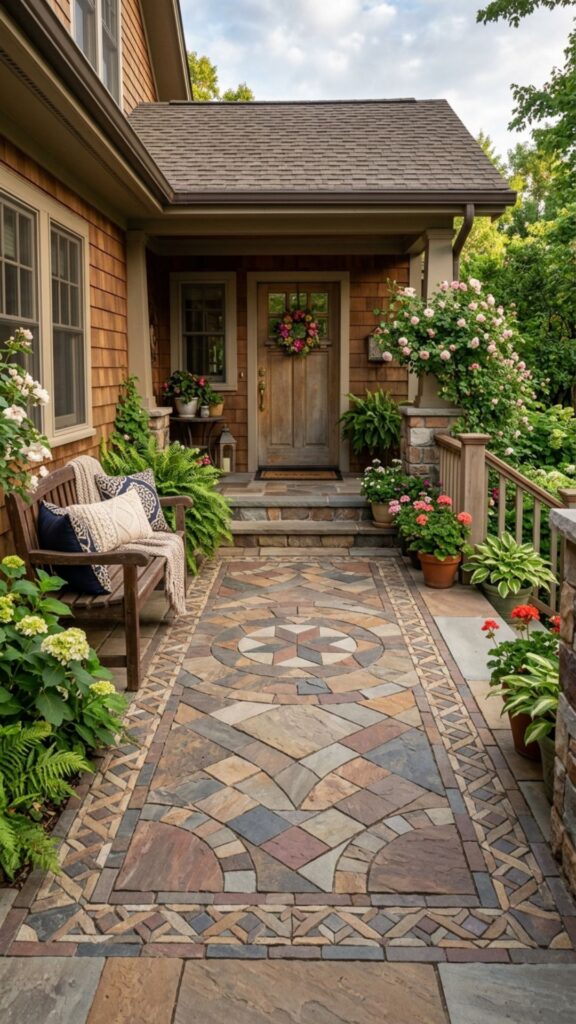
Concrete or stone pavers let you build patterns, curves, and borders with ease. Because they come in set shapes, installation and repair stay simple. Damaged pavers pop out and swap in without redoing the whole floor.
Pavers handle weight and weather beautifully. Sand between the joints keeps them locked in place. For homeowners who love options and easy fixes, pavers offer real freedom.
14. Terracotta for Mediterranean Warmth
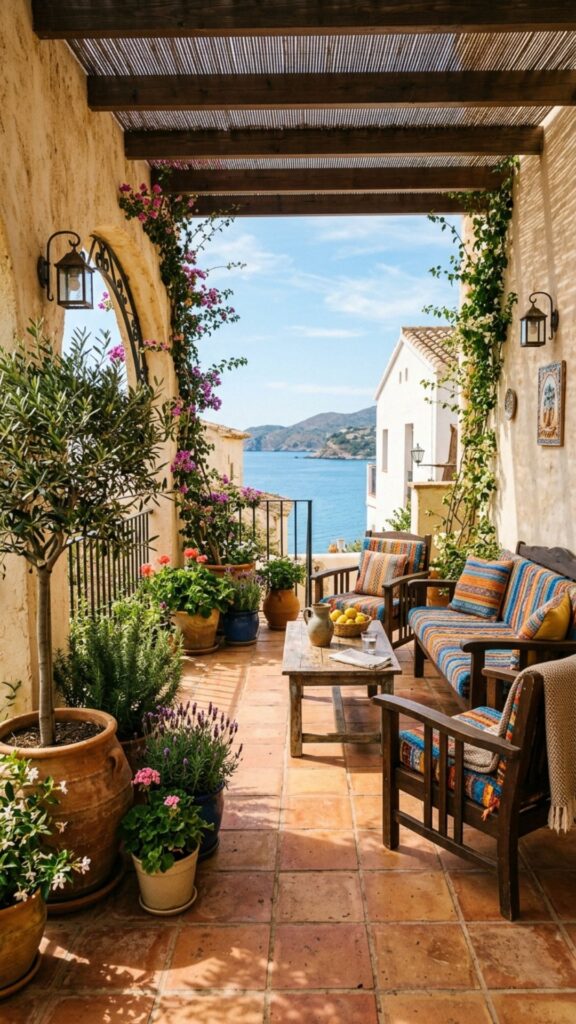
Terracotta tile brings sunny, earthy warmth straight from the Mediterranean. Its clay-red tones feel inviting and pair well with plants and rustic decor. The material has a handmade, timeless quality.
Terracotta is porous, so sealing is a must to block stains and moisture. Keep it under a roof for best results. If you love warm, welcoming color, terracotta wraps your entrance in comfort.
15. Rubber Tiles for Comfort and Safety
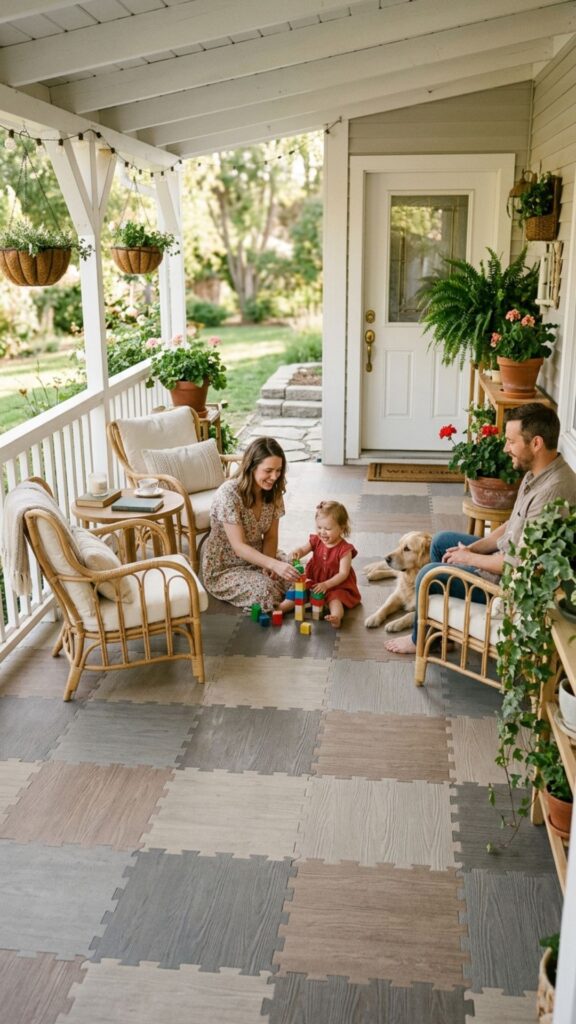
Rubber tiles offer a soft, slip-resistant surface that’s gentle on feet and knees. They’re a smart pick for homes with kids, seniors, or pets. Many are made from recycled material, so you feel good and do good.
Installation is often as simple as interlocking or gluing the tiles down. They resist water and cushion falls. For safety and comfort without a big renovation, rubber tiles quietly get the job done.
16. Outdoor Carpet for Soft Underfoot Feel
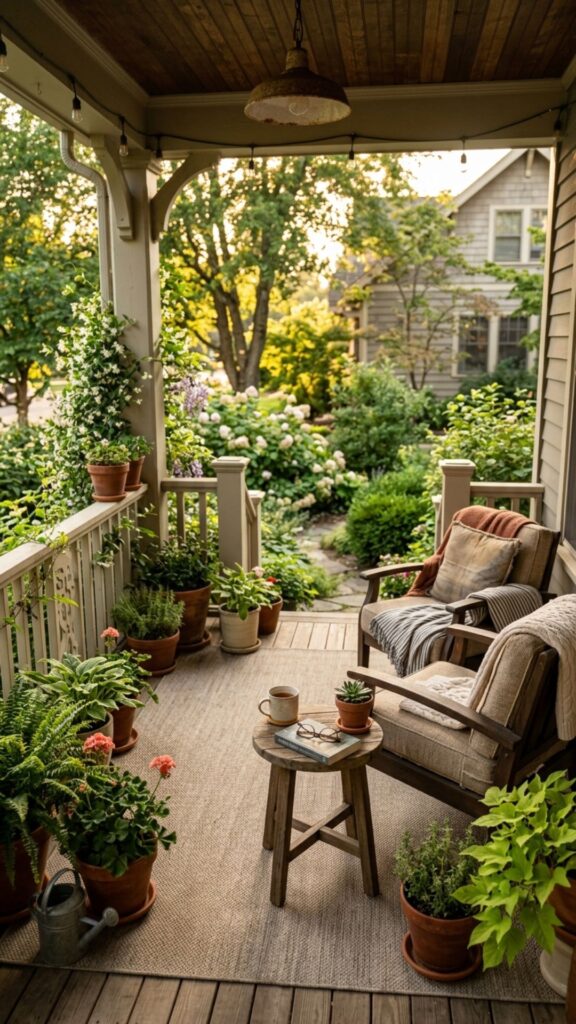
Outdoor carpet, or turf-style flooring, adds a cozy layer to your porch. It’s soft, quick to install, and comes in colors that hide dirt well. Many homeowners use it to warm up a plain concrete slab.
Choose a mold-resistant, quick-drying type made for outdoor use. Vacuum and rinse it now and then to keep it fresh. For a low-cost comfort boost, outdoor carpet is an easy win.
17. Cobblestone for Old-World Character
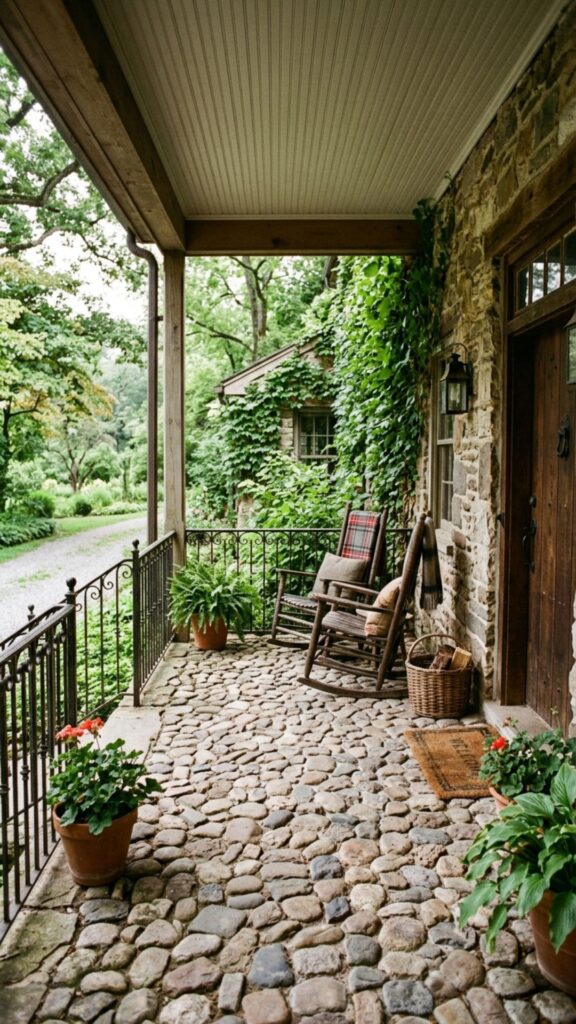
Cobblestone floors carry a charming, storybook feel. The rounded stones create texture and history that new materials can’t fake. They suit rustic, European-inspired, and heritage-style homes.
Cobblestone is extremely durable and handles the elements with ease. The uneven surface can be tricky for high heels, so plan placement carefully. For lasting character and old-world charm, cobblestone stands strong.
18. Vinyl Plank for Budget-Friendly Wood Looks
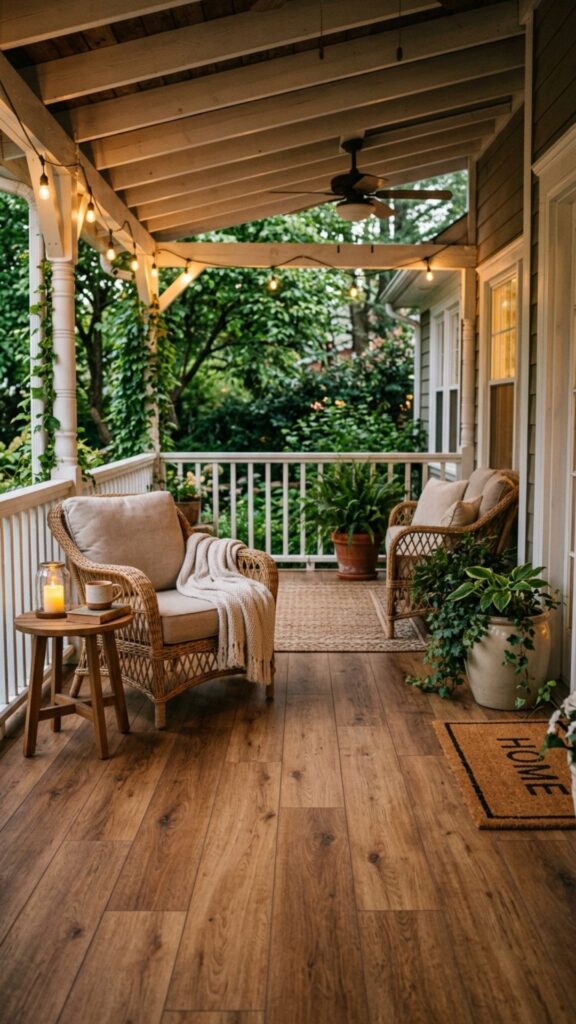
Vinyl plank flooring mimics wood grain at a fraction of the cost. It’s water-resistant, easy to clean, and comfortable underfoot. On a covered porch, it holds up remarkably well.
Look for thick, UV-stable planks rated for outdoor or transitional spaces. Installation is often a simple click-lock process. For a warm wood look on a tight budget, vinyl plank is a practical friend.
19. Pebble Stone for a Spa-Like Touch
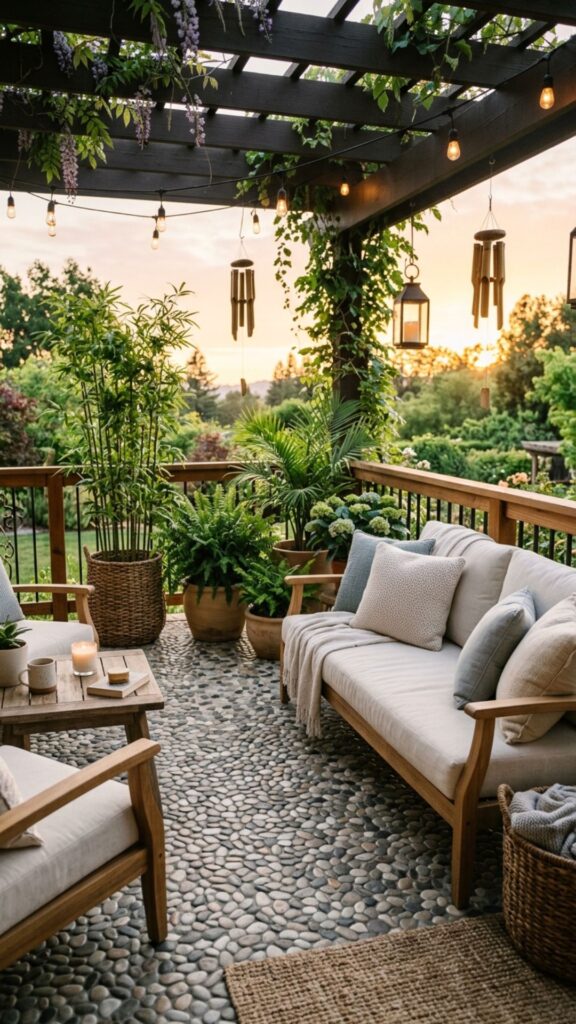
Pebble stone flooring uses small, smooth river rocks set in resin or mortar. The result feels organic, soothing, and slightly luxurious in the best plain-spoken way. It drains water well and adds gentle texture.
Sealing keeps the pebbles bright and locked in place. The bumpy surface offers natural grip in wet weather. For a calm, nature-inspired entrance, pebble stone brings quiet beauty.
20. Mixed-Material Flooring for Custom Character
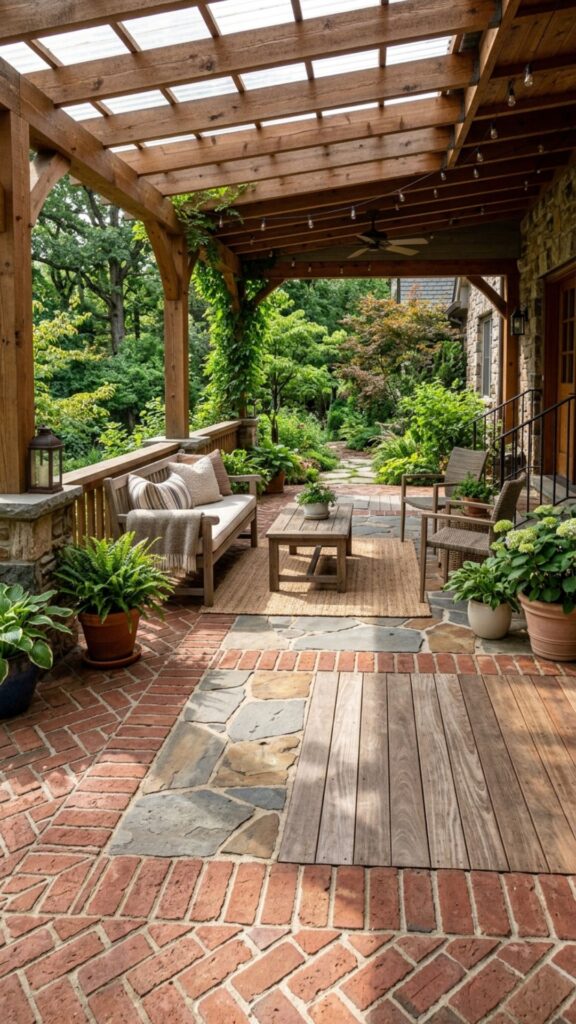
You don’t have to pick just one material. Mixing brick borders with stone centers, or wood with tile inlays, creates a truly custom entrance. This approach lets you feel good, look good, and stand out.
Plan the layout carefully so the materials complement, not clash. Work with an installer who understands how each surface handles weather. For a porch that’s unmistakably yours, mixing materials is the way to go.
Conclusion: Choose a Floor That Welcomes You Home
Your front porch flooring shapes how your home feels the moment anyone arrives. The right choice balances beauty, comfort, and durability for years of daily use. We’ve walked through 20 front porch flooring ideas so you can decide with confidence.
Here’s what to remember:
- Match the material to your weather — covered porches allow more options than exposed ones.
- Balance cost and upkeep — cheaper floors often need more maintenance over time.
- Prioritize safety — pick slip-resistant surfaces where rain and snow are common.
- Let your style lead — your entrance should reflect who you are.
Start by measuring your porch and listing your must-haves. Then compare two or three of the options above that fit your budget and climate. Pick the one that makes you smile every time you walk up the steps. Your perfect entrance is closer than you think.
What is the best flooring for a front porch?
The best front porch flooring depends on your climate and porch type. Porcelain tile, brick, and stained concrete rank among the top choices because they resist weather, handle heavy foot traffic, and need little maintenance over the years.
What is the cheapest front porch flooring option?
Painted wood and stained concrete are among the cheapest front porch flooring options. Both use materials you may already have and cost far less than natural stone or custom tile, while still giving your entrance a fresh, updated look.
Which porch flooring is best for wet or rainy climates?
For wet climates, choose slip-resistant, water-friendly surfaces like textured porcelain tile, flagstone, or pebble stone. These materials drain or shed water well and reduce the risk of slipping when your porch gets wet.
How often should I seal my porch flooring?
Most sealed porch materials, such as concrete, brick, and natural stone, need resealing every two to three years. High-exposure porches may need it more often. Check for water absorption; if drops soak in instead of beading, it’s time to reseal.
Can I install porch flooring myself?
Yes, some options are DIY-friendly. Painting wood, laying interlocking rubber tiles, or installing vinyl plank are all manageable weekend projects. Heavier materials like stone, brick, or mosaic usually need professional installation for a lasting, level result.